Saskatoon’s Canopy: The Heart of the City is Rooted in You

This is a story of growth, right in your own backyard. Tonight, the focus is on Saskatoon—not just the City of Bridges, but a city that is fighting to stay green. It’s a mission for the planet, and it’s happening at the curb outside your front door.”

“Now, let’s take a look at what’s happening in your neck of the woods! The City has released its Greener Together newsletter, and folks, you’re going to want to check those mailboxes. Whether it’s in your bill insert or that ‘Protect Your Urban Forest’ pamphlet, there is a lot of great stuff going on across the country—and by that, I mean right there on your boulevard and naturalized park spaces!” A brief summary is herewith attached.

“But there is a serious note tonight. A threat is looming. Dutch Elm Disease is hitting record highs, and we have to act now. From the pruning ban starting April 1st to the way you handle firewood, the stakes for our canopy have never been higher. Let’s get to the facts and see how you can help this forest thrive.”


Feature Article: Guardians of the Canopy

In Saskatoon, the trees are more than just a backdrop—they are a hardworking infrastructure. According to the City’s latest guide, “Protect Your Urban Forest,” these leafy giants do everything from cleaning our air and cooling our pavement to managing stormwater. But as the city grows, so does the responsibility of the residents who live under their shade.

The Golden Rules of Tree Care The City manages its trees, but it’s the “extra mile” from residents that helps them truly thrive. A little water during a prairie dry spell or keeping the base of a boulevard tree tidy can ensure these assets flourish for generations. However, there are strict “don’ts” to keep in mind: you may not prune, apply pesticides, or attach items to City trees without official approval.

Planning a Project? Check the Radius If you are planning to renovate or landscape, keep your measuring tape handy. Any construction within six meters of a City tree requires a Tree Permit. The good news? These permits are completely free and are usually processed within four business days. It’s a small step that ensures construction equipment doesn’t accidentally damage the root systems of our shared forest.

A Free Legacy Looking to add some shade to your street? The City is currently offering free boulevard trees to both homeowners and businesses. By requesting a tree, you aren’t just beautifying your property; you’re investing in the city’s long-term health.

The Fight Against Dutch Elm Disease (DED) The most urgent dispatch from the City involves our majestic Elms. DED cases are at an all-time high, and prevention is the only cure. Residents are urged to follow these critical steps:

  • The Pruning Ban: Never prune elm trees between April 1 and August 31.
  • Wood Disposal: Never store elm wood or branches. All elm wood must be taken to the landfill immediately.
  • Report It: If you see a tree that looks diseased or dead, request a professional inspection via the City’s website.

To stay updated on all sustainability efforts, residents can subscribe to the Greener Together newsletter here. Together, we can ensure the “City of Green” lives up to its name.

Part SE 23-36-6 – Richard St. Barbe Baker Afforestation Area – 241 Township Road 362-A

Part SE 23-36-6 – SW Off-Leash Recreation Area (Richard St. Barbe Baker Afforestation Area ) – 355 Township Road 362-A

S ½ 22-36-6 Richard St. Barbe Baker Afforestation Area (West of SW OLRA) – 467 Township Road 362-A

NE 21-36-6 “George Genereux” Afforestation Area – 133 Range Road 3063

Wikimapia Map: type in Richard St. Barbe Baker Afforestation Area or

Google Maps South West Off Leash area location pin at parking lot

Web page: https://stbarbebaker.wordpress.com

Where is the Richard St. Barbe Baker Afforestation Area? with map

Where is the George Genereux Urban Regional Park (Afforestation Area)?with map

Pinterest richardstbarbeb

Blogger: FriendsAfforestation

Tumblr friendsafforestation.tumblr.comFacebook Group Page: Users of the George Genereux Urban Regional Park

Facebook: StBarbeBaker Afforestation Area

Facebook for the non profit Charity Friends of the Saskatoon Afforestation Areas Inc. FriendsAreas

Facebook group page : Users of the St Barbe Baker Afforestation Area

Facebook: South West OLRA

Reddit: FriendsAfforestation

BlueSky Social

Mix: friendsareas

YouTube

Support via Zeffy

Please help protect / enhance your afforestation areas, please contact the Friends of the Saskatoon Afforestation Areas Inc. (e-mail / e-transfers )

Donate your old vehicle, here’s how!  

Support using Canada Helps

Support via a recycling bottle donation and Join the plastic-recycle challenge!

United Nations Decade on Ecosystem Restoration

““Be like a tree in pursuit of your cause. Stand firm, grip hard, thrust upward. Bend to the winds of heaven..”

The Living Classroom: Teaching Children the Language of the Forest


There is a moment — quiet, almost imperceptible — when a child first notices the rustle of life beneath the canopy. A beetle turning over a fallen leaf, a chickadee flitting between branches, the sunlight filtering through layers of green. It is in that instant that understanding begins: a realization that the forest is not merely a collection of trees, but a living, breathing community of countless species, each bound to the others in a delicate web of life.

In Saskatoon’s afforestation areas, these lessons are being sown with care. The work of conservation here is not only about protecting trees or safeguarding species at risk, though these are noble aims. It is about nurturing a generation capable of seeing themselves as part of the natural world—a generation that understands that when one element of the ecosystem falters, all are affected.

Education programs and stewardship initiatives invite young minds to explore with curiosity and purpose. Children are learning that each tree is more than wood and leaves; it is a habitat, a refuge, a home. Beneath their feet lie networks of roots and fungi—silent communicators that sustain the forest community. Above, the canopy shelters the nests of birds, the dens of squirrels, and the cool breath of shade-loving plants.

Yet, these places are fragile. When children push over saplings or try to push over a tree or bang on tree trunks as they run through the forest, hit nests from trees, the harm may not be visible at first—but it is real. Each scar on bark opens a doorway for fungus, pathogens, and pests, weakening the very trees that sustain the forest’s life. And beyond the trees, there are plant species at risk—delicate forbs that struggle to survive beneath the shadow of human carelessness.

That is why stewardship must be taught not as restriction, but as relationship. There are wide open grass spaces for play, for laughter and movement. But through the forest, we walk gently. We stay on the trails, we listen before we touch, and we look before we act. Every step can be a step of respect—for the chickadee’s nest, the wild rose’s roots, the trembling aspen’s song.

In these forests, three tree species are at risk—a solemn reminder that even the giants among us need protection. Do you know which they are? It is a question worth pondering, for awareness is the first act of stewardship.

And so, through every classroom visit, every guided walk, and every act of citizen science, we are advancing stewardship initiatives that bridge science, citizen action, and sustainability. We are spreading education and awareness, encouraging greater care for these vital green spaces in Saskatoon.

Together, we are planting seeds—not only in the ground, but in young minds. Seeds of curiosity, care, and empathy. The impact of these efforts will ripple outward, as each child carries the memory of the forest into the wider world, fostering stewardship for decades to come.

For in the end, conservation is not merely about saving the trees—it is about saving our sense of belonging within the great, unfolding story of life on Earth. And that story continues, one child, one tree, one forest at a time.

Addresses:

Part SE 23-36-6 – Richard St. Barbe Baker Afforestation Area – 241 Township Road 362-A

Part SE 23-36-6 – SW Off-Leash Recreation Area (Richard St. Barbe Baker Afforestation Area ) – 355 Township Road 362-A

S ½ 22-36-6 Richard St. Barbe Baker Afforestation Area (West of SW OLRA) – 467 Township Road 362-A

NE 21-36-6 “George Genereux” Afforestation Area – 133 Range Road 3063

Wikimapia Map: type in Richard St. Barbe Baker Afforestation Area or

Google Maps South West Off Leash area location pin at parking lot

Web page: https://stbarbebaker.wordpress.com

Where is the Richard St. Barbe Baker Afforestation Area? with map

Where is the George Genereux Urban Regional Park (Afforestation Area)?with map

Pinterest richardstbarbeb

Blogger: FriendsAfforestation

Tumblr friendsafforestation.tumblr.comFacebook Group Page: Users of the George Genereux Urban Regional Park

Facebook: StBarbeBaker Afforestation Area

Facebook for the non profit Charity Friends of the Saskatoon Afforestation Areas Inc. FriendsAreas

Facebook group page : Users of the St Barbe Baker Afforestation Area

Facebook: South West OLRA

Reddit: FriendsAfforestation

BlueSky Social

Mix: friendsareas

YouTube

Support via Zeffy

Please help protect / enhance your afforestation areas, please contact the Friends of the Saskatoon Afforestation Areas Inc. (e-mail / e-transfers )

Donate your old vehicle, here’s how!  

Support using Canada Helps

Support via a recycling bottle donation and Join the plastic-recycle challenge!

United Nations Decade on Ecosystem Restoration

““Be like a tree in pursuit of your cause. Stand firm, grip hard, thrust upward. Bend to the winds of heaven..”

Richard St. Barbe Baker

How to Identify an Elm

To stand as guardians of the elm, we must first know how to recognize it. The elm (Ulmus genus) is among the most graceful of trees, with hallmarks that set it apart from all others. How to Spot Dutch Elm Disease Symptoms. Guardians of the Elm. Saskatoon’s Ecological Emergency!

1. The Shape

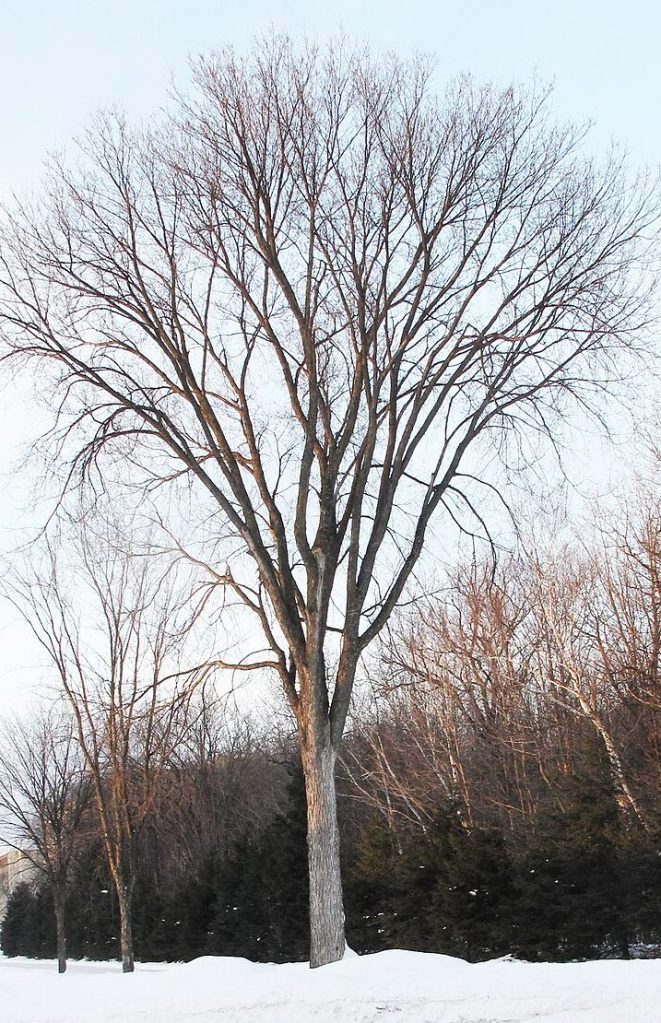
The American elm, our most familiar, forms a vase-like silhouette. The trunk rises tall and straight, then branches arch outward and upward, meeting high above the street like the roof of a Gothic cathedral. From a distance, this vaulting canopy is unmistakable.

Elm Silhouette:
Silhouette of an American elm (Ulmus americana), its tall trunk rising into a graceful, vase-like form. The arching branches sweep upward and outward, creating a broad, fan-shaped crown that spreads wide like an open canopy, a classic hallmark of the species.
Elm Silhouette: Silhouette of an American elm (Ulmus americana), its tall trunk rising into a graceful, vase-like form. The arching branches sweep upward and outward, creating a broad, fan-shaped crown that spreads wide like an open canopy, a classic hallmark of the species.

2. The Leaves

Elm leaves are simple, oval, and finely toothed along the edge. They have a distinct asymmetrical base—one side of the leaf blade longer than the other where it meets the stem. This “uneven foot” is a true signature. The veins are bold and parallel, running straight from the midrib to each tooth of the margin.

3. The Bark

On young elms, bark is smooth and gray. As the tree matures, the bark becomes dark, deeply furrowed, and rough to the touch. These ridges may twist and interlace, giving the trunk an ancient, rugged strength.

Close-up of an American elm (Ulmus americana) trunk, showing the characteristic gray-brown bark with a distinctive lattice-like pattern of intersecting ridges and furrows. Other identifiable features include irregular, rough-textured plates and shallow fissures that run both vertically and horizontally along the trunk, giving the elm its iconic textured appearance.

4. The Seeds

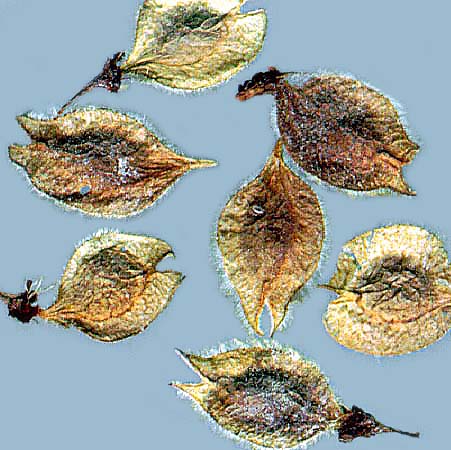
Elms produce seeds in spring, often in great abundance. Each seed is round and flat, encased in a papery wing (a samara) that spins through the air like a coin tossed by the wind.

Close-up of American elm (Ulmus americana) seeds showing the small, oval to slightly round seed bodies. The surface is smooth to lightly textured, with a central embryo visible within each seed.
Courtesy Gmihail, CC BY 3.0
Close-up of American elm (Ulmus americana) seeds showing the small, oval to slightly round seed bodies. The surface is smooth to lightly textured, with a central embryo visible within each seed. Courtesy Gmihail, CC BY 3.0

5. Species in Saskatoon

In our city, you may encounter:

  • American elm (Ulmus americana) – the classic vase-shaped elm, most common in boulevards.
  • Siberian elm (Ulmus pumila) – smaller, faster-growing, but brittle; often used in shelterbelts.
  • Japanese elm (Ulmus japonica) – less common, sometimes planted as a hardy ornamental.

Siberian Elm (Ulmus pumila)

  • Buds: Tiny, dark, and rounded, resembling peppercorns with a flaky outer layer; 3 or more overlapping scales.
  • Twig: Young twigs hairy to sparsely hairy, initially green, maturing to gray-brown.
  • Bud Size: About 1/8 inch long; purplish-brown scales somewhat hairy, especially at the edges.

American Elm (Ulmus americana)

  • Buds: Oval-shaped with a pointed tip, scale-like pattern; projected in the same direction as the subtending branch.
  • Twig: Young twigs brown, hairy or smooth.
  • Bud Color & Texture: Brown with reddish scales, somewhat hairy at edges; longer and less squat than Siberian elm buds.

Key Differences:

  • Siberian elm buds are round and peppercorn-like; American elm buds are oval and pointed.
  • Siberian elm twigs are initially green, American elm twigs are brown.
  • Bud projection: American elm buds grow aligned with the branch, while Siberian elm buds are more rounded and sitting atop the twig.

Why It Matters

Elm bark beetles do not discriminate between species. All are vulnerable to Dutch elm disease. By learning to recognize these noble trees, you can help watch over them, notice early symptoms of DED, and take steps to protect Saskatoon’s canopy.

Did you Know?

“The City of Saskatoon started a unique project for the prairies called Afforestation, of “Man-made Forest”…aimed at improving the future environment of the City. The selection of plant material is based on the soil types, lay of the land, and type of planting scheme.

The following tree species were used:

American and Siberian Elm, Manitoba Maple, Green Ash, Poplar, Willow, Colorado Spruce, Scotch Pine and Caragana.” from a report written by A.L. Ligtermoet Assistant Parks Superintendent, City of Saskatoon. January 4, 1974 CoS archives.

These afforestation areas became known as Richard St. Barbe Baker Afforestation Area and George Genereux Urban Regional Park.


“To know a tree by name is the beginning of kinship. And when we know the elm, we see in it not just a tree, but a guardian of the land.”


“The minimum for safety is one third of the total land area. I think what is happening to the elms must be alerting the whole country to the necessity of trees, of the need for more trees. The elm has the largest leaf surface of any tree in Britain. If you …. put the leaves together edge to edge, they would cover ten acres. So naturally, the first tree to suffer from air pollution was the elm and, of course, when an elm is suffering from fatigue it is subject to attack by disease: the elm bark beetle, the carrier of the elm fungus, comes along and the tree succumbs.

I look at it this way. If a person is living a normal life and not abusing themselves – not smoking too much, not eating too much, not drinking too much – but living normally and eating the right food – they will be fit and well. It is only when they start abusing themselves that they are prone to attack by disease. It is the same with trees.

The next tree to go (the next tree with the largest leaf surface after the elm) is probably the beech: after that the sycamore: and so on. Finally it will be Man’s turn. We forget that we owe our existence to the presence of trees and as far as forest cover goes, we have never been in such a vulnerable position as we are today. The only answer is to plant more trees – to plant for our lives.
Richard St. Barbe Baker answers the first question above” Richard St. Barbe Baker.


Addresses:

Part SE 23-36-6 – Richard St. Barbe Baker Afforestation Area – 241 Township Road 362-A

Part SE 23-36-6 – SW Off-Leash Recreation Area (Richard St. Barbe Baker Afforestation Area ) – 355 Township Road 362-A

S ½ 22-36-6 Richard St. Barbe Baker Afforestation Area (West of SW OLRA) – 467 Township Road 362-A

NE 21-36-6 “George Genereux” Afforestation Area – 133 Range Road 3063

Wikimapia Map: type in Richard St. Barbe Baker Afforestation Area or

Google Maps South West Off Leash area location pin at parking lot

Web page: https://stbarbebaker.wordpress.com

Where is the Richard St. Barbe Baker Afforestation Area? with map

Where is the George Genereux Urban Regional Park (Afforestation Area)?with map

Pinterest richardstbarbeb

Blogger: FriendsAfforestation

Tumblr friendsafforestation.tumblr.comFacebook Group Page: Users of the George Genereux Urban Regional Park

Facebook: StBarbeBaker Afforestation Area

Facebook for the non profit Charity Friends of the Saskatoon Afforestation Areas Inc. FriendsAreas

Facebook group page : Users of the St Barbe Baker Afforestation Area

Facebook: South West OLRA

Reddit: FriendsAfforestation

BlueSky Social

Mix: friendsareas

YouTube

Support via Zeffy

Please help protect / enhance your afforestation areas, please contact the Friends of the Saskatoon Afforestation Areas Inc. (e-mail / e-transfers )

Donate your old vehicle, here’s how!  

Support using Canada Helps

Support via a recycling bottle donation and Join the plastic-recycle challenge!

United Nations Decade on Ecosystem Restoration

““Be like a tree in pursuit of your cause. Stand firm, grip hard, thrust upward. Bend to the winds of heaven..”

Richard St. Barbe Baker

🌲 National Forest Week is Here! 🌲

🌲 National Forest Week is Here! 🌲

September 22-28, 2024 🎉 Join the Friends of the Saskatoon Afforestation Areas for a week of celebration and action! This year’s theme, “Two-Eyed Seeing: Welcoming All Knowledge to Sustain Our Forests,” emphasizes the importance of integrating both Indigenous and Western knowledge for effective forest stewardship. 🌳🧠

🚩 Kick off the week with our Flag Raising Ceremony on September 22 at 2:00 PM in Civic Square! 🌍✨ This event symbolizes our commitment to unity and respect for diverse perspectives in forest conservation.

🌱 On September 24 at 7:00 PM, join us at Cliff Wright Library for an insightful talk by Dr. Eric Lamb on managing invasive grasses and embracing sustainable practices. 🌿📚

📢 Don’t miss out on more exciting events throughout the week at Richard St. Barbe Baker Afforestation Area and George Genereux Urban Regional Park! 🌳🌞

Be part of the change and celebrate with us! 💚🌍 #NationalForestWeek #TwoEyedSeeing #ForestStewardship #CelebrateTrees #Sustainability #CommunityAction #FriendsOfTheForest #SaskatoonEvents

For more information:
Blairmore Sector Plan Report; planning for the Richard St. Barbe Baker Afforestation Area, George Genereux Urban Regional Park and West Swale and areas around them inside of Saskatoon city limits
NEW P4G District Official Community Plan
Richard St. Barbe Baker Afforestation Area is located in Saskatoon, Saskatchewan, Canada north of Cedar Villa Road, within city limits, in the furthest south west area of the city. 52° 06′ 106° 45′
Addresses:
Part SE 23-36-6 – Afforestation Area – 241 Township Road 362-A
Part SE 23-36-6 – SW Off-Leash Recreation Area (Richard St. Barbe Baker Afforestation Area ) – 355 Township Road 362-A
S ½ 22-36-6 Richard St. Barbe Baker Afforestation Area (West of SW OLRA) – 467 Township Road 362-A
NE 21-36-6 “George Genereux” Afforestation Area – 133 Range Road 3063
Wikimapia Map: type in Richard St. Barbe Baker Afforestation Area
Google Maps South West Off Leash area location pin at parking lot
Web page: https://stbarbebaker.wordpress.com
Where is the Richard St. Barbe Baker Afforestation Area? with map
Where is the George Genereux Urban Regional Park (Afforestation Area)?with map
Pinterest richardstbarbeb
Blogger: FriendsAfforestation
Tumblr friendsafforestation.tumblr.comFacebook Group Page: Users of the George Genereux Urban Regional Park
Facebook: StBarbeBaker Afforestation Area
Facebook for the non profit Charity Friends of the Saskatoon Afforestation Areas Inc. FriendsAreas
Facebook group page : Users of the St Barbe Baker Afforestation Area
Facebook: South West OLRA
Reddit: FriendsAfforestation
Twitter: St Barbe Baker Charity Twitter:FriendsAreas
Mix: friendsareas
YouTube
Please help protect / enhance your afforestation areas, please contact the Friends of the Saskatoon Afforestation Areas Inc. (e-mail / e-transfers )Support the afforestation areas with your donation or membership ($20.00/year). Please donate by paypal or by using e-transfers Please and thank you! Your donation and membership is greatly appreciated. Members e-mail your contact information to be kept up to date!
Donations can be made through Paypal, Canada Helps, Contact Donate A Car Canada, SARCAN Drop & Go 106100594 for the Friends of the Saskatoon Afforestation Areas Inc.
United Nations Decade on Ecosystem Restoration
Use the UN Decade’s Visual Identity
Make it your own
Spread the word about the UN Decade
Let’s Bring Back Forests
Let’s Green Our Cities
“Be like a tree in pursuit of your cause. Stand firm, grip hard, thrust upward. Bend to the winds of heaven..”
Richard St. Barbe Baker!

Green Hearts Unite: Celebrating Charity in Afforestation

Harmony’s Call: A Day of Charity

On International Day of Charity, 5 September, let our voices rise, United in purpose, hearts open and wise. Charity, volunteerism, philanthropy’s embrace, Creating bonds, building inclusive space.

Through acts of kindness, societies thrive, In people, planet, prosperity, peace we strive. From health care to education, housing to child’s care, Charity fills the gaps, humanity’s repair.

Advancing culture, science, sports, and more, Protecting heritage, a legacy to adore. Rights of the marginalized, underprivileged to defend, Spreading the message of humanity, to every bend.

In this tapestry of charity, six areas we weave, People, planet, prosperity, peace, partnership to believe. Mitigating barriers, fostering equity’s reach, For those deserving, naturalized green spaces teach.

Persons with disabilities, their spirit unbound, Indigenous peoples, their heritage profound. Racialized groups, LGBTQI2S+ communities stand, Immigrants, refugees, newcomers, holding hands.

English as an Additional Language, bridging the divide, Low-income households, in their corner we reside. Youth and seniors, their stories unfold, Persons living with mental illness, we embrace, uphold.

Victims of violence, strength we’ll ignite, Persons with low literacy, knowledge we’ll invite. In forests, nature’s embrace, wellness blooms, Physical and mental health benefits, nature assumes.

Let’s turn 192 hectares, 474 acres, into a haven, A welcoming greenspace, for all, we’ll engraven. Species at risk, like the Red-Berried Elder’s plight, Imperiled, in need of protection, our guiding light.

Green Skills for Youth, towards a sustainable realm, Empowering tomorrow’s leaders, at the helm. Preserving cultural and natural heritage’s grace, Richard St. Barbe Baker’s legacy we embrace.

B.T. Chappell, Bruce Gordon, and Genereux’s name, The Old Bone Trail’s tales, honor their fame. The Green Survival Program, the Green Belt’s reign, Man-made forests, Yorath Island’s glacial spillway’s gain.

Through the Friends of the Saskatoon Afforestation Areas, Cultural heritage’s protection, a mission we bear. Richard St. Barbe Baker’s message, forever alive, With harmony’s call, together we thrive.

On International Day of Charity, let’s unite, For a world where love and compassion ignite. In charity’s embrace, let’s extend our hand, For a future where charity’s legacy shall forever stand.

Harmony’s Call: A Day of Charity

For more information:
Blairmore Sector Plan Report; planning for the Richard St. Barbe Baker Afforestation Area, George Genereux Urban Regional Park and West Swale and areas around them inside of Saskatoon city limits
NEW P4G District Official Community Plan
Richard St. Barbe Baker Afforestation Area is located in Saskatoon, Saskatchewan, Canada north of Cedar Villa Road, within city limits, in the furthest south west area of the city. 52° 06′ 106° 45′
Addresses:
Part SE 23-36-6 – Afforestation Area – 241 Township Road 362-A
Part SE 23-36-6 – SW Off-Leash Recreation Area (Richard St. Barbe Baker Afforestation Area ) – 355 Township Road 362-A
S ½ 22-36-6 Richard St. Barbe Baker Afforestation Area (West of SW OLRA) – 467 Township Road 362-A
NE 21-36-6 “George Genereux” Afforestation Area – 133 Range Road 3063
Wikimapia Map: type in Richard St. Barbe Baker Afforestation Area
Google Maps South West Off Leash area location pin at parking lot
Web page: https://stbarbebaker.wordpress.com
Where is the Richard St. Barbe Baker Afforestation Area? with map
Where is the George Genereux Urban Regional Park (Afforestation Area)?with map
Pinterest richardstbarbeb
Blogger: FriendsAfforestation
Tumblr friendsafforestation.tumblr.comFacebook Group Page: Users of the George Genereux Urban Regional Park
Facebook: StBarbeBaker Afforestation Area
Facebook for the non profit Charity Friends of the Saskatoon Afforestation Areas Inc. FriendsAreas
Facebook group page : Users of the St Barbe Baker Afforestation Area
Facebook: South West OLRA
Reddit: FriendsAfforestation
Twitter: St Barbe Baker Charity Twitter:FriendsAreas
Mix: friendsareas
YouTube
Please help protect / enhance your afforestation areas, please contact the Friends of the Saskatoon Afforestation Areas Inc. (e-mail / e-transfers )Support the afforestation areas with your donation or membership ($20.00/year). Please donate by paypal or by using e-transfers Please and thank you! Your donation and membership is greatly appreciated. Members e-mail your contact information to be kept up to date!
Donations can be made through Paypal, Canada Helps, Contact Donate A Car Canada, SARCAN Drop & Go 106100594 for the Friends of the Saskatoon Afforestation Areas Inc.
United Nations Decade on Ecosystem Restoration
Use the UN Decade’s Visual Identity
Make it your own
Spread the word about the UN Decade
Let’s Bring Back Forests
Let’s Green Our Cities
“Be like a tree in pursuit of your cause. Stand firm, grip hard, thrust upward. Bend to the winds of heaven..”
Richard St. Barbe Baker!

Design a site like this with WordPress.com
Get started