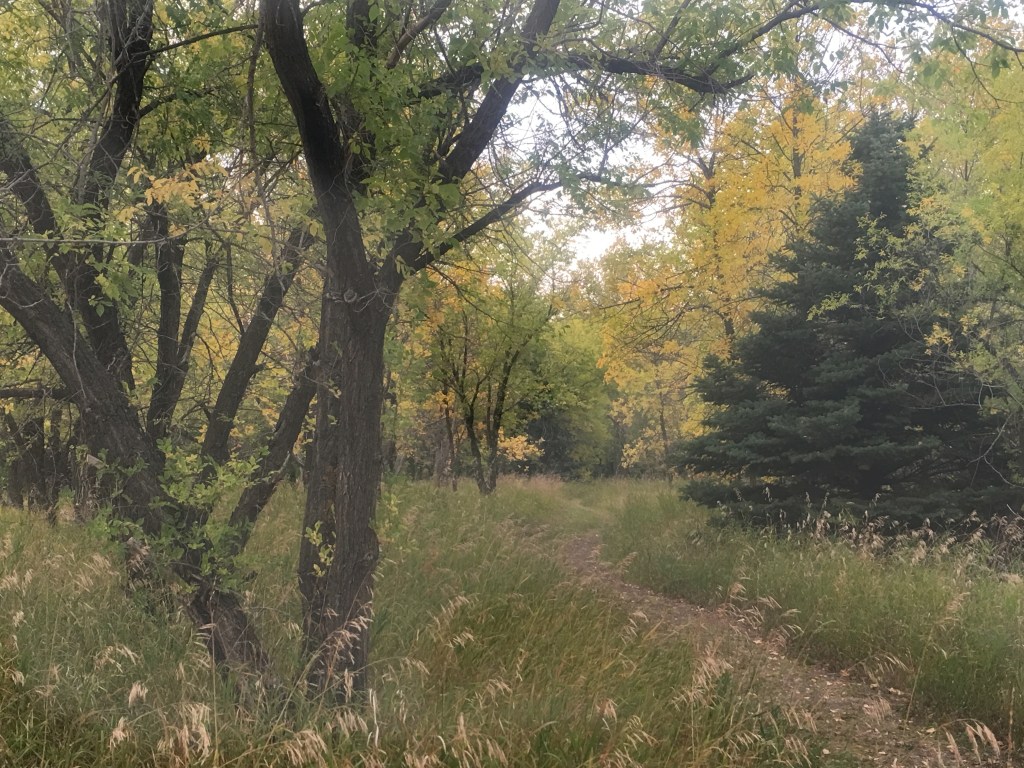
The Silent Architects: Listening to the Pulse of the Wood

By the Mycelial Collective

Beneath the canopy of our global forests, a slow-motion dialogue is taking place—a metabolic conversation between the standing giants of the timber world and the persistent, creeping network of the fungal kingdom. To the untrained eye, a mushroom is a mere ornament. But to those who walk the path of the Watu Wa Miti—the “People of the Trees”—it is a profound indicator of a landscape in transition.

The Ancestral Pledge

In 1922, Richard St. Barbe Baker and Chief Josiah Njonjo founded a movement in Kenya that would ripple across a century. The “Men of the Trees” (now Watu Wa Miti) understood a fundamental truth: our fate is intertwined with the sap and the spore. Their pledge—to plant ten trees a year and do one good deed daily—was more than a conservation effort; it was an acknowledgment of our role as stewards of a living, breathing respiratory system. Today, as we navigate an era of climate instability, the health of our forests depends on our ability to read the “language of the limb.”

The Polypore: Nature’s Hardened Wisdom

Look closely at the trunk of an aging oak or a weathered hemlock. You may see a woody shelf, hard as a horse’s hoof, jutting from the bark. These are the Polypores. Unlike the ephemeral meadow mushrooms with their delicate gills, these organisms possess millions of microscopic pores. When they take on this woody, hoof-like form, we call them conks.

These structures are not merely growing on the tree; they are growing with it. A conk like Fomes fomentarius (the Tinder Polypore) or Phellinus tremulae (Aspen Bracket) adds a new layer of spore tissue each season, mirroring the growth rings of the tree itself. If you find a conk with eight distinct layers, you are looking at a four-to-eight-year history of fungal respiration. It is a biological clock, ticking in the key of decomposition.

The Art of Decay

Among these architects is the Artist’s Conk (Ganoderma applanatum). Its creamy underside is a living canvas; a gentle scratch with a fingernail leaves a permanent brown line, preserved through the drying process. But the “art” goes deeper than the surface.

These fungi are saprophytes, the grand recyclers of the planet. They target the lignin—the very “rebar” of the tree’s structural concrete. While a white-rot fungus like the Artist’s Conk leaves the wood flexible but weakened, the Common Split Gill (Schizophyllum commune) thrives on the sun-scorched, drought-stressed limbs of trees already gasping for relief.

“A hollow or dull sound when knocking on a trunk is the tree’s way of whispering its internal secrets. It tells us that the mycelium has already moved into a tree wound, claiming the heartwood for the next generation of life.”

The Inevitable Transition

We must address the uncomfortable truth: once a polypore fruits, the mycelium has already occupied the fortress. Whether the infection began via a lightning strike, a pruning wound, stress on the root or a territorial woodpecker, the decay is a one-way street. There is no “cure” for wood-decay fungi.

In our human desire to “fix” nature, we often want to rip the conks off the bark. Do not destroy the evidence. Removing the fruiting body does nothing to stop the vegetative hyphae devouring the nutrients inside. In fact, if you tear a conk away during a humid rain, you may unwittingly help the fungus broadcast its spores to the rest of the grove.

Stewardship in the Mycelial Age

To care for our forests is not to wage war on fungi, but to mitigate the stress that invites them. Wood-decay fungi are opportunistic; they are the “undertakers” of the woods, summoned by wounds from machinery, fire, and drought.

To be Watu Wa Miti today means:

  1. Preventing Wounds: Protect the bark of your trees as you would your own skin.
  2. Mitigating Stress: Water during droughts and mulch to preserve soil health.
  3. Observing with Humility: Recognize that a “hazard tree” to a homeowner is a “wildlife skyscraper” to the ecosystem.

The polypore teaches us that death is simply a restructuring of energy. As the lignin breaks down, the nutrients stored from decades of sunshine and soil are released back into the web. We plant the trees, and the fungi ensure that no atom is ever wasted. In this sacred cycle, we find our place—not as masters of the forest, but as humble members of the Mycelial Collective.

To keep our forest healthy and safe, the City of Saskatoon Parks Dept. (led by Urban Forestry Supervisor Scott Kindrat) will be conducting essential tree maintenance in the RSBBA from June 9–11. Arborists will focus on removing trees marked with a painted dot—specifically those that are diseased or pose a risk of falling or fire. We appreciate your cooperation as we care for this natural space! Thank you.

Part SE 23-36-6 – Richard St. Barbe Baker Afforestation Area – 241 Township Road 362-A

Part SE 23-36-6 – SW Off-Leash Recreation Area (Richard St. Barbe Baker Afforestation Area ) – 355 Township Road 362-A

S ½ 22-36-6 Richard St. Barbe Baker Afforestation Area (West of SW OLRA) – 467 Township Road 362-A

NE 21-36-6 “George Genereux” Afforestation Area – 133 Range Road 3063

Wikimapia Map: type in Richard St. Barbe Baker Afforestation Area or

Google Maps South West Off Leash area location pin at parking lot

Web page: https://stbarbebaker.wordpress.com

Where is the Richard St. Barbe Baker Afforestation Area? with map

Where is the George Genereux Urban Regional Park (Afforestation Area)?with map

Pinterest richardstbarbeb

Blogger: FriendsAfforestation

Tumblr friendsafforestation.tumblr.comFacebook Group Page: Users of the George Genereux Urban Regional Park

Facebook: StBarbeBaker Afforestation Area

Facebook for the non profit Charity Friends of the Saskatoon Afforestation Areas Inc. FriendsAreas

Facebook group page : Users of the St Barbe Baker Afforestation Area

Facebook: South West OLRA

Reddit: FriendsAfforestation

BlueSky Social

Mix: friendsareas

YouTube

Support via Zeffy

Please help protect / enhance your afforestation areas, please contact the Friends of the Saskatoon Afforestation Areas Inc. (e-mail / e-transfers )

Donate your old vehicle, here’s how!  

Support using Canada Helps

Support via a recycling bottle donation and Join the plastic-recycle challenge!

United Nations Decade on Ecosystem Restoration

““Be like a tree in pursuit of your cause. Stand firm, grip hard, thrust upward. Bend to the winds of heaven..” Richard St. Barbe Baker

A Landscape Asking to Be Rewritten

The site, at approximately 52°00’30.6″N, 106°24’32.7″W in the Rural Municipality of Blucher, between Saskatoon and Clavet is a scar softened by time. Compacted soils. Fragmented edges. A corridor once designed for movement now paused in stillness.

Yet ecologically, such places are not empty.

They are waiting systems—soils remembering prairie roots, microbial life dormant but not gone, hydrological pathways compressed but still present beneath asphalt and gravel.

As Ethan Tapper might say, this is not “wasteland.” It is a forest in waiting, asking to be reassembled with intention.

And as Wangari Maathai taught the world through the Green Belt Movement, restoration is never only about trees. It is about restoring dignity to land and agency to people.

So the question becomes not whether this land can be healed—but whether we are willing to participate in its healing.


A Forest Rooted in Loss, Growing Toward Life

The Memorial Healing Forest emerges from tragedy—the 2018 Humboldt Broncos bus crash, and earlier losses that continue to echo through Saskatchewan’s hockey community.

But this is not a monument of stone.

It is a monument of metabolism.

Trees do not freeze grief in place; they transform it. They metabolize carbon, cycle nutrients, shelter life, and quietly insist that change is not only possible—it is constant.

In the words of Richard St. Barbe Baker, trees are “the lungs of the Earth,” and in planting them, we are not decorating the landscape—we are repairing the conditions of life itself.

Here, remembrance is not static. It grows.


Ecology as Repair, Not Decoration

The project is ambitious in its ecological intent:

  • Restoration of 5.431 hectares of degraded transportation land
  • Planting of 5,000+ native trees and shrubs
  • Conversion of compacted highway surfaces into permeable soil systems
  • Construction of swales, micro-catchments, and water-holding landscapes
  • Use of hugelkultur, woody debris, and mycorrhizal inoculation to rebuild soil life
  • Creation of biodiversity corridors for pollinators, birds, and prairie species

This is not landscaping.

It is ecological reassembly.

Each sapling is not simply planted—it is situated within a system designed to hold moisture, reduce evaporation, and invite underground collaboration between fungi and roots.

Each rock placed beside a tree becomes more than marker—it becomes microclimate, shade, dew trap, and invitation for soil life.

The small acts are never small. They are how ecosystems begin to speak again.


Water, Wind, and the Intelligence of the Land

On the prairie, survival is not guaranteed—it is negotiated daily with wind, drought, and temperature extremes.

So the design listens.

Swales trace the contour of the land, slowing water like memory itself—refusing to let it rush away. Hugelkultur pits bury decaying wood to become underground sponges. Mulch blankets the soil like protection, reducing evaporation and stabilizing temperature swings that young trees cannot yet endure alone.

Snow fencing is installed not to contain the land, but to ask the wind to deposit its generosity more gently.

This is ecological design as humility.

Not control—but cooperation.

Not domination—but dialogue.


A Living Classroom for a Living Crisis

The forest is also an educational landscape—a place where Canadians are invited to understand how everyday consumer substances move through water, soil, and living systems.

Interpretive signage and digital learning tools will connect visitors to deeper questions:

Where does waste go when it disappears from sight?

What does soil remember?

What does it mean to consume without consequence?

Webinars, school partnerships, and national storytelling campaigns extend the forest far beyond its physical boundaries, turning it into a civic classroom rooted in place but speaking to a country.

This is civic ecology in action—the idea that environmental care is not delegated, but shared.

As Wangari Maathai often insisted: “It’s the little things citizens do. That’s what will make the difference.”

Planting a tree becomes one of those “little things” that is never little at all.


Between Grief and Growth

Perhaps the most radical aspect of the Memorial Healing Forest is not its design, but its philosophy:

That grief is not something to overcome—but something to be held.

That landscapes can carry memory without becoming trapped by it.

That healing is not an endpoint—but an ongoing relationship between people and place.

Here, sorrow is not erased.

It is composted.

It becomes soil for new growth.


The Work of Becoming a Forest

Ethan Tapper writes of forests as verbs rather than nouns—something always becoming, always in process.

This forest is no different.

It will require tending, observation, adaptation. It will require patience when seedlings fail and humility when plans shift. It will require people willing to return, season after season, to witness what has changed and what has not survived.

Because forests are not built.

They are co-authored.


A Legacy Written in Roots

When people walk this land years from now, they may not think of engineering plans or planting schemes.

They may simply see shade where there was once heat.

Birdsong where there was once wind across bare soil.

A place where memory does not weigh the air down—but lifts it.

And they may understand, as Richard St. Barbe Baker understood, that the act of planting a tree is never just about the present moment.

It is about the future that will one day stand beneath it.


Closing: The Invitation

The Memorial Healing Forest does not ask for spectators.

It asks for participants.

For hands in soil.

For time given to growth that cannot be rushed.

For a willingness to believe that land, even land marked by loss, is still capable of generosity.

Because forests are not simply where we go to remember.

They are where we learn how to live forward.

And on a small stretch of reclaimed prairie highway near Clavet, that learning has already begun.

To get involved, support the project, or stay connected, please reach out. friendsafforestation@gmail.com

Addresses:

Part SE 23-36-6 – Richard St. Barbe Baker Afforestation Area – 241 Township Road 362-A

Part SE 23-36-6 – SW Off-Leash Recreation Area (Richard St. Barbe Baker Afforestation Area ) – 355 Township Road 362-A

S ½ 22-36-6 Richard St. Barbe Baker Afforestation Area (West of SW OLRA) – 467 Township Road 362-A

NE 21-36-6 “George Genereux” Afforestation Area – 133 Range Road 3063

Wikimapia Map: type in Richard St. Barbe Baker Afforestation Area or

Google Maps South West Off Leash area location pin at parking lot

Web page: https://stbarbebaker.wordpress.com

Where is the Richard St. Barbe Baker Afforestation Area? with map

Where is the George Genereux Urban Regional Park (Afforestation Area)?with map

Pinterest richardstbarbeb

Blogger: FriendsAfforestation

Tumblr friendsafforestation.tumblr.comFacebook Group Page: Users of the George Genereux Urban Regional Park

Facebook: StBarbeBaker Afforestation Area

Facebook for the non profit Charity Friends of the Saskatoon Afforestation Areas Inc. FriendsAreas

Facebook group page : Users of the St Barbe Baker Afforestation Area

Facebook: South West OLRA

Reddit: FriendsAfforestation

BlueSky Social

Mix: friendsareas

YouTube

Support via Zeffy

Please help protect / enhance your afforestation areas, please contact the Friends of the Saskatoon Afforestation Areas Inc. (e-mail / e-transfers )

Donate your old vehicle, here’s how!  

Support using Canada Helps

Support via a recycling bottle donation and Join the plastic-recycle challenge!

United Nations Decade on Ecosystem Restoration

“Be like a tree in pursuit of your cause. Stand firm, grip hard, thrust upward. Bend to the winds of heaven..” – Richard St. Barbe Baker

Trees with a Story: An Arbor Week Celebration & Smile Day Walk

Celebrate Arbor Week in the heart of the Richard St. Barbe Baker Afforestation Area! This special event falls on National Smile Day (May 31), and we believe there is no better reason to smile than standing in the presence of our towering leafy friends. Whether you are a tree-hugger, a budding botanist, or a family looking for a Sunday adventure, join us as we uncover the stories of the forest. For more information or to sign up now!

The Grand Arboretum Tour

Every tree in our afforestation area has a narrative—some are ancient native residents, others are resilient immigrants, and some are “visitors” we need to watch closely.

An arboretum is a specialized botanical garden or “living museum” dedicated exclusively to the cultivation, study, and display of a wide variety of trees and woody plants. These sites, often termed “tree museums,” feature specimens used for education, scientific research, and conservation efforts.

We will be spotting and discussing a wide variety of species, including:

  • Heritage & Native Giants: Learn about the American Elm and Green Ash (both on the IUCN Red List), the Bur Oak, and the iconic Trembling Aspen.
  • The Rare & Elusive: Keep your eyes peeled for the Red-Berried Elder (a rare S2 species) and the Smooth Rose (S1 ranked)—help us make history if we find it!
  • The Travelers: We’ll discuss introduced species like the Amur Maple, Scots Pine, and the Siberian Peashrub (Caragana).
  • The Watchlist: Help us protect our forest by identifying the highly invasive European Buckthorn on iNaturalist.

💰 The $50 Linden Tree Challenge!

In 1984, a Linden Tree (Tiliaceae) was planted somewhere within the area. We are offering a $50 prize to the first participant to find it and record a verified observation on iNaturalist during the event!

Event Details

What We’ll See (The Short List):

From the Silver Buffaloberry and Wild Black Currant to the Colorado Blue Spruce and Balsam Poplar, we will explore the diverse layers of our urban canopy. We’ll talk about the medicinal history of the Kinnikinnick (Red Bearberry) and the resilience of our various Willow species. ( The long list 😉 )

Come for the trees, stay for the smiles! Let’s honor the legacy of Richard St. Barbe Baker—the Man of the Trees—by connecting with the giants he inspired us to protect.

Learn more at: 🌐friendsareas.ca

#ArborWeek #NationalSmileDay #TreeHugger #SaskatoonNature #YXE #iNaturalist #RichardStBarbeBaker #ForestConservation #DiscoverYXE

Part SE 23-36-6 – Richard St. Barbe Baker Afforestation Area – 241 Township Road 362-A

Part SE 23-36-6 – SW Off-Leash Recreation Area (Richard St. Barbe Baker Afforestation Area ) – 355 Township Road 362-A

S ½ 22-36-6 Richard St. Barbe Baker Afforestation Area (West of SW OLRA) – 467 Township Road 362-A

NE 21-36-6 “George Genereux” Afforestation Area – 133 Range Road 3063

Wikimapia Map: type in Richard St. Barbe Baker Afforestation Area or

Google Maps South West Off Leash area location pin at parking lot

Web page: https://stbarbebaker.wordpress.com

Where is the Richard St. Barbe Baker Afforestation Area? with map

Where is the George Genereux Urban Regional Park (Afforestation Area)?with map

Pinterest richardstbarbeb

Blogger: FriendsAfforestation

Tumblr friendsafforestation.tumblr.comFacebook Group Page: Users of the George Genereux Urban Regional Park

Facebook: StBarbeBaker Afforestation Area

Facebook for the non profit Charity Friends of the Saskatoon Afforestation Areas Inc. FriendsAreas

Facebook group page : Users of the St Barbe Baker Afforestation Area

Facebook: South West OLRA

Reddit: FriendsAfforestation

BlueSky Social

Mix: friendsareas

YouTube

Support via Zeffy

Please help protect / enhance your afforestation areas, please contact the Friends of the Saskatoon Afforestation Areas Inc. (e-mail / e-transfers )

Donate your old vehicle, here’s how!  

Support using Canada Helps

Support via a recycling bottle donation and Join the plastic-recycle challenge!

United Nations Decade on Ecosystem Restoration

““Be like a tree in pursuit of your cause. Stand firm, grip hard, thrust upward. Bend to the winds of heaven..”

A Forest That Grows From Loss

The site chosen for the memorial forest is, at present, a wasteland—an abandoned parcel of land on the outskirts of Clavet. It is the kind of landscape that typically becomes a dumping ground or development afterthought: bare soil, compacted earth, no shade, no structure, nothing that might inspire care.

In other words, it is the perfect place to begin again.

Help bring this vision to life—one tree, one family, one community at a time.

The inspiration comes partly from Ontario’s Highway of Heroes Living Tribute, where millions of trees are being planted to honour fallen Canadian service members. But the prairie variant adapts this model to a harsher climate and a different emotional terrain. Here, the goal is not only to honour those who died, but to reclaim land from neglect and transform it into a space for reflection, healing, and ecological renewal.

Their vision for the Clavet Memorial Forest is multilayered:

  • A sanctuary for families and communities to gather, remember, and grieve. A sanctuary for remembrance, where families and communities can gather beneath a canopy of living tribute.
  • A greenspace for residents and travellers, especially ecotourists following the Yellowhead Highway, looking for quiet refuge.
  • A teaching forest, where Indigenous knowledge keepers, scientists, and students can learn from each other.
  • A research and education hub, where schools, Indigenous knowledge keepers, and citizen scientists can learn and collaborate.
  • A restored ecosystem, replacing ecological barrens with climate-resilient trees, native grasses, and wildlife habitat.
  • Indigenous and Métis elders come forward to enrich community collaborating on cultural and ecological storytelling for interpretive signage, tours, pamphlets.
  • Schools and youth groups use the forests for climate education and citizen science.
  • Local businesses contribute materials, equipment, and sponsorship.
  • Volunteers monitor species, maintain trails, and advocate for long-term protection.
  • A climate-mitigating carbon sink, built on principles championed by Richard St. Barbe Baker—the Saskatchewan-born environmentalist who founded the Men of the Trees and influenced global afforestation efforts.

It is a living answer to loss—a reminder that memory can take root and spread.

Add your voice, your time, or your hands to a forest that belongs to all.

Support through ZEFFY https://shorturl.at/cJ8uG

Why a Forest? Because the Prairies Have Been Stripped Bare

Afforestation in Saskatchewan is neither simple nor guaranteed. These are some of the most extreme growing conditions in Canada: scorching summers, brittle winters, drought cycles that can render the soil as hard as fired clay.

Yet it is here—precisely here—that forests matter most.

Saskatchewan’s remaining native prairie represents one of the most endangered ecosystems on Earth. Every patch of restored habitat acts as a lifeline for biodiversity: songbirds, owls, deer, foxes, pollinators, and prairie plant species that are disappearing everywhere else.

Join a community restoring hope, habitat, and heritage.

The Friends of the Saskatoon Afforestation Areas know this better than anyone. Over the past decade they have advocated for two forgotten urban forests—Richard St. Barbe Baker Afforestation Area and George Genereux Urban Regional Park—into thriving ecological sanctuaries. They removed nearly 200,000 pounds of waste, fought for trail safety, restored wetlands and grasslands, and brought thousands of citizens into climate action.

These are not just trees. They are acts of resistance.

Be part of a prairie forest that heals the land and the people on it.

A Coalition of Care

What makes this new memorial forest remarkable is not only its ecological ambition but the breadth of those who have stepped forward to support it.

This is what community looks like—not the sentimental version promoted in political speeches, but the hard, grounded work of people choosing to care for land and each other.

Stand with us as we restore land, honour stories, and build connection.

A Future We Choose to Grow

The memorial forest near Clavet will not undo past grief. No forest could. But it will do something that is increasingly rare in the modern world:
It will give grief a place to live.

A place where families can walk and remember.
A place where children can learn what happened and why it matters.
A place where trees grow not just upward, but outward—casting roots into a community that refuses to forget.

A correction to ecological degradation.
A correction to the erasure of trauma.
A correction to a cultural habit that treats tragedy as a moment, rather than a continuum.

We deeply appreciate and acknowledge all letters of support which have arrived from the RM of Blucher, the Village of Clavet, the City of Humboldt, and regional organizations. Contractors are at the ready. Businesses have expressed interest. The project hopes to secure funding by spring, plant by autumn, and grow the project for decades. When communities mobilize—when they plant, restore, educate, and refuse to forget—they do more than grow forests. They grow resilience. Perhaps the most striking element of this story is how much of it is powered by community. What emerges is not merely a forest, but an ecosystem of relationships. The project, envisioned by Project Manager René Kreutzwieser and championed by the Friends of the Saskatoon Afforestation Areas, has gathered support from the Village of Clavet, the RM of Blucher, the City of Humboldt, researchers at the University of Saskatchewan, and a growing chorus of environmental and community groups.

Its purpose is clear:
To create a living memorial that refuses to let Saskatchewan forget.

In a province where the land bears so many scars, this forest will become something radical:
a reminder that healing, like restoration, is a long, patient, communal act.

We cannot change the events that brought us here.
But we can choose what grows in their shadow.

And in Saskatchewan, on ten acres of reclaimed earth beside a small prairie village, something living and lasting is about to take root.

Here, sorrow did not disappear. It took root.
Here, memory is not a stone. It is a sapling.
Here, we plant not just trees, but a new way of living with the land and with each other.

And perhaps, years from now, long after the first slender shoots push through the prairie wind, visitors will walk among the trees and understand that this is what resistance looks like—not grand, not loud, but persistent, rooted, and growing still.

Join us in growing a place where memory, healing, and hope take root.


The Memorial Forest honouring the Humboldt Broncos stands as a living place of remembrance—not only for the team members and staff who lost their lives in the 2018 Humboldt Broncos bus accident, but also in honour of earlier tragedies that touched the hockey community and the province. The 1986 Humboldt Broncos bus accident, which claimed the lives of players including Scott Kruger, Trent Kresse, and Brent Ruff, remains a solemn chapter in Saskatchewan’s history. The 1980 Swift Current Broncos accident, which took the life of player Bryan Pergel, is remembered as well.

By naming these events openly and respectfully, the forest acknowledges that grief and resilience echo across generations. The trees become symbols of continuity—rooted in loss, but growing toward hope. The Yellowhead Memorial Forest will not erase grief. But it may transform it—into shelter, into shade, into songbird habitat, into carbon stored safely in the ground. The Memorial Forest proposes that the environment is a relationship. Relationships, unlike infrastructure, cannot simply be built. They must be cultivated.
And they grow only when people insist on them.

Become a steward of remembrance, reconciliation, and renewal.

The memorial forest also recognizes that healing in Saskatchewan stretches far beyond hockey tragedies. For many Indigenous families, the impacts of the residential school system continue across lifetimes. As a greenspace dedicated to reflection, reconciliation, and connection to the land, the forest provides an inclusive setting where all forms of community healing are honoured.

Through its memorial plantings, storytelling, and shared stewardship, the forest becomes a place where the memory of the Broncos, the legacies of earlier losses, and the path of healing from residential schools can coexist—rooted in sorrow, strengthened by community, and guided by a shared commitment to move forward together.

The memorial forest will say:
Here, sorrow did not disappear. It took root.
Here, memory is not a stone. It is a sapling.
Here, we plant not just trees, but a new way of living with the land and with each other.

And perhaps, years from now, long after the first spades of earth are turned and the first slender shoots push through the prairie wind, visitors will walk among the trees and understand that this is what resistance looks like—not grand, not loud, but persistent, rooted, and growing still.

Together, we can turn loss into legacy—and legacy into living forest.


Media Contact

Friends of the Saskatoon Afforestation Areas
Email: friendsafforestation@gmail.com
Website: http://www.friendsareas.ca

The Clavet Memorial Forest is more than a project—it is an invitation. An invitation to honour the past, restore the land, and grow a future rooted in hope, remembrance, and reconciliation. We welcome everyone who feels called by this vision: families seeking a place of healing, educators and students eager to learn, Indigenous knowledge keepers wishing to share teachings, businesses ready to support local environmental action, and volunteers who believe in the quiet power of planting change one tree at a time.

Together, we can transform a neglected landscape into a living sanctuary—one that shelters wildlife, restores the prairie, strengthens community, and stands as a testament to resilience across generations.

Join us.
Stand with us.
Help this forest take root.

To get involved, support the project, or stay connected, please reach out. friendsafforestation@gmail.com

Addresses:

Part SE 23-36-6 – Richard St. Barbe Baker Afforestation Area – 241 Township Road 362-A

Part SE 23-36-6 – SW Off-Leash Recreation Area (Richard St. Barbe Baker Afforestation Area ) – 355 Township Road 362-A

S ½ 22-36-6 Richard St. Barbe Baker Afforestation Area (West of SW OLRA) – 467 Township Road 362-A

NE 21-36-6 “George Genereux” Afforestation Area – 133 Range Road 3063

Wikimapia Map: type in Richard St. Barbe Baker Afforestation Area or

Google Maps South West Off Leash area location pin at parking lot

Web page: https://stbarbebaker.wordpress.com

Where is the Richard St. Barbe Baker Afforestation Area? with map

Where is the George Genereux Urban Regional Park (Afforestation Area)?with map

Pinterest richardstbarbeb

Blogger: FriendsAfforestation

Tumblr friendsafforestation.tumblr.comFacebook Group Page: Users of the George Genereux Urban Regional Park

Facebook: StBarbeBaker Afforestation Area

Facebook for the non profit Charity Friends of the Saskatoon Afforestation Areas Inc. FriendsAreas

Facebook group page : Users of the St Barbe Baker Afforestation Area

Facebook: South West OLRA

Reddit: FriendsAfforestation

BlueSky Social

Mix: friendsareas

YouTube

Support via Zeffy

Please help protect / enhance your afforestation areas, please contact the Friends of the Saskatoon Afforestation Areas Inc. (e-mail / e-transfers )

Donate your old vehicle, here’s how!  

Support using Canada Helps

Support via a recycling bottle donation and Join the plastic-recycle challenge!

United Nations Decade on Ecosystem Restoration

““Be like a tree in pursuit of your cause. Stand firm, grip hard, thrust upward. Bend to the winds of heaven..”

The Living Classroom: Teaching Children the Language of the Forest


There is a moment — quiet, almost imperceptible — when a child first notices the rustle of life beneath the canopy. A beetle turning over a fallen leaf, a chickadee flitting between branches, the sunlight filtering through layers of green. It is in that instant that understanding begins: a realization that the forest is not merely a collection of trees, but a living, breathing community of countless species, each bound to the others in a delicate web of life.

In Saskatoon’s afforestation areas, these lessons are being sown with care. The work of conservation here is not only about protecting trees or safeguarding species at risk, though these are noble aims. It is about nurturing a generation capable of seeing themselves as part of the natural world—a generation that understands that when one element of the ecosystem falters, all are affected.

Education programs and stewardship initiatives invite young minds to explore with curiosity and purpose. Children are learning that each tree is more than wood and leaves; it is a habitat, a refuge, a home. Beneath their feet lie networks of roots and fungi—silent communicators that sustain the forest community. Above, the canopy shelters the nests of birds, the dens of squirrels, and the cool breath of shade-loving plants.

Yet, these places are fragile. When children push over saplings or try to push over a tree or bang on tree trunks as they run through the forest, hit nests from trees, the harm may not be visible at first—but it is real. Each scar on bark opens a doorway for fungus, pathogens, and pests, weakening the very trees that sustain the forest’s life. And beyond the trees, there are plant species at risk—delicate forbs that struggle to survive beneath the shadow of human carelessness.

That is why stewardship must be taught not as restriction, but as relationship. There are wide open grass spaces for play, for laughter and movement. But through the forest, we walk gently. We stay on the trails, we listen before we touch, and we look before we act. Every step can be a step of respect—for the chickadee’s nest, the wild rose’s roots, the trembling aspen’s song.

In these forests, three tree species are at risk—a solemn reminder that even the giants among us need protection. Do you know which they are? It is a question worth pondering, for awareness is the first act of stewardship.

And so, through every classroom visit, every guided walk, and every act of citizen science, we are advancing stewardship initiatives that bridge science, citizen action, and sustainability. We are spreading education and awareness, encouraging greater care for these vital green spaces in Saskatoon.

Together, we are planting seeds—not only in the ground, but in young minds. Seeds of curiosity, care, and empathy. The impact of these efforts will ripple outward, as each child carries the memory of the forest into the wider world, fostering stewardship for decades to come.

For in the end, conservation is not merely about saving the trees—it is about saving our sense of belonging within the great, unfolding story of life on Earth. And that story continues, one child, one tree, one forest at a time.

Addresses:

Part SE 23-36-6 – Richard St. Barbe Baker Afforestation Area – 241 Township Road 362-A

Part SE 23-36-6 – SW Off-Leash Recreation Area (Richard St. Barbe Baker Afforestation Area ) – 355 Township Road 362-A

S ½ 22-36-6 Richard St. Barbe Baker Afforestation Area (West of SW OLRA) – 467 Township Road 362-A

NE 21-36-6 “George Genereux” Afforestation Area – 133 Range Road 3063

Wikimapia Map: type in Richard St. Barbe Baker Afforestation Area or

Google Maps South West Off Leash area location pin at parking lot

Web page: https://stbarbebaker.wordpress.com

Where is the Richard St. Barbe Baker Afforestation Area? with map

Where is the George Genereux Urban Regional Park (Afforestation Area)?with map

Pinterest richardstbarbeb

Blogger: FriendsAfforestation

Tumblr friendsafforestation.tumblr.comFacebook Group Page: Users of the George Genereux Urban Regional Park

Facebook: StBarbeBaker Afforestation Area

Facebook for the non profit Charity Friends of the Saskatoon Afforestation Areas Inc. FriendsAreas

Facebook group page : Users of the St Barbe Baker Afforestation Area

Facebook: South West OLRA

Reddit: FriendsAfforestation

BlueSky Social

Mix: friendsareas

YouTube

Support via Zeffy

Please help protect / enhance your afforestation areas, please contact the Friends of the Saskatoon Afforestation Areas Inc. (e-mail / e-transfers )

Donate your old vehicle, here’s how!  

Support using Canada Helps

Support via a recycling bottle donation and Join the plastic-recycle challenge!

United Nations Decade on Ecosystem Restoration

““Be like a tree in pursuit of your cause. Stand firm, grip hard, thrust upward. Bend to the winds of heaven..”

Richard St. Barbe Baker

Cultivating the Next Generation of Environmental Stewards

One Child, One Tree, One Forest: Cultivating the Next Generation of Environmental Stewards

There is a moment, fleeting yet profound, when a child steps into the forest and realizes, quite simply, that they are part of something far greater than themselves. It is in that quiet recognition, among the towering trees and the whispering leaves, that the seeds of curiosity, care, and stewardship are sown.

Hands in the Trees, Minds in the Earth

This year, the Richard St. Barbe Baker Afforestation Area in Saskatoon became a classroom without walls. Under the guidance of dedicated teachers and the passionate docent, Chantelle, countless students experienced firsthand the wonders of living systems: the intricate dance of pollinators, the subtle architecture of a forest floor, and the delicate balance that sustains biodiversity.

Such experiences would not have been possible without the vision and commitment of SaskPower, SaskEnergy, SaskTel, and the Saskatoon Nature Society. Their support for renewable energy, conservation, and community education has enabled these young explorers to immerse themselves in nature, breathing in its richness and absorbing its lessons. The forests of Saskatoon are not merely a backdrop; they are living teachers, offering insight into resilience, interconnection, and responsibility.

Exploring Forests, Growing Futures

Partnerships with organizations such as Wild About Saskatoon and the One School One Farm Shelterbelt Project have further enriched this journey, ensuring that learning is both hands-on and deeply grounded in local ecology.

Indeed, these efforts remind us that conservation is not solely about protecting trees or safeguarding species at risk. It is about nurturing a generation capable of seeing themselves as part of the natural world, and empowering them to act with knowledge, empathy, and creativity. The impact of these initiatives will ripple outward, as each child carries the memory of the forest into the wider world, fostering stewardship for decades to come.

Forest Lessons, Lifelong Stewardship

In the end, it is beautifully simple: by planting seeds in young minds, we cultivate a sustainable future — NURTURING one child, one tree, one forest at a time.

Addresses:

Part SE 23-36-6 – Richard St. Barbe Baker Afforestation Area – 241 Township Road 362-A

Part SE 23-36-6 – SW Off-Leash Recreation Area (Richard St. Barbe Baker Afforestation Area ) – 355 Township Road 362-A

S ½ 22-36-6 Richard St. Barbe Baker Afforestation Area (West of SW OLRA) – 467 Township Road 362-A

NE 21-36-6 “George Genereux” Afforestation Area – 133 Range Road 3063

Wikimapia Map: type in Richard St. Barbe Baker Afforestation Area or

Google Maps South West Off Leash area location pin at parking lot

Web page: https://stbarbebaker.wordpress.com

Where is the Richard St. Barbe Baker Afforestation Area? with map

Where is the George Genereux Urban Regional Park (Afforestation Area)?with map

Pinterest richardstbarbeb

Blogger: FriendsAfforestation

Tumblr friendsafforestation.tumblr.comFacebook Group Page: Users of the George Genereux Urban Regional Park

Facebook: StBarbeBaker Afforestation Area

Facebook for the non profit Charity Friends of the Saskatoon Afforestation Areas Inc. FriendsAreas

Facebook group page : Users of the St Barbe Baker Afforestation Area

Facebook: South West OLRA

Reddit: FriendsAfforestation

BlueSky Social

Mix: friendsareas

YouTube

Support via Zeffy

Please help protect / enhance your afforestation areas, please contact the Friends of the Saskatoon Afforestation Areas Inc. (e-mail / e-transfers )

Donate your old vehicle, here’s how!  

Support using Canada Helps

Support via a recycling bottle donation and Join the plastic-recycle challenge!

United Nations Decade on Ecosystem Restoration

““Be like a tree in pursuit of your cause. Stand firm, grip hard, thrust upward. Bend to the winds of heaven..”

Richard St. Barbe Baker

Guardians of the Elms: Saskatoon’s Ecological Emergency

The elm, with its sweeping arch of green, has long been the cathedral tree of our northern cities. Its vaulted canopy shades our streets, cools our homes, and whispers to us of continuity with nature. In Saskatoon, nearly a quarter of the urban forest is elm—a treasure beyond measure. In the afforestation areas, too, Siberian Elms, and American Elms are a great portion of the canopy. Yet today, we face a dire crisis. The City has declared an ecological emergency as Dutch elm disease spreads with alarming speed. How to Identify an Elm. How to Spot Dutch Elm Disease Symptoms.

This is no ordinary ailment. Dutch elm disease (DED) is a ruthless invader, a fungus—Ophiostoma ulmi and its more virulent cousin Ophiostoma novo-ulmi—that enters the tree’s veins and clogs them, cutting off life itself. The carriers are small, inconspicuous elm bark beetles. On their wings, they bear spores like unwelcome cargo. Seeking places to lay their eggs, they search for damaged elm—pruned in the wrong season, broken by storm, or cut for careless firewood. From there, death marches through the canopy.

Richard St. Barbe Baker, silviculturist (forest doctor) has seen many forests suffer, but few plagues advance as swiftly as this. A tree that stood proudly in May may be yellowed and withered by August, its crown shriveling, its roots starving. So entire boulevards may fall silent, their green vaults gone, sunlight harsh and unbroken upon the pavement.

The Call to Action

The City has confirmed a record twelve cases this summer—more than ever before. Seven more trees show unmistakable signs and will be removed. Already, over 8,700 kilograms of elm wood have been gathered and destroyed, yet more remains.

Thai Hoang, Director of Parks, sounded the alarm plainly: “Do not store elm wood on your property. Do not burn it in your fire pit. About a quarter of our forest canopy is elm. This is not a minor issue—it is an ecological emergency.”

Indeed, the beetle thrives in neglected woodpiles. Every log, every stored branch, is a breeding ground. To keep elm wood is to endanger the very heart of our city.

Best Practices for Guardianship

We who love trees must become their guardians. There are simple yet essential practices:

  • Never transport or store elm wood. Dispose of it only at the City landfill, where handling is safe and free.
  • Obey the provincial pruning ban between April 1 and August 31. Fresh cuts draw the beetles like moths to a flame.
  • Water wisely. From April until mid-August, water deeply. Then let the trees harden for winter, with one or two final soakings before freeze-up.
  • Prune in very early spring. At that time, wounds heal quickly, and beetles are less active.
  • Maintain soil and roots. Fertilize thoughtfully, protect roots from damage during construction, and mulch well to prevent mower injury.

The elm is resilient if cared for. But neglect is its undoing.

The Mystery of the Survivor Elms

Yet even in this dark time, there is hope. Researchers tell us of survivor elms—trees that, though surrounded by the dying, endure. These are not unlike people who endured the scourge of COVID-19. Those with co-morbidities fared worse, while the strong sometimes resisted. So it is with elms. Healthy, vigorous trees may overcome where weakened ones fail.

In Minnesota and elsewhere, researchers funded by the MITPPC are studying these survivor trees, seeking to propagate their resilience. Early-flushing clones, resistant hybrids, and cultivars like Valley Forge, Prairie Expedition, and Jefferson may offer us a new generation of elms. Some of these hybrids draw strength from Asian species, which co-evolved with the fungus and are far less susceptible.

This is the field of hope: not only to protect the present, but to plant a future forest of resistance.

A Plea for Stewardship

Let us remember: the elm is more than wood and leaves. It is a shelter for birds, a fortress against wind, a cooling balm in summer, a companion in our daily walk. To lose it is to lose part of ourselves.

As Richard St. Barbe Baker often said, “if a man loses one-third of his skin he dies; if a tree loses one third of its bark, it too dies. If the Earth is a ‘sentient being’, would it not be reasonable to expect that if it loses one third of its trees and vegetable covering, it will also die?” The elm has stood beside us for generations; now we must stand for it.

The emergency in Saskatoon is real, but it need not be the end. With vigilance, with science, with love, and with law, we can yet preserve these cathedral trees. And in time, with resistant cultivars and survivor elms, we may restore what is lost.

But only if we act—together, now.

“The minimum for safety is one third of the total land area. I think what is happening to the elms must be alerting the whole country to the necessity of trees, of the need for more trees. The elm has the largest leaf surface of any tree in Britain. If you …. put the leaves together edge to edge, they would cover ten acres. So naturally, the first tree to suffer from air pollution was the elm and, of course, when an elm is suffering from fatigue it is subject to attack by disease: the elm bark beetle, the carrier of the elm fungus, comes along and the tree succumbs.

I look at it this way. If a person is living a normal life and not abusing themselves – not smoking too much, not eating too much, not drinking too much – but living normally and eating the right food – they will be fit and well. It is only when they start abusing themselves that they are prone to attack by disease. It is the same with trees.

The next tree to go (the next tree with the largest leaf surface after the elm) is probably the beech: after that the sycamore: and so on. Finally it will be Man’s turn. We forget that we owe our existence to the presence of trees and as far as forest cover goes, we have never been in such a vulnerable position as we are today. The only answer is to plant more trees – to plant for our lives.
Richard St. Barbe Baker answers the first question above” Richard St. Barbe Baker.


Bibliography


Addresses:

Part SE 23-36-6 – Richard St. Barbe Baker Afforestation Area – 241 Township Road 362-A

Part SE 23-36-6 – SW Off-Leash Recreation Area (Richard St. Barbe Baker Afforestation Area ) – 355 Township Road 362-A

S ½ 22-36-6 Richard St. Barbe Baker Afforestation Area (West of SW OLRA) – 467 Township Road 362-A

NE 21-36-6 “George Genereux” Afforestation Area – 133 Range Road 3063

Wikimapia Map: type in Richard St. Barbe Baker Afforestation Area or

Google Maps South West Off Leash area location pin at parking lot

Web page: https://stbarbebaker.wordpress.com

Where is the Richard St. Barbe Baker Afforestation Area? with map

Where is the George Genereux Urban Regional Park (Afforestation Area)?with map

Pinterest richardstbarbeb

Blogger: FriendsAfforestation

Tumblr friendsafforestation.tumblr.comFacebook Group Page: Users of the George Genereux Urban Regional Park

Facebook: StBarbeBaker Afforestation Area

Facebook for the non profit Charity Friends of the Saskatoon Afforestation Areas Inc. FriendsAreas

Facebook group page : Users of the St Barbe Baker Afforestation Area

Facebook: South West OLRA

Reddit: FriendsAfforestation

BlueSky Social

Mix: friendsareas

YouTube

Support via Zeffy

Please help protect / enhance your afforestation areas, please contact the Friends of the Saskatoon Afforestation Areas Inc. (e-mail / e-transfers )

Donate your old vehicle, here’s how!  

Support using Canada Helps

Support via a recycling bottle donation and Join the plastic-recycle challenge!

United Nations Decade on Ecosystem Restoration

““Be like a tree in pursuit of your cause. Stand firm, grip hard, thrust upward. Bend to the winds of heaven..”

Richard St. Barbe Baker

How to Spot Dutch Elm Disease Symptoms

To defend our elm friends, we must keep watch. Dutch elm disease (DED) often announces itself quietly, but if we are observant, we can see the early warnings and act before the beetle’s work spreads further. How to Identify an Elm. Guardians of the Elm. Saskatoon’s Ecological Emergency!

1. The First Signs

In summer—long before the normal autumnal turning—watch the upper branches of the tree. There you may see leaves that begin to wilt, curl, and yellow. Soon they shrivel to brown, as though autumn has crept in months too early.

Dutch Elm Disease; high in the upper branches, one section appears strikingly different: the leaves there are drooping, curled, and turning yellow to brown, as if autumn has arrived months too early. This isolated patch of withered foliage, known as “flagging,” is the classic early symptom of Dutch elm disease. The contrast between the healthy, vibrant green canopy and the out-of-season, browned cluster makes the warning sign clear.

2. The March of Decline

The withering does not remain in one branch. It spreads outward and downward in a relentless progression. Whole limbs may die back, leaving stark silhouettes where once was shade.

An elm tree once full of life now shows uneven patches of green and brown across its canopy. Several large limbs stretch outward but are bare, their skeletal branches stark against the sky. In other areas, clusters of leaves hang limp, yellowed, and curling, the infection visibly spreading from one branch to the next. The overall crown looks thinned and uneven, sunlight pouring through gaps where dense shade once prevailed. The tree’s decline is clear: healthy growth retreating while dead and dying limbs stand in mournful contrast.
Dutch Elm Disease; high in the upper branches, one section appears strikingly different: the leaves there are drooping, curled, and turning yellow to brown, as if autumn has arrived months too early. This isolated patch of withered foliage, known as “flagging,” is the classic early symptom of Dutch elm disease. The contrast between the healthy, vibrant green canopy and the out-of-season, browned cluster makes the warning sign clear.

3. Beneath the Bark

If you strip back a section of infected twig or branch i.e. in a dead tree, a dark brown streaking often appears in the sapwood, a sure sign of the fungus clogging the tree’s lifeblood. This discoloration is the scar of invasion. That being said, Do not cut elm wood yourself.

Dutch Elm Disease. A peeled section of elm bark reveals winding borer tunnels etched beneath the surface. Dark brown streaks stain the sapwood, the fungus spreading through the tree’s vessels. Tiny entrance holes dot the bark where beetles burrowed in to feed or breed, carrying the deadly spores that mark the elm’s decline.
Image Description (Dutch_elm_disease):
Close-up of an elm branch with bark removed, exposing the pale sapwood streaked with dark brown lines. These streaks, running lengthwise through the wood, are clear signs of Dutch elm disease fungus invading and clogging the tree’s vessels, leaving scars that mark the path of infection.

Courtesy of Frankie Fouganthin, CC BY 4.0
Elm exposing the pale sapwood streaked with dark brown lines. These streaks, running lengthwise through the wood, are clear signs of Dutch elm disease fungus invading and clogging the tree’s vessels, leaving scars that mark the path of infection. Courtesy of Frankie Fouganthin, CC BY 4.0

4. The Final Stage

As the disease advances, the tree loses more branches, its crown thinning to emptiness. The roots starve, and though suckers may rise from the base, they too will wither in time. Without intervention, the tree will succumb—often within a single growing season.

Image Description (The Final Stage):
An elm tree stands bare and skeletal, its once full crown now reduced to sparse, lifeless branches. The canopy is thinned to emptiness, while small suckers rise weakly from the base, already beginning to wither. This stark silhouette marks the final stage of Dutch elm disease, as the tree succumbs within a single season.

Signs of Dutch Elm Disease by Jonathan Thacker, CC BY 2.0
The Final Stage:
An elm tree stands bare and skeletal, its once full crown now reduced to sparse, lifeless branches. The canopy is thinned to emptiness, while small suckers rise weakly from the base, already beginning to wither. This stark silhouette marks the final stage of Dutch elm disease, as the tree succumbs within a single season. Signs of Dutch Elm Disease by Jonathan Thacker, CC BY 2.0

Why Vigilance Matters

DED is carried not only by beetles but also through root grafts—when the roots of two elms touch underground. Thus, one neglected tree can become the gateway to the death of many.

What To Do If You Suspect DED

  • Do not delay. Report any suspicious elm to the City of Saskatoon’s Urban Forestry branch at 306-975-2890 or upload a photo to their online form.
  • Make the call! City of Saskatoon Forestry know how to look for evidence of bark beetles in the afforestation areas.
  • Do not cut or store elm wood yourself. Improper handling only fuels the spread.
  • Let trained crews remove and dispose of infected trees at the landfill, where the cycle can be broken.

“A tree, like a friend, may sicken. But if we act swiftly and with care, we may yet preserve the living company of elms for our children.”


“The minimum for safety is one third of the total land area. I think what is happening to the elms must be alerting the whole country to the necessity of trees, of the need for more trees. The elm has the largest leaf surface of any tree in Britain. If you …. put the leaves together edge to edge, they would cover ten acres. So naturally, the first tree to suffer from air pollution was the elm and, of course, when an elm is suffering from fatigue it is subject to attack by disease: the elm bark beetle, the carrier of the elm fungus, comes along and the tree succumbs.

I look at it this way. If a person is living a normal life and not abusing themselves – not smoking too much, not eating too much, not drinking too much – but living normally and eating the right food – they will be fit and well. It is only when they start abusing themselves that they are prone to attack by disease. It is the same with trees.

The next tree to go (the next tree with the largest leaf surface after the elm) is probably the beech: after that the sycamore: and so on. Finally it will be Man’s turn. We forget that we owe our existence to the presence of trees and as far as forest cover goes, we have never been in such a vulnerable position as we are today. The only answer is to plant more trees – to plant for our lives.
Richard St. Barbe Baker answers the first question above” Richard St. Barbe Baker.


Addresses:

Part SE 23-36-6 – Richard St. Barbe Baker Afforestation Area – 241 Township Road 362-A

Part SE 23-36-6 – SW Off-Leash Recreation Area (Richard St. Barbe Baker Afforestation Area ) – 355 Township Road 362-A

S ½ 22-36-6 Richard St. Barbe Baker Afforestation Area (West of SW OLRA) – 467 Township Road 362-A

NE 21-36-6 “George Genereux” Afforestation Area – 133 Range Road 3063

Wikimapia Map: type in Richard St. Barbe Baker Afforestation Area or

Google Maps South West Off Leash area location pin at parking lot

Web page: https://stbarbebaker.wordpress.com

Where is the Richard St. Barbe Baker Afforestation Area? with map

Where is the George Genereux Urban Regional Park (Afforestation Area)?with map

Pinterest richardstbarbeb

Blogger: FriendsAfforestation

Tumblr friendsafforestation.tumblr.comFacebook Group Page: Users of the George Genereux Urban Regional Park

Facebook: StBarbeBaker Afforestation Area

Facebook for the non profit Charity Friends of the Saskatoon Afforestation Areas Inc. FriendsAreas

Facebook group page : Users of the St Barbe Baker Afforestation Area

Facebook: South West OLRA

Reddit: FriendsAfforestation

BlueSky Social

Mix: friendsareas

YouTube

Support via Zeffy

Please help protect / enhance your afforestation areas, please contact the Friends of the Saskatoon Afforestation Areas Inc. (e-mail / e-transfers )

Donate your old vehicle, here’s how!  

Support using Canada Helps

Support via a recycling bottle donation and Join the plastic-recycle challenge!

United Nations Decade on Ecosystem Restoration

““Be like a tree in pursuit of your cause. Stand firm, grip hard, thrust upward. Bend to the winds of heaven..”

Richard St. Barbe Baker

How to Identify an Elm

To stand as guardians of the elm, we must first know how to recognize it. The elm (Ulmus genus) is among the most graceful of trees, with hallmarks that set it apart from all others. How to Spot Dutch Elm Disease Symptoms. Guardians of the Elm. Saskatoon’s Ecological Emergency!

1. The Shape

The American elm, our most familiar, forms a vase-like silhouette. The trunk rises tall and straight, then branches arch outward and upward, meeting high above the street like the roof of a Gothic cathedral. From a distance, this vaulting canopy is unmistakable.

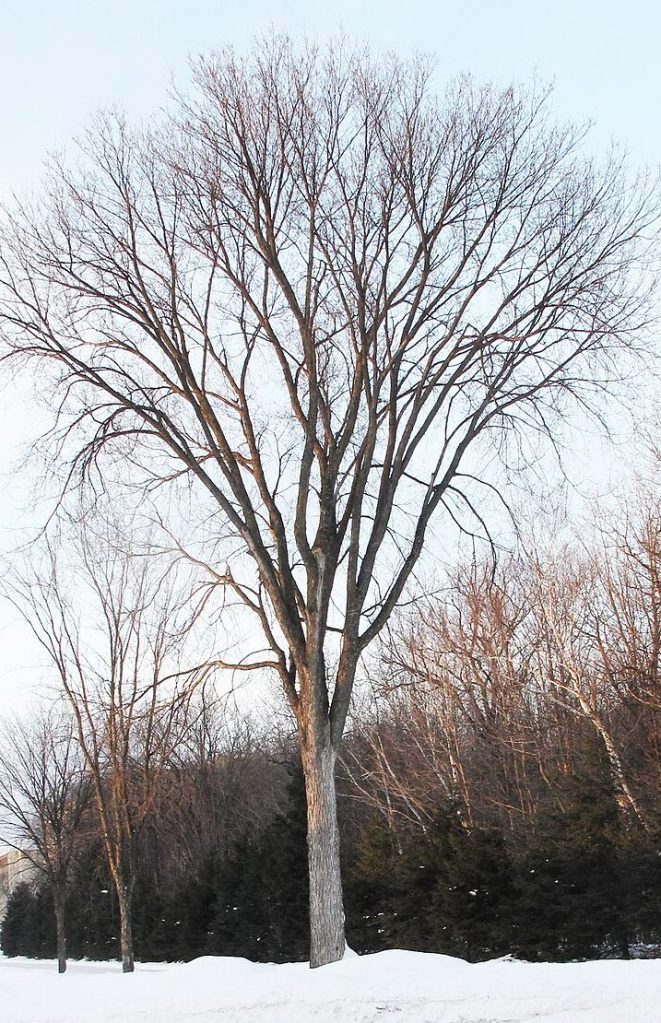
Elm Silhouette:
Silhouette of an American elm (Ulmus americana), its tall trunk rising into a graceful, vase-like form. The arching branches sweep upward and outward, creating a broad, fan-shaped crown that spreads wide like an open canopy, a classic hallmark of the species.
Elm Silhouette: Silhouette of an American elm (Ulmus americana), its tall trunk rising into a graceful, vase-like form. The arching branches sweep upward and outward, creating a broad, fan-shaped crown that spreads wide like an open canopy, a classic hallmark of the species.

2. The Leaves

Elm leaves are simple, oval, and finely toothed along the edge. They have a distinct asymmetrical base—one side of the leaf blade longer than the other where it meets the stem. This “uneven foot” is a true signature. The veins are bold and parallel, running straight from the midrib to each tooth of the margin.

3. The Bark

On young elms, bark is smooth and gray. As the tree matures, the bark becomes dark, deeply furrowed, and rough to the touch. These ridges may twist and interlace, giving the trunk an ancient, rugged strength.

Close-up of an American elm (Ulmus americana) trunk, showing the characteristic gray-brown bark with a distinctive lattice-like pattern of intersecting ridges and furrows. Other identifiable features include irregular, rough-textured plates and shallow fissures that run both vertically and horizontally along the trunk, giving the elm its iconic textured appearance.

4. The Seeds

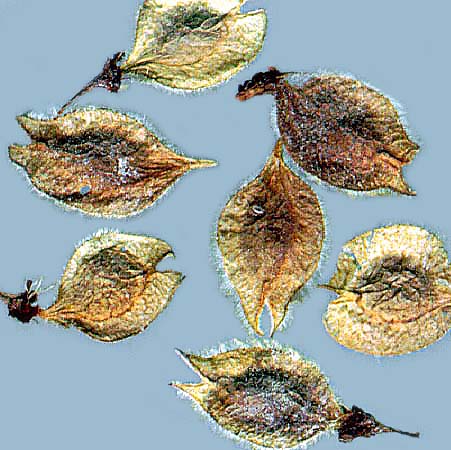
Elms produce seeds in spring, often in great abundance. Each seed is round and flat, encased in a papery wing (a samara) that spins through the air like a coin tossed by the wind.

Close-up of American elm (Ulmus americana) seeds showing the small, oval to slightly round seed bodies. The surface is smooth to lightly textured, with a central embryo visible within each seed.
Courtesy Gmihail, CC BY 3.0
Close-up of American elm (Ulmus americana) seeds showing the small, oval to slightly round seed bodies. The surface is smooth to lightly textured, with a central embryo visible within each seed. Courtesy Gmihail, CC BY 3.0

5. Species in Saskatoon

In our city, you may encounter:

  • American elm (Ulmus americana) – the classic vase-shaped elm, most common in boulevards.
  • Siberian elm (Ulmus pumila) – smaller, faster-growing, but brittle; often used in shelterbelts.
  • Japanese elm (Ulmus japonica) – less common, sometimes planted as a hardy ornamental.

Siberian Elm (Ulmus pumila)

  • Buds: Tiny, dark, and rounded, resembling peppercorns with a flaky outer layer; 3 or more overlapping scales.
  • Twig: Young twigs hairy to sparsely hairy, initially green, maturing to gray-brown.
  • Bud Size: About 1/8 inch long; purplish-brown scales somewhat hairy, especially at the edges.

American Elm (Ulmus americana)

  • Buds: Oval-shaped with a pointed tip, scale-like pattern; projected in the same direction as the subtending branch.
  • Twig: Young twigs brown, hairy or smooth.
  • Bud Color & Texture: Brown with reddish scales, somewhat hairy at edges; longer and less squat than Siberian elm buds.

Key Differences:

  • Siberian elm buds are round and peppercorn-like; American elm buds are oval and pointed.
  • Siberian elm twigs are initially green, American elm twigs are brown.
  • Bud projection: American elm buds grow aligned with the branch, while Siberian elm buds are more rounded and sitting atop the twig.

Why It Matters

Elm bark beetles do not discriminate between species. All are vulnerable to Dutch elm disease. By learning to recognize these noble trees, you can help watch over them, notice early symptoms of DED, and take steps to protect Saskatoon’s canopy.

Did you Know?

“The City of Saskatoon started a unique project for the prairies called Afforestation, of “Man-made Forest”…aimed at improving the future environment of the City. The selection of plant material is based on the soil types, lay of the land, and type of planting scheme.

The following tree species were used:

American and Siberian Elm, Manitoba Maple, Green Ash, Poplar, Willow, Colorado Spruce, Scotch Pine and Caragana.” from a report written by A.L. Ligtermoet Assistant Parks Superintendent, City of Saskatoon. January 4, 1974 CoS archives.

These afforestation areas became known as Richard St. Barbe Baker Afforestation Area and George Genereux Urban Regional Park.


“To know a tree by name is the beginning of kinship. And when we know the elm, we see in it not just a tree, but a guardian of the land.”


“The minimum for safety is one third of the total land area. I think what is happening to the elms must be alerting the whole country to the necessity of trees, of the need for more trees. The elm has the largest leaf surface of any tree in Britain. If you …. put the leaves together edge to edge, they would cover ten acres. So naturally, the first tree to suffer from air pollution was the elm and, of course, when an elm is suffering from fatigue it is subject to attack by disease: the elm bark beetle, the carrier of the elm fungus, comes along and the tree succumbs.

I look at it this way. If a person is living a normal life and not abusing themselves – not smoking too much, not eating too much, not drinking too much – but living normally and eating the right food – they will be fit and well. It is only when they start abusing themselves that they are prone to attack by disease. It is the same with trees.

The next tree to go (the next tree with the largest leaf surface after the elm) is probably the beech: after that the sycamore: and so on. Finally it will be Man’s turn. We forget that we owe our existence to the presence of trees and as far as forest cover goes, we have never been in such a vulnerable position as we are today. The only answer is to plant more trees – to plant for our lives.
Richard St. Barbe Baker answers the first question above” Richard St. Barbe Baker.


Addresses:

Part SE 23-36-6 – Richard St. Barbe Baker Afforestation Area – 241 Township Road 362-A

Part SE 23-36-6 – SW Off-Leash Recreation Area (Richard St. Barbe Baker Afforestation Area ) – 355 Township Road 362-A

S ½ 22-36-6 Richard St. Barbe Baker Afforestation Area (West of SW OLRA) – 467 Township Road 362-A

NE 21-36-6 “George Genereux” Afforestation Area – 133 Range Road 3063

Wikimapia Map: type in Richard St. Barbe Baker Afforestation Area or

Google Maps South West Off Leash area location pin at parking lot

Web page: https://stbarbebaker.wordpress.com

Where is the Richard St. Barbe Baker Afforestation Area? with map

Where is the George Genereux Urban Regional Park (Afforestation Area)?with map

Pinterest richardstbarbeb

Blogger: FriendsAfforestation

Tumblr friendsafforestation.tumblr.comFacebook Group Page: Users of the George Genereux Urban Regional Park

Facebook: StBarbeBaker Afforestation Area

Facebook for the non profit Charity Friends of the Saskatoon Afforestation Areas Inc. FriendsAreas

Facebook group page : Users of the St Barbe Baker Afforestation Area

Facebook: South West OLRA

Reddit: FriendsAfforestation

BlueSky Social

Mix: friendsareas

YouTube

Support via Zeffy

Please help protect / enhance your afforestation areas, please contact the Friends of the Saskatoon Afforestation Areas Inc. (e-mail / e-transfers )

Donate your old vehicle, here’s how!  

Support using Canada Helps

Support via a recycling bottle donation and Join the plastic-recycle challenge!

United Nations Decade on Ecosystem Restoration

““Be like a tree in pursuit of your cause. Stand firm, grip hard, thrust upward. Bend to the winds of heaven..”

Richard St. Barbe Baker

In Wildness is the Preservation of the World: Reflections on the Big Backyard BioBlitz


When I went to the woods, it was not to escape, but to engage—to meet Nature on her own terms, to inquire, observe, and bear witness to the great pageantry of life that unfolds quietly, daily, under our very feet. And it is with this same spirit that I beckon you, dear reader, to take part in the Nature Conservancy of Canada’s Big Backyard BioBlitz from July 28 to August 4, 2025.

This is no idle stroll nor fleeting pastime. It is an invitation to return to the elemental—to become a student once more of the chickadee, the wild strawberry, the tiger beetle, and the trembling aspen. The BioBlitz, now in its fifth year, is a great gathering of curious minds and earnest hearts. It calls upon citizens of field and city alike to explore, observe, and record the living things that share their corner of the Earth.

The poet listens; the naturalist records. In this endeavor, you shall do both.

Equipped with nothing more than a keen eye and a modest tool—a camera or a smartphone—one may walk the familiar trails with new intention. Each beetle scuttling over a stone, each moss-covered log, becomes a chapter in the great, unwritten natural history of this land. iNaturalist, the platform upon which your sightings will be shared, becomes your ledger, your field book, your connection to a nation of fellow observers.

There is no wilderness too small. A backyard garden, a roadside ditch, a lakeside thicket—all are cradles of life deserving of our gaze and our gratitude. For who is to say where wonder resides? It may well be that the caterpillar inching along your front porch holds the secret to tomorrow’s ecological insight.

By lending your eyes and ears to the BioBlitz, you become part of something vaster than yourself. You contribute to a living library of knowledge that helps scientists track shifting species ranges, identify rare and endangered flora, and take the pulse of ecosystems under pressure.

But perhaps more than data, what you collect is reverence.

This weeklong celebration is not merely scientific but soulful. It reminds us that we are not separate from nature, but of it. That to know a place is to love it. And that true conservation begins not only in grand protected parks but in the wild patches of our own daily lives.

So, wander slowly. Look closely. Listen deeply. Let the chickadee instruct you in cheerfulness, and the milkweed in patience. And in these humble acts of noticing, become again part of the wild family of life.

As Henry David Thoreau once wrote, “Heaven is under our feet as well as over our heads.” During the Big Backyard BioBlitz, may you discover both.


Join the BioBlitz:
Sign up today and become a steward of wonder from July 28 – August 4, 2025. Ready, set, snap!

And stay tuned also for

A clean up of trash, and invasive species for Wednesday July 31

The autumn festivities for National Forest Week September 2025!

Addresses:

Part SE 23-36-6 – Richard St. Barbe Baker Afforestation Area – 241 Township Road 362-A

Part SE 23-36-6 – SW Off-Leash Recreation Area (Richard St. Barbe Baker Afforestation Area ) – 355 Township Road 362-A

S ½ 22-36-6 Richard St. Barbe Baker Afforestation Area (West of SW OLRA) – 467 Township Road 362-A

NE 21-36-6 “George Genereux” Afforestation Area – 133 Range Road 3063

Wikimapia Map: type in Richard St. Barbe Baker Afforestation Area

Google Maps South West Off Leash area location pin at parking lot

Web page: https://stbarbebaker.wordpress.com

Where is the Richard St. Barbe Baker Afforestation Area? with map

Where is the George Genereux Urban Regional Park (Afforestation Area)?with map

Pinterest richardstbarbeb

Blogger: FriendsAfforestation

Tumblr friendsafforestation.tumblr.comFacebook Group Page: Users of the George Genereux Urban Regional Park

Facebook: StBarbeBaker Afforestation Area

Facebook for the non profit Charity Friends of the Saskatoon Afforestation Areas Inc. FriendsAreas

Facebook group page : Users of the St Barbe Baker Afforestation Area

Facebook: South West OLRA

Reddit: FriendsAfforestation

BlueSky Social

Mix: friendsareas

YouTube

Support via Zeffy

Please help protect / enhance your afforestation areas, please contact the Friends of the Saskatoon Afforestation Areas Inc. (e-mail / e-transfers )

Donate your old vehicle, here’s how!  

Support using Canada Helps

Support via a recycling bottle donation and Join the plastic-recycle challenge!

United Nations Decade on Ecosystem Restoration

““Be like a tree in pursuit of your cause. Stand firm, grip hard, thrust upward. Bend to the winds of heaven..”

Richard St. Barbe Baker

Design a site like this with WordPress.com
Get started