Richard St. Barbe Baker Afforestation Area. George Genereux Urban Regional Park. Humboldt Broncos Memorial Forest. Come to Nature. Come to Life. Friends of the Saskatoon Afforestationk Areas Inc. friendsareas.ca
As April 7th approaches, Canadians prepare to honor one of their most iconic symbols—the beaver. While these industrious creatures may not be spotted in the Richard St. Barbe Baker Afforestation Area or the George Genereux Urban Regional Park, their significance to Canada’s identity and ecosystem cannot be overstated.
The beaver was officially recognized as an emblem of Canada in 1975, symbolizing the country’s sovereignty. However, its association with Canada predates this legislative act, deeply ingrained in the nation’s history and culture. Once abundant throughout Canada, the beaver faced extinction due to overhunting and habitat loss.
European settlers arriving in Canada brought with them a demand for beaver pelts, driven by the fashion trend of fur hats in the 16th and 17th centuries. At the onset of the 16th century, the beaver population had vanished from the region of the United Kingdom, despite its previous widespread presence across Britain. The Eurasian Beaver had been absent from Scotland for four centuries.The lucrative fur trade made beavers the main profit-making attraction, pushing their population to the brink of collapse by the mid-19th century.
Even amidst its decline, the beaver remained a symbol of Canadian identity, depicted on the nation’s first postage stamp by Sir Sandford Fleming. However, with an estimated 6 million beavers before the fur trade and a staggering 100,000 pelts shipped to Europe annually at its peak, conservation efforts became imperative to prevent the species’ extinction.
Today, thanks to dedicated conservation initiatives, the beaver population has rebounded across Canada. As we celebrate International Beaver Day, we recognize the importance of these creatures as ecosystem indicators. Though we believe that the beaver is absent from certain areas like the Richard St. Barbe Baker Afforestation Area and the George Genereux Urban Regional Park at the current time, their presence elsewhere in Saskatoon serves as a testament to the city’s biodiversity.
In commemorating International Beaver Day, let us also reflect on the broader significance of wetlands and rivers as vital habitats for biodiversity. Join us in celebrating nature in Saskatoon by participating in the City Nature Challenge from April 26 to 29 with four exciting events using the iNaturalist app. Explore the wonders of nature throughout our city’s natural landscape, but remember to exercise caution around water and use the buddy system for safety. With thanks to our sponsors and supporters SaskPower, SaskTel, Saskatoon Nature Society, Wild About Saskatoon, Varsity View Community Association, Rosewood Varsity View Community Association, Nutana Varsity View Community Association, Montgomery Place Varsity View Community Association. City Nature Challenge Saskatoon CNC YXE 2024 led by Friends of the Saskatoon Afforestation Areas.
As we honor the beaver and its resilience, let us reaffirm our commitment to preserving Canada’s natural heritage for future generations to enjoy. Together, we can ensure that these iconic symbols of our nation continue to thrive in their natural habitats, contributing to the rich tapestry of Canadian biodiversity.
American Beaver, Porcupine, Red-winged Blackbird, Fawn, Mallard Ducks, Waxwing, Rabbit, Deer Chappell Marsh. West Swale Wetlands. Richard St. Barbe Baker Afforestation Area. Saskatoon, SK, CA iNaturalist Observation with smart phone connecting with nature, supporting vital conservation research worldwide.American_Beaver Castor canadensis Adapted from image courtesy Steve CCxSA2-0
Richard St. Barbe Baker Afforestation Area is located in Saskatoon, Saskatchewan, Canada north of Cedar Villa Road, within city limits, in the furthest south west area of the city. 52° 06′ 106° 45′
Addresses:
Part SE 23-36-6 – Afforestation Area – 241 Township Road 362-A
Part SE 23-36-6 – SW Off-Leash Recreation Area (Richard St. Barbe Baker Afforestation Area ) – 355 Township Road 362-A
S ½ 22-36-6 Richard St. Barbe Baker Afforestation Area (West of SW OLRA) – 467 Township Road 362-A
NE 21-36-6 “George Genereux” Afforestation Area – 133 Range Road 3063
Wikimapia Map: type in Richard St. Barbe Baker Afforestation Area
Google Maps South West Off Leash area location pin at parking lot
As we turn on our taps without a second thought, the life force flowing through the South Saskatchewan River remains an unsung hero, sustaining the existence of 2.2 million people, including us here in Saskatoon. But the river, a symbol of vitality, is facing an uncertain future. Join Wild About Saskatoon for a captivating online event, “We All Drink From the Same River,” on Thursday, January 25, from 7-8 pm, featuring Elder and Water Walker Marjorie Beaucage and river expert Dr. Tim Jardine.
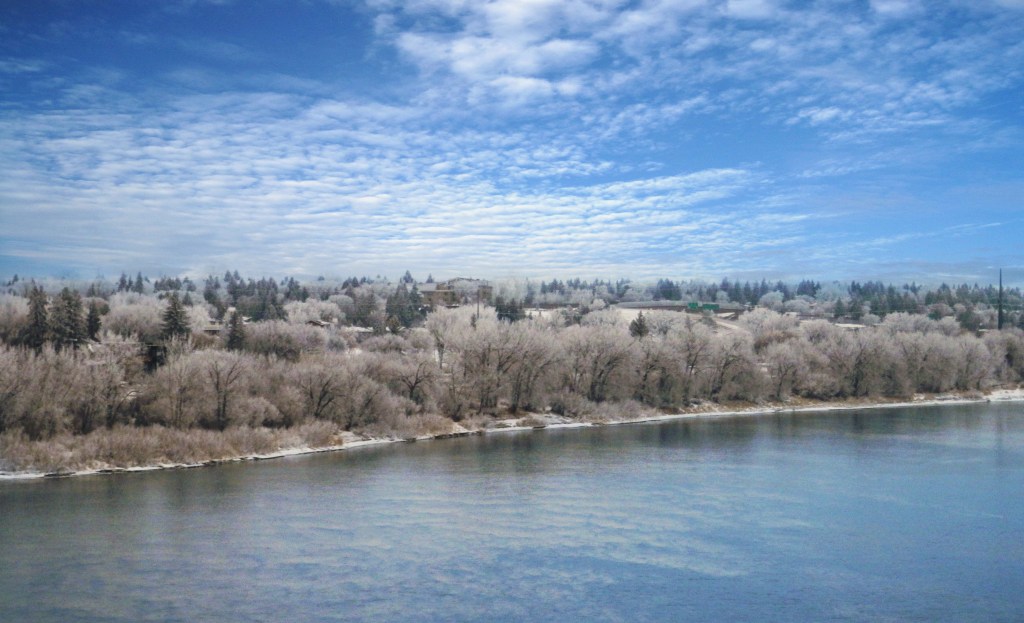
The South Saskatchewan River begins its journey in the mountainous realms, carving through the drylands of two prairie provinces to bestow life-giving water upon everyone and everything in its path. It’s not just a physical presence; it’s a pulsating connection, coursing through our veins with each drop of water we consume. The river’s health is intrinsically linked to our own, and it’s time to recognize its significance.
In the face of challenging times, where last year’s mountain sources were parched and this year’s snowpack in Banff is only 40% of average, the urgency to safeguard our river has never been more pressing. The event aims to shed light on the intricate web of demands tugging at the South Saskatchewan River and what steps we need to take to preserve this vital lifeline.
Meet the Voices Behind the Cause:
Marjorie Beaucage: A Two-Spirit Métis Auntie, filmmaker, art-ivist, and educator, Marjorie’s roots in Vassar, Manitoba, have grown into a life dedicated to creating social change. As a land protector and Water Walker, she stands as a beacon for right relations and possibilities. Marjorie’s extensive experience as the Elder for OUT Saskatoon and the Elder-In-Residence for the University of Saskatchewan Student Union has uniquely positioned her to guide us through the cultural and spiritual dimensions of our connection to the river.
Dr. Tim Jardine: Associate Professor in the Toxicology Centre and the School of Environment and Sustainability at the University of Saskatchewan, Dr. Tim Jardine is a dedicated river ecologist. His expertise extends across the globe, studying the ecology of rivers in Australia and Brazil, while leading collaborative projects in Western Canada’s inland river deltas. Dr. Jardine’s insights will provide a scientific perspective on the challenges facing the South Saskatchewan River.
How Can You Contribute?
Tune in to the live event on YouTube on Thursday, January 25, from 7-8 pm, to hear Marjorie Beaucage and Dr. Tim Jardine discuss the state of the South Saskatchewan River and the actions we can collectively take to ensure its well-being. This free, online gathering is not just an informational session; it’s a call to action for every individual who understands that the fate of the river is intricately tied to our own.
The South Saskatchewan River is not just a resource; it’s a lifeline. Let’s come together to ensure that we all continue to drink from the same river for generations to come.
Of the earth’s thirty billion acres, already nine billion acres are desert. And if a man loses a third of his skin, he dies; plastic surgeons say “He’s had it.” And if a tree loses one-third of its bark, it dies. And if the earth loses one-third of its green mantle of trees, it will die. The water table will sink beyond recall and life on this planet will become impossible. It’s being skinned alive today. . .
Introduction: Nurturing the Earth beneath Our Feet on World Soil Day
As December 5th dawns, the global community unites to celebrate World Soil Day, a day dedicated to recognizing the pivotal role healthy soil plays in sustaining life on our planet. A pioneer in environmental conservation, Richard St. Barbe Baker, advocated for innovative methods like stone mulching to bring earthworms to the surface, aiding in tree survival and combating desertification. Today, let’s delve into the profound ways tree planting and forests contribute to the sustainable management of our precious soil resources.
1. Erosion Prevention: Tree Roots as Nature’s Anchors
Tree roots act as a natural shield, preventing soil erosion caused by wind and water. The intricate network of roots binds the soil together, reducing the risk of loss due to weather elements.
2. Nutrient Cycling: Nature’s Fertilizer Factory
Forests play a vital role in nutrient cycling. Fallen leaves, branches, and organic matter decompose, enriching the soil with essential nutrients. This natural fertilizer supports healthy plant growth.
3. Water Retention: Trees as Subsurface Sponges
Tree roots absorb and store water, preventing runoff and enhancing groundwater recharge. This helps maintain optimal soil moisture levels, crucial for supporting diverse ecosystems.
4. Biodiversity Boost: A Web of Life Below Ground
Forests house a rich array of plant and microbial life beneath the soil. This biodiversity promotes symbiotic relationships, enhancing nutrient exchange and fostering a resilient ecosystem.
5. Carbon Sequestration: Trees as Carbon Guardians
Forests are powerful carbon sinks. Trees absorb carbon dioxide during photosynthesis, storing carbon in their biomass and the soil. This process helps mitigate climate change by reducing greenhouse gas concentrations.
6. Soil Structure Improvement: Tree Roots as Underground Engineers
The growth and decay of tree roots contribute to the improvement of soil structure. This enhances water infiltration, aeration, and nutrient availability, creating an environment conducive to plant growth.
7. Contaminant Filtration: Forests as Nature’s Filters
Trees and forest vegetation act as natural filters, trapping pollutants and contaminants, preventing them from leaching into the soil. This filtration mechanism safeguards both soil and water quality.
8. Microbial Harmony: Mycorrhizal Relationships
Trees form symbiotic relationships with mycorrhizal fungi. These fungi facilitate nutrient uptake by tree roots, promoting a harmonious exchange that benefits both the trees and the soil ecosystem.
Richard St. Barbe Baker’s advocacy for shelterbelt tree plantings holds true today. Trees planted strategically as windbreaks can combat soil degradation caused by wind erosion, preserving fertile topsoil.
10. Habitat Creation: A Haven for Soil Organisms
Forests provide a rich habitat for diverse soil organisms, from earthworms to microorganisms. This biodiversity supports a balanced and thriving soil ecosystem essential for overall environmental health.
Conclusion: Cultivating a Legacy of Soil Stewardship
On this World Soil Day, let us celebrate the enduring legacy of Richard St. Barbe Baker and embrace the profound impact of tree planting and forests on soil sustainability. As stewards of the earth, our commitment to nurturing healthy soil echoes through the roots of resilient forests, promising a future where the soil beneath our feet thrives, sustaining life for generations to come.
Support the Friends of the Saskatoon Afforestation Areas: Cultivating a Legacy of Soil Stewardship
In our collective efforts to preserve and nurture the soil beneath our feet, consider supporting the Friends of the Saskatoon Afforestation Areas. This dedicated group works tirelessly to protect and enhance the afforestation areas, ensuring they remain vibrant havens for nature and vital contributors to soil health. By joining hands with the Friends, we strengthen the roots of resilience that connect us to the very essence of our planet’s well-being. To learn more or contribute, visit Friends of the Saskatoon Afforestation Areas
Photo of Richard St. Barbe Baker
Courtesy: University of Saskatchewan,
University Archives & Special Collections,
Richard St. Barbe Baker fonds, MG 71
Richard St. Barbe Baker Afforestation Area is located in Saskatoon, Saskatchewan, Canada north of Cedar Villa Road, within city limits, in the furthest south west area of the city. 52° 06′ 106° 45′ Addresses: Part SE 23-36-6 – Afforestation Area – 241 Township Road 362-A Part SE 23-36-6 – SW Off-Leash Recreation Area (Richard St. Barbe Baker Afforestation Area ) – 355 Township Road 362-A S ½ 22-36-6 Richard St. Barbe Baker Afforestation Area (West of SW OLRA) – 467 Township Road 362-A NE 21-36-6 “George Genereux” Afforestation Area – 133 Range Road 3063 Wikimapia Map: type in Richard St. Barbe Baker Afforestation Area Google Maps South West Off Leash area location pin at parking lot Web page: https://stbarbebaker.wordpress.com Where is the Richard St. Barbe Baker Afforestation Area? with map Where is the George Genereux Urban Regional Park (Afforestation Area)? with map
Please help protect / enhance your afforestation areas, please contact the Friends of the Saskatoon Afforestation Areas Inc. (e-mail)
Support the afforestation areas with your donation or membership ($20.00/year). Please donate by paypal using the e-mail friendsafforestation AT gmail.com, or by using e-transfers Please and thank you! Your donation and membership is greatly appreciated. Members e-mail your contact information to be kept up to date!
Multis e gentibus vires (From Many Peoples Strength)
Has any one of us ever really seen a Tree? When we become aware of trees we may each glimpse of them to moments of spiritual vision and, identifying ourselves with the trees, become conscious of the rising of the sap; the upward thrust of life, leaf burgeoning, their consciousness of the changing seasons; we may share their passionately boisterous exuberance of life in the height of the storm, and their tranquility when at rest; with them we will enjoy the glad murmur of the ripening seed clusters when after weeks of drought the steady warm rain brings relief to thirst; and we will know that these creatures, our elder brethern, are intimately related to us in their love and hunger for life. We may even catch their enthusiasm and aspire heavenwards while still rooted in our Mother Earth and in communion with our fellow man and, tree-wise, strive to make the Earth more fruitful again.~Richard St. Barbe Baker
On December 4th, join the world in celebrating Wildlife Conservation Day with a visit to the Richard St. Barbe Baker Afforestation Area and George Genereux Urban Regional Park in Saskatoon, Saskatchewan. These awe-inspiring man-made forests create a unique eco-tone that is home to an abundance of wildlife, including birds and animals, as well as flora and fauna. Come out and explore these winter wonderlands while learning about winter bird feeding do’s and don’ts. And if you’re feeling extra inspired, join the Friends of the Saskatoon Afforestation Areas to help protect and document the amazing wildlife in these areas. Celebrate Wildlife Conservation Day with a visit to these two remarkable afforestation areas!
Overview of wildlife conservation day and location
Every year on December 4th, Wildlife Conservation Day is celebrated around the world. This day serves as a reminder to appreciate and protect nature’s wild creatures for future generations. Saskatoon, Saskatchewan offers two remarkable parks that provide incredible habitat for birds and animals, as well as flora and fauna native to the area: Richard St. Barbe Baker Afforestation Area and George Genereux Urban Regional Park. Established in 1972 and named in 1978, the two afforestation areas have been supported by Friends of Saskatoon Afforestation Areas since 2015 clean ups, and officially becoming a charity in 2019. The Friends are committed to conserving these eco-tone parks.
The Richard St. Barbe Baker Afforestation Area offers visitors a chance to explore its network of walking or biking trails while at George Genereux Urban Regional Park there are wetlands, woodlands, meadows and prairies featuring even more wildlife activities such as winter bird feeding do’s and don’ts – from what types of food they should eat during colder months to how we can feed them safely whilst preserving their habitats! On December 4th Friends of the Saskatoon Afforestation Areas invite you to join them in their mission towards protecting these stunning man-made forests with various activities dedicated solely to this cause!
Richard St. Barbe Baker Afforestation Area: wetlands, woodlands and meadows
The Richard St. Barbe Baker Afforestation Area in Saskatoon, Saskatchewan, Canada is an incredible man-made forest and a prime example of a moist mixed grasslands ecosystem. This area is home to a variety of wildlife, including more than 200 species of birds that can be seen year round. Mammals such as white-tailed deer and jackrabbits also make their home here, while wildflowers abound in the spring and summer months.
This afforestation area provides an ideal habitat for its animal residents due to its wide range of ecosystems. The wetlands are full of aquatic plants and many amphibian species such as frogs and salamanders, while woodlands provide shelter for birds and small mammals like squirrels. The meadows bursting with different flowers attract bees and butterflies throughout the summer months, providing food for other animals such as bats.
For those wanting to explore the park further, trails provide a great way to appreciate the diversity of this ecosystem. The trails range from easy to moderate difficulty and are often lined with wildflowers, cattails, and other native plants. Birdwatchers can keep an eye out for some of the species that call this park home such as red-winged blackbirds, northern harriers, killdeer and more. With its unique blend of woodlands, meadows and prairies teeming with life, Richard St. Barbe Baker Afforestation Area is a must see for anyone looking to experience nature in all its glory!
George Genereux Urban Regional Park: flora and fauna
It’s important to appreciate each of these ecosystems within the afforestation area so we can better understand how to protect them from destruction or overuse. We need to take time to celebrate Wildlife Conservation Day on December 4th by exploring this unique afforested area and learning how our actions will affect its marvelous wildlife inhabitants. Join Friends of the Saskatoon Afforestation Areas on December 4th for activities dedicated solely to protecting this amazing man-made forest!
Winter bird feeding do’s and don’ts
Winter bird feeding can be a great way to enjoy watching birds in the winter months while also helping to conserve wildlife. However, it’s important to follow certain guidelines in order to ensure the health and safety of the birds. Here are some do’s and don’ts for winter bird feeding that you should keep in mind when visiting Saskatoon’s Richard St. Barbe Baker Afforestation Area or George Genereux Urban Regional Park:
Do offer a variety of seed types: Different species of birds prefer different types of food, so make sure you provide a variety of seeds to attract more birds. Sunflower seeds, millet and safflower are all good options for providing energy-rich foods that most birds will enjoy.
Do provide fresh water: Birds need access to clean water year-round, but this is especially important during the winter months when there is less natural water available due to frozen ground or snow accumulation. Make sure you regularly refill your bird bath with fresh water, as well as periodically cleaning it out to prevent algae buildup.
Do use feeders that are safe from predators: Raptors such as hawks and owls may come around looking for an easy meal if they know there is food nearby. To protect your feathered friends from these predators, use feeders with covers that have small openings so they can still get their food but larger predators won’t be able to reach them.
Don’t use feeders with sharp edges or deep bowls: If you’re using a homemade feeder, make sure it doesn’t have any sharp edges or deep bowls that could injure smaller birds while they’re eating. Additionally, avoid placing bird feeders too close together as this could lead to fighting among species over food sources.
By following these tips, you can ensure a safe and comfortable environment for the birds visiting Saskatoon’s afforestation areas during the colder months while helping them thrive in their habitats!
Join the Friends of the Saskatoon Afforestation Areas
Celebrate Wildlife Conservation Day by joining the Friends of the Saskatoon Afforestation Areas and help protect these amazing man-made forests. This volunteer group was created to assist with the conservation and protection of these two afforestation areas. The organization focuses on protecting the wildlife in these areas, as well as encouraging visitors to experience nature in its purest form.
Membership is open to anyone who wants to contribute their time and efforts towards the conservation of these afforestation areas. You can also donate money or supplies if you are unable to contribute your time. Become a member of this organization and stay up-to-date on their activities through their newsletter, blog posts, and social media accounts. Additionally, attend their virtual monthly meetings where you can discuss plans for conservation and protection of the afforestation areas with other members of the organization.
Share your experiences with others by writing reviews or taking pictures while visiting these natural wonders and post them online. By joining this organization, you can help ensure that these magnificent forests are protected for future generations to come. Invite your friends, family, neighbors, or co-workers along too! It only takes one small action from each person to make a big difference in preserving our planet’s precious resources.
As the world faces the devastating effects of climate change, it is increasingly important for individuals to take action and do their part to mitigate these impacts. One of the best ways to do this is by supporting afforestation areas, which are nature-based solutions that can help restore our environment and address climate change. In this blog post, we’ll explore how afforestation areas can help fight climate change, as well as provide activities you can do to support climate action. To make an even bigger impact, we encourage readers to join the Friends of the Saskatoon Afforestation Areas and take the pledge to support climate action – together we can make a difference in protecting our planet!
Impact of climate change
Climate change is a global phenomenon that has had an immense impact on our planet. Rising temperatures, extreme weather events, melting polar icecaps, species loss, and human health have all been affected by climate change. If left unchecked, these effects can lead to even further destruction of the environment and human lives.
The rising global temperature has caused an increase in floods, droughts and storms across the globe. These extreme weather events are more destructive than ever before due to their increased intensity and frequency. This has resulted in widespread destruction of property and the displacement of millions of people from their homes.
The melting of polar icecaps has caused rising sea levels which have threatened coastal cities around the world as well as increased acidity levels in our oceans. This is having a devastating effect on marine life with many species being unable to survive in such acidic environments. It also threatens our own food security as fish stocks are depleted.
Species loss due to destroyed habitats is another consequence of climate change which cannot be ignored. Habitats are being destroyed by changing temperatures and disrupted food chains resulting in species becoming extinct or endangered at alarming rates. This is having a ripple effect throughout ecosystems leading to further destruction if not addressed soon enough.
Finally, human health is being impacted by climate change in numerous ways including heat waves which can lead to illnesses such as heat exhaustion or stroke, heart attacks or even death in extreme cases. Additionally air pollution caused by burning fossil fuels contributes to respiratory diseases like asthma making it difficult for many people to breathe properly on hot days when air quality is poor.
Afforestation areas are one way we can combat some of these effects caused by climate change while restoring nature back into balance again. By planting and then protecting trees we can reduce carbon emissions, help slow down extreme weather events such as floods or droughts, improve air quality and provide habitats for wildlife so they can continue living within their ecosystems without fear of extinction or endangerment due to habitat destruction!
Importance of afforestation areas
Afforestation areas are nature-based solutions that can help mitigate climate change. They absorb carbon dioxide from the atmosphere and store it in their trees, soil, and other vegetation, helping to reduce air pollution and conserve water. Afforestation areas can also provide habitats for wildlife, allowing animals to safely thrive in a natural environment.
The Richard St. Barbe Baker Afforestation Area and George Genereux Urban Regional Park in Saskatoon, Canada are two examples of afforestation areas that offer locals the chance to experience nature and learn about the importance of afforestation areas for climate action. This area was established in 1960 by the City of Saskatoon with the goal of creating a man-made forest on the prairies as a concept to preserving green space in urban environments. The park is home to many species of plants and animals, including birds such as Bald Eagles, Great Horned Owls, White Pelicans and Sandhill Cranes. It also serves as an educational resource for students who visit the park on field trips or participate in workshops where they can learn about environmental conservation topics like sustainable agriculture, energy efficiency and wildlife management programs.
Afforestation is one way individuals can take action to support climate action initiatives around the globe. We all have a civic duty to protect our planet from further damage caused by climate change – whether through individual efforts or collective efforts like joining an organization such as Friends of the Saskatoon Afforestation Areas or taking part in local activities such as tree planting events or beach cleanups. By taking action together we can make a difference in protecting our planet’s future health against further degradation caused by global warming and other environmental issues that threaten its inhabitants now more than ever before.
Take the pledge today to support climate action initiatives worldwide! Join Friends of the Saskatoon Afforestation Areas today – together we can make a difference!
How to support afforestation areas
For those looking to do their part in preserving our planet, getting involved in afforestation projects is an excellent place to start. Joining a local group that advocates for the protection and preservation of afforestation areas can have numerous benefits, including learning more about conservation efforts and participating in community events. Additionally, many organizations offer volunteer opportunities which contribute to maintaining these vital ecosystems.
Two key afforestation areas located in Saskatoon are the Richard St. Barbe Baker Afforestation Area and George Genereux Urban Regional Park. The former was planted to trees fifty years ago and covers over 326 acres while the latter spans over 148 acres with trails, and benches for visitors to enjoy.
It’s also possible to support afforestation projects through donations or by volunteering your time. For instance, Friends of the Saskatoon Afforestation Areas accepts contributions that go towards restoring forests as well as protecting habitats for endangered species throughout the afforestation areas. Similarly, local organizations such as Friends of the Saskatoon Afforestation Areas often need volunteers for tasks such as forest maintenance or tree protections at these invaluable locations.
Taking part in activities such as these helps reduce carbon emissions while creating a more sustainable planet for future generations – something we all have a responsibility to do! If you’re interested in contributing positively towards our environment, why not join your local group, Friends of the Saskatoon Afforestation Areas , today or donate your time or money? With collective effort we can make a real difference!
20 activities to take action on climate change
Climate action is everyone’s responsibility, and there are many actions that individuals can take to support initiatives such as afforestation areas. Here are 20 activities that you can do to help combat climate change and protect our planet:
1. Support local initiatives: Look for ways to support the local efforts of organizations, Friends of the Saskatoon Afforestation Areas, working on documenting biodiversity in the afforestation projects in your area. You can donate money, volunteer time, or speak out in support of their initiatives.
2. Educate yourself and others: Read up on the latest research related to afforestation areas and share what you learn with family, friends, and colleagues.
3. Attend events: Participate in events such as biodiversity count days or clean-up efforts at your local parks or nature reserves – these activities will help protect existing trees while also creating new habitats for wildlife.
4. Plant a tree: Plant a tree in your garden or yard! This will help reduce carbon emissions from the atmosphere while providing oxygen for us all to breathe.
5. Go vegetarian/vegan: Make more sustainable dietary choices by eating less meat and dairy products – this will reduce methane emissions which are major contributors to global warming. “I am convinced that the vegan way of life is the only sane way of life, and realising that the basic cause of tension is growing populations and diminishing food sources, for the past ten years I have devoted much of my time to studying the question of food production and the problems of large scale land reclamation by tree planting.” ~ Richard St. Barbe Baker
6. Choose eco-friendly transportation: Whenever possible, opt for public transport instead of driving a car – this reduces carbon dioxide emissions from vehicles which contribute to climate change.
7. Use energy efficient appliances: Upgrade your home appliances with energy efficient models – this helps reduce electricity consumption which saves both money and energy!
8. Reuse materials whenever possible: Reduce waste by reusing materials such as glass jars, cardboard boxes, plastic bags etc., rather than throwing them away after use – this helps conserve natural resources while reducing landfill waste which contributes to global warming when it decomposes anaerobically (without oxygen).
9. Shop consciously and responsibly sourced goods: Buy products made of renewable materials such as hemp or bamboo instead of plastics – this reduces the amount of non-biodegradable waste generated by consumer goods production processes which contribute to climate change when they’re not properly disposed of or recycled correctly.
10 Create social media campaigns: Use social media platforms like Instagram, Twitter or Facebook to spread awareness about the actions of Friends of the Saskatoon Afforestation Areas- this encourages people around you to join forces against climate change!
11 Join an environmental organization: Get involved with an organization that works towards protecting our environment – The Friends of the Saskatoon Afforestation Areas is one organization dedicated solely towards preserving our planet through conservation efforts.
12 Donate funds: Donate funds regularly or one time donations towards The Friends of the Saskatoon Afforestation Areas devoted towards protecting our planet – even small contributions can make a big difference!
13 Sign petitions: Sign online petitions calling attention to issues regarding environmental protection – these petitions bring attention from governments and corporations who hold power over policy decisions that affect us all.
14 Be mindful about water usage: Conserve water by using low flow faucets and showerheads, installing rainwater harvesting systems, repairing leaky pipes, taking shorter showers, avoiding hosing down sidewalks etc. All these activities together can significantly reduce water wastage which has devastating effects on our environment if unchecked.
15 Advocate for renewable energy sources: Speak up about needing greener alternatives such as solar panels, wind vortex, geothermal energy etc. These technologies are emerging rapidly but need more government funding in order for them to truly scale up their implementation across countries worldwide.
16 Recycle materials whenever possible: Separate recyclable items from non-recyclables before disposing them off – recycling conserves natural resources while preventing pollution caused during manufacturing processes from new raw materials.
17 Avoid single use items: Invest in cleaner alternatives for everyday items like straws, utensils, grocery bags, laundry detergent bottles etc. This helps cut down on plastic wastage which harms wildlife when it isn’t disposed off properly
18 Support businesses promoting sustainability: Patronize businesses that act sustainably throughout their production processes – buy locally grown produce whenever possible; look into companies whose packaging strategies promote recyclability; buy certified organic products; shop secondhand clothes instead of buying new ones etc.
19 Vote for candidates advocating for green policies: Make sure your representatives are those who prioritize green policies over short term economic gains – vote responsibly!
20 Take part in marches protesting against climate inaction: Show solidarity with protesters around the world fighting against governments and corporations who refuse to take action on climate change – marches raise awareness about the urgency of taking action now!
Take the pledge to support climate action
Taking action to combat climate change is the utmost responsibility of every citizen. We must all work together to protect our planet and ensure a better future for the generations to come. One way to do this is by taking the pledge to support climate action and joining the Friends of the Saskatoon Afforestation Areas.
The Friends of the Saskatoon Afforestation Areas are an organization dedicated to protecting and preserving areas such as Richard St. Barbe Baker Afforestation Area, George Genereux Urban Regional Park, and advocate for more afforestation areas in Saskatoon. By taking their pledge, individuals can help make a difference in the fight against global warming and take part in initiatives that reduce carbon emissions.
Joining this group is just one way to support climate action initiatives worldwide. Readers are encouraged to spread awareness about climate change actions on social media, organize volunteer activities at local afforestation areas, donate money or time towards environmental organizations, or sign petitions calling on governments for more funding and support for afforestation projects.
By taking part in these activities we can all do our part in protecting our planet from further damage caused by climate change. Each individual’s contribution counts- whether it’s participating in marches protesting against environmental inaction or simply voting for candidates advocating green policies- every effort counts towards making a difference in our world today!
In the depths of nature’s embrace, Where wetlands shimmer with grace, Lies a haven of life untamed, Where water’s essence is proclaimed.
Richard St. Barbe Baker’s vision grand, A forested legacy upon this land, In the heart of the prairie’s embrace, A sanctuary for all life to embrace.
Within the West Swale’s gentle sway, A tapestry woven in Pleistocene’s day, Man-made forests, a testament rare, To the magic of nature’s care.
On World Water Monitoring Day, Let’s gather in this sacred way, And celebrate the wetland’s might, Guided by knowledge, love, and light.
Here, let us engage, together we thrive, Seven activities, our souls will revive:
Wetland exploration, a journey to embark, Discovering the wonders, from dawn till dark.
Water quality monitoring, a scientific quest, To ensure the wetlands are at their best, Testing and analyzing, hands-on and true, Preserving water, a vital value.
Restoration projects, brainstorming unites, To heal the wetlands, restore their light, plans and reports are something to do, Creating havens where life can renew.
Exhibits, virtual signage, educational art, Guiding hearts and minds, imparting a start, With visuals and stories, we shall see, The magic and wonder of wetlands’ decree.
Citizen science, a community’s pride, Joining forces, side by side, Collecting data, sharing insights, Contributing to knowledge’s great heights.
Photography contests, a visual delight, Capturing wetland’s beauty, a captivating sight, Through lenses and frames, we shall tell, The story of water’s magic spell.
Community engagement, voices in chorus, Advocating for wetlands, a united force, Forums and discussions, knowledge we share, To protect these treasures, with love and care.
So let us honor World Water’s Day, In Richard St. Barbe Baker’s array, In these naturalized green spaces, we find, A deep respect for water, forever enshrined.
In the West Swale’s embrace, we stand,
Guardians of wetlands, hand in hand,
For Chappell Marsh and the West Swale’s might,
Let’s cherish them always, with all our might.
🌲🌿 Join us for the National Forest Week Flag Raising Ceremony! 🌳🚩 Discover how forests and trees play a vital role in protecting and conserving our precious wetlands. 🏞️ Today is also World Water Monitoring Day! 💧
🗓️ Date: September 18 today! 🕑 Time: 2:00 PM 📍 Location: Saskatoon City Hall Civic Square
To express your interest in the above activities or action plans or collaboration, or to inquire further about the non profit environmental charity as supporter, volunteer or to become a board member, please reach out to us at email: friendsafforestation@gmail.com.
Yellow-headed Blackbird (Xanthocephalus xanthocephalus) habitat is in cattail marshes such as Chappell Marsh in the Richard St. Barbe Baker Afforestation Area. The female is not a brightly coloured as this male.Ruddy Duck. Chappell Marsh. West Swale Wetlands. Richard St. Barbe Baker Afforestation Area. Saskatoon, SK, CA Mallard Ducks Chappell Marsh. West Swale Wetlands Richard St. Barbe Baker Afforestation Area. Saskatoon, SK, CA Pelican PreenningBranta canadensis Canada Goose
Introduction: On September 18th, we come together to celebrate World Water Monitoring Day, a day dedicated to raising awareness about the importance of clean water and encouraging people to take action in protecting our precious water resources. As we delve into the naturalized green spaces of the Richard St. Barbe Baker Afforestation Area and the George Genereux Urban Regional Park, spanning over 192 hectares (474 acres) of man-made forests situated within the West Swale wetlands, we explore the significance of these unique geological formations in fostering biodiversity and safeguarding water ecosystems. In this article, we present seven excellent activities and programming ideas to engage the general public and foster a deep respect for wetlands, waterfowl, wading birds, and species at risk found within these natural habitats.
Activities and action plans
Wetland Exploration and Birdwatching: Organize guided tours and birdwatching sessions to educate the public about the vital role wetlands play in maintaining water quality and supporting diverse wildlife populations. Participants can observe waterfowl, wading birds, and other species that rely on wetland ecosystems, fostering a deep appreciation for their ecological significance.
Wetland Restoration and Conservation Projects: Engage volunteers in wetland restoration and conservation research and workshops within the afforestation areas. Activities may brainstorming advocacy for future potential activities such as removing invasive species, planting native vegetation, or creating wildlife habitats, contributing to the overall health and resilience of wetland ecosystems while fostering a sense of stewardship among participants.
Educational Exhibits and Interpretive Signage: Request insight into educational exhibits and virtual interpretive signage throughout the afforestation areas, providing visitors with information on wetland ecology, the importance of preserving water resources, and the species at risk within these habitats. Engaging visuals and interactive displays can enhance public understanding and appreciation.
Water Quality Monitoring Workshops: Engage classrooms and youth groups to engage in water quality monitoring workshops, providing the public with hands-on experience in assessing the health of local water bodies. Participants can learn about the factors influencing water quality, test water samples for various parameters, and gain insights into the importance of preserving clean and unpolluted water sources.
Citizen Science Initiatives: Encourage the public to participate in citizen science initiatives focused on wetland conservation by using the free iNaturalist app. Collaborate with local research institutions or organizations to develop programs where volunteers can contribute to data collection, such as monitoring water quality, documenting species sightings, or assessing wetland biodiversity. By involving the general public, we create a sense of ownership and responsibility for these precious ecosystems.
Nature Photography Contests: Organize nature photography contests centered around wetlands and water ecosystems. These contests can inspire photographers of all ages to capture the beauty and importance of wetland habitats, raising awareness and fostering a deeper connection with these fragile ecosystems.
Community Engagement and Advocacy: Host community engagement events, such as public forums, workshops, or panel discussions, to raise awareness about wetland conservation and the importance of safeguarding water resources. These platforms allow for open dialogue, knowledge sharing, and collective action towards protecting our invaluable water ecosystems.
Conclusion: On World Water Monitoring Day, we recognize the paramount importance of clean water and the preservation of wetland ecosystems. The Richard St. Barbe Baker Afforestation Area and the George Genereux Urban Regional Park stand as living testaments to the interconnectivity between man-made forests, the West Swale wetlands, and water quality. By engaging the general public through various activities and programming ideas, we foster a deep respect for wetlands, waterfowl, wading birds, and species at risk, instilling a sense of responsibility and stewardship for these vital natural resources. Let us come together to celebrate and protect our water ecosystems, ensuring a sustainable future for all species that depend on them.
To express your interest in the above activities or action plans or collaboration, or to inquire further about the non profit environmental charity as supporter, volunteer or to become a board member, please reach out to us at email: friendsafforestation@gmail.com.
Subtitle: Be a Part of the Exciting Blairmore Sector Plan Amendment Survey!
Introduction: Are you passionate about shaping the future of Saskatoon’s green spaces, transportation, and community development? Your opinions matter! The Blairmore Sector Plan Amendment Follow Up engagement offers an incredible opportunity for all residents to actively participate and provide essential feedback on crucial updates to the sector plan. Let’s delve into the details and see how you can be a part of this exciting journey!
Be Informed, Make a Difference: Act Now! The public engagement will be open until August 13, 2023, providing ample time for you to explore the materials and contribute your insights. Your input on topics like land use, transportation, servicing, development phasing, and natural areas is essential. Together, we’ll shape the finalized sector plan that will be presented to the City Council for their decision.
Your Voice Matters: Want to discuss the amendment further? Your organization can arrange a meeting with City staff by responding to the email invitation. This meeting, scheduled towards the end of the engagement period, offers a fantastic chance to delve deeper into the potential impact of the sector plan.
Earlier Stakeholder Engagement: For those who participated in the earlier stakeholder engagement, you’ll be pleased to know that responses to your questions about the Sector Plan amendment have been thoughtfully included as an attachment.
Promote Vibrancy and Conservation: The Blairmore Sector Plan Amendment encompasses the cherished Richard St. Barbe Baker Afforestation Area and George Genereux Urban Regional Park. Consider the importance of conservation and enhancement planning for the West Swale and associated wetland complexes. How can we preserve and enhance the semi-wilderness habitats? Share your ideas on improving park space and infrastructure, encouraging nature watching, and embracing heritage and cultural considerations within the region.
Conclusion: Seize this golden opportunity to shape Saskatoon’s future. Become an active participant in the Blairmore Sector Plan Amendment survey, and let your voice be the beacon guiding the way to a vibrant, sustainable, and inclusive future for our beloved city. The engagement is open until August 13, 2023, so act now, share the link with friends, and join hands in building the city we all dream of!
How Removing Hazardous Waste Promotes Forest Health, Biodiversity, and a Safer Park Experience for City Residents
Introduction:
In a remarkable triumph for environmental conservation, George Genereux Urban Regional Park and the Richard St. Barbe Baker Afforestation Area recently witnessed the successful removal of a staggering 5657 pounds (2566 kilograms) of toxic and hazardous waste. This landmark initiative, undertaken by a dedicated environmentalists, marks a significant step forward in safeguarding the park’s natural beauty, preserving biodiversity, and ensuring a safer experience for park users.
The Hidden Dangers of Toxic Waste:
Urban parks are often havens of tranquility within bustling cities, offering respite from the concrete jungle and providing valuable ecosystems for plants and animals. However, these green spaces can also fall prey to the consequences of human activities, including the illegal dumping of toxic waste. Toxic chemicals and hazardous materials not only pose a direct threat to wildlife but also seep into the soil, contaminating water sources and adversely affecting plant life.
Environmental Restoration: Benefits for Forests and Biodiversity:
By removing the 5657 pounds of toxic waste from George Genereux Urban Regional Park, an immediate positive impact has been achieved for the surrounding forest ecosystem and its inhabitants. The removal of hazardous materials prevents their absorption into the soil and water, allowing trees, plants, and wildlife to flourish unhindered. This restoration effort provides an essential lifeline for the park’s delicate balance, helping to restore biodiversity and foster a healthier environment.
A Haven for Wildlife:
The removal of toxic waste from urban parks is particularly crucial for protecting wildlife. These areas serve as important habitats for a diverse range of species, from birds and small mammals to reptiles and insects. Toxic substances can poison animals directly or accumulate in the food chain, causing long-term damage and potentially endangering entire populations. By eliminating hazardous waste, the park becomes a safer sanctuary for its resident and migratory wildlife, ensuring their survival for generations to come. YouTube Before Video
Promoting Public Safety and Recreational Enjoyment:
The removal of toxic waste from George Genereux Urban Regional Park not only benefits the environment and wildlife but also enhances the safety and enjoyment of the park for its visitors. Hazardous materials present a significant risk to human health, especially when exposed through direct contact or inhalation. By eliminating these hazards, park users can enjoy their time outdoors without concerns about toxic exposure, fostering a sense of well-being and encouraging more people to embrace the park’s recreational opportunities.
In addition to the removal of toxic waste, it is worth noting that the existence of a protective fence surrounding George Genereux Urban Regional Park and Richard St. Barbe Baker Afforestation Area stands as a testament to the commitment of safeguarding these cherished natural spaces. The clean-up effort focused on addressing the garbage that had been concealed among the trees, undetected until early spring when it became apparent. The diligent efforts during the clean up ensured the prompt identification and removal of these hidden hazards. It is particularly reassuring that, thanks to these efforts, no new instances of dumping have occurred within either the George Genereux Urban Regional Park or the Richard St. Barbe Baker Afforestation Area. This achievement demonstrates the effectiveness of ongoing vigilance and environmental stewardship in preserving the integrity of these afforestation areas.
The Importance of Community Engagement:
The successful removal of toxic waste from George Genereux Urban Regional Park is a testament to the power of community engagement and environmental stewardship. Such initiatives require the collaboration of local residents, environmental organizations, and governmental bodies to ensure the protection and restoration of urban green spaces. This milestone achievement should inspire other communities to take action against environmental degradation and rally together to preserve the natural treasures within their cities.
Furthermore, in the effort to remove the toxic waste from George Genereux Urban Regional Park, the environmental team expresses immense gratitude for the invaluable support received from Meewasin’s Clean Up Campaign. The availability of designated bins and the provision of trash bags greatly facilitated the collection and disposal process. This partnership between the environmentalists and Meewasin highlights the significance of community collaborations in tackling environmental challenges and working towards a cleaner and healthier future for urban parks.
Conclusion:
The removal of 5657 pounds of toxic and hazardous waste from George Genereux Urban Regional Park and the Richard St. Barbe Baker Afforestation Area is a significant victory for environmental restoration and protection. By eliminating these harmful substances, the park’s forest ecosystems, biodiversity, and park users can thrive in a safer, healthier environment. This achievement stands as a testament to the power of collective action and underscores the importance of preserving urban regional parks as vital havens for nature and community well-being.
Scooping your dog’s poop may not be the most glamorous part of being a dog owner, but it is an essential responsibility that comes with the territory. Not only is it respectful to other people using the park, but it also has significant environmental and health implications. In fact, not picking up your dog’s poop can lead to some pretty serious consequences that many people don’t even realize.
First and foremost, dog poop can attract wild animals. This is because the poop often contains food scraps that the animal is seeking, making it a potential food source. Additionally, the scent of dog poop can be appealing to animals that are curious or looking for water. This can be especially problematic in off-leash dog parks where wildlife and domesticated dogs can come into contact.
A Healthier Park for All: Why Scooping Your Dog’s Poop is an Act of KindnessClean Parks, Happy Pups: How Scooping Can Improve Your Off Leash ExperienceThe Smell of Responsibility: Why Proper Disposal of Dog Waste is VitalLeave No Trace: Why Cleaning Up After Your Dog is Critical for the EnvironmentThe Scoop on Scooping: Why Picking Up After Your Pooch is So ImportantThe Dirty Truth About Dog Poop and Wild Animal AttractionRat Alert: Why Leaving Dog Poop Lying Around Can Attract Rodents
Rats are another critter that can be attracted to dog poop. If not disposed of properly, rodents may begin appearing in the area. This is a serious concern since rats are known carriers of various diseases that can harm both humans and animals.
The issue of dog poop can also have implications on the environment. When left unattended, dog waste can contribute to water pollution, as it contains harmful bacteria and nutrients that can contaminate local water sources impacting the city water – people and wildlife alike. The parks are located in the West Swale, a drainage basin emptying into the South Saskatchewan River.
Finally, dog poop can also spread diseases and parasites. For example, heartworms can be spread from dog to dog through feces. Dogs that suffer from Canine conspecific coprophagia, a condition where dogs eat their own feces or that of other dogs, are at a higher risk of developing intestinal parasites and diseases.
To sum it up, scooping your dog’s poop is crucial for maintaining the safety and cleanliness of off-leash dog parks. By doing your part and picking up after your furry friend, you’re helping to protect the environment, wildlife, and other dogs from potential harm. It’s considered good etiquette in any public space and is an essential part of being a responsible dog owner. So, next time you head out to the park with your pup, don’t forget to bring a few extra baggies and do your part to keep our communities clean and healthy.






 Forests of Memory. Forests of Learning. Forests for Life.