

The Dance of Weather: How Trees and Forests Shape Our World
Imagine standing beneath the vast canopy of the Richard St. Barbe Baker Afforestation Area or George Genereux Urban Regional Park, where the intricate dance of weather unfolds before your eyes. Here, local weather patterns intertwine with the natural rhythms of the forest, revealing a fascinating interplay between temperature, wind, sunlight, precipitation, humidity, and cloud cover.
As you explore, you’ll notice how the forest responds to various weather conditions. On a sunny day, the temperature rises as the sun’s rays filter through the leafy canopy, casting dappled shadows on the forest floor. The trees, with their lush foliage, play a crucial role in moderating this heat. They absorb and transpire water, releasing it into the atmosphere and cooling the air around them. Richard St. Barbe Baker once observed, “A high tree will transpire as much as from 100 gallons to 500 gallons of water a day into the air,” illustrating the trees’ vital role in regulating temperature and humidity.

When wind sweeps through the forest, it carries the fresh, earthy scent of the trees and the soft rustle of leaves. The direction and speed of the wind influence how air moves through the forest, dispersing seeds and aiding in pollination. The forest’s microclimate is shaped by these wind patterns, affecting everything from temperature to the distribution of moisture.
Precipitation, whether it falls as rain or snow, is another key player in this dynamic system. When rainstorm clouds gather, the canopy of trees acts as a natural buffer. The leaves and branches intercept and slow down the rainfall, allowing it to gently reach the forest floor. The layer of fallen leaves and humus beneath acts like a sponge, absorbing and slowly releasing water into the soil. This process not only conserves water but also prevents soil erosion and reduces the risk of floods and droughts. Richard St. Barbe Baker noted, “The trees not only conserve water but they also conserve the soil and in this way tend to prevent floods and droughts.”
It is well known that water vapor in the air, when forced to rise by mountain ranges, cools, condenses, and falls as rain; water transpired by forests has a similar cooling effect on the air and ‘seeds’ rain clouds. Dr. Paul Schreiber, a meteorologist who conducted extensive research in this field, concluded that a region covered by forest increases rainfall to the same degree as elevating the region by approximately 650 feet. Other observers maintain that the vertical influence of the forest can extend to thousands of feet. Forests also protect the soil from desiccating winds, with their beneficial influence extending up to thirty times their average height. This underscores the role of forests in creating rain within a locality and region, highlighting the importance of treating the hydrologic and climate-cooling effects of trees and forests as a top priority.


Cloud cover and relative humidity are essential in maintaining the forest’s balance. On cloudy days, the forest enjoys a respite from the sun’s intense heat, while high humidity levels help sustain the forest’s diverse plant and animal life. The interplay of these weather elements influences the growth and health of the forest, highlighting the interconnectedness of weather and ecosystem.
Pioneering research by Rudolph Geiger in Germany established microclimatology as a significant field of study which revealed that distinct microclimates are determined by canopy cover, species composition, rain interception, and dew formation, among other factors. This research has helped us understand the profound impact of forests on local and regional climates.
On a broader scale, understanding local, national, and global weather patterns helps us address various weather-related challenges. Air movement and solar energy transfer drive global weather systems, influencing everything from seasonal changes to extreme weather events. By studying these patterns, scientists can better predict and prepare for weather impacts on society and the environment.
The wisdom of Richard St. Barbe Baker reminds us of the profound relationship between trees, water, and weather. He observed, “Men and trees, water and trees, man and water are inseparable. This is the trinity of life.” The health of our forests is intrinsically linked to the stability of our climate and the well-being of our communities.
Watch and observe weather signs in the forest, when the leaves of a trembling aspen turn over, it’s a sign that rain is on its way. Dandelion flowers love the sunshine and close up when it’s cloudy or rainy making another excellent weather forecaster.
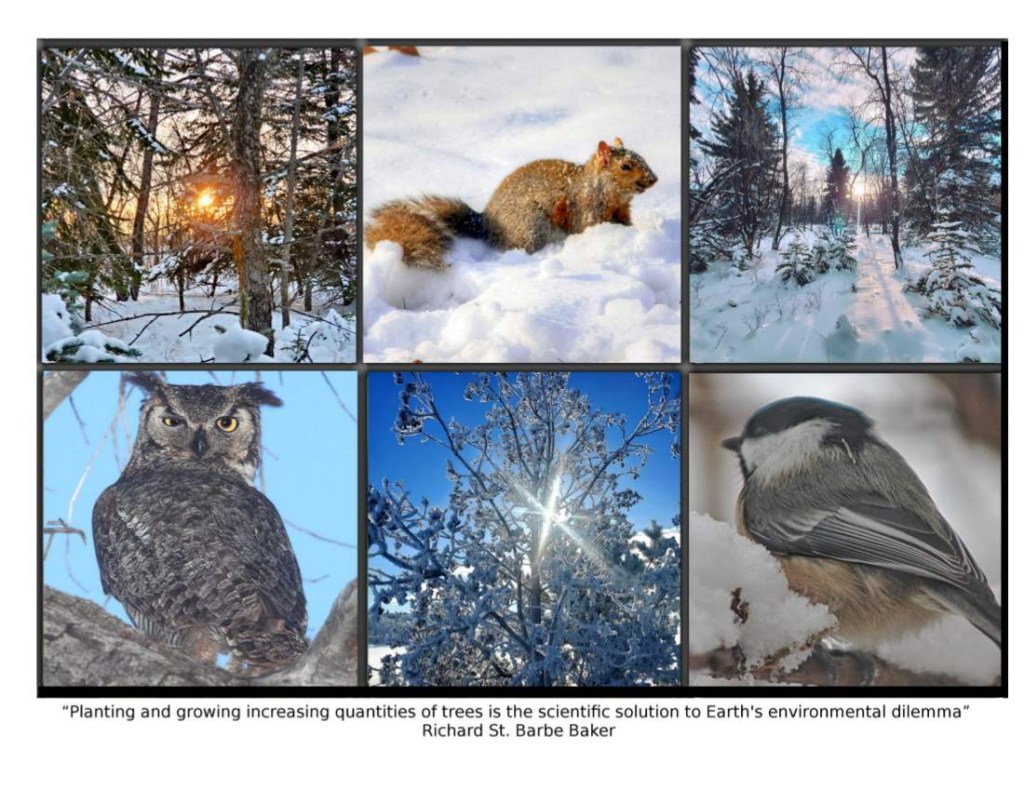
1. Weather and Community Impact Research Project:
- Activity: Investigate how short- and long-term weather forecasts are used in your community. Create a presentation on how local weather affects daily activities such as choosing food, clothing, and transportation. For example; How do you think year(s) of drought or year(s) of spring flooding, or summer(s) of rains would affect the Saskatoon berry plant, misaskwatomin (nêhiyawak Plains Cree), gozigwaakomin (nakawē Saulteaux), wípazutkȟaŋ / wipazuka(yankton and yanktonai Nakota people), lii pwayr (Michif language of the Métis), L’Amélanchier à feuilles d’aulne ou Aronie fleuri (Français language of the francophone or French speaking people)
- Objective: Understand the practical applications of weather forecasting in daily life and its impact on community decisions.
2. Traditional Weather Terms Exploration:
- Activity: Research weather-related vocabulary in different languages, including Francophone, Métis, nêhiyawak (Plains Cree), Nakawē Saulteaux, and Yankton Nakota. Create a bilingual weather glossary to display and/or a poster with images.
- Objective: Learn about the cultural significance and diversity of weather terms across different languages.
3. Forest Weather Interaction Investigation:
- Activity: Conduct a field study in a local forest area to observe how different weather conditions affect trees and the surrounding ecosystem. Document findings and compare them with the observations of Richard St. Barbe Baker and Dr. Paul Schreiber.
- Objective: Explore the relationship between weather patterns and forest ecosystems.
4. Long-Term Weather Effects Analysis:
- Activity: Research how long-term changes in weather have affected local, national, and global communities. Create a timeline or infographic showing these impacts on different regions.
- Objective: Examine the broader effects of weather changes on societies and environments around the world.
5. Organism -plant and animal- Behavior and Weather Patterns Study:
- Activity: Observe local organisms and their behaviors in response to changing weather conditions. Compare these observations with the behaviors of organisms mentioned in the story, such as the trembling aspen and dandelion flowers.
- Objective: Understand how animals adapt to weather changes and how this knowledge can be used to predict weather patterns.
Related Questions
- How do short- and long-term weather forecasts influence daily activities and decisions in your community?
- Objective: Explore the practical applications of weather forecasts.
- What are some traditional weather terms used in different languages, and how do they reflect cultural perspectives on weather?
- Objective: Investigate the diversity and significance of weather-related vocabulary.
- In what ways do different weather conditions impact the health and functioning of forest ecosystems, as observed by Richard St. Barbe Baker and Dr. Paul Schreiber?
- Objective: Understand the relationship between weather patterns and forest health.
- How have long-term changes in weather affected local and global communities, and what are some examples of these impacts?
- Objective: Analyze the broader effects of weather changes on societies and environments.
- How do the behaviors of local animals in response to weather conditions compare to those described in the story, such as the trembling aspen and dandelion flowers?
- Objective: Explore how animal behaviors reflect weather patterns and contribute to our understanding of meteorology.
For directions as to how to drive to “George Genereux” Urban Regional Park
For directions on how to drive to Richard St. Barbe Baker Afforestation Area
For more information:
NEW P4G District Official Community Plan
Richard St. Barbe Baker Afforestation Area is located in Saskatoon, Saskatchewan, Canada north of Cedar Villa Road, within city limits, in the furthest south west area of the city. 52° 06′ 106° 45′
Addresses:
Part SE 23-36-6 – Afforestation Area – 241 Township Road 362-A
Part SE 23-36-6 – SW Off-Leash Recreation Area (Richard St. Barbe Baker Afforestation Area ) – 355 Township Road 362-A
S ½ 22-36-6 Richard St. Barbe Baker Afforestation Area (West of SW OLRA) – 467 Township Road 362-A
NE 21-36-6 “George Genereux” Afforestation Area – 133 Range Road 3063
Wikimapia Map: type in Richard St. Barbe Baker Afforestation Area
Google Maps South West Off Leash area location pin at parking lot
Web page: https://stbarbebaker.wordpress.com
Where is the Richard St. Barbe Baker Afforestation Area? with map
Where is the George Genereux Urban Regional Park (Afforestation Area)?with map
Blogger: FriendsAfforestation
Tumblr friendsafforestation.tumblr.comFacebook Group Page: Users of the George Genereux Urban Regional Park
Facebook: StBarbeBaker Afforestation Area
Facebook for the non profit Charity Friends of the Saskatoon Afforestation Areas Inc. FriendsAreas
Facebook group page : Users of the St Barbe Baker Afforestation Area
Twitter: St Barbe Baker Charity Twitter:FriendsAreas
Please help protect / enhance your afforestation areas, please contact the Friends of the Saskatoon Afforestation Areas Inc. (e-mail / e-transfers )
Donate your old vehicle, here’s how!
Support using Canada Helps
Support via a recycling bottle donation
United Nations Decade on Ecosystem Restoration
- Use the UN Decade’s Visual Identity
- Make it your own
- Spread the word about the UN Decade
- Let’s Bring Back Forests
- Let’s Green Our Cities
““Be like a tree in pursuit of your cause. Stand firm, grip hard, thrust upward. Bend to the winds of heaven..”
Richard St. Barbe Baker
 Forests of Memory. Forests of Learning. Forests for Life.