Richard St. Barbe Baker Afforestation Area. George Genereux Urban Regional Park. Humboldt Broncos Memorial Forest. Come to Nature. Come to Life. Friends of the Saskatoon Afforestationk Areas Inc. friendsareas.ca
There are winter days—rare, special days—when the world looks as though it has stopped just long enough to take a deep breath. Days when every branch is edged with hoar frost, shining like silver lace; when the air smells of pine and something faintly hopeful; when you feel as though you’ve stepped straight through the pages of a Christmas card into a land where snow always falls softly and nothing is ever in a rush.
The Richard St. Barbe Baker Afforestation Area is one of those extraordinary places. Tucked into the heart of Saskatoon’s WinterCity spirit, it becomes a forest of quiet marvels once winter settles in. Here, the trees stand still and proud in their sparkling coats, and the only chatter comes from the tiny, cheerful birds who don’t seem to mind the cold one bit.
In the hush of snow, the fairytale begins.
Walk slowly—winter likes you better when you take your time.
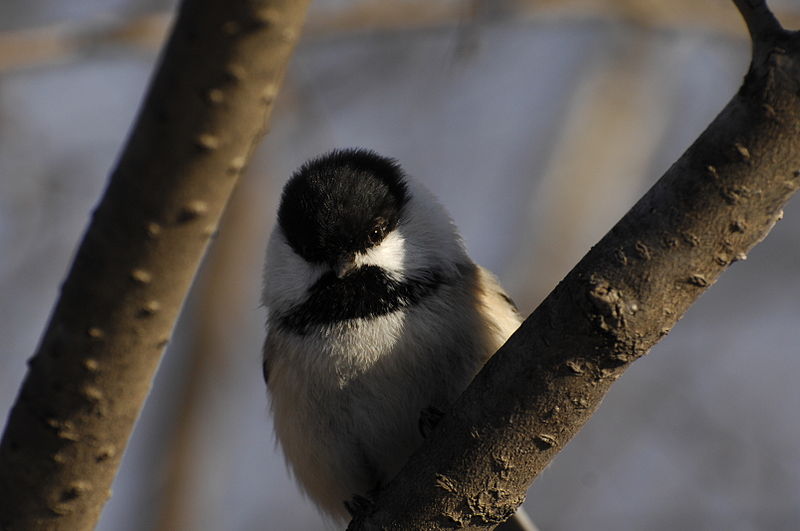
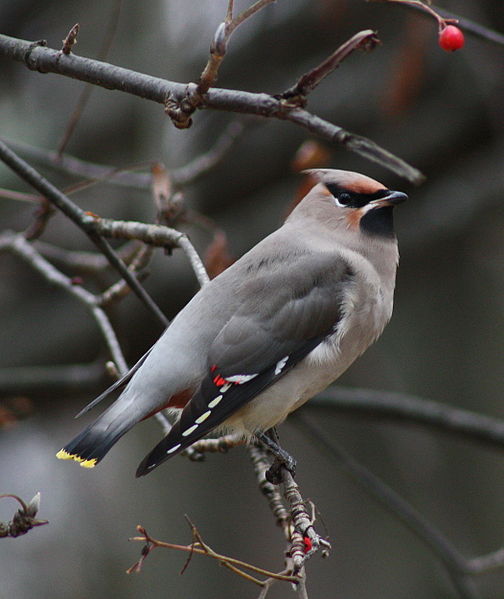
You might spot a Red-breasted Nuthatch darting between the evergreens with the energy of someone late for a very tiny appointment. A White-breasted Nuthatch might shuffle up a trunk like a small, determined mountaineer. The Black-capped Chickadees hop about like living ornaments, their calls ringing through the stillness like little bells. And if you’re lucky, a Pileated Woodpecker might hammer away with the gusto of a craftsman working on a secret project. Above the treetops, Pine Siskins flit like golden sparks, and flocks of Bohemian Waxwings wander the winter sky in soft, swirling clouds.
It’s enough to make you forget the cold entirely.
If you bring a picnic, winter becomes even friendlier. Find a bench, settle your thermos between your hands, and watch the feeders sway gently as the birds come and go. There is something wonderfully grounding about sipping hot chocolate while snow gathers in the quiet corners of the forest. Everything feels calmer. The world feels kinder.
This isn’t simply a walk—it’s a moment of reconnection.
A reminder that nature isn’t a place set aside for special occasions; it is a patient companion, always ready to steady us. In winter, it teaches us the art of paying attention. Every breath of crisp air, every crunch of snow underfoot, every upward glance through frost-framed branches whispers the same thing: Slow down. Look closely. There is wonder everywhere.
Across northern cities like Saskatoon, people have begun reimagining winter—not as a long stretch to be endured, but as a season full of possibility. Instead of huddling away until spring, we ARE finding ways to make the colder months lively, inviting, and joyful. The idea is to spotlight winter’s charm so everyone can come outside and enjoy it.
Walk gently—winter is listening.
Here in Saskatoon, this approach is gathered under the umbrella of WintercityYXE—a shared community effort that celebrates everything that makes the city feel alive in winter. Let us embrace the season with enthusiasm! The goal is simple: build a city where winter feels welcoming, safe, and accessible for all.
“Nature slows. Wonder grows.”
A Season to Share
As you wander through the frost-bright forest, you may find yourself thinking about how easy it is to overlook these simple, extraordinary moments. A bird’s sudden flutter. The glow of low winter sun. The hush that settles on the world after snowfall. These small things become anchors—reminders of the beauty we live alongside and the responsibility we share in caring for it.
So come. Come to the trees. Come to the quiet. Come to the winter that waits patiently for you to notice just how magical it can be.
Let the frost, the birds, the branches, and the stillness settle softly into your heart. Share this space. Protect it. Cherish it.
A fairytale carved from snow and silence
The Friends of the Saskatoon Afforestation Areas welcome you to explore more at friendsareas.ca. Your winter adventure is waiting—ready to take root, just like the trees.
Addresses:
Part SE 23-36-6 – Richard St. Barbe Baker Afforestation Area – 241 Township Road 362-A
Part SE 23-36-6 – SW Off-Leash Recreation Area (Richard St. Barbe Baker Afforestation Area ) – 355 Township Road 362-A
S ½ 22-36-6 Richard St. Barbe Baker Afforestation Area (West of SW OLRA) – 467 Township Road 362-A
NE 21-36-6 “George Genereux” Afforestation Area – 133 Range Road 3063
Wikimapia Map: type in Richard St. Barbe Baker Afforestation Area or
Google Maps South West Off Leash area location pin at parking lot
Picture this: You’re standing in a field, playing the classic “I spy with my little eye” game, and there it is—something red. Maybe it’s a flash of fiery color in the sky. Or a little critter with a crimson touch. Red, it turns out, is everywhere in nature, and when you’re out in the wild, there’s a lot more to this color than just its appearance.
Red is often linked to boldness and danger, but also to beauty, vibrancy, and sometimes a touch of mystery. When you think of red in nature, what comes to mind? Perhaps it’s a male woodpecker, rocking a bright red tuft atop its head. Or maybe it’s the lady beetle, decked out in its signature scarlet shell. How about the red and blue checkered beetle? It’s like a walking party on six legs. And we can’t forget the endless sea of red flowers—petals as rich as rubies, filling the air with a scent of spring and hope.
But hold on, there’s something even more mind-blowing waiting for you—have you ever seen the slime molds of Saskatchewan? If you’re picturing an otherworldly, gooey creature, you’re absolutely right. These slime molds are living pieces of art, with fiery red hues that are impossible to miss!
Now, here’s where it gets even cooler. As we gear up for the 2025 City Nature Challenge, you might just want to channel your inner explorer and keep an eye out for red organisms as you roam the wild. In fact, there’s a special project on iNaturalist that might just spark your interest: the Red List Project.
What’s the Red List, you ask? Well, it’s a collection of species that are in conservation concern, species you’ll want to keep a special eye on as you walk through the natural world. By participating in this project, you’re not only admiring the vibrant reds that nature has to offer, but you’re also contributing to global efforts to protect these at-risk organisms (which may or may not be red). It’s a simple way to make a huge difference while enjoying the color-filled adventure that nature always provides!
The City Nature Challenge (CNC) is more than just a chance to spy some red—it’s an event that motivates people to connect with nature and engage in citizen science. From April 25–28, 2025, you’ll be able to head outdoors, snap pics of any wild creatures, and upload them to iNaturalist (or Seek) to help catalog biodiversity across the city. This isn’t just about spotting creatures with red markings; it’s about gathering valuable data that can be used to help protect our planet’s biodiversity.
So, how can you get involved? First, create an iNaturalist account and download the app. Whether you’re using iNaturalist or the Seek app, you’ll be able to easily log your observations and help identify species in your area. After all, the CNC isn’t just about observing; it’s also about identification, and everyone—yes, even you!—can contribute to the global database of biodiversity.
While you’re out there, make sure to join in on the red fun by looking for those red-clad critters and plants. Whether it’s a brilliant red flower or a beetle with an eye-popping red shell, your observations are valuable. You’ll be amazed at how many red organisms are hiding right under your nose, waiting for you to discover them.
The City Nature Challenge isn’t just about observing wildlife; it’s about connecting with others, building community, and learning together. It’s about making science accessible to everyone and having fun while doing it. Plus, you’ll get to track your progress and see how your city stacks up against others in this global event. Don’t worry, there’s no need to be overly competitive (unless you want to)—this is about having a blast with some friendly competition!
As for the Red List Project, every organism you record helps build awareness and create a safety net for endangered species. It’s a fantastic way to contribute to conservation efforts while also diving deep into the beauty of nature.
So, next time you’re outdoors, remember to keep an eye out for red. It’s everywhere! Whether you’re spotting a crimson beetle or a blooming red tulip, every red observation you make is a step toward understanding and protecting the world around us.
Happy red seeking, fellow nature enthusiasts, and don’t forget to share your finds with the City Nature Challenge! Come to Nature, Come to Life! …and there are free events!
The Trembling Aspen A Dioecious Catkin or Ament Tim1357 cc2Red FoxShepherdia argentea, commonly called silver buffaloberry bull berry, or thorny buffaloberry. CC-BY-SA-3.0 credit Julia AdamsonRed-Winged Blackbird. West Swale Wetlands Chappell Marsh. Richard St. Barbe Baker Afforestation Area Saskatoon, SK
Richard St. Barbe Baker Afforestation Area is located in Saskatoon, Saskatchewan, Canada north of Cedar Villa Road, within city limits, in the furthest south west area of the city. 52° 06′ 106° 45′
Addresses:
Part SE 23-36-6 – Richard St. Barbe Baker Afforestation Area – 241 Township Road 362-A
Part SE 23-36-6 – SW Off-Leash Recreation Area (Richard St. Barbe Baker Afforestation Area ) – 355 Township Road 362-A
S ½ 22-36-6 Richard St. Barbe Baker Afforestation Area (West of SW OLRA) – 467 Township Road 362-A
NE 21-36-6 “George Genereux” Afforestation Area – 133 Range Road 3063
Wikimapia Map: type in Richard St. Barbe Baker Afforestation Area
Google Maps South West Off Leash area location pin at parking lot
Shhhh…Listen Do You Hear the Sound of Forest Tourism?
We tend to take forests for granted, underestimating how indispensable they still are for everyone on the planet. That would quickly change if they all disappeared, but since humanity might not survive that scenario, the lesson wouldn’t be very useful by then.
There is no doubt about it, trees help us to breath. When arriving at the hospital, the medical care team, in many circumstances rely on giving the patient oxygen. Trees absorb carbon dioxide from the air, and worldwide, forests emit oxygen to keep us alive.
The afforestation areas provide semi wilderness habitat homes to a diverse range of birds, insects and animals. Have you ever walked in the woods, and heard the woodpeckers, robins or meadowlarks? Did you see the little American Red Squirrels leaping from limb to limb? Did you marvel at the population of butterflies which you see in the afforestation areas, and how many you saw last year and the year before? 80 % of fauna biodiversity can be found in forests! Forests are indeed Magical!
There are a plethora of health benefits to be derived from an outing in the afforestation areas. For an introduction, they boost your immune system, reduce stress, increase your energy level and have even been know to lower blood pressure! It is truly wise to immerse yourself in a forest for better health. It is no wonder that PaRx (parks) are a prescription for health.
Truly forests, also help us during this era of taking action on climate change. Not only do they act as carbon sinks, as mentioned earlier, but woodlands also protect us from natural hazards such as great winds, floods, and heavy rains. There are truly benefits of forests…so important to us and to the world.
“<a href="http://<!– wp:paragraph –> <p>"Walking, cycling, tai chi or doing conservation work regularly in forests" can assist with weight loss</p> Walking, cycling, tai chi or doing conservation work regularly in forests” can assist with weight loss
Shinrin-yoku is the Japanese art of forest bathing to soothe the soul. “Forest Bathing is an accepted part of Japanese preventative health care because of the mental, physical and spiritual health benefits it delivers.”
Educational aptitude and cognitive development are enhanced. “To increase literacy and numeracy, children need to have access to nature, and at the very least, green and natural views of trees.” Studies have shown that outdoor education is of benefit to the human population. “The presence of trees and urban nature can improve people’s mental and physical health, children’s attention and test scores” Therefore, in summary, children are more likely to succeed in school where they can fully receive the benefits from trees, if not through place based learning in a forest, then at a minimum they should be afforded a view of trees.
Identified benefits of community trees and forests include; “trees can be successfully used to mitigate heat islands. Trees reduce temperatures by shading surfaces, dissipating heat through evaporation, and controlling air movement responsible for advected heat” During these times of warmer, wetter, and wilder weather this is a great benefit to society!
Further to these listed benefits, trees reduce air pollution. ” They help to settle out, trap, and hold particulate pollutants (Dust, ash, pollen and smoke) that can damage human lungs.”
Forests themselves, are bewitching, and beautiful, amazing and enchanting. This week is tourism week May 23, May 30. Enjoy the afforestation areas – the 326 acre Richard St. Barbe Baker Afforestation Area, and the 147.8 acre George Genereux Urban Regional Park
Long, long ago, when all the world was young and there were but few people dwelling on it, the strangest things could often come to pass. Then fairyfolk still lived in the greenwoods and elves sang and danced in the soft summer dawns. Then trees could sing and flowers speak and birds would carry messages about the world; wild beasts were often loyal friends to men and helped them in their difficulties. Then wise men read the stars and seers would gaze in crystal bowls to tell the coming good or ill they saw.
Please help protect / enhance your afforestation areas, please contact the Friends of the Saskatoon Afforestation Areas Inc. (e-mail / e-transfers )Support the afforestation areas with your donation or membership ($20.00/year). Please donate by paypal using the e-mail friendsafforestation AT gmail.com, or by using e-transfers Please and thank you! Your donation and membership is greatly appreciated. Members e-mail your contact information to be kept up to date! Canada Helps
Here is another awesome decoration for the forest.
Save an orange rind. Then mix peanut butter and or suet with bird feed. Put the mixture into the orange rind. Hang your bird feeder with string on a tree branch.
Get a butternut squash, spaghetti squash, cut it in half and clean out the centre. Mix suet or peanut butter with bird feed. Place a wooden skewer stick through the the squash near the top of the cut edge. Insert another wooden skewer stick through the squash the other way to make a + sign across the squash. Tie a two strings to the four ends of the skewers, and hang on a branch in the forest!
“To be standing together in a frosty field, looking up into the sky, marvelling at birds and revelling in the natural world around us, was a simple miracle. And I wondered why we were so rarely able to appreciate it.”
Lynn Thomson
“Creative expression, whether that means writing, dancing, bird-watching, or cooking, can give a person almost everything that he or she has been searching for: enlivenment, peace, meaning, and the incalculable wealth of time spent quietly in beauty.” -Anne Lamott
Feeding birds in the winter time can provide a source of enjoyment for many people. The observation of a variety of birds is amazing to experience as they find and come to the feeder station.
Whether you are a novice or experienced bird watcher, it is a delight to see the flight of the black-capped chickadee arriving at the bird feeder. The chickadee does not swoop straight in an undulating or bouncing flight pattern. If one was to describe it on a piece of paper, it may look like a sine wave with curves up and down. The call or song of the black-capped chickadee is quite distinctive as a chickadee-dee-dee-dee. Though it will vary in their spring territory call which is a long high note followed by two lower short notes.
Besides the black-capped chickadee, the northern flicker is common in the afforestation area as is the bohemian waxwing. There is for sure the possibility the chance of seeing plethora of species depending on your time for observation, the weather, and when you arrive during the day.
Place a bird feeder in a site sheltered and protected from strong winter blizzard winds. The bird feeder should have a large canopy to keep snow and ice away from the bird seed placed out. Think of bird predators and squirrels who may also enjoy lunch at the bird feeder. If the bird feeder is placed near natural cover which will assist perching birds assess the bird feeder station area for safety.
Clean the bird feeder regularly. Bird balls and suet feeders also provide nutritious snacks for wild birds. Black oil sunflower seeds provides fat to birds which is a necessary nutrient. Birds require extra fat to keep them going through the long cold days. This bird feed may attract a good variety of birds. Nyger seeds, sunflower seeds and peanuts are also winter bird feeder choices. Try filling different locations of bird feeders with different seed to see what species of birds are attracted to the change of food.
As you embark on a winter bird feeding strategem, remember that some species of worms are meat eaters, seeking out insects, grasshoppers worms over the other months. A winter surprise of mealworms may provide the wild birds with a treat. Fruit is enjoyed by many birds. Placing out apples, bananas citrus fruits may be enjoyed by your several bird visitors. Consider spreading some peanut butter on an apple and add bits of peanuts and raisins. Remember to not place such a treat where dogs would reach it, as dogs cannot have raisins or they will have seizures.
In 2021 February experienced a terrific arctic cold front setting records with -53 Celsius records. At times like these, it is vitally important to keep any bird feeders topped up which birds may have become dependent upon.
Some birds are more comfortable feeding from the ground. Think of what other animals may be nearby which may pose a hazard to the birds feeding from the ground. Once in a while step on the snow at the base of the bird feeder, to provide ease of access to the ground feeding birds.
“It is not so much for its beauty that the forest makes a claim upon men’s hearts, as for that subtle something, that quality of air that emanation from old trees, that so wonderfully changes and renews a weary spirit.”
— Robert Louis Stevenson
And into the forest I go, to lose my mind and find my soul.
The Richard St. Barbe Baker Afforestation Area is home to woodpeckers, they can be sighted and heard pecking on the trees. Among foresters, a unique specialty taken up by Richard St. Barbe Baker is silviculturists or “tree doctor.” Joining the ranks of silviculturists, is Dr. Woodpecker, tree surgeon, extraodinaire who destroys destructive forest insects. Long ago Nature selected the woodpecker to be the chief caretaker—the physician and surgeon—of the tree world.
The study of forest insects has not progressed far enough to enable one to make more than a rough approximation of the number of the important species that attack our common trees. The birches supply food to about three hundred of these predacious bugs, while poplars feed and shelter almost as many. The pines and spruces are compelled permanently to pension or provide for about three hundred families of sucking, chewing parasites.
The recent ravages of Dutch elm disease (DED) fungi (Ophiostoma) is caused by a member of the sac fungi (Ascomycota) affecting elm trees, and is spread by the American elm bark beetle Hylurgopinus rufipes, who transmit the fungi. Together with other evils, suggest at once the bigness of these problems and the importance of their study and solution. The insect army is as innumerable as the leaves in the forest. This army occupies points of vantage in every part of the tree zone, has an insatiable appetite, is eternally vigilant for invasion, and is eager to multiply. It maintains incessant warfare against the forest, and every tree that matures must run a gauntlet of enemies in series, each species of which is armed with weapons long specialized for the tree’s destruction. Some trees escape unscarred, though countless numbers are killed and multitudes maimed, which for a time live almost useless lives, ever ready to spread insects and disease among the healthy trees.
Every part of the tree suffers; even its roots are cut to pieces and consumed. Caterpillars, grubs, and beetles specialize on defoliation and feed upon the leaves, the lungs of the trees. The partial defoliation of the tree is devitalizing, and the loss of all its leaves commonly kills it. Not only is the tree itself attacked but also its efforts toward reproduction. The dainty bloom is food for a number of insect beasts, while the seed is fed upon and made an egg-depository by other enemies. Weevils, blight, gall, ants, aphids, and lice prey upon it. The seed drops upon the earth into another army that is hungry and waiting to devour it. The moment it sprouts it is gnawed, stung, bitten, and bored by ever-active fiends.
Many forest trees are scarred in the base by ground fires. These trees are entered by insects through the scars and become sources of rot and insect infection. Although these trees may for a time live on, it is with a rotten heart or as a mere hollow shell. A forest fire that sweeps raging through the tree-tops has a very different effect: the twigs and bark are burned off and the pitches are boiled through the exterior of the trunk and the wood fortified against all sources of decay.
In forest protection and improvement the insect factor is one that will not easily down. Controlling the depredations of beetles, borers, weevils, and fungi calls for work of magnitude, but work that insures success. This work consists of the constant removal of both the infected trees and the dwarfed or injured ones that are susceptible to infection without hesitation. Most forest insects multiply with amazing rapidity; some mother bark-beetles may have half a million descendants in less than two years. Thus efforts for the control of insect outbreaks should begin at once,—in the early stages of their activity. A single infested tree may in a year or two spread destruction through thousands of acres of forest.
Most insects have enemies to bite them. Efforts to control forest-enemies will embrace the giving of aid and comfort to those insects that prey upon them. Bugs will be hunted with bugs. Already the gypsy moth in the East is being fought in this way. Many species of birds feed freely upon weevils, borers, and beetles. Of these birds, the woodpeckers are the most important. They must be protected and encouraged. Forest influences and forest scenes add much to existence and bestow blessings upon life that cannot be measured by gold.
The Richard St. Barbe Baker Afforestation Area is home to woodpeckers, they can be sighted and heard pecking on the trees. Among the various species which may be found are the Northern Flicker Colaptes auratus, Yellow-bellied Sapsucker Sphyrapicus varius, Hairy Woodpecker Picoides villosus, Downy Woodpecker Picoides pubescens, Black-backed Three-toed Woodpecker or Arctic three-toed woodpecker Picoides arcticus, American three-toed woodpecker Picoides dorsalis, and Pileated Woodpecker~uncommon~ Dryocopus pileatus. Of these, only the Northern Flicker, Hairy and Downy Woodpecker are common, the remaining are uncommon, and are a sight to behold!
Among foresters, a unique specialty is silviculturists or “tree doctor.” Joining the ranks of silviculturists, is Dr. Woodpecker, tree surgeon, extraodinaire who destroys destructive forest insects. Long ago Nature selected the woodpecker to be the chief caretaker—the physician and surgeon—of the tree world. This is a stupendous task. Forests are extensive and are formed of hundreds of species of trees. The woodpeckers have the supervision of uncounted acres that are forested with more than six hundred kinds of trees.
In this incessant struggle with insects the woodpecker has helpful assistance from many other bird families. Though the woodpecker gives general attention to hundreds of kinds of insects, he specializes on those which injure the tree internally,—which require a surgical operation to obtain. He is a distinguished specialist; the instruments for tree-surgery are entrusted to his keeping, and with these he each year performs innumerable successful surgical operations upon our friends the trees.
Borers, beetles, and weevils are among the worst enemies of trees. They multiply with astounding rapidity, and do not hesitate at all annually killing millions of scattered trees. Annually, too, there are numerous outbreaks of beetles, whose depredations extend over hundreds and occasionally over thousands of acres. Caterpillars, moths, and saw-flies are exceedingly injurious tree-pests, but they damage the outer parts of the tree. Both they and their eggs are easily accessible to many kinds of birds, including the woodpeckers; but borers, beetles, and weevils live and deposit their eggs in the very vitals of the tree. In the tree’s vitals, protected by a heavy barrier of wood or bark, they are secure from the beaks and claws of all birds except Dr. Woodpecker, the chief surgeon of the forest. About the only opportunity that other birds have to feed upon borers and beetles is during the brief time they occupy in emerging from the tree that they have killed, in their flight to some live tree, and during their brief exposure while boring into it.
Left in undisturbed possession of a tree, many mother beetles may have half a million descendants in a single season. Fortunately for the forest, Dr. Woodpecker, during his ceaseless round of inspection and service, generally discovers infested trees. If one woodpecker is not equal to the situation, many are concentrated at this insect-breeding place; and here they remain until the last dweller in darkness is reached and devoured. Thus most beetle outbreaks are prevented.
Woodpecker holes commonly are shallow, except in dead trees. Most of the burrowing or boring insects which infest living trees work in the outermost sapwood, just beneath the bark, or in the inner bark. Hence the doctor does not need to cut deeply. In most cases his peckings in the wood are so shallow that no scar or record is found. Hence a tree might be operated on by him a dozen times in a season, and still not show a scar when split or sawed into pieces. Most of his peckings simply penetrate the bark, and on living trees this epidermis scales off; thus in a short time all traces of his feast-getting are obliterated.
Woodpeckers commonly nest in a dead limb or trunk, a number of feet from the ground. Here, in the heart of things, they excavate a moderately roomy nest. It is common for many woodpeckers to peck out a deep hole in a dead tree for individual shelter during the winter. Generally neither nest nor winter lodging is used longer than a season. The abandoned holes are welcomed as shelters and nesting-places by many birds that prefer wooden-walled houses but cannot themselves construct them. Chickadees and bluebirds often nest in them. Owls frequently philosophize within these retreats. On bitter cold nights these holes shelter and save birds of many species. Nuthatches as well may be seen issuing from a woodpecker’s hole in a dead limb.
Woodpeckers are as widely distributed as forests,—just how many to the square mile no one knows. Some localities are blessed with a goodly number, made up of representatives from three or four of our twenty-four woodpecker species. Forest, shade, and orchard trees receive their impartial attention. The annual saving from their service is enormous. Although this cannot be estimated, it can hardly be overstated.
On speaking to young foresters. “‘Forest’ is an old word. It was derived from a word which meant the forest reserved for the royal games. The work of the forest department was to preserve and look after them. The context has totally changed. The importance of the forest is now for the whole society. The first product of the forest is its life-giving oxygen, followed by water and food. The fifth place is that of balancing the climates and arresting erosion. Raw material of industrial importance and wood are provided by the forest which, though they rank sixth in the list, are unfortunately being accorded the highest priority at present. Therefore the management of the forest should receive priorities according to the actual importance of the commodity. You have been given the dignified name of the Conservators of Forests. You are not timber merchants. ” ~Richard St. Barbe Baker, silviculturist
Please help protect / enhance your afforestation areas, please contact the Friends of the Saskatoon Afforestation Areas Inc. (e-mail / e-transfers )
Support the afforestation areas with your donation or membership ($20.00/year). Please donate by paypal using the e-mail friendsafforestation AT gmail.com, or by using e-transfers Please and thank you! Your donation and membership is greatly appreciated. Members e-mail your contact information to be kept up to date!
“I believe that if children fall in love with wildlife they will grow up wanting to protect it.”
― Imogen Taylor
. We have a motto in the Men of the Trees. TWAHAMWE. It is an African word meaning ‘pull together’ and I pass this on to all those concerned with conservation in this country. I would like to call you to silence for a moment with the words of Mathew Arnold:
“Calm soul of all things, make it mine,
To feel amidst the City ‘s jar
That there abides a peace of thine
Men did not make and cannot mar
~Richard St. Barbe Baker





 Forests of Memory. Forests of Learning. Forests for Life.