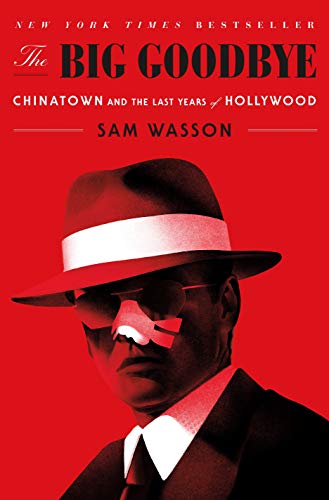
Most of us have no idea about the years and agonizing changes a film script goes through to produce a really great movie. The person whose name you see on the screen as “Written By” is by far not the sole author. In the case of Chinatown, Robert Towne’s “darlings” were murdered left and right, mostly by Polansky. But the end result looked effortless and resplendent.
As a writer of fiction, I got into the habit of reading only fiction. Great fiction. So I could learn from my betters. But I am also a film buff, and when I saw that this book was about the making of Chinatown (for me, the greatest film noir ever made) I got on Book Finders and found a used hardcover copy for about $4.00. The shipping was more than that.
Mr. Wasson did his homework all right. The acknowledgements section at the end comprises fully a tenth of the pages.
Not only does he provide intimate portraits of the main players: Writer Robert Towne, director Roman Polansky, producer Robert Evans, and stars: Jack Nicholson and, to a lesser degree, Faye Dunaway, he also paints a vivid portrait of Hollywood in the mid-seventies and the changes the movie business underwent; from the demise of the studio system to the flowering of a new generation of Hollywood independent directors unfettered by big studio control (Polansky, Scorsese, Cupola, Lucas, Bogdanovich, and more), to the present-day Hollywood output, mostly based on comic book superheroes, and made for an audience with the mind of a twelve-year-old.
The writing is exceptionally good and kept me riveted throughout. As implied earlier, this book is for cinephiles. If you’re not one, maybe you won’t be as excited about it as I am. But, if you are, READ THIS BOOK. I remember the seventies renaissance of indie films because I lived through it. We went and saw these movies in the theater regularly. I even tried my hand at screenwriting, but with no tangible success. My 30-year-old son works in the camera department of a film production company. He has no such memories, so I gave him this book. It’s important to have an historical overview of your profession. So, for you oldsters, read it and pass it on to the next generation. It may be the only way American cinema can be resurrected.




 Ted Myers