The Things We Never Say by Elizabeth Strout

Title: The Things We Never Say
Author: Elizabeth Strout
Publisher: Penguin Viking
ISBN: 9780241814307
Genre: Literary Fiction
Pages: 201
Source: Publisher
Rating: 4/5

There are some writers who just write about anything, and chances are you will read all of it. Take it all in, make their words a part of you, and for me Strout is one such writer. Whatever she writes, it seems so casual at first glance, at first reading, till you go back to it, and let the words sink in.

As one of the characters in her latest, “The Things We Never Say” says to her father-in-law about the music she plays, “I’m just trying to get inside the music” – we as readers feel exactly the same about Strout’s writing – we want to get inside it, soak it all in, and she ensures that we do that.

With Artie Dam, she has given us yet again a character who we love, sometimes get mad at (rarely), adore, admire, and love the simplicity (deceptive sometimes) with which he maneuvers life. Artie is a schoolteacher who is worried about the world – the state his country America is in, with someone becoming The President. He worries about life, ponders over the past, has a secret (which sometimes he wants to share and sometimes he doesn’t), and then eventually perhaps realizes how much we do not share, how much we do not say what we want to, and what we take to our graves.

“The Things We Never Say” is a quiet book – there is anger at Trump, there is despair at the state of the world, and in all this there is hope as well. Strout creates characters that are so real, so conflicted, so flawed in tiny ways, and some in big ways – and yet there is no judgement at all – neither from her and nor from her characters toward one another.

Strout with her very sublime writing makes the reader go through so much – American and World politics, free will, friendship, alienation, friends and what becomes of friendships when politics is involved, of how much grace and kindness we are capable of showing and how much we actually show, but above all this book is also about slowness. It is about the multitudes within us and how we can never be one-dimensional. No human being can.

Strout’s writing if you are familiar with, is like a cozy blanket on days when the world is too much to bear. “The Things We Never Say” for me felt like the perfect homecoming – the softness, the tenderness, the tumultuous nature as well of her writing – of how love is so complex, and relationships more so. I thought when I started that maybe this time it wasn’t for me, given the reviews I was reading elsewhere, but I am so glad I was proved wrong.

Light and Thread by Han Kang. Translated by Maya West, e. yaewon, and Paige Aniyah Morris

It is fascinating to read of an author’s mind at work. How they write, what they think, what they feel about their work, their surroundings, their emotions, and how it feels when the work has ended, and a new book is about to begin.

Han Kang’s latest offering, “Light and Thread”, her first since she won The Nobel Prize in Literature is an intimate book of thoughts, of how life works, of how we are as humans (to some extent), and in all of this, the role nature plays, and the thread that connects us all, even if we choose to ignore it: “the gold thread that connects our hearts” – what an eight-year old Han Kang wrote in her diary: Love.

She speaks of her books, of “Human Acts”, “Greek Lessons”, “The Vegetarian”, and “We Do Not Part” – the ones we have enjoyed, been tortured about, and felt so strongly about – she speaks of her state of mind and heart while writing them. Of how violence has seeped in our lives, and yet there is so much hope left in humans, in love, in holding on to it, and spreading that love.

She speaks of her little north-facing courtyard garden in her home that she tends to with mirrors for sunlight and water and deep love, and how things grow, and how people have the same capability in them.

I read this book at a time when I needed it the most. To believe in kindness and goodness and love, despite the violence in the world, despite the hate in people’s hearts, in spite it being there like a large, dark shadow.

Han Kang’s writing is simple, it is simple so we understand, so we feel, so we know that flowers will bloom no matter what. We need to just understand how it all works – how love and kindness works – and how we then survive in a world like this.

How to Commit a Postcolonial Murder by Nina McConigley

Title: How to Commit a Postcolonial Murder
Author: Nina McConigley
Publisher: Pantheon Books
ISBN: 9780593702246
Genre: Literary Fiction
Pages: 224
Source: Publisher
Rating: 4/5

I wanted to love this book the minute I heard its title: it’s just the kind of weird, genre-defying novel that makes me gasp, laugh, and think. At its heart, it’s a tale told from the perspective of Georgie Ayyar, one of two mixed-heritage pre-teen sisters living in rural Wyoming in 1986, who confesses to the reader that she and her sister killed their uncle, and then goes on to explain exactly how and why that occurred. It’s a brave move: none of this is particularly polite.

What impressed me most was the way that McConigley has managed to make the book feel like a friend talking: direct, quirky, sometimes playful, even when it’s talking about the pain. The book shifts from boy-girl magazine quizzes to 80s pop culture to thoughtful asides about colonisation and identity to the creeping horror of abuse. The employment of these seemingly random elements: quizzes, lists, and nostalgic references—isn’t just a stylistic choice. It is Georgie trying to make sense of a world that has dislocated her: culturally, racially, and emotionally. It is through these that we come to understand the sisters, Georgie and Agatha. This book is also about what it means to be of mixed heritage in a land that doesn’t belong to you, and yet it does. The Americanness of the 80s was a totally different affair than what it is now, or maybe not.

McConigley tries to uncover so much on every page – well almost, and that works most of the time. It is also sometimes a touch and go situation on page – paragraphs jump at you, incidents appear suddenly, and it all works best for the reading.

As a queer person who lives identity on every page of my life, it sometimes felt like it was trying to do a little too much. And yet: that chaotic layering is what the messy, fractured way we actually remember our own lives looks like. McConigley isn’t giving you clean answers or easy solace, she’s giving you texture. The laughter that bubbles up alongside the sorrow, the comic relief that sits right alongside the trauma, the inexplicable draw of belonging and not belonging at the same time.

There’s been some mention of the novel’s loose structure, and I understand that. It meanders, it digresses, it’s an experiment. But for me, that’s what living as a marginalized person sometimes looks like: taking meaning from the scraps.

How to Commit a Postcolonial Murder is a taut, funny, tragic and fresh approach to how lives are lead – the messiness of it all, how families are all over the world, the guilt we live with, the redemption we seek, the wounds we hide, and how we ultimately heal. A great read! Highly recommend it.

The Silver Book by Olivia Laing

Title: The Silver Book
Author: Olivia Laing
Publisher: Penguin Hamish Hamilton
ISBN: 978-0241783979
Genre: Historical Fiction, LGBTQIA Fiction, Literary Fiction
Pages: 288
Source: Personal Copy
Rating: 2/5

Yeah, so I love Olivia Laing’s nonfiction, just adore it. I love the way they write and explore themes of life, loneliness, writer’s lives, so on and so forth. But that is only their nonfiction. This was the first time I was reading their fictional work, historical fiction to be precise and it did not work for me at all.

The plot on paper was super – one young gay man in the 70s – an artist, becomes a sudden apprentice to a famous Italian costume designer, Danilo Donati, and with him gets to be a part of two movies, Fellini’s Casanova and Salò, or the 120 Days of Sodom, directed by legends Fellini and Pasolini. He observes, watches, makes notes, and becomes a part of these films, while his affair with Donati is at its peak. He also is hiding something from his past. The world is also on the brink of change, so on and so forth.

This seemed like the perfect plot for me to dive into, however, as the pages turned, I caught myself not connecting to anything – neither the writing, nor the characters, and even couldn’t care where the story was headed or how was it going to end. So, yes, I love Laing’s writing – but not this time. There are flashes of brilliance in the book – but those are far and few in-between. If possible, skip it.
.
.

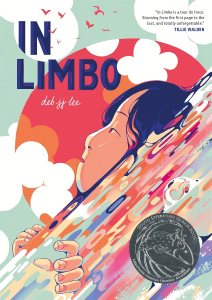
In Limbo: A Graphic Memoir by Deb JJ Lee

Title: In Limbo
Author: Deb JJ Lee
Publisher: First Second
ISBN: 9781250252661
Genre: Graphic Memoir 
Pages: 348
Source: Publisher
Rating: 4/5 

For anyone who has ever felt out of place, struggling with who they are, and trying very hard to fit in, “In Limbo” is the graphic memoir for you to read. Deb JJ Lee charts their journey from high school to being an adult in a world that doesn’t celebrate your differences.

And it isn’t just about this – it is about family and the love or lack of it that you have to sometimes live with, it is about seeking one’s identity no matter the time taken to do that, and above all just making sense of the world, with being self-aware of your flaws and shortcomings.

Deb has charted their life from high school to finally becoming an adult, almost being comfortable in their own skin. Sure, the end will leave you wanting more, but I thought it was just perfect – with no definite tying up of anything, because that’s what life is – transient in nature.

In Limbo struck a chord because I just empathize with Deb’s experience growing up in a New Jersey suburb as a Korean American child of immigrants with so much weight of expectations. They write about what it is to be the Other and what does racism do to you – especially when it is not evident and on the surface. It is about mental health and at the same time it is also about the burden of it – of what you are going through, and whose responsibility is the fixing.

It is never easy writing a memoir – you struggle to include and exclude – how much of your story should be read by the world, and how much it shouldn’t. Deb does a great job of that, and so much more. The drawings are raw and hit you hard. I will for sure go back to this graphic memoir later this year. Read it!