Math Sup/Spé révision :
Ring & CRT (Chinese Remainder Theorem)
Part 1:
Part 2:
Française
Math Sup/Spé révision :
Ring & CRT (Chinese Remainder Theorem)
Part 1:
Part 2:
Gaussian Integral (I) by Laplace trick :

Theory of “Distribution” (ie Function non-continuous) was invented in the1940s-50s by Laurent Schwartz (won Fields Medal for this contribution ).
The French lecturer is excellent,he applied Linear Algebra (Vector Space) to Fourier’s Theory of Heat, Electrostatics, …
French’s very abstract way of defining :
Note:
Suite (English = Sequence)


结账的算数:€ 313.5
华人:[给] €323.5 – [找] €10 =€313.5
法国人: [给] €320 – [找] ?=€ 313.5
{? =€ 6.5 是这样算的 :313.5+0.5 [凑整]=314.0, 然后 314+6=320,得[找] 0.5+6 =6.5}

Polar Reference:
The vector Velocity V in Polar form:


…
Acceleration:

This Prof uses the “Polar Reference” for circular movement with (r, ϴ), in vector form.
Frenet ReferenceVideo from 3:25m Circular Movement, why easier to use “Frenet Reference” , not X-Y Reference or Polar References (without the troublesome sine & cosine ) .

French Fields Medalist Cédric Vilani 中文interview: 他苦思证明数学/物理定理,在第 1001 th 夜 @4am,”好像上帝给他打电话 – Un coup de fil du Dieu” , 突然开窍…
他从政加入Macron的小党 “En March”,当MP, 今年竞选 Paris Mayor.
2017 年 他引入 “Singapore Math” 进法国小学。


NLB Library has 13 copies of Cedric Vilani’s book for public loan.
法国/越南 Fields Medalist 吴宝珠 Ngô Bảo Châu (现就任于中国 哈尔滨工业大学)interview:


…

Top Math Universities in 2019:
Ecole Normale Superieure (Cachan 分校 / Paris 总校) 分别属于 第1名Paris-Saclay 和 第7名 PSL 大学联盟(Consortiums).

【不擅长考试的大数学家—法国数学家埃尔米特 Charles Hermite】
He was 15 years junior of Galois from the same Math teacher Richard of Lycee Louis Le Grand. Richard gave him Galois’s student math homework books.
Charles Hermite proved ‘e’ transcendental, his German student Lindermann followed his method proved “pi” also transcendental.
Lindermann produced students Felix Klein, who produced Gauss, Riemann, David Hilbert…
https://m.toutiaocdn.com/group/6690529460514456067/?app=news_article_lite×tamp=1558808306&req_id=2019052602182601015203409557209A1&group_id=6690529460514456067&tt_from=android_share&utm_medium=toutiao_android&utm_campaign=client_share
(想看更多合你口味的内容,马上下载 今日头条)
http://app.toutiao.com/news_article/?utm_source=link

…

http://www.toutiao.com/i6689994996516389384
The writer Mickael Launay is a 2012 PhD Math (from Ecole Normale Superieure, Galois 母校,Fields Medalists 摇篮). His math blogs / Math Online have 20 million hits & 300k fans.


浙江临海市 国华珠算博物管主人 木匠 雷国华 收藏算盘20年,凭个人力量,保存中国算盘发源地的文化遗产,为此散尽钱财借债,免费开放给公众参观。说到家人因支持他而受苦,感慨激动不已。


中国的算盘上面2珠 (2×5),下面5珠(5), 共15,加1 = 16 进位。古代是16位 (Hexadecimal) 制, 半斤 八两 (= 1/2 斤 x 16 两 = 8 两)。
日本改良成10位制: 上面1珠 (1×5),下面4珠(4), 共9,加1 = 10 进位。

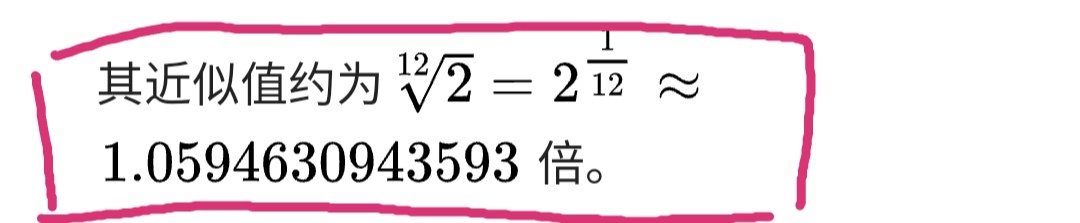
明朝万历年间的 “平民王子”朱载堉 (1536 AD – 1610 AD) 发明现代音乐的 十二平均律 (12-tone Equal Temperament) , 用81档的大算盘算出:先开立方根,后开平方根 2 次


Pros of Grandes Ecoles:
Cons of Grandes Ecoles:
This is similar criticism of the 1300-year-old Ancient Chinese Imperial Exams (科举 pronounced in China Fujian province’s Min ‘闽’ dialect as \Kor-coo, sounds like Grande Écoles Entrance Exams “Concours” \Kong-coo) from which Napoleon Bonaparte, who was strongly recommended by the French Jesuits living in China Fujian as a meritocatic Mandarin selection system, copied it for the first French Grande Ecole (GE) : Ecole Polytechnique (X), and subsequently all other GE in the past 200 years till today.

Key Words: 250 years anniversary
Lycée Louis-Le-Grand, founded since 1563, is the best high school (lycée, 高中 1~3) for Math in France – if not in the world – it produced many world-class mathematicians, among them “The Father of Modern Math” in 19th century the genius Evariste Galois, Charles Hermite, the 20th CE PolyMath Henri Poincaré, (See also: Unknown Math Teacher produced two World’s Math Grand Master Students ), Molière, Romaine Rolland (罗曼.罗兰), Jean-Paul Satre, Victor Hugo, 3 French Presidents, etc.
Its Baccalauréat (A-level) result is outstanding – 100% passed with 77% scoring distinctions. Each year 1/4 of Ecole Polytechnique (*) (France Top Engineering Grande Ecole ) students come from here.
More surprisingly, the “Seconde” (Secondary 4 ~ 中国/法国 “高一”) students learn Chinese Math since 6ème (Primary 6).
Note : Below is the little girl Heloïse (on blackboard in Chinese Math Class) whose admission application letter to the high school :
Translation – I practise Chinese since 6ème (Primary 6), 5 hours a week. I know that your school teaches 1 hour in Chinese Math, which very much interests me because Chinese and Mathematics are actually the 2 subjects I like most.

Interviewer asked Heloïse :
Q: Why do you learn Chinese?
A: It is to prepare (myself) for working in China in the future, to immerse now in the language of environment. Anyway, the Chinese mode of operation is so different from ours.
Note : Louis Le Grand (= Louis 14th). He sent in 1687 AD the Jesuits (天主教的一支: 耶稣会传教士) as the “French King’s Mathematicians”(eg. Bouvet 白晋) to teach the 26-year-old Chinese Emperor (康熙) KangXi in Euclidean Geometry, etc.
Note (*): 5 Singaporeans (out of 300+ French Scholarship students) had entered Ecole Polytechnique through Classes Préparatoires / Concours aux Grandes Ecoles in native French language since 1980 to 2011. It is possible one day some of these elite French boys and girls could enter China top universities via “Gaokao” (高考 ~ “Concours”) in native Chinese language.
French Math is unique in treating these 3 conic curves: (ellipse, parabola, hyperbola), always starts from the first principle – a la the Cartesian Spirit “I think therefore I am” (我思故我在).
“Catersian” Analytical Geometry was co-invented by two 17CE French mathematicians René Déscartes and Pierre de Fermat.

Note: The “elliptic curve” is a powerful geometry tool used in Number Theory (proved the 350-year-old Fermat’s Last Theorem in 1994 by Andrew Wiles), also in the most advanced Encryption algorithm.
This is French “Abstract Algebra” in Math Superieure (Baccalauréat + 1 year) : rigorous and unique French way!

Others: Injective, Injective
“Singapore Math” was a derivative of ancient Chinese Math, modified and combined with “Polya Problem Solving Method ” by a Singapore Professor Lee Peng Yee (李秉彝) from Nanyang Technological University (NTU)’s NIE (National Institute of Education). Prof Lee was the first batch of Nantah University 南洋大学 (the precursor of NTU) Math undergraduate in late 1950s, who obtained PhD Math in Queen’s University (Belfast).
In 2005 during his public Math Olympiad books launching seminar at NUS bookshop, the 70-year-old Prof Lee started his talk on the genesis of “Singapore Math” idea with this famous ancient Chinese Math “Chicken and Rabbits” (鸡兔问题)。
Comments on Singapore Math :
Pros: Concrete Chinese Arithmetic , Polya Problem Solving Pedagogy, Visualisation with Models. PLUS: well trained Math teachers, “educated” parents (revision class for them) or hire private Math home tutor.
Cons: Lack abstract training for Primary 5 & 6 kids (11-12 years old ) in Algebra equations (postponed to Secondary 1 @13 years old). The Chinese (上海) kids start Algebra before Singapore kids. Also French kids start abstract (Set Theory) concepts earlier than Asian kids.
La remise du rapport Villani au Ministre de l’Education nationale Mr. Blanquer préconisant 21 mesures pour l’enseignement des mathématiques en France, a mis à l’honneur, par ricochet et par voix de presse, la méthode de Singapour pour l’apprentissage des maths.
Note: French Mathematician Cédric Villani (Fields Medalist 2010) joins President Macron’s Political Party as a deputé (= Member of Parliament).
Why are Singapore school kids so strong in Math ? (World #1 PISA Test in 2016)
“Every (Singapore) school is a good school” – Mr. Heng (Former Minister of Education of Singapore)
Current Baccalaureat Drawback:
New Reform:
French people are rational (think before action), English people are imperative (action before think).
17CE French Mathematician & Philosopher René Descarte : “I think therefore I am” 我思故我在 。He invented Analytical Geometry (xyz cartesian geometry).
De Moivre Theorem:
http://www3.imperial.ac.uk/
newsandeventspggrp/imperialcollege/newssummary/news_10-1-2018-16-41-35
Emmanuel Macron is the youngest French President (39) since Napoleon Bonaparte (40).
A brilliant student since young, he impressed his secondary school Drama teacher 24 years older, finally married her.
Like any genius (Einstein, Galois, Edison, …) who doesn’t adapt well in the traditional education system, Macron entered the prestigious and highly competitive Classe Préparatoire (Art Stream) Lycée Henri IV in Paris to prepare for the “Concours” (法国抄袭自中国的)”科举” Entrance Exams in France’s top Ecole Normale Supérieure (ENS). Like the 19CE Math genius Evariste Galois who failed the Ecole Polytechnique Concours twice in 2 consecutive years, Macron also failed ENS “Concours” in 2 consecutive years.

He revealed recently, “The truth was I didn’t play the game. I was too much in love (with my former teacher) for seriously preparing the Concours …”


Note: French traditional name for the elitist tertiary education (first 2 or 3 years if repeat last year): “Khâgne” is the name of Classe Préparatoire for Art Stream. The Classe Préparatoire for Science Stream is called “Taupe” (Mole 鼹鼠 ).
Also some cute names for:
His party “En Marche” did a survey on French Education: “The elitist national education system for the elites & rich families. ”

Emmanuel <=> Contract with God 上帝与他同在
— ” 谋事在人, 成事在天 “
( “Man proposes, God disposes”)

Ref:

A free new mobile apps on French Math (Classe Prepa) for engineering undergraduate 1st & 2nd years. Very high standard!

Install from GooglePlay:

The Classe Prépa Math for Grandes Écoles is uniquely French pedagogy – very rigorous based on solid abstract theories.
In this lecture the young French professor demonstrates how to teach students the rigorous Math à la Française:

1st Mistake:
![\displaystyle { \bigl( 1 + \frac{1}{n} \bigr) \xrightarrow [n\to\infty] {} 1 \implies \boxed {{\bigl( 1 + \frac{1}{n} \bigr)}^{n} \xrightarrow [n\to\infty] {} 1^{n} =1}}](https://s0.wp.com/latex.php?latex=%5Cdisplaystyle+%7B+%5Cbigl%28+1+%2B+%5Cfrac%7B1%7D%7Bn%7D+%5Cbigr%29+%5Cxrightarrow+%5Bn%5Cto%5Cinfty%5D+%7B%7D+1+%5Cimplies+%5Cboxed+%7B%7B%5Cbigl%28+1+%2B+%5Cfrac%7B1%7D%7Bn%7D+%5Cbigr%29%7D%5E%7Bn%7D+%5Cxrightarrow+%5Bn%5Cto%5Cinfty%5D+%7B%7D+1%5E%7Bn%7D+%3D1%7D%7D+&bg=ffffff&fg=aa0000&s=2&c=20201002)
THEOREM 1 :
Note: The ‘x’ in f (x) is 
In the above mistake:

2nd Mistake:
THEOREM 2:
Note: q is a fixed value.
Therefore,
![\boxed {{\bigl(1 + \frac{1}{n} \bigr)}^{n} \xrightarrow [n\to\infty] {} +\infty }](https://s0.wp.com/latex.php?latex=%5Cboxed+%7B%7B%5Cbigl%281+%2B+%5Cfrac%7B1%7D%7Bn%7D+%5Cbigr%29%7D%5E%7Bn%7D+%5Cxrightarrow+%5Bn%5Cto%5Cinfty%5D+%7B%7D+%2B%5Cinfty+%7D&bg=ffffff&fg=aa0000&s=2&c=20201002)
Reason: 
3rd Mistake: Binomial

Note:
Expanding the binomial,


Reason: k in the 
THEOREM 3:
Note: p is fixed value.

Reason: n is variable to infinity.
Question:
Is below correct ?
[Hint] n is variable, 
Final Solution: Exponential
THEOREM 4:

THEOREM 5:
Since
Therefore,
THEOREM 6: From equivalence (
![\xrightarrow [n\to\infty] {}](https://s0.wp.com/latex.php?latex=%5Cxrightarrow+%5Bn%5Cto%5Cinfty%5D+%7B%7D&bg=ffffff&fg=375362&s=0&c=20201002)
Converse is true only if
eg.
because ![(\frac {1}{n}) \xrightarrow [n\to\infty] {} 0](https://s0.wp.com/latex.php?latex=%28%5Cfrac+%7B1%7D%7Bn%7D%29+%5Cxrightarrow+%5Bn%5Cto%5Cinfty%5D+%7B%7D+0+&bg=ffffff&fg=375362&s=0&c=20201002)
Therefore (from Theorem 6):
Since exponential function is continuous at 1 (why must state the condition of Continuity? )
hence, from [*], we have:
Cours math sup, math spé, BCPST.
The French University (engineering) 1st & 2nd year Prépa Math: “Vector Space” (向量空间), aka Linear Algebra (线性代数), used in Google Search Engine. The French treats the subject abstractly, very theoretical, while the USA and UK (except Math majors) are more applied (directly using matrices).
Note: First year French (Engineering) University “Classe Prépa”: Math Sup (superior); 2nd year Math Spé (special).
Part 2:
Applications Lineaires (Linear Algebra):
Interesting Math education evolves since 19th century.
“Elementary Math from An Advanced Standpoint” (3 volumes) was proposed by German Göttingen School Felix Klein (19th century) :
1) Math teaching based on Function (graph) which is visible to students. This has influenced all Secondary school Math worldwide.
2) Geometry = Group
After WW1, French felt being behind the German school, the “Bourbaki” Ecole Normale Supérieure students rewrote all Math teachings – aka “Abstract Math” – based on the structure “Set” as the foundation to build further algebraic structures (group, ring, field, vector space…) and all Math.
After WW2, the American prof MacLane & Eilenburg summarised all these Bourbaki structures into one super-structure: “Category” (范畴) with a “morphism” (aka ‘relation’) between them.
Grothendieck proposed rewriting the Bourbaki Abstract Math from ‘Set’ to ‘Category’, but was rejected by the jealous Bourbaki founder Andre Weil.
Category is still a graduate syllabus Math, also called “Abstract Nonsense”! It is very useful in IT Functional Programming for “Artificial Intelligence” – the next revolution in “Our Human Brain” !
(French) Groupes de Galois, le cas abélien
Jean Pierre Serre
♢ Youngest Fields Medalist in history at 27.
♢ Wolf Prize in 2000
♢ 1st person to win Abel Prize in 2003.
Listen to Master:
Question on @Quora:

In our 1978 French Classes Préparatoires aux Grandes Ecoles 1st year “Mathématiques Supérieures”, we wanted to ‘test’ our admired Math Professor whom we think was a “super know-all” mathematician. We asked him the above question. He immediately scolded us in the unique French mathematics rigor:
“L’intégration n’a pas de sense!
Quelle-est la domaine de définition?”
(The integration has no meaning! What is the domain of definition ?)
He was right!
Under the Singapore – British GCE Math education, we lack the rigor of mathematics. We are skillful in applying many tricks to integrate whatever functions, but it is meaningless without specifying the domain (interval) in which the function is defined ! Bear in mind Integration of a function f (curve) is to calculate the Area under the curve f within an interval (or Domain, D). If f is not defined in D, then it is meaningless to integrate f because there won’t be any Area.


http://qr.ae/R4pYie


René Descartes (31 March1596 – 11 Feb1650), the 17th century French mathematician who invented XYZ Cartesian Analytical Geometry.
He also invented the ‘Methodology’. His scientific philosophy ‘Cogito ergo sum’ (Je pense donc je suis / I think therefore I am / 我思故我在) influenced Issac Newton later.
French Concours (Entrance Exams for Grandes Écoles) was influenced by Chinese Imperial Exams (科举\ko-gu in ancient Chinese, today in Hokkien dialect) from 7th century (隋朝) till 1910 (清末). The French Jesuits priests (天主教耶稣教会) in China during the 16th -18th centuries ‘imported’ them to France, and Napoléon adopted it for the newly established Grande École Concours (Entrance Exams), namely, “École Polytechnique” (a.k.a. X).
The “Bachelier” (or Baccalauréat from Latin-Arabic origin) is the Xiu-cai (秀才), only with this qualification can a person teach school kids.
With Licencié (Ju-ren 举人) a qualification to teach higher education.
Concours was admired in France as meritocratic and fair social system for poor peasants’ children to climb up the upper social strata — ” Just study hard to be the top Concours students”! As the old Chinese saying: “十年寒窗无人问, 一举成名天下知” (Unknown as a poor student in 10 years, overnight fame in whole China once top in Concours). Today, even in France, the top Concours student in École Polytechnique has the honor to carry the Ensign (flag) and be the first person to march-past at Champs-Elysées in the National Day Parade.
Concours has its drawback which, albeit having produced top scholars and mandarins, also created a different class of elites to oppress the people. It is blamed for rapidly bringing down the Chinese Civilization post-Industrial Age in the last 200 years. 5 years before the 1911 Revolution, the 2nd last Emperor (光绪) abolished the 1,300- year-old Concours but was too late. Chinese people overthrew the young boy Emperor Puyi (溥仪) to become a Republic from 1911.
A strange phenomenon in the1,300-year Concours in which only few of the thousands top scorers — especially the top 3 : 状元, 榜眼, 探花 e.g. (唐)王维, (北宋)苏东坡, 奸相(南宋)秦桧,贪污内阁首輔(明)严嵩… — left their names known in history, while those who failed the Concours were ‘eternally’ famous in Literatures (the top poets LiBai 李白 and DuFu 杜甫), Great writers (吴承恩, 曹雪芹, 蒲松龄, 罗贯中, 施耐庵), Medicine (《本草綱目》李时珍, 发明”银翹散”的吳鞠通), Taipeng Revolution leader (洪秀全)….
Same for France, not many top Concours students in X are as famous in history (except Henri Poincaré) as Evariste Galois who failed tragically in 2 consecutive years.
The French “grandiose ” in Science – led by Pascal, Fermat, Descartes, Fourier, Laplace, Galois, etc. — has been declining after the 19th century, relative to the USA and UK, the Concours system could be the “culprit” to blame, because it has produced a new class of French “Mandarins” who lead France now in both private and government sectors. This Concours system opens door to the rich and their children, for the key to the door lies in the Prépas (Classes Préparatoires, 2-year post-high school preparatory classes for grandes écoles like X), where the best Prépas are mostly in Paris and big cities (Lyon, Toulouse…), admit only the top Baccalauréat (A-level) students. It is impossible for poor provinces to have good Prépas, let alone compete in Concours for the grandes écoles. The new elites are not necessary the best French talents, but are the privilegés of the Concours system who are now made leaders of the country.
Note: Similar education & social problem in Japan, the new Japanese ‘mandarins’ produced by the competitive University Entrance Exams (Todai 东大) are responsible for the Japanese post-Bubble depression for 3 decades till now.
These ‘Mandarins’ (官僚) of the past and modern days (Chinese, French, Korean “Yangban 양반 両班 “, Japanese) are made of the same ‘mould’ who think likewise in problem solving, protect their priviledged social class for themselves and their children, form a ‘club mafia’ to recruit and promote within their alumni, all at the expense of meritocracy and well-being of the corporations or government agencies. The victim organisation would not take long to rot at the roots, it is a matter of time to collapse by a sudden storm overnight — as seen by the demise of the Chinese Qing dynasty, the Korean Joseon dynasty (朝鲜李氏王朝), and the malaise of present French and Japanese economies.
2.
Mathematics and sex | Clio Cresswell TEDxSydney:
She had 2/20 in French Math, but loves the “Mathematics & Sex”:
Watch “Mathematics and sex | Clio Cresswell TEDxSydney” on YouTube :
《国宝档案》 20140407 紫禁城里的外国人—— 利玛窦 Matteo Ricci, Italian Jesuit: 中国”几何”之父。
《国宝档案》 20140408 紫禁城里的外国人——汤若望(德语:Johann Adam Schall von Bell , 1591年-1666年),字道未,神圣罗马帝国科隆(今属德国)人. German Jesuit
《国宝档案》 20140409 紫禁城里的外国人——南怀仁(Ferdinand Verbiest,1623年10月9日-1688年1月28日),字敦伯。Belgian Jesuit
《国宝档案》 20140411 紫禁城里的外国人——蒋友仁,(法语:Michel Benoist,1715年10月8日-1774年10月23日),字德翊。建园明园的总工程师, 尤其是12生肖水法喷泉。French Jesuit
Discoverer of 易经 Yijing = Binary Mathematics 白晋 (Joachim Bouvet,1656—1730年),又作白进,字明远 , French Jesuit。 “The Louis 14 King’s Mathematician”。

注意到没有英国传教士, 他们是Protestant, 乾隆末期才来中国, 左手圣经, 右手大炮, 屁股藏着鸦片, 强迫打开清朝的大门。
“Gauge Theory and Langrands Duality”
Number Theory | Curves over Finite Fields | Riemann Surfaces | Quantum Physics
Download 2048 Game:
https://play.google.com/store/apps/details?id=com.estoty.game2048
This addictive game “2048” is better than any other violent game like “The World of Warcraft”. At least it improves your math!
The video explains its principle and why you will never exceed 131,072.
It is binary arithmetic, or power of 2 =

Notice the rule of 0 & 1:
Minus 2:
Minus 4:

The maximum scenario whereby all 15 boxes are filled with the power of 2:
Final score (Maximum)
Case 1: The 16th box: – 2
Case 2 (Maximum) : The 16th box: – 4

Strategy to win:
Introduction to Vector Space
Set Theory for Secondary School:
Clay Mathematics Seminar 2010:
“Math is nothing but a history of Group”
Director of Institute Henri Poincaré : Cédric Villani (Fields Medalist, 2010)
Speaker: Prof Etienne Ghys
École Normale Supérieure de Lyon
The Math teaching from primary schools to secondary / high schools should begin from the journey of Symmetry.
After all, the Universe is about Symmetry, from flowers to butterflies to our body, and the celestial body of planets. Mathematics is the language of the Universe, hence
Math = Symmetry
It was discovered by the 19th century French tragic genius Evariste Galois who, until the eve of his fatal death at 21, wrote about his Mathematical study of ambiguities.
Another French genius of the 20th century, Henri Poincaré, re-discovered this ambiguity which is Symmetry : Group, Differential Equation, etc.
Only in university we study the Group Theory to explore the Symmetry.


The romantic gallic Frenchmen like to joke and played pranks. We have already seen the Number 1 Mathematical ‘prank’ in Our Daily Story #1 (The Fermat’s Last Theorem), here is another 20th century Math prank “Nicolas Bourbaki” – the anonymous French mathematician who did not exist, but like Fermat, changed the scene of Modern Math after WW II.
http://en.m.wikipedia.org/wiki/Nicolas_Bourbaki

André Weil (not to confuse with Andrew Wiles of FLT in Story #2 ) and his university classmates from the Ecole Normale Supérieure (Évariste Galois‘s alma mater which expelled him for involvement in the French Revolution), wanting to do something on the outdated French university Math textbooks, formed an underground ‘clan’ in a Parisian Café near Jardin du Luxembourg. They met often to brainstorm and debate on the most advanced Math topics du jour. Finally they decided to totally re-write the foundation of Math based on Set Theory. Inspired by the rigorous axiomatic approach of Euclid’s “The Elements”, they named their books “Élements de Mathématique ” (The Elements of Mathematic) (Note: Math in singular). Collectively they picked a pseudonym “Nicolas Bourbaki” as the author of this series of Modern Math books. The Bourbakian extremely abstract and rigorous approach to Math pedagogy influenced the French Math and the world ‘s Modern Math in post-WW II till today. The founding students in the Bourbaki group, led by André Weil (who migrated to the USA), almost all won the prestigious Fields medals. The Bourbakian baton passed on to the next generation of French mathematicians, including the hermit mathematician Alexander Grothendieck and the Chinese mathematician Wu Wenjun 吴文俊.
Notes:
1. The Bourbakians’ idea was to rewrite the foundations of math using a new standard of rigor based on the set theory initiated by Cantor in the late 19th century. They succeeded only partially, but their influence on math has been enormous.
2.The Bourbaki Seminar, one of the longest running math seminars in the world, held at the Henri Poincaré Institute in Paris, takes up a weekend 3 times a year.
Ref:
Is the world mathematical ?
(Video in French)
To prove the FLT, Prof Andrews Wiles used all the math tools developed from the past centuries till today. One of the key tool is the Galois Group, invented by a 19-year-old French boy in 19th century, Evariste Galois. His story is a tragedy – thanks to the 2 ‘incompetent’ examiners of the Ecole Polytechnique (a.k.a. “X”), the Math genius failed in the Concours (Entrance Exams) not only once, but twice in consecutive years.
Rejected by universities and the ugly French politics and academic world, Galois suffered set back one after another, finally ended his life in a ‘meaningless’ duel at 20.
He wrote down his Math findings the eve before he died – “Je n’ai pas le temps” (I have no more time) – begged his friend to send them to two foreigners (Gauss and Jacobi) for review of its importance. “Group Theory” was born in such tragic circumstances, recognized to the world only 14 years after his death.
http://en.m.wikipedia.org/wiki/%C3%89variste_Galois
Video in French and English:
Coursera: Ecole Normale Supérieure – “Introduction à La Théorie de Galois”

Colle = Oral Interrogation
In French, ‘coller’ (the verb of colle) is to ‘glue’ (on the blackboard) i.e. get stuck by the Oral Interrogation.
This tradition started from Napoleon time, even Victor Hugo (author of Les Misérables) got ‘colle’ in Lycée Louis Le Grand’s Classe Préparation (or Prépas in short, equivalent to 1st and 2nd year of undergraduate course, for French Top 10% Baccalaureat students, who aspire to enter the elite Grandes Ecoles after many competitive Concours Entrance Exams).
Every week in the 2 years of Prépas there are 2 of the 4 colles: Math & Physics, or, Chemistry & Second Language (English / Spanish / Russian / German).
This video is the session of a Math colle. The students are grouped in 3 (Trinôme), take the oral test after 6 pm by a professor from internal or external university.
It is a nightmare for Math colle. Not so much for Physics or Chemistry. English colle for Singaporean student is easy except the translation from English to French.
300 years ago till today the Colles are still the same. The French like tradition but this Prépas and the Colles are horrible to kill the young French like Evariste Galois and many more young talents.

Have you seen this imported China Green Cauliflower found at local NTUC Supermart ? Its origin is from Italy called Romanesco Broccoli. It has funny spiral curve (Koch curve) in Mandelbrot Fractal Geometry discovered in 1970s by an IBM researcher Benoit Mandelbrot. The spirals also hide the pattern in Fibonacci number.

China, Singapore, Hong Kong and Taiwan are 4 predominantly Chinese population being ranked 1st, 2nd, 3rd and 4th, respectively, in the PISA 2012 Math Test for 15-year-old students.
While this is something to be proud of our Secondary School Math Education, it does not hide the fact that beyond this age (15) these countries do not produce any high-level mathematicians like Fields Medalists or Nobel Prize Scientists.
What goes wrong ?
Reason: Asian education emphasizes on computation-driven Math drills, a long tradition of ‘abacus’ mindset, or ‘algorithmic‘ approach.
By doing plenty of Math assessments : in China “Sea of Math Questions” (题海), or in Singapore popular Math Tuition Class doing Past Years Math Papers, students are drilled in solving standard ‘sure-have-answer’ test questions with memorized or déjà-vu (of similar patterns) problem solving techniques.
Once they enter university where the Math is more of Proofing and “no-solution” type, most students are not trained in thinking and solving such questions, they will get stuck.
What Asian Math Education should improve is in the “Solving Unknown” Math skills – something worth to learn from the French Lycée (Secondary /High School) Math Education since they incubate 1/3 of Fields Medalists, yet France’s PISA is average. (Why ? – another blog to discuss the French’s weakness in Applied Math.)
We shall walk through the problem at little steps and day-by-day, not so much interest in the final solution per se , but with a higher aim to revise the modern algebra lessons along the way.
The French professors who designed this problem had done beautifully using all the concepts learned in the 2-year Classe Préparatoire (or Prépa, equivalent to Bachelor degree in Math & Science) – it is like an orchestra composer who pieces together all instruments to play a beautiful symphony – the catch is that the student must have a good grasp of all algebra topics.
SOLUTION
I – Operators on the functions with finite support
1. a. Prove that V is a vector subspace of 
Proof:
Recall the definitions:


Support = supp(ƒ) = {
V = {f | supp(f) is a finite set}.
To prove V a vector subspace of
1) V must be non-empty?
V contains null function, so not empty subset of
2) closed under vector addition?
supp (f+g) 

3) closed under scalar multiplication?
supp(
Given ƒ ∈
by E(ƒ)(κ)= ƒ(κ+1), κ ∈
1. b. Show that E∈ L(
E by definition is an operator of shift, hence a linear transformation, thus
E∈ L(
——
[Solutions for XLC paper]:
Math Paper A (XLC)
Duration: 4 hours
Use of calculator disallowed.
We propose to study the algebras of the remarkable endomorphisms of vector spaces of infinite dimension.
Preamble
An 
In this problem, all vector spaces are over the base field of complex numbers field 
If ε is a vector space, the algebra of the endomorphisms of ε is denoted by L(ε), and the group of the automorphisms of ε is denoted by GL(ε).

If u ∈ L(ε), ![\mathbb{C}[u]](https://s0.wp.com/latex.php?latex=%5Cmathbb%7BC%7D%5Bu%5D+&bg=ffffff&fg=375362&s=0&c=20201002)
![\{P(u) \mid P \in \mathbb{C}[X] \}](https://s0.wp.com/latex.php?latex=%5C%7BP%28u%29+%5Cmid+P+%5Cin+%5Cmathbb%7BC%7D%5BX%5D+%5C%7D+&bg=ffffff&fg=375362&s=0&c=20201002)

If ƒ is the function of
We call this set the support of ƒ.
Throughout the problem, V denotes the set of functions of
I – Operators on the functions with finite support
1. a. Prove that V is a vector subspace of
Given ƒ ∈
we define E(ƒ) ∈
by
E(ƒ)(κ)= ƒ(κ+1), κ ∈
1. b. Show that E∈ L(
In the following, E denotes uniquely the endomophism of V induced.
2. Show that E ∈ GL(V).
3. For 

3.a. Prove that the family 
3.b. Calculate E(
Let 
we define the respective linear mappings
by:
and 
4. Prove that
if and only if for all 
In the remaining of Section I (but not in the following Sections), we asume the conditions in question 4 are verified.
5. Prove that
if and only if 
6.a. Prove that for 

6.b. Deduce that a vector subspace non-reduced to {0} of V, stable by H, contains at least one of the 
In the remaining of Section I (but not in the following Sections), we asume the conditions in question 5 are verified and
7.a. Prove that
7.b. Prove that E and F are not of finite order in the group GL(V).
7.c. Calculate the kernel of H and prove that 
8. ![\mathbb{C}[X]](https://s0.wp.com/latex.php?latex=%5Cmathbb%7BC%7D%5BX%5D&bg=ffffff&fg=375362&s=0&c=20201002)
8.a. Prove that ![\mathbb{C}[E]](https://s0.wp.com/latex.php?latex=%5Cmathbb%7BC%7D%5BE%5D&bg=ffffff&fg=375362&s=0&c=20201002)
8.b. Prove that ![\mathbb{C}[F]](https://s0.wp.com/latex.php?latex=%5Cmathbb%7BC%7D%5BF%5D&bg=ffffff&fg=375362&s=0&c=20201002)
8.c. Prove that ![\mathbb{C}[H]](https://s0.wp.com/latex.php?latex=%5Cmathbb%7BC%7D%5BH%5D&bg=ffffff&fg=375362&s=0&c=20201002)
II – Interlude
In all the rest of the problem, we fix an odd interger 

9. Prove that 
Let
10. Consider the element 
10.a. Calculate 
Prove that
10.b. Let b 
Calacute the eigenvectors of 
Let’s define a linear mapping 

define r and p respectively the residue and the quotient of the euclidian division of i by ℓ; ie:
11. Prove that 

III – Quantum Operators
12. Prove that

In the following problem, we asume the conditions in question 12 are verified and

13. Prove that 
14. Prove that

In the following problem, we asume the conditions in question 14 are verified.
15.a. Prove that 

15.b. Prove that the period of 
15.c. Prove that the period of 
16. Let 

16.a. Prove that

16.b. For 
16.c. Deduce that C is a homothety of v of which we calculate the ratio of 

16.d. Let’s fix 

16.e. Let’s fix 


IV – Modular Quantum Operators
Let 


17.a. Prove that if 

17.b. Prove that 
Let 
18. Prove that
19. Prove that 
20.a. Show that there exists an unique morphism of algebras 
20.b. Prove that 


21. Let’s study in this question 
21.a. Determine 
21.b. Deduce 
21.c. Calculate the dimension of the vector subspace of
21.d. Calculate the eigenvectors of
22. Let W a non zero sub-space of 

22.a. Show that W contains at least one of the vectors
22.b. What do you say if W is in addition stable by
23. Give a necessary and sufficient condition on 

—End—


![\boxed { \displaystyle \sqrt[12] {2} = 2^{\frac {1}{12} }= 2^{{\frac {1}{3}}.{\frac {1}{2}}.{\frac {1}{2}}} = \sqrt {\sqrt {\sqrt[3]{2}}}}](https://s0.wp.com/latex.php?latex=%5Cboxed+%7B+%5Cdisplaystyle+%5Csqrt%5B12%5D+%7B2%7D+%3D+2%5E%7B%5Cfrac+%7B1%7D%7B12%7D+%7D%3D+2%5E%7B%7B%5Cfrac+%7B1%7D%7B3%7D%7D.%7B%5Cfrac+%7B1%7D%7B2%7D%7D.%7B%5Cfrac+%7B1%7D%7B2%7D%7D%7D+%3D+%5Csqrt+%7B%5Csqrt+%7B%5Csqrt%5B3%5D%7B2%7D%7D%7D%7D&bg=ffffff&fg=aa0000&s=4&c=20201002)

![\boxed { \text {If } {U}_{m} \xrightarrow [n\to\infty] {} \alpha \text{ and } f(x) \xrightarrow [x \to\alpha] {} \ell \text { then } f (U_{m}) \xrightarrow [n\to\infty] {} \ell}](https://s0.wp.com/latex.php?latex=%5Cboxed+%7B+%5Ctext+%7BIf+%7D+%7BU%7D_%7Bm%7D+%5Cxrightarrow+%5Bn%5Cto%5Cinfty%5D+%7B%7D+%5Calpha+%5Ctext%7B++and++%7D+f%28x%29+%5Cxrightarrow+%5Bx+%5Cto%5Calpha%5D+%7B%7D+%5Cell+%5Ctext+%7B+then+%7D+f+%28U_%7Bm%7D%29+%5Cxrightarrow+%5Bn%5Cto%5Cinfty%5D+%7B%7D+%5Cell%7D&bg=ffffff&fg=0000FF&s=3&c=20201002)


![\boxed { \forall q > 1, q^{n} \xrightarrow [n\to +\infty] {} +\infty}](https://s0.wp.com/latex.php?latex=%5Cboxed+%7B+%5Cforall+q+%3E+1%2C+q%5E%7Bn%7D+%5Cxrightarrow+%5Bn%5Cto+%2B%5Cinfty%5D+%7B%7D+%2B%5Cinfty%7D&bg=ffffff&fg=0000ff&s=3&c=20201002)

![{\bigg[ \bigl( 1 + \frac{1}{n} \bigr)}^{n} = \binom {n}{0} {(\frac {1}{n})}^{0} + \binom {n}{1} {(\frac {1}{n})}^{1} + ... = 1 + 1 + ... > 2 \bigg]](https://s0.wp.com/latex.php?latex=%7B%5Cbigg%5B+%5Cbigl%28+1+%2B+%5Cfrac%7B1%7D%7Bn%7D+%5Cbigr%29%7D%5E%7Bn%7D+%3D+%5Cbinom+%7Bn%7D%7B0%7D+%7B%28%5Cfrac+%7B1%7D%7Bn%7D%29%7D%5E%7B0%7D+%2B+%5Cbinom+%7Bn%7D%7B1%7D+%7B%28%5Cfrac+%7B1%7D%7Bn%7D%29%7D%5E%7B1%7D+%2B+...+%3D+1+%2B+1+%2B+...+%3E+2+%5Cbigg%5D&bg=ffffff&fg=375362&s=0&c=20201002)


![\text {If } {U}_{n}\xrightarrow [n\to\infty] {} 0, \text {then } {(1+{U}_{n})}^{\alpha} \xrightarrow [n\to\infty] {} \alpha.{U}_{n}](https://s0.wp.com/latex.php?latex=%5Ctext+%7BIf++%7D+%7BU%7D_%7Bn%7D%5Cxrightarrow+%5Bn%5Cto%5Cinfty%5D+%7B%7D+0%2C+%5Ctext+%7Bthen+%7D+%7B%281%2B%7BU%7D_%7Bn%7D%29%7D%5E%7B%5Calpha%7D+%5Cxrightarrow+%5Bn%5Cto%5Cinfty%5D+%7B%7D+%5Calpha.%7BU%7D_%7Bn%7D&bg=ffffff&fg=375362&s=0&c=20201002)
![{(1+\frac{1}{n})}^{n} \xrightarrow [n\to\infty] {??} n. \frac{1}{n} = 1](https://s0.wp.com/latex.php?latex=%7B%281%2B%5Cfrac%7B1%7D%7Bn%7D%29%7D%5E%7Bn%7D+%5Cxrightarrow+%5Bn%5Cto%5Cinfty%5D+%7B%3F%3F%7D+n.+%5Cfrac%7B1%7D%7Bn%7D+%3D+1+&bg=ffffff&fg=375362&s=0&c=20201002)

![\boxed {\text {If } {U}_{n}\xrightarrow [n\to\infty] {} 0, \text {then } \ln (1+{U}_{n}) \sim_{n\to\infty} {} {U}_{n} }](https://s0.wp.com/latex.php?latex=%5Cboxed+%7B%5Ctext+%7BIf++%7D+%7BU%7D_%7Bn%7D%5Cxrightarrow+%5Bn%5Cto%5Cinfty%5D+%7B%7D+0%2C+%5Ctext+%7Bthen+%7D+%5Cln+%281%2B%7BU%7D_%7Bn%7D%29+%5Csim_%7Bn%5Cto%5Cinfty%7D+%7B%7D+%7BU%7D_%7Bn%7D+%7D&bg=ffffff&fg=0000ff&s=3&c=20201002)
![\frac{1}{n} \xrightarrow [n\to\infty] {} 0, \text {then } \ln (1+ \frac{1}{n}) \sim_{n\to\infty} {} \frac{1}{n}](https://s0.wp.com/latex.php?latex=%5Cfrac%7B1%7D%7Bn%7D+%5Cxrightarrow+%5Bn%5Cto%5Cinfty%5D+%7B%7D+0%2C+%5Ctext+%7Bthen+%7D+%5Cln+%281%2B+%5Cfrac%7B1%7D%7Bn%7D%29+%5Csim_%7Bn%5Cto%5Cinfty%7D+%7B%7D++%5Cfrac%7B1%7D%7Bn%7D&bg=ffffff&fg=375362&s=0&c=20201002)

![\boxed { \text {If } {U}_{n} \sim_{n\to\infty} {} \ell \in \mathbb {R}, \text {then } {U}_{n} \xrightarrow [n\to\infty] {} \ell }](https://s0.wp.com/latex.php?latex=%5Cboxed+%7B+%5Ctext+%7BIf++%7D+%7BU%7D_%7Bn%7D+%5Csim_%7Bn%5Cto%5Cinfty%7D+%7B%7D+%5Cell+%5Cin+%5Cmathbb+%7BR%7D%2C++%5Ctext+%7Bthen+%7D+%7BU%7D_%7Bn%7D+++%5Cxrightarrow+%5Bn%5Cto%5Cinfty%5D+%7B%7D+%5Cell+%7D&bg=ffffff&fg=0000ff&s=3&c=20201002)


![\mathbb{C} [\Psi_a(E)]](https://s0.wp.com/latex.php?latex=%5Cmathbb%7BC%7D+%5B%5CPsi_a%28E%29%5D&bg=ffffff&fg=375362&s=0&c=20201002)
 Math Online Tom Circle