Free book: Analysis
Free book: Maths Logic
写数学书,不应该这样写, 读者看第一页 就睡觉/吓跑 :)
Free book: Analysis
Free book: Maths Logic
写数学书,不应该这样写, 读者看第一页 就睡觉/吓跑 :)

This was one of my weekly “Colle” (oral test ) question in 1st Year University 1978 Classe Préparatoire (Math Supérieure) = “Analysis” module.
Sum of Squares :
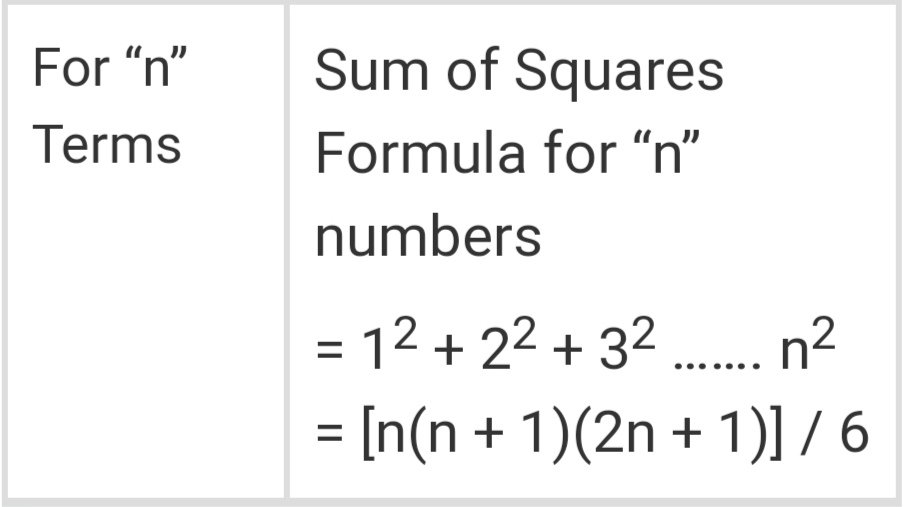
Mathematics is divided into 2 major branches:
1. Analysis (Continuity, Calculus)
2. Algebra (Set, Discrete numbers, Structure)
In between the two branches, Poincaré invented in 1900s the Topology (拓扑学) – which studies the ‘holes’ (disconnected) in-between, or ‘neighborhood’.
Topology specialised in
– ‘local knowledge’ = Point-Set Topology.
– ”global knowledge’ = Algebraic Topology.
Example:
The local data of consumer behavior uses ‘Point-Set Topology’; the global one is ‘BIG Data’ using Algebraic Topology.
https://www.coursera.org/course/introgalois
2014 Math Course from Coursera: Galois Theory
Coursera is a free Online University Class taught by professors from 20+ world’s top universities, co-founded by a Singapore-born Stanford Professor Dr. Andrew Ng (ex-Rafflesian student and Computer scientist in Artificial Intelligence) with Dr. Delphne Koller.
Galois Theory is taught in the Honors / Masters Math Course in NUS (National University of Singapore, ranked the Top Asian University and 9th in the world for Mathematics in 2013)
Ecole Normale Superieure is the ‘Teacher College’ equivalent to NTU (NIE) in Singapore. It is the top Research University in the World, producing 1/3 of the world’s Fields medalists for Math and many French Nobel Prize scientists. Évariste Galois was its student during Napoleon Revolution, after having failed the entrance exams (Concours) of Ecole Polytechniques (X) in 2 consecutive years.
However, the 19-year-old math genius Galois was expelled too by Ecole Normale Supérieure for involving in the Revolution against the French King. Watch the latest movie “Les Misérables” by Victor Hugo, in the Parisian street barricade of student riots against the King’s soldiers, Galois was one of the student leaders.
Galois was sadly killed at 20 in a duel by his girl friend’s fiancé – a good mathematician is not ‘necessary and sufficient condition’ to be a good shooter. The night before he died (knowing well he would be killed by a marksman), Galois wrote down the theory in 60 pages, repeatedly scribbled at the margin, “Je n’ai pas le temps” (I have no time). He asked his brother to send the papers to Jacobi and Gauss to confirm its importance. But Gauss hated Napoleon and the French, who occupied his Germany and killed his King, refused to study the papers. Only 14 years later a X Prof Louisville discovered the Galois Theory and Group.
Galois Theory is the most advanced theory in Algebra. The famous Fermat’s Last theorem (x^n + y^n = z^n) was proved after 350 years using Galois Theory by the Cambridge Prof Andrew Wiles in 1994.
https://www.coursera.org/course/introgalois
Another Good Math course:
https://www.coursera.org/course/functionalanalysis
French touch of graduate Math by the Engineering Ecole Centrale of Paris, the alma mater of the inventors of cars Renault, Citroën, Tower Eiffel / New York Status of Liberty.
Prof Timothy Gowers is the Cambridge Professor who won the 1998 Fields Medal. Surprisingly he teaches such “low level” undergrad course (Analysis I), but he takes a higher-level approach to tackle the subject with much deeper and broader view.
A master can teach the same subject with a ‘helicopter’ view than an ordinary prof who only confuses the students with over-detailed views of ‘trees’ without letting them see the ‘forest’. (见树不见林).
For example, Prof Gowers brilliantly points out that Analysis is all about Real Number Structure with ONLY 1 AXIOM : Least Upper Bound.
I really enjoy Prof Gowers’s blog. He is the man whom David Hilbert was looking for : “The Pied Piper”, able to bring complicated Math down approachable to the ordinary men on the streets.
Abel also advised us, “Read Direct from the Masters“. Prof Gowers is the Master. 行家一出手, 便知有没有.
—————–♢♢♢♢♢♢♢————
Note: I have a ‘lay-man’ analogy of the “Least Upper Bound” of Real Number (or the scary name: Complete Ordered Field). Example: The Bible said God gave the descendants of Noah (i.e. include all mankind now) after The Flood a life span of maximum 120 years. This week the Hong Kong Movie tycoon, billionaire and philanthropist, Sir Run Run Shaw, died at 107 years-old. His Life Span = (0,120), but his extraordinary Least Upper Bound is 107 🙂 Prof Gowers, do you agree with my analogy for non-mathematicians ?
This term I shall be giving Cambridge’s course Analysis I, a standard first course in analysis, covering convergence, infinite sums, continuity, differentiation and integration. This post is aimed at people attending that course. I plan to write a few posts as I go along, in which I will attempt to provide further explanations of the new concepts that will be covered, as well as giving advice about how to solve routine problems in the area. (This advice will be heavily influenced by my experience in attempting to teach a computer, about which I have reported elsewhere on this blog.)
I cannot promise to follow the amazing example of Vicky Neale, my predecessor on this course, who posted after every single lecture. However, her posts are still available online, so in some ways you are better off than the people who took Analysis I last year, since you will have…
View original post 3,819 more words
We learn Discrete Math in Integer (discrete means increment by 1: n, n+1, (n+1)+1…), then we struggle with the epsilon-delta to find limit, continuity… in Analysis.
Discrete is Macro Math, Analysis is Micro Math. Now Terrence finds a bridge between them: Ultraproduct.
Ultraproducts as a Bridge Between Discrete and Continuous Analysis
Mathematics is roughly divided into 2 categories:
‘Macro’ Math: Algebra
‘Micro’ Math: Analysis (or the outdated name Calculus)
Algebra has been transformed rapidly from 19th century after Galois’s invention of Group Theory, and expanded by David Hilbert and his students E. Noether, Artin, etc in Axiomatic Algebra, takes a very macro view of Mathematical structures in abstract thinking.
Analysis, also after 19th century Cauchy and Wierestrass’s invention of ‘epsilon-delta’ micro view of Calculus, transformed the Newton Calculus into rigourous Math.
The old school of division of Pure and Applied Math is no longer valid. Take for example, the Applied Math used in Google Search Algorithm uses abstract Vector Space of Matrices in Linear Algebra (Pure Math).
Definition:
has limit a
What if we reverse the order of the definition like this:
∃ N such that ∀ε > 0, ∀n ≥ N,
This means:
Example:
Proof:
Let’s prove it.
Therefore,

[Source]: Excellent Introduction in Modern Math:
A Concise Introduction to Pure Mathematics, Third Edition (Chapman Hall/CRC Mathematics Series)
Why easy analysis problems are easy
by Timothy Gowers (UK, Fields Medal 1998)
Timothy Gowers is teaching in Cambridge, he wrote the thick volume of “Princeton Math Encyclopedia.”
He is a very good mathematician, who likes to explain simple fundamental Math questions (like why 2+2=4, multiplication is commutative,…), in the process making abstract math simple to understand.
“If you have recently met epsilons and deltas for the first time, then you may find the problems you are asked to solve on examples sheets very hard. On the other hand, you will notice that your lecturers, supervisors etc. do not find them hard at all. Why is this? ” Read on …
Below is my attempt to rewrite the Example 1 with Latex epsilon-delta notation for easy reading.
Example 1.
I wish to prove that the sequence (1,0,1,0,1,0,…) does not converge.
For divergence, we want to write the negation of the above as:
Take arbitrary a as below:
For either case whether n is even or odd,
Exercise:
Prove:
1-1+1-1+1…
=1, or
=0, or
= 1/2 (Leibniz said 50% -1 50% 0) ?
The Princeton Companion to Mathematics
Analysis is the study of Functions, using the main tool “Limit“.
Limit problems appear in:
1. Continuity
2. Derivative
3. Integral
4. Sequence
Multi-variable Functions have different approach of Limit compared to Single-value functions.
Eg. L’Hôpital Rule is not applicable to Multi-variable Functions.
Case 1: Find the Limit (L) of
Solution:
Consider the point P(x,y) on f(x,y)
but when P moves along y=x straight line approaching (0,0),
ie. x->0, y=x->0,
From (1),(2),(3) there are 3 limits {0, 0, 1/2}, hence the Limit L does not exist.
Case 2:
Find limit L of
Solution:
Let y= kx
When x -> 
f(x,y) independent of k => possible limit of 0
Prove:
Note:
[QED]
Source: Prof Zhang ShiZao 章士藻(1940-) “Collected Works of Mathematics Education” 数学教育文集
for Ecole Normale Supérieure in China 高等师范学院
[Video in French ] http://touch.dailymotion.com/video/x89qux
C Continuous
I Integrable
D Differentiable
The CID Relation:

=>
What it means a curve (function) is :
1. Continuous = not broken curve
2. Differentiable = no pointed ‘V’ or ‘W’ shape curve
3. Integrable: can compute the area under the (unbroken) curve.


 Math Online Tom Circle