
NIGHT OF THE DEMON
(1957)
Dana Andrews / Peggy Cummins / Niall MacGinnis / Maurice Denham / Athene Seyler / Liam Redmond / Reginald Beckwith / Ewan Roberts / Peter Elliott / Rosamund Greenwood / Brian Wilde / Richard leech / ORIGINAL SOUNDTRACK Clifton Parker / PRODUCTION DESIGN Ken Adam / CINEMATOGRAPHY Edward Scaife / EDITOR Michael Gordon / PRODUCER Frank Bevis & Hal E. Chester / DIRECTOR Jacques Tourneur
‘It has been written, since the beginning of time – even unto these ancient stones – that evil, supernatural creatures exist in a world of darkness..’

“All this sex and violence.. I get enough of that at home!”, exclaims a bewildered Baldrick to Blackadder when confronted with the depravities of Georgian Theatre. The modern Horror-meisters seem similarly incapable of seperating the two, spiking their brews with liberal quantities of the old ultra-violence and sado-masochistic mysogyny. Working out of a shared rule book, culling it’s philosophy from somewhere between Hitchcock’s iconic ‘Psycho’ and the flourish of lowbudget 70’s & 80’s slasher films that grew from Carpenter’s ‘Halloween’ success. In recent years though, the influx of J-Horror from such auteurs as Hideo Nakata & Takashi Shimizu has sent western horror cinema into spasms of downright nastiness. Japanese & Korean horror is a clearly defined artform, a cine-folklore, both alegorical and rich in cultural history, but it is an enclosed reality.. not at all comfortably transferred to a western setting. The remakes are fairly straightforward, and are mostly helmed by their original Japanese Directors, but it’s those inspired young Westeners who go all loopy and misunderstanding the genre, spiral out of control.
Ghosts in Japan are traditionally female and are usually associated with water (wells, springs etc.), the horror generally centred around a terrifying duality between beauty (the luring Siren) and hideous ugliness (the decaying loss of beauty), clashing and grating on the Eastern feminine ideal. These spirits are wronged souls seeking vengeance and release from torment. Western mythology in contrast, has ghosts and monsters that are generally male in nature, and are more often than not confused, lost or mischievous entities. Combine the fetishism inherent in Japanese & Korean creative culture, with threatening male entities in Western stories and you get an unsettling amalgum. The strong female spirit of the Oriental revenge tale is now flesh and blood victim of raving, sexually abusive male creatures. This all sounds a bit strong, but consider such peculiar recent films as ‘Captive’, ‘Wolf Creek’ and ‘Creep’, with their all too disturbing slasher / torture and rampages. Horny madmen as protagonist and perhaps viewer alike.
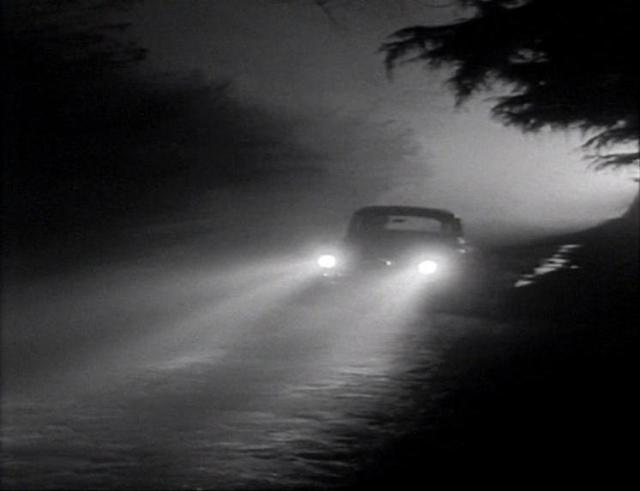
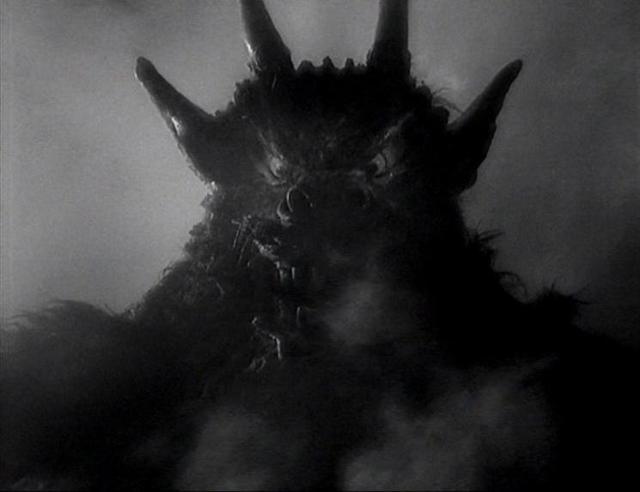
Anyway.. what’s all this got to do with ‘Night of the Demon’? Well, it’s quite simply that there’s not a trace of sexuality to be found anywhere about it’s person. There’s a mild hint of a romance, but that’s about it. The victims are all male, the Demon of the title has no specific gender, the protagonist is male, our heroine is neither vamp nor shrew (a schoolteacher yes, but played by the exceedingly pretty Peggy Cummins).. and yet, ‘Night of the Demon’ is recognized as one of the finest Horror films of it’s generation. It’s origins lie with the short story ‘The Casting of the Runes’ written in the early 1920’s by Etonian mediaeval Scholar and lecturer M.R.James. James began his literary career after gaining a notoriety for terrifying his students with ghost stories by the fireside at Christmas Eve.. stories suitably gruesome, but without too many references to sex or women in general to upset the Headmaster. Think of John Carpenter’s ‘The Fog’, with it’s old Sea Captain telling his ghostie story huddled round a campfire at midnight, and you can glimpse the Jamesian tradition..
“11:55, almost midnight. Enough time for one more story. One more story before 12:00, just to keep us warm. In five minutes, it will be the 21st of April. One hundred years ago on the 21st of April, out in the waters around Spivey Point, a small clipper ship drew toward land. Suddenly, out of the night, the fog rolled in. For a moment, they could see nothing, not a foot in front of them. Then, they saw a light. By God, it was a fire burning on the shore, strong enough to penetrate the swirling mist. They steered a course toward the light. But it was a campfire, like this one. The ship crashed against the rocks, the hull sheared in two, mast snapped like a twig. The wreckage sank, with all the men aboard. At the bottom of the sea, lay the Elizabeth Dane, with her crew, their lungs filled with salt water, their eyes open, staring to the darkness. And above, as suddenly as it had come, the fog lifted, receded back across the ocean and never came again. But it is told by the fishermen, and their fathers and grandfathers, that when the fog returns to Antonio Bay, the men at the bottom of the sea, out in the water by Spivey Point will rise up and search for the campfire that led them to their dark, icy death.”
THE FOG (1980)
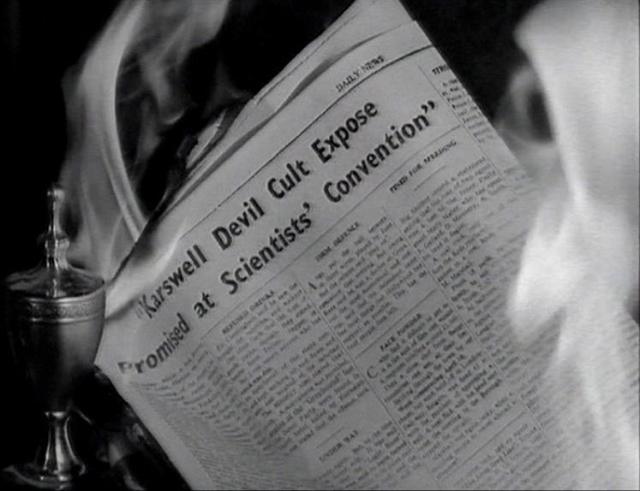
Directed by Horror auteur Jacques Tourneur, ‘Night of the Demon’ was to be a last stab at the Horror genre, at least in a serious capacity, before the Director descended into a spate of minor melodramas, weak comedies and the occasional demotion into Tv (one highlight being his outstanding Twilight Zone episode ‘Night Call’ with an aged Gladys Cooper). Tourneur had made a name for himself with a string of stylish Film Noir Horror pieces who’s subtlety stood in stark contrast to the bland run of Frankenstein and Dracula sequals trotted out by a formulaic 40’s Hollywood. ‘Cat People’ with it’s alluringly feline, femme fatale Simone Simon stands as his finest offering. Unnerving it’s audience with shadowplay and the unspoken, rather than resorting to cheap sensationalistic thrills. Eroticism contributed to ‘the popularity of Cat People’ , but ‘Night of the Demon’ excelled in it’s humour and genuine downright oddness. The dusty old world of the Hollywood Horror flick is abandoned for the original darkness of the European folktales, mediaeval witchery, Victorian Spritualism, and the unseen terrors.
Now.. this is where I’m supposed to dissect the film and go all Sight & Sound on you, but I’m not going to. I’d just be rattling off the contents of this classic box of tricks, and frankly I don’t want to spoil it for those still to experience it. There’s a direct line of cine-descent to such films as ”The Omen’ ..’An American Werewolf in London’.. ‘The Ring’.. ‘The Grudge’..’The 9th gate’ .. Tv’s ‘The League of Gentlemen’.. ‘Doctor Who’.. and on, and on.. So, if you like those fine films, then you’ll undoubtedly love this too, and you don’t need me to go spoiling things for you.. Oh, and one last thing, the video at the bottom down there is for those who are already familiar with the film, and want to see some lovely interclips of the Kate Bush video that features the immortal lines ‘It’s in the trees! It’s coming!’.. so, no sneeky watching it beforehand, or I’ll send the Demon after you!
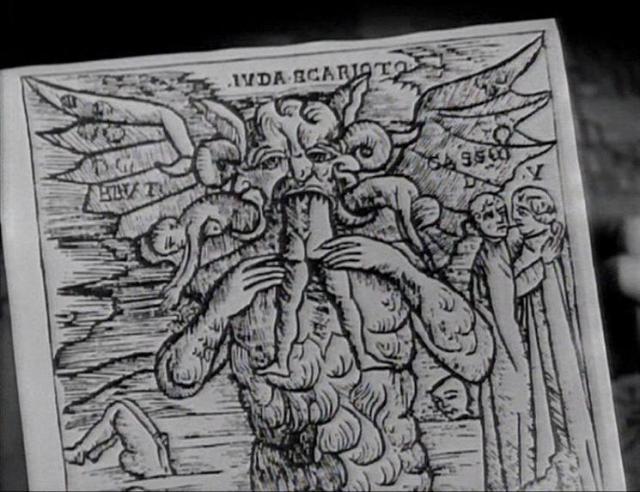
‘Joanna, let me tell you something about myself. When I was a kid, I used to walk down the street with the other kids and when we came to a ladder they’d all walk around it. I’d walk under it, just to see if anything would happen. Nothing ever did. When they’d see a black cat they’d run the other way to keep it from crossing their path. But I didn’t. And all this ever did for me is make me wonder why, why people get so panicky about absolutely nothing at all. I’ve made a career studying it. Maybe just to prove one thing. That I’m not a superstitious sucker like ninety per cent of humanity.’

‘He’s most dangerous when he’s being pleasant.’


‘But where does imagination end and reality begin? What is this twilight, this half world of the mind that you profess to know so much about? How can we differentiate between the powers of darkness and the powers of the mind?’


‘Do I believe in witchcraft? What kind of witchcraft? The legendary witch that rides on the imaginary broom? The hex that tortures the thoughts of the victim? The pin stuck in the image that wastes away the mind and the body?’
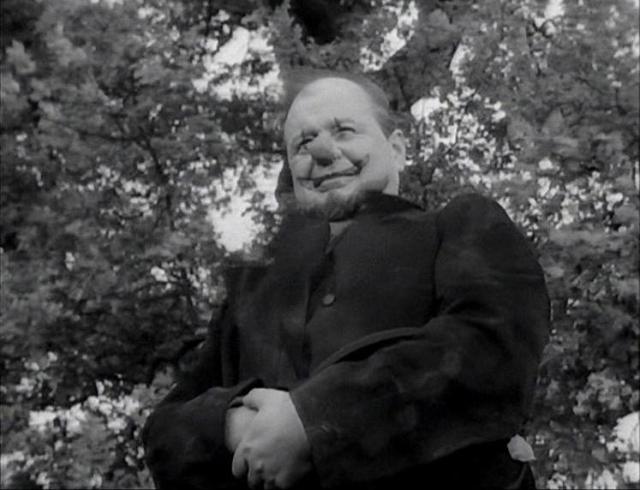
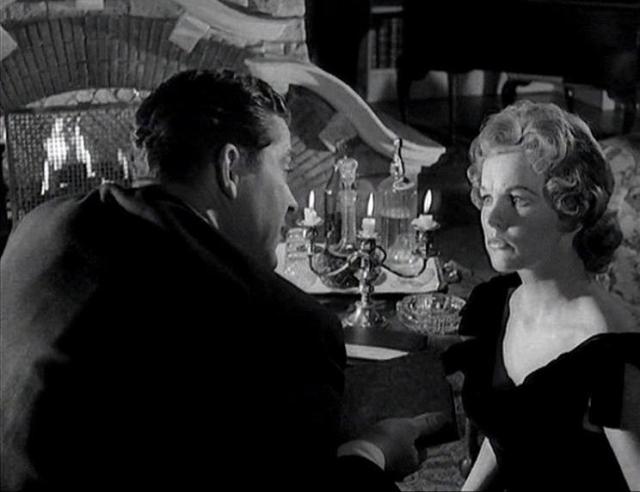
‘Well, what do you expect me to do? Nobody’s free from fear. I have an imagination like anyone else. It’s easy to see a demon in every dark corner. But I refuse to let this thing take possession of my good senses. If this world is ruled by demons and monsters we may as well give up right now.’
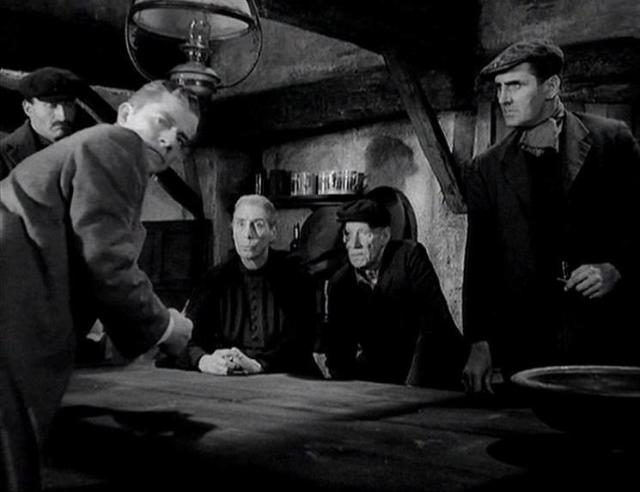

‘Oh yes, I don’t think it would be too amusing for the youngsters if I conjured up a demon from hell for them.’

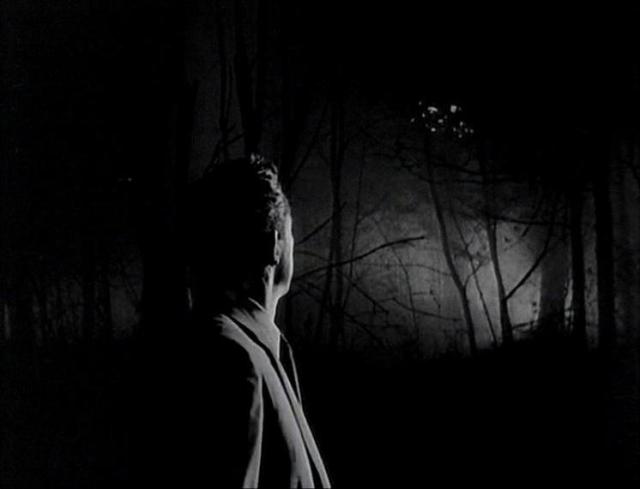
‘It’s in the trees! It’s coming!’

‘Those of us who believe that evil is good and good, evil. Who blaspheme and desecrate. In the joy of sin will mankind that is lost, find itself again.’


 Verdoux