Tag Archives: Final Fantasy

Introduction to the World of Cosplay

For today’s post were gonna talk about cosplay. Now, this isn’t going to be a tutorial for anything specific, but rather a general overall description of what cosplay is and what not. This is sort of like an introduction to the cosplaying world.

“Cosplay, a combination of the words costume play, is a performance art in which participants called cosplayers wear costumes and fashion accessories to represent a specific character or idea. Cosplayers often interact to create a subculture centered on role play and a broader use of the term “cosplay” applies to any costumed role play in venues apart from the stage. Any entity that lends itself to dramatic interpretation may be taken up as a subject and it is not unusual to see genders switched. Favorite sources are manga and anime, comic books and cartoons, video games, and live-action films.” (Wiki)
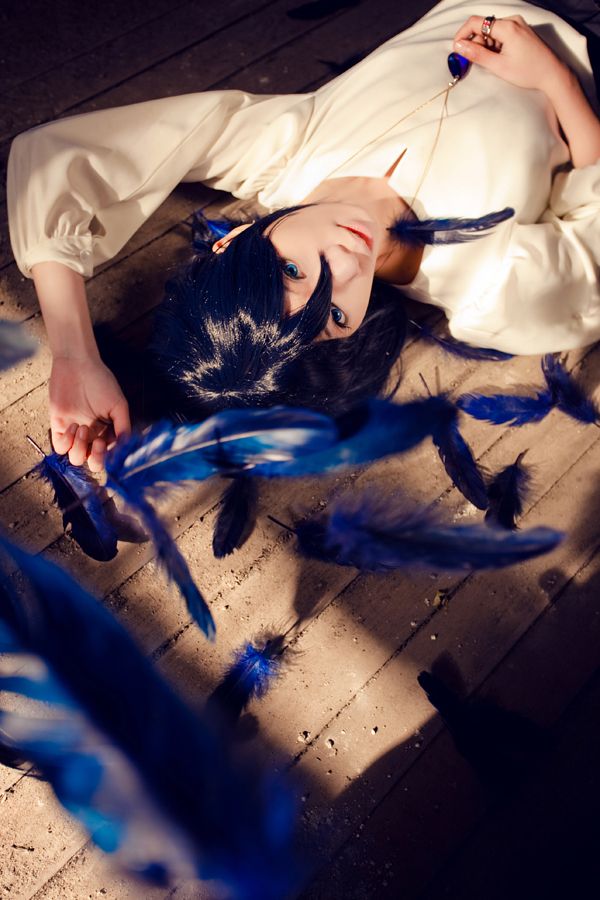
Howl from Studio Ghibli’s Howl’s Moving Castle

“The rapid growth in the number of people cosplaying as a hobby since 1990 has made the phenomenon a significant aspect of popular culture in Japan and some other parts of Asia and in the Western world. Cosplay events are common features of fan conventions and there are also dedicated conventions and local and international competitions, as well as social networks, websites and other forms of media centered on cosplay activities.” (Wiki)

Princess Peach, Yoshi, and crew from the Mario world

In the West we call the most common event for cosplayers to show up at are Comic-Con’s. These are conventions where members of cast and crew from films, shows, anime’s, and video games come to meet fans and hold panels where they can answer questions and talk about their experiences. You can get autographs from your favorite comic book creator or actor. Vendors come and sell things from a wide array of geeky wonder, and there is always a wide variety of cosplayers. Many people who attend Comic-Con cosplay for the three sometimes four day event.

“Cosplay costumes vary greatly and can range from simple themed clothing to highly detailed costumes. It is generally considered different from Halloween and Mardi Gras costume wear, as the intention is to replicate a specific character, rather than to reflect the culture and symbolism of a holiday event. As such, when in costume, some cosplayers often seek to adopt the affect, mannerisms, and body language of the characters they portray (with “out of character” breaks). The characters chosen to be cosplayed may be sourced from any movie, TV series, book, comic book, video game, or music band anime and manga characters. Some cosplayers even choose to cosplay an original character of their own design or a fusion of different genres i.e. a steampunk version of a character.” (Wiki)

Steampunk version of Ariel from Disney’s Little Mermaid

“Cosplayers obtain their apparel through many different methods. Manufacturers produce and sell packaged outfits for use in cosplay, in a variety of qualities. These costumes are often sold online, but also can be purchased from dealers at conventions. A number of individuals also work on commission, creating custom costumes, props, or wigs designed and fitted to the individual; some social-networking sites for cosplay have classified ad sections where such services are advertised. Other cosplayers, who prefer to create their own costumes, still provide a market for individual elements, accessories, and various raw materials, such as unstyled wigs or extensions, hair dye, cloth and sewing notions, liquid latex, body paint, shoes, costume jewelry, and prop weapons.” (Wiki)

Young Mystique from X-Men

Most cosplayers create their own outfits, referencing images of the characters in the process. In the creation of the outfits, much time is given to detail and qualities, thus the skill of a cosplayer may be measured by how difficult the details of the outfit are and how well they have been replicated. Because of the difficulty of replicating some details and materials, cosplayers often educate themselves in crafting specialties such as textiles, sculpture, face paint, fiberglass, fashion design, woodworking, and other uses of materials in the effort to render the look and texture of a costume accurately.

Shiek from The Legend of Zelda

“Cosplayers often wear wigs in conjunction with their outfit to further improve the resemblance to the character. This is especially necessary for anime and manga or video-game characters who often have unnaturally coloured and uniquely styled hair. Simpler outfits may be compensated for their lack of complexity by paying attention to material choice and overall high quality. To look more like the characters they are portraying, many cosplayers also engage in various forms of body modification. Contact lenses that match the color of their characters’ eyes are a common form of this, especially in the case of characters with particularly unique eyes as part of their trademark look. Contact lenses that make the pupil look enlarged to visually echo the large eyes of anime and manga characters are also used.” (Wiki)

Riddick from Pitch Black and The Chronicles of Riddick

“Another form of body modification in which cosplayers engage is to copy any tattoos or special markings their character might have. Temporary tattoos, permanent marker, body paint, and in rare cases, permanent tattoos, are all methods used by cosplayers to achieve the desired look. Permanent and temporary hair dye, spray-in hair coloring, and specialized extreme styling products are all used by some cosplayers whose natural hair can achieve the desired hairstyle. It is also commonplace for them to shave off their eyebrows to gain a more accurate look.” (Wiki)

Cheshire Cat from Alice in Wonderland

“Some anime and video game characters have weapons or other accessories that are hard to replicate, and conventions have strict rules regarding those weapons, but most cosplayers engage in some combination of methods to obtain all the items necessary for their costumes; for example, they may commission a prop weapon, sew their own clothing, buy character jewelry from a cosplay accessory manufacturer, or buy a pair of off-the-rack shoes, and modify them to match the desired look.” (Wiki)
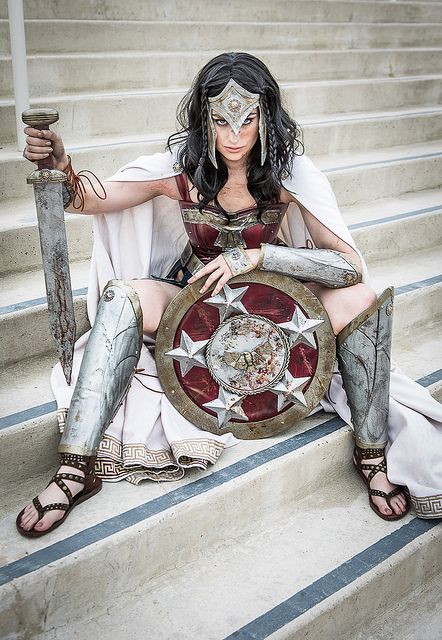
Gladiator style Wonder Woman from DC comics

“The most popular form of presenting a cosplay publicly is by wearing it to a fan convention. Multiple conventions dedicated to anime and manga, comics, TV shows, video games, science fiction, and fantasy may be found all around the world. Cosplay-centered conventions include Cosplay Mania in the Philippines and EOY Cosplay Festival in Singapore.” (Wiki)
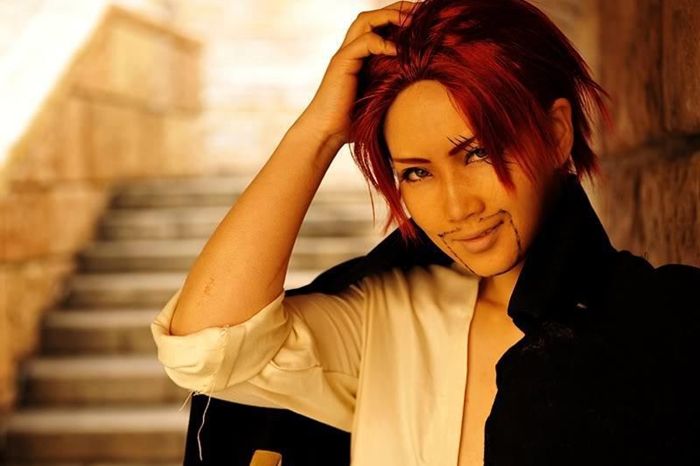
Shanks from One Piece

“The single largest event featuring cosplay is the semiannual doujinshi market, Comic Market (Comiket), held in Japan during summer and winter. Comiket attracts hundreds of thousands of manga and anime fans, where thousands of cosplayers congregate on the roof of the exhibition center. In North America, the highest-attended fan conventions featuring cosplayers are the San Diego Comic-Con and New York Comic Con held in the United States, and the anime-specific Anime North in Toronto and Anime Expo held in Los Angeles. Europe’s largest event is Japan Expo held in Paris, while the London MCM Expo and the London Super Comic Convention are the most notable in the UK. Supanova Pop Culture Expo is Australia’s biggest event.” (Wiki)

An Assassin’s Creed Hellequin

Cosplay competitions and conventions also draw in photographers. These photographers, however, are not allowed to take pictures of cosplayers without their permission and have to stop when told to. Photographers are not allowed to badger cosplayers for personal information, contact info, or follow them around or outside of the convention. Cosplayers may pose however they wish for photographers and do not have to do anything they are not comfortable with.

Vanille from Final Fantasy XIII

“As the popularity of cosplay has grown, many conventions have come to feature a contest surrounding cosplay that may be the main feature of the convention. Contestants present their cosplay, and often to be judged for an award, the cosplay must be self-made. The contestants may choose to perform a skit, which may consist of a short performed script or dance with optional accompanying audio, video, or images shown on a screen overhead. Other contestants may simply choose to pose as their characters. Often, contestants are briefly interviewed on stage by a master of ceremonies. The audience is given a chance to take photos of the cosplayers. Cosplayers may compete solo or in a group. Awards are presented, and these awards may vary greatly. Generally, a best cosplayer award, a best group award, and runner-up prizes are given. Awards may also go to the best skit and a number of cosplay skill subcategories, such as master tailor, master weapon-maker, master armourer, and so forth.”

Mononoke from Studio Ghibli’s Princess Mononoke

Cosplay is a fun thing that brings geeks together so that they can share their passions and fangirl over all the amazing costumes. People do it because they enjoy it, yes the awards, prizes, and photographs are a nice bonus, but these beautiful costumes wouldn’t look as good as they do if the people creating them weren’t passionate about their subject.

I hope you enjoyed this intro to cosplay and if you’d like to see more cosplay’s in the future just let me know in the comments. Have a wonderful Saturday!

(Info came from Wikipedia and pictures came from Pinterest)

The Poor, Sleep deprived, University Geek

This post is about the struggles of life in university, using geek related pictures, gifs, and posts from tumblr.

So this post is already off to a rough start because I’ve had to restart it twice! My laptop decided it would be a great time to break down and quite working when I was in the middle of a paper and had an unfinished post waiting for me. So that’s why there was no post yesterday, which I deeply apologize for, so then I decided I would try typing up one on my phone. I don’t know if any of you have ever tried to do a blog where you include pictures, video, and chunks of info on a phone but it is hard. THEN I accidentally backed out of the document and my phone DIDN’T SAVE IT. I was literally putting the finishing touches on a video game post and lost EVERYTHING. *Sigh* Anyways, I managed to jerry-rig my lap top into working, long enough for me to make this post (this is also why this one isn’t as stellar as the other ones). On a higher note, we filmed our first YouTube episode yesterday! I’m gonna try and get it edited and put out sometime this week. But on with the post!

  • Homework:

  • You have no life:

  • So accurate it hurts:

  • Reading that Film Theory and Criticism book:

  • How to take a test:

  • That test you were completely unprepared for:

  • Getting a good grade on that test you didn’t study for:

  • New day, same problems:

  • When your computer freezes:

  • Life is nothing but stress:

  • To study or not to study:

  • Homework over break:

  • Can’t even afford to go to a fast food place:

  • When people make plans you can’t afford:

  • After a certain amount of trying on an assignment you just don’t care anymore and you’d rather sleep:

  • We all know that person who’s just peppy in the morning and we’re just barely alive:

  • When you think about the future:

  • Exams:

  • When you pull an all nighter:

  • Sleeeeeep, I need sleeeeeep:

  • How I get up in the mornings:

  • When you actually have time to make yourself look decent for the day:

  • When you’ve had a rough day:

  • Ignoring all your problems and trying to block out the world:

  • Life inturupts you time with Tom Hiddleston and Tumblr:

  • When you forget to shower during finals week:

  • When the cafeteria has nothing good to eat:

  • Your job sucks:

  • Group projects are of the devil:

  • When you’re overwhelmed with work:

  • When people are loud or singing at 3 in the morning:

  • When the forecast calls for lots of snow and you get nothing:

  • When you’re hugged by that creepy person on campus:

  • Having a crap car and driving 8 hours to go back home for break:

Well, that’s all I got folks. I’m sorry this wasn’t anything spectacular. After losing all my work twice I just couldn’t bring myself to do it again. I’m ready to just sleep for a week so I hope you found some enjoyment in this and I promise the next post will be better. Night!

(All pics and gifs came from Pinterest, Tumblr, and Buzzfeed)

The power of fandoms and the impact they have on us

Sometimes you never know what someone else is going through. You never know what heartache, pain, or trials someone else is facing. And everyone has their outlet for it. For some it’s drugs, alcohol, partying. And then there are those that turn to fandoms.

I speak from experience when I say that this is me. That I was one of those people who turned to fictional worlds and characters to escape from the things I had to face. My first fandoms were Star Wars and Lord of the Rings and I invested my time into these characters and their worlds for the first time when I was in fourth grade and dealing with my parents divorce. My friends didn’t get it because they didn’t have divorced parents. These fandoms and characters became my escape from having to deal with the divorce and the hell that was fourth grade,

When I was a freshman in high school I was diagnosed with Lupus, for those of you who don’t know what it is it is an autoimmune disease. It is very painful and there is no cure, symptoms can be treated with medication. To a 14 year old who just had their world turned upside down fandoms became a place of relief.

It was in this time that I became sucked into the fandom world permanently. Doctor Who was the new fandom I became a part of, Matt Smith’s first series. I was quickly pulled into the show and re-watched everything before the series I was on. I became invested in the characters and the worlds they were in. Then came Torchwood, Merlin, Hunger Games, Maze Runner, Angel, and Buffy. I reacquainted myself with things that I had seen before but hadn’t really gotten into: Star Trek, Planet of the Apes, Marvel, and DC. I entered into these fandoms and more and lost myself if them. They became a major part of my life and somewhere along the way I went from being a casual fan to a dedicated fangirl.

I no longer need my fandoms as an escape from reality, well, not as much as once did. I don’t rely on them like a crutch like I once did. But I wouldn’t give them up. Not for anything. My fandoms are a huge part of my life. They helped shape me into the person that I am now. I wouldn’t trade that. I love my fandoms, I love the characters and the stories. I love the people I’ve met because of my fandoms.

I am a fangirl, and my fandoms help keep me sane. I don’t need them anymore but I won’t give them up because my fandoms are family. Don’t be ashamed of the fandoms you’re in and don’t let people tear you down for spending so much time in them, because they don’t know you or what you’re going through. Just remember that fandom means family and that there are plenty of fangirls/boys out there who you can talk to.

What fandoms are you’re escape?

Warning you are about to enter a new fandom, this is your last chance to turn back. There is no escape. (The terms you should know before joining a fandom)

“We’re a fandom. And fandoms are families. Family means no one sits alone at the mental institute.”

In this post we’ll be discussing the different fandom terms and what they mean. Let’s start with the obvious one that every person joining a new fandom should know. Fandom. Urban Dictionary describes Fandom as: “The community that surrounds a tv show/movie/book etc. Fanfiction writers, artists, poets, and cosplayers are all members of that fandom. Fandoms often consist of message boards, livejournal communities, and people.”

  1. Fangirl/Fanboy: female or male fan who is obsessed or passionate about either a fictional character, actor, fandom, series, books, etc. Fangirls/Fanboys can be found at conventions, tumblr, pinterest, instagram, fanfiction sites, facebook, twitter, and every other social media site out there.
  2. Fangirling: the reaction a fangirl/boy has to any mention or sighting of the object of their affection. These reactions include shortness of breath, fainting, highpitched noises, shaking, fierce head shaking as if in the midst of a seizure, endless blog posts, etc.
  3. Feels: Short for feelings. Intense feelings experienced by fangirl over certain scenes or character developments within a fandom that cause a strong emotional response. Intense happiness, sadness, anger, etc. 
  4. Ship/Shipping: a combination of fictional characters as a couple. The name of a ship is often a compound of the two characters’ names. i.e. I ship Sango and Miroku, Mirango or Sanoku (Inuyasha)
  5. Shipper: refers to someone who supports the idea of two specific characters being involved in a romantic relationship. Does not have to be cannon OTP. i.e. I ship Aragorn and Arwen (Lord of the Rings, cannon OTP) or I ship Michonne and Rick (The Walking Dead, non-cannon OTP)
  6. OTP: refers to a fan’s preferred relationship pairing between certain characters within a fandom. Many fans have multiple OTP’s  overall as well as multiple OTP’s in the same fandom. Fan’s can also have OTP’s that aren’t cannon. i.e. Arthur and Gwen (cannon, Merlin) or i.e. Gandalf and Galadriel (non-cannon, Lord of the Rings/ The Hobbit)
  7. NOTP: Essentially the opposite of an “OTP”. While “OTP” describes one’s ultimate favorite pairing. “NOTP” describes one’s least favorite pairing. i.e. The Doctor and Rose are my NOTP (Doctor Who) *Note that this is the viewpoint of the writer of this post and not the other members of the group*
  8. Cannon/Canon: These two words are used interchangeably throughout fandoms and refers to elements established by the original show, book, movie, anime, game, etc… itself for either plot, setting, or character developments. Often used in terms of relationships. i.e. Hermione and Ron are cannon. (Harry Potter)
  9. Headcannon: personal beliefs or interpretations about canon that a fan makes to explain or account for some aspect of the actual canon. The headcanon itself, while not officially supported by the canon, tends also not to be actually disproven or refuted by the canon and will therefore seem plausible in the mind of the fan who imagines it. Headcanons may be about the past, present, or future of the character or plot, and can be shared by others if particularly enticing or believable. i.e. In Sherlock, the pills the cabbie offered were harmless. The poison was in the water he gave to his victims to take the pill with while he swallowed his dry.
  10. Non-cannon: refers to an idea, story line, or ship that was not promoted in the original work. i.e. Shipping Black Widow and Captain America
  11. Fanart: original illustrations and/or photo manipulations featuring fandom related characters, settings, and so on and so forth. This comes in many forms such as paintings, sketches, doodles, animations, and more. i.e. (Zuko from Avatar the Last Airbender)4b0d1d2ac2f889cbf46f705fed764f95
  12. Fanvid: music videos and montages created by a fan using a combination of clips from original source material set to a song or tune. i.e. Spike – I am Titanium… (character study) on YouTube 
  13. Fanfiction: A story based in a fandom created by a fan. It is a form of trans-formative work designed as an expression of appreciation and exploration of the original material. The writer can add character, change characters, add new adventures, change story line and plot. Basically, it’s whatever the writer wishes to create or change in that fandom world through story. www.fanfiction.net has every fanfiction in every fandom under the sun.
  14. Ficlet: refers to a complete short story, usually only a few thousand words long. A ficlet is short enough not to take much time to read. There are no specific length requirements for a story to qualify as a ficlet.
  15. Oneshot: refers to a single story that can be read and understood in full without having read any other prior story. Oneshots are already finished and written completely prior to posting. They will not be continued, and are not related to any other story by that author. Usually posted all at once rather than in parts, often as a single chapter simply because it is easiest. 
  16. OC: Original Character. This is something that a writer or artist will use to incorporate or insert their own character into a fandom. Fanfic writers will use this to put their own creations into a fandom’s world or pair their OC with another character. Artists will do this as well but it is more commonly found in fanfictions. i.e. OC x Sherlock, OC/Sherlock *note that the use of “x” and “/” simply refers to the term “pairing” which is the same thing as shipping.
  17. OFC: Original Female Character i.e. OFC x Daryl (The Walking Dead)
  18. OMC: Original Male Character i.e. OMC x Buffy (Buffy the Vampire Slayer)
  19. OOC: Out of Character. This means that an original character from the fandom acts differently in the fanfic then they would in their own world. i.e. Tony Stark (Iron Man) is a humble man who follows orders without question
  20. AU/AR: Alternate Universe or Alternate Reality. This means that either the plot, setting, or characters deviate from the original. Using the same plot or characters but changing the setting, where the story takes place. Keeping the same character and setting but changing the plot and making a whole new story. The plot and the setting remain the same but the characters either are dramatically changed, don’t exist at all, or are replaced by whole new characters. Changing 1, 2, or all 3 aspects qualifies as an AU/AR. i.e. Taking Loki and adding him to the Doctor Who universe
  21. Crossover: Where two fandoms cross worlds. Usually found in fanfiction, fanart, fanvids, and GIF mash ups. This is where characters from fandom A are mixed with fandom B’s world or vice versa. Characters from both worlds interact with one another and in one another’s worlds. Taking a character or characters from fandom A and inserting them into fandom B but keeping all of the story or action in fandom B is also considered a crossover. i.e. SuperWhoLock (Supernatural + Doctor Who + Sherlock) 
  22. Slash: This is the romantic pairing of two characters of the same sex. Male/Male. Female/Female. M/M. F/F.
  23. FemSlash: This refers to a romantic pairing of females only. Female/Female. Femmeslash, F/F
  24. Yaoi: pronounced ‘yow-ee’, not ‘yah-oy’.  An acronym for a Japanese phrase that translates as ‘no climax, no resolution’, and used as an equivalent to slash, more specifically male.  ‘Yaoi’ tends to be the more popular term in anime fandoms, whereas ‘slash’ is used elsewhere, but the two are basically interchangeable.
  25. Yuri: means the same thing as Yaoi only female slash instead of male slash.
  26. Lemon: an explicit sex scene in fanfiction.
  27. Crack: refers to stories in which completely ridiculous, unbelievable or insane things occur, often without reasonable explanation but great enjoyment. Are generally written shamelessly and with no excuse beyond the writers desire to have fun.
  28. AMV:  abbreviation for ‘anime music video’. These consist of a series of clips from an anime series, set to a popular song. i.e. (One Piece AMV) ♪Centuries♪
  29. Hiatus: A gap or interruption in time, a break. This is an annoying time for a fandom, where one must wait for an unknown amount of time for their fandom to return. This is also usually where the fandom slowly starts to lose their minds and produce mass amounts of hiatus fanart, GIFS, and fanfictions. (The Sherlock fandom has lost all their sanity due to having two year hiatus’ after getting only three episodes in a season) WARNING: approach members of a hiatus fandom with caution. i.e. Sherlock fandom 
  30. Spoiler: When someone reveals a previously unknown aspect of something which you likely would have rather learned on your own. If you are just starting a long running series or are behind on your fandom then spoilers are the enemy, and they are lurking everywhere. To avoid seeing spoilers the only option available to you is to stay off of social media and the internet in general. (Good luck with that) 
  31. Troll: refers to someone who deliberately and often repeatedly makes inflammatory or off-topic comments in a ploy to rile up other people and create dissension. Trolls set out to induce emotional responses, preferably as explosive as possible, and don’t actually seem to care about whatever point they are making so long as it starts an argument. Sometimes though trolls can be harmless and funny. *Sometimes being the key word* 
  32. ANON: refers to someone, either author or reader, who does not wish their identity to be revealed. Often shortened to Anon. When multiple anonymous users are posting, may be distinguished by using such terms as Same Anon (SA), Different Anon (DA) or New Anon (NA)
  33. Con/Comic Con: Conventions held across the world for fans to gather and meet actors, writers, directors, producers, participate in Q&A panels, cosplay, buy fandom merchandise, and meet other fans.
  34. Cosplay: short for ‘costume play’. A ‘cosplayer’ is somebody who dresses up as a character from their fandom. The term originated in Japan and was originally anime-specific, but has moved into wider use, and is both a noun and a verb: a cosplay is the costume itself, or the event at which it is worn. ‘Cosplaying’ somebody is shorthand for ‘dressing up as’ that individual. Genderbending cosplay is a common thing as well. This is when a cosplayer takes a male character’s outfit and reshapes it into a female version and vice versa. i.e. Rin and Yukio Okumura from Blue Exorcist (normal cosplay) f455595305d882064f968b88d3c25a93 Female Thorin Okenshield from The Hobbit (genderbent cosplay)9d6573d17fd793f7cbd5f52ce57684da
  35. RPG: Role Playing Games, usually used in the video game world. This is a game where the choices you make in the game effect the outcome. This is a game with multiple endings and requires you to play more than once to discover all the different story lines and endings. i.e. Star Wars: Knights of the Old Republic
  36. PWNED: purposeful misspelling of ‘owned’.  Used as a synonym for ‘defeated’; a person who makes a particularly clever or hurtful remark in an argument has ‘pwned’ their opponent, as has one who beat another player at a video game.
  37. DUB: The ‘dub’ of an anime is a version in which the Japanese dialogue has been re-recorded in English.  Dubs are often considered as inferior to the original Japanese.  This is sometimes true, but not always.
  38. SUB:  the ‘sub’ of an anime is a version with the soundtrack in Japanese, and subtitles to translate each line.  Purist fans often insist on subs; extreme purists watch only fansubs.
  39. Thread: all the replies (and replies to replies) to the original statement that started a messageboard or mailing list discussion.
  40. Verse:  a suffix used to indicate the universe in which the events of a narrative take place. i.e. Potterverse (Harry Potter) Whedonverse (Joss Whedon’s creations) This phrasing will usually not be used if the world of the story already has a name i.e. Middle Earth (Lord of the Rings).
  41. Easter Egg: A hidden item placed in a movie, television show, or otherwise visual media for close watchers. i.e. Doctor Who 
  42. asdfghjkl: means I am so confused/happy/astonished that I am no longer able to type coherently.
  43. GIF: Graphics Interchange Format. GIFs are image files that are compressed to reduce transfer time. The proper pronounciation of the acronym is a soft “g” sound: like JIF. i.e. (dancing Groot from Marvel’s Guardian’s of the Galaxy) 

Here are just a few examples of some fandoms:

  • Whovians (Doctor Who)
  • Sherlockians (Sherlock)
  • Trekkies (Star Trek)
  • Potterheads (Harry Potter)

Now some people may tell you that you can’t waste your life on all this fictional stuff or that it’s pointless. Those people are called haters, and they do exactly what their name implies. So stay away from them and don’t let them get to you.

Fandom means something different to everyone. To some it means a group of people who like the same thing as you, to others it means family, and to outsiders it means overly obsessive people. But to us, to us fandom means family.

*Disclaimer: These terms are the most popular terms found throughout fandoms. We ourselves do not actually use all these terms or like some of them. This post is about providing fandom terms and definitions, and it would be disrespectful to not include all of the terms simply because we do not agree with them.*

(Information found here at: http://www.ainself.net/irony/get_medieval/fandomvocab.htm , http://www.angelfire.com/falcon/moonbeam/terms.html , urbandictionary.com, http://www.dailydot.com/society/how-to-speak-fangirl/ , https://annavslife.wordpress.com/2012/11/18/the-tumblr-to-english-dictionary-or-how-to-speak-fangirl/ )

Geek or Freak? It doesn’t matter what other people call you, it’s what you call yourself that matters

I’ve heard these two terms thrown around a lot throughout the years so I decided to look them up on Dictionary.com

Dictionary.com defines Geek as:

1. a digital-technology expert or enthusiast (a term of pride as self-reference, but often used disparagingly by others).
2. a person who has excessive enthusiasm for and some expertise about a specialized subject or activity
3. a peculiar person, especially one who is perceived to be overly intellectual, unfashionable, or socially awkward.
4.a carnival performer who performs sensationally morbid or disgusting acts, as biting off the head of a live chicken.

As a self proclaimed geek I took offense to some of these. Not every geek is a tech expert or enthusiast. While I may know how to work a smartphone, laptop, or gaming system I’m not tech savvy or enjoy all the inner workings of it. I also wouldn’t say a geek has “excessive” enthusiasm and that expertise is required. Excessive by definition means going beyond the usual, necessary, or proper limit or degree. Who defines what the “proper” limit is? 

And that third definition calling geeks peculiar, overly intellectual, unfashionable, and socially awkward are just as bad as calling us freaks. I’ve met plenty of normal looking, normal sounding geeks. I’ve met very fashionable geeks as well. And socially awkward? There are plenty of social geeks out there. I would talk to a brick wall if I thought it would talk back! Just because we don’t want to talk to you doesn’t mean that we’re socially awkward.

And I saved the best for last. The fourth definition. Seriously? SERIOUSLY?! Where the heck did you come up with that one! That one is blatantly calling us freaks, and we are nothing like that. I don’t know about you all but I certainly don’t spend my weekends biting off the heads of live chickens.

Dictionary.com defines Freak as:
1. any abnormal phenomenon or product or unusual object; anomaly; aberration.
2. a person or animal on exhibition as an example of a strange deviation from nature; monster.
3. a person who has withdrawn from normal, rational behavior and activities to pursue one interest or obsession
4. a devoted fan or follower; enthusiast

I wouldn’t say where an abnormal phenomenon just because we choose to be different from others. Aberration is defined as the act of departing from the right, normal, or usual course. The act of deviating from the ordinary, usual, or normal type. The standard for what’s considered the “norm” is constantly changing and besides what if the “norm” standard is crap (like all girls have to be a size zero to be considered beautiful and guys have to have ridiculous muscles to be considered cool.) Why wouldn’t we deviate from that crap?

I wouldn’t call us a side show or monsters either. We’re not something for others to point and laugh at so we shouldn’t let people do that to us. We may not be able to stop people from laughing at us but we can control our reactions to it. Don’t give them the reactions they’re looking for. Some people do let their fandom take over their life but how can you say that’s any different from an addict letting their addiction take over their life or a workaholic. Or the perfectionist who needs to have everything in the right order and it has to be done their way.

How is being a devoted fan, follower, or enthusiast cause for calling us freak? Why does this make us freaks but people who are devoted followers of their sports teams and have posters, sticker decals, jersey’s, scream and cry at the television, and pay tons of money to go to games and meet their players are acceptable?

We are not freaks. And the dictionary got it wrong about us. I am a geek and I refuse to abide by these standards. These definitions are not who we are. So don’t let the definitions of these labels define who you are. If you’re a geek then be proud of that fact and don’t let society and those around you define who you are.

So, after all this being said. Tell me, just who are you? How do you define who you are?