¿Qué te gusta el bushcraft?

With temperatures dipping down to -10*C (14*F), but occasionally still rising a little above freezing, and with several centimeters/inches of snow already on the ground here in eastern Finland, we are on the cusp of real winter beginning. Soon the temperature will no longer peek above the freezing point until sometime in March, and the snow will have accumulated to well over a meter (over 3 feet) by that time. Before I switch to full-on winter mode, though, I wanted to write one more blog post about some doings of this past fall.

Almost a month ago, I headed out to the country property I’ve been visiting for the last pre-winter overnighter of the year. This time, I had the pleasure of being accompanied by a new friend who I met this past summer. Alex is originally from Spain, but lives not too far away from us and moved here about the same time we did. He’s very interested in learning about bushcraft and woodsmanship, and I am happy to share the little I know with him. He dropped by the weekend before Halloween to show me some bushcraft and camping gear he had been accumulating over the past few months, and we started planning an autumn overnight trip which would take place 2 weeks later.

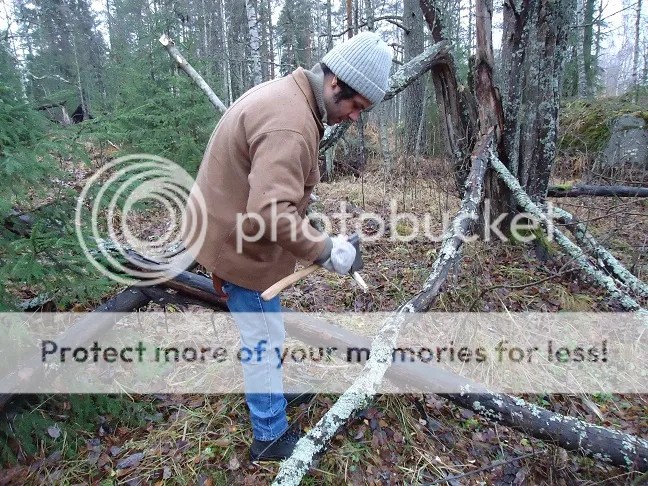
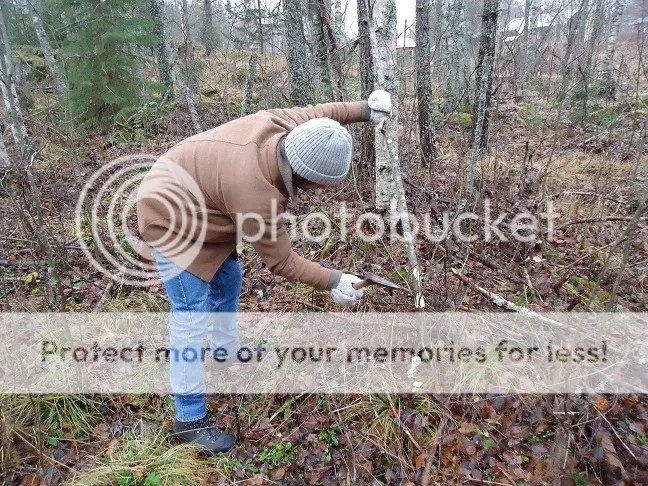
The weather that weekend ended up being very wet and cool. It rained on and off, and our camp looked like a mud pit by the end of the trip. I was seriously wondering if the crappy conditions would turn Alex off to the idea of camping and bushcraft outside of summertime, but this wasn’t the case at all. Anyway, we drove out to the property and went straight to the campsite I’d been visiting somewhat regularly lately. Alex got to work right away collecting poles for his lean-to using an old Finnish hatchet he rehafted and restored last summer.
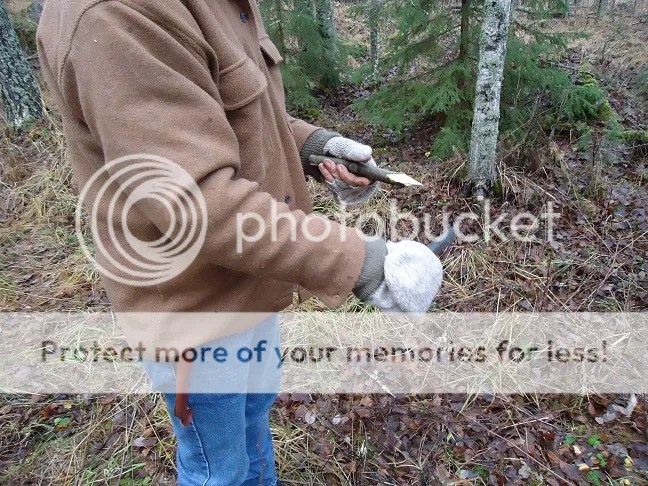
Then he made a few pegs with his puukko knife.
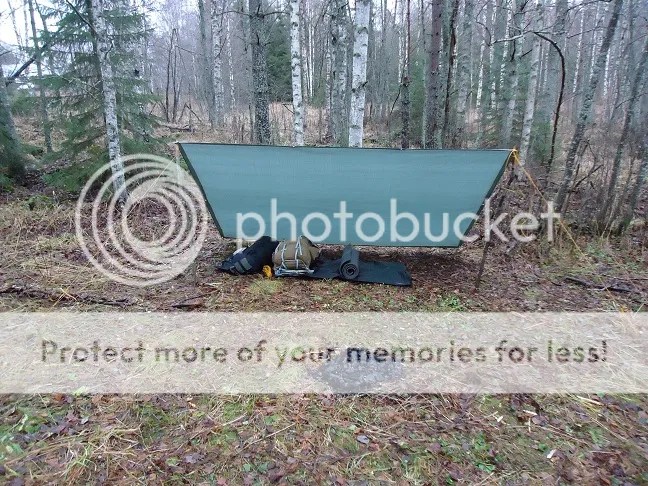
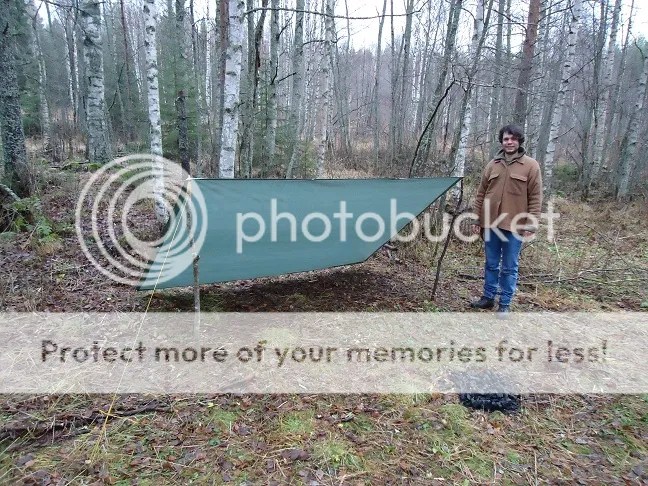
We secured the back of the lean-to to the ground with some pegs and then set up the front of the shelter by guying out the poles to pegs using a bowline knot and trucker’s hitch. A good basic shelter for a man and his gear.

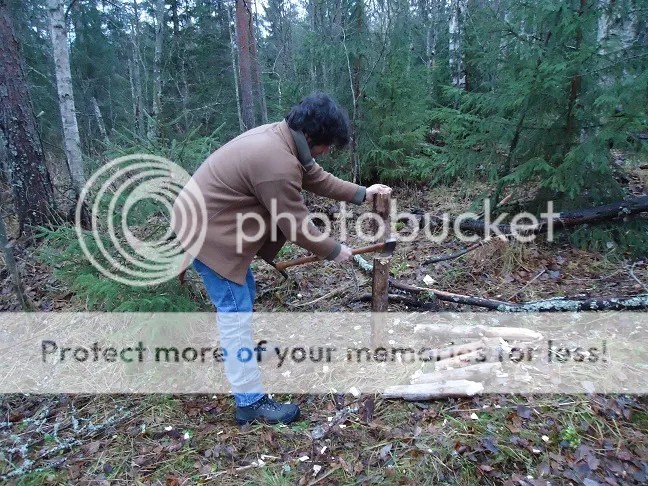
Next up was fire prep. I felled a dead pine sapling, and Alex chopped it up into firewood.
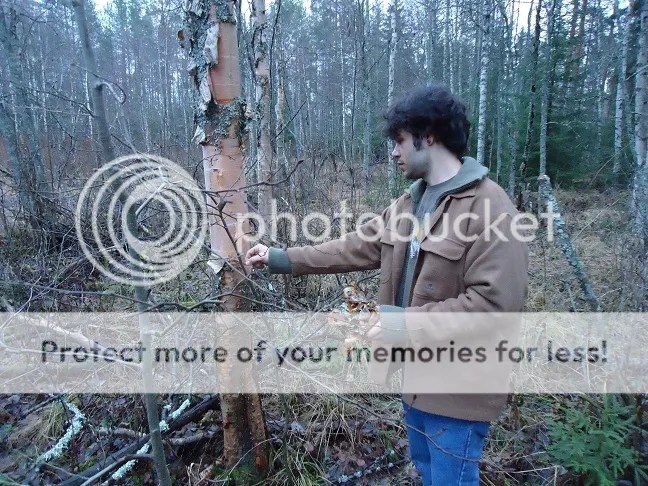
I showed him a good place nearby for collecting birch bark. It was really wet, but I knew the oils it contains would still burn.
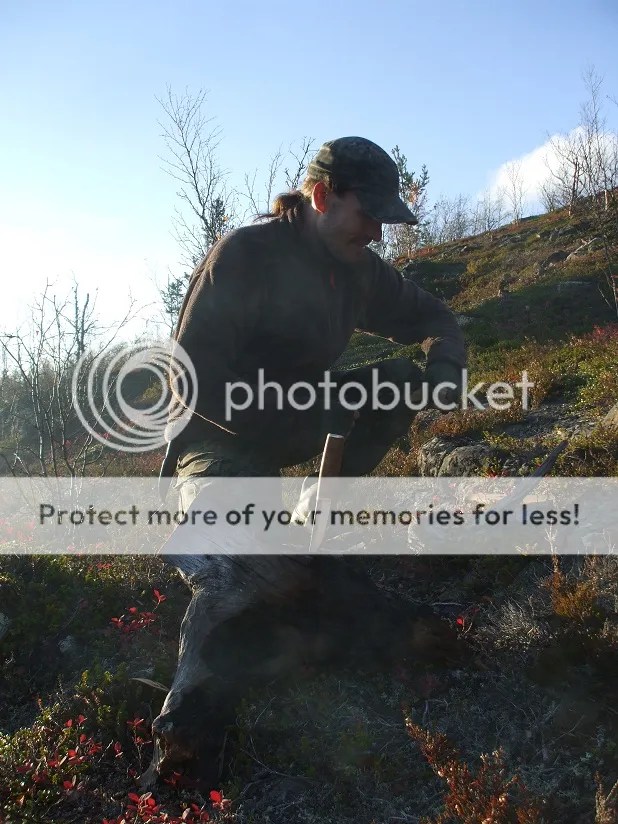
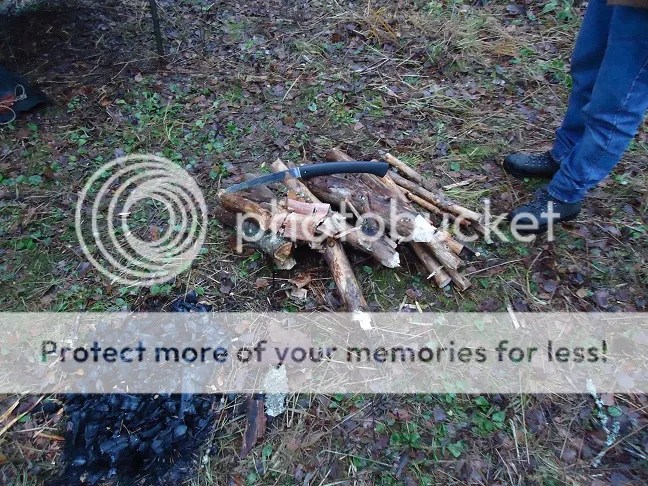
We also collected some dead lower spruce branches and brought them back to the camp site, where we used my Fiskars saw to break down some more of the pine and got to work splitting some of it up as well. I was using my BushProwler to baton some of the wood (you can see how soft and muddy the ground was by how the bolt stayed upright after just a few hits).
Here’s a shot I took of our camp before it got dark. Once again, I’m using the Holden tent.

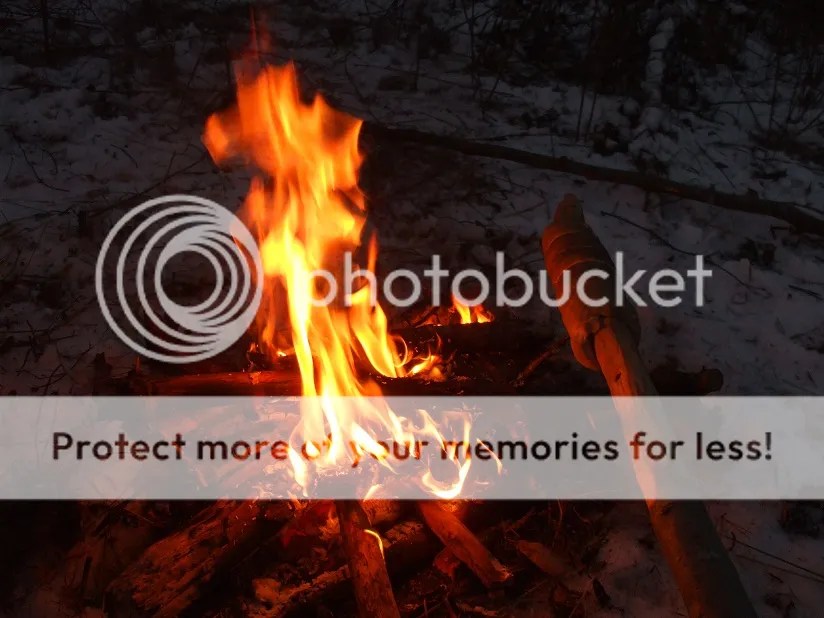
It was a challenge getting the birch bark to light, but we managed to get it going and slowly built up our fire. We burned some of the pine and always kept our supply near the fire to help it dry out. Rather than getting all our wood from the forest, we cheated a little and took some from the barn. I guess this really makes it “backyard bushcraft”. 😉

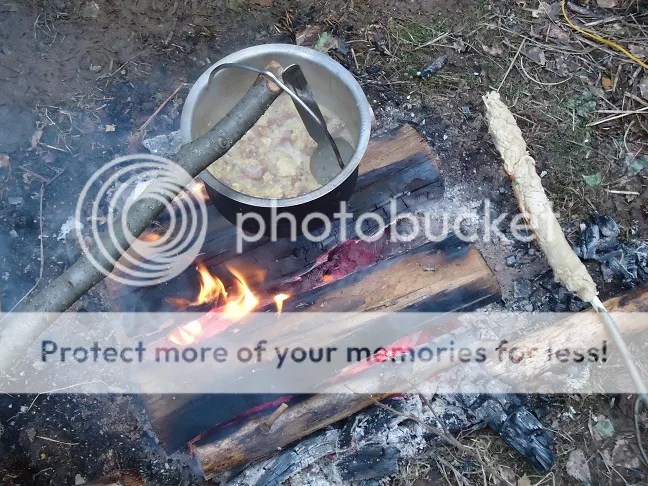
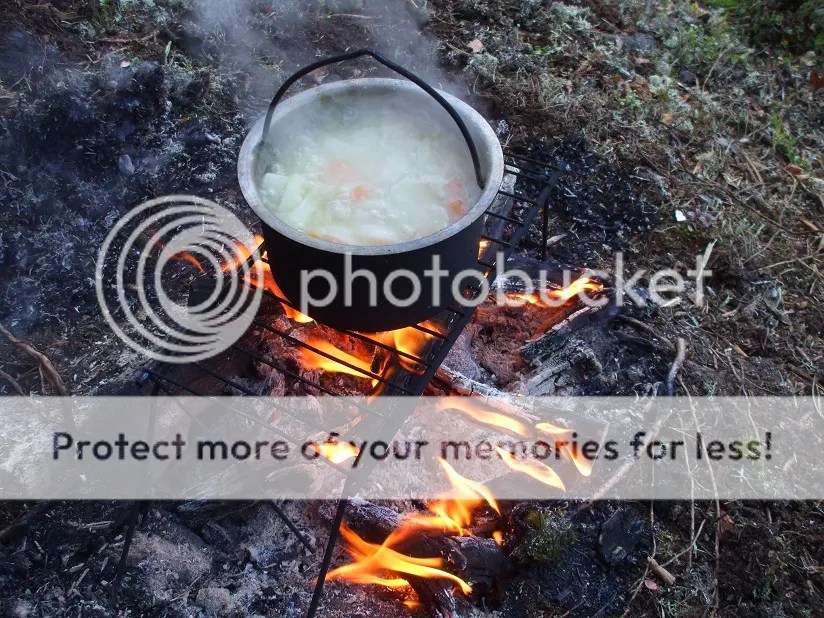
Anyway, as you can see it was getting dark, and we were both hankering for some grub, so Alex made some hearty soup in a pot next to the fire and I made bannock in my pot suspended over the fire on a stick. A good way to prevent the bannock from sticking is to put a little dry flour on the bottom of the pot before putting in the dough.


A nice bonus of having a camping partner in the autumn and winter is the conversation. It gets dark pretty early in the north, and unless you have some kind of work you can do in low light, you’re going to have a lot of time on your hands after the sun goes down!
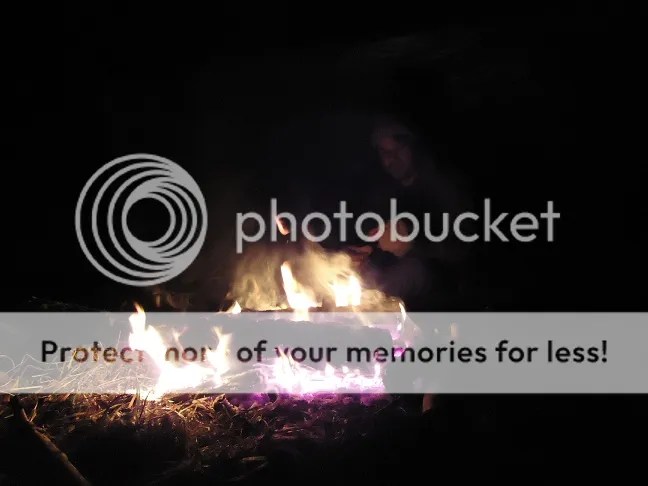
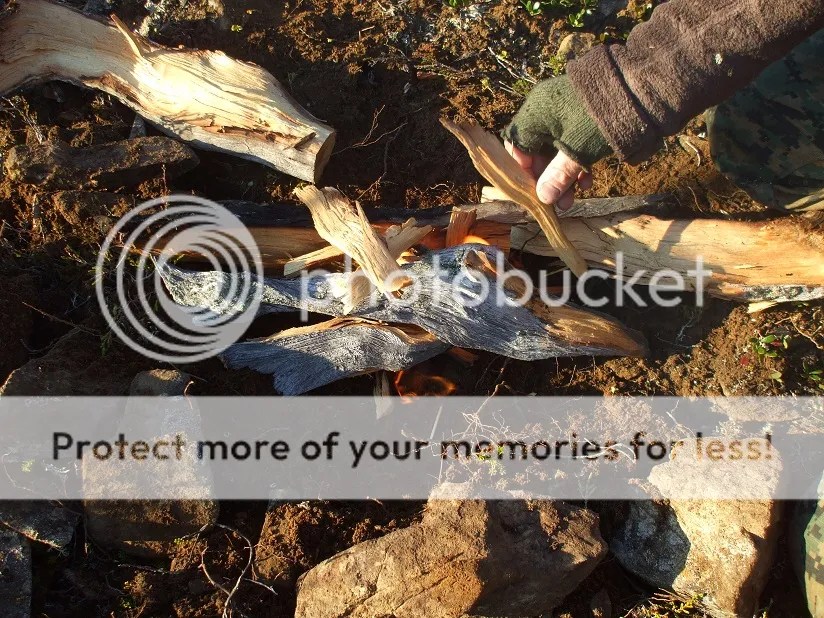
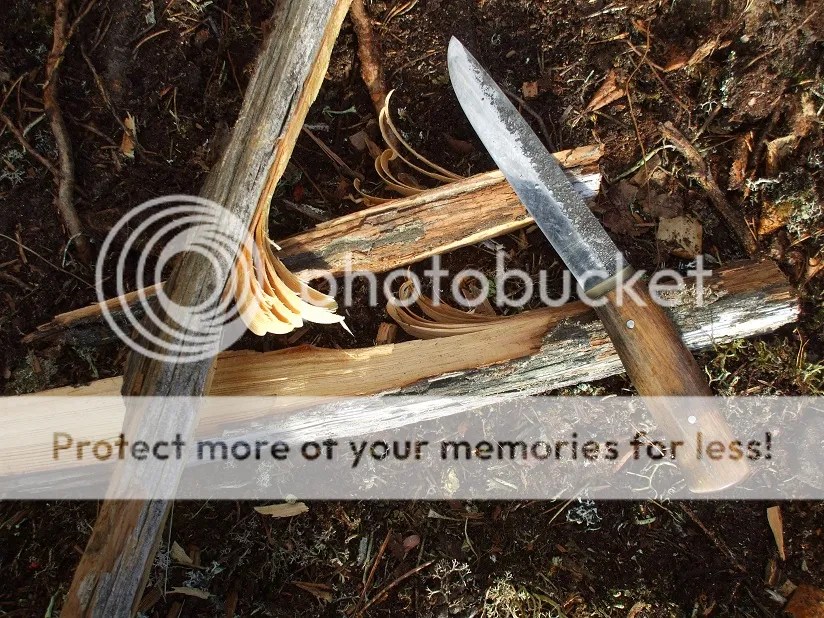
Before we hit the hay, I threw the rest of the wood on the fire, which burned for quite a while. Some of our firewood came from logs which used to be part of an old building, and you can see the notching on one piece in the picture below. We both noticed that it looked like a number 1.

The following morning, we arose and once again got to work splitting firewood. We were lucky for most of the morning, in that it rained only a little here and there (wouldn’t you know that the real rain would come 20 minutes before we had to break camp, soaking everything we had with us).

To make fire starting a little easier that morning, we used a piece of waxed-impregnated twine Alex had brought with him. It burned long and hot and helped to get the birch bark going.
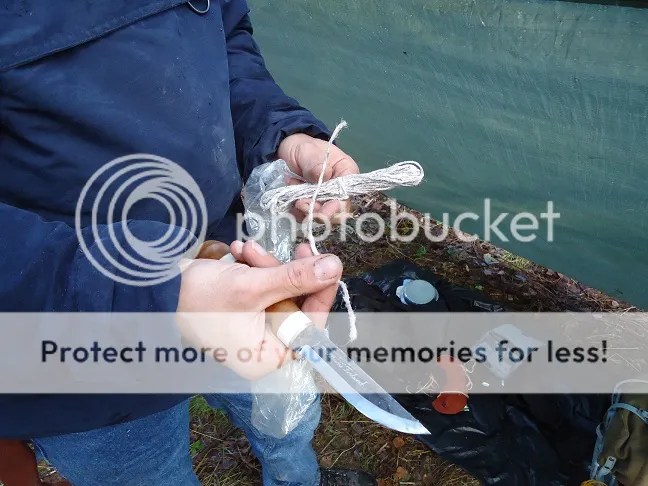
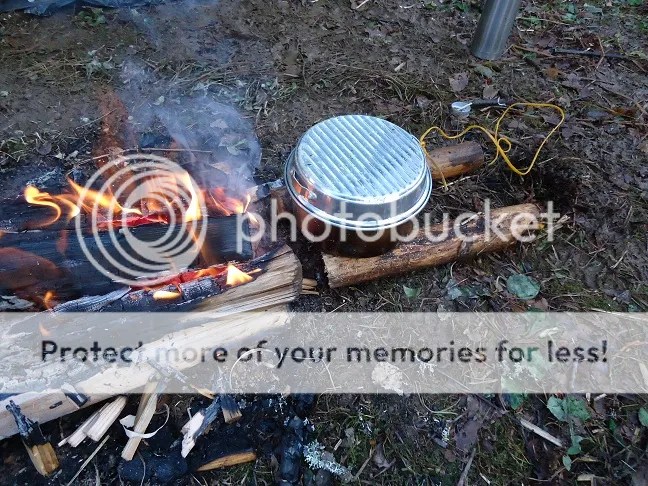
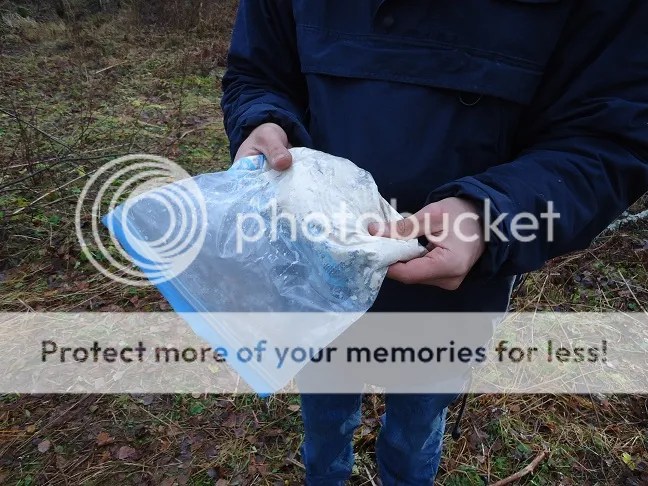
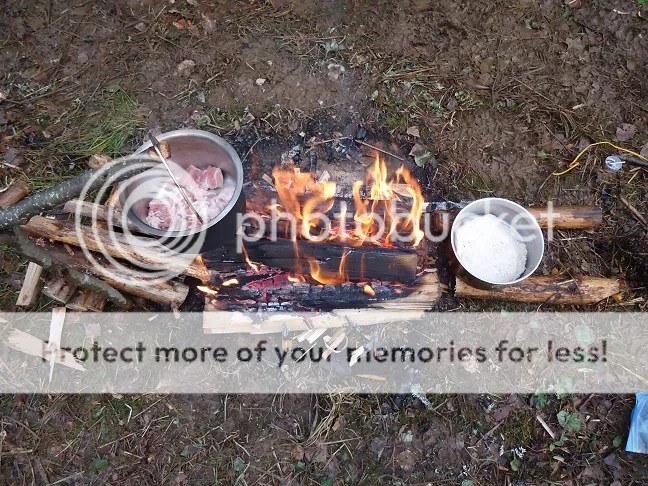
Alex decided to try his hand at bannock for breakfast, so he mixed his dough in a plastic bag and put it into his pot. I cut up a package of bacon and started frying it in my pot over the fire.
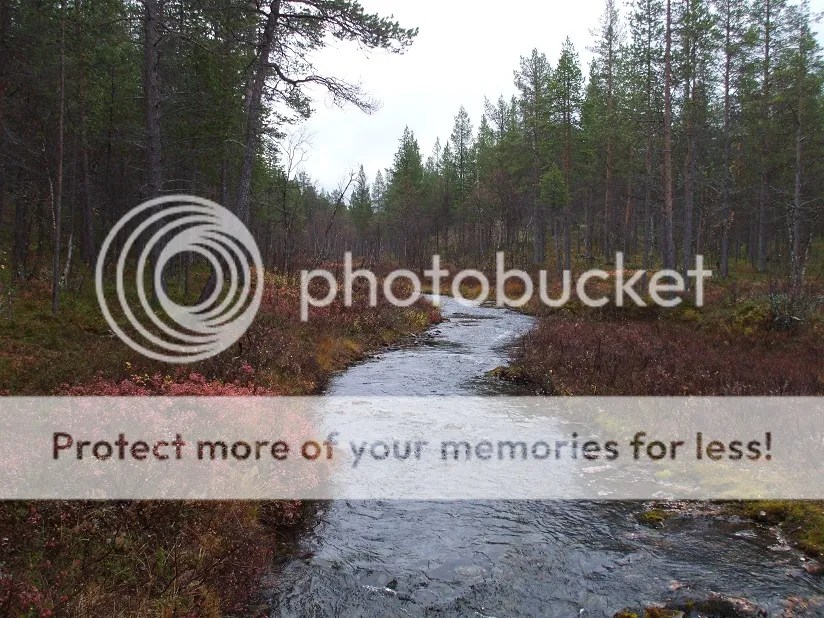
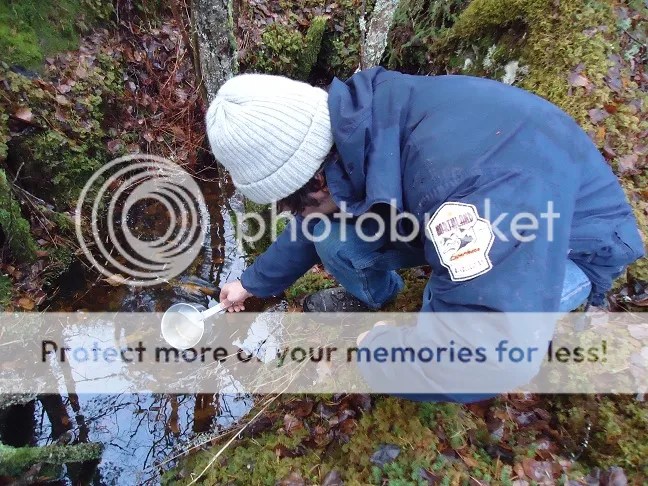
Having gone through his water supply, Alex fetched some from the creek not far away.
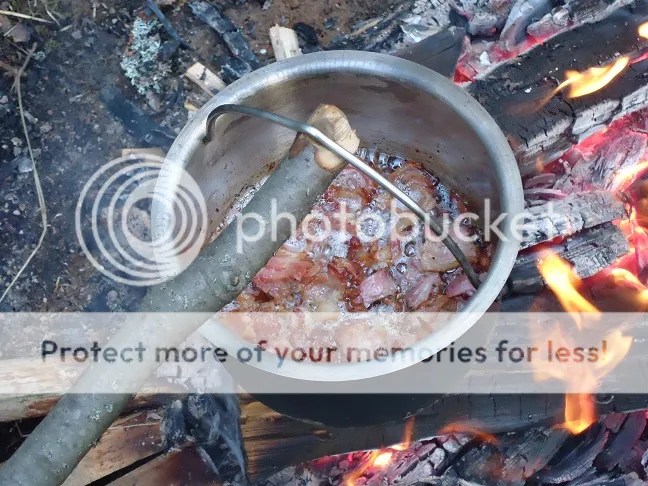
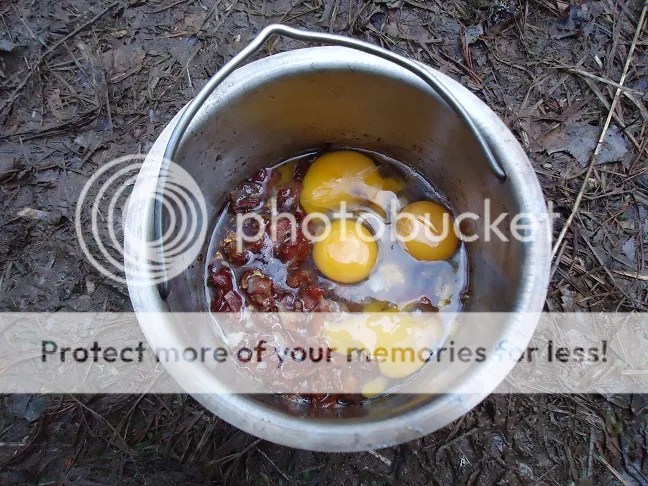
When my bacon was ready, I threw in four eggs and put the pot back over the fire for a little while. Alex’s bannock wasn’t baking the way he had hoped, so he took it out of the pot and put the dough on a stick near the fire to rectify the situation.
After we ate, it started drizzling and then raining, so we quickly packed up our wet, muddy gear and hit the road. I was very happy to have Alex along on this trip and am looking forward to his first winter trip, which will probably be in a few weeks!

Initial impressions of the Skrama bush knife

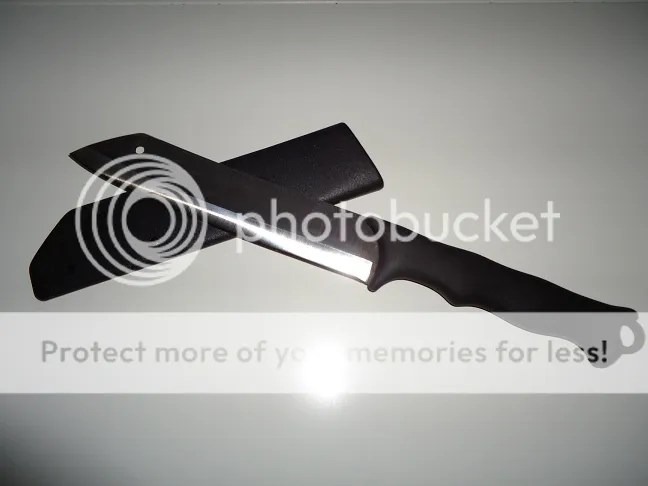
Earlier this autumn, I brought your attention to a new knife designed by Varusteleka, a Finnish outdoor/military surplus supplier. The Skrama, which is made in Finland and available only from Varusteleka, is designed to be an all-around wilderness blade for campers, bushcrafters, woodsmen etc. After reading my short blog post, the company offered to send me a free sample of the knife in exchange for a review here at the blog. I accepted their offer and told them that I’d give the knife a good shakedown and a fair and honest review.

The Skrama came with a rugged plastic blade guard, but the company is also working on a leather sheath available separately.

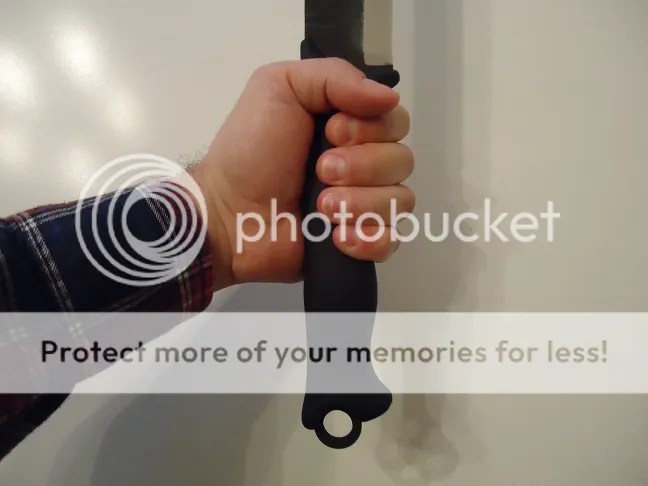
Considering the interesting handle shape of this knife, I was curious to see how it felt in different grips. It felt very natural and comfortable however I held it. Incidentally, I think hard, non-sticky rubber was a good choice for the handle material. I also think the long handle will contribute to this knife’s versatility in use.

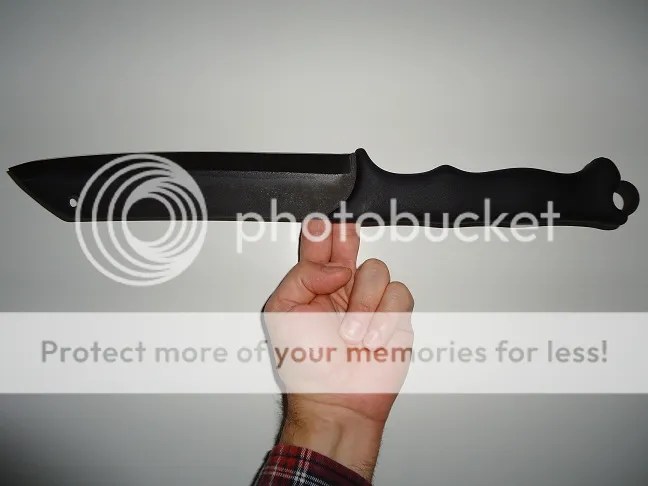
While I was trying out different grips, I noticed that the balance point lies right where the handle starts. This makes it easier to do finer cutting tasks, despite the large overall size of the knife.

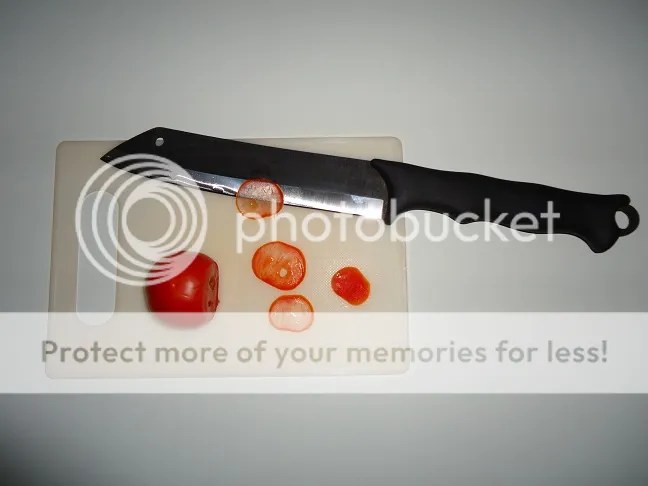
Since one of the tasks I use a camp knife for is food preparation, I took the Skrama to the kitchen and tried it out on a tomato. After just a few cuts, I felt I had seen enough. 🙂

After cutting the tomato, I “decimated” a piece of printer paper with ease.

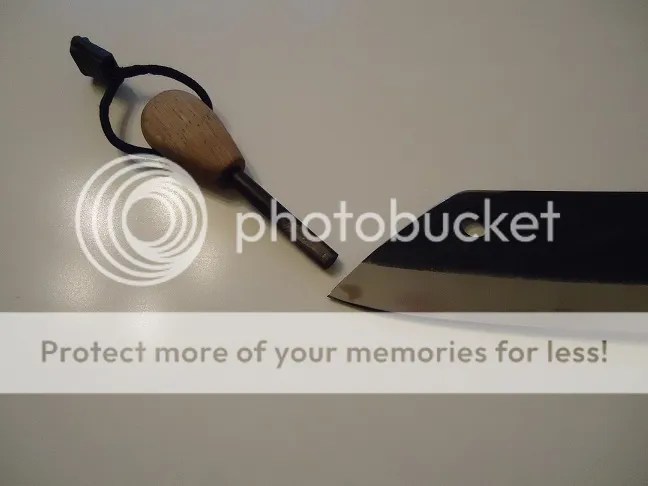
One popular, and practical, use of a good camp knife is throwing sparks off a ferrocerium rod for fire lighting. I found the best way to do this with the Skrama was to scrape the rod with the spine of the blade near the tip, since the section of spine near the handle would not throw sparks (this is easily remedied with a file). I used the ferro rod as a pointer in the picture below to show the part of the blade I used to scrape it.

So far, I’m impressed by the very rugged construction, good balance and out-of-the-box sharpness of the Skrama. Next weekend I’ll take the knife out to the forest to do some real testing. Stay tuned!

First hiking and bushcraft trip to the cabin woods

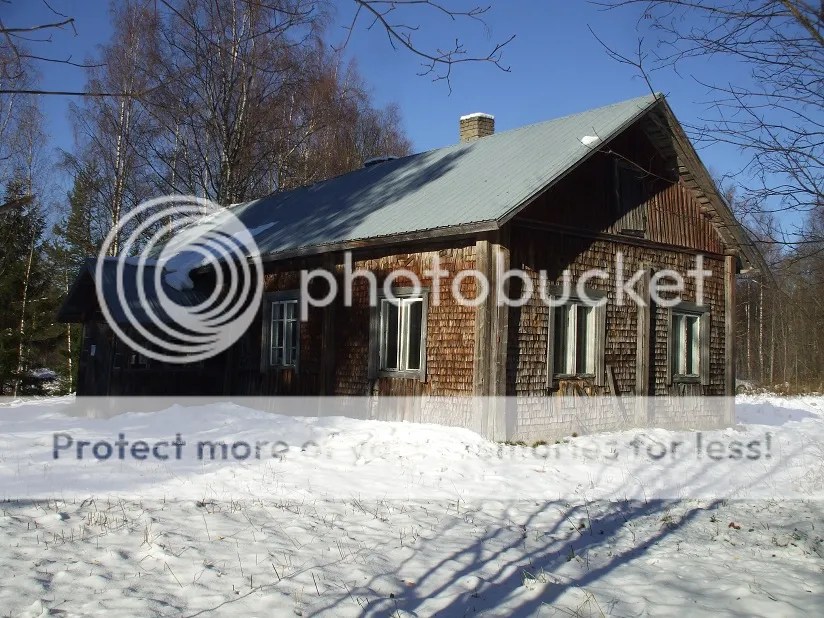
On Sunday afternoon, I drove out to the property with the old cabin we’ve been working on restoring. Instead of doing work on the building, though, I wanted to explore the area around it. Fortunately (for me), we got our first snow of the season the day before, so I was able to enjoy a little early taste of winter. Also fortunately for me, the weather played along nicely!

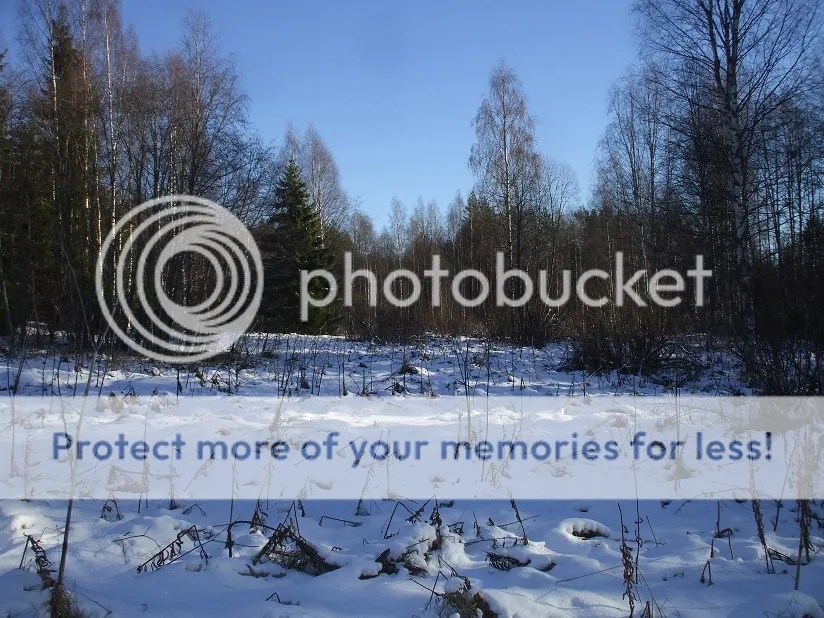
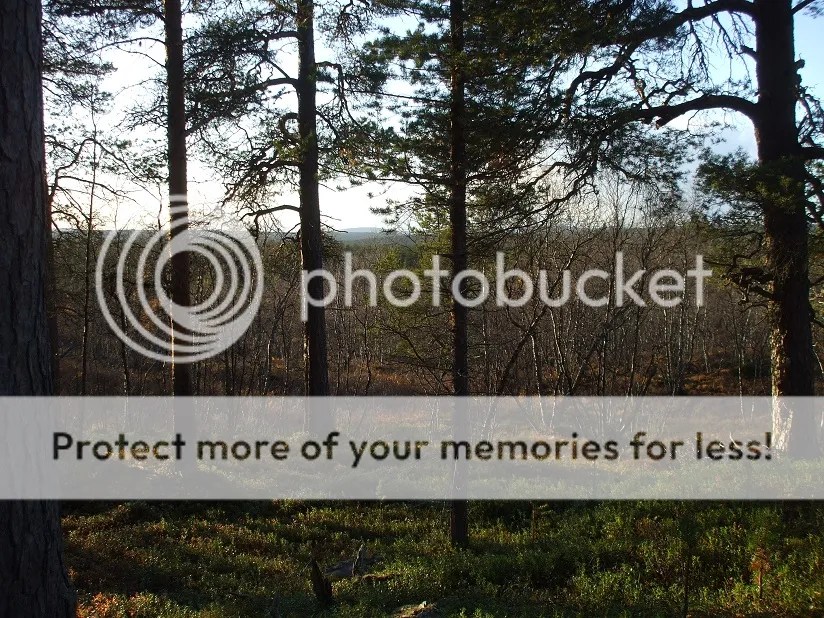
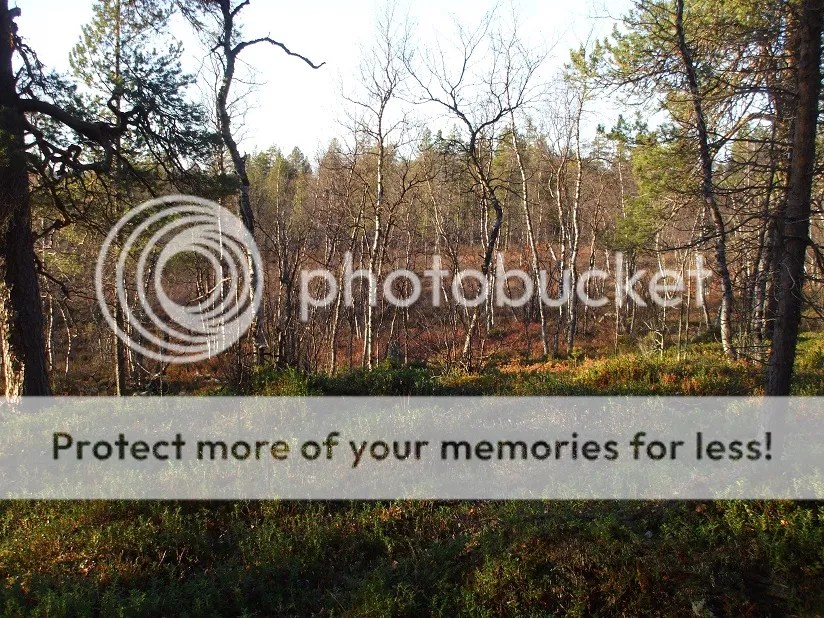
I parked the car near the cabin, took some pictures of the fields and woods on the property and then explored the woods adjacent to the property.

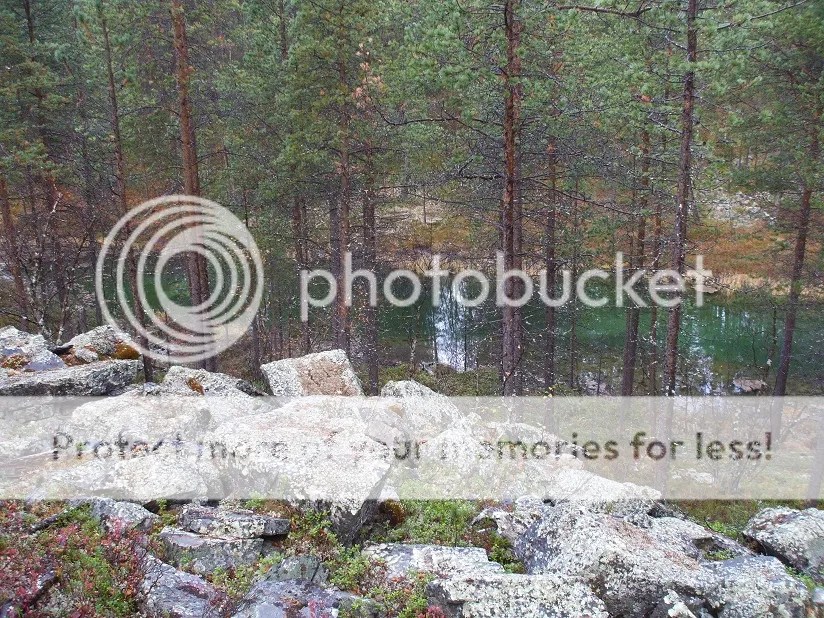
There’s a small cliff at the back edge of the property and a stream at the bottom.

I spotted these (probably fox) tracks nearby.

Frozen moose dumplings:

Bunny tracks:

Being that it’s moose-hunting season, I wore my blaze orange vest for safety’s sake. At this time of year, I usually wear either an orange hat or vest like this in potential hunting areas (though I make a conscious effort to NOT disturb hunters’ hunts with my doings).

After hiking around with my pack for about 2 hours, I returned to the property and picked out a nice level and open spot to set up a tarp shelter (more on this shelter type in an upcoming post). For a ground cloth, I used a heavy-duty garbage bag, and on top of that I put my pack and a small foam pad. The woods nearby provided a dead standing pine sapling, which I chopped up into firewood.

As a side note on the shelter, I added a loop at the middle of the long side of the tarp because there were no grommets there. As you can see, I reinforced the tarp in that area with black repair tape and stitching.

The temperature at the site was about -1ºC (30ºF) at the time, and by the evening had dropped to -3ºC (26.5ºF).

Not having my grill with me, but needing some way to keep my pot over the fire, I found a small sapling and made a stick with a fork on one end and a point on the other.

Then I cut down a larger and heavier sapling, stripped off its branches, carved a notch near the end (for the pot bail) and laid it on the forked stick stuck in the ground. The weight of the far end of the sapling meant that I didn’t need to do anything else to keep the “pot end” up.

Now that my cooking rig was ready, I needed to gather some tinder and split some of the pine for the fire. I found a birch tree nearby with some great bark peeling off it. It was like paper and had a nice feel to it.

Dinner for the evening was pasta in cheese sauce, which is a nice way to say “mac n’ cheese” ;)…

…and bannock, aka stickbread. After I added water to the dry mix, I put the dough ball down for a minute or two to do something and then found that it had already started to harden because of the below-freezing temperature outside!

It took longer than normal, but I managed to squeeze the dough into a strip and wrap it around a stick to bake near the fire.

As it started to get dark, I ate the bannock and drank some water and then packed up most of my gear. Here’s one last shot of the tarp tent at dusk. Normally, I put the fire a little closer to the shelter if I’m going to use it for warmth on an overnight stay.

Finally, I’d like to talk a little bit about “bushcraft gear”, specifically the price of said gear. Almost every item you see in this post was either a discount store item, military surplus item, consignment shop fixer-upper or recycled. The only exception is my BushProwler knife, which was hand made to my specifications (though cheaper Mora-type knives etc. would certainly also suffice). Here’s a little rundown:

  • Shelter: 2 Euro ($2.60 USD) tarp from hardware store, pole and pegs from old tent
  • Pack: 25 Euro ($32.50 USD, cheaper in the US) Swedish LK-35 military surplus
  • Axe: 10 Euro ($13 USD) from consignment shop, rehafted and fixed up by me
  • Pot: 5 Euro ($6.50 USD) from discount store
  • Spoon: Taken from a cutlery set from my cub scout days
  • Kuksa cup: 4 Euro ($5.20 USD) from consignment shop (boiled before use)
  • 1 liter aluminum water bottle: 1 Euro ($1.30 USD) from consignment shop
  • Sitting pad: 1 Euro ($1.30 USD) from discount store
  • Garbage bag ground cloth: A few cents
  • Matches: A few cents a box, housed in a birch bark container I made
  • Knife: Let’s say I used a Mora instead: 10 Euros ($13 USD)
  • TOTAL: 58 Euro ($75 USD)

My suggestion when looking for gear is to shop around, see what you can make using things you have at home, trade with other people, recycle things other people are planning on throwing away etc. Outdoor gear does NOT necessarily have to be expensive!

Lemmenjoki National Park, Lapland, September 2013 – Part 2

In case you missed it, Part 1 can be found here.

Pasi and I had spent Monday night at the Vaskojoki hut, which is open to wilderness travelers on a first-come, first-served basis and provides bunks with mattresses, a wood-burning stove, a table and benches and even a gas cooking stove.

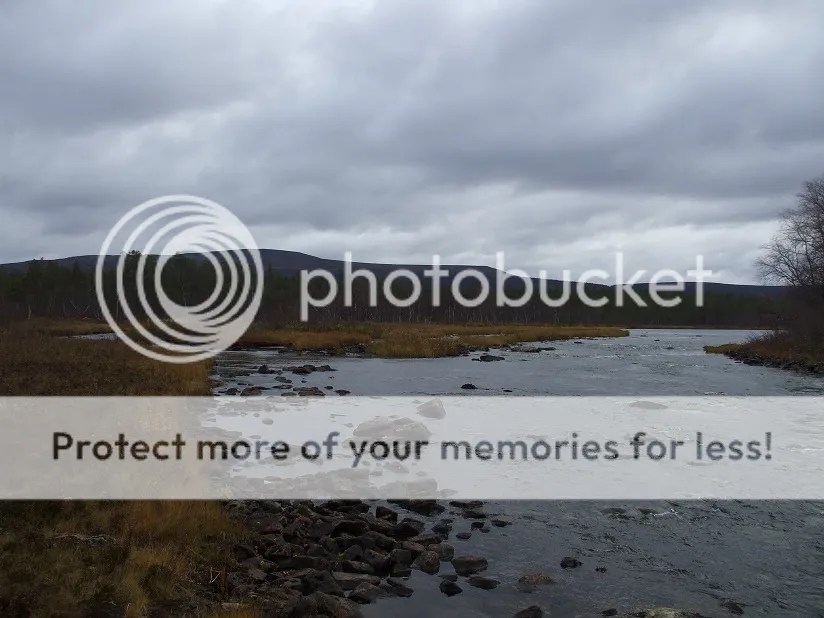
The scenery around the hut wasn’t too shabby.

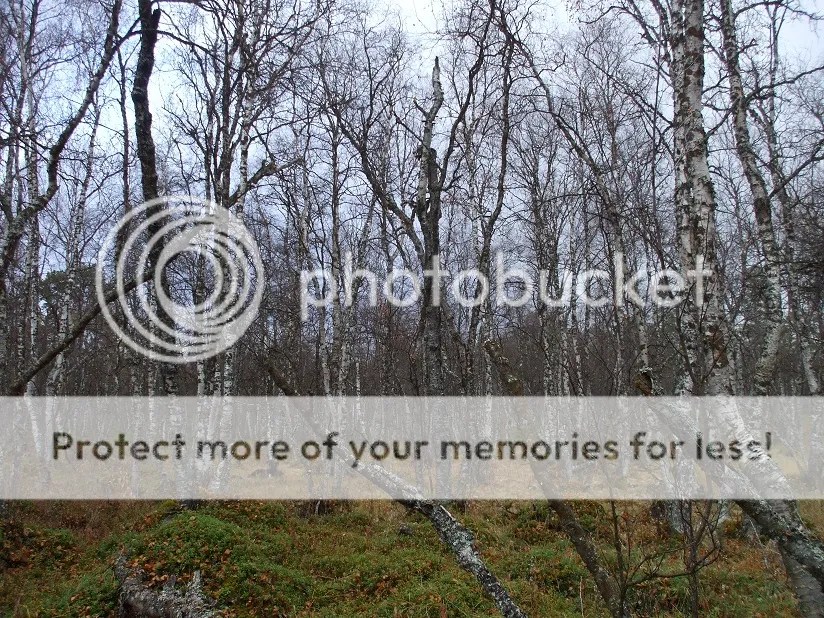
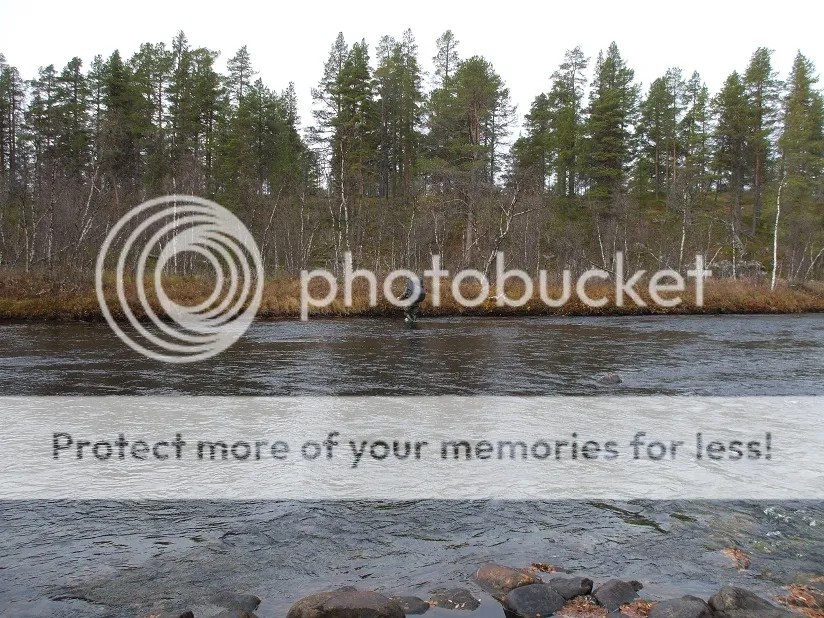
Following breakfast, we packed up our gear and said adieu to the Vaskojoki hut, traveling roughly along the Vasko River looking for a suitable place to cross it. The wetter land between the river and drier pine forest was often covered with scrubby birch trees.

Here’s Pasi testing a route across the river.

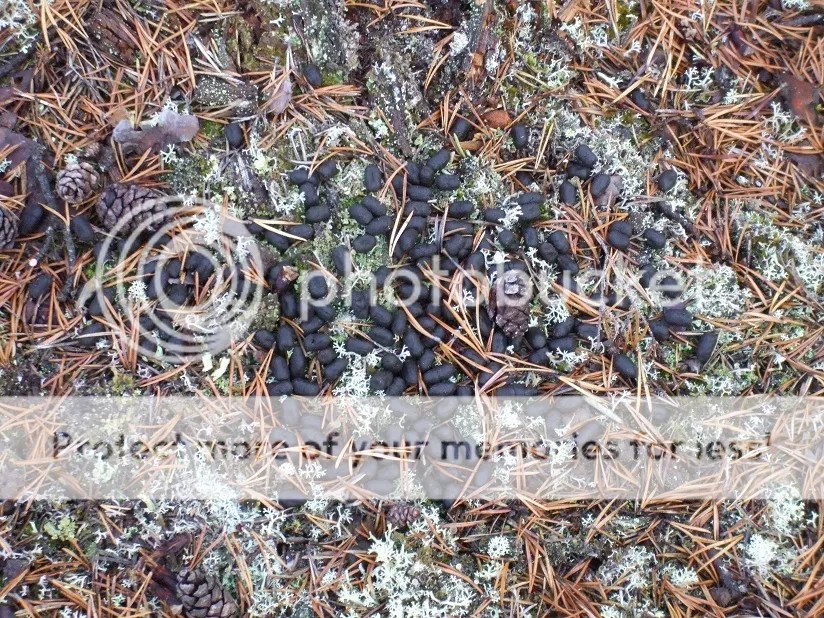
Our prospects didn’t look good at that location, so we headed to a higher elevation and traveled through the pine forest again. A sight often encountered throughout these forests was reindeer droppings, aka “nature’s licorice jellybeans”. They are much smaller and darker than moose droppings.

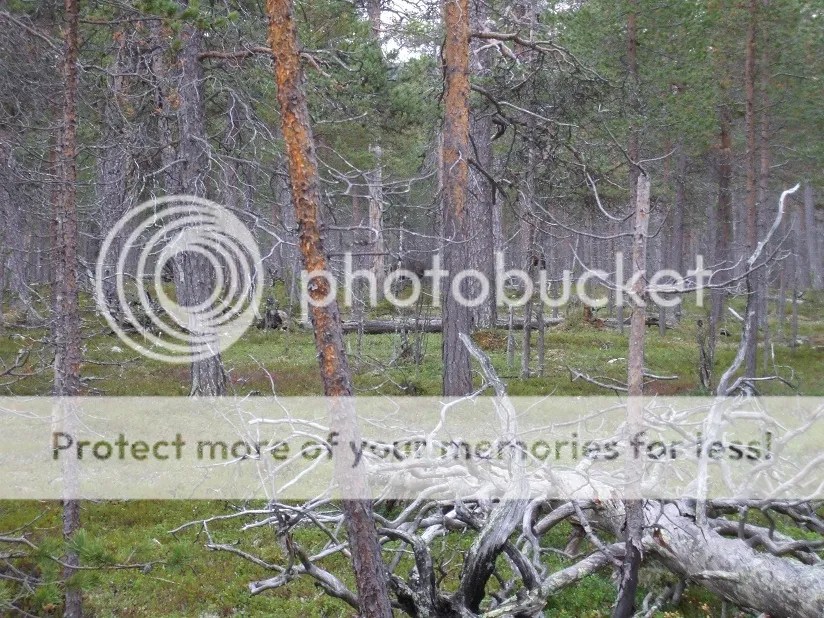
Speaking of moose, while Pasi and I stopped to take a short break, I spotted a cow moose plodding through the forest not too far away. She obviously didn’t smell or hear us, for she carried on with her business for quite a while. Unfortunately, the best picture I could get of her was this (she’s the brown blob in the center):

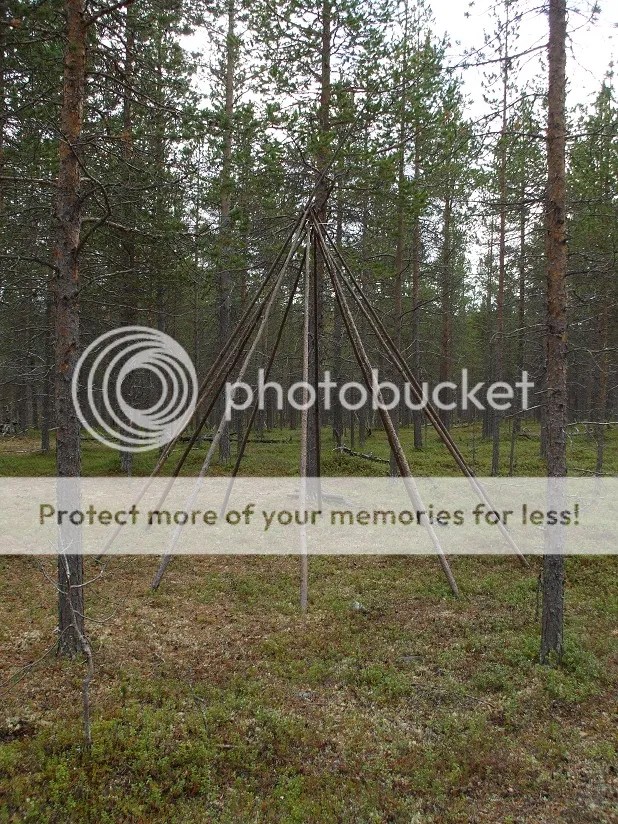
As we continued hiking parallel to the river, we came across this kota/lavvu frame. For those of you not familiar with this type of shelter, it is similar to the tipi used by Native American Indians. In Lapland, they are primarily used by the indigenous Saami people/Laplanders.

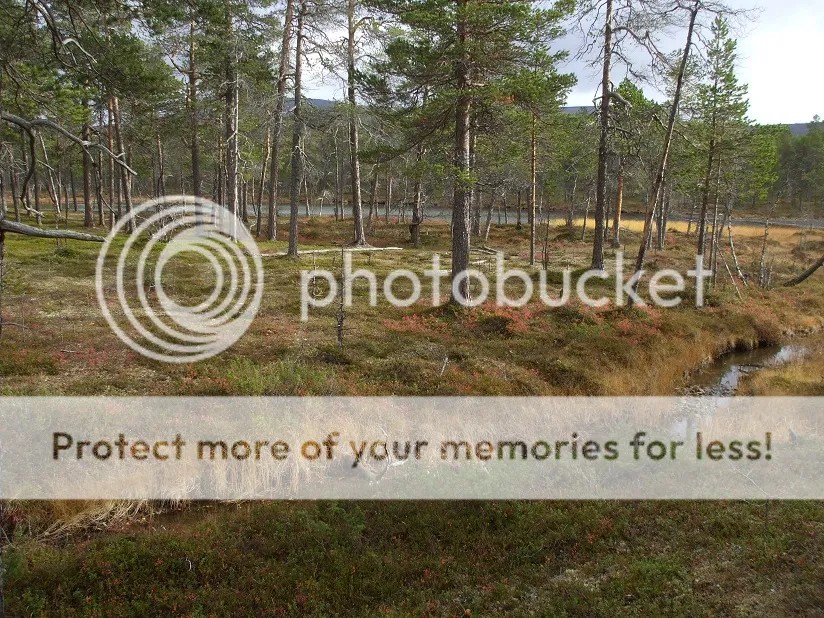
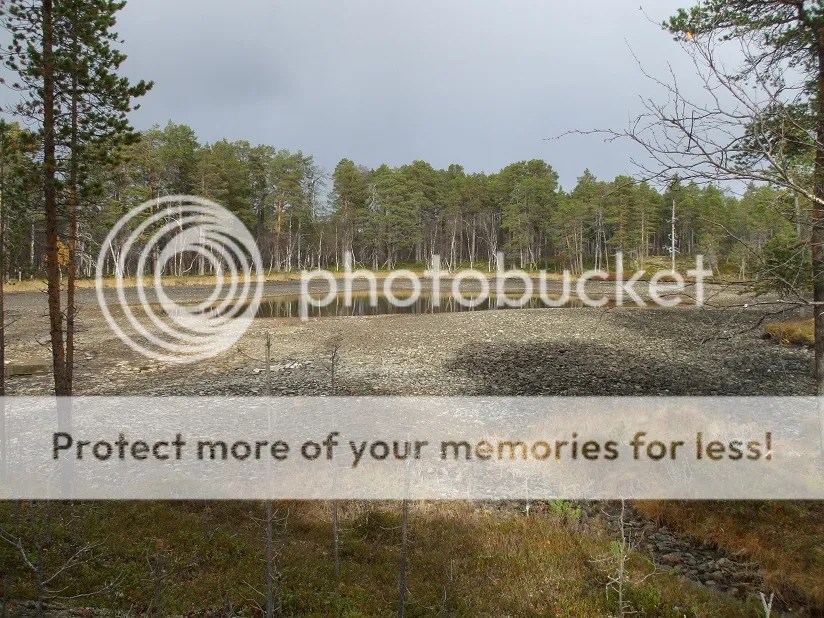
Our route toward a narrower and rockier section of the river where we might cross more easily took us over some very marshy ground. Good thing I was wearing rubber boots! A few scenes from along the way:

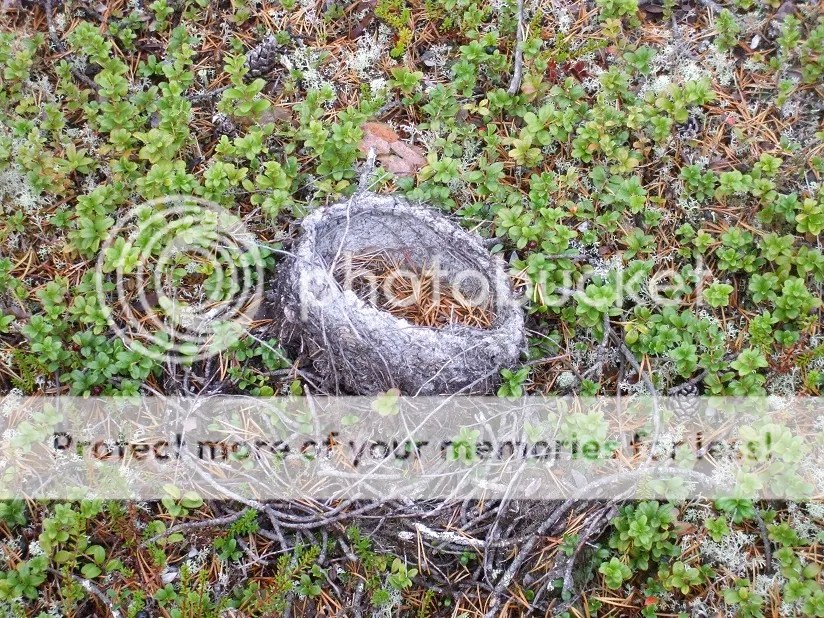
An old bird’s nest:

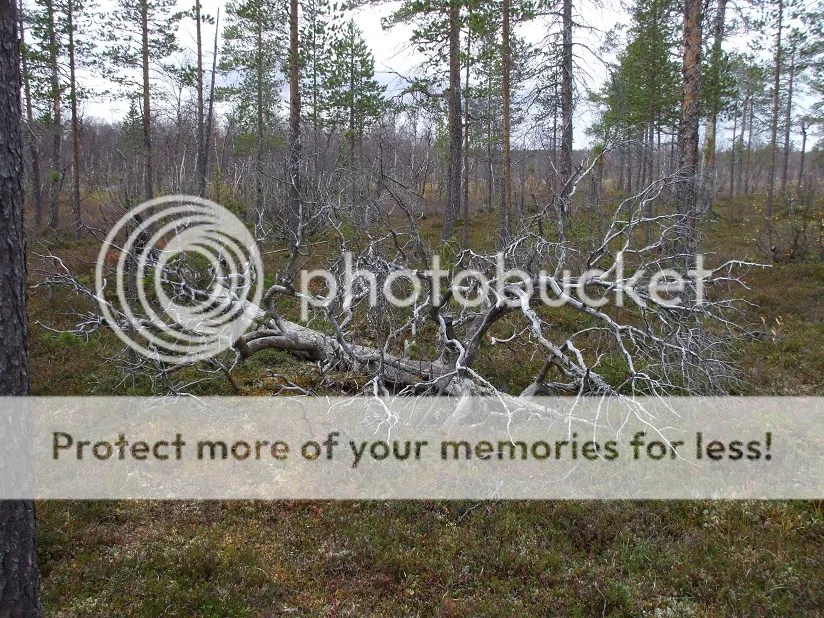
Parts of the forest were littered with scraggly dead pines like these.

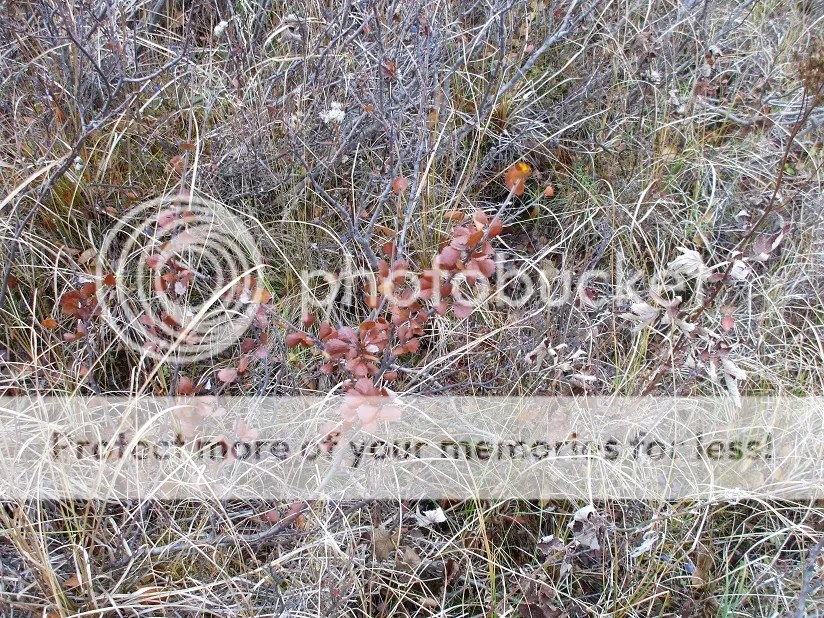
Some of the marshy areas were full of dwarf birch, the leaves of which had either turned brown or fallen off by that point.

When we cut over and approached the river again, we looked for a suitable place to stop for a meal and thought this area would do.

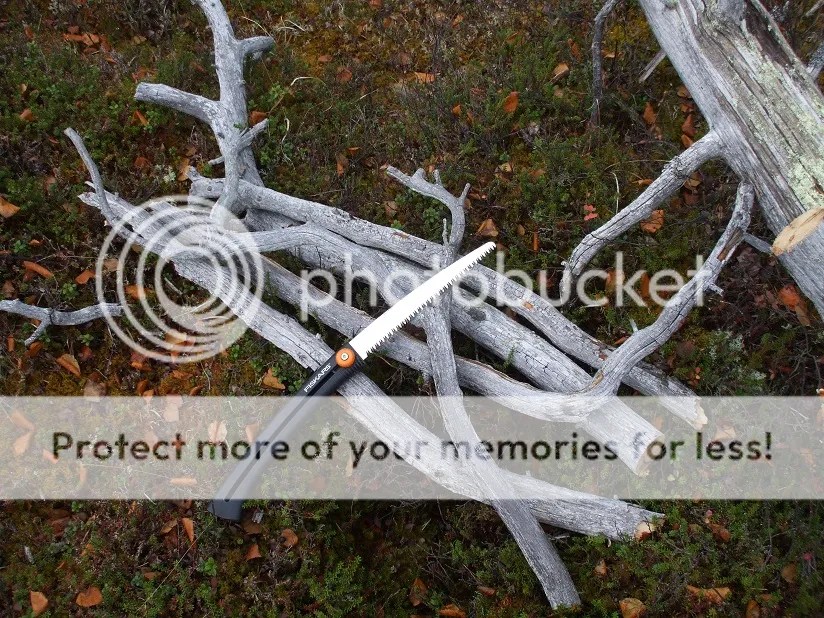
While Pasi got a fire going in a fire pit used by previous hikers, I collected firewood from a dead pine nearby with my Fiskars large sliding saw.

It was a fine spot for a meal indeed. 🙂

From time to time, the clouds broke, giving us a glimpse of beautiful blue sky.

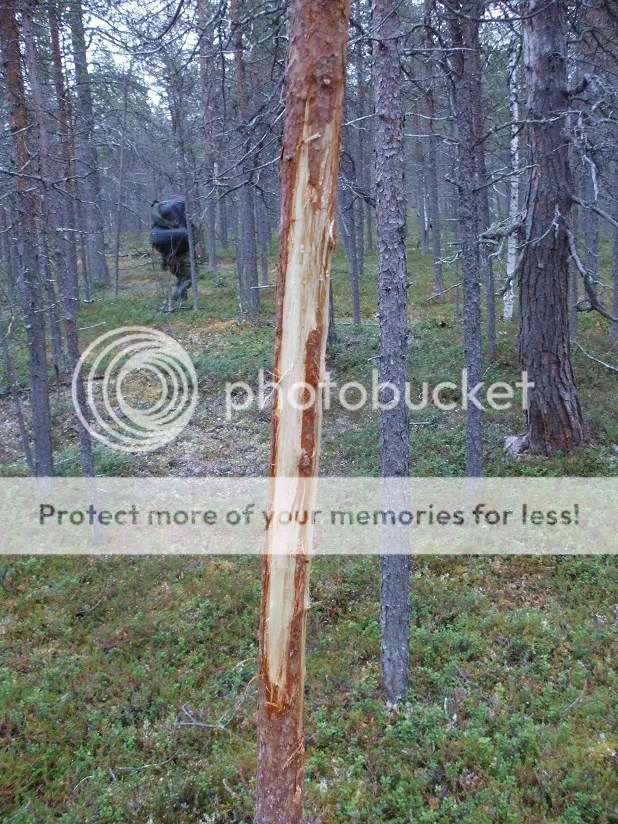
Following our meal break, we threw on our packs and headed southward away from the river and through the pine forest to a lake where we’d make camp. We saw these moose rubbings along the way. When a bull moose is regrowing antlers in the spring and summer, they’re covered in a fuzzy layer of skin called velvet which the moose rubs off once the antlers stop growing. They often use saplings like this for the purpose.

We reached the small lake, which was linked to the river by a stream, and set up camp before it got dark. We followed the usual drill of setting up our shelters and a stone fire ring and then collecting firewood. Pasi’s shelter on the right is a “pena-laavu” from the Savotta company, and my shelter on the left is two German army surplus ponchos snapped together in a brew shelter configuration. I wasn’t able to set up my shelter perfectly because of the trees nearby, but it worked well enough.

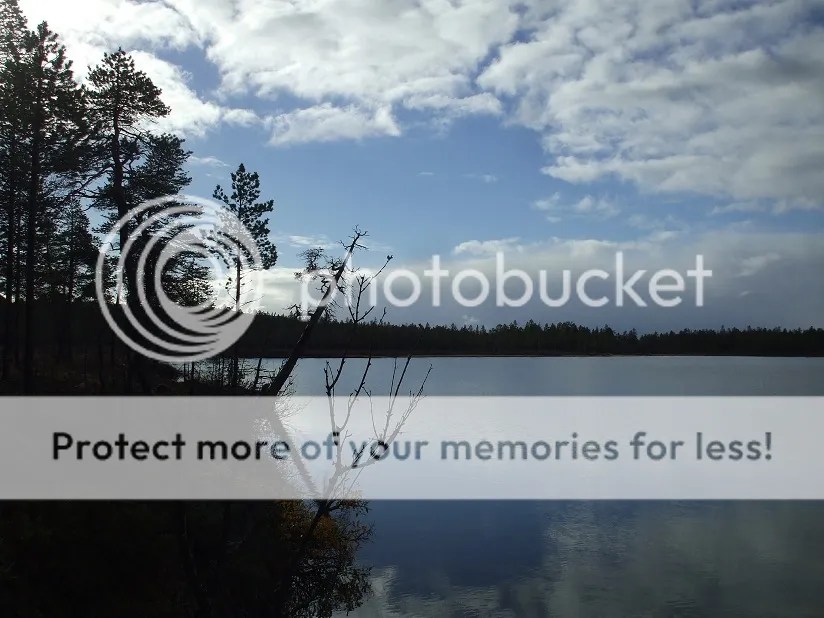
The water we got from the lake was crystal clear and delicious. Just dip your cup in and drink. 🙂

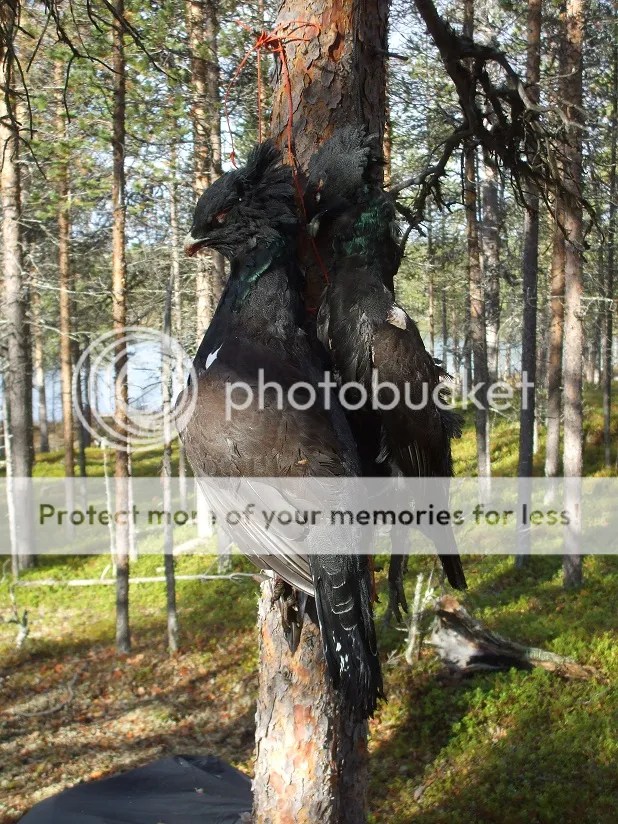
In all, we had hiked about 9 km/5.5 miles on Tuesday, and I was eager to hit the sack as soon as night came. Pasi arose earlier than I for some morning capercaillie hunting with his laika Pyry. I awoke to Pasi shouting at Pyry some distance away in an effort to stop him from chasing a moose, which can lead to a long sit-and-wait or retrieve-your-dog-from-deep-in-the-wilderness scenario. Pyry complied and I fell back to sleep. A bit later I woke up again and started up the fire after collecting more wood. While fiddling around, I heard a nearby shotgun blast from the otherwise silent forest, and Pasi returned with the second capercaillie of the trip, another male, which was older and more substantial. He related his brief encounter with a bear that morning as well as his intention to return to the area for a bear hunt in the future.

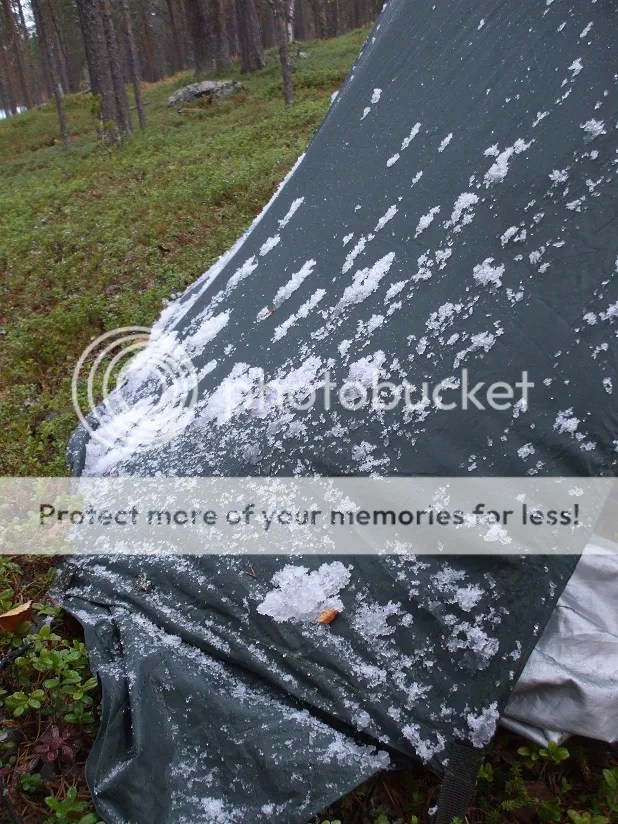
After Pasi had finished unburdening the fowl of its internals, we sat down to cook a meal over the fire. He had remarked that the temperature dropped below freezing overnight, at which time I remembered noticing this at some point during the night. Not long after, we got a little confirmation from mother nature in the form of a 5- to 10-minute period of wet snowfall…quickly followed by sunshine.

Out of curiosity, I took out my thermometer to take a reading. Just as the weather report had forecast, it was 4°C/40°F. As a side note, I used the Swiss sleeping bag and sleeping bag liner on this trip and never felt cold.

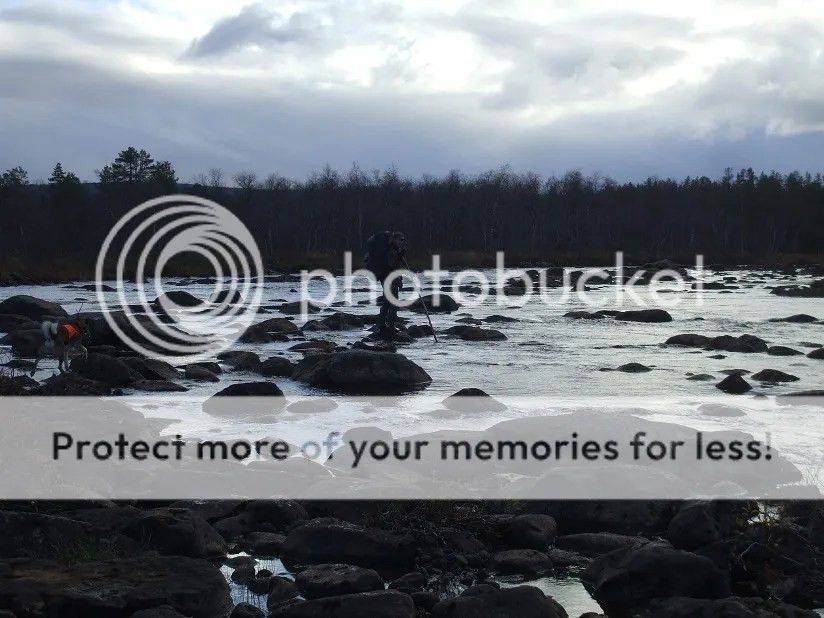
We then packed up and headed down to the river again to search for a good spot to cross. We cut ourselves some poles from the nearby woods, and Pasi skillfully led the way across.

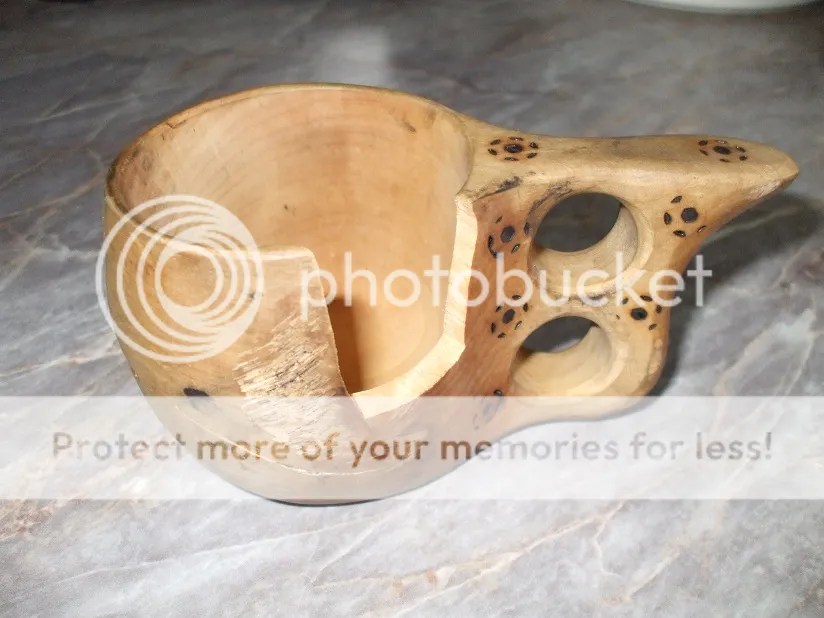
With my luck being what it is, I’m sure you can guess what happened when I traversed the cold river, stepping from one slick rock to another. 🙂 Yes, yours truly fell in, filling my boots with water and getting wet almost up to my waist and wetting the front of my jacket and my gloves as well. Fortunately, the water wasn’t deep there. I picked myself up, wrought myself out and continued across the river. After quickly changing socks (my pants dried surprisingly quickly, so I left them on) and dumping the water out of my knife sheath, we continued hiking on the other side of the river toward our pick-up point, but not before I slipped on a boulder at the edge of the river, landing on my kuksa (the one I got from the Woodsbabe’s grandparents last Christmas). I had attached it to the shoulder strap of my pack with a carabiner for easy access, but never expected it to serve as an emergency cushioning device. Let’s just say I’m happy I landed on this cup with one of my cheeks and not straight onto the boulder with my tailbone… While it was unfortunate that this gift was rendered unusable, I’m sure the Woodsbabe’s grandparents would be happier knowing it broke while on a wilderness trip in Lapland as opposed to sitting on a shelf collecting dust!

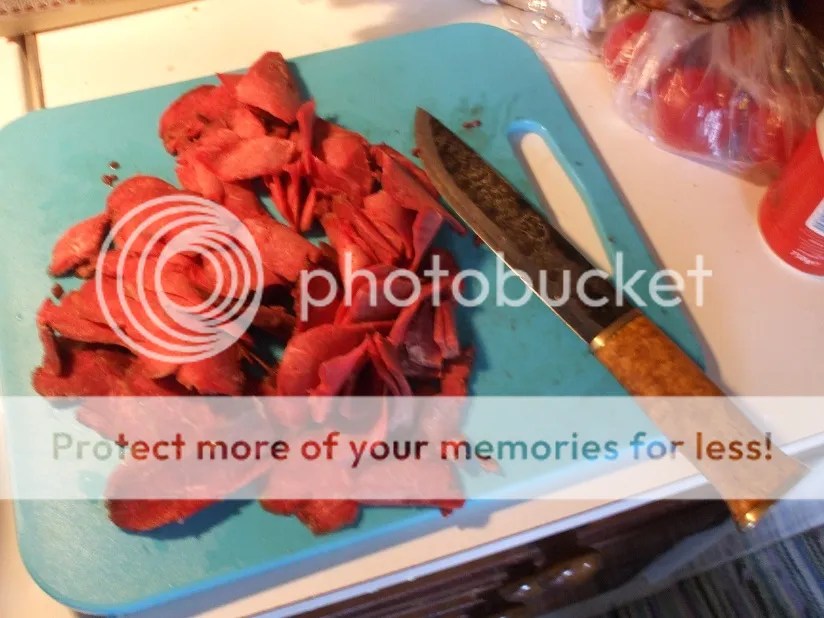
The rest of our time in the forest was uneventful. We traversed some more marshy land near the river and eventually reached the pick-up point, where Pasi’s girlfriend was waiting for us. That evening, the three of us drove out to their cabin further to the north. Pasi intended to paint the new shed he put up there, and I offered to help. It ended up raining all Wednesday night and Thursday morning, so we scrapped the idea, instead returning to their home. That afternoon, they cooked my favorite Finnish dish, “käristys”, with moose meat (reindeer is often used as well). To make käristys, partially frozen meat is cut into thin slices and then slow-cooked with onions in butter over low heat. It’s then usually served with mashed potatoes and cowberries/lingonberries. Pasi used a leuku he made to slice the moose meat. The meal was delicious.

A while after eating, we three drove to the Siida Saami Museum in the village of Inari, which had very interesting exhibits covering Saami history, culture, handicrafts and technology, including an open-air section which I’ll cover next time. The museum also had plenty to show and tell about the geology, fauna and flora of the region.

Bidding my gracious hosts farewell on Friday morning, I retraced my 12-hour train and bus route of almost a week earlier and returned safe and sound (and a little sore) at home. Despite the issues of this year’s trip, I’m already looking forward to my next trip to the north (for which I will definitely be better prepared). As per usual, I’ll use this experience to make future trips more successful and enjoyable!

I want to say thanks to Pasi for being a great wilderness companion, showing me around “his neck of the woods” and for being patient and flexible. He really added a great dimension to the trip. I’d be happy to join him for another in the future (in better condition, of course ;))!

Lemmenjoki National Park, Lapland, September 2013 – Part 1

“Everyone has a plan until they get punched in the face.” – Boxer Mike Tyson

I try to see every experience in life from a positive perspective. When I succeed, I gain confidence and reinforcement in what I did right. When I fail, it gives me an opportunity to take stock of my skills, knowledge and experience and figure out what I can improve upon to avoid a repeat of that failure. While I would by no means call my recent trip to Lapland a failure, I would say that it could have been better in some aspects if I had not punched myself in the face in one big way, but I’ll get to that later.

On Saturday, September 21st, I boarded a train bound for Rovaniemi and rode 8 hours up to the capital of Finnish Lapland. In Rovaniemi, I transferred to a bus and rode an additional 4 hours to Ivalo in Northern Lapland, where I was picked up by blacksmith, knife maker, wilderness guide and all-around outdoor-dude Pasi Hurttila. The trip seemed to be getting off to a lucky start as I saw the northern lights (aurora borealis) for the first time shortly before arriving in Ivalo. Anyway, we drove to Pasi’s place and I hit the sack after a little chit-chat with him and his girlfriend.

After breakfast on Sunday morning, we did our final gear checks, packed up the van and drove about 100 km/60 miles to Lemmenjoki National Park. Our plan was to start from the northern border of the park, make our way southward to a certain point and then head eastward to our prearranged pick-up point, traveling through the “remote zone” of the park and entirely bypassing the more heavily trafficked “recreation zone”. Pasi would be hunting in the forested areas along the way. As a side note, the weather was expected to be on the rainy side and average about 5°C/40°F over the course of the trip.

We had planned in advance to enter Lemmenjoki Park by crossing the Vasko River (Vaskojoki) by canoe, so one of Pasi’s friends came with us to bring the canoe and van back to Pasi’s place. It wasn’t a long canoe ride at all, but it was fun to start the trip off this way.

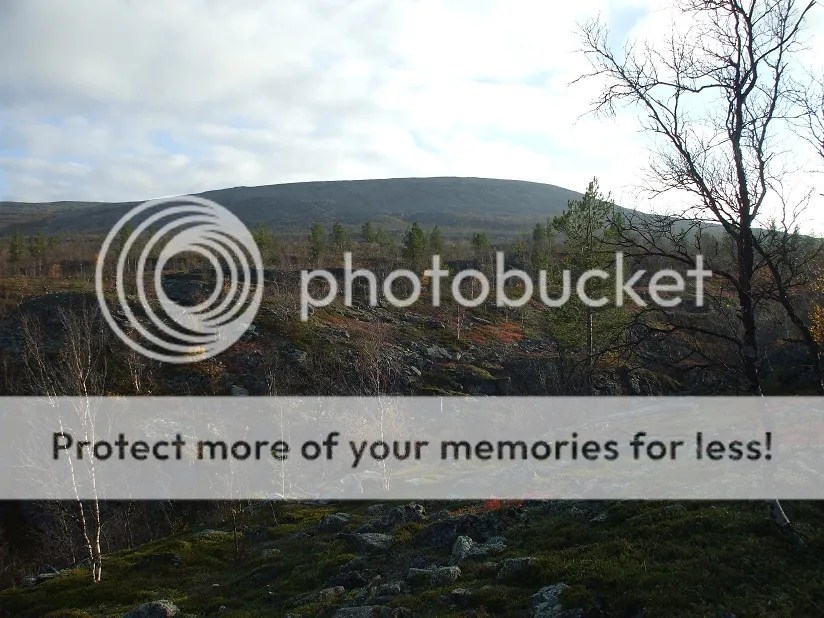
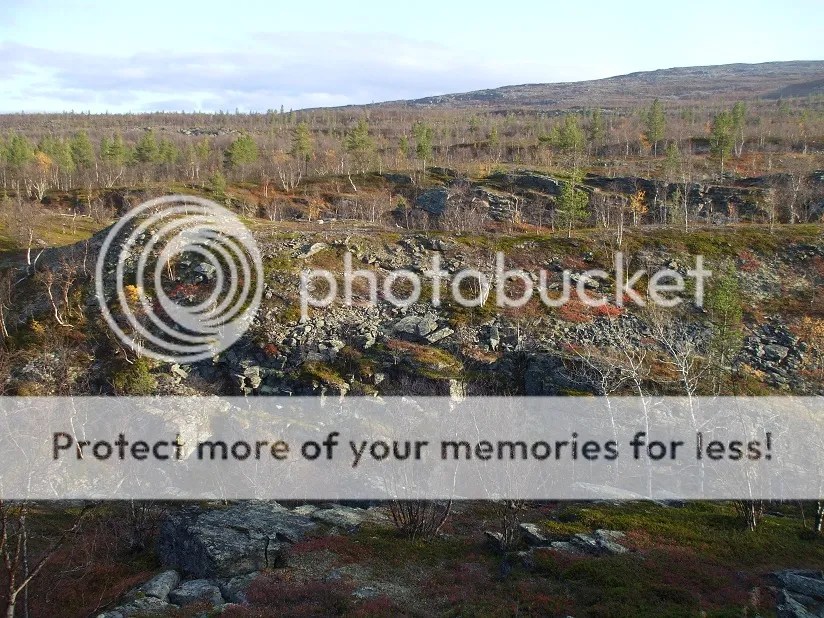
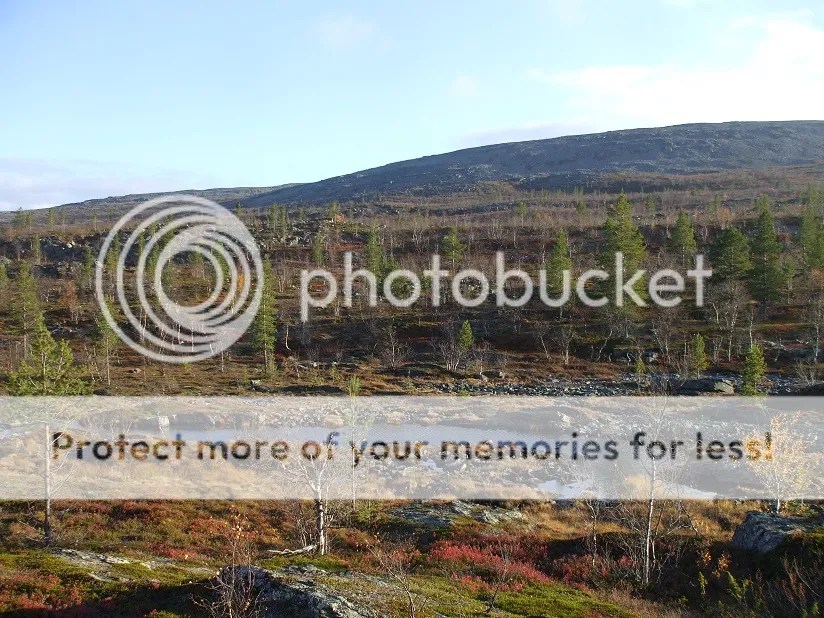
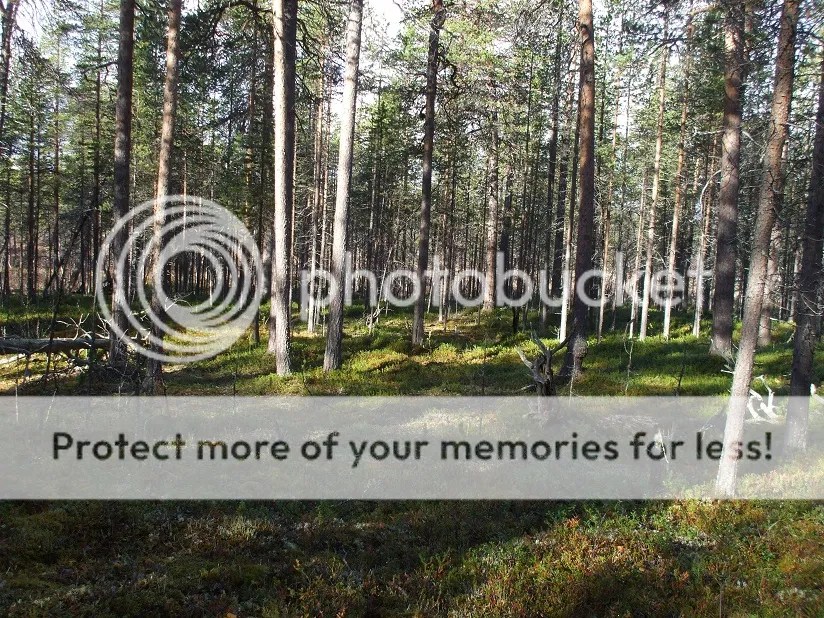
We hiked southward from the northern border of the park towards some of the highest fells of the area, passing through pine forests and marshes on the way.

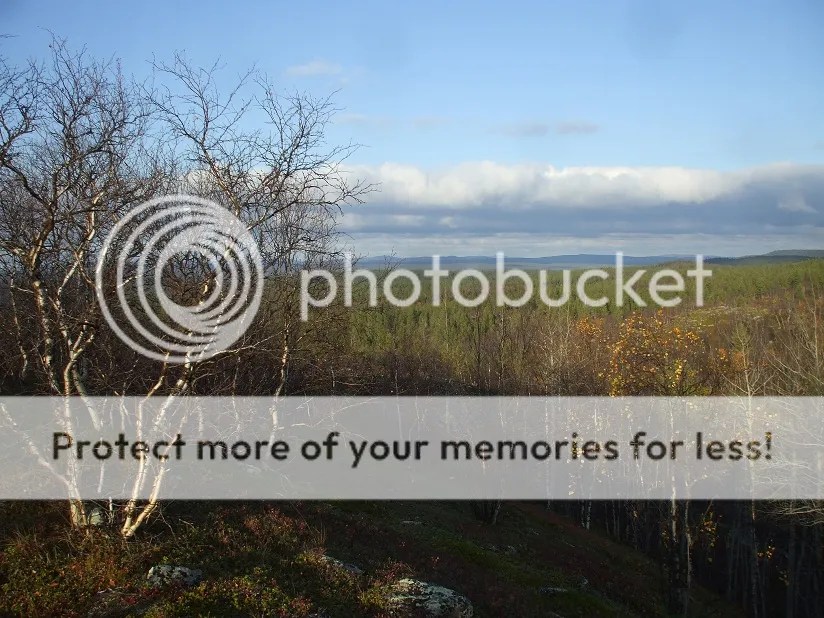
The views became more expansive once we reached higher elevations.

We decided to stop and cook lunch in this area, so Pasi made a stone fire ring, we gathered resin-rich seasoned pine wood for fuel and Pasi started the fire.

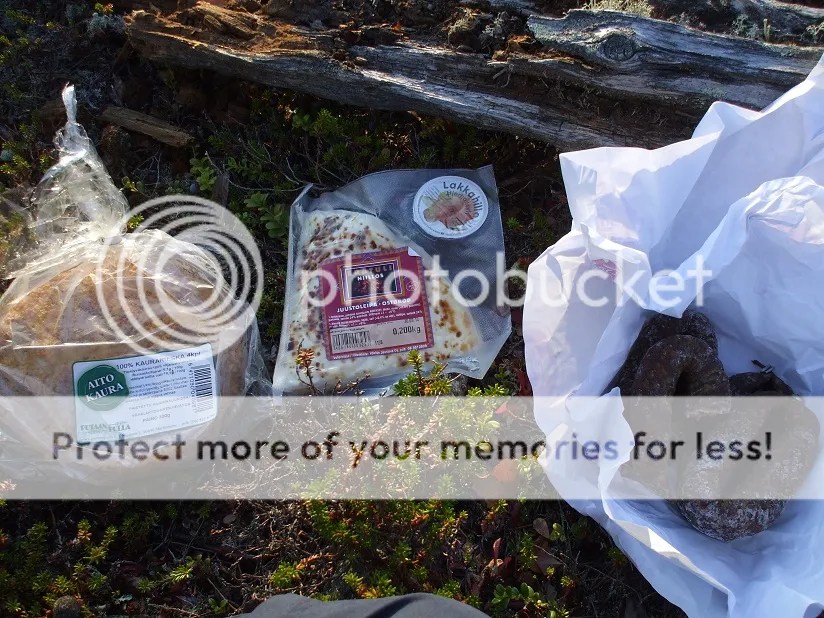
I was too hungry to wait for food to cook, so I ate some dry-cured sausages I brought with me, as well as some “rieska” bread and “juustoleipä” cheese typical of Lapland.

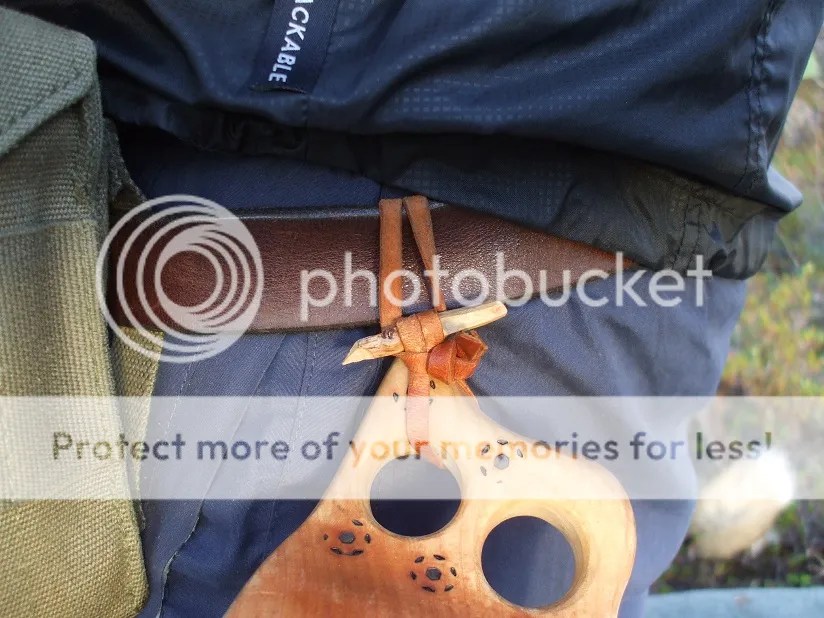
While we were stopped, I worked on hooking my kuksa to my belt for easy access. I tried the setup below for a little while, but abandoned it when the stick started slipping out. As a side note, we drank directly from streams, rivers and lakes throughout the trip, as no filtration or boiling is necessary.

After eating and resting for a bit, we continued on our way. Although the peak time for autumn colors had already passed, there were plenty of beautiful scenes left to discover.

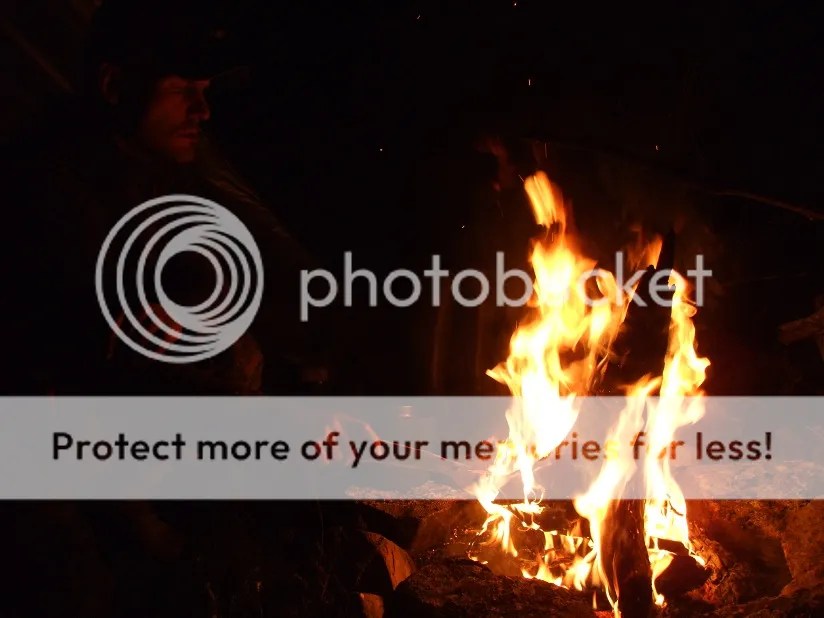
By the time we reached the small pond where we wanted to make camp, it was getting dark, so we quickly set up our shelters. After settling in, we made some food and enjoyed the warmth and light of the fire.

Pasi tending the fire

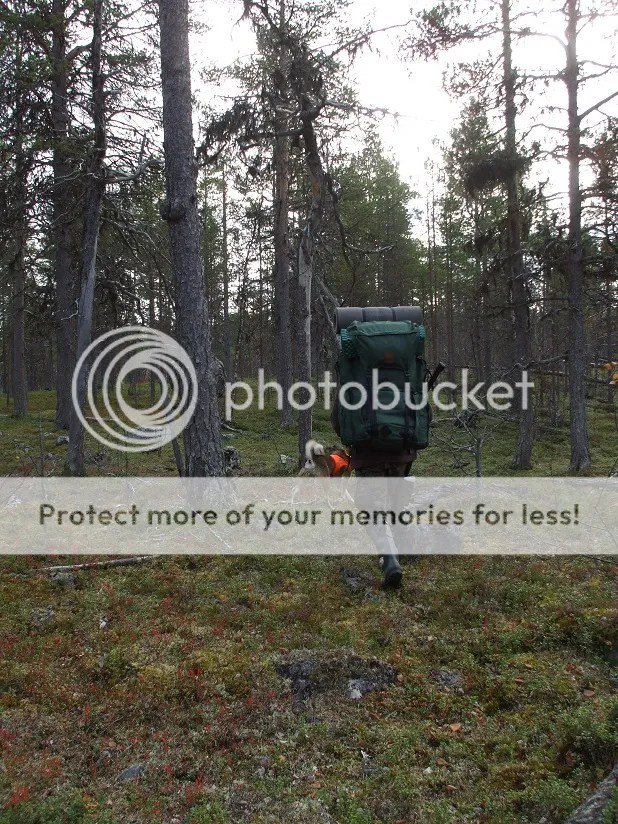
I was really happy when we stopped for the day after a total of 10 km/6 miles of travel, because to be honest, the trip was already proving to be a challenge. Now, I’ve been on several backpacking trips where I’ve easily covered 4 km/2.5 miles per hour on trails with a fully-loaded pack, hour after hour (probably about average for casual backpacking), and I’ve also done plenty of hiking over rough terrain in Finnish forests. What took me by surprise is how different it is to cover rough terrain at a moderately fast place with a fully-loaded pack while wearing soft rubber boots (I decided to wear these boots instead of the new hiking boots I’d bought because of the wet conditions of the location). Wilderness backpacking takes a lot more energy compared to trail hiking! Of course, it’s not at all unusual to be tired out after the first day of any backpacking trip, so it’s something I expected to a degree. Luckily, my energy level picked up dramatically by the middle of the second day, as is usually the case with me, but an unexpected problem crept into the picture which forced us to completely change our original trip plan. More on that later.

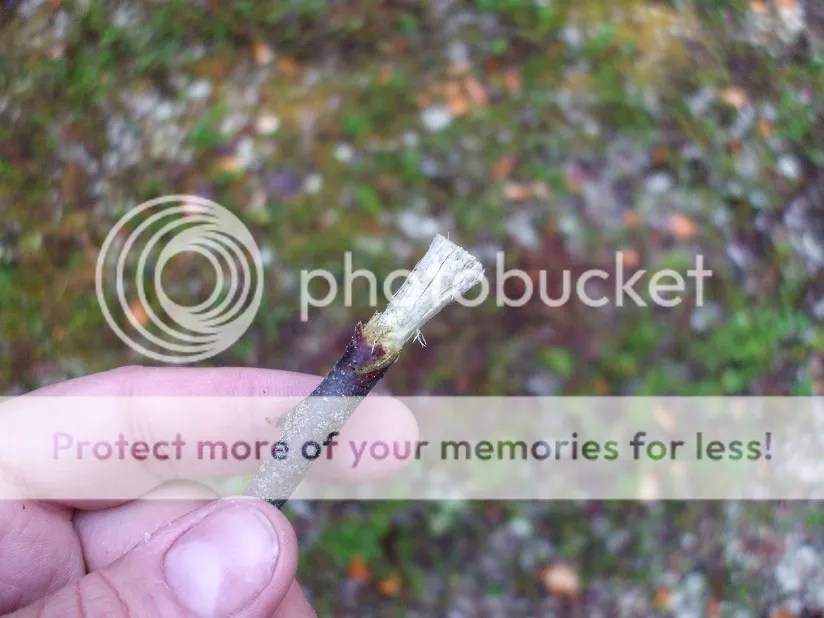
After a long night of sleep, we arose on Monday morning and packed up. While getting ready, I realized that I had forgotten a small drybag at home containing my toiletries and other sundries, so I made this toothbrush out of a birch twig by stripping off the bark and then pounding the wood with the back of my knife to break up the fibers a bit (little did I know then that I did in fact remember to pack that small drybag: I had “cleverly” stowed it along with some other things in a larger drybag…). The birch twig toothbrush worked surprisingly well!

The small pond nearby

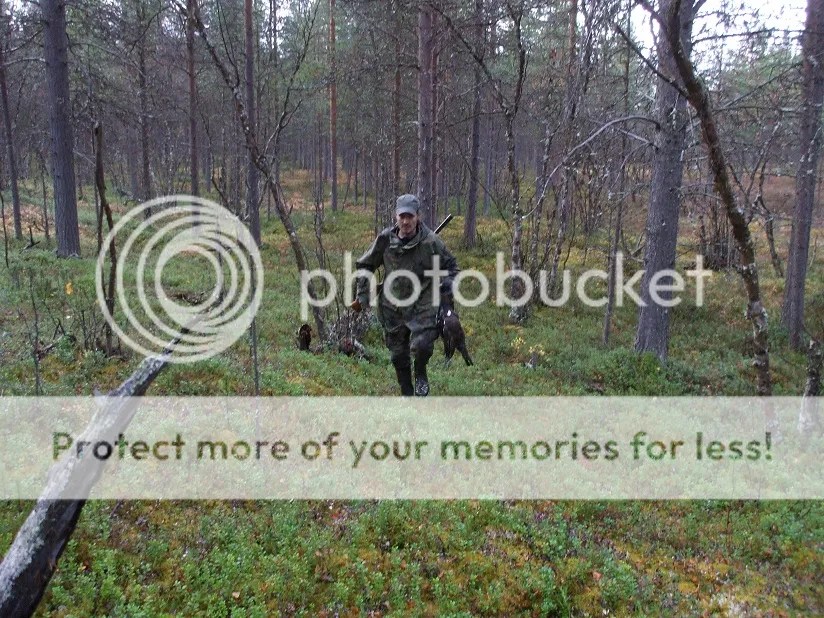
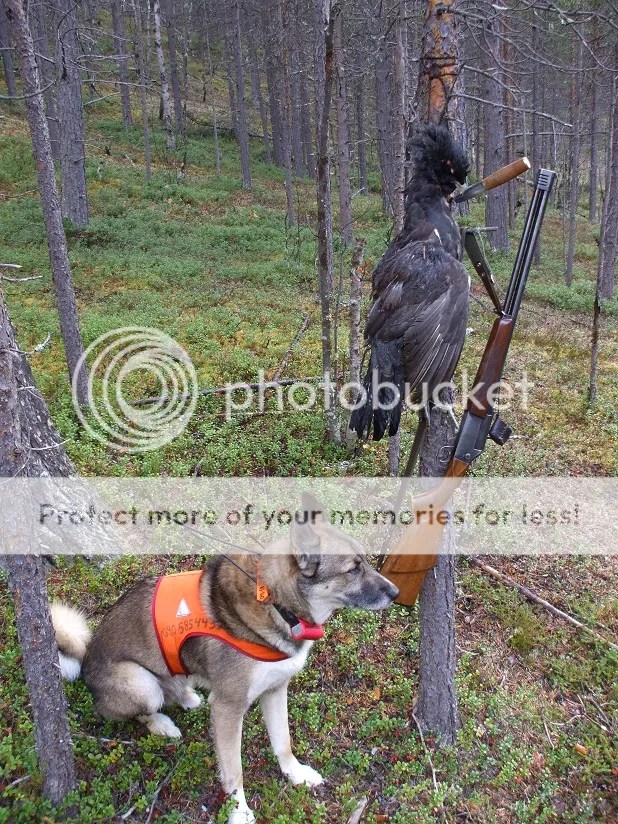
After a little hiking, Pasi let loose his West Siberian laika “Pyry” to find capercaillie, or “metso” in Finnish. The dog was outfitted with a GPS tracking collar, and Pasi skillfully used it not only to ascertain Pyry’s whereabouts, but also to determine what he was doing. If he barked consistently, ran in small circles and didn’t stray from a location, this would signify that he’s likely found a bird. If Pyry barked irregularly in a low authoritative way and covered greater distances, this could indicate a moose or bear. So Pasi was able to read the situation based on Pyry’s frequency and type of barking and his movements and other behavior. I was impressed! After a short while, Pyry found a bird and Pasi moved in. He made short work of it with his single-shot 12-gauge/.222 Remington combo (the shotgun in this case, of course).

We proceeded to a creek where Pasi removed the bird’s internals and put fresh juniper branches in their place to keep the body cavity open.

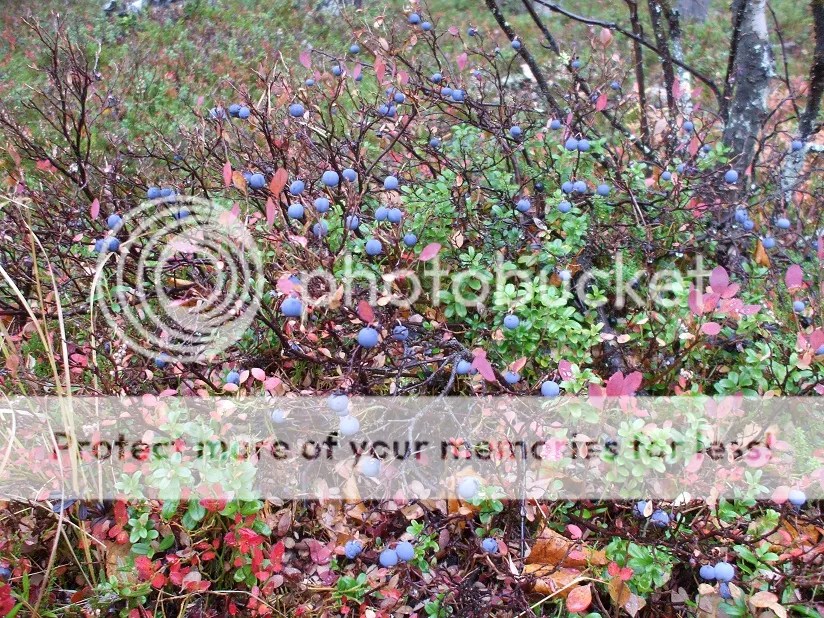
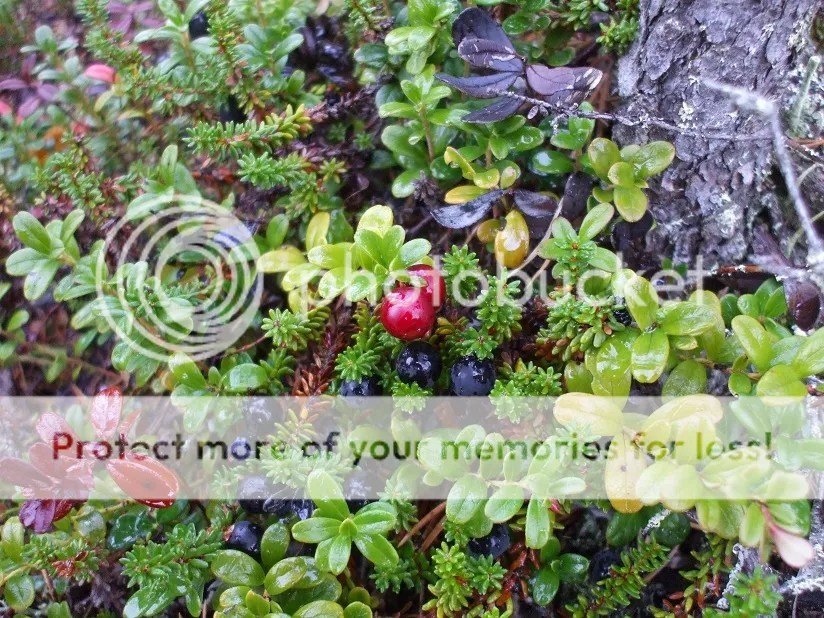
While we were stopped, I took pictures of some berries nearby.

Northern bilberries

Black crowberries

Cow berries

Here’s proud Pyry and the first capercaillie. And no, the knife is not stuck in the bird’s neck. 😉

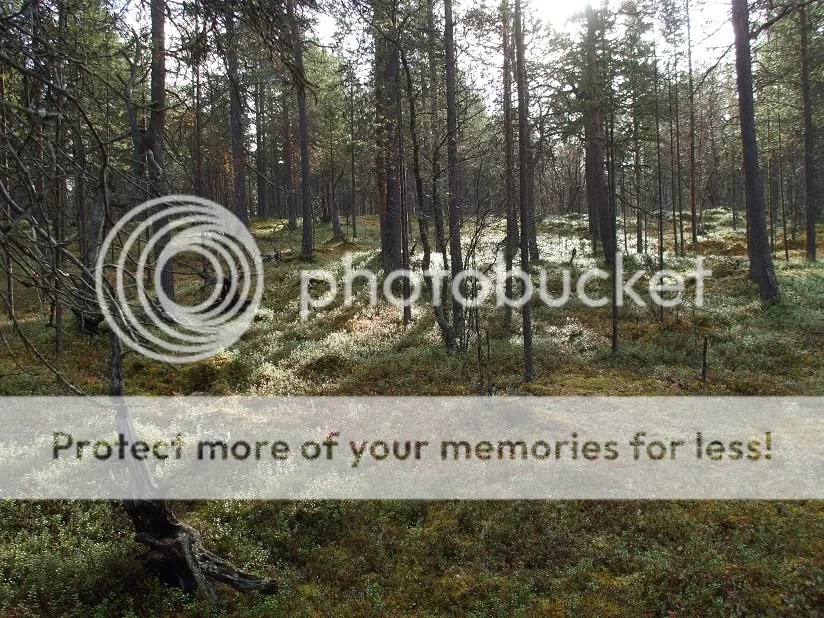
As we continued on through the forest, I snapped a few pictures.

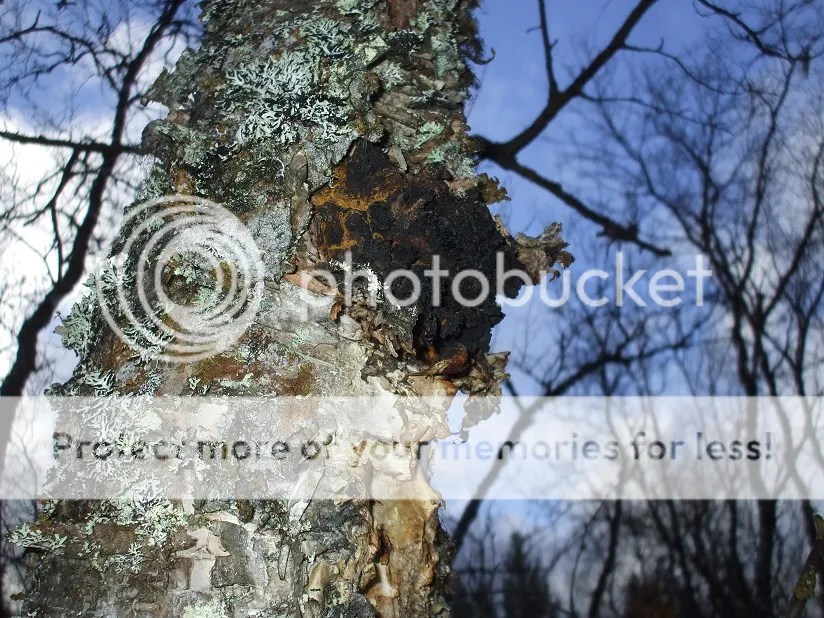
Chaga fungus on birch tree

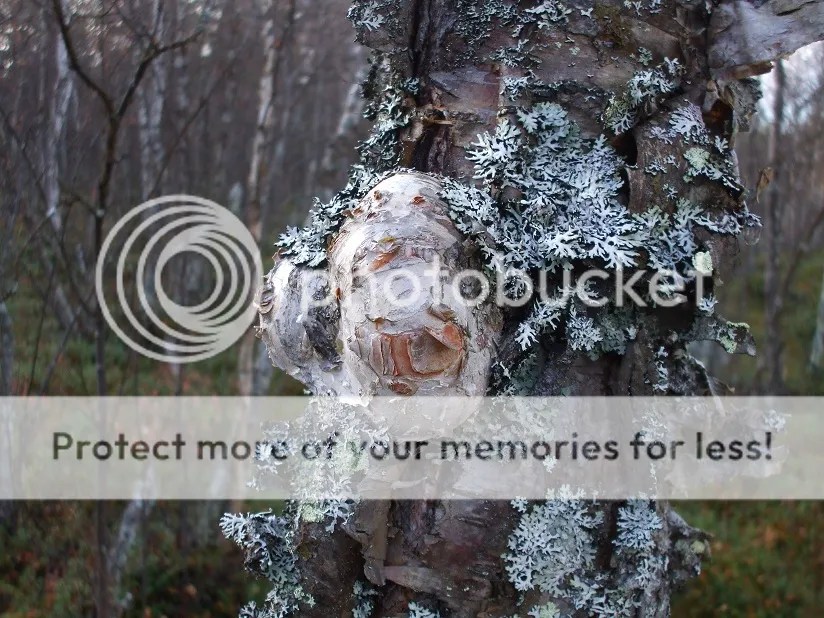
Birch burl

After some more hiking, the factor which would change the course of the trip for us became painfully apparent. Although my energy level was picking up, hauling my pack over the rough terrain began taking its toll on my left knee. The longer I went, the more it bothered me. We decided to take a break at a creek and make some food. It was at this time that I realized the fatal mistake I had made before the trip: not training properly on comparable terrain wearing a fully-loaded pack. After the fact, it sounds like such a simple and stupid mistake! I had based my expectations for this trip on previous on-trail experience. Oh well, live and learn. You can be sure I won’t make that mistake again!

You might think that this experience would push me in the direction of going ultralight, but I’m not planning to. I will make a few changes to reduce my pack weight somewhat, but the real culprit here was simply not being fit enough for the task, so I will start taking long hill climbs with a loaded pack as a frequent supplement to my regular daily exercise routine.

Anyway, back to the events of the day. We had stopped at a creek to eat and rest, and I collected some resinous pine wood to get the fire started. I cut thick feathers into the pieces the way I had seen Pasi do it. Make up three or four of these, hit ’em with a match and you’re in business. No other kindling or tinder necessary!

I decided to lighten my pack by using up some of the potatoes, carrots, onions and sausage I had brought with me, so I made a hearty soup out of them, adding a little salt and pepper as well.

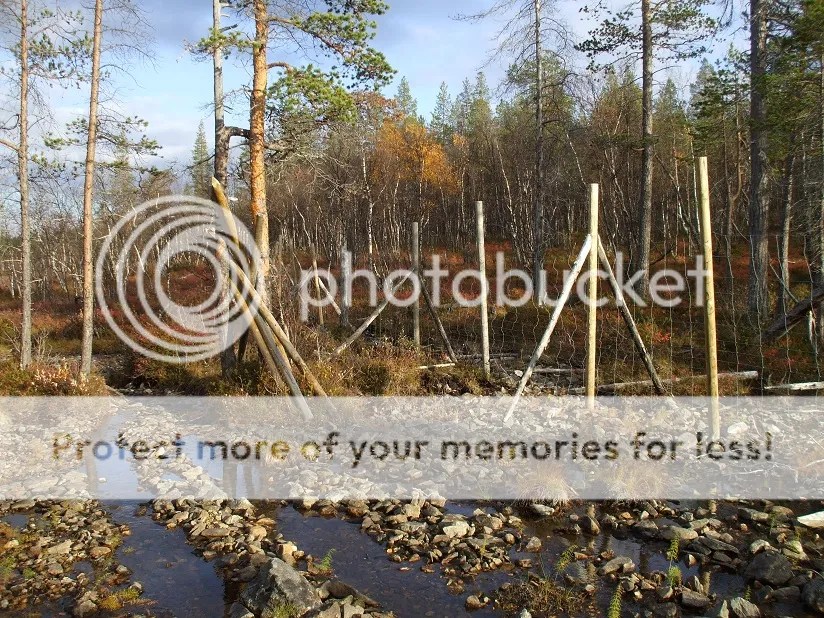
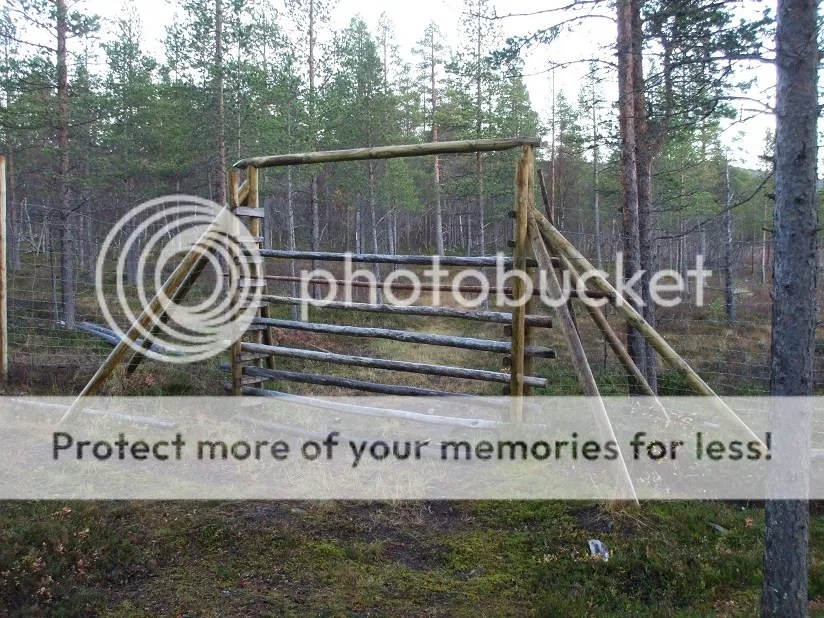
While eating, we discussed how we’d have to change our route if my knee problems persisted (which they did). Instead of a route through the park from the northern border to the eastern, we’d change course and make a loop, traveling back along the Vasko River to a place where we could cross it near our initial drop-off point. After finishing and packing up, we made our way through more pine forest and a reindeer fence on our way to the Vaskojoki open hut where we would stay the night.

By this point, the trip had been a mixed bag. The scenery and companionship were great, but the sometimes uncomfortable travel detracted from the enjoyment. In large part, the gear I had selected for the trip (most of which is part of my normal outfit) was serving me well. The Swedish LK-70 rucksack fit and carried well, but the straps slipped a bit from time to time, so I used a sort of twine wrap to keep them in place. I realized I should have brought a larger axe, as the small Wetterlings Mini was a bit underweight for splitting the twisted pine we used as firewood. My LHA model would have been a better choice, I think. The old standby of instant oatmeal proved once again to be a good choice for quick and easy meals, and the nut bars and dry-cured sausage I ate were a great source of protein with no cooking required.

Stay tuned for the second half of the trip report for more adventures, misadventures and great scenery!

New big knife from Finland: the Skrama

While perusing the website of Finnish outdoor and military surplus shop Varusteleka, I spotted a new knife of their own design which is now available: the “Skrama”. It looked interesting to me, so I decided to share it with you here. For the record, I don’t work for the company or anything like that, and this blog post was completely unsolicited. I’m just a satisfied customer who orders from them from time to time.

The Skrama:

Image linked from Varusteleka website

Somewhat reminiscent of the Taiter hukari, but much more refined, this new knife is a modern take on the seax or scramasax of the Middle Ages. It looks to be part axe, part knife and part machete and is billed as a multi-purpose bush tool. I’m not necessarily a big-knife freak, but this one appeals to me for some reason. Having some experience with big knives, it looks to me like it would work well based on the design and specs:

  • Blade dimensions: 24 cm (9.5″) long, 4 mm (0.16″) thick
  • Blade material: 80CrV2 carbon steel
  • Handle material: textured molded rubber over long full tang
  • Weight: 525 g (18.5 oz.)
  • Sheath: simple plastic blade cover (they say a leather belt sheath is in the works)
  • Current price: 65 Euro (about $85)

More info can be found here.

Image linked from Varusteleka website

I’ll be leaving for Lapland in two days and won’t be able to update the blog while I’m gone. Stay tuned!

Cabin restoration project – Out with the old

Alternate title: Don’t judge a cabin by its (wall) cover 😉

I didn’t think I’d be able to show you any progress at the cabin for a little while, but the opportunity came up last weekend, so the Woodsfamily loaded up the car with tools, gloves, dust masks and grub and headed out to the country.

The first step of the project involved going through the things in the house to separate the good stuff that could be reused from the junk that would be thrown away. We salvaged lots of kitchen items, cots, bed frames, cabinets, end tables, chairs, counter tops and suchlike. We put the salvageable items in the large room and the junk outside in a large pile to be disposed of. As I’ve mentioned before, the house is equally divided into a large living room/kitchen on one side and four smaller rooms on the other side. The part with the smaller rooms will become the restored cabin, and the large room will be converted into a terrace later on. So the items which have been salvaged will sit in the large room until they are ready to be cleaned and put in the restored cabin.

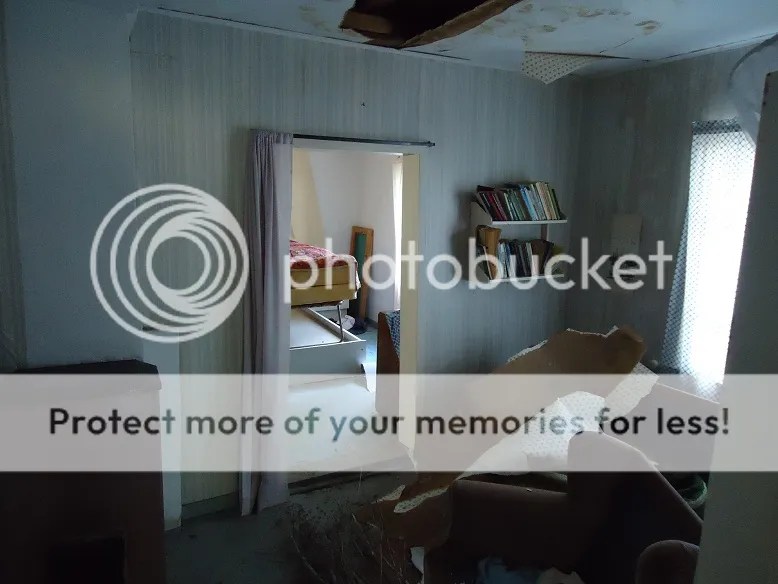
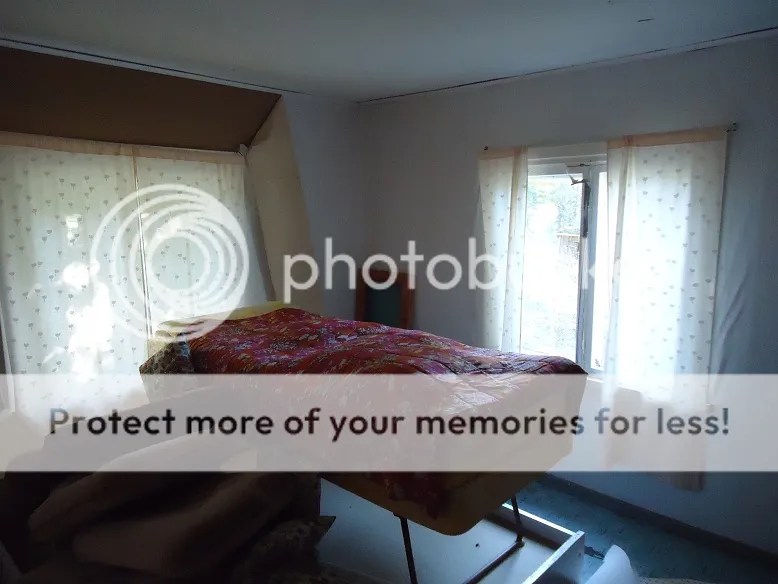
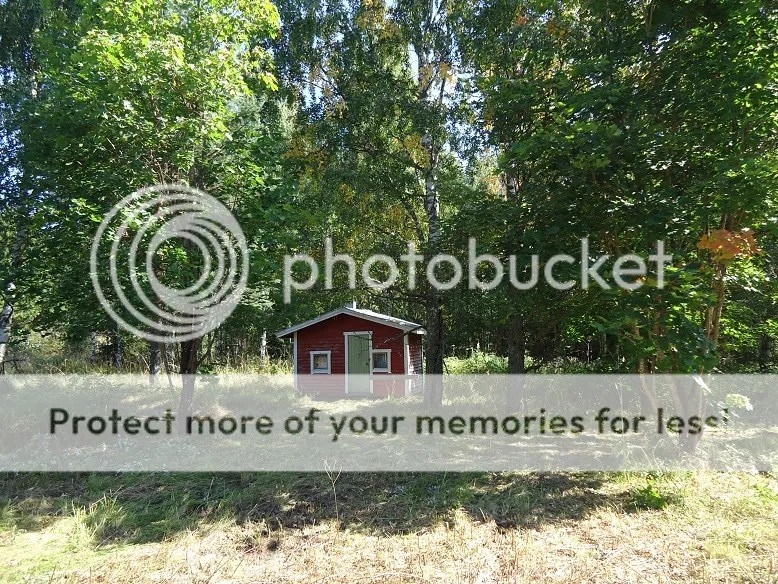
So you can get an idea of what we all had to work with, here are a few before shots:

As soon as we got the contents of the rooms cleared out, the fun could begin. Here’s what we found in the ceiling in the kitchen-to-be. It was like unwrapping Christmas presents. 🙂

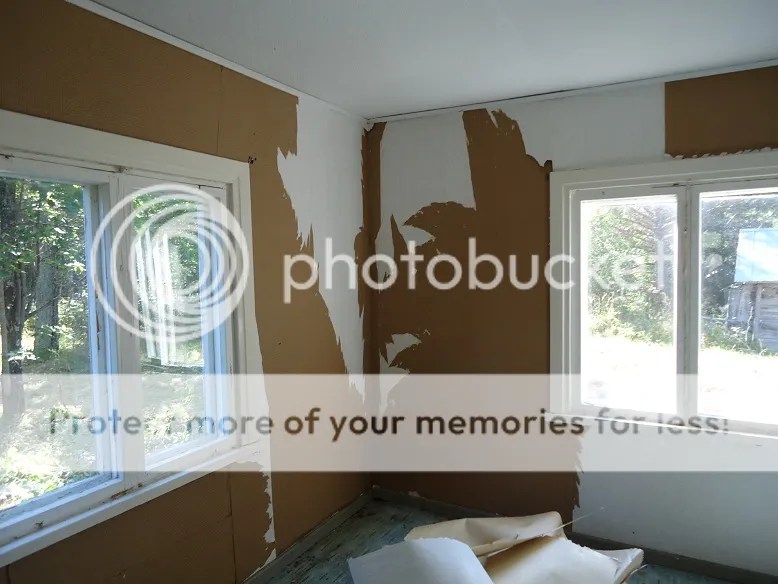
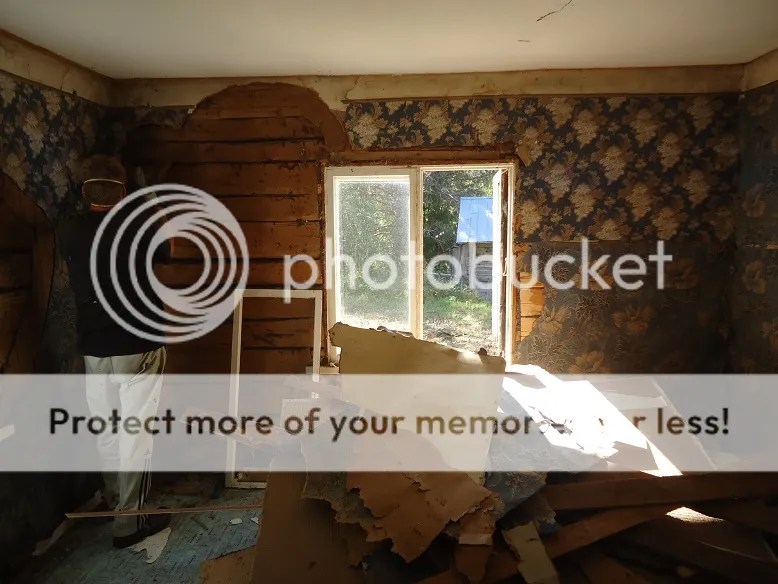
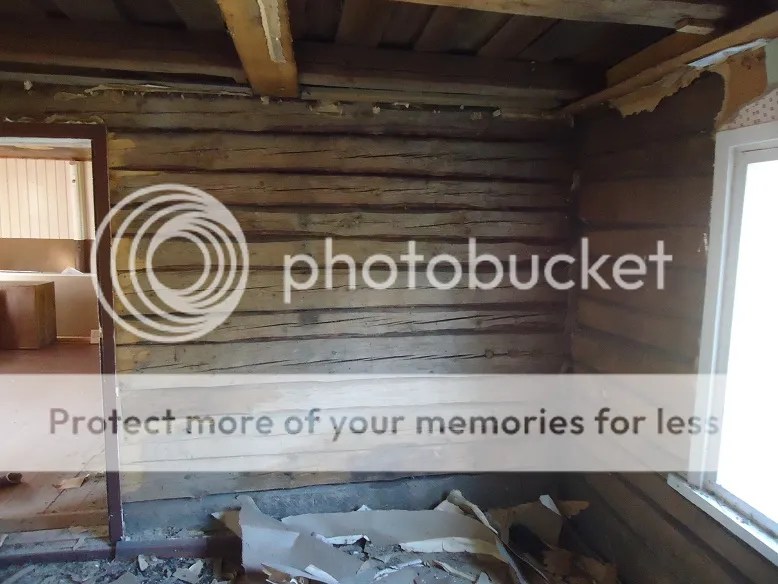
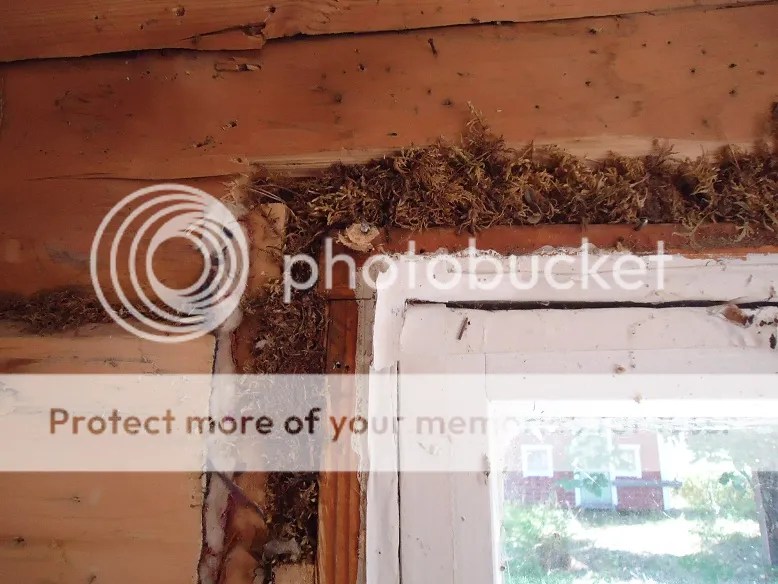
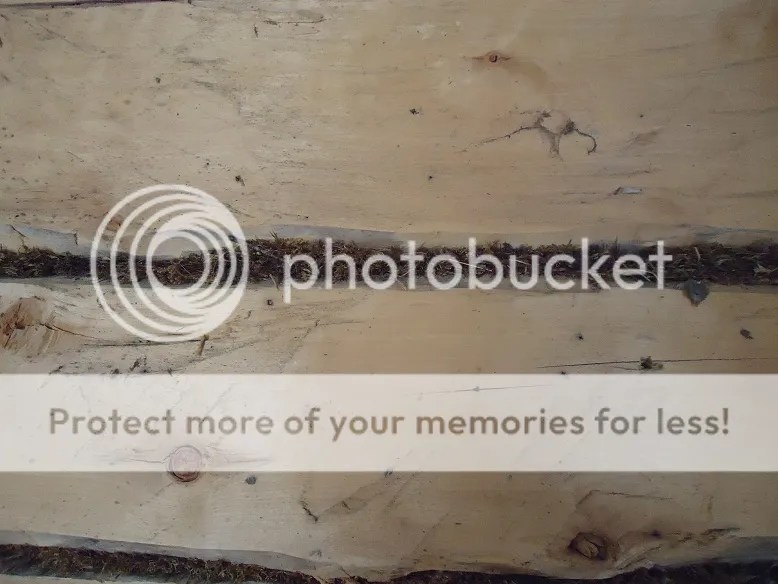
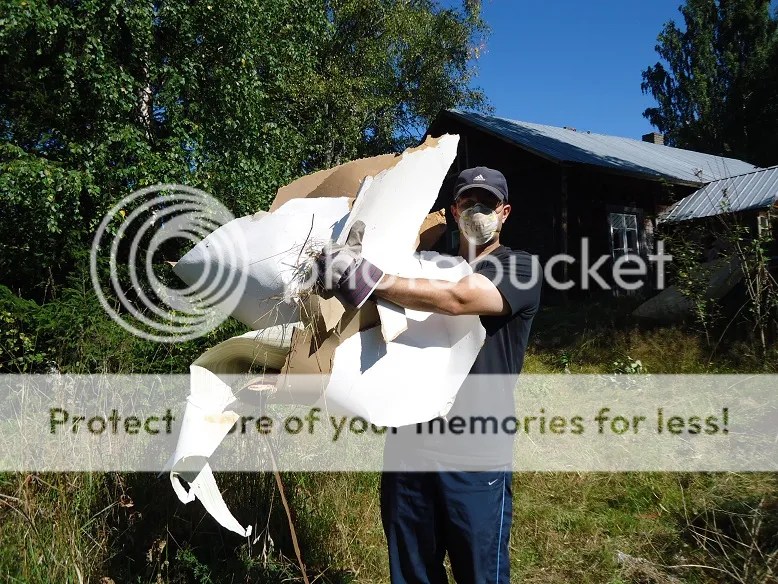
In another room, the walls were covered by newer wallpaper, some kind of fiberboard, old floral wallpaper and thick brown paper. Yes, that is sphagnum moss between the logs!
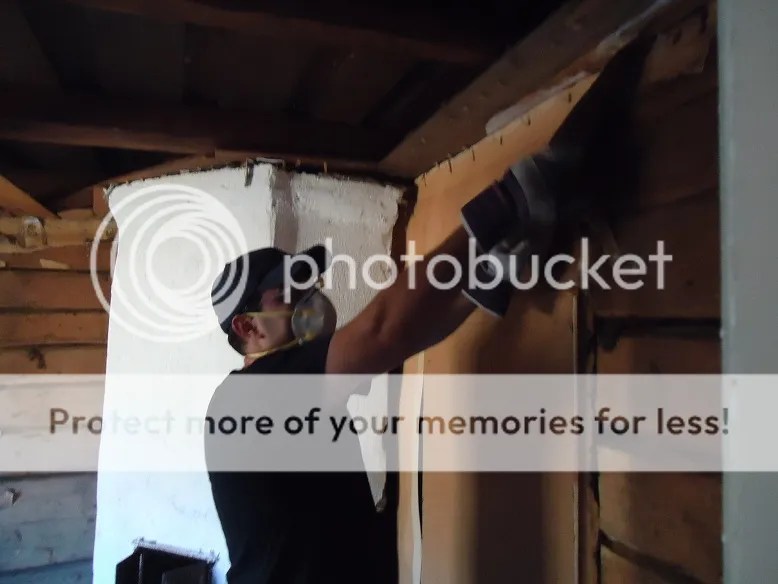
Yours truly, tearing the place apart. 🙂

Making progress.

Some of the Woodsbabe’s relatives helped out a lot as well. Check out this old wallpaper.

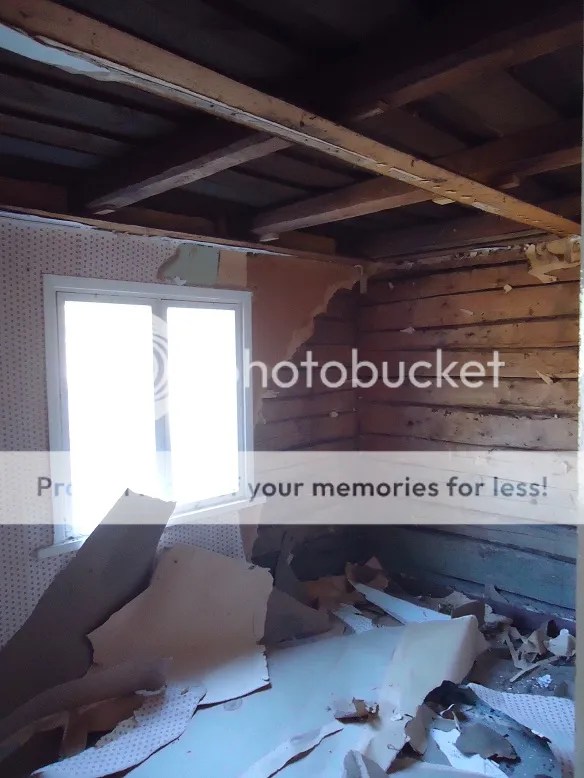
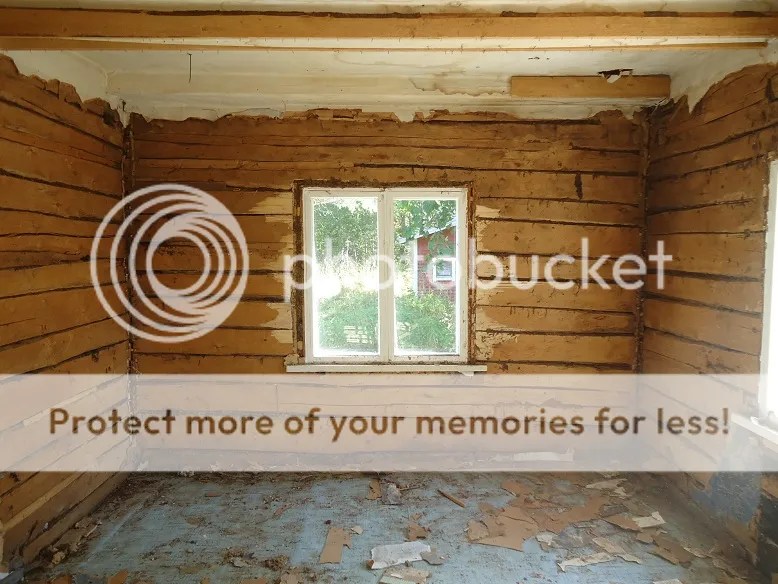
After several hours of work, this is what the place looked like.

More sphagnum moss.

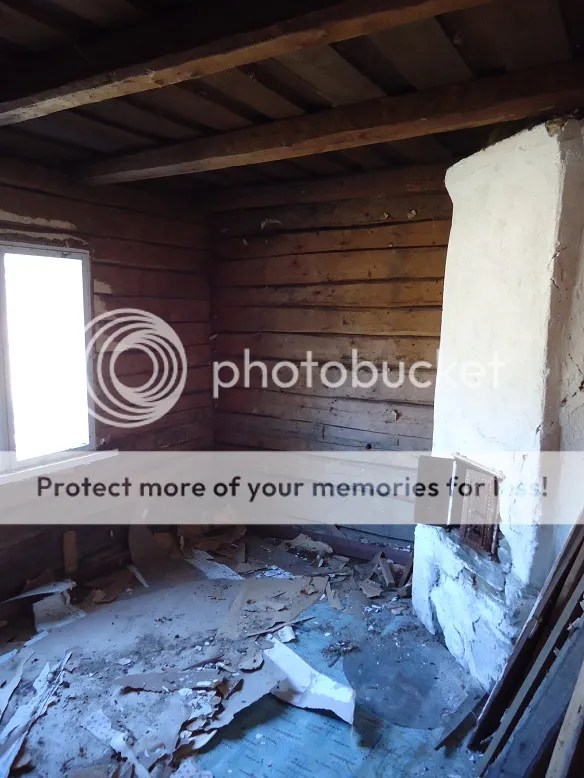
As I mentioned before, the floors will have to be replaced. Here’s one reason why.

The big room will hold a lot of stuff until the cabin is ready.

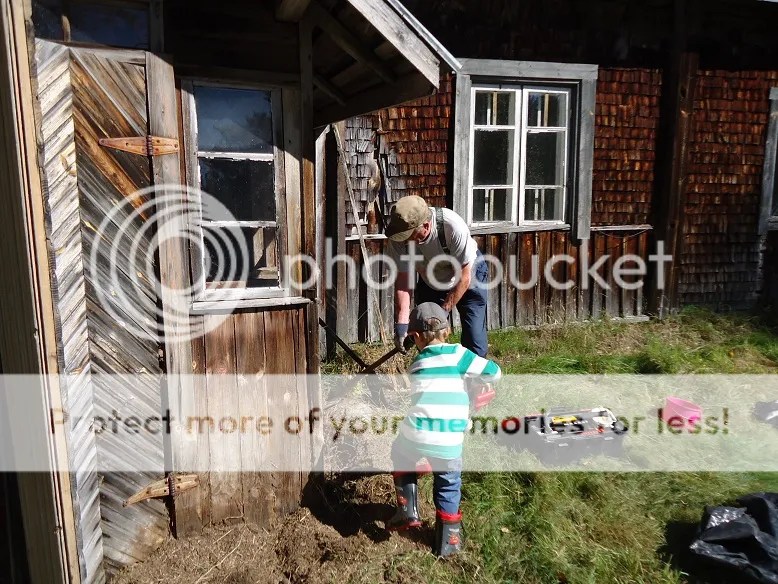
While some of the grown-ups were busy tearing rooms apart, the Woodsboy helped great-grandpa remove a large anthill from the vestibule.

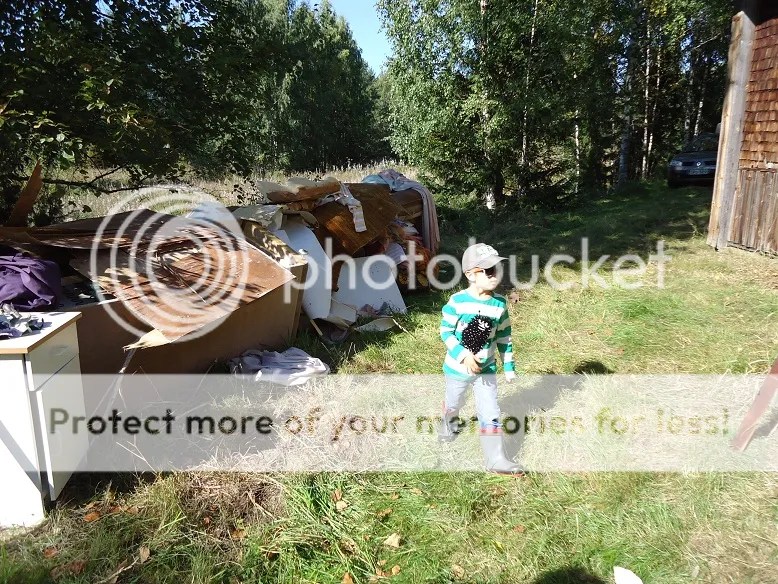
He also helped move some non-dangerous junk outside.

After stripping the walls, we threw the junk out the window, which we then moved to a pile away from the house.

The Woodsboy’s great-grandpa has started to clear away the decades of overgrowth from around the house. The place is really starting to look more like a yard and less like an abandoned lot!
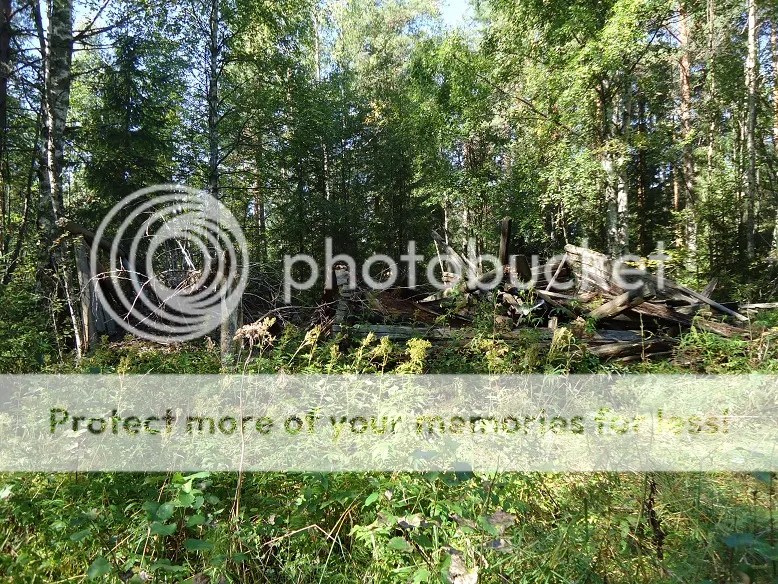
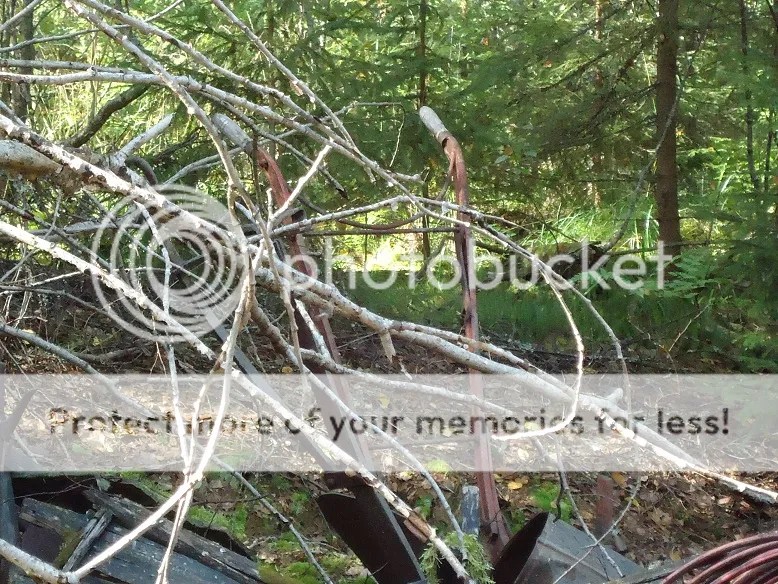
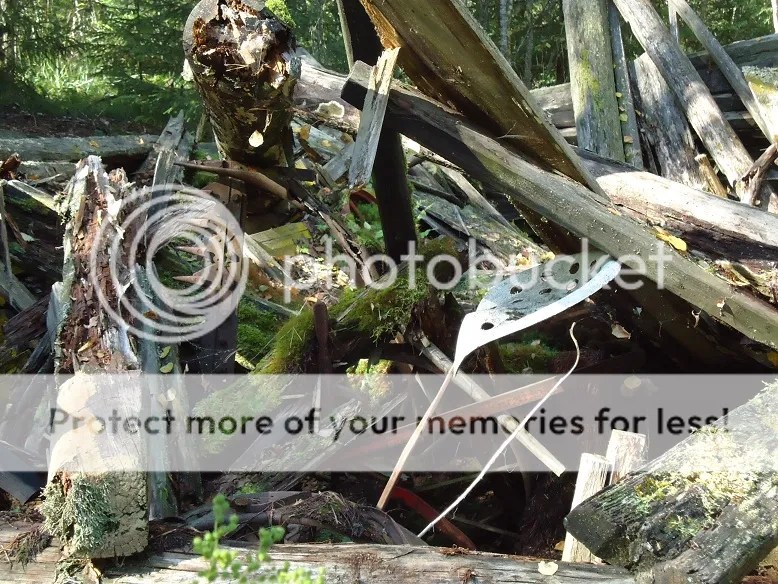
I know some of you are waiting to see pictures of some of the goodies we’ve found at the house, so let’s get to it. In one corner of the property, we found an old log building with antique plows sticking up from the rubble.

Eventually, this heap will be turned into firewood and decorations. 🙂

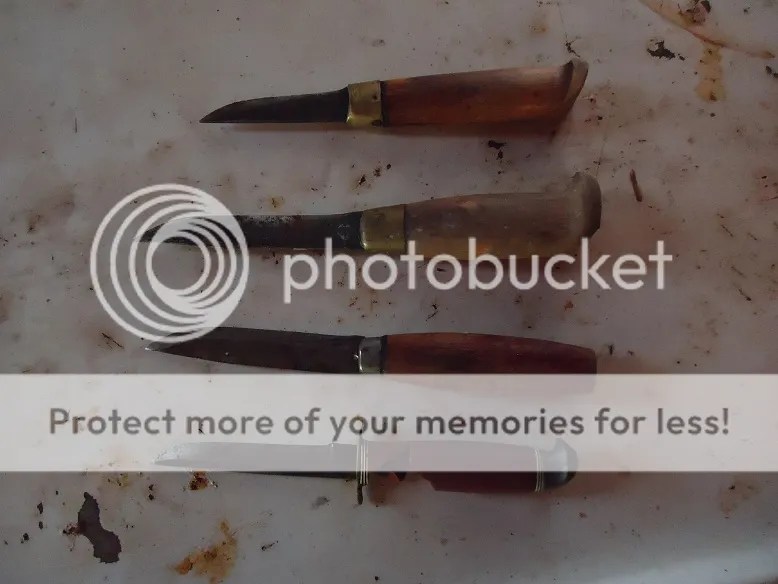
Last, but not least, here are some of the knives we’ve found so far. The top two are traditional Finnish puukko knives, the third one is an old Mora from Sweden and the bottom one is some unidentified older knife.

In addition to these things, I also found a wild plant identification book from 1968 in great condition. It’s specific to Finland, which is awesome, because I’ve been looking for a book like this for years.

By the way, if you’d like to see how buildings like the one above were made in the old days, check out this post.

Have a great weekend!