Cycling down the Danube – five days from Vienna to Budapest

At 1770 miles in length, the Danube is the second-longest river in Europe. On its journey from the Black Forest in Germany to the Black Sea, it borders or passes through no less than nine different countries. Our 210-mile, five-day tour took us from Vienna to Budapest, passing through a stretch of Slovakia on the way. The two most popular sections of the Danube to cycle are this section and the earlier stretch from Passau to Vienna. It was Junior who inspired this tour with his request to ‘cycle tour for longer than my previous two-day rides, but on a route which must be flat.’ Thus, continental rivers and canals came to mind. I hoped he would also enjoy passing through three countries and three capital cities on the route.

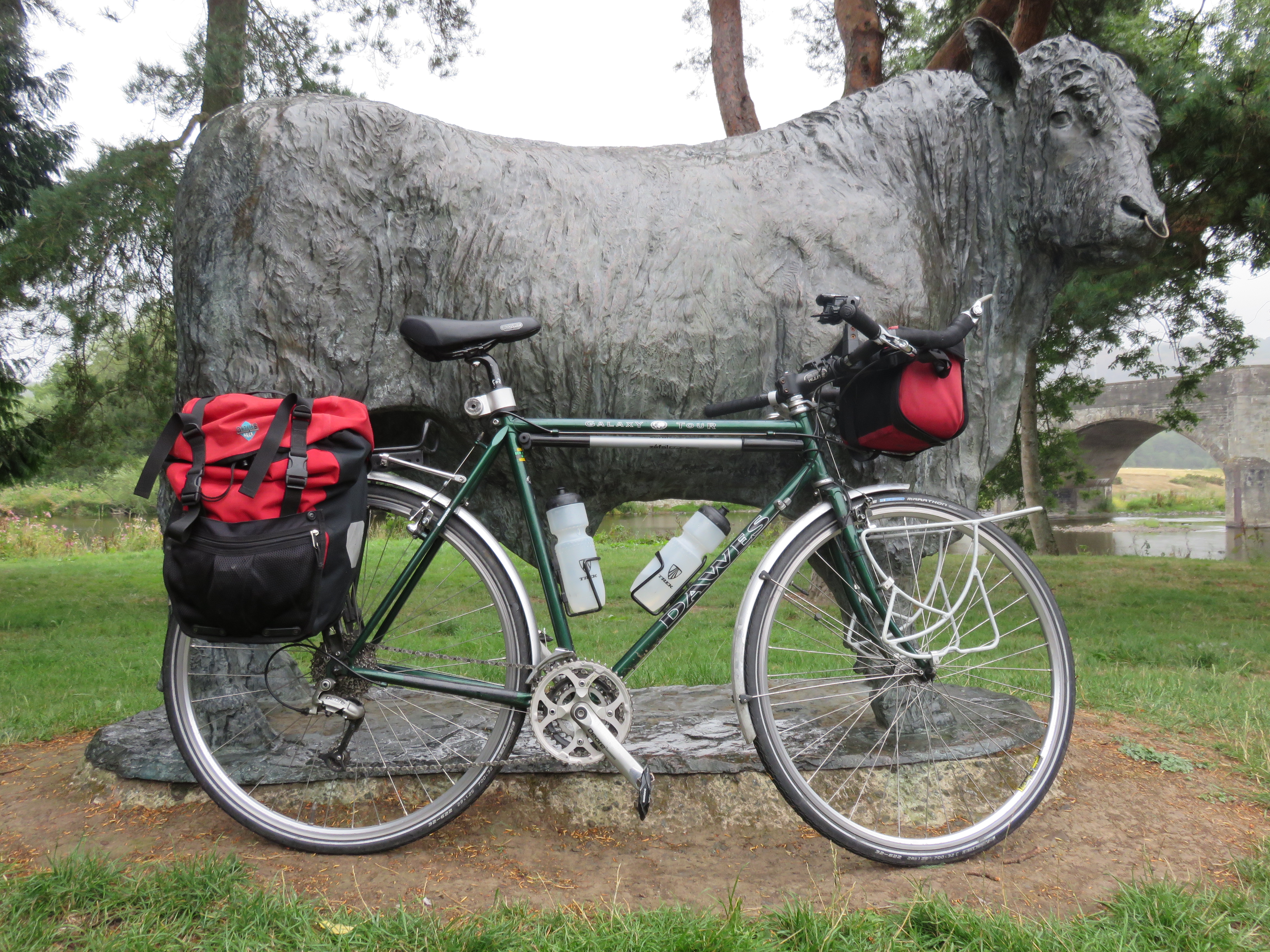
We hired two bikes from Pedal Power in Vienna, and flew my Dawes Galaxy out with us as no one offered a hire bike which could take four panniers, and we needed all of this space (plus two panniers on Junior’s bike) to carry a family’s worth of camping and cycling gear. Pedal Power were excellent, really down to earth, helpful and non-bureaucratic. This set them apart from the other options we contacted. Mrs W had an e-bike to help protect a weak knee and this worked out really well, and again, to protect her knee, she was just carrying food for the day in hand.

Day 1 – Vienna to Hainburg an der Donau – 33 miles

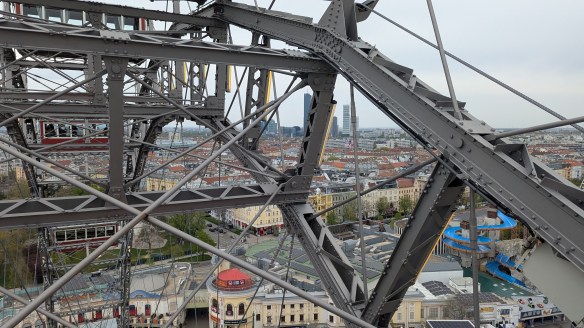
The day started on the Micampa campsite next to the Danube and a stone’s throw from the Donaustadtbruke underground station. We had arrived the previous evening, and Mrs W cooked dinner whilst I extracted my bike from its bag and reassembled it. Early on day one, we stashed my bike travel bag in the campsite shop storeroom and, as I pedalled towards the centre of the city, the rest of the family set off on foot for the underground station. We arrived within minutes of each other at Pedal Power on Bösendorferstraße, where we picked up our pair of KTM hire bikes. We were very glad to have a pre-plotted route on my Garmin to thread our way back out of the city. Also good was the excellent cycle path network. On reaching the edge of town, we entered the Prater. Formerly a royal hunting park, it was given to the people by Emperor Joseph II in 1766. Today, this is a large green area of parkland, within which is an amusement park filled with vintage rides. When we returned to Vienna at the end of our trip, we took a ride on the 65-metre-tall Ferris wheel, itself built in 1897 and the world’s largest example until 1985.

Crossing the Danube to the North Bank was fun as a cycle lane had been retrofitted underneath the Praterbruke autobahn bridge. To join (and then exit) this involves cycling up (then down) a spiral ramp, something I’d never seen before. The second section of cycle path from the island to the far bank looked like the Rainbow Road track on Mario Kart which made Junior smile.
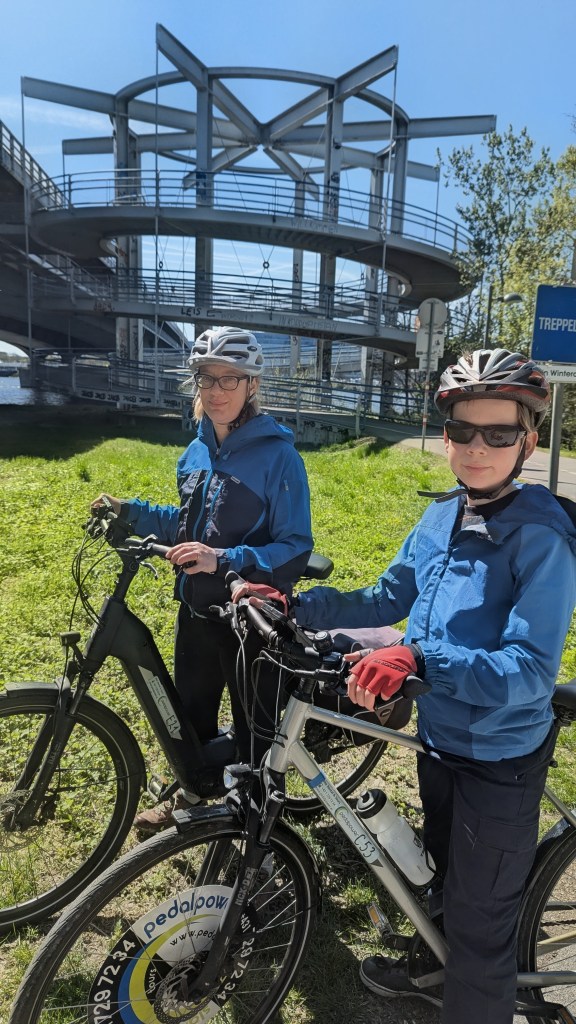
Mario’s Rainbow Road

We were now on the Eurovelo 6 cycle route and right next to the river for three miles. Adding interest, our route then took us through an OMV oil refinery. OMV had been one of the customers for the sulphur-removal absorbents whose manufacturing plant my team and I supported from 2007–2014.
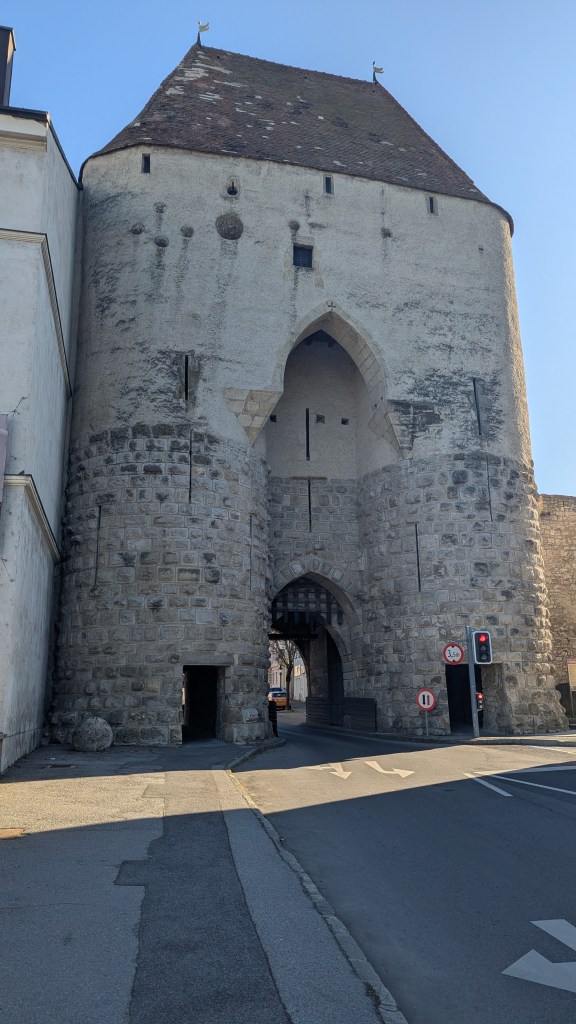
The route then took us along a dyke across a broad plain. We were away from sight of the Danube for some while. We stopped on the outskirts of Orth an der Donau and one of us headed into the town to top up our water. We waited right next to a Pfizer manufacturing site whose primary product was the vaccine to protect against Tick-Borne Encephalitis, a jab we had all had to prepare for this trip! We passed through woods and fields on a perfect cycle path, only passing two villages before we were opposite Hainburg and heading next to a busy road for a bridge crossing to this Austrian town on the South Bank. The only campsite in Hainburg was closed until 1st May (a common date for many campsites to open along this route). We had thus needed to opt for a room in a hotel, itself a former monastery. The price for a family room was very reasonable and the quality of the hotel both excellent and a lot higher than I was expecting for the money. Formerly on the very edge of the Roman Empire, the town had very attractive fortified ‘gates’, like the those in York, and a castle.

Day 2 – Hainburg an der Donau to Vokja (Slovakia) – 32 miles

The start of day two had us cycling through a number of attractive small villages on the South Bank. After ten miles, we crossed the border into Slovakia and a further two miles brought us to the UFO bridge carrying road traffic into Bratislava. A typical example of Soviet architecture.
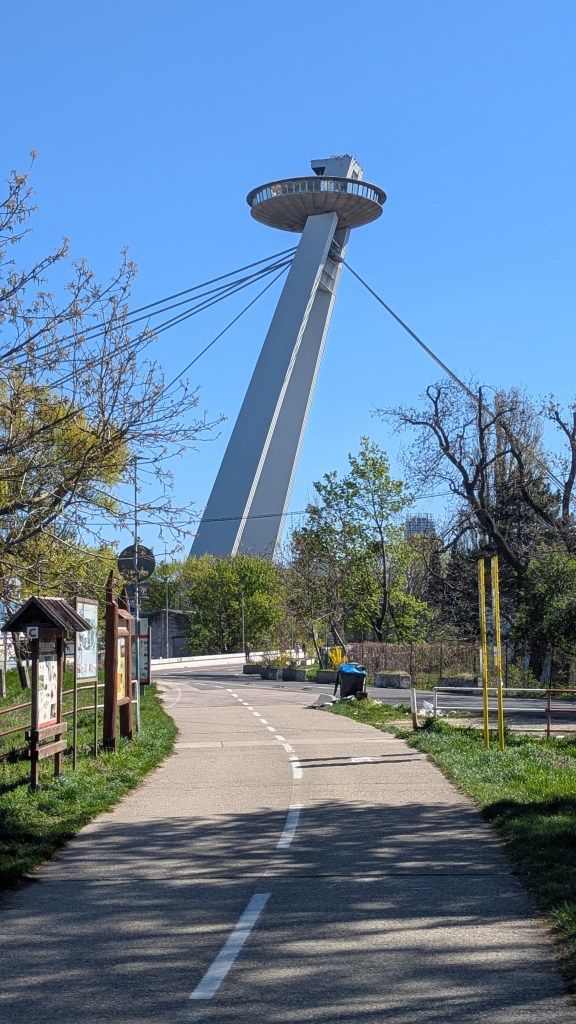
Just over a mile later, we reached our cyclist-friendly bridge and crossed into Bratislava. We didn’t stop to look at the city; instead, we stocked up on food for lunch and headed on, initially next to busy roads, and then around areas of abandoned docks until we were free from the urban sprawl. We now encountered a few miles of attractive woodland and a mighty tailwind. The wind was a blessing until we wanted to stop for lunch when we descended from the dyke on which we were cycling to get into a sheltered sunny spot for lunch. Soon after lunch, the route returned to the river bank and was free of trees, affording some of the most attractive riding of our tour. We now had to keep our eyes open for Kyselica, which was where we could get a ferry to the opposite bank.

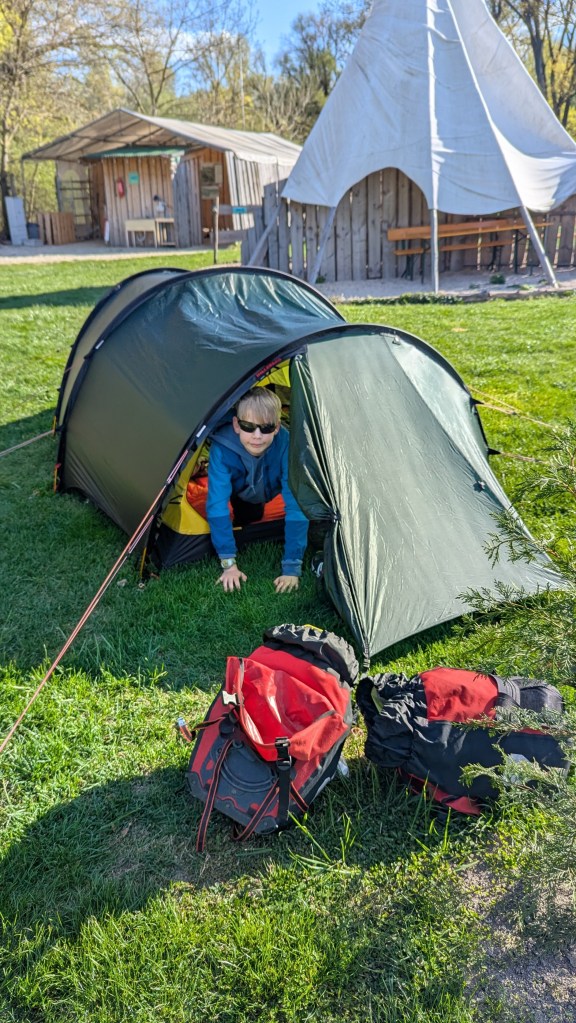
Remarkably, it was a local authority-provided ferry and thus free. We crossed the river to find the only campsite open in April in the area, Kemping Vojka. A lovely host, offered us a very nicely equipped site which we had entirely to ourselves.
Day 3 – Vokja (Slovakia) to Komaron (Hungary) – 49 miles

We awoke to another beautiful sunny day after another rather chilly night, with temperatures dropping to around 2 Celsius once again. Great efficiency was required to get the family packed up and on the road in time to catch the 0830 ferry back to the Northern bank of the river.

We enjoyed cycling right next to the Danube again for a further 16 miles. The cruise boats we passed were massive, and we soon met a pair of locks in the river of the same huge scale as the boats. These was there to facilitate the Gabcikovo hydroelectric plant.
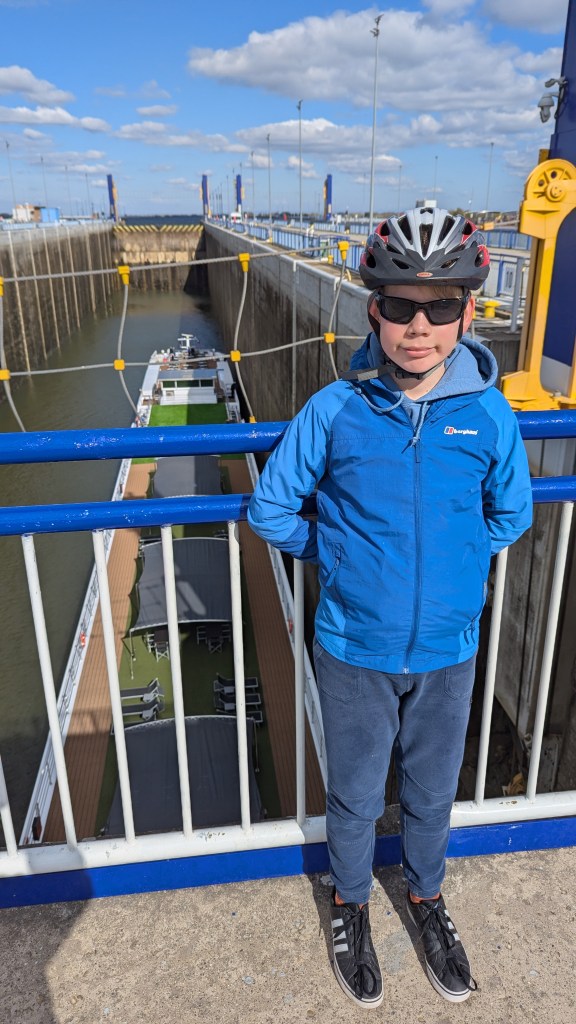
Junior and I marvelled at the operation of the lock but, once we’d seen one boat pass through, the strength of the cold wind got us wanting to pedal again to warm up. Five miles after the lock, we had to say goodbye to our river view as our route headed into another forested area. At one point, we came across one of the rare stretches of unsurfaced route which was actually quite rough for touring bikes. Thankfully, there was a very quiet road running directly next to the dyke, so we dropped down onto this for a few miles.

We met the river again on the outskirts of Komárno. Here, we hunted for somewhere to buy some sleeping bag liners to help fight against the cold nights, which were 5 Celsius below the forecast we used when packing just a couple of days before leaving the UK. The outdoor shops failed us, being more focused on selling trainers and very poorly rated sleeping bags rather than anything useful. Amazingly, Tesco came to the rescue where we bought some cheap fleece blankets which were just the material we were looking for, just not sewn into bag liners. These made all the difference for the rest of the trip. Our proposed campsite that night was across the river into the sister town of Komárom, Hungary. Remarkably, the obviously former-Soviet holiday camp offered family camping for the equivalent of just £5 per night, but with an even colder night forecast, and to ensure family comfort and harmony, we booked a room in their fixed accommodation, again for an extremely reasonable price.

Day 4 – Komárano to Szob – 50 miles

This was probably the least interesting and most challenging day. The guidebook we were using recommended following the route on the South Bank. I cannot know what the route on the North Bank is like, but I’d say there was a > 90% chance that it would have been more attractive and less plagued with heavy traffic. Much of the route was either on a road busy with commercial traffic or on a narrow cycle path right next to similar roads. Whilst we had been delighted with how much better the condition of the roads had been in Austria and Slovakia in comparison to home, the roads of Hungary reminded us of Lancashire. Many sections looked like they had been used for training new aerial bombardiers! The highlight of the day was the architecture of Esztergom, the last big town before we reached our campsite at Szob.
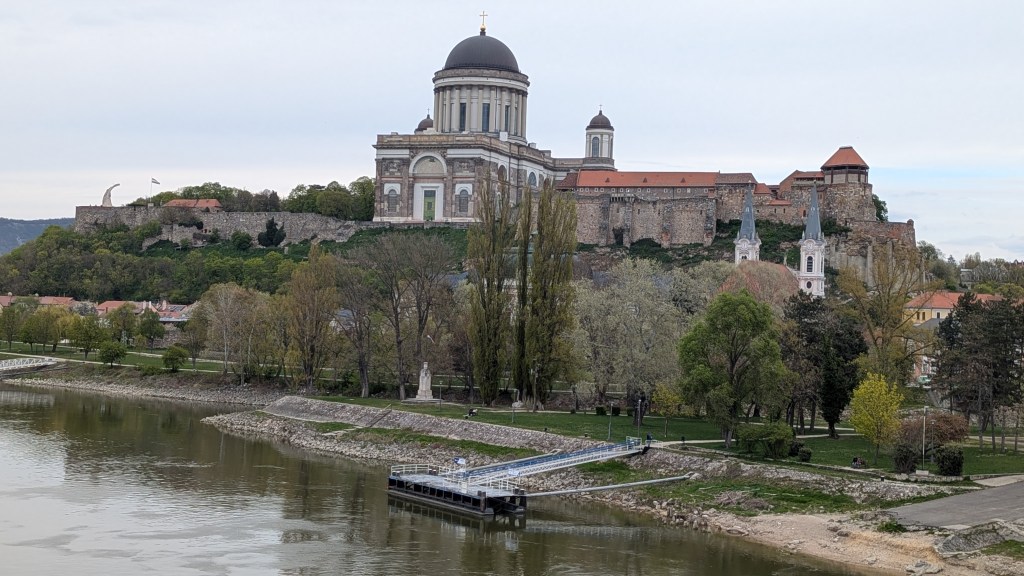
I’d not recommend Szob in the off-season, we’d decided we would eat out as a treat at the end of a warm, dusty, noisy day but both of the village’s restaurants were closed, despite Google thinking otherwise. When we arrived at the campsite, it was all locked up and the phone number on the wall of the reception was out of date. This despite having contacting them a few weeks in advance. Thankfully, one of a group of guys gathered outside the house opposite clearly understood our plight and rang the site owner on our behalf, who came and unlocked it. The price was high for such a basic site and the temperature dropped rapidly as soon as the sun set, so using a pair of ovens as space heaters (an ill-advised practice), we managed to get some warmth into the kitchen area for a dinner of tinned fish, rice and (formally) frozen veg, all that could readily be turned into a meal from the village shop.

Should you cycle this way, it would be well worth taking a punt and following the route on the North Bank and crossing the bridge at Esztergom to try one of the sites just east of the city which open after the first of May.

Day 5 – Szob to Budapest – 49 miles.

Thankfully, our tour ended excellently. The morning of Day Five was probably the most attractive section of the route, thankfully traffic-free and keeping close to the river for the whole morning. We had small farms to our left, then to our right the river and beyond it lovely hills reaching to 450–500 m, a contrast to the plains of the first two days. On our mid-morning break, we were delighted to see a farmer pass us with a pair of horses pulling a cart. Whilst the tariff for horse-drawn vehicles had been listed for all our ferry crossings, this was the first equine-powered transport we had actually seen.
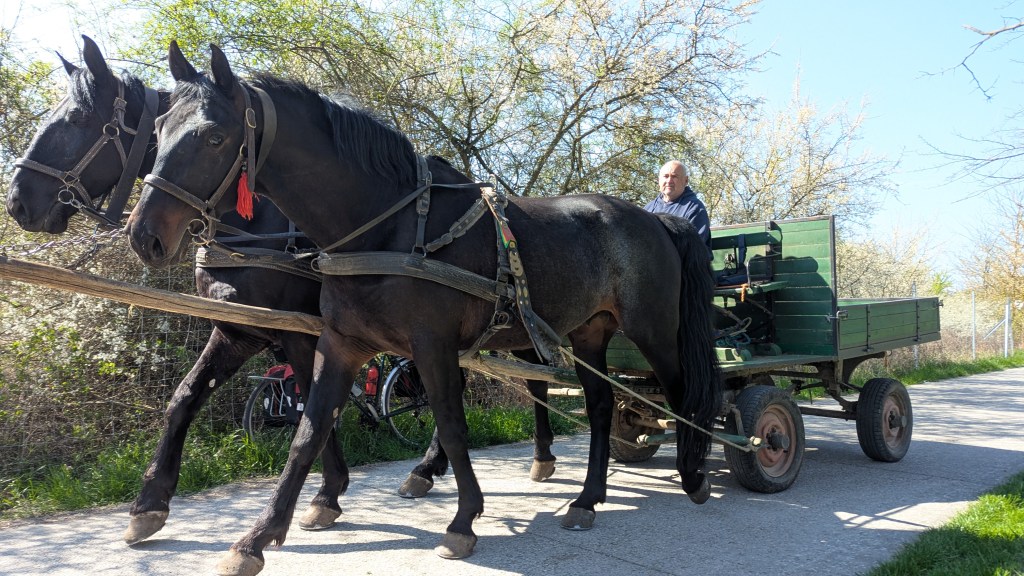
We were now passing round the Danube Bend and just before lunchtime we rode next to towns clearly aimed at the local tourist trade which were both attractive and full of life. Until this point, we had managed without the use of any local currency, with everything paid for via our cards. Having passed through two countries like this, we decided not to bother getting any Hungarian Forints. This proved a challenge when it came to our final ferry crossing. Here, they only took cash. They were prepared to take Euros but only at a highly inflated rate. The price in Forints equated to around seven Euros, rather less than the twenty Euros we were asked for by a very grumpy ticket agent. I suspect this went directly into his back pocket too…

We were now following a minor branch of the Danube and riding through the dappled shade of trees whilst still getting regular views of the river. The guidebook warned of several rough sections of the Eurovelo as we cycled through the nature reserve adjacent to Budakalász, but the route had been beautifully resurfaced and proved very popular with families on bikes and adults on roller blades. Coming out of this attractive green haven, we entered an area full of cafes and food cabins which were doing great business. To avoid the crowds of people, we chose the road one block back from the river and were soon taking a castellated path into the centre of Budapest. Our time on the Eurovelo 6 ended outside the Óbudai Museum, next to which is a column erected to thank God for the end of the bubonic plague of the early 18th Century. We thanked God for a great family holiday.
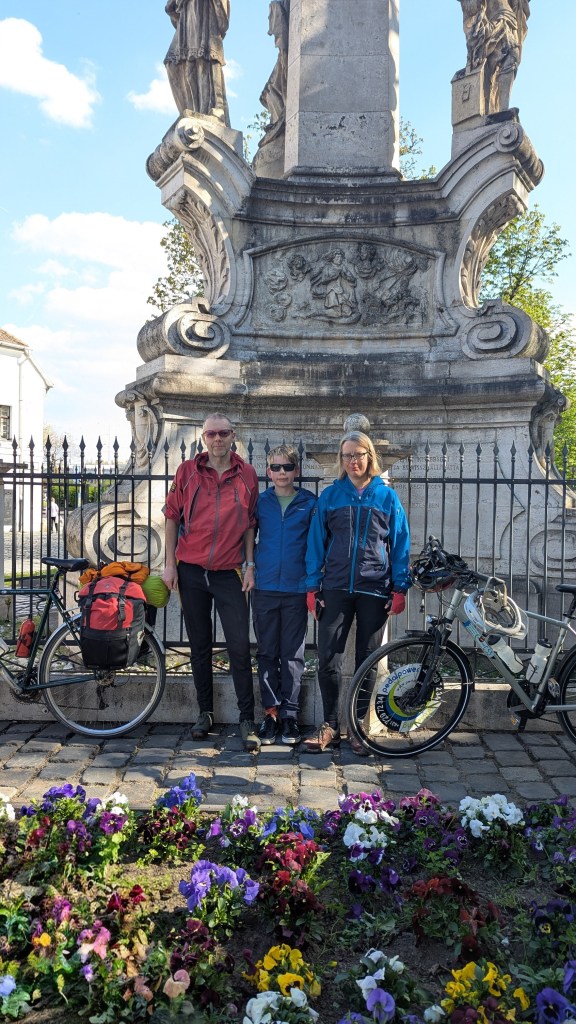
This was almost the end of our trip too, we just had to pick our way across the city to the Arena campsite. Remarkably, still a further seven miles. Once again, we hoped to eat out, but the distance to any restaurant from the campsite was just too far, so I headed off to find us some Gyros, a Greek-style kebab we’d seen stalls selling all over Hungary. The offering from Gyros Neppa was really good and generous in quantity too, just what cycle tourists need at the end of the day.


Days 6-7 – Seeing the sights of Budapest and Vienna

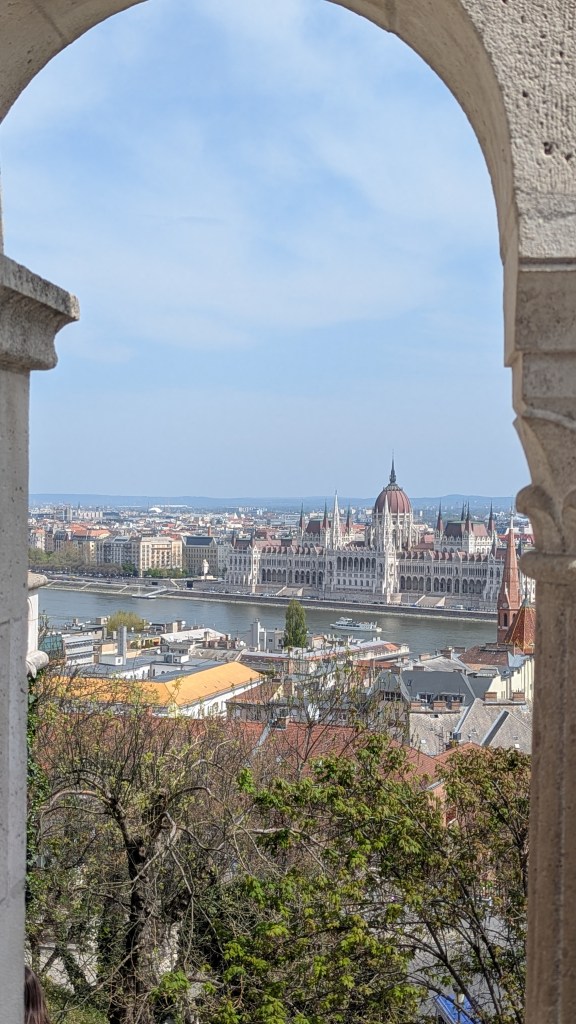
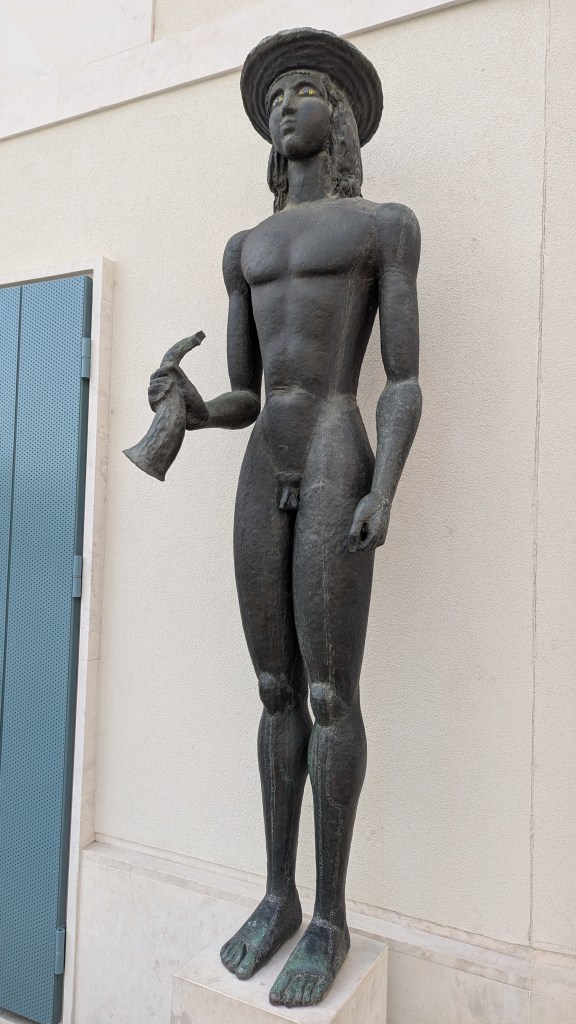
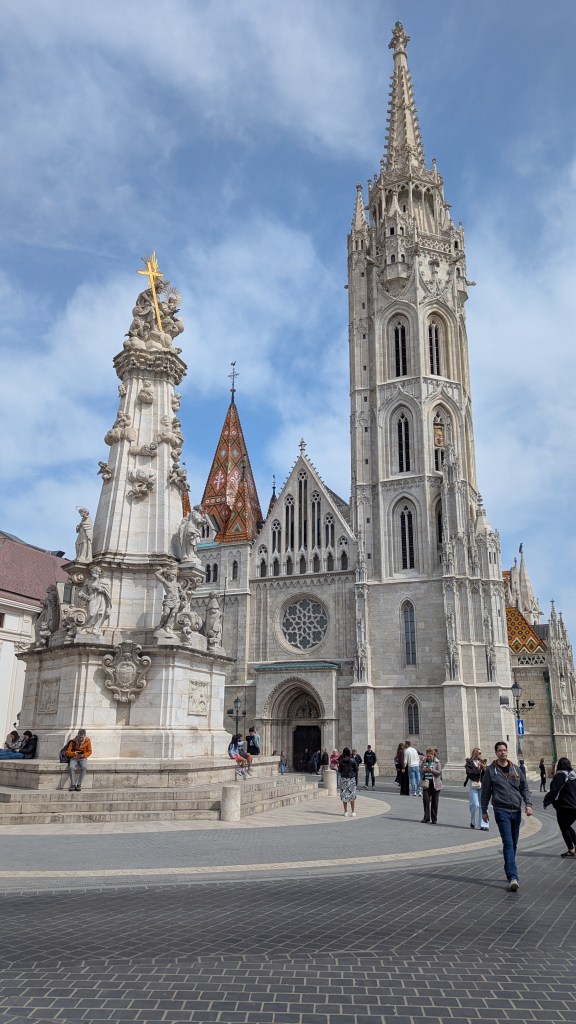
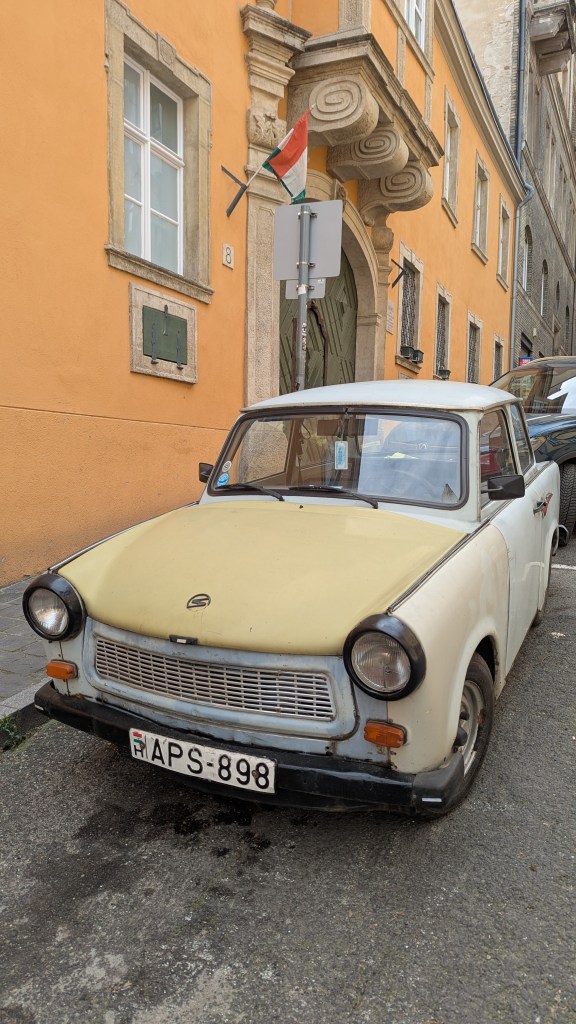
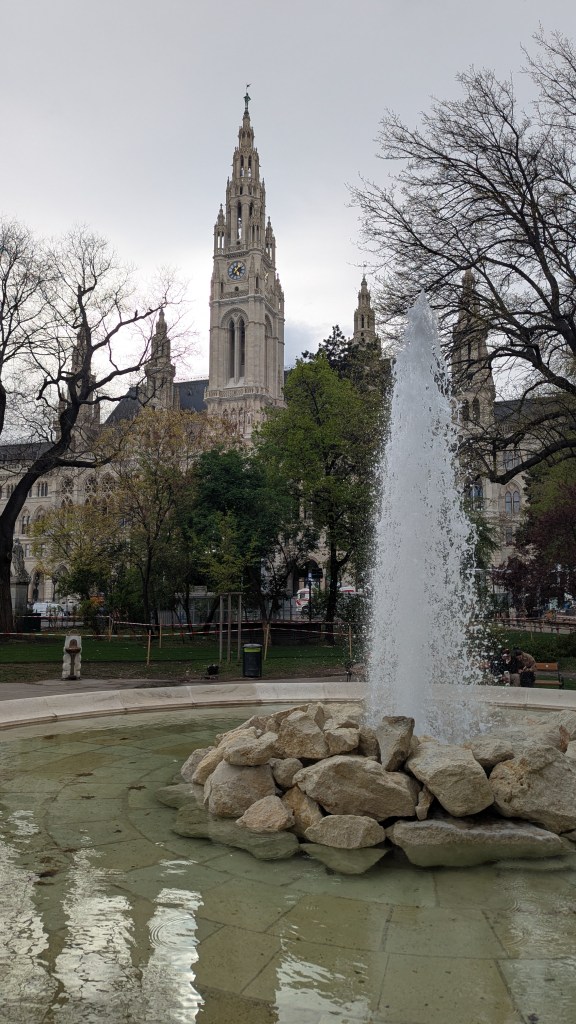
The following morning, we packed up all our kit and cycled to the central railway station. Not that far from the campsite but still quite far from centre of the city. The left-luggage lockers were huge and well priced and just outside the station entrance was a secure place to lock the bikes. After taking a metro train to the Parliament Building, we started on a walking tour of the highlights of the city. I’ll let some photos tell the story.
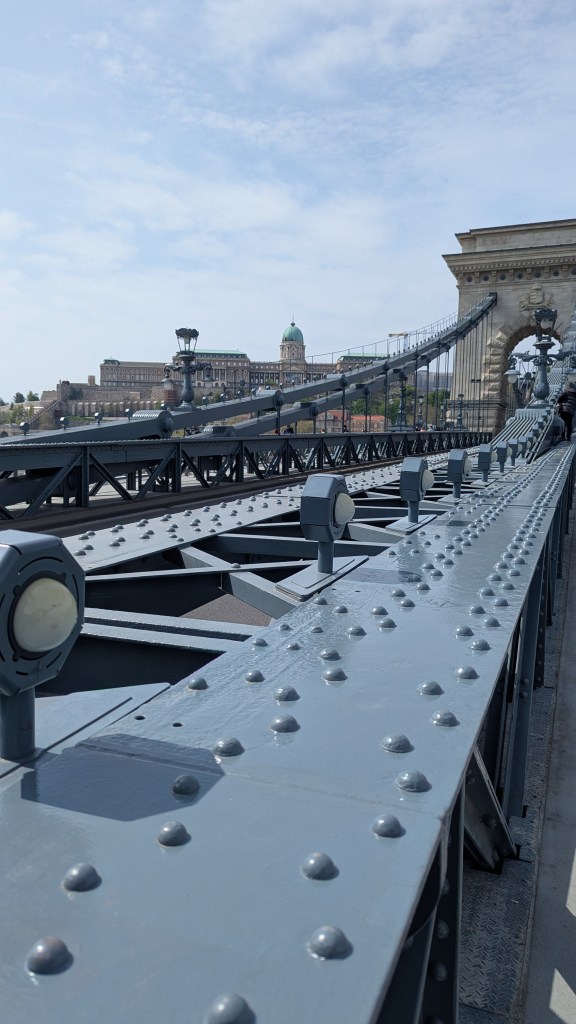
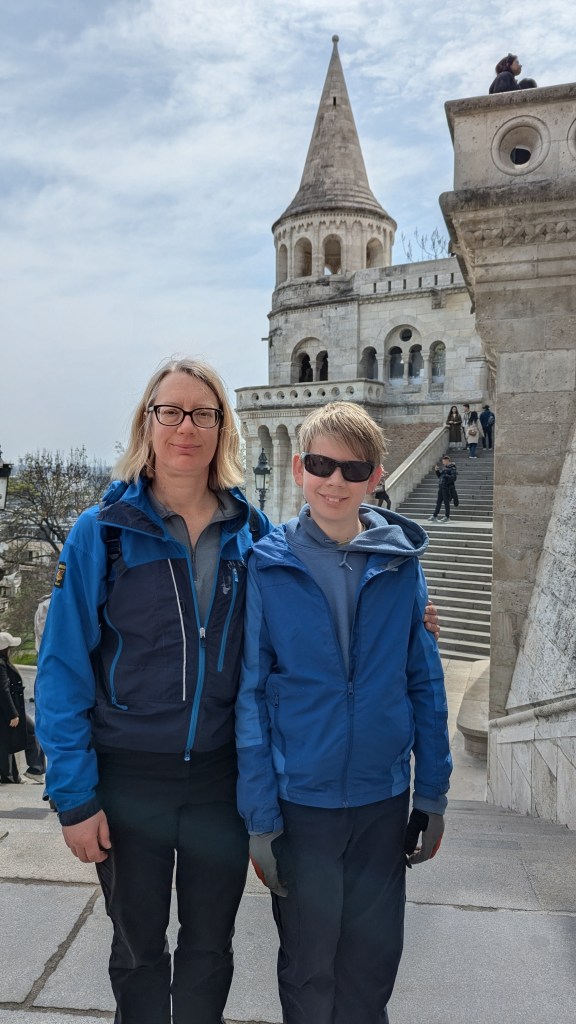
  • The Chain Bridge
  • Fisherman's Bastion
  • Parliament Building
  • Chilly Chappy!
  • Matthias Church
  • Matthias Church
  • Trabant
  • Liberty Bridge

After lunch in the very attractive central market, it was time to get onto our pre-booked train (essential if you want to take (three) bikes on trains that carry a maximum of up to five bikes) and head back to Vienna.

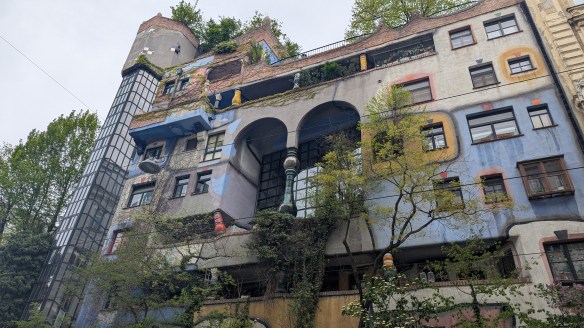
The next day, we had a whole day to explore Vienna, and again, as is the ‘Weston Way’, set about a walking tour to see the many interesting buildings in the city. We had an excellent lunch of falafel and vegetable side dishes from an enthusiastic stall holder in the Naschmarkt. Again, I’ll let our pictures tell the story.
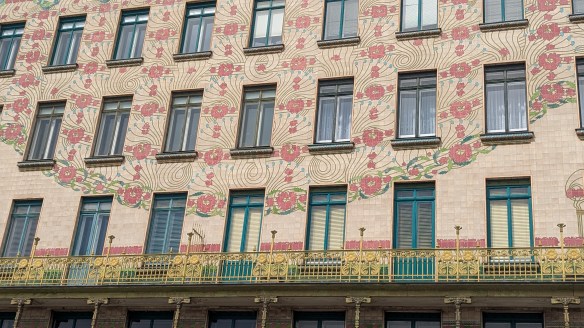
We had enough lunch left over to provide for our tea, well enough once we had bought some generous slices of Vienna’s famous Sachertorte for dessert. Oh, the wonders of how many calories you burn on a cycle tour! The day ended in truly spectacular style as we had booked tickets to see the Creation sound-and-light show which is performed inside the Votive Church. The interior neo-Gothic architecture was ideally suited to a light show. The lighting and projections were indescribably amazing, so I’ll not attempt a description! Instead I’ll share some photos taken during the performance. A spectacular and fitting end to a really enjoyable family cycle tour.

Whilst it’s true that I’ve cycled through more amazing scenery, for a tour > 80% traffic-free and flat (subtly downhill on aggregate as we were riding downstream), it was really enjoyable. It would probably have been better to go in May rather than April for a greater choice of campsites and warmer nights, but we needed more than a week in total so this was the slot that school holidays allowed. June to August would have been too hot and too busy. We had a week totally without rain, so were amused (if that is the correct term) to think that I’d lugged a whole pannier of waterproof gear for five days just for the pleasure of the exercise.

I’m going back to three wheels

IMG_6985

I’ve loved six years of recumbent cycling but for touring I’m going back to a diamond frame now I’ve found how to make one comfortable again with Crazy Bars.  Thus my two two wheel recumbents are now up for sale to raise the cash to buy an ICE VTX for super fun, super low day rides.

Currently on Ebay but also available privately:

Streetmachine here

Metabike here

Inspiring the next generation of cycle tourists – a mini tour to the sea

dsc_0125

I enjoyed a lot of time outdoors as a child, but my wildest camping spot was within feet of my parents caravan and longest bike ride was 10 miles with a break in the middle. I joined the Scouts at 13 and a whole new world opened up to me. So now with my own boy, I am hoping to whet his appetite to the simple pleasures of walking, cycling, canoeing, wild-camping and the like rather earlier in life. I want to prove there is (a better) life beyond the X-Box.

With half term coming up, I muted an idea to Junior (now five) – would he like to cycle to the seaside and take a tent for our accommodation? He was pleasingly enthusiastic about the prospect, so the idea was born. The primary goal of the trip was for it to be fun throughout and to be something he would want to repeat. Thus I planned a route of just 20-23 miles / day which would mean we it would take us a day and a half to get to Knott-End-on-Sea via one of the flattest routes possible in this hilly area.

By taking the same route out and back (which to avoid big hills was itself unavoidable) this meant we could leave all the camping gear in place at the end of day one and travel light on day two. The first day took us from East Lancashire to Garstang and a friendly basic campsite. To keep the weight down we left the stove at home and opted for a pubs for our evening meals, no great hardship. Heading West from here takes you through Chipping if you stick close to the river/s and this proved a great lunch spot with the seats they have outside the church. Mid afternoon saw us arriving in Garstang in time to set up the tent and have a hour in a local playground before seeking out our dinner.

On day two it was just 10 miles of flat riding over the Fylde Plain to Knott End. I chose this as our initial destination because it meant we could catch the passenger ferry over the River Wyre to the better beach and playground at Fleetwood. The ferry only had us and one other passenger, and the pilot volunteered to show Junior the controls and let him rev the engine and sound the horn. Someone was in seventh heaven, a useful reminder to see the pleasure in the simple things of life.

Wyre Ferry.jpg

Once at the coast the drizzle started, but whilst this disappointed me it seemed not to dampen Junior’s spirits. He loves trains and trams so we took the tram for a few stops South and then back again before seeking out the playground which again he loved. The last ferry back was at 1445, and fuelled from a huge hot chocolate mid morning we were happy to wait until we were back in Knott End to get our lunch out of the supermarket. A short ride took us to a steam engine we had seen on the way out. A great lunch spot if you are five.

This slideshow requires JavaScript.

Day three saw us pack everything up and trace our route back home. By chance we crossed the river Wyre several times on the route, with it being smaller each time as we headed back closer to it’s source. This fascinated Junior. On our return journey he commented that the bottom of his feet hurt – this I can only assume was because he was pushing so hard on the peddles – certainly I could feel his welcome input on the short steep climbs when I shouted back ‘push hard please.’ He had done just that.   Stopping every 6 miles rather than my normal 10-12 miles worked really well, as did the provision of pressed fruit bars at each break.

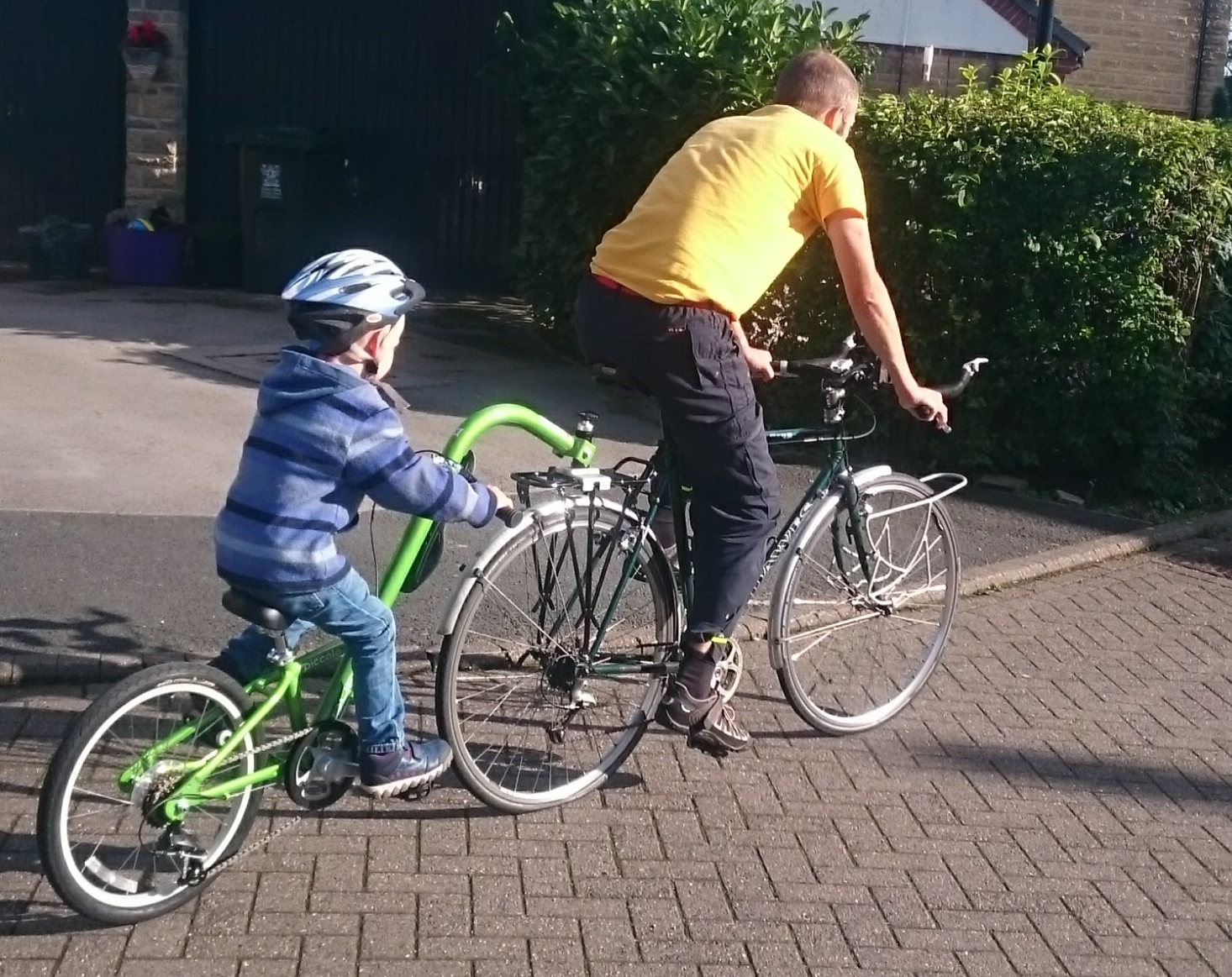
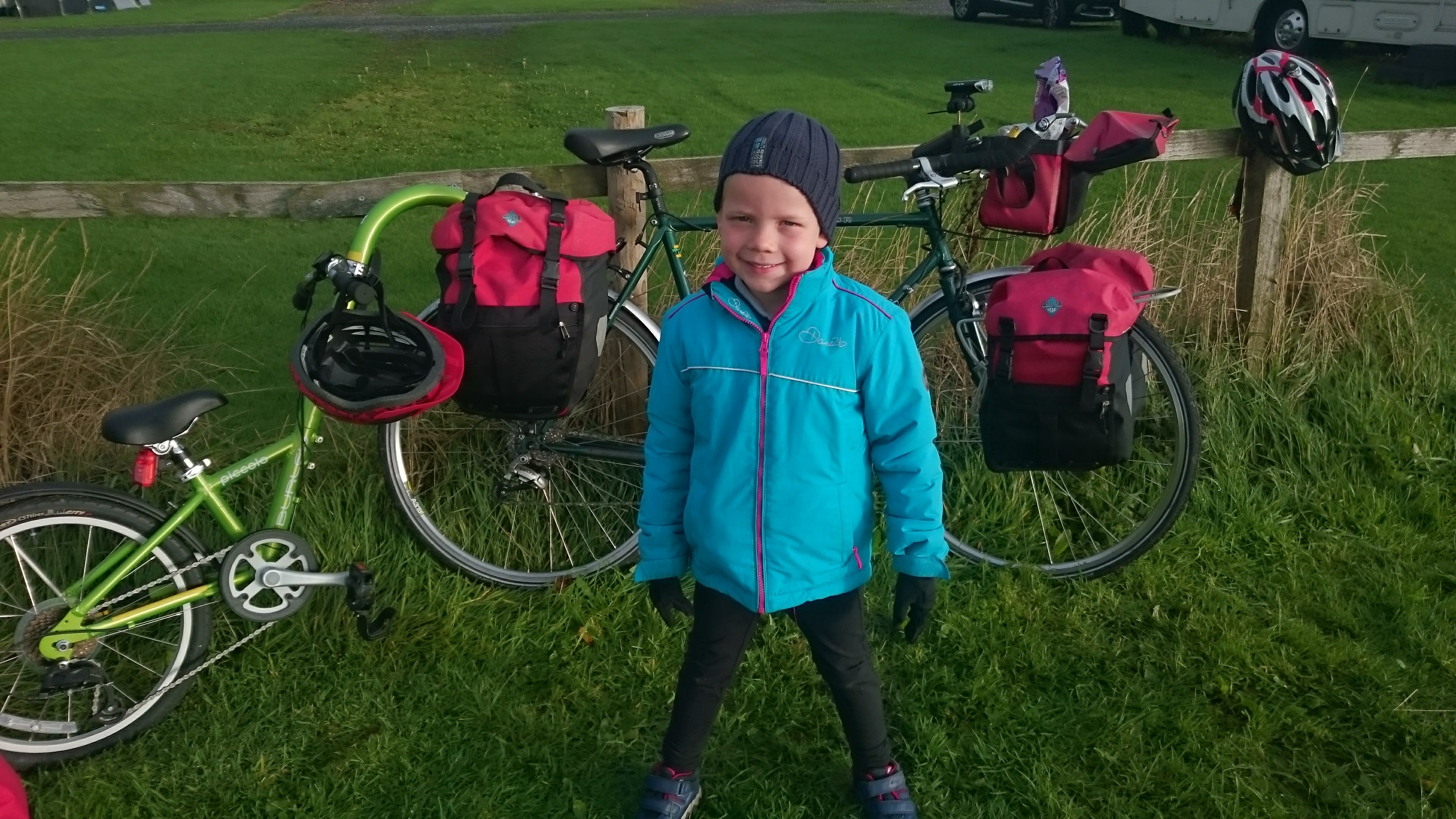
This was the first long journey we’d done with his new tag-along and I can say we were both impressed with it. My primary reason for choosing the Burley Piccolo was that it is the lightest tag-along on the market (apart from it’s sister model the Kazoo). Also, uniquely, it has gears which Junior soon got the hang of; meaning he could contribute more and do so more easily on the climbs. In typical American style it warns you to go no faster than 15 mph for fear of anything up to and including death! It’s not limited to this speed in truth, but the gearing does not allow him to pedal above 15 mph. However if the road means I’m able to go at 15 mph with a 26 kg load behind me then at that point I guess I don’t need help! As Newton would remind us, you only need to put in major effort when you are accelerating (or fighting the acceleration due to gravity when going up a hill).

Junior said he wants to go again – on that basis alone the trip was a success. I enjoyed his joy at simple things too and some father and son time with pie, chips and a pint in the pub. (Just a half for Junior of course…)

Junior’s new wheels

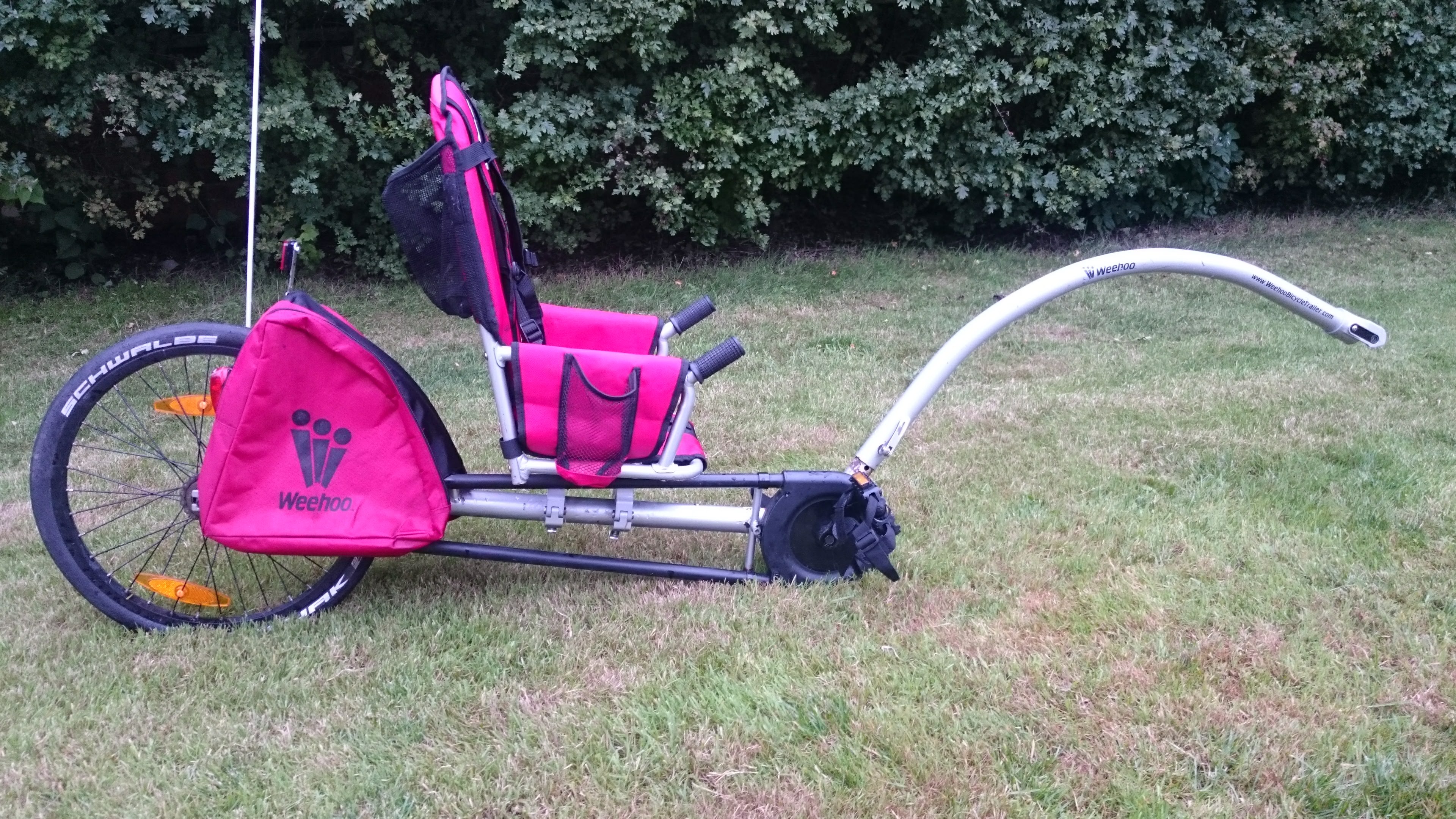
Well, in truth it’s just one wheel on a tag-along.  He’s gone from a seat to a saddle and lost 4 kg in weight at the same time.  Also, to aid with those Lancashire hills, he’s now got gears!  The Weehoo was great, especially for when we rode across France but now he’s bigger the Piccolo should be a lot easier.  He can get on and off without help for example.

DSC_0123

Weehoo Turbo (now for sale)

Piccolo Tag-along first ride

Burley Piccolo – first test ride

We hope to go for our first micro-tour, complete with tent, in October when Mrs W is away visiting a friend.  To make it more fun I’ve fitted a cycle computer with a rear wheel sensor so Junior can know how fast he’s going and how far he’s gone.   The hope is that this has the same motivating effect that his step counter does on a family walk.  Let’s hope too that I can maintain the fitness I built for, and on, my Welsh C2C – I think I’ll need it!

Welsh C2C Cycle Tour

The inspiration for this ride was the Wales in a Day Sportive / Challenge ride. I modified the route a little to take in Builth Wells, which was the town Mrs W was working in when I first met her. This took the total distance up to 210 miles. For me it was not the distance which was the challenge, because I covered the route over 4 ½ days rather than one, it was the 4500 m of height gain. In summary, it was a fabulous route but I’ve no idea how anyone has the combination of speed and stamina to do it all in less than 24 hours.

Day 1 – Chepstow to Gospel Pass :: 43 miles

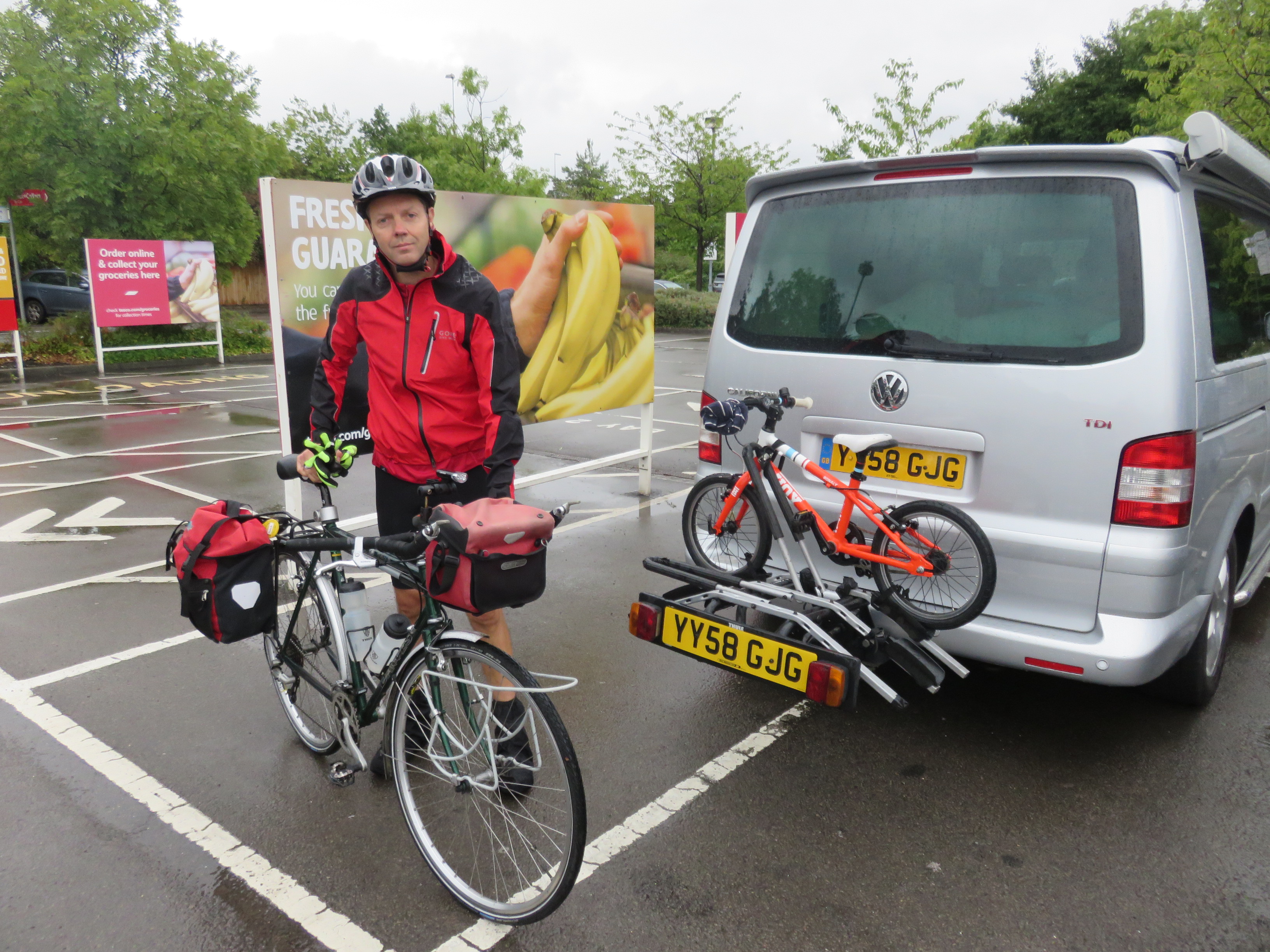
There did not seem to be an iconic start point for the route, and the most convenient place I could find to start was a Tesco Car Park!

IMG_0571.JPG

I delayed the start of the day until the heavy rain had passed and I had only drizzle to contend with, I thus started at 1100. By 1145 the drizzle had stopped and the sun became increasingly evident through the afternoon. The highlight of the day (as expected) was cycling along the Llanthony Valley, flanked by the Black Mountains, and then up Gospel Pass. Just before the big climb I took the opportunity to get a pint of knee oil from the slightly tired looking but very friendly and welcoming Half Moon Inn.  At this point I shared the climb with a retired group of cyclists who passed me each time I stopped for a breather and vice versa. Both in theory and in practice this was the toughest individual climb of the ride. The Sportive runs North to South, I was doing the route in reverse as this seemed to make a lot more sense after looking at the elevation profile. Furthermore that normally puts the wind at your back.

Welsh C2C height profile.gif

It was very satisfying to reach the top and once through the saddle the views were extremely rewarding. For me this was to be the end of my day because I had the pleasure of Mrs W and Junior as my support crew in our VW camper who joined me at the car park just below the top.   We’ve stayed in some great wild-camping spots in the past but this surpassed them all.

Day 2 – Gospel Pass to Builth Wells :: 41 miles

Day 2 covered the heart of Mid-Wales and was, despite never reaching great altitudes, the hardest day of the tour. The reward was the scenery and the weather. The day started with a two mile descent to the river Wye.

IMG_0593.JPG

The rolling hills of this area are beautiful and covered with quiet roads. Perfect cycling country in many ways but unrelenting ascent and decent. The highlight was the section from Painscastle to Hundred House which reminded me of the hill above Llanddewi i Cwn where my wife-to-be first taught me to ride a horse.  I had hoped to reach Llandrindod Wells by lunchtime, but just two miles out I found that my tank was empty and I simply could not pedal another revolution without stopping for food. I was peddling up yet another hill, saw that it was due to get steeper, saw a lovely view over my right shoulder and simply stopped to sit in a gateway by the road.

IMG_0596

Not a bad lunch spot

Lunch was the equivalent of getting £10 of fuel from an expensive petrol station, just enough to get you to somewhere you are happy to really fill up. I knew there was a great chippy in Llandod and headed there for a second lunch! Now with a full tank I discovered that Mrs W and Junior were enjoying some Fine Dining in the Tesco car park just 0.2 miles from my chippy, so a peddled to join them, say hello and help them eat their strawberries. In distance I was now ¾ of the way through my day (perhaps that’s why I ended up with an empty tank at lunch time?) and the rest of the ride was sadly unremarkable but did lead me to Builth Wells, a welcome pint of knee oil and dinner with some old friends.

IMG_0598

Welsh Black – in the home-town of the Royal Welsh Show

Day 3 – Llandrindod Wells to Bryn Penarth (Nr. Llanfair Caereinion) :: 37 miles

The forecast was for rain for most of the morning and my route looked fairly flat, so I opted to join the family at Mrs W’s old church in Llandod and then fit my shorter (37 mile) day into the afternoon. New Life Church had grown and moved to a new building. Ironically they had converted offices in a former Methodist church back into a church once again. After a quick lunch I set off along the A438 which was to be over half my route today. I was glad it was a Sunday and thus the traffic light. I’d like to say I planned it this way but…  Whilst this section was mostly scenically unspectacular I did enjoy being on shallow gradients and being able to enjoy to get my head down and cycle at a very good speed for the 26 miles to Newtown. I am getting on really well with my new handlebars (link to blog), the aptly titled Crazy Bars from Velo Orange. On the front ‘aero’ position you can be both comfortable and use the combined power of your legs and arms. Both comfortable and very satisfying. This has proved an excellent change which has worked out just as I had hoped. 20 miles out of Llandod there was a beautiful sweeping descent with a truly fabulous view of the low ground stretching to Newtown (on Severn) and the rolling hills beyond.

I can only describe Newtown as an ugly town in a beautiful area. It has suffered from a major expansion in the late 60’s, that low-point of domestic architecture. After a rest stop it was a steep climb out of the Severn Valley and less than an hour to that night’s campsite. We had this view to ourselves.

IMG_0600

Day 4 – Bryn Penarth to Bala :: 41 miles

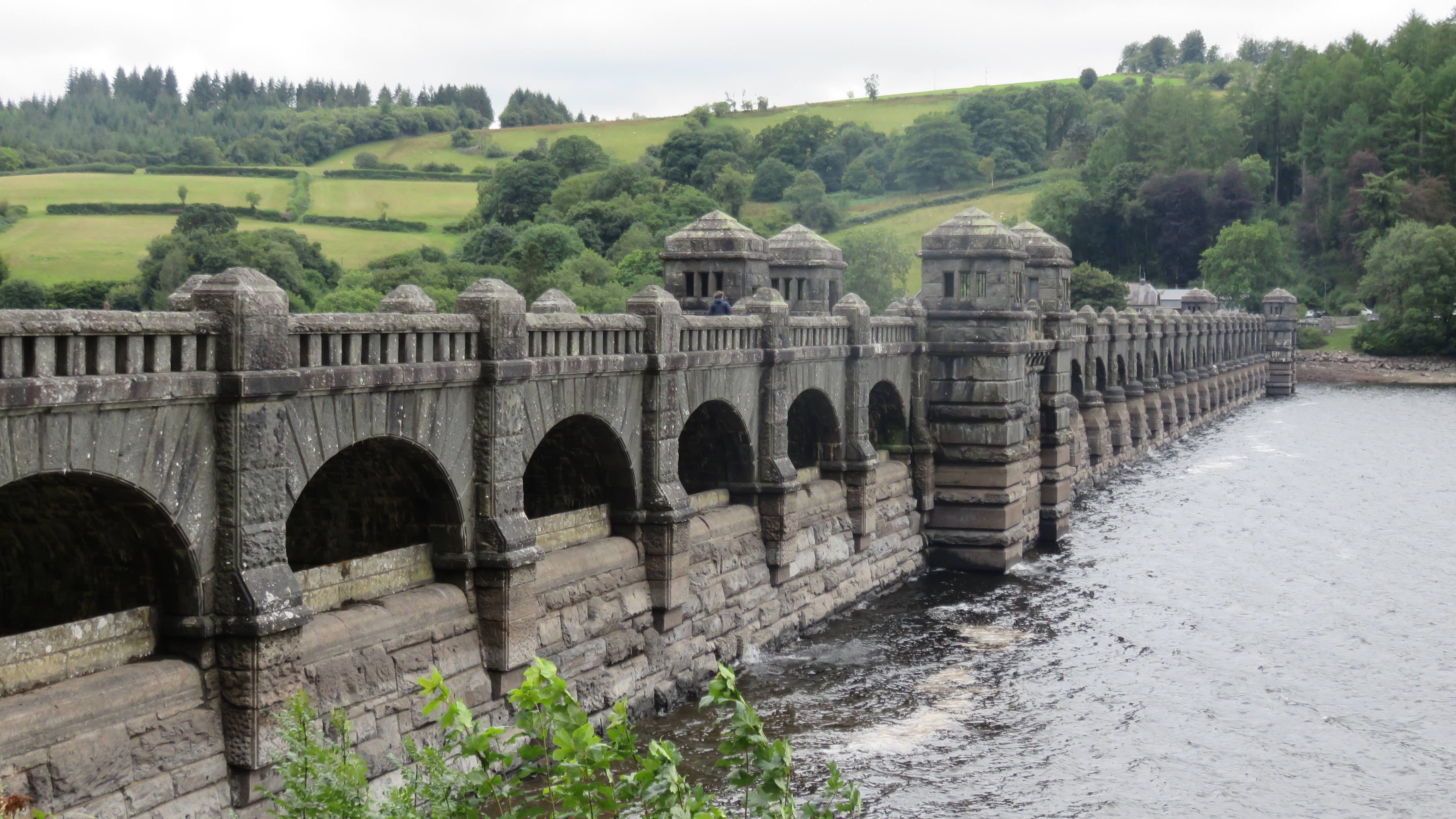
A gentle morning, through attractively names places such as Llanfihangel brought me to Lake Vyrnwy. Built as a reservoir to serve the people of Liverpool the dam is a wonderful example of Victorian utility architecture. Not only does it serve it’s purpose but it does so with beauty. Today when we build such things the design is purely based on function and a two year payback. The Victorians took pride in what they built. It’s worth remembering that it is down to the positive attitude of the Victorians that we have sewer systems and railways that still serve us to today.

IMG_0602

I decided to supplement my lunch with a hot baguette from the café next to the dam. You never know how this will turn out. What I’d say is that next time I’d try the Old Barn Café around the corner. However I had a nice rest and hid from a shower before setting off along the lake. You don’t get to see much of the lake because of the trees on the shoreline, but the draw-off house is amazing.

IMG_0604

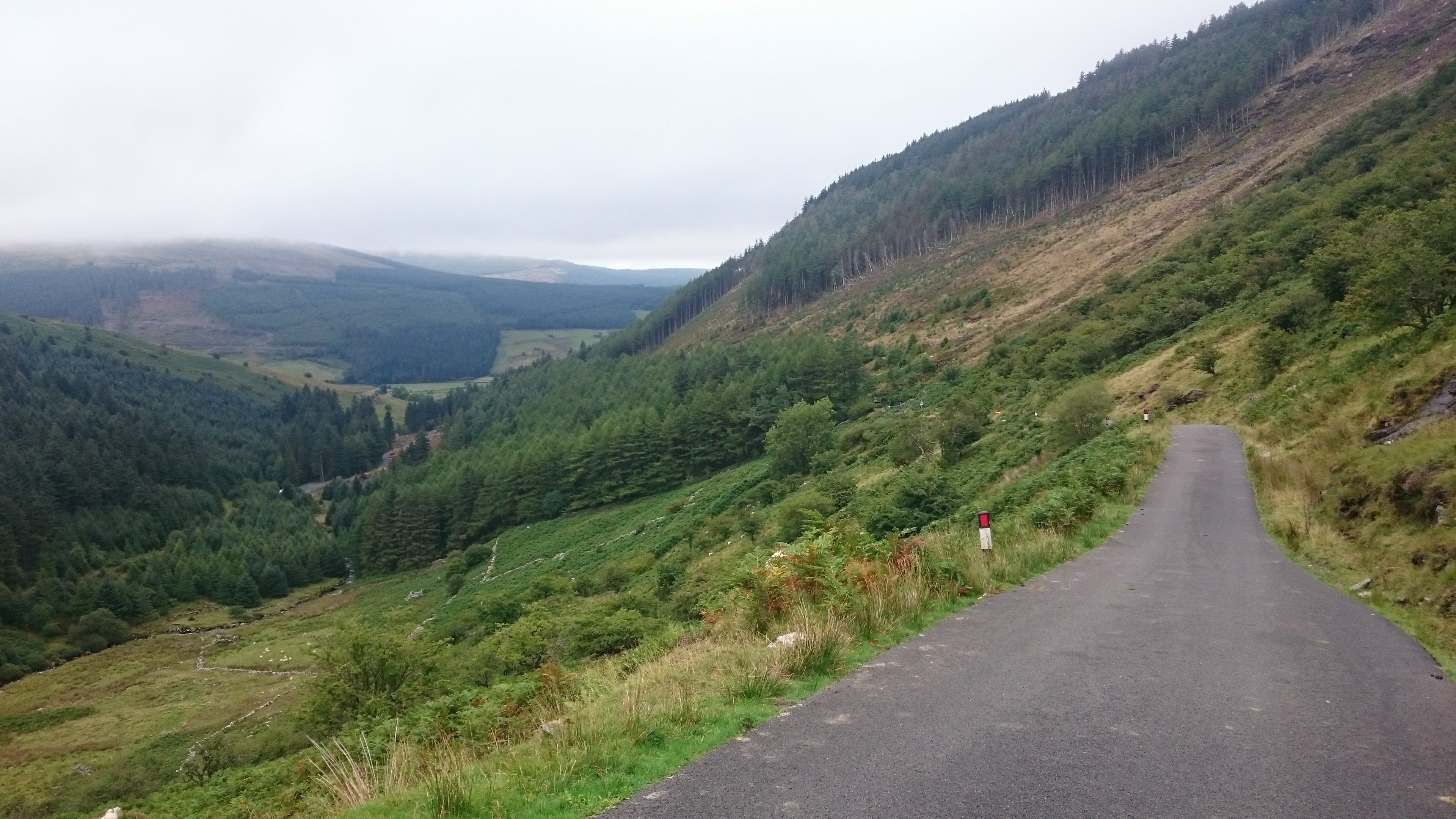
Five miles of level riding meant my legs were warm and ready for the climb out of the valley. It’s an odd road which combines steep sections with gentle gradients in between which enable you to recover. If you decide to pedal this route take heart, the climb gets much easier after the first half mile. The first two steep sections made me fear it would be a killer climb, but with this part behind me it was wholly reasonable and allowed me to enjoy the woods I was passing through, a stream next to the road and then the heather and views higher up. Having got to the top I can say it was a lovely climb overall. At the top you officially enter the Snowdonia National Park and are afforded with a glorious heather clad valley to enjoy. A pleasure for the eyes and a rest for the legs.

This slideshow requires JavaScript.

It was then pretty much downhill all the way into Bala. A very memorable day with the perfect balance of challenge, easier sections (to get the miles in) and views. I stumbled into Mrs W in Bala buying Welsh Cakes, which were promised once I’d completed the last three miles to our campsite. Quiet, level, tree lined and friendly, I’d highly recommend the Tyn Cornel campsite.

Day 5 – Bala to Caernarfon (51 miles)

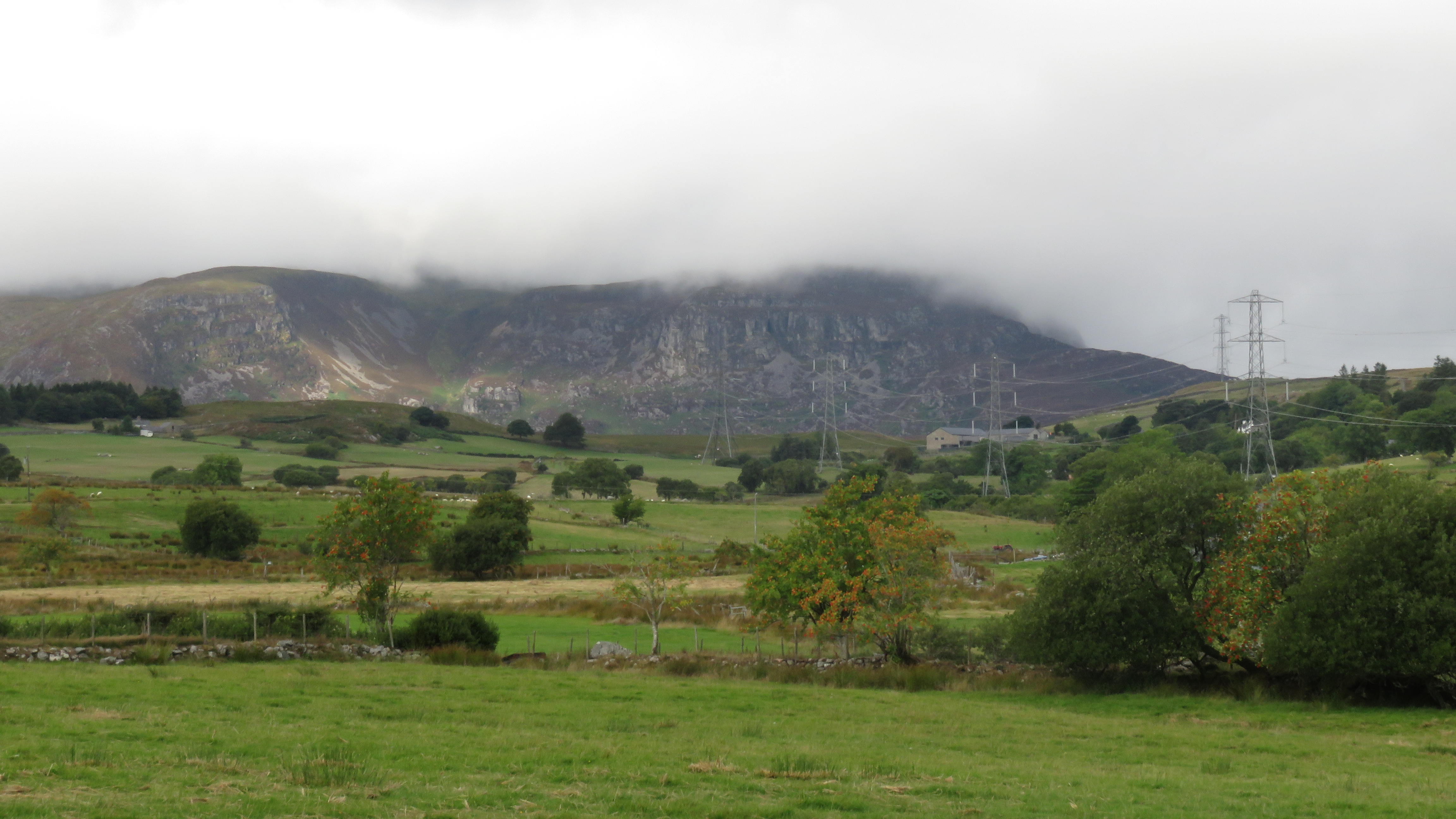
What I expected to be the most difficult day, physically, turned out to be modest in comparison with Day 2. In short I would rate it as one of the top five days riding I’ve ever known in the UK, and top ten anywhere in Europe! Whilst I’d like to say that the cloud was ‘just kissing the top of the peaks’ as you’ll see below, it was more of a full on embrace!

IMG_0625

Whilst the climbs over three passes took me to good heights (around 500 m each time) the gradients were kind. The scenery is what I always dream of cycling though. Narrow roads in good condition bisecting a wild empty landscape. It was a breezy day which offered a tailwind for an hour, before a combination and it and my route found it in my face. I normally stop for a short break every 10 miles, but had to cover 15 miles before I found anywhere which constituted shelter. A small copse of trees next to the road. A small amount more climbing took me to the hills above Penmancho and then sweeping down into Cwm Penmacho and the village itself.

IMG_0626.jpg

With only myself for company I toyed with renaming it Pen-Macho – for you would have to be a real man to climb the route in reverse. Once again I was glad to have reviewed the elevation profile and ridden the route South to North. It was then only a short distance to the A5 and the Conwy Falls Café. Now this is a café I’d heartily recommend. For £8 I had a giant fish finger sandwich, salad, chips and a pot of Earl Grey. All this lounging in a sofa, the ideal cycling lunch stop.

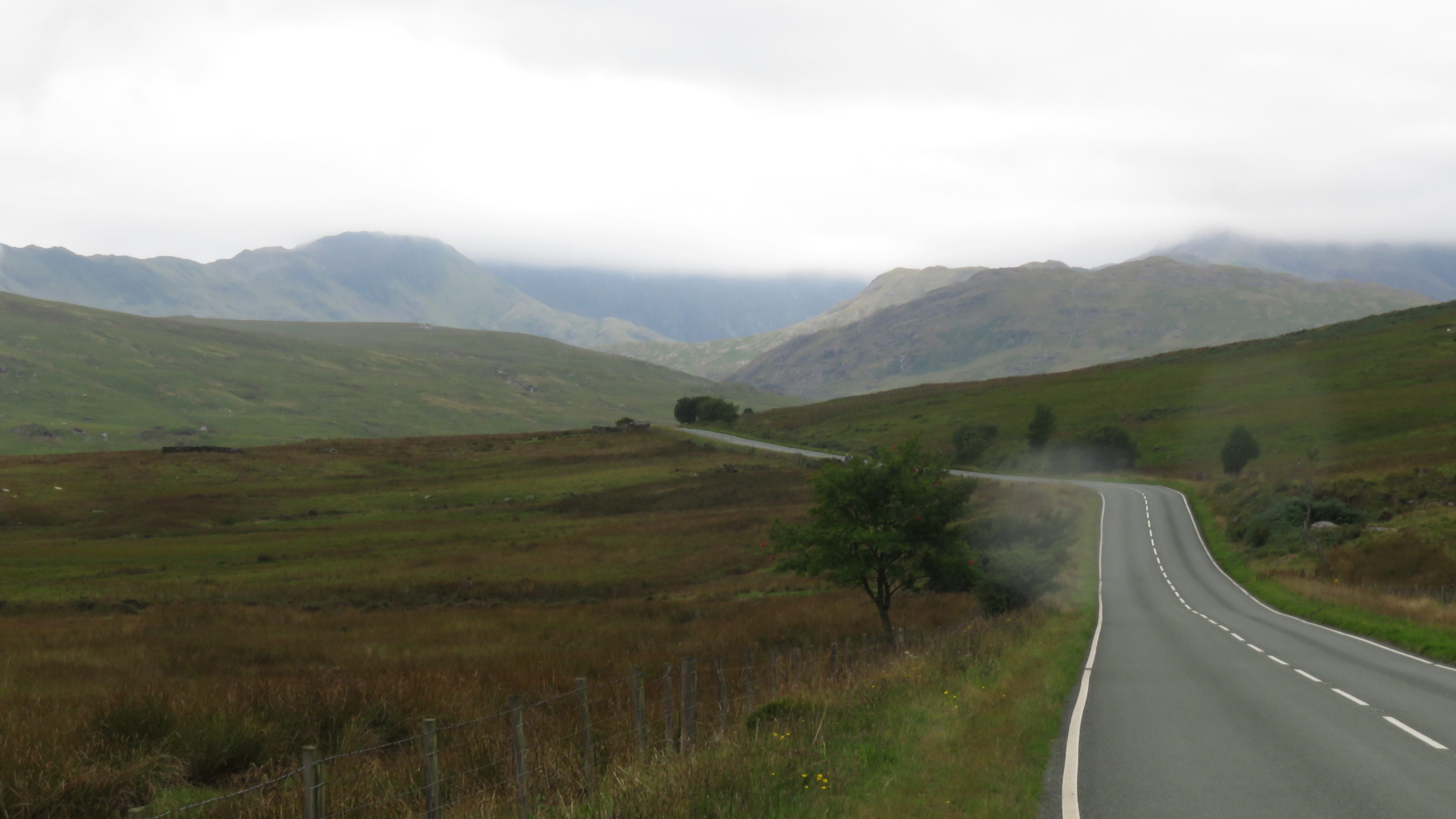
The next section along the A5 had little to recommend it, but was an unavoidable and essential link to Capel Curig. Once well outside Betwys Coed the mountainscape came back into view. Turning off onto the A4086 was a blessing and took me down a gorgeous valley with the Glyders to my right and Pen-Y-Pass and Snowdon in front of me (the latter hiding its modesty in the cloud).

IMG_0633.JPG

It was an easy ride despite the headwind, and whilst rain threatened it never actually fell. Then came Pen-Y-Pass which was neither steep nor felt as high as I imagined and I was soon at the top and having fond memories of the times I’ve climbed Snowdon.

IMG_0638

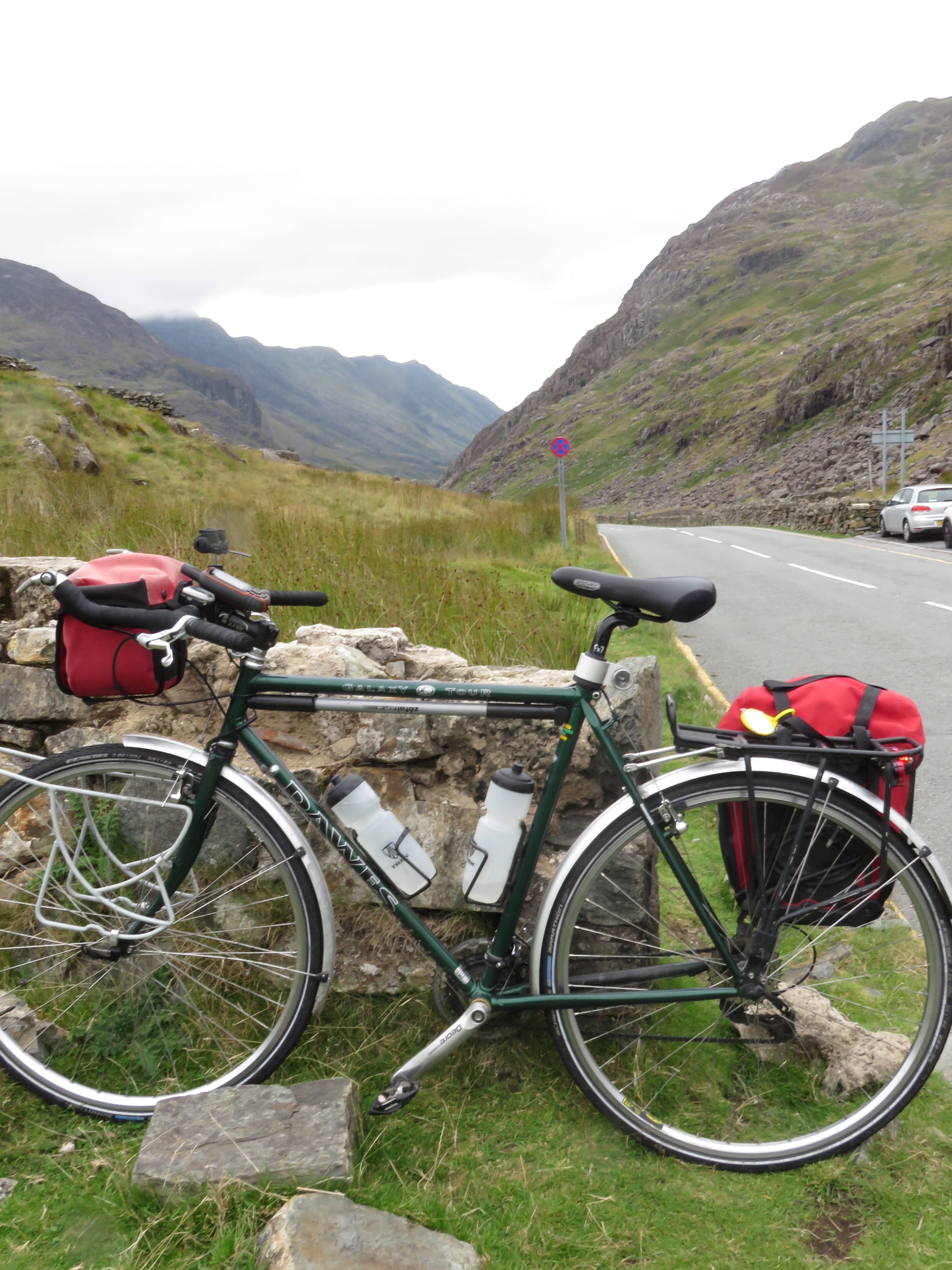
Again I was greeted with a beautiful gulley descent, but with something of a mean headwind at the top. Having to peddle to may headway downhill never seems fair. I, however, didn’t mind, as I now had just 12 miles left to complete my Welsh C2C and from what I could see it was very nearly downhill all the way. As I lost altitude I also lost the wind and could enjoy sweeping down the river valley towards the coast. Upon my approach to Caernarfon the castle was clear to see and for a cyclist it was far better to navigate by eye that follow the signs which take you via a short section of elevated dual carriageway. Awaiting me in the car park was my support crew, enjoying tea and biscuits in the van.

I’d crossed Wales and achieved 4500 m of height gain with only one hill (end of Day 3) beating me. I simply cannot imagine how people could ride the whole route in 20 hours. I had underestimated my fitness (how often can you say that!) and think I could have done the route in three days. It is certainly a route I’d recommend and I certainly plan to go back and repeat day five at some point in the future, ideally when the cloud is restraining itself from embracing the mountain tops. I can see a long weekend in Snowdonia coming up in 2019 if my support crew are willing.

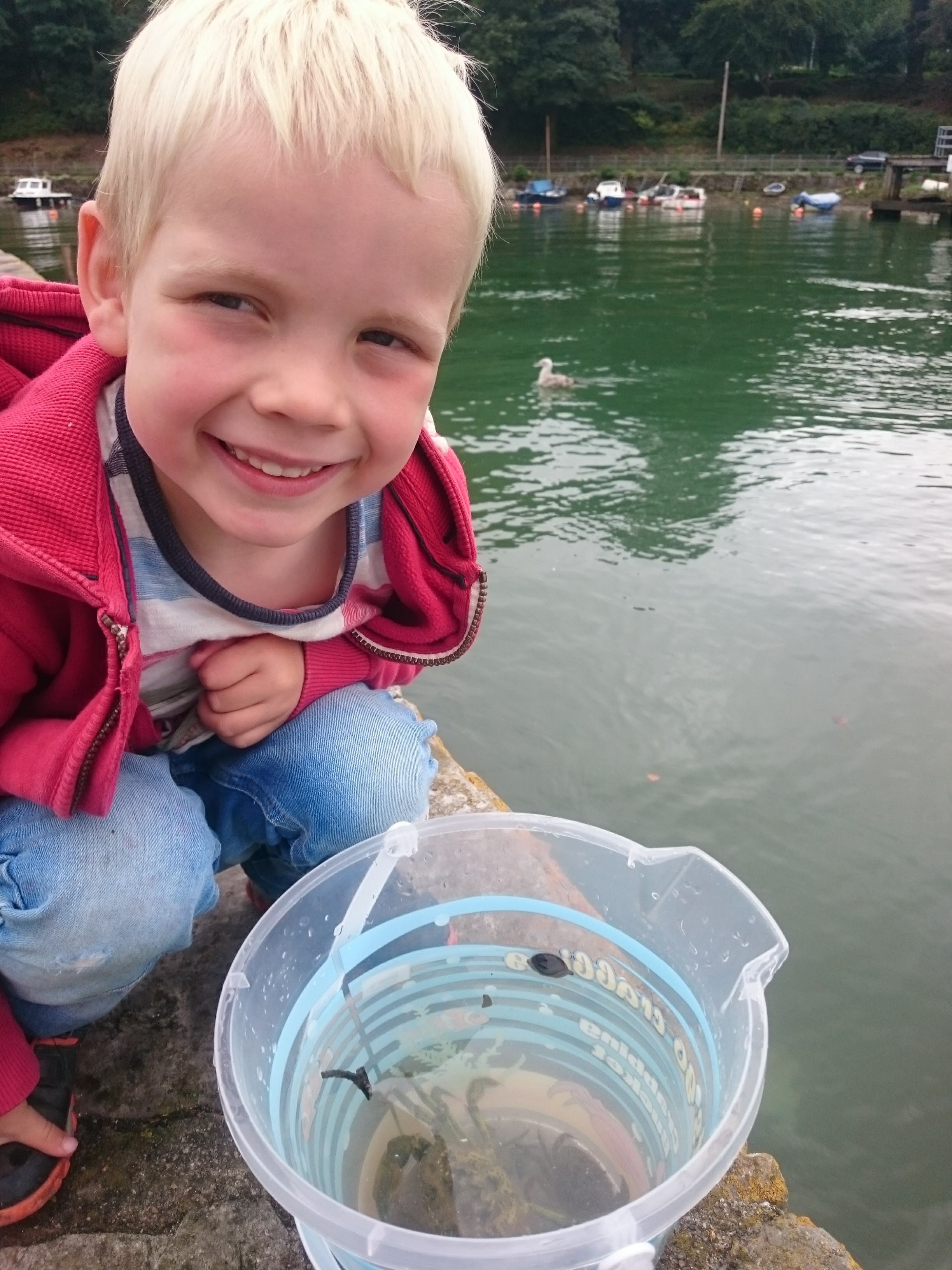
My/our day ended well, catching crabs with Junior off of the quay, followed by dinner in the only Italian restaurant* I’ve ever know to offer the option of gluten free pasta which was great news for me, less so for the clams in my sauce.

IMG_0651

*Villa Marina

Crazy Bars Review

dsc_0086

In my last post I outlined why I wanted to try moving from conventional drop bars to a pair of alt bars on my touring bike.  Two rides in and I’m really pleased.  They have fulfilled their brief which was to:

  • Give me a slightly more upright position to reduce / eliminate neck pain at the end of a long ride.
  • Allow multiple hand positions despite being more upright (std straight bars would not offer this.
  • Offer a good position for putting power into steep climbs using the strength of both arms and legs.

Tick, tick tick. And as a bonus the new stem needed has given an ideal place to mount my GPS, which used to be mounted on top of my bar bag in a very ad hoc and unsatisfactory manner. In the unlikely event of Velo Orange (the makers) reading this there are just two changes I’d make.  I’d add 25 mm in length to the forward facing bars to be able to get a whole hand onto these bars rather than part onto the bar end shifters and I’d cut 25 mm off the end of the raked back bars (though I guess I could do this myself without much bother.

dsc_0066

It took ca. 30 miles to get used to them.  Perhaps the oddest thing is that, for me, my most frequent hand position is not one close to the brakes.   Whilst this was to be expected, it takes some adapting too.  I am used to riding on the hoods with the brakes within reach.  Now for steep descents and in town I move my hands to the raked position, in town this is fine, but its a bit odd to be so ‘non aero’ on steep descents.  A surprise was my favoured position for honking it up hills and that is to have my hands out on the aero position, if I’m spinning I have my hands right to the top of the bars (which is when I think a little extra length of the tilted section would be ideal)  but when I’m up out of the saddle I just more my hands back a little to the level section of the aero bars.  I thought I’d be right out on the wide swept section for this, but it feels really powerful to be in the former position.  Resting my hands on the intersection seems to take the place of when I’d normally hold the flats.  I’ve got flats exactly as before but the intersection just feels better.  I use this position to recover after a long climb before I start applying the power again.  Overall I spend the greatest proportion of my time at the ends of the aero bars.  It feels like a really good position to put in lots of power.  My average speed was up, but whether this was the position or just the excitement of new equipment it is hard to say.

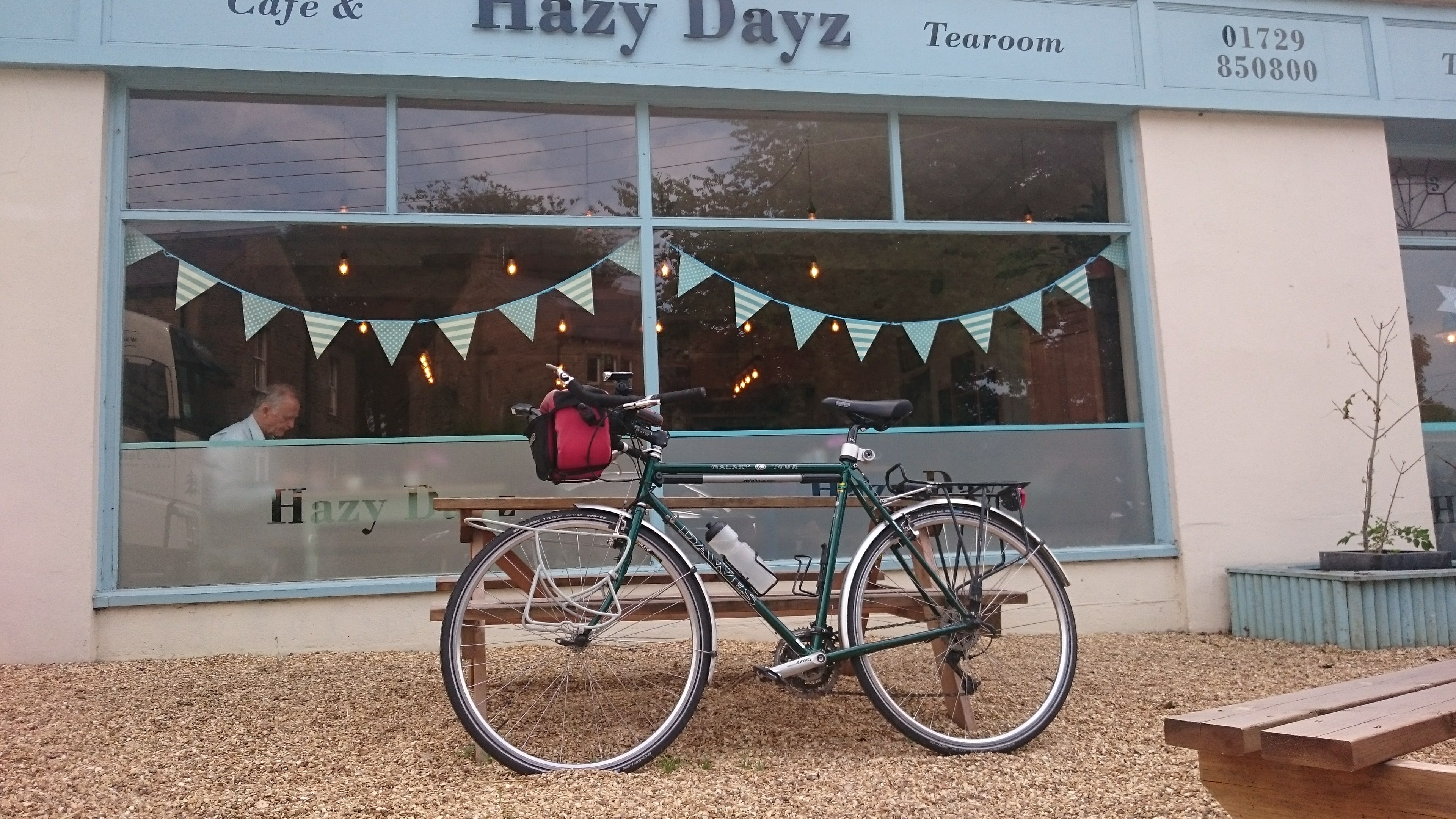
I cannot sign off without giving a mention to the cafe above, where I had lunch.  This is just off the A65 in Hellifield – Hazy Dayz  This was a pivotal part of today’s route and I was delighted to find they offer a free pot of tea to any cyclist the orders food.  Great all day breakfast too.

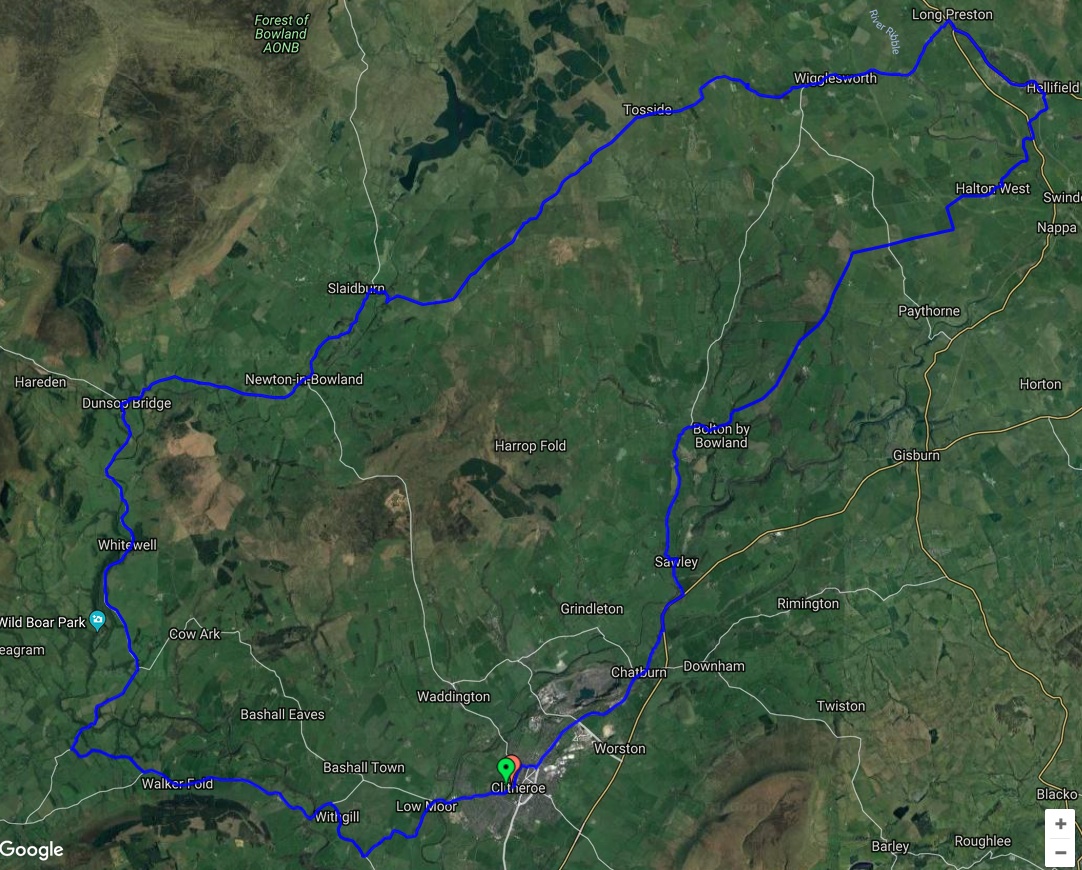
Hellifield 44 mile route map