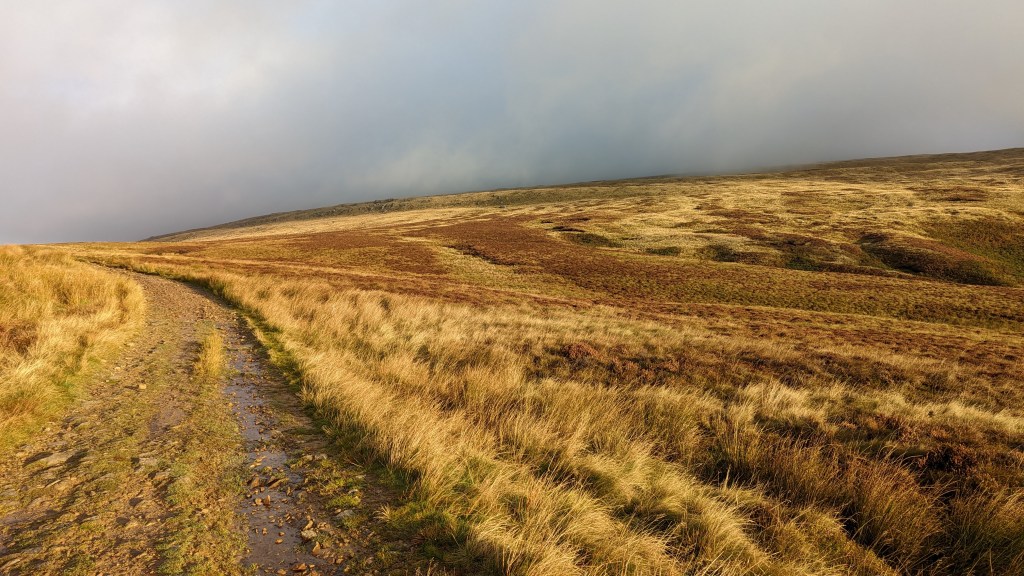
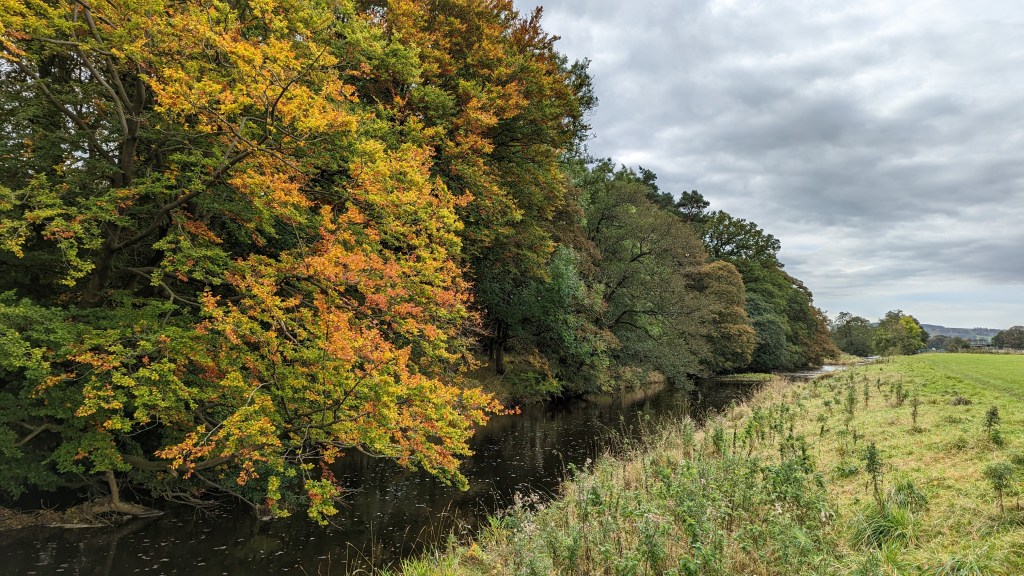
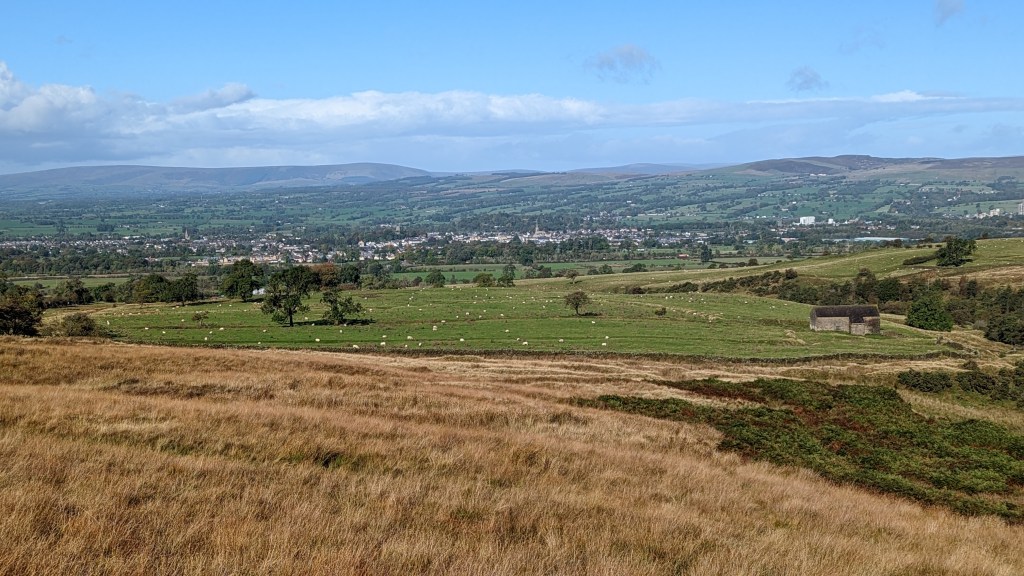
The Edges of Darkness – a two day ‘fast and light’ wild walk in the Peak District

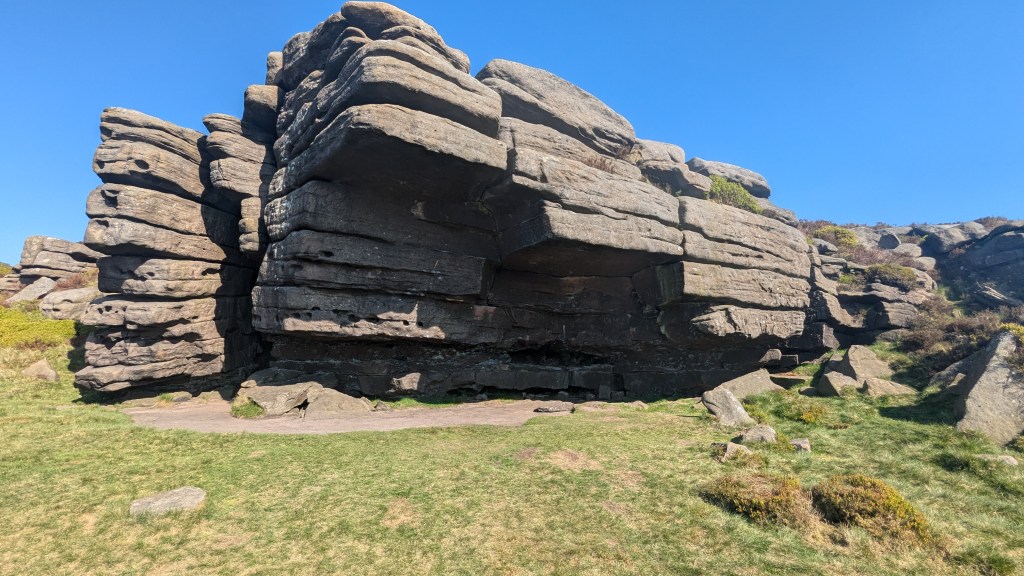
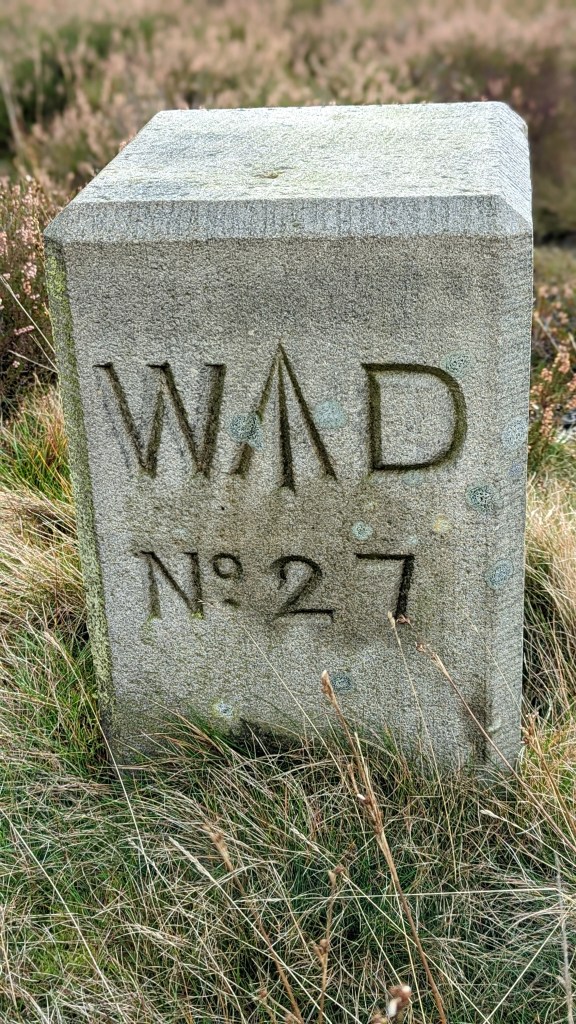
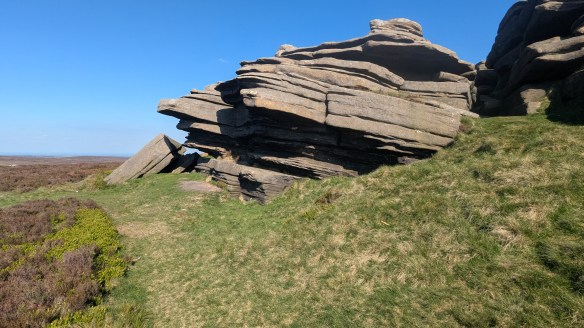
The North of the Peak District – known at the Dark Peak – has a number of small inland cliffs or ‘Edges’. These facilitate great views over the interleaving valleys and are often punctuated with attractive rock formations formed from the local Gritstone left behind where softer shale layers have been eroded away.

The route I choose had a number of objectives:

  • Link together as many named Edges as I could in a two day route.
  • Allow me to try, for the first time, my complete set of ‘ultralight’ backpacking kit
  • Using this ‘fast and light’ approach allowed for more miles per day (18 miles on day 2) – but with ease and comfort.

The Route

I chose the start and end points because they were connected by the railway. Because of the time it would take to drive to the start on day one, I split the distances unevenly (i) to allow for later start on the first day and (ii) because I’d seen photo’s of a great wild camping spot next to Back Tor. Because of the distance split and location of water sources, it made sense to do the walk East to West even though this meant initially driving to the end of the walk furthest from home.

Day 1 – Hathersage to Back Tor – 12.5 miles / 630 m height gain (HG)

After a very enjoyable drive over Snake Pass with the roof down, I arrived in Hathersage at 0945 and was walking by 1000. I had located two convenient places to park for 48 hours in the town, either in the railway station car park (only £2 / day and allowable for up to 7 days) or on Dore Lane.

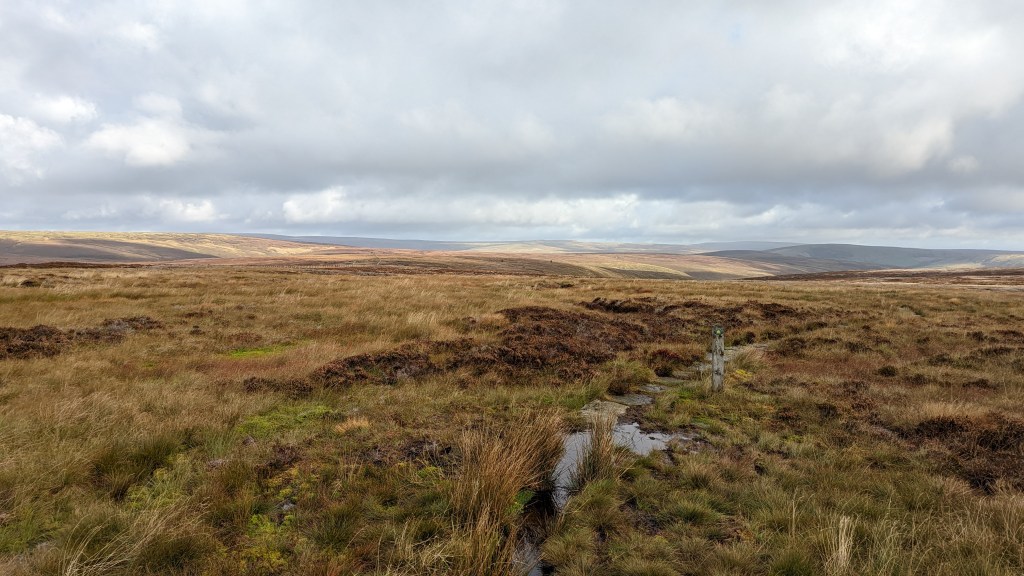
An easily found footpath starts from near the railway station which steadily climbs, up through areas of woodland, to Hathersage Moor and then along the bottom of Burbage Rocks – my first Edge. The weather was glorious and there were many school groups out learning to climb up or abseil down these rocks. Stanage Edge was equally popular and more attractive still.
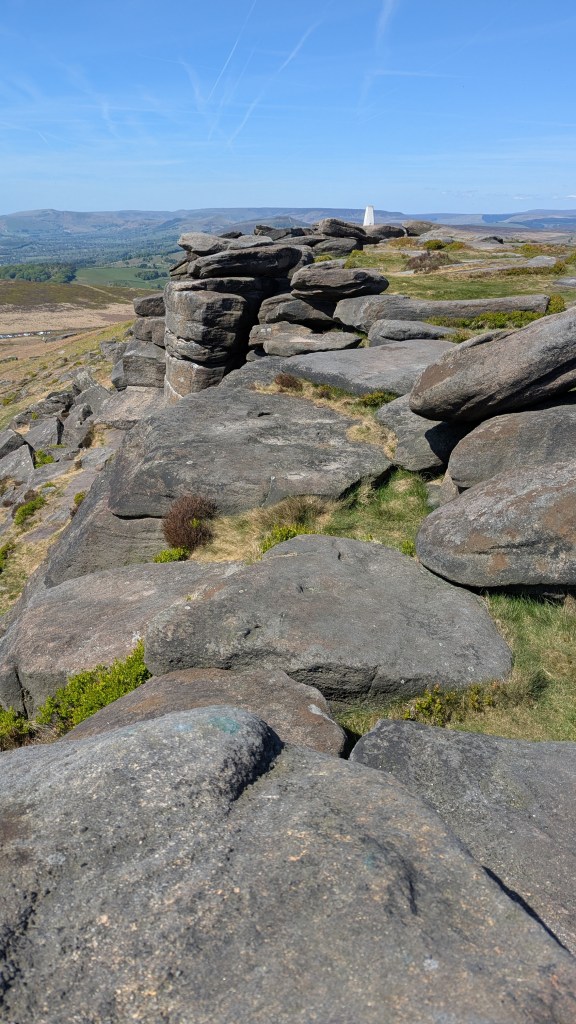
I stopped for lunch after around 7 miles and was now free of the crowds. The next 2 ½ miles was a necessary joining section to get me to Derwent Edge (Edge 3) but the sun was cracking the flags so it was simply lovely to be out and to have such a light pack on my back (6.5 kg base weight plus ≤1 kg of water). Once I had ascended onto Derwent Edge the scenic highlights came thick and fast in the form of a number of really attractive gritstone tors. Wheel Stones, White Tor, Salt Cellar, Cakes of Bread and then my destination for the night, Back Tor.

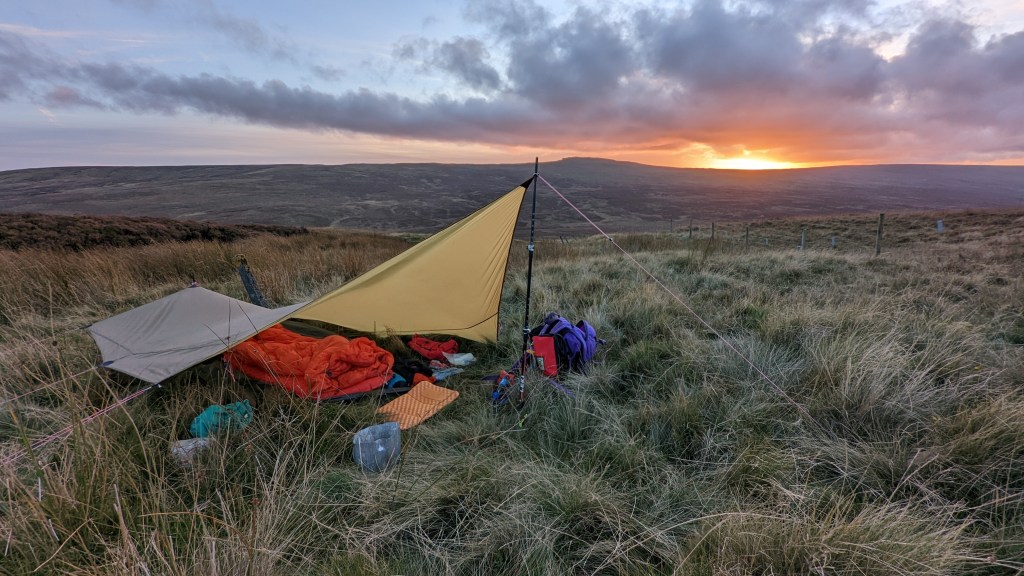
I found three attractive places to pitch around the base of Back Tor. The wind was light and many flies were around so I choose the most exposed pitch so the breeze would keep them away. I would still be in the lea of the Torr with the weather coming from the East and have a ringside position to see the sun set over Kinder Scout.

  • Option 2

Having arrived at around 1530, I waited for a while before pitching my shelter. It was really lovely to sit on top of the Tor with my book and enjoy a dram of some orange infused Moonshine (whisky which is less than three years old) which I had helped design and made with one of my clients the previous Autumn. What could be a more apposite beverage on a fast and light weekend than dehydrated beer?

I enjoyed the sunset then drifted off to sleep. Rising and falling with the sun works really well for me.

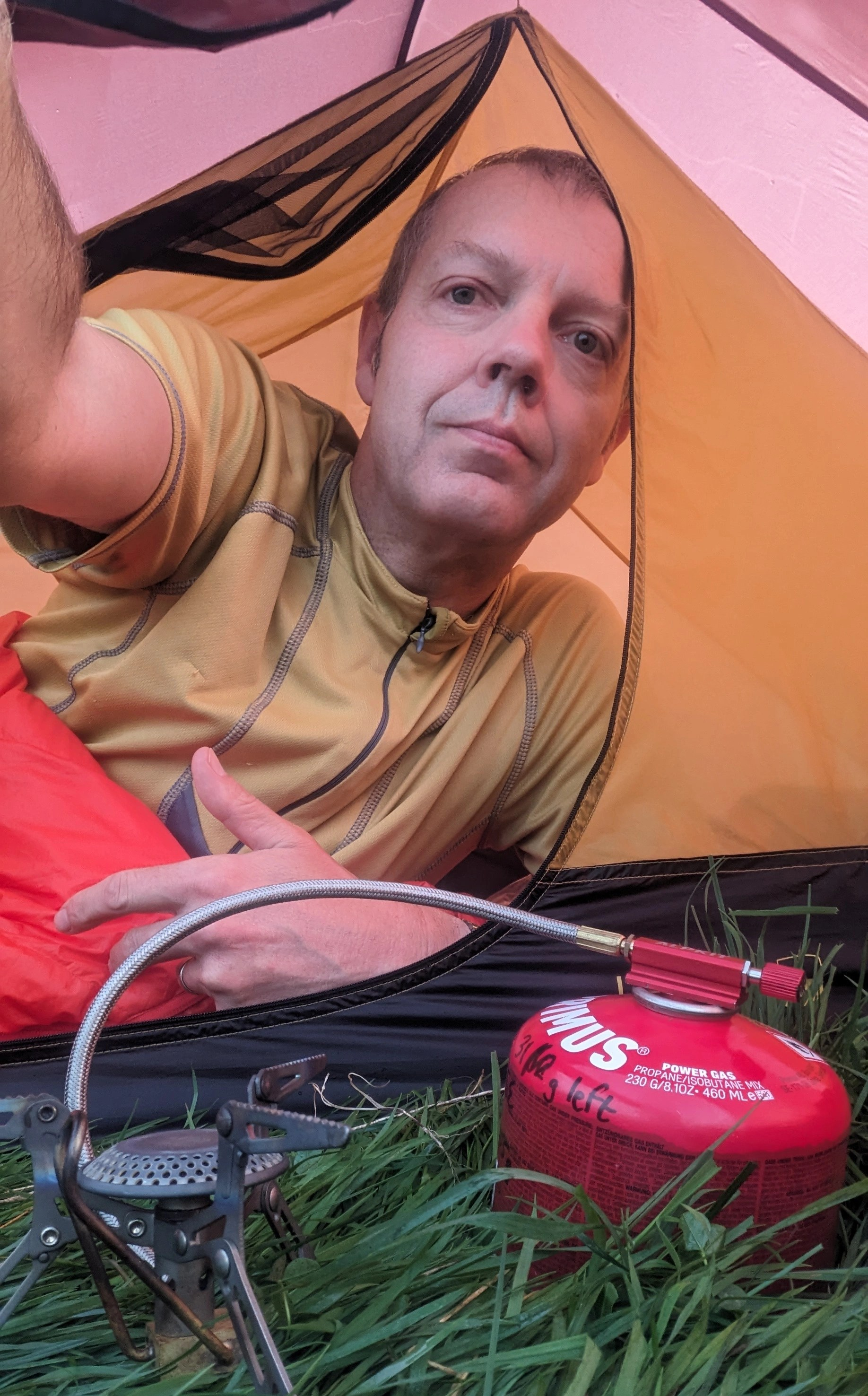
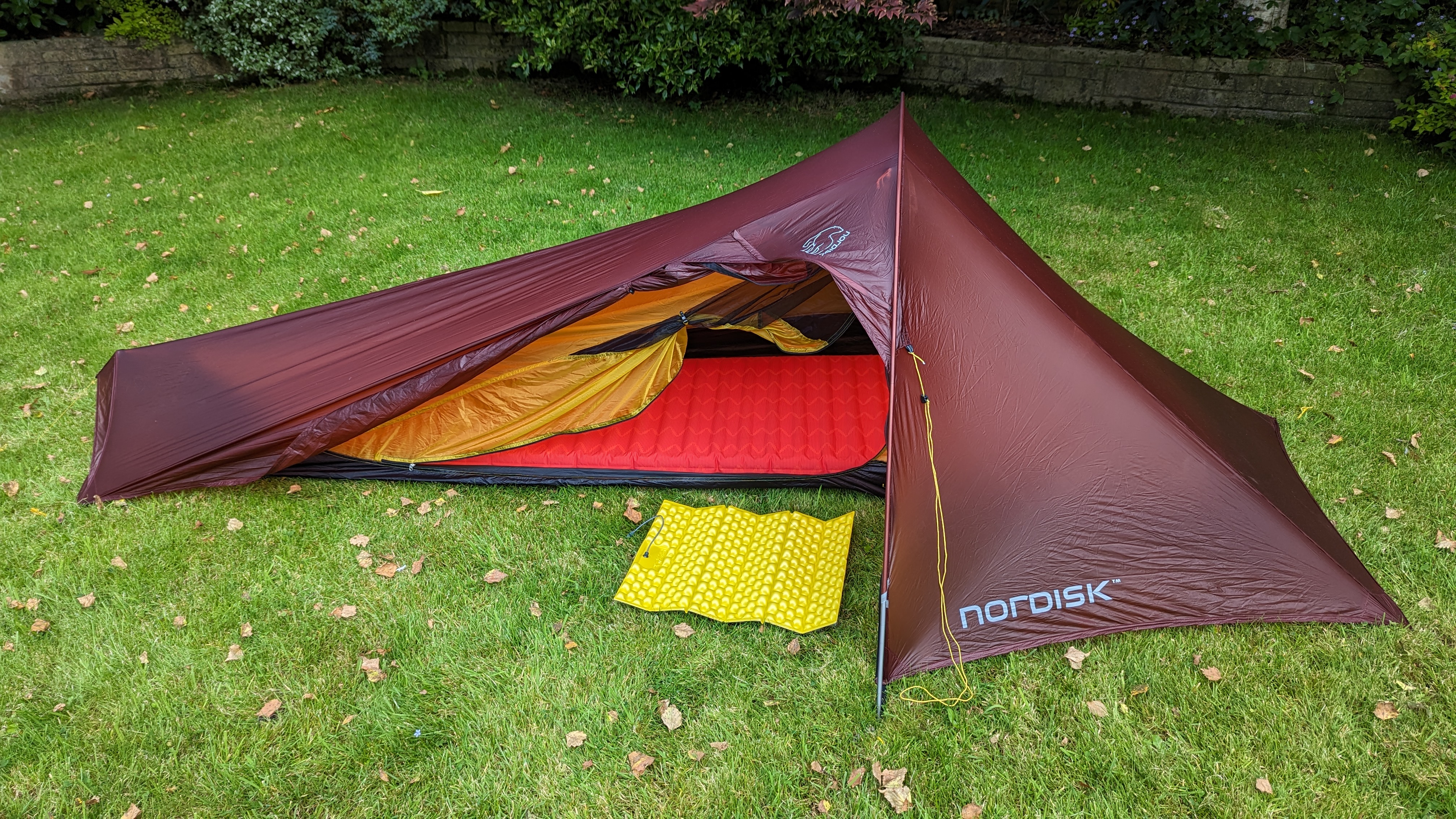
A really positive feature of the Lofoten tent is being able to prop the door open as an awning, it would be too bold to say that this makes this micro shelter practical, but it does give the views you’d get from a tarp, with the wind protection of a tent and space to store you pack away from any dew or rain (so long as wind is not too strong).

Day 2 – Back Tor to Glossop – 18 miles / 500 m HG

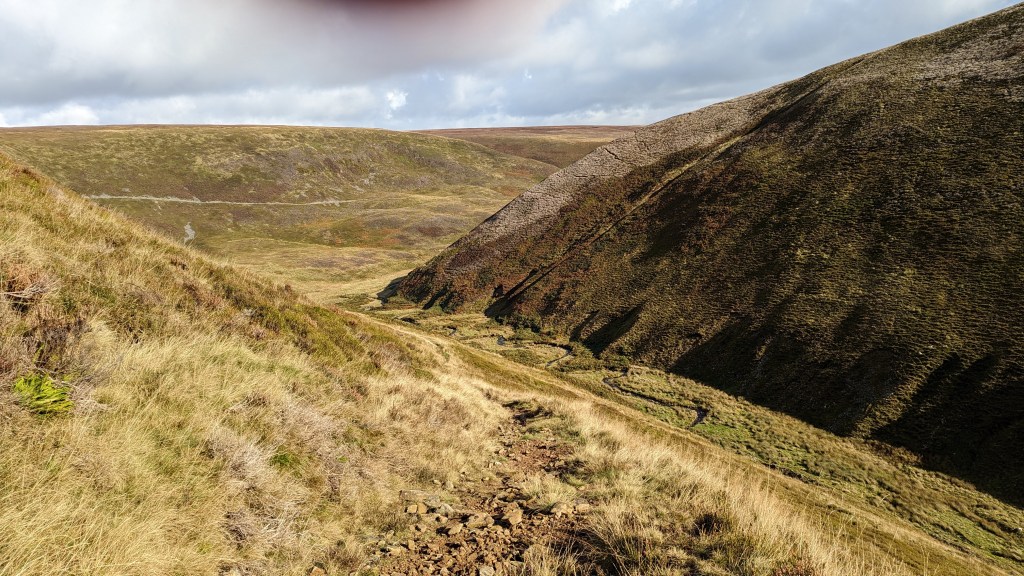
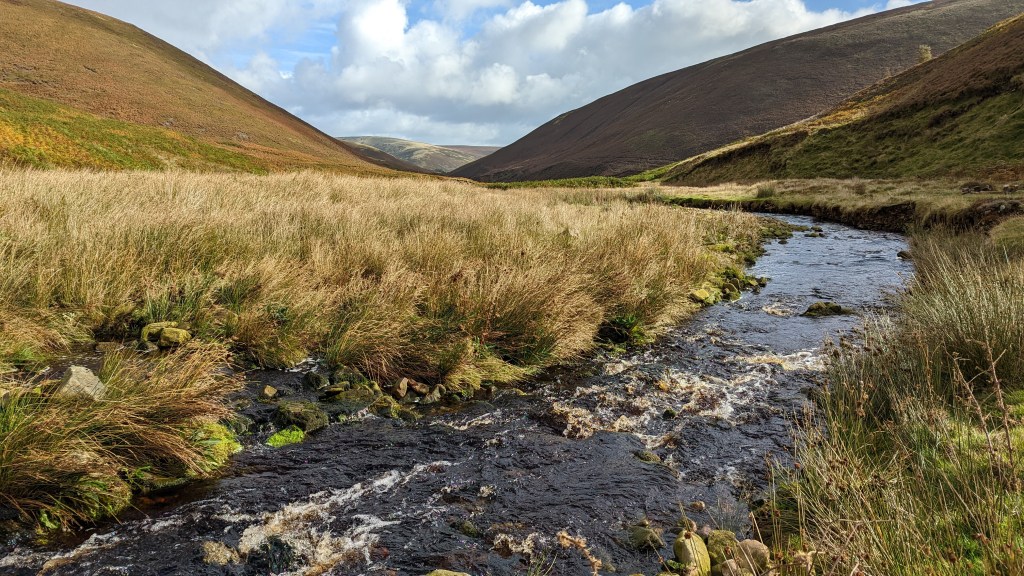
I woke at 0530 to a glorious morning and was packed up and back on the trail just before 0700. My route initially took me downhill to the shore of the Derwent Reservoir where I collected water from a feeder stream, then it was back up to high ground again – this time Howden Edge. Reviewing the OSM map whilst writing this account I see that there are paths (albeit not formal footpaths) that could have taken me around the Abbey Brook ‘Clough’ without need to descend anywhere near as far. Worth noting. However given the prolonged dry period we had been enjoying would I have found water at the head of the brook?

Howden Edge was the least remarkable of the Edges on this walk, but it was not without it’s pleasures. More grit stone features and a great view to the, frankly very odd, Emley Moor Transmission Tower. This mast has the proud claim of being the tallest freestanding structure in the UK. Born in the same year as this author, it is now Grade II listed. I await my call from the Secretary of State for Culture…

The next high point, physically and metaphorically, was Bleaklow Stones were I enjoyed lunch in the lea of a rock which closely resembled a whales tale.
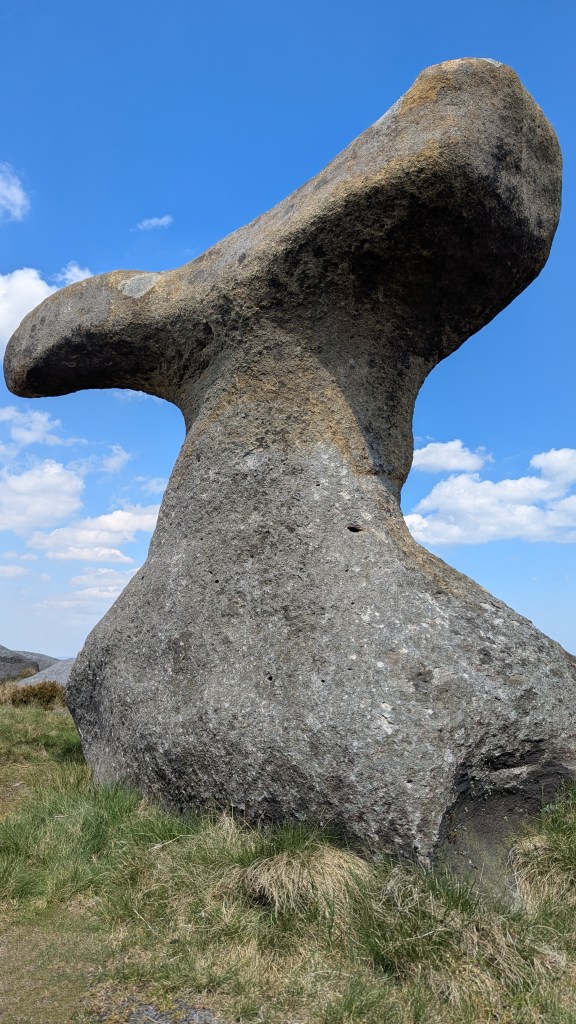
From this point it was mostly a ‘walk out’ with the final highlight being Dowstone Clough which marked the start of my winter wild walk to Kinder in 2023.

Then it was an easy stroll downhill into Glossop.

Getting back to the start – a useful lesson learned…

A major factor which defined this walk was the ability to return to my car using the train. However on the evening of the first day I thought I’d just check how much extra it would cost to get an Uber back rather than the train. The answer was just an an addition £2. (Suggesting that the either the rail fare was too high, or the Uber price too low – I suspect both to be true) In addition, because the train journey would involve heading into Manchester to get a second train back out to Hathersage, an Uber was a considerably faster option and one which allowed me to get home to my family in time for tea.

This hitherto unrealised option should open up many more linear walk options, since the cost difference between public transport and an Uber (for a 2-3 day walk) is so modest I / you do not need to be restricted to simply walk between places with a rail or bus connection; Termini served by Uber could offer yet further options.

My Fast & Light kit for this walk

(click through the links to see my more detailed review of each individual item)

  • TentNordisk Lofoten – more of a luxury hooped bivvy than a tent in reality.
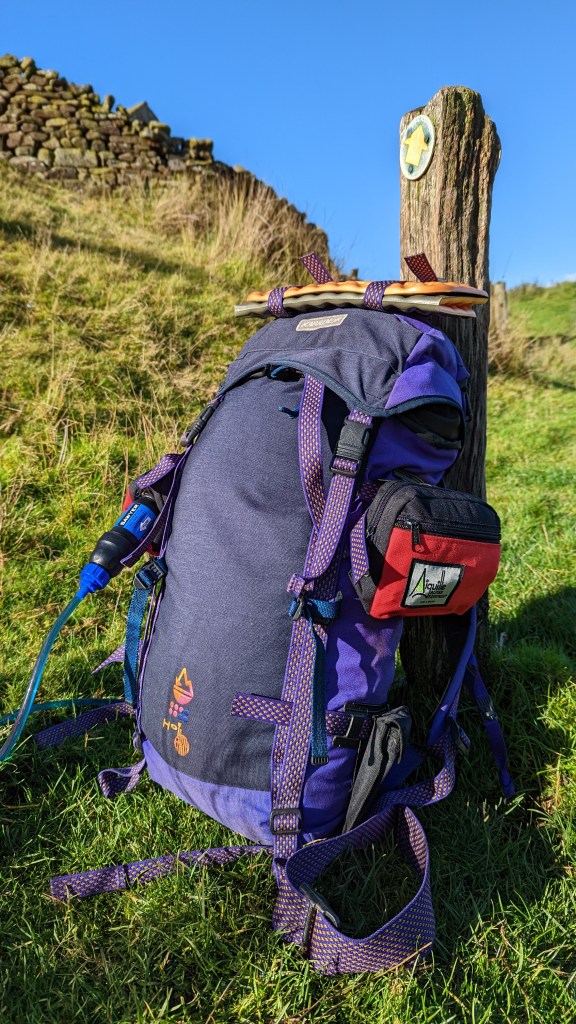
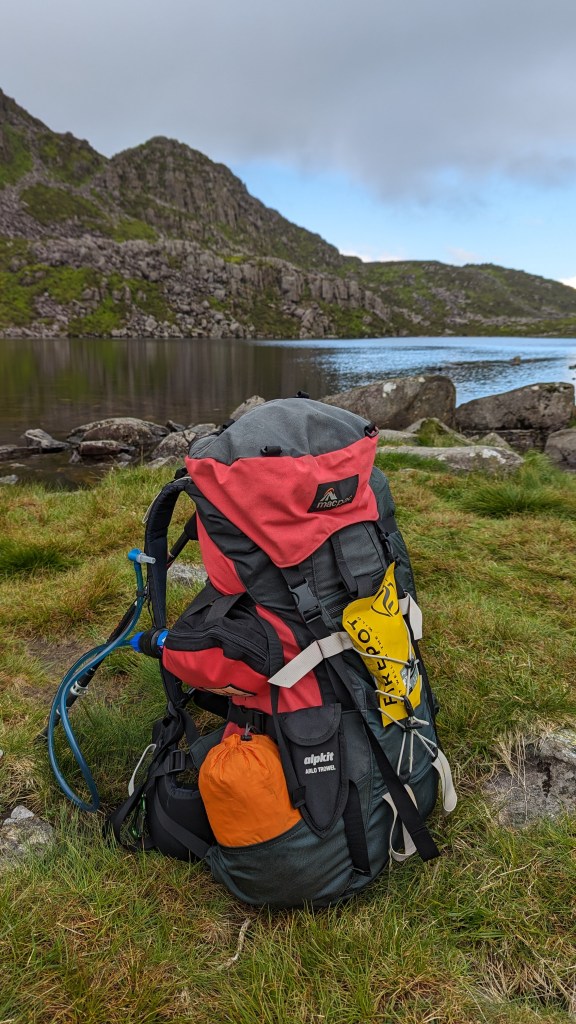
  • PackAtompacks Mo 50 (40 L would have been enough)
  • Sleeping BagRab Neutrino 200, 4 C comfort-rated bag.
  • Sleeping Pad – Thermarest Prolite 3 (no longer available, nearest today is the ProLite Plus)
  • Water systemSawyer Squeeze paired with two HydraPak Stow flexible ‘bottles’.

* Pack weight (inc. everything except water) 6.5 kg.

Let me say that again, just 6.5 kg plus 1 kg of water! Coming from an era when we worked on the basis of aiming for pack-weights just shy of 1/3 of your own bodyweight (25 kg for me) this pack-weight is nothing short of amazing, especially when you consider that the only compromise I made was to use a micro tent. The Lofoten, with a real world weight of 600 g (once you’ve added practical pegs and a polycro footprint) and a ultra-low packed volume offers benefits well worth the price you pay in interior space for three season 2-3 day walks. I would be unlikely to take it away for a week of backpacking, but my two days walks significantly outnumber my longer trips.

The pack, new to me last autumn, was supremely comfortable and proved highly practical. I could have got all my kit into a 40 L pack, but I have the 50 L pack as it is very little heavier than the 40 L version and it means I can also use it for longer tips or in the winter.

My sleep system did not compromise comfort in any way. In the UK it is surprising for how much of the year the temperature does not drop below the 4 C comfort rating of my Rab bag. If I expect to experience a borderline temperature I simply opt for a winter sleeping pad, a pair of long johns and some down socks, the extra weight of which is less than the 200 g of going for the next warmest bag in the Neutrino range.
Lightweight Backpacking – Cost effective strategies for reducing your base weight.

Backpacking / through-hiking has grown in popularity over the past ten years. YouTube videos, blogs and outdoor equipment companies are all promoting the benefit of light or ultralight gear, and as you might expect as the weight goes down, the price goes up. I’ve been backpacking since the 80’s and the aim of this article is to share some of the things I’ve learned about travelling light without ending up with an ultralight bank balance at the end of the experience.

I should start by putting my approach into context. When I go for multi-day walks I want to be comfortable and to know that I am safe and secure against all weathers. I do not subscribe to the philosophy of ¾ length camping mats or sleeping under a DCF tarp. My 2-3 day kit usually weighs 8-9 kg, not the 6-7 kg of US through hikers. But at this weight I can still walk for 6-7 hours (plus breaks) and take 900 m peaks / 1200 m of total height gain in my stride each day. If I can do this with ease at 53, so can you…

Here are the principles I work to:

Take less…

The cheapest way to reduce your pack weight is to simply take less stuff. Think about what you absolutely need under each of these categories and write yourself a packing list:

  • Navigation & communication
  • Keeping warm & dry in the day – Clothing
  • Keeping warm & dry at night – shelter and sleeping gear
  • Eating & drinking
  • Evening entertainment & luxuries

Before you pack your bag, critically review your list, is there anything you could safely cut out? When you get back from a walk, review the list again – what did you take that you didn’t use? Can you drop that off your packing list next time?

Water – I take less water by using a water filter. I used to start each day with two litres of water in a pair of aluminium bottles and carry iodate tablets. These antimicrobial tablets are relatively slow to act and also taint your water. Swapping to a water filter and two one litre flexible bottles (Hydrapak Stow) means I now carry a maximum of one litre of water at any time, and I harvest water as I go. In the mountain and fell regions of the UK a shortage of water has never been a problem. You do need to review your route for water harvesting options as part of your itinerary preparation though – but that for me adds as extra dimension of enjoyment to the planning. The only time I carry more water is after the final water harvest for the day when I fill both my bottles ready for cooking and brews. Normally that is for < 30 min of the day.

Then review your kit list vs. my next principle…

Multi-function equipment…

What items can you take which can fulfil more than one function? Why, for example, take an inflatable pillow when you can you can wrap your spare layers in a jacket and use this as a pillow. Examples of other multi-function equipment which I use:

Myti_mug_outdoor_picTitanium cooking mug – I can both boil water in this and drink tea from it. If I take freeze dried or dehydrated (the former tends to be more tasty) food then my cooking mug never needs washing out because I eat out of the pouch.  Thus I don’t carry any cleaning stuff either.

Cutlery – you only need a spoon or spork.

Sleeping bag – use this for keeping warm in the evenings. I take a jacket which will be just warm enough for my rest stops, not warm enough for the evenings too*  Ditto the down over trousers beloved of may YouTubers, why add the weight when you have a down insulation for your legs already?

rab200

*The one caveat to this is walking in the winter when I will always take my down jacket when I know the nights will drop below freezing.

Buff – This is a new bit of kit in the last year. I was sceptical, but now I’m a convert for year round walking. The marketing spiel isn’t just hype. I’ve found the following uses to be practical and comfortable: (i) scarf, (ii) sun protector*, (iii) lightweight hat for evenings and mornings in the tent, (iv) ear warmer, (v) eye guard for short summer nights, (vi) comfortable mouth and nose insulation for sleeping on really cold nights, (vii) add to a hat to form a balaclava in the winter, (viii) pot cozy for meal rehydration (a fleece or wool hat works well for this in the winter too).

This slideshow requires JavaScript.

* Mine is made from merino wool which cool when it’s hot, and warm when it’s cold. I would highly recommend this option. In the winter,I do take a warmer hat in addition to my Buff but I no longer carry Ear Gear or a balaclava.

Quick drying clothing – wear this instead of taking an excess of spare clothing. The only spare clothing I take for the first four days of a walk is underwear and socks. If I am going between fixed accommodation and need to be ‘civilised’ in the evening I take a clean shirt which I only use in the evenings and make my walking T’s last for 3-4 days.

Clothes pegs – I always take two and they have find a myriad of uses.

Resupply parcels – If you are walking for more than four days, consider whether there is somewhere which you could post a resupply parcel to. In these, as well as food, I also pack fresh clothes and batteries for my GPS. Normally I use a campsite as my collection point so I’ll also post my towel, which I’ll then post home the following morning with my dirty clothes.

Are there any other items you would add to this list?  Drop details in the comments so we can all learn together.

Spend some money

Whilst none of the above suggestions should cost much money, they are some items on which experiences tells me that it is worth spending some cash to drop my base weight. I chose to buy the following good quality lightweight items.

Hilleberg Enan in the Cairngorms

Tent – Outside of the winter, I use either a Hilleberg Enan (1.2 kg) which is tent I could not recommend more highly for solo three season use*. If I’m on a multi-day walk, I want a tent I don’t have to treat with kid gloves and one which will stand up to poor weather even on a mountain summit.

Nordisk Lofoten on Berwickshire Coast

If I am going ‘fast and ultralight’ my extravagance is a Nordisk Lofoten (600 g all in inc. polycro footprint). This shelter is lots of fun, and much more comfortable and secure than a tarp (a solution I tried and rejected after two multi-day walks in 2023) and no heavier either.

Sleeping bag – with today’s water resistant down technology, there’s no reason to be fearful of using down (assuming you have a reliable shelter). I’ve used bags from three different manufacturers over the years, and my Rab Neutrino has proven by far the best. For a lightweight thermal boost, consider a pair of long johns in the winter.

Sleeping mat – arguably this is more important to warmth than your sleeping bag itself. When I know that if I am on the limit of a sleeping bags temperature rating I use a higher R value mat in place of a higher rated bag and save weight with no compromise to my comfort.

Rucksack – This item is likely to be one of your three heaviest items so definitely needs to be considered. However whatever you choose, it needs to be comfortable all day, every day, week in week out. I cannot offer you advice here as my Macpac Pursuit 50 is quite heavy by today’s standards, but I love it and plan to keep on using it until it wears out.

Stove – modern gas stoves don’t have to be expensive to be light in weight. Check out the offering from Alpkit. If you do opt for a gas stove I would recommend you consider a canister stove as these allow you to invert the cylinder and thus work well in most temperatures – to learn more read this article. Meths stoves are also well worth considering for short trips, but note that you will burn more grams of meths per pot of water boiled (and are slower too) so their benefit wains for longer trips.

* Many people class Hilleberg tents as over expensive and are quick to say they they ‘would never spend over £200 on a tent.’ However I compare the price of my tent, per night, to that of a B&B. The minimum you are likely to spend on this would be £60 per night as a solo traveller. I use my Enan for 10-15 nights per year. I only need to use it for a year for it to have paid for itself and it has a likely lifetime of 10 years at my rate of usage. I enjoy camping on high ridges and mountain summits and I know I can wholly rely on my Hilleberg Enan in foul weather, and my Hilleberg Soulo in extreme weather, cold and heavy snow. I sleep better knowing the weather can do its worst and I’ll be safe and warm in my shelter,

Sandstone Trail – 34 miles through Cheshire & Shropshire – Walk report

PXL_20231007_084752632Cheshire is dominated by flat agricultural plains and the petrochemical plants of Runcorn & Ellesmere Port and thus not the first place you think of as great walking country. Thus describing this as “the best walk in Cheshire” is something of a guarded compliment and rather underplays the views and drama of this ‘medium distance’ path. The route is defined by a sandstone ridge that elevates you above the plain thus affording you far reaching views, as far as the Clwydian Range of hills in North Wales in one direction and the Peak District in the other. But you don’t need to look into the far distance for interest, when you are on sections of the ridge the Sandstone itself is both colourful and very attractive

PXL_20231007_085204552

Background & Practicalities

Running from Frodsham in the North end to Whitchurch in the South, the path covers a distance of 34 miles / 55 km and officially offers 1268 m of height gain (I measured it as 980 m). The hills are only modest in size, so the height gain is split over a number of small easy climbs making this a walk for pleasure rather than challenge.

There are train stations at both ends of the route making return travel straight forward. The journey time varies between 90 minutes and 2 hours according to the time of day and the route. Services such as shops, pubs and cafes along the route are very limited, you should carry all your own food, enough water for the day, and not expect to find convenient cafes en route.  Accommodation options normally require a short detour off of the route and a good listing can be found here.  I found two campsites close to the route, each linked to a pub, The Shady Oak near Tiverton and The Bickerton Poacher near to Bickerton Hill, both are only around 500 m off of the path.

The Sandstone ridge is most evident immediately as you exit Frodsham and around the half-way point between Beeston & Bickerton.

You should prepare yourself for a couple of really muddy sections of path. I was fortunate to walk the path after a few unseasonably warm and dry days and mostly saw areas of ‘poached’ ground which could have been very muddy but were merely soft and uneven for me. The sections just to the North of the Shropshire Union Canal and that between Hampton Green & Bickleywood were the worst. Other reports show true quagmire in these areas which I was fortunate not to experience. Carrying gaiters is recommended for the Southern half of the route.

Executive Summary

I chose to walk this path ‘fast and light’ over two days. This both enabled me to fit it into a weekend and gave me a good excuse to try out my new 590 g micro tent, a Nordisk Lofoten. I walked from North to South as I live North of Cheshire, and this did put the best scenery into the second day. Saving the best for last always works well for me as you appreciate all that you see rather than being first spoilt then underwhelmed if you do the reverse. I had a really enjoyable two days and would reckon this trail to equal or exceed the best low level, inland waymarked paths which I have walked in the past ten years.

Highlights – Day 1 : 16 miles / 470 m height gain

The views over Ellesmere Port are impressive

This slideshow requires JavaScript.

You soon get up close and personal with the Sandstone and see its use in local buildings

This slideshow requires JavaScript.

Delemere Forest was very attractive but it’s a good one mile diversion off of the path to get to the cafe.

PXL_20231007_110314422

There were plenty of waymarkers, with only a couple did leave me scratching my head and referring to my GPS guided map.  The final fields before the Shropshire Union Canal can be really muddy, but fortunately the maize was sucking all the water when I walked the path

The day ended well with an enticing view of Beeston Castle (which I would walk past the next morning) and beautiful canal architecture.

I stayed at the campsite attached to The Shady Oak pub. I would only suggest camping here when you expect the site to be quiet as I could only find two level pitches on the whole site. I only spotted two possible wild camping possibilities on the whole route, and both would have required pitching and striking with the setting and rising of the sun as they were day-walker honey pots. Drop me a comment if you want to know more.

For fast and light walks such as this I have moved on from a tarp (because I did not like the lack of wind protection) to a Nordisk Lofoten “Micro Tent”. It offers minimal space inside (see my full review here) so should really be compared to a hooped bivvy or a tarp, but against these it wins hands down for me so far…

This slideshow requires JavaScript.

Highlights – Day 2 : 18 miles / 510 m height gain

The sandstone ridge is far more in evidence on the Southern half of this trail. The views, the native woods and the sandstone itself were all a great delight. The morning of day two was definitely the best part of the route – I really enjoyed it.

This slideshow requires JavaScript.

After you descend from the wonderful views from Maiden’s Castle you have five miles of uninspiring farmland before reaching the next section of interest. At this point there is the Willeymoor Lock Tavern and the boats and locks of the Llangollen canal to enjoy. Sadly the pub operates traditional hours and is closed 1430-1800 so I missed out on the chance of a pint.

This slideshow requires JavaScript.

Nordisk Lofoten (ongoing review) – a fell side test night with beautiful skies.

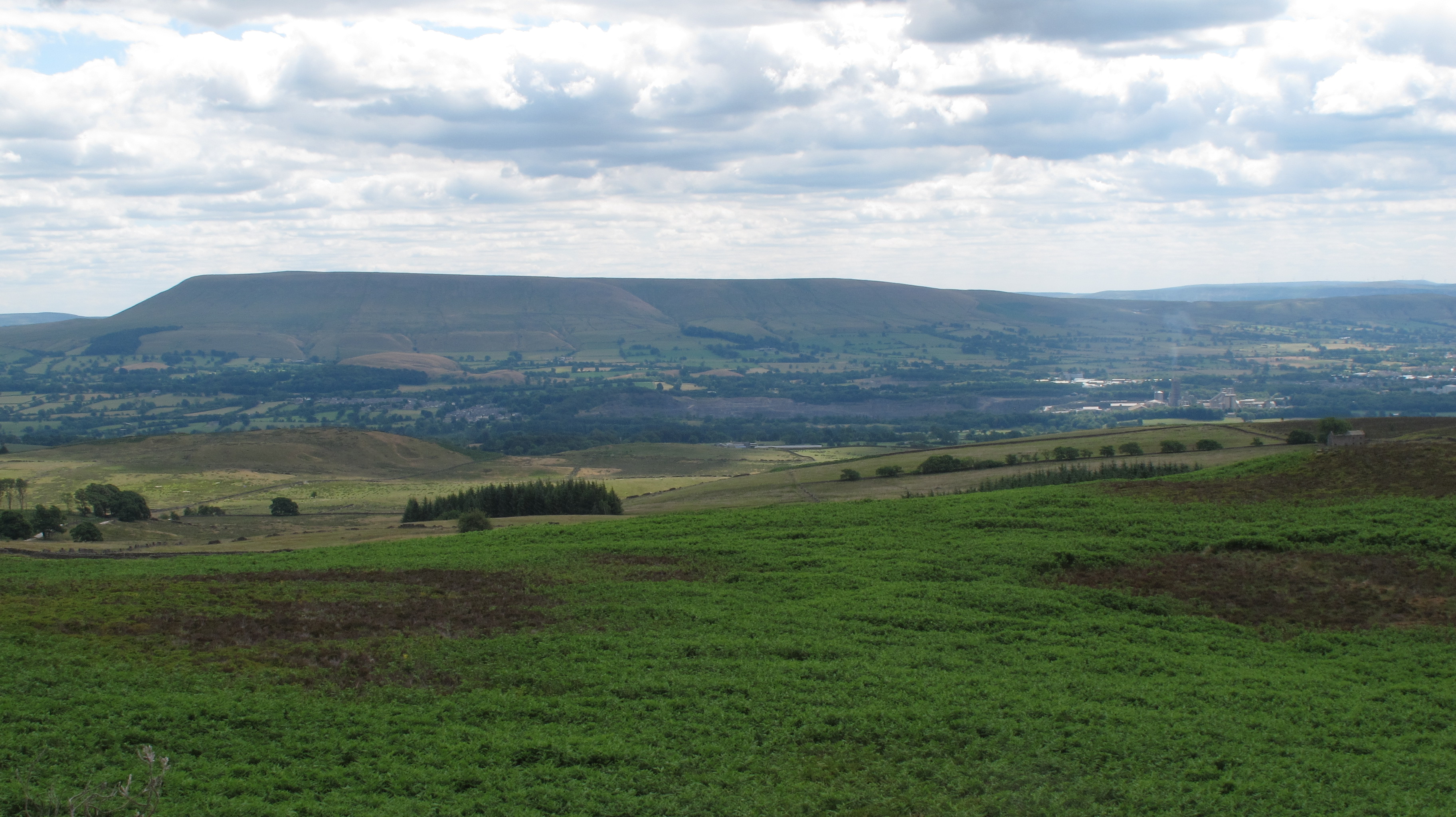
Pendle viewed from Waddington Fell.

There are three spots on Pendle where I like to enjoy an overnight micro-adventure. One is good for storm testing, one is ideal when I go up with Junior and then there is a small flat ledge at 440 m which has the best view, but has only just enough space for a solo tent.

PXL_20230923_174402776

No one in the UK can have missed what a wet year it has been. So whilst I continue to wait for a dry weekend for an autumnal wild walk, I saw the forecast of a sunny afternoon, with rain only during the wee hours. I wanted both some head-space and the chance to test out my new micro-tent, a Nordisk Lofoten so I packed a bag and headed out after tea. For my detailed preliminary review of this micro tent, click here.

The Lofoten is best thought of as a luxury hooped bivvy rather than a tent, so some experience is required to know how to best work with it given that it is not tall enough (70 cm) to sit up within. There are a number of micro-tents on the market now from Nordisk, Terra Nova and Vango, but that which is easiest to pitch and has the smallest pack size is the Lofoten. All these ‘tents’ are side entry, which when you compare to a hooped bivvy has a range of advantages:

  • Easier to get into / out from
  • Much less claustrophobic
  • A porch to store your boots and waterproofs within
  • Better views of your surroundings.
  • Space to get dressed (with a free yoga session thrown in!)

pxl_20230923_175301905A game changing feature of the Lofoten is being able to use the door as a tarp which gives you covered space to cook under, so long as the wind is not too strong (≤ 20-25 mph).

PXL_20230904_075535368

Additionally, it has a pole sleeve for the main pole and not Velcro tabs so it is far far easier and quicker to pitch. It was great just to sit out of the wind (in the open porch) and enjoy seeing the sun set and the lights of the town start to illuminate.

The sky would not have won photographic prizes, but together with the peace and isolation of altitude that half hour was music for my soul.

This slideshow requires JavaScript.

So what did I learn about my new micro-tent?

  • Pitched with the correct orientation to the wind it was much more capable than I imagined. The wind was rather stronger than I was expecting, gusting to around 35 mph at 0200. (In future I would seek a sheltered pitch if winds above 25 mph were forecast, had the wind swung around to ‘side on’ it could have been a different story)
  • The combination of heavy rain and driving wind did not lead to any water ingress.
  • Even though the temperature dipped to 9 C and I had the door fully closed, the catenary cut of the fly looks to work, as I had zero condensation.
  • It is much easier to enter, exit and get dressed within than under a tarp.
  • The porch could accommodate my boots, waterproofs and a 40 L pack, so long as I was prepared to store the pack on my exit route and move each time I wanted to get in / out. Had my pitch not been sloping L2R I could have reduced the width of the inner (it is designed to do this) and given myself more porch space. This is the first night I have closed the door and I was pleasantly surprised with the size of the porch – yes it is petite, but it is not Lilliputian!
  • I could pack up everything other than my Thermarest without getting out of the tent or opening the door.

Questions which still need to be addressed:

  • How to manage the challenges of entry and exit in heavy rain (I have a plan, but will it work?)
  • Limits to the weather conditions which would allow you to use the door in ‘tarp mode’ and thus have a covered cooking area.
  • When will there be a dry enough weekend to facilitate a two day wild walk I the Dales without the tops being obscured by cloud?!?

Nordisk Lofoten ULW solo tent – a review

Could it be suitable as a ‘Fast & Light’ backpacking / bike-packing shelter?

Background

Lofoten vs. 1 litre bottle

Lofoten – packed volume = 2375 ml

I started experimenting with a Hilleberg Tarp 5 as a ‘fast and light’ backpacking shelter last year. The first three day trip went well, but using it on my more recent five day walk along the Offa’s Dyke Path was far less satisfactory. Whilst it was a secure shelter that kept my kit and myself dry on some very wet nights, it did not provide the level of protection from the wind which I desire. Since I have very much enjoyed carrying a 35 L / 8 kg pack for certain multi-day walks, I set about researching alternative low weight / low volume shelters that might better meet my needs & desires. I settled on the Lofoten

This is an initial review of the Nordisk Lofoten after pitching for a few test nights, either in the remote wilderness which is our back garden, or atop a local fell.

User Requirements:

Essential features

  • A shelter that can keep out heavy rain and moderate winds

  • Pitches quickly & easily

  • Very low packed volume (to enable use of 35 L pack for 3 day walk)

  • Weighs < 700 g inc. all components (pegs, guys, bag etc)

  • Provides reasonable shelter for cooking in the rain.

  • Ten year lifespan at 8 nights use per year

  • Holds it’s value so I can sell on without too large a loss (this is a niche item I’ll either love or hate)

Acceptable compromises

Review – Space (Score – see below )

PXL_20230902_110228501

The Lofoten is the antithesis of the Tardis; one’s first impression is that it looks a reasonable size but that myth is soon dispelled when you get inside. This is very specialist shelter, made for the mountain marathon market, meaning that it does the very minimum to meet their requirements for a shelter.   For sleeping the size and design is wholly acceptable. It is a standard 220 cm long which is a good length for me at 5’ 11” (180 cm). Once lying down I had space for my sleeping bag foot-box, plus the full length of me and a spare approx. 20 cm at my head end where I could keep book, torch, phone, map etc. It has a pentagonal footprint so there is a triangular space next to the pole for your next days clothes.


…it’s really best to view the Lofoten not as a tent, but as a luxury hooped bivvy


Sensibly the bathtub extends to the full height of the inner at the foot end which should minimise the chance of dampness from the fly wetting your sleeping bag. It will stop moisture transferring from the fly, but can itself be subject to condensation on cold nights. Thus I will continue with my normal practice of wrapping my windproof or waterproof jacket around my feet as insurance. I would not want to use a winter down sleeping bag in this tent as it would touch the ceiling and at least one side of the inner tent. (But then I would never have viewed this as a winter tent.). I sleep on a self inflating pad (ca. 25 mm thick) and suspect that the considerably thicker air-pads such as the Neoair might be thick enough to cause the foot-box of your sleeping bag to touch the top of the inner. I plan to borrow an air pad to test this before I consider investing in one.

PXL_20230910_054810564

I found it easier to get undressed / dressed in the Lofoten than under the tarp, in part because the inner tent protects you from condensation on the fly and also because the height does not drop away as sharply. The “headroom” around my waist and thighs is actually greater. That said, unless you are a child you’ll not be able to sit up, the maximum headroom being a very modest 70 cm.

The unresolved challenge I see, is how one should get changed out of full waterproofs and get into the shelter if it is still raining heavily at the time. There is no porch area which is tall enough to sit in. If anyone reading this has devised a good way to deal with this issue when ‘camping’ in a bivvy bag please do leave me your advice in a comment.

PXL_20230910_054519644

There is just about space for boots, stove & waterproofs in the fixed section of the tiny porch – see photo. If you have the door open in ‘tarp mode’ you have lots of covered space, but if you want to keep your pack undercover it will need to be in the wide part of the ‘opening section’ of the porch and pushed out of the way when you want to get in and out of the tent. This leaves the narrow end of the porch somewhere you are best not to store any gear.

Considering all the above, it’s really best to view the Lofoten not as a tent, but as a luxury hooped bivvy. But because the entrance is on the side rather than the end it is much easier and more pleasant to get into / out from. Additionally I do not feel any sense of claustrophobia because the tent is at it’s tallest above your shoulders, the head wall of the inner is very steep and together this means the inner is well away from your face.

An unusual, excellent and game-changing feature is being able to prop up the door with the supplied bonus pole to make a tarp like cover over the entrance. This gives a good level of protection to safely cook in the rain and is lovely to leave open all night leaving you with the views of a tarp shelter but much greater protection. I’d plan to store my pack under ‘tarp’ section knowing that if bad weather sets in I can remove the tarp pole and seal myself away from the rain. It is possible to use a fully compressed trekking pole in place of the tarp pole and save yet further weight.

PXL_20230904_075535368


…being able to turn the door into a tarp over the entrance is a game changing feature.


Score (5/5 vs a hooped bivvy, 2/5 vs a conventional tent)

Ease of pitching (Score 4 ½/5)

This tent is very easy and quick to pitch even the first time you get it out of the bag. With practice I’d expect it to take < 3 minutes to erect. It pitches with a minimum of five pegs, but I’d carry another five so you can peg down the pole ends, add the two guys (supplied) and guy out the door as a tarp as discussed above. The tent is supplied with two sets of pegs – five titanium toothpicks, with which the 490 g weight is achieved, and five decent Y pegs akin to MSR Groundhogs. Peg choice is a heated topic, but I would suggest that the Y pegs should work well in all the conditions in which you be likely to use this tent. I’ve found carrying eight of these plus two of the toothpicks to peg down the pole ends is an excellent compromise.

The inner is semi-permanently attached to the fly with Dyneema guy cord, so the tent pitches ‘all in one’ as is common with most of today’s tunnel tents. It is possible to separate the two but this involves undoing knots in 2 mm cord which is a tricky, lengthy task.

My one complaint would be the fixed length guy at the foot end of the tent. Given that this is a Si-Nylon fly which will stretch in the wet it would have been far better to have a guy runner so you could easily adjust the tension and also have the option to choose where to put the peg if you are on stony ground. I have upgraded this guy.

PXL_20230909_185929812_Annotated_Guy_Line

Weather worthiness (Score – pending)

So far I’ve only used the tent on dry still nights so it’s too early to say. That the flysheet is Si-nylon with a hydrostatic head (HH) of 1600 mm which bodes well for sheltered 3 season use. The groundsheet has a 3600 mm HH.

When you do get a breeze you are advised to pitch the head / high end into the wind so you can take advantage of the shelter of the fixed porch area. Pitched in the reverse would form a windsock!

Ventilation / Condensation (Score – pending)

So far I’ve only pitched on windless nights when we saw a swings from 25-27 Celsius in the day to 10-12 Celsius at night, so maximised condensation potential for any tent design. Thus it’s too early to assess. The catenary cut fly at the head end and a covered mesh panel at the foot should aid ventilation even if you have the outer door closed. On one night I did see a small but appreciable amount of condensation form on the groundsheet just at the foot end of the tent, ironically this may have been due to the cooling effect of the vent in the fly at this end of the tent because I did not see any on any other part of the groundsheet.

Footprint (Score 4/5)

The footprint is about as small as could ever be possible. The guys are modest in length vs a tarp, so the Lofoten can be pitched into very tight spaces. Note though, that because the groundsheet is only 15 Denier it would not be happy on rocky ground without some kind of sacrificial footprint.

Also, most regular sized single hoop tents (e.g. the Enan or Laser) are symmetrical in the shape they present to the wind, the Lofoten is not. So, if you can only find a sloped pitch you may not be able to pitch it in the correct orientation to the wind and sleep with your head above your feet. This will probably mean hunting further for a pitch which is level or where the uphill end is into the wind. This may present a challenge to wild campers.

Weight / Robustness (Score 3½ / 5)

The only two skin tents lighter than the Lofoten (my real world weight 590 g) are the Terra Nova Pulse (total weight* 545 g) or Pulse Ultra (total weight* 490 g). The pitching method for the Pulse looks a real faff with the main pole being held to the fly with velcro tabs which is why I opted for the Lofoten.

Ti pegs 2 grams

All the above *claimed weights are achieved using 2 g titanium toothpick pegs. These are simply not practical options for real world camping – they are only really useful for use on a golfing green on a calm night! The Lofoten was supplied with a set of toothpicks and also a set of standard Y pegs. When I add all the guys, eight Y pegs and two toothpicks (for the pole ends) but exclude the zip out inner pocket cum-tent-bag my real world weight comes to 590 g. That’s nicely inside the 700 g target which was the combined weight of my tarp, and accessories. Honestly, the weight, but especially the packed volume of this tent, are amazing. It’s lighter than any hooped bivvy.

The design of the tent has a curved pole (6.5 mm Al) at the head and a short upright pole at the foot. The poles have unusually short pole sections (22 cm) which would work very well for bike-packers. There are three guying points, one essential one at the foot and two optional ones on the main pole. All guys are provided. To achieve both the ultralight weight and the impressive pack size ( 25 cm long by 11 cm diameter) very thin fabrics have been used, but the 7D fly still has a tear strength of 3.5 kg (Hilleberg’s Kerlon 1000 is 8 kg for comparison) and high tension points have been reinforced. My only disappointment is the 15D groundsheet which will need me to buy or make a footprint for use on all but campsites or the aforementioned golfing green. Careful handling will be essential, but if you want something of ultra low volume this is a price which physics demands that you pay. I am happier with thin nylon than DCF; this has now been in the market place for a while now and there are a number of reports of it having a too short a lifespan in real-world use. Furthermore, Si-nylon packs down smaller.

Conclusions

PXL_20230910_064007799

After a few test nights I think this tent shows promise with meeting my requirements, buying pre-loved was clearly a good idea, as how I cope with the low headroom (low every-type-of-room to be honest!) is something only experience will reveal. I am impressed with how well it has been manufactured and how quick and easy it is to pitch and strike. The true test is to take it away for a multi-day walk and see what it’s like to use when I’m tired and how much hassle it is to pack a bag from inside it. Also it will be interesting to see how one manges entrance / egress in heavy rain. It is certainly a niche design which will lead to polarised opinions. Either you / I will love it or hate it. I will write up a further review when I have the experience to know which is true for me.

If you have found this review helpful, you may also enjoy my other tent reviews:


Offa’s Dyke Path – walking the hilliest section ‘fast and light’ – Welshpool to Pandy

PXL_20230806_095543348

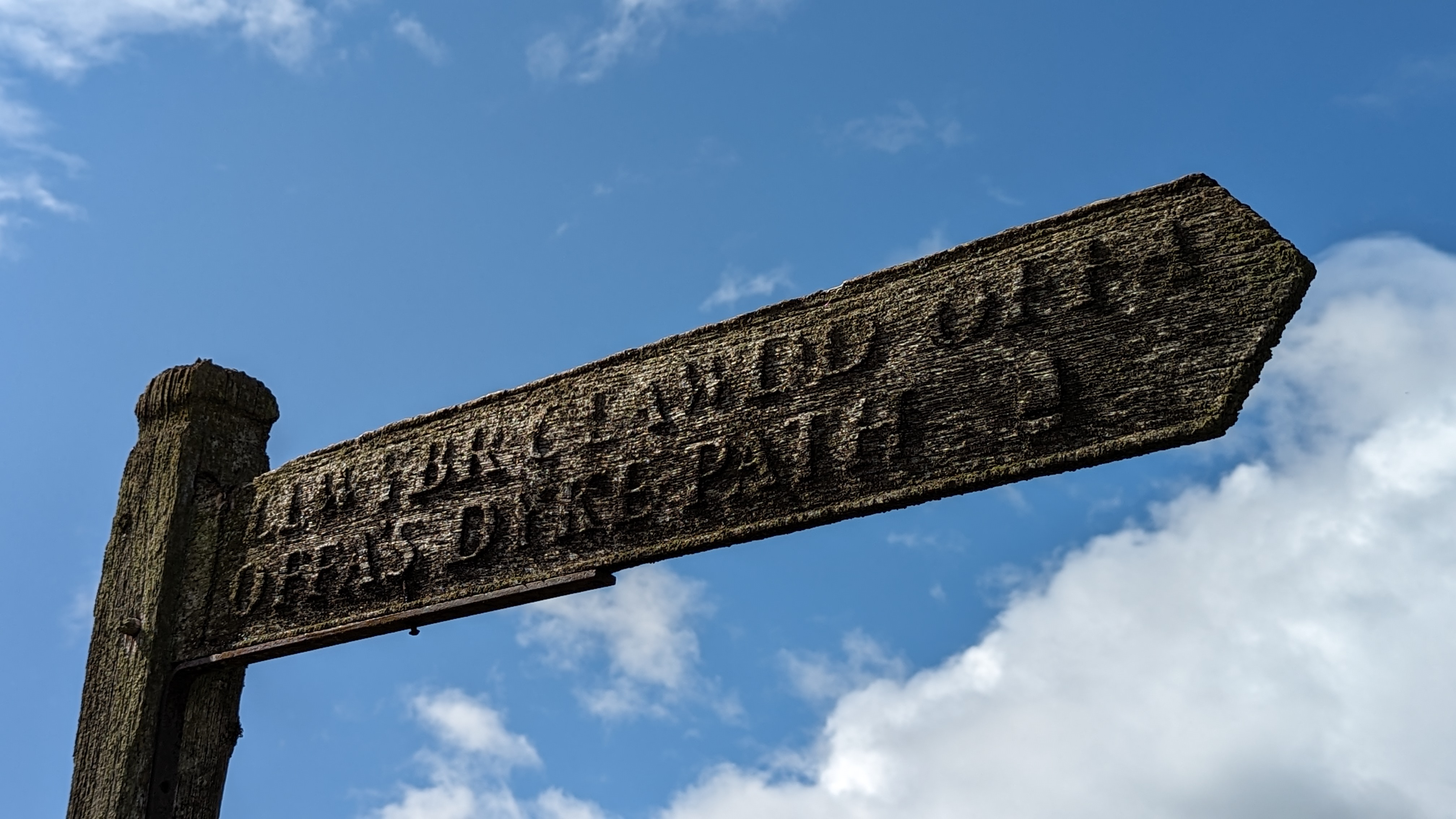
Back in the late 8th Century AD – Offa – the King of Mercia had had enough of trouble with the Princes of Wales. Offa’s kingdom covered what today we could call The Midlands, Shropshire and the Home Counties and thus abridged the whole border with Wales. He set about having an earthwork built – a earthen dyke – along the whole length of the Welsh border where natural defences such as rivers and mountains did not already mark and protect the boundary.

Roll forwards some 1100 years or so and a National Trail was defined which runs close to or alongside Offa’s Dyke and  the Welsh / English border from the Irish Sea Coast at Prestatyn to Chepstow on the Severn Estuary. The Offa’s Dyke Path (OPD) is 177 miles (285 km) long and totals 29,806 feet (9085 m) of height gain despite only reaching a modest 2,306 feet (703 m) at its highest point in the Black Mountains.

My walk covered a four and a half day / ca. 70 mile section of the path from Welshpool (North) to Pandy at the far end of the Hatterrall Ridge (South). I enjoyed the walk in a ‘fast and light’ fashion using a tarp as a lightweight shelter and minimal kit making 15-16 mile days fun rather than a challenge.

Day 1 : Short Cross Near Welshpool to Mellington Hall – 10 miles / 480 m HG

PXL_20230804_103630070

The start of my walk along the ODP

After a long drive from Lancashire I started walking around 1100 and thus this was a shorter day. The start of the day covered more forest paths than is normally to my liking, but after around 45 min I was out into open arable fields walking through maize and enjoying sunshine, beautiful wild flowers and butterflies. I first came across a section of Dyke when I was about an hour into the walk and had its company, on and off, for a good percentage of the day.

This slideshow requires JavaScript.

PXL_20230804_152154928

It was good to be out and in the sunshine and whilst the walk was not stunning it was very pleasant. I knew opportunities to wild camp would be minimal walking through lowland farmland so had booked myself a pitch at the Mellington Hall campsite and enjoyed dinner in the hotel.  It was somewhat surreal to sit in the grandeur of the Hall knowing my night would be spent under a thin sheet of 6,6 Nylon.

Day 2 : Mellington Hall to ‘The Fridd’ just beyond Knighton – 16 mies / 1050 m HG

The day started very wet and I was impressed to be totally dry under my tarp. It’s not easy packing your gear in such a such a confined space however. Soon after I started walking the rain slowed to ‘drizzle’ and did not get heavier that this all day. I had seen the forecast and had expected worse. The rain and low cloud made photographs valueless that day, but I know from past experience that the steep hills of Powys are both very attractive but are also hard work. Back in 2018 I cycled a Welsh Coast to Coast and knew well this would be a hard day.

It is normal to walk the ODP from South to North but I was glad to be walking South that day as I had the wind behind me which meant the rain was not blowing into my face. I was now away from arable farming and into a livestock area.

The day ended well when I found Watson’s Ale House in Knighton. When it came to decent beer this was a veritable oasis in desert of a town. When the landlord found I was a brewer I was soon pulled into conversation and offered a free drink. Helpfully too, he was happy for me to buy a takeaway and bring it back into the bar to eat with my beer.  He had an good selection of well kept cask ales,  I cannot commend the place too highly.

PXL_20230805_181616191

However come 1900 it was time to walk on as my plan was to wild camp on a remote field edge some 1 ½ miles South of the town. I did indeed find a good spot and was amused to be using a length of Offa’s Dyke as necessary shelter from the NW wind.

PXL_20230806_055553555

Day 3 : The Fridd to Gladestry – 17 miles / 860 m HG

Waking to blue skies and sunshine was a tonic, but given my pitch I had to be up and away quickly and I was back on the trail by 0730 and ahead of the morning dog walkers. There was nothing exceptional about the day, but it was a really pleasant walk through rolling hills on wide grassy paths often flanked by bracken, typical for this area.

This slideshow requires JavaScript.

My lunchtime view a significant highlight. I sat on a bench close to a huge beach tree which sheltered me from the one two minute shower of the day.

This slideshow requires JavaScript.

Gladestry was something of a mixed blessing though, as today was a Sunday the pub closed at 5pm meaning no end-of-the-day beer and no dinner! After a proper yomp over Hergest Common (oddly named for a hill which rises to a lofty 423 m) I had a proper thirst on me. On the plus side the walkers campsite at Offa’s Dyke Lodge  turned out to be the perfectly flat back lawn of a B&B run by the most delightful and helpful of couples – Viv & Adrian. I can only imagine that the had you chosen a B&B room that this would have been excellent too. They offered to share their dinner with me! I opted for one of my instant meals as managing my food intolerances can be a challenge but it was a very kind & hospitable offer.

Day 4: Gladestry to Hay on Wye – 10 miles / 750 m HG

Whilst I woke to another fine dry day, I could see from the forecast that day five was due to be very wet and thus mean low cloud over the Black Mountains section. This was the planned highlight of the trip so I opted to stop short at Hay rather than walk onto Hay Bluff for an elevated wild camp. The idea being to sit out the following day in Hay rather than walk though the cloud. Most long distance paths have ‘linking days’ ones which are necessary to get from one attractive area to another and day four was one of those.

This slideshow requires JavaScript.

Day 6 : Hay Bluff-ish to Pandy – 13.5 miles / 550 m HG

Prologue – Much of day five was spent reading my book whilst drinking some excellent Earl Grey in The Granary Cafe in Hay. Whilst overpriced for food, the tea, food and service were all very good. By mid afternoon my tea tank was overflowing and I was keen for a change so I set off to walk the 2 ½ miles to the foot of Hay Bluff. I found a sheltered gulley close to, yet hidden from, the road and out of sight of the farms too.  Wonderfully, when the cloud cleared my hidden pitch had a great view of the tops of Hay Bluff and Twmpa. Before long the rain stopped and finally the sun came out.

This slideshow requires JavaScript.

Day six started warm, dry and full of promise. Almost all the height gain of the day was complete within the first 45 minutes as I found myself atop the Hatterrall Ridge. I had been wise to camp lower down as the top was very soft, often boggy with the path only being good because it had been improved or ‘paved’ with stone slabs. As soon as I reached the ridge I was infused with joy and felt the serenity of being high on a hill. I cannot readily put the feeling into words, the nearest I can phrase it is to say that it felt like finding my purpose and true home. I enjoyed the views down into two countries and was reminded of twice cycling (2013 & 2018) along the Llanthony Valley and up Gospel Pass.

This slideshow requires JavaScript.

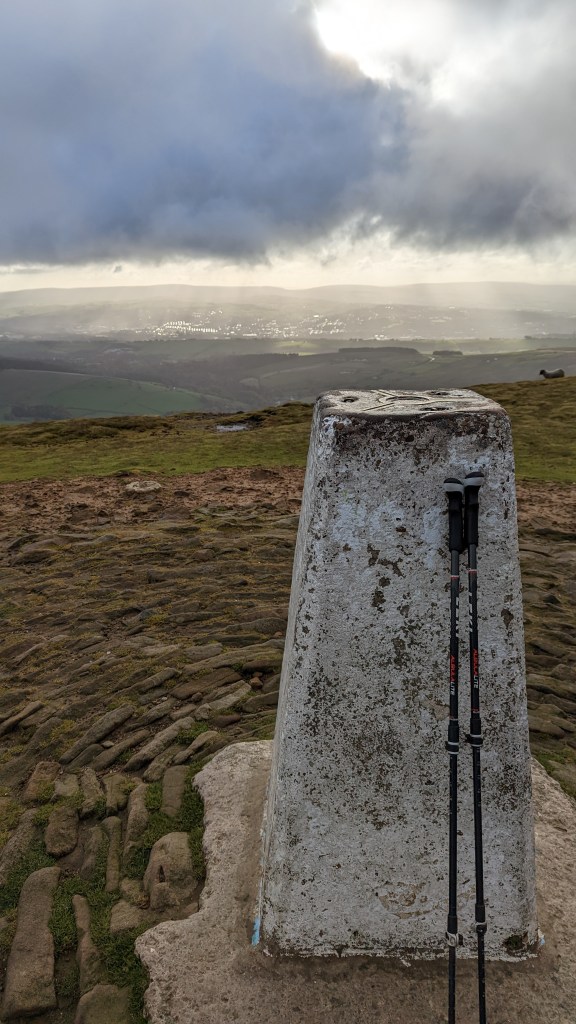
After I enjoyed passing my fourth trig point of the day it was time to drop down and into Pandy. This settlement is what my grandmother would have described as a ‘one eyed hole’. Once it had three pubs and a campsite, now all have closed. I’d shaken the internet the day before and found there was a campsite in neighbouring Llanvihangel Crucorney, a place worth visiting for the name alone! I don’t think I’ve ever walked away from a campsite before, knowing that hunting out a hedgerow would be a better option. I did that day. The camping field was directly adjacent to the A465 and there was not a level area of grass within it. All was not lost however as something Google had omitted to find was the village pub. In terms of food it was middle of the road, but in terms of friendliness and service it was second to none. Yes, I could camp in the beer garden and would I like a pint? Thank you and yes! I was further delighted to find that my bus stopped directly opposite so at 0800 the following morning I headed off to rendezvous with Mrs W in Newport.

Conclusions

This section of the ODP is the most dramatic of the whole route. I really enjoyed the Hatterrall Ridge, but the rest I’d describe as merely pleasant. Was this probably points to is how spoilt I have been with the long distance walks I have done in the past two years. Walking next to lengths of the Earthen Dyke was fun and the signage was almost faultless. If you want a pleasant few days walking in verdant countryside this could be the walk for you. I’d hesitate to call it a walk for beginners because the mid-Wales stretch involves long days between points of fixed accommodation with a generous amount of height gain thrown in. Walking ‘fast and light’ was certainly the best approach for this section.

Tarp camping – my verdict…

After playing in the back garden over the summer to look at pitching and bug net options I’ve taken my tarp out for its maiden voyage. Because I didn’t know if tarp camping would be something I would enjoy I chose to buy a tarp second hand and accessorize it as cheaply as possible. Buying second hand meant taking what I could find, which in this case was a Hilleberg Tarp 5.

DSC_2904

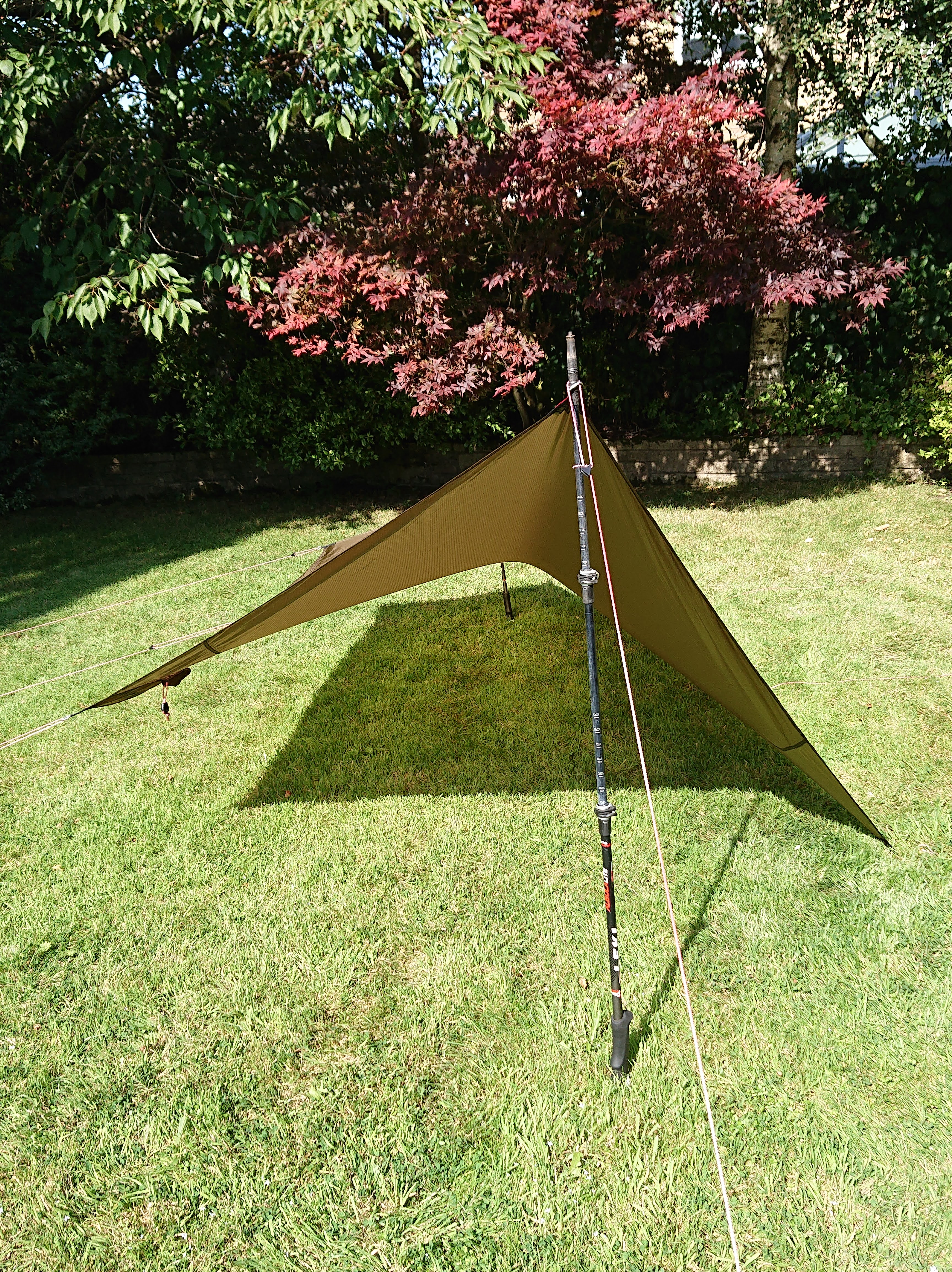
Regular A-frame

The prevailing advice with tarp camping is to start with something large and then only once you have some experience move to something more minimal in covered area. My experience thus far suggests that this is sound advice, it’s just that I opted not to take it! In my earlier post I covered the conceptional pro’s and con’s of tarp camping and busted a few myths along the way; So, how did these ideas measure up in a real world two night wild walk you ask? Read on…

For my first tarp camping trip I chose to use it for my shelter on a three day walk along the Lancashire Way.

What did I discover?

Positives

  • The Tarp 5 only weights 320 g inc. guylines.  400 g when you include the pegs.
  • Having a roof over you provides reassurance and is far nicer than using a bivvy bag.
  • A tarp can hold out wind blown rain if pitched correctly vs. the wind.

However I’ve taken an unconventional approach to pitching in the wind, treating my tarp like a tent if it looks like it is going to rain. Normally you’d need a shaped tarp to do this but I’ve designed a foot end panel which should offer the best of both designs. More of this below.

Fast & Light

The tarp & pegs are all in the red Aiguille pocket nearest to the camera

  • I loved the low volume of the tarp and associated kit
  • My low cost bug mesh solution worked very well.
  • Very satisfying in the rain
  • The light weight and low volume facilitated a great walk allowing for 16-18 miles / day.

Negatives

  • The covered area in which you can sit to cook in the rain is very limited.

Not sure if this is going to be a problem as whilst I experienced heavy rain, this was only after I’d finished cooking and eating.

  • Didn’t really feel that extra connection to the environment

But that may well have been due to the short daylight hours and me being too tired to do more than pitch, eat then sleep. One aim of this walk was to break a period of insomnia – which wonderfully it did.

  • A tent is a lot more comfortable in the mornings

It is warmer to get dressed in, especially if the heat of brewing-up is captured which takes the edge off the chill when you are getting dressed.

  • The lower amount of headroom of a tarp makes getting undressed / redressed a challenge vs. my experience of a tent.

My accessories – how did they work?

My bug net solution was comfortable and kept me insect free. For me comfort and convenience comes ahead of price, but at £20 the Sea to Summit Mosquito Pyramid Net, paired with an old footprint (groundsheet protector) felt almost as convenient as a purpose made bug tent costing considerably more. Adding a hand-sized loop of climbing cord to one of the front pegging points made for an easily visible and accessible handle to give a route in and out of the netting.

DSC_3016

The really pleasing addition was the end panel which I designed and a friend made for me.

DSC_2976

Whilst I know that the design could be improved on, I experienced winds of around 25 mph and rain at 1.5 mm / hr for a few hours and remained wholly dry. It is true that some rain blew through the obvious gaps but because my feet / legs were in the centre they remained fully protected. This is something to be aware with a tarp; rain will be driven under the sides for a short distance and this is why tarps are very wide compared to a tent. The extra overhang ensures that the core area remains dry. Rather like a porch or veranda on a house.

Titanium pegs

Ti pegs 2 grams

I wouldn’t trust these on a guy line, but there were perfect for pinning down the groundsheet and only 2 grams a piece.

The ultimate test – will I go tarp camping again?

Updated Sept 23 – When I originally wrote this post I thought I would use the tarp for a multi-day walk again and indeed I did.  I used it on a 5 day stretch of the Offa’s Dyke Path in Aug-23 in mixed weather.  It proved excellent at keeping me and my kit dry during periods of significant overnight rain.  It was not what I’d describe as comfortable however.  Whilst it performed excellently against driving rain, on cooler days or when I found myself in the cloud it just didn’t seem possible to block out the cool wind and so I had to climb into my sleeping bag even at 4pm.  You might reasonably say that this price of travelling ultra-light.  After all such tactics are required for winter backpacking / wild walking.

What I loved about the tarp was it’s ultra small pack volume, allowing me to walk for 3 days with a 35 L pack and up to 6 days with only a 40 L pack.  Smaller packs are not just lighter but also physically smaller, giving you a sense of being unencumbered.  I love that.  So after a lot of research and conversations with ultra-light enthusiasts I bought what I’d term a ‘micro-tent’ which offers much better wind protection, a faster pitch and is amazingly over 100 g lighter than the tarp and it’s necessary accessories.   It is thus under half the weight of my normal solo tent (Hilleberg Enan, 1200 g).
This new shelter is a Nordisk Lofoten 1, which right now I’ve only used for a handful of single night ‘test nights’ which form the basis of a preliminary review.

…two tents, same location – had I pitched them side by side you would see that not only is the Lofoten about half the width, it is also 30 cm less tall.


The Lofoten is an upgraded experience vs the tarp and should be compared against a tarp, or more accurately a hooped bivvy. It will not replace my Enan for > 3 day walks or fell top wild camping but this was never the aim.

Fast & Light along the Lancashire Way – a Three Day Wild Walk

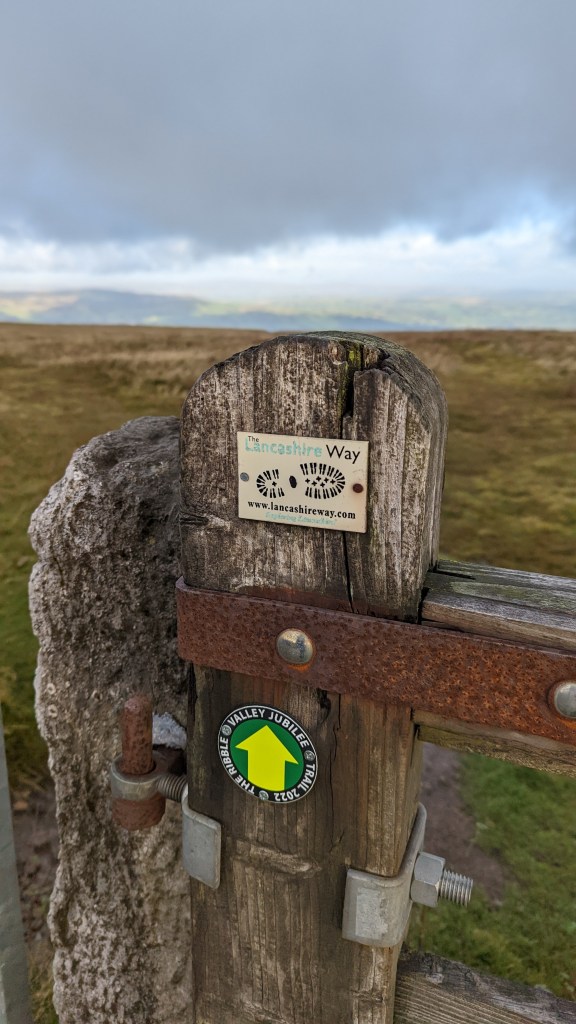
Whilst on a number of local walks I’ve seen this sign. And when I’ve seen it, it has always been on really pleasant stretches of footpath. So after far too long a delay, I looked up what this LDP is all about. That it was devised by an individual, Neil Harwood, rather than a committee or a council, struck me as unusual at first glance. However I then recalled that the Pennine Way was devised by Tom Stephenson and the Coast to Coast by Wainright. So finally I got around to finding out more about the route to discover that it consists of four loops designed to showcase the best of the county. I chose a section of the Central Loop for my three day wild-walk as not only did the route look great, but it would allow me to wild camp at lower altitudes and use my tarp for the first time (my test night in the garden not withstanding). Being modest in height gain it would allow me to make the most of a ‘fast and light’ approach and replace the weight with extra milage. My thoughts on the tarp are covered elsewhere, this post covers the walk itself.

Day 1 – Parlick to Salter Fell – 16 miles / 560m height gain.

Mrs W dropped me off at the foot of Parlick at 0900 on a windy but bright and sunny morning. The start of the walk covered the route of my one of my very early wild walks taking me across the Bowland Fells to Langden Castle.

  • Parlick
  • Fairsnape Fell
  • Langden Brook
  • Langden Castle

Because I was only carrying 10.5 kg in a day pack I easily reached the Castle by lunchtime. From here the route takes you to the Trough Road and then cross country to Dunsop Bridge, the Centre of the Kingdom. One thing to note here is that there is a path, not marked on my 1:50k map, which runs alongside the river which avoids road walking (starting next to the butty wagon). I missed seeing this until I was already committed to walking on the tarmac.

Because I was mentally tired I decided to cut Dunsop Bridge out of my route to reduce the distance. It offered tea but not beer and thus was not enough of an incentive to visit on this occasion. If you are not a seasoned local you will not want to miss visiting the (alleged) geographical centre of the UK, Dunsop’s claim to fame.

The path splits at the base of Middle Knoll with the official route heading to the right. I pondered taking the alternative path to the left which would have taken me over Wolfhole Crag directly to my proposed camp spot on the Hornby Road. The official path follows the Whitendale River, a route I walked on my first ever wild walking / wild camping weekend back in 2017. On that occasion the rain was heavy and yet as much water came up from below as fell from above so I was in two minds which route to take. In the end the view along the official route looked enticing so I took the risk and went for it. Whilst it was pretty damp in some places, higher up the valley, it wasn’t a problem and was nothing like my first visit. But should you be walking the Lancashire Way after a period of heavy rain, I would commend the route via Wolfhole Crag which is a very fine fell offering excellent views

Wolfhole Crag (2018)

I reached my camp spot (very close to where I camped in 2017) at around 6pm and was treated to a beautiful sunset

Day 2 – Salter Fell to (near) Sawley – 18 miles / 250 m height gain

Thankfully the strong winds of the day only started after I had packed away my tarp. The sun was out and I started walking at 0740 and enjoyed having the Hornby Road all to myself. This forms part of the route which the Pendle Witches are supposed to have taken from Newchurch-in-Pendle to their trial in Lancaster.

I arrived in Slaidburn in time for a second breakfast in the cafe then set off down the River Hodder to Newton.

Then it was time to climb the iconic Waddington Fell. The Eastern End of this hill is called Grindleton Fell instead and it was here I had planned to camp. I have a friend who farms sheep on Grindleton Fell and allows me to camp on his land and there is a spot which I truly love which offers fabulous views across the Ribble Valley. Unsurprisingly I’ll not be revealing where this is (!); but here is a photo from a previous visit.

Because of my early start, the mainly downhill route and a restorative nights sleep I arrived at the turning to my proposed camp spot at 1400. Far too early.

I pondered my options; Day 3 was (in theory) due to be 18 miles and two ascents of Pendle, and so it made sense to sacrifice my astounding view for another occasion and get a few more miles under my belt. I headed for Sawley and some brain oil at The Eagle. This, I reasoned, would help me think of where I would be able to wild camp at valley level without being a nuisance or being moved on. The Eagle is now a Robinson’s pub, not a brewery renown for great or innovative beer so I was pleasantly surprised… They had a new Seasonal on cask, Big Sur, this was modern, hop forward and really rather good. I knew that Robinsons were changing direction, moving away from their current huge brewery to something more modest in size and supplying just their own tied houses – in a move very similar to that carried out by Thwaites five years ago. It looks like they have either hired a new brewer or allowed one of the current ones to realise the potential they had been held back from expressing until now. This can only be good news for their brewers and ale drinkers in the NW & Wales alike.

But enough of an aside, I came up with a plan and that was to walk to what is known locally as the ‘Fairy Bridge’ and camp there. Upon arrival I found the bank next to the river to be level, secluded and in some no-mans land between pasture fields. Ideal.

Day 3 – Sawley to Clitheroe – 12 miles, 650 m height gain

I had worked out the night before that, if I set off promptly, I would be able to surprise Junior by picking him up directly from school rather than him having time in the after school club. (Based on the original 18 mile day). It was a glorious morning and the warm hue of the sunlight made Downham look even more beautiful

If you ever visit Downham an unexpected highlight is the public toilets. Yes really! For me it was a welcome place to brush my teeth and drop off my rubbish ready for the day ahead.

Now it was time to ascend Pendle’s Big End

The route then takes you down to the Ogden Reservoirs and into Barley. I estimate that I’ve descended Pendle via this route over 100 times, so instead of walking into Barley I decided to explore the path with the intriguing sign post that I’ve been meaning to explore for several years. Today was the day to walk up to the head of Ogden Clough. There is no path marked on the 1:50k or 1:25k map following this route but it is certainly there and is very well walked.

It was very pleasant to go exploring and also good to lose less height before my second ascent of Pendle – this time to the Nick of Pendle. This marked the end of my journey along the Lancashire Way as I headed North, into Clitheroe and back to collect Junior from school.

Clitheroe – in the Ribble Valley

Conclusion

This was an excellent three day walk. It really felt like a long distance walk as I experienced three very different areas over the three days – The Bowland Fells, Hodder Valley and finally the Ribble Valley & Pendle. And whilst it did not attain any great altitudes it nevertheless covered fell and wild country with the valley sections also enjoyable and not just a necessary bolt on.

I look forward to exploring more of the Lancashire Way in the future.

Tarp camping – appraising the benefits as an alternative shelter for wild walking.

I am very fortunate to have been able to successfully make the move from regular employment to self employment. One of the designed and positive outcomes of this change is a shorter working week yielding more time to enjoy family time & hobbies. Thus this little project, which seeks to address the questions:

  • Is tarp camping enjoyable or is it all just hype?

  • Can I find ways to make it comfortable and practical vs. my standards

Whilst I thought this could be a fun experiment (and it has very much been this thus far) until recently I was far from sure there really was any benefit to a tarp over a lightweight tent.

Tarp Benefits – Perceived or Real?

As with many niche hobbies, once people have invested their cash and reputation into them, they can often be far more evangelical about them than is actually justifiable. Cognitive dissonance? These are my thoughts thus far:

Perceived benefits – exploding the myths

Tarps are ultralight?  This is a myth, at least today it is. Whilst the tarp itself may be very lightweight, to this you have to add a ground sheet, something to protect you from insects and often some secondary weather protection.

3 x 5m tarp (350 g) + ultralight bivvy (480 g) + groundsheet (200 g) + pegs (80 g) = 1110 g

Which compared to some of today’s solo tents isn’t at all impressive…

  • Terra Nova – Laser 1 – 1050 g
  • Lanshan 1 Pro – 690 g
  • Nordisk – Lofoten 1 – 565 g
  • Terra Nova – Laser Pulse 1 – 550 g

Even when compared to my robust and comfortable Hilleberg Enan (1200 g) the weight saving could be far more easily gained by a healthy diet than a tarp!

Tarps are quick and easy to pitch?  From my own experience and from YouTube video’s I’ve seen, pitching a tarp normally involves pitching then fettling. Today’s single pole tunnel tents can be erected in around three minutes and don’t need any fettling because their design is fixed and not flexible like a tarp.  The Enan goes up all in one too.  My tarp, for example, has eight guys and then needs any inner shelter setting up afterwards – however fast I get, I don’t think I’ll ever get it down to three minutes. On the plus side however, though they do pitch ‘outer first’ which is great news in wet weather. They could also form a lunchtime shelter if required.

Tarps take up less space in your pack? In truth this depends on the tent you compare them against. My experimental set up is significantly lower in volume than my solo tent, but it is only about the same as one of the Terra Nova ‘Compact’ models or a Norkdisk Lofoten

Tarps can be pitched in a variety of ways / shapes?  This is correct, but it’s a bit of a false positive. It is true that you can change the design of your pitch depending on the weather conditions, but this is because the different pitches are essential to make them work in that weather, it is not an added bonus. Whilst a tent usually has a preferred orientation vs. the wind direction, most will cope acceptably with a 90 degree swing in with direction. Should this happen with a tarp, you may need to re-pitch it in the night.

Real benefits – making the most of the upsides

Tarps can be pitched more easily in wooded areas / on a smaller footprint : Flexibility of pitching options does mean that you could string up some para-cord between two trees over root filled ground which is not happy to accept pegs. Also if you can only find just enough flat space to lie down, you can pitch a tarp over this and don’t have to worry about rocks or tree stumps also being under the flysheet. I can see how they could work very well on the wooded long distance trails of the USA.

And saving the best ’til last…

Tarps give you a better connection to the countryside around you : And here at last you find the reason why I plan to pursue tarp camping for a few test walks. If you are able to pitch your tarp ‘high’ you get open views all around you. You can stare up at the stars, or out at the views around you unhindered by where the tent door needs to be. The first night I spent under my pre-loved tarp was in our back garden during the UK’s July Heatwave. Having a roof over me made me feel secure, but feeling the breeze blow over me was invigorating. I could see the stars and watch the bats flitting overhead.

That first night told me that whilst a tarp is not a mountain shelter, in the right place and at the right time of year it opens you up to an outdoors experience quite different from a regular tent and one that, at least initially, has been refreshing and enjoyable.

My Tarp set-up

I shook Ebay and this is what fell out…

DSC_2904

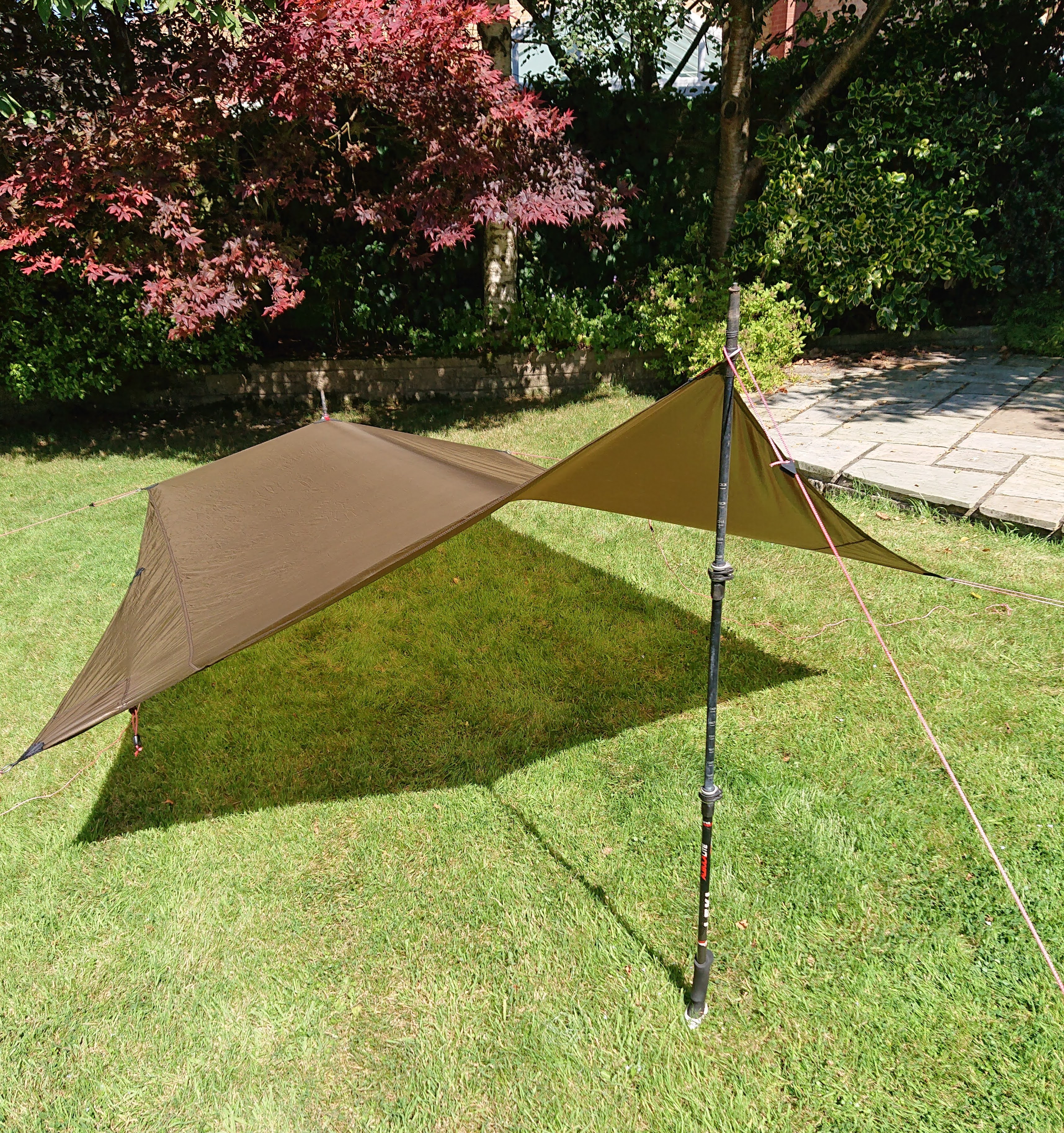
It is a Hilleberg Tarp 5, which weighs in at 320 g inc. guy lines but excluding pegs. It is made from their tough but lightweight SiNylon flysheet material and is an elongated pentagon shape. The extra triangular sections at the front and sides appear to have been added to allow for greater headroom at the entrance. As it is not rectangular, the number of pitching options is less numerous. Those I’ve found practical are in the slideshow below.

This slideshow requires JavaScript.

The quoted dimensions of this tarp are slightly misleading, and the effective protected length is really around 2.3 m (6’ 7”) rather than 3.15 m (10’ 4”). However the longest inner dimension of most modern lightweight tents is usually around 2.2 m. The received wisdom is that if you are new to tarp camping you are best to start with something larger, progressing to something smaller (and thus lighter) once you have gained some experience. I pitched mine in the back garden and assessed what area remained dry in the rain and then sought to apply some lateral thinking. For an excellent review of the Tarp 5 head over to sectionhiker.com.

This is the set up I plan to take away on my first two night wild walking test:

DSC_2999

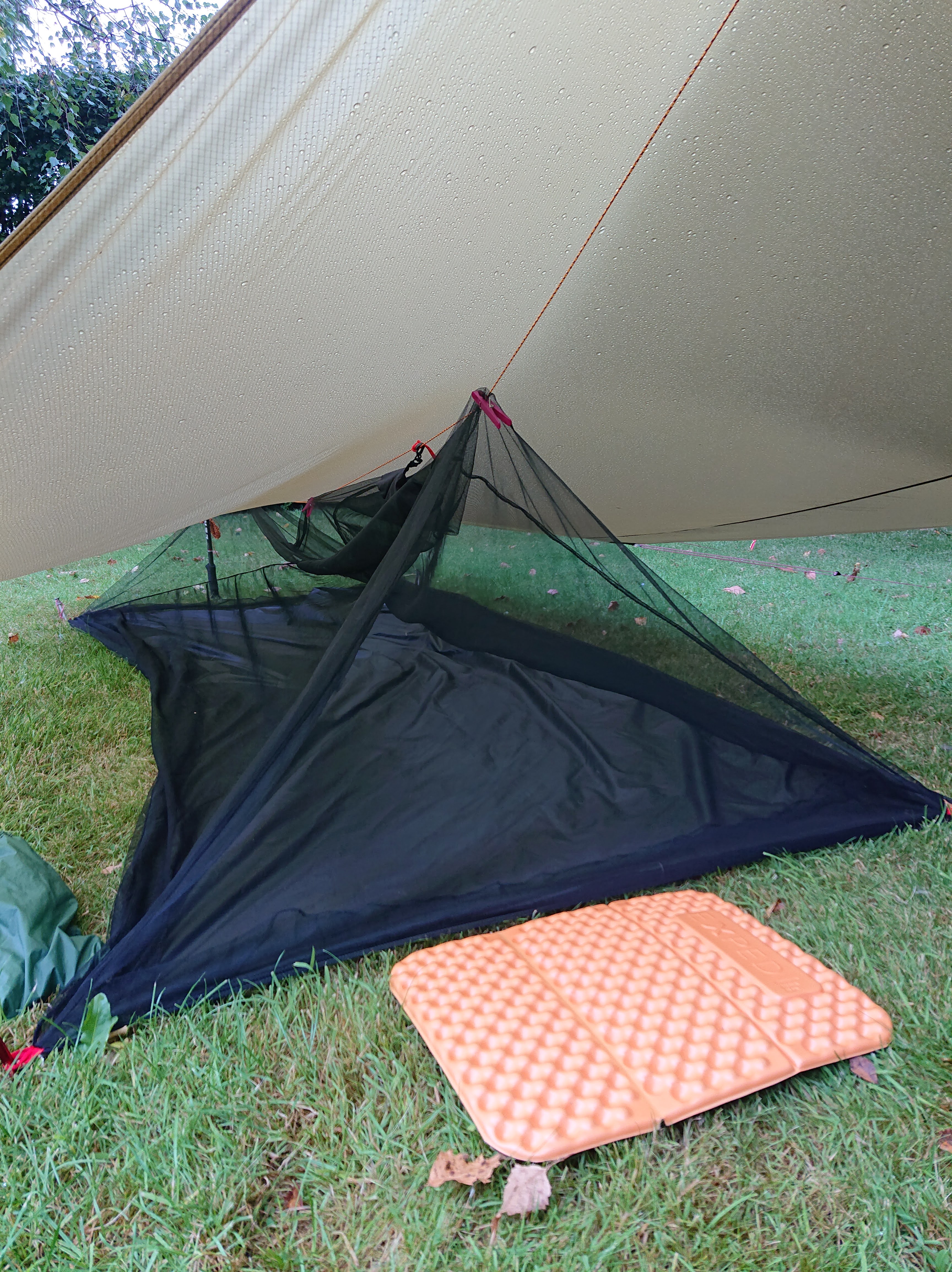
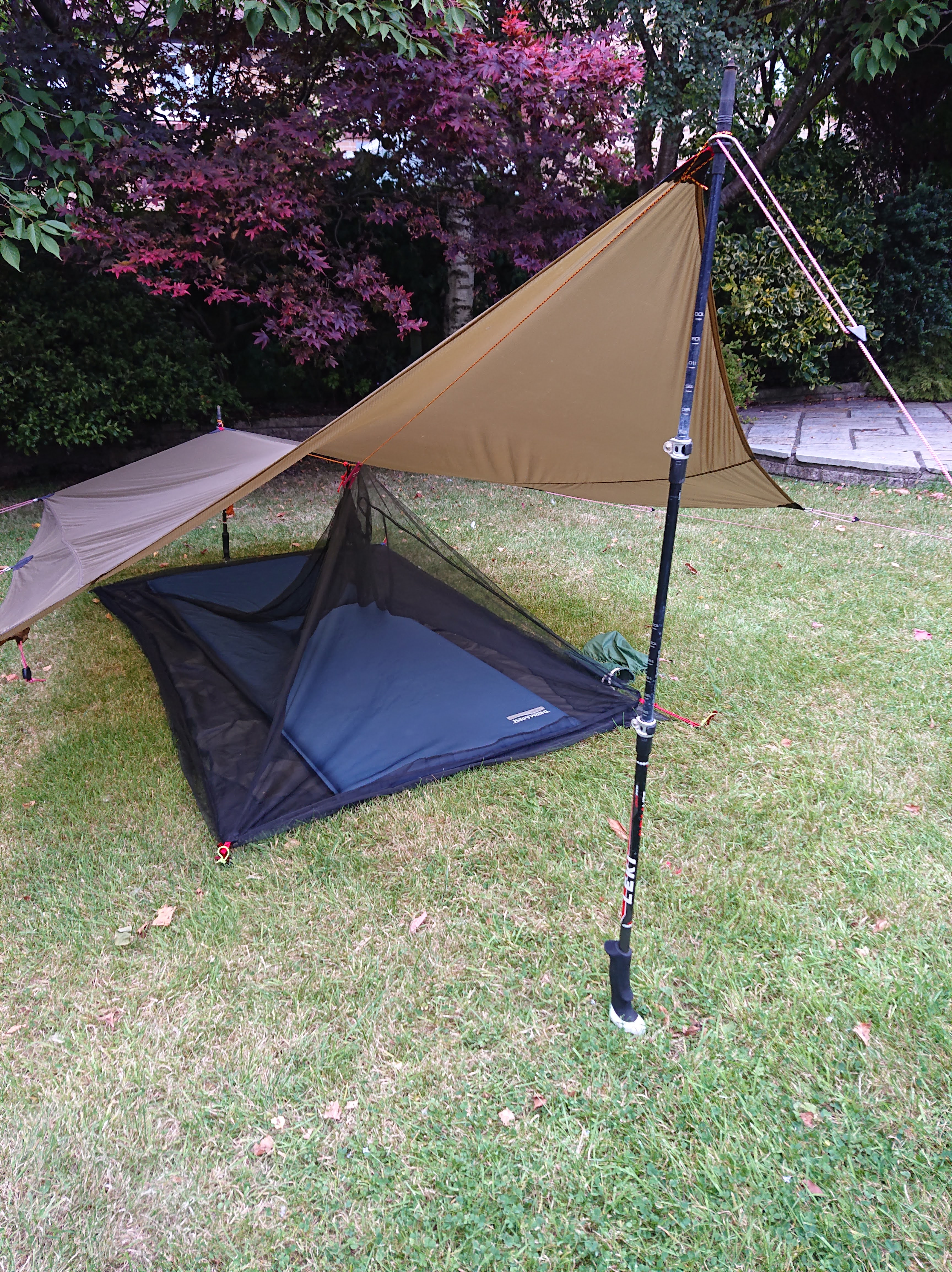
For me; for most people; protection from insects is essential. There is a Hilleberg mesh shelter designed to work with the Tarp 5, but even if I was willing to spend the £220 on one of these, there are none available at present. My solution has been to dig out an old tent footprint (2.2 x 1.2 m) and find, after a lot of searching, mosquito net – Sea To Summit Mosquito Pyramid Net – which is designed to be hung from 1/3 along it’s length, thus lending extra headroom and fitting with the sloping pitch of my tarp. By tying a length of 1 mm cord between the two walking poles I can can hang and peg the netting to this.

DSC_3016

The end result is not so different from the Hilleberg version apart from it’s lack of a zipped entrance door – oh and the £200 difference in price tag.  It is true that my groundsheet is not of a bath-tub design, but careful choice of site should mitigate against this limitation. By tying a generous loop of climbing cord to one of the front pegging points of the net I have an easy and visible handle to allow me to lift the front to get in and out.

I really like the Sea to Summit Netting, it being made of narrow threads and being black in colour renders it all but invisible from the inside and thus retains my connection to my surroundings – which for me is THE predominant benefit of tarp camping. Time will be the judge of it’s longevity, but at £20 it doesn’t need to last ten years.

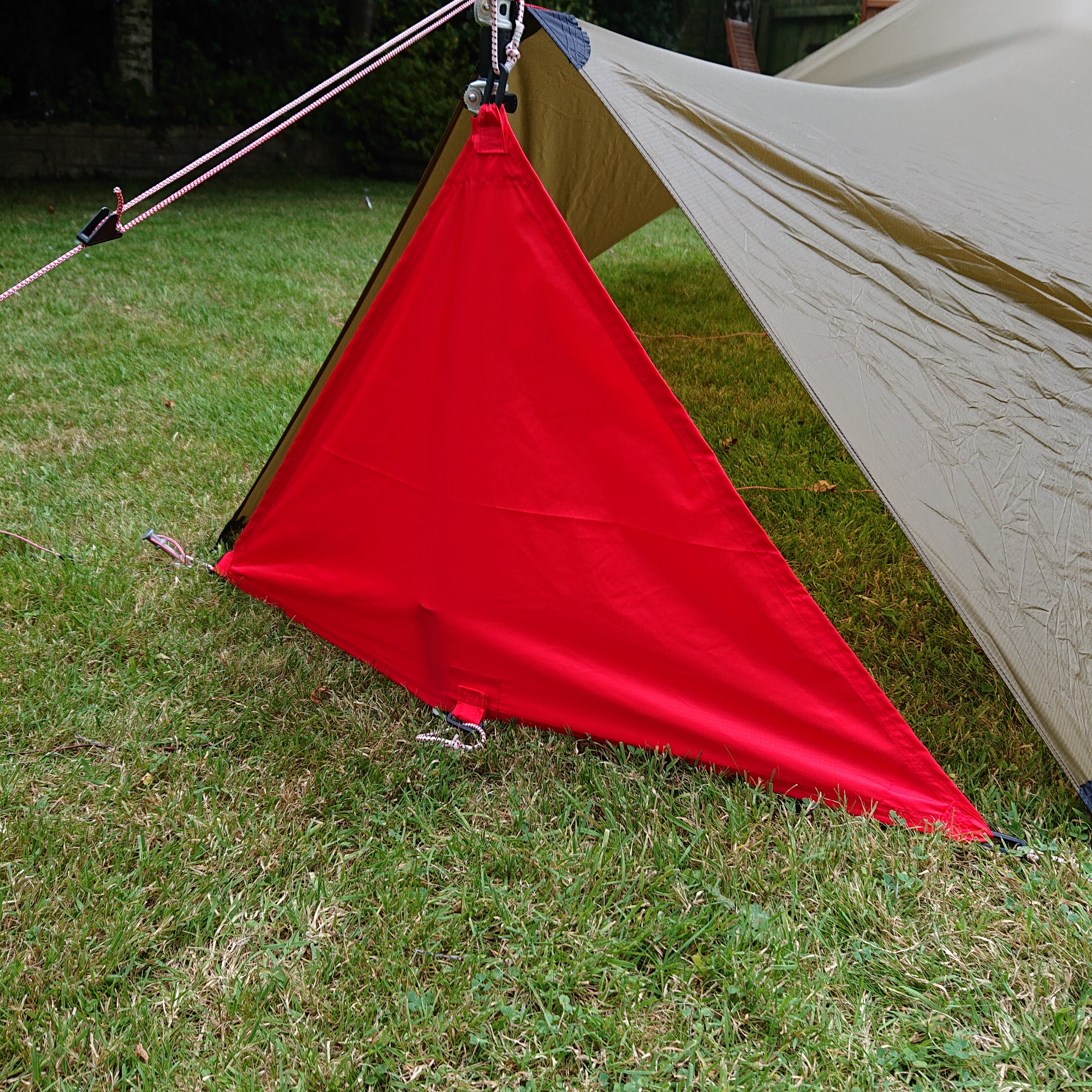
The addition which I hope will make all the difference is this end panel

DSC_2976

A friend of mine is skilled with a sewing machine made me a waterproof end panel to my own specification. When the bivvy is pitched in ‘storm mode’ this will fit the triangular gap at the foot end of the tarp. Not only will this reduce the amount of overhang I need to allow for rain protection at the foot end (meaning I can shift down and increase the overhang at the head end), it should also allow me to pitch the tarp like a tent, foot into the wind. The received wisdom is to pitch a tarp ‘side to the wind’ for rain protection, but this is far from ideal wrt to the wind itself. With the narrow low end of the tarp into the wind it will offer a much more streamlined profile to the elements. Also it will give me a sheltered cooking area at the head end. All this fine theory now needs to be tested out however, to check its validity.

When do I plan to use this new set up?

My view is that tarp camping is best done in moderate weather between late Spring and early Autumn. Whilst some people pitch tarps on fell tops, at least initially I plan to use mine at lower elevations and taking advantage of natural shelter where it is available.

My plan is to go away for a three day wild walk following a local section of the Lancashire Way. By staying local I can pick a good weather window. Given the low weight and volume of my tarp system I hope to be able to carry all my gear in a 35 L day pack and thus either cover greater distances or incorporate more pub stops into each day. I can actually walk from home to join a section of the Lancashire Way which also has its appeal.

Other set ups – trials and errors on the journey towards my ideal

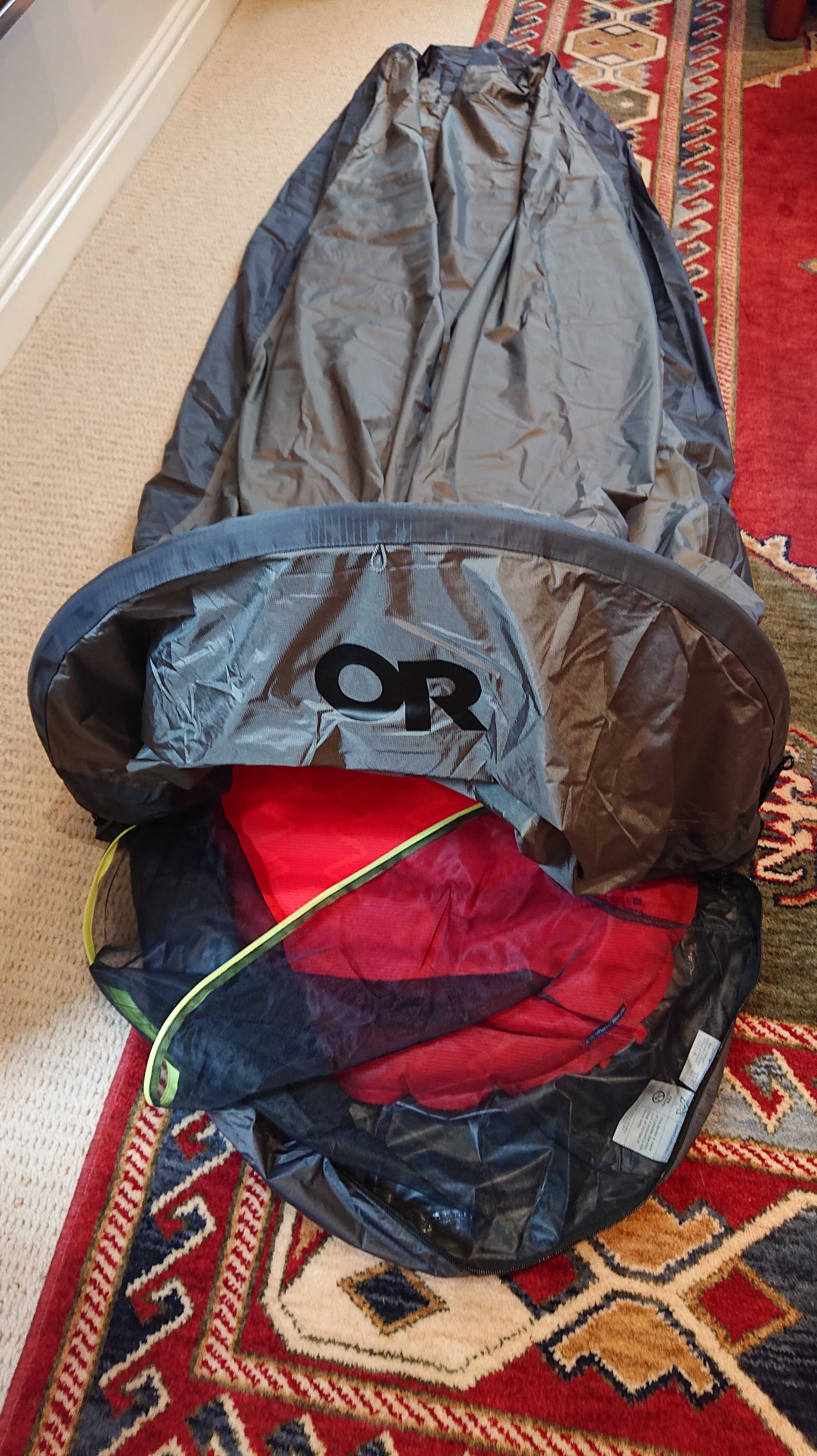
My initial idea was that my tarp would be something I would use to add extra protection and comfort to the use of a lightweight bivvy bag. Because some kind of insect protection was essential for me this meant looking at the premium end of the bivvy range. A good shake of Ebay didn’t reveal anything at a good price so I did initially bite the bullet and buy a new Outdoor Research Helium Bivvy.

DSC_2917

Half a night in this told me that I really didn’t like it, so this went back for a refund. Putting the lack of practicality of the confined space to one side, even with just the mesh door in place it significantly reduced my ‘connection experience’. My initial thoughts of the OR Helium were that it was very well made and just long enough for me at 5’ 11”. It is a very sexy toy, but not one for me.

I tried an evening without a bug net, but as soon as I turned my head-torch on my face was crawling with insects – I quickly concluded that some form of bug netting was essential! A further shake of the internet brought up a number of bug net options, but all of them had some kind of draw back. Many were too long for the Tarp 5 (and I do wonder if this is a cunning marketing ploy by Hilleberg to encourage you to buy their 210 cm long bug net?). Others were top entry, still others had solid ends – which is very practical, but once again breaks that visual connection to your surroundings. Had there been one with just a solid foot end that would have been ideal for my needs.

All this research led to my home made end panel, which also gained inspiration from the end removable end panels fitted to the mesh ends of my Hilleberg Enan which work really well despite not hermetically sealing the gap they cover either.  I can always throw my jacket over my feet for extra protection, something I often do anyway to keep them warm.