

At 1770 miles in length, the Danube is the second-longest river in Europe. On its journey from the Black Forest in Germany to the Black Sea, it borders or passes through no less than nine different countries. Our 210-mile, five-day tour took us from Vienna to Budapest, passing through a stretch of Slovakia on the way. The two most popular sections of the Danube to cycle are this section and the earlier stretch from Passau to Vienna. It was Junior who inspired this tour with his request to ‘cycle tour for longer than my previous two-day rides, but on a route which must be flat.’ Thus, continental rivers and canals came to mind. I hoped he would also enjoy passing through three countries and three capital cities on the route.
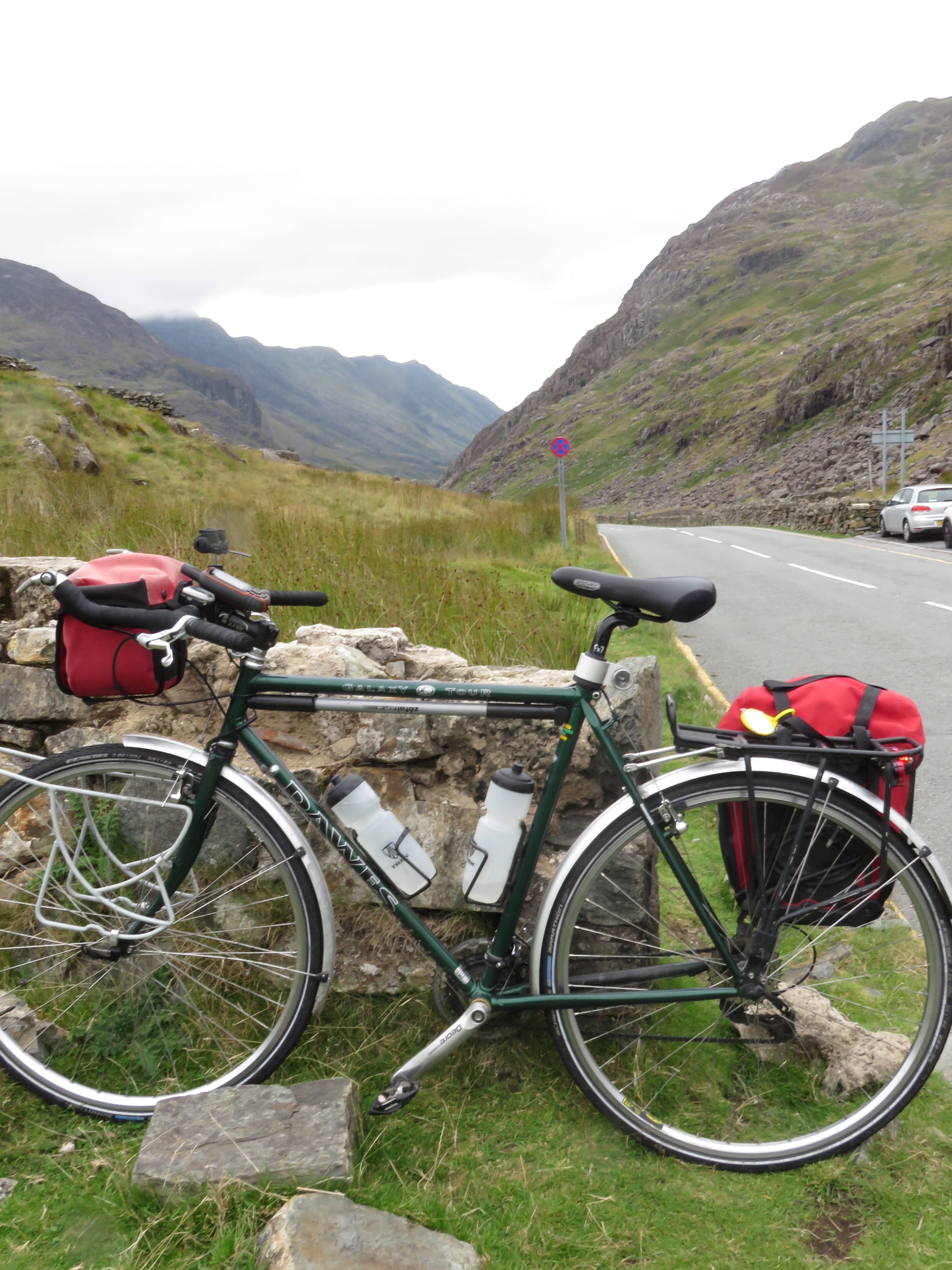
We hired two bikes from Pedal Power in Vienna, and flew my Dawes Galaxy out with us as no one offered a hire bike which could take four panniers, and we needed all of this space (plus two panniers on Junior’s bike) to carry a family’s worth of camping and cycling gear. Pedal Power were excellent, really down to earth, helpful and non-bureaucratic. This set them apart from the other options we contacted. Mrs W had an e-bike to help protect a weak knee and this worked out really well, and again, to protect her knee, she was just carrying food for the day in hand.
Day 1 – Vienna to Hainburg an der Donau – 33 miles
The day started on the Micampa campsite next to the Danube and a stone’s throw from the Donaustadtbruke underground station. We had arrived the previous evening, and Mrs W cooked dinner whilst I extracted my bike from its bag and reassembled it. Early on day one, we stashed my bike travel bag in the campsite shop storeroom and, as I pedalled towards the centre of the city, the rest of the family set off on foot for the underground station. We arrived within minutes of each other at Pedal Power on Bösendorferstraße, where we picked up our pair of KTM hire bikes. We were very glad to have a pre-plotted route on my Garmin to thread our way back out of the city. Also good was the excellent cycle path network. On reaching the edge of town, we entered the Prater. Formerly a royal hunting park, it was given to the people by Emperor Joseph II in 1766. Today, this is a large green area of parkland, within which is an amusement park filled with vintage rides. When we returned to Vienna at the end of our trip, we took a ride on the 65-metre-tall Ferris wheel, itself built in 1897 and the world’s largest example until 1985.


Crossing the Danube to the North Bank was fun as a cycle lane had been retrofitted underneath the Praterbruke autobahn bridge. To join (and then exit) this involves cycling up (then down) a spiral ramp, something I’d never seen before. The second section of cycle path from the island to the far bank looked like the Rainbow Road track on Mario Kart which made Junior smile.
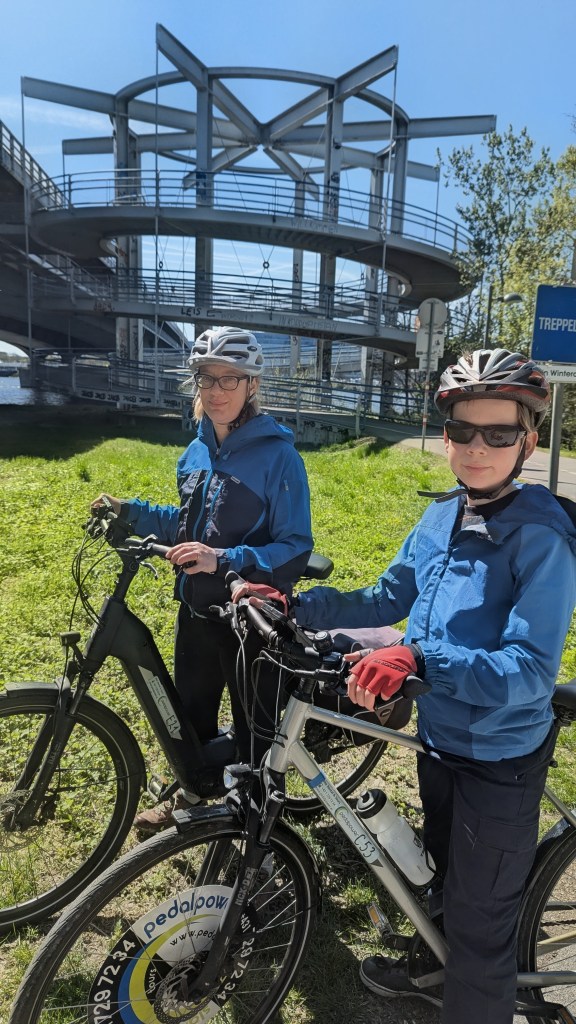

We were now on the Eurovelo 6 cycle route and right next to the river for three miles. Adding interest, our route then took us through an OMV oil refinery. OMV had been one of the customers for the sulphur-removal absorbents whose manufacturing plant my team and I supported from 2007–2014.
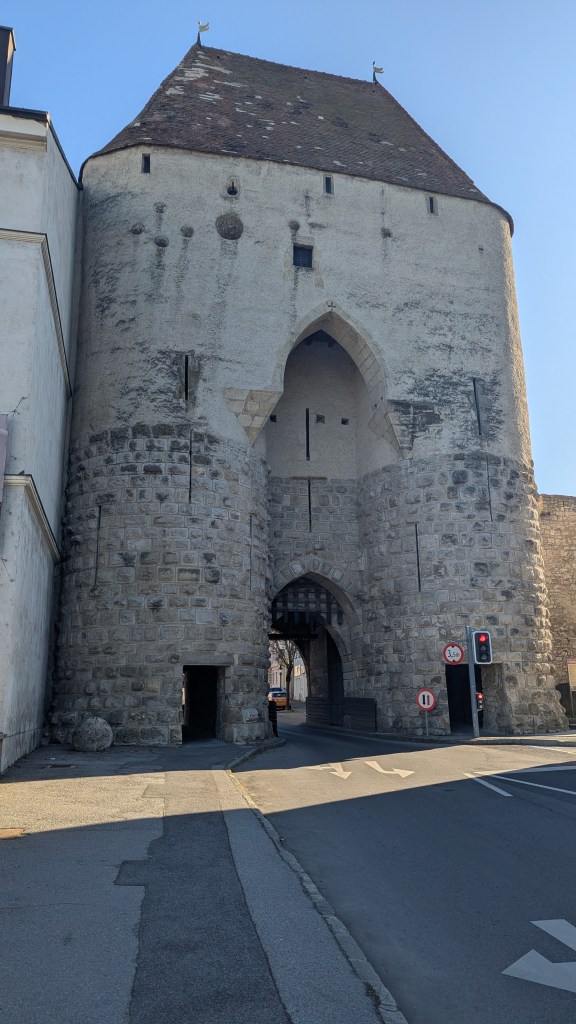
The route then took us along a dyke across a broad plain. We were away from sight of the Danube for some while. We stopped on the outskirts of Orth an der Donau and one of us headed into the town to top up our water. We waited right next to a Pfizer manufacturing site whose primary product was the vaccine to protect against Tick-Borne Encephalitis, a jab we had all had to prepare for this trip! We passed through woods and fields on a perfect cycle path, only passing two villages before we were opposite Hainburg and heading next to a busy road for a bridge crossing to this Austrian town on the South Bank. The only campsite in Hainburg was closed until 1st May (a common date for many campsites to open along this route). We had thus needed to opt for a room in a hotel, itself a former monastery. The price for a family room was very reasonable and the quality of the hotel both excellent and a lot higher than I was expecting for the money. Formerly on the very edge of the Roman Empire, the town had very attractive fortified ‘gates’, like the those in York, and a castle.
Day 2 – Hainburg an der Donau to Vokja (Slovakia) – 32 miles
The start of day two had us cycling through a number of attractive small villages on the South Bank. After ten miles, we crossed the border into Slovakia and a further two miles brought us to the UFO bridge carrying road traffic into Bratislava. A typical example of Soviet architecture.
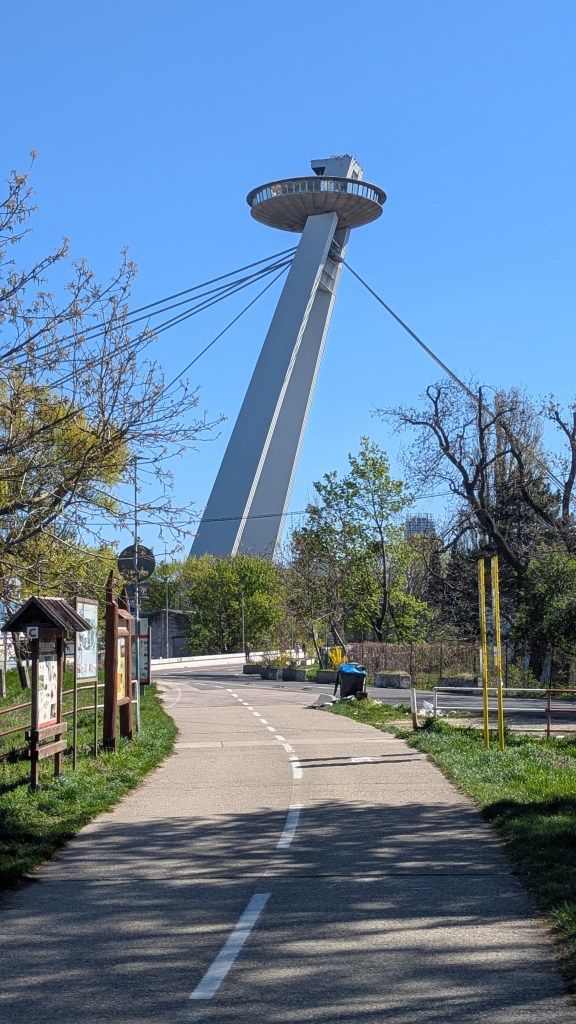
Just over a mile later, we reached our cyclist-friendly bridge and crossed into Bratislava. We didn’t stop to look at the city; instead, we stocked up on food for lunch and headed on, initially next to busy roads, and then around areas of abandoned docks until we were free from the urban sprawl. We now encountered a few miles of attractive woodland and a mighty tailwind. The wind was a blessing until we wanted to stop for lunch when we descended from the dyke on which we were cycling to get into a sheltered sunny spot for lunch. Soon after lunch, the route returned to the river bank and was free of trees, affording some of the most attractive riding of our tour. We now had to keep our eyes open for Kyselica, which was where we could get a ferry to the opposite bank.

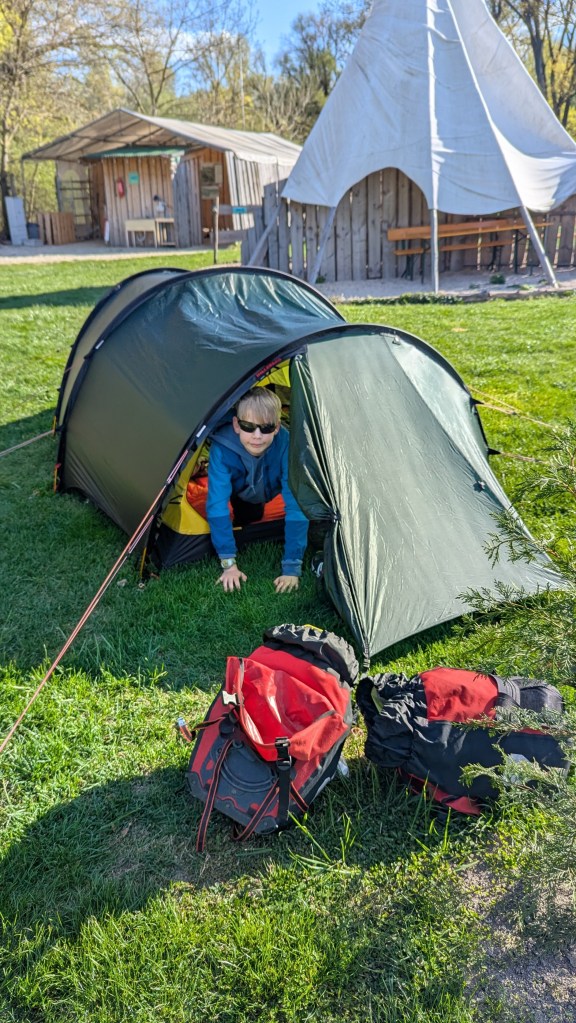
Remarkably, it was a local authority-provided ferry and thus free. We crossed the river to find the only campsite open in April in the area, Kemping Vojka. A lovely host, offered us a very nicely equipped site which we had entirely to ourselves.
Day 3 – Vokja (Slovakia) to Komaron (Hungary) – 49 miles

We awoke to another beautiful sunny day after another rather chilly night, with temperatures dropping to around 2 Celsius once again. Great efficiency was required to get the family packed up and on the road in time to catch the 0830 ferry back to the Northern bank of the river.
We enjoyed cycling right next to the Danube again for a further 16 miles. The cruise boats we passed were massive, and we soon met a pair of locks in the river of the same huge scale as the boats. These was there to facilitate the Gabcikovo hydroelectric plant.
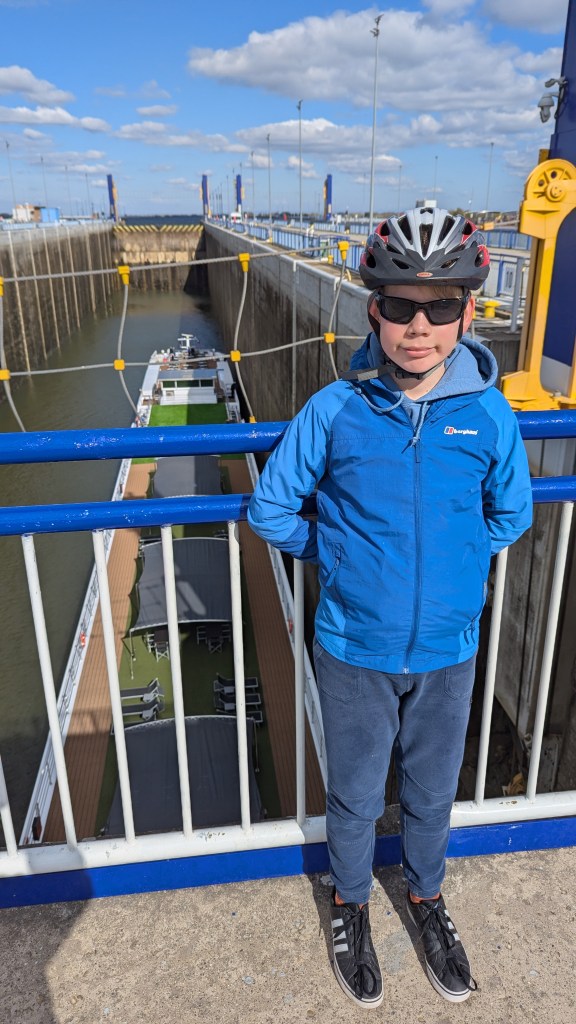
Junior and I marvelled at the operation of the lock but, once we’d seen one boat pass through, the strength of the cold wind got us wanting to pedal again to warm up. Five miles after the lock, we had to say goodbye to our river view as our route headed into another forested area. At one point, we came across one of the rare stretches of unsurfaced route which was actually quite rough for touring bikes. Thankfully, there was a very quiet road running directly next to the dyke, so we dropped down onto this for a few miles.
We met the river again on the outskirts of Komárno. Here, we hunted for somewhere to buy some sleeping bag liners to help fight against the cold nights, which were 5 Celsius below the forecast we used when packing just a couple of days before leaving the UK. The outdoor shops failed us, being more focused on selling trainers and very poorly rated sleeping bags rather than anything useful. Amazingly, Tesco came to the rescue where we bought some cheap fleece blankets which were just the material we were looking for, just not sewn into bag liners. These made all the difference for the rest of the trip. Our proposed campsite that night was across the river into the sister town of Komárom, Hungary. Remarkably, the obviously former-Soviet holiday camp offered family camping for the equivalent of just £5 per night, but with an even colder night forecast, and to ensure family comfort and harmony, we booked a room in their fixed accommodation, again for an extremely reasonable price.
Day 4 – Komárano to Szob – 50 miles
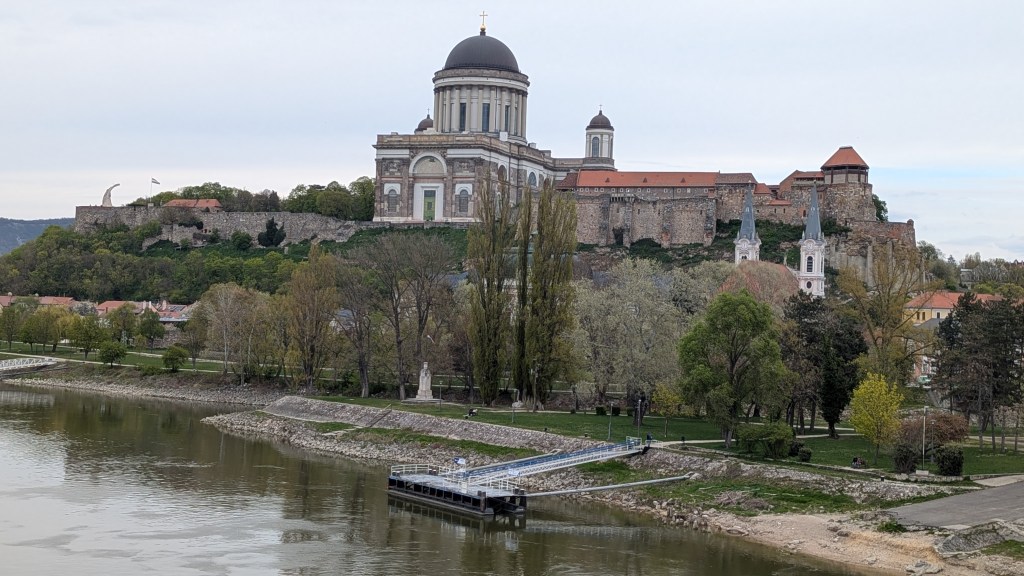
This was probably the least interesting and most challenging day. The guidebook we were using recommended following the route on the South Bank. I cannot know what the route on the North Bank is like, but I’d say there was a > 90% chance that it would have been more attractive and less plagued with heavy traffic. Much of the route was either on a road busy with commercial traffic or on a narrow cycle path right next to similar roads. Whilst we had been delighted with how much better the condition of the roads had been in Austria and Slovakia in comparison to home, the roads of Hungary reminded us of Lancashire. Many sections looked like they had been used for training new aerial bombardiers! The highlight of the day was the architecture of Esztergom, the last big town before we reached our campsite at Szob.
I’d not recommend Szob in the off-season, we’d decided we would eat out as a treat at the end of a warm, dusty, noisy day but both of the village’s restaurants were closed, despite Google thinking otherwise. When we arrived at the campsite, it was all locked up and the phone number on the wall of the reception was out of date. This despite having contacting them a few weeks in advance. Thankfully, one of a group of guys gathered outside the house opposite clearly understood our plight and rang the site owner on our behalf, who came and unlocked it. The price was high for such a basic site and the temperature dropped rapidly as soon as the sun set, so using a pair of ovens as space heaters (an ill-advised practice), we managed to get some warmth into the kitchen area for a dinner of tinned fish, rice and (formally) frozen veg, all that could readily be turned into a meal from the village shop.
Should you cycle this way, it would be well worth taking a punt and following the route on the North Bank and crossing the bridge at Esztergom to try one of the sites just east of the city which open after the first of May.
Day 5 – Szob to Budapest – 49 miles.
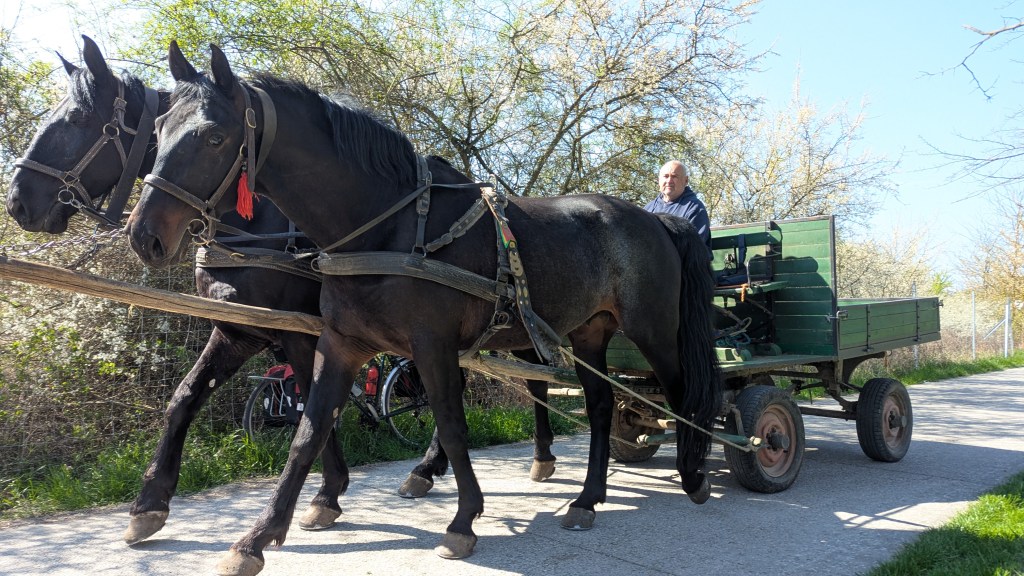
Thankfully, our tour ended excellently. The morning of Day Five was probably the most attractive section of the route, thankfully traffic-free and keeping close to the river for the whole morning. We had small farms to our left, then to our right the river and beyond it lovely hills reaching to 450–500 m, a contrast to the plains of the first two days. On our mid-morning break, we were delighted to see a farmer pass us with a pair of horses pulling a cart. Whilst the tariff for horse-drawn vehicles had been listed for all our ferry crossings, this was the first equine-powered transport we had actually seen.
We were now passing round the Danube Bend and just before lunchtime we rode next to towns clearly aimed at the local tourist trade which were both attractive and full of life. Until this point, we had managed without the use of any local currency, with everything paid for via our cards. Having passed through two countries like this, we decided not to bother getting any Hungarian Forints. This proved a challenge when it came to our final ferry crossing. Here, they only took cash. They were prepared to take Euros but only at a highly inflated rate. The price in Forints equated to around seven Euros, rather less than the twenty Euros we were asked for by a very grumpy ticket agent. I suspect this went directly into his back pocket too…
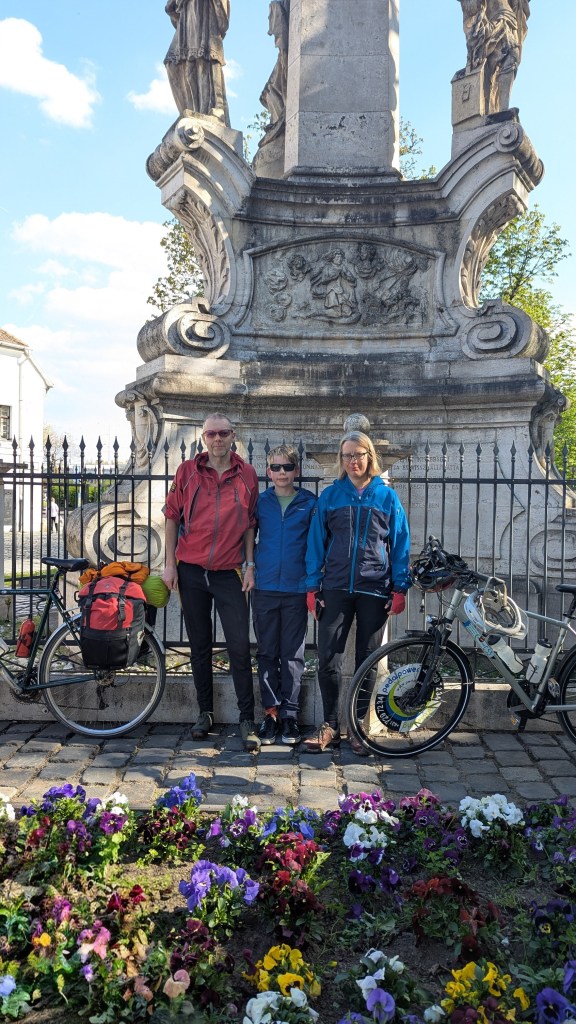
We were now following a minor branch of the Danube and riding through the dappled shade of trees whilst still getting regular views of the river. The guidebook warned of several rough sections of the Eurovelo as we cycled through the nature reserve adjacent to Budakalász, but the route had been beautifully resurfaced and proved very popular with families on bikes and adults on roller blades. Coming out of this attractive green haven, we entered an area full of cafes and food cabins which were doing great business. To avoid the crowds of people, we chose the road one block back from the river and were soon taking a castellated path into the centre of Budapest. Our time on the Eurovelo 6 ended outside the Óbudai Museum, next to which is a column erected to thank God for the end of the bubonic plague of the early 18th Century. We thanked God for a great family holiday.
This was almost the end of our trip too, we just had to pick our way across the city to the Arena campsite. Remarkably, still a further seven miles. Once again, we hoped to eat out, but the distance to any restaurant from the campsite was just too far, so I headed off to find us some Gyros, a Greek-style kebab we’d seen stalls selling all over Hungary. The offering from Gyros Neppa was really good and generous in quantity too, just what cycle tourists need at the end of the day.
Days 6-7 – Seeing the sights of Budapest and Vienna
The following morning, we packed up all our kit and cycled to the central railway station. Not that far from the campsite but still quite far from centre of the city. The left-luggage lockers were huge and well priced and just outside the station entrance was a secure place to lock the bikes. After taking a metro train to the Parliament Building, we started on a walking tour of the highlights of the city. I’ll let some photos tell the story.
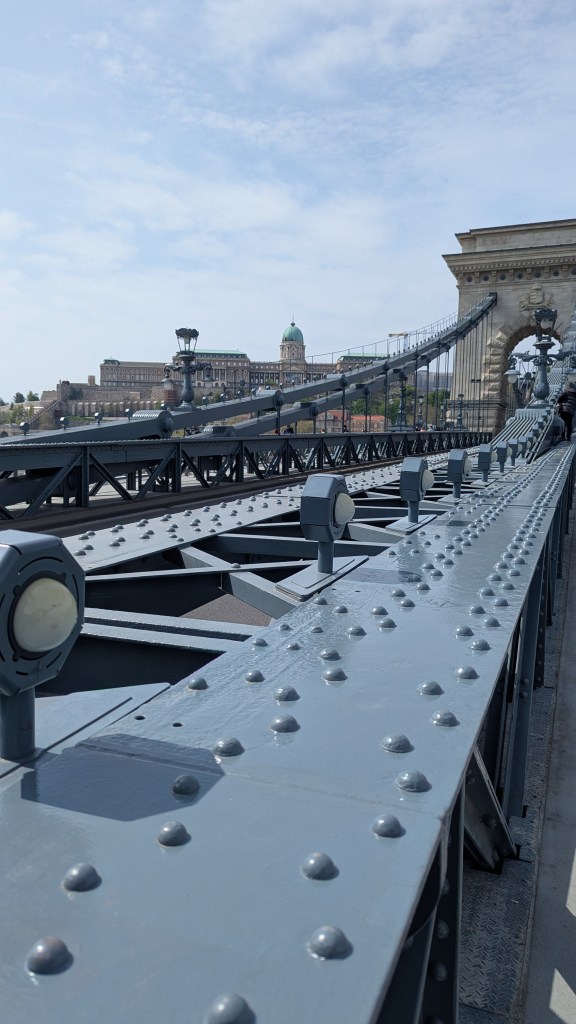
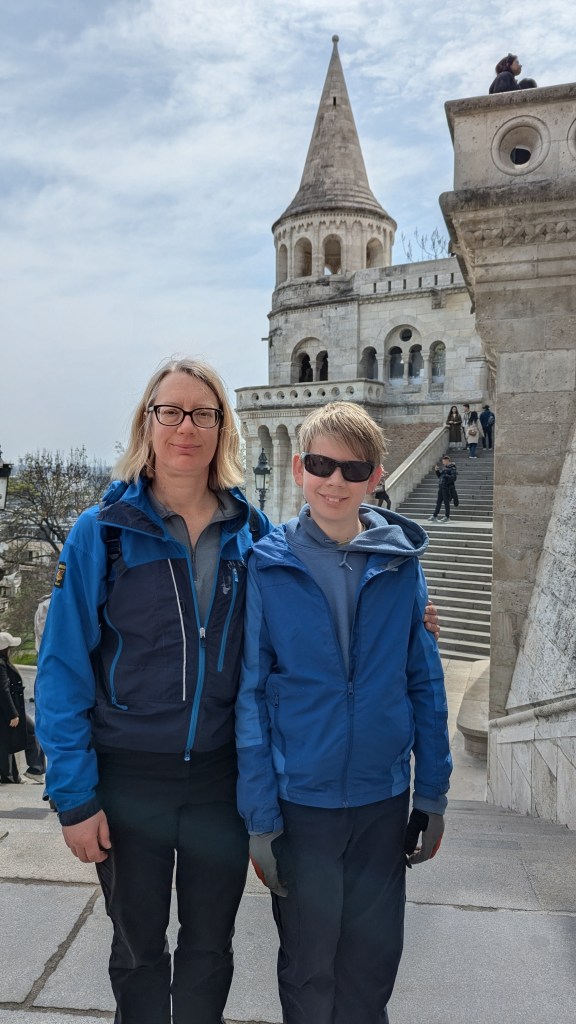
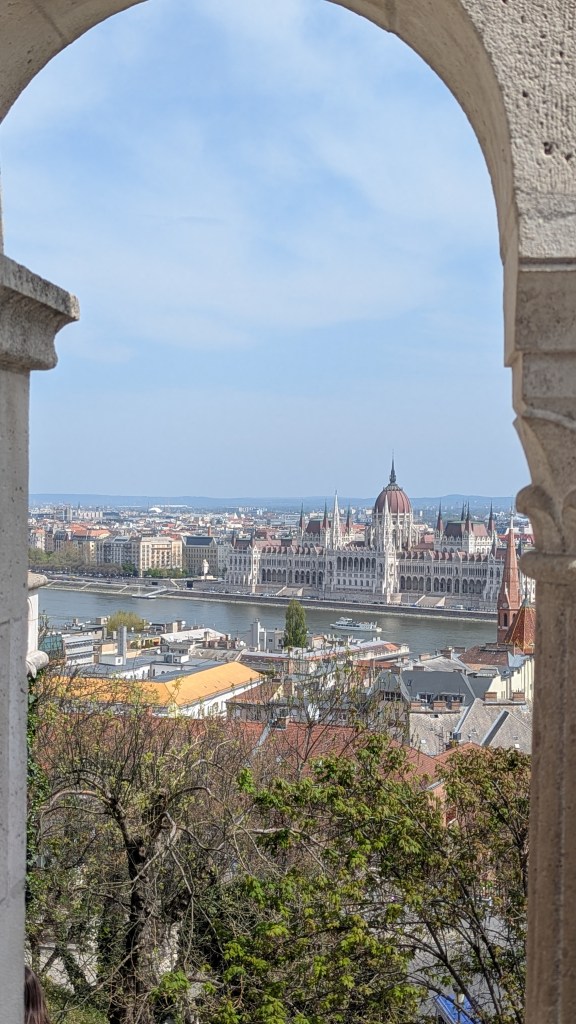
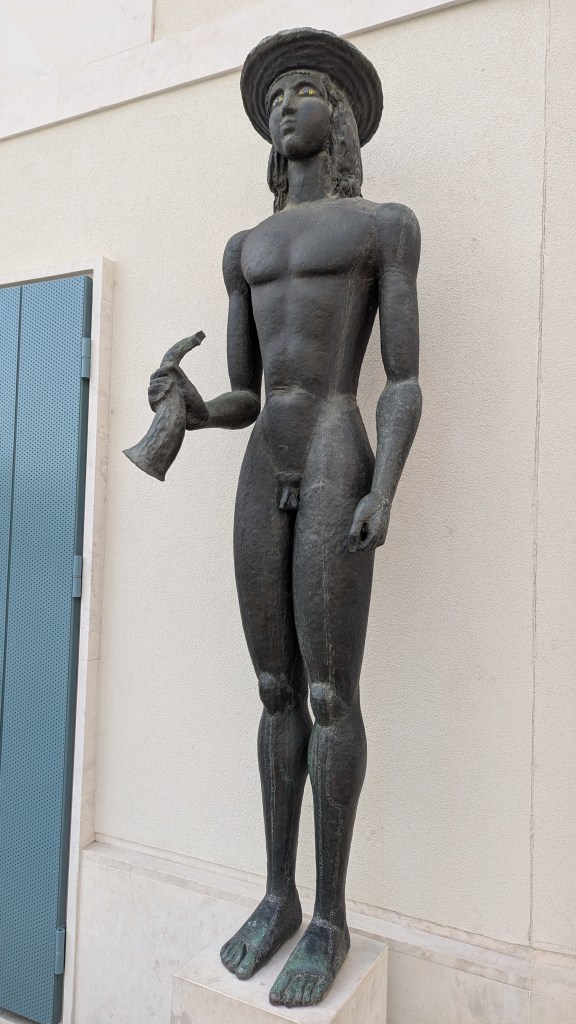
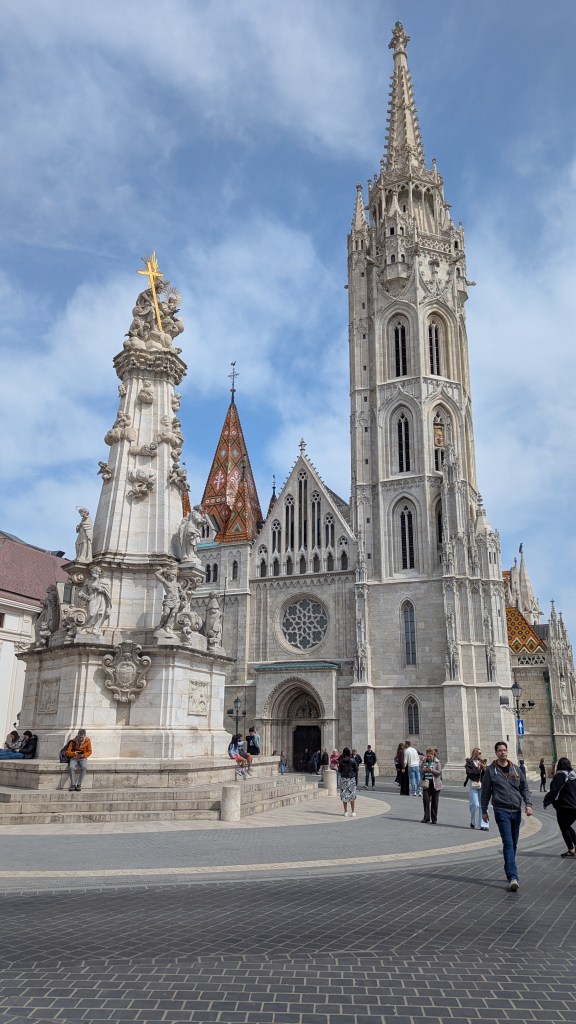

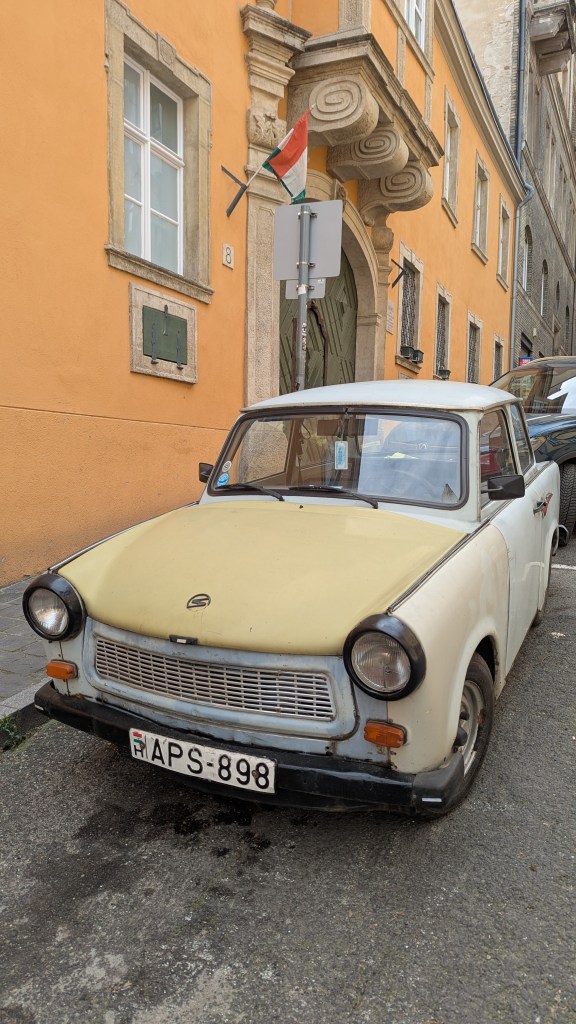

After lunch in the very attractive central market, it was time to get onto our pre-booked train (essential if you want to take (three) bikes on trains that carry a maximum of up to five bikes) and head back to Vienna.
The next day, we had a whole day to explore Vienna, and again, as is the ‘Weston Way’, set about a walking tour to see the many interesting buildings in the city. We had an excellent lunch of falafel and vegetable side dishes from an enthusiastic stall holder in the Naschmarkt. Again, I’ll let our pictures tell the story.
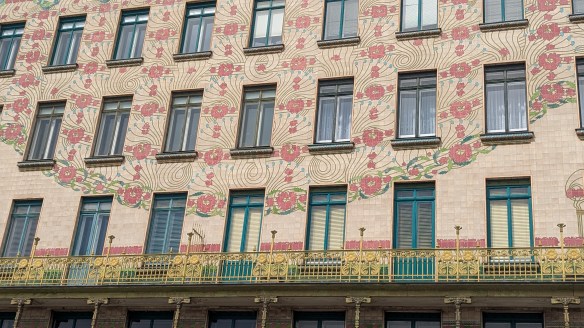

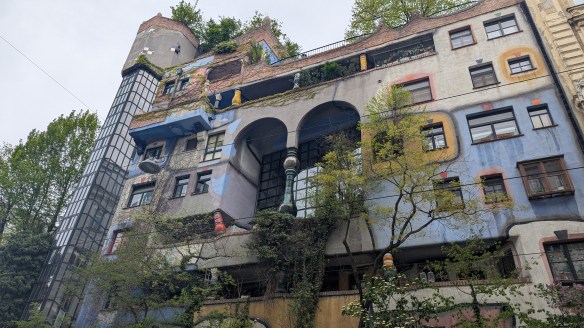

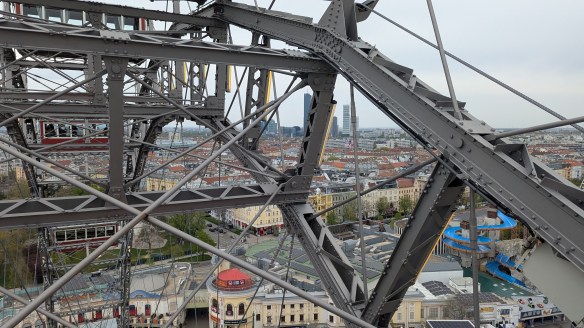

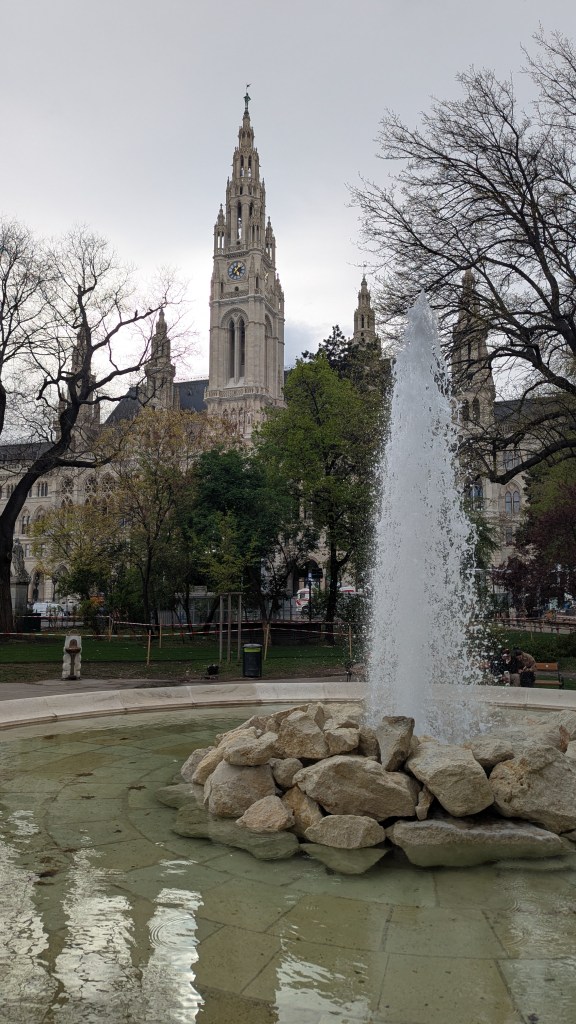
We had enough lunch left over to provide for our tea, well enough once we had bought some generous slices of Vienna’s famous Sachertorte for dessert. Oh, the wonders of how many calories you burn on a cycle tour! The day ended in truly spectacular style as we had booked tickets to see the Creation sound-and-light show which is performed inside the Votive Church. The interior neo-Gothic architecture was ideally suited to a light show. The lighting and projections were indescribably amazing, so I’ll not attempt a description! Instead I’ll share some photos taken during the performance. A spectacular and fitting end to a really enjoyable family cycle tour.


Whilst it’s true that I’ve cycled through more amazing scenery, for a tour > 80% traffic-free and flat (subtly downhill on aggregate as we were riding downstream), it was really enjoyable. It would probably have been better to go in May rather than April for a greater choice of campsites and warmer nights, but we needed more than a week in total so this was the slot that school holidays allowed. June to August would have been too hot and too busy. We had a week totally without rain, so were amused (if that is the correct term) to think that I’d lugged a whole pannier of waterproof gear for five days just for the pleasure of the exercise.


 condensation over a range of conditions and an improvement on






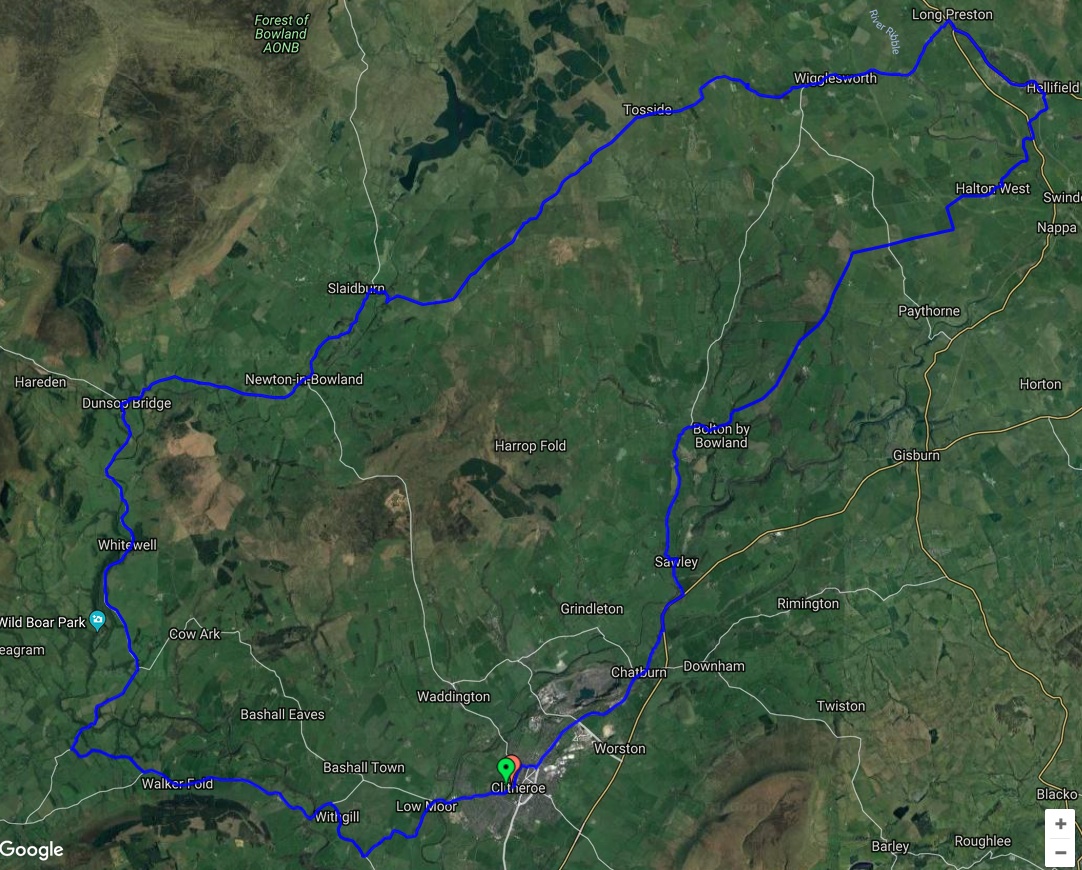




 Now I could swoop down into Halton Gill and then enjoy the longest strength of flat road I’d seen all day, taking me down the valley to Arncliffe. I was booked into


 weston.front