Tag Archives: opinion

Michele Sayre: Writers Write

Writers Write

Michele Sayre

This two-word phrase came to me as I sat down to write a series of blog entries and got through three of them before a massive sinus attack hit me. But the phrase stayed in my mind and when that happens, I sit down and listen to it and figure out where it came from.

For the longest time, I have felt like when I sit down to write that I should be doing something else. What else should I be doing if it’s not urgent or can wait? That’s a good question and one I think involves the ever-present yet not-quite-real ‘someone’. Yes, the dreaded ‘someone’ who is so persistent in asking stupid questions like:

“Why are you writing? Shouldn’t you be doing something else?”

Now in the past I would have bent my head in shame and said, “Yes, I should be doing something else.” And then I would have found something else to do.

Now I stand tall and proud and say, “No. I am a writer and writers write.”

I know all too well there are a lot of people who call themselves writers yet don’t write, or write near as often as they should. They seem to love the idea of being a writer and being seen as a writer, but they’re not willing to put in the work. The problem with these wannabe’s as I call them is they are really good at projecting their perceived superiority over those of us who write and rewrite and edit until our brains turn to slime and slide out of our ears.

Don’t listen to these wannabe’s. You don’t have to in order to be polite and not hurt their feelings. They didn’t think twice about hurting yours by tearing you down so you don’t owe them anything in return for that. No, this is not being mean. This is about standing up for yourself and your work.

My late father once said to me: “Most people need to be told what to do and when to do it. You’re not one of them.”

You don’t have to be told what to do and when do it if that’s not the situation you’re in. Being a writer means being your own boss so be the boss you’ve always wanted to have. My inner boss would tell me right now to run with this idea and see where it goes. She’d tell me chores can wait (trust me, dust bunnies are the worst squatters around). And if you’ve eaten food, have something to drink, and you’ve been to the bathroom, you can sit down and write.

Writers write so they have words to revise because you can’t revise and edit a blank page. You can’t rewrite something if you haven’t something already. Writing, rewriting, editing, and revising are how word are polished to a shine and crafted to solid precision. But you can’t make something from nothing so you need to get the words down and if you have to, tell yourself no one is perfect. And not being perfect is more than okay. ‘Wannabe’s’ and ‘Someone’s’ will tell you in their own insidious ways that your work will never amount to anything, or that you should know better to begin with, or anything that makes them feel superior.

You don’t write for ‘wannabe’s’ or ‘someone’s’. You write for yourself first and foremost. You don’t write to anyone else’s expectations but your own. You have to take charge of your work and make it your own. Remember when it comes to your writing, you’re the boss of it. You write the words, not them. You edit and revise, not them. And since you’re a boss who does your own work, you can also do your own research and find the answers to your own questions.

Writers write.

If you have to, tell yourself this every time you can. Because if you hear this enough, you’ll start to believe it. And once you believe it, you’ll do it.

For more great articles on writing and life, please visit Michele at https://michelesayre.com/

Michele Sayre: So You Want To Be a Writer

So You Want to Be a Writer

Michele Sayre

I want to be a writer, but I don’t know how or where to start.

Yes, I’ve seen and heard this said by people for many years. And for anyone who has said that, I may have some answers for you. Though I do want to say right here and now, I didn’t say that at all when I started writing thirty-six years ago. I just picked up a spiral notebook and a pencil and began to write.

How did I know to do that? Simple. I knew what I wanted to write, which back then was poetry that I could turn into song lyrics. Sadly that dream didn’t come to fruition because I couldn’t find an Elton John to my Bernie Taupin. So I moved on and decided I wanted to be novelist then later on through my high school years, a screenwriter. After high school, I kept up with the screenwriting for a couple of years then went back to novel writing. Now I’m working on my novel, three book-length non-fiction projects, short article-essay type pieces like this one, the occasional poem, YouTube video, and short stories.

So now that you have my background let’s get back to the statement that started it all:

I want to be a writer.

Why? And I’m not being mean by asking that. I can understand if you’re not quite able to articulate your answer clearly just yet but you should have some idea as to what inspired you to want to be a writer. Because if it was just a thought out a thin air that sounded good, well you’ve got some work ahead of you here if you want to make that a reality.

I wanted to be a writer because I loved to read and I love words. I also have an overactive imagination and a brain full of thoughts and feeling. I discovered writing was a great way to get all that out of my head like other writers have done since the advent of writing.

But I don’t know how, or where to start.

This is actually doable though to get good at writing will take a lot of work. Some people are naturally gifted verbal storytellers but on paper, or in a digital format like most writers use today, not so much. But in order to know where to start, you do need to know why you want to in the first place. And also, you need to figure out what you want to write. Is it stories? Poems? Essays? You don’t have to stick to one thing and yes, you can do more than one thing at a time though I strongly encourage you to finish something before moving on to the next project. Whatever you decide to write should be something you want to do because if you’re making a conscious choice to write, you’re doing it for yourself first and foremost.

The ‘how’ part is just a lot of work. Basic writing should start with basic grammar, punctuation, spelling, and sentence structure, which hopefully you will learn in your basic education in school. You can also find lots of books, articles, and even YouTube videos on the many aspects of writing. But in addition to studying, you’ll have to write. And keep writing, and learn how to edit, revise, rewrite, and keep doing it until you find the flow as I call it. And know there will many times where your words won’t flow out of you. When that happens, you’ll have to figure out a way to work through that.

My advice is don’t write for attention, approval, fame, glory, or to get a date. Trust me, writing doesn’t work like that. Successful writers write because they want to, they believe in what they do and they’re willing to put in the work to get good at it.

Many years ago when I started writing, if I had announced with joyful abandon that I wanted to write people would have said this to me in total seriousness with absolutely no joy: “Great, kid. Now get to work.” Back in those days, if you wanted to be taken seriously you had to put in the work. You had to study, practice, and really keep at it. Today… not so much to my chagrin.

Frankly, I’ve always been puzzled by people who just think they can dash off words and expect instant gratitude and adulation. Legends in their own mind, I guess. But trust me, past a certain point, they won’t have the long and storied careers of best-selling authors. Whether or not I’ll ever hit a best-seller list remains to be seen but it won’t be because I didn’t work my tail off to try and hit it with the best work I can produce.

So you want to be a writer.

Great. Now get to work because in the end, it’s the writing itself that matters most, not the title of ‘writer’, or just wanting to be one.

Please visit Michele Sayre – Writer for more great articles!

Michele Sayre: Why Do You Want to Write?

Why Do You Want to Write?

by Michele Sayre

I see so many people in writer’s groups ask how do I write and where do I begin?

The better question to ask is this: why do you want to write in the first place?

Is it because you love to read and want to write stories from your own imagination?

Is it because you feel you have something you want to share with other people and maybe help them?

Because in order to figure out how to write and where to begin, you have to know why you want to write in the first place. When I first started many years ago, it was a combination of an overactive imagination and a love of stories that I wanted to share. Now it’s about sharing my own life stories in the hope that it will help other people in addition to sharing stories from my imagination.

And how do I do that?

I sit down and write with whatever materials I have to work with. Many years ago when I was young, I started out writing with paper and pencil, then I graduated to a typewriter, then a word processor, and finally a laptop computer. I knew early on that I had to put the words down then edit them until they flowed as well as I could make them flow. Also, I knew I had to research things on my own and back when I started writing those many years ago, the internet didn’t exist at all.

I will freely admit here I’ve always been, and still am, baffled by people who seem to have decided one day out of the blue to take up writing. Maybe they see it as a hobby like knitting or woodworking where you just pick up some tools and materials, read some books or watch videos, then make your projects. The thing with writing is that you can pick up things like paper, pencils, or computers, and you can read books about writing and watch videos. But writing isn’t a pre-made project you can make from a book or a video. It’s something you have to create from scratch. You have to come up with the words to say what you want to say in order to tell your stories.

You have to make your own decisions as to what to write and how to write. And if you’re afraid of upsetting someone or someone not liking what you write, that’s something you’re going to have to work through. You can’t please everyone with everything you write so you have to learn not to write with that in mind at all. You have to be independent and motivated by your own need and desire to create.

No one knows everything, especially about writing. Writing is a constant learning process that keeps it from being boring though it can make things frustrating, too. I know very well this world we live in isn’t perfect, that I’m not perfect, and I’m certainly not a perfect writer. But there is no need for perfection at all, even in writing. Because what works for one person and makes them fall in love with what they read will leave another person completely out in the cold.

So for me, being an independent person with an overactive imagination has benefited me greatly as a writer. Yet it has made it hard for me to understand why people want to write when they don’t seem to have much of an imagination to begin with, or be independent enough to think and try solve their problems on their own. Maybe it was because when I started writing I didn’t have the internet to reach out to people or instant resources to access. But even if I’d had instant access to people and information back then I seriously doubt I would have used that access a lot. Because despite all that’s available now in the end, a writer still has to write their words.

Words will not always flow smoothly or easily. In fact, more often than not it will be a struggle to get something out. Sometimes something comes out very smoothly for me but then I have to go back and edit stuff out because although it’s good, it’s not on track. But I’m not afraid to just write knowing full-well I’ll have to go back and edit. If that’s something you have an issue with, that’s something you’ll have to work through in order to write, too.

For me, writing isn’t a popularity contest. And it’s not something I do to prove a point or anything along that line. I do it because despite all its’ difficulties, I love it. I love it when my words come together and reach people. I love being a part of a community that’s been there throughout the ages sharing stories. And because I believe in a quote from the television show ‘Doctor Who’:

“In the end, we’re all stories. So make it a good one.” (written by Stephen Moffat)

Please visit Michele’s blog: https://michelesayre.wordpress.com/

Please note: the images used are free-use images and do not require attribution.

Words of Neil Gaiman

enhanced-buzz-30757-1345042131-3


While this is very true for writers, it is also true in life.

Lynn Miclea: Comparisons? Stop Comparing!

christmas-2411764_1920


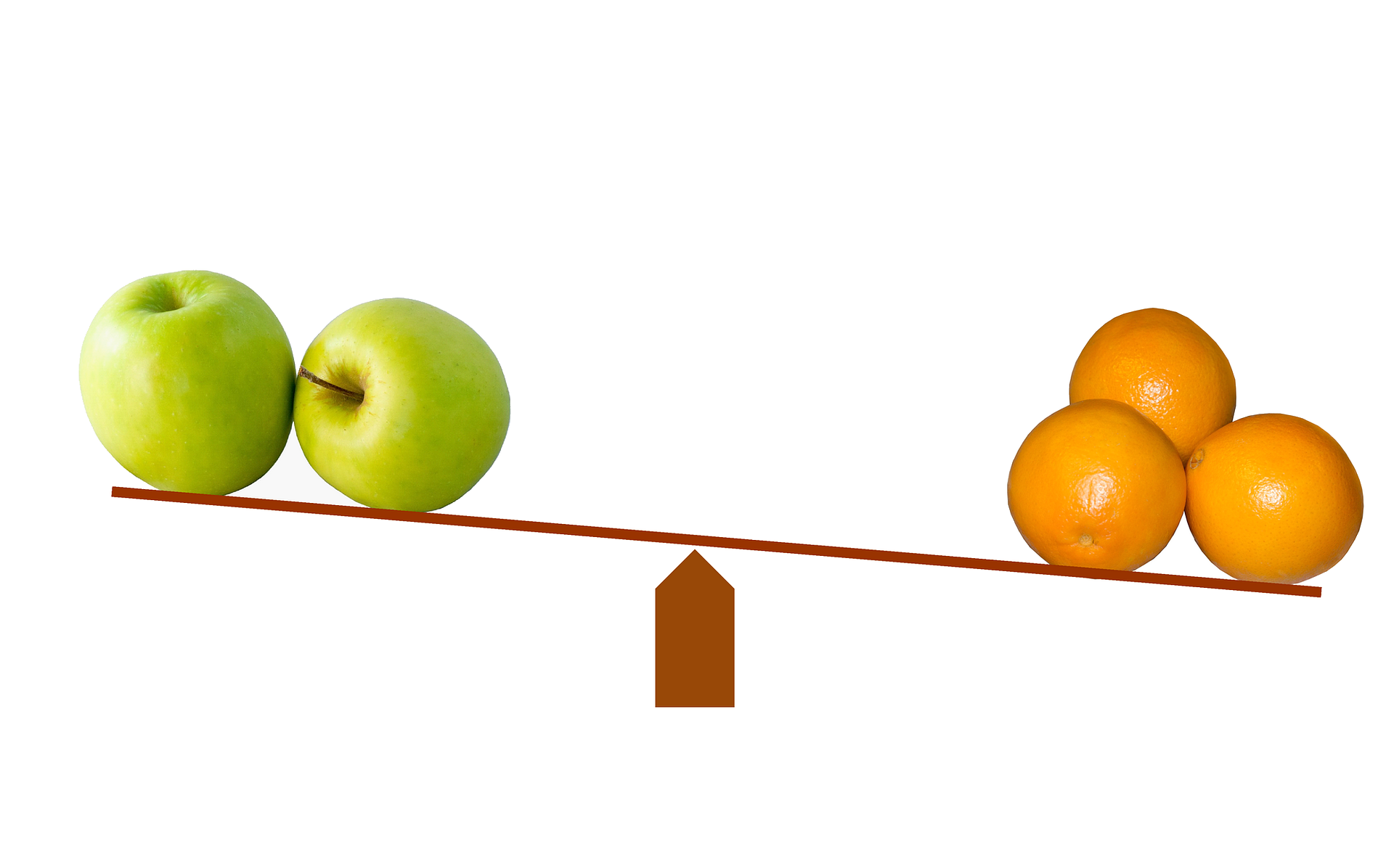
Comparisons. We all do it—we compare ourselves to others. Does he write better than me? Is she more successful than I am? And we find that we’re not as good as some, and we are better than others. Or so it seems.

However, this is misleading at best, and dangerous at worst. What we perceive is not always what is really there. And what we compare ourselves to might be an incorrect image built up in our minds, supported by fear and self-doubt.

First, it’s important to understand that each of us is on a different path, our own unique journey. Someone else is on a different path. We have different skills and abilities, we write in different genres, and we aim for a different audience. We have different writing styles, different stories, different characters, and a different voice. So a comparison is not helpful at all.

Second, what we usually end up comparing is our inner insecure selves—our fears and self-doubts, with the perceived outer performance of someone else. However, what we see is the mask they show the world—the accomplishments that they share. That is not a fair comparison. We do not see their inner fears and doubts, which we all have. And we do not often acknowledge or appreciate our own accomplishments, which others may look up to. It’s not an equal comparison, and it never can be. You can’t compare the hidden inner world of one with the visible outer world of another. It just doesn’t work.

And even if someone else is more accomplished than we are, or has published or sold more books, remember that you don’t see how they started. We all start at the beginning—and they most likely started exactly where you are now, and it took many years, struggles, difficulties, and hardships for them to get where they are. No one is an accomplished, successful author at the beginning. So it’s not an equal comparison there, either. You can’t compare a beginner to an experienced person—we all start as beginners. And we all can work our way up to being experienced and successful.

Third, the only person we should compare ourselves to is who we used to be. We are not here to be better than anyone else, but to be better than who we were before. We should strive to improve—and to take pride in that when we do. Have you written a short story or poem? Wonderful! Have you outlined a story in a fantasy world? Excellent! Appreciate and love that! Take pride in it—in every step and accomplishment.

So as for comparisons—they are either inaccurate, inappropriate, or unhelpful. Or all three. My best advice is to let all comparisons go, and simply work on being the best that you can be. And support everyone else in being the best that they can be. There is room for all of us to succeed and do well.

And the best way to get there is to learn as much as you can, keep improving, and take pride in where you are. Enjoy the entire path of writing and publishing, every step along the way, and appreciate each moment. You deserve to be happy, no matter where you are on the journey.

You have unique abilities, unique stories, and a unique voice. No one can tell your story or do it the way you can. You fill a niche no one else can.

So let go of comparisons. Believe in yourself—because you truly are amazing.

Comparisons? They can bring you down. Forget them.

Know that you are awesome!

compare-643305_1920

divider-clipart-divider_line_med

About The Author:

LYNN MICLEA grew up in New York and moved to California while in her twenties. A certified hypnotherapist, Reiki master practitioner, and musician, with a bachelor’s degree in psychology, she has held many jobs but has always loved reading and writing stories.

After retiring, Lynn further pursued her passion for writing, and she is now a successful author with many books published and more on the way.

She has published numerous books of nonfiction (memoirs and self-help guided imagery), and children’s stories (animal stories about kindness and helping others), and is currently publishing several books of fiction (thrillers, paranormal, and romance).

She hopes that through her writing, she can help empower others and add more joy and love to the world. She asks everyone to be kind to each other as we all share this journey through life together.

Lynn currently lives in the Los Angeles area with her husband and two dogs.

Please visit her website at www.lynnmiclea.com and her blog at www.lynnpuff.wordpress.com.


Copyright © 2018 Lynn Miclea. All Rights Reserved.

LiveLimitless: Never Stop

Don’t say “I wish I made more money” or “I wish I could finish this novel” or “I wish this publishing company would accept my work.” If there is a change you want to see in any area of your life, you have to get up and make it happen! Never stop adding value to yourself, never stop practicing your craft and never stop building the life that you dream of! Words have power and YOU control that power! Use it wisely.
#livelimitless

41155386_1812057925498238_4718391972635607040_n

Break Our Hearts (Why “Happily Ever After” Is Not a Requirement)

Powerful stories are remembered for ages to come. They resonate deep within us, invoking an intense emotion long after we’ve read them. Sometimes, the sadder or more shocking the ending, the more we remember that story above all others. That is why I say it is perfectly okay to break our hearts, even when it’s a romance story.

If every story ended with “and they all lived happily ever after,” there would be no push to make it all the way to the end. I don’t know about you, but sometimes serious complications preventing the protagonists (or almost doing so) can be more of a surprise to me than the normal Disney/fairytale ending I grew up loving. However, “happily ever after” is and always will be a much loved and sought-after ending. But it’s not a requirement in my book.

What we want is for you to make us feel the love. We want to feel the connection to the protagonists. We want to root for them. We want to cry with them, triumph with them, love alongside them. We want to remember them.

So don’t be afraid to follow your story wherever it leads you. Not every story has to have a happy ending. Some simply need closure. So there’s a dead body in your romance story? Great. That could fall under the mystery/romance category if you set it up right. Luckily, we don’t discriminate against genre blending. That aspect of your story could be what makes it stand out to your readers—and to us—and the feeling it invokes could be remembered for years to come.

The key word here is powerful. Show us what love means to your characters. Show us how they act when they’re in love, how it changes them—for better or for worse. Use words and description that convey that deep connection between your characters. Then throw obstacles in their way and watch them fight to be together. Be it physical or abstract, obstacles add tension and keep the readers interested in the story.

Whatever your story entails, don’t be afraid to break our hearts. Sometimes, the most powerful thing a reader can take away from your story is a lesson learned, inspiration from how the protagonists keep going in the midst of their own heartaches, or how they keep their hearts open to love even after experience tells them they shouldn’t.

And of course, we always love a “happily ever after” ending, and so do readers everywhere, especially if it’s full of hope after a long struggle. Again, don’t make it easy for your characters and your readers will appreciate the triumph that much more.


Jessica Victoria Fisette is the author of The Soul Reaper seriesThe Aldurian Chronicles, and various short stories including the short story series Elves of the Blood Moon. You can also read more of her works in the first Writers Unite! Anthology: Realm of Magic. Her hobbies include discovering the benefits of natural medicine, wine tasting, and trying new recipes in the kitchen. She likes to unwind by typing out a scene or two in her latest obsession or indulging in a good book. Having been passionate about writing since she was a little girl, she is constantly coming up with new ideas for future stories and creating unique, strong-willed—albeit flawed—characters to overcome the difficult obstacles she places before them. Having spent all her life in rural Southeast Texas, she appreciates the tranquility of country living and hopes to implement such a love for nature into her beautiful, ever-so-curious little girl.

You can follow her by clicking the links below. 

Facebook

Twitter

Website


Deborah Ratliff: The Lonely Writer

first-post-image

Writing is lonely work. At least, that is the opinion of friends of mine who are not writers. They ask, how can you sit at a computer all day and not talk to anyone? Somehow, telling them, I’m never alone and that I talk to my characters would likely not reassure them being alone is good for me.

The fact is that despite the witty or testy or romantic conversations we have with our creations, writing is lonely work.

My career provided a writing outlet. I wrote research papers, training, operations, and policy manuals, newsletters, and media advertising copy.  While necessary within the scope of my work and writing advertising was challenging, I never felt fulfilled. When time to write presented itself, I took the plunge. I started writing fiction.

As an only child, the solitude of writing was never a concern. What I did discover was that the support provided by co-workers, those who possessed proper grammar, or could help with a word or phrase or paragraph was conspicuously absent. While Google is our friend, spewing out all sorts of information about point of view, world building or when to use ‘who or whom,’ bouncing ideas off of Google is not possible, and Siri quit talking to me.

Writers need human contact. We may sit at our keyboards, fighting aliens for control of the universe, playing detective to catch a serial killer or write about a first kiss while lost in our imaginary worlds, but we need each other. We may have a question about the correct verb tense to use, or how to phrase a sentence or redo a paragraph that is driving us to eat ice cream by the pint.

We need each other.

The question becomes where do you go to find such support?

I first found a local writing group and was quite pleased with the members and the cordial but targeted feedback. However, meeting once a month and an inactive Facebook page didn’t provide the interaction I was hoping to have with other writers. Having listened to the “experts’ who drilled that a writer needs a social platform, I joined Facebook and searched for writing groups.

Still, I was dissatisfied. The groups I joined either devolved into cliques or arguments. Then I was asked to join the Facebook group Writers Unite! and I found a home. A writing group that focused on writing and attempted to keep discourse to a minimum. A haven for writers of all levels of expertise to share their work, gain constructive feedback and learn from each other.

This is what a lonely writer needs. We need to know someone who understands our struggles and is willing to listen to our questions and give their advice. Someone who will read our work and respectfully provide critique. We may have our characters to chat with, but we need each other to complete our goals.

Thanks to all who have joined us, as Writers Unite! on Facebook has grown to a membership rapidly approaching 15,000 in one year. As we expand our outreach to the web with the launch of the “Writers Unite!” blog, we hope you will join us in our goal to learn and improve our writing.

startup-594091_1920