IMDb RATING
7.1/10
20K
YOUR RATING
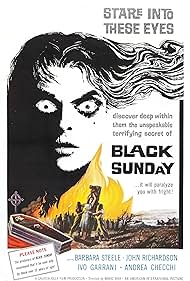
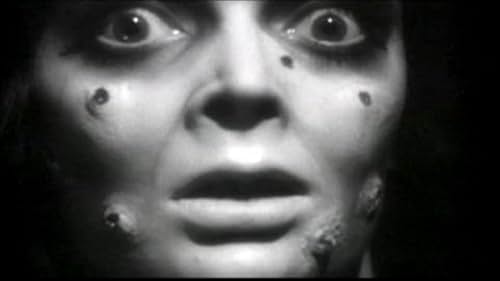
Decades after being executed for witchcraft, vengeful Princess Asa Vajda and her fiendish servant are resurrected and begin a bloody campaign to possess the body of Asa Vajda's beautiful loo... Read allDecades after being executed for witchcraft, vengeful Princess Asa Vajda and her fiendish servant are resurrected and begin a bloody campaign to possess the body of Asa Vajda's beautiful look-alike descendant Princess Katia.Decades after being executed for witchcraft, vengeful Princess Asa Vajda and her fiendish servant are resurrected and begin a bloody campaign to possess the body of Asa Vajda's beautiful look-alike descendant Princess Katia.
- Awards
- 1 win & 1 nomination total


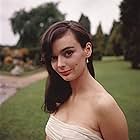
Barbara Steele
- Princess Asa Vajda
- (as Barbara Steel)
- …

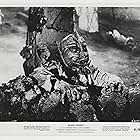

Giuseppe Addobbati
- Priest
- (uncredited)
Fernando Cajati
- Crucifixion Torturer
- (uncredited)
Valentina Cortese
- Tavern Girl
- (uncredited)
Angelo Galassi
- Tavern Keeper
- (uncredited)
Nando Gazzolo
- Narrator
- (voice)
- (uncredited)
Renato Montalbano
- Spectator
- (uncredited)
Featured reviews
BARBARA STEELE became an icon of horror films (the way Christopher Lee did when he played Dracula), when she played the role of a vampire witch princess burned at the stake in the 17th century who returns two hundred years later with a vengeance. Not that the story itself is all that original, but when done as stylishly as it is here, with the perfect B&W atmosphere and chiller mood, it's a winner.
There's no let-up in suspense from the gripping opening scene where the mask of Satan is nailed onto the face of the poor victimized woman, even though the unfolding of the story is rather slow. The graveyard scene of an undead man rising from the earth is masterfully photographed. The mood becomes more and more intense as several key characters emerge as vampires.
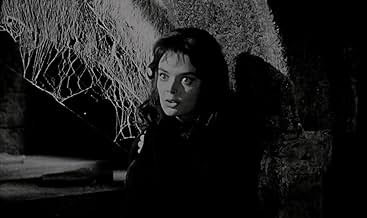
As a young doctor who figures importantly in the plot, JOHN RICHARDSON is a rather wooden actor and makes a cardboard hero, but in a film that relies on its effect for brilliant camera-work and Gothic touches, it's not much of a flaw. Barbara Steele's impassive mask-like beauty is suitable in the eerie dual role she plays with wide-eyed conviction.
The moody camera-work captures the spirit of Gothic horror in every shadowy scene. While the story itself is less than inspired, it does fulfill the promise of a good cobweb chiller right up until the rather predictable ending.
Well worth watching for fans of this genre.
There's no let-up in suspense from the gripping opening scene where the mask of Satan is nailed onto the face of the poor victimized woman, even though the unfolding of the story is rather slow. The graveyard scene of an undead man rising from the earth is masterfully photographed. The mood becomes more and more intense as several key characters emerge as vampires.
As a young doctor who figures importantly in the plot, JOHN RICHARDSON is a rather wooden actor and makes a cardboard hero, but in a film that relies on its effect for brilliant camera-work and Gothic touches, it's not much of a flaw. Barbara Steele's impassive mask-like beauty is suitable in the eerie dual role she plays with wide-eyed conviction.
The moody camera-work captures the spirit of Gothic horror in every shadowy scene. While the story itself is less than inspired, it does fulfill the promise of a good cobweb chiller right up until the rather predictable ending.
Well worth watching for fans of this genre.
Be sure and watch the uncut version with the title "The Mask of Satan," not the censored "Black Sunday" copy, to get the full effect of this living dead masterpiece of Italian cinema. More a movie of the undead than a vampire flick, it reminds the horror aficionado of a Val Lewton film from the 1940's, especially "The Leopard Man," not that "The Mask of Satan" is about leopards, but the mood and atmosphere are similar.
The film is about a woman of darkness and her mate who were executed for witchcraft two centuries before the Napoleonic period of European history. The most gruesome feature of the execution involved nailing a mask of Satan to their faces by means of a giant sledgehammer before they were entombed. By accident two hundred years later a doctor and his assistant while journeying through the region by coach on a dark stormy night filled with eerie devilish sounds, the doctor removes the mask from Princess Asa Vajda supposed corpse. Now Princess Vajda and her fiendish companion become free to seek their revenge. Their evil is released on the world and must be stopped.
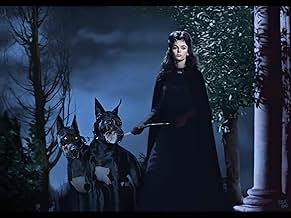
This is undoubtedly director Mario Bava best film. The marvelous camera work draws the viewer into the maelstrom of darkness and evil through innovative movements and angles. The shadowy settings where the actors are posed in ominous fashion are unforgettable. One obvious inspiration for Bava was the contemporary British Hammer horror film popular in America, especially with the drive-in crowd. The arrival of Katia Vajda with what appear to be the dogs of Hell, standing like a silhouette of damnation, reminds one of a Caspar David Friedrich painting from the German Romantic art movement of the Napoleonic era. One wonders if the director of "The Omen," Richard Donner, patterned his creepy scene in the cemetery with the Rottweilers after this scene in "The Mask of Satan."
This movie remains a must see for horror fans, somewhat of a lost treasure.
The film is about a woman of darkness and her mate who were executed for witchcraft two centuries before the Napoleonic period of European history. The most gruesome feature of the execution involved nailing a mask of Satan to their faces by means of a giant sledgehammer before they were entombed. By accident two hundred years later a doctor and his assistant while journeying through the region by coach on a dark stormy night filled with eerie devilish sounds, the doctor removes the mask from Princess Asa Vajda supposed corpse. Now Princess Vajda and her fiendish companion become free to seek their revenge. Their evil is released on the world and must be stopped.
This is undoubtedly director Mario Bava best film. The marvelous camera work draws the viewer into the maelstrom of darkness and evil through innovative movements and angles. The shadowy settings where the actors are posed in ominous fashion are unforgettable. One obvious inspiration for Bava was the contemporary British Hammer horror film popular in America, especially with the drive-in crowd. The arrival of Katia Vajda with what appear to be the dogs of Hell, standing like a silhouette of damnation, reminds one of a Caspar David Friedrich painting from the German Romantic art movement of the Napoleonic era. One wonders if the director of "The Omen," Richard Donner, patterned his creepy scene in the cemetery with the Rottweilers after this scene in "The Mask of Satan."
This movie remains a must see for horror fans, somewhat of a lost treasure.
La Maschera del Demonio/The Mask of Satan(1960) is the film that introduced audiences around the world to the cinema of Mario Bava. Responsible for being the first horror film to have a formidable evil female villain. Its about a dead witch who returns from the dead with her lover to terrorize the descendents of their executioners. Translitional picture that predates the broodish and moody style of Night of the Living Dead(1968). Tim Burton has cited this movie as one of his favorites.
After years as Assistent Director and Director of Photography, Bava was rewarded with his first full directorial assignment and the results are impressive. Mario Bava was a talented filmmaker with a love for the fine arts of Europe and Russian literature. He didn't direct full time until he was in his late 40s. Mario Bava's influences as a film director were Riccardo Freda and Freda and Fritz Lang. Nikolai Gogol is a writer that along with Edgar Allen Poe played a major influence on Bava's supernatural tales.
One theme that is present in The Mask of Satan(1960) is the decay and decline of a once happy and powerful family{more fully explored in Bava's later films of Black Sabbath(1963), Whip and the Body(1964), Lisa and the Devil(1974), and Shock(1977)}. Deals with the notion of the inescapability of fate that is an important theme in Bava's work. An example of this motif comes from Barbara Stelle with her line:"Here is the Very image of my life". Mario Bava was a fatalistic filmmaker who used imagery to convey his beliefs in destiny or fate. Part of his fatalistic style comes from him experiences and memories of WW2.
Some of the special effects are amazing for a film of this caliber. Mario Bava was a genius in creating special effects with only his creative soul and imagination. Makes one wonder what great special effects he could create with a modest budget. The gore effects although spread out in small pieces are gruesome for 1960. Proves that great special effects don't necessarily have to be done with mega dollars.
The opening scene of the execution of Asa is a stunning combination of atmosphere and violent imagery. Barbara Stelle along with Christopher Lee, Peter Cushing, and Vincent Price are some of the greatest icons in 1960s to 1970s horror films. Many movie makers in horror films were influenced by the opening scene. Certain parts of the atmospheric opening can be seen as one inspiration for the prologue of Lucio Fulci's L'Aldila/The Beyond(1981). A special moment in horror cinema.
The Mask of Satan(1960) came about as a result of the success of the Curse of Frankenstein(1957) and Horror of Dracula(1958) in Italy. Mixes the old fashion horror of Univerisal Studios with the graphic violence of Hammer horror. The Hammer and Universal horror films are responsible for the birth of horror in Post war Italian cinema. There are a couple of scenes that are obviously influenced by Horror of Dracula(1958). The fact that Mario Bava did this based on the success of Horror of Dracula(1958) must have influenced Terence Fisher to respond to directing Dracula:Prince of Darkness(1966).
The Mask of Satan(1960) isn't interested in plot and story as much as atmosphere and painting style visuals. Mario Bava took the barebones material of the film and turned it into something magnificent. Mario Bava's direction has the look of a great artist. Setting up atmosphere, dread, mood, and terror were some of Bava's strengths. His experiences as a cinematographer really pays dividends in Bava's direction.
A significant influence was placed on La Maschera del Demonio by the first Italian horror film of the sound era, I Vamipri(1956). A few references are made to I Vampiri(1956) especially in the discovery of a dead body near the river bank. Also, the aging effect in Mask of Satan(1960) comes from Bava's work on I Vampiri. Italian filmmaker, Riccardo Freda was the major influence behind Bava's films and the main directorial mentor of Mario Bava. The romantic subplot of The Mask of Satan(1960) also derieves from I Vampiri(1956).
Has some of the best set designs in a low budget horror film. Mario Bava would use some of the set for his late 1960s horror classic Kill Baby Kill(1967). Amazing that Mario Bava could put together grandeur looking art and set designs with so little. He also contributed to the dazzling cinematography. Mario Bava used many of the film's motifs and themes for The Whip and the Body(1964).
La Maschera del Demonio/The Mask of Satan(1960) is based loosely on a short story by Gogol called the Viy. An interesting note on the making of The Mask of Satan(1960) is that Bava made changes thoughout production because of uncertainities about the screenplay. Its one of the best horror films of the last fifty years. The camera moves with a smooth feel typical of a Mario Bava phtographed feature. This is an item that many aspiring horror filmmakers should watch in order to see how a great horror film should be done.
After years as Assistent Director and Director of Photography, Bava was rewarded with his first full directorial assignment and the results are impressive. Mario Bava was a talented filmmaker with a love for the fine arts of Europe and Russian literature. He didn't direct full time until he was in his late 40s. Mario Bava's influences as a film director were Riccardo Freda and Freda and Fritz Lang. Nikolai Gogol is a writer that along with Edgar Allen Poe played a major influence on Bava's supernatural tales.
One theme that is present in The Mask of Satan(1960) is the decay and decline of a once happy and powerful family{more fully explored in Bava's later films of Black Sabbath(1963), Whip and the Body(1964), Lisa and the Devil(1974), and Shock(1977)}. Deals with the notion of the inescapability of fate that is an important theme in Bava's work. An example of this motif comes from Barbara Stelle with her line:"Here is the Very image of my life". Mario Bava was a fatalistic filmmaker who used imagery to convey his beliefs in destiny or fate. Part of his fatalistic style comes from him experiences and memories of WW2.
Some of the special effects are amazing for a film of this caliber. Mario Bava was a genius in creating special effects with only his creative soul and imagination. Makes one wonder what great special effects he could create with a modest budget. The gore effects although spread out in small pieces are gruesome for 1960. Proves that great special effects don't necessarily have to be done with mega dollars.
The opening scene of the execution of Asa is a stunning combination of atmosphere and violent imagery. Barbara Stelle along with Christopher Lee, Peter Cushing, and Vincent Price are some of the greatest icons in 1960s to 1970s horror films. Many movie makers in horror films were influenced by the opening scene. Certain parts of the atmospheric opening can be seen as one inspiration for the prologue of Lucio Fulci's L'Aldila/The Beyond(1981). A special moment in horror cinema.
The Mask of Satan(1960) came about as a result of the success of the Curse of Frankenstein(1957) and Horror of Dracula(1958) in Italy. Mixes the old fashion horror of Univerisal Studios with the graphic violence of Hammer horror. The Hammer and Universal horror films are responsible for the birth of horror in Post war Italian cinema. There are a couple of scenes that are obviously influenced by Horror of Dracula(1958). The fact that Mario Bava did this based on the success of Horror of Dracula(1958) must have influenced Terence Fisher to respond to directing Dracula:Prince of Darkness(1966).
The Mask of Satan(1960) isn't interested in plot and story as much as atmosphere and painting style visuals. Mario Bava took the barebones material of the film and turned it into something magnificent. Mario Bava's direction has the look of a great artist. Setting up atmosphere, dread, mood, and terror were some of Bava's strengths. His experiences as a cinematographer really pays dividends in Bava's direction.
A significant influence was placed on La Maschera del Demonio by the first Italian horror film of the sound era, I Vamipri(1956). A few references are made to I Vampiri(1956) especially in the discovery of a dead body near the river bank. Also, the aging effect in Mask of Satan(1960) comes from Bava's work on I Vampiri. Italian filmmaker, Riccardo Freda was the major influence behind Bava's films and the main directorial mentor of Mario Bava. The romantic subplot of The Mask of Satan(1960) also derieves from I Vampiri(1956).
Has some of the best set designs in a low budget horror film. Mario Bava would use some of the set for his late 1960s horror classic Kill Baby Kill(1967). Amazing that Mario Bava could put together grandeur looking art and set designs with so little. He also contributed to the dazzling cinematography. Mario Bava used many of the film's motifs and themes for The Whip and the Body(1964).
La Maschera del Demonio/The Mask of Satan(1960) is based loosely on a short story by Gogol called the Viy. An interesting note on the making of The Mask of Satan(1960) is that Bava made changes thoughout production because of uncertainities about the screenplay. Its one of the best horror films of the last fifty years. The camera moves with a smooth feel typical of a Mario Bava phtographed feature. This is an item that many aspiring horror filmmakers should watch in order to see how a great horror film should be done.
The screenplay is hackneyed ,the story has been told told and told again...
And however,Bava's film is a sparkling diamond.How come?The direction of course,the cinematography absolutely incredibly breath-taking,and Barbara Steele ,the par excellence Gothic heroine:her fans will rejoice for she plays two parts here! Bava has no match when it comes to use the light the settings and the soundtrack.It's a black and white work and had it been filmed in color it would not have been better.From the gloomy family vaults to the forest where danger awaits on the young peasant girl to the doomed castle where a family tries to fight against a mysterious curse.
The carriage which takes the doctor to the mansion and its coachman reminds me of Murnau's "Nosferatu" .No less.
And however,Bava's film is a sparkling diamond.How come?The direction of course,the cinematography absolutely incredibly breath-taking,and Barbara Steele ,the par excellence Gothic heroine:her fans will rejoice for she plays two parts here! Bava has no match when it comes to use the light the settings and the soundtrack.It's a black and white work and had it been filmed in color it would not have been better.From the gloomy family vaults to the forest where danger awaits on the young peasant girl to the doomed castle where a family tries to fight against a mysterious curse.
The carriage which takes the doctor to the mansion and its coachman reminds me of Murnau's "Nosferatu" .No less.
Classic horror movie from a story by the Russian novelist Nikolay Gogol , set in 1630, involving the nasty witch named Asa : Barbara Steele, who also happens to be a vampire , being detained and executed along with her lover : Arturo Dominici, by her own brother , but she swears eternal vendetta . As a resurrected witch who was burned to death at a small medieval town seeks revenge on her pursuers . That's why two hundred years after , they are accidentally brought to life , being resurrected at a crypt by two doctors played by Andrea Checchi and John Richardson . In vengeance , Asa goes after her descendants , including her lookalike , Katia : Barbara Steele, playing a dual role .
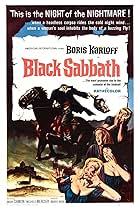
Great fun late at night , it is full of thrills , chills , surprises and creepy atmosphere . Based on a story by Nikolay Gogol , in fact Bava also adapted other Russian writers on the anthology horror movie : Black Sabbath in the episode Wurdalak with Boris Karloff . It contains exquisitely realised expressionit frames of sexual suggestion and cruelty that shocked spectators in the early Sixties. Gorgeous , brilliant and foggy cinematography in black and white by Mario Bava himself and assisted by Ubaldo Terzano. The cinematographic visual style still impresses and it retains its original power . Adding a thrilling and mysterious musical score by Les Baxter , Roger Corman's regular .
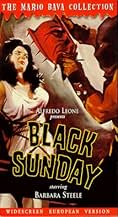
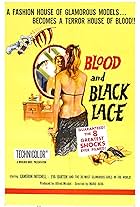
This astonishing motion picture titled Black Sunday or The Demon's Mask , House of Fright , Revenge of the Vampire or Mask of Satan was competently directed by horror maestro Mario Bava . He was a prestigious cameraman who turned into a notorious filmmaker, directing all kinds of genres with penchant for the terror, such as : Blood and black lace , Black Sabbath , Hatchet for the Honeymoon , House of Exorcism , Planet of of the Vampires , The Girl who knew too much, Torture Chamber of Baron Blood , Beyond the Door II . A must watch for terror fans , first important film with Steele as star and Mario Bava as director. Rating : 7.5/10 . Better than average . The picture will appeal to horror aficionados and Mario Bava/Barbara Steele enthusiasts . Essentian and indispensable seeing .
Great fun late at night , it is full of thrills , chills , surprises and creepy atmosphere . Based on a story by Nikolay Gogol , in fact Bava also adapted other Russian writers on the anthology horror movie : Black Sabbath in the episode Wurdalak with Boris Karloff . It contains exquisitely realised expressionit frames of sexual suggestion and cruelty that shocked spectators in the early Sixties. Gorgeous , brilliant and foggy cinematography in black and white by Mario Bava himself and assisted by Ubaldo Terzano. The cinematographic visual style still impresses and it retains its original power . Adding a thrilling and mysterious musical score by Les Baxter , Roger Corman's regular .
This astonishing motion picture titled Black Sunday or The Demon's Mask , House of Fright , Revenge of the Vampire or Mask of Satan was competently directed by horror maestro Mario Bava . He was a prestigious cameraman who turned into a notorious filmmaker, directing all kinds of genres with penchant for the terror, such as : Blood and black lace , Black Sabbath , Hatchet for the Honeymoon , House of Exorcism , Planet of of the Vampires , The Girl who knew too much, Torture Chamber of Baron Blood , Beyond the Door II . A must watch for terror fans , first important film with Steele as star and Mario Bava as director. Rating : 7.5/10 . Better than average . The picture will appeal to horror aficionados and Mario Bava/Barbara Steele enthusiasts . Essentian and indispensable seeing .





Did you know
- TriviaMario Bava was a big fan of Nikolay Gogol's short story, "Viy," on which this film's plot and characters are based. He recounted that he often used to read the story to his children and that the tale scared them so much they insisted on sleeping in bed with their father. He so admired the horror elements of "Viy" that when given the chance to choose the material for a film he was to direct, he immediately selected it in order to make this film.
- GoofsIn the opening credits, Barbara Steele's name is misspelled as Barbara Steel.
- Quotes
Princess Asa Vajda: You, too, can feel the joy and happiness of hating.
- Crazy creditsFor "The Mask of Satan," the English language version prepared in Italy, Barbara Steele's name is listed as "Barbara Steel" on the trailer and on the credits of the film itself.
- Alternate versionsThe full list of differences between the 83-minute original cut and the 80-minute AIP cut:
- A different English-language dub, and a new score by Les Baxter.
- An added pre-text crawl warning the audience about the film's content: "The producers of the picture you are about to see feel a moral obligation to warn you that it will shock you as no other film ever has. Because it could be very harmful to young and impressionable minds, it is restricted to only those over fourteen years of age."
- Alternate opening credits.
- A brief exchange between Katja and Constantine where he tells her their father has died is cut.
- A scene where Katja and Andrej talk in the garden is cut.
- An exchange between Katja and Andrej outside her room is cut.
- Kruvajan's death scene is cut down significantly to remove shots of his eye spurting blood.
- The scene were Prince Vajda reanimates and menaces Katja is trimmed.
- Vajda's death scene, particularly the close-ups of his head melting, is trimmed.
- Asa taunting Andrej before being burned at the stake is cut.
- Added closing credits.
- ConnectionsFeatured in I motorizzati (1962)
Details
- Release date
- Country of origin
- Languages
- Also known as
- La máscara del demonio
- Filming locations
- Production companies
- See more company credits at IMDbPro
- Runtime
- 1h 27m(87 min)
- Color
- Sound mix
- Aspect ratio
- 1.66 : 1
Contribute to this page
Suggest an edit or add missing content