Quinoa1984
Joined Mar 2000
Badges61
To learn how to earn badges, go to the badges help page.
Ratings15K
Quinoa1984's rating










Reviews5.4K
Quinoa1984's rating

I decided to watch this because (shame I know) of seeing a reel on my Instagram of a Popeye New Year's Eve dance I hadn't seen before and it made me want to see the rest (of course they only played like ten seconds of this, can't have all the wonder out in one place, right?) It immediately puts a smile on my face whenever I get recommended clips from Fleischer cartoons - once you go down a Betty Boop rabbit hole you wont come out for days (day-day-si-days, but I digress), but the timeliness won me over most of all.
It really is more charming than outright funny as Popeye and Olive and Bluto are about to go out to a New Year's party and poor old Granny is going to stay right at home in her rocking chair... but Popeye will have none of that nonsense and instead insists she come along. Once there, everybody goes to dance and as she is left all by her lonesome, Popeye picks her up and does a big dance with her, much to the surprise of everyone gathered (he must be in such a good mood that he doesn't even bother to do the customary "Why I Oughta" at Bluto dancing with Olive!)
I was chuckling at some of the physical comedy between Bluto and Olive, and there is some patter from Popeye as well. But this is most interesting as a sincere effort to show how important it is to have fun with those around you and to leave no wrinkly old cartoon characters behind. This is not something that would be high up on the Great Popeye cartoons (I am not sure I've seen a ranking that gets into that, maybe should seek that out soon), but it is sweet hearted and the Fleishers and their team show off just how dexterous they can make their characters on the dance floor.
In brief: this is a good way to start what should be a better year than last.
It really is more charming than outright funny as Popeye and Olive and Bluto are about to go out to a New Year's party and poor old Granny is going to stay right at home in her rocking chair... but Popeye will have none of that nonsense and instead insists she come along. Once there, everybody goes to dance and as she is left all by her lonesome, Popeye picks her up and does a big dance with her, much to the surprise of everyone gathered (he must be in such a good mood that he doesn't even bother to do the customary "Why I Oughta" at Bluto dancing with Olive!)
I was chuckling at some of the physical comedy between Bluto and Olive, and there is some patter from Popeye as well. But this is most interesting as a sincere effort to show how important it is to have fun with those around you and to leave no wrinkly old cartoon characters behind. This is not something that would be high up on the Great Popeye cartoons (I am not sure I've seen a ranking that gets into that, maybe should seek that out soon), but it is sweet hearted and the Fleishers and their team show off just how dexterous they can make their characters on the dance floor.
In brief: this is a good way to start what should be a better year than last.

Bare-ly a movie!
I love how much Michael Donovan O'Donnell is just grinning ear to ear like an adolescent constantly spying behind not at all conspicuous large plants inside of every naked woman's room.
This was around the time when from all reports Ed Wood went deep into the world of smut movies and got deeper into alcoholic waste, but you frankly wouldn't know that it was made by a desperate man so much as my a gleeful if untalented showman.
It is never quite rises past being inept in the ways of, you know, how a film can or should be shot or framed or lit or edited (if Godard saw this he might have regretted starting off the Jump Cut style, and that amuses me), but the majority of the performers seem to be having vivacious (largely softcore) sexual situations and just having a generally fun time, as if Wood off screen was getting jubilant the more they were dancing and falling over one another.
Practically all of the scenes that should involve hardcore sex look hilariously like, at least when it is man on woman, when you were a kid and smashed your action figures together to simulate then having sex with each other. It also gets positively kinky and manic in the final ten minutes and that is much appreciated. Other times when it is lady on lady, it is a little more sensual and almost truly erotically charged - as opposed to over-long and kind of icky when it is the guys and their mangy hairy mugs - probably because Ed just let them do what they wanted (many a pool table is used well to put it that way).
The highlight of this largely slipshod Hippie-Free-Love-adjacent *Detective mystery* story, which only remembers its plot by around the one hour mark and makes Inherent Vice look like the most lucid piece of filmmaking ever, is Wood in his few minutes on screen. He knows what he wants from himself and can deliver his campy lines with commitment; I wonder if he had lived past the 1970s if John Waters might have picked him up for parts in his ensemble.
I love how much Michael Donovan O'Donnell is just grinning ear to ear like an adolescent constantly spying behind not at all conspicuous large plants inside of every naked woman's room.
This was around the time when from all reports Ed Wood went deep into the world of smut movies and got deeper into alcoholic waste, but you frankly wouldn't know that it was made by a desperate man so much as my a gleeful if untalented showman.
It is never quite rises past being inept in the ways of, you know, how a film can or should be shot or framed or lit or edited (if Godard saw this he might have regretted starting off the Jump Cut style, and that amuses me), but the majority of the performers seem to be having vivacious (largely softcore) sexual situations and just having a generally fun time, as if Wood off screen was getting jubilant the more they were dancing and falling over one another.
Practically all of the scenes that should involve hardcore sex look hilariously like, at least when it is man on woman, when you were a kid and smashed your action figures together to simulate then having sex with each other. It also gets positively kinky and manic in the final ten minutes and that is much appreciated. Other times when it is lady on lady, it is a little more sensual and almost truly erotically charged - as opposed to over-long and kind of icky when it is the guys and their mangy hairy mugs - probably because Ed just let them do what they wanted (many a pool table is used well to put it that way).
The highlight of this largely slipshod Hippie-Free-Love-adjacent *Detective mystery* story, which only remembers its plot by around the one hour mark and makes Inherent Vice look like the most lucid piece of filmmaking ever, is Wood in his few minutes on screen. He knows what he wants from himself and can deliver his campy lines with commitment; I wonder if he had lived past the 1970s if John Waters might have picked him up for parts in his ensemble.

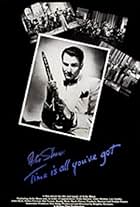
The refreshing aspect of this documentary about the innovative Clarinetist and band leader Artie Shaw is how the director doesn't try to steer him in any direction in particular or to make him look or sound like he has finesse. That isn't Artie Shaw, certainly at this later stage of his life, and director Brigitte Berman, armed with a cornucopia of archival images and footage from the period and throughout his career, shows him as craggy and opinionated as he was then.
In truth, a lot of what he says makes sense, even when he sounds to be a little insulting (ie the highlight or one of them at least is his episode circa 1939 where he called teens who did the Jitterbug "morons" - he had a pretty good reason in context, but it would have been hard to communicate that in a headline). There is some heady and impressive points of history as well to take in, like during the second World War when Shaw and his band played for one of the great warships, but that isn't the main draw: what hooks us in is that this is about the needs and desires of an artist versus commercial expectations, and how that can lead to constant anxiety.
I do wonder if there were points Berman did steer the conversation or answers and we didn't see it so much, but I doubt it. The presentation via the narration is a little dry, and it may cover some parts I personally wanted to know more about (ie his marriage to Lana Turner seems to be hand-waved away), but that is my only main knock against it (that and perhaps those bits where he just sits listening to his own music doesn't add as much as Berman thinks).
This is a fascinating capital-C Character of the world of music and the 20th century American imagination; despite all of his existential troubles, Shaw's candid admissions and how often his ornery opinions mesh with a plain spoken sense of his life and career and collaborators (and even his psychotherapist) is involving and you want to keep hearing him talk.
In truth, a lot of what he says makes sense, even when he sounds to be a little insulting (ie the highlight or one of them at least is his episode circa 1939 where he called teens who did the Jitterbug "morons" - he had a pretty good reason in context, but it would have been hard to communicate that in a headline). There is some heady and impressive points of history as well to take in, like during the second World War when Shaw and his band played for one of the great warships, but that isn't the main draw: what hooks us in is that this is about the needs and desires of an artist versus commercial expectations, and how that can lead to constant anxiety.
I do wonder if there were points Berman did steer the conversation or answers and we didn't see it so much, but I doubt it. The presentation via the narration is a little dry, and it may cover some parts I personally wanted to know more about (ie his marriage to Lana Turner seems to be hand-waved away), but that is my only main knock against it (that and perhaps those bits where he just sits listening to his own music doesn't add as much as Berman thinks).
This is a fascinating capital-C Character of the world of music and the 20th century American imagination; despite all of his existential troubles, Shaw's candid admissions and how often his ornery opinions mesh with a plain spoken sense of his life and career and collaborators (and even his psychotherapist) is involving and you want to keep hearing him talk.
Insights
Quinoa1984's rating
Recently taken polls
115 total polls taken