No lotus without mud


Avalokitesvara Dharma (Sanskrit), or dhamma (Pali) is a fundamental concept in ancient Indian spiritual traditions. The term Buddha-dharma is sometimes used to mean Buddhism in general or, more specifically, the Buddha’s teachings. Beyond that, however, dharma has a vast range of meanings in Buddhism, depending on the context.
Broadly, dharma can refer to the eternal—cosmic, natural law—or to mundane “reality.” In the plural, dharmas refer to phenomena: the impermanent events of ordinary samsaric life and our habits of mind. Dharma can be specific—scripture, a sacred text, a teaching, a doctrine. But the dharma is above all experiential. In the Buddha’s day there were no written texts; the teachings were oral, perceived directly by those who heard and practiced them.
Now, as then, buddhadharma is living truth. Scholar Rupert Gethin defines dharma as “the basis of things, the underlying nature of things, the way things are; in short it is the truth about things, the truth about the world.” Dharma also refers to insight into the truth of how things are.
Further, dharma is not merely descriptive but prescriptive—how we should act, the ethical conduct set out in the eightfold path that leads to an awakened life.
In sum, “there is no term in Buddhist terminology wider than dhamma,” the Theravada monk and scholar Walpola Rahula states in his classic work, What the Buddha Taught. “There is nothing in the universe or outside, good or bad, conditioned or non-conditioned, relative or absolute, which is not included in this term.”
As a word to live by, the Japanese Soto Zen master Kodo Sawaki Roshi said, “What’s the Buddha-dharma about? It’s about having every aspect of your daily life pulled by the Buddha.”

“The most beautiful people we have known are those who have known defeat, known suffering, known struggle, known loss, and have found their way out of the depths. These persons have an appreciation, a sensitivity, and an understanding of life that fills them with compassion, gentleness, and a deep loving concern. Beautiful people do not just happen.”
― Elisabeth Kübler-Ross


The direction of bowing is very important. I want to put down my small “I”, see my true nature and help all beings. So, any kind of exercise can help your body and mind become one, but with just exercise, the direction is often not clear. Sometimes it’s for my health, sometimes it’s for my good looks, and sometimes it’s to win a competition, but in Buddhism, everything’s direction is the same point – how to perceive my true nature and save all beings from suffering.
Our bowing takes away our karma mind, our thinking mind, and returns us to this moment very clearly, this want to find our true nature and save all beings from suffering. This is why bowing practice is so important. If somebody has much anger, or much desire, or lazy mind, then every day, 300 bows, or 500 bows, even 1,000 bows, every day. Then their center will become very strong, they can control their karma, take away their karma, and become clear. This helps the practitioner and this world.
—Zen Master Dae Bong
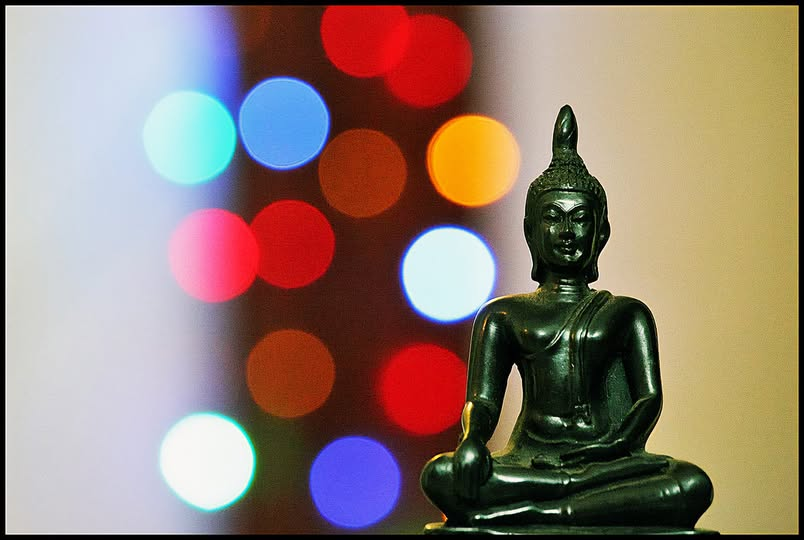
(Photo by Francis Lau.)


 Zen Flash
Recent Comments