All the things taking place around our world, all the irritations and all the problems, are crucial. Without others we cannot attain enlightenment — in fact, we cannot even tread on the path. If there is no noise outside during our sitting meditation, we cannot develop mindfulness. If we do not have aches and pains in the body, we cannot attain mindfulness; we cannot actually meditate. If everything were lovey-dovey and jellyfishlike, there would be nothing to work with.
The wind blows through the sky and flies across continents without ever settling anywhere. It sweeps through space, leaving no trace whatsoever. Let thoughts pass through your mind in the same way, leaving no karmic residue and never altering your realization of innate simplicity.
~Dilgo Khyentse Rinpoche. The Hundred Verses of Advice. Shambhala Publications.
The direction of bowing is very important. I want to put down my small “I”, see my true nature and help all beings. So, any kind of exercise can help your body and mind become one, but with just exercise, the direction is often not clear. Sometimes it’s for my health, sometimes it’s for my good looks, and sometimes it’s to win a competition, but in Buddhism, everything’s direction is the same point – how to perceive my true nature and save all beings from suffering.
Our bowing takes away our karma mind, our thinking mind, and returns us to this moment very clearly, this want to find our true nature and save all beings from suffering. This is why bowing practice is so important. If somebody has much anger, or much desire, or lazy mind, then every day, 300 bows, or 500 bows, even 1,000 bows, every day. Then their center will become very strong, they can control their karma, take away their karma, and become clear. This helps the practitioner and this world.
Zazen that leads to Self-realization is neither idle reverie nor vacant inaction but an intense inner struggle to gain control over the mind and then to use it, like a silent missile, to penetrate the barrier of the five senses and the discursive intellect (i.e., the sixth sense). It demands determination, courage, and energy. Yasutani-roshi calls it “a battle between the opposing forces of delusion and bodhi.” This state of mind has been vividly described in these words, said to have been uttered by the Buddha as he sat beneath the Bo tree making his supreme effort, and often quoted in the zendo during sesshin:
“Though only my skin, sinews, and bones remain and my blood and flesh dry up and wither away, yet never from this seat will I stir until I have attained full enlightenment.”
The drive toward enlightenment is powered on the one hand by a painfully felt inner bondage, frustration with life, a fear of death, and on the other by the conviction that through satori one can gain liberation. But it is in zazen that the body-mind’s force and vigor are enlarged and mobilized for the breakthrough into this new world of freedom. Energies which formerly were squandered in com-pulsive drives and purposeless actions are preserved and channelled into a unity through correct Zen sitting, and to the degree that the mind attains one-pointedness through zazen it no longer disperses its force in the uncontrolled proliferation of idle thoughts. The entire nervous system is relaxed and soothed, inner tensions eliminated, and the tone of all organs strengthened. In short, by realigning the physical, mental, and psychic energies through proper breathing, concentration, and sitting, zazen establishes a new body-mind equilibrium with its center of gravity in the vital Hara.
With the body and mind consolidated, focused, and energized, the emotions respond with increased sensitivity and purity, and volition exerts itself with greater strength of purpose. No longer are we dominated by intellect at the expense of feeling, nor driven by the emotions unchecked by reason or will. Eventually zazen leads to a transformation of personality and character. Dryness, rigidity, and self-centeredness give way to flowing warmth, resiliency, and compassion, while self-indulgence and fear are transmuted into self- mastery and courage.
One must practice with bodhisattva attitude every day. People can’t see your mind, what people see is a manifestation of your attitude in your actions of body and speech. Pay attention to your attitude all the time, guard it as if you are the police, or like a babysitter who cares for a child, like a bodyguard, or like you are the guru and your mind is your disciple.
We may pretend to be Buddhists, but if we do not have a wisdom point of view and the compassion that the Buddha Shakyamuni revealed again and again, then whatever Dharma acts we perform are just Dharma drama for the nihilist audience to senselessly gossip about during intermission.
Tenzin Wangyal Rinpoche is a prominent Bon Buddhist master and founding spiritual director of Ligmincha International, http://www.ligmincha.org. His books include the best-selling The Tibetan Yogas of Dream and Sleep; Tibetan Sound Healing; Wonders of the Natural Mind; Healing With Form, Energy and Light; Unbounded Wholeness (with Anne Carolyn Klein); Awakening the Sacred Body; Tibetan Yogas of Body, Speech and Mind; and Awakening the Luminous Mind.
The best period to begin formal practice is first thing in the morning after a good night’s sleep, at which point the mind is most refreshed and relaxed, before getting involved with all the daily stuff. Taking the time to practice before you leave the house for work or to run whatever errands you have to do sets the tone for your entire day, and also reinforces your own commitment to practice throughout the day.
Don’t listen to yourself. When I was doing retreat in the cave, I recognized that in order to keep my body healthy, I had to do yoga. I hate exercise. And I did an hour and a half of yoga every day, no matter what. Even if it was snowing, or the floor was all wet, or it was hot, or cold, I just did it. The one question I did not ask myself was, “Do I feel like doing yoga?” Don’t ever ask yourself, “Do I feel like sitting down and practising?” Just do it! You have time and you do it; that I would say is the most important thing.
People who suffer will accordingly gain wisdom. If we don’t suffer, we don’t contemplate. If we don’t contemplate, no wisdom is born. Without wisdom, we don’t know. Not knowing, we can’t get free of suffering – that’s just the way it is. Therefore we must train and endure in our practice. When we then reflect on the world, we won’t be afraid like before. It isn’t that the Buddha was enlightened outside of the world but within the world itself.
What are the signs of progress in our practice? What can we expect? Should we wait for a signal from the guru — or an award? According to Karma Chagme Rinpoche, we will have no experiences, no special dreams, no pure visions. The “king of all signs,” also known as the “sign of no-sign,” which was highly prized by the Kagyupa masters of the past, is when renunciation mind, sadness and devotion blaze in your mind. The signs to be cherished most include an escalating appetite for dharma practice; noticing the futility of everything you do; ever-increasing conflicts as a result of old habits; and while you may still have the urge to party with your friends, to be plagued by the unwelcome sense that the whole thing is a useless waste of time. Therefore do not constantly aim to finish the practice. Instead, try to accept that your spiritual journey will never end. Your journey began with the wish that you, personally, bring all sentient beings to enlightenment, so until that wish is fulfilled, your activities as a bodhisattva will never cease.
Karma is not something complicated or philosophical. Karma means watching your body, watching your mouth, and watching your mind. Trying to keep these three doors as pure as possible is the practice of karma.
Lama Zopa Rinpoche says Every step we take is a step closer to the grave. As we walk, we should meditate on impermanence and death, otherwise that it will be a walk toward misery. Each step we take away from our room, that much of our life is gone. With the first step, that much of our life is gone; with the second step, that much more of our life is gone; and with the third . . .and so forth. By practicing mindfulness of impermanence like this, a walk can be so helpful.
It is the same when we are talking. With each word we say, that much of our life has gone. This is especially good to remember when we gossip, when we talk about meaningless things that cause delusions to arise. With that many words spoken, words that could have been highly meaningful for us and others, that much of our life has been wasted.
When we read a book, every word we read is one word closer to death; every page is one page closer to death. When we finish that book, it is one less book we will read in this life. When we eat a plate of rice, each time the spoon goes to our mouth, a spoonful of life has finished.
For every mantra we recite, think that life has become that much shorter; and after each mala, that our life is shortened by that much, that we are that much closer to death.
This is an especially effective meditation to do when we are driving because we are travelling at speed and so we can really feel how we are racing toward death. The faster we drive, the quicker we reach the hells. We might be driving to work or to a restaurant, but we are really driving to our place of execution.
The nature of impermanence is that we are all dying every moment. In a hospital there are doctors, nurses, and staff who are labelled “not dying” and terminally ill patients who are labeled “dying,” but in reality there is no such difference. We are all dying. Some of us have only a few hours left, some a few days, some a few years. And who is to say that the doctor treating the person in the last stages of cancer will outlive the patient? We all have a terminal condition called life. The difference between our illness and that of the cancer patient is just a matter of degrees. Ours will probably take a little longer to take effect.
All this is morbid and depressing unless we can see the truth in it and how this is the big wake-up call to get us to stop wasting our life. Seeing how we are racing toward death, we should think, “I must not waste my life. I must practice the Dharma purely. I must make my life highly beneficial by practicing bodhicitta. I will do whatever is of greatest benefit to sentient beings.” By thinking in all these different ways about impermanence and death, we should reach this conclusion.
From the chapter *Overcoming Laziness* in which Rinpoche offers commentary and guidance on how to overcome this greatest obstacle to our happiness from 𝘗𝘦𝘳𝘴𝘦𝘷𝘦𝘳𝘢𝘯𝘤𝘦: 𝘛𝘩𝘦 𝘋𝘦𝘵𝘦𝘳𝘮𝘪𝘯𝘢𝘵𝘪𝘰𝘯 𝘰𝘧 𝘵𝘩𝘦 𝘉𝘰𝘥𝘩𝘪𝘴𝘢𝘵𝘵𝘷𝘢


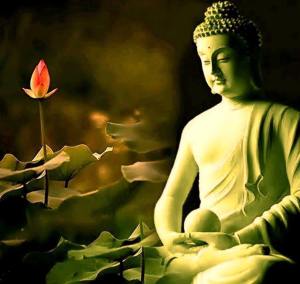


 Every step we take is a step closer to the grave. As we walk, we should meditate on impermanence and death, otherwise that it will be a walk toward misery. Each step we take away from our room, that much of our life is gone. With the first step, that much of our life is gone; with the second step, that much more of our life is gone; and with the third . . .and so forth. By practicing mindfulness of impermanence like this, a walk can be so helpful.
 From the chapter *Overcoming Laziness* in which Rinpoche offers commentary and guidance on how to overcome this greatest obstacle to our happiness from 𝘗𝘦𝘳𝘴𝘦𝘷𝘦𝘳𝘢𝘯𝘤𝘦: 𝘛𝘩𝘦 𝘋𝘦𝘵𝘦𝘳𝘮𝘪𝘯𝘢𝘵𝘪𝘰𝘯 𝘰𝘧 𝘵𝘩𝘦 𝘉𝘰𝘥𝘩𝘪𝘴𝘢𝘵𝘵𝘷𝘢
 Read the rest of *Overcoming Laziness*


 Zen Flash
Recent Comments