Disorders of the back
Jesse Noel V. Conjares, MD, MOrtho, FPOA
1
Disorders of the back
Clinical manifestations of a back problem
pain
Neurologic compromise
(paresthesia, power loss, pee and pooh-pooh
problems)
Deformity
2
Back Pain
• 2nd most common symptom prompting a
patient to visit a physician (next to upper
respiratory infections)
• Most prevalent among the 25-45 year age
group with no gender predilection
3
Back Pain
Main points to be considered by a physician in
determining etiology
AGE
Children- developmental disorders, infections, primary
tumors
Young adults- lumbar disc herniation, spondylolisthesis,
acute fractures, infections
Older adults- spinal stenosis, metastatic disease,
osteoporotic vertebral body fractures
4
Back Pain
ONSET
Acute- fractures, infection, disc herniation, inflammatory arthritis,
muscle strain
Gradual- inflammatory and non-inflammatory arthritis, Potts
disease, malignancy, spinal stenosis
AGGRAVATING AND RELIEVING FACTORS
Aggravated by motion and position(mechanical)- motion segment
pathology
Persistent- infection, malignancy, inflammatory arthritis
ASSOCIATED NEUROLOGIC COMPROMISE
Predominantly back pain vs. unilateral leg pain
Sensory, motor, autonomic deficits
Positive nerve root tension signs
5
Back Pain
SYSTEMIC SIGNS AND SYMPTOMS
Eye, heart, urinary tract involvement-
spondyloarthropathy
Appendicular joint – inflammatory and non-
inflammatory arthritis
Primary extraspinal malignancy- metastatic spinal
disease
Manifestations of an infection- vertebral
osteomyelitis, Potts disease, discitis
System-specific laboratory findings
6
Back Pain
REFERRED PAIN FROM ADJACENT ORGAN
Cardiovascular- heart disease, aortic aneurysm
Urinary tract- pyelonephritis, urolithiasis
Digestive tract- pancreatitis, cholecystitis, acute appendicitis,
colo-rectal malignancy
Reproductive tract- ovarian malignancy, pelvic inflammatory
disease
Sacroiliitis and hip arthritis
PSYCHOGENIC
Esp. in chronic, recurrent cases, litigation & compensation
issues
Special tests can evaluate
7
Imaging
Diagnostic in most cases.
Plain radiographs
CAT scan
MRI
Central Dexa Bone Densitometry
Directed by symptoms from history and findings on
PE
Collaborated by pertinent positive and negative lab
results
8
Laboratory tests
To rule in or rule out: malignancy, infection,
inflammatory arthritis
Cbc with differential count, ESR, CRP, ASO
Serum RF, anti-ccp, ANA, HLA-B27
Serum electrolytes
Serum alkaline phosphatase, acid phosphatase
Prostatic-specific antigen in males
Serum electrophoresis
9
Laboratory tests
BIOPSY
CT scan-guided
BONE SCAN
Metastatic spine disease
To search for more accessible sites for biopsy in
cases of metastatic disease
10
LABORATORY TESTS
ELECTROMYOGRAPHY-NERVE CONDUCTION
VELOCITY (EMG-NCV)
Objective documentation of a patient’s
subjective complaint of leg pain
Confirms nerve root pathology
11
What needs to be managed in
spine disorders
• Primary disorder
• Instability of the spine
• Neurologic compromise
12
Goal of intervention
A comfortable and
functional patient
13
Principles of management
Conservative management
usually suffices for the
majority of cases.
14
Conservative management
Directed at specific etiology
Short-term pain relief
• Oral meds: Analgesics, NSAIDS, muscle relaxants, oral
steroids, bone density improvement
• Epidural steroids with fluoroscopic guidance
• 3-day bed rest
• Physical therapy
– heating modalities (hot moist pack, ultrasound, microwave,
lasers)
– TENS
– Flexibility, strengthening, balance training
15
Conservative management
Long-term
• Patient education and assurance
• Back school and hygiene
– Behavior modification
– Activity restriction
– Orthotic use
• Home exercise program
16
USING YOUR BACK
• Back wants to be
upright with
maintenance of the
normal curves.
USING YOUR BACK
USING YOUR BACK
• Lying on a flat firm surface. Pillows under thighs.
• Using a stepboard. Mirror at eye level.
• Adjusting distance from steering wheel.
USING YOUR BACK
• Do not use back as a lever. Use lower extremities.
• Use proper footwork in sports. Turn whole body.
• Use a stool or reacher instead of stretching the back eliminating the
normal curves.
USING YOUR BACK
• Sit less often.
• Lie down.
• Stand up and shift positions regularly.
• Walk in comfortable flat rubber-soled
footwear.
Spine orthotics
22
Spine orthotics
23
Principles of management
Surgery to address progressive
neurologic deficit, deformity
and failure of conservative
management.
24
Neurologic compromise
Compromise may be secondary to:
• Traumatic transection
• Physical compression or compression of blood supply
– Canal malalignment
– Fracture fragment comminution
– Disc herniation
– Degenerative stenosis
– Tumor
– Abcess formation
25
Addressing neurologic compromise
Decompression
• Fracture reduction
• Fragment removal
• Debridement of infected tissue and abcess
• Tumor excision
26
Addressing neurologic compromise
• Anterior decompression
– Corpectomy
– Discectomy
– Distraction plates
• Posterior decompression
– Laminectomy and laminotomy
– Facetectomy and foraminotomy
– Discectomy
27
Stabilizing the spine
Arthrodesis
• Fusing the motion segment to facilitate bone or
fracture healing to eliminate movement
permanently
Instrumentation
• Holds the bone fragments in place until fusion
becomes complete
• Increases the fusion rate
28
Stabilizing the spine
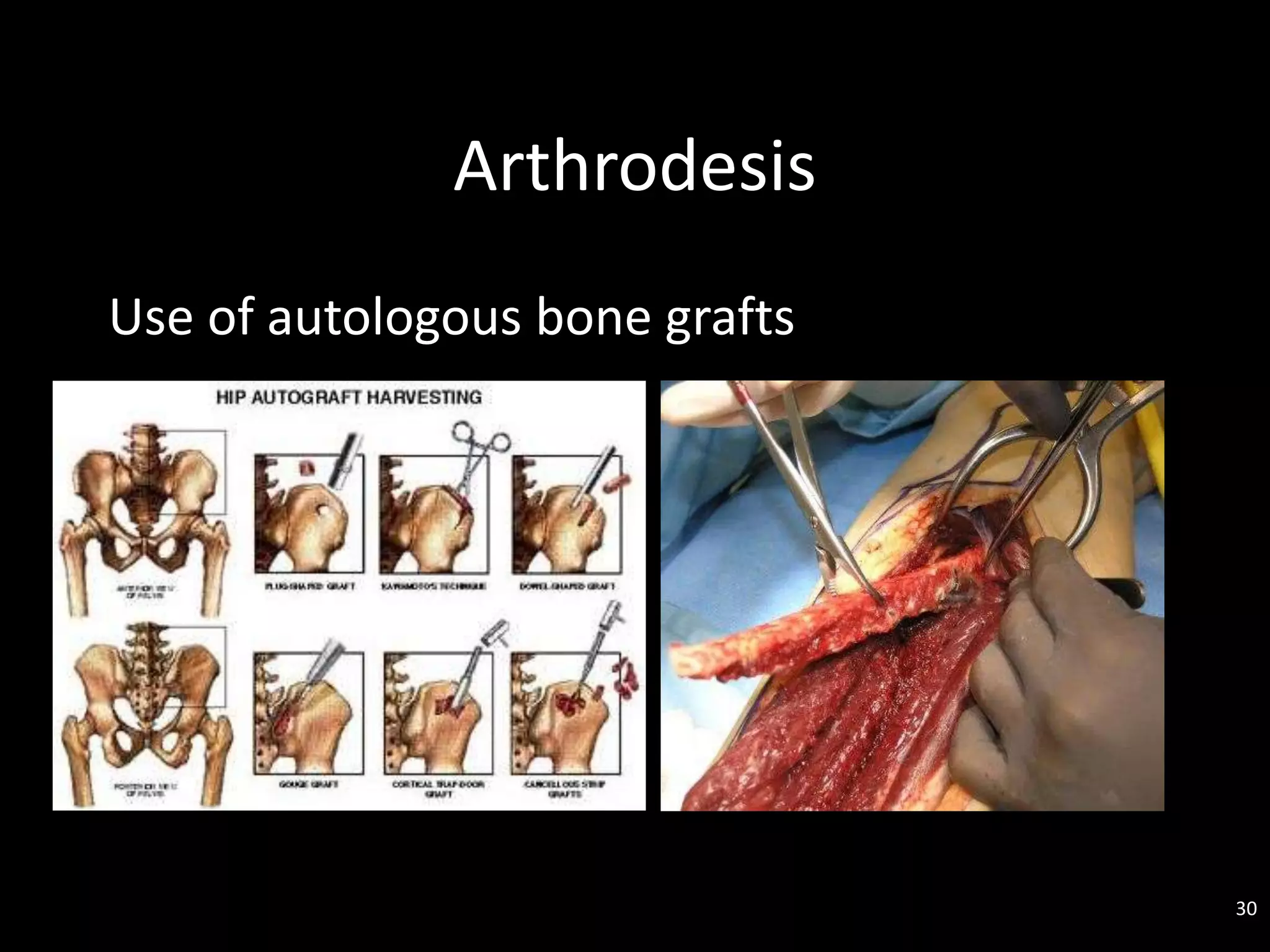
Arthrodesis
Ways of bridging the bone gap
• Use of autologous bone grafts
• Use of allografts
• Use of bone graft substitutes
– Demineralized bone matrix
– Calcium sulfate tablets
– Hydroxyapatite
– Bone growth factors
– Biodegradable and non-biodegradable polymers
29
Arthrodesis
Use of autologous bone grafts
30
Arthrodesis
Use of allografts
• Freeze dried irradiated cadaver bone (bone
chips, portions of long bone)
Arthrodesis
Use of bone substitutes
• Demineralized bone matrix, calcium sulfate
tablets, hydroxyapatite powder, bone
morphogenetic protein, polymers
Arthrodesis
Anterior
Postero-
lateral
Combined
33
Kinds of spine instrumentation
What segment is being stabilized
cervical, thoracic, lumbar
Where it is placed
Anterior vs posterior
Several different types
Rods and hooks
Plates and screws
Rods and screws
Interlaminar wiring
Interspinous wiring
Interbody fusion cages 34
Spinal rods and hooks
35
Plates and screws
36
Rods and screws
37
Interspinous wires
38
Sublaminar wires
39
Interbody fusion cages
40
Overview of Spine Disorders
• Muscle strain
• Degenerative spine disease
• Lumbar disc herniation
• Spine trauma
• Deformity
• Spine infection
• Spine tumor
• Spondyloarthropathy
41
Muscle strain, disc herniation,
degenerative spine disease
42
33 vertebrae of the bony spine
24 movable
• 7 cervical
• 12 thoracic
• 5 lumbar
14 fused
• 5 fused sacral
• 4 fused coccygeal
• 2 primary curves
• 2 secondary curves
• 72-75 cm in length
– ¼ are IV discs
Motion segment
• 3 JOINTS
– INTERVERTEBRAL DISC- (synarthroses=bone-con. tissue-bone); cartilage joint
– 2 FACET /APOPHYSEAL JOINTS (diarthroses=bone-joint capsule-bone); synovial
joint
• Pedicles
– Half the height of corresponding body forming a superior and inferior notch
– Adjacent inferior and superior notches form the intervertebral foramen thru
neural and vascular structures pass
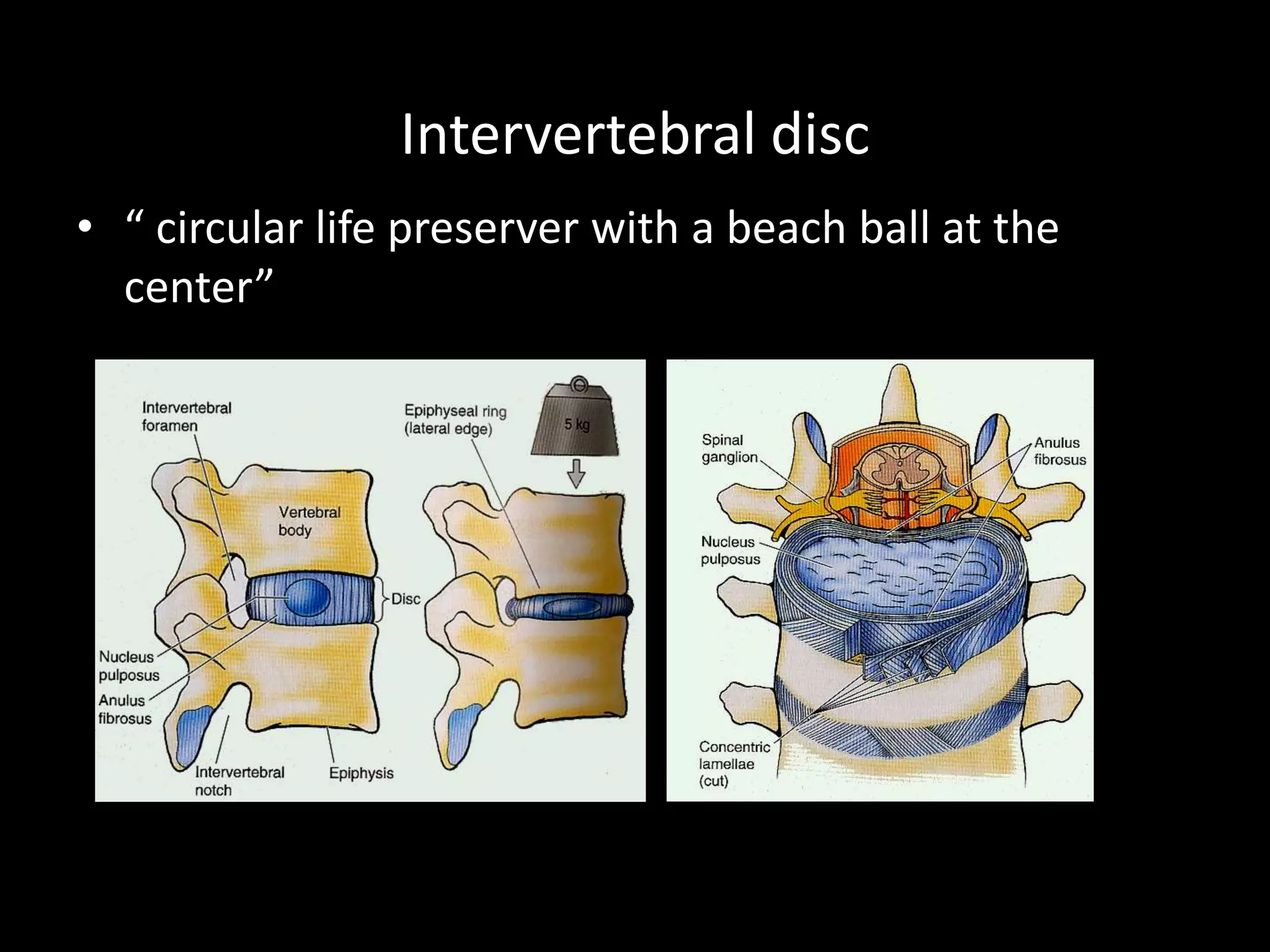
Intervertebral disc
• “ circular life preserver with a beach ball at the
center”
Intervertebral disc
Central nucleus
– High water & proteoglycan (hydrophilic)=glycosaminoglycans(GAGs) +
water
– GAGs- chondroitin-4-sulfate, chondroitin-6-sulfate, hyaluronate, keratan
sulfate
– Lower collagen (type II-better for compression) content
– Exerts pressure radially against the annulus and endplate on weight-
bearing
Intervertebral disc
Peripheral annulus
– Higher collagen fibers
(type I-higher resistance to
tension) arranged
concentric lamellae
– Attached to the vertebral
cartilaginous endplates,
epiphyseal ring (Sharpey’s
fibers), vertebral body
periosteum, longitudinal
ligaments
– On weight-bearing, fibers
become horizontal
47
Motion segment stabilizers
Intervertebral disc
Nucleus polposus
Annulus fibrosus
6 ligaments
ALL
PLL
Ligamentum flavum
Intertransverse ligament
Interspinous ligament
Supraspinous ligament
Facet joint capsule
48
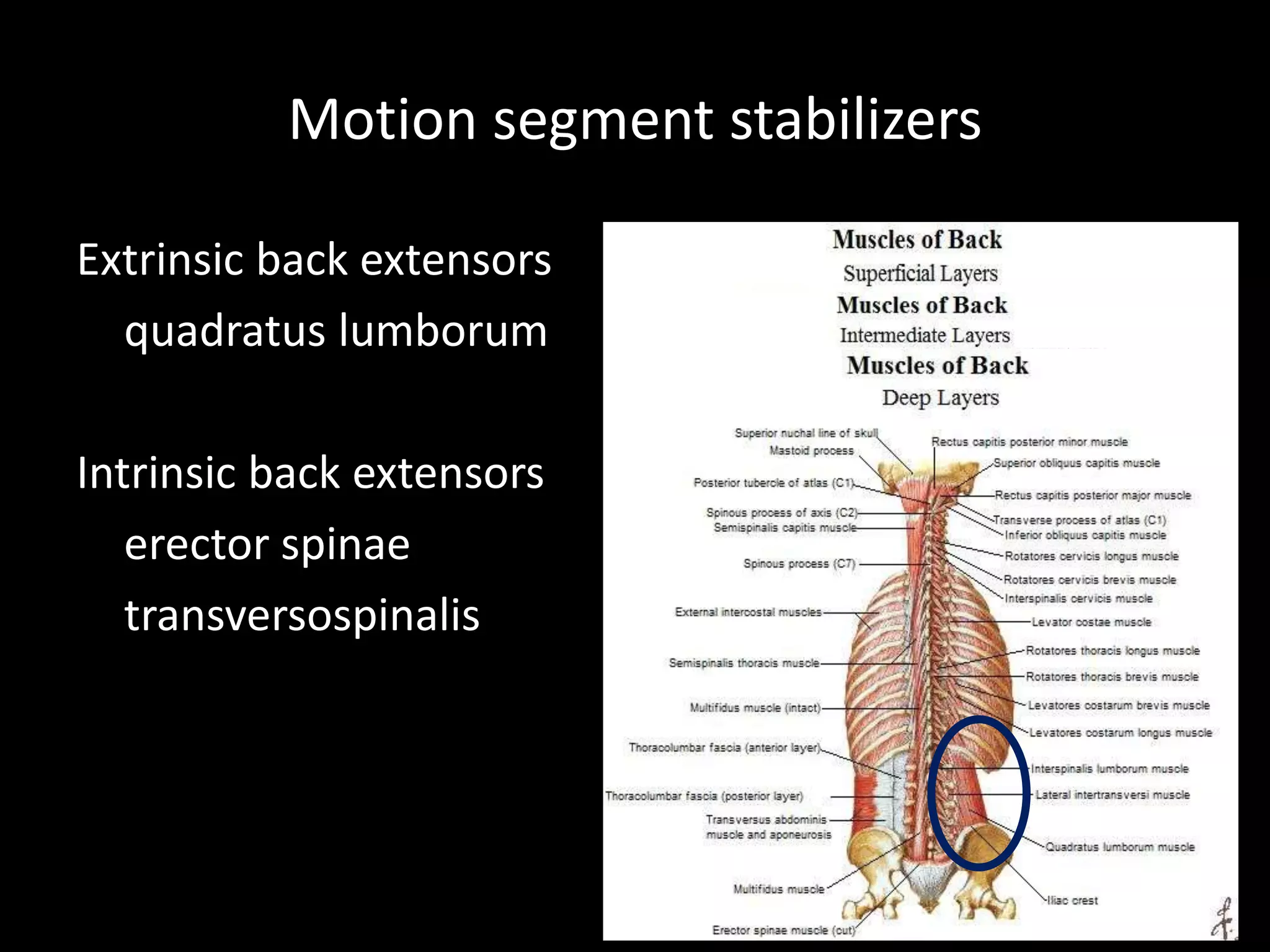
Extrinsic back extensors
quadratus lumborum
Intrinsic back extensors
erector spinae
transversospinalis
49
Motion segment stabilizers
Motion
FLEXION EXTENSION
Motion
ROTATION
LATERAL FLEXION
USING YOUR BACK AS A TYPE 3 LEVER
Torque=magnitude of Force x
perpendicular distance to axis of
rotation
USING YOUR BACK
Muscle strain
Back extensors need to
exert a lot more force to
maintain the extensor
torque greater than the
flexion torque of your
slouched body.
Fatigue sets in leading to
microtears- strain
Most common cause of
low back pain.
54
Quadratus lumborum
Degenerative Changes
Disc- loss of disc height
• loss of water content
• loss of proteoglycans which maintain disc
hydration
Facet joints- degenerative arthritis
• Osteophyte formation
• Joint capsule thickening
Ligamentum flavum
• thickening
55
Degenerative changes
END RESULT:
BACK PAIN +/-
NUMBNESS/PARESTHESIAS OF
LEGS
– Narrowing of the neural foramen
and spinal canal
– Compression of neural elements
– Instability of the motion segment
– Diagnosis is RAYUMA.
• SPINAL STENOSIS
• DEGENERATIVE OSTEOARTHRITIS
• SPONDYLOSIS
56
Degenerative changes
57
Disc herniation
• Improper back use
exceeding tensile
strength of fibers
• Tears=back pain
• Healing of
tear=symptom relief
but weaker disc
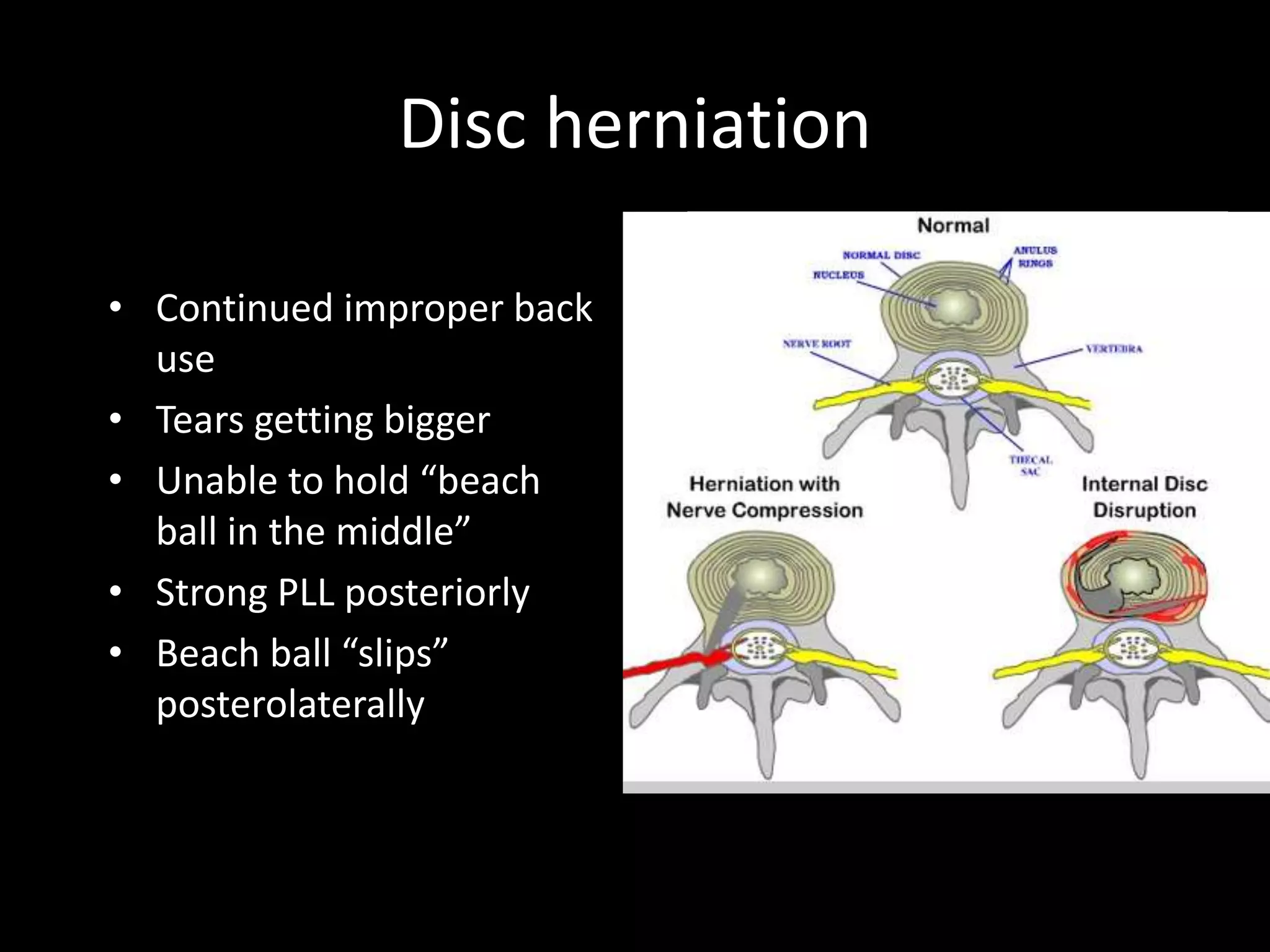
Disc herniation
• Continued improper back
use
• Tears getting bigger
• Unable to hold “beach
ball in the middle”
• Strong PLL posteriorly
• Beach ball “slips”
posterolaterally
Disc herniation
• Nerve root
compression
(SCIATICA)
– Pain
– Paresthesias
– Power loss
• Exaggerated pain
when nerve put in
tension clinically
Disc herniation
CLINICAL TESTS
• Lhermitte’s- flexing head,
coughing, sneezing, shock-like
sensation down extremities
• Brudzinski’s- flexing head, px
adducts and flexes knee
• Kernig’s sign (bent leg)
• Laseague’s sign (straight-leg)-
sensitive
• Fajerstajn’s (crossed straight-
leg raising)- specific
Management for disc herniation and
spinal stenosis
Conservative management
Surgery to decompress and stabilize
Spine fractures
(acute trauma, osteoporotic)
Spine fractures
2 major groups:
Acute, high-energy trauma, young age group
stabilize patient at scene, transport to hospital
Chronic osteoporotic fractures in the elderly
64
Relevant anatomy in acute spine trauma
3 column theory of stability (Denis) of the thoracolumbar spine
Anterior column: ALL, anterior half vertebral body, anterior annulus fibrosus
Middle column: Posterior half vertebral body, posterior annulus fibrosus, PLL
Posterior column: Facet joints and capsule, pedicle, lamina, ligamentum flavum,
interspinous ligament, supraspinous ligament
65
Vertebral column fractures
Classified according to the
mechanism of injury to
the middle column
1. Wedge compression
2. Burst
3. Chance fracture (GQ
Chance, 1948)
4. Flexion-distraction
5. Translational
66
Chance fracture
• Lapbelt flexion injury
with horizontal avulsion
of 2 or 3 columns with
axis of rotation in front
of vertebral column
• ½ with abdominal
injuries
• May have neurologic
compromise
• Should be checked in a
young px after a VA
67
Determinants of instability
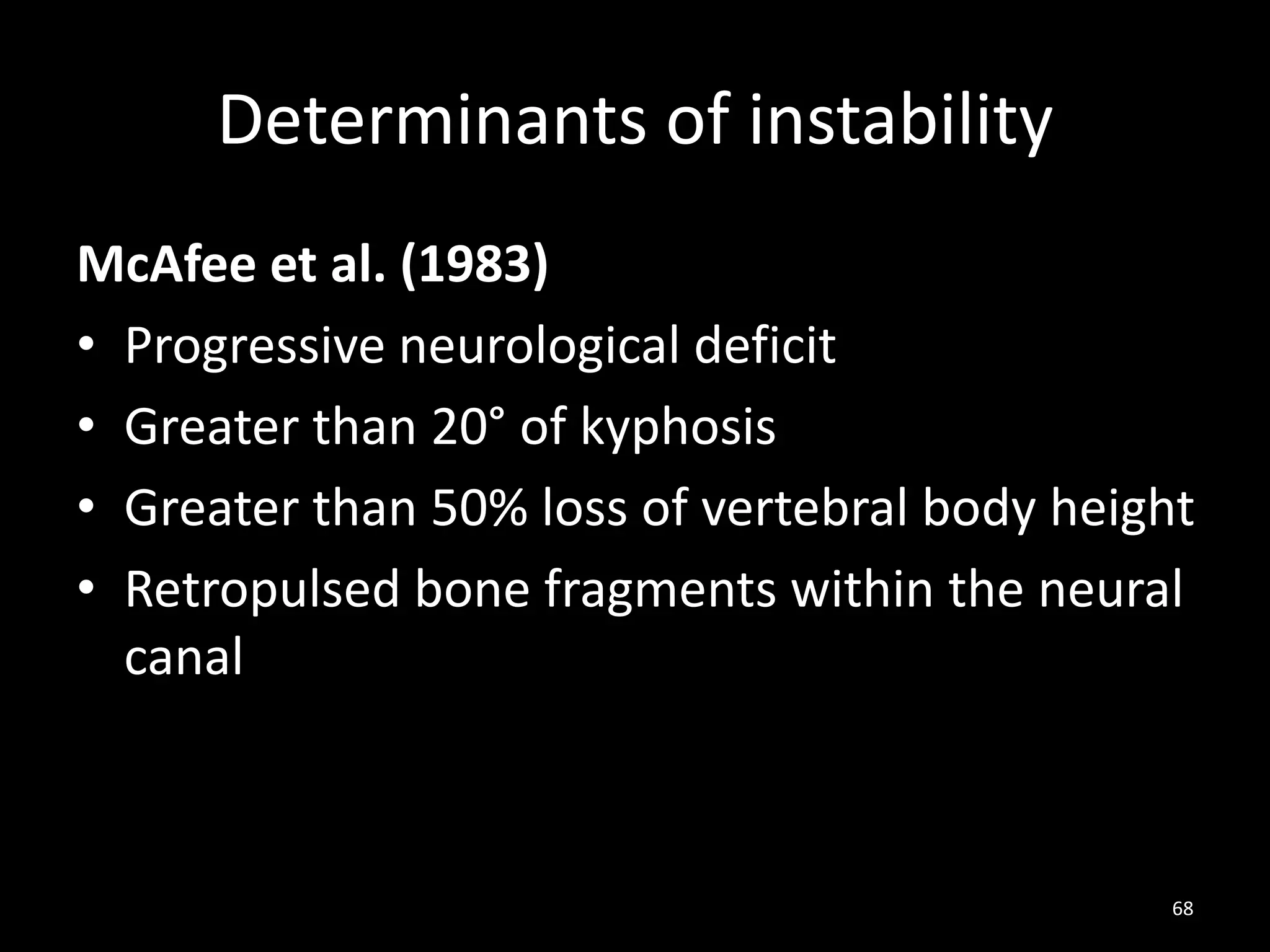
McAfee et al. (1983)
• Progressive neurological deficit
• Greater than 20° of kyphosis
• Greater than 50% loss of vertebral body height
• Retropulsed bone fragments within the neural
canal
68
Management of Acute Spine Fractures
Stabilize the patient and the spine at the scene
of accident.
Determine stability of the fracture and
neurologic compromise.
Conservative management for stable fractures.
Brace wear for 3 months
Analgesics
Progressive strengthening after brace
Surgery for unstable fractures.
decompression and fusion
70
Management of Acute Spine Fractures
Osteoporotic compression fractures
Osteoporosis= low bone mass
At risk:
post-menopausal
elderly
women with small frame
white or asian
cigarette smoking
low calcium diet
eating disorders
sedentary lifestyle
high glucocorticosteroid state
hyperthyroidism
71
Osteoporotic compression fractures
Low energy or cumulative trauma
Clinically manifests as chronic pain, kyphotic
deformity, loss of height, and rarely neurologic
compromise.
Pain from spine deformity causing deformation
of pain-innervated structures like the
peripheral annulus, facet joint capsule, and
ligaments and muscle spasms.
72
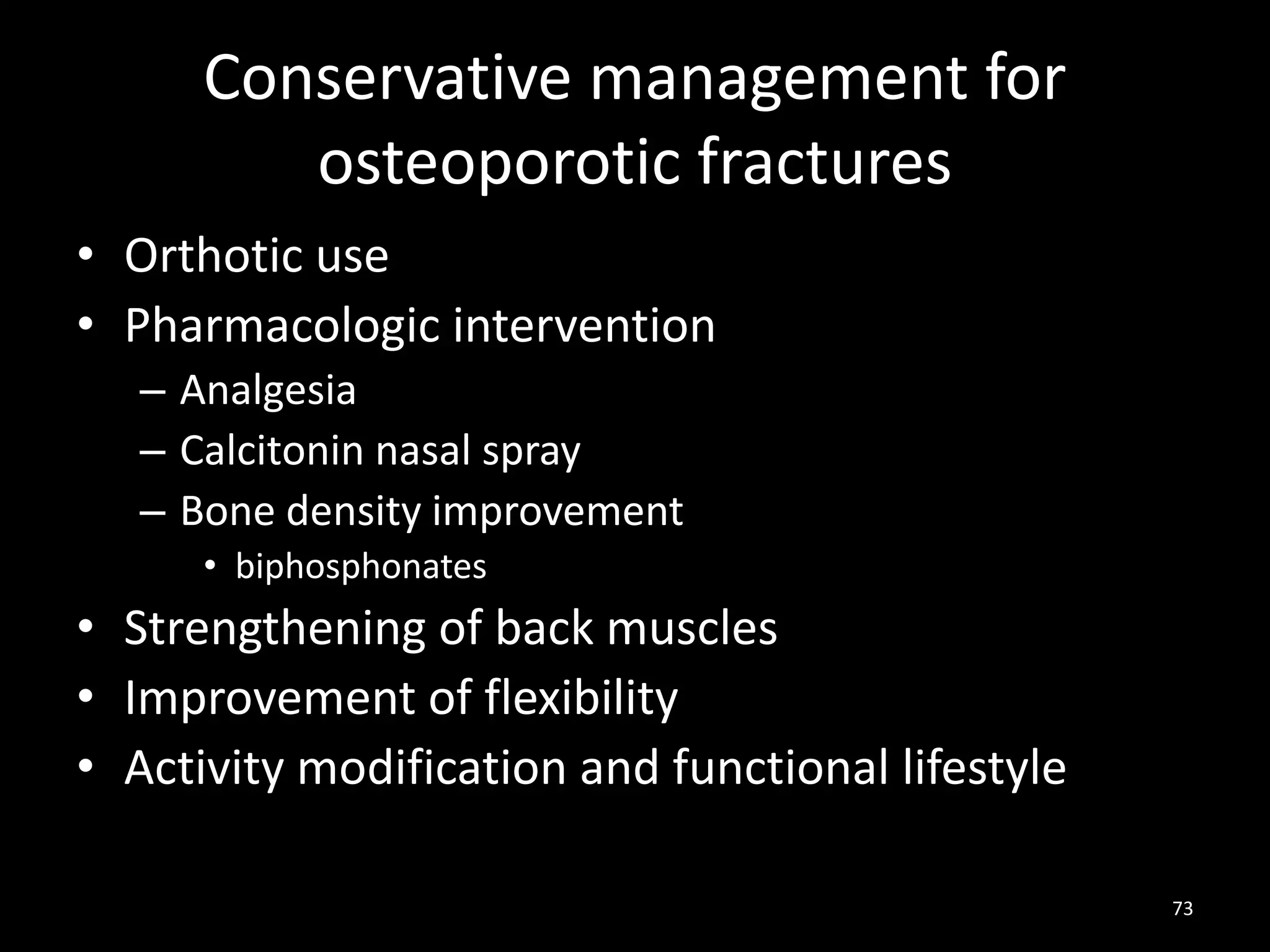
Conservative management for
osteoporotic fractures
• Orthotic use
• Pharmacologic intervention
– Analgesia
– Calcitonin nasal spray
– Bone density improvement
• biphosphonates
• Strengthening of back muscles
• Improvement of flexibility
• Activity modification and functional lifestyle
73
Anti-osteoporosis regimen
• Adequate calcium intake (non-fat milk,
seafoods, supplements)
• Adequate vitamin D levels (sunlight exposure
30 min/day, supplements)
• Weight-bearing exercise (brisk walking)
• For post-menopausal patients:
– Hormone replacement therapy
– Estrogen analog therapy
74
Surgical intervention for
osteoporotic vertebral fractures
Minimally invasive for pain
• Vertebroplasty
• Balloon kyphoplasty
Open surgery for neurologic compromise
• Decompression
• Stabilization
75
Percutaneous vertebroplasty
76
Recent randomized trials show no difference with placebo.
Percutaneous balloon kyphoplasty
77
Recent randomized trials showed good improvement in pain
and function scores at 1 month follow-up. No difference with
placebo at 1 year.
Scoliosis
78
Curves of the spine
– Kuba- KYPHOSIS
– Liyad- LORDOSIS
– Sideways- SCOLIOSIS
Scoliosis
Classified as to etiology
• Idiopathic
• Congenital
• Neuromuscular
• Degenerative
• Traumatic
• Functional
Idiopathic scoliosis
classified as to age of
onset
• Infantile
• Juvenile
• Adolescent
• Adult
80
Scoliosis
Asymmetry of the back and on the bend over
test warrants spine xrays
81
Cobb’s angle Risser stage
82
Scoliosis
• Any lateral curvature of the spine with a
Cobb’s angle of less than 15 degrees have a
similar chance of progressing as a straight
spine.
• Less than 30 degrees rare chance of
progression after skeletal maturity. Keep a
curve below 30 degrees until maturity.
• 50 degree curves will progress.
83
Brace wear guidelines
Cobb’s angle Risser 0 Risser 1 to 2 Risser 3, 4 or 5
<25 Observe Observe Observe
25-45 Brace Brace Observe
>45 Surgery Surgery Surgery if >50
84
For idiopathic scoliosis, Tachdjian’s Pediatric Orthopedics, 2008
Brace wear
Milwaukee brace for
Apex T8 above
Boston brace for
Apex below T8
85
Scoliosis
Heart and lung compromise occur at curves of
90 and 100 degrees.
Brace wear is dose-dependent at least 23h/day
until skeletal maturity.
Juvenile scoliosis (< age 9) has the best bracing
results.
Congenital and neuromuscular scoliosis progress
very fast, are resistant to brace wear and have
poor prognosis.
86
Surgical intervention for scoliosis
Prevention of curve progression
• Fusion with or without instrumentation
• Instrumentation without fusion in young
growing patients
87
Pott’s disease
88
Problems:
Instability
Neurologic compromise
Treatment:
• Quadruple anti-TB oral
tablets (DOTS)
• Full contact orthosis
• Same indications for
surgery
Spine tumor
Most common tumor of the spine is metastatic.
Most common primary malignant tumor of the
spine is multiple myeloma.
Problems of spinal tumor:
tumor removal
spinal stabilization
neurologic compromise
89
THANK YOU
90
Infoposter activity
End of course activity
91
infoposter
• Compose and print an infoposter about selected
orthopedics topics and present it for 5 min
• Target audience: general public, medical students
(scope of ortho), pediatricians and parents (ddh
and clubfeet)
• 10 groups, 7 members, 1 topic
• To be printed on a 2’x 6’ tarpaulin sheet with
stand
• Choice of members and topic
92
infoposter
• Graded as a long exam
• Criteria: 50% content completeness and accuracy,
30% visual impact and creativity, 20% 5 min oral
presentation on March 4
• Need to have specific content approved first by
the 15th Feb
• Posters have to be displayed by 1pm on March 4
in the classroom
• Assign a spokesman for the group to speak about
the poster (max 5 min) and answer questions
93
topics
1. Orthopedics (definition, scope,
subspecialties, work being done, recruit med
students to take up orthopedic residency)
2. Fractures (early recognition, first aid,
treatment by doctors not hilots, cast care,
rehab)
3. Hand disorder (cumulative trauma disorders
like trigger finger, cts, de quervains, causes,
recognition, treatment and how to avoid)
94
topics
4. DM foot (causes, recognition, treatment,
prevention)
5. Osteosarcoma or enlarging mass in general
(recognition, treatment)
6. Osteoporosis (causes, recognition,
consequences, treatment, prevention)
7. Developmental hip dysplasia or clubfoot
(causes, recognition, newborn screening,
treatment)
95
topics
8. Sports injuries (injuries when taking up
running, recognition, proper shoes, warm-up,
training for marathon, diet)
9. Arthritis (differentiate bet osteoarthritis, RA
and gout, conservative treatment)
10. Low back pain (when to see a doctor, causes,
prevention)
96
Infoposter
97
infoposter
98
infoposter
99
infoposter
100

back_disorders.pptx

  • 1.
    Disorders of theback Jesse Noel V. Conjares, MD, MOrtho, FPOA 1
  • 2.
    Disorders of theback Clinical manifestations of a back problem pain Neurologic compromise (paresthesia, power loss, pee and pooh-pooh problems) Deformity 2
  • 3.
    Back Pain • 2ndmost common symptom prompting a patient to visit a physician (next to upper respiratory infections) • Most prevalent among the 25-45 year age group with no gender predilection 3
  • 4.
    Back Pain Main pointsto be considered by a physician in determining etiology AGE Children- developmental disorders, infections, primary tumors Young adults- lumbar disc herniation, spondylolisthesis, acute fractures, infections Older adults- spinal stenosis, metastatic disease, osteoporotic vertebral body fractures 4
  • 5.
    Back Pain ONSET Acute- fractures,infection, disc herniation, inflammatory arthritis, muscle strain Gradual- inflammatory and non-inflammatory arthritis, Potts disease, malignancy, spinal stenosis AGGRAVATING AND RELIEVING FACTORS Aggravated by motion and position(mechanical)- motion segment pathology Persistent- infection, malignancy, inflammatory arthritis ASSOCIATED NEUROLOGIC COMPROMISE Predominantly back pain vs. unilateral leg pain Sensory, motor, autonomic deficits Positive nerve root tension signs 5
  • 6.
    Back Pain SYSTEMIC SIGNSAND SYMPTOMS Eye, heart, urinary tract involvement- spondyloarthropathy Appendicular joint – inflammatory and non- inflammatory arthritis Primary extraspinal malignancy- metastatic spinal disease Manifestations of an infection- vertebral osteomyelitis, Potts disease, discitis System-specific laboratory findings 6
  • 7.
    Back Pain REFERRED PAINFROM ADJACENT ORGAN Cardiovascular- heart disease, aortic aneurysm Urinary tract- pyelonephritis, urolithiasis Digestive tract- pancreatitis, cholecystitis, acute appendicitis, colo-rectal malignancy Reproductive tract- ovarian malignancy, pelvic inflammatory disease Sacroiliitis and hip arthritis PSYCHOGENIC Esp. in chronic, recurrent cases, litigation & compensation issues Special tests can evaluate 7
  • 8.
    Imaging Diagnostic in mostcases. Plain radiographs CAT scan MRI Central Dexa Bone Densitometry Directed by symptoms from history and findings on PE Collaborated by pertinent positive and negative lab results 8
  • 9.
    Laboratory tests To rulein or rule out: malignancy, infection, inflammatory arthritis Cbc with differential count, ESR, CRP, ASO Serum RF, anti-ccp, ANA, HLA-B27 Serum electrolytes Serum alkaline phosphatase, acid phosphatase Prostatic-specific antigen in males Serum electrophoresis 9
  • 10.
    Laboratory tests BIOPSY CT scan-guided BONESCAN Metastatic spine disease To search for more accessible sites for biopsy in cases of metastatic disease 10
  • 11.
    LABORATORY TESTS ELECTROMYOGRAPHY-NERVE CONDUCTION VELOCITY(EMG-NCV) Objective documentation of a patient’s subjective complaint of leg pain Confirms nerve root pathology 11
  • 12.
    What needs tobe managed in spine disorders • Primary disorder • Instability of the spine • Neurologic compromise 12
  • 13.
    Goal of intervention Acomfortable and functional patient 13
  • 14.
    Principles of management Conservativemanagement usually suffices for the majority of cases. 14
  • 15.
    Conservative management Directed atspecific etiology Short-term pain relief • Oral meds: Analgesics, NSAIDS, muscle relaxants, oral steroids, bone density improvement • Epidural steroids with fluoroscopic guidance • 3-day bed rest • Physical therapy – heating modalities (hot moist pack, ultrasound, microwave, lasers) – TENS – Flexibility, strengthening, balance training 15
  • 16.
    Conservative management Long-term • Patienteducation and assurance • Back school and hygiene – Behavior modification – Activity restriction – Orthotic use • Home exercise program 16
  • 17.
    USING YOUR BACK •Back wants to be upright with maintenance of the normal curves.
  • 18.
  • 19.
    USING YOUR BACK •Lying on a flat firm surface. Pillows under thighs. • Using a stepboard. Mirror at eye level. • Adjusting distance from steering wheel.
  • 20.
    USING YOUR BACK •Do not use back as a lever. Use lower extremities. • Use proper footwork in sports. Turn whole body. • Use a stool or reacher instead of stretching the back eliminating the normal curves.
  • 21.
    USING YOUR BACK •Sit less often. • Lie down. • Stand up and shift positions regularly. • Walk in comfortable flat rubber-soled footwear.
  • 22.
  • 23.
  • 24.
    Principles of management Surgeryto address progressive neurologic deficit, deformity and failure of conservative management. 24
  • 25.
    Neurologic compromise Compromise maybe secondary to: • Traumatic transection • Physical compression or compression of blood supply – Canal malalignment – Fracture fragment comminution – Disc herniation – Degenerative stenosis – Tumor – Abcess formation 25
  • 26.
    Addressing neurologic compromise Decompression •Fracture reduction • Fragment removal • Debridement of infected tissue and abcess • Tumor excision 26
  • 27.
    Addressing neurologic compromise •Anterior decompression – Corpectomy – Discectomy – Distraction plates • Posterior decompression – Laminectomy and laminotomy – Facetectomy and foraminotomy – Discectomy 27
  • 28.
    Stabilizing the spine Arthrodesis •Fusing the motion segment to facilitate bone or fracture healing to eliminate movement permanently Instrumentation • Holds the bone fragments in place until fusion becomes complete • Increases the fusion rate 28
  • 29.
    Stabilizing the spine Arthrodesis Waysof bridging the bone gap • Use of autologous bone grafts • Use of allografts • Use of bone graft substitutes – Demineralized bone matrix – Calcium sulfate tablets – Hydroxyapatite – Bone growth factors – Biodegradable and non-biodegradable polymers 29
  • 30.
  • 31.
    Arthrodesis Use of allografts •Freeze dried irradiated cadaver bone (bone chips, portions of long bone)
  • 32.
    Arthrodesis Use of bonesubstitutes • Demineralized bone matrix, calcium sulfate tablets, hydroxyapatite powder, bone morphogenetic protein, polymers
  • 33.
  • 34.
    Kinds of spineinstrumentation What segment is being stabilized cervical, thoracic, lumbar Where it is placed Anterior vs posterior Several different types Rods and hooks Plates and screws Rods and screws Interlaminar wiring Interspinous wiring Interbody fusion cages 34
  • 35.
  • 36.
  • 37.
  • 38.
  • 39.
  • 40.
  • 41.
    Overview of SpineDisorders • Muscle strain • Degenerative spine disease • Lumbar disc herniation • Spine trauma • Deformity • Spine infection • Spine tumor • Spondyloarthropathy 41
  • 42.
    Muscle strain, discherniation, degenerative spine disease 42
  • 43.
    33 vertebrae ofthe bony spine 24 movable • 7 cervical • 12 thoracic • 5 lumbar 14 fused • 5 fused sacral • 4 fused coccygeal • 2 primary curves • 2 secondary curves • 72-75 cm in length – ¼ are IV discs
  • 44.
    Motion segment • 3JOINTS – INTERVERTEBRAL DISC- (synarthroses=bone-con. tissue-bone); cartilage joint – 2 FACET /APOPHYSEAL JOINTS (diarthroses=bone-joint capsule-bone); synovial joint • Pedicles – Half the height of corresponding body forming a superior and inferior notch – Adjacent inferior and superior notches form the intervertebral foramen thru neural and vascular structures pass
  • 45.
    Intervertebral disc • “circular life preserver with a beach ball at the center”
  • 46.
    Intervertebral disc Central nucleus –High water & proteoglycan (hydrophilic)=glycosaminoglycans(GAGs) + water – GAGs- chondroitin-4-sulfate, chondroitin-6-sulfate, hyaluronate, keratan sulfate – Lower collagen (type II-better for compression) content – Exerts pressure radially against the annulus and endplate on weight- bearing
  • 47.
    Intervertebral disc Peripheral annulus –Higher collagen fibers (type I-higher resistance to tension) arranged concentric lamellae – Attached to the vertebral cartilaginous endplates, epiphyseal ring (Sharpey’s fibers), vertebral body periosteum, longitudinal ligaments – On weight-bearing, fibers become horizontal 47
  • 48.
    Motion segment stabilizers Intervertebraldisc Nucleus polposus Annulus fibrosus 6 ligaments ALL PLL Ligamentum flavum Intertransverse ligament Interspinous ligament Supraspinous ligament Facet joint capsule 48
  • 49.
    Extrinsic back extensors quadratuslumborum Intrinsic back extensors erector spinae transversospinalis 49 Motion segment stabilizers
  • 50.
  • 51.
  • 52.
    USING YOUR BACKAS A TYPE 3 LEVER Torque=magnitude of Force x perpendicular distance to axis of rotation
  • 53.
  • 54.
    Muscle strain Back extensorsneed to exert a lot more force to maintain the extensor torque greater than the flexion torque of your slouched body. Fatigue sets in leading to microtears- strain Most common cause of low back pain. 54 Quadratus lumborum
  • 55.
    Degenerative Changes Disc- lossof disc height • loss of water content • loss of proteoglycans which maintain disc hydration Facet joints- degenerative arthritis • Osteophyte formation • Joint capsule thickening Ligamentum flavum • thickening 55
  • 56.
    Degenerative changes END RESULT: BACKPAIN +/- NUMBNESS/PARESTHESIAS OF LEGS – Narrowing of the neural foramen and spinal canal – Compression of neural elements – Instability of the motion segment – Diagnosis is RAYUMA. • SPINAL STENOSIS • DEGENERATIVE OSTEOARTHRITIS • SPONDYLOSIS 56
  • 57.
  • 58.
    Disc herniation • Improperback use exceeding tensile strength of fibers • Tears=back pain • Healing of tear=symptom relief but weaker disc
  • 59.
    Disc herniation • Continuedimproper back use • Tears getting bigger • Unable to hold “beach ball in the middle” • Strong PLL posteriorly • Beach ball “slips” posterolaterally
  • 60.
    Disc herniation • Nerveroot compression (SCIATICA) – Pain – Paresthesias – Power loss • Exaggerated pain when nerve put in tension clinically
  • 61.
    Disc herniation CLINICAL TESTS •Lhermitte’s- flexing head, coughing, sneezing, shock-like sensation down extremities • Brudzinski’s- flexing head, px adducts and flexes knee • Kernig’s sign (bent leg) • Laseague’s sign (straight-leg)- sensitive • Fajerstajn’s (crossed straight- leg raising)- specific
  • 62.
    Management for discherniation and spinal stenosis Conservative management Surgery to decompress and stabilize
  • 63.
  • 64.
    Spine fractures 2 majorgroups: Acute, high-energy trauma, young age group stabilize patient at scene, transport to hospital Chronic osteoporotic fractures in the elderly 64
  • 65.
    Relevant anatomy inacute spine trauma 3 column theory of stability (Denis) of the thoracolumbar spine Anterior column: ALL, anterior half vertebral body, anterior annulus fibrosus Middle column: Posterior half vertebral body, posterior annulus fibrosus, PLL Posterior column: Facet joints and capsule, pedicle, lamina, ligamentum flavum, interspinous ligament, supraspinous ligament 65
  • 66.
    Vertebral column fractures Classifiedaccording to the mechanism of injury to the middle column 1. Wedge compression 2. Burst 3. Chance fracture (GQ Chance, 1948) 4. Flexion-distraction 5. Translational 66
  • 67.
    Chance fracture • Lapbeltflexion injury with horizontal avulsion of 2 or 3 columns with axis of rotation in front of vertebral column • ½ with abdominal injuries • May have neurologic compromise • Should be checked in a young px after a VA 67
  • 68.
    Determinants of instability McAfeeet al. (1983) • Progressive neurological deficit • Greater than 20° of kyphosis • Greater than 50% loss of vertebral body height • Retropulsed bone fragments within the neural canal 68
  • 69.
    Management of AcuteSpine Fractures Stabilize the patient and the spine at the scene of accident. Determine stability of the fracture and neurologic compromise.
  • 70.
    Conservative management forstable fractures. Brace wear for 3 months Analgesics Progressive strengthening after brace Surgery for unstable fractures. decompression and fusion 70 Management of Acute Spine Fractures
  • 71.
    Osteoporotic compression fractures Osteoporosis=low bone mass At risk: post-menopausal elderly women with small frame white or asian cigarette smoking low calcium diet eating disorders sedentary lifestyle high glucocorticosteroid state hyperthyroidism 71
  • 72.
    Osteoporotic compression fractures Lowenergy or cumulative trauma Clinically manifests as chronic pain, kyphotic deformity, loss of height, and rarely neurologic compromise. Pain from spine deformity causing deformation of pain-innervated structures like the peripheral annulus, facet joint capsule, and ligaments and muscle spasms. 72
  • 73.
    Conservative management for osteoporoticfractures • Orthotic use • Pharmacologic intervention – Analgesia – Calcitonin nasal spray – Bone density improvement • biphosphonates • Strengthening of back muscles • Improvement of flexibility • Activity modification and functional lifestyle 73
  • 74.
    Anti-osteoporosis regimen • Adequatecalcium intake (non-fat milk, seafoods, supplements) • Adequate vitamin D levels (sunlight exposure 30 min/day, supplements) • Weight-bearing exercise (brisk walking) • For post-menopausal patients: – Hormone replacement therapy – Estrogen analog therapy 74
  • 75.
    Surgical intervention for osteoporoticvertebral fractures Minimally invasive for pain • Vertebroplasty • Balloon kyphoplasty Open surgery for neurologic compromise • Decompression • Stabilization 75
  • 76.
    Percutaneous vertebroplasty 76 Recent randomizedtrials show no difference with placebo.
  • 77.
    Percutaneous balloon kyphoplasty 77 Recentrandomized trials showed good improvement in pain and function scores at 1 month follow-up. No difference with placebo at 1 year.
  • 78.
  • 79.
    Curves of thespine – Kuba- KYPHOSIS – Liyad- LORDOSIS – Sideways- SCOLIOSIS
  • 80.
    Scoliosis Classified as toetiology • Idiopathic • Congenital • Neuromuscular • Degenerative • Traumatic • Functional Idiopathic scoliosis classified as to age of onset • Infantile • Juvenile • Adolescent • Adult 80
  • 81.
    Scoliosis Asymmetry of theback and on the bend over test warrants spine xrays 81
  • 82.
  • 83.
    Scoliosis • Any lateralcurvature of the spine with a Cobb’s angle of less than 15 degrees have a similar chance of progressing as a straight spine. • Less than 30 degrees rare chance of progression after skeletal maturity. Keep a curve below 30 degrees until maturity. • 50 degree curves will progress. 83
  • 84.
    Brace wear guidelines Cobb’sangle Risser 0 Risser 1 to 2 Risser 3, 4 or 5 <25 Observe Observe Observe 25-45 Brace Brace Observe >45 Surgery Surgery Surgery if >50 84 For idiopathic scoliosis, Tachdjian’s Pediatric Orthopedics, 2008
  • 85.
    Brace wear Milwaukee bracefor Apex T8 above Boston brace for Apex below T8 85
  • 86.
    Scoliosis Heart and lungcompromise occur at curves of 90 and 100 degrees. Brace wear is dose-dependent at least 23h/day until skeletal maturity. Juvenile scoliosis (< age 9) has the best bracing results. Congenital and neuromuscular scoliosis progress very fast, are resistant to brace wear and have poor prognosis. 86
  • 87.
    Surgical intervention forscoliosis Prevention of curve progression • Fusion with or without instrumentation • Instrumentation without fusion in young growing patients 87
  • 88.
    Pott’s disease 88 Problems: Instability Neurologic compromise Treatment: •Quadruple anti-TB oral tablets (DOTS) • Full contact orthosis • Same indications for surgery
  • 89.
    Spine tumor Most commontumor of the spine is metastatic. Most common primary malignant tumor of the spine is multiple myeloma. Problems of spinal tumor: tumor removal spinal stabilization neurologic compromise 89
  • 90.
  • 91.
    Infoposter activity End ofcourse activity 91
  • 92.
    infoposter • Compose andprint an infoposter about selected orthopedics topics and present it for 5 min • Target audience: general public, medical students (scope of ortho), pediatricians and parents (ddh and clubfeet) • 10 groups, 7 members, 1 topic • To be printed on a 2’x 6’ tarpaulin sheet with stand • Choice of members and topic 92
  • 93.
    infoposter • Graded asa long exam • Criteria: 50% content completeness and accuracy, 30% visual impact and creativity, 20% 5 min oral presentation on March 4 • Need to have specific content approved first by the 15th Feb • Posters have to be displayed by 1pm on March 4 in the classroom • Assign a spokesman for the group to speak about the poster (max 5 min) and answer questions 93
  • 94.
    topics 1. Orthopedics (definition,scope, subspecialties, work being done, recruit med students to take up orthopedic residency) 2. Fractures (early recognition, first aid, treatment by doctors not hilots, cast care, rehab) 3. Hand disorder (cumulative trauma disorders like trigger finger, cts, de quervains, causes, recognition, treatment and how to avoid) 94
  • 95.
    topics 4. DM foot(causes, recognition, treatment, prevention) 5. Osteosarcoma or enlarging mass in general (recognition, treatment) 6. Osteoporosis (causes, recognition, consequences, treatment, prevention) 7. Developmental hip dysplasia or clubfoot (causes, recognition, newborn screening, treatment) 95
  • 96.
    topics 8. Sports injuries(injuries when taking up running, recognition, proper shoes, warm-up, training for marathon, diet) 9. Arthritis (differentiate bet osteoarthritis, RA and gout, conservative treatment) 10. Low back pain (when to see a doctor, causes, prevention) 96
  • 97.
  • 98.
  • 99.
  • 100.