A Practical Guide to Selecting the Right Home Care Service Home care is a growing trend  Remaining at home has it’s advantages  82% of Americans wish to remain in their homes forever* *AARP
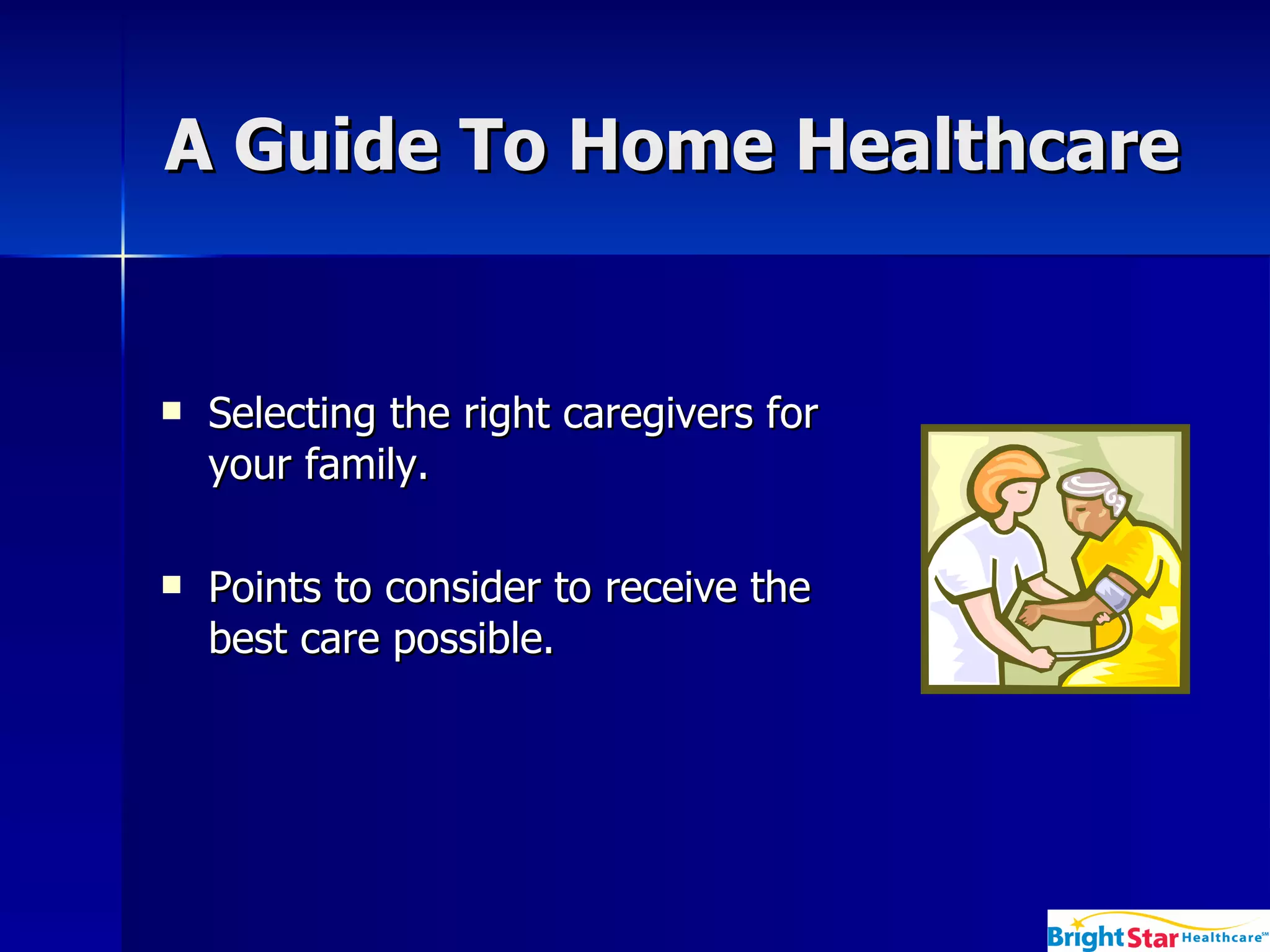
A Guide To Home Healthcare Selecting the right caregivers for your family. Points to consider to receive the best care possible.
Do Your Homework Before you call, know what your care needs are.  Paint a realistic picture of the patient’s needs.
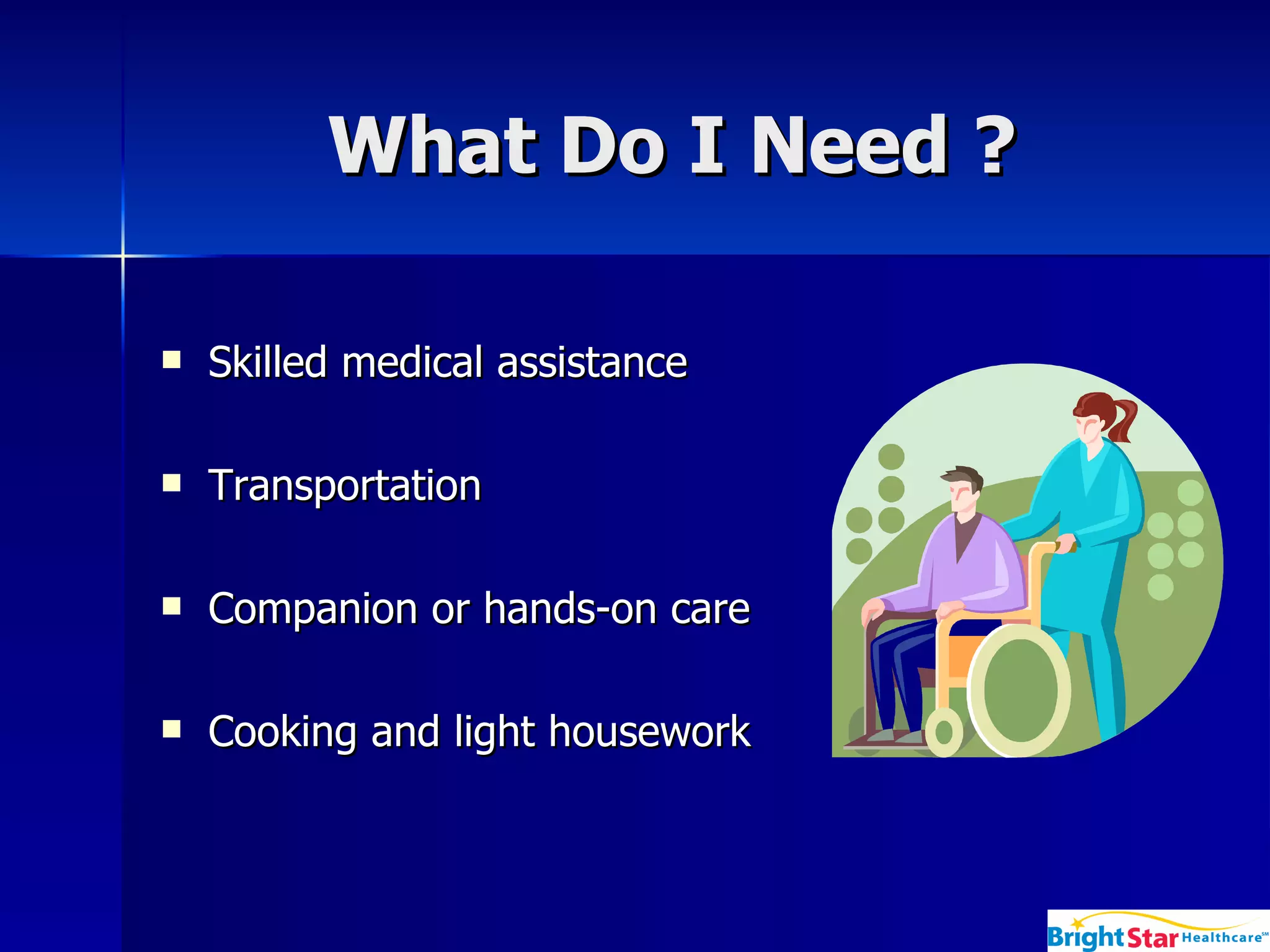
What Do I Need ? Skilled medical assistance Transportation Companion or hands-on care Cooking and light housework
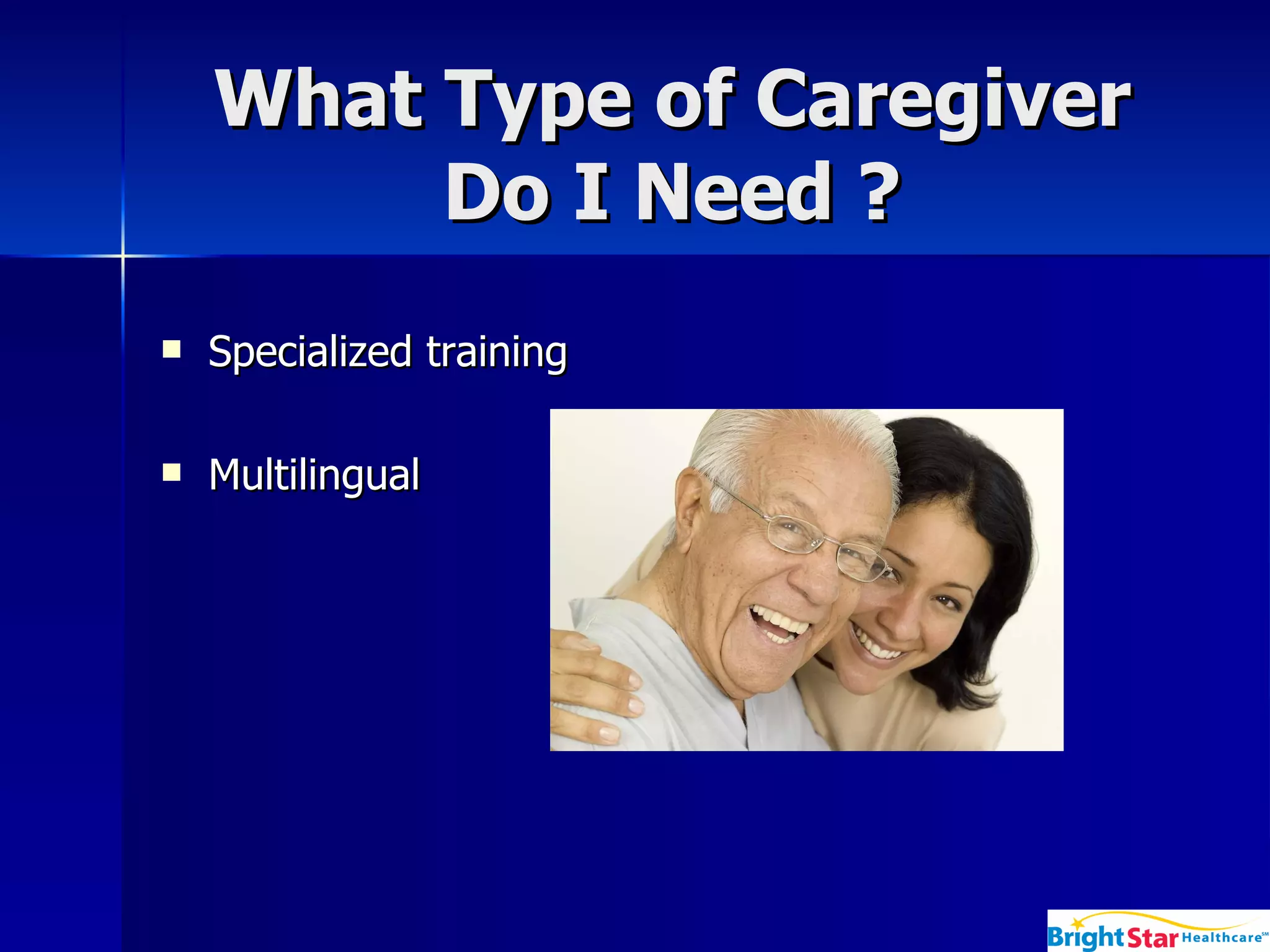
What Type of Caregiver Do I Need ? Specialized training  Multilingual
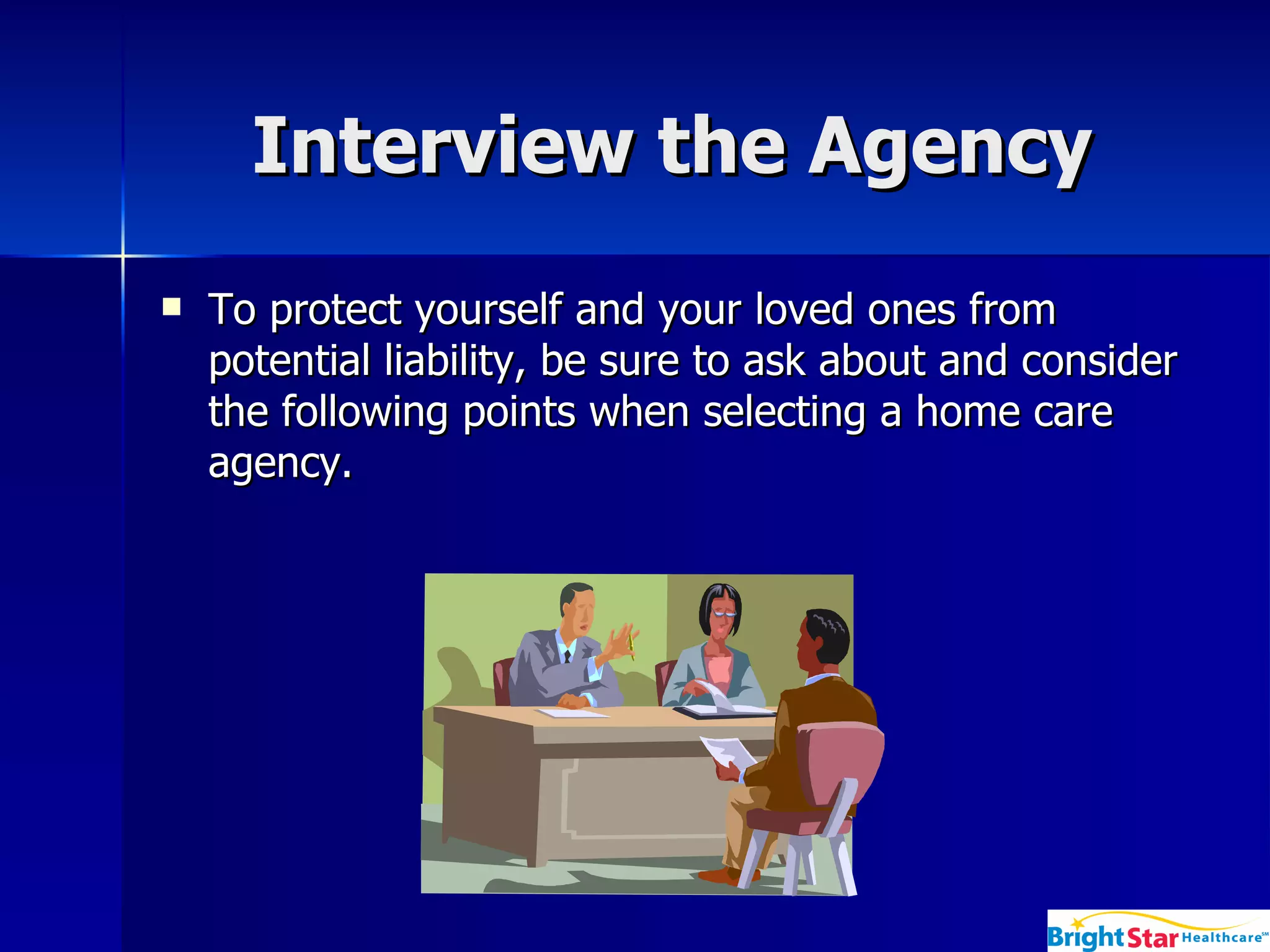
Interview the Agency  To protect yourself and your loved ones from potential liability, be sure to ask about and consider the following points when selecting a home care agency.
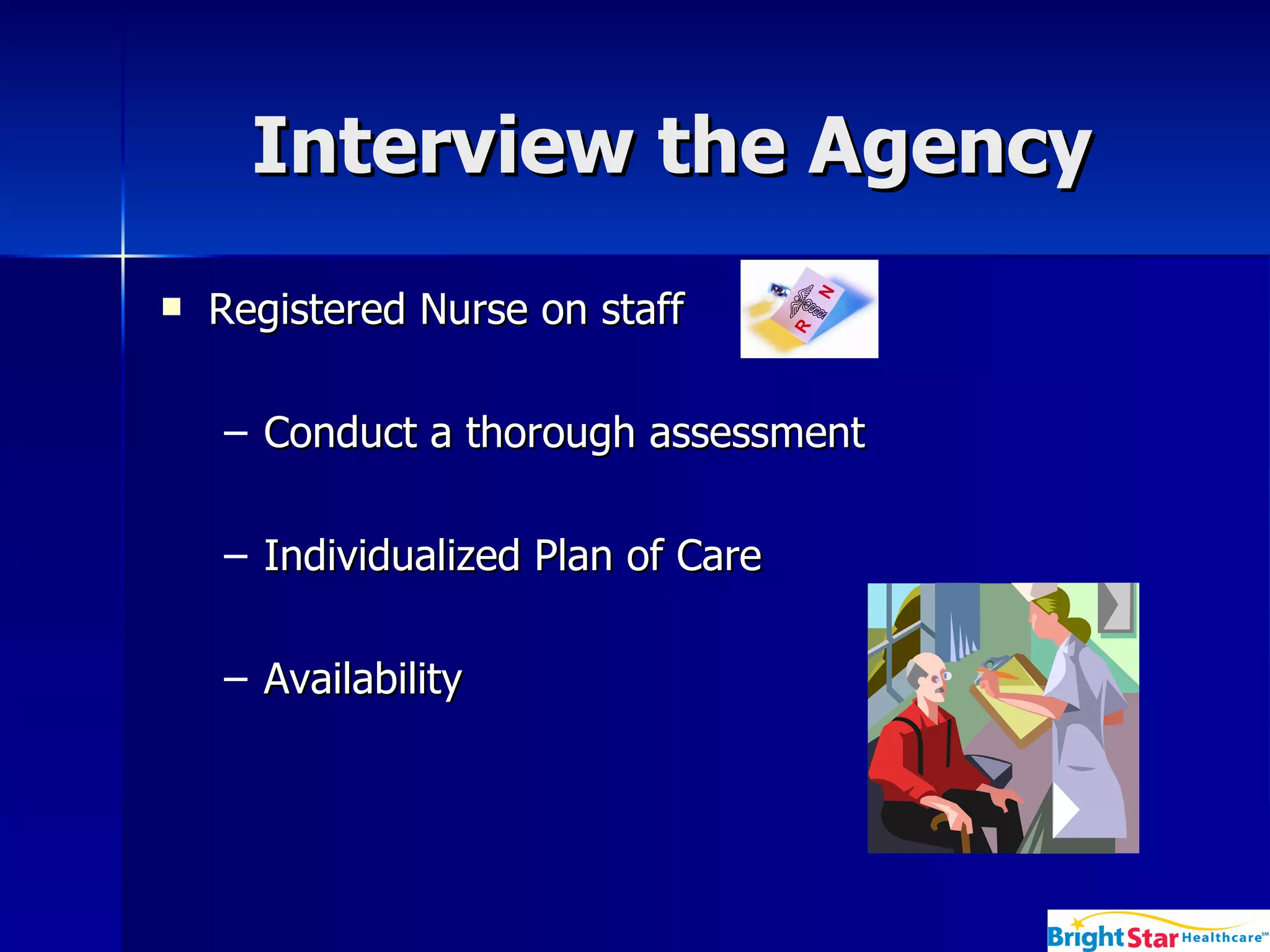
Interview the Agency  Registered Nurse on staff  Conduct a thorough assessment  Individualized Plan of Care  Availability
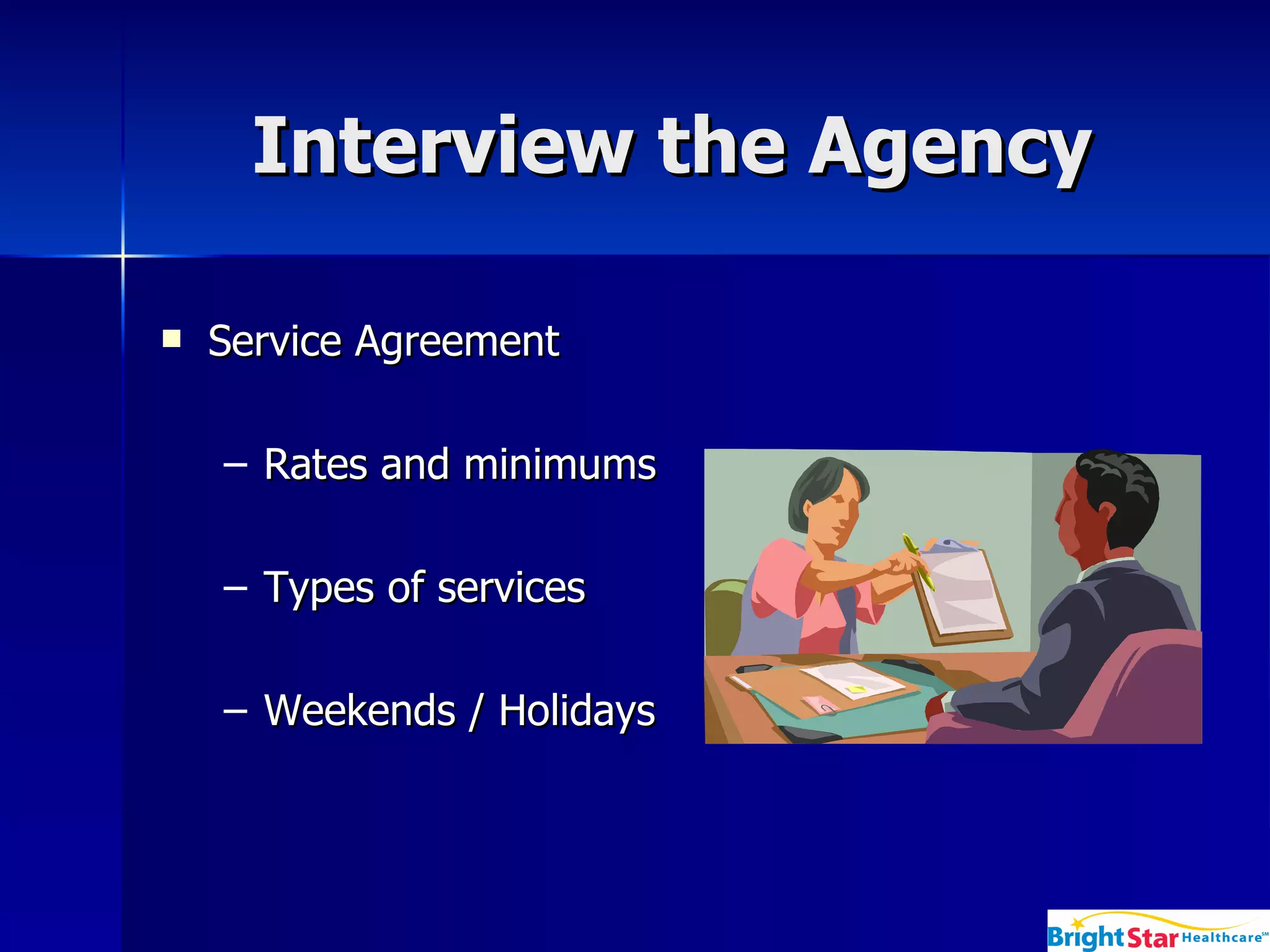
Interview the Agency  Service Agreement  Rates and minimums  Types of services Weekends / Holidays
Interview the Agency Levels of care  Medical or non-medical  Staff supervision by an RN
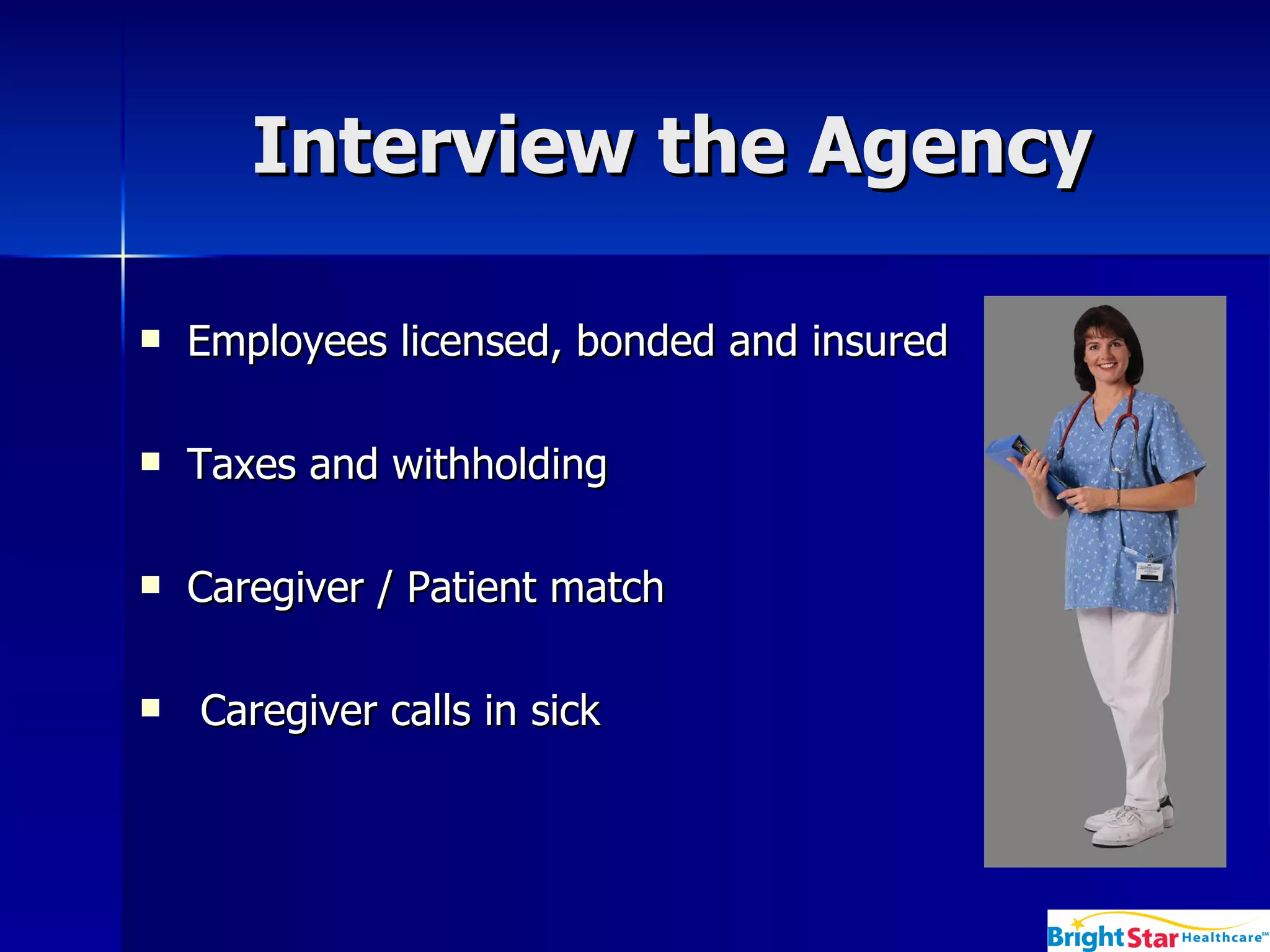
Interview the Agency Employees licensed, bonded and insured  Taxes and withholding  Caregiver / Patient match Caregiver calls in sick
Interview the Agency Staff screening References  Background check  Drug screening Emergency preparedness
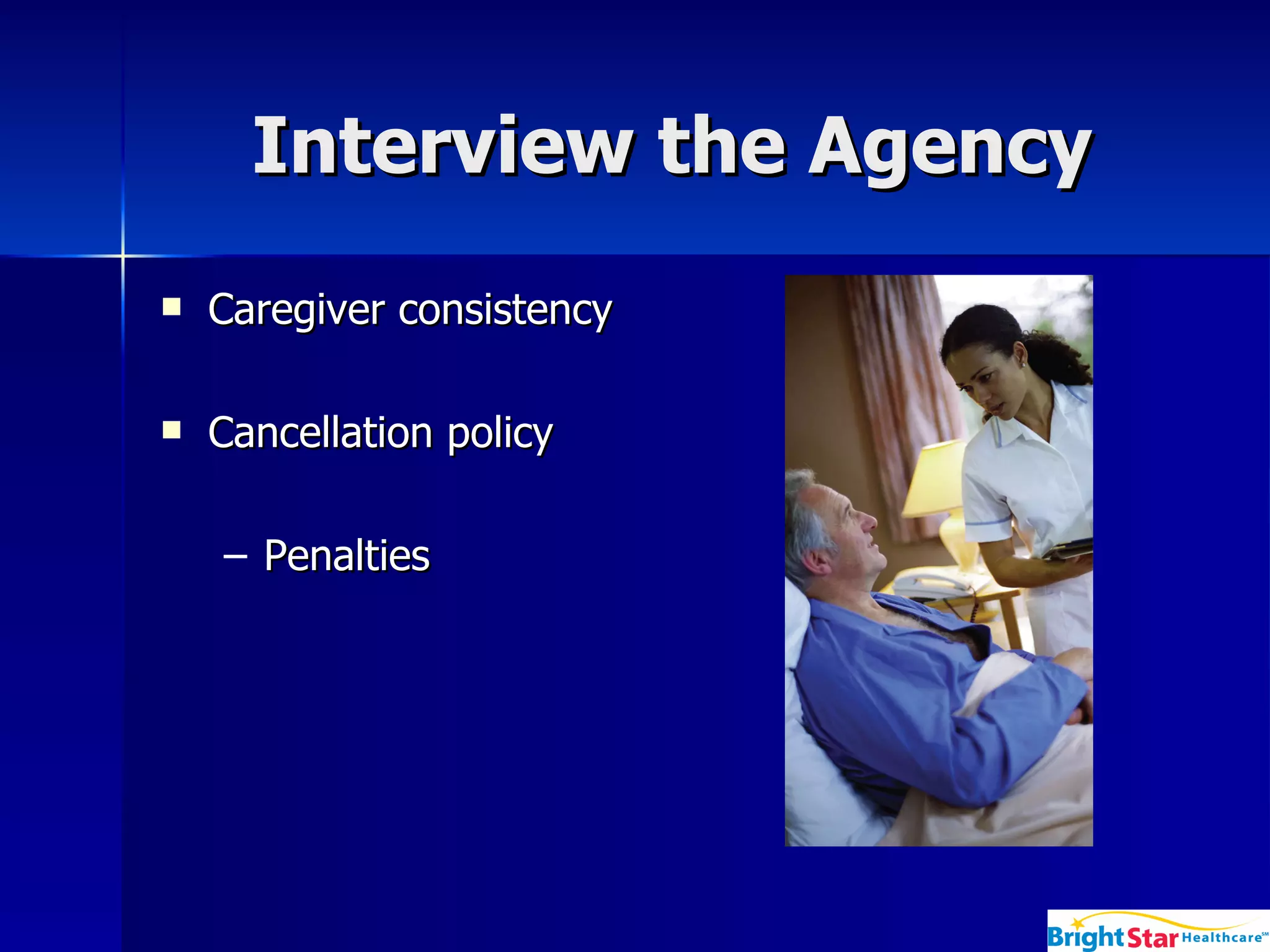
Interview the Agency Caregiver consistency Cancellation policy  Penalties
Make daily / weekly schedule  Food preferences Activities / hobbies Medications, emergency contacts & doctors Before a New Caregiver Starts
Remember That You are the Customer !!   Feedback Communicate Helps everyone settle in quickly
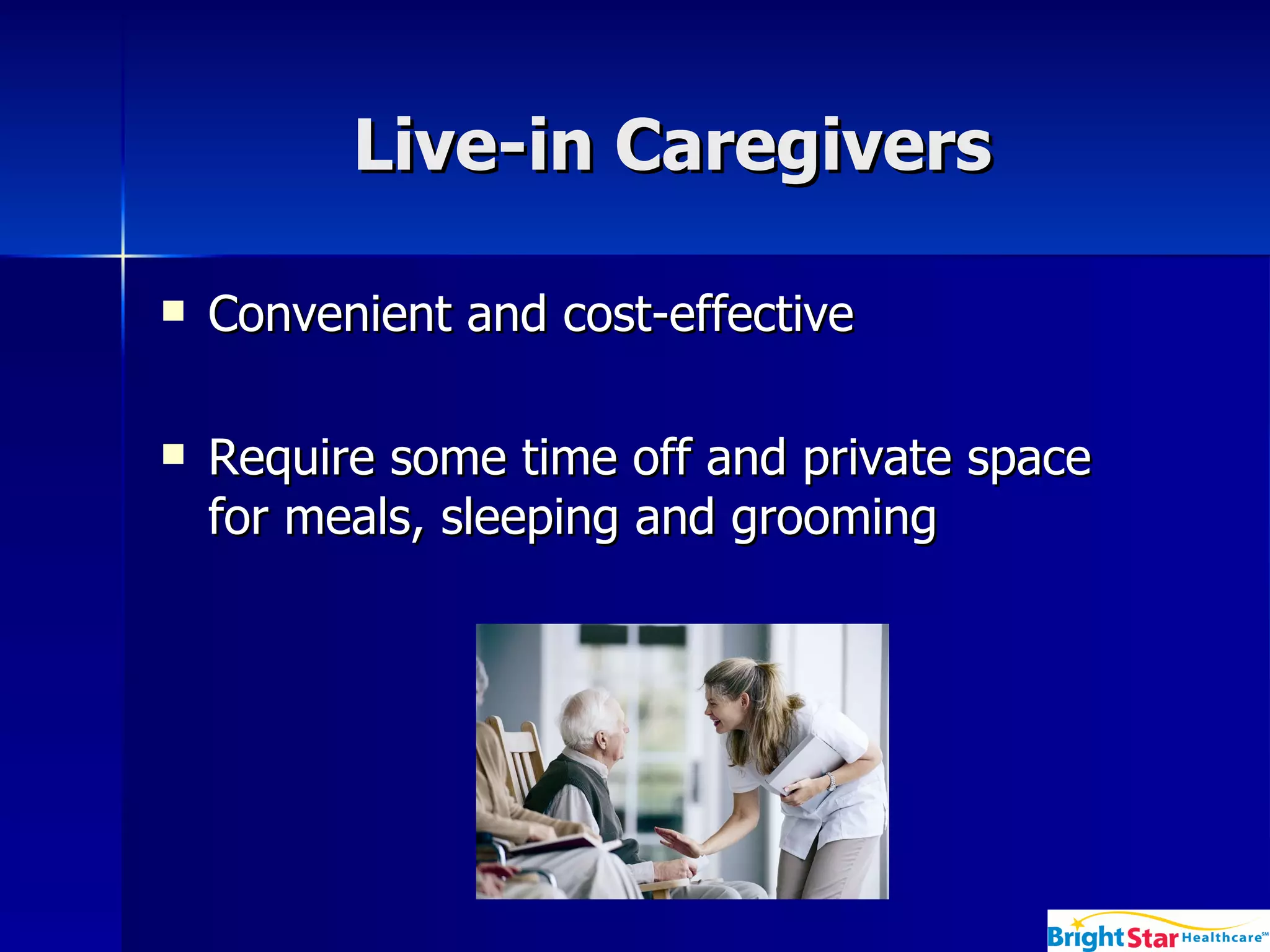
Live-in Caregivers Convenient and cost-effective Require some time off and private space for meals, sleeping and grooming
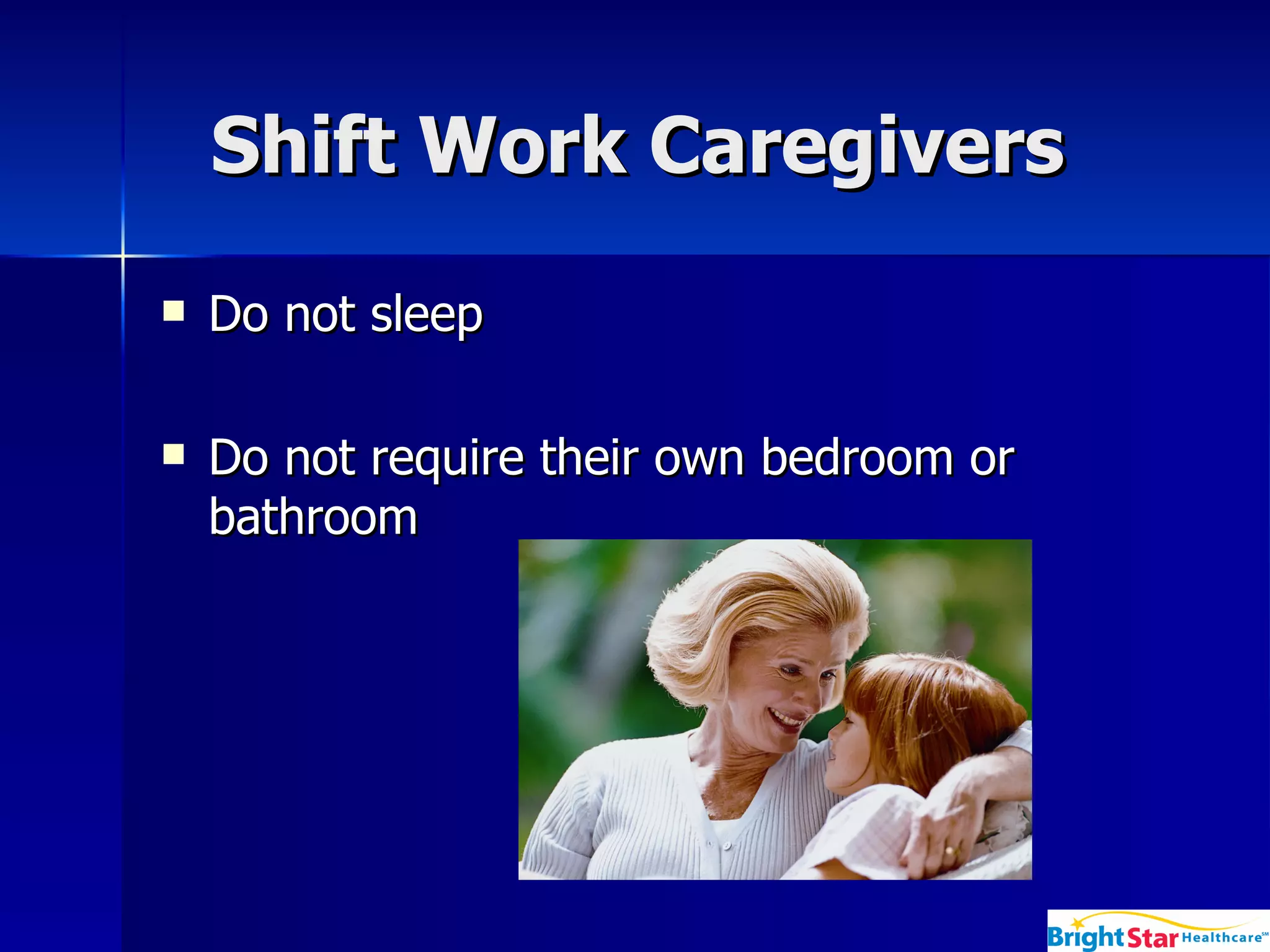
Shift Work Caregivers  Do not sleep  Do not require their own bedroom or bathroom
Questions ???

Buyers Guide To Homecare

  • 1.
  • 2.
    A Practical Guideto Selecting the Right Home Care Service Home care is a growing trend Remaining at home has it’s advantages 82% of Americans wish to remain in their homes forever* *AARP
  • 3.
    A Guide ToHome Healthcare Selecting the right caregivers for your family. Points to consider to receive the best care possible.
  • 4.
    Do Your HomeworkBefore you call, know what your care needs are. Paint a realistic picture of the patient’s needs.
  • 5.
    What Do INeed ? Skilled medical assistance Transportation Companion or hands-on care Cooking and light housework
  • 6.
    What Type ofCaregiver Do I Need ? Specialized training Multilingual
  • 7.
    Interview the Agency To protect yourself and your loved ones from potential liability, be sure to ask about and consider the following points when selecting a home care agency.
  • 8.
    Interview the Agency Registered Nurse on staff Conduct a thorough assessment Individualized Plan of Care Availability
  • 9.
    Interview the Agency Service Agreement Rates and minimums Types of services Weekends / Holidays
  • 10.
    Interview the AgencyLevels of care Medical or non-medical Staff supervision by an RN
  • 11.
    Interview the AgencyEmployees licensed, bonded and insured Taxes and withholding Caregiver / Patient match Caregiver calls in sick
  • 12.
    Interview the AgencyStaff screening References Background check Drug screening Emergency preparedness
  • 13.
    Interview the AgencyCaregiver consistency Cancellation policy Penalties
  • 14.
    Make daily /weekly schedule Food preferences Activities / hobbies Medications, emergency contacts & doctors Before a New Caregiver Starts
  • 15.
    Remember That Youare the Customer !! Feedback Communicate Helps everyone settle in quickly
  • 16.
    Live-in Caregivers Convenientand cost-effective Require some time off and private space for meals, sleeping and grooming
  • 17.
    Shift Work Caregivers Do not sleep Do not require their own bedroom or bathroom
  • 18.

Editor's Notes

  • #3 Home care is a growing trend in the healthcare industry and as a general lifestyle choice among seniors. Remaining at home has it’s advantages when it comes to physical, emotional, social, and spiritual well-being, and it is often a logical and appropriate first step in getting some needed assistance with the Activities of Daily Living
  • #4 Most workers who enter the home care industry are caring, giving people. Unfortunately, there are also those who know that it is very easy to take advantage of frail, functionally limited, often cognitively impaired clients. Families need to know what the differences between the types of firms that they let into their homes and allowed to provide care to their loved ones.
  • #5 So that the right caregiver match can be made.
  • #6 Skilled  BP and BS testing, medication administration, wound care or tube/drain/bag maintenance Transportation  Must they have their own car? Hands on  lifting, assistance getting into/out of the bath, etc.)?
  • #7 Specialized Training  such as hospice care, memory loss (i.e. Alzheimer’s, dementia) or severe mobility issues?
  • #9 Assessment  before starting care Be sure to get their name and phone number in case you have any emergencies or concerns with the service you are receiving
  • #10 Service Agreement  carefully without pressure to sign anything on the spot. Rates by the hour/day? Is there a minimum number of hours that I have to commit to each day/week/month?
  • #12 Wkman’s Comp  worker is injured in my home? 1099- Contract Worker  control over employee Personality fit  conflict or other problem with a worker, can a change be made? How is this handled
  • #13 Can you give me details on the background of the caregiver? Can I get someone who has worked with a patient with a similar condition/illness? EPP  CPR, First Aid & Evac Plan…… can they be left alone
  • #14 How much notice will you give me if an employee is leaving or will be unavailable for an extended period of time? How much notice do I have to give you if I need to cancel a shift or if I wish to terminate my agreement with you altogether?
  • #15 Helpful HINTS  The following are a few suggestions on ways to make the process of obtaining quality home healthcare a little easier and eliminate unwanted surprises Write out a basic daily and weekly schedule for the patient. Be sure to include a list of likes and dislikes with respect to both foods and activities. This will make the transition much easier and less stressful for the patient and will help the caregiver get up to speed quickly.
  • #16 Do not hesitate to express your needs and give feedback, especially if you are dissatisfied. The matching of a caregiver to a patient is as much an art as a science, and clear, constructive feedback
  • #17 to provide the best quality care!
  • #18 Therefore, if the patient requires a lot of attention during the night (i.e. they are up and down more than once for bathroom visits or need a lot of help due to discomfort), 12hour shifts or an additional overnight caregiver may be the right solution.