DIGESTIVE SYSTEM
Presented To :
Dr. Asim Riaz
Presented By :
Muhammad Irfan Shan
Rao Huraira Farooq
Digestive System of Insects
• Insects feed on a wide range of organic materials.
• Almost 75% of all species of insects are
phytophagous.
• Insects may be:
 Carnivorous
 Entomophagous
 Wood borers
 Parasitic on other animals or insect species
 Parastoids
Alimentary Canal
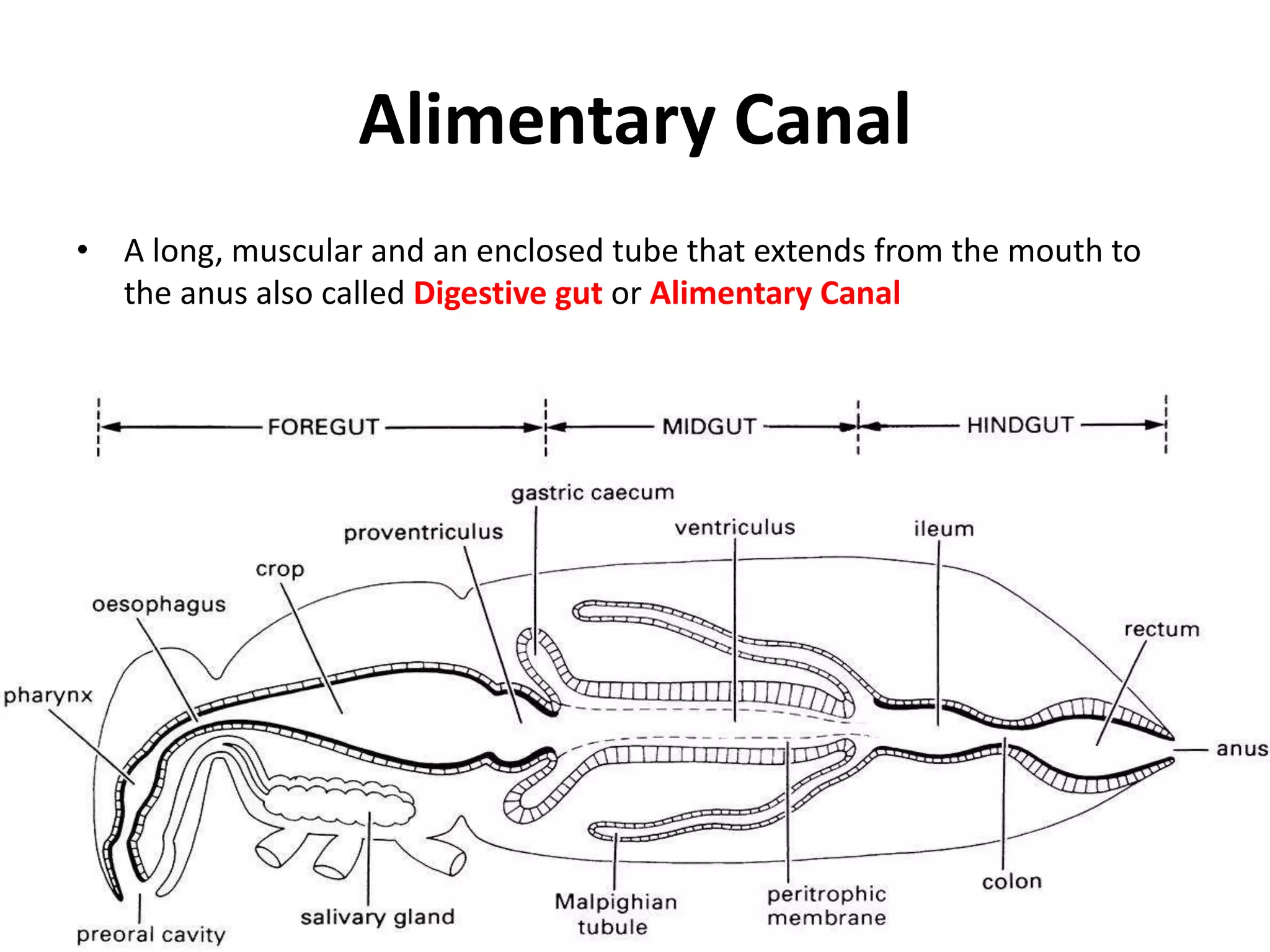
• A long, muscular and an enclosed tube that extends from the mouth to
the anus also called Digestive gut or Alimentary Canal
Alimentary Canal / Digestive gut
• The alimentary canal in insects is divided in to three
regions:
• Foregut (stomodeum) of ectodemal origin
 food is stored, filtered and partially digested.
• Midgut (mesentron) of endodermal origin
 primary site for digestion and aborption of food.
• Hindgut (proctodeum) of ectodermal origin
 some abosorption and feces formation occur
Structure of Alimentary Canal
Foregut
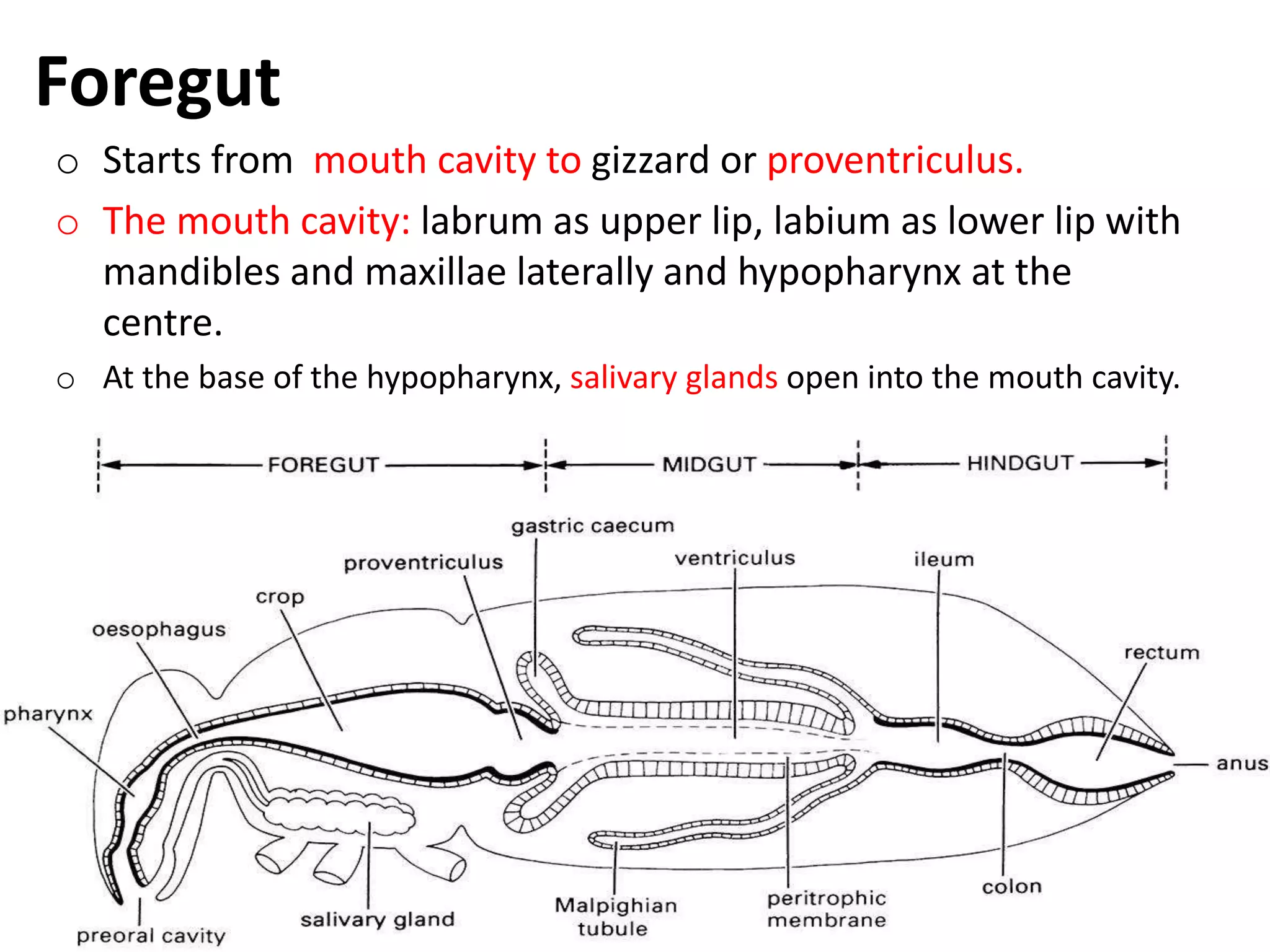
o Starts from mouth cavity to gizzard or proventriculus.
o The mouth cavity: labrum as upper lip, labium as lower lip with
mandibles and maxillae laterally and hypopharynx at the
centre.
o At the base of the hypopharynx, salivary glands open into the mouth cavity.
Salivary glands
• The glands are grape-like clusters called acinus.
• Involved in the secretion of salivary juices into the
salivary ducts.
• The secretion of the glands contain:
amylases,
lipases,
proteases etc.
Structure of Foregut
Foregut is divided into:
 Pharynx
 Region between the mouth and oesophagus.
 Oesophagus
• It is a narrow part, food get transported from pharynx into the crop.
 Crop
• It is a sac like structure which is a dilated and store food material.
 Gizzard/Proventriculus
• A structure that contain sclerotized teeth-like denticles. These denticles
grinding the food. (Lack in fluid feeding insects)
• The junction of foregut and midgut is provided with a cardiac (oesophageal)
valve also called Stomodeal valve (regulate flow of food)
 The foregut is lined with chitinous protective layer called intima. Intima
ptohibits the absroption of nutrients
Structure of Midgut
• A short, cylindrical and straight tube.
• Its anterior end arise six large, elongated
sacs, the gastric caecae which consists of a
longer anterior lobe and shorter posterior
lobe.
• The posterior lobes are filled with food
whereas the anterior lobes have secretary
function.
• Gastric caecae which produce digestive
enzymes and increase surface area.
• The posterior end of the midgut is marked
by the presence of malpighian tubules which
absorb nuritients
• At the junction of midgut and hindgut is a
pyloric valve.
Midgut (Peritorphic membrane)
• The midgut has a very thin and delicate layer called peritrophic
membrane secreted by the epithelial cells.
• The peritrophic membrane protects the tender epithelial cells / secretary
cells of the midgut from friction by hard food particles.
• It forms a coat over the food particles.
• Midgut is not lined by intima and most of absoption of nutrients occurs
here in ventriculus.
Hindgut
 Malphagian tubules attach to pylorus region of
hindgut
• Hindgut is divided into 3 regions:
• Ileum (small intestine) is a thick and straight
tube.
• Colon (large intestine) is a short narrow tube
which dilates posteriorly to merge into the
rectum.
• Rectum wider tube provided with six bands of
longitudinal muscles alternating. These are
involved in reabsorption of water and salts
from the faecal matter.
• The rectum ends in anus.
• Digestion take place in following 5 steps:
 Ingestion
 Transportation
 Digestion
 Absorption
 Egestion
Process of Digestion
Digestion take place in 5 steps
1. Ingestion
• Food is partially digested in the oral cavity with the help of salivary
enzymes.
2. Transportation
• The food material entered in to the oesophagus is transported in to the
crop by muscular activity.
• From the crop, food enters in to the gizzard where it is still broken in to
very minute particles with the help of denticles or the cuticular teeth.
Conti..
3. Digestion
• From gizzard food passes in to the midgut where actually digestion starts.
• The epithelial cells produce enzymes i.e.
 Proteases which break proteins in to aminoacids,
 Carbohydrases breaking carbohydrates in to mono & disaccharides,
 Lipases breaking lipids in to fatty acids and glycerol.
4. Absorption
• Midgut epithelial cells absorb the nutrients from the digested food and pass
on the faecal matter and undigested food material in to the hindgut.
5. Egestion:
• The waste food material is discharged through the anus due to the action of
the anal muscles.
Modifications
THANK YOU

Digestive system of Insects

  • 2.
    DIGESTIVE SYSTEM Presented To: Dr. Asim Riaz Presented By : Muhammad Irfan Shan Rao Huraira Farooq
  • 3.
    Digestive System ofInsects • Insects feed on a wide range of organic materials. • Almost 75% of all species of insects are phytophagous. • Insects may be:  Carnivorous  Entomophagous  Wood borers  Parasitic on other animals or insect species  Parastoids
  • 4.
    Alimentary Canal • Along, muscular and an enclosed tube that extends from the mouth to the anus also called Digestive gut or Alimentary Canal
  • 5.
    Alimentary Canal /Digestive gut • The alimentary canal in insects is divided in to three regions: • Foregut (stomodeum) of ectodemal origin  food is stored, filtered and partially digested. • Midgut (mesentron) of endodermal origin  primary site for digestion and aborption of food. • Hindgut (proctodeum) of ectodermal origin  some abosorption and feces formation occur
  • 6.
  • 7.
    Foregut o Starts frommouth cavity to gizzard or proventriculus. o The mouth cavity: labrum as upper lip, labium as lower lip with mandibles and maxillae laterally and hypopharynx at the centre. o At the base of the hypopharynx, salivary glands open into the mouth cavity.
  • 8.
    Salivary glands • Theglands are grape-like clusters called acinus. • Involved in the secretion of salivary juices into the salivary ducts. • The secretion of the glands contain: amylases, lipases, proteases etc.
  • 9.
    Structure of Foregut Foregutis divided into:  Pharynx  Region between the mouth and oesophagus.  Oesophagus • It is a narrow part, food get transported from pharynx into the crop.  Crop • It is a sac like structure which is a dilated and store food material.  Gizzard/Proventriculus • A structure that contain sclerotized teeth-like denticles. These denticles grinding the food. (Lack in fluid feeding insects) • The junction of foregut and midgut is provided with a cardiac (oesophageal) valve also called Stomodeal valve (regulate flow of food)  The foregut is lined with chitinous protective layer called intima. Intima ptohibits the absroption of nutrients
  • 10.
    Structure of Midgut •A short, cylindrical and straight tube. • Its anterior end arise six large, elongated sacs, the gastric caecae which consists of a longer anterior lobe and shorter posterior lobe. • The posterior lobes are filled with food whereas the anterior lobes have secretary function. • Gastric caecae which produce digestive enzymes and increase surface area. • The posterior end of the midgut is marked by the presence of malpighian tubules which absorb nuritients • At the junction of midgut and hindgut is a pyloric valve.
  • 11.
    Midgut (Peritorphic membrane) •The midgut has a very thin and delicate layer called peritrophic membrane secreted by the epithelial cells. • The peritrophic membrane protects the tender epithelial cells / secretary cells of the midgut from friction by hard food particles. • It forms a coat over the food particles. • Midgut is not lined by intima and most of absoption of nutrients occurs here in ventriculus.
  • 12.
    Hindgut  Malphagian tubulesattach to pylorus region of hindgut • Hindgut is divided into 3 regions: • Ileum (small intestine) is a thick and straight tube. • Colon (large intestine) is a short narrow tube which dilates posteriorly to merge into the rectum. • Rectum wider tube provided with six bands of longitudinal muscles alternating. These are involved in reabsorption of water and salts from the faecal matter. • The rectum ends in anus.
  • 13.
    • Digestion takeplace in following 5 steps:  Ingestion  Transportation  Digestion  Absorption  Egestion Process of Digestion
  • 14.
    Digestion take placein 5 steps 1. Ingestion • Food is partially digested in the oral cavity with the help of salivary enzymes. 2. Transportation • The food material entered in to the oesophagus is transported in to the crop by muscular activity. • From the crop, food enters in to the gizzard where it is still broken in to very minute particles with the help of denticles or the cuticular teeth.
  • 15.
    Conti.. 3. Digestion • Fromgizzard food passes in to the midgut where actually digestion starts. • The epithelial cells produce enzymes i.e.  Proteases which break proteins in to aminoacids,  Carbohydrases breaking carbohydrates in to mono & disaccharides,  Lipases breaking lipids in to fatty acids and glycerol. 4. Absorption • Midgut epithelial cells absorb the nutrients from the digested food and pass on the faecal matter and undigested food material in to the hindgut. 5. Egestion: • The waste food material is discharged through the anus due to the action of the anal muscles.
  • 16.
  • 17.