HEEL PAIN
Commonest of all causes
 Achilles enthesitis
 Achilles tendinitis
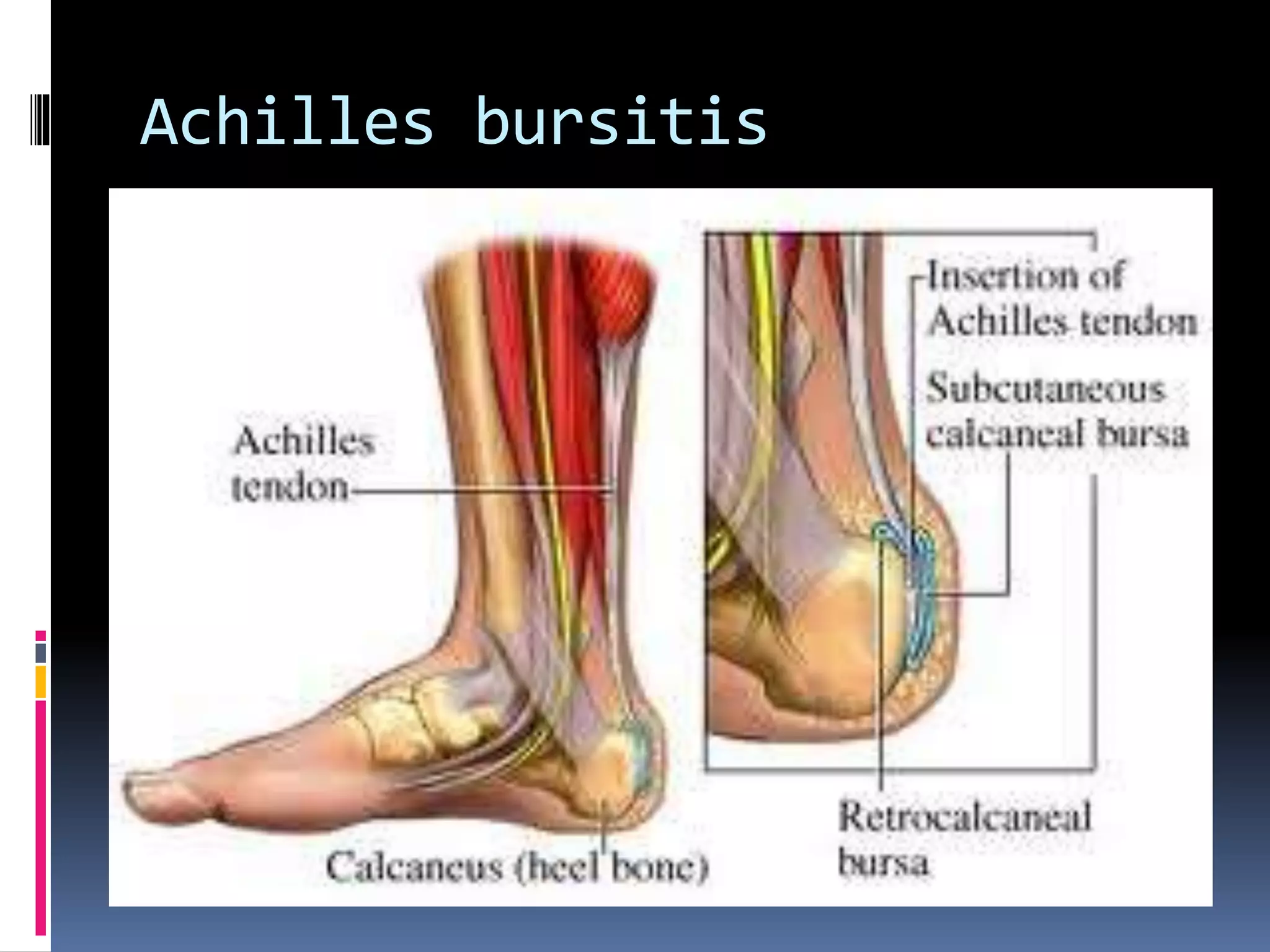
 Achilles bursitis
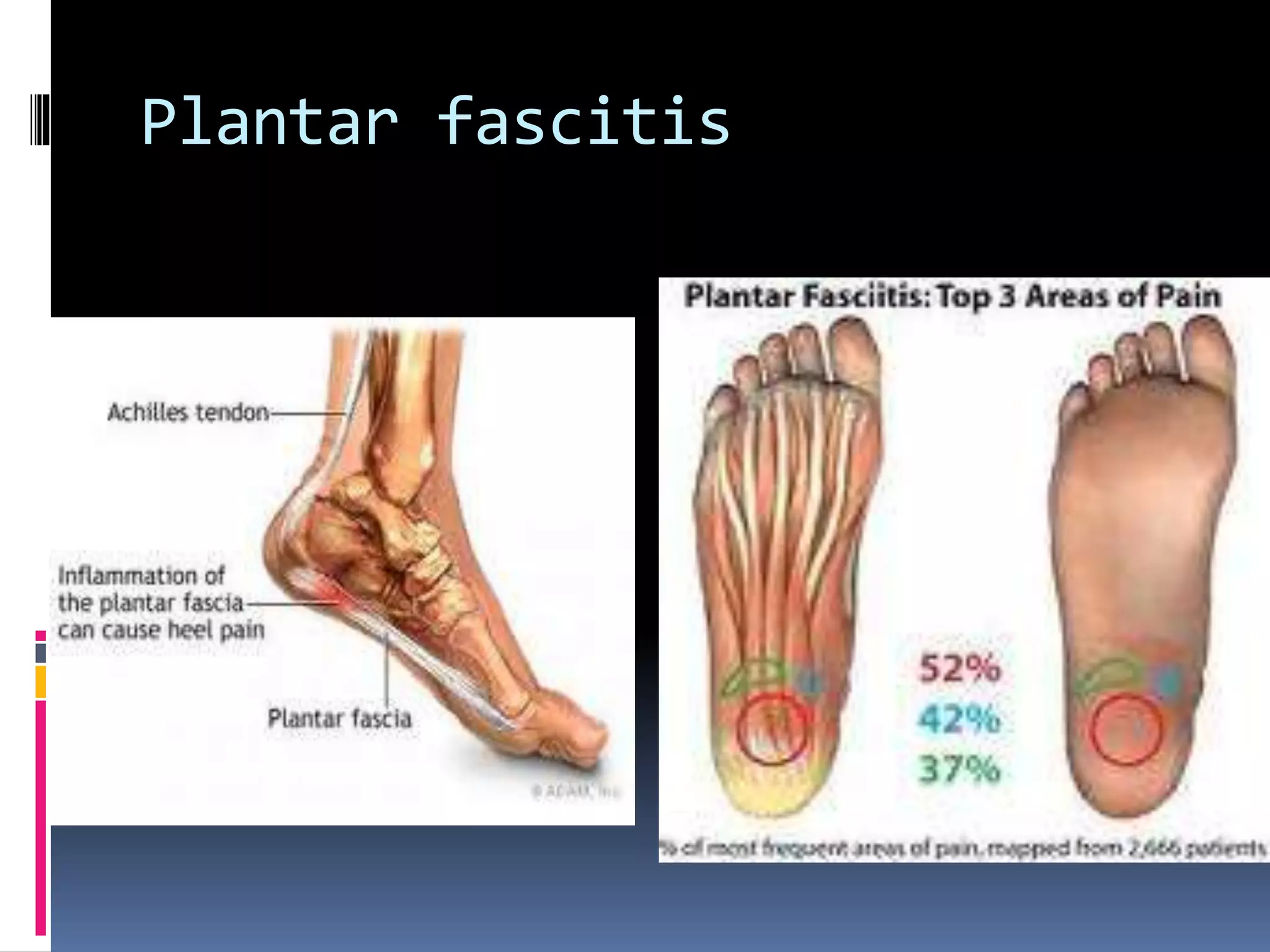
 Plantar fascitis
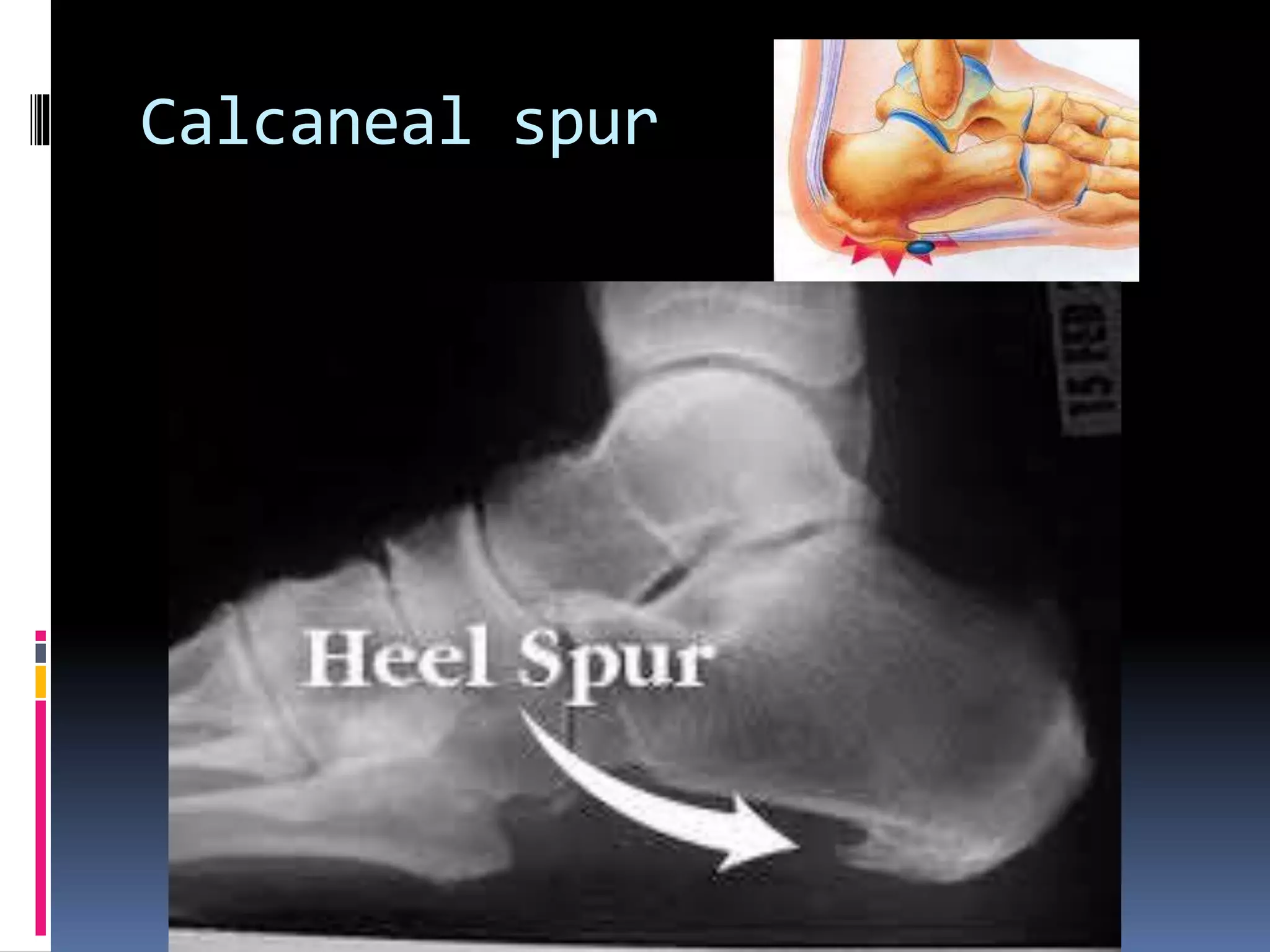
 Calcanel spur
 Heel pad fat atrophy
Achilles bursitis
Plantar fascitis
Less commoner causes
 Achilles tendon rupture
 Bone bruise
 Bone cyst
 Fracture
 Gout
 Neuroma
 Peripheral neuropathy
 Tarsel tunnel syndrome
Approach towards case
HISTORY
CLINICAL EXAMINATION
INVESTIGATION
TREATMENT
HISTORY
 PRESENITNG COMPLAINT
1.ONSET-acute
subacute
insidious
2.SITE OF MAX. INTENSITY AND RADIATION
OF PAIN
3.REST PAIN-inflammatory pain improves with
activity
4.NIGHT PAIN-destructive
 Avascular necrosis
 Mutilating arthritis
Malignancy
5.MOVEMENT PAIN-use
increases pain and rest
decreases pain
6.PERSISTENT PAIN-bone
pain
07.STIFFNESS;SENSATIONOFTIGHTNESS-
fluid distension of capsule,tenosynovium
or bursa.In the morning ,stiffness increase
and activity decrease due to clearing of
fluid.
08.DURATION OF MORNING STIFFNESS
09.SWELLING-soft tissue,bony &
fluid
10.DEFORMITY-malalignment,subluxation
or dislocation
11.DISABILITY-inadequate function
12.PRECIPITATING FACTORS FOR JOINT
INVOLVEMENT –i)TRAUMA
ii)INFECTION-sorethroat,
urethritis, dysentry
iii)STD
iv)CONTACTWITH
INFECTIOUS DISEASE
13.AGGRAVATINGAND RELIEVING
FACTORS-rest,exercise,activity,imobility
and drugs.
 PAST HISTORY
1.TRAUMA
2.INFECTION-urethritis,dysentry
3.SIMILAR EPISODES-rheumatic fever,
gout,palindromic rheumatism
4.h/o STD-secondary syphilis
5.CHARCOT JOINT
 TREATMENT HISTORY
1.Aspirin,NSAID,steroid,DMARD
2.SURGERY
 FAMILY HISTORY
1.Rheumatoid arthritis
2.osteoarthrosis,gout
3.Seronegetive spondyloarthropathies
GENERAL CLINICAL EXAMINATION
SKIN
 ERYTHEMA-JOINT:Septic arthritis, crystal
arthropathy,palindromic rheumatism.
 RASH-SLE,vasculitis,drugs
 PSORIASIS
 KERATODERMA BLENORRHAGICA-Reiters
syndrome
 MUCOSAL ULCERS-Behcet syndrome,SLE
 PYODERMA GANGRENOSUM-IBD
 PALMAR ERYTHEMA-Rheumatoid arthritis
 PHOTOSENSITIVITY-development of rash on
exposure to sunlight of less than 30 min.
SLE
SUB CUTANEOUS NODULES
 Rheumatoid arthritis,rheumatic fever
 Gout,sarcoidosis,SLE,hyperlipidemia
NAIL CHANGES
 CLUBBING-fibrosing alveolitis,hypertrophic
osteoarthropathy
 PITTING & ONYCHOLYSIS-Psoriasis
 SPLINTER HAEMORRHAGE-Small vessel
vasculitis,infective endocarditis.
MUCOUS MEMBRANE LESIONS
 Reactive arthropathy, Reiter’s syndrome, Behcet’s
syndrome,SLE
 DRYNESS-Sjogren’s syndrome
EYE CHANGES
 EPISCLERITIS & SCLERITIS-Rheumatoid arthritis
 IRITIS-Ankylosing spondylitis
 IRIDOCYCLITIS-Juvenile chronic arthritis
 CONJUCTIVITIS-Reiter’s syndrome
 SCLEROSING TENOSYNOVITIS OF SUPERIOR
OBLIQUETENDON=BROWN’S SYNDROME-In
Rheumatoid arthritis
LYMPHADENOPATHY
 Still’s disease, SLE
LOCAL CLINICAL EXAMINATION
MOVEMENTS
 ANKLE JOINT – 40 degree dorsiflexion
50 degree plantar flexion
 SUBTALAR JOINT-5 degree inversion
5 degree eversion
 MIDTARSL JOINT-30 degree inversion
30 degree eversion
LOOK FOR:
1. SWELLING
2. DEFORMITY
Hallux valgus and varus
Clawing of foot-Fixed flexion deformity due
to small muscle wasting.
Crowding of toes
Sausage deformity of toes
-Psoriatic arthritis
-Ankylosing spondylitis
-Reiter’s disease
3. CALLOSITIES-On points of abnormal
pressures
4. DAY LIGHT SIGN-Abnormal spreads of 2
adjacent toes
5. TENDOACHILLE’S PALPATION-Tendinitis,
Rheumatoid nodules,Xanthoma
6. HEELTENDERNESS-Plantar fascitis
7. TENDINITIS-Tendo achille’s, Peroneal tendon
&Tibialis posterior tendon
8. BURSITIS:Pre-Achilles and retro-achilles
Calcaneal spur
TREATMENT
 Rest or reduced activity
avoid any barefoot walking
 Foot and leg exercises
 Ice and Anti-inflammatories
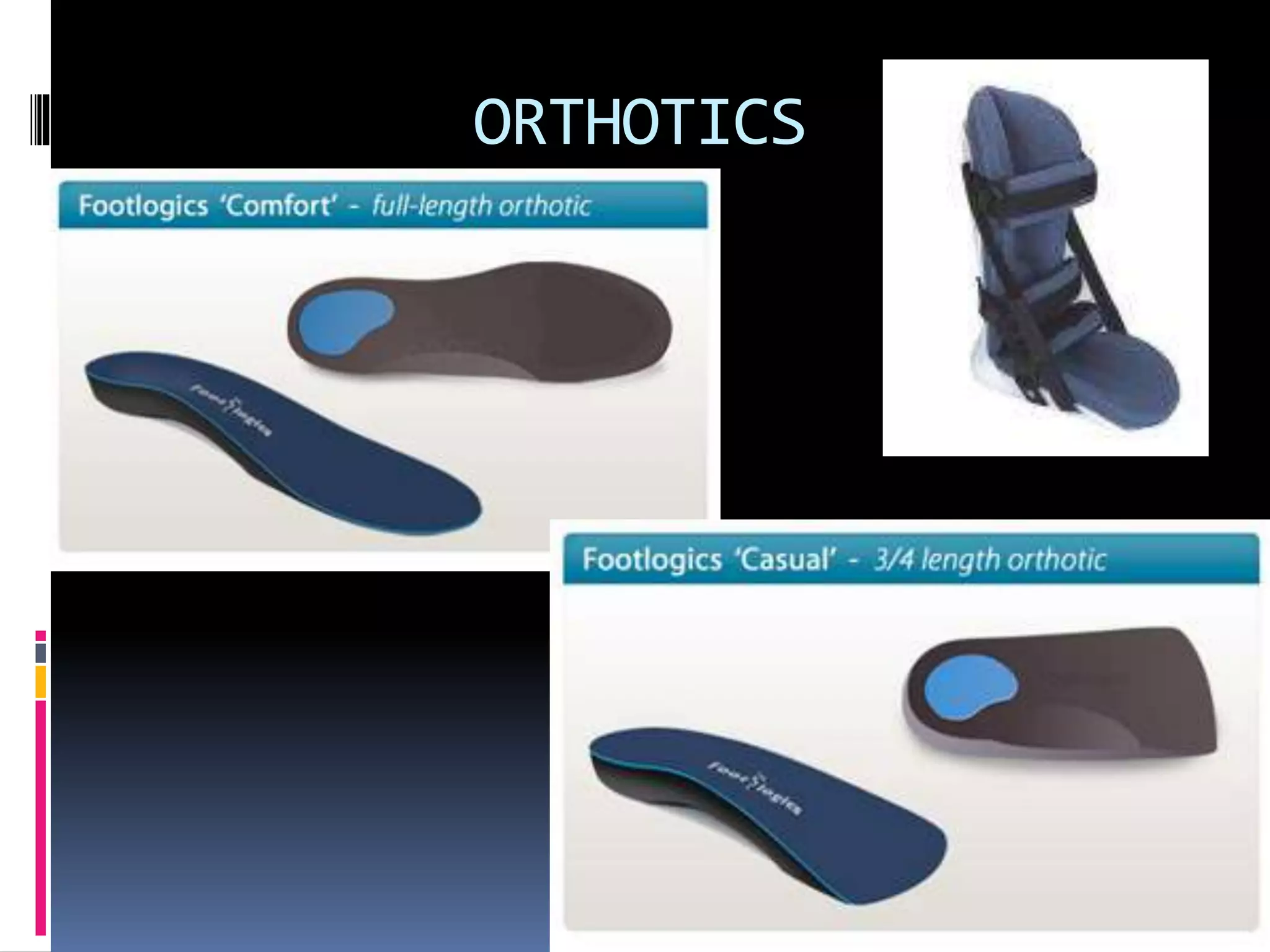
 Support your arches with
orthotics
ORTHOTICS
THANK YOU

Heel pain

  • 1.
  • 2.
    Commonest of allcauses  Achilles enthesitis  Achilles tendinitis  Achilles bursitis  Plantar fascitis  Calcanel spur  Heel pad fat atrophy
  • 3.
  • 4.
  • 5.
    Less commoner causes Achilles tendon rupture  Bone bruise  Bone cyst  Fracture  Gout  Neuroma  Peripheral neuropathy  Tarsel tunnel syndrome
  • 6.
    Approach towards case HISTORY CLINICALEXAMINATION INVESTIGATION TREATMENT
  • 7.
    HISTORY  PRESENITNG COMPLAINT 1.ONSET-acute subacute insidious 2.SITEOF MAX. INTENSITY AND RADIATION OF PAIN 3.REST PAIN-inflammatory pain improves with activity
  • 8.
    4.NIGHT PAIN-destructive  Avascularnecrosis  Mutilating arthritis Malignancy 5.MOVEMENT PAIN-use increases pain and rest decreases pain 6.PERSISTENT PAIN-bone pain
  • 9.
    07.STIFFNESS;SENSATIONOFTIGHTNESS- fluid distension ofcapsule,tenosynovium or bursa.In the morning ,stiffness increase and activity decrease due to clearing of fluid. 08.DURATION OF MORNING STIFFNESS 09.SWELLING-soft tissue,bony & fluid 10.DEFORMITY-malalignment,subluxation or dislocation
  • 10.
    11.DISABILITY-inadequate function 12.PRECIPITATING FACTORSFOR JOINT INVOLVEMENT –i)TRAUMA ii)INFECTION-sorethroat, urethritis, dysentry iii)STD iv)CONTACTWITH INFECTIOUS DISEASE 13.AGGRAVATINGAND RELIEVING FACTORS-rest,exercise,activity,imobility and drugs.
  • 11.
     PAST HISTORY 1.TRAUMA 2.INFECTION-urethritis,dysentry 3.SIMILAREPISODES-rheumatic fever, gout,palindromic rheumatism 4.h/o STD-secondary syphilis 5.CHARCOT JOINT  TREATMENT HISTORY 1.Aspirin,NSAID,steroid,DMARD 2.SURGERY  FAMILY HISTORY 1.Rheumatoid arthritis 2.osteoarthrosis,gout 3.Seronegetive spondyloarthropathies
  • 12.
    GENERAL CLINICAL EXAMINATION SKIN ERYTHEMA-JOINT:Septic arthritis, crystal arthropathy,palindromic rheumatism.  RASH-SLE,vasculitis,drugs  PSORIASIS  KERATODERMA BLENORRHAGICA-Reiters syndrome  MUCOSAL ULCERS-Behcet syndrome,SLE  PYODERMA GANGRENOSUM-IBD  PALMAR ERYTHEMA-Rheumatoid arthritis
  • 13.
     PHOTOSENSITIVITY-development ofrash on exposure to sunlight of less than 30 min. SLE SUB CUTANEOUS NODULES  Rheumatoid arthritis,rheumatic fever  Gout,sarcoidosis,SLE,hyperlipidemia NAIL CHANGES  CLUBBING-fibrosing alveolitis,hypertrophic osteoarthropathy  PITTING & ONYCHOLYSIS-Psoriasis  SPLINTER HAEMORRHAGE-Small vessel vasculitis,infective endocarditis.
  • 14.
    MUCOUS MEMBRANE LESIONS Reactive arthropathy, Reiter’s syndrome, Behcet’s syndrome,SLE  DRYNESS-Sjogren’s syndrome EYE CHANGES  EPISCLERITIS & SCLERITIS-Rheumatoid arthritis  IRITIS-Ankylosing spondylitis  IRIDOCYCLITIS-Juvenile chronic arthritis  CONJUCTIVITIS-Reiter’s syndrome  SCLEROSING TENOSYNOVITIS OF SUPERIOR OBLIQUETENDON=BROWN’S SYNDROME-In Rheumatoid arthritis LYMPHADENOPATHY  Still’s disease, SLE
  • 15.
    LOCAL CLINICAL EXAMINATION MOVEMENTS ANKLE JOINT – 40 degree dorsiflexion 50 degree plantar flexion  SUBTALAR JOINT-5 degree inversion 5 degree eversion  MIDTARSL JOINT-30 degree inversion 30 degree eversion
  • 16.
    LOOK FOR: 1. SWELLING 2.DEFORMITY Hallux valgus and varus Clawing of foot-Fixed flexion deformity due to small muscle wasting. Crowding of toes Sausage deformity of toes -Psoriatic arthritis -Ankylosing spondylitis -Reiter’s disease 3. CALLOSITIES-On points of abnormal pressures
  • 17.
    4. DAY LIGHTSIGN-Abnormal spreads of 2 adjacent toes 5. TENDOACHILLE’S PALPATION-Tendinitis, Rheumatoid nodules,Xanthoma 6. HEELTENDERNESS-Plantar fascitis 7. TENDINITIS-Tendo achille’s, Peroneal tendon &Tibialis posterior tendon 8. BURSITIS:Pre-Achilles and retro-achilles
  • 18.
  • 19.
    TREATMENT  Rest orreduced activity avoid any barefoot walking  Foot and leg exercises  Ice and Anti-inflammatories  Support your arches with orthotics
  • 20.
  • 21.