Downloaded 58 times
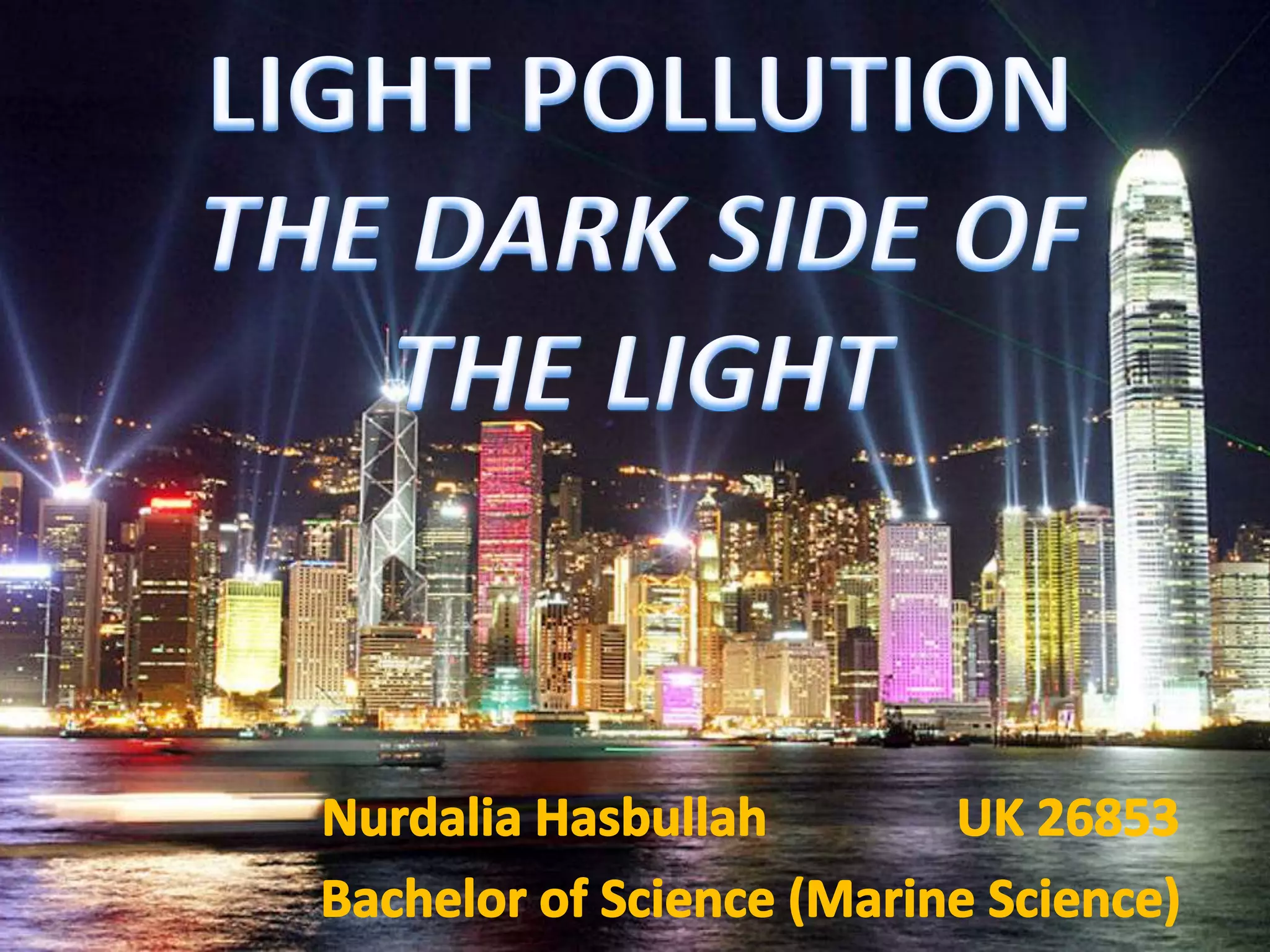


Excessive artificial light at night can cause light pollution through light scattering in the atmosphere, glare, light trespass onto unintended areas, over-illumination, and skyglow. Light pollution disrupts wildlife behaviors like foraging, navigation, and predator avoidance, leading to increased mortality and decreased populations and body weight. It also negatively impacts humans by reducing vision, disrupting circadian rhythms, and decreasing melatonin production, potentially causing health issues. Additionally, light pollution contributes to energy waste, global warming through fossil fuel emissions, and increased air pollution by reducing atmospheric cleaning. The solution involves using efficient, directed outdoor lighting and educating the public.


![Light trespass and_pollution[1]](https://cdn.slidesharecdn.com/ss_thumbnails/lighttrespassandpollution1-140206161337-phpapp02-thumbnail.jpg?width=640&height=640&fit=bounds)


