Glomerulonephritis = inflammation of the glomeruli
‘Glomerulopathy’ is a more accurate term
NEPHRITIC SYNDROME
Collection of symptoms and signs
associated with inflammatory
glomerular disorders
• proteinuria 1-2 g/24 hr
• Haematuria,RBC casts,pyuria
• Hypertension
• Oliguria
• Reduced GFR,increased creat
NEPHROTIC SYNDROME
Collection of symptoms and signs
associated with proliferative
glomerular disorders
• Overt proteinuria (> 3.5 g/24h)
• Hypoalbuminaemia (< 30g/L)
• hyperlipidemia
• Oedema
Nephrotic vs Nephritic
Typical Features Nephrotic Nephritic
Onset Insidious Abrupt
Edema ++++ ++
Blood pressure Normal Raised
Jugular venous pressure Normal/low Raised
Proteinuria ++++ ++
Hematuria May/may not occur +++
Red blood cell casts Absent Present
Serum albumin Low Normal/slightly reduced
Wegener- Granulomatosis Polyangitis----GPA---granuloma intra+extra vascular--c-ANCA
Microscopic polyangitis-------------------------MPA-------no granuloma------------------------- p-ANCA
churg-strauss—Eosinophilic gran Polyangitis EGPA---granuloma extravascular---p-ANCA
Proteinuria
Haematuria
SLE
IgA nephropathy
Minimal
change
nephropathy
Membranous
nephropathy
Post-infective
glomerulonephritis
Diabetic
nephropathy
* Adapted from Davidson’s Principles and Practice of Medicine, 20th
Edition
Spectrum of glomerular diseases
Categories of proteinuria
14
Urine RE- Protein 3+-4+ , PCR-13.2 gm/gm
24 hr urinary protein- 23.87 gm
Causes of the nephrotic syndrome
Nephrotic range proteinuria/ No nephritic
type urine findings
 Minimal change disease – Children
 Adults
 30 percent have a systemic disease
 Diabetes mellitus
 Amyloidosis
 Systemic lupus erythematosus
 Primary renal disorders
 Minimal change disease
 Focal segmental glomerulosclerosis (FSGS)
 Membranous GN
Renal biopsy in Nephrotic Syndrome
Biopsy to be done
Biopsy usually not required
 Most adults and older
children with apparently
idiopathic nephrotic
syndrome
 SLE - Proliferative GN/MN
 Children <6 Yrs- MCD
 DM-2 with no e/o NDKD
 Primary or secondary
amyloidosis - if can be
diagnosed by less invasive
tissue biopsy (such as
abdominal fat pad or rectal
biopsy)
 Relapse of SSNS
 Patients with overt (already
diagnosed) malignancy
 Massive obesity – ORG/
Secondary FSGS
Indication for kidney biopsy and
genetic testing
KDIGO 2020
Complications of Nephrotic Syndrome
 Protein malnutrition
 Acute kidney injury
 Urinary loss of hormones/plasma proteins
 Hyperlipidemia -accelerated atherosclerosis
 Venous or arterial thrombosis

Edema management in NS
Hypertension/proteinuria reduction
Low or high protein diet?
 Increasing protein intake
 Does not improve albumin metabolism
 Hemodynamic response - rise in glomerular pressure, increasing
urine protein losses
 Low-protein diet
 Will reduce proteinuria, but also reduces the albumin synthesis
rate
 In the longer term may increase the risk of a worsening negative
nitrogen balance
 Adequate dietary protein (0.8 to 1 g/kg/day) with a high
carbohydrate intake to maximize use of that protein
 Patients with heavy proteinuria
 Amount of urinary protein loss should be added to dietary protein
intake
KDIGO 2020
Investigations in glomerular disease
Bedside tests
Urine dip
Laboratory tests
FBC, U&E, CRP, ESR, HbA1C, complement, ANCA, ANA, anti-dsDNA, anti-
GBM, ASOT
Urine microscopy, urine albumin:creatinine ratio, 24h protein
Throat/skin swabs
Imaging
Renal ultrasound
Invasive tests
Renal biopsy
• Histologic and ultrastructural appearance of injury (by
light and electron microscopy)
– focal (only some glomeruli, maybe under 50%)
– diffuse (all glomeruli)
– segmental (a part of a glomerulus)
– global (entire glomerulus)
– focal-segmental (some glomeruli-some part)
– proliferative (hypercellular)
– necrotizing (necrotizing)
– sclerosing (increase in basement membrane - mesangial matrix
material)
Investigations in glomerular disease
• Histopathology / Light microscopy
– Glomeruli
• Hypercellularity
• Increased matrix / Hyalinization / Fibrosis
• Thickened basement membrane
– Secondary changes in tubules/interstitium
• Amount of tubular atrophy and fibrosis is a sensitive
indicator of prognosis
– Associated large vessel disease
Investigations in glomerular disease
• Immunofluorescence
– Formation of immune complexes with deposition of
antibodies in glomerulus
– IgG, IgA, IgM
– Basement membrane, mesangium
– Linear or granular pattern
• Electron microscopy
– Changes in podocytes, basement membranes and
mesangium
– Location and presence of immune deposits (subepithelial,
subendothelial, basement membrane)
Minimal Change Disease
• MINIMAL CHANGE GLOMERULOPATHY
• ("minimal change disease",
• "foot process disease",
• "lipoid nephrosis",
• "nil lesion", "nil disease")
MINIMAL CHANGE DISEASE (MCD)
• lipoid nephrosis Munk (1913)
• characterized initially by dramatic increases in glomerular
permeability in association with little or no structural
abnormalities by light microscopy.
• MCD is most common in children
• 70% to 90% of cases of nephrotic syndrome in children
younger than age 10 years and 50% of cases in older children;
peak 2-3 yr
• Minimal change glomerulopathy also causes 10% to 15% of
cases of primary nephrotic syndrome in adults.
• 15-20% - nephritic features may occur
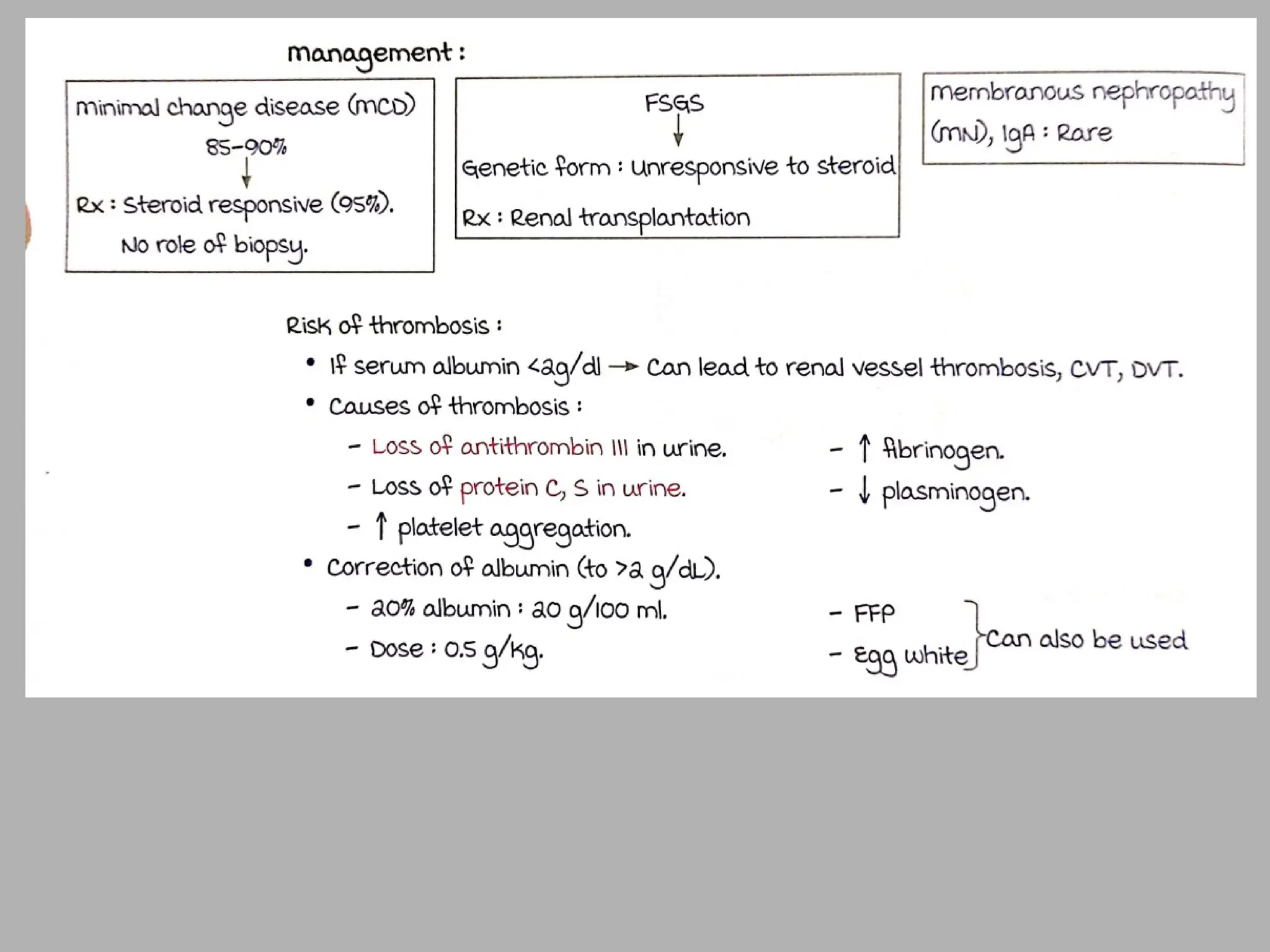
• MCD in children mostly (80-90%) idiopatic
Secondary causes of MCD
• Drugs
-NSAIDs
-penicillin
-trimethoprim
• Toxins
-Mercury
-lead
-bee stings
 Infections
-infectious mononucleosis
- HIV
- Immunizations
 Tumors
-Hodgkins lymphoma
-other lymhoproliferative dis
-Carcinoma
 Obesity
Laboratory findings of MCD
• Nephrotic range proteinuria.
• Microscopic hematuria is seen in 20% children 33% adults
• Volume contraction may lead to a rise in both the hematocrit and
hemoglobin.
• ESR is increased as a consequence of hyperfibrinogenemia as well as
hypoalbuminemia.
• The serum albumin <2 g/dL and, in more severe cases, <1 g/dL.
• Total cholesterol, LDL, and triglyceride levels are increased.
• Pseudohyponatremia has been observed in the setting of marked
hyperlipidemia.
• Renal function is usually normal, although a minority of patients have
substantial AKI.
• IgG levels may be profoundly decreased—a factor that may result in
susceptibility to infections.
• Complement levels are typically normal in patients with minimal change
glomerulopathy
Histopathology
• The principal target of injury is the podocyte,
***podocytopathies
• Light microscopy: lack of definitive alteration in glomerular
structure. Lipid droplets in the tubuler cells
• Immunofluorescence: also shows no change
• Electron mic: fusion of epithelial foot processes
• Electron microscopy reveals diffuse effacement
(fusion) of foot processes of epithelial cells.
• There is no evidence of immunologic
disturbance by immunflourescence microscopy,
and the glomeruli appear normal by light
microscopy.
• Proximal tubules may contain fine lipid droplets.
• The most important clinical aspect of minimal
change disease is: its good response to
steroids!
Minimal-change disease (electron microscopy)
The glomerular basement membrane is normal;
the cytoplasm of the podocytes is vacuolated, with effacement of foot
processes and microvilli. Methenamine silver, 2800×.
Minimal Change Disease
Loss of Foot processes
• Emprical steroid therapy for children <10 yr
• In children who have received empirical treatment, a renal
biopsy is indicated when there is failure to respond to a 4- to
6-week course of prednisone.
• oral prednisone be administered as a single daily dose
starting at 60 mg/m2
/day
• or 2 mg/kg/day to a maximum 60 mg/day
Specific treatment: corticosteroids
Clinical course of MCD as related to steroid
therapy
• STEROID-SENSITIVE NEPHROTIC SYNDROME (SSNS)
- complete remission of proteinuria within 8-12 weeks with infrequent
relapses
• FREQUENTLY RELAPSING and STEROID DEPENDENT (FR-SD)
-relapses occur during the taper of steroids
-relapses occur at rate of twice every 6 months or six times every 18
months
-relapses occur within 2 weeks of cessation of therapy
• STEROID-RESISTANT NEPHROTIC SYNDROME (SRNS)
-Failure to obtain a remission within 12 weeks
PROGNOSIS
• In adults 85-90 % survival rate
• The potential efficacy of therapy must be considered in
relation to the natural history of the disease.
• Untreated idiopathic MCD was associated with a risk of
mortality due to infection and less commonly
thromboembolism
• Good response to high dose steroids
• Does not progress to CKD
complications
• Related to persistent NS (peritonitis, ARF, CKD in steroid
resistant patients)
• Side effect of therapy( stra, cataracts, acne, cushingoid face,
hyperglisemia, HT)
Focal and Segmental Lesions
Focal glomerulosclerosis (FSGS)
(Focal and segmental glomerulosclerosis with hyalinosis,
focal sclerosis, Focal sclerosing glomerulonephritis, focal
sclerosing glomerulopathy)
The term focal glomerulosclerosis is used to describe a
morphologic entity characterized by a sclerotic process
involving only a portion of the glomeruli and among the
affected glomeruli, only a portion of the glomerular tuft.
FOCAL SEGMENTAL GLOMERULOSCLEROSIS (FSGS)
• an important lesion found to underlie the nephrotic syndrome
in adults and a frequent lesion in children and adolescents
• Pathology: a focal process; not all glomeruli are involved, the
glomeruli are segmentally sclerotic, and portions of the
involved glomeruli may appear normal by light microscopy.
• Nonsclerotic glomeruli and segments usually have no staining
for immunoglobulins or complement.
• The ultrastructural features of FSGS on electron microscopy
include focal foot process effacement.
Primary vs Secondary
Primary FSGS Secondary FSGS
1. Proteinuria and low albumin and
edema
1. Proteinuria alone without low albumin
and edema
2. Acute presentation 2. Asymptomatic presentation
3. Diffuse (>80%) foot process effacement 3. Focal foot process effacement
4. No separate kidney disease 4. Separate kidney disease
5. Responsive to immunosuppresive
herapy
5. Non responsive to immunosuppresive
therapy
79
1-Idiopathic FSGS
2-FSGS superimposed on another primary glomerulopathy,
Esp IgA nephropathy
3-FSGS associated with loss of renal mass
Other renal disease (chronic reflux / pyelonephritis / interstitial nephritis)
4- Secondary FSGS associated with other known disorders
(Heroin abuse, HIV infection)
FSGS
• Idiopathic FSGS
poor response to steroids
Accounts 10-15% of the cases of nephrotic synd. seen
among adults and children.
They differ from minimal change disease in the following
aspects:
1- They have a higher incidence to hematuria, reduced
GFR and hypertension
2- Proteinuria is non-selective
3- IF shows deposition of IgM and C3 in sclerotic
segments.
4- Most of them will progress to CRF
5- There is a high reccurrence risk of FSGS in transplant
receipents (25-50%)
• HIV associated FSGS
Occurs in 5% of HIV infected patients.
Light microscopy shows: segmental sclerosis, Capillary
collapse, accumulation of hyaline subendothelial deposits
and lipid.
Electrone microscopy (em) shows tubuloreticular inclusions in
endothelial cells. This finding is highly suspective for HIV
infection!
Clinical presentation is generally Nephrotic syndrome! But
some of the patients may have asymptomatic proteinuria
and hematuria. Serum complement components are
normal.
Histologic variants – FSGS
 Columbia classification
 Five morphologic variants of the lesion of FSGS
based upon LM examination
 FSGS not otherwise specified (NOS) - classic FSGS
 Collapsing variant
 Should be considered a separate entity rather than a
variant of FSGS
 Tip variant.
 Perihilar variant.
 Cellular variant
Clinical manifestations
 peripheral edema,
 hypoalbuminemia, and
 nephrotic range proteinuria.
 Patients with FSGS also commonly have
hypertension, and many have microscopic
hematuria.
 The level of kidney function may vary.
The relative frequencies of clinical
manifestations :
 Nephrotic range proteinuria - 60 to 75 %
 Microscopic hematuria - 30 to 50 %
 Hypertension - 45 to 65 %
 Renal insufficiency - 25 to 50 %
Approach to FSGS lesion
Laboratory findings
• Hypoproteinemia is common in patients with FSGS and the
serum albumin concentration may fall to below 2 g/dL,
especially in patients with the collapsing variant.
• Hypogammaglobulinema and hyperlipidemia are typical;
serum complement components are generally in the normal
range.
• Serologic testing for HIV infection should be obtained for all
patients with FSGS, especially those with the collapsing
pattern.
• Microscopic
study shows
diffuse loss of
foot processes
(as in minimal
change
disease) plus
focal-
segmental
sclerosis
• There is
always striking
hyaline
arteriolar
sclerosis.
FSGS
• Light microscopy (LM)
– Focal segmental sclerosis
– Some normal glomeruli
• Immunofluorescence (IF)
– IgM and C3 deposition in sclerotic
areas
• Electron microscopy (EM)
– Fusion of podocyte foot processes
Focal Segmental Glomerulosclerosis
Hyaline arteriolosclerosis
• Tubuloreticular
inclusion
histologic variants
Classical
Collapsing
Tip lesions
NORMAL Glomerulus
Therapy of MCD & FSGS
• Prednisone theraphy: not to exceed 60 mg/day
• 50% responding 2-6 wk
• Cyclosporine therapy is the second choice for FSGS
Response to therapy
• The strongest prognostic indicator is the degrees of
reduction in proteinuria
• complete response : <200 to 300 mg/day.
• partial response reduction ≥ 50 %
• relapse is return of proteinuria to ≥ 3.5 g/day after a complete
or partial remission.
• Steroid-dependence relapse while on therapy or requirement
for continuation of steroids
• Steroid-resistance little or no reduction in proteinuria after 12
to 16 weeks of prednisone therapy
• ACEI may provide a substantial reduction in proteinuria and a
long-term renoprotective effect that may be equal to,or
greater than, that of immunosuppressive therapy.
• Response rates to immunosuppressive therapy in primary
FSGS
45% for complete remission,
10% for partial remission,
45% for no response.
PROGNOSIS OF FSGS
• Untreated primary FSGS often follows a progressive course to
end-stage renal disease (ESRD).
• The rate of spontaneous complete remission among patients
with nephrotic syndrome is unknown, but is probably less
than 10 percent.
• Spontaneous remission is more likely to occur among patients
with normal kidney function and non-nephrotic proteinuria
KDIGO 2020
Definition CR,PR,Relapse
Membranous nephropathy
- Commonest cause of nephrotic syndrome in adults
- Most common 4-5
th
decade
- Thickened GBM
- 1/3 spontaneous resolution, 1/3 remain in nephrotic state,
1/3 progress to CKD
- Watch and wait/steroids/cyclophosphamide
Membranous GN
• Commonest cause of nephrotic syndrome in adults
• Idiopathic (85%) or
• secondary (15%) to:
– Neoplasms (lung, colon, melanoma)
– Autoimmune disease (SLE, thyroiditis)
– Infections (Hep B,HepC syphilis, malaria)
– Drugs (Penicillamine, gold)
– Malignancies ( Ca colon,Ca lung)
• 40% progress to chronic renal failure (CRF)
In patients over the age of 60, membranous glomerulopathy is
associated with a malignancy in 20% to 30% of patients
Etiology
• Idiopathic (most cases)
• Known causes include
– SLE
– non-steroidal anti-inflammatory agents
– infections (hepatitis B & C virus)
– syphilis
– schistosomiasis
– Plasmodium malariae
– Sarcoid
– drugs (gold therapy and/or D-penicillamine for
arthritis)
– after transplant
– cancers (lung carcinoma).
Conditions associated with (secondary) MGN
group common uncommon
Immune dis. SLE (class V), DM RA, Hashimoto’s dis.
Ankylosing spondylis.
Pr. Biliary cirrhosis
Infectious HBV HCV, malaria, syphilis
Drugs and toxins Gold , NSAIDs Mercury, captopril, formaldehyde
Misc Tumors, renal transplant Sarcoidosis,Sickle cell dis.
Clinical manifectations
• Nephrotic syndrome 80%
• Asymtomatic non-nephrotic proteinuria 20%
• Proteinuria (5-15 g/day)
• Microscobic hematuria may be seen 50% of adults
• Renal vein thrombosis 40%
• Renal function usually well preserved at the on set of dis.
Laboratory findings in MGN
• Proteinuria is usually more than 3 g of protein per 24 hours and may exceed
10 g/day in 30% of patients.
• Microscopic hematuria is present in 30% to 50% of patients
• Renal function is typically preserved at presentation.
• Hypoalbuminemia is observed if proteinuria is severe.
• Complement levels are normal; however, the complex of terminal
complement components known as C5b-9 is found in the urine in some
patients.
• Tests for hepatitis B, hepatitis C, syphilis, and immunologic disorders such as
lupus, mixed connective tissue disease, and cryoglobulinemia should be
obtained to exclude secondary causes.
Membranous GN
• Light microscopy (LM)
– Thickened capillary BM
– BM spikes on silver stain
• Immunofluorescence (IF) – diffuse granular GBM staining
• Electron microscopy (EM) – subepithelial deposits
The immune deposits of Ig G and complement components
develop on the subepithelial surface of the glomerular capillary
wall
Membranous GN
spikes
Light microscopy in membranous nephropathy, uniform increase in the thickness of the
glomerular capillary walls throughout the glomerulus without any increase in glomerular
cellularity. Spikes of matrix emanating from the outer surface of the basement membrane
indicative of advanced MN are revealed by silver–methenamine stain (×400).
Membranous GN
Electron microscopy shows diffuse global capillary wall thickening
and uniform, evenly-spaced subepithelial immune-complex
deposits.
Immunofluorescence shows a finely granular pattern of
IgG and C3.
These deposits soon become incorporated into the GBM,
leads to GBM thickening ("membranous“).
Membranous GN
Prognosis of pr. MGN
• Spontaneous complete remission of proteinuria occurs in 5 to
30 %
• Spontaneous partial remission (≤ 2 g of proteinuria per day)
occurs in 25 to 40 %
• ESRD in untreated patients is
 14 % at 5 years,
 35 % at 10 years,
 41 % at 15 years
Management of MGN
• Adult patients with good prognostic features, with less than 4 g/day
proteinuria and normal renal function, should be managed
conservatively.
• Patients at moderate risk (persistent proteinuria between 4 and 6
g/day after 6 months of conservative therapy and normal renal
function) or high risk of progression (persistent proteinuria greater
than 8 g/day with or without renal insufficiency) should be considered
for immunosuppressive therapy
• Individuals who have advanced chronic kidney disease and in whom
serum creatinine exceeds 3 to 4 mg/dL are best treated by supportive
care awaiting dialysis and renal transplantation
Therapy of MGN
• Supportive care including ACEI, lipid-lowering therapy
• Corticosteroids
• Alkylating agents (chlorambucil or cyclophosphamide),with or
without concurrent corticosteroid treatment
-Chlorambucil (0.2 mg/kg/day) or cyclophosphamide, alternating monthly with daily
prednisone(0.5 mg/kg/day), in combination with intravenous pulse methylprednisolone(1 g/day)
for the first 3 days of each month
• Cyclosporine
• Mycophenolate mofetil
• The high prevalence of deep vein thrombosis in patients with
membranous glomerulopathy (up to 45%) has led to the use of
prophylactic anticoagulation for patients with proteinuria greater
than 10 g/day
Edema- History
 Timing of the edema
 Painful/painless
 Changes of edema with position
 Unilateral or bilateral edema
 Medication history
 Assessment of systemic disease- Heart/
Liver/Kidney
 History of neoplasm ( Pelvic/abdominal) or
radiation

Bilateral leg edema
Acute Chronic
 DVT
 Medication side effect
 Acute HF

 Chronic venous disease
 Heart failure
 Pulmonary hypertension (Sleep
apnea)
 Renal or liver disease
 Semi-quantitative urine dipstick
for protein and measure serum
creatinine, serum albumin,
prothrombin time, liver
function tests, and thyroid-
stimulating hormone
 Echocardiogram

Drugs causing edema
 Primary renal sodium retention
 NSAIDs, Glucocorticoids, Fludrocortisone, Thiazolidinediones
(glitazones), Insulins, Estrogens, Progestins, Androgens,
Testosterone, Aromatase inhibitors, Tamoxifen
 Arteriolar vasodilation
 Vasodilators (hydralazine, minoxidil, diazoxide)
 Dihydropyridine calcium channel blockers
 Less frequent – alpha1 blockers, sympatholytics (ie, methyldopa)
 Other drugs- Cause unknown
 Anticonvulsant – Gabapentin, pregabalin
 Antineoplastic- Docetaxel, Cisplatin
 Antiparkinsons- Pramipexole, ropinirole
Grading of pitting edema
• Grade 0: No clinical edema
• Grade 1: Slight pitting (2 mm depth) with no visible distortion
that rebounds immediately
• Grade 2: Somewhat deeper pit (4 mm) with no readily
detectable distortion that rebounds in fewer than 15 seconds
• Grade 3: Noticeably deep pit (6 mm) with the dependent
extremity full and swollen that takes up to 30 seconds to
rebound
• Grade 4: Very deep pit (8 mm) with the dependent extremity
grossly distorted that takes more than 30 seconds to rebound
Brodowicz KG et al. Clinical medicine &
research. 2009
Skin changes in edema
 Redness
 A warty texture (hyperkeratosis) with papillomatosis
and brawny induration
 Characteristic of chronic lymphedema
 Brown hemosiderin deposits on the lower legs and
ankles
 Venous insufficiency
 Lipodermatosclerosis
 Venous Stasis Dermatitis
 Skin ulcers/infections

Major causes of edema:Pathophysiology
 Increased capillary hydraulic pressure
 Increased plasma volume due to renal sodium retention
 Heart failure
 Primary renal sodium retention – Renal disease, Drugs, Refeeding edema
 Pregnancy and premenstrual edema
 Sodium or fluid overload
 Idiopathic
 Venous obstruction or insufficiency- Cirrhosis, Local venous
obstruction , Acute pulmonary edema
 Arteriolar vasodilation
 Hypoalbuminemia-Cirrhosis, Nephrotic syndrome
 Increased capillary permeability- Burns, trauma, sepsis, allergic
reactions, ARDS
 Lymphatic obstruction or increased interstitial oncotic pressure
Edema in Nephrotic Syndrome
Periorbital puffiness
 Normal aging
 Tear glands malfunctioning
 Periorbital cellulitis
 Crying/ sleep deprivation
 Nephrotic syndrome
 Hypothyroidism/ hyperthyroidism
 Fluid retention- Pregnancy/menstruation
 Allergies

presentation on causes and treatment of glomerular disorders

presentation on causes and treatment of glomerular disorders

  • 4.
    Glomerulonephritis = inflammationof the glomeruli ‘Glomerulopathy’ is a more accurate term NEPHRITIC SYNDROME Collection of symptoms and signs associated with inflammatory glomerular disorders • proteinuria 1-2 g/24 hr • Haematuria,RBC casts,pyuria • Hypertension • Oliguria • Reduced GFR,increased creat NEPHROTIC SYNDROME Collection of symptoms and signs associated with proliferative glomerular disorders • Overt proteinuria (> 3.5 g/24h) • Hypoalbuminaemia (< 30g/L) • hyperlipidemia • Oedema
  • 6.
    Nephrotic vs Nephritic TypicalFeatures Nephrotic Nephritic Onset Insidious Abrupt Edema ++++ ++ Blood pressure Normal Raised Jugular venous pressure Normal/low Raised Proteinuria ++++ ++ Hematuria May/may not occur +++ Red blood cell casts Absent Present Serum albumin Low Normal/slightly reduced
  • 9.
    Wegener- Granulomatosis Polyangitis----GPA---granulomaintra+extra vascular--c-ANCA Microscopic polyangitis-------------------------MPA-------no granuloma------------------------- p-ANCA churg-strauss—Eosinophilic gran Polyangitis EGPA---granuloma extravascular---p-ANCA
  • 11.
  • 14.
    Categories of proteinuria 14 UrineRE- Protein 3+-4+ , PCR-13.2 gm/gm 24 hr urinary protein- 23.87 gm
  • 19.
    Causes of thenephrotic syndrome
  • 20.
    Nephrotic range proteinuria/No nephritic type urine findings  Minimal change disease – Children  Adults  30 percent have a systemic disease  Diabetes mellitus  Amyloidosis  Systemic lupus erythematosus  Primary renal disorders  Minimal change disease  Focal segmental glomerulosclerosis (FSGS)  Membranous GN
  • 24.
    Renal biopsy inNephrotic Syndrome Biopsy to be done Biopsy usually not required  Most adults and older children with apparently idiopathic nephrotic syndrome  SLE - Proliferative GN/MN  Children <6 Yrs- MCD  DM-2 with no e/o NDKD  Primary or secondary amyloidosis - if can be diagnosed by less invasive tissue biopsy (such as abdominal fat pad or rectal biopsy)  Relapse of SSNS  Patients with overt (already diagnosed) malignancy  Massive obesity – ORG/ Secondary FSGS
  • 25.
    Indication for kidneybiopsy and genetic testing KDIGO 2020
  • 26.
    Complications of NephroticSyndrome  Protein malnutrition  Acute kidney injury  Urinary loss of hormones/plasma proteins  Hyperlipidemia -accelerated atherosclerosis  Venous or arterial thrombosis 
  • 29.
  • 30.
  • 32.
    Low or highprotein diet?  Increasing protein intake  Does not improve albumin metabolism  Hemodynamic response - rise in glomerular pressure, increasing urine protein losses  Low-protein diet  Will reduce proteinuria, but also reduces the albumin synthesis rate  In the longer term may increase the risk of a worsening negative nitrogen balance  Adequate dietary protein (0.8 to 1 g/kg/day) with a high carbohydrate intake to maximize use of that protein  Patients with heavy proteinuria  Amount of urinary protein loss should be added to dietary protein intake
  • 33.
  • 46.
    Investigations in glomerulardisease Bedside tests Urine dip Laboratory tests FBC, U&E, CRP, ESR, HbA1C, complement, ANCA, ANA, anti-dsDNA, anti- GBM, ASOT Urine microscopy, urine albumin:creatinine ratio, 24h protein Throat/skin swabs Imaging Renal ultrasound Invasive tests Renal biopsy
  • 49.
    • Histologic andultrastructural appearance of injury (by light and electron microscopy) – focal (only some glomeruli, maybe under 50%) – diffuse (all glomeruli) – segmental (a part of a glomerulus) – global (entire glomerulus) – focal-segmental (some glomeruli-some part) – proliferative (hypercellular) – necrotizing (necrotizing) – sclerosing (increase in basement membrane - mesangial matrix material)
  • 50.
    Investigations in glomerulardisease • Histopathology / Light microscopy – Glomeruli • Hypercellularity • Increased matrix / Hyalinization / Fibrosis • Thickened basement membrane – Secondary changes in tubules/interstitium • Amount of tubular atrophy and fibrosis is a sensitive indicator of prognosis – Associated large vessel disease
  • 51.
    Investigations in glomerulardisease • Immunofluorescence – Formation of immune complexes with deposition of antibodies in glomerulus – IgG, IgA, IgM – Basement membrane, mesangium – Linear or granular pattern • Electron microscopy – Changes in podocytes, basement membranes and mesangium – Location and presence of immune deposits (subepithelial, subendothelial, basement membrane)
  • 54.
    Minimal Change Disease •MINIMAL CHANGE GLOMERULOPATHY • ("minimal change disease", • "foot process disease", • "lipoid nephrosis", • "nil lesion", "nil disease")
  • 55.
    MINIMAL CHANGE DISEASE(MCD) • lipoid nephrosis Munk (1913) • characterized initially by dramatic increases in glomerular permeability in association with little or no structural abnormalities by light microscopy. • MCD is most common in children • 70% to 90% of cases of nephrotic syndrome in children younger than age 10 years and 50% of cases in older children; peak 2-3 yr • Minimal change glomerulopathy also causes 10% to 15% of cases of primary nephrotic syndrome in adults. • 15-20% - nephritic features may occur • MCD in children mostly (80-90%) idiopatic
  • 57.
    Secondary causes ofMCD • Drugs -NSAIDs -penicillin -trimethoprim • Toxins -Mercury -lead -bee stings  Infections -infectious mononucleosis - HIV - Immunizations  Tumors -Hodgkins lymphoma -other lymhoproliferative dis -Carcinoma  Obesity
  • 62.
    Laboratory findings ofMCD • Nephrotic range proteinuria. • Microscopic hematuria is seen in 20% children 33% adults • Volume contraction may lead to a rise in both the hematocrit and hemoglobin. • ESR is increased as a consequence of hyperfibrinogenemia as well as hypoalbuminemia. • The serum albumin <2 g/dL and, in more severe cases, <1 g/dL. • Total cholesterol, LDL, and triglyceride levels are increased. • Pseudohyponatremia has been observed in the setting of marked hyperlipidemia. • Renal function is usually normal, although a minority of patients have substantial AKI. • IgG levels may be profoundly decreased—a factor that may result in susceptibility to infections. • Complement levels are typically normal in patients with minimal change glomerulopathy
  • 63.
    Histopathology • The principaltarget of injury is the podocyte, ***podocytopathies • Light microscopy: lack of definitive alteration in glomerular structure. Lipid droplets in the tubuler cells • Immunofluorescence: also shows no change • Electron mic: fusion of epithelial foot processes
  • 65.
    • Electron microscopyreveals diffuse effacement (fusion) of foot processes of epithelial cells. • There is no evidence of immunologic disturbance by immunflourescence microscopy, and the glomeruli appear normal by light microscopy. • Proximal tubules may contain fine lipid droplets. • The most important clinical aspect of minimal change disease is: its good response to steroids!
  • 66.
    Minimal-change disease (electronmicroscopy) The glomerular basement membrane is normal; the cytoplasm of the podocytes is vacuolated, with effacement of foot processes and microvilli. Methenamine silver, 2800×.
  • 67.
    Minimal Change Disease Lossof Foot processes
  • 68.
    • Emprical steroidtherapy for children <10 yr • In children who have received empirical treatment, a renal biopsy is indicated when there is failure to respond to a 4- to 6-week course of prednisone. • oral prednisone be administered as a single daily dose starting at 60 mg/m2 /day • or 2 mg/kg/day to a maximum 60 mg/day Specific treatment: corticosteroids
  • 69.
    Clinical course ofMCD as related to steroid therapy • STEROID-SENSITIVE NEPHROTIC SYNDROME (SSNS) - complete remission of proteinuria within 8-12 weeks with infrequent relapses • FREQUENTLY RELAPSING and STEROID DEPENDENT (FR-SD) -relapses occur during the taper of steroids -relapses occur at rate of twice every 6 months or six times every 18 months -relapses occur within 2 weeks of cessation of therapy • STEROID-RESISTANT NEPHROTIC SYNDROME (SRNS) -Failure to obtain a remission within 12 weeks
  • 72.
    PROGNOSIS • In adults85-90 % survival rate • The potential efficacy of therapy must be considered in relation to the natural history of the disease. • Untreated idiopathic MCD was associated with a risk of mortality due to infection and less commonly thromboembolism • Good response to high dose steroids • Does not progress to CKD
  • 73.
    complications • Related topersistent NS (peritonitis, ARF, CKD in steroid resistant patients) • Side effect of therapy( stra, cataracts, acne, cushingoid face, hyperglisemia, HT)
  • 75.
    Focal and SegmentalLesions Focal glomerulosclerosis (FSGS) (Focal and segmental glomerulosclerosis with hyalinosis, focal sclerosis, Focal sclerosing glomerulonephritis, focal sclerosing glomerulopathy) The term focal glomerulosclerosis is used to describe a morphologic entity characterized by a sclerotic process involving only a portion of the glomeruli and among the affected glomeruli, only a portion of the glomerular tuft.
  • 77.
    FOCAL SEGMENTAL GLOMERULOSCLEROSIS(FSGS) • an important lesion found to underlie the nephrotic syndrome in adults and a frequent lesion in children and adolescents • Pathology: a focal process; not all glomeruli are involved, the glomeruli are segmentally sclerotic, and portions of the involved glomeruli may appear normal by light microscopy. • Nonsclerotic glomeruli and segments usually have no staining for immunoglobulins or complement. • The ultrastructural features of FSGS on electron microscopy include focal foot process effacement.
  • 78.
    Primary vs Secondary PrimaryFSGS Secondary FSGS 1. Proteinuria and low albumin and edema 1. Proteinuria alone without low albumin and edema 2. Acute presentation 2. Asymptomatic presentation 3. Diffuse (>80%) foot process effacement 3. Focal foot process effacement 4. No separate kidney disease 4. Separate kidney disease 5. Responsive to immunosuppresive herapy 5. Non responsive to immunosuppresive therapy 79
  • 79.
    1-Idiopathic FSGS 2-FSGS superimposedon another primary glomerulopathy, Esp IgA nephropathy 3-FSGS associated with loss of renal mass Other renal disease (chronic reflux / pyelonephritis / interstitial nephritis) 4- Secondary FSGS associated with other known disorders (Heroin abuse, HIV infection)
  • 80.
  • 83.
    • Idiopathic FSGS poorresponse to steroids Accounts 10-15% of the cases of nephrotic synd. seen among adults and children. They differ from minimal change disease in the following aspects: 1- They have a higher incidence to hematuria, reduced GFR and hypertension 2- Proteinuria is non-selective 3- IF shows deposition of IgM and C3 in sclerotic segments. 4- Most of them will progress to CRF 5- There is a high reccurrence risk of FSGS in transplant receipents (25-50%)
  • 84.
    • HIV associatedFSGS Occurs in 5% of HIV infected patients. Light microscopy shows: segmental sclerosis, Capillary collapse, accumulation of hyaline subendothelial deposits and lipid. Electrone microscopy (em) shows tubuloreticular inclusions in endothelial cells. This finding is highly suspective for HIV infection! Clinical presentation is generally Nephrotic syndrome! But some of the patients may have asymptomatic proteinuria and hematuria. Serum complement components are normal.
  • 86.
    Histologic variants –FSGS  Columbia classification  Five morphologic variants of the lesion of FSGS based upon LM examination  FSGS not otherwise specified (NOS) - classic FSGS  Collapsing variant  Should be considered a separate entity rather than a variant of FSGS  Tip variant.  Perihilar variant.  Cellular variant
  • 87.
    Clinical manifestations  peripheraledema,  hypoalbuminemia, and  nephrotic range proteinuria.  Patients with FSGS also commonly have hypertension, and many have microscopic hematuria.  The level of kidney function may vary.
  • 88.
    The relative frequenciesof clinical manifestations :  Nephrotic range proteinuria - 60 to 75 %  Microscopic hematuria - 30 to 50 %  Hypertension - 45 to 65 %  Renal insufficiency - 25 to 50 %
  • 89.
  • 91.
    Laboratory findings • Hypoproteinemiais common in patients with FSGS and the serum albumin concentration may fall to below 2 g/dL, especially in patients with the collapsing variant. • Hypogammaglobulinema and hyperlipidemia are typical; serum complement components are generally in the normal range. • Serologic testing for HIV infection should be obtained for all patients with FSGS, especially those with the collapsing pattern.
  • 92.
    • Microscopic study shows diffuseloss of foot processes (as in minimal change disease) plus focal- segmental sclerosis • There is always striking hyaline arteriolar sclerosis.
  • 94.
    FSGS • Light microscopy(LM) – Focal segmental sclerosis – Some normal glomeruli • Immunofluorescence (IF) – IgM and C3 deposition in sclerotic areas • Electron microscopy (EM) – Fusion of podocyte foot processes
  • 95.
  • 98.
  • 99.
  • 101.
    Therapy of MCD& FSGS • Prednisone theraphy: not to exceed 60 mg/day • 50% responding 2-6 wk • Cyclosporine therapy is the second choice for FSGS
  • 102.
    Response to therapy •The strongest prognostic indicator is the degrees of reduction in proteinuria • complete response : <200 to 300 mg/day. • partial response reduction ≥ 50 % • relapse is return of proteinuria to ≥ 3.5 g/day after a complete or partial remission. • Steroid-dependence relapse while on therapy or requirement for continuation of steroids • Steroid-resistance little or no reduction in proteinuria after 12 to 16 weeks of prednisone therapy
  • 103.
    • ACEI mayprovide a substantial reduction in proteinuria and a long-term renoprotective effect that may be equal to,or greater than, that of immunosuppressive therapy. • Response rates to immunosuppressive therapy in primary FSGS 45% for complete remission, 10% for partial remission, 45% for no response.
  • 106.
    PROGNOSIS OF FSGS •Untreated primary FSGS often follows a progressive course to end-stage renal disease (ESRD). • The rate of spontaneous complete remission among patients with nephrotic syndrome is unknown, but is probably less than 10 percent. • Spontaneous remission is more likely to occur among patients with normal kidney function and non-nephrotic proteinuria
  • 107.
  • 108.
  • 110.
    Membranous nephropathy - Commonestcause of nephrotic syndrome in adults - Most common 4-5 th decade - Thickened GBM - 1/3 spontaneous resolution, 1/3 remain in nephrotic state, 1/3 progress to CKD - Watch and wait/steroids/cyclophosphamide
  • 111.
    Membranous GN • Commonestcause of nephrotic syndrome in adults • Idiopathic (85%) or • secondary (15%) to: – Neoplasms (lung, colon, melanoma) – Autoimmune disease (SLE, thyroiditis) – Infections (Hep B,HepC syphilis, malaria) – Drugs (Penicillamine, gold) – Malignancies ( Ca colon,Ca lung) • 40% progress to chronic renal failure (CRF) In patients over the age of 60, membranous glomerulopathy is associated with a malignancy in 20% to 30% of patients
  • 112.
    Etiology • Idiopathic (mostcases) • Known causes include – SLE – non-steroidal anti-inflammatory agents – infections (hepatitis B & C virus) – syphilis – schistosomiasis – Plasmodium malariae – Sarcoid – drugs (gold therapy and/or D-penicillamine for arthritis) – after transplant – cancers (lung carcinoma).
  • 113.
    Conditions associated with(secondary) MGN group common uncommon Immune dis. SLE (class V), DM RA, Hashimoto’s dis. Ankylosing spondylis. Pr. Biliary cirrhosis Infectious HBV HCV, malaria, syphilis Drugs and toxins Gold , NSAIDs Mercury, captopril, formaldehyde Misc Tumors, renal transplant Sarcoidosis,Sickle cell dis.
  • 118.
    Clinical manifectations • Nephroticsyndrome 80% • Asymtomatic non-nephrotic proteinuria 20% • Proteinuria (5-15 g/day) • Microscobic hematuria may be seen 50% of adults • Renal vein thrombosis 40% • Renal function usually well preserved at the on set of dis.
  • 120.
    Laboratory findings inMGN • Proteinuria is usually more than 3 g of protein per 24 hours and may exceed 10 g/day in 30% of patients. • Microscopic hematuria is present in 30% to 50% of patients • Renal function is typically preserved at presentation. • Hypoalbuminemia is observed if proteinuria is severe. • Complement levels are normal; however, the complex of terminal complement components known as C5b-9 is found in the urine in some patients. • Tests for hepatitis B, hepatitis C, syphilis, and immunologic disorders such as lupus, mixed connective tissue disease, and cryoglobulinemia should be obtained to exclude secondary causes.
  • 121.
    Membranous GN • Lightmicroscopy (LM) – Thickened capillary BM – BM spikes on silver stain • Immunofluorescence (IF) – diffuse granular GBM staining • Electron microscopy (EM) – subepithelial deposits
  • 123.
    The immune depositsof Ig G and complement components develop on the subepithelial surface of the glomerular capillary wall
  • 124.
  • 125.
    spikes Light microscopy inmembranous nephropathy, uniform increase in the thickness of the glomerular capillary walls throughout the glomerulus without any increase in glomerular cellularity. Spikes of matrix emanating from the outer surface of the basement membrane indicative of advanced MN are revealed by silver–methenamine stain (×400).
  • 127.
    Membranous GN Electron microscopyshows diffuse global capillary wall thickening and uniform, evenly-spaced subepithelial immune-complex deposits. Immunofluorescence shows a finely granular pattern of IgG and C3. These deposits soon become incorporated into the GBM, leads to GBM thickening ("membranous“).
  • 128.
  • 133.
    Prognosis of pr.MGN • Spontaneous complete remission of proteinuria occurs in 5 to 30 % • Spontaneous partial remission (≤ 2 g of proteinuria per day) occurs in 25 to 40 % • ESRD in untreated patients is  14 % at 5 years,  35 % at 10 years,  41 % at 15 years
  • 134.
    Management of MGN •Adult patients with good prognostic features, with less than 4 g/day proteinuria and normal renal function, should be managed conservatively. • Patients at moderate risk (persistent proteinuria between 4 and 6 g/day after 6 months of conservative therapy and normal renal function) or high risk of progression (persistent proteinuria greater than 8 g/day with or without renal insufficiency) should be considered for immunosuppressive therapy • Individuals who have advanced chronic kidney disease and in whom serum creatinine exceeds 3 to 4 mg/dL are best treated by supportive care awaiting dialysis and renal transplantation
  • 135.
    Therapy of MGN •Supportive care including ACEI, lipid-lowering therapy • Corticosteroids • Alkylating agents (chlorambucil or cyclophosphamide),with or without concurrent corticosteroid treatment -Chlorambucil (0.2 mg/kg/day) or cyclophosphamide, alternating monthly with daily prednisone(0.5 mg/kg/day), in combination with intravenous pulse methylprednisolone(1 g/day) for the first 3 days of each month • Cyclosporine • Mycophenolate mofetil • The high prevalence of deep vein thrombosis in patients with membranous glomerulopathy (up to 45%) has led to the use of prophylactic anticoagulation for patients with proteinuria greater than 10 g/day
  • 139.
    Edema- History  Timingof the edema  Painful/painless  Changes of edema with position  Unilateral or bilateral edema  Medication history  Assessment of systemic disease- Heart/ Liver/Kidney  History of neoplasm ( Pelvic/abdominal) or radiation 
  • 140.
    Bilateral leg edema AcuteChronic  DVT  Medication side effect  Acute HF   Chronic venous disease  Heart failure  Pulmonary hypertension (Sleep apnea)  Renal or liver disease  Semi-quantitative urine dipstick for protein and measure serum creatinine, serum albumin, prothrombin time, liver function tests, and thyroid- stimulating hormone  Echocardiogram 
  • 141.
    Drugs causing edema Primary renal sodium retention  NSAIDs, Glucocorticoids, Fludrocortisone, Thiazolidinediones (glitazones), Insulins, Estrogens, Progestins, Androgens, Testosterone, Aromatase inhibitors, Tamoxifen  Arteriolar vasodilation  Vasodilators (hydralazine, minoxidil, diazoxide)  Dihydropyridine calcium channel blockers  Less frequent – alpha1 blockers, sympatholytics (ie, methyldopa)  Other drugs- Cause unknown  Anticonvulsant – Gabapentin, pregabalin  Antineoplastic- Docetaxel, Cisplatin  Antiparkinsons- Pramipexole, ropinirole
  • 142.
    Grading of pittingedema • Grade 0: No clinical edema • Grade 1: Slight pitting (2 mm depth) with no visible distortion that rebounds immediately • Grade 2: Somewhat deeper pit (4 mm) with no readily detectable distortion that rebounds in fewer than 15 seconds • Grade 3: Noticeably deep pit (6 mm) with the dependent extremity full and swollen that takes up to 30 seconds to rebound • Grade 4: Very deep pit (8 mm) with the dependent extremity grossly distorted that takes more than 30 seconds to rebound Brodowicz KG et al. Clinical medicine & research. 2009
  • 143.
    Skin changes inedema  Redness  A warty texture (hyperkeratosis) with papillomatosis and brawny induration  Characteristic of chronic lymphedema  Brown hemosiderin deposits on the lower legs and ankles  Venous insufficiency  Lipodermatosclerosis  Venous Stasis Dermatitis  Skin ulcers/infections 
  • 144.
    Major causes ofedema:Pathophysiology  Increased capillary hydraulic pressure  Increased plasma volume due to renal sodium retention  Heart failure  Primary renal sodium retention – Renal disease, Drugs, Refeeding edema  Pregnancy and premenstrual edema  Sodium or fluid overload  Idiopathic  Venous obstruction or insufficiency- Cirrhosis, Local venous obstruction , Acute pulmonary edema  Arteriolar vasodilation  Hypoalbuminemia-Cirrhosis, Nephrotic syndrome  Increased capillary permeability- Burns, trauma, sepsis, allergic reactions, ARDS  Lymphatic obstruction or increased interstitial oncotic pressure
  • 145.
  • 149.
    Periorbital puffiness  Normalaging  Tear glands malfunctioning  Periorbital cellulitis  Crying/ sleep deprivation  Nephrotic syndrome  Hypothyroidism/ hyperthyroidism  Fluid retention- Pregnancy/menstruation  Allergies 

Editor's Notes

  • #87 Although the appearance of the glomerulus on LM, by definition, differs among these forms, they all share ultrastructural findings of podocyte alterations. The factors responsible for these different histologic variants are unknown.
  • #144 Initially leads to warm tender skin with increased sweating. Later the skin is thin, shiny, and cool In the chronic stage, the skin becomes atrophic and dry with flexion contractures