
Pain in sport
Richmond M. Stace MCSP MSc (Pain) BSc (Hons)
Specialist Pain Physiotherapist
Behind every pain…
…is a story
…a person
Know the person to know the pain
It’s as much about the person as the condition – Oliver Sacks
When a person is better, the pain is better
People with persisting pain often fall in the cracks
Picture this..
16 year old sporty girl with shin pain
2 years and worsening
Continues to play sport most days at school
Very tender to touch
Sometimes very painful to walk
First thoughts?
Then….
8 year h/o migraines
Digestive disturbances
Disturbed sleep
Widespread tenderness
Perfectionist & demanding school
This a case for……
A lack of signs? Puzzling?
Is there an actual injury?
Is there sensitivity?
e.g./ hamstring ‘re-injury’
What’s the story?
 is there damage or does it just feel like damage?
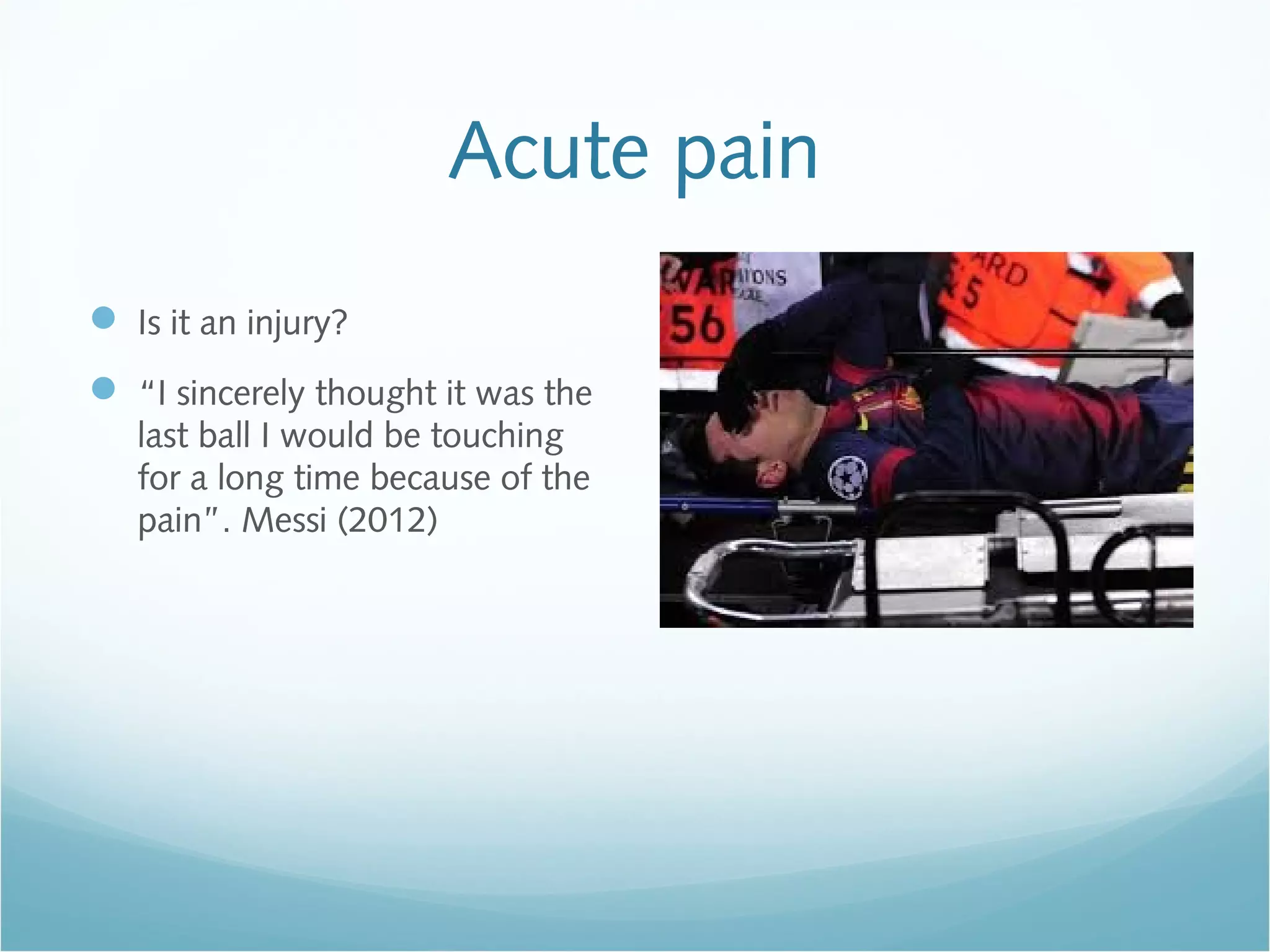
Acute pain
 Is it an injury?
 “I sincerely thought it was the
last ball I would be touching
for a long time because of the
pain”. Messi (2012)
Acute injury
 Is there actual damage?
 Does more damage = more
pain?
Pain is…
Normal
Part of protection
Important for survival
Unpleasant
A motivator compelling action
Pain definition
IASP
An unpleasant sensory and emotional experience associated
with actual or potential tissue damage, or described in
terms of such damage
Pain is the No.1 global health burden
 Back pain, neck pain,
headache, migraine, OA
 All in top 12
 depression
 Persisting pain
 What do you think about?
 Is persisting pain in sport?
The problem
Pain misunderstood
Society
Healthcare
Wrong messages communicated
Low expectations
Even morphine affected by expectation
Poor outcomes
Persisting pain in sport
Yes
How common?
Impact – this is the ‘lived experience’
Person
Professional vs amateur
Participation
Performance
Playing with pain
What can we do?
 Develop understanding of
pain
 Answer the question: what is
pain really?
 This answer leads to a route
onwards
 Different thinking
 Neurobiology
 Neuroimmunobiology
 neuroimmunoendobiology
What is pain?
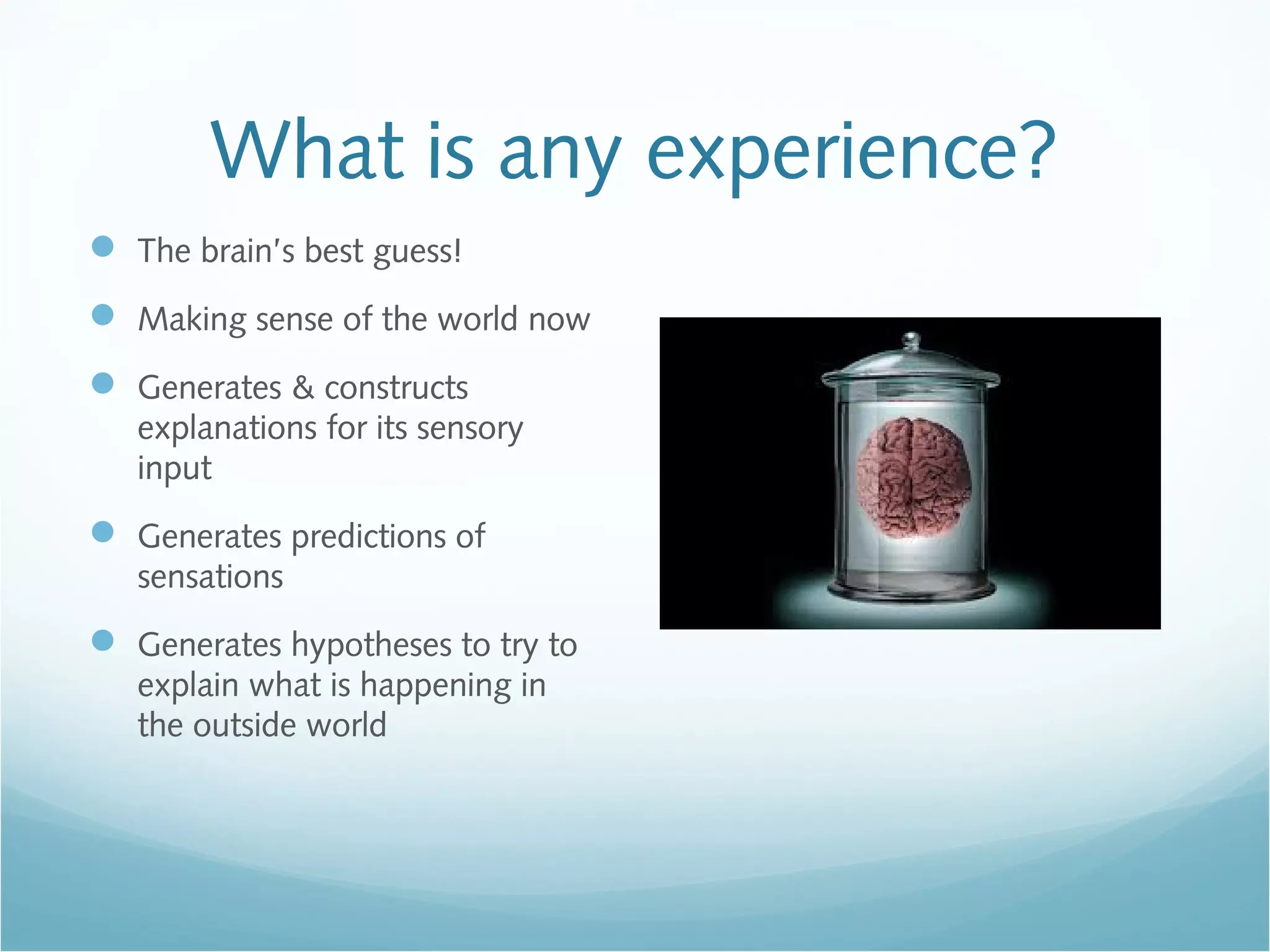
What is any experience?
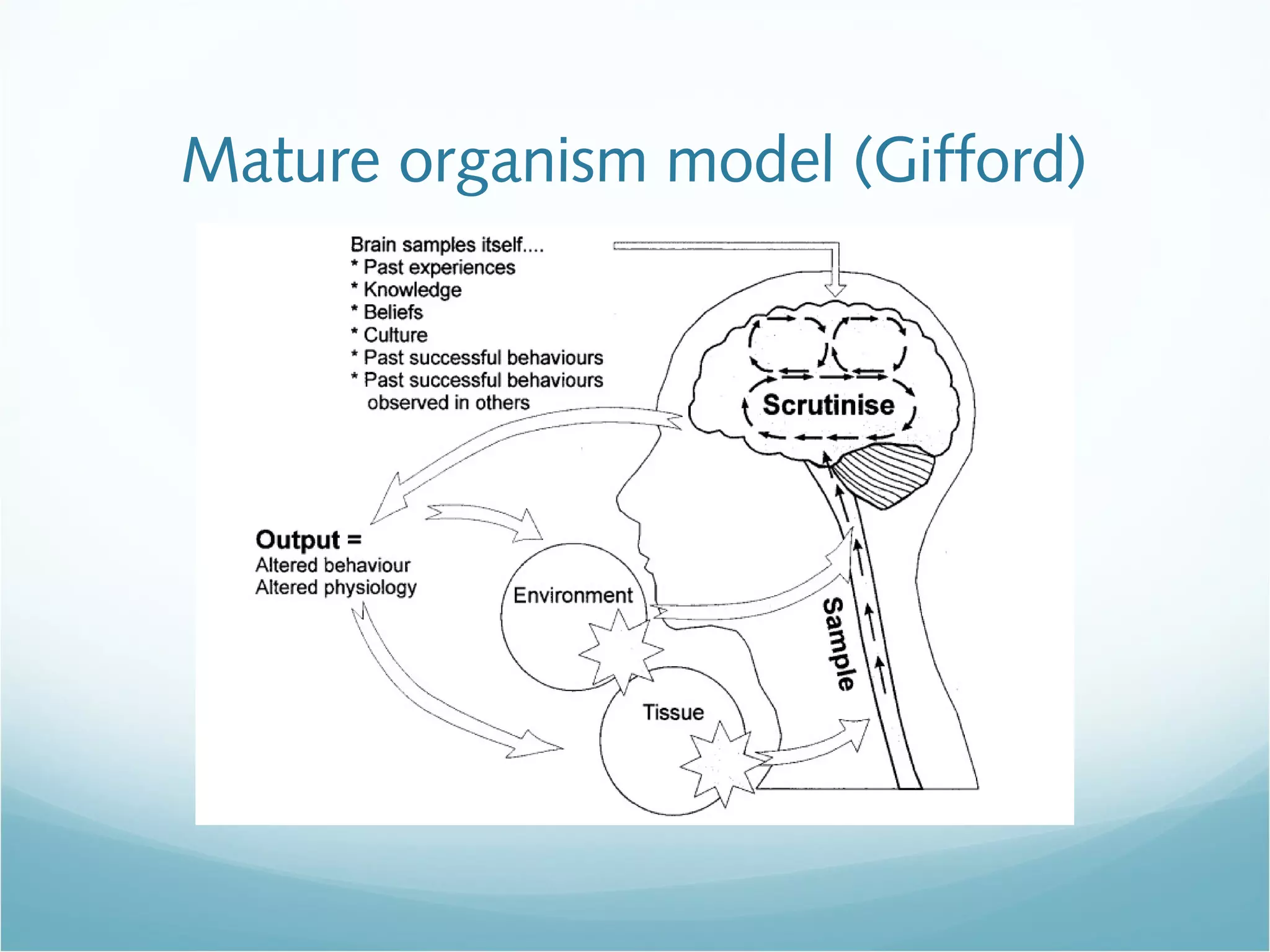
 The brain’s best guess!
 Making sense of the world now
 Generates & constructs
explanations for its sensory
input
 Generates predictions of
sensations
 Generates hypotheses to try to
explain what is happening in
the outside world
Mature organism model (Gifford)
Important principles
Change
 We change
 ‘Neuroplasticity’
 Which direction?
 There’s more than one
direction
 If you think there is…
 Your choice
Whole person
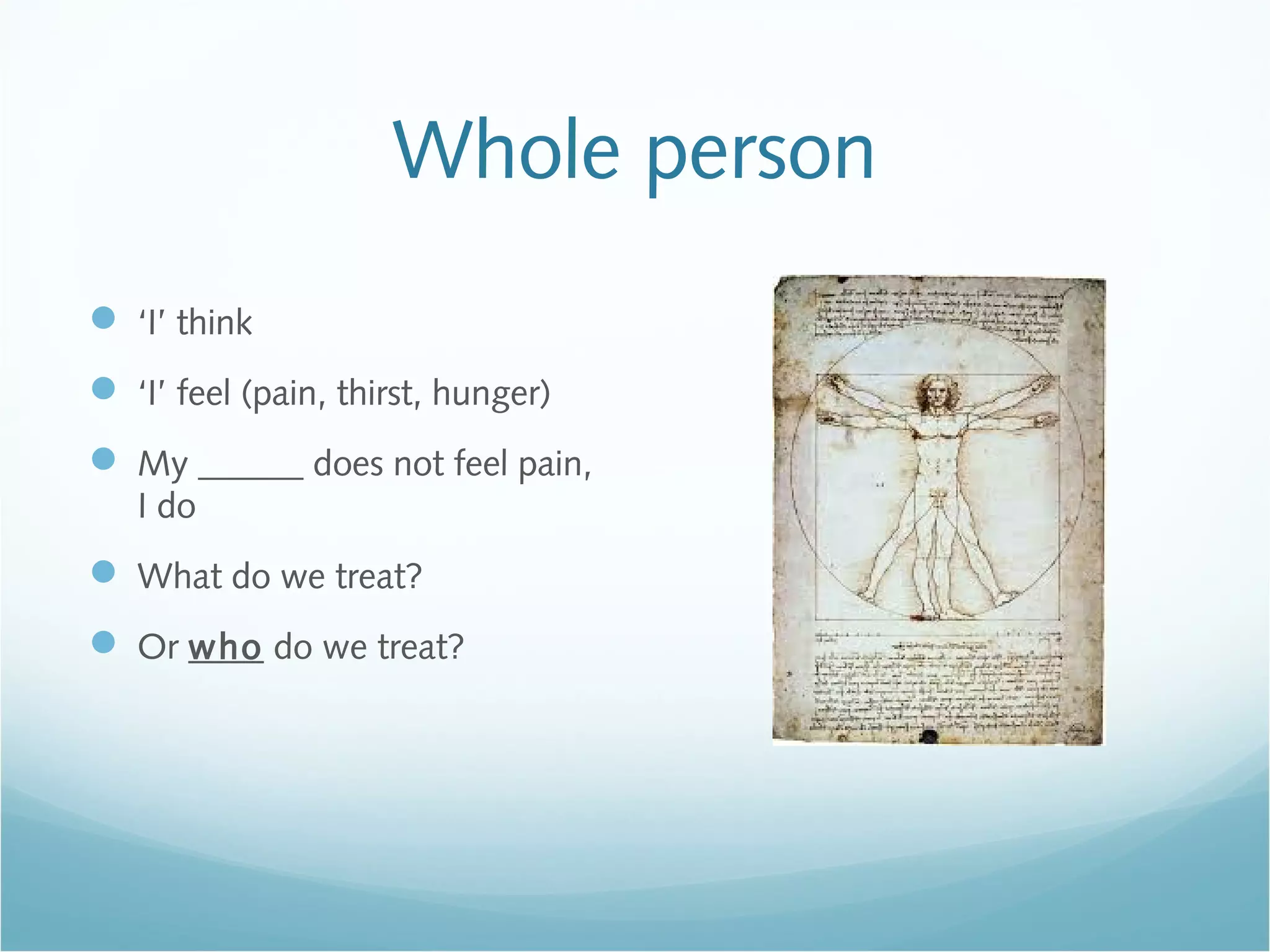
 ‘I’ think
 ‘I’ feel (pain, thirst, hunger)
 My ______ does not feel pain,
I do
 What do we treat?
 Or who do we treat?
Embodied cognition
The body an extension of the mind
We are more than a brain
Our bodies in the world do much of the work needed to
achieve goals (not just the brain)
e.g mechanics of walking
Gestures reduce load on brain
I think with my whole person
Where do you feel anxious? Hungry?
Embodied athletes
Identify with body & performance
Their sense of self encompasses body & performance
‘gestures’ part of their cognition
Automatic
Predictions not responses – otherwise miss the ball!
Injury => loss of sense of self
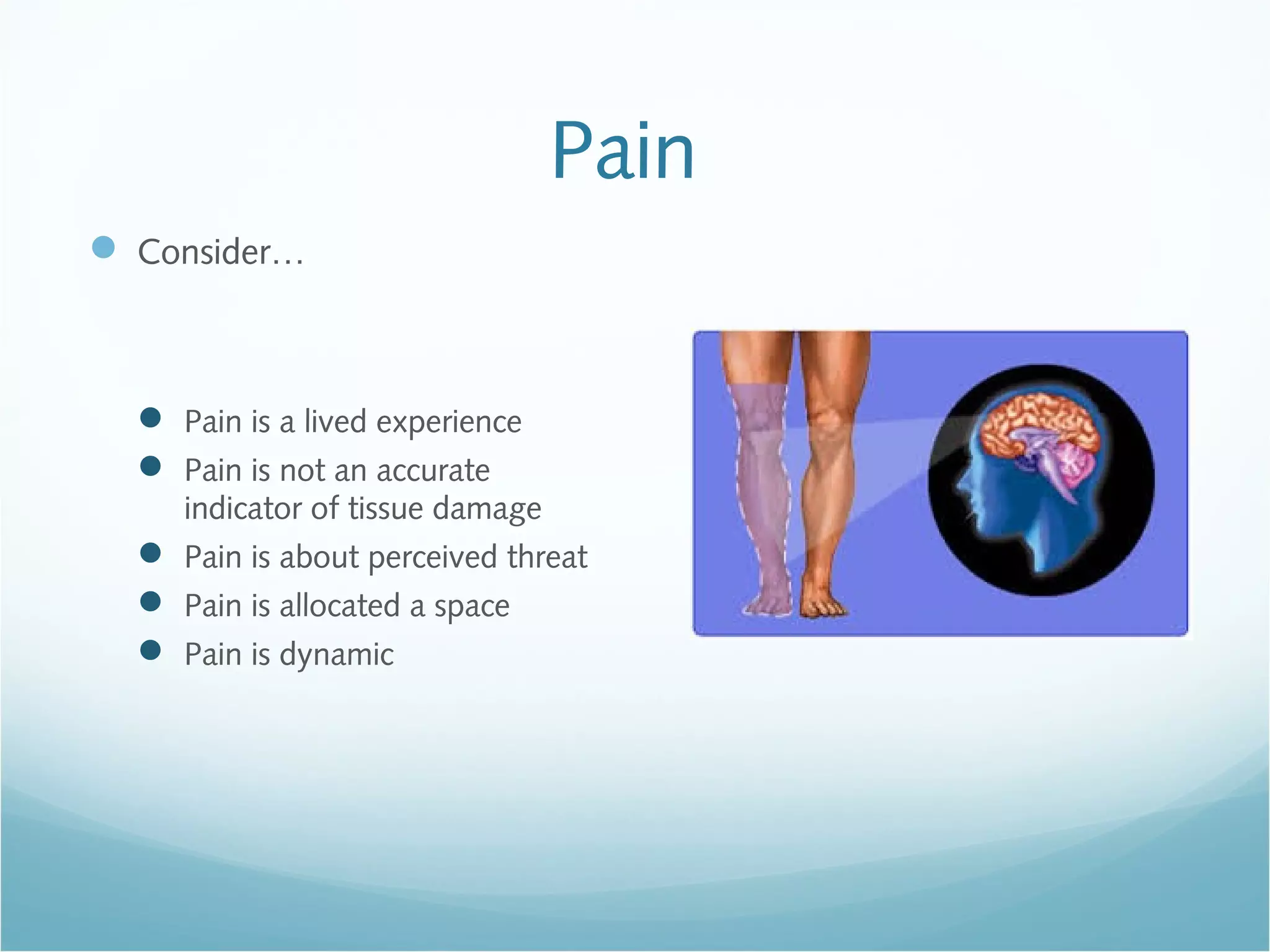
Pain
 Consider…
 Pain is a lived experience
 Pain is not an accurate
indicator of tissue damage
 Pain is about perceived threat
 Pain is allocated a space
 Pain is dynamic
What influences pain?
 The meaning – what do you
tell yourself?
 The context
 Where you are
 What you are doing
 What you are planning to do
 What you have just done
 Emotional state – anxiety,
stress
 Tiredness
 Prior experience
 Beliefs about pain/health
 Attention bias
 Who we are with
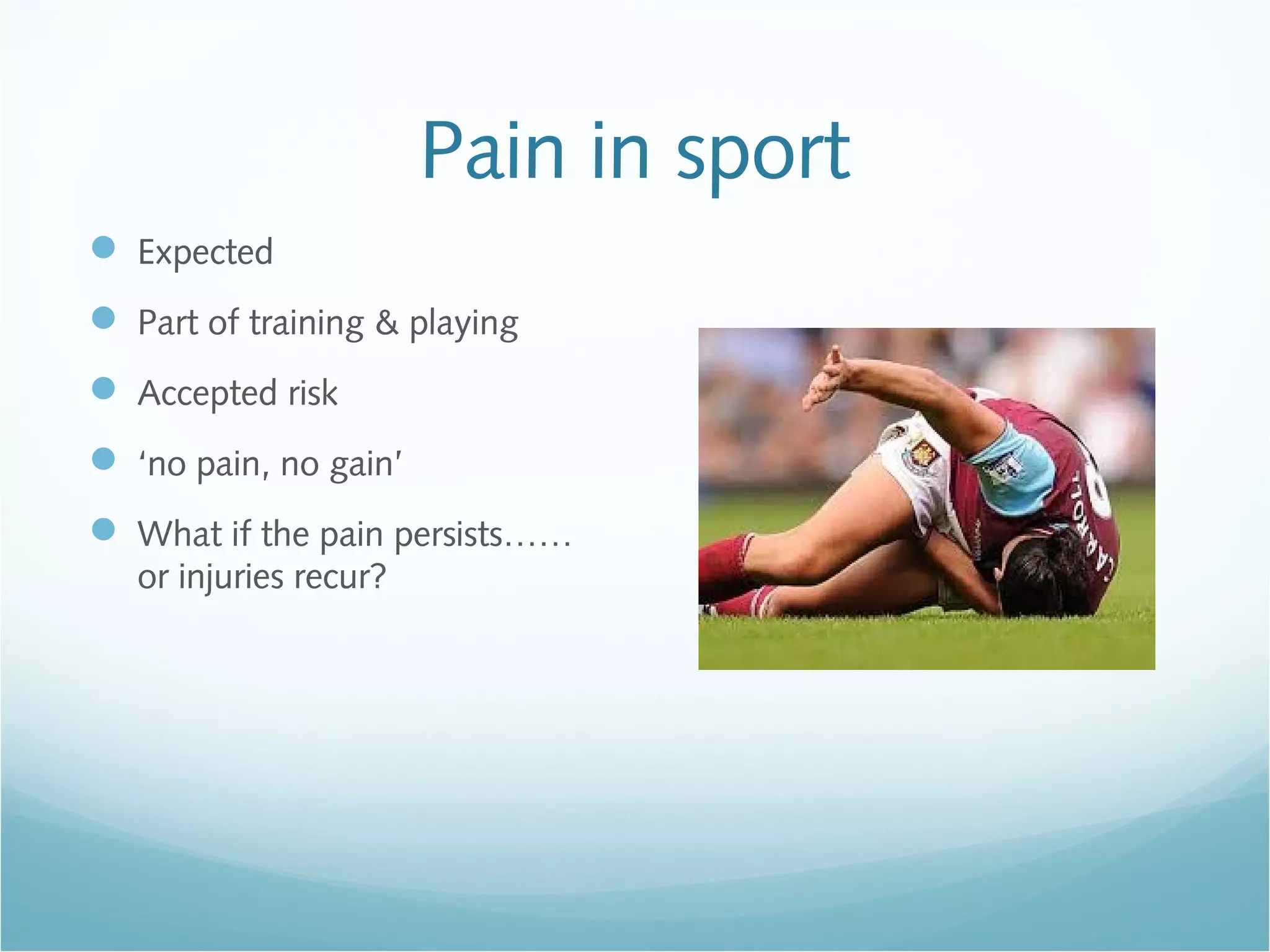
Pain in sport
 Expected
 Part of training & playing
 Accepted risk
 ‘no pain, no gain’
 What if the pain persists……
or injuries recur?
New injury
 What do you want to know?
The injury moment
 Context
 Mechanism
 Meaning
 Body responses
 Pain intensity
 Current health
 Early care
 Initial management
 Messages given
 Investigations
 Other’s responses
 Facial
 Verbal
Injury – not in isolation
 Why?
 Pain vulnerabilities
 Pre-existing sensitivity
 Functional pain syndromes
 Injury patterns
 Fatigue
 Health
 Prior injuries & pain
 Circumstances
 The person
 Priming factors
 Pain vulnerability
 Genetics
 Body sense
 e.g. hypermobility
Persisting pain
Begins at the moment of injury
Vulnerable
Uncontrolled pain
Wrong treatment
Pain beyond a useful time?
Or are there health issues?
Habits of thought and action
What have you seen?
Features?
What do we see?
 Loss of sense of self
 Change in body sense
 Altered movement patterns
 Altered thinking
 Outlook?
 Altered planning
 Change in perception of the
environment
 Sickness responses
 Other aches and pains
 Poor sleep
 Varied emotions
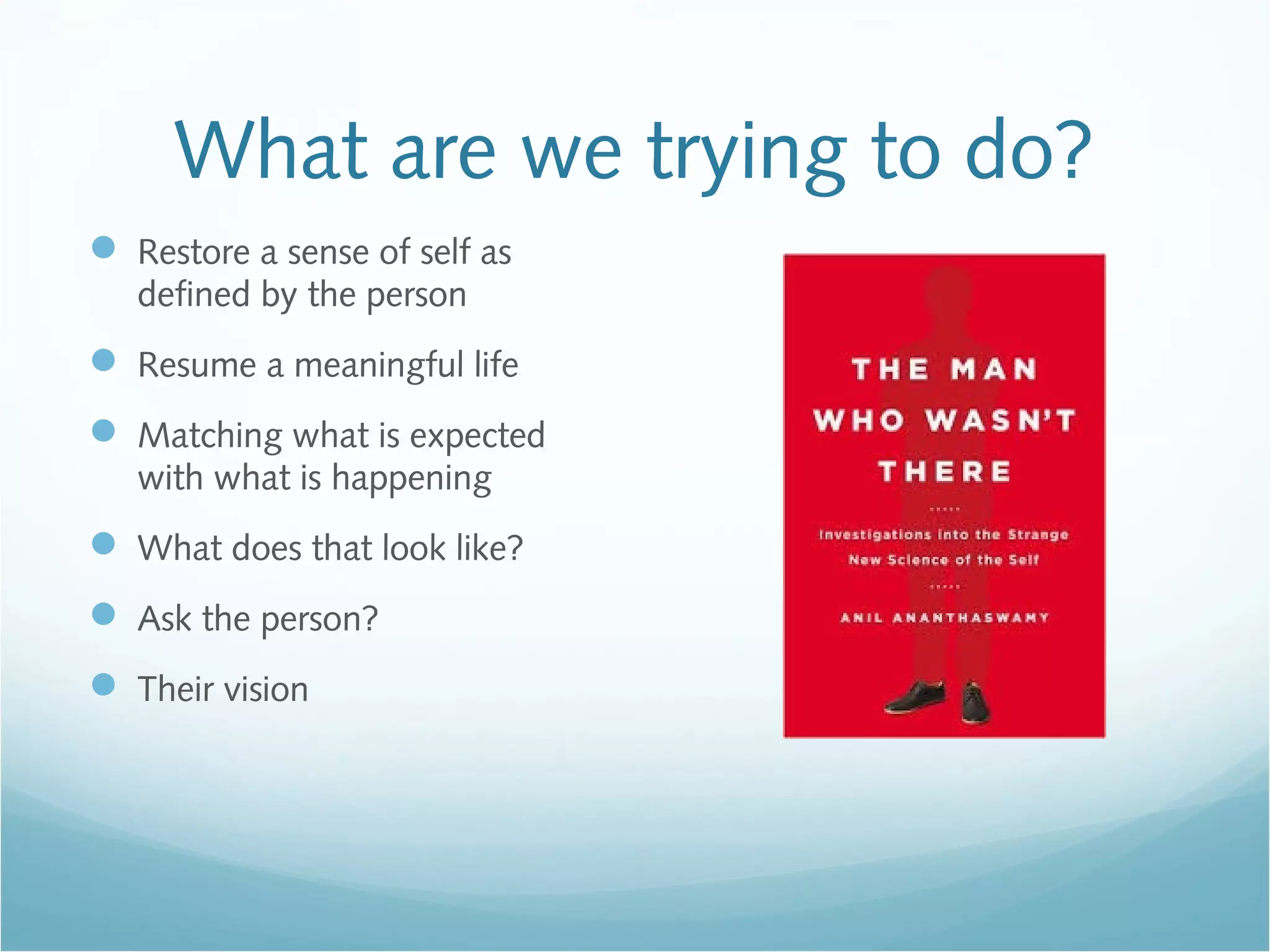
What are we trying to do?
 Restore a sense of self as
defined by the person
 Resume a meaningful life
 Matching what is expected
with what is happening
 What does that look like?
 Ask the person?
 Their vision
How do we do it?
 Working knowledge of pain
 Reduce threat
 Take healthy action
 Develop body sense
 Sensorimotor training
 Motor imagery
 visualisation
 Focus on health (not pain)
 What we focus on, we get
more of…
 Deal with distractions from the
vision
 Programme must be lived
 Moment to moment
 Build tolerance for activities
 Graded exposure
 General fitness
 Sleep habit
 Meet basic needs!
 Pain Coach
 Strengths based coaching
 Become their own coach
Key points
Pain is whole person: when the person gets better, the
pain gets better
Early messages are key!
Understanding pain is vital – working knowledge
Pain is a lived experience, which the programme must
reflect
Pain is temporary, each moment unique
Change is certain; direction can be a choice
Thanks!
@painphysio
www.specialistpainphysio.com
painphysiolondon@gmail.com
07932 689081
UP | understand pain – www.understandpain.com
@upandsing

Queen Mary's University London | SEM 2016

  • 1.
    Pain in sport RichmondM. Stace MCSP MSc (Pain) BSc (Hons) Specialist Pain Physiotherapist
  • 2.
    Behind every pain… …isa story …a person Know the person to know the pain It’s as much about the person as the condition – Oliver Sacks When a person is better, the pain is better People with persisting pain often fall in the cracks
  • 3.
    Picture this.. 16 yearold sporty girl with shin pain 2 years and worsening Continues to play sport most days at school Very tender to touch Sometimes very painful to walk First thoughts?
  • 4.
    Then…. 8 year h/omigraines Digestive disturbances Disturbed sleep Widespread tenderness Perfectionist & demanding school This a case for……
  • 5.
    A lack ofsigns? Puzzling? Is there an actual injury? Is there sensitivity? e.g./ hamstring ‘re-injury’ What’s the story?  is there damage or does it just feel like damage?
  • 6.
    Acute pain  Isit an injury?  “I sincerely thought it was the last ball I would be touching for a long time because of the pain”. Messi (2012)
  • 7.
    Acute injury  Isthere actual damage?  Does more damage = more pain?
  • 8.
    Pain is… Normal Part ofprotection Important for survival Unpleasant A motivator compelling action
  • 9.
    Pain definition IASP An unpleasantsensory and emotional experience associated with actual or potential tissue damage, or described in terms of such damage
  • 10.
    Pain is theNo.1 global health burden  Back pain, neck pain, headache, migraine, OA  All in top 12  depression  Persisting pain  What do you think about?  Is persisting pain in sport?
  • 11.
    The problem Pain misunderstood Society Healthcare Wrongmessages communicated Low expectations Even morphine affected by expectation Poor outcomes
  • 12.
    Persisting pain insport Yes How common? Impact – this is the ‘lived experience’ Person Professional vs amateur Participation Performance Playing with pain
  • 13.
    What can wedo?  Develop understanding of pain  Answer the question: what is pain really?  This answer leads to a route onwards  Different thinking  Neurobiology  Neuroimmunobiology  neuroimmunoendobiology
  • 14.
  • 15.
    What is anyexperience?  The brain’s best guess!  Making sense of the world now  Generates & constructs explanations for its sensory input  Generates predictions of sensations  Generates hypotheses to try to explain what is happening in the outside world
  • 16.
  • 17.
  • 18.
    Change  We change ‘Neuroplasticity’  Which direction?  There’s more than one direction  If you think there is…  Your choice
  • 19.
    Whole person  ‘I’think  ‘I’ feel (pain, thirst, hunger)  My ______ does not feel pain, I do  What do we treat?  Or who do we treat?
  • 20.
    Embodied cognition The bodyan extension of the mind We are more than a brain Our bodies in the world do much of the work needed to achieve goals (not just the brain) e.g mechanics of walking Gestures reduce load on brain I think with my whole person Where do you feel anxious? Hungry?
  • 21.
    Embodied athletes Identify withbody & performance Their sense of self encompasses body & performance ‘gestures’ part of their cognition Automatic Predictions not responses – otherwise miss the ball! Injury => loss of sense of self
  • 22.
    Pain  Consider…  Painis a lived experience  Pain is not an accurate indicator of tissue damage  Pain is about perceived threat  Pain is allocated a space  Pain is dynamic
  • 23.
    What influences pain? The meaning – what do you tell yourself?  The context  Where you are  What you are doing  What you are planning to do  What you have just done  Emotional state – anxiety, stress  Tiredness  Prior experience  Beliefs about pain/health  Attention bias  Who we are with
  • 24.
    Pain in sport Expected  Part of training & playing  Accepted risk  ‘no pain, no gain’  What if the pain persists…… or injuries recur?
  • 25.
    New injury  Whatdo you want to know?
  • 26.
    The injury moment Context  Mechanism  Meaning  Body responses  Pain intensity  Current health  Early care  Initial management  Messages given  Investigations  Other’s responses  Facial  Verbal
  • 27.
    Injury – notin isolation  Why?  Pain vulnerabilities  Pre-existing sensitivity  Functional pain syndromes  Injury patterns  Fatigue  Health  Prior injuries & pain  Circumstances  The person  Priming factors  Pain vulnerability  Genetics  Body sense  e.g. hypermobility
  • 28.
    Persisting pain Begins atthe moment of injury Vulnerable Uncontrolled pain Wrong treatment Pain beyond a useful time? Or are there health issues? Habits of thought and action
  • 29.
    What have youseen? Features?
  • 30.
    What do wesee?  Loss of sense of self  Change in body sense  Altered movement patterns  Altered thinking  Outlook?  Altered planning  Change in perception of the environment  Sickness responses  Other aches and pains  Poor sleep  Varied emotions
  • 31.
    What are wetrying to do?  Restore a sense of self as defined by the person  Resume a meaningful life  Matching what is expected with what is happening  What does that look like?  Ask the person?  Their vision
  • 32.
    How do wedo it?  Working knowledge of pain  Reduce threat  Take healthy action  Develop body sense  Sensorimotor training  Motor imagery  visualisation  Focus on health (not pain)  What we focus on, we get more of…  Deal with distractions from the vision  Programme must be lived  Moment to moment  Build tolerance for activities  Graded exposure  General fitness  Sleep habit  Meet basic needs!  Pain Coach  Strengths based coaching  Become their own coach
  • 33.
    Key points Pain iswhole person: when the person gets better, the pain gets better Early messages are key! Understanding pain is vital – working knowledge Pain is a lived experience, which the programme must reflect Pain is temporary, each moment unique Change is certain; direction can be a choice
  • 34.