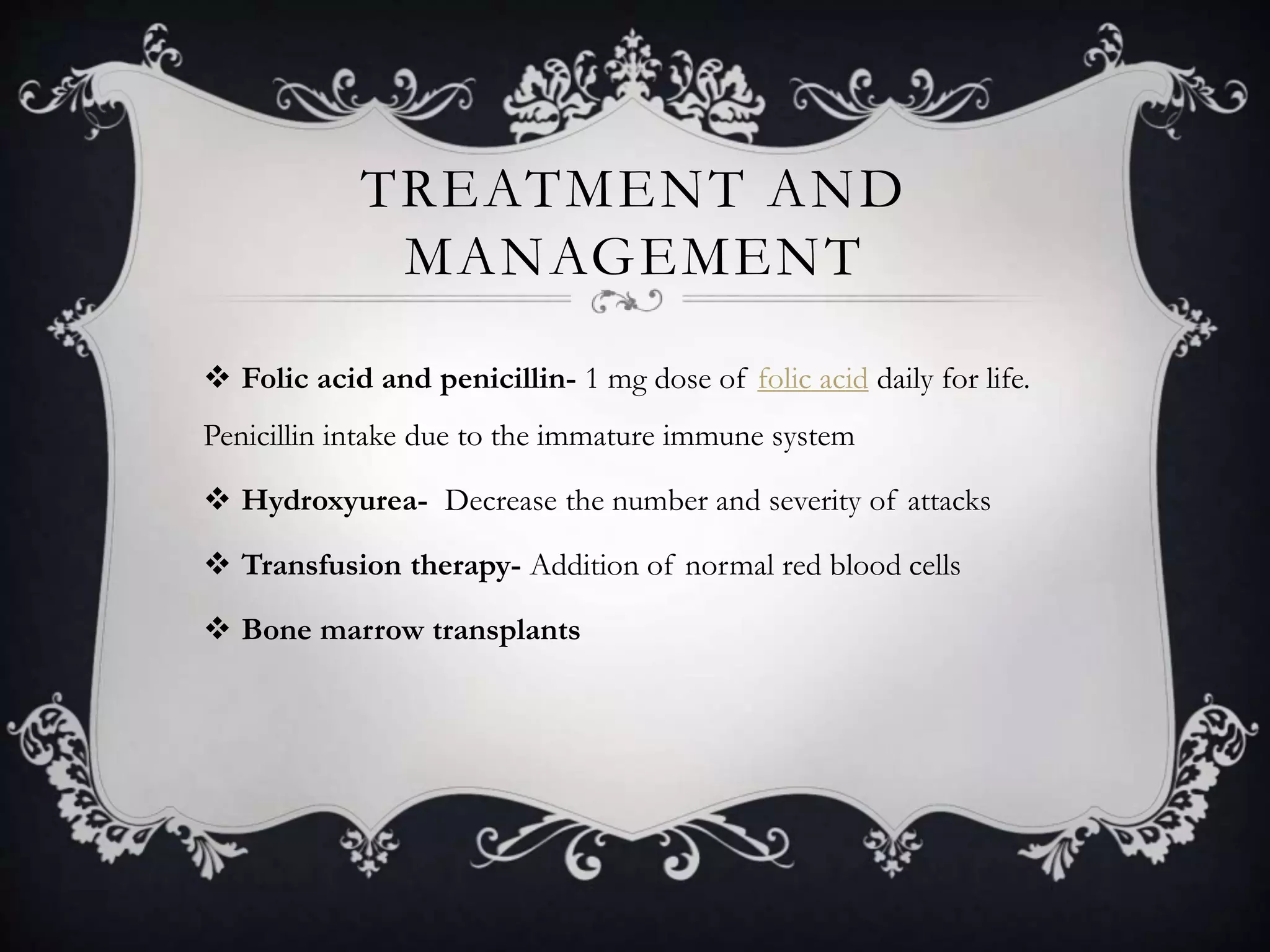
Sickle cell anemia is a hereditary blood disorder characterized by abnormal hemoglobin in red blood cells that causes them to take on a sickle shape. This leads to blockages in blood vessels and severe complications including pain crises, infections, stroke, and increased mortality. It occurs when a person inherits two copies of the abnormal hemoglobin gene, and those with one copy have sickle cell trait without symptoms. Repeated sickling damages red blood cells, causing rigidity and blockages in small vessels. Diagnosis involves hemoglobin testing and electrophoresis, and treatment focuses on folic acid, antibiotics, hydroxyurea, transfusions, and bone marrow transplants to manage complications.