Downloaded 33 times


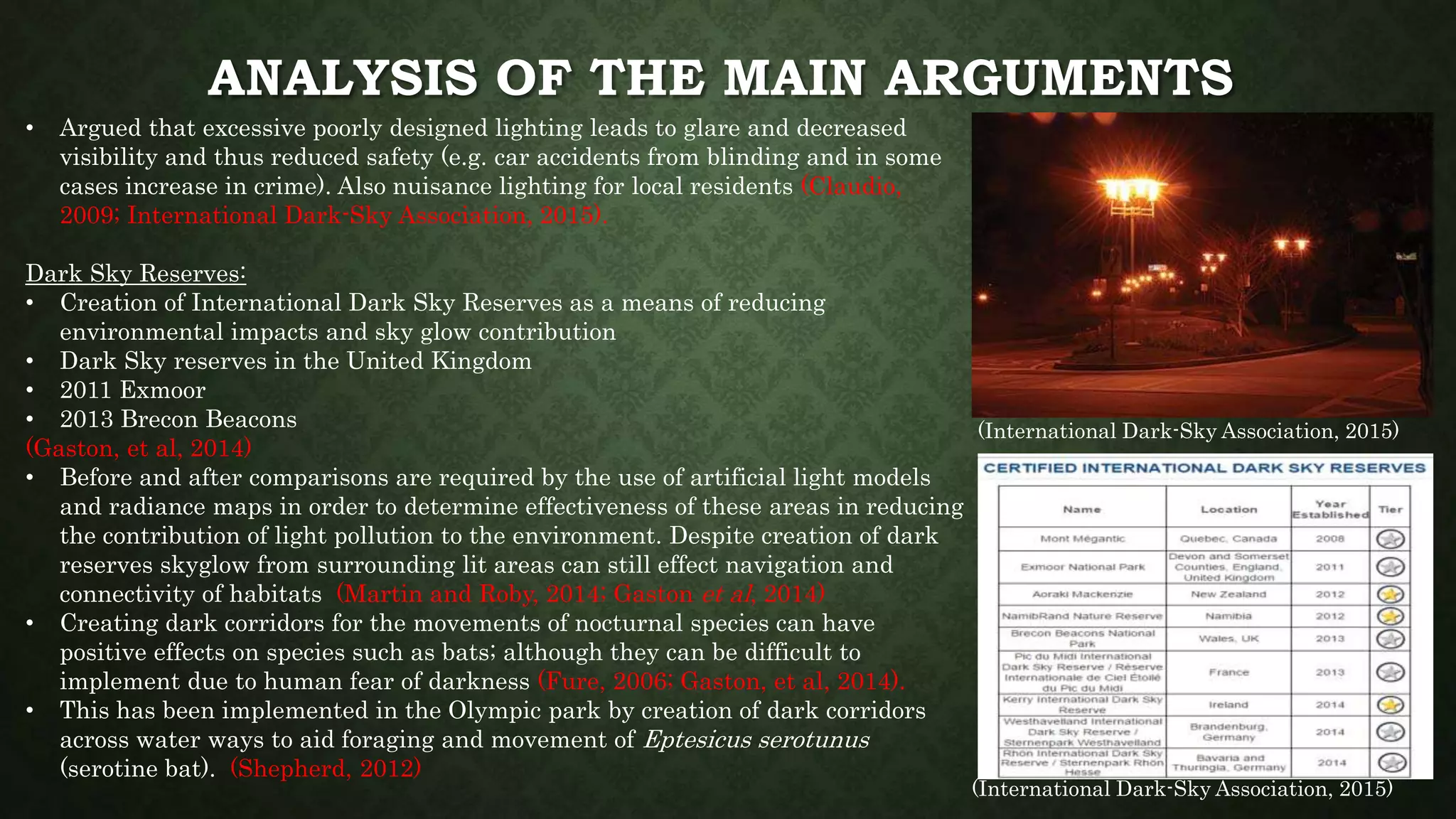
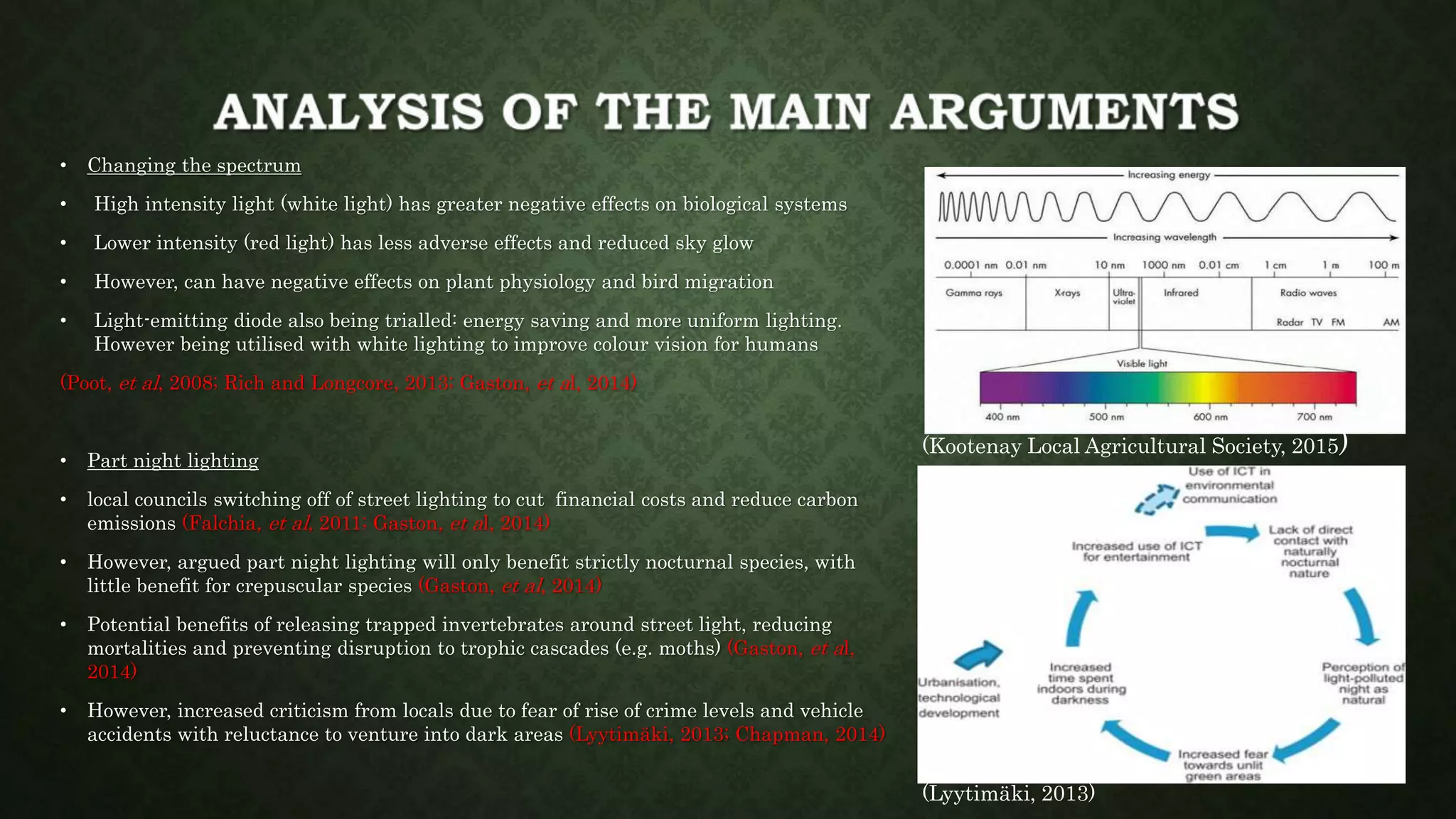

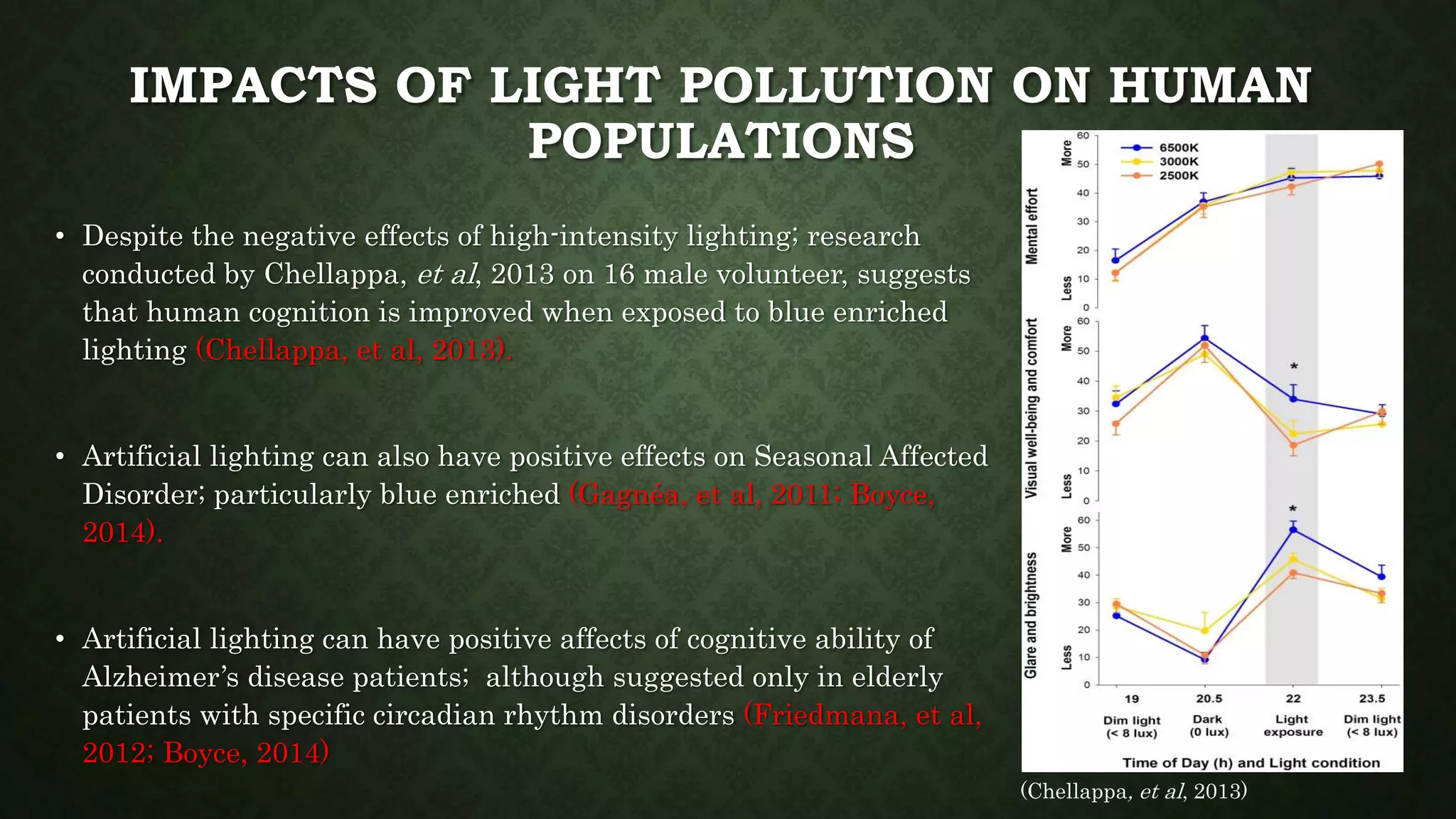

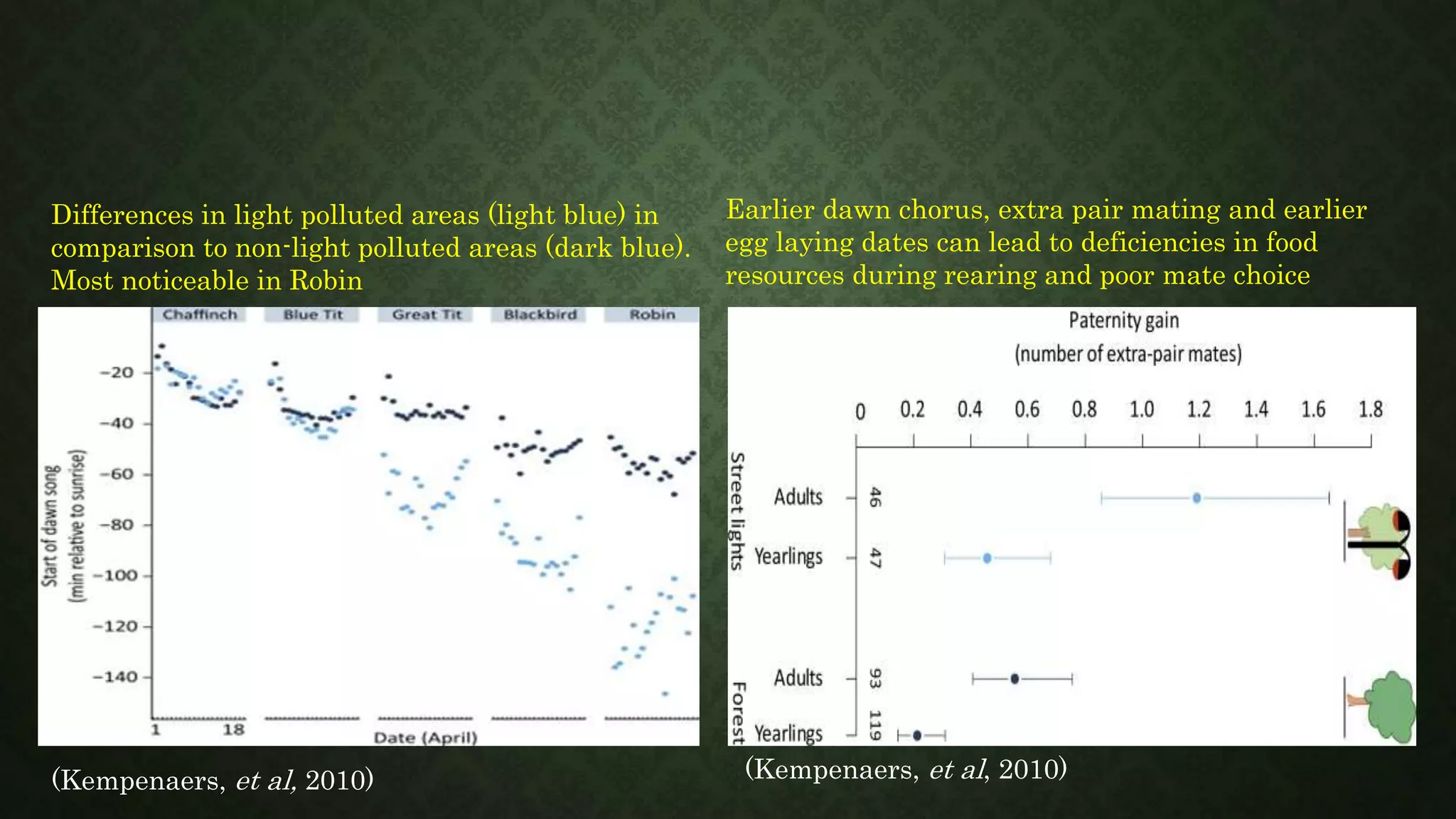


Artificial light at night has negative impacts on both wildlife and human populations. For wildlife, light pollution disrupts natural cycles and behaviors, impacting up to 30% of vertebrates and 60% of invertebrates that are nocturnal. It can attract insects and increase predation, impacting food chains. For humans, light at night decreases melatonin production and disrupts circadian rhythms, increasing health risks like cancer, metabolic issues, and mental health problems. While some lighting brings benefits, poor design wastes energy and money while worsening light pollution. Dark sky reserves and improved designs aim to mitigate these issues, but light pollution remains a significant environmental stressor.


