
Accessibility
Accessibility
Our Work with Disability Rights
Human Rights Watch is committed to making our publications and resources accessible in different formats. In particular, our work on abuses against people with disabilities is available in Easy-To-Read formats and as Word documents. We are building our content in sign language. Braille versions are available upon request. We also provide transcripts of multimedia projects such as videos and audio podcasts, and alternative text for photographs and graphics.
- South Korea’s Age-based Policies and Older Workers’ Rights
Summary
It’s an infringement of human dignity. Just because I’m older, I can’t work where I’ve worked my entire life.
—Gwon Oh Hoon, 52, attorney, Seoul, August 27, 2024Age-based employment laws and policies, a hostile workplace culture, and a weak social security system harm workers in the Republic of Korea (South Korea) as they get older. Mandatory retirement ages force some older workers to retire. Regressive wage policies reduce their salaries. And re-employment programs push them into lower-paid, more precarious work. Inadequate social security compounds this, creating a system that punishes workers for getting older.
This report, based on interviews with 34 people ages 42 to 72 working in South Korea’s public and private sectors, examines the harm three age-based employment laws and policies do to older workers—the mandatory retirement age of 60 or older, the “peak wage” system, and re-employment policies—and how insufficient social security programs exacerbate this. It focuses on how current domestic laws and policies discriminate against older workers, rather than individual employers’ actions.
Human Rights Watch finds that workers from age 40 and up face hostile work environments, ageism, and discrimination based on their older age.
Older workers told Human Rights Watch they were humiliated when younger colleagues or clients used age-based language in a derogatory way towards them. They felt humiliated when clients called them ajumma (아줌마, married or middle-aged woman), and younger colleagues used noin (노인, older person) to refer to them in a derogatory way, as unable to do anything or keep up with the way younger people think. Language that perpetuates negative stereotypes and prejudices about older age and older people is verbal abuse and a form of ageism, and creates hostile working environments for older workers.
Employers often feel older workers are a burden on their companies. In a 2021 survey, Korea Enterprises Federation, a membership organization representing South Korean businesses, found that 58 percent of companies surveyed felt that employing people beyond the age of 60 would be a burden because of their “declining productivity,” additional salary-related costs, and an unspecified negative impact on hiring younger workers.
The South Korean law prohibiting age discrimination in employment, the Act on Prohibition of Age Discrimination in Employment and Elderly Employment Promotion, allows employers to adopt a mandatory retirement age of 60 or older, meaning both public and private sector employers can force workers to retire based only on their age, not job skills. Y. Kyung Hee, 59, has worked for 27 years in a public research institute where she is now a professor. She faces mandatory retirement in one year’s time. Work for her is not only a way to earn money but also something meaningful she does every day. “I’m worried about the mandatory retirement age as I can’t imagine not going to work every day,” she said. “I feel afraid.”
The fear, anxiety, loss of belonging, purpose, and dignity, and financial worries that older workers forced to retire under the mandatory retirement age described to Human Rights Watch indicate significant emotional and psychological distress and harm to their mental health and well-being, which studies have confirmed.
D. Young Sook, 59, after working as a nurse for 36 years, is anxious about loneliness and isolation after she is forced to retire at 60. “I can’t imagine myself being out of this organization,” she said. “It would feel like standing by myself on a windy road.”
Human Rights Watch found that the “peak wage” system, in which employers can reduce older workers’ wages during the three to five years before their mandatory retirement, also causes mental as well as financial harm to older workers.
G. Young Soo, 59, is facing mandatory retirement in one year. He joined an insurance company at 23 as an office worker and has worked as a branch director and team leader for both sales and training. His employers first reduced his salary by 20 percent when he was 56. They further reduced it by 10 percent each year so that at age 60, he will earn just half, 52 percent, of what he earned at 55. Although the hours and intensity of G. Young Soo’s workload stayed the same under the peak wage system, his decision-making authority was reduced in addition to his salary. After 36 years of loyal service, he felt the company had mistreated him.
Other older workers told Human Rights Watch about their demotivation, sense of deprivation, and anger at how they have been treated under the peak wage system. And it is not only their salary that is affected. The peak wage system can have a negative knock-on effect on other financial entitlements. G. Young Soo and his employer pay a total of 9 percent of his salary into the National Pension System. Since his salary has been reduced, so too will these payments and the eventual amount he receives when he collects his pension. “It is discrimination because our income has been reduced because of our age,” G. Young Soo said. “It is not justified.”
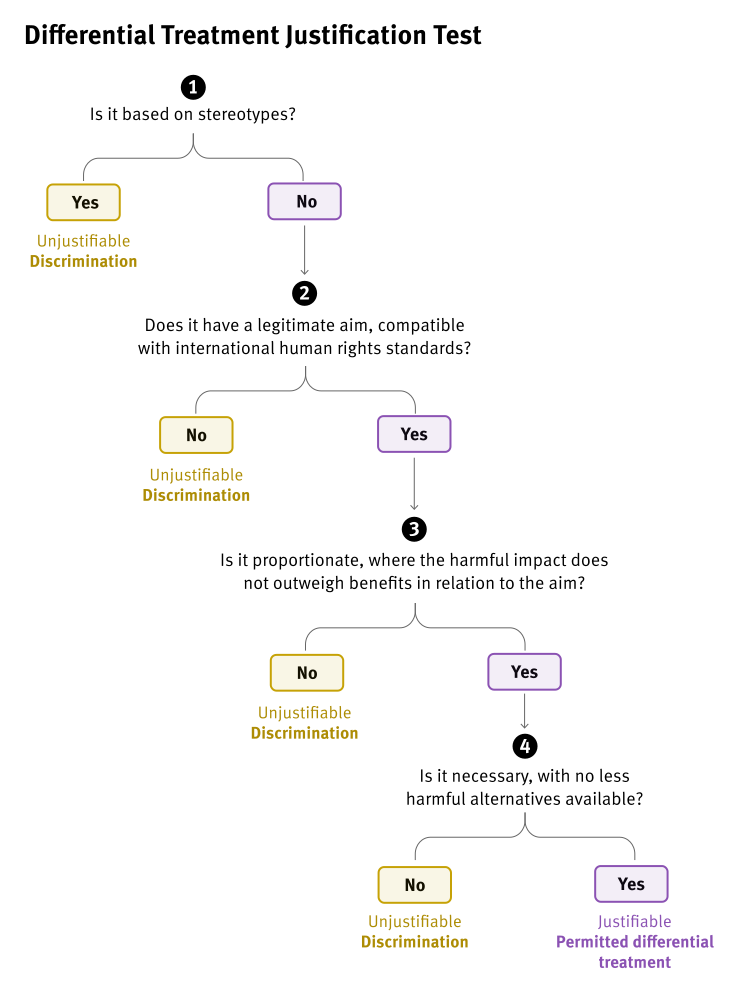
Under international human rights law, discrimination means any distinction, exclusion, restriction or preference or other differential treatment that is directly or indirectly based on prohibited grounds of discrimination and which has the intention or effect of nullifying or impairing the recognition on an equal footing of all rights or freedoms. Differential treatment on a prohibited ground, such as age, should be subject to a justification test to ensure it has a legitimate aim and is both proportionate and necessary.
However, under the Act on Prohibition of Age Discrimination in Employment and Elderly Employment Promotion, mandatory retirement ages are exempt from such justification tests. They are never considered discrimination, and older workers are unable to challenge them and seek justice if they believe their rights have been denied.
Human Rights Watch research found that these age-based policies constitute discrimination because they are neither proportionate nor necessary. The harms caused by the mandatory retirement age and peak wage system outweigh any benefits. Neither appears to have achieved their respective aims of keeping older workers in their main jobs until at least age 60 and financing the employment of younger workers. And they are not necessary because there are less harmful alternative policies that the government could use to achieve these aims.
Furthermore, the peak wage system is based on an ageist stereotype that older workers are less productive than younger ones; treating people differently based on stereotypes has also been found to be discrimination.
Although these age-based policies force older workers to retire and forcibly reduce their wages, local and state governments have a legal obligation under the Act on Prohibition of Age Discrimination in Employment and Elderly Employment Promotion to support older workers’ re-employment after retirement from their main jobs. Human Rights Watch found that these re-employment programs, too, cause harm to older workers, forcing them into lower-paid, more precarious work.
Employers can re-employ older workers under less favorable working conditions than before their retirement. At the public research institute where Y. Kyung Hee, 59, is a professor, employees can be re-employed to work for one more year after mandatory retirement at 60.
“You can teach twice a week and get KRW2.5 million [Korean Republic Wons, or US$1,873] per month,” she said. Her salary before it was reduced under the peak wage system was KRW6.5 million ($4,869) per month.
Data from South Korea’s Ministry of Employment and Labor show that, on average, older workers earn 29 percent less than workers 59 and younger, and Statistics Korea, the government statistics bureau, reports that they are nearly twice as likely to be working in less secure “non-regular” work than younger workers.
The jobs older people can get may be jobs that others do not want. C. Sung Ho currently assesses people’s eligibility for social security entitlements. He said he has heard from workers older than him that he could get a job as a janitor managing a building after he is forced to retire. Older men can find such work, while older women often find that their only employment option is as a care worker. Kim Ju Ran, 59, has been a care worker for four years. She explained why young people avoid becoming care workers:
A lot [of care workers] are in their late 60s and 70s, but there are no young people entering our industry because, compared to the workload, the income is so low. You have to bathe, cook, and change their diapers when they urinate and defecate. Young people are overwhelmed by this.
Older workers are concentrated in specific, low-paid occupations, such as security guards and care workers, that are seen as suitable for older people and which younger people do not wish to do. Such “occupational segregation” based on age is a form of discrimination.
What is more, older workers who are re-employed are often placed in social activity roles and may receive employment placements for only short periods of time. Under the Senior Employment and Social Activity Support Program, a national re-employment program supported by the Ministry of Health and Welfare, 71 percent of placements in 2022 were for voluntary, public service social activities and not salaried employment. The average length of employment placements under the program was just 4.6 months.
Human Rights Watch found that together, these three policies—forcing people to retire, paying them less because of their age, and moving them into lower-paid, more precarious, and often more physically demanding work—violate older people’s rights to work and non-discrimination. They also reinforce negative, ageist attitudes about older people’s abilities and place in society in South Korea today.
These problems are compounded by an inadequate social security system that does not meet human rights standards. Unemployment benefits for people 50 and older are limited to a maximum of 270 days, but people forced to retire at 60 may have to wait up to five years before they are eligible for the National Old Age Pension or Basic Pension. In 2023, only 40 percent of people 60 and older received a National Old Age Pension. Sixty-seven percent received the Basic Pension, which provides financial support for people 65 and older on low incomes, including those on low pension incomes from the National Old Age Pension.
Monthly payments under both pension programs are low. The National Old Age Pension was just 27 percent of the Seoul Metropolitan Government’s living wage and 31 percent of the national minimum wage in 2023. The Basic Pension was just 16 percent of the national minimum wage in 2024.
With a relative poverty rate of 38 percent of people 65 and older, those on low incomes may be eligible, irrespective of age, for income, medical, and housing support through the Basic Livelihood Security Program.
In 2023, 1.2 million people 60 and older received support under this program. Income support is available to those whose income is 32 percent or less of the national median income, and medical and housing assistance to those living on 40 and 48 percent or less respectively, all below the relative poverty line of 50 percent of the national median income. This means that some people below the relative poverty line, but above the eligibility thresholds, will not receive support under this program.
South Korea should take steps to meet its obligations under international human rights law and enable those older people who wish to continue working to do so on an equal basis with others.
Such steps include the National Assembly abolishing the mandatory retirement age and the peak wage system and ensuring all differential treatment based on age is subject to justification tests to make sure it is not discrimination. It should adopt a comprehensive anti-discrimination law to provide equal protection against all forms of discrimination, including age-based discrimination against older people, and a duty to eliminate ageism.
The Ministry of Health and Welfare should review re-employment programs to ensure older people have access to employment opportunities in all sectors and on an equal basis with others. It should also review whether the Basic Pension, the National Pension System’s Old Age Pension, and other social security entitlements are adequate to guarantee older people an income of at least equivalent to a living wage, and ensure it is available to everyone.
Recommendations to the South Korean Government
To the National Assembly
Remove article 4(5) of the Act on Prohibition of Age Discrimination in Employment and Elderly Employment Promotion, which allows exceptions to the prohibition on age discrimination without reasonable grounds, so that all differential treatment based on age in employment is subject to justification on reasonable grounds.
Abolish the mandatory retirement age of 60 or older by removing article 19 of the Act on Prohibition of Age Discrimination in Employment and Elderly Employment Promotion.
Amend article 21 of the Act on Prohibition of Age Discrimination in Employment and Elderly Employment Promotion to prohibit employers from imposing less favorable working conditions on older workers because of their older age.
Amend article 6.3 of the Act on the Protection of Temporary Agency Workers to limit the time workers age 55 and older may be employed under temporary agency contracts so that the same limits exist for older and younger workers.
Abolish the peak wage system.
- Adopt a comprehensive anti-discrimination law that provides equal protection against all forms of discrimination, including age-based and other forms of discrimination against older people, and codifies a government duty to eliminate ageism.
Amend article 11 of the Constitution to include age as a prohibited ground for discrimination in political, economic, social, or cultural life.
To the Ministry of Justice
Provide guidance to courts that justification for differential treatment based on age should not be based on stereotypes, including ageist stereotypes about older workers.
To the Ministry of Employment and Labor
Support employers to retain older workers, including by ensuring employers provide ongoing training and professional development opportunities for older workers to maintain and enhance their skills, and programs to promote better health.
Require employers to introduce flexible or gradual retirement programs for those who wish to gradually retire from work, without using a peak wage system or a mandatory retirement age.
Prohibit, and enforce punitive measures against, employers imposing less favorable working conditions on older workers because of their older age.
Conduct a campaign to raise awareness of workplace discrimination against older workers and its harms, including derogatory language and stereotypes about productivity based on older age; promote positive attitudes about older people’s abilities to work and place in society; and end the culture of workplace discrimination against older workers.
Review and adjust the national minimum wage so that it provides an income of at least a living wage.
To the Ministry of Health and Welfare
Review employment programs to ensure older people have access to paid employment opportunities in a wide range of sectors on an equal basis with others.
Amend the unemployment benefit and other social security programs to ensure older people who are forced to retire or cannot find work before they are eligible for the National Old Age Pension and/or Basic Pension receive an income of at least equivalent to a living wage.
Amend the National Old Age Pension, Basic Pension, and other social security programs to ensure they are adequate to guarantee older people an income of at least a living wage.
Ensure that everyone has access to social security without interruption, including when transitioning between work, or from work to retirement.
Methodology
Human Rights Watch interviewed 34 South Korean workers, aged 42 to 72, between February and September 2024. The age listed for each interviewee is their age at the time of their interview. Legislation prohibiting age discrimination at work in South Korea defines “older people” as 55 and older and “middle-aged people” as between 50 and 54. However, we also interviewed people in their 40s to understand the experience of those under 50 who may also face discrimination related to their older age.
Of those interviewed, 7 identified as men and 27 as women. Interviewees worked in the public and private sectors, in transport, customer service, online services, cleaning, health care, finance, sport, education, publishing, advertising, and caregiving. Four were union representatives.
All interviews were in person in Seoul, except one that was online. Interviews were conducted in Korean with English interpretation, except two in English. Human Rights Watch obtained informed consent from all interviewees and used pseudonyms, indicated by given names and surname initials, as desired. Interviewees were not compensated.
In addition, Human Rights Watch consulted 41 Korean researchers, academics, human rights experts, union workers, an international journalist, and representatives of nongovernmental organizations (NGOs), including three staff of international NGOs. We also reviewed national legislation and reports in Korean and English produced by the government, academics, workers’ associations, the media, and international institutions.
Human Rights Watch did not investigate individual employers that implement age-based retirement policies in line with current domestic law and government policy. Instead, we documented how those laws and policies discriminate against older workers. Our research aims to support advocacy to reform the resulting system that allows this discrimination.
In February and March 2025, Human Rights Watch requested information on the impact of age-based employment policies from the South Korean Ministry of Employment and Labor, Korea Enterprises Federation, Korea Railroad Corporation (KoRail), Seoul Metro, and Seoul National University Hospital. The Ministry of Employment and Labor and KoRail responded on March 26, 2025, and the information they provided is reflected in the report. Korea Enterprises Federation declined to respond and referred Human Rights Watch to the Ministry of Employment and Labor.
In June 2025, Human Rights Watch provided the Ministry of Employment and Labor and the Ministry of Health and Welfare with a summary of its findings and invited their response. The Ministry of Employment and Labor responded on June 23, stating that they would consider the report's findings when improving their policies. The Ministry of Health and Welfare referred Human Rights Watch to a number of its departments, but none had responded at time of writing.
Human Rights Watch also provided KoRail, Seoul Metro, and Seoul National University Hospital with a summary of its findings in June 2025 and requested information on their age-based employment policies. Seoul National University Hospital declined to respond. KoRail and Seoul Metro responded on June 9 and June 20, respectively. The information they provided is reflected in the report.
At the time of the interviews, 1,000 Korean Republic Wons (KRW) were worth US$0.75, and one US dollar (US$) was worth KRW1,335.
Background
Population Ageing
South Korea has one of the highest life expectancies in the world.[1] Girls born in 2025 can expect to live until they are 87; boys until they are 81.[2] South Korea also has the lowest fertility rate in the world.[3] High life expectancy and the low fertility rate contribute to South Korea’s population ageing, with 20 percent of the population age 65 and older in 2024.[4] Among women, 22 percent are age 65 and older; for men that figure is 18 percent.[5]
Dual Labor Market
“Regular” and “Non-regular” Work
South Korean law recognizes both “regular” and “non-regular” work within the labor market.[6]
Statistics Korea defines non-regular work as: limited-term, fixed-term, part-time, or on-call work; special types of employment; temporary agency work; subcontracted work; and home-based work. Trade unions also include day labor as non-regular work.[7] People work under non-regular working conditions across a wide range of industries and occupations: from health and social work to manufacturing, and from professionals to machine operators.[8]
Regular jobs are those with permanent, full-time contracts, and together with non-regular work contribute to South Korea’s dual labor market structure.[9]
Statistics Korea data shows the proportion of non-regular workers is rapidly rising, from 32 percent of wage earners in 2015 to 38 percent in 2024, the majority of whom - 57 percent - were women.[10] Older workers are disproportionately represented among non-regular workers. In 2024, of the 8.5 million non-regular workers, 2.8 million (33 percent) were 60 and older, and 1.6 million (20 percent) were 50 to 59.[11] In 2023, 69 percent of the 3.8 million older people earning a wage were employed in non-regular work, nearly twice the proportion of workers of all ages, at 37 percent.[12]
Non-regular jobs are often lower paid than regular jobs. In 2022, the monthly wage of older people in non-regular jobs was estimated to be half of that of older people in regular jobs, based on figures from Statistics Korea.[13]
A large number of older people work and do not earn a regular wage. Of the 14.2 million people 60 and older in 2024, 2.1 million were self-employed.[14] Half a million were family members working without wages or a contract for a family business—known as “unpaid family work”—making up 51 percent of all unpaid family workers.[15]
Company Size
Company size is also a prominent feature of the labor market, with labor statistics often presented by the number of full-time employees. Large companies, including family-owned conglomerates known as “chaebol,” have dominated South Korea’s economic growth and pay higher wages than small- and medium-sized enterprises.[16] Working conditions are also affected by company size, for example working hours, with those in companies with over 300 full-time employees least likely to work over 52 hours per week.[17]
Large companies include those in the textile, steel, car, and electronics industries. In 2025, 3.4 million people worked in companies with more than 300 full-time employees, while 16.7 million worked in companies with fewer than 300 full-time employees.[18] In 2024, 885,953 people 55 and older worked in large companies.[19]
Responsibility for Protection Against Discrimination at Work
The Ministry of Employment and Labor’s promise to the people of South Korea is a “country where the people fulfill themselves in desired positions.”[20] As part of its mission, the ministry aims to “strengthen employment assistance tailored to age and gender” and foster “a discrimination-free workplace.”[21]
South Korea’s constitution guarantees nondiscrimination and the right to work to all citizens, and the Labor Standards Act guarantees equal treatment in employment on the grounds of gender, nationality, religion, and social status.[22] Promotion of nondiscrimination at work is central to the Ministry of Employment and Labor’s employment policy.[23] To this end, the Act on Prohibition of Age Discrimination in Employment and Elderly Employment Promotion prohibits age discrimination in all aspects of employment, including retirement.[24] The Welfare of Senior Citizens Act states that national and local government shall provide job opportunities for older people.[25] The National Human Rights Commission of Korea Act established the National Human Rights Commission of Korea to carry out inquiries into and find remedies for violations of human rights guaranteed under the Constitution and discriminatory acts, including those based on age.[26]
The National Assembly, South Korea’s 300-member elected legislature, has the power to enact, amend, and abolish national laws.[27] Local governments, at city, province, county, and district level, are responsible for local administration under the Local Autonomy Act.[28] This includes responsibility for the promotion of local industry and support for small and medium enterprises.[29]
The South Korean judiciary operates a three-instance trial system through district courts, high courts and finally the Supreme Court, the country’s highest court.[30]
Retirement
“Retirement” in the context of work is generally understood as when people, usually older, leave a career or long-serving job. Retirement can also mean the period of life after leaving a career or long-serving job.[31] Statistics Korea reported in 2024 that 8 percent of “household heads and their spouses” in South Korea felt they were well-prepared for retirement, and 53 percent that they were not well-prepared.[32]
Long tenure and lifetime employment were prized in South Korea for providing stability and loyalty to an employer but became less common after the 1997-98 economic crisis.[33] Statistics Korea reported that, in 2024, the average age at which people 55 to 79 left their main job—the job with the longest duration in one’s lifetime—was 53. For those 55 to 64, it was 49. The reasons workers gave for leaving included layoffs and businesses closing (29 percent), ill health (19 percent), and family responsibilities (16 percent).[34]
Other contributing factors to this “early” retirement from main jobs include “honorary retirement,” when employers encourage or pressure employees to accept incentives to retire before the mandatory retirement age, and mandatory retirement age itself—the age at which a worker has to retire from their job, and which is discussed below.[35]
While some people stop working completely when they retire from their main job, many (69 percent) want or need to continue working. The average maximum age people want to work until is 73.[36]
Pensions
South Korea has several overlapping pension programs with different eligibility criteria and levels of payment.
Different Pension Systems
Type
System
Eligibility
Public
National Old Age Pension
All citizens except government employees, military personnel, private teachers, and special post office employees
Basic Pension
People 65 and older on low incomes
Special Occupational Pension
Government employees, military personnel, private teachers, and special post office employees
Employer
Severance Payment
Private sector employees
Retirement Pension
Private
Personal Pension
All citizens – voluntary
South Korea introduced a National Pension System in 1988, expanding its coverage from workplaces with 10 or more full-time employees to all workplaces by 2006.[37] Government officials, military personnel, private school teachers, and special post office employees are eligible for separate occupational pension plans.
The National Pension System, which encompasses old age, disability, and survivor pensions, is partly funded by contributions (58 percent in 2023) and partly by returns on investments of a National Pension Fund (42 percent).[38] The contribution rate for the program is 9 percent of income. Employees contribute 4.5 percent while their employers contribute the other 4.5 percent. People who are not eligible to join through their workplace or because they are not employed can apply to join as an individual on a “voluntary” basis and pay the full 9 percent themselves.[39]
The Basic Pension provides financial support for people 65 and older on low incomes, including those on low pension incomes from the National Old Age Pension, but not those in receipt of special occupation pensions.[40] To be eligible for the Basic Pension, the older person’s income must fall below an income threshold which is set by the Minister of Health and Welfare to cover at least 70 percent of those aged 65 or older.[41] In 2025, the threshold below which an older person’s monthly income must fall to be eligible for the Basic Pension was KRW2,280,000 (US$1,600) for a single person and KRW3,648,000 ($2,500) for a couple.[42]
Other pensions include government employee pensions and private sector employee pensions. Private sector companies must provide a severance payment program when someone who has worked for at least one year, leaves.[43] If the majority of employees agree, these can be converted into retirement pension programs.[44]
I. Hostile Working Environments for Older Workers
If I still worked in a major company, I might not have a job at this age since clients and co-workers would think I was too old.
—K. Soo Jin, 43, worker in a small online advertising agency, Seoul, August 28, 2024Ageism toward Older Workers
Workplace culture in South Korea reflects wider social norms around hierarchy and respect linked to social status and age. A strict ranking system is applied to job positions, and it is considered inappropriate to manage someone older than oneself.[45] In companies, the more formal, polite level of speech in the Korean language (jondaetmal), used with strangers, older people, and in formal situations, is always used when speaking to superiors or to colleagues who are older. The less formal level (banmal), usually used among friends and family and in casual settings, can be used by managers with those they manage or with younger colleagues.[46] But “there is a double standard in Korea,” said Gwon Oh Hoon, 52, a labor attorney and education director at Gikjang Gabjil 119, an organization that works to combat workplace bullying. “People respect older people – and they despise them.”[47]
Older workers told Human Rights Watch about derogatory language colleagues or clients used toward or about them based on their older age.[48] Language that perpetuates negative stereotypes and prejudices about older age and older people is verbal abuse and a form of ageism.[49] The World Health Organization has defined ageism as the stereotypes (how we think), prejudice (how we feel), and discrimination (how we behave) toward people based on their age.[50]
Kkondae is a term used to refer to someone, typically as an insult, who is authoritarian, condescending, or rigid in their thinking, and can be used to refer to someone of any age.[51] While rigid and hierarchical workplaces may foster kkondae attitudes, because the term is often used to refer to older people, it can contribute to stereotyping older people as outdated or unwilling to change. C. Sung Ho, 57, has worked for a public corporation for 29 years. “Before we used to guide or correct [younger colleagues],” he said. “But now they think we are old kkondae or useless.”[52]
Older women may be referred to as ajumma, a frequently derogatory term meaning a married or middle-aged woman.[53] L. Mi Kung, 72, has been a care worker for 25 years in a sector dominated by older women workers. She described disrespectful relationships with clients’ families. “Families look down on us and mistreat us,” she said. “They don’t call us by the name for a care worker but call us ajumma.”[54]
The United Nations Committee on the Rights of Persons with Disabilities states that the use of words that perpetuate “difference and oppression,” including based on age, is harassment, a form of discrimination that creates hostile environments where people feel offended, degraded, or humiliated.[55] The World Health Organization and the International Labour Organization have recognized that discrimination and harassment at work, including related to age, pose a risk to and undermine mental health.[56] Studies show that workplace age discrimination increases job-related stress and undermines older workers’ mental health.[57]
Although the Korean word for older person, noin, is not in itself derogatory, it has a negative connotation. J. Mi Sook, 53, who works in human resources for a large company, said: “It means being useless, that you can’t do anything.”[58] She said that where she works, younger people say older colleagues are “old-fashioned and can’t keep up with younger people’s mindset.”[59]
A. Hyun Joo, 47, was laid off from her job with an online service company when she was 46. She was still not working when she spoke to Human Rights Watch and was worried she would never get another job. “I feel too old to be re-employed,” she said. “Companies consider future employees’ age and compensation when they choose people. If, at age 47, I go to a company where the majority of workers are in their 20s and 30s, I don’t think they’d hire me although I have years of experience. They’d think, why hire an older person?”[60]
Older Workers Seen as a “Burden”
In a 2021 survey, Korea Enterprises Federation found that 58 percent of companies surveyed felt that employing people beyond the age of 60 would be a burden because of older workers’ declining productivity, the additional salary-related costs of continuing to employ older workers, and an unspecified negative impact it would have on hiring younger workers.[61]
A number of studies have identified South Korea’s seniority wage-based system as a key reason companies do not wish to employ older workers.[62] Under this system, introduced during South Korea’s early industrialization period to recruit and retain skilled workers, companies pay young, entry-level workers low wages with the promise that these will increase with the number of years they work.[63] However, according to Korea Labor Institute, a public research institution, only 20 to 30 percent of companies were still using a seniority wage-based system in 2023 and had instead moved to a wage system that takes into account performance evaluation results and job performance ability, in addition to years of service.[64] Some employers also use a “peak wage” system, discussed below, where older workers’ wages are reduced in the three to five years leading up to their mandatory retirement in order to lower the cost of continuing to employ them.
Policymakers, too, have contributed to this hostile working environment for older workers. In February 2024, 38 members—one-third—of the Seoul Metropolitan Council, the capital’s local government legislative body, proposed exempting people 65 and older from the Minimum Wage Act in the belief that employers would be more likely to hire them if they were paid less than younger workers.[65] At time of writing, the sub-committee to which the proposal was submitted had not discussed it further, following trade union protests that the exemption discriminated against older workers.[66]
II. Discriminatory Age-based Employment Laws and Policies
South Korea’s Act on Prohibition of Age Discrimination in Employment and Elderly Employment Promotion prohibits age discrimination without reasonable grounds in all aspects of employment.[67]
International human rights law defines discrimination as any distinction, exclusion, restriction, or preference or other differential treatment that is directly or indirectly based on prohibited grounds of discrimination and which has the intention or effect of nullifying or impairing the recognition, enjoyment, or exercise, on an equal footing, of all rights or freedoms.[68]
ImageLoad Image
 © 2025 Human Rights Watch
International treaties listing specific prohibited grounds of discrimination include “or other status.” The inclusion of “other status” indicates that other grounds may be incorporated in this category, which may include age.[69] UN treaty bodies have recognized age as an “other status.”[70] “Differential treatment” based on stereotypes because of age is discrimination.[71] States can only treat people differently because of their age or any other grounds if they can justify such differential treatment as reasonable and objective.[72] To be reasonable and objective, differential treatment must:
Have a legitimate aim that is compatible with international human rights standards[73];
Be proportionate, meaning the harmful impact of the differential treatment must not outweigh benefits in relation to “the aim sought to be realized”[74]; and
Be necessary, meaning alternative, less harmful actions must be considered first.[75]
Differential treatment is discrimination if it fails any one of these three tests—namely it does not have a legitimate aim that is compatible with international human rights standards, or it causes harm disproportionate to the benefits of the aim, or it is unnecessary because less harmful alternatives could be used.
Mandatory Retirement Age
It’s an infringement of human dignity. Just because I’m older, I can’t work where I’ve worked my entire life.
—Gwon Oh Hoon, 52, attorney, Seoul, August 27, 2024In 2013, the average age set by employers at which full-time workers had to retire from companies with 300 or more employees was 58.[76] This was based on the practices of 2,854 companies and affected 2.4 million workers.[77] In the same year, the National Assembly amended the Act on Prohibition of Age Discrimination in Employment and Elderly Employment Promotion to include a minimum age that employers had to respect when setting their workers’ mandatory retirement age.[78]
A mandatory retirement age is the age at which a worker is forced to retire from their job. It is “mandatory” for the worker because the worker must stop working when they reach a certain age regardless of whether they wish or have the ability to continue working. Depending on the law or policy in place in any given country, employers may be required to use a mandatory retirement age, or they may be permitted to use one if they wish. In either case (whether the employer is required or permitted to use a mandatory retirement age), once set, the retirement age is still mandatory for the worker.
Mandatory retirement ages should not be confused with pension eligibility ages, which refer to the age at which someone is eligible to receive a pension.
The Act on Prohibition of Age Discrimination in Employment and Elderly Employment Promotion allows employers to set a mandatory retirement age “under labor contracts, rules of employment, collective agreements, etc.”[79] The 2013 amendment to the act stated that employers, if they use a mandatory retirement age, “shall set the retirement age of workers at 60 years of age or older” so that they could not set their mandatory retirement age at 59 or younger.[80] The amendment came into force in 2016 and applies in both the public and private sectors.[81]
In the public sector, the mandatory retirement age of 60 or older applies to full-time employees of national and local governments, as well as public institutions and corporations.[82] The mandatory retirement age of public officials is 60 under the State Public Officials Act.[83] However, the mandatory retirement age of some public officials, such as firefighters and public teachers, is set under legislation specific to their professions and may be 60 or older.[84]
In the private sector, the mandatory retirement age of 60 or older has applied to large companies employing 300 or more regular workers (who have permanent, full-time contracts) since 2016 and to those with fewer than 300 regular workers since 2017.[85] Private sector employers are not obligated by the law to apply a mandatory retirement age, but those who choose to, must set it at age 60 or older. In 2023, 95 percent of companies with 300 or more employees had a mandatory retirement age, the average age of which was 60, the lowest possible age.[86] At that time, 3.1 million people were working on permanent contracts in companies with 300 or more employees.[87]
While the mandatory retirement age forces older workers to retire from their main or career jobs, it does not prevent them from going on to seek work with employers who do not use a mandatory retirement age. In 2023, only 21 percent of companies with 299 or fewer employees had a mandatory retirement age, the average age of which was 61.5.[88] At that time, 13.6 million people were working on permanent contracts in companies with 299 or fewer employees.[89]
Korea Enterprises Federation attributed this difference between large and small companies in setting mandatory retirement ages to solving labor shortages since the smaller the company, the more likely they are to be affected by labor shortages. Smaller companies are less likely to apply a mandatory retirement age as they wish to retain older workers, the federation stated.[90] Mandatory retirement ages do not apply to non-regular workers, including those on fixed-term or temporary contracts, and day laborers.
Incompatible with International Human Rights Law
The Act on Prohibition of Age Discrimination in Employment and Elderly Employment Promotion prohibits age discrimination carried out without “reasonable grounds” in all aspects of employment, including retirement.[91]
However, the act allows four specified exceptions to this prohibition where differential treatment “shall not be deemed age discrimination.” [92] These exceptions were inserted into the act in 2008 and are where:
Age limits are “inevitably” required to carry out certain jobs.
Salary and benefits are offered linked to the employee’s length of service.
Retirement ages are set under contracts, rules of employment, or collective agreements.
Measures are taken to maintain or promote employment of certain age groups.[93]
By naming these as exceptions to the general prohibition of age discrimination in employment without reasonable grounds, the law removes the need for employers to justify any differential treatment in these areas. This includes setting mandatory retirement ages.[94] Because of this permissible exception to the prohibition on age discrimination, the National Assembly was able to amend the act in 2013 to include the age from which employers can set their mandatory retirement age without requiring them to justify it on reasonable grounds.[95]
International human rights law provides that differential treatment is not discrimination only if it can be justified as reasonable, objective, and having a legitimate purpose.[96] Differential treatment cannot be based on stereotypes.[97] By allowing exceptions to the prohibition of age discrimination, the Act on Prohibition of Age Discrimination in Employment and Elderly Employment Promotion removes certain differential treatment, including the use of a mandatory retirement age, from requiring such justification. This means that workers are not protected against age discrimination in relation to the use of a mandatory retirement age, as well as the other three named circumstances.
South Korea has an obligation under the international human rights treaties that it has ratified to ensure that its laws, both as drafted and implemented, do not discriminate or permit discrimination.[98] Under the Labor Standards Act, employers are prohibited from dismissing or laying off workers without “justifiable cause.”[99] However, by making all 60 or older mandatory retirement age programs lawful and exempting them from justification as reasonable, the Act on Prohibition of Age Discrimination in Employment and Elderly Employment Promotion allows differential treatment regardless of whether it is justifiable or not. This is incompatible with applicable international human rights standards on equality and non-discrimination.
Under the Labor Standards Act, employees are also guaranteed the right to request a remedy if they are unfairly dismissed.[100] However, the exception from the prohibition of age discrimination without reasonable grounds denies older workers the right to make a claim of unfair dismissal due to age discrimination when they are subjected to a mandatory retirement age, or to seek remedy and redress for it. International human rights law guarantees everyone the right to seek justice for a violation of their rights, [101] including the right to work.[102]
Human Rights Watch could find no cases or investigations by the National Human Rights Commission of Korea on whether the use of a mandatory retirement age is discrimination on the basis of age or is justifiable on reasonable grounds.[103] Human Rights Watch could also find no cases in which the Supreme Court of Korea examined whether the use of a mandatory retirement age was discrimination on the basis of age or justifiable on reasonable grounds.[104]
South Korea’s constitution guarantees equality.[105] However, there have been very few cases on the mandatory retirement age before the Constitutional Court.[106] In 2015, the court dismissed a claim that the different entry-into-force dates of the mandatory retirement age of 60 or older for companies with more than 300 employees in 2016 compared to that for companies with fewer than 300 employees in 2017 was a violation of the constitutional guarantee of equality.[107] The case did not address whether the mandatory retirement age itself was discriminatory. In 2002, before mandatory retirement ages were made an exception to the prohibition of age discrimination without reasonable grounds, the court dismissed a challenge that a mandatory retirement age was a breach of the constitutional guarantee of equality, stating that “age, unlike sex, religion, or social status, is not enumerated under article 11 of the Constitution as a factor not to be used as a basis for differential treatment.”[108]
By making mandatory retirement at 60 or older lawful and exempt from justification, people affected have no apparent means to make a claim of age discrimination or seek redress under South Korea’s laws.
Causes Disproportionate Harm
Differential treatment based on age is discrimination if it causes disproportionate harm, where the harm it causes outweighs any benefits in relation to its aim.
The Ministry of Employment and Labor stated that the aim of having a “retirement age” starting at 60 was to create “a social environment where the older people who want to work longer can do so.”[109] The aim of setting the retirement age at 60 or older was to reduce early retirement and keep older people in their main jobs until at least 60.[110] In 2013, when the National Assembly amended the law to include a retirement age of 60 or older, the average age at which people left their main job according to the Ministry of Employment and Labor was 53, and early retirement practices such as honorary retirement were common, particularly in white-collar jobs in large companies.[111] While the labor ministry and law refer to a “retirement age,” by exempting retirement ages from the prohibition of age discrimination, employers can force workers to stop working at a certain age regardless of whether they wish or have the ability to continue working, which makes the retirement age mandatory for the worker.
Limited Benefit to Older Workers
Since coming into force in 2016, the mandatory retirement age of 60 or older has had limited impact on people working longer in their main jobs.
Statistics Korea data shows that between 2014—two years before it came into force—and 2023, the average age of retirement from a main, lifetime job stayed the same, at 49.4.[112] Korea Labor Institute has cautioned against reliance on this figure since it excludes older people who were working at the time of the survey, combines wage jobs and self-employed jobs, as well as full-time jobs and temporary jobs, and could include people who left their main job at any age, not just when they were older.[113] The institute’s own analysis shows that among workers 60 and older, there was a minimal increase in the average age of retirement from their main job, from 54.1 in 2016 to 54.9 in 2023.[114] In 2024, Statistics Korea reported that the average age at which people 55 to 79 left their main job was 53. For those 55 to 64, it was 49.[115]
Human Rights Watch wrote to the Ministry of Employment and Labor, KoRail, Korea Enterprises Federation, Seoul Metro, and Seoul National University Hospital between February and June 2025, requesting information on the impact of the mandatory retirement age on keeping older workers in their main jobs until 60 or older and other benefits since it came into force in 2016. Korea Enterprises Federation declined to respond and referred Human Rights Watch to the Ministry of Employment and Labor.[116] Seoul National University Hospital declined to respond.[117]
The Ministry of Employment and Labor responded on March 26, 2025, sharing a report that it had commissioned Korea Labor Institute to produce and publish in 2020.[118] The institute found that the impact of the mandatory retirement age of 60 or older on keeping older workers in their jobs for longer depended on a number of factors, including age, the presence of strong unions, and company size:
The average length of time that 55- to 64-year-old workers who had already retired had spent in their main job, and the age at which they had retired from it, had not significantly changed. However, the age at which 53- to 62-year-old workers retired was increasing.
The impact on increasing the time older workers worked for was greater in the public sector, which had previously guaranteed retirement age, than in the private sector, and greater in companies with unions with effective bargaining powers.
Employment of older workers increased in small- and medium-sized companies where there was already a higher proportion of older workers; employers retained older workers as it was hard to hire new workers; and employers did not reduce older workers’ already low wages. Larger companies, on the other hand, attempted to reduce the number of older workers by offering honorary retirement programs and vocational training to prepare them for work elsewhere.[119]
KoRail responded on March 26, 2025, saying it had no information on the benefits of the mandatory retirement age but providing data on the number of workers retiring each year from 2021 to 2024. Their data showed that of all workers retiring, the proportion retiring at the mandatory retirement age had decreased while those retiring earlier due to honorary retirement or other reasons such as resignation had increased over the four-year period.[120]
ImageLoad Image
 © 2025 Human Rights Watch
Seoul Metro responded on June 20, 2025, but did not provide information on the benefits of the mandatory retirement age.[121]
Based on this data and our interviews, Human Rights Watch did not find evidence indicating that the mandatory retirement age of 60 or older has significantly extended the time older people remain in their main jobs, which was the government’s stated goal in adopting this legislation.
Harm to the Mental Health of Older Workers
The older workers whom Human Rights Watch interviewed said work gave them a sense of purpose, belonging, and self-fulfillment.[122] Yang Myung Ju, 55, is facing mandatory retirement at 60 from her part-time job in customer service in a call center. She works nine hours a day, five days a week, and takes pride in her work despite finding the work stressful and the pay low at KRW1.5million (US$1,125) per month after tax. “I know what I’m doing, I know I do it right, and that gives me a kind of pride,” she said.[123]
Being forced to retire because of age removes this sense of belonging and purpose, and the dignity older workers can get from work.[124] G. Young Soo, 59, has worked for 36 years for an insurance company. He joined the company at 23 as an office worker and has worked as a branch director, a sales team leader at the company’s headquarters, and a team leader conducting training. “I feel a sense of reward, and I’m happy to work there,” he said, but is facing mandatory retirement in one year.[125]
Older workers forced to retire described to Human Rights Watch the fear, anxiety, loss of belonging, purpose and dignity, and financial worries, all indicating significant emotional and psychological distress and harm to their mental health and well-being. The World Health Organization recognizes that “a sense of confidence, purpose and achievement” at work can protect mental health, while job insecurity, exclusion, and discrimination pose risks to it.[126] A study in South Korea looked at the effects of retirement on depressive symptoms and found that the negative effects of completely exiting the workforce before the average age, which the study cites as 72.3 in South Korea in 2018, increased as the retirement age lowered, and was greater among younger people forced to retire.[127]
Y. Kyung Hee, 59, is a professor in a public research institute where she has worked for 27 years. She is also facing mandatory retirement in one year. For her, work is not only a way to earn money but also something meaningful she does every day. “I’m worried about the mandatory retirement age as I can’t imagine not going to work every day,” she said. “I feel afraid.”[128]
After working as a nurse for 36 years, D. Young Sook, 59, is anxious about loneliness and isolation after she is forced to retire at 60. “I can’t imagine myself being out of this organization,” she said. “It would feel like standing by myself on a windy road.”[129]
In research on the effects of the mandatory retirement age of 60 or older, commissioned by the Ministry of Employment and Labor, Korea Labor Institute found that workers may experience significant psychological distress as they struggle to adjust to being dismissed by companies they were committed to.[130] Older workers told Human Rights Watch about the injustice of being forced to retire when they were able to continue working. Kim Dai Hun, 63 and forced to retire at 60 from his job as an office worker at Seoul Metro, a local public corporation, said the mandatory retirement age was not fair. “Compared to the past when [South] Korea was economically poor, we are now healthier compared to our age, but we have to retire way too early,” he said. “If there were no mandatory retirement age, those who can work longer would not be deprived of the right to choose [whether to continue working or not].”[131]
Financial Harm to Older Workers
Mandatory retirement also forces people into lower-paid, more precarious non-regular work, despite the labor ministry’s aim to reduce non-regular employment, for example by directly employing previously sub-contracted public sector workers.[132] Some forced retirees told Human Rights Watch that they found employment doing a similar job but for a sub-contractor, for lower wages, or on short, fixed-term contracts. Park Hae Chul, 58, started working for the Korean Railroad Corporation (KoRail), a public corporation and national railway company, in 1994 and is executive committee chair of the Korea Rail and Metro Unions’ Council. He said that KoRail has a mandatory retirement age of 60. “When people retire from the company, around 30 percent of them go to outsourcing companies for KoRail and do the same work, but their income is lower.”[133]
In 2024, the Ministry of Employment and Labor reported that the average monthly wage of workers 60 and older was 29 percent less than that of workers 59 and younger.[134]
Some workers are disproportionately disadvantaged if employers set different mandatory retirement ages for different jobs. As a nurse, D. Young Sook must retire at 60. However, the mandatory retirement age for doctors and medical school professors at the hospital where she works is 65. This policy risks discriminating based on gender, as nurses in South Korea are predominantly women and doctors predominantly men.[135]
In addition, under a peak wage system, workers whose wages are reduced in the three to five years leading up to their mandatory retirement also experience financial harm before they are forced to retire.[136] The financial harms of these wage reductions prior to the mandatory retirement age exacerbate the financial harms of mandatory retirement itself.
Human Rights Watch wrote to KoRail, Seoul Metro, and Seoul National University Hospital in June 2025 asking for information on the aim and scope of their mandatory retirement age policies, processes they followed to assess whether the retirement ages would not be discriminatory in violation of basic rights, and how they periodically review them. Seoul Metro and KoRail responded that their mandatory retirement age for employees was 60, with KoRail, additionally setting the age for “specialists” under separate employment contracts.[137] Neither provided information on assessments or periodic reviews of mandatory retirement age policies. Seoul National University Hospital declined to respond.[138]
Based on this evidence and our interviews, Human Rights Watch considers the mandatory retirement age to be disproportionate, with the harm it causes outweighing any benefit to its stated aim of keeping people in their main jobs until 60.
Is Unnecessary
The Ministry of Employment and Labor has a policy to subsidize businesses that re-employ workers when they reach the employer’s mandatory retirement age, raise the retirement age, and/or abolish the mandatory retirement age.[139] The ministry says these subsidies are incentives for employers to retain older workers in their main jobs for longer.[140] The need for such incentives, including for abolishing mandatory retirement ages, can be interpreted to mean that the ministry itself believes that the mandatory retirement age of 60 or older is not keeping older workers in their main jobs—the ministry’s original aim—and is not necessary.
Alternative measures are available for retaining older workers in their main jobs that do not force them to retire at 60 or older. These include ongoing training and professional development opportunities to maintain and enhance skills; flexible or part-time work for those who wish to reduce their hours or transition toward retirement at a time of their choosing; or programs to support better health.[141]
Furthermore, the alternative of abolishing the mandatory retirement age and enabling workers to continue working on their current terms and conditions if they wish to is less harmful to older workers than re-employing them after mandatory retirement on lower-paid, more precarious temporary contracts, as discussed in the section below on re-employment policies.
“Peak Wage” System
Older people are mistreated and discrimination against them is rampant. And in the middle of that is the peak wage system.
—Park Hae Chul, 58, railway engineer, Seoul, August 30, 2024The “peak wage” system reduces workers’ wages at a certain age or freezes them so that they do not rise any further. This system is a way to reduce the cost of employing older workers under a seniority-based wage system where salaries rise in line with length of service. Some companies introduced peak wage systems in South Korea in the mid-2000s, reducing older workers’ salaries in exchange for guaranteeing their employment until retirement age.[142]
When the government amended the Act on Prohibition of Age Discrimination in Employment and Elderly Employment Promotion in 2013, stipulating that the mandatory retirement age should be 60 or older, it also legislated for employers to restructure their wage systems “in consideration of the conditions at the relevant business or place of business.”[143] With more people expected to work until 60, the Ministry of Economy and Finance produced guidelines in 2015 to accelerate the adoption of a peak wage system among public institutions to reduce workers’ wages in the three to five years before their mandatory retirement age.[144] At the same time, the Minister of Employment and Labor said that the seniority wage system, where wages increase with each year worked, “must ultimately be reformed to focus on job competency and performance.”[145]
The peak wage system could be applied where the retirement age had not changed (retirement age maintenance), where the retirement age had been raised (retirement age extension), and where re-employment occurs after retirement age on a contract on a lower wage.[146]
The aim of the peak wage system was to create new jobs for younger employees in order to increase productivity.[147] The guidelines stipulated that, for every employee whose employment was extended until 60, a younger employee should be hired in an entry-level position. The savings made from reducing the salary of the older employee would be used to pay for the younger employee. Institutions were free to decide the exact rate and duration of the salary reductions.[148]
The government also made adoption of the peak wage system part of public institutions’ performance evaluation and considered subsidizing each new employee hired.[149] By the end of 2015, all 313 public institutions had decided to adopt it.[150] Alongside extending mandatory retirement ages by an average of 2.5 years, they reduced salaries in the 3 years before mandatory retirement to about 83 percent, 77 percent, and finally 70 percent of the original salary in the final year before mandatory retirement.[151]
While not compulsory for private companies, the government encouraged them to adopt the peak wage system.[152] By 2022, 51 percent of private companies with a mandatory retirement age and more than 300 employees, and 21 percent of private companies with fewer than 300 employees had adopted it.[153]
The courts in South Korea have not treated the peak wage system as an exception to the prohibition on age discrimination without reasonable grounds.[154] Under the Labor Standards Act, employers are prohibited from reducing the wages of workers without “justifiable cause.”[155] In 2022, South Korea’s Supreme Court considered the following in deciding whether use of the peak wage system is reasonable or discriminatory: the legitimacy of aim and necessity, degree of disadvantages to older people, whether reduced wages meant reduced workload or intensity of work, and whether expenses saved were actually used for the original purpose.[156]
The Supreme Court determines the invalidity of a company’s peak wage system on a case-by-case basis. For example, in May 2022, the court ruled that reducing labor costs and increasing performance was not a justifiable reason for a research institute to reduce the wages of workers from age 55 to their existing mandatory retirement age of 61, and that no measures had been taken to offset the disadvantages to the older workers affected.[157] However, in March 2024, the court ruled that a bank’s peak wage system was justifiable because its aim of hiring experienced workers under an efficient labor cost system was reasonable, and because the reduction in wages was accompanied by an extension of the mandatory retirement age. Consequently, the court said that, although those affected worked for an extra year, the overall loss to their base salary over the period the peak wage system was applied—10 percent—was not a significant disadvantage coupled with a reduction in hours and duties and other incentives offered.[158]
In a review of lawsuits on the peak wage system, the Korea Economic Daily found that, after the Supreme Court first ruled that the peak wage system could be discriminatory in May 2022, the number of cases doubled from 111 in 2022 to 213 in 2023. They noted a particular rise in cases initiated in the lower courts, from 80 in 2022 to 187 in 2023.[159]
Of 17 discrimination complaints on the peak wage system to the National Human Rights Commission of Korea between 2022 and 2024, the commission dismissed all eight where the applicants’ wages were reduced in the years leading up to a retirement age that had been extended to 60 or older, often citing the additional years of work as a benefit to the worker despite the reduced pay. In contrast, it only dismissed three of the nine complaints when applicants’ wages were reduced in the lead-up to a retirement age of 60 or older that was unchanged.[160]
Based on an Ageist Stereotype
International human rights law prohibits treating people differently based on a stereotype, including ageism, as this constitutes discrimination.[161]
The peak wage system aims to create new jobs for younger workers in order to increase productivity.[162] Paying older workers less to free up wages to employ younger ones, in order to increase productivity, assumes that older workers are less productive because of their age. The Ministry of Employment and Labor based the peak wage system on the concept that it would contribute to increased productivity by reducing employees’ wages in line with their “reduced productivity and work performance” after a certain time, and hiring younger employees with the money saved.[163]
Studies on age and productivity in South Korea have shown that ageing is not associated with lower productivity at work.[164] Concluding that all older workers are less productive than younger ones is an ageist stereotype. Kim Ki Hee, 60, a care worker, said: “People’s physical age and capabilities are different, and you can’t limit their ability to their age.”[165]
Since the peak wage system is based on this ageist stereotype, it is unjustifiable and is discriminatory.
Causes Disproportionate Harm
Government Has Not Demonstrated the Benefit to Younger Workers
As mentioned, the peak wage system’s aim was to hire more younger workers. Meeting its intended aim is one of four tests the Supreme Court of South Korea uses to justify such differential treatment of older workers.[166] In 2015, when all public institutions had decided to adopt the peak wage system, the youth employment rate (age 15 to 29) was 42 percent.[167] In 2024, it had risen to 45 percent.[168] However, despite the Ministry of Economy and Finance guidelines stipulating that a younger worker should be employed for each older employee whose employment is extended and wages reduced, Human Rights Watch found limited evidence to show the peak wage system has been a direct benefit to younger workers.[169]
Findings in studies on the impact of the peak wage system on employment of younger workers published at different times using different data are inconsistent. One 2017 study of companies with more than 100 workers found that the peak wage system had no impact on youth employment.[170] Another, in 2021, found that introducing a peak wage system had no long- or short-term effects on employment although it did decrease over time the number of regular workers and increase the number of non-regular workers, whose working conditions are generally less favorable.[171] A third study in 2023 found an increase in the proportion of younger to older workers when the peak wage system was used, as well as a negative impact on the proportion of older workers where the retirement age had been extended.[172]
The government’s original intention was to “closely review job creation under the new wage system.”[173] Human Rights Watch wrote to the Ministry of Employment and Labor in February 2025 to ask for the results of its monitoring of job creation for younger workers. The ministry responded in March 2025 stating it did not have this information.[174] For C. Jung Hoon, an insurance company union representative, the failure of the government to monitor whether companies are reducing the workloads of those subject to the peak wage system or using the money saved to hire younger workers, as it had committed to, gives rise to legal disputes between companies and workers.[175]
Three employees in two public institutions and two in a private company who spoke to Human Rights Watch said that they had not observed their workplaces using the money saved to hire more younger workers.[176]
Y. Kyung Hee, 59, has worked in a public research institute for 27 years. She said: “It's not easy for the institution to hire younger people because we are a public organization and so there is [only] a certain number of people they can hire.”[177]
Hyun Jung Hui, 58, has worked at Seoul National University Hospital, a special corporation, for 29 years, first as a midwife and then as a union representative.[178] She said: “The peak wage system has no impact. We get a reduced salary, but the number of people the hospital hires is set. The money is not set aside by itself [to hire younger workers] but is just used for annual costs.”[179] Human Rights Watch wrote to Seoul National University Hospital in February and June 2025 to ask for the results of its monitoring of job creation for younger workers with money saved from reduced wages under the peak wage system. The hospital declined to respond.[180]
Seoul Metro informed Human Rights Watch that it introduced a peak wage system in 2015. However, the corporation said that if, in any given year, savings from reduced wages were insufficient to hire one younger employee for each 59-year-old worker placed under the peak wage system, it reduced the number of younger employees it hired, with approval from the Ministry of the Interior and Safety. [181]
While private companies do not necessarily have fixed numbers of staff, their employees may face similar problems to those encountered by public employees. G. Young Soo, 59, expressed disappointment that his employer had not used the savings from his reduced wages to strengthen the company. “When the peak wage system was first introduced, the company promised to use the finance to hire younger workers. But if you look at the employment statistics [of the company] over the last five years, this is not true,” he said.[182]
In February 2025, Human Rights Watch asked Korea Enterprises Federation for information on how its members and private sector businesses were monitoring the use of money saved under the peak wage system to hire younger workers. The federation declined to respond, saying that its request should be addressed to the Ministry of Employment and Labor.[183]
Harm to the Mental Health of Older Workers
Being paid less because of older age can have a significant impact on older workers’ sense of dignity. Gwon Oh Hoon, 52, attorney, expressed feeling very frustrated. “I feel as I’m getting older, I’m becoming useless, and the company doesn’t want me anymore,” he said.[184]
Others felt demotivated,[185] a sense of deprivation,[186] and anger at how they had been treated.[187] This harmful impact on mental health and well-being can be exacerbated for those whose level of responsibility decreases alongside their wages. Although the hours and intensity of G. Young Soo’s workload at his insurance company stayed the same under the peak wage system, his decision-making authority was reduced. After 36 years of loyal service, he felt the company mistreated him. Under the peak wage system, he said, “Regardless of your career or your position, you are pulled out from managerial positions such as team leader or director.”[188]
G. Young Soo said he finds the peak wage system particularly unjust because South Korea is shifting away from a seniority wage system to a performance-based one that does not pay older workers more because of their age. “For example, in my company there are younger workers who get a higher salary than me,” he said.[189]
Also, according to the public transport worker C. Eun Jung, 55, the fact that the peak wage system is not applied universally causes a sense of injustice among those who are subjected to it. “Civil servants are not affected by the peak wage system,” she said. “So many people feel it is unfair.”[190]
Financial Harm to Older Workers
The reduction in salary has a significant financial impact. In a 2024 survey of 69 companies in the public and private financial sectors, the Korea Labor and Social Research Institute found that employers reduced wages of those under the peak wage system by an average of 35 percent a year.[191]
In its 2020 report, Korea Labor Institute warned that while the mandatory retirement age of 60 or older may extend an older worker’s tenure at certain companies, the accompanying use of the peak wage system had the potential to force workers into poverty.[192] Government guidelines for public institutions state that the system should not be applied to anyone earning 150 percent or less of the minimum wage, which was KRW3,091,100 or (US$2,316) or less in 2024, at the time of Human Rights Watch’s interviews.[193] However, these guidelines do not apply to private companies. The media has reported cases where earnings fall below the national minimum wage once the peak wage system is applied.[194]
The peak wage system can have a negative knock-on effect on other financial entitlements. G. Young Soo and his employer pay a total of 9 percent of his salary into the National Pension System. “Since my salary is being reduced by the peak wage system,” he said, “then the amount that I [and my employer] contribute to the [National Pension] System will also be reduced and so my total savings will be less and therefore the amount I receive when I am eligible [for my pension] will be less.”[195]
Severance pay, a legally guaranteed payout at resignation or retirement after at least one year of continuous service,[196] can be significantly reduced if it is based on a final, reduced wage, rather than the peak wage before reductions. H. Kyung Ok, 57, said her husband retired at 57 before his company’s peak wage system would have affected him because if he had stayed until 60, his severance pay would have been based on a salary reduced by 50 percent.[197]
Unemployment payments under the Employment Insurance System can also be negatively affected by the peak wage system. Unemployment payments are based on 60 percent of the average usual earnings of the three months prior to being forced to retire, and so reduced wages under the peak wage system leading up to mandatory retirement would also reduce the level of unemployment payments.[198]
“Honorary retirement” is where employers encourage employees to voluntarily retire before the mandatory retirement age.[199] G. Young Soo, said his employer “pressured” workers to resign in 2013 and 2016. The company offered a special bonus to 55-year-old employees to resign instead of working longer under the peak wage system. He said only 18 percent chose to keep working. “We needed a lot of courage to choose to work until the age of 60 under the peak wage system.”[200]
Such “early” retirement resulting from the enforcement of the mandatory retirement age and peak wage system contributes to the low average retirement age from a main job of 54.9 years.[201]
Employers’ Inconsistent Application of the Peak Wage System
Since employers are free to decide the exact rate and duration of salary reductions, discrepancies in how different employers apply the peak wage system disproportionately disadvantage some older workers. [202] G. Young Soo said his employers first reduced his salary by 20 percent when he was 56. They further reduced it by 10 percent each year so that at age 60, he would earn only 52 percent of what he earned at age 55. “It is discrimination because our income has been reduced because of our age,” he said. “It is not justified.”[203]
Seoul National University Hospital, by comparison, has a peak wage system of one year, at age 60, when workers can choose to work full-time for 100 percent of their salary or stop working and participate in “merit training” courses to prepare for life in retirement at 60 percent of their salary.[204] Hyun Jung Hui, who works at the hospital branch of the Korean Health and Medical Workers Union, said the union was instrumental in securing the extent of the wage reduction and its duration at the aforementioned hospital. “If the union had said nothing, we would still only receive 80 percent [of our salary] at the age of 59 and 70 percent at the age of 60,” she said.[205]
Older workers in lower-level positions, already on lower pay, may also be disproportionately affected. The public corporation where C. Sung Ho, 57, works has six staff levels. Those in the lowest three levels receive a 25 percent salary reduction at ages 58 and 59, whereas those in the top three levels have a 25 percent reduction only at age 59.[206]
Compensation Does Not Remedy Reduced Wages
Some employers offer programs or opportunities as compensation for the reduction in salary. These vary from one employer to another and can include reduced working hours, extra vacation days, training opportunities, or being paid to train other staff.[207]
However, in an April 2024 survey of 69 companies in the public and private financial sectors by the Korea Labor and Social Research Institute, 44 percent said the working conditions of those under the peak wage system remained the same, despite their wage reductions.[208]
Even when compensation is provided, some of those interviewed for this report do not regard it as a good substitute for the loss of wages. Kim Dai Hun, 63, who was forced to retire at 60 and whose salary was reduced by 14 percent in the first year of the peak wage system and 28 percent in the second, told Human Rights Watch that he got two extra vacation days per month under the peak wage system and could train staff for five hours a month for KRW200,000 ($139). He said: “Yes, I took the vacation days, and I did the training, but because I believe the loss was way bigger than the reimbursement, I felt a strong sense of deprivation.”[209]
Is Unnecessary
One of the peak wage system’s aims was to encourage youth employment. However, there are other options for increasing youth employment that do not cause such mental and financial harm to older workers for South Korean authorities to explore. Retaining the peak wage system is not a necessary component of these policies.
The Organisation for Economic Co-operation and Development (OECD), a standard-setting intergovernmental organization of 38 members,[210] cites several reasons for South Korea’s high youth unemployment, including the impact of the Covid-19 pandemic, a mismatch between high levels of tertiary educational attainment and available jobs, and a decline in vocational education.[211]
The Ministry of Employment and Labor has a number of policies to support young people in their job search and starting businesses, and employers in hiring them.[212] They include the National Employment Support System, which provides an allowance, career counselling, and vocational training opportunities to groups struggling with low employment rates, prioritizing those age 15 to 34, among others.[213] In 2024, the labor ministry piloted two youth employment programs, the “Youth Employment Leap Incentive Program,” which subsidizes employers who employ younger workers, and the “Regional Youth Employment Networking Program,” which supports younger people in their job search.[214] The ministry also funds the University Job Plus Center Project, which runs over 120 career centers in universities, supporting students and local young people to find jobs.[215] Human Rights Watch wrote to the Ministry of Employment and Labor in March 2025 to ask for information it had on the impact of other policies or programs aimed at increasing youth employment since 2016. The ministry responded in March 2025 stating it did not have this information.[216]
Many companies have indicated they do not find the peak wage system helpful. In a 2021 survey of 1,021 companies by Korean Enterprises Federation, of the 594 that said that retaining older workers beyond the age of 60 under the mandatory retirement age was a burden, only one-third felt that the peak wage system was a suitable measure to relieve that burden. Others suggested alternatives including reforming the wage system and skills training for older workers.[217]
III. Re-Employment Programs Disadvantage Older Workers
The government tries to create more jobs for older people, but they switch from regular jobs to contract [non-regular] ones that are outsourced to private companies.
—Park Hae Chul, 58, railway engineer, Seoul, August 30, 2024The mandatory retirement age and peak wage system necessitate the “re-employment” of older people wishing to work after being forced to retire from their main jobs because of their age. Others who have left their main jobs for other reasons, including honorary retirement, may also wish to re-enter the workforce. However, jobs available to older people are limited and segregated into certain types of work that are often low-paid and precarious.
Limited Government Services
To address the low retirement age from main jobs and re-employment, local and state governments have invested in various re-employment programs to get people 50 and older into work. These programs are underpinned by legal guarantees.
The Act on Prohibition of Age Discrimination in Employment and Elderly Employment Promotion not only establishes a mandatory retirement age of 60 or older, but also government support for employing older and middle-aged people, including research, training and counseling services, guidance and subsidies for employers who hire older and middle-aged people, and employment service centers.[218] The Welfare of Senior Citizens Act also provides for dedicated employment agencies for older people.[219] The Framework Act on Low Birth Rate in An Aging Society tasks state and local governments to create an environment in which older people who wish and are able to work can do so, and to encourage their participation in leisure, cultural, and social activities.[220]
Demand for training is high, so the government has expanded such programs.[221] For example, Seoul 50 Plus Foundation, which is funded by Seoul Metropolitan City Council, provided training or job information to 1.32 million middle-aged people through their 4 campuses and 12 centers across Seoul, and to 9.7 million via their website, between 2015 and February 2023.[222] In 2022, a program for people age 60 and older on low incomes run by the Korea Labor Force Development Institute for the Aged (KORDI) on behalf of the health ministry—the Senior Employment and Social Activity Support Program (SESAP)— placed 881,535 older people nationwide in jobs.[223]
However, 71 percent of the placements KORDI oversaw in 2022 were “public service” positions, which are volunteer roles, such as supporting other older people.[224] While these play an important role in improving older people’s sense of connection and contribution to their communities,[225] they are not employment. Only 9 percent were social service jobs; another 9 percent were employment placements in the private sector; 5 percent were paid internships; another 5 percent were involvement in small enterprises; and 0.3 percent were jobs at “senior-friendly” companies.[226]
Lower-Paying, More Precarious Jobs
When middle-aged and older people leave or are forced to retire from their main job because of their age, the new jobs they get are often lower paid. Korea Labor Institute reported that the wages of those who retired from their main job in 2014 significantly dropped two years before retirement and then continued to decline over three years of re-employment.[227] The institute also reported that the proportion of people working for less than the national minimum wage increased from 10 percent in the year before they retired to 30 percent three years later.[228]
In 2022, the average monthly wage from an employment placement with KORDI, including part-time positions, was KRW1,497,079 ($1,121)—lower than the monthly national minimum wage of KRW1,914,440 ($1,543) at that time.[229] Labor ministry data shows that the average monthly wage of people 60 and older earning a salary in 2024 was KRW2,720,000 ($2,040), 29 percent less than the average monthly wage of workers 59 and younger.[230]
Work after leaving or being forced to retire from main jobs is also often more precarious, non-regular work. Of people 60 and older earning a salary in 2023, 69 percent had non-regular jobs.[231] This is nearly double the rate of non-regular workers in the general population (age 15 and older) at 37 percent.[232]
Relatedly, according to Korea Labor Institute, the stability of older people’s work deteriorates as the proportion of full-time jobs declines and that of temporary, fixed-term and casual jobs increases.[233] The average length of an employment placement through KORDI was just 4.6 months in 2022.[234]
Older workers are provided less protection than younger workers under the Act on the Protection of Temporary Agency Workers. The act limits the time workers are employed under temporary agency contracts to one year, with a maximum of two consecutive one-year contracts possible before the employment status must be changed. However, workers 55 and older can be employed for over two years on temporary agency contracts.[235]
Jang Geum-Nyeo, 64, left her job as a journalist when she was 56 and has been a care worker since then. Although the government paid for her to retrain as a care worker, she still only has the security of a one-year contract. “There is an agency between the government and us as care workers,” she said. “The agency hires us. I have a one-year contract.”[236]
Many older workers do not have the security of a regular salary. In August 2024, 27 percent (1.8 million people) of non-waged workers were 50 to 59, and 39 percent (2.6 million) were 60 and older. Half of all non-paid family workers were 60 and older, as were 42 percent of self-employed people with no employees.[237]
Such precarious work can have a negative impact on older workers’ health. A study on the impact of employment transitions among older people in South Korea found that those who moved into self-employment, precarious work, and unpaid family work were more likely to report poor physical health than those who moved into non-precarious work.[238]
Legally Permissible Less Favorable Working Conditions
Part of the reason for worsening job conditions is that the Act on Prohibition of Age Discrimination in Employment and Elderly Employment Promotion allows employers to re-employ individuals who have been mandatorily retired under less favorable conditions than before their retirement. Employers can exclude the employee’s previous employment period when calculating entitlements and set a different, lower wage.[239]
At the public research institute where Y. Kyung Hee, 59, is a professor, employees may work for one more year after mandatory retirement at 60. “You can teach twice a week and get KRW2.5 million ($1,873) per month,” she said. Her salary before it was reduced under the peak wage system was KRW6.5 million ($4,869) per month.[240]
Occupational Segregation
People work in a wide range of jobs before retiring. Data from Statistics Korea shows that the proportion of older workers in professional or “expert” positions, office, services and sales, and machine-operating jobs declines as they get older but rises in farming and fishing, and work described as “simple labor.”[241] Statistics Korea classifies occupations in a number of different categories. “Expert” includes engineering, health, education, and legal professionals, while “simple labor” includes construction, transport, domestic workers, and cleaners.[242]
The Ministry of Employment and Labor subsidizes companies to re-employ middle-aged people, ages 50 to 54. However, it excludes for re-employment, among others, those occupations with an already high proportion of workers 50 and older. This includes forestry and fishing workers, clergy and other religious workers, chefs and cooks, tailors and seamstresses, clothing manufacturers, care workers, and security guards.[243]
ImageLoad Image
 © 2025 Human Rights Watch
The jobs older people can get may be jobs that others do not want. C. Sung Ho, 57, currently assesses people’s eligibility for social security entitlements. He has heard from workers older than him that he could get a job as a janitor managing a building after he is forced to retire.[244] Older men can find such work as janitors or security guards, while older women often find that their only paid employment option is as a care worker. Kim Ju Ran, 59, has been a care worker for four years. She said that young people avoid becoming care workers:
A lot [of care workers] are in their late 60s and 70s, but there are no young people entering our industry because, compared to the workload, the income is so low. You have to bathe, cook, and change their diapers when they urinate and defecate. Young people are overwhelmed by this.[245]
Older workers are concentrated in specific occupations that are seen as suitable for older people and which younger people do not wish to do. These jobs are often low-paid, physically demanding, and perceived as low status. Occupational segregation such as this based on age is a form of systemic discrimination.[246]
Together, these three policies—forcing people to retire, paying them less because of their age, and moving them into lower-paid, more precarious, and often more physically demanding work—violate older people’s rights to work and non-discrimination. They also reinforce negative, ageist attitudes about older people’s abilities and place in society in South Korea today.
IV. Limited Social Security
For older people in South Korea, the impact of mandatory retirement, the peak wage system, and being forced into lower-paid, more precarious work is compounded by the limited coverage and inadequacy of social security in older age.
South Korea calculates its relative poverty rate as the percentage of the population whose income is 50 percent or less of the national median income. In 2023, the annual national median income was KRW37.6 million (US$28,200).[247] At that time, the relative poverty rate among people 65 and older was 38 percent, compared to 15 percent across the whole population.[248]
Pension Eligibility Ages
The age at which contributors are eligible to receive the National Old Age Pension depends on the year they were born, including whether they opt to take it early at a reduced rate.
Year of Birth
Eligibility Age
Early Eligibility Age
Up to 1952
60
55
1953-1956
61
56
1957-1960
62
57
1961-1964
63
58
1965- 1968
64
59
1969 onwards
65
60
Source: National Pension Service, “National Pension Statistics: Facts Book 2023,” December 2024, https://www.nps.or.kr/eng/rsrhinst/ntnlpnsrsrhinst/getOHAI0085M0.do?menuId=MN25000006 (accessed May 9, 2025), Table 27, p. 68.
Because people forced to retire at 60 must wait three to five years (depending on when they were born) before they can access the National Old Age Pension without early eligibility age reductions, mandatory retirement creates an income gap that older people told Human Rights Watch they cannot afford. Park Hae Chul will be forced to retire as a railway engineer when he is 60 and will be eligible for the National Old Age Pension at 64. “When I retire, I’m going to get the unemployment benefit for 9 months. And then I’ll use my savings. I’ll try to look for another job,” he said. “If I retire at the age of 64 and there’s no gap, then that would be better.”[249]
The eligibility age for the Basic Pension is 65 regardless of year of birth.[250]
In August 2024, a member of the National Assembly proposed a bill to amend the Act on Prohibition of Age Discrimination in Employment and Elderly Employment Promotion, to raise the minimum mandatory retirement age in order to close the gap between it and the pension eligibility ages. The bill proposes a gradual increase in the minimum mandatory retirement age to 63 in 2027, 64 between 2028 and 2032, and 65 in 2033.[251]
Limited Coverage
Pensions
Coverage of the National Pension Service’s Old Age Pension is limited. By 2023, 22.4 million people were insured by the program, which also provides disability and survivor pensions.[252] The majority (two-thirds) are insured through their workplace, where the employer and employee share the contribution payment equally, and where contributions are waived in the event of unemployment or parental leave, for example.[253] South Korea has one of the highest rates of self-employment among OECD countries: 23 percent in 2023.[254] Those who are self-employed, unpaid family workers, informal sector workers, or not working may find it difficult to pay the full contribution themselves. In 2024, six million people were self-employed, and one million were unpaid family workers.[255] Fewer women contribute to the program than men.[256]
In 2023, 6.6 million people received a pension under the National Pension System. Of these, 5.5 million received the National Old Age Pension, just 40 percent of South Korea’s 13.7 million people 60 and older.[257] That same year, only 38 percent of recipients of the National Old Age Pension were women.[258]
In 2023, 6.5 million people—67 percent of all those 65 and older—received the Basic Pension.[259] Women made up 60 percent of all recipients.[260] According to the threshold set by the minister of health and welfare in 2025, to be eligible for the Basic Pension, an older person’s monthly income must fall below KRW2,280,000 ($1,563) for a single person and KRW3,648,000 ($2,500) for a couple.[261]
Access to workplace pensions in the private sector is also limited. While the number of workers participating in private sector retirement pension plans is increasing, the coverage rate in 2023 was about 53 percent. Across industries, the rate was highest among finance companies at 76 percent, and lowest among accommodation and food services at just 24 percent.[262] In 2023, 3.2 million people had a private pension. However, early withdrawals from personal retirement plans are permissible in certain circumstances, and in 2023, early withdrawal for buying and renting houses was particularly high among those 30 to 39.[263]
Workers on one-year contracts and working less than 15 hours per week are not eligible for private sector severance payment programs.[264]
Other Social Security Entitlements
The National Old Age Pension program is one of four social insurance programs, along with workplace accident, health, and unemployment insurance.
Workers covered by unemployment insurance who are made unemployed involuntarily, including through mandatory retirement, are eligible for unemployment payments at 60 percent of their average earnings in the three months prior to losing their job. Those age 50 and older are eligible for unemployment payments for 120 to 270 days, depending on the number of years they have contributed to the program. Workers 65 and older can only be part of the program if they are working in a job they had before they were 65.[265] In 2023, the National Human Rights Commission of Korea recommended that this eligibility age limit be raised in order to protect the right to social security for those 65 and older who start a job or their own business after the age of 65.[266] In 2024, the commission found that the Ministry of Employment and Labor had only partially accepted their recommendation by considering to raise the eligibility age but making no concrete plan to do so.[267]
Older people on low incomes may be eligible for other means-tested social assistance including income, medical, and housing assistance. In 2023, 1.2 million people 60 and older received support under the Basic Livelihood Security Program.[268] Regardless of age, those whose income is 32 percent or less of the national median income are eligible for income support, and those living on 40 and 48 percent or less are eligible for medical and housing assistance, respectively.[269]
The relative poverty line is set at 50 percent or less of the national median income, which is above these eligibility criteria. As a result, some people whose income is above these thresholds but still below the relative poverty line are not eligible. Those who have exceeded the maximum number of days they are entitled to the unemployment benefit but whose income is above these income thresholds, including those who still fall below the poverty line, are not eligible for social assistance.
Inadequate Monthly Payments
The value of monthly National Old Age Pension and Basic Pension payments are low.
National Old Age Pension
In 2023, the average monthly payment of the National Pension Service’s Old Age Pension was KRW620,300 ($468).[270] This was just 27 percent of Seoul Metropolitan Government’s Living Wage for the city’s public sector workers of KRW2,331,813 ($1,760) per month in 2023.[271] And it was just 31 percent of the 2023 national minimum wage of KRW2,010,580 ($1,518) per month.[272]
The amount recipients get each month is based on an income replacement rate (the percentage of a worker’s pre-retirement income that is paid out by the pension) of 40 percent.[273] This is well below the average income replacement rate for pensions among OECD countries, at 61 percent in 2022.[274] In September 2024, the government announced reforms to the National Pension System to ensure its financial sustainability.[275] Under the reforms, the government proposed to gradually increase the monthly premiums from 9 to 13 percent of an individual’s salary, and the income replacement rate would rise by just 2 percent.[276]
The number of years the recipient has contributed to the program also affects the amount of their pension. In 2023, the average monthly payment for those contributing for 20 years or more was KRW1,036,854 ($783), compared to KRW419,461 ($317) for those contributing between 10 and 20 years.[277] Even those who have contributed for 20 years or more are still only receiving half of the national minimum wage, and just under half of Seoul’s Living Wage.
Older women are particularly disadvantaged. Fewer women have contributed to the program than men. In 2023, only 38 percent of recipients of the National Old Age Pension were women, compared to 90 percent of recipients of the Survivor Pension which had a lower average monthly payment of KRW342,283 ($258), just over half of that of the National Old Age Pension.[278]
Basic Pension
In 2025, those who have not contributed to the National Old Age Pension, whose National Old Age Pension is KRW513,760 ($353) or less, who receive a survivor or disability pension, or who receive financial support through the National Basic Living Security program were eligible for the standard amount of the Basic Pension.[279] Others who do not meet these criteria but whose income falls below the income threshold are subject to a reduction in the pension amount.[280]
In 2023, 89 percent of recipients of the Basic Pension received the standard Basic Pension amount.[281] In 2024, at time of Human Rights Watch’s interviews, this was KRW334,810 (US$252), just 16 percent of the 2024 monthly national minimum wage of KRW2,060,740 (US$1,553).[282] In September 2024, the Ministry of Health and Welfare proposed to raise the Basic Pension for those eligible to KRW400,000 (US$301) per month by 2027.[283] In 2025, it had increased to KRW342,510 (US$235).[284] Even if an older person receives the National Old Age Pension and is eligible for the standard Basic Pension amount, their maximum income from the two programs in 2025 would be just KRW856,270 ($588) per month, just 41 percent of the national minimum wage and 35 percent of Seoul Metropolitan Government’s Living Wage.[285]
V. South Korea’s Legal Obligations
South Korea’s government has legal obligations under national and international law to guarantee everyone over age 18 their rights to nondiscrimination, work, and social security. However, Human Rights Watch found that three age-based employment laws and policies do not meet these obligations.
By naming the use of mandatory retirement ages as an exception to the prohibition on age discrimination without reasonable grounds, the Act on Prohibition of Age Discrimination in Employment and Elderly Employment Promotion removes the need for employers to justify as reasonable this differential treatment of workers on the basis of their age. Not requiring such justification is incompatible with international human rights law, which provides that differential treatment is discrimination unless it can be justified as having a legitimate aim, is proportionate and necessary, and is not based on stereotypes.
In addition, the harm the law causes outweighs its intended benefits since it has limited impact on its aim of keeping older people in work until 60, while causing grave mental and financial harms to older people. Human Rights Watch found that being forced to retire solely because of older age affects people’s dignity, purpose, and self-fulfillment and pushes them into lower-paid, more precarious work. Human Rights Watch considers the mandatory retirement age in the Act on Prohibition of Age Discrimination in Employment and Elderly Employment Promotion also to be unnecessary because there are other, less harmful ways to keep older people in the jobs for which they are skilled and trained.
The peak wage system aims to create new jobs for younger workers to increase productivity. Under this system, employers can reduce older workers’ wages in the three to five years before their mandatory retirement and should use the savings to hire younger workers to increase productivity. That retaining older workers reduces productivity is a false assumption based on a stereotype about older workers’ inevitable declining performance, as studies in South Korea have shown that older workers are not less productive than their younger colleagues. Differential treatment is discrimination under international human rights law when based on stereotypes.
In addition, Human Rights Watch found no evidence that the government is achieving its aim of hiring younger workers under the peak wage system or that it is monitoring how employers use the savings to this end. The system has, however, caused mental and financial harm. When older people are paid less because of their age, this not only impacts their dignity and wages but can also result in reduced severance pay and pension contributions.
The re-employment programs of local and state governments, under which older people who want to continue working must be re-employed, are legally guaranteed. However, the Ministry of Health and Welfare’s ‘Korea Labor Force Development Institute for the Aged’ reports that 71 percent of its placements were for volunteer roles. Post-retirement jobs are often more precarious, “non-regular” work, which is lower-paid and less secure than “regular” work on permanent, full-time contracts. Those re-employed earned less than they did before they retired, and the proportion of people earning below the national minimum wage rose from 10 percent before retirement to 30 percent three years after they retired from their main job. Finally, older people have limited employment opportunities, often in occupations that younger people do not want to do, such as care work and building security and management. This is occupational segregation, which is a form of systemic discrimination.
Together, these three age-based employment policies—forcing people to retire, reducing their wages because of their age, and moving them into lower-paid, more precarious work— reinforce negative, ageist attitudes about older people’s abilities and place in society in South Korea today.
The lack of adequate, universal social security increases the negative impact of these three policies. Unemployment benefits for those forced to retire are limited to a certain number of days, leaving a significant gap in coverage because they may have to wait up to five years before they are eligible for a pension. Monthly pension payments are below a living wage.
Relevant International Human Rights Law
Right to Nondiscrimination
The UN Human Rights Committee, which monitors the implementation of the International Covenant on Civil and Political Rights (ICCPR), which South Korea has ratified, has defined discrimination as any distinction, exclusion, restriction or preference which is based directly or indirectly on a number of identified grounds, and which has the purpose or effect of nullifying or impairing the recognition, enjoyment or exercise by all persons, on an equal footing, of all rights or freedoms. [286]
The UN Committee on Economic, Social and Cultural Rights (CESCR), which monitors the implementation of the International Covenant on Economic, Social and Cultural Rights (ICESCR), which South Korea has also ratified, has defined systemic discrimination as discrimination against groups that is:
pervasive and persistent and deeply entrenched in social behaviour and organization, often involving unchallenged or indirect discrimination. Such systemic discrimination can be understood as legal rules, policies, practices or predominant cultural attitudes in either the public or private sector which create relative disadvantages for some groups, and privileges for other groups.[287]
Age Discrimination
Among the core international human rights treaties, only the International Convention on the Protection of the Rights of All Migrant Workers and Members of their Families explicitly lists age as a prohibited ground for discrimination.[288] However, both the ICCPR and the ICESCR prohibit discrimination based on “other status,” which their respective monitoring committees have recognized includes age.[289] South Korea therefore has obligations to ensure no one is discriminated against because of their age, including older age.
Differential Treatment
Under international human rights law, states can only treat people differently because of their age or any other status if they can justify such “differential treatment” as reasonable and objective.[290] To be reasonable and objective, differential treatment must:
Have a legitimate aim that is compatible with international human rights standards;[291]
Be proportionate, meaning the harmful impact of the differential treatment must not outweigh benefits in relation to “the aim sought to be realized”;[292] and
Be necessary,[293] meaning alternative, less harmful actions must be considered first.[294]
Justification for differential treatment cannot be based on stereotypes, which includes those based on age.[295]
Right to Work
ICESCR article 6, recognizing the right to work, enshrines “the right of everyone to the opportunity to gain his living by work which he freely chooses or accepts,” thus guaranteeing older people the right to work on an equal basis with others.[296] The CESCR has stated that all workers should be protected from age discrimination and stressed the need for states to implement measures to prevent age discrimination at work.[297] The CESCR has also called on states to eliminate “systemic discrimination and segregation in practice,” which includes in the workplace.[298] The ICESCR also guarantees the right to “just and favourable” conditions of work, including fair wages and safe working conditions.[299]
UN human rights bodies are increasingly calling for the abolition of mandatory retirement ages. In 1995, the CESCR called on states to expedite the trend of eliminating age discrimination, including mandatory retirement ages.[300] The Committee on the Elimination of Discrimination against Women, which monitors the implementation of the Convention on the Elimination of All Forms of Discrimination against Women, recommended in 2010 that states ensure older women are not forced into early retirement so that they can continue to work if they choose and accumulate pension entitlements on par with men.[301] Older women often have fewer financial resources than men of the same age due to life-long experiences of gender discrimination.[302]
More recently, in 2021, the UN independent expert on the enjoyment of all human rights by older persons, Claudia Mahler, said, “Anti-discrimination legislation must avoid exceptions, exemptions or justifications that mask ageist biases that limit the autonomy of older persons and their ability to participate in society on an equal basis with others.”[303] She urged governments to “review, amend or abolish existing laws, regulations, customs and practices that promote and constitute age discrimination, including mandatory retirement ages, and age-segregated laws and policies that deny older persons access to training and education, health or other services, which constitute derogations to the rule of age equality that are underpinned by ageist assumptions.”[304]
The International Labour Organization’s Older Workers Recommendation 1980 (No. 162) provides that older workers should “without discrimination by reason of their age, enjoy equality of opportunity and treatment with other workers,” including regarding access to employment.[305] The organization defines “decent work” as including equality of opportunity, a fair income, and security in the workplace.[306]
Right to Social Security
Older people have the right to social security under the ICESCR.[307] According to the CESCR, the social security system should cover everyone, and social security entitlements should be sufficient to realize everyone’s right to an adequate standard of living.[308] The committee also stated that governments should set appropriate pension eligibility ages taking into account the nature of the occupation, particularly hazardous work and the “working ability of older persons.”[309]
Relatedly, the International Labour Organization’s Recommendation No. 202 on social protection floors states that governments should guarantee basic income for older people at a level that allows for a dignified life.[310]
Acknowledgments
This report was researched and written by Bridget Sleap, senior researcher on the rights of older people. Audrey Gregg, senior associate in the Asia Division, provided additional research. The report was edited by a senior editor and reviewed by Elizabeth Kamundia, director of the Disability Rights Division. Holly Cartner, deputy program director, Babatunde Olugboji, former deputy program director, and Sari Bashi, former program director, provided programmatic review. James Ross, legal and policy director, provided legal review.
Lina Yoon, senior Koreas researcher, assisted with strategy, research, specialist review, and outreach. The following Human Rights Watch staff also specialist review: Matt McConnell, researcher, Lena Simet, senior researcher, Sylvain Aubry, deputy director, and Arvind Ganesan, director, Economic Justice and Rights Division; Brian Root, senior quantitative analyst, Technology, Rights and Investigations Division; and Suze Bergsten Park, officer, and Heather Barr, associate director, Women’s Rights Division.
Joya Fadel, senior associate in the Children’s Rights Division, and Federica Nucita, associate in the Disability Rights Division, gave production assistance and support. Layout and production were done by Travis Carr, publications manager, and Fitzroy Hepkins, senior administrative manager. Visuals for the report were designed and prepared by Laura Navarro Soler, Digital Division information designer. Zhi Ping produced the digital multimedia accompanying this report. Joo Hui Judy Kwon, deputy communication director, Asia, provided assistance with strategy and outreach.
The Samuel Centre for Social Connectedness (SCSC) and AARP generously supported this work. We offer our deepest thanks to SCSC for their unwavering partnership and to AARP for their steadfast commitment.
Most importantly, Human Rights Watch thanks the older people who courageously shared their personal stories and experiences for this report.
Region / Country - Legal Capacity Rights Violations Against People with Disabilities in Canada’s Immigration Detention System
Summary
I remember a time when it felt like everything in life stopped. There was no living or moving forward. I don’t remember a lot of the feelings. I just remember looking at walls.
—Prosper Niyonzima, incarcerated in immigration detention in 2012-2016, November 2022In 2013, Prosper Niyonzima stopped communicating. According to an external audit of Canada’s Immigration and Refugee Board, he experienced “a complete mental collapse after 16 months in [immigration] detention, when his [permanent resident] application was refused.” He remained unresponsive for the next three years in detention, and during this period, the auditor observed, “his mental health situation is increasingly cited in [detention review] decisions as demonstrating that he would be a flight risk and a danger to the public if released. … Decisions repeatedly find that because he is non-verbal and virtually immobile, he cannot be trusted to report to [the Canada Border Services Agency].” Prosper could not participate in his legal proceedings, but his monthly hearings went ahead because the tribunal appointed a “designated representative” for him—a person empowered to make decisions and speak on his behalf. The designated representative never communicated with Prosper, but continued to represent him over the course of two years at detention review hearings. The auditor noted:
The presence of the [designated representative] seemed to give the [tribunal] the assurance that all was in order but meanwhile the detained person had never spoken to the [designated representative] and was being held in a catatonic state, off his medication and without proper treatment. The one time he was brought into the video room for a hearing, he seemed unaware of his surroundings and just put his head down on the table.
ImageLoad Image

Prosper Niyonzima, outside his lawyer’s office in Toronto, Canada.
© 2022 Samer Muscati/Human Rights WatchEvery year, thousands of people are deprived of their liberty in Canada’s immigration detention system. Since 2016, of the 45,000 people placed in immigration detention, over 90 percent were held on grounds unrelated to public safety—most commonly because authorities believed they may not appear for an immigration proceeding. Many people experience severe consequences for their mental health, some with lasting effects that haunt them years after they are released from detention. Persons with disabilities, including mental health conditions, experience discrimination throughout the detention process. As in Prosper’s case, in addition to being deprived of their liberty in detention and placed in solitary confinement, persons with disabilities can be stripped of their legal capacity rights.
Based on research conducted between March and June 2024, including interviews with eleven lawyers—three of whom also worked as designated representatives—and a leading disability rights expert, as well as three people who were previously detained and had designated representatives, Human Rights Watch documented violations of legal capacity rights that persons with disabilities face in immigration detention. In the years since the 2018 external audit, there have been no federal legislative or regulatory changes to increase legal protections for persons with disabilities under the designated representative regime in Canada’s immigration detention system. The guideline of the Immigration and Refugee Board, which determines whether an individual should remain in detention, continues to maintain the authority of designated representatives to make substitute decisions on behalf of those being detained, in violation of international human rights standards.
When they operate in supportive roles, designated representatives can be invaluable help in navigating tribunal hearings. However, rather than strictly providing support for individuals in making decisions, designated representatives are legally empowered to make decisions on their behalf. Every lawyer interviewed in the course of conducting research for this report indicated that the impact of a designated representative on their case depends entirely on the specific individual selected.
This is largely because the scope of legal authority and role of designated representatives under Canada’s immigration system is sweeping, unclear, and contested. The immigration detention system is set out in such a way that, in some cases, designated representatives make substitute decisions on behalf of people in detention to avoid further rights violations, such as prolonged detention or refoulement. In other words, the immigration detention system places people in circumstances where the only way they could be released from detention is by leaving Canada and potentially subjecting themselves to more severe risks in their country of nationality.
Concerns around the designated representative program in immigration detention are longstanding. The 2018 external audit commissioned by the chair of the Immigration and Refugee Board (IRB) found inconsistencies in the roles assigned to designated representatives at detention review hearings. In 2024, despite revisions, the IRB’s designated representative guide still fails to address severe gaps that pave the way for serious human rights violations.
As this report highlights, the inconsistency in the roles and effectiveness of designated representatives, coupled with the lack of support and clear limitations on designated representatives’ authority, continues to exacerbate the plight of persons with mental health conditions in immigration detention across Canada. Systemic flaws within this system—including lack of proper assessment in appointing designated representatives; the sweeping, unclear, and contested scope of designated representatives’ role; incompetence and inadequate training; and designated representatives’ power to make substitute decisions—underscore the urgent need for comprehensive reform.
Meaningful accommodations for persons with disabilities in immigration detention require a prioritization of their agency, choice, and informed consent as the bedrock of the right to health and other human rights. A human rights-based approach centers on a holistic response to the person’s needs—one that addresses the combined impact of social, physical, emotional, and environmental factors, including discrimination against persons with disabilities, structural racism, and other forms of exclusion and repression.
To align with international human rights standards, Canada’s federal government should ensure the legal capacity of all people in immigration detention, especially those with disabilities, is recognized and respected. This entails moving away from substitute decision-making to a model that prioritizes support and accommodation—a model that empowers people in immigration detention to make informed decisions about their lives.
Legislative and policy changes are imperative to address the structural deficiencies within the immigration detention system. Establishing clear guidelines for the appointment and responsibilities of designated representatives, providing adequate training and resources, and ensuring regular oversight and accountability can mitigate the risks of abuse and neglect.
Ultimately, Canada should abolish immigration detention. In the meantime, Canada should shift its approach to one that prioritizes safeguarding the rights and dignity of people in immigration detention.
Methodology
This research builds on analysis and findings documented in the 2021 joint report by Human Rights Watch and Amnesty International, “I Didn’t Feel Like a Human in There”: Immigration Detention in Canada and its Impact on Mental Health, as well as a 2022 joint private submission to the IRB by Human Rights Watch and the New Society Institute (formerly known as the Institute for Research and Development on Inclusion and Society in Canada or IRIS Institute), A Disability Rights Review of The “Designated Representative Guide”.
Human Rights Watch conducted research for this report between March and June 2024, interviewing 15 people. Researchers interviewed 11 lawyers from Montreal, Ottawa, Toronto, and Vancouver, with an average of 12 years of professional experience in this field (ranging from 4 to 22 years). Three of the lawyers interviewed have also worked as designated representatives. Researchers also interviewed Michael Bach, a leading disability rights expert on legal capacity, and three people who had designated representatives while in immigration detention, in addition to analyzing transcripts of sixteen detention review hearings pertaining to eight individuals who had designated representatives in immigration detention.
In June 2024, Human Rights Watch partnered with the New Society Institute to organize a roundtable on legal capacity in immigration detention, alongside advocates from the disability rights and migrant rights communities, which guided this report’s recommendations.
Access to individuals who had designated representatives while in immigration detention was a key challenge. Human Rights Watch relied on lawyers to identify people willing to be interviewed. However, many of these individuals were either deported, not in good enough health to speak with researchers or feared reprisal by the Canada Border Services Agency (CBSA), and some had passed away since their release from detention.
Researchers informed all interviewees of the purpose of the interview and the way in which the information would be used. No remuneration or incentives were promised or provided to interviewees. Interviews were conducted on a voluntary basis and lasted 60 to 90 minutes. All interviewees were asked to consent before the interview began and were told they could decline to answer questions and end the interview at any time. Interviews were conducted via video call, in English and with the help of interpreters, where necessary.
Human Rights Watch assigned pseudonyms and withheld the names of interviewees who had lived experience in immigration detention, with the exception of publicly reported cases. All pseudonyms appear in quotation marks on first reference. Identifying information and distinctive case details have also been withheld to respect confidentiality and protect from possible reprisals by CBSA or agents of persecution in individuals’ countries of origin. The names of lawyers and designated representatives interviewed for this research were also withheld to protect their clients from reprisals by CBSA. Pro bono lawyers and experts reviewed the report’s findings and recommendations.
Finally, researchers reviewed documents obtained through Access to Information Requests. Human Rights Watch shared the report’s findings with CBSA and the Immigration and Refugee Board in September 2024 and invited both government bodies to meet and respond to the findings.
“Detention Destroyed Everything”
ImageLoad Image

Prosper Niyonzima outside his lawyer’s office in Toronto, Canada.
© 2022 Samer Muscati/Human Rights Watch“I remember a time when it felt like everything in life stopped. There was no living or moving forward. I don’t remember a lot of the feelings. I just remember looking at walls.”[1] Prosper Niyonzima spoke slowly, weighing each word while describing his nearly five years in immigration detention in the province of Ontario. Prosper spent two of those years in solitary confinement after a mental health crisis left him unable to communicate. Nevertheless, immigration authorities effectively carried on his detention review hearings without him, stripping him of his ability to effectively participate in the hearings, and thereby denying him his right to legal capacity. Meanwhile, he languished in a maximum-security jail without end in sight. “I never thought this would happen in Canada,” he said.
According to Prosper, when he was a child, his parents and three siblings were killed in the 1994 Rwanda genocide. He said he witnessed brutal killings, and barely escaped after hiding in a forest overnight. Prosper was left in the care of his aunt and together they fled to Canada. As a young adult, after arriving in Canada, Prosper was implicated in criminal activity involving theft and drugs. He was later diagnosed with post-traumatic stress and schizophrenia.
Prosper maintains that in 2010 he was wrongfully arrested for an alleged robbery and placed in pre-trial custody. Eventually, the government’s disclosure showed there was a lack of evidence against him. Prosper was subsequently advised by his then-lawyer that he could plead guilty to a lesser charge and be released the same day, or wait several months for a trial. Despite maintaining his innocence, after seven months in jail, Prosper was eager to be released so he could meet his newborn daughter. With his traumatic childhood weighing on him, he chose to plead guilty so he could see his daughter, who symbolized to him a new life and rejuvenated hope.
As a result of his guilty plea, however, Canada revoked Prosper’s permanent residence. Nevertheless, he had legal avenues to remain in the country, which he was pursuing, and for the first time, Prosper began receiving treatment and mental health support.
But in 2012, the Canada Border Services Agency (CBSA) detained Prosper, and placed him in a maximum-security provincial jail, pending his deportation. CBSA claimed he posed a danger to the public because of his criminal record. Prosper spent the next 58 months—nearly 5 years—in immigration detention. He spent every day not knowing when or whether he would be released, because in Canada there is no time limit to the duration of immigration detention. Within the first year of Prosper’s detention, the Federal Court blocked CBSA from deporting him three times, finding that he would suffer irreparable harm if deported. Still, CBSA continued to detain him.
Eighteen months into his detention, Prosper learned he lost custody of his daughter and that she had been adopted. Authorities let him see his daughter one last time. A month later, Prosper experienced a mental health crisis; he became catatonic. A psychiatrist noted his health declined “in a precipitous and significant fashion” to the point where Prosper stopped communicating with anyone. Years later, Prosper summed it up: “Detention destroyed everything.”
In response to his health crisis, jail authorities placed Prosper in solitary confinement, and he remained isolated for two years. CBSA policy states immigration detainees with mental health conditions may be detained in a provincial jail to “effectively manage them in light of their behavior” or to facilitate “access to specialized care.”[2] However, Prosper did not receive appropriate medical attention in jail, nor adequate clothing, hygiene, or food; in the course of a year, he said he got three showers.
In 2015, the Federal Court intervened again and ordered a psychiatric assessment, which found the medical treatment Prosper received in jail may have exacerbated his mental health condition. As a result, authorities eventually transferred him to a mental health institution, where he was forced to undergo painful electroconvulsive therapy. He still did not speak.
In the course of his detention, Prosper was not only deprived of his liberty, but also his legal capacity rights. People in Canadian immigration detention have the right to regularly scheduled detention review hearings before an administrative tribunal, the Immigration and Refugee Board (IRB), which determines whether detention is to continue. After Prosper’s mental health crisis, however, his hearings legally proceeded without him because the tribunal appointed a designated representative on his behalf. In cases where people in immigration detention have a mental health diagnosis, or are suspected of having a mental health condition, the tribunal may determine they are “unable to appreciate the nature of the proceedings.”[3] In such cases, the tribunal selects, appoints, and pays a designated representative, typically from a roster of contracted individuals, to “protect and advance the interests” of the person in detention.[4]
Prosper’s detention review hearings proceeded despite the fact that, according to a 2018 external audit of the tribunal, his designated representative did not communicate with him “at any point.”[5] The auditor observed that each hearing was less than five minutes long.[6] She also noted the presence of the designated representative seemed to assure the tribunal that “all was in order,” although Prosper had “never spoken to the [designated representative]” and “was being held in a catatonic state, off his medication and without proper treatment.”[7] The auditor observed: “The one time he was brought into the video room for a hearing, he seemed unaware of his surroundings and just put his head down on the table.”[8] Instead of providing any accommodation, the tribunal repeatedly characterized Prosper’s behavior as “non-cooperative,” finding that he was “obstructing the removal process in a very extreme way.”[9] CBSA described Prosper’s conduct as “passive protest.”[10]
Among Prosper’s worst memories is officers repeatedly telling him: “You’re never going to see your daughter again.” Prosper said he still has nightmares from his time in jail, which he described as an “unimaginable place to live.” He said: “Even if you’re a strong person, it will break you down. It’s terrifying. … It always comes back to haunt you.”
Prosper did not speak for years. But once he was released from detention in 2016, he met a pastor: “He understood me. He came to see me and said, ‘Don’t worry, it will be okay.’ The pastor said, ‘your voice will be restored,’ and he prayed for me. That changed my life.”
“Not long after that,” Prosper said, gesturing to his throat, “I started feeling a bit of strength in my voice, and I made a raspy sound.” Prosper called the pastor: “I spoke with him, and he was so happy. He gave me hope again.”
In the years since his detention, Prosper continued to attend church and he studied theology. He has a new family and continues to live in Canada. “I feel like God restored my voice and my life for a reason,” he said. “When I was in detention, I didn’t know that change could come. But I can now say that the impossible is possible.”
Background
Immigration detention in Canada is an administrative form of detention under the Immigration and Refugee Protection Act (IRPA), administered by the Minister of Immigration, Refugees and Citizenship Canada, and enforced by the Minister of Public Safety.[11] Under the jurisdiction of the Minister of Public Safety, CBSA has sweeping police powers, including the powers of arrest (including without a warrant), detention, intelligence-gathering, and search and seizure.[12]
In the context of immigration detention, CBSA decides who is arrested and detained under IRPA, the grounds of detention, what evidence is brought against—and disclosed to—individuals in detention, and where people are detained. Broadly speaking, CBSA plays the roles of the police, prosecutor, jailer, and it also conducts surveillance in the community. Despite its sweeping powers and wide discretion over rights of frequently marginalized non-citizens in Canada, CBSA continues to be the only major law enforcement agency in Canada without independent civilian oversight.[13] This has contributed to serious and widespread human rights violations, including arbitrary deprivation of liberty, prolonged solitary confinement, discrimination on the basis of disability, child detention, and family separation, as well as disproportionately coercive measures against racialized individuals.[14]
Grounds of Detention
Since 2016, Canada placed approximately 45,000 people in immigration detention, including refugee claimants, children, persons with disabilities, pregnant persons, and permanent residents.[15] Since 2016, over 90 percent of people in detention were held on grounds unrelated to public safety: they were detained because authorities suspected they may not appear for an immigration or refugee status determination proceeding, because authorities were not satisfied with their identity documents, or for the purposes of an examination upon entering Canada.[16] For some people detained on public safety grounds, previous interactions with the criminal justice system may be the sole reason they are alleged to be a danger to the public.[17]
Detention Review Hearings
CBSA’s allegations against people in immigration detention are tested by an administrative tribunal—the Immigration Division of the IRB—that conducts regularly scheduled detention review hearings.[18] The tribunal is an independent quasi-judicial body, and it determines whether to order release or continue detention; it holds an initial hearing 48 hours following arrest, and if the person is not released the tribunal holds another hearing 7 days day later, and every 30 days thereafter, until the individual is released from detention or deported from the country.[19] Detention review hearings are adversarial proceedings involving two opposing parties: the person in detention, who may be—but is not required to be—represented by a lawyer, versus CBSA hearings officers—representing the minister of public safety.
Despite the regularly scheduled hearings, there is no legal limit on the duration of immigration detention.[20] Therefore, people are at risk of getting stuck in an indefinite cycle of detention review hearings, without end in sight. The longest instance of immigration detention in Canada lasted over 11 years, and it involved a man with an apparent mental health condition.[21] Since 2016, about 400 people have been placed in immigration detention for longer than a year.[22]
Site of Immigration Detention
The tribunal is limited in the scope of its review: it can order continued detention or release from detention.[23] The tribunal may consider—but not order changes to—the conditions and site of detention; CBSA has full authority to decide where to place immigration detainees.[24]
Although people in immigration detention are held on administrative grounds—that is, for non-criminal purposes—Canada subjects them to some of the most restrictive detention conditions in the country. People in immigration detention are regularly handcuffed and shackled during transport, and they are held with little to no contact with the outside world. The majority are held in one of three immigration holding centers, operated by CBSA with support from contracted guard services.[25] These facilities resemble and operate like medium security prisons, with significant restrictions on privacy and liberty, as well as constant surveillance, repeated searches, rigid rules and daily routines, and punitive measures.[26]
According to CBSA policy, people may also be incarcerated in a correctional facility “in regions where an [immigration holding center] does not exist,” or where CBSA “determines an individual cannot be effectively managed within an [immigration holding center].”[27] Furthermore, CBSA’s policy on “special considerations for vulnerable people” indicates that persons with mental health conditions may also be incarcerated in a correctional facility for access to “specialized care.”[28] A 2023 investigation found that an “alarming” number of immigration detainees in Ontario jails had pre-existing mental health conditions.[29] Previous research also found that racialized people, particularly Black people, appear to be incarcerated for longer periods in immigration detention and have often been detained in provincial jails, rather than immigration holding centers.[30]
Since 2000, at least 17 people died in immigration detention; most of them were incarcerated in a jail.[31] Evidence presented at the 2023 coroner’s inquest into the death of Abdurahman Hassan, a Black man with mental health conditions who was arbitrarily detained for three years while CBSA was unable to deport him to Somalia, revealed shocking details about ongoing conditions of incarceration in provincial jails, including prolonged use of solitary confinement.[32] The inquest jury’s first recommendation was to end the use of jails for immigration detention.[33]
CBSA has been relying on bilateral agreements and informal arrangements with provincial authorities to incarcerate people in provincial jails. However, between July 2022 and March 2024, all 10 of Canada’s provinces committed to severing these agreements and arrangements, and effectively end the use of provincial jails for immigration detention (as of the writing of this report, Quebec and Ontario have granted extensions to CBSA’s contracts).[34] In response, the federal government passed legislation under its 2024 Budget to expand immigration detention into federal prisons.[35]
Discrimination Against Persons with Disabilities
Immigration detention can have devastating effects on mental health. Many people in detention develop suicidal ideation as they lose hope, particularly those fleeing traumatic experiences and persecution in search of safety and protection in Canada. People in immigration detention can develop anxiety, depression, despair, psychological distress, psychosis, and catatonic withdrawal.
Individuals with disabilities, including intellectual and psychosocial disabilities, experience discrimination throughout the immigration detention process, in breach of international human rights law:
People’s disabilities may play a role in authorities’ decision to detain them, as they are deemed ‘unreliable’ or ‘uncooperative’;
People’s disabilities may lead to detention in correctional facilities to facilitate access to “specialized care,” as per CBSA policy;
In some provincial jails, authorities have placed persons with mental health conditions or those who express suicidal ideation in solitary confinement; and
Persons with disabilities also face significant barriers to release from immigration detention, including onerous release conditions in the community.[36]
As further detailed below, persons with disabilities in immigration detention may also be stripped of their legal capacity rights to make decisions about their legal matters, which may lead to continued deprivation of liberty, or even deportation.
“I Have No Idea Why the Designated Representative Was Appointed”
“Adnan,” a North African man (country withheld), claimed refugee protection upon landing in Canada in 2013.[37] He was detained upon arrival, and the IRB appointed a designated representative for him while he was incarcerated in a provincial jail for nearly six months. “I have no idea why the designated representative was appointed. I never saw him in detention or at detention review hearings,” Adnan said. Adnan said he was ill-served, not only by a designated representative he never saw, but also by a lawyer who failed to defend him. “It was very confusing because at the hearings, my lawyer didn’t even say anything, and then they just took me back to jail. … They didn’t ask me anything.”
After several hearings, Adnan went on a hunger strike. “Conditions at the jail were terrible. Even donkeys wouldn’t be able to take the conditions,” he said. Adnan described the humiliation of strip searches: “I was shocked to my core at how they treated us. They would laugh at us.” Adnan was also kept in solitary confinement:
One day, the guards opened the slot they used to give me food, and they hosed me down. I fell to the floor and hit my head. I was naked. Then they dragged me by my legs to the shower and put me under an extremely cold shower.
I was in a bad condition mentally, so I stopped eating. … I wanted to die. I hit my head many times on the wall. CBSA took me to the emergency room three times. At the hospital, I had blood on my face, and CBSA asked me to clean my face. I refused because I wanted everyone to see what I was going through in detention.
In 2023, Adnan became a Permanent Resident. But he said he has no intention to stay in Canada: “It’s impossible to live here after what I’ve been through.”
Violations of Legal Capacity Rights
Persons with disabilities in immigration detention may face violations of their legal capacity rights—or the right to make one’s own decisions—and this has potentially life-altering, or even life-endangering, consequences.
Under the IRPA, in cases where a person in detention is “unable, in the opinion of the [tribunal], to appreciate the nature of the proceedings, the [tribunal] shall designate a person to represent the person.”[38] In practice, IRB adjudicators appoint “designated representatives” for people in detention who have a diagnosed or suspected mental health condition.[39] In such cases, the tribunal selects, appoints, and pays a designated representative, typically from a roster of contracted individuals, to “protect and advance the interests” of the person in detention.[40] Designated representatives must be at least 18 years old, they must “understand the nature of the proceedings,” and “be willing and able to act in the best interests” of the person in detention and not have a conflict of interests with them.[41]
Designated representatives can be invaluable support for the person detained. As one lawyer indicated, “anyone stuck in detention is limited in collecting evidence,” and designated representatives can act as “essentially an extension of the client on the outside who has more liberty to build a case for release.”[42] According to another lawyer, detention review hearings “can be so adversarial and traumatic for people in detention,” and designated representatives can act as a “buffer” to make the experience “less harsh.””[43]
However, rather than strictly providing support for individuals in making decisions, designated representatives are legally empowered to make decisions on their behalf. Every lawyer interviewed for this report said the impact of a designated representative on their cases depended entirely on the specific individual selected.[44] This is largely because the scope of legal authority and role of designated representatives is broad and inadequately defined.
Lawyers interviewed for this report indicated that people in detention with a designated representative generally have a mental health condition and tend to be racialized,[45] detained for lengthy periods (of at least several months),[46] and incarcerated in provincial jails.[47]
The designated representative system attempts to solve a “genuine problem” pertaining to people in immigration detention with mental health conditions, as one lawyer noted:
It becomes difficult for the IRB to live up to its statutory mandate when someone is in the middle of a psychotic episode or experiencing extreme depression and is unable to participate in the hearing. The designated representative smooths over the problem. But the problem the IRB is solving is of its own making – that is, detaining people with mental health conditions in the first place.[48]
In May 2024, the federal government attempted to introduce legislative amendments to expand the scope of designated representatives beyond the realm of tribunal hearings, whereby CBSA would be able to appoint designated representatives in contexts where people may be isolated in immigration detention without access to legal advice, interpretation services, or other vital supports. This could have empowered designated representatives to waive people’s rights to make refugee claims or other legal applications preventing refoulement, with potentially life-endangering consequences. While this legislative amendment was subsequently withdrawn, the government has indicated its intention to re-introduce it in the future.
Lack of Proper Assessment in Appointing Designated Representatives
The tribunal appoints designated representatives in the course of hearings following a determination that the individual in detention is ‘unable to appreciate the nature of the proceedings.’ The tribunal’s guideline on detention indicates that in determining whether a person fits this profile, adjudicators should consider:
Whether the person can understand the reason for the hearing and can instruct counsel;
The person’s statements and behavior at the hearing;
Expert evidence on the person’s intellectual or physical faculties, age, or mental condition; and
Whether the person previously had a designated representative.[49]
Lawyers described the tribunal’s assessment as “entirely informal and based on subjective views,”[50] “not at all standardized,”[51] “superficial and cursory,”[52] “extraordinarily variable,”[53] and completed in a matter of minutes.[54] One lawyer indicated that at the start of a hearing, the adjudicator “goes around the room and asks, ‘who thinks this person needs a designated representative?’” The same lawyer stated: “It makes me uncomfortable to participate in this system where I have to give an opinion on a client’s mental state and fitness to represent themselves, but I’m pushed to provide one in most cases out of a duty to their own legal interests.”[55]
Every lawyer and designated representative interviewed for this report confirmed that CBSA regularly makes recommendations and submissions to the tribunal regarding appointments of designated representatives. Human Rights Watch made an Access to Information and Privacy request to CBSA for “Records of the most recent policy manuals, guidelines, training materials used by the [CBSA] when assessing whether an individual in immigration detention needs a designated representative appointed because of mental health or capacity concerns.” In response, CBSA indicated that this record “does not exist.”[56]
It is unclear how the tribunal weighs the opinions of CBSA officers and lawyers, both of whom may have only had limited interactions with the person detained prior to the hearing.
In some cases, adjudicators examine the person detained by asking broad questions like, “Do you know where you are? Do you know why you are detained?”[57] One lawyer noted that, “These questions are not hard to answer, and sometimes people can respond but that doesn’t mean they don’t need support.”[58]
In other cases, there is “no official assessment,” and a decision is made based on medical information on file.[59] One lawyer indicated that sometimes “CBSA asks the tribunal to appoint a designated representative, and I don’t know what kind of communication they send to them because we are not looped in.”[60]
The tribunal generally appoints designated representatives from a regional roster, and individuals in detention do not have a choice as to who is appointed.[61] Once the tribunal appoints a designated representative, “it doesn’t matter whether a detainee is unhappy with them.”[62] The IRB guide does not set out a process for individuals in detention to fire or replace tribunal-appointed designated representatives.
Sweeping, Unclear and Contested Scope of Designated Representatives’ Role
According to the IRB’s guide, “the key role of the [designated representative] … is to protect and advance the interests of the subject of the proceedings they represent.”[63] The responsibilities set out in the guide include preparing the case with the person in detention, retaining and instructing counsel, making decisions or assisting the person in making decisions regarding IRB proceedings, and keeping them informed about their case.[64] Designated representatives are also required to assist in gathering evidence, potentially appear as a witness at hearings, and ensure the best possible case is presented.[65] They are required to attend all hearings, sign documents on behalf of the person in detention, and explain the outcomes and impacts of the hearings in consultation with counsel.[66]
The IRB’s guide notes that the role of the designated representative “may vary” depending on “the level of understanding” of the person in detention: individuals the tribunal deems ‘unable to appreciate the nature of the proceedings’ may have “some ability to participate in making decisions, depending on the type of decision that has to be made and the nature and severity of their impairment.”[67]
Lawyers indicated that designated representatives can be useful in several ways. One lawyer stated that designated representatives that “take the role seriously” tend to “visit the individual in detention multiple times between hearings, trying to ascertain what that individual wants to achieve.”[68] Designated representatives are also useful in providing guidance to deal with difficult situations, inquiring about and making applications for housing and community support programs in order to build an alternative to detention,
and assisting the person in detention to communicate their needs to the tribunal.[69] For example, one lawyer stated:
Some clients may express frustration and authorities may interpret this as “non-cooperative” or “hostile,” as opposed to getting to the substance – which is “I’m not doing well here.” The designated representative may explain why the person in detention is feeling restless. … The designated representative is useful in providing a shield and humanizing the person detained by providing context.[70]
Given the broad scope of their authority, designated representatives can also harm the rights of the person in detention, including by inserting themselves into discussions about legal applications, waiving rights to legal applications or withdrawing refugee claims, firing lawyers who make complaints about them, signing authorizations to obtain medical files or other records of the person in detention, and signing travel document applications.[71] One lawyer noted: “There are some designated representatives who actually stand in the way of lawyers doing their job.”[72]
In some cases, designated representatives may explicitly act against the will of the person in detention, in deference to CBSA. For example, several lawyers pointed to cases where designated representatives determined, in alignment with CBSA, that it is in the best interest of the person in detention to remain in detention.[73] The reasons cited ranged from cold winter conditions and lack of housing, to general safety in the community, and in some cases, designated representatives provided no reasoning, stating simply: “I’ve read the materials, and it’s clear that they are better off in detention.”[74] Where designated representatives are not in agreement with the individuals they represent in detention, “this is an impossible situation for counsel … An ethical quagmire.”[75]
One lawyer described cases prior to the IRB’s 2018 external audit, involving “truly atrocious examples of designated representatives collaborating with CBSA, or at least justifying CBSA’s inaction on files by assuring that everything was fine with the client.”[76] The same lawyer described the case of a man detained as a flight risk for five years in a provincial jail while his designated representative did not retain a lawyer, but signed off on documents allowing CBSA to publish the individual’s photos internationally to confirm his identity, and also tried to allow CBSA to take a DNA sample from the person against his will.[77] According to the same lawyer, prior to the 2018 external audit, the “abuse was extreme” but “nothing in the legislation has changed since then. … If this [abuse] could occur within the existing legislative parameters, there need to be more guardrails in law.”[78]
Given the adversarial nature of detention review hearings and CBSA’s enforcement mandate, several lawyers expressed significant concern about CBSA’s approach to designated representatives. As one lawyer told Human Rights Watch:
[CBSA] will use designated representatives to facilitate removal as soon as possible. … There is rush and zeal to remove people [from Canada], with no concern about the Charter [of Rights and Freedoms (Canada’s Constitution)]. The rush is at the expense of the person’s rights. It’s running over rights as quickly as possible, hoping no one will notice.[79]
One designated representative stated: “I’m supposed to assist clients in navigating procedures, but CBSA’s point of view is that I get in the way.”[80] Several lawyers indicated that CBSA has pressured designated representatives to waive detainees’ rights to legal applications designed to prevent nonrefoulement—assessing risks they may face upon removal from Canada.[81] In a 2022 case, CBSA contracted a designated representative to waive the right to such a legal application for a 22-year-old woman in detention who was diagnosed with depression and schizophrenia. According to the Federal Court:
Throughout her detention, Ms. Lee has been mute and her condition has worsened significantly. … Ms. Lee has not spoken for over three months … Yet, by contracting out a third-party to act on her behalf, [the government] stripped Ms. Lee of an opportunity to meaningfully participate in her proceedings. If anything, the requirements of procedural fairness are actually heightened in this case; to allow Ms. Lee to fully participate, her mental health conditions must be accommodated.[82]
As one lawyer noted: “Waiving rights to legal applications is beyond the broad authority granted to designated representatives, yet it happens nonetheless because of the IRB’s permissive guidelines and lack of legal clarity on the role.”[83]
The same lawyer described the challenges that arise in “grey areas,” where designated representatives give detention authorities “assurance that detainees’ rights are being protected without anyone being legally obliged to make a probing inquiry to ensure their rights are actually being protected.”[84] For example:
Where a client is truly not comprehending anything about proceedings – where a person is basically in a catatonic state, mute, and unable to communicate – in those cases, the designated representative gives instructions to counsel. This carries with it a host of potential abuses but can also assist counsel in advocating for release. If the designated representative previously ascertained the detainee’s goal, they could assist counsel with that goal even when the client can’t communicate. But if the designated representative doesn’t know the client’s wishes, and acts based on external stimuli, including CBSA pressure, that’s a problem.[85]
Aggravating the difficulties associated with the sweeping, unclear, and contested scope of designated representatives’ role is that their legal authority is not typically explained to immigration detainees. One lawyer observed that “usually [adjudicators] summarily explain the role of designated representatives, but they don’t explain their power – like waiving rights, withdrawing legal applications, or hiring and firing a lawyer.”[86] Another lawyer noted there is a risk that people in detention conflate designated representatives with lawyers: “In hearings, there are five voices on the phone, and it’s not clear who is who; depending on what the designated representative is telling [the person in detention], they might think this is legal advice from their lawyer.”[87]
Incompetence and Inadequate Training
The IRB’s designated representative “competency profile” sets out expected behaviors, personal qualities, and skills for designated representatives.[88] The core competencies include demonstrating integrity and respect, working effectively with clients, showing initiative, and “thinking things through: understanding a situation, issue, challenge.”[89]
However, lawyers interviewed for this report expressed significant concerns related to incompetence and inadequate training of designated representatives.
Several lawyers indicated that designated representatives who tend to play a passive role are unhelpful.[90] One lawyer indicated, “in the majority of cases, the IRB appoints the same designated representative, who is not very competent and mainly assists by being present during calls and interviews between the CBSA and a client, and by attempting to contact family members.”[91] Other lawyers noted, “there is no oversight or quality control,” and
“the biggest concern is where designated representatives don’t care, don’t take the role seriously, and don’t know the consequences of their decisions.”[92]
In some cases, designated representatives refuse to give instructions because they are “not trained or resourced to understand the people they are meant to represent.”[93] In particular, designated representatives do not receive training on working with people who have a mental health condition.[94] In some cases, designated representatives change in the course of a person’s detention, such that there is “no consistency, no opportunity to build trust with the detainee.”[95]
Most designated representatives also do not visit the people they represent in detention; instead, they are in contact over the phone or just review disclosure documents and “give lawyers their two cents before the hearing.”[96] One lawyer observed: “How can you instruct counsel and say you’re protecting [detainees’] best interests if you don’t even meet with them?”[97]
While the IRB amended its guide to provide more details to designated representatives following the 2018 external audit, there remains “little direction as to designated representatives’ responsibility.”[98] Designated representatives are not provided training, funds, resources, or support to carry out their responsibilities.[99] As one lawyer observed: “All the things that the auditor raised [in 2018] continue to be present … That audit has been buried and there’s been backsliding.”[100]
Substitute Decision-Making
The most consequential power of designated representatives is their authority to make decisions on behalf of people in detention, in violation of their legal capacity rights. The IRB’s guide empowers designated representatives to “[s]peak for the [person in detention]” at hearings, and “make decisions on their behalf, as necessary.”[101]
Although the IRB’s code of conduct requires designated representatives to “keep confidential all information gained in the course of providing services to the [person in detention],”[102] the tribunal may require designated representatives to share information at hearings regarding the detained person’s “behavior, medications, diagnosis, interactions,” as well as the designated representative’s impressions about the person’s “limitations, mental health and medical issues.”[103]
Lawyers confirmed that designated representatives routinely make substitute decisions on behalf of people in detention. One lawyer noted, “designated representatives are the voice of the [person in detention], replacing them.”[104] When a person in detention refuses to attend their hearing out of protest, the hearings proceed and “run roughshod over the [person in detention],” and the presence of the designated representatives “superficially makes things move forward.”[105]
In such cases, “the default, the expectation of the IRB is that the designated representative will ‘stand in’ for the detained person.”[106] According to one lawyer, in the course of a hearing, the IRB may (on its own initiative) also turn off the microphone of the person in detention if they speak out of turn, and “the Board is comfortable proceeding as per the designated representative’s suggestion, even as it pertains to decisions on behalf of the detained person.”[107]
Substitute decisions, particularly when made against the will of the person in detention, can also create barriers to legal representation. As one lawyer indicated:
There is no provision for counsel to overrule or challenge the direction of a designated representative where we have a reasonable belief that they are not acting in the client’s best interest, or is overruling client’s stated interest, in cases where the client may not understand technicalities but has expressed a clear interest. For example, where a client says they don’t want to be in detention, but the designated representative says they are safer in detention than in the community. The process is such that I can be dismissed as counsel if I argue for release. This is a statutory- or regulatory-appointee inserting themselves in the middle of a solicitor-client relationship and instructing counsel.[108]
Substitute Decision-Making Under International Law
Legal capacity is a fundamental human right enshrined in core United Nations human rights treaties.[109] Under the Convention on the Rights of People with Disabilities (CRPD), persons with disabilities have the right to recognition everywhere as persons before the law. The CRPD rejects the notion that persons with disabilities are unfit to exercise agency, and makes it clear that their will and preferences should always be respected.[110]
Importantly, mental capacity and legal capacity should not be conflated. Although a person’s mental capacity can vary depending on environmental or social factors, this does not, at any point, negate their legal capacity. The Committee on the Rights of Persons with Disabilities, an independent expert body created under the CRPD to oversee its implementation, has instead stressed the importance of ensuring that persons can exercise legal capacity by putting the right decision-making supports in place. [111] To this effect, Article 12(3) of the CRPD requires states party to “take appropriate measures” to provide persons with disabilities access to “support they may require in exercising their legal capacity,” including through “supported decision-making.”[112] Importantly, the CRPD Committee makes clear that “support in the exercise of legal capacity … should never amount to substitute decision-making.”[113]
Canada ratified the CRPD but made a reservation and interpretative declaration to Article 12.[114] According to several legal scholars, given the CRPD’s mandate of “affirming maximum independence, equality, and participation of persons with disabilities in society,” Canada’s reservation on the legal capacity of persons with psychosocial disabilities “severely interferes with the Convention’s object and purpose.”[115]
The CRPD also obligates governments to take all appropriate steps to ensure reasonable and procedural accommodation is provided.[116] This includes situations in which persons with disabilities have been deprived of their liberty in a prison or other legally mandated detention facility.[117]
In order to protect the legal capacity rights of people in immigration detention, the role of designated representatives should be transformed to ensure it is a mechanism exclusively for supported decision-making.[118] Detention review hearings in which persons with disabilities cannot fully participate should not proceed by simply appointing a designated representative to ‘stand in’ for them and make substitute decisions on their behalf.[119] Such proceedings infringe on detainees’ rights to due process and legal capacity. Canada’s failure to provide procedural accommodations to immigration detainees with disabilities violates the CRPD.[120]
Immigration Detention Places Rights in Tension
In some circumstances, because of the framework of the immigration detention system, substitute decisions are necessary to safeguard other rights of detained persons, such as liberty rights or nonrefoulement.[121]
One lawyer described a 2021 case of a man with Syrian and Russian nationalities, who had a mental health condition.[122] He was detained as a flight risk and went on a hunger strike in protest of his detention conditions.[123] He was placed in solitary confinement, where he further deteriorated. According to his lawyer: “He was vomiting blood and was close to dying, so he was taken to the hospital, where he was forced to eat.” Ultimately, after eight months of detention, and with no prospect of CBSA consenting to his release, the designated representative overrode the man’s decision to remain in the country, and he was deported to Russia. “We took a decision against his will in order to save his life,” his lawyer said.
In some cases, the immigration detention system places people in circumstances where the only way they could be released from detention is by potentially subjecting themselves to more severe risks. One lawyer described a 2018 case where a man who was diagnosed with a mental health condition decided to return to Afghanistan because this was the only way for him to get out of detention.[124] Although he had an ongoing refugee claim, CBSA refused to consent to his release while the claim was processed. [125] According to the man’s lawyer, although it was in his best interest to remain in Canada, “he decided, ‘I’m tired of being in jail here, I just want to go back to Afghanistan.’”[126] The man’s designated representative insisted it was not in his best interests to return, but ultimately respected his decision to return to Afghanistan: “His clear, consistent intention over the course of weeks was to withdraw his application and return [to Afghanistan].”[127]
Substitute decision-making may prevent irreparable harm in these cases but violate other rights. As one lawyer observed:
We find it to be an almost impossible situation: recognizing the inherent right of everybody to make their own decisions, but also recognizing our ethical duty not to participate or allow CBSA to proceed with an action that we think is going to cause serious harm that the person [in detention] appears not to understand. And the designated representative is just not an adequate substitute. … The priority should be to release the person from the coercive context.[128]
Even where legal capacity rights are not at risk, under international human rights standards, immigration detention may only occur if it is reasonable, necessary, and proportionate to achieve a legitimate state interest, taking into account whether there are less restrictive means of achieving the same end.[129] As noted by the UN Working Group on Arbitrary Detention: “Immigration detention should gradually be abolished.”[130]
Article 14(1) of the CRPD states that “the existence of a disability shall in no case justify a deprivation of liberty.”[131] The UN Human Rights Committee has also stated that decisions regarding the detention of migrants must take into account its effect on mental health and make available adequate community-based services for persons with psychosocial disabilities.[132] Immigration detention disproportionately impacts persons with disabilities, and has been found to exacerbate mental health conditions.[133] The UN Working Group on Arbitrary Detention has concluded that immigration detention of persons with disabilities “must not take place.”[134]
In accordance with this guidance, Canada should move away from immigration detention for persons with disabilities and eventually all people. Meanwhile, in cases where the lack of effective support for decision-making—and the likely exacerbation of mental health conditions due to detention itself—renders detainees with mental health conditions unable to exercise their legal capacity and access hearings with due process, Canada should release them from detention and provide them with the support they require outside of detention.
“A World of a Difference Because I Could See Everyone’s Faces”
“Alejandro,” a South American man (country withheld), claimed refugee protection in Canada in 2023.[135] Alejandro has a mental health condition and a cognitive disability. He never attended school and does not know how to read or write. He did not have any identity documents.
Alejandro was placed in immigration detention for over nine months. He was first placed in an immigration holding center, but within weeks, was transferred to a provincial jail. He said:
At the [Immigration holding center], there was an officer who humiliated people. I was in [a common area] playing a game and he was going to hit me. I told him, ‘you can’t hit me because you are not my mom or dad.’ Then he said I was a threat, so he sent me to jail.
The Board appointed a designated representative for Alejandro at his first detention review hearing. “My lawyer did everything for me,” Alejandro said. “The [designated representative] did not do anything for me, and he did not explain who he was working for.” According to his lawyer, while in jail, Alejandro could only attend hearings by phone, and it was difficult for him to decipher who was speaking and what their roles were.
Alejandro’s health suffered during his detention: “I fainted and fell down the stairs. … I was taken to the hospital several times with serious injuries.”
After seven months in detention, the Board granted an accommodation for Alejandro and, for the first time, held his hearing in-person: the adjudicator, CBSA officer, Alejandro’s lawyer, and his designated representative all attended the jail for the hearing. Alejandro said having in-person hearings made “a world of a difference because I could see everyone’s faces.”
Recommendations
Overarching Recommendation to Canada’s Federal Government
Gradually abolish immigration detention, starting with the immediate end to the use of correctional facilities for immigration detention.
Key Steps Toward Achieving the Overarching Recommendations
To Public Safety Canada, CBSA, IRB, and Immigration, Refugees and Citizenship Canada:
Expand localized programs of community-based alternatives to detention that provide support rather than surveillance and are operated by local nonprofit organizations independently from CBSA. Support services should take a holistic view of a person’s requirements, including housing, healthcare, mental health services, education, employment, children’s needs, and legal representation.
Maintain effective, supportive, voluntary, and culturally-appropriate mental health services in the community that are available and accessible to citizens and non-citizens alike. Consider reallocating funding from CBSA’s budget to support community-based health services and alternatives to detention.
In line with the guidance of the UN Working Group on Arbitrary Detention, stop holding persons with physical or psychosocial disabilities in immigration detention. Persons’ disabilities should also be taken into account when determining the legality, necessity, and proportionality of any non-custodial immigration enforcement measure.
As long as Canada continues to engage in immigration detention of persons with disabilities:
Ensure all designated representatives and detention authorities, including IRB personnel, CBSA officers, immigration holding center personnel, and provincial jail authorities, receive regular, effective, and ongoing training on how to support and interact with persons with disabilities, which should be developed in consultation with persons with disabilities.
Detention authorities should contract disability support organizations to recruit and offer ongoing guidance to designated representatives, the IRB, and CBSA. Immigration authorities and designated representatives should be resourced to connect people in immigration detention, as well as people at risk of being detained, with rights-respecting community-based alternatives to detention.
Ensure the right to legal capacity and due process of all persons with disabilities in immigration detention. Specifically:
Clarify and limit the roles and responsibilities of designated representatives to facilitating supportive decision-making. Strictly prevent designated representatives from engaging in substitute decision-making that infringes on legal capacity;
Ensure people in immigration detention can select, remove, and replace their designated representative;
Order release from immigration detention and ensure effective support for decision-making outside of detention in cases where the support for decision-making in detention is not adequate to ensure persons with disabilities can access hearings with due process and exercise their legal capacity through the support of a designated representative (e.g., where the representative is not able to communicate with or understand the person’s will and preferences sufficiently to be guided by them); and
Appoint an ombudsperson to provide oversight for designated representatives, and to ensure the will and preferences of people in immigration detention are respected in supported decision-making processes, and that their rights to health, due process, and legal capacity are protected.
To the Prime Minister and Canada’s Cabinet:
Withdraw Canada’s declaration and reservation to Article 12 of the CRPD.
Conduct a national independent review of the immigration detention system focusing on systemic racism and discrimination against persons with disabilities.
Establish an independent body responsible for overseeing and investigating CBSA, with which immigration detainees can lodge complaints of abuse, neglect, or other human rights concerns, to hold the government accountable. This oversight body should have the authority to order meaningful remedies and penalties and initiate its own reviews and investigations, including unannounced inspections, and not be driven solely by complaints. The oversight body should also allow for third parties, such as nongovernmental organizations, to make complaints regarding matters relating to individual cases, as well as CBSA policies and practices.
Refrain from expanding the designated representative regime beyond the scope of IRB proceedings, unless the above safeguards are instituted.
Acknowledgments
This report was researched and written by Hanna Gros, consultant in the Disability Rights Division of Human Rights Watch, with significant research and writing support from Samer Muscati, associate director in the Disability Rights Division of Human Rights Watch.
The report was edited at Human Rights Watch by Carlos Ríos Espinosa, associate director of the Disability Rights Division; Farida Deif, Canada director; Bill Frelick, director of the Refugee and Migrant Rights Division. Babatunde Olugboji, deputy program director of Human Rights Watch, provided programmatic review, and Maria McFarland Sánchez-Moreno, senior legal advisor at Human Rights Watch, provided legal review.
We are grateful to the expert reviewers who provided invaluable guidance and feedback. A special thank you to Michael Bach, Doris Rajan and others at the New Society Institute for their expertise and support, including organizing a roundtable on legal capacity in immigration detention, alongside advocates from the disability rights and migrant rights communities.
Alysha Orbach, US Program associate, and Joya Fadel, Children’s Rights senior associate, provided editing and production assistance. The report was prepared for publication by Travis Carr, publications officer; Fitzroy Hepkins, senior administrative manager; and Jose Martinez, administrative officer.
Estelle Bloom, lead consultant of Making It Clear, created the easy-to-read version of this report.
The report was translated from English to French by Zoé Deback. The French version of the report was edited for Human Rights Watch by Peter Huvos, web editor.
Human Rights Watch would also like to thank the lawyers and designated representatives who shared their insights and analyses with us or otherwise provided assistance.
A special thank you to the Samuel Family Foundation and Kathryn Cottingham for the financial support that made this research and report possible.
Most importantly, Human Rights Watch thanks the people with lived experience in immigration detention, who shared with us their insights, memories, and perspectives. We are grateful for your trust and courage.
Region / Country - Children with Disabilities Amid Israel’s Attacks on Gaza
Summary
From the day the war broke out, they destroyed what was inside us. They demolished my house and my room, which held all my memories. They took everything that helped me to live, like my devices, my boot, and my wheelchair. How can I go back to how I was without all this?
— Ghazal, a 14-year-old girl with cerebral palsy in GazaFollowing the Israeli military order to evacuate Beit Hanoun in northern Gaza, 13-year-old Malek Al Kafarna fled south with his parents, 7-year-old brother, and 14-year-old sister. They first sought refuge in Jabalia refugee camp, then moved to Al-Shati refugee camp before eventually settling in Deir al-Balah, hoping for safety. However, on October 24, 2023, when Malek and his mother were at the central market in Nuseirat refugee camp, waiting for food coupons, an Israeli strike hit the market, blowing off Malek’s left arm. Malek waited for hours before receiving medical assistance due to an overwhelmed healthcare system, staff shortages, and lack of medical supplies.
Malek is just one of thousands of children in Gaza who have acquired a disability from injuries caused by explosive weapons since October 7, 2023. Before then, 98,000 children in Gaza between the ages of 2 and 17 already had a disability and were now encountering enormous difficulties to survive. Ghazal, a 14-year-old with cerebral palsy, had to flee from the north to the south of Gaza without her assistive devices, which she had lost in an attack that struck her family’s home. As of early May, Ghazal was displaced in a tent in Rafah, without proper and dignified access to water, food, and sanitation, or access to school and the physiotherapy she received prior to October 7. The challenges faced by Ghazal highlight some of the unique risks faced by children with disabilities in Gaza.
The actions by the Israeli military and the government’s blockade of Gaza, including severe restrictions on humanitarian aid, have inflicted profound trauma and suffering on Palestinian children, which has had a disproportionate impact on children with disabilities. As of September 18, ongoing Israeli strikes and ground operations have killed more than 41,000 Palestinians, including more than 16,750 children according to the Ministry of Health in Gaza. Previously, the Palestinian Civil Defense estimated more than 10,000 adults and children were missing under the rubble of destroyed buildings in Gaza. Attacks have also caused serious injuries that have led to permanent disabilities and lifelong scarring for Palestinian children. As of September 18, the Health Ministry in Gaza reported that more than 95,500 people had been injured. The World Health Organization estimates that more than 22,500 people of those injured as of July 23, 2024, have sustained “life-changing injuries,” requiring rehabilitation services “now and for years to come”. UNICEF reported that thousands of children have lost one or two limbs within the first three months of the hostilities.
Israel launched its military operations in Gaza following the Hamas-led Palestinian armed groups’ attacks in southern Israel on October 7, 2023, in which, according to Agence France-Presse (AFP), more than 800 civilians, including 36 children were killed. The Palestinian armed groups took 251 people as hostages, including 40 children, according to AFP. Israeli airstrikes and ground attacks on Gaza, and resistance by Palestinian armed groups, including rocket strikes on Israel, have continued since then. In June, the UN Secretary-General Antonio Guterres issued his annual report on children and armed conflict – his “list of shame” – and for the first time included the Israeli armed forces to the list of parties to armed conflicts committing “grave violations” against children. The report found Israeli forces responsible for 5,698 grave violations, including the killing and maiming of children and attacks on schools and hospitals during the 2023 calendar year. Palestinian armed groups also committed 137 violations against children.
A million children are among the 1.9 million Palestinians who have been displaced from their homes and communities since October 7, and at least 19,000 children became orphans or otherwise ended up without a caregiver. Israeli government restrictions on humanitarian aid have deprived children of access to essential resources, like food, water, and medical care, resulting in a sharp rise in the number of children suffering from acute malnutrition. As of September 16, 38 Palestinians, the majority being children, have died of malnutrition and dehydration in hospitals, according to Gaza’s Health Ministry. In June, UNICEF reported that almost 3,000 malnourished children were at risk of death.
While the Israeli government’s longstanding blockade and more recent attacks have impacted all Palestinians, children with disabilities—whether acquired prior to October 7 or since—encounter particular risks due to both their age and disability. They face additional challenges in accessing essential food, water, sanitation, medical treatment, medicines, assistive devices, and services, all of which are extremely hard, if not impossible, to obtain due to frequent Israeli strikes and major ground operations and restrictions on the entry of humanitarian aid. Children with disabilities are also at heightened risk of death or injury from additional challenges they face when forced to flee attacks. People with disabilities are also at greater risk when Israeli forces do not provide civilians effective and accessible advance warning of attacks and adequate evacuation procedures.
The Israeli military has been using starvation of Palestinian civilians as a method of war in Gaza. This tactic has placed children with disabilities who require a specific diet at a particularly high risk of malnutrition and starvation. Israeli restrictions on water and destruction of Gaza’s water infrastructure have left the population without sufficient access to safe water or sanitation, which have further affected children with disabilities.
Israel’s arbitrary denial of and restrictions on humanitarian assistance have been exacerbated by Israeli forces’ attacks on hospitals, harming children requiring urgent medical assistance—including the loss of limbs in attacks—or ongoing care to meet the needs of children with disabilities or chronic health conditions. Injured children in need of immediate medical attention have endured inordinately long waiting times and undergone invasive surgeries without anesthesia. Children with disabilities and chronic health conditions have endured months without access to essential and other medicines. The uncle and caregiver of Muhammad, a 5-year-old boy with cerebral palsy and developmental disabilities, said his nephew does not have access to anti-convulsant and anti-epileptic medication that he used to take twice a day prior to October 7 due to unavailability or high costs. “I am so scared he will have muscle spasms,” his uncle said. “I would buy it regardless of the cost if I could just find it.”
The International Court of Justice, in its July 19, 2024 Advisory Opinion on the Occupied Palestinian Territory, held that the law of occupation still applies to Israel’s conduct in Gaza. As an occupying power that maintains significant control over many aspects of life in Gaza, Israel has obligations under international humanitarian law to ensure the welfare of the population there, specifically to provide for the food and health care of the population. Israel also has obligations under international human rights law including ensuring the population’s rights to food, water, health, and housing, among other rights, which are applicable during armed conflict as well as in peacetime. Israel’s continuing 17-year blockade of Gaza as well as severe restrictions on humanitarian assistance has resulted in violations of these rights.
Additionally, while UNICEF considers all children in Gaza to have experienced psychological harms from the violence and deprivation they have endured or witnessed, the mental health of children with disabilities has been uniquely impacted because of the challenges they face and their consequent worries and fears. “Mama, it’s over, leave me alone and run away,” Ghazal said, begging her parents, who had to carry her during their escape from northern to southern Gaza, to leave her and save themselves. Her mental health was further affected by the loss of her assistive devices that would have allowed her to take care of herself, and later, by her fear of a potential attack on Rafah and wondering how she would survive. Lack of access to schools, which have not been able to operate in Gaza for almost a year and many of which have been destroyed, exacerbates the mental health impact.
The Israeli military’s use of explosive weapons with wide-area effects, such as aerial bombs and missiles, in densely populated areas raises significant concerns over Israel’s compliance with international humanitarian law, and has resulted in deaths, injuries and permanent disabilities among children. The nongovernmental organization Humanity & Inclusion reported in December that the main types of injuries sustained from the use of explosive weapons in Gaza are traumatic amputations—where a body part is partly or fully severed or lost during injury—of one or more limbs, fractures, peripheral nerve injuries, spinal cord injuries, traumatic brain injuries, and burns. Overcrowding and lack of medical equipment, supplies, and medicines has meant that beleaguered hospitals have been unable to prevent avoidable amputations or provide rehabilitation.
Both international humanitarian law and international human rights law provide for the protection of people with disabilities, including children, during armed conflict. International humanitarian law obligates warring parties to provide effective advance warning of attacks unless circumstances do not permit. Meeting this obligation generally requires that the intended recipient receives the warning and is able to act on it – such critical, life-saving information needs to be accessible to people with disabilities. International humanitarian law also recognizes the need to proactively identify people with disabilities in the distribution of humanitarian aid when humanitarian agencies assist warring parties to meet their obligations.
The UN Convention on the Rights of Persons with Disabilities (CRPD), ratified by Israel in 2012, obligates states parties to take “all necessary measures,” in accordance with international humanitarian law and international human rights law, to ensure the protection and safety of people with disabilities in situations of armed conflict.
In South Africa’s case alleging that Israel is violating the Genocide Convention, the International Court of Justice issued provisional measures on January 26, March 28, and May 24, 2024. In particular, the court ordered Israel to enable the provision of basic services and humanitarian assistance into Gaza, prevent genocide against Palestinians in Gaza, and ensure unimpeded access for fact-finding and investigative bodies, among other binding measures.
All parties to the conflict should comply with their obligations under international humanitarian law. Specifically with respect to people with disabilities, including children, in Gaza, Israel should refrain from using explosive weapons with wide area effects in populated areas; end the blockade and restrictions on humanitarian aid to Gaza and ensure the provision of adequate humanitarian aid in and throughout Gaza; cease unlawful attacks on hospitals, humanitarian convoys and staff; and adopt measures with respect to effective advance warnings of attacks and evacuation orders that take into effect the impact on people with disabilities.
Countries supporting Israel, notably the United States, United Kingdom, Canada, and European Union member countries, should condemn laws-of-war violations by all parties. They should specifically raise the harm to children during the conflict, including Israel’s use of explosive weapons in populated areas, its Gaza blockade and restrictions on humanitarian aid, and unlawful attacks on hospitals. In particular, concerned countries should press Israel to address the needs of Palestinian children with disabilities.
States should suspend military assistance and arms transfers to Israel so long as Israeli forces are committing abuses amounting to war crimes with impunity. States providing military and security assistance to Israel risk complicity in war crimes and grave human rights violations. All governments should also use their leverage to press Israel to comply with the ICJ’s orders to prevent any acts of genocide and further mass atrocities, including by ensuring the unhindered provision of humanitarian aid.
Methodology
Between December 17, 2023 and May 22, 2024, Human Rights Watch interviewed 20 family members of children with disabilities, a 14-year-old with a disability, five medical doctors, and eight representatives of humanitarian agencies, including the United Nations Children’s Fund (UNICEF), the UN Relief and Works Agency for Palestine Refugees in the Near East (UNRWA), the Palestine Children’s Relief Fund (PCRF), Medical Aid for Palestine (MAP), and the International Rescue Committee. Human Rights Watch remained in contact with 6 of the 20 family members until September 16, 2024, to include their most up-to-date information in the report.
All of the families we interviewed were displaced from their homes in Gaza. Five families had been evacuated—four for medical treatment—and were in other countries at the time of the interview; the rest were still in Gaza. All but two interviews with the families were conducted by phone in English with Arabic interpretation. Due to telecommunication and internet disruptions, some interviews took several days to complete, and a few were conducted through voice messages. One interview was conducted in person in Bosnian in Sarajevo, Bosnia and Herzegovina. Some interviewees asked Human Rights Watch not to use their full names for their protection, which we respected.
Human Rights Watch reviewed medical records of several children with disabilities included in this report with the permission of their families. Human Rights Watch also reviewed over 50 videos and photographs showing the aftermath of attacks shared directly with researchers or collected from social media platforms, including Facebook, Telegram, YouTube, and X (formerly Twitter). By matching landmarks in the videos with satellite imagery, street-level photographs, or other visual material, and comparing information with open-source reports by other organizations, Human Rights Watch was able to corroborate some, but not all, of the witness accounts about attacks.
To protect the privacy and dignity of survivors and victims, Human Rights Watch has not included links to graphic videos and photographs available online. The videos and photographs used in the analysis of this report have been preserved by Human Rights Watch in case they are removed from online sources.
Human Rights Watch could not visit Gaza because Israeli authorities have blocked entry into Gaza and its crossings since October 7, 2023. Israel has repeatedly denied many Human Rights Watch requests to enter Gaza over the past 17 years.
On April 26, 2024, Human Rights Watch provided the Israeli military and Ministry of Defense with a summary of our findings and sought responses to specific questions. The letters are included as an annex. Neither had replied by time of publication.
This report is one in a series of in-depth research products that Human Rights Watch is publishing on the current hostilities between Israeli forces and Palestinian armed groups in Gaza.
Background
Israel’s Closure of Gaza
The Gaza Strip has been under Israeli occupation since June 1967.[1] Despite having no troops permanently stationed in Gaza since 2005, in light of the continuing controls Israel has exercised over Gaza’s inhabitants, Israel remains the occupying power under international humanitarian law (IHL), also called the laws of war.[2] Israel has maintained overarching control over the movement of people and goods, territorial waters, airspace, population registry, and infrastructure.
Since 2007, Israel has imposed a closure of Gaza and banned, with narrow exceptions, Palestinians from leaving through Erez, the passenger crossing from Gaza into Israel, through which they can reach the occupied West Bank and travel abroad via Jordan.[3] Israeli authorities have also restricted the entry of goods via a second crossing point, the Kerem Shalom crossing on the Egypt border.[4] The Israeli government has instituted a formal “policy of separation” between Gaza and the West Bank, despite international consensus that these two parts of the Occupied Palestinian Territory form a “single territorial unit.”[5] Israeli authorities have also denied Palestinian refugees in Gaza—people who were expelled or fled in 1948 from what is now Israel and their descendants, constituting more than 80 percent of Gaza’s population—from returning to the areas they are from.[6]
Human Rights Watch has found that under international humanitarian law during an occupation, Israel’s prolonged closure of Gaza is a form of collective punishment.[7] In addition, Israeli authorities have been committing crimes against humanity of apartheid and persecution against Palestinians, including in Gaza.[8]
Prior Hostilities and Israeli Military Actions in Gaza since October 7, 2023
Over the past 17 years, Israel and Palestinian armed groups in the Gaza Strip have engaged in several rounds of hostilities, including in 2008-2009, 2012, 2014, 2018, 2019, and 2021.[9] Human Rights Watch and others have documented numerous grave violations of the laws of war, many amounting to war crimes, committed by Israeli forces and Palestinian armed groups.[10] There has largely been impunity for abuses by both sides.[11]
On October 7, 2023, Hamas-led Palestinian armed groups carried out an assault on military targets and civilians in Israel. Agence France-Presse said it assessed that 815 civilians were killed during and after the attack, including 36 children—at least two of whom had a disability—and the taking of 251 hostages, including 40 children.[12] Human Rights Watch concluded that during the attack, Palestinian armed groups committed war crimes and crimes against humanity of murder and unlawful imprisonment.[13] Israeli forces responded with almost a year-long military assault on Gaza that has resulted in the killing of more than 41,000 Palestinians as of mid-September 2024, according to the Ministry of Health in Gaza, including more than 16,750 children, the UN Committee on the Rights of the Child reported.[14]
Thousands more children are reported missing and may be trapped under the rubble of destroyed buildings.[15] More than 95,500 people have reportedly been injured, according to the Gaza Ministry of Health.[16] The Palestinian NGOs Network (PNGO) reported on June 29 that about 10,000 people, half of them children, are estimated to have acquired a disability since October 2023.[17] The World Health Organization estimates that more than 22,500 people of those injured as of July 23, 2024, have sustained “life-changing injuries,” requiring rehabilitation services “now and for years to come”.[18] Save the Children reported in January that more than 10 children were losing one or both legs per day.[19]
Since the October 7 attacks, Israeli authorities cut off essential services, including water and electricity, to Gaza and blocked the entry of all but a trickle of fuel and critical humanitarian aid, acts of collective punishment that amount to war crimes.[20] Israeli authorities have also been using starvation of civilians as a method of warfare in Gaza, which constitutes a war crime.[21]
Israeli forces continue to conduct numerous airstrikes and large-scale ground operations in the hostilities in Gaza with Palestinian armed groups. Many of these attacks, including attacks that were unlawfully indiscriminate, have hit residential buildings and hospitals, reducing large parts of neighborhoods to rubble.[22] As of mid-March, Israeli authorities had ordered the evacuation of everyone from northern Gaza, which displaced 1.7 million people, about 75 percent of Gaza’s population. More evacuations have occurred since then in southern Gaza as well. According to the United Nations Office for the Coordination of Humanitarian Affairs (OCHA), as of August 7, 1.9 million people are internally displaced, amounting to 90 percent of Gaza’s population.[23]
On January 26, the International Court of Justice issued binding “provisional measures” that require Israel to prevent genocide against Palestinians in Gaza, enable the provision of basic services and humanitarian assistance, and prevent and punish incitement to commit genocide, among other measures. The court ordered Israel to take all measures in its power to prevent the commission of any acts prohibited under the Genocide Convention in relation to Palestinians in Gaza, including killing members of the group, causing serious bodily or mental health harm to members of the group, and deliberately inflicting on the group conditions of life calculated to bring about the group’s physical destruction in whole or in part.[24] Human Rights Watch found that Israeli authorities were not complying with the court’s orders by obstructing the entry of lifesaving aid and services into Gaza.[25] On March 28, the court found that its January 26 order did not “fully address the consequences arising from the changes in the situation,” and issued new provisional measures ordering Israel to ensure the “unhindered provision” of humanitarian assistance. On May 24, the court issued a third order, ordering Israel to ensure humanitarian assistance among other provisional measures.[26]
The impact of Israel’s military actions on children in Gaza
Israel’s military offensive in Gaza has taken a tremendous toll on the civilian population, particularly children, who make up almost half of the population.[27] The government’s actions have inflicted profound trauma and suffering upon Palestinian children, including those with disabilities, who were 15 percent of children in Gaza, according to the UN.[28] Although there are no official numbers of how many children with disabilities are among the more than 16,750 children who, according to data from the Gaza Ministry of Health cited by the UN, have been killed since the start of Israel’s military operations in Gaza, media outlets have reported on the killings of both children who had a disability prior to October 7 and children who have acquired a disability since.[29] Israeli military strikes and ground attacks have also caused serious injuries that have led to permanent disabilities and lifelong scarring for Palestinian children. Referring to child casualties, the UN secretary-general Antonio Guterres said that Gaza is becoming a “graveyard for children” where “hundreds of girls and boys are reportedly being killed or injured every day.”[30]
In June, Guterres issued his annual report on children and armed conflict—his “list of shame”—and for the first time included the Israeli armed forces to the list of parties to armed conflicts committing “grave violations” against children.[31] The report found Israeli forces responsible for 5,698 grave violations, including the killing and maiming of children and attacks on schools and hospitals during the 2023 calendar year.[32] Palestinian armed groups also committed 137 violations against children. The secretary-general noted reported but unverified grave violations against 3,900 Israeli children and 19,887 Palestinian children during 2023.
Guterres said, “I am appalled by the dramatic increase and unprecedented scale and intensity of grave violations against children in the Gaza Strip, Israel and the occupied West Bank, including East Jerusalem, despite my repeated calls for parties to implement measures to end grave violations.” He “urge[d] all parties to the conflict to immediately end and prevent grave violations against children … and to adopt immediately clear, time-bound commitments to end and prevent grave violations against children, as proposed by the United Nations, and to comply with international humanitarian law and international human rights law.”[33]
Save the Children reported in June that up to 21,000 children were estimated to be missing, including many dead under rubble, detained, buried in unmarked graves, or separated from their families.[34] The UN Committee on the Rights of the Child reported in mid-September the “outrageously high number of children in Gaza who continue to be killed, maimed, injured, missing, displaced, orphaned and subjected to famine, malnutrition and disease,“ citing Israel‘s “attacks on Gaza using explosive weapons with wide-area effects in densely populated areas and its denial of humanitarian access,“ which has displaced at least 1 million children and pushed 3,500 children to risk death from malnutrition.[35]
While the Israeli government has repeatedly stated that its war aims are to destroy Hamas and to free the hostages taken during the Hamas-led attacks on Israel on October 7, several statements by Israeli officials, indicate an intent to inflict harm on the civilian population, including children. On October 28, 2023, prior to undertaking a ground attack on Gaza, the Israeli prime minister invoked the biblical story of the total destruction of Amalek by the Israelites, stating: “you must remember what Amalek has done to you, says our Holy Bible. And we do remember.”[36] He referred again to Amalek in a letter sent on November 3, 2023, to Israeli soldiers and officers.[37] The relevant biblical passage is: “Now go, attack Amalek, and proscribe all that belongs to him. Spare no one, but kill alike men and women, infants and sucklings, oxen and sheep, camels and asses.”
Similarly, during an October 12 press conference and referring to Palestinians in Gaza, where over one million of the population are children, President Isaac Herzog stated: “It’s an entire nation out there that is responsible. It’s not true this rhetoric about civilians not aware not involved. It’s absolutely not true. … and we will fight until we break their backbone.”[38]
In addition to the prime minister, the only other remaining member of the emergency government with decision-making power is the Israeli Minister of Defense, Yoav Gallant, who stated that Israel was “imposing a complete siege on Gaza. No electricity, no food, no water, no fuel. Everything is closed. We are fighting human animals and we are acting accordingly.”[39] He also stated that: “Gaza won’t return to what it was before. We will eliminate everything. If it doesn’t take one day, it will take a week. It will take weeks or even months, we will reach all places.”[40] He further announced that Israel was moving to “a full-scale response” to the Hamas-led attack and that he had “removed every restriction” on Israeli forces. "Hamas wanted to see a change in Gaza – the reality is Gaza will make a 180. They will regret [their actions]," Gallant said.[41]
Serious Injuries to Children from Israeli Military Use of Explosive Weapons
Serious Injuries to Children
Children have unique vulnerabilities to the direct effects of explosive weapons.[42] For instance, they are more susceptible to burns and are more likely to die from blast injuries than adults.[43] UNICEF has said that the physical injuries caused by explosive weapons also have severe psychological, educational, and social impacts; and result in economic and environmental degradation, “severely affecting children’s access to essential services, like healthcare, education and water.”[44]
Humanity & Inclusion, an international organization focused on providing support to people with disabilities, including in Gaza, reported in December that the main types of injuries sustained from the use of explosive weapons in Gaza were traumatic amputations (where a body part is partly or fully severed or lost during injury) of one or more limbs, fractures, peripheral nerve injuries, spinal cord injuries, traumatic brain injuries, and burns.[45] According to UNICEF, in the first three months of the Israeli military campaign in Gaza, thousands of children lost one or both of their legs, and many were amputated and treated without anesthetic.[46]
Unexploded ordnance is an additional concern, particularly to children. Humanity & Inclusion said that while it was impossible to know the full extent of the explosive remnant contamination in the Gaza Strip, a “significant increase” was expected, which will “undoubtedly cause further loss of life, limb, and psychological trauma for many years to come.”[47] The UN Mine Action Service said in late April that the exposure to unexploded ordnance in Gaza was now at its “most dangerous stage.”[48]
Three doctors, including two in emergency medicine—Dr. A.G. (a pseudonym), who worked at al-Shifa Hospital in Gaza City; Dr. Haytham Ahmed, who worked at Al-Nasser hospital in Khan Yunis; and Dr. Seema Jilani, a pediatrician and senior technical advisor for emergency health at the International Rescue Committee, who completed a two-week-long medical mission in Gaza—told Human Rights Watch that the majority of injuries they had seen among children were from burns. The next most prevalent type of injuries were traumatic limb amputations.[49] Dr. A.G. described injuries he treated or witnessed:
We are talking about a huge number of traumatic amputations, especially in children, leaving children with permanent disabilities. Also, many children who were wounded by shrapnel all over their faces and bodies, and I have seen children lose their eyesight due to injuries.[50]
Dr. Jilani, who worked in Al Aqsa Hospital between December 25 and January 8 for the International Rescue Committee and Medical Aid for Palestine, described seeing limbs blown off from explosive weapons in children. She also observed children with head trauma and severe burns.
Family members told Human Rights Watch about injuries sustained by their children from Israeli forces’ use of explosive weapons.[51]
Malek, 13 (Traumatic Amputation)
ImageLoad Image

Malek Al-Kafarna, 13, following his injury in the Israeli airstrike.
© 2024 Leila Al KafarnaLeila Al Kafarna, a mother of three children ages 7, 13, and 14, said the Israeli order to evacuate Beit Hanoun in northern Gaza led her and her family to flee on foot to Jabalia refugee camp on October 9 at around 1:30 a.m. She said their nighttime journey was harrowing, especially for her young children and her 84-year-old husband, who has prostate cancer and difficulties walking. She said, “There was no help or transportation available, so I carried my husband on my back to Jabalia.” They arrived at about 4:30 a.m. at the crossing near Abu Zaytoun Schools. Leila said that a strike by Israeli forces hit the area that morning and killed an unspecified number of people from her husband’s family. Some of the names of those killed in the Al Kafarna family, provided by Leila, match the description of an October 9 attack in Jabalia documented by Airwars, a nongovernmental organization (NGO) that investigates civilian harm in conflict zones.[52]
The following day, fearing that Jabalia might be attacked again, Al Kafarna and her family fled to Al Shati refugee camp, where her brother had a house. According to Al Kafarna, five days later—around October 16—an apparent Israeli strike hit the mosque next to the house, destroying the second floor of her brother’s house. “We were all injured, but thank God most of the injuries were not severe,” Al Kafarna said. Her family fled yet again to a nearby school, in Beach Camp, where they sustained minor injuries in another nearby attack, which a witness said may have targeted a car with Palestinian fighters.[53] Al Kafarna said that the head of the school then advised people sheltering there to leave because the school was at risk. Al Kafarna’s family subsequently walked miles along the beach to Nuseirat camp in central Gaza, which the Israeli military had declared safe, and where Al Kafarna’s aunt had a house.[54] She described the journey: “I carried my husband on my back, and we kept walking on foot through the sand and gunfire over our heads and planes dropping leaflets. Our children screamed along the way. It felt like the whole world ran and screamed with fear.”
Al Kafarna recounted experiencing a strike, which the UN Office for the Coordination of Humanitarian Affairs (OCHA) reported as a series of Israeli airstrikes on October 24 that damaged Abu Dalal Mall, Nuseirat camp’s central market, and left at least 20 people dead.[55] Al Kafarna said:
We finally felt a bit relieved and on October 20, Malek, my 13-year-old son, and I went to the market…. We went there for four consecutive days, waiting in line to get our [food] coupon, and it was on our fourth day that the attack happened.
We were there for an hour-and-a-half. Suddenly, I felt something was off. I took Malek’s hand and told him we needed to leave, and that was when I heard something breaking from the walls. I looked up as the missile [munition] was hitting the supermarket, and I lost consciousness…. We were thrown away by the impact and surrounded by rubble. There were people and bodies around and on top of us. Body parts were everywhere.
I woke up with a fire near my face, like a meter away, and I was still holding my son’s arm, so I started running, thinking I’m running with my son.... I was screaming at him to run fast before they bomb again, and then I felt like my son was light, as if there was no weight on the arm. So, I looked and didn’t see my son anywhere near me, and that was when I discovered that I was holding only his arm.
I put the arm down and ran back, and I saw my son running and screaming “Allah, Allah,” and he started telling me to forgive him for any day he treated me badly, as if he was saying goodbye. Malek then fainted.[56]
An ambulance took them to Al-Aqsa hospital. Malek survived, but he lost his left arm. Al Kafarna and Malek were evacuated to the United Arab Emirates (UAE) on December 19, where Malek underwent several surgeries and received a prosthetic. Malek was still receiving treatment as of July 20. Al Kafarna had to leave her two other children and her husband behind in Gaza and they had not been reunited as of September 2024.
Human Rights Watch verified video taken after the attack and posted to social media on October 24 showing dead and wounded people in civilian clothing, including children, in front of the supermarket.[57] Media outlets reported that the apparent target of the attack was a house above or next to the mall.[58] The Israeli authorities have not provided any information about the attack.
Ahed, 17 (Traumatic Amputation)
Dr. Hani Zouher Bseiso, an orthopedic surgeon who previously worked in al-Shifa Hospital, Gaza City, said that his 17-year-old niece Ahed had part of her leg blown off when an Israeli tank shell hit their house in Gaza City on December 19 at about 10 a.m. He believed it was an Israeli tank shell because tanks had surrounded their house for days before the incident. Ahed had gone up to the roof to call her father, who lives in Belgium, like she did every day. Bseiso said that only civilians lived in the house, adding that:
What affected me the most is that I wasn’t there for her when she got injured, it took me like three or four minutes to reach her…. She kept asking for me, saying “bring my uncle,” so I arrived and didn’t know what to do or where I should start. For a second, I just stood there and froze. I didn’t have anesthesia or my medical equipment and I had to decide the best and easiest way to save her life.[59]
Bseiso operated on Ahed on a dining table because they could not reach a hospital due to the heavy presence of Israeli forces.[60] He did not have the necessary equipment, such as surgical suture, so he used a sewing needle and thread for stitches.[61]
Human Rights Watch reviewed a video, first posted on Instagram on January 15 and published by media outlets later that month, that appears to show Ahed lying on a dining table with the lower half of her mangled right leg missing. Bseiso explains as he washes her leg in a bucket that he is forced to amputate without anesthesia.[62]
According to Reuters, the Israeli military did not respond to specific questions about the December 19 shelling of the Bseiso family home.[63]
Alaa, 7 (Traumatic Amputation)
Ahmed, the father of Alaa, 7, and Omar, 3, said their family was injured in an aerial attack by Israeli forces on November 21 at 4 a.m., which hit their building in Nuseirat refugee camp, where he and other displaced families from northern Gaza had taken refuge.[64] According to Yasser, Ahmed’s brother, this attack killed 13 family members, including Alaa and Omar’s grandfather, aunt, and cousins, including children. Alaa lost a hand in a traumatic amputation.[65]
Both Ahmed and Yasser said that their building housed only civilians. “The stairs were completely destroyed, only one room was standing, that’s where we were and why we survived,” Yasser said. “It took us 10 days to realize who was alive and who was killed.”[66]
ImageLoad Image

Ahmed, 9 months, receiving treatment in Türkiye.
© 2023 Tahani Abu MasirWhen Alaa and Ahmed were taken to a hospital, Yasser said he was shocked to see staff operating without anesthetic.[67]
Human Rights Watch has not been able to independently confirm the details of the attack.
Ahmed, 9 Months (Traumatic Amputation)
Mohammed and Tahani Abu Masir, father and mother to 9-month-old Ahmed Abu Masir, independently told Human Rights Watch that Ahmed’s head and legs were injured during Israeli airstrikes on their residential neighborhood in Deir al-Balah between 10 and 11 a.m. on December 2, 2023, the day after the temporary ceasefire ended. Ahmed lost his left leg and his right leg was seriously injured. Mohammed said:
We thought they would update or push for a ceasefire for another day, but then the attacks started. I was at my house with my family. We are civilians, we don’t have anyone who is with Hamas: I am a driver; my wife is a teacher; my brothers, most of them are drivers; some wives are at home with kids. The attack that happened that day hit my house and my uncle’s house. Nine people died from my uncle’s house and two from mine. In addition to Ahmed, 14 other people were injured, including my second cousin’s child.[68]
Tahani described the moment of the attack, as children were playing and adults were carrying out household chores:
When we were hit, everything turned dark. It took us a while to realize what was happening. You lose a sense of what’s happening around you, even who you are. It was such a shocking experience that I didn’t even realize Ahmed had lost a leg in the attack. When I arrived at the hospital, I saw that one leg was gone.[69]
Sara, 9 (Severely Injured Hip)
Khuloud, Ahmed Abu Masir’s aunt and a mother of three, recounted the same attack. Her 9-year-old daughter, Sara, who had Ahmed in her lap at the time, suffered severe injuries and has since been unable to walk. Sara’s family had fled to Deir al-Balah from Zaitoun, following the Israeli authorities’ order to evacuate to the south, and was sheltering at the Abu Masir home. She described the same attack:
There was no warning, just a loud sound. Everything became dark, and it took me a moment to realize we had been targeted. Everyone started screaming, trying to find each other.
We heard Sara’s voice under the rubble. We removed the rubble with our bare hands, and when we found her, we saw she was badly injured. Her uncle carried her toward the hospital, and I started running after them barefoot.[70]
Khuloud said Sara’s hip was broken and the flesh covering it was gone.[71]
Both Tahani and Khuloud Abu Masir said two of their extended family members—siblings Nour, 7, and Kinan, 5—were killed in this attack.
Khuloud said that 9 or 10 people were killed in the house next door, including two children. Khuloud’s brother and father had been killed by an earlier attack during these hostilities.
Layan, 12 (Medical Amputation)
After Israeli authorities ordered Palestinians living in northern Gaza to evacuate on October 13, 12-year-old Layan Al Atta and her family left the Shejaiya neighborhood of Gaza City to seek safety in Deir al-Balah.[72] On December 2, while standing outside her tent in the yard of Deir al-Balah Martyrs School, Layan sustained multiple fragmentation injuries from apparent artillery that reportedly struck the Anas Ibn Malik mosque, which was close to the school.[73] Human Rights Watch reviewed medical records and spoke to Raghda, who said that Layan received critical injuries to her back, chest, and right leg. A medical assessment of her injuries reviewed by and on file with Human Rights Watch indicated that her injuries were consistent with fragmentation (or metal fragments) from the munition detonation.[74]
“They hit us without warning even though the school was known to be full of people, especially kids and women,” Raghda said.
Airwars collected preliminary information about civilian casualties in this December 2 incident, which it listed as a contested strike due to lack of sufficient information. Airwars and other sources suggest that suspected Israeli artillery struck Anas Ibn Malik mosque, with at least four children wounded in the nearby shelter school.[75]
Layan was among the few injured Palestinians allowed to leave Gaza for treatment, albeit a week after her injury. Due to the delay, by the time she got medical treatment in Egypt, her wounds were infected and gangrenous and she had developed sepsis and liver dysfunction. Doctors decided to amputate her right leg below the knee.[76] Later, Layan had to have another surgery to treat an ulcer on her left buttock. On April 4, Raghda said Layan urgently needed adequate rehabilitation and access to a prosthetic that was difficult to obtain in Egypt. On July 21, Layan was evacuated to the United States for further treatment.[77]
Dr. Haytham Ahmed, an emergency doctor at Nasser Hospital in Khan Younis, southern Gaza, said that due to heavy fighting, many of the injured cannot always reach a hospital to receive adequate treatment in time to avoid an amputation: “Yesterday, a girl came in four days after her injury. Her thigh injuries were gangrenous. We are fighting against time.”[78]
Two family members of children who had disabilities and chronic health conditions before October 7 described injuries the children received from aerial attacks.
Nour, 14, with Down Syndrome (Fragmentation Injuries)
Nour Ghandour, a 14-year-old girl with Down syndrome, was seriously injured during an apparent Israeli airstrike on her home in Khan Yunis on December 3, according to her 35-year-old sister Doaa, who said she heard an airplane a few seconds before. Human Rights Watch reviewed media reports and video posted to social media on December 3 showing the family’s building heavily damaged and Nour in the hospital covered in dust with a serious injury to her arm, which Arabic language media attributed to Israeli airstrikes.[79]
Doaa’s parents, a sister, and a brother were killed, according to Doaa, who said no warning preceded the attack. Nour’s father was a prominent lawyer, a former director general at the Ministry of Justice and a former head of the Legal Department at the Ministry of Foreign Affairs in Gaza. Doaa recounted the attack:
[On December 3] I checked my phone and saw it was 6:53 a.m. Minutes later, I heard the sound of a warplane very, very close; I never heard it so close before. At that moment, before I could do anything or even blink my eyes, I felt the whole world start shaking extremely hard….
When I regained consciousness, I found myself in a room filled with dust. There was a guy standing at the end of this room; I can remember his shocked eyes. I heard another person say to me, “Please help us to get you up.” I realized there were two guys, one holding my arms and the other holding my legs. They were trying to get me up…. Soon after, I was shocked to realize I was already on the ground floor, which was unbelievable to me since just a few minutes earlier I had been lying in my bed in our apartment on the third floor.[80]
Doaa said she feared she had lost her youngest sister, Nour, who had been sleeping in the same room as her. It was only when Doaa reached the hospital that she found Nour with fragmentation injuries to her face and a severe injury to her right arm, which required surgery. While at the hospital, she learned that her parents, two siblings, and a sister-in-law had been killed.
ImageLoad Image

(Left): Nour Ghandour, 14, who has Down syndrome, in a photo taken prior to October 7, 2023. (Right): Nour a month following the injury, having her wound cleaned.
© 2024 Doaa GhandourImageLoad Image

The remains of the Ghandour family home in Khan Younis after it was destroyed in an Israeli airstrike on December 3, 2023.
© 2024 Quds NetworkOsama, 3, with Combined Immune Deficiency (Inhaled Dust)
The mother of Osama, a 3-year-old boy with severe combined immune deficiency, a life-threatening health condition affecting the immune function, said that he inhaled dust following an attack on the Al-Shujaiya neighborhood in Gaza City in late October 2023.[81] For people with Osama’s condition, the inhalation of foreign particles like dust can be extremely dangerous. Following the attack, Osama, who had previously been prescribed and received regular physical respiratory therapy, experienced difficulties breathing, so his mother took him to Al-Nasr Pediatric Hospital, west of Gaza city, on October 30. Due to its lack of medical staff and equipment, Osama could not receive adequate treatment and his condition deteriorated further.
Al Jazeera reported that the Israeli military attacked the entrance of Al-Nasr Hospital on November 4.[82] His mother said she was still in the hospital with him when the Israeli military attacked, causing Osama to inhale more dust. The two fled the hospital on November 7 because Israeli forces were at the hospital gate, his mother said.
On November 10, medical staff and health officials told Al Jazeera they evacuated the hospital on the Israeli military’s order.[83] That day UNICEF raised concerns over reported attacks against al-Nasr Pediatric Hospital.[84]
ImageLoad Image

Osama, 3, with a nasogastric feeding tube.
© 2024 PrivateOsama’s breathing deteriorated at home and “he was completely unable to eat,” said his mother. She also said she did not have access to nutrient-rich food that Osama required because of his condition. She herself faced additional risks as she was in the advanced stages of pregnancy when the Israeli military operations in Gaza began. She described being delayed in reaching a hospital due to security concerns when she went into labor. She lost a significant amount of blood during the delivery on October 18, but the hospital lacked the facilities to provide her with a blood transfusion. The family was struggling to obtain food, which harmed her ability to breastfeed her newborn daughter. “There wasn’t any healthy food,” she said. “I was living on anything we could find.”
As of March, nearly 60,000 pregnant women in Gaza were suffering from malnutrition, dehydration and lack of proper health care, according to the Ministry of Health in Gaza.[85]
When Osama’s condition deteriorated, his mother went back to Al-Nasr Hospital. “I could not find any pediatricians,” she said. “I was told they had either been abducted by the occupation forces or had left to the south.” The Israeli military has detained at least 310 healthcare workers while on duty in Gaza since October 7, according to the Gaza Ministry of Health, including 128 who remain in detention according to the World Health Organization.[86] Since no adequate treatment was available in Gaza City by that point, Osama’s mother took him to Al-Aqsa Martyrs Hospital in Deir al-Balah, where doctors inserted a nasogastric tube to provide him with nutrients and prevent dehydration. “Due to his condition, they told me he needed immediate medical attention outside of Gaza,” she said. Two weeks later, they were evacuated to the UAE, where, as of March 1, Osama was still receiving treatment at a hospital and regaining his weight.
Use of Explosive Weapons in Populated Areas
The Israeli military has extensively used explosive weapons in populated areas in Gaza. The effects of the use of explosive weapons on civilians are increasingly well-known and well-documented.[87] The Israeli military has reported that between October 7 and February 20, it carried out 29,000 airstrikes in Gaza.[88] According to a CNN investigation published in mid-December, the United States Office of the Director of National Intelligence assessed weapons used by Israeli forces and found that about 40 to 45 percent of the 29,000 air-to-ground munitions fired against targets in the Gaza Strip were unguided.[89] Israel’s military has dropped 75,000 tons of explosives on the Gaza Strip as of April 2024, according to figures released by the Government Media Office, where 10 percent did not explode.[90]
The use of explosive weapons with wide-area effects in populated areas is one of the gravest threats to civilians in armed conflict. According to the International Network on Explosive Weapons—co-founded by Human Rights Watch—when explosive weapons are used in populated areas around the world, approximately 90 percent of those killed and injured are civilians.[91] They both cause civilian casualties directly, and frequently damage or destroy civilian infrastructure, such as hospitals and schools, causing indirect long-term or “reverberating” harm to civilians. Their use raises serious concerns that attacks are likely to indiscriminately harm civilians and civilian objects in violation of international humanitarian law.
Explosive weapons used in populated areas force people to flee their homes, exacerbating humanitarian needs. Munitions with large amounts of explosive material can spread fragmentation unpredictably over a wide area and produce a powerful blast wave that can cause severe physical injuries, blunt force trauma, physical damage from flying debris, and cause or exacerbate other injuries or existing disabilities.
States Providing Arms and Military Assistance to Israel
The United States is the biggest supplier of weapons to Israel, and it has increased its military assistance since October 7. The US has provided at least $12.5 billion in military aid to Israel at the time of this writing in 2024.[92]
Germany is the second biggest supplier to Israel, with €862 million ($916 million) in arms sales to Israel between 2015 and 2019.[93] In 2023, the government authorized military equipment worth approximately €326.5 million, marking a tenfold increase from 2022.[94] Other major providers include the UK, Italy, and Canada.[95]
Impact of Attacks on Health Care and Children with Disabilities
Damage and destruction of Gaza’s healthcare facilities during the hostilities, coupled with harm to medical professionals and health workers, has undermined the right to health. Children are the most affected and children with disabilities who are in need of ongoing access to medical care have been disproportionally impacted.[96]
The following section looks at the impact of Israeli military attacks that have damaged or destroyed hospitals and other healthcare facilities in Gaza and the difficulties civilians, particularly children with disabilities, have faced in gaining access to medical care during the hostilities.
Attacks on Hospitals
Between October 7, 2023 and August 20, 2024, Israeli forces carried out 505 attacks on healthcare in Gaza, causing 752 deaths and 982 injuries, according to WHO.[97] The attacks have left Gaza with 17 partially functioning hospitals, making it nearly impossible to respond to the enormous needs of the population.[98] According to Medical Aid for Palestine, the Israeli military’s continued bombardment of Gaza and attacks on healthcare facilities have severely affected health workers, whose deaths reportedly surpassed the total reported deaths of healthcare workers in global conflicts in 2021 and 2022 combined.[99] The organization concluded that “there is no safe place left in Gaza – not for healthcare workers, not for children, not for civilians, not for aid workers.”[100]
International humanitarian law provides special protections to medical personnel, hospitals and other medical facilities, including transports. While other presumptively civilian structures become military objectives if they are being used for a military purpose, hospitals lose their protection from attack only if they are being used, outside their humanitarian function, to commit “acts harmful to the enemy,” and if a reasonable warning to cease this misuse is given.[101]
The Israeli military has alleged that Hamas has used hospitals for “command centers” and other military purposes.[102] Human Rights Watch found that Israeli forces have committed repeated, apparently unlawful strikes on medical facilities, personnel, and transports, which alongside Israel’s blockade has decimated Gaza’s healthcare system and impacted the ability of staff to provide medical care.[103]
Dr. Seema Jilani, who spent two-weeks at Al-Aqsa Hospital, said her visit was cut short by Israel’s order to evacuate the hospital:
I saw a semi-functional hospital become unable to function because of the mass casualties, lack of supplies, inability of staff to reach the hospital, and security constraints. One day while I was there, a bullet went in through the ICU. And in the following few days, Israel dropped leaflets in the surrounding area, the red zone, asking people to evacuate. We were not able to return after that.[104]
A December 2023 discussion paper by the UN special representative of the secretary-general on children and armed conflict highlighted that attacks on hospitals and their detrimental effects may be exacerbated for children with disabilities who may need ongoing or specific medical care, rehabilitation, or assistive technology.[105]
Human Rights Watch found that family members of children with disabilities and medical staff said that the Israeli forces’ actions have reduced the capacity of healthcare service providers and the availability of healthcare goods necessary for both urgent medical assistance and ongoing treatment. Two of the children with disabilities previously received regular medical care at al-Rantisi hospital, which has not been operational since November 2023.[106]
Even before October 7, the Israeli government exercised full control over the type and amount of medical goods and supplies that could enter Gaza.[107] Since 2010, Israeli authorities have restricted and often prohibited what they deem “dual-use” items (civilian items that could be used by Hamas and other armed groups for military purposes).[108] However, according to WHO, the government’s “dual-use” list includes both overly broad categories and items that are vital to meet the needs of the population in Gaza, including certain kinds of medical equipment, including X-ray equipment and spare batteries for electric wheelchairs and other equipment needed by people with disabilities.[109] OCHA has said that these “restrictions impede the delivery of humanitarian assistance, basic services and reconstruction programs, and undermine the response capacity for emergencies.”[110]
Human Rights Watch has previously documented that the Israeli government’s closure of Gaza and restrictions on movement severely limited access for people with disabilities to services needed because of their disabilities, such as early intervention, and services designed to minimize and prevent further disabilities.[111] People with disabilities in Gaza also reported they faced difficulties obtaining assistive devices, such as wheelchairs and hearing aids, due largely to Israeli import restrictions.[112]
Since October 7, Israeli authorities have repeatedly refused to allow UN aid teams to deliver many types of necessary medical supplies, including anesthetics, into Gaza.[113] In addition, certain medication and supplies specifically needed by people with disabilities, such as ventilators, psychosocial support kits, and assistive devices, such as crutches, were denied entry.[114]
Such practices limit access to health services and to good quality health facilities, goods, and services, especially for people with disabilities and other groups facing higher risks during conflict.[115]
Aid workers said that the limited amount of aid and the arbitrary rejection of critical items have meant that the enormous need for aid cannot be met.[116] Israeli authorities have not provided a list of barred items, and inspections staff were rejecting entire truckloads in an apparently arbitrary manner without explanation or the possibility of appeal.[117] Israeli authorities generally do not allow aid agency representatives to be at the checkpoints where aid trucks are inspected.
Difficulties Obtaining Adequate Care at Hospitals
Even where there is a functioning medical facility in their vicinity in Gaza, children, particularly those with disabilities, face an array of serious obstacles when seeking care. These include the lack of safe access to health facilities; inadequate access to healthcare goods and services in hospitals; overcrowding in functioning hospitals; the inability of hospitals to provide children necessary treatment; the unavailability or unaffordability of essential medicines for children; closure of pediatric hospitals; shortages of early intervention services and treatments; and a need for evacuations outside Gaza to obtain adequate care.
Lack of Safe Access to Health Facilities
Even where hospitals continue to function, if only barely, the presence of Israeli forces, such as armored vehicles, has effectively prevented civilians needing medical care safe access.
Dr. Bseiso, who operated on his niece Ahed’s leg at a dining table, described his emotional pain and fear because it was not safe to take her to a medical facility:
I used whatever equipment I had in the house and in the kitchen. I had to use a normal string instead of a medical one to stitch it to stop the bleeding….
The Israeli tanks were surrounding us and after I did her surgery, she asked, “If the Israelis come in, are you going to leave me?” I told her, “Your fate and my fate are the same, I won’t leave you.”[118]
They waited for five days, while Ahed’s situation deteriorated without adequate treatment, until the Israeli army had left, and Dr. Bseiso felt it was safe enough to take Ahed to Al-Shifa Hospital. Unable to access care in Al-Shifa Hospital, Dr. Bseiso took Ahed to another clinic. “We did perform most of the surgeries she needs,” he said. “But she needs additional operations on her left leg and most importantly, the installation of a prosthetic.”[119] In February 2024, PCRF evacuated Ahed to the United States for treatment.
Inadequate Access to Healthcare Goods and Services in Hospitals
Semi-functioning hospitals have been overcrowded and lack goods and supplies, including medicines needed by children with disabilities. Médecins Sans Frontières (MSF) reported in late April that people with chronic conditions or people with other medical needs were unable to receive the care they require because the few remaining functioning facilities were “being pushed to the brink, overwhelmed with patients with conflict-related trauma injuries.”[120] MSF also said that people with mental health conditions, such as bipolar condition or schizophrenia, do not have access to their regular treatment because the only psychiatric hospital in the Gaza Strip, which was in Gaza City, ceased functioning on November 6, 2023.[121] MSF said: “Without access to medical care, thousands more lives will be lost, beyond those killed in the Israeli bombardments seen in the news – these are Gaza’s ‘silent killings.’”[122]
The Office of the UN High Commissioner for Human Rights says that states’ obligations to the population under their effective control during armed conflict includes ensuring the availability, accessibility, and acceptability of quality health facilities, goods, and services.[123]
Dr. Haytham Ahmed, who works at Nasser Hospital, said that the lack of medical supplies and personnel has impacted the hospital’s ability to treat injured children. He added that the staff uses the term “hopeless case” to refer to a child or adult with high-degree burn injuries or multiple fragmentation injuries to the abdomen; he believed they could have received better treatment if specialists, specialized equipment, and even medical staff in general had been available. “We are left to deal with injuries that we do not know how to deal with, and without the right equipment,” he said.[124] Dr. Victoria Rose, a consultant plastic surgeon who was on a mission to European Gaza Hospital in Khan Yunis between March 21 and April 7, similarly said: “Lots of people are dying that do not necessarily need to die if we had the right number of doctors and nurses and kit.”[125]
Dr. Ahmed added that time is another obstacle, because due to the high number of injuries and staff shortages, staff cannot invest the hours normally needed to treat a serious traumatic injury. He said: “If this happened in [another country], this kind of operation would take 12 or 15 hours, but we do not have this luxury of time in the war.”[126]
Dr. Rose described a 16-year-old boy who had died from severe burn injuries:
It would be difficult to say if we would be able to save him if we had more capacity, but we definitely didn’t have the ability to carry out the management I would as a plastic surgeon in the UK. We didn’t even have the proper dressing we needed to cover him.[127]
For burn victims, Dr. Rose said they lacked not only the proper dressing, but also enough saline to clean wounds.
Overcrowding in Functioning Hospitals
Parents of children who had been injured and acquired a disability described the chaos they encountered when bringing their child to one of the few remaining functional hospitals in Gaza. They described waiting several hours or longer before receiving medical attention. Tahani Abu Masir, mother of 9-month-old Ahmed, shared her experience getting his head and leg injuries treated:
As soon as we reached the hospital, it was chaotic. The hospital was full of people, everybody was screaming, everybody needed help…. Even after his surgery, there was no place for us, we stayed in the lobby.[128]
Leila Al Kafarna recounted “hours of suffering” for her son Malek when he could not receive immediate assistance following a traumatic amputation of his left arm:
My son was on the floor, he was losing blood and his entire body started shaking, his mouth was shaking, and at that moment, I started to scream for help, screaming at health professionals: “I am losing my son, please anyone help him.” They [the medical staff] had a shortage of everything, including gauze and medical staff, so many people around us were also injured and needed help. Most had lost a leg or an arm, and there were even bodies around us with no heads attached. I saw people who had considerable parts of their face blown away.[129]
After three hours, Malek was taken for surgery, but in the absence of supplies, they could only stop the bleeding. His mother said: “They didn’t have enough places or beds and covers for all the injured people.”[130]
Khuloud and her daughter Sara, a 9-year-old whose hip and legs were seriously injured, were referred to the European Hospital since there was no space in Al Shahd Aqsa Hospital, where they first took her. However, Khuloud said they could not go because the Israeli army had closed Salah al-Din Road, blocking passage that way. Receiving only painkillers for Sara, they waited for one-and-a-half week alongside other injured patients in the hospital’s yard, which at the time was a sanctuary for displaced people.
Eventually, Khuloud was able to take Sara to Egypt and then to Türkiye, where Sara underwent surgery twice.[131]
According to Dr. Seema Jilani, the inability of the healthcare system to provide children with adequate medical treatment for urgent injuries, such as traumatic amputations, was also partly due to the high volume of patients and need to triage:
One day, a one-year-old child was brought in with both his right arm and right leg blown off. His diaper was all bloody and the flesh was hanging from his injuries. In [other countries], this boy would have been taken directly to an operating room. But since there were more life-threatening injuries than his, the orthopedic surgeon just applied a tourniquet to stop the bleeding.[132]
The high volume made it impossible for doctors to treat everyone with adequate care. Dr. Rose described:
You cannot continue to care for everyone. It is a constant battle. There were people we intended to get back to the operating room, but we could never quite keep up.… There was so much coming through the door. Even if we worked all night, all day, we were never able to keep up.[133]
Dr. A.G. said hospitals in Gaza have been unable to also provide any kind of regular treatment to children with disabilities or chronic health conditions, including due to overcrowding. “They can die simply due to lack of space in the hospital,” he said. “Keep in mind that children who had a disability prior to the war have also acquired new disabilities due to lack of access to health care or injuries.”[134]
The use of hospitals as shelters for displaced people further contributed to overcrowding, Dr. Rose said:
The first thing that shocked me when I got there was the huge number of internally displaced people living on the hospital grounds. … [Families were] everywhere, in corridors and stairwells. As you walk through the hospital, on both sides, you see tents erected with carpets and sheets, some people sleeping on stairs. You see families of three or four children and grandparents. It’s quite shocking.[135]
Inability of Hospitals to Provide Children Necessary Treatment
The decimation of Gaza’s healthcare system, the extreme shortage of resources, and the arbitrary constraints on humanitarian assistance allowed into Gaza have forced doctors to make agonizing decisions. An MSF program director said as an example that they must choose between “sedating a patient in order to intubate them and save their life, or treating a seizure, as the same medication is needed.”[136]
Dr. Haytham Ahmed, an emergency medical physician at Nasser hospital, observed in January that Gaza’s healthcare system could not provide injured children and children with disabilities or chronic health conditions with the necessary treatments and rehabilitation—especially given the impacts of Israel’s attacks and blockade.[137] In April, MSF reported that the absence of a functional health system had resulted in numerous avoidable amputations and lost limbs.[138]
Dr. Rose, the plastic surgeon, spoke about the inability of Gaza’s health care system to provide children who have acquired a disability with the reconstructive surgeries they need:
There is one plastic surgeon in all of Gaza. He and I could do reconstructive surgeries in principle, but they take four or five hours in regular settings. In a hospital in Gaza, they would take even longer because of the lack of personnel and assistance…. You would have to spend lots more time to prepare. There would only be two of us [in Gaza], whereas at home [in the UK], there would be at least four of us and a scrub team of three or four nurses.[139]
“We had to make decisions to not allow one patient to occupy a whole day,” she said. At the rate patients were arriving, “if we had given one person the full day required, it would have had a detrimental impact on four or five other patients.”[140]
She said the closure of the Rafah crossing in May had made the situation worse. “None of the EMT [emergency medical technicians] are coming in, and more casualties are coming in.”[141]
Dr. Ana Jeelani, a pediatric orthopedic surgeon, spoke about “a cohort” of children and adults who had been seriously injured and acquired a disability who did not have access to the treatment they needed:
Some of them had been displaced from other hospitals, their wounds were infected; some had external fixators on longer than what was needed; many needed limb reconstruction surgeries they couldn’t receive.
And yet there is no access to reconstruction. Physical therapy and mobility aids, such as crutches or wheelchairs, are in short supply. Children who have acquired a disability due to sustained injuries need proper nutrition so their bones can heal, clean water so their wounds don’t get infected, monitoring as they grow.[142]
She raised concerns that due to lack of access to adequate treatment, including reconstructive surgeries and rehabilitation, children who have been injured and acquired a disability at a young age will be susceptible to developing further disabilities as they grow.[143]
According to Humanity & Inclusion, significant damage has been inflicted upon critical rehabilitation and mental health and psychosocial support services and infrastructure, including to the Sheikh Hamad bin Khalifa al-Thani Hospital for Rehabilitation and Prosthetics, the first facility specialized in installing prosthetic limbs and providing rehabilitation in Gaza.[144] Humanity & Inclusion also noted that health care and rehabilitation services had already “experienced damage and destruction in previous wars and continue to be under operational and structural duress due to the closure imposed by Israeli authorities since 2007.”[145] Human Rights Watch documented in 2020 that children in Gaza who lost limbs had difficulty getting and replacing prosthetic and assistive devices due to the Israeli government’s closure of Gaza.[146] As of January, according to Dr. M. G., there were no rehabilitation programs left in Gaza.[147]
Lack of Essential Medicines for Children
Relatives of children who have a disability or a chronic health condition said that since October 7, their children have often been forced to forgo or otherwise ration medication, taking it in amounts or ways without a physician’s recommendation to extend its supply. Israel’s blockade and attacks have created serious shortages of medical equipment, supplies, and medication. Frequent bombardments have also made it dangerous and difficult for people to go to pharmacies, hospitals, and other health facilities to obtain medication and necessary medical equipment, even when available.
Amid the general shortage of medical supplies and medicines, a representative of Medical Aid for Palestine said in January 2024 that the organization was unable to provide medications to children with disabilities.[148] This remained the case as of August 7, 2024.[149]
Dr. Jilani described that during her two-week mission at the Al-Aqsa hospital she observed that children with chronic health conditions were unable to get necessary treatment:
When I was doing rounds in pediatric wards, I saw a 3-year-old immunocompromised patient who was clearly getting more ill and didn’t have access to medication to boost his immune system. He was having difficulty breathing and, because breathing took so much effort, he was also having difficulty eating.
Another patient, approximately 4-years-old, has cystic fibrosis, and similarly, they were unable to receive the medication they needed and were admitted to the hospital for respiratory infection and difficulty breathing.[150]
The hospital had run out of morphine and was unable to provide adequate pain medication to dying children. “We had to treat them on the floor,” Jilani said. “There was no bed, no dignity even in death.”[151]
With respect to the right to health during armed conflicts, the Office of the UN High Commissioner for Human Rights has said that states have obligations to the population under their effective control to fulfill all minimum core obligations to the right to health, including access to essential medicines.[152]
Closures of al-Rantisi Pediatric Hospital
Two families with children with disabilities reported that, prior to October 7, their children received regular treatment at al-Rantisi Pediatric Hospital in Gaza City. Following the blockade, that hospital faced difficulties providing regular treatments due to fuel and medication shortages. It ceased functioning in November 2023, after Israeli forces ordered the hospital evacuated before bombing it.[153]
Bader, a 15-year-old boy with hemophilia, a condition where blood does not clot properly, used to receive regular injections of Factor IX for treatment at al-Rantisi.[154]
He was injured on the morning of October 14, in an attack on Deir al-Balah, where his family had fled to from their home in Al Sabra neighborhood, Gaza City, after Israeli army leaflets ordered residents of northern Gaza to head south.[155] His sister said at least 15 others were killed in the strike, including their cousins, ages 6 and 17. For months since then, Bader has been unable to receive medication he needs to effectively stop the bleeding; as of February 15, he was experiencing internal bleeding in his joints. His sister shared photos of large, fist-sized, dark purple bruises on his legs.[156]
“Every day, my dad goes to the hospital, risking his life,” she said. “And every day, they [the doctors] tell him there is no treatment” available for Bader. She reported that Bader was finally evacuated to the UAE in late March and is receiving treatment.
Since the start of the hostilities, Raisat and her 12-year-old nephew, Fadi, have been unable to access medications for their health conditions.[157] Fadi, who has cystic fibrosis, can no longer obtain pancreatic enzymes—a medication for people with cystic fibrosis, which is on WHO’s List of Essential Medicines—that he had previously received every month at al-Rantisi hospital.[158] In April, the Ministry of Health in Gaza issued a referral for Fadi for treatment abroad stating that the treatment he needs is not available in Gaza.[159] Raisat also has a disability and is a breast cancer patient. Like Fadi, Raisat has lost access to medicine necessary to treat her health condition, in her case hormone therapy, a widely prescribed breast cancer treatment.[160] As of August 20, Raisat and Fadi were both still in Gaza and did not have access to their medication.[161]
Unavailability or Unaffordability of Medication for Children
Wesam Hammad, the uncle of Muhammad, a 5-year-old with cerebral palsy, said their family could not obtain Muhammad’s required medication, including important anti-convulsant and anti-epileptic medications that he is supposed to take—and had previously taken—twice per day. “It’s been a week since he last had it,” Hammad said in December. “I am so scared he will have muscle spasms. I would buy it regardless of the cost if I could just find it.”[162] As of April 3, Hammad continued encountering challenges obtaining medication for Muhammad, because it was either unavailable or prohibitively expensive when available.[163]
After October 7, Ghazal, a 14-year-old with cerebral palsy, had to stop intensive physical therapy and missed a scheduled procedure that would have helped with her mobility.[164]
Dr. Ahmed Shahin said that his son Osman, a 16-year-old with cerebral palsy, was having more frequent convulsions because he did not have regular access to the anti-epileptic and anti-convulsant medication that he had taken twice per day before October 7. He believed the only reason his son survived the situation before the family left Gaza on November 16 was because he is a pediatrician and could personally attend to his son’s needs, including by obtaining the necessary injections through his connections and administering them.[165]
Early Intervention Shortages
Representatives from Palestine Children’s Relief Fund (PCRF) and Medical Aid for Palestine said the Israeli military operations in Gaza had made it impossible for them to continue with their regular, non-emergency programs, including specific ones that provided support and services to people with disabilities, and that they were focusing on emergency support. A PCRF representative said they feared that Palestinians with disabilities and chronic health conditions would die because of inadequate access to specialized care. Referring to the general inability to treat people, the representative said: “We are not able to respond to individual cases, no organization is.”[166] This remained the case as of August 7, 2024.[167]
Early intervention treatments that can provide significant, positive long-term effects on a child’s life and development are also lacking in Gaza. For example, Dr. Jeelani, the pediatric orthopedic surgeon, described the inability of the healthcare system to provide children with treatable conditions such as clubfoot with early intervention, including surgeries. There are no clubfoot specialists in Gaza or sufficient time to properly treat the condition, which involves weekly casting and recasting the foot to strengthen it before putting it in a brace for five years. Such braces have not been made in Gaza since the only site producing the braces was damaged and shut down and the only person trained to produce them at the site had been killed.[168]
Dr. Jeelani said that three out of four children casted during her two-week medical mission were about 2 months old; the fourth child had started casting in Al-Shifa hospital but had to stop the treatment after October 7. Dr. Jeelani was concerned that, without treatment, those babies will not be able to walk. “I was able to cast them, they responded well, but now I’ve left and there is no one there to do the casting,” she said. “There is no brace to make. They will end up with disabilities.” After leaving Gaza, Dr. Jeelani acquired boxes of braces to send to Gaza, but she said this was impossible due to the closure of the Rafah crossing.
She said she also saw other children with developmental conditions and disabilities who needed medical care in Al-Aqsa Hospital, but that there was generally no treatment being provided to these children. “Health care is overloaded with acute cases.”[169]
When children with developmental conditions and disabilities cannot access health care, rehabilitation, and early intervention programs, their conditions may become more complex or they may acquire further disabilities.
Evacuations
Israel controls who can leave Gaza to get medical treatment for injuries sustained from the hostilities or for any chronic condition. Gaza Ministry of Health data indicates that over 95,500 people have been injured since October 7.[170] That number does not include people in Gaza with a disability or chronic health condition who need ongoing medical care.
According to the Ministry of Health in Gaza, 25,000 Palestinians in Gaza are in need of medical treatment abroad.[171] The number of those who have been able to evacuate for treatment reached 4,895 as of July.
Of those, many were being evacuated to Egypt, whose healthcare system has limited ability to treat their conditions. Layan, the 12-year-old who had her leg medically amputated in December after her evacuation to Egypt, highlights the inadequacy of health care there. On April 4, she developed fourth-degree bedsores—the most severe type of pressure ulcer and can be life-threatening—due to lack of access to physiotherapy and prosthetic.[172] Heals Palestine, a non-profit organization, evacuated Layan to the USA for treatment in July 2024.
Since May 7, when Israeli forces closed the Rafah crossings as part of its military operations against Rafah, Palestinians faced further difficulties to be evacuated for medical care, leaving tens of thousands of Palestinians in need of urgent medical care unable to receive treatment in Gaza or abroad.[173]
Unique Risks for Children with Disabilities during Attacks, Evacuations, and Forcible Transfers
According to the United Nations Office for the Coordination of Humanitarian Affairs (OCHA), as of August 7, 1.9 million people were internally displaced, amounting to 90 percent of Gaza’s population.[174] Civilians typically flee their homes during armed conflict to avoid fighting or reach safer areas, on the orders of a party to the conflict to evacuate for lawful security or military reasons, or because a party to the conflict unlawfully forcibly transfers them.[175] Human Rights Watch previously documented the severe difficulties civilians with disabilities face when fleeing buildings that Israeli forces attacked during fighting between 2009 and 2014, as well as their need for help to reach safety.[176]
Under the Fourth Geneva Convention applicable to occupied territory, a party to the conflict may not forcibly transfer the civilian population in whole or in part, unless required by the security of the civilians affected or for imperative military reasons.[177]
Evacuations and the war crime of forced displacement disproportionately affect people with disabilities.[178] According to the International Committee of the Red Cross, when international humanitarian law permits such evacuations, “all possible measures must be taken in order that the civilians concerned are received under satisfactory conditions of shelter, hygiene, health, safety and nutrition and that members of the same family are not separated.” [179] In this regard, the specific needs of persons with disabilities must be taken into account when evaluating what is satisfactory from their perspective.”
The CRPD requires governments to take “all necessary measures” to ensure the safety and protection of people with disabilities, such as by providing necessary transportation and accommodation. In June, the UN Commission of Inquiry found that Israeli forces did not offer assistance to those who were unable to evacuate due to age, illness or disability or other status.[180]
Children with disabilities face unique risks during fighting and displacement. They are less able to flee attacks; lack access to assistive devices, including those needed to flee; and risk being abandoned during flight.[181] They also have greater needs for basic services, such as health care, WASH facilities, and education. These vulnerabilities may be compounded by experiences of stigma, abuse, and psychological harm.[182]
A December 2023 discussion paper by the special representative to the secretary-general for children and armed conflict specifically addressed the unique risks facing children with disabilities. It found that children with disabilities “are at an elevated risk, not only of enduring grave violations, but also of experiencing more detrimental consequences of these violations in comparison to their peers.”[183]
Families of children with disabilities whom Human Rights Watch interviewed described difficulties in following evacuation orders and fleeing attacks. Heavy destruction made it extremely difficult to use wheelchairs and other assistive devices. The lack of electricity has stopped elevators from functioning, making it extra difficult for families of children with certain physical disabilities who live in high-rise buildings to leave their homes.
Lack of Effective Advance Warning and Adaptable Evacuation Procedures
The laws of war provide that warring parties give effective advance warning of attacks affecting civilians, unless circumstances do not permit.[184] Where the Israeli military did not provide such warnings, children with disabilities were exposed to higher risks during Israeli airstrikes and other attacks. In the following cases, in which families of children with disabilities described strikes on their homes or neighborhoods, they said there were no warnings prior to the attacks.
Ghazal, 14
Hala Al-Ghoula, mother of Ghazal, a 14-year-old girl with cerebral palsy, said that an Israeli airstrike struck their home in Al-Shujaiya neighborhood, Gaza City, and destroyed nearly all of the family’s possessions, including Ghazal’s orthotic shoe, wheelchair, and another device she used at night. As the attacks intensified, the family fled south. Ghazal’s mother and father took turns carrying Ghazal, but they quickly tired. Hala Al-Ghoula said:
Most of the time, Ghazal would tell me, “Mama, it’s over, leave me alone and run away. You should leave me in the street.” It was one of the worst days of my life, with a very difficult feeling that can never be described. I was confused: whether to stop while we were under bombardment or to walk and leave Ghazal.[185]
ImageLoad Image

(Left): A pre-October 7, 2023 photo of Ghazal, a 14-year-old girl with cerebral palsy. © Hala Al-Ghoula. (Right): The remains of the Al-Ghoula family home in Gaza City after it was destroyed in an Israeli airstrike on October 11, 2023. © 2024 Hala Al-Ghoula
Orfat, 14
Orfat, 14, also lost his wheelchair when, according to his mother, his home in Zeitoun neighborhood, Gaza City, was hit in an attack. His mother, a single mother of six children, managed to secure a wheelchair from neighbors to move with Orfat to Rafah.[186]
Name Withheld, 14
A. J. 27, uses a wheelchair. His father has quadriplegia, his sister has a visual disability, and his 14-year-old cousin has a mobility disability. A.J. said his family did not follow the October 13 order to flee to the south nor the automated messages he got on his phone in the middle of the night instructing him to go south, since they had no way to do so with so many family members who have a disability. “I called the Red Cross and told them that we are people with disabilities and that we need help to evacuate, but they said that they were unable to help,” A.J. said.
On November 13, after the ground invasion by Israeli forces, A.J. and his family fled south, with A.J.’s 14-year-old cousin sitting on his lap. He said they had to walk 10 kilometers to Nuseirat. He said that Israeli military checkpoints along Salah al-Din Road were particularly difficult for people who use wheelchairs to navigate:
I put my cousin on my wheelchair, we held white flags and tried to cross the checkpoint on Salah al-Din Road. There was lots of sand. The Israeli army used the sand to build lots of ups and downs as part of their checkpoints, like small mountains of sand. I can usually roll my own wheelchair, but this time, it was impossible because of the sand, so another cousin was pushing me with my 14-year-old cousin on my lap. We fell twice. And no one else helps you, everyone is trying to survive the checkpoint.[187]
Osman, 16
Dr. Ahmed Shahin said it was difficult to carry Osman, his 16-year-old son with cerebral palsy, whenever they had to flee a new bombardment of their residential neighborhood in Gaza City:
We experienced hell every day. For example, one day, Israelis attacked a house in the neighborhood and the blast shattered all the windows in our house. Since the attack was so close and unexpected, we ran out of our house carrying Osman, and it’s not easy to carry him, especially while running. We ran that day for like half a kilometer to an area we thought would be safer, but it wasn’t safe. The Israeli army attacked that area as well, and we fled again.[188]
When the family decided to flee south, Osman’s wheelchair ultimately did not make leaving much easier. Dr. Shahin said:
Fleeing to the south was extremely difficult for my family, especially because of Osman. We first left by car, but due to the destruction, we had to leave our car behind. We then rented a horse and put Osman on a cart that was pulled by the horse, but after five kilometers, we also had to give up on the cart and continue on foot. It was hard because even though we had Osman’s wheelchair, there were potholes everywhere and lots of destruction. We were all sick after this journey, but Osman especially. He had a fever and was vomiting; he was sick for more than 10 days.[189]
In the cases examined by Human Rights Watch, Israeli forces do not appear to have taken into account the specific risks faced by people with disabilities, including their ability to flee attacks.
Human Rights Watch in November published its findings on the difficulties people with disabilities experienced fleeing attacks in Gaza and that the Israeli military’s October 13 order to all civilians in the northern Gaza Strip to evacuate to the south did not take into account the needs of people with disabilities, many of whom were unable to leave.[190] Human Rights Watch found that the order disproportionately exposed people with disabilities to the dangers of the hostilities and did not ensure they would be provided with proper accommodation and satisfactory conditions.
The failure of the Israeli military to provide adaptable evacuation procedures for children with disabilities who have been forced by attacks from their homes or temporary residence violates their rights under the CRPD. This has increased their likelihood of additional injury or even death.
Conditions in displacement
All children and their families that Human Rights Watch interviewed have been displaced, living in schools or in tents in makeshift camps. They all described conditions of severe overcrowding and poor hygiene, and lack of access to basic services, including sanitation.
Ghazal, 14, who has cerebral palsy, can only use the toilet or shower if her mother or sister are present to help her.[191] According to a water, sanitation, and hygiene technical advisor at Oxfam, as of January there were 500 people per toilet and 3,000 people per shower in southern Gaza.[192]
Several interviewees could not find diapers needed by a child with disabilities in their family. Wissam struggled to find and, if available, afford diapers for his nephew Muhammad, 5, who has cerebral palsy: “I need diapers for him, and I just cannot find his size. I’ve been searching all around, but even if I find it, it will cost me 50 shekels [US$14] to buy 36 diapers.”[193]
Dr. Ahmed Shahin said there were several days when Osman ran out of diapers and had to use towels instead.[194]
Loss of Parents and Caregivers
For children with disabilities, losing parents, other caregivers, and support networks is especially difficult because many of these children may need additional support compared to other children. For instance, as documented in this report, some children with disabilities need extra support to flee attacks. Moreover, because children with disabilities often experience social isolation, discrimination, and stigma, their immediate caregiver often acts as their advocate to ensure access to basic rights, such as food, health and education.[195] Thus, losing those caregivers, in addition to the trauma it brings, also harms their basic rights.
As of August 2024, according to the United Nations, at least 19,000 children in Gaza have been orphaned or otherwise found themselves alone without an adult to care for them.[196] Dr. Ana Jeelani, the child orthopedic surgeon, said she regularly saw children at Al-Aqsa Hospital who had no parents and were being cared for by strangers. She recounted seeing a 6- or 7-year-old boy in a wheelchair and with a fixator (metal frame) on his leg; his family had been killed, so the patient in the next bed was watching over him.[197]
The UN special representative on children and armed conflict, in the December discussion paper, highlighted that children who have been separated from caregivers during attacks or displacement are at higher risk of being killed or seriously injured.[198]
Nour, 14
The parents, brother, one sister, and a sister-in-law of Doaa, 35, and Nour, 14, who has Down syndrome, were killed in an Israeli airstrike on their home in Khan Yunis on December 3, according to Doaa. Nour was seriously injured. Now, Doaa is the sole caregiver of Nour, and she described the impact:
Whenever Nour sees other children with their parents, she turns to me and asks me: “My mom and dad used to do that with me as well. Who will do that for me now?” and I tell her, “I will do that for you. I will always take good care of you.” But my answer upsets her, and she says, “But it’s just you.”
Sometimes she starts crying and calling out for her mama and baba [dad]. Some days, before she goes to sleep, she tells me she hopes to see them in her dreams. One night, I heard her say, “Oh mama and baba, I am so sad you both left me. Both of you! Why did you both leave me?”
Doaa also said it is difficult for her to take care of Nour. “I used to take care of her before as well, but I wasn’t the one tracking her health needs and I don’t know much about it.”[199]
Muhammad, 5
Wesam Hammad, 25, currently takes care of his 5-year-old nephew, Muhammad, whose father, an emergency nurse, was killed in an attack. Hammad said: “Before we left Jabalia, my brother told me: ‘If I die, the responsibility is on you to take care of my child.’” He added that it is difficult to fulfill that responsibility due to lack of medicine, lack of the specific food that Muhammad needs, and their constant displacement.[200]
Anguish from Leaving Family in Gaza
Several parents who left Gaza with only their injured child spoke about the anguish they have felt being separated from their other children. Leila Al Kafarna, who left Gaza with her son Malek (who had a traumatic amputation) on December 19, has two other children, 7 and 14, she had to leave behind in Gaza with her 84-year-old husband because the evacuation permit was only for Malek and herself:
My children cry every time I call them. They are very scared, and they keep repeating that people are being killed in Gaza and begging me to bring them. Hearing their cries is heartbreaking because I cannot save them. My husband is very old; he has heart problems, diabetes, and prostate and kidney problems. He is very tired and cannot take care of the kids.[201]
Leila also described the impact on Malek, “He acts strong in front of me, but I do see his pain and how much he misses his siblings.”[202]
As of September, Leila was still in the UAE and had not been reunited with her children or husband.
Impact of Israeli Government Blockade on Children with Disabilities
After October 7, the Israeli government cut off essential services, including water and electricity, to Gaza and blocked the entry and distribution of humanitarian assistance, including food, water, and medicine, to the civilian population.
The Fourth Geneva Convention provides that the occupying power has the duty of ensuring food and medical supplies to the population.[203] Warring parties must allow and facilitate the rapid and unimpeded passage of humanitarian relief for civilians in need. They may not arbitrarily refuse to allow humanitarian assistance actions. They are also required to “permit the free passage of all consignments” of essential food, clothing and medicine, “intended for children under fifteen, expectant mothers and maternity cases.”[204]
Israeli officials have publicly stated that humanitarian aid to Gaza would be conditioned either on the release of hostages held by Hamas or on the elimination of Hamas.[205] However, Human Rights Watch has found that Israel’s effective blockade of Gaza constitutes collective punishment of the civilian population and the use of starvation as a method of warfare.[206] These are grave breaches of the Fourth Geneva Convention and customary international humanitarian law, and amount to war crimes.
Israel’s severe restrictions on access to humanitarian aid and services has been particularly harmful to children. Among other things, this has resulted in a sharp rise in the number of children suffering from acute malnutrition.[207]
This is especially true for children with disabilities who need specific support services and goods, including medication, specific food, assistive devices, hygiene products, and accessible sanitation. Israel’s decision to cut off electricity to Gaza soon after October 7 has imposed particular hardships on people with disabilities who require electricity in order to use certain medical equipment, blenders to blend food, chargers for devices such as hearing aids, power wheelchairs and other assistive devices that require electricity, and elevators needed to evacuate buildings before Israeli airstrikes.
Israel has an obligation under the CRPD to take “all necessary measures” to ensure the safety and protection of people with disabilities during armed conflict. This would entail, among other things, ensuring people with disabilities have access to the means necessary for their survival, including food, water, medication, health care, and assistive devices, all of which have mostly been absent in Gaza due to the blockade.
Impact of Starvation as a Method of Warfare on Children with Disabilities
Israeli forces have been using starvation of the civilian population as a method of warfare.[208]
In March UNICEF reported that 31 percent children under 2 in northern Gaza “suffer from acute malnutrition” and that 4.5 percent of children in the north suffer from “severe wasting,” the most life-threatening form of malnutrition.[209] Also, in March, WHO officials reported “children dying of starvation” in both Kamal Adwan and al Awda hospitals in northern Gaza.[210] On April 3, Oxfam said people in northern Gaza have been forced to survive on an average of 245 calories a day, “less than a can of fava beans,” since January.[211]
Save the Children confirmed that 27 children died from starvation and disease in April.[212] As of September 16, 38 Palestinians, the majority being children, have died of malnutrition and dehydration in hospitals, according to Gaza’s Health Ministry.[213] Also in June, the WHO stated that 8,000 children under 5 have been diagnosed and treated for acute malnutrition, including 1,600 children with severe acute malnutrition.[214] UNRWA stated that more than 50,000 children of all ages required treatment for acute malnutrition.[215] According to the WHO, only two stabilization centers for severely malnourished patients were able to operate because of insecurity and lack of access.[216]
While there is no official data on the number of children with disabilities among the children who have died or are acutely malnourished, existing research demonstrates that children with disabilities are in general at a higher risk of malnutrition.[217]
In March, Reuters news agency reported finding 10 seriously malnourished children—including Isra, a 5-year-old girl who has quadriplegia and epilepsy—during a visit to al-Awda Health Centre, Rafah.[218] Photographs and videos showing signs of acute malnourishment in Fadi al-Zant, a 6-year-old boy with cystic fibrosis, lying in a bed at Kamal Adwan Hospital, northern Gaza, were posted on social media and by Reuters and other media outlets in mid-March.[219] Media outlets and social media have also reported that several children with disabilities have died from starvation-related complications, including malnutrition and dehydration, including Yazan al-Kafarna, 12, who had cerebral palsy and died on March 4.[220]
ImageLoad Image

Muhammed, 5, sitting in an adult wheelchair in a camp in Rafah, Gaza.
© 2024 Wesam HammadMalnutrition can also have serious physical and cognitive impacts, which can lead to a disability.[221]
Children with Disabilities Needing Specific Food
All relatives of children with disabilities interviewed by Human Rights Watch expressed having difficulties acquiring adequate food for their families. Dr. Ahmed Shahin said his son Osman, who uses a gastrostomy feeding tube, lost seven kilograms between the beginning of the hostilities and November 16 (when they were able to leave Gaza), because the family lacked access to both the specific foods he needed, such as vegetables, and electricity to blend his food.[222]
Wesam Hammad had great difficulties securing food for his 5-year-old nephew Muhammad, who has cerebral palsy and is lactose and gluten-intolerant and can only eat blended food. He said:
Most of his food should be fruits and vegetables, which is what I try to buy. But all I can find and afford are oranges. The problem is that he cannot
chew, so we need to break down the food for him. Everything is very expensive.[223]
Suhair, a single mother of six, including two children with disabilities, said she is unable to secure any additional food apart from the canned food she receives twice a day in the school where she and her family were displaced. “I don’t know how I or my children will survive,” she said, adding that she is afraid of health complications due to lack of access to fresh food, including sources of protein such as chicken or fish.[224]
Raisat—aunt of 12-year-old Fadi, who has cystic fibrosis—and her family have had to eat much less due to the unavailability and unaffordability of food. She said:
There is no food or drink, we live on cans of cheese and beans, thank God. The prices of everything have increased by up to 70 percent…. We eat one meal in the morning and some cheese in the evening.[225]
Raisat herself also has a disability and is a cancer patient. Her 85-year-old mother uses a wheelchair, has diabetes, and is on dialysis. Raisat said that her family already lived in poverty before October 7, relying on charitable assistance from others, but that the current displacement has made obtaining adequate food and health care even more difficult.[226]
Several representatives of humanitarian organizations confirmed their inability to provide food for children on special diets or even to reach them. In January, a PCRF representative said they can only provide baby formula and thus cannot respond to the needs of children with specific diets.[227] As of August, the PCRF continued to face difficulties providing special food items to children with disabilities in Gaza due to Israel’s military’s restrictions on aid.[228] Medical Aid for Palestine said the special food items they had in storage ran out quickly, and since then, they have been unable to find and provide those in need with specialized food items:
Assistance is barely coming in: a quarter of the population is at risk of famine. Under these circumstances, people with disabilities and [people in vulnerable situations] suffer the most. When you speak about food, it’s hard to support people who need a specific diet and medical assistance.[229]
A staffer at an UN agency corroborated these challenges, saying that the conditions imposed by Israeli authorities have prevented them from implementing a dignified humanitarian response, including toward children and adults with disabilities.[230]
Impact of Lack of Access to Water on Children with Disabilities
Starting October 9, the Israeli government has maintained a policy to deny adequate access to water to civilians in Gaza, which has led to deaths from starvation and dehydration, and outbreaks of waterborne diseases. This has been done through restricting the entry of water entering Gaza through water pipelines; cutting electricity and restricting fuel that is required for to operate water, sanitation and hygiene (WASH) facilities; destroying and damaging WASH infrastructure; obstructing the ability of Gaza’s WASH authorities, and humanitarian actors, to make repairs; and blocking and restricting the entry of WASH-related supplies into Gaza. The authorities’ denial of adequate water to the civilian population is a war crime.
The Office of the UN High Commissioner for Human Rights has said that states that are party to the International Covenant on Economic, Social and Cultural Rights involved in armed conflicts jeopardize and violate their obligations to the right to health when they threaten or restrict access to safe and potable water and adequate sanitation.[231] In December, UNICEF reported that children in Gaza have access to only 10 percent of their normal water supply.[232] In just one week in mid-December UNICEF recorded 3,200 new cases of diarrhea in children per day.[233] In January, UNICEF reported that displaced children and their families in Gaza were unable to maintain the necessary levels of hygiene to prevent disease, which it attributed to the lack of safe water and sanitation, with many resorting to open defecation.[234] UNICEF reported in May that 9 out of 10 children under 5 in Gaza are having one or more infectious diseases and that levels of acute watery diarrhea are 20 times higher than typical.[235]
In June, UNICEF raised the alarms that the very few functioning hospitals were unable to adequately treat disease outbreaks because they were so focused on responding to the high number of injured patients.[236] A month later, on July 19, UNICEF reported that waterborne illnesses were spreading further, causing skin diseases and rashes on children.[237] In July, Gaza’s Ministry of Health and the WHO announced that the highly infectious vaccine-derived poliovirus had been identified at six locations in sewage samples collected by UNICEF.[238] By August 23, both the Palestinian Ministry of Health and the World Health Organization had confirmed the first case of polio in an unvaccinated 10-month old child in Gaza.[239]
Healthcare facilities also cannot operate without clean water, presenting significant challenges to conducting surgeries, providing treatment for disease and infections, and treating wounds for the thousands of wounded individuals in the Gaza Strip.
UNICEF had previously reported that children with disabilities generally face additional difficulties accessing water, sanitation, and hygiene compared to other children.[240]
The families of children with disabilities interviewed by Human Rights Watch said they experienced limited availability and access to clean drinking water. Some reported that their child with a disability also faced difficulties with accessing adequate sanitation, including necessary hygiene products, such as diapers.
Without access to safe and sufficient water, several interviewees said they began using groundwater for personal and domestic use, including drinking, even though, according to UN OCHA, it is almost entirely “unfit for human consumption.”[241]
Dr. Ahmed Shahin’s family did not have enough water, and clean drinking water is especially important for his 16-year-old son Osman, who has cerebral palsy and needs to be fed by a tube. He told Human Rights Watch how they managed:
We had a filter for the tap water, but for this filter to work, you need electricity, which we didn’t have. So, at the beginning of the war, we would boil the tap water, especially because of my son Osman. However, a week later, even this water was cut off. We then had to find different ways to get water. There was a house we had to walk to that had groundwater; but we could never get as much as we needed for personal and hygiene use.[242]
When they fled south, they all became sick, including due to unclean water, but Osman suffered the worst and longest with a fever and vomiting. Dr. Shahin said Osman was sick for more than 10 days.
A.J., 27, who uses a wheelchair and fled with his 14-year-old cousin who also has a mobility disability, explained that it is harder for both children and adults with disabilities to physically access adequate water. “Because I am in a wheelchair, I am not able to go out and look for water,” he said. The water they get from the school where they were staying has been scarce: they received only one liter per person, and there were days when they received none.[243] As of August, A.J. had fled Rafah for Deir al-Balah where he has been living with his family in a tent.[244]
The mother of 14-year-old Ghazal, who has cerebral palsy, worried that the lack of access to clean water would increase Ghazal’s risk of infections and diseases. She said Ghazal has had diarrhea more than once since their displacement to Rafah.[245] At the time of our interview in December, Wesam Hammad, the uncle of 5-year-old Muhammad, who has developmental disabilities, said his nephew had been sick for a week with vomiting and diarrhea due to the conditions of their displacement and lack of access to water.
Raisat described family members struggling with vomiting and diarrhea due to their lack of access to clean drinking water and healthy food. At the time of our interview, Raisat lived with her 12-year-old nephew Fadi and 11 other relatives, including 4 other children, in a tent. They could not afford bedding, covers, or winter clothes, and Raisat said the cold gave Fadi chest pain.[246] Dr. Seema Jilani explained that children with cystic fibrosis are at higher risk of respiratory illnesses during the flu and cold season, as colder weather can exacerbate cystic fibrosis symptoms.[247] As of August, Raisat and Fadi had been displaced for the fifth time and were living in a tent in Deir al-Balah, where they continue to struggle to access water.[248]
Research has shown that children with disabilities, especially if they do not have access to adequate nutrition, are at elevated risk of experiencing serious infections, including diarrhea, fever, and symptoms of acute respiratory infection.[249]
Psychological Harms to Children with Disabilities
Months of “violence, displacement, starvation and disease on top of nearly 17 years of a blockade have caused relentless mental harm to children in Gaza,” according to Save the Children.[250] UNICEF estimated that almost all of the 1.2 million children in Gaza are in need of mental health and psychosocial support, twice the figure compared with before October 7.[251]
Children whose mental health has been severely harmed may acquire a psychosocial disability. This impact is aggravated for children with disabilities who fear inability to flee attacks, abandonment, and have concerns about how their situation may put family members at risk.
Health and humanitarian professionals in Gaza told Human Rights Watch that for children with disabilities, constant fear, loss of family members, displacement, hunger, lack of access to health care and proper hygiene, and loss of assistive devices caused severe harm in their mental health. A teenage girl with cerebral palsy and several relatives of children with disabilities relayed personal accounts of these experiences.
Acquiring a disability without adequate support can be extremely difficult for children. Dr. Haytham Ahmed said physical injuries, especially burns and amputations, take an enormous toll not only on a child’s physical health, but also on their psychological well-being.[252] Speaking about children who have had their limbs amputated and are unable to receive the reconstructive surgery and rehabilitation they need, including mental health support, he said: “We are talking about children who are dealing with extreme trauma, horrific fears, and physical harms. They will need therapy and psychosocial support for life.”[253]
Dr. Jeelani, the child orthopedic surgeon, similarly said:
The psychological trauma is massive and it’s not quantifiable. Children are resilient to physical injuries: with adequate treatment, they bounce back really well compared to adults. But the psychological aspect of it, I don’t know how you quantify it in a place like Gaza. It’s not just their own injuries and lack of treatment, but they are seeing things they shouldn’t see. There are children there who had told me they have seen 10 bodies of [Palestinians killed in Israeli attacks], they shouldn’t be seeing this kind of stuff.[254]
Khuloud observed changes in her daughter Sara, 9, whose hip and legs were seriously injured:
Her own injury and everything she witnessed, all of that hit her psychologically. I can see a change in her. Sara is getting more nervous, pulling her hair and biting her nails, and her voice has gotten really loud since the attack happened. She is loud with me, raises her hand, and then she feels bad about it. She is not the same child.[255]
Ghazal, the 14-year-old with cerebral palsy, said:
From the day the war broke out, they destroyed what was inside us. They demolished my house and my room, which held all my memories. They took everything that helped me live, like my devices, my boot, and my wheelchair. How can I go back to how I was without all this?[256]
Caregivers of children with disabilities are impacted, too, which is important given their important role not only in caring for, but also advocating for their children with disabilities’ access to health and assistive devices, among other basic needs. The blockade and the ongoing attacks have everyone on edge. Dr. Shahin described how emotions ran higher at night. “Everything was difficult, but it was Jahannam [hell] when it got dark,” he said. “No water, no food, no electricity, people are hungry, thirsty, everyone is under stress, irritated.”[257]
Raisat—the aunt of 12-year-old Fadi, who has cystic fibrosis—felt unsafe everywhere and described her fear, including from hearing projectiles:
The feeling that you have, you wish to be dead, this is not a life to be living. We have not had a proper night of sleep since the war started. The constant destruction, constantly seeing dead people, this is not something that anyone can handle…. The sound of missiles and shrapnel alone gives me enough horror and nightmares. You are not safe anywhere. If you are near a school, near a hospital, you are not safe anywhere.[258]
Raisat said she dreads the prospect of having to flee once more, especially because of the challenges faced by her mother, who uses a wheelchair, and her older father who also has mobility difficulties. “I fear the Israeli army will drop leaflets and will attack Rafah,” she said. “I don’t know what our fate will be in the coming days.”[259]
Mental health and psychosocial support services, which were already difficult to access prior to the current hostilities, have grown even scarcer since the start of the Israeli military’s attacks on Gaza. Medical Aid for Palestine, Palestine Children’s Relief Fund, and UNICEF are all unable to provide mental health services and psychosocial support.[260] “Psychologists and social workers are themselves in a survival mode,” said a UNICEF representative.[261]
Furthermore, the mental health of children with disabilities is uniquely impacted by their fears that their disability will affect their and their family members’ ability to flee and by the additional impediments they face to accessing services. Ghazal wondered what to do, now that her devices are destroyed: “I need my devices to help me walk…. Now I am unable to get up and when I want to move, my mother or sister must help me. But I am afraid: what if they ask us to leave Rafah. How do I leave?”[262]
Dr. A.G. said that in the hospitals, the lack of access to anesthesia and pain-relieving medicines has caused significant suffering and emotional distress.[263]
The psychological challenges for people with disabilities are not new: Human Rights Watch in 2020 reported that children and adults with disabilities in Gaza experienced additional psychological distress because of their inability to flee, fears of future attacks, and how to survive them.[264]
Another psychological impact of the recurring hostilities and crises is the loss of education. Nearly 90 percent of schools in Gaza have been damaged or destroyed, and hundreds of thousands of students have been out of school for the 2023-2024 school year, including the children with disabilities whose families Human Rights Watch interviewed.[265]
Ghazal, as one such child, dreams of returning to school. “I wanted to complete my education and continue my life normally,” she said. “I was one of the outstanding students in school.” Without prompting, many families shared that their child or children with disabilities loved going to school and their favorite subject. Access to education is crucial because safe and protective environments like schools can provide a sense of normalcy essential to children’s development and psychological well-being.
International Humanitarian and Human Rights Law Relating to Children with Disabilities
International humanitarian law and international human rights law provide protections for children with disabilities that are applicable during armed conflict.
International humanitarian law
Under international treaty provisions, notably the Fourth Geneva Convention and Protocol I to the Geneva Conventions, and customary international humanitarian law, children affected by armed conflict are entitled to special respect and protection.[266]
Under the Fourth Geneva Convention, parties to a conflict are required to take all necessary measures to ensure “children under fifteen, who are orphaned or are separated from their families as a result of the war, are not left to their own resources.”[267] All parties to a conflict must allow the free passage of relief intended for certain groups, including children under 15.[268] Occupying powers such as Israel must “facilitate the proper working of all institutions devoted to the care” of children in occupied territory.[269]
Protocol I and Protocol II specifically provide for the privileged treatment of children during armed conflict and requires parties to a conflict to provide children “with the care and aid they require, whether because of their age or for any other reason.”[270] Protocol I reiterates the rights of children to medical care and to temporary evacuation where the child’s health or medical treatment needs require it.[271]
International Human Rights Law
The Convention on the Rights of the Child (CRC) applies to all children, including children with disabilities, and guarantees their rights to survival; develop to their fullest potential; and be protected from harmful influences and abuse. It also makes specific reference to children with disabilities, outlining the principle of non-discrimination and the special efforts states should make to realize the rights of children with disabilities.[272]
In situations of armed conflict, the Convention on the Rights of the Child directs states to “undertake to respect and ensure respect of rules of international humanitarian law which are relevant to the child and ensure protection and care of children who are affected by the armed conflict.”[273]
The Convention on the Rights of Persons with Disabilities (CRPD) affirms the rights of people with disabilities to equality and non-discrimination; freedom from violence and abuse; and to the highest attainable standard of health, among other rights.[274] Article 11 calls for states to take “all necessary measures to ensure the protection and safety of persons with disabilities in situations of risk,” including armed conflicts, in accordance with their obligations under international humanitarian law and international human rights law.[275] UN Security Council Resolution 2475 reaffirms this duty by obliging all parties to an armed conflict to take measures to protect civilians with disabilities.[276]
Everyone, including children with disabilities, has the right to enjoy the highest attainable standard of mental health, including psychosocial services.[277]
In areas under its effective control, Israel is obligated to ensuring the provision of services designed to minimize and prevent further disabilities, including access to rehabilitation.[278]
In its concluding observations on Israel from October 9, 2023, the UN Committee on the Rights of Persons with Disabilities, called on Israel to identify and prevent:
[T]he risks and harms faced by persons with disabilities during military operations and [identify] their requirements in that context, [to prevent] attacks on and damage to infrastructure and civilian premises, including hospitals, rehabilitation centers and ambulances, and [to protect] schools from military attacks.[279]
The UN High Commissioner for Human Rights has stated that parties to the International Covenant on Economic, Social and Cultural Rights—which obligates states to respect, protect, and fulfill the rights to food, water, adequate sanitation, and health including during armed conflicts—should pay particular attention to the treatment of persons rendered vulnerable by conflict, including children and people with disabilities.[280]
Recommendations
To the Government of Israel
Protection and Safety of Children with Disabilities
Refrain from using explosive weapons with wide area effects in populated areas, the use of which raises serious concerns that attacks are likely to indiscriminately harm civilians, including children, and civilian objects in violation of international humanitarian law.
Take all necessary measures for the protection and safety of children with disabilities in Gaza as obligated by international humanitarian law and international human rights law, including the Convention on the Rights of Persons with Disabilities (CRPD).
Specifically consider the protection and safety of children with disabilities in military operations in accordance with international humanitarian law, including by raising awareness and sensitization at all levels of the military on the particular risks and harms to people with disabilities and their needs during military operations.
Provide effective advance warning of attacks, unless circumstances do not permit, in accessible and inclusive manners and formats, to allow people with disabilities sufficient time to evacuate.
Do not unlawfully displace civilians in violation of international humanitarian law. In case of evacuation orders, take into account the needs of people with disabilities, many of whom are unable to leave without assistance. Ensure that evacuation areas are capable of providing for the needs of people with disabilities.
Facilitate the evacuations of children with disabilities and their families to voluntarily receive medical care elsewhere, while ensuring their right to return to Gaza.
End the closure regime and permit free movement of people and goods to and from Gaza, subject to the restrictions permitted under international law, recognizing the acute risks to children with disabilities caused by the longstanding closure of Gaza.
Dismantle all forms of systematic domination and oppression against Palestinian children with disabilities, including in Gaza, and ensure they have access to rights equal to Israeli citizen children with disabilities.
International Court of Justice Orders
Comply with provisional measures ordered by the International Court of Justice to protect Palestinians in Gaza from genocide.
Access to Humanitarian Aid
Stop obstructing aid—particularly food, including those items needed by children on a special diet, water, medicine, assistive devices, and fuel—from entering Gaza by fully opening its crossings, urgently opening additional ones, and not placing unjustified restrictions that prevent humanitarian goods from entering Gaza.
Eliminate the “dual-use” label on medical-related supplies, assistive aids, and accessible technology like eyeglasses, wheelchairs, walkers, canes, hearing aid, and other assistive devices needed by people with disabilities, the restriction of which invariably has a disproportionate negative impact on civilians compared to any military advantage.
Restore access to water and electricity.
Ensure the protection of aid workers, including by ending attacks on humanitarian convoys, humanitarian workers, and officials in Gaza responsible for protecting and distributing aid.
Ensure aid can reach all parts of Gaza and that civilians can safely receive it, including by ending attacks on civilians gathered to collect aid.
Support the provision of sustainable, timely, appropriate, inclusive, and accessible assistance to civilians with disabilities, in line with UN Security Council Resolution 2475 (2019).
Access to Health Care
Ensure the right to the highest attainable standard of health.
Do not conduct unlawful attacks on medical personnel, facilities, and transports as well as on the wounded and sick, or obstruct access to health care, particularly as a punitive measure.
Comply with all non-derogable components of the right to health, including ensuring the equitable distribution and access to health facilities, goods, and services on a non-discriminatory basis.
Provide access to essential medicines, particularly those defined as such by WHO’s Action Programme on Essential Drugs.
Support the provision of mental health and psychosocial support services to children, and ensure they reach and are accessible to children with disabilities.
Reparations
Develop and implement a reparations program, on the basis of meaningful and effective consultations with victims, that includes targeted reparations for children who have acquired a disability and children with a pre-existing disability, including those with psychosocial disabilities, who have been harmed as a result of violations of international human rights or humanitarian law. Ensure they have access to free, quality, and rights-respecting medical, psychosocial, and mental health care services, including rehabilitation for the acquired disability and assistive devices.
To All Parties to the Conflict in Israel and Palestine
Abide by the requirements of international humanitarian law, including the provisions on the methods and means of conflict and the laws of occupation.
Do not carry out deliberate, indiscriminate or disproportionate attacks on civilians and civilian objects.
Respect the special protection afforded to medical personnel, facilities, and transports.
Take all feasible measures to ensure that civilians under the control of a warring party are protected against the effects of attacks.
To All Governments
Publicly condemn violations of international humanitarian law and grave international crimes.
Use arms embargoes, targeted sanctions, including travel bans and asset freezes, and other forms of leverage to press Israel to comply with their obligations under international humanitarian law and international human rights law, including the CRPD.
Press Israel to comply with international humanitarian law provisions on the provision of humanitarian assistance, including to urgently approve and facilitate the entry into Gaza of all medical necessities, including anesthetics and other critical and essential medicine, including for children with disabilities, and assistive devices.
Press Israel to ensure child medical and mental health specialists can enter Gaza without restrictions.
Publicly support the work of the International Criminal Court in its ongoing Palestine investigation. Uphold the court’s independence and publicly condemn efforts to intimidate or interfere with its work, officials, and those cooperating with the institution.
Support foreign domestic investigations and prosecutions under the principle of universal jurisdiction, as relevant and appropriate, of those credibly implicated in serious crimes in Gaza.
Address long-standing impunity by Israeli authorities and Palestinian armed groups for serious crimes under international law. Plan and support efforts to survey, clear, and destroy explosive remnants of war from the ongoing hostilities in Gaza.
Collaborate with the Palestinian and Egyptian authorities to identify children, including those with pre-existing disabilities, who need medical treatment abroad and facilitate their evacuation for treatment.
Facilitate access to trainings and education, including through support and scholarships, for medical, social, and mental health staff from Gaza.
To States Providing Arms/Military Assistance to Israel
Suspend military assistance and arms sales to Israel so long as its forces commit violations of international humanitarian law with impunity.
Enforce domestic legislation limiting the transfer of arms and military assistance for violations of international human rights and humanitarian law.
To UN Security Council Members
Urgently press Israel to protect both children and adults with disabilities in Gaza, in line with its obligations under international humanitarian law, international human rights law, including the CRRPD, and Security Council Resolution 2475.
To the UN Secretary-General and the Special Representative on Children and Armed Conflict
Ensure the inclusion of children with pre-existing and acquired disabilities as part of its efforts to monitor and report on grave violations against children in Palestine (and in all armed conflicts), in particular killing and maiming, attacks on schools and hospitals, and denial of humanitarian access.
To Donors and Humanitarian Organizations
Cooperate to ensure that children with different types of disabilities are included in all humanitarian responses in Gaza to provide them equal access to food, including specific food items needed because of their disability or health condition, water, medical care, psychosocial services, rehabilitation, and education.
Cooperate to ensure humanitarian assistance includes programming to address long-term mental health impacts and trauma.
Acknowledgements
This report was researched and written by Emina Ćerimović, associate director in the Disability Rights Division.
Open-source research was conducted by Sophia Jones, open-source researcher in the Digital Investigations Lab. Milena Ansari, Israel and Palestine assistant researcher, provided research assistance and support for this report, including open-source research.
This report was edited by the senior editor in the Disability Rights Division and Samer Muscati, acting deputy disability rights director. Tom Porteous, deputy program director, and James Ross, legal and policy director, provided programmatic and legal review respectively.
The following Human Rights Watch staff provided specialist reviews: Mark Hiznay, associate director, Mary Wareham, deputy director, and Belkis Wille, associate director, in the Crisis, Conflict, and Arms Division; Matt McConnell, researcher in the Economic Justice and Rights Division; Bill Van Esveld, associate director in the Children’s Rights Division and acting Israel/Palestine director in the Middle East and North Africa Division; Bridget Sleap, senior researcher on the rights of older people in the Disability Rights Division; Balkees Jarrah, associate director in the International Justice Program; Nadia Harman, researcher in the Refugee and Migrants Rights Division; Heather Barr, associate director in the Women’s Rights Division; Sam Dubberley, director, in the Technology, Rights and Investigations Division; Abier Almasri, senior assistant researcher in the Middle East and North Africa Division; Omar Shakir, Israel and Palestine Director, Eric Goldstein, former deputy director in the Middle East and North Africa Division; Milena Ansari, Israel and Palestine assistant researcher, Adam Coogle, deputy director in the Middle East and North Africa Division; Niku Jafarnia, Bahrain and Yemen researcher; Hiba Zayadin, senior Syria and Jordan researcher; Louis Charbonneau, United Nations director; Claudio Francavilla, associate EU advocacy director; Yasmine Ahmed, UK director; Sarah Yager, Washington director; and Farida Deif, Canada director.
Subhajit Saha, senior coordinator in the Disability Rights Division, provided editorial assistance as well as production assistance and support. Christopher Choi, acting associate in the Disability Rights Division, assisted with desk research. The layout and production were done by Ivana Vasić, graphic designer; Travis Carr, publications officer; Jose Martinez, administrative officer; and Fitzroy Hepkins, senior administrative manager.
Taurai Maduna, Christina Curtis, and Ifé Fatunase, in the Multimedia division, and Abier Almasri in the MENA division were instrumental in the creation of the audiovisual materials accompanying this report. Yousef Mashharawi and Ahmad AL lulu conducted the videography for this report.
Human Rights Watch expresses its gratitude to non-governmental and humanitarian organizations who shared their knowledge and expertise as well as the frontline workers who are working in Gaza to provide critical health care amid the ongoing hostilities and for generously sharing their experiences on the ground.
We offer our deepest thanks to Kim Samuel and The Samuel Family Foundation for their generous support, unwavering partnership, and steadfast commitment to ensuring the voices of children with disabilities in Gaza are amplified.
Most importantly, Human Rights Watch thanks the children and families whose courage and dignity in sharing their stories and experiences made this report possible. We recognize the acute trauma they and their communities were experiencing at the time of the interviews and continue to experience.
Region / Country - Gaps in Support Systems for People with Disabilities in Uruguay
Summary
Currently, due to my age [56], I am not eligible for the Personal Assistants Program provided by the National Integrated Care System, which is regulated by the 2015 law. Instead, I have access to a smaller program of 20 hours per month for personal assistance. Due to my physical disability, I need support to get out of bed, take a shower, and eat my meals. A person comes three times a week for two hours to help me with some of these tasks. On other days of the week and during the weekend, my partner supports me. I prefer [the assistant to come for] morning shifts, although there is no option to choose the schedule that suits me best.
—Adriana Paciel, 56, lawyer with a physical disability, Montevideo, August 22, 2023The 2015 law referenced by Adriana Paciel (Law No. 19353), created the National Integrated Care System (Sistema Nacional Integrado de Cuidados, SNIC), which provides personal assistance services for people with disabilities under 29 years old and people 80 and over via the Personal Assistants Program (Asistentes Personales).
Paciel, like thousands of other people in Uruguay with disabilities, depends primarily on her family members’ support in her personal and professional life, as state-provided personal assistance is insufficient for people with disabilities to fully live their lives and exercise all their rights. Many are outright excluded from coverage. Most people with disabilities who are between 29 and 79 years old (inclusive), like Paciel, are barred from accessing the Personal Assistants Program. While a few, like Adriana, qualify for the extremely small Partial Support Program (Apoyo Parcial), this program only applies in the departments of Canelones, Cerro Largo, Montevideo, Paysandú, Rivera, and Rocha; serves a limited number of people; and lacks flexibility.
Uruguay is a pioneer in Latin America for implementing a support system for people with disabilities and older people that is integrated into its national care system. However, its program includes multiple eligibility restrictions for adults with disabilities, greatly limiting its reach.
In addition to age restrictions that keep people between 29- and 79-years-old (inclusive) from accessing the personal assistance program, Uruguay’s care system also excludes people who live in institutions like Carlos Ignacio Sánchez, a 27-year-old with cerebral palsy, who has been institutionalized in a home for people with disabilities since childhood. The Personal Assistants Program would have allowed Sánchez a modicum of control over his life and daily activities; without it, he remains entirely dependent on the schedules set for him by the institution’s staff.
Those who can access the Personal Assistants Program receive a maximum of 80 hours of support per month from the Ministry of Social Development. This limited number of hours hinders their ability to perform their daily activities on an equal basis with others. Such is the case of Leonardo Fabián Fernández Sosa, a 37-year-old man with cerebral palsy who uses the program, but for whom the number of hours is insufficient to carry out daily activities. Like many others with disabilities who access personal assistance services under this scheme, Fernández has no choice but to limit and compress his activities into the time when the assistant is available. As a result, people like Fernández find it difficult to realize their right to independent living.
Furthermore, several people with certain disabilities—including sensory disabilities (blind and deaf people), Down syndrome and other intellectual disabilities—and developmental disabilities with high support requirements, described how the program was inadequately tailored to meet their needs, limiting its value to their ability to live independently.
Disability is an umbrella term encompassing various impairments, including physical, sensory, intellectual, and psychosocial ones. However, aspiring personal assistants in Uruguay have very basic training, which focuses on supporting people with physical activities, such as with hygiene or mobility. Personal assistants are not trained to support people with non-physical disabilities or with certain physical or other disabilities who have complex, high-support requirements, such as people with autism.
Human Rights Watch research indicates that there is little government oversight over the quality of service provided by personal assistants or accountability measures, including for poor quality of service, such as punctuality and performance, or potential conflicts in the contractual relationship between personal assistants and people with disabilities. The labor courts remain the only avenue for resolving labor conflicts with personal assistants, and the person requiring assistance must pay out of pocket for legal representation, despite their already difficult financial situations. Meanwhile, the government pays for legal representation for the personal assistant. This creates a risk of problems in service provision and even abuse by personal assistants.
One of the core aspects of implementing disability rights policies is enabling people with disabilities, through their representative organizations, to actively participate in designing, implementing, and monitoring public policies. However, despite the National Integrated Care System having a consultative body—the Advisory Committee—with disability representation, disability organizations, especially those focusing on diverse disabilities other than physical, do not directly participate in its activities and are not represented on the Advisory Committee. This makes it difficult for disability organizations to represent those with a broad range of disabilities and provide effective support for independent living.
Outside the National Integrated Care System and its Personal Assistants Program, Uruguay has robust social policies to support people with disabilities, including:
- A non-contributory disability pension program for those with high-support needs, which is compatible with employment (that is, people may receive this pension and work), unlike in some other Latin American countries.
- A contributory early disability retirement program for workers who acquire a disability that prevents them from continuing to work, which is not compatible with employment.
- A program that provides support for women with disabilities to raise children.
- A range of technical assistance services for people with disabilities, such as wheelchairs, hearing aids for the deaf or hard of hearing, and rehabilitation services.
- Small telecare programs for some older people.
- An accessible housing program, which includes modifications to make homes livable for people with physical disabilities and older people.
Under international human rights law, all people with disabilities have the right to support for independent living, enshrined in the Convention on the Rights of Persons with Disabilities (CRPD). Uruguay, as a state party to the CRPD, is obligated to progressively realize this right to the maximum of its available resources, including by developing a concrete plan of action around the convention, in addition to expanding its care system to meet the CRPD and other international and regional standards. The National Integrated Care System is groundbreaking in many ways, but aspects of the system and its implementation so far, particularly its age restrictions and insufficient at tailoring to individuals’ requirements, raising concerns from a human rights perspective.
To align its legislation, policies, and systems with international human rights law and standards on independent living for people with disabilities, Uruguay should harmonize legislation and policies to specifically refer to the right to independent living for adults as distinct from the concept of “care.” Likewise, to conform to the human rights-based model of disability, Uruguay should review the concept of “dependency” in its legal and policy frameworks.
The human rights model of disability focuses first and foremost on the inherent dignity of the human being; it only focuses on a person’s medical characteristics if necessary. It centers the individual in all decisions affecting them and, most importantly, locates the main “problem” in society, not in the person. The “problem” of disability under this model stems from a lack of responsiveness by the state and civil society to disability as a facet of human diversity. The state in particular has a responsibility to tackle socially created obstacles in order to promote respect for the dignity of all persons and ensure their full and equal rights.
Uruguay’s law defines “dependency” as “the state in which individuals require the assistance of another person or persons or significant help to carry out basic activities and satisfy the needs of daily life.” Legislation and bills regarding the so-called dependency of people with disabilities describe it as a condition characterized by the inability of the person to perform activities on their own and that requires the intervention of a third party to carry out daily living activities. The underlying idea of “dependency” is that some people with disabilities cannot carry out daily living activities on their own and thus are not autonomous, which is a misconception. As a result, the term can stigmatize people with disabilities and older people as a burden to society and their families.
Uruguay should review the age-based restrictions on its Personal Assistants Program, which risk leading to arbitrary results. Instead, Uruguay should work progressively to the maximum of its available resources toward making its programs of support for independent living, including the provision of personal assistants, universal on the basis of a person’s needs to thrive in their communities. Such needs include what they require to study, work, and participate in recreational activities, among others. Uruguay should have a concrete plan to achieve this objective. If universal support is not possible in the short term due to resource constraints, Uruguay should ensure that the eligibility criteria it uses is objective, reasonable, transparent, and avoids the stigmatization of beneficiaries.
Methodology
Globally, there is a significant movement to include the right to care and support for various populations, including children, people with disabilities, and older people as a cornerstone of social policy. In Latin America, this movement is quickly gaining ground in several countries, such as Argentina, Brazil, Colombia, Ecuador, Mexico, Panama, Peru, and Uruguay. Because Uruguay was the first country to implement a national care system in the region, Human Rights Watch decided to conduct research on how Uruguay developed its care policy.
The general discourse around the right to care and support does not adequately address all the necessary components for a care and support policy that is fully consistent with international human rights law. This research seeks to better understand and unpack the elements necessary for a robust policy of care and support. Our findings and recommendations can serve as guidance for countries currently developing national care policies to create ones fully aligned with international human rights law, and for those with existing national care policies, like Uruguay, to make theirs even stronger.
Human Rights Watch conducted the research for this report in August 2023 in Montevideo and Salto departments in Uruguay. We interviewed 60 people, including 30 with various forms of disabilities, including people with physical disabilities, blind people, deaf people, people with intellectual disabilities, including autism, and people with psychosocial disabilities. Of the people with disabilities interviewed, 25 did not have access to personal assistance services: 19 of whom were ineligible for the Personal Assistants Program because they fell outside the eligible age range; the program did not meet the personal requirements of the other 6.
ImageLoad Image
 © 2024 Human Rights Watch
Some of the people with disabilities interviewed have access to other government programs for people with disabilities, such as the disability pension, disability retirement pension, and personal assistants through the Partial Support Program.
Our connections with people with disabilities were facilitated by human rights activists, specialists, and referrals by interviewees themselves.
We also interviewed people who worked as personal assistants, including the leader of the union of personal assistants in Uruguay and members of a cooperative of personal assistants operating in Salto.
Human Rights Watch also interviewed public officials, representatives of UN Women, gender experts, national and international disability rights experts and specialists, and representatives of civil society organizations, including organizations of people with disabilities and human rights organizations. We also interviewed employees of organizations that provide services to people with disabilities.
Human Rights Watch supplemented interviews by reviewing government documents, including laws relating to social protection, people with disabilities and care, as well as relevant reports and resolutions of United Nations treaty bodies, the Organization of American States (OAS), regional human rights bodies, like the Inter-American Commission on Human Rights, and non-governmental organizations.
This report specifically focuses on how support for independent living is being managed for people with disabilities at the national level, hence our selection of Montevideo and Salto departments. Montevideo department is home to Uruguay’s capital city and is where most of the Personal Assistants Program operates. Salto department is home to the first cooperative of personal assistants under the Personal Assistants Program.
Human Rights Watch conducted interviews in Spanish. For deaf interviewees, we used Uruguayan sign language interpreters: we used a professional interpreter during an interview with a leader in the deaf community and informal interpreters (that is, friends or relatives of interviewees) to assist during interviews with other deaf individuals.
Government agencies are not authorized to disclose the names of individuals to whom they provide personal assistants. As a result, we relied on private referrals to identify those using this service, which limited our ability to find relevant people and the overall number of accounts we received. A significant number of interviewees were not part of the program, primarily due to its age restrictions: only individuals under 29 or 80 and over can access the Personal Assistants Program.
Human Rights Watch used pseudonyms or withheld full names to protect the privacy of some interviewees. Before each interview, we explained the purpose of our research and sought each interviewee’s consent, which they verbally provided. We informed all interviewees of their right to end the interview at any point or decline to answer any question without repercussions.
For accessibility purposes, some interviews were conducted in groups, especially those with people with intellectual disabilities. While most interviews were conducted in person, a few were completed remotely using video conferencing platforms, like Microsoft Teams or Zoom.
Human Rights Watch sent letters to government agencies regarding the concerns detailed in this report, including the Ministry of Social Development (National Institute for Women and the National Secretariat on Care and Disabilities), the Social Security Bank, and the National Institute of Employment and Vocational Training. A list of agencies to which Human Rights Watch wrote letters can be found in the annex to the online version of this report. The Ministry for Social Development, through the National Secretariat on Care and Disabilities was the only agency that responded. The response is published in full in in the annex and reflected in various parts of this report.
Background
Uruguay adopted an innovative care law (Law No. 19353) on November 27, 2015, creating the National Integrated Care System (Sistema Nacional Integrado de Cuidados, SNIC), which includes sections related to personal assistance services for people with disabilities and older people.[1] The original bill did not recognize the concept of a personal assistant, which was later added when the bill was signed into law in 2015. The concept had previously been recognized in another bill, the Personal Assistance project, drafted by leaders of the disability rights movement, which never became law.[2]
According to Law No. 19353, the care system is the set of actions that society undertakes to ensure the comprehensive development and well-being of those in a “situation of dependency.”[3] This law lists three categories of people who have the right to receive care: children up to age of 12, people 65 years old and over, and people with disabilities under 29 who are in a “situation of dependency.”[4] While the law establishes that people over age 65 can access the benefit, the National Care Board is implementing it progressively, and is thus prioritizing people 80 and over.[5]
Dependency is defined as “the state in which individuals require the assistance of another person or persons or significant help to carry out basic activities and satisfy the needs of daily life.”[6] Officials from the National Integrated Care System, established by the care legislation as an institutional structure with a specific budget program enabling the design of care plans for all populations covered by the care system, clarified to Human Rights Watch that disability does not always equate to dependency.[7] Thus, a person with a disability is not necessarily in a situation of dependency. Whether someone is eligible for personal assistant services depends on an assessment of that person’s level of dependency, which officials determine using the National Integrated Care System’s Dependency Scale.[8]
Dependency is an overarching concept used by Uruguay’s legislation to describe children under 12 and people with disabilities and older persons who require the assistance of another person or persons or significant help to carry out basic activities and satisfy the needs of daily life as described above.[9] Dependency is a problematic concept when used to refer to people with disabilities or older people, as it implies that their condition is a purely individual deficiency that can be determined and measured objectively, disregarding the social environment in which the person develops. It also fails to frame their requirements for exercising their rights in a positive way. A narrative based on dependency projects a negative image of persons with disabilities and older persons, portraying them as a burden.
The care legislation also established the National Care Board (Junta Nacional de Cuidados, JNC), which operates under the authority of the Ministry of Social Development and is responsible for coordinating the entire care system.[10] The JNC has an Advisory Committee composed of unions, academia, and civil society actors, including some representatives of organizations of people with disabilities, who provide non-binding advice on the general operation of the National Integrated Care System.[11] The committee meets periodically to advise the National Secretariat on better practices to achieve the care system goals.[12]
Personal Assistants Program
The Ministry of Social Development administers the Personal Assistants Program, which is deployed across the country and available to certain categories of people with disabilities. The Social Security Bank manages the funds designated by the National Integrated Care System for personal assistants, which covers the assistant’s fees, including obligations related to social security, termination before three months, and retirement. However, the individual requiring assistance must cover any severance pay if they dismiss the assistant after three months of service.[13]
Data from the 2011 national census indicates that of the 3,251,654 people in Uruguay, 517,771—that is, 16 percent of the total population—have a disability.[14]
However, not everyone with disabilities has the right to a personal assistant. This is only available to those who are considered to have “severe” disabilities and a “high level of dependency”; who do not reside in an institution; who qualify based on means testing; who are under 29 years old or are 80 or over; and those whose income is below a certain threshold.
In a report on its first five years (2015-2020), Uruguay’s National Care System provided its rationales for the age cut-offs, noting that these were established based on a general policy of progressivity in access to social protection programs. With regard to people under 29, the report stated that the care system prioritized this age group because childhood is a crucial time for the development of various abilities, and it is important to have appropriate programs to shape the development of children and youth and promote their participation in other spaces, including work. With regard to older people, the report stated that there was an initial proposal to begin with people 85 and over, which in 2017 was amended to allow people to apply for support upon turning 80. The report said that this was appropriate due to the “marked increase in severe dependency starting at age 80 and the high incidence of severe dependency starting at age 85,” a rate of 30 percent. The report noted that it is harder to ensure people at these older ages receive needed care due to a reduction in support networks and also that a large share of older people live with other older people, who might also be in a process of “fragility.”[15]
The National Secretary of Care and Disability told Human Rights Watch that age restrictions in law and administrative directives were budgetary.[16] In their written response to the main findings of this report, the National Secretary of Care said “they were currently working on determining a sustainability analysis of the programs and the possibility of expanding them”, which would be the way forward.[17]
The primary role of the personal assistant is to offer support and care, which does not include decision-making. The Personal Assistants Program emphasizes that personal assistants do not replace other professionals, such as educators or rehabilitation specialists.[18] The personal assistant visits the individual’s home at a mutually agreed upon time, and they only deal with the person requiring assistance, not family members, and are not expected to undertake domestic chores.[19]
Number of Beneficiaries
According to official information from the National Integrated Care System, by December 2023, there were a total of 6,048 active personal assistance services, with 1,462 new services registered in 2023.[20] The population using the program is composed of men and women in similar proportions. In December 2023, it included 3,141 men and 2,907 women.[21]
Personal Assistant Profile
Personal assistants must be at least 18 years old and have completed elementary school education and a 152-hour basic dependency care course offered by the National Institute of Employment and Vocational Training (INEFOP).[22]
Cost of a Personal Assistant
Eligible people with disabilities receive a subsidy to hire a certified personal assistant for up to 80 hours per month to support them in areas such as personal hygiene, cleanliness, dressing, eating nutritiously, studying, and participating in leisure activities.[23]
The size of the subsidy depends on an assessment of the severity of the disability and the level of “dependency” as well as income, which would include contributions of family members, as defined by the Civil Code of Uruguay.[24] The subsidy can be 33, 67, or 100 percent of the cost of the personal assistant. As of January 2024, the full cost for 80 hours of assistance was 28,414.20 Uruguayan pesos (US$ 708.89) per month, including both salary and benefits.[25]
For adults requiring service, the subsidy’s linkage to their family’s income is problematic. This policy results in people 18 and over being economically dependent on their family members, which can lead to situations of abuse and even violence.[26] The income used to determine eligibility for the Personal Assistants Program should be solely that of the adult requiring the service, regardless of their family’s income.
The Personal Assistants Program aims to provide a social safety net for personal assistants, and the state (via the Social Security Bank) directly provides their salary and benefits, like social security and retirement benefits.[27]
Provision of Personal Assistance
The Uruguayan government provides personal assistants to eligible people with disabilities in two ways. The first involves hiring a government-paid personal assistant who receives direction on the nature of the assistance from the individual in need or their family. Current legislation does not clearly detail how individuals with intellectual or learning disabilities are supported to direct their own support through a personal assistant. The other way is through cooperatives, which are organizations created to fulfill a social purpose.[28] This second method has not been fully implemented and currently exists only as a pilot program that started in 2021 in certain departments of Uruguay, including Salto and Tacuarembó.[29]
Other Support-Related Programs
In addition to the Personal Assistants Program, there are other programs that benefit people with disabilities, that are not part of the care program, including disability pension programs, the Partial Support Program, and support for the rehabilitation of children and adolescents with disabilities, housing, and women with disabilities to raise children. There is also a telecare program for older people.
Disability Pension Programs
The Social Security Bank implements some of Uruguay’s policies through social security mechanisms that protect people with disabilities. Disability pensions, contributory or non-contributory, are one way that the Social Security Bank provides benefits.[30]
The government provides a non-contributory disability pension for people with a “severe disability,” which is determined using a specific scale for assessment.[31] This pension is compatible with employment and recipients are allowed to claim it while in paid employment up to a certain monthly salary limit.[32] People with disabilities can receive this pension from childhood, and it is lifelong for those with permanent disabilities.[33]
In addition, Uruguay offers a contributory pension in the form of the early disability retirement program. This option allows individuals who can no longer work due to a disability to retire early on disability grounds. This pension is incompatible with employment as it centers on the recipient becoming unable to work.[34] Uruguayan law also has a provision for early retirement (and a contributory pension) at the age of 45 for individuals whose aging process is accelerated due to their disability, such as people with Down syndrome.[35]
Partial Support Program
The Ministry of Social Development has a program that began before the implementation of the care legislation called the Partial Support Program (Apoyo Parcial).[36] The program lacks flexibility as each personal assistant serves three individuals, making it challenging to adjust timings to cater to each recipient’s preferences.[37] Furthermore, it exists only in 6 of Uruguay’s 19 departments: Canelones, Cerro Largo, Montevideo, Paysandú, Rivera, and Rocha.[38]
Support and Services for Rehabilitation of Children and Adolescents with Disabilities
The Social Security Bank provides a range of extraordinary aids and services to support the rehabilitation of children and adolescents. These benefits include hydrotherapy and financial assistance for purchasing technical aids, such as wheelchairs, belts, and hearing devices for individuals with impairments, if they are prescribed by a doctor. [39]
Housing Support Program
The Social Security Bank offers a housing support program, which includes the construction of accessible housing designed for individuals with physical disabilities. It also provides a rental subsidy and financial support for older people who live in long-stay residences. However, it does not offer financing for long-stay residences specifically for people with disabilities.[40]
Support for Women with Disabilities to Raise Children
The Support for Women with Disabilities to Raise Children Program (Apoyo a la Crianza a Mujeres con Discapacidad), launched in 2021 under the purview of the Secretariat for Care and Disability of the Ministry of Social Development, aims to support women with disabilities who are pregnant or have children under the age of 6 in their care. Accordingly, it identifies and provides the support that a woman requires to exercise her right to raise children. The program includes the development of personalized parenting support plans and home visits to support the woman with disabilities and offers certain material benefits such as cribs and bottles, among others. As of January 2024, this program only covered the departments of Canelones, Montevideo, and San José.[41]
The program, which only covers women with disabilities, is problematic because it excludes men with disabilities who may be providing care for their children and should thus have access to these same services. Uruguay’s provision of assistance only to women perpetuates gender stereotypes and risks furthering the pattern of women doing the bulk of unpaid childcare work.
Telecare Program
Finally, there is a nascent telecare program for older people, which currently serves a limited number of beneficiaries. At time of writing, the specific eligibility criteria were unclear.[42] Telecare is a service through which a person calls previously authorized companies to receive recommendations regarding personal care. It can be a quick health consultation, including for mental health, or it can address emergency situations in which older people may find themselves.[43] To use the program, the beneficiary needs access to newer digital devices.[44]
Challenges Regarding Personal Assistant Services
Several times, I’ve tried to compete for a public position as a lawyer. Once, I was very close to getting hired, which ultimately did not happen. But [if I did get the position], not having access to a personal assistant who could come early [in the morning] would have been challenging.
—Adriana Andrea Paciel Navarro, Montevideo, August 22, 2023People with disabilities in Uruguay face several challenges in accessing government-funded personal assistant services, which have age- and residence-based restrictions, provide only a limited number of hours of support, cover only limited types of daily activities, inadequately support people with disabilities with caregiving responsibilities, and cannot meet high-support needs due to inadequate training.
Age- and Residence-Based Restrictions to Access with Inadequate Alternatives
Twenty-five people with disabilities Human Rights Watch interviewed were not eligible to benefit from the Personal Assistants Program due to age-based or location-based requirements.
Only people under 29 years old or 80 or over are eligible. Care system officials told Human Rights Watch that age limits were set for strictly budgetary reasons. They also said there are no current plans to expand age-based eligibility because the system is currently focusing on addressing other issues, including updating the basic dependency care course that all aspiring personal assistants must complete, as many individuals providing personal assistance services had not completed the course.[45] Additionally, because of the Covid-19 pandemic, during 2020-2023, home evaluation visits of people with disabilities to determine their eligibility for personal assistants were halted and the course was not delivered.[46]
Human Rights Watch spoke to two people with disabilities who did not qualify for the Personal Assistants Program due to their age but were able to access the smaller Partial Support Program.
If the beneficiary of the Partial Support Program needs to change their schedule, they must seek authorization from the Ministry of Social Development.[47] While exceptions may be granted for medical appointments or other events, such as a job meeting or recreational opportunities, advance notice is necessary for any schedule change.[48] In one interviewee’s experience, it is easier to adhere to the predetermined schedule, so she made fewer and fewer scheduling adjustments due to the general constraints of the service.[49] Furthermore, the personal assistants operating under this program do not work on weekends or holidays.[50] Thus, if a beneficiary’s designated personal assistance day falls on a holiday, they would not receive service that day. Beneficiaries cannot choose when they would receive assistance, as they must follow a schedule established by the ministry the week before the service.[51]
ImageLoad Image

Adriana Paciel, human rights lawyer. Due to her age, she is not eligible to access the personal assistants program under the care system.
© 2023 Gerardo GaudinAdriana Andrea Paciel Navarro, a 56-year-old lawyer with a physical disability, has lived with her partner Gerardo for 14 years. Due to her age, she does not qualify for the care system’s Personal Assistants Program, but she was able to access the Partial Support Program.[52]
Under the Partial Support Program, a personal assistant provides support for her at home three times a week, assisting with daily activities such as hygiene, getting out of bed, and dressing. The assistant typically arrives any time from 10 a.m. to 12 p.m., even though Paciel prefers to receive assistance in the morning, so she does not miss any professional activities later in the day. However, because government jobs generally start at 9 a.m. and Paciel cannot guarantee she can start working until 12 p.m. given her personal assistant’s schedule, she has been unable to access government jobs, despite applying several times.[53]
Isabel Santos, a 55-year-old woman with a physical disability, also does not qualify for the Personal Assistants Program because of her age. For some time, she had accessed the Partial Support Program.[54] Like others we interviewed, Isabel described the personal assistants’ lack of consistency, including their arrival time. While the Ministry of Social Development dispatched the same assistant some of the time, they sent different individuals to cover different shifts at other times.[55]
This inconsistency meant that Isabel frequently had to re-explain the detailed tasks the assistant needed to undertake. She shared her frustrations:
Having to explain and provide instructions to the different people [the ministry] sent to support me was overwhelming. Some assistants thought that the reusable catheters that I use were disposable, so in several instances, I found them in the trash because they had been discarded by the assistant.[56]
The Personal Assistants Program’s reach is further constrained by the requirement that care can only be administered in private homes, not in institutions. Some people with disabilities in Uruguay live in institutions because Uruguay does not have any programs to support young people with disabilities who do not have suitable family nor other social support networks.[57] Carlos Ignacio Sánchez, 27, is one such person and has resided in an institution for individuals with disabilities since 2010. Although he meets the age criteria, he is ineligible for the Personal Assistants Program because he lives in an institution. He told Human Rights Watch that he wanted the support of a personal assistant for his secondary education:
I don’t get along with my mother. I barely knew her, so when I was a kid, I entered this place [the institution] and I studied [in an] elementary school. I then wanted to go to high school, but this institution is understaffed, so they could not support me or take me to school. This is why I’d like to get a personal assistant, but [the government] told me that it was for people who did not live in institutions.[58]
Sánchez also hopes to find employment outside the institution. Currently, he can only leave the institution to go to a center providing services for people with disabilities, which he does a few mornings every week. He remains confined to the institution at all other times, including weekends.[59]
Limited Hours of Government-Funded Assistance
Interviewees with disabilities using the Personal Assistants Program told Human Rights Watch that while government-funded personal assistant services were extremely valuable, the government has not been paying for enough hours of support.
Vanessa Barbosa, a 35-year-old woman with cerebral palsy since birth and the mother of a 5-year-old daughter, said the 80 hours per month of personal assistant services provided by the Social Security Bank are insufficient. Vanessa requires extensive support for daily activities, including personal hygiene, feeding, and caring for her daughter. [60] Because of the insufficient government-funded hours, she has had to hire personal assistants—at her own expense—to assist with tasks such as getting out of bed and cleaning during weekends. This means that she has been diverting resources from other essentials such as buying clothes or engaging in recreational activities.[61] Barbosa and her mother, with whom she lives, depend on government benefits for people with permanent disabilities and for her daughter’s care.[62]
Leonardo Fabián Fernández Sosa, a 37-year-old man with cerebral palsy, also said the allocated hours were insufficient to manage all his daily activities, often forcing him to prioritize certain ones.[63] He was compelled to choose between having a personal assistant in the morning to help him get out of bed or in the afternoon to support him at school. “I use my personal assistant to go to school in the afternoon, to help me take notes, and to go to the bathroom,” he said. “In the morning, my parents help me with personal care, and on weekends, I have no personal assistance, so I stay at home.” Staying home during weekends has forced him to curtail his social interactions and physical rehabilitation, among other activities. Occasionally, he arranges with his personal assistant for extra hours, incurring additional costs that he cannot regularly afford.[64]
Fernández Sosa also highlighted the challenges faced by individuals with disabilities in securing employment. His sole income is a permanent disability pension, which he has received since childhood, of about 15,000 Uruguayan pesos ($385 per month).[65]
Oscar de los Andes (pseudonym), a 43-year-old man with a lifelong physical disability, described how the personal assistant service is indispensable for him, especially for his personal hygiene and occasional outings. Oscar relies on a state-provided disability pension because of the difficulties he faces in going to school or finding employment, a problem shared by other people with physical disabilities.[66]
Unlike some of his peers, de los Andes transitioned from the Partial Support Program to the care system for support. Because he lives with his parents, who can provide some assistance, he can manage within the state-allotted 80 hours per month of personal assistance. While he possesses considerable discretion in adjusting his personal assistant’s schedule, the 80 hours leave little to no time for leisurely outings or other outdoor activities because of how long his essential hygiene tasks take. On weekends, his mother helps him with sponge baths. However, his mother struggles to fully meet his support needs. At times, de los Andes has also sought the assistance of his neighbors. When his personal assistant is unavailable for long periods of time—like during their annual 20-day leave, during which the program does not provide a replacement—it has been particularly challenging. “I too wish to enjoy the summer, but it’s not feasible due to my personal assistant’s vacation,” Oscar lamented. Echoing the sentiments of others who use personal assistant services, Oscar felt the hours provided by the care system fall short of addressing all his needs.[67]
Coverage for Only Limited Types of Activities
Under international human rights law, all people with disabilities have the right to independent living and to be included in the community regardless of the type of their disability or the intensity of their support needs.[68] Disability is an umbrella concept that includes people with different types of physical, sensory, intellectual, or psychosocial impairments that can lead to exclusion when interacting with social, cultural, and attitudinal barriers.[69]
Human Rights Watch’s research in Uruguay indicates that personal assistants did not have the necessary training or tools to provide diverse types of support to meet users’ specific requirements.
The Convention on the Rights of Persons with Disabilities (CRPD) establishes a variety of support mechanisms to actualize the rights to participation and independent living for people with disabilities.[70] The CRPD encompasses all types of disabilities, regardless of the intensity of their support needs, including those individuals with high requirements. It recognizes the diversity of disabilities and the resulting diversity of support needed.[71] Thus, personal assistants should be equipped to provide a wide spectrum of support, beyond activities related to physical mobility or basic hygiene tasks, so all people with disabilities can enjoy their rights.
The current training for individuals working in personal assistance in Uruguay does not cover the wide variety of supports required to serve people with various disabilities. Some of these supports may be basic, but others demand different types of community interventions.[72]
To become a personal assistant one must have completed elementary education and taken a 152-hour basic dependency care course, although this focuses on support for older people and not people with disabilities.[73] There is little involvement of organizations for people with disabilities in providing course content, such as the philosophical underpinnings of the right to independent living and the need to respect the will and preferences of individuals regarding the support they receive.[74]
The course is also not tailored to support the independent living of people with intellectual disabilities, including through supported decision-making.[75] Interviewees with disabilities described the hardships they faced due to the limited types of activities covered by personal assistant services.
José Manuel Ceijas, a 27-year-old man with autism, told Human Rights Watch that he had to leave university after his first semester because crowded classrooms were very difficult environments for him. He said he would require more specific, individualized educational support to manage his educational tasks effectively if he returned to university, including receiving additional explanations for certain course topics.[76]
Human Rights Watch met with nine young people with Down syndrome and other intellectual disabilities. None of them used the Personal Assistants Program because the activities and support it provided did not meet their needs. The CRPD protects the right of people with disabilities to live independently and be included in the community "with choices equal to others," and to ensure the full enjoyment of this right, states should provide support services, including personal assistance.[77] But the Personal Assistant Program should be tailored to the specific barriers and challenges the individual with disabilities faces, to meaningfully ensure fulfillment of the right to live independently. For example, individuals with intellectual disabilities should have access to personal assistance that allows them to process information more easily and that could include support for decision-making, depending on the individual’s will and preference.[78] However, this aspect of support has not been developed in Uruguay.[79]
Mateo (full name withheld), a 27-year-old with Down syndrome who works at a law firm, noted his specific support needs for making cash transactions. “Using my debit card is straightforward for me, but handling cash payments and understanding change is very complicated,” he explained. “I would benefit from assistance with these types of activities.” However, the care system’s Personal Assistants Program does not cover this.[80]
The Uruguayan Down Syndrome Association, composed of relatives of individuals with Down syndrome, said that because of the challenge of independent living for people with this type of disability, they typically live with their families. Representatives of the association shared one rare exception of an adult with Down syndrome living independently without the support of a personal assistant.[81]
According to Pablo Zelis, the president of the Union of the Blind of Uruguay (UNCU) and a person who is blind, personal assistant services could benefit blind people, particularly those who recently became blind as adults, as a transitional tool to help them adapt to their new situation. However, he pointed out that the services provided by personal assistants under the care system do not fully cover the type of support required by individuals who are blind. As a result, they do not commonly utilize the care system.[82]
Human Rights Watch interviewed two deaf individuals, including Luis Lavega, a mediator within the deaf community. He said members of the deaf community hire mediators, instead of using the Personal Assistants Program, because mediators function like personal assistants. Beyond interpreting information into sign language, mediators undertake broader cultural interpretation tasks for the deaf community, such as interpreting behaviors that might be considered unusual by people unfamiliar with deaf culture. For example, while it is perfectly acceptable to stomp your feet on the ground to ask for attention in deaf culture, this behavior may seem odd to those outside the deaf community.[83]
Inadequate Support for People with Disabilities in Caregiving
The Personal Assistants Program does not address caregiving activities carried out by people with disabilities even though some have childcare responsibilities and could benefit from supports typically used for caregiving.
Vanessa Barbosa, a woman with cerebral palsy and the mother of a 5-year-old daughter, uses the personal assistant service, but she can only do so for her own personal needs, like feeding and dressing herself.[84] Vanessa’s mother provides support for all tasks related to caring for Vanessa’s daughter. Vanessa’s daughter receives an economic benefit because she is a child.[85]
Inadequate Training to Meet High-Support Needs
Human Rights Watch spoke to several people who said personal assistants are not trained to aid people with high-support needs, especially children and older people.
Human Rights Watch convened a meeting with five members of the Autism Federation of Uruguay, many of whom have children with autism and require substantial support. Lourdes Mantras, who has a 17-year-old son with autism and high-support needs, highlighted that finding a suitable assistant is challenging. She said that just one or two days after establishing a working relationship, personal assistants often left because they were overwhelmed by the difficulties of providing quality support for her son. The training and profiles of current personal assistants are not well-suited to meet the needs of individuals with autism, who sometimes require alternative communication techniques and considerable patience for certain behaviors. She said, “People prefer other jobs, such as being an autonomy facilitator in schools, which is perceived as less demanding than supporting a person with autism requiring high support.”[86]
Sandra Mónico, the mother of a teenage daughter with autism, said she uses the personal assistant services, which she found was especially useful when her daughter was young. She believes the quality of the service depended more on the personal skills of the personal assistant rather than their training, which she felt was very basic.[87]
Cristina Arbiza, the mother of a 23-year-old man with autism, told Human Rights Watch that she had used the Personal Assistants Program when her son was younger. However, as he grew older and became more active, she found that personal assistants were not equipped to handle a young adult who required more intensive attention and consequently stopped using the service. Like Lourdes Mantras, Arbiza observed high turnover among assistants, saying that assistants often lasted only two weeks due to the demanding nature of their jobs. Some individuals with autism struggle to trust new people, so such frequent changes and the accompanying need to constantly adapt to new assistants can render the service ineffective.[88]
Rosana Fierro, the mother of Jessica Almeida, a 25-year-old woman with autism, recounted her experience with the Personal Assistants Program. She did not receive the entire subsidy due to her family’s income and eventually stopped using the service because of a widespread concern within the autism community that personal assistants were inadequately trained to effectively support individuals with autism. She said:
I always have to be vigilant with Jessica; I can’t afford to be distracted. When she crosses the street, she does so without looking, which could lead to an accident…. The level of support Jessica requires is very high, so it would be more beneficial for me to receive financial assistance so that my family can help with her care, rather than relying on someone who may not be adequately trained for the necessary tasks.[89]
Human Rights Watch also spoke with Pablo Correa, the father of Santiago, a 20-year-old man who has spinal muscular atrophy. Pablo said he does not utilize the Personal Assistants Program because Santiago’s needs are so extensive that current personal assistants could not meet them. Santiago uses a respirator and gastric tubes for feeding, both of which necessitate very frequent and meticulous maintenance, which the Personal Assistants Program does not provide.[90]
Oversight and Accountability Challenges
In the beginning [2018], the person assigned to me as my personal assistant was quite good. However, during the pandemic, when the Uruguayan government started to provide more benefits to people with disabilities, my personal assistant began to show anger and resentment toward me. She started to insult me, and one day, she just stopped coming. I reported this situation to the integrated care system, but they told me it was an issue I had to resolve directly with this person. As I don’t have the resources to pay for severance, the personal assistant continues to charge the government but has stopped coming and no longer provides me with the service.
—Lucía Machiarena Silveira, Montevideo, August 15, 2023The legal framework regulating personal assistant services establishes an employment relationship between the person requiring assistance (also referred to as the “user” or “beneficiary”) and the personal assistant.[91] First, the individual requiring assistance conducts interviews with personal assistants from a list provided by the Ministry of Social Development. Then, upon reaching an agreement, the service commences. The service guidelines allow a three-month trial period for both the individual requiring assistance and the personal assistant to determine if he or she meets their expectations. After this period, if the user chooses to terminate the personal assistant, they themselves must provide severance pay, which is usually a percentage based on how long the service was provided.[92]
Additionally, the system does not provide a replacement when the personal assistant takes their annual 20-day vacation entitlement.[93]
The National Integrated Care System and the Social Security Bank do not have systems to hold personal assistants accountable when problems arise. This lack of oversight can result in service deficiencies.
Challenges for Individuals Requiring Assistance
The labor courts resolve any disputes between the assisted individual and the personal assistant.[94] According to a care system official, Uruguayan labor laws are highly protective of the rights of workers (in this case, the personal assistant), including by offering free legal representation for their defense against wrongful termination.[95] Conversely, employers (in this case, the individual requiring assistance) do not have access to the same benefit, which can put them at a disadvantage.[96] Furthermore, although the Uruguayan government pays the wages of personal assistants, it does not cover termination costs. Consequently, if a user dismisses a personal assistant after three months, the user must provide severance pay.
“This creates significant difficulties for the service user who, because they are legally treated as an employer, lacks state-provided assistance to navigate conflicts in the labor courts,” a high-level care official told Human Rights Watch.[97]
Lucía Machiarena Silveira, a 33-year-old woman with a physical disability and autism, qualified for the Personal Assistants Program when she was 27. She received the maximum 80 service hours per month and full disability pension. Initially, Machiarena Silveira had a very good relationship with her personal assistant, but they started having problems when the assistant began intruding into her and her mother’s private lives. Machiarena Silveira’s mother also had a physical disability and lived with her until her death. The personal assistant offered unsolicited advice regarding their medications, and Machiarena recalled how the assistant once prevented Machiarena Silveira’s mother from taking a required Covid-19 test for hospital admission, which meant her mother could not receive the medical treatment she needed.[98]
During the early years of the pandemic, Machiarena Silveira and her mother had to live under strict health security measures, and the government provided them with additional support, including food and other benefits. Machiarena Silveira said her personal assistant began to resent the provision of these benefits and questioned why they received so much from the government. Machiarena Silveira said the personal assistant unexpectedly showed up at her home at 9 p.m. one day, yelling for about two hours that it was unfair for her to receive so many benefits before she left. Machiarena Silveira said her personal assistant never returned.[99]
Machiarena Silveira said she informed the authorities, who said it was a private matter that should be resolved directly with the personal assistant, possibly by reaching a settlement.[100] Because she is completely reliant on her disability pension, which she said she spends almost entirely on rent, Machiarena Silveira has had to take out loans to cover her other financial obligations. As a result, she was unable to pay the severance fee to terminate her personal assistant. Machiarena believed the assistant continued to receive a salary from the Social Security Bank even though she stopped providing Machiarena Silveira’s with services in 2020.[101] Human Rights Watch was unable to corroborate this account with the personal assistant because she was unavailable.
Due to Machiarena Silveira’s disability, she requires support for her mobility at home. She has to go downstairs to exit the building, and now that she lives alone without a personal assistant, it is difficult for her leave her home. “I could very well benefit from the Personal Assistants Program,” she said. “But since I already have a personal assistant registered in the system, I cannot request another person to support me.”[102]
Another example of the problems posed by inadequate monitoring and redress mechanisms in the care system can be seen in the situation of Florencia Santos. Santos, 32, reported difficulties with a personal assistant from the care system who violated the confidentiality and respect for private life clauses in their service contract by sharing details of Santos’ daily activities with her family members. Santos said she was forced to dismiss the personal assistant and seek a resolution from the labor court to avoid paying severance, which the court granted.[103]
Challenges for Personal Assistants
Some personal assistants form cooperatives for providing services.[104] Under this model, interested users who need support or care approach the cooperative, and the entity then selects the personal assistant from among its members. This model already operates in some departments, including Salto.[105] In Uruguay, Law No. 18407 regulates cooperatives, which are defined as “autonomous associations of people who voluntarily unite on the basis of self-effort and mutual aid, to satisfy their common economic, social, and cultural needs, through a jointly owned and democratically managed enterprise.”[106]
Various members of the cooperative in Salto department told Human Rights Watch that their organization could defend the interests of personal assistants.[107] They spoke of instances where service users engaged in bad practices, such as waiting until just before the end of the three-month trial period to stop services to avoid paying severance.[108] The cooperative in Salto protects the interests of personal assistants during situations like this, including by mediating conflicts between users and personal assistants when conflicts arise.[109]
This model could be replicated for users with disabilities in a way that defends their interests. Economic cooperatives protect the interests of individuals who come together to undertake economic activities, but it could also be worthwhile for people with disabilities to explore user cooperatives in which they have a space for interaction and the collective defense of their interests. One model for such organizations could be centers for independent living, which have been operating in some countries like the United States.[110] Centers for independent living have also been working in other countries such as Costa Rica.[111]
Lack of Involvement of Organizations of People with Disabilities in the Design and Implementation of the Care System
The Independent Living Movement for People with Disabilities in Uruguay drafted a proposal to regulate personal assistant services. In 2015, the law creating the integrated care system was passed, and it included an entire chapter prepared by the movement. However, the resulting product is different and does not align with the philosophy of independent living and international rights law. The disability organizations that are part of the movement were excluded from the debates, and in reality, they are not taken into consideration in the management of the system.
—Raquel González Barnech, member of the Independent Living Movement for People with Disabilities in Uruguay, Montevideo, Uruguay, July 20, 2023The National Integrated Care System established an Advisory Committee that involves various sectors of civil society, including organizations of people with disabilities.[112] However, these groups’ level of influence on government policy has not been very significant according to some of their leaders.[113]
The care policy in Uruguay has been driven by the pro-care movement, a civil society collective focused on promoting recognition of unpaid care work, which is largely carried out by women.[114] A representative of the pro-care movement said organizations of people with disabilities did not participate actively in the design of the care system.[115] Another representative noted that due to the different disabilities among their representatives, organizations of people with disabilities struggled to agree on common points and present unified proposals concerning the system.[116]
ImageLoad Image

People with disabilities demonstrating in Montevideo, Uruguay, during the International Day of People with Disabilities, December 3, 2023.
© 2023 Gerardo GaudinSome organizations and experts working on disability rights have expressed concerns that the role of the personal assistant, as established in the 2015 legislation, and the growing world care agenda in general, does not align with the philosophy and values of the independent living movement for people with disabilities.[117] From their perspective, a personal assistant should be treated not merely as a care worker, but also as an enabler of the exercise of rights of people with disabilities. For example, they may enable a person with a disability to be able to live independently in the community and fully exercise their rights protected under the CRPD. They are concerned that the current design of the system leans too heavily toward a medical approach.[118]
Furthermore, people with disabilities were not included in designing the basic dependency care course, according to a representative from the National Institute of Employment and Vocational Training (INEFOP).[119] An official explained their exclusion by pointing out that the course focused more on the care of older people, despite including some components on supporting people with disabilities.[120]
Finally, people with autism face additional challenges. Five members of the Autism Federation of Uruguay said they did not have the opportunity to directly participate in the implementation of the care system, including by formally putting forward their needs. They also were not asked to share the perspectives of families of people with autism, who have significant requirements for support, in the development of personal assistant services.[121]
The Right to Live Independently
According to international law, the full realization of the right to live independently and the right to be included in the community in the context of support and care policies requires universal access to support for all people with disabilities and the involvement of people with disabilities in support services.
International Legal Framework
The United Nations Convention on the Rights of Persons with Disabilities (CRPD) represents a paradigm shift in addressing the rights and needs of people with disabilities, including by recognizing their equality and right to equal recognition before the law as well as the autonomy and independence of adults.
The CRPD’s core principle of autonomy, articulated in articles 3 and 12 and further elaborated on in the CRPD Committee’s General Comment No. 1, includes the right of people with disabilities to make their own choices.[122] Ensuring their autonomy requires the transformation of traditional care policy frameworks into support systems that empower independent living and respect the will and preferences of individuals, enabling them to manage their own lives.
Article 19 of the CRPD enshrines the right to live independently and be included in the community, and CRPD Committee General Comment No. 5 provides further guidance on this right.[123] The General Comment emphasizes that support services should enable people with disabilities’ full participation in all aspects of life, as tailored to the individual’s needs and choices, thereby fostering their autonomy and self-determination.[124]
Institutionalization is a significant challenge to autonomy and self-determination. To address this, the CRPD Committee’s guidelines on deinstitutionalization strongly recommend that states parties move away from institutional care to providing community-based services that underscore the individual’s right to live independently.[125]
In summary, the CRPD’s provisions, the CRPD Committee’s General Comments, and its guidelines on deinstitutionalization use language focused on placing support at the center for the exercise of rights.[126] While the word “care” appears in some articles of the CRPD in the context of health care and support for people with disabilities to care for their children, as well as respite care, the word is not used in the context of the right of people with disabilities to independent living, which is precisely where the right to human support, including personal assistance, is developed, marking a shift from a “care” paradigm to one with support systems for independent living. This shift would not only change the terminology, but also reflects a deep commitment to the dignity, rights, and active participation of persons with disabilities in society.
Support for Independent Living for All People with Disabilities
Article 19 of the CRPD emphasizes the importance of independent living for all people with disabilities.[127] For their full participation in society, the related right to support for independent living is crucial.[128] These rights and others in the CRPD foster an inclusive world where any individual, including a child, with any type of disability can live independently and engage with their community on an equal basis with others.[129]
According to the CRPD Committee, the core elements of the right to live independently and be included in the community require states parties to “develop a concrete action plan for independent living for persons with disabilities within the community, including taking steps towards facilitating formal supports for independent living within the community.”[130] The right to access individualized, assessed support services is an economic, social, and cultural right that states parties need to progressively realize by taking steps to the maximum of their available resources.[131]
Support services should be “available, accessible, affordable, acceptable and adaptable to all persons with disabilities” and be “assessed using a personalized approach and tailored to the specific activities and actual barriers to inclusion in the community that persons with disabilities face.”[132] States should also make sure that personnel working in disability-related services are adequately trained on independent living in the community.[133] The CRPD Committee has indicated that such support should extend beyond mere assistance; it should facilitate choice, control, and freedom over the lifespan of a person with disabilities.[134]
Age-based restrictions on support for independent living can have far-reaching adverse impacts on the exercise of fundamental rights, such as the rights to have children, to work, and to education.[135] While Uruguay’s programs are important steps toward the realization of these rights, its restriction of access to the Personal Assistants Program based on age is likely to lead to arbitrary results. While the government’s rationale is that certain age ranges are likely to correlate with “dependency” or greater need, in practice, those ranges risk excluding many people who may have a greater need for access to the program than those included, potentially leading to arbitrary outcomes.[136]
There is also a robust body of research documenting that means-tested or so-called poverty targeted social protection programs, as a result of their design and implementation, are expensive, error prone, exacerbate social divisions and mistrust in government, and fail to adequately protect rights.[137]
From a rights-based perspective, Uruguay should work toward progressively providing universal coverage based on need. To the extent it engages in targeting of benefits meanwhile, it should ensure that eligibility criteria are objective, reasonable, and transparent, and avoid the stigmatization of beneficiaries.
Human Rights Model of Disability and Support for Independent Living
Under the human rights-based model of disability enshrined in the CRPD, the state’s role in administering support should focus on enabling that person to lead an independent life.[138]
Unlike medical and charity models of disability, which focus on the deficits of the person with a disability, the human rights model recognizes disability as a relational concept; that is, it understands disability in relation to the person’s environment and society.[139] It acknowledges that different people with disabilities may require different forms of support to lead an independent and autonomous life. Under this approach, any determination for support should be tailored to the individual, as opposed to a one-size-fits all assessment, by identifying not just their personal requirements, but also the social, attitudinal, and environmental barriers they face.[140]
Independent living is inextricably linked to the enjoyment of a wide range of other rights, including the rights to freedom of expression, to form a family, and to participate in community life.[141] Without support for independent living, many people cannot exercise these rights, effectively denying them the opportunity to contribute to and engage with society on an equal basis with others.[142]
Involvement of People with Disabilities in Support Services Design and Implementation
A core principle of international disability rights is the need for the active participation of people with disabilities in all decisions that concern them, including support services.[143] This is important because when people with disabilities lead and manage support services, they bring first-hand knowledge that can make these services more responsive and tailored to the needs of the disability communities they serve.[144] Such participatory governance ensures that policies and programs consider the realities of those who will use them, thereby fostering empowerment and increasing their effectiveness and relevance.[145]
In fact, the CRPD directs states parties to consider disability in all policies and to ensure that people with disabilities are given the same consideration as others before the law.[146] In addition, to account for disabilities, such a policy should adopt a gender and life-course perspective in recognition of the unique needs and rights of women, children, and adolescents with disabilities.[147]
Recommendations
To the Congress of Uruguay
- Reform Law No. 19353, which establishes the National Integrated Care System, to:
Decouple the concept of “personal assistance” from “dependency,” and explicitly establish the right to independent living for people with disabilities and older people;
Add “support for independent living” as a form of assistance for adults with disabilities;
Broaden support for daily activities to include assistance in decision-making or activities related to caring for children
Increase the number of hours for and days on which personal assistance can be received, including on weekends, on government holidays, and through alternative coverage during the regular personal assistant’s vacations, allowing for flexibility to cover the needs of the individual requiring assistance; and
Create a government-funded mechanism for organizations of people with disabilities to provide personal assistance services, modeled after centers for independent living, that are managed mostly, if not entirely, by people with disabilities.
Reform the civil legislation of Uruguay, including notary legislation, to recognize the right to full legal capacity of all people and their right to access supported decision-making.
To the National Institute of Employment and Vocational Training (INEFOP)
- Establish guidelines that require the government to proactively invite organizations of people with disabilities, according to international human rights law, standards, and principles, including the right to independent living, and that allow such organizations to directly participate in developing the content for the basic dependency care course for aspiring personal assistants.
- Develop and implement mandatory training and coaching programs for personal assistants to cover the needs of people with different disabilities recognized by international law, including people with physical, sensory, developmental, intellectual, and psychosocial disabilities (or mental health conditions).
- Develop and implement mandatory training and coaching programs specifically for personal assistants for people with disabilities with high-support needs.
To the Ministry of Social Development
Publicly demonstrate how the government is using the maximum of its available resources to provide personal assistant services to the broadest possible number of people with disabilities, and develop a public plan outlining how the government will, as expeditiously and effectively as possible, increase the level of support to cover the full costs, ensuring that all people with disabilities can access adequate support to live independently and in the community, without limitations based on age, income, and so-called severity of dependency.
Review the age-based restrictions on its personal assistants program and work progressively to the maximum of its available resources toward making its programs that provide support for independent living, including the Personal Assistants Program, universal on the basis of a person’s needs.
Eliminate the requirement to consider the income of the family of any adult applying for the service so only the income of the individual requiring assistance is used to determine eligibility.
- Create oversight and accountability mechanisms, involving the direct participation of organizations of people with disabilities, to monitor the services provided by personal assistants and resolve disputes between individuals requiring assistance and personal assistants.
- Conduct studies on people with disabilities and older people living in institutions to:
- Determine their number and needs so they can exercise their right to live in the community; and
- Lead to the closure of institutions and sufficient investment in independent living, including adequate supports, so people can live in the community.
Acknowledgments
The report was researched and written by Carlos Ríos-Espinosa, associate director in the Disability Rights Division.
It was edited by the senior editor in the Disability Rights Division and Elizabeth Kamundia, acting director of the Disability Rights Division. Babatunde Olugboji, deputy program director, and María McFarland Sánchez-Moreno, senior legal advisor, provided programmatic and legal reviews, respectively.
The following Human Rights Watch staff provided specialist reviews: Bridget Sleap, senior researcher on the rights of older people in the Disability Rights Division; Santiago Mena, researcher in the Americas Division; Rachel LaFortune, researcher in the Women Rights Division; Zama Neff, director of the Children’s Rights Division; and Sylvain Aubry, deputy director of the Economic Justice and Human Rights Division.
Subhajit Saha, senior coordinator in the Disability Rights Division, provided editorial assistance as well as production assistance and support. The layout and production were done by Ivana Vasić, graphic designer; Travis Carr, publications officer; Jose Martinez, administrative officer; and Fitzroy Hepkins, senior administrative manager.
Human Rights Watch thanks Raquel González Bernech, Martin Nieves, and Carla Chiapini for sharing their knowledge and expertise on the care economy and the rights of people with disabilities in Uruguay.
Most importantly, we thank the people with disabilities in Uruguay whose courage and dignity in sharing their stories and experiences made this report possible. We recognize and share their hope that this report will contribute to protecting the rights of people with disabilities in Uruguay.
Topic - Domestic Violence Against and Neglect of Women and Girls with Disabilities in Kyrgyzstan
Summary
I grew up as an orphan. Both my parents died when I was young. My older brother left me with our [maternal] grandparents when he was a teenager. My relatives abused me all the time. Maybe even dogs were treated better than I was….
Both my uncle and grandfather raped me. My uncle started it when I turned 16. He would take me to the shed and rape me there. Once he almost got caught by his own little daughter – she came upon us and asked what he was doing. He closed his hand around my neck and whispered: “Laugh!” I started laughing. And he said to his daughter he was just tickling me.
Later my grandfather started doing that, too. He would take me to “bathe” and then leave me in the shed to sleep. He would tell everyone to leave me alone, said that I was resting there. My grandmother maybe knew something was happening, but she hated me, she blamed me. She would always yell at me, abuse me with her words, beat me.[1]
This is the story of Jazgul A., a 27-year-old woman from a village in the south of Kyrgyzstan, who was living in the country’s only safehouse for women and girls with disabilities when Human Rights Watch first spoke with her in November 2021. She has an intellectual disability and limited mobility that had not been assessed or supported before she came to live at the safehouse. It is difficult for her to speak because of a light speech impairment coupled with how traumatic her experience was, but she insisted on telling her story.
The violence she experienced at the hands of her closest relatives could have continued indefinitely had her brother not decided to visit her after many years away. He found out how her relatives were mistreating her: she had not accessed any education, was kept at home and socially excluded, and severely beaten, often raped, and verbally abused by all those living in the house.
When Jazgul was able to reach the safehouse in February 2021 with the help of her brother and “Ravenstvo” – an organization of people with disabilities (OPD) – she had no understanding of personal and menstrual hygiene, could not speak in long sentences, could not write, or do math, and resisted any attempt to help her, disability rights activists told Human Rights Watch.[2]
It took her about a year to start feeling safe enough to open up and socialize.
Jazgul’s experiences of severe abuse at the hands of family members are sadly not isolated or unique. The problem of domestic violence against women and girls with disabilities in Kyrgyzstan is serious and widespread. Urgent action is needed by authorities to address these acute concerns and support survivors of such abuse.
Disability rights advocates and experts told Human Rights Watch[3] that while people with disabilities in general are not aware of their rights and obligations, which contributes to their social exclusion and inadequate social integration, women and girls with disabilities face disproportionately more discrimination. Although there are no official statistics, these experts noted that women and girls with disabilities have less access to education, work, and socialization in their daily life, compared to boys and men with disabilities, and are more often subjected to psychological and sexual abuse both inside and outside the home.[4]
In Kyrgyzstan, gender-based violence against all women both in the home and outside is widespread, and its underreporting and normalization in society are a serious concern.[5]
While the authorities do collect data on domestic violence, it is not disaggregated by specific populations, including women and girls with disabilities. Official statistics on victims and survivors of sexual violence, domestic violence, and forced and child marriage practice do not include any information about disability, nor are there any official or non-governmental studies that accurately measure the prevalence of the various types of domestic violence against women and girls with disabilities, although there is disaggregation by age.
Only the most egregious cases, such as that of Jazgul, make it to the media and receive some attention from law enforcement and judicial authorities in the country.[6] Almost all violence and abuse by caretakers, family members, partners, or former partners against women and girls with disabilities goes unreported and unaddressed.
For these reasons Human Rights Watch undertook research between February 2022 and July 2023 in several regions of the country.
In 52 interviews with survivors of domestic violence who have a disability, service providers, community leaders, and experts, Human Rights Watch documented cases of long-term physical, psychological, sexual, and economic violence committed by their caregivers, family members, partners, or former partners.
Human Rights Watch heard stories of women and girls with disabilities being beaten, raped, sexually exploited, neglected, humiliated repeatedly, forcibly kept in their homes, banned from communicating with anyone other than family members, left without assistance for movement or personal hygiene, socially excluded, and deprived of access to education and welfare payments by relatives who control their financial lives. As a 23-year-old woman now living at the Center for Independent Living in Bishkek told us:
I am nobody for my family; my relatives use my money. My welfare card has long since been theirs, I have not seen it for so long. I wear old hand-me-downs from my siblings and I am the scapegoat when my family needs to let off steam. They mostly hit me in the head when beating me because no one will notice it. I don’t want to go back home, nobody is waiting for me there, they don’t care about me. I want to continue learning skills, like I do here [at the school for independent living], to live independently and be an activist.[7]
The risks of violence increase when people are made dependent on others and cannot access their rights. Both women and men with disabilities in Kyrgyzstan face isolation, physical and communication barriers, prejudice, and paternalism that deprive them of agency and limit their access to social assistance or specialized services for survivors of violence, as well as basic services such as education.
However, women and men experience disability differently: while encountering the same obstacles, women with disabilities also face systemic and compounding gender discrimination throughout their lives. As a result, the risks of psychological, verbal, physical, sexual, and economic abuse and exploitation are higher for women with disabilities, and when they occur, they are often present and hidden for long periods of time, which is consistent with experiences of gender-based violence by women without disabilities.[8]
Venera J, 35, a participant at an independent living summer camp organized by the Kyrgyz NGO Ravenstvo, told Human Rights Watch that since her childhood her parents verbally/ emotionally abused her and forbid her from participating in society due to stigma: “My parents did not allow me to attend school, make friends, they said I would never have children and that no one would want to marry me. They wanted me to stay home forever. I have lived in constant isolation until now.”
The subordinate position of women and girls coupled with bias and negative attitudes towards people with disabilities in Kyrgyz society increase the risk of violence and abuse for women and girls and girls with disabilities. The intersection of gender and disability marks the violence with specific characteristics. For example, deprivation of aids for independent mobility or deprivation of basic means of communication can lead to complete social exclusion, and denial of assistance with personal hygiene, especially problematic and potentially harmful during the menstrual cycle, is demeaning and can create health risks and deepen social isolation. NGO social workers Human Rights Watch interviewed mentioned cases of girls immobilized as a result of their disability staying home in bed for days with unchanged diapers in a room that was rarely cleaned.
International human rights standards require governments to guarantee equal rights for people with disabilities and ensure they can live free from violence and neglect, including by family members, partners or former partners, and ensure their access to justice. The Preamble of the Convention on the Rights of People with Disabilities notes that “women and girls with disabilities are often at greater risk, both within and outside the home, of violence, injury or abuse, neglect or negligent treatment, maltreatment or exploitation.”
In a welcome step, in 2019 the government of Kyrgyzstan ratified the Convention on the Rights of People with Disabilities (CPRD) following eight years of preparatory work. By ratifying the treaty, the Kyrgyz Republic has committed to “promote, protect and ensure the full and equal enjoyment of all human rights and fundamental freedoms by all persons with disabilities, and to promote respect for their inherent dignity”. However, Kyrgyzstan’s national legislation falls short of a CRPD-compliant legislative framework for both children and adults with disabilities.[9] For example, it does not include normative provisions for “reasonable accommodation” (modifications or adjustments to a product, service, or environment to enable use by individuals with disabilities) or for “universal design” (a design approach that considers the needs of all individuals, including those with disabilities, from the initial stages of product or service development). As a result, there is no legal framework in Kyrgyzstan that requires accommodation for the needs of people with disabilities in medical or educational facilities, or in transportation or rehabilitation services. And there are few disability-specific measures to ensure protection from domestic violence, access to justice and to services for survivors.
Neither existing legislation dealing specifically with protection of women from domestic violence, nor the broader legal architecture addressing protection of individuals from violence more generally takes into account the intersectional needs of women and girls with disabilities. The existing legal framework is ableist as it presupposes mobility and other physical abilities for these laws to be applied to women with disabilities. While many women and girls without disabilities are also financially dependent on their intimate partners or family members, they are more likely to have the physical capacity to leave a site of abuse and find shelter elsewhere; at present, women with various forms of disabilities are quite literally physically dependent on family members who might be perpetrators of violence towards them.
Inadequate laws, burdensome and discriminatory evidentiary standards, as well as the inaccessibility of the justice system make it extremely difficult for women with disabilities in Kyrgyzstan to protect themselves from domestic violence and to seek justice for it. This is exacerbated by their lack of access to targeted services from existing crisis centers and shelters, as well as inadequate and almost exclusively medicalized approaches to disability prevalent within state agencies and civil society.
There is momentum in Kyrgyzstan to change this. The Law on the Rights and Guarantees of People with Disabilities, adopted in 2008, is currently under consideration for modification by a group of Kyrgyz MPs. According to disability rights activists, the new law, if passed, would change the very architecture of disability support in Kyrgyzstan from a medical and charity-based model to a social and human-rights based approach. At the time of writing, legislation on protection from domestic violence, criminalized in 2019, was also under reconsideration in the Kyrgyz parliament.
The Kyrgyz government and society should seize the opportunity to ensure equal access to all human rights for women and girls with disabilities, including their right to be free from domestic violence.
In order to do this, Kyrgyzstan should align its Law on Rights and Guarantees of Persons with Disabilities and the Law on Protection from Domestic Violence with the UN Convention on the Rights of Persons with Disabilities and the UN Convention on Elimination of all forms of Discrimination against Women, emphasizing reasonable accommodations and the right to legal capacity, and transitioning from a medical to a human rights model of disability. Strengthening prevention and protection measures against domestic violence for women and girls with disabilities by ensuring accessibility and adapting standard procedures to their needs is essential. Laws and policies should also ensure rigorous investigation and prosecution of domestic violence cases against women and girls with disabilities and provide accountability for abusers/perpetrators and appropriate penalties for law enforcement and judicial officials who fail to investigate or prosecute such cases.
Key Terms
Consistent with the language of the Convention on the Rights of Persons with Disabilities (CRPD), this report refers to “women and girls with disabilities” rather than “disabled women and girls.”[10] The CRPD acknowledges that disability is “an evolving concept,” but also stresses that “disability results from the interaction between persons with impairments and attitudinal and environmental barriers that hinder their full and effective participation in society on an equal basis with others.”[11] As explained by the World Health Organization (WHO), “defining disability as an interaction means that ‘disability’ is not an attribute of the person.”[12] Progress on improving social participation can be made by addressing the barriers that hinder persons with disabilities in their day-to-day lives.
The terms below acknowledge the complex interactions between a person and social norms that comprise the experience of disability. Common language references to disabilities also appear in direct quotes when this language has been used by interviewees.
Cerebral palsy: Cerebral palsy is a neurological condition that affects body movement, muscle control, muscle coordination, muscle tone, reflex posture, and balance. It can also impact fine motor skills. Every case of cerebral palsy is unique to the individual. Other complications such as cognitive delay, seizures and vision or hearing impairment also commonly accompany cerebral palsy.[13]
Domestic violence: All acts of physical, sexual, psychological or economic violence that occur within the family or domestic unit or between former or current spouses or partners, whether or not the perpetrator shares or has shared the same residence with the victim.[14]
Intellectual disability: Characterized by significant limitations in intellectual functioning (reasoning, learning, problem solving) and adaptive behavior, which cover a range of everyday social and practical skills. Intellectual disability is a subset within the larger world of developmental disability, but the boundaries often blur as many individuals fall into both categories to differing degrees and for different reasons.[15] Examples of cognitive disabilities include Down Syndrome and some forms of cerebral palsy.
Legal capacity: The right of an individual to make his or her own choices about his or her life.[16] The concept of legal capacity encompasses the right to personhood, being recognized as a person before the law, and legal agency, the capacity to act and exercise those rights.[17]
Organizations of Persons with Disabilities (OPDs): Organizations where persons with disabilities constitute the majority of members and the governing body and which work to promote self-representation, participation, equality, and integration of all people with disabilities.[18]
Psychosocial disability: The preferred term to describe people with mental health conditions such as depression, bipolar, schizophrenia, and catatonia. The term “psychosocial disability” describes conditions commonly referred to—particularly by mental health professionals, courts, lawyers, corrections officials, and media—as “mental illness” or “mental disorders.” The Convention on the Rights of Persons with Disabilities recognizes that disability is an evolving concept and that it results from the interaction between people with impairments and social, cultural, attitudinal, and environmental barriers that prevent their full and effective participation in society on an equal basis with others. The term “psychosocial disability” is preferred as it expresses the interaction between psychological differences and social or cultural limits for behavior, as well as the stigma that society attaches to people with mental impairments.[19]
Methodology
This report investigates domestic violence and neglect of women and girls with disabilities in Kyrgyzstan, focusing on lack of adequate support and protection by the government of Kyrgyzstan. It is based on Human Rights Watch research conducted in February-March, May, August-September 2022, and June-July 2023 in three regions in Kyrgyzstan: Bishkek and Issyk-Kul in the north and Osh in the south.
These cities were selected following consultations with local community-based organizations and were chosen to enable us to interview survivors representing diverse socioeconomic and ethnic backgrounds. Interviewees were mostly with ethnic Kyrgyz women, and a smaller number of them were ethnic Russian. No ethnic Uzbek respondents were available for interviews, and the NGOs that facilitated many of the interviews did not work with this population. Mostly resident in Southern Kyrgyzstan, ethnic Uzbeks continue to be socially isolated from ethnic Kyrgyz, following interethnic conflict in 2010. However, experts Human Rights Watch talked with were familiar with the experiences of ethnic Uzbek women with disabilities and have shared some of their stories.
Human Rights Watch interviewed 35 female survivors of domestic violence and neglect ranging in age from 18 to 55. Although the research refers to women and girls with disabilities, no one under the age of 18 was interviewed – the reference to girls is in recognition of many of the violations that have happened when these women were under 18. Although, according to UN statistics,[20] globally 46 percent of people aged 60 and older are people with disabilities compared to 15 per cent of the total population; Human Rights Watch did not interview any older women with disabilities due to lack of access. Older women and men, especially with disability, in Kyrgyzstan are subjected to greater social isolation with fewer opportunities for mobility, and rarely are in contact with organizations working with people with disabilities.
The majority of those interviewed were women with pre-existing or acquired physical, developmental, intellectual or psychosocial disabilities as a result of repeated violence.
Respondents had experienced physical, psychological, or economic violence, and some had also experienced sexual violence or a combination of these types of violence. Fourteen reported abuse by their parents, twelve by their siblings or sibling in-laws, and nine by other close relatives. Survivors came from Chuy, Issyk-Kul, Jalal Abad, Naryn, and Osh provinces of Kyrgyzstan. They came from both rural and urban areas, but most did not have access to education or had only primary level education. A small number of interviewees in the 40-to-55-year bracket had graduate degrees.
Human Rights Watch identified survivors with the support of local community-based nongovernmental organizations (NGOs). Interviews were conducted in Russian or Kyrgyz.
Interviews with survivors were conducted at places of their choosing, including a shelter, NGO offices, cafes, or private rooms at conference centers. Human Rights Watch informed all interviewees of the purpose of the interview and how information collected would be used and received verbal consent before conducting the interview. All respondents were informed of their right to stop or pause the interview at any time. No incentives were provided for interviewees, although in cases where the interview took place at a café Human Rights Watch paid for the meal.
Human Rights Watch referred survivors to available services where appropriate and possible and took care to minimize re-traumatization of interviewees.
Human Rights Watch also spoke with 17 representatives of law enforcement and the criminal and civil justice systems, public service providers, NGOs, and community leaders. These included six staff members of crisis centers and a shelter, three activists, as well as four representatives of the police, three lawyers, and one sign language interpreter. Four representatives of international NGOs and United Nations agencies were interviewed. Additional information was gathered from published sources, including laws, government data, United Nations documents, academic research, and media.
Human Rights Watch submitted written information requests to the Internal Affairs, Social Development, Health, and Justice ministries, as well as to the Prosecutor General’s Office in July 2022; no written responses had been received at the time of writing. Human Rights Watch met with representatives of the Ombudsman for Human Rights, and the Interior Affairs, Labour, and Social Development ministries in August 2022 and their perspectives have been reflected in the report.
Human Rights Watch, in August 2022 and in February 2023, also made unannounced visits to a small number of police stations in Bishkek and Osh and undertook informal interviews with on-duty police officers on areas of the research.
Human Rights Watch wrote to the Ministry of Labor, Social Welfare, and Migration, Ministry of Interior, and Prosecutor General’s Office in November 2023 with a summary of the research findings and a request for input and comments. Responses were received from the Ministry of Labor and the Prosecutor General’s Office and are reflected in the report.
All survivors’ names are pseudonyms and most identifying details have been withheld for their security and privacy. Pseudonyms are represented by a first name and initial at the first mention, and then simply the pseudonymous first name. Where actual names and the exact titles of expert [non-survivor] interviewees are used, Human Rights Watch received express consent to do so. However, in some cases these interviewees asked not to be identified, in which case a pseudonym was used, following the same system.
Interviewing women with disabilities, the majority of whom had experienced neglect, which included lack of both formal and informal education and socialization, surfaced an ethical dilemma of knowledge traumatization – i.e., the act of categorizing their experience as survival of violence and/or abuse, which until the interview, the respondents may not have identified as such. This raises the issue of a researcher’s responsibility towards respondents that should extend beyond data collection and analysis, to possibly include human rights education of the respondents and advocacy for their rights with state bodies.
A specific methodological issue that arose regarding this dilemma was the need to reformulate the interview questions in such a way as to avoid direct leading questions, while leaving space for clarifications. One way this was done was by asking how a certain experience made the respondents feel to gauge whether the respondent registered the experience as an abusive one or not. In cases when the experience clearly presented as an abusive one to the researcher, but the respondent did not register it as such, the researcher made a note of it to herself. These issues were later brought to the attention of the grassroots activists that helped organize most of the interviews with women with disabilities for their future use in empowerment or advocacy work with this community.
I. Background
Kyrgyzstan is a landlocked country in Central Asia with a population of 7 million people. The country has a vibrant socio-political environment with an active civil society, political opposition, and independent media. However, these conditions are increasingly under threat from the government’s attempts in recent years to suppress freedom of expression and assembly. There are also serious concerns regarding the lack of accountability of law enforcement agencies and a lack of independence in the judiciary.
Gender-based Violence
Kyrgyzstan’s cultural fabric is interwoven with traditions that influence societal dynamics, including notions of family honor, patriarchal norms, and customary practices.
Gender-based violence in Kyrgyzstan is a deeply entrenched systemic issue, stemming from the subordinate status of women within family and societal structures. Factors such as women’s economic dependency, limited employment opportunities, and restricted involvement in decision-making processes contribute to this problem. However, accurately assessing the extent of gender-based violence in the country is challenging, as incidents remain underreported due to social pressures, geographical and resource constraints of available crisis support centers, and the ineffectiveness of existing legal mechanisms that often fail to break the cycle of violence.
In reports in 2015 and 2019, Human Rights Watch shed light on the alarming failure of the Kyrgyz government to provide services and support for survivors of domestic violence, investigate and prosecute cases, and hold perpetrators accountable.[21] The reports detailed distressing cases of severe physical, sexual, and psychological domestic abuse, with women recounting horrifying incidents of violence inflicted upon them by their partners, former partners, or family members. These acts included brutal physical assaults, such as head pounding, fractures, stabbings, and threats of murder. Some survivors also revealed they were forced into marriage, often through abduction, even when they were below the legal age of 18.
The prior reports also found that survivors of domestic violence in Kyrgyzstan face a multitude of obstacles in seeking help, protection, and justice. Social pressures to preserve family integrity, coupled with shame and stigma, economic dependence, and the fear of retaliation by abusers, deter survivors from reporting incidents. Insufficient support services, such as shelters, and reluctance or hostility from law enforcement and courts, who often refuse to believe the survivors, further compound the difficulties that survivors encounter. This situation raises significant concerns, and places Kyrgyzstan in violation of both its own domestic violence legislation and its binding international human rights commitments.
Despite high rates of domestic violence against women and girls in Kyrgyzstan, few cases are reported, and even fewer are prosecuted. Government data highlights that only a fraction of domestic violence complaints reported to the police make it to court, with many cases considered administrative offenses rather than crimes, resulting in lenient penalties.[22]
Domestic Violence Against Women and Girls with Disabilities
These issues are further exacerbated for people with disabilities, and even more so for women and girls with disabilities.
According to information provided by the Ministry of Labor, Social Welfare, and Migration, more than 212,000 people with disabilities were registered with the social protection system in Kyrgyzstan as of 2023,[23], of which, according to the Kyrgyz national statistics committee, about 47 percent were women and girls.[24] Registration with the system affords people with disabilities access to medical benefits and welfare payments provided by law for “socially vulnerable” categories of population. It is noteworthy that not all people and children with disabilities are registered with the social protection system, which is reported to be corruption-prone, with parents requested to pay an informal fee (effectively a bribe) to the disability assessment committees to be able to receive a disability certificate[25].
In 2011, Kyrgyzstan signed the UN Convention on the Rights of Persons with Disabilities (CRPD), ratifying it in 2019 and subsequently approving national programs that seek to align with CRPD principles. While the country does provide disability benefits and basic social services such as welfare payments including disability pension, domestic assistance for those living alone, free rehabilitation and medical care in inpatient institutions, free provision of prosthetic and orthopedic products, provision of technical and special means for mobility in areas like employment, education, or access to justice, it lacks programs to provide comprehensive support to people with disabilities. Many public buildings, including hospitals, lack necessary accessibility features – the latter is especially pronounced in the system of justice, which does not provide reasonable accommodations for people with disabilities, including accessibility of complaint mechanisms and of information (e.g. material in easy-to-understand formats or in Braille). Activists highlight a lack of political will and leadership as key factors contributing to the stagnation in implementing disability rights reforms.
For individuals with disabilities in Kyrgyzstan, the risk of experiencing violence is amplified when they face additional barriers that limit their autonomy, legal capacity, and civil rights. These barriers encompass restricted mobility, isolation, communication challenges, social prejudice, and a paternalistic approach to social assistance that emphasizes charity rather than recognition of their rights. This combination of factors presents formidable hurdles for people with disabilities when dealing with various social and legal matters, including accessing justice and asserting their rights within society.
Negative attitudes significantly impact social relationships, creating formidable barriers for women and girls with disabilities and depriving them of the opportunity to lead a life in accordance with their desires and beliefs. Civil society experts and crisis center professionals point out instances of complete isolation experienced by women and girls with disabilities, particularly in rural areas and remote regions, where prevailing prejudices foster a sense of shame regarding the presence of a family member with disabilities.
Consequently, in certain cases, women and girls with disabilities are limited to communicating solely with their immediate family members, forbidden from interacting with visitors and house guests, which compels them to conceal themselves within their homes, restricts their mobility, and denies them the freedom to leave their residences.
More often than not, women and girls with disabilities are deprived of education due to prevailing prejudices that lead to their social isolation as well as systemic issues with lack of access to inclusive education, which is in violation of the country’s Law on Education.[26]
Legal and Policy Framework
Framework on Rights of People with Disabilities
The legal and policy framework concerning the rights of people with disabilities in Kyrgyzstan is based on what experts refer to as the ‘medical model’, where disability is perceived as the result of a physical condition, which reduces the individual’s quality of life and causes disadvantages to the individual.[27] This model stigmatizes people with disabilities with its dichotomy between ‘normal’ and ‘not normal’ bodies and its exclusive focus on impairment.
The main law that regulates the rights of people with disabilities is the Law on the Rights and Guarantees of Persons with Disabilities adopted in 2008, and amended in 2009, 2016, and 2017; it is currently once again under reconsideration. [28] The law defines disability as “health impairments with persistent disorder of bodily functions that lead to a complete or significant loss of ability to work or significant restrictions for independent living.” The law also defines a person with “limited health functioning” (a legalistic euphemism for a person with a disability) as “a person with health disorders with persistent impairment of bodily functions resulting from illnesses, trauma, or defects, which lead to limitations of functioning and call for social protection and rehabilitation”. Together with four other specific laws, this law fundamentally establishes the right of adults and children with disabilities to disability benefits, which include disability pension, some forms of medical treatment and rehabilitation, and provision with personal assistants.[29]
While adoption of the law and its subsequent amendments shifted the policy away from Soviet-era social protection laws that identified people with disabilities as “invalids” and usefully introduced concepts of disability discrimination, accessibility, political rights, and reasonable accommodation, it falls severely short of fully embracing the normative framework outlined by the UN Convention on the Rights of Persons with Disabilities. There are however efforts to bridge this gap.
According to the 2023 Country Report of the UN Partnership on the Rights of Persons with Disabilities,[30] the new draft of the Law on the Rights and Guarantees of Persons with Disabilities currently under consideration attempts to move away from the medical model and towards the social model, recognizing various rights of persons with disabilities, such as the right to social protection and guarantees, and highlighting the full legal capacity of persons with disabilities on an equal basis with others. However, it falls short of how the legal capacity of persons with disabilities would be protected and seems, in contravention of the CRPD, to promote segregation of adults and children with disabilities by including provisions for special services and institutional care.
In February 2023, the Kyrgyz government presented a State Program, “Accessible Country,” for 2021-2030 which boasts a comprehensive set of policies aimed at guaranteeing persons with disabilities in Kyrgyzstan full realization of their right to accessible public spaces, including education, health care, employment, as well as better access to basic social programs and opportunities.
In 2023 the Ministry of Labor and Social Protection presented a draft resolution that seeks to align the socio-medical examination for disability assessment with standards of the CRPD, marking the state’s further transition from a medical model of disability support to a social one.
In 2022, the government of Kyrgyzstan signed the Regulations on Personal Assistants to Children and Persons with Disabilities in need of constant care, which establishes payments for services of a personal assistant, who is defined as a parent, legal representative, close relative, or another person no older than 65 years old, who can aid. Before ratification of the CRPD, paid assistance was only provided for children with disabilities.
In 2019, the Kyrgyz Republic adopted the Concept and Program on Inclusive Education for 2019–2023, which if carried out in a timely manner and with adequate funding could have proved to be an important step toward making inclusive education a reality in Kyrgyzstan However, due to lack of funding and delays in passing legislation to implement the vision of the concept paper, less than 20 percent of planned activities have been initiated by the first half of 2023.[31]
However, despite this progress, there are still areas of significant concern for the rights of people with disabilities, especially with regards to recognition of their legal capacity.
The 1996 Civil Code[32] of the Kyrgyz Republic establishes that every person has the right to full legal capacity upon turning 18, however the Code provides for deprivation of their legal capacity by a court in the event a person has a psychosocial disability and is deemed not to understand the meaning of his or her actions or manage them. If a court deprives a person of legal capacity, the person will be appointed a “guardian” who “is the representative of their ward before the law and carries out all transactions in their name and in their interest,”[33] People who have been deprived of their legal capacity lose their right to vote, marry, open a bank account, make medical decisions in crisis, and other areas of life – all in contravention of the CRPD.
As this report further states, the concept of deprivation of legal capacity of persons with disabilities may lead to them being perceived as unreliable witnesses when seeking justice, being denied their rights, facing abuse in the medical system, and other consequences.
According to a 2021 Situation Analysis on Children and Adolescents with disabilities by UNICEF in Kyrgyzstan, the process of early identification and intervention, where available, lacks coordination, specialized knowledge, and parental involvement.[34] Parents often face a complex, costly process with limited support to identify their child's disability and their support needs. Lack of information about rights, incorrect diagnoses, bribery requests, and administrative complexity compound the challenges.
Although the health care system aims to provide quality services tailored to individual needs, people with disabilities are not treated as service users similar to the general population. Healthcare professionals often view them impersonally as “carriers of diseases” rather than people experiencing disability.[35]
The UNICEF situation analysis also found that the governmental rehabilitation program lacks essential expertise and services, with outdated medical rehabilitation and limited access to social, psychological, educational, and other forms of rehabilitation due to resource shortages. Obtaining age-appropriate assistive devices is difficult, particularly in rural areas, due to a lack of person-centered approaches and prolonged waiting times. People with disabilities are often not aware of their rights to access these programs and support.
In violation of the UN Convention on the Rights of the Child, which Kyrgyzstan ratified in 1994, the public education system segregates mainstream and special education, impeding access to education for children with disabilities, contingent on disability registration forms and the approach taken by schools’ individual staff members. A 2020 Human Rights Watch report titled Insisting on Inclusion: Institutionalization and Barriers to Education for Children with Disabilities in Kyrgyzstan, based on in-person visits to institutions for children with disabilities and extensive interviews with children with disabilities, their parents, institution staff and experts, describes abuses in state care and barriers to education that often lead to segregation and isolation of such children, increasing their risk of physical or psychological violence.[36]
Adolescents and young adults with disabilities who have experienced institutionalization face barriers to employment due to a lack of tailored transition programs and vocational training opportunities, insensitive public employment services, and weak reinforcement of reserved workspaces quotas.
Negative societal attitudes towards disabilities persist, where people with disabilities are perceived as deviant, incapable, defective, unable to live independently and in need of care, as well as dangerous with higher risk of exhibiting aggression and inappropriate behavior, especially concerning people with intellectual and psychosocial disabilities.[37] Service providers often are unaware or guided by traditional models. Families lack information for informed decisions, potentially subjected to biased support due to factors like residence and social status. More broadly, the existing social services provided to people with disabilities are neither sufficiently developed, nor in line with the CRPD.[38] The main factors limiting adequate development and implementation of such services are general poverty within the country, lack of state resources resulting in a shortage of social workers and underdevelopment of universally designed infrastructure, as well as limited understanding on the part of authorities, expert bodies, and families themselves of the needs and rights of people with disabilities, exacerbated in the cases of women and girls with disabilities.[39]
The situation of women and girls with disabilities living in rural areas is even more acute, as the few state-supported centers for rehabilitation and education are largely located in the two biggest cities – Bishkek and Osh. Physical access to recreational facilities, healthcare, social welfare, state institutions, and banks is extremely limited.[40]
State Protection of Women and Girls from Domestic Violence
Kyrgyzstan’s legal framework aimed at tackling domestic violence has been reviewed and updated in recent years. In 2017 Kyrgyzstan adopted a Law on Protection from Domestic Violence, which led to a spike in the issuance of protection orders, which provide short-term, immediate protection from abuse. Although certainly a step in the right direction, the orders are rarely enforced, or violations punished. Human Rights Watch’s reports in 2015 and 2019 found that survivors generally needed support from nongovernmental organizations in accessing the system of protection orders in order for their complaints to be heard, and in accessing justice.[41]
In January 2019, the government made further strides in addressing domestic violence by introducing a "Code of Misdemeanors," which for the first time classified domestic violence as a criminal offence. In the previous legislation it was treated as an administrative offense. However, this re-categorization has done little to prevent domestic violence, as under the new Code, authorities can still close cases on the basis of reconciliation between the parties involved. In the previous, separate, iterations of domestic violence legislation, an administrative offence led to an administrative arrest, which many survivors found to be the only respite from abuse, even if for a few days.
Kyrgyzstan also in 2016 passed a law against child and forced marriage. Again, despite this positive step, lack of enforcement means the practice remains widespread.
In 2022, the 2017 Law on Protection from Domestic Violence came under revision due to the general legal inventory process launched by the government in 2021. A draft of the new Law was in circulation at the time of writing, but, according to disability rights advocates, the draft still lacked any specific reference to women and girls with disabilities as being especially at risk. The draft of the Law had not been considered in parliament at the time of writing.
Despite these steps forward, there remain significant gaps in the protection of women and girls from violence.
Human Rights Watch’s previous research on domestic violence found that weak enforcement of existing laws, such as inadequate implementation of protection orders, contributes to the ongoing exposure of women and girls to violence. Survivors often required support from non-governmental organizations for their complaints to be effectively addressed, and service providers reported that police rarely enforce protection orders. Furthermore, authorities may close cases following reconciliation between survivors and perpetrators, perpetuating a culture of impunity for domestic violence and putting survivors at continued risk.
The situation is exacerbated by scarce government support for services for survivors of abuse, leaving women and girls without a safety net. To date, there is only one fully state-funded shelter for survivors of domestic violence and it is located in Bishkek.[42]
Despite legislative efforts to improve access to protection orders, the system is often cumbersome and poorly implemented.[43] Lawyers and advocates in Kyrgyzstan note that authorities sometimes dismiss complaints, viewing them as routine disputes between women and men.[44]
Adding to these gaps is the lack of explicit references to persons with disabilities in legislation. Many women and girls with disabilities are physically and financially dependent on family members who, although meant to provide them with support, perpetrate violence against them – making it difficult to report them using the law, including and in terms of the issuance and enforcement of the protection orders.
The omission of specific reference to women with disabilities in the 2017 law, particularly procedural accommodations as prescribed in article 13 of the CRPD on access to justice, has resulted in difficulties for disability rights activists engaging with the police on these issues, where the latter often question the woman or girl’s legal capacity to make decisions. Law enforcement and the judiciary are not trained to handle and fittingly respond to cases of domestic violence against women and girls with disabilities. There are no protocols for police, judicial, medical, or social workers addressing needs of women with disabilities.
Exclusion of People with Disabilities from Coordination Efforts
The Kyrgyz Republic government decree titled “On the procedure for the implementation of protection and protection from family violence,” dated August 1, 2019, provides important mechanisms for protection against family violence, including procedures to ensure coordination among relevant state bodies, provision of assistance to survivors, and intervention programs for perpetrators of domestic violence.
However, these mechanisms do not take into account the specialized needs of women and girls who have disabilities, such as requiring accommodations due to being deaf or blind, or having a psychosocial disability (mental health condition) or “musculoskeletal system” conditions, as specified in the Law of the Kyrgyz Republic "On the rights and guarantees of persons with disabilities" (2008).
The National Action Plan for Achieving Gender Equality in the Kyrgyz Republic for 2018-2020 included “solutions to the problems of gender-based violence” as a priority area for eliminating discrimination and expanding access to justice.[45] The plan identifies goals aimed at strengthening legal and other national mechanisms for assistance to survivors and access to justice in cases of gender discrimination and gender-based violence, and developing a culture of intolerance towards discrimination and gender-based violence. However, once again, gender-based violence specifically against women and girls with disabilities was not included in this gender equality strategic plan, as representatives of the groups working with people with disabilities were not invited for input.
The government’s Urgent Action Plan for the Prevention of Domestic Violence developed during the COVID-19 pandemic in 2020 also did not contain special measures for timely response and prevention of violence against women and girls with disabilities, disability rights experts told Human Rights Watch.[46]
Key Stakeholders
The key government stakeholders in prevention of gender-based violence against women and girls with disabilities are the following:
- Council for the Affairs of Persons with Disabilities under the Government of the Kyrgyz Republic together with the National Council for Women and Gender Development under the Government of the Kyrgyz Republic;
- Ministry of Labor, Social Welfare, and Migration as the authorized state body tasked with implementation of the Law on Rights and Guarantees of Persons with Disabilities to Social Protection;
- Ministry of Health;
- Ministry of Interior Affairs;
- Ministry of Education as the authorized body for information and educational activities in the field of gender development, as well as raising awareness and promoting social inclusion in society;
- National Statistics Committee;
- The Prosecutor's Office of the Kyrgyz Republic, which is authorized to ensure the rule of law, the unity and strengthening of the rule of law, as well as the protection of legally protected interests of the individual, society, and the state;
- Local self-government bodies;
- Council on Women's Rights and the Prevention of Gender Violence under the Speaker of the Jogorku Kenesh of the Kyrgyz Republic and the Ombudsman Institute, responsible for parliamentary control over the observance of constitutional human rights and freedoms of Kyrgyz citizens.
Each of these state and municipal authorities is mandated to advance national strategies and state programs on implementation of the state’s obligations under the UN conventions on the Rights of People with Disabilities and on Elimination of all forms of Discrimination against Women. However, in practice this is complicated by compartmentalization or isolation of these tasks within the framework of each ministry or department so an interagency and intersectoral approach that would consider the specific needs and interests of women and girls with disabilities has proven difficult to implement due to lack of clear coordination mechanisms. Human Rights Watch previously noted the government’s commitment to establishing a coordination mechanism on preventing domestic violence, as required by the 2017 domestic violence law; at time of writing this had still not come to fruition.[47]
In meetings with representatives of the Ministry of Labour, Social Welfare, and Migration, and with the Ministry of Interior Affairs in August 2022, Human Rights Watch noted the need for greater cooperation between the different state bodies identified as responsible by the Law on Protection from Domestic Violence and a lack of dedicated resources on this issue.
In its letter to Human Rights Watch in November 2023, the Ministry of Labour noted that the Ministry provides funding to crisis centers and NGOs working on domestic violence through state funding programs, with 7 million Kyrgyz Som provided to 13 NGOs in 2023. These projects include provision of services to survivors of domestic violence, correctional programs for violent perpetrators, and establishment of safehouses. The Ministry also works with local village committees on prevention of domestic violence by providing them with model provisions that include the legal basis for protection from domestic violence and practical advice and examples of actions that can be taken by the committees. The Ministry also noted the planned development of a project that would provide medical, legal, psychological services to survivors of sexual violence through a “single window.”[48]
In the meeting in August 2022 with Human Rights Watch, Ministry of Labour representatives noted a significant lack of funds and human resources to adequately implement their responsibilities within the Law on Protection from Domestic Violence, as well as concerning their obligations towards people with disabilities.
The Prosecutor General’s office in its letter to Human Rights Watch noted it conducts regular monitoring of implementation of legislation on prevention and protection regarding domestic violence throughout the country. According to their data in 2023, the office conducted 43 monitoring visits, during which they have identified 113 procedural violations on the parts of law enforcement and other responsible officials. This resulted in what the office termed 38 recommendations, one order, four disciplinary investigations, and one breach of the law, with 24 officials ‘held accountable’. The office also noted that work on prevention of domestic violence against women and girls with disabilities in Kyrgyzstan is done as part of the general work on prevention of domestic violence.[49]
The Ministry of Interior representatives shared with Human Rights Watch during the meeting in August 2022 that in 2021, as a result of the “Spotlight Initiative” on tackling domestic violence supported by the United Nations and the European Union, two guides were developed for district police officers setting forth standard operating procedures (SOPs) for responding to reports of domestic violence against women and children.
The SOPs have sections on specificities of working with women and children with intersecting forms of discrimination and violence, which includes recommendations on communication with people with different types of disability, as well as a small table of correct and incorrect linguistic terms. While the publications were distributed to all regional police offices in 2022, and have been seen by Human Rights Watch, the ministry officials could not confirm if these recommendations were used in practice, as the implementation of the guides is not binding.
The Ministry of Interior representatives also noted that there was no disaggregation of data on the basis of disability in domestic violence statistics, although according to article 37 of the Law on Protection from Domestic Violence, there is a requirement for statistics to include socio-demographic data on perpetrators and survivors of domestic violence, which implies disaggregation of data along an expanded set of factors, including disability. However, the ministry officials Human Rights Watch spoke with noted that neither the national nor departmental statistics on domestic violence of the ministry or Prosecutor’s Office includes data on women with disabilities among the survivors of domestic violence.
The ministry officials also noted that law enforcement officers are only tasked with collecting data on cases addressed according to established forms and policies, none of which request information about a person’s health or disability status.
In 2014, the then United Nations Special Rapporteur on Violence against Women, Rashida Manjoo, recommended disaggregated data collection not only on disability, but also sex, age, caste, religion, language and other relevant criteria.[50] The lacuna in counting persons with disabilities presents a significant hurdle to providing adequate services and a lack of attention to their needs in government policies and programs—including those aimed at supporting access to justice in cases of sexual violence.
Role of Civil Society Organizations
Civil society organizations play a crucial role in Kyrgyzstan in the fields of disability rights, women’s rights, and domestic violence, working on development of inclusive policies, advocating for increased accessibility and full participation of women with or without disabilities in society, and pushing for improved protection from and response to domestic violence.
In part due to the lack of state resources in these areas and the lack of political will on the part of authorities, NGOs have made significant contributions, both in terms of advocating for legal and policy changes and through provision of services and support, such as shelter, psychosocial support, medical care, and legal assistance for survivors of domestic violence.
There are challenges in this area, however. Government authorities have in recent years criticized some aspects of the work of civil society organizations, which has resulted in stigmatization of NGOs among parts of the public, and in increased difficulties in accessing foreign funds, which often are the only source of financial support for work aimed towards at risk groups of populations.
Many NGOs are also under-resourced and cannot provide support to at risk groups across the country. Most NGOs that protect the rights and interests of people with disabilities are concentrated in the capital or regional centers, and so are inaccessible to hundreds of rural women and girls with disabilities. About 48 percent of such NGOs are registered in Bishkek.[51] The same can be said of domestic violence services: there are at least 18 crisis centers for women throughout the country, but only 4 of them provide shelter for survivors of domestic violence[52], and only one is equipped to support women and girls with disabilities.
According to experts whom Human Rights Watch talked to, among the 257 NGOs registered with the Ministry of Justice that deal with the concerns of people with disabilities, only a few focus specifically on women and girls with disabilities, and even fewer on issues concerning domestic violence against women and girls with disabilities. Out of those working in this area only one, “Ravenstvo” (Equality) provides access to information on sexual and reproductive rights, as well as protection from domestic violence for women and girls with disabilities.
Case Study: “Center for Independent Living”
The "Center for Independent Living” for women with disabilities is a project of “Ravenstvo” (Equality), a community-based organization of people with disabilities established in Bishkek in 2021. The center's primary focus is on empowering women (although it does not close its doors to men) with disabilities through a structured curriculum and innovative outreach programs to enhance their independence and awareness of rights.
Gulmira Kazakunova, the director of Ravenstvo, who herself uses a wheelchair, began working on disability issues in 2008 in Karakol, a city in the Issyk-Kul region of Kyrgyzstan.
I was working with adults then, but sometimes I would encounter children with disabilities, who seemed to not have had access to education. I realized that when they grow up, they would become the adults with disabilities that we were working with, who did not know how to live independently, did not know about their rights. After this, I had a dream to set up a center where youth with no education and no social skills, who were overprotected and sheltered, or on the contrary – neglected – by their parents, would be able to come on a regular basis to learn to live independently.
Kazakunova notes that by 2021 she had gained a deeper understanding of the challenges faced by people with disabilities through her work in projects on disability issues. She saw that the problem with lack of education and ensuing lack of social skills for independent living was widespread across Kyrgyzstan.
The "Center for Independent Living" focuses on women with disabilities aged 18 and above, who are invited to apply for the Center’s “School of Independent Living”. Participants from outside Bishkek can stay at the Center for free while those living in Bishkek come daily. Through a structured curriculum spanning three to six months per cohort and accommodating 10 to 15 participants, the center aims to address their multifaceted challenges.
The curriculum covers fundamental literacy skills, including reading, writing, and basic mathematics. It also encompasses critical social skills and practical knowledge. Following the first cohort, the program adapted to include a section on personal hygiene,
We realized that we needed to add an early section on hygiene because we had girls that did not know how to use menstrual pads, how to wash up, how to change. They must have been neglected by their mothers, who failed to teach them these basics. So, we added hygiene into the curriculum. Then they would learn about self-care as a woman, how to dress, how to look after their clothes, how to clean their rooms and beds. Then we would teach them how to cook simple food, how to boil water, how to make a boiled egg, and a simple sandwich. All of these are a novelty to them because they are not allowed to do any of this at home, as their parents would see them as too fragile or, on the complete opposite end of it – they would just neglect their daughters with disabilities, seeing them as a burden that is not worth investing time and effort in.
The curriculum extends beyond the center’s walls. Participants attend external masterclasses such as cooking classes receive life skills training encompassing budgeting and shopping and become proficient in navigating public transportation.
We teach them how to make purchases - starting at the center first, where we teach them about currency, money, and different types of banknotes. Then we play a game where we set up a shop and encourage them to play-buy. We then take them out to the city, where they can practice in a shop buying simple things like bread or milk together with our staff. After this we encourage them to go on their own, while our staff is watching from afar, ready to provide support
if needed.The Center also pays very close attention to communication training on self-confidence, teaching how to say “no” if they do not like something, changing their attitude to themselves and to others, to make choices for themselves - all the seemingly basic soft skills that they were not allowed to learn. Kazakunova says that they go so far as to teach the girls to choose the color of their socks when shopping for clothes, the type, the kind as well - which often is the first step in making choices for themselves.
Former students often return as mentors, representing the tangible impact of the program. One case stands out - a participant who initially grappled with the basics but has since transformed into a confident and independent individual.
Every time we organize the school we get some truly heartwarming stories, like the case of Alina – the way she came to us, almost a wildling who did not know basics of hygiene, interpersonal communication, and who growled when anyone tried to speak to her, and [comparing that to] how she is now is like the difference between sky and earth. And although her time at the school is long past, she is still staying with us as a helper, teaching the new ones.
The "Center for Independent Living" accepted its 5th cohort in autumn 2023 with 12 participants, who will stay at the center for 6 months. Kazakunova hopes that they will not have to move location yet again. In the last two years the center has had to move three times due to increases in rent that went above the budget.
“I wish we had our own building, where we could organize different levels of schools, maybe even house the masterclasses or skills building courses. We would be so much more independent, and we could do so much more!”
II. Family Violence, Abuse, and Neglect
In interviews with women with disabilities and experts, Human Rights Watch documented physical, sexual, psychological, economic violence against women and girls in Kyrgyzstan at the hands of close and extended family members, relatives, and others in the home.
Physical Violence
Crisis center specialists report that women with disabilities experience physical violence, beatings from partners, parents, husbands, and other relatives. Women with disabilities, due to their isolation and the lack of alternatives in obtaining support, are perceived as unable to fight back.
“When we tried talking to her, after we extracted her from that house, she was like a mute scared little animal. She did not respond to any of our questions and did not want to come out of her room. All of her behavior indicated to us that she had experienced great trauma from her relatives,[53]” says Sveta Esengazieva, coordinator of the Center for Independent Living, remembering the story of Aidai J., a 30-year-old woman with a learning and physical disability.
In families, it is common to take out frustrations stemming from other causes on women and girls with disabilities, who are more likely to endure violence due to their high degree of dependence on the people around them, social workers said. Violence can also be used to try to force a woman or girl with a disability to be more active in housework.
Venera J., a 27-year-old woman with a physical disability, told us:
When my sister was yelled at by our parents, she took it out on me. She saw me as the reason she was yelled at. They wanted her to take care of me, but I think she did not want that, she resented it. All the house chores were on her, and she thought I was lazy. One time she hit me in the head. She apologized, of course, but this happened all too often. I was happy when I could finally go off to study at the internat [residential educational institution].[54]
Physical abuse can manifest in various ways, such as hitting, pushing, or restraining the individual. Twenty-two of the thirty-five women interviewed reported some form of physical abuse.
“It was normal for my jenge [sister-in-law, brother’s wife] to pinch me every time I failed to do the task the way she wanted me to do. And I couldn’t exactly do it that way not because I hate her, but because my fingers wouldn’t listen to my command. Is it my fault?[55]” said Jyldyz, a 32-year-old woman with cerebral palsy.
Albina, a 24-year-old woman with cerebral palsy, said:
My mother, before she left for Moscow [as a migrant worker], she was kind to me more than the others, but sometimes she would also get very upset with me and give me a slap on my head when food fell down from my mouth. Maybe she thought she would help me eat better, I don’t know, or teach me how to be more accurate? I don’t know.[56]
Due to their disabilities, women may face particular risks that can intensify the physical abuse they endure. For instance, a person with a physical disability may have limited means to escape or defend themselves from physical violence. Additionally, perpetrators may exploit the dependence of people with disabilities on caregivers, who, may also be perpetrators themselves.
Rita I. is a 34-year-old woman with cerebral palsy, who moves with difficulty on two crutches. She earned money from her house garden, where she grew vegetables and made homemade conserves that she sold on the market. Her partner systematically assaulted her physically and took away her earnings, as well as conserves so he could sell them to buy himself alcohol. Rita reached out to a shelter in Osh, which helped her get a protection order from the police. Although the partner was detained for violating the order, he was quickly released, and this happened several times, which only exacerbated the situation.
A social worker told us:
This went on two or three times. Both were called to the central police office, and we, as an organization, called the district police officer, whom we talked to. We even organized a medical examination, which showed she had minor bodily injuries. However, no one noted that she has a disability, that when he was attacking her, she was in a helpless state, physically unable to answer. So, they would let him off easy. So, she has ultimately decided to stay with him. She told us “I am afraid, but I will live as long as I will live.” From what we know he continues assailing her regularly, but she does not want us to interfere to not make things even worse.[57]
Another type of physical abuse that people with disabilities, including women, often experience in their families is neglect of their physical needs. A social worker[58] told Human Rights Watch that she has seen many households in which girls with physical disabilities who could not move independently would stay in bed wearing one set of diapers for many days in a row, in a room that was rarely cleaned.
I still remember entering that room – it smelled horribly, of all the physical excretions that you can think of, that were not cleaned for many days in a row. The whole family was very poor, but cleanliness does not really require a lot of money. They were just neglectful. The child was a burden to them.[59]
A community leader[60] told Human Rights Watch that the biggest cause of death for people with physical disabilities who are unable to move independently is bedsores, indicating just how dangerous neglect and negligence can be in homes or residential care settings.
Reproductive violence – including discrimination, and abuses such as forced sterilization and denial of access to or ill-treatment in healthcare facilities – is another, often overlooked, type of physical abuse that women with disabilities and activists emphasized.
Jarkyn S., a 29-year-old woman with a physical disability, told Human Rights Watch: “My parents didn’t want me to give birth to my child. They thought it would be born with disabilities too. They wanted to force an abortion and then also sterilize me all at the same time. I ran away from home and came here.”[61]
A social worker from “Ravenstvo” said:
This happens so often – a woman with a disability wants to become a mother, she believes she can be and with proper support of course she can. But no one wants to give this support, no one wants to risk. The doctors, their families, everyone will try to convince them not to do it. Some agree, some don’t – like Bermet. She gave birth to a beautiful baby, and we fundraised to support her during her pregnancy and after.[62]
Sexual Violence
Sexual violence is difficult for any woman to speak out about, especially when it happens in the family. But for women with intellectual disabilities who have been isolated, stripped of their agency, and psychologically manipulated, it is all but impossible. The exercise of their rights depends on decisions of their guardians and they typically lack independent legal capacity. If the abuser is a guardian, there is no way for them to assert or defend their rights without the external intervention of civil society organizations and crisis centers.
Of the 35 women we interviewed, only three shared their stories with Human Rights Watch.
When Bermet D. was 17 years old she was raped by her step-father, who had been pressuring her to give her consent for a year before that:
My relatives rejected me from the moment I was born. I was always scolded, told that I am a fool. They would say that my father was a retard and that I am just like him. My parents divorced after my birth. I grew up in different relatives’ houses with my mom, always feeling guilty that I was burdening them. Then when I was a teenager, my mom got married for the second time. I was happy for her. But after a while my stepfather started driving my mom to places that were farther and farther away from home. It would be just us at home while she was working somewhere. Then one time when she was gone to her job, he raped me for the first time. This lasted for many years. Once he held a knife to my neck and said: “Remember this, if you tell anyone, I will kill your mother!” These words are still ringing in my years, even after so many years.
In February 2021, the case of Jazgul., the 27-year-old girl with a disability who had been physically and sexually abused by her grandfather and uncle for many years, became public in the media due to her brother finding out and asking for help. Jazgul was not educated, was socially isolated, communicating only with relatives, and at the age of 27 she could neither read nor write and did not have the life skills to live independently. With support of the Center for Independent Living and their lawyer, Jazgul was evacuated to Bishkek and admitted to their safehouse. Still living at the center when we spoke with her in October 2022 and still living there as of writing, she had learned the basics of reading and writing. However, social workers there noted she had relapsed several times, forgetting the progress she had made previously. Law enforcement agencies questioned Jazgul's accounts of sexual violence.
Society tends to view individuals with disabilities through a lens of asexuality or hypersexualization, leading to their sexuality being denied, ignored, or dismissed. This perception increases their risk of sexual exploitation, as perpetrators may assume they are less likely to report or be believed. Most cases of sexual violence against women and girls with disabilities remain hidden and go unpunished.[63]
According to Gulmira Kazakunova:
Women with certain levels of learning difficulty, or speech and hearing impairment, can sometimes be considered to be hyper-sexual. We have seen cases when underage girls with cerebral palsy would be manipulated into having sex with someone they knew, with an unwanted pregnancy developing - when this became known the perpetrators would deny it, saying she wanted it. And the police and judges believe them. Nobody thinks about the concept of consent and how it may be different for girls with learning difficulties, how it may be difficult for them to say no to someone they know and trust.[64]
Perpetrators of sexual violence may exploit power differentials, manipulate trust, or use coercion to engage in non-consensual sexual acts.
Asel G., a 22-year-old woman with a mobility impairment, told us:
My uncle raped me. How could I know that someone I respect, and trust had bad intentions? I will never forget that day. He lied to me, saying that I was needed in another village. There he took me to some house, where he tied my hands and feet, and put a piece of cloth in my mouth. Then he raped me from late night until dawn. I think I died that day. All my clothes were covered in blood. I didn’t have the strength to resist or even to move my leg. After all that he left me there.[65]
Women with disabilities face additional barriers to escape or seek help due to lack of support, limited access to sexual and reproductive health services, or the perception that their experiences are not valid.
Jazgul’s Story: Beaten By Grandmother, Raped by Uncle and Grandfather
Jazgul came to the safehouse ran by Ravenstvo NGO, nearly three years ago in February 2021. Social workers at the center describe her as shy, she does not like to look people in the eye. Sveta Esengazieva, coordinator at Center for Independent Living helped Jazgul tell her story.
Jazgul grew up as an orphan. She was born in 1996 with cerebral palsy, learning difficulties, and a level of visual impairment – disabilities that her grandparents told her were most likely a result of repeated kicks and blows Jazgul’s father gave her mother while she was pregnant. Jazgul's disability and support needs have never been formally assessed, as most of her life she spent locked up in her maternal grandparents’ house, who took her in after her parents died when she was young. She has an older brother, who ran away from the family when he was a teenager, unable to take the abusive behavior toward him. “They abused me all the time. Maybe even dogs were treated better than I was when I was with them. Both my uncle and grandfather raped me,” Jazgul said.
When Jazgul turned 16, her maternal uncle took her to a shed in the yard and raped here there for the first time. This happened regularly and did not stop even when he almost got caught by his own child – he forced Jazgul to pretend they were playing. Then her grandfather started taking her to “bathe” where he would also sexually abuse her before taking her to the shed outside the house, telling everyone she was resting.
Jazgul could not tell anyone about what was happening to her, because everyone in the family was an abuser of one or another kind. Her grandmother verbally and physically abused her, saying she was a burden to them. Her uncle’s wife resented her disability and forced her to help her around the house even though Jazgul was never taught any skills. As Jazgul was refused school admission due to her disabilities and did not receive any social service visits, she could not tell anyone outside the family.
Sveta explained:
When her brother learned that Jazgul was being raped, it was sometime in late 2020, he tried to get her out of there. The grandparents denied everything, saying she made it all up, so he came to us eventually. We wanted to take this case to court, but turned out that before he came to us, he signed a document prepared by a previous lawyer that offered his services to him for free. The document said he did not have any claims towards the family. The lawyer must have been bribed [by the family].
Sveta says that when Jazgul arrived at the safehouse she had no understanding of personal feminine hygiene, could not speak in long sentences, could not write or do math. Jazgul’s case did not make it to court. Although an investigation was eventually opened into the abuses she endured, it was closed due to “lack of evidence,” almost certainly in part because police and prosecutors deemed Jazgul’s testimony unreliable given negative stereotypes about her disability.[66]
Jazgul has been staying at the center since her arrival there in February 2021 “I feel so at peace now,” she said.
The social workers at the center note that she is making a lot of progress, even though she regresses and forgets most of what she learned and must start anew. They think it will take her many years to rehabilitate from the abuse she lived through.
Today she is a helper at the center, not just a resident. She has learned how to write and read and the basics of math. She looks after new arrivals and shares with them some of her tips on house chores.
Psychological Abuse
Women and girls with disabilities are often subjected to psychological abuse, often characterized by acts of intimidation, threats, humiliation, neglect, deprivation of necessary resources and means of communication, leaving them alone without assistance (if mobility assistance is required), and various forms of controlling behavior and. manipulation of their disability-related needs. Perpetrators may exploit their disabilities by denying them necessary accommodations, withholding medication or assistive devices, or exacerbating their condition through deliberate acts of harm. This form of abuse perpetuates a cycle of powerlessness, isolation, and dependence, leaving survivors with disabilities more susceptible to continued abuse.
Olesya B., a 30-year-old woman with a mobility impairment, told Human Rights Watch:
Sometimes when they were angry at me my siblings would hide my things from me. My phone, my crutches, or move them away. I had to crawl to get there. They thought it was funny.[67]
Psychological abuse can also manifest as verbal threats, insults, or belittlement. Women and girls with disabilities are often subjected to emotional manipulation and control, which can have severe consequences for their mental health and overall well-being. Furthermore, perpetrators may undermine their self-esteem, diminish their independence, and create an environment of fear and constant surveillance.
Jarkyn A., a 24-year-old woman with cerebral palsy, said:
My family always treated me like I’m not really human, I realize now. They would never let me do anything, saying ‘you can’t do it, look at you’, or they would use slurs against me when they were angry, call me ‘sicko.’[68]
Abusers have also exploited the disability-related needs of women and girls by withholding their assistive devices or medication, or neglecting/refusing to provide personal care assistance.
As Sveta Esengazieva said, speaking of Jarkyn I., a young woman with cerebral palsy and high support needs:”
When she just came into the shelter, she did not know what a menstrual pad was. She just bled into her panties, tried stuffing toilet paper in there. She smelled really bad too in the beginning because she just did not have a habit of washing herself. We taught her all of those things. It’s terrifying to think of the conditions in which she lived and the cruelty of her guardians, who did not teach her any of that.[69]
Isolation, Social Exclusion and Dependency
Physical and psychological abuse often involve isolating individuals with disabilities, fostering dependence and limiting their support networks.
Isolation is one reason why violence and abuse against people with disabilities is hidden. The isolation of people with disabilities is facilitated by the lack of reasonable accommodations, such as an accessible transport system suited to the needs of all, organization of public space that makes it accessible and inclusive, and provision of information in accessible formats. The lack of ramps at intersections and building entrances, inadequate architectural design of public buildings, and the failure of public and social service systems to take into account the needs of people with disabilities – all lead to social exclusion.
In addition to these physical barriers that deepen isolation, there are social barriers, including a moral justification for social exclusion of women with disabilities stemming from paternalistic stereotypes about a woman’s place in the family and society. Human Rights Watch interviewed family members and caregivers who see themselves as guardians with a duty to protect women and girls with disabilities from the dangers of the outside world by any means. Justifying isolation as necessary for protection and thus in the “best interests” of the affected women and girls, they significantly limit social contacts, movement, and communication with the outside world. The result is that women with disabilities from birth are deprived of the opportunity and support to acquire necessary social skills and prepare themselves for independent living and employment.
According to social worker and disability rights activist, Ukei Muratalieva:
Communication is the only way to ensure safety of women and girls with disabilities, if they have contacts outside their family they can always share what is happening with them. But often what happens is that their families prohibit them from having any friends – fearing ‘bad influence’ in some cases, in others we don’t even know why.[70]
Social workers at the two crisis centers in Bishkek and Osh told Human Rights Watch of family members and relatives restricting the social interactions of women and girls with disabilities, isolating them from having friends or support networks, creating a sense of isolation and diminishing their ability to seek help. In many cases the family members undermined the independence of women with disabilities, knowingly or unknowingly, exerting control over their daily activities and decision-making.
As Larisa Kuznetsova, head of disability rights group “Smile.KG” told us:
Until age 32 she had never left her house [talking about a woman who uses a wheelchair] - her parents thought she did not need anything apart from food, clothing, a roof under her head. When guests came over, she would be left in the room, encouraged not to communicate with them. If she wanted to go somewhere they would question why.
Then she saw our organization’s ad on TV, we provided a hotline for people with disabilities – she called us, said she wanted to communicate, to have friends. We visited her house, talked with her family, and she began to be allowed to leave and have friends.[71]
Marina Fegele, a disability rights activist with an acquired physical disability says:
In rural areas especially girls [with disabilities] are not let out. ‘What else do you need? Your stomach is full, you’re dressed, what else do you need?!” – they say and honestly believe that this is enough. This is the understanding of disability – a sick person cannot and does not need to live a full life.[72]
Negative attitudes significantly affect social relationships, creating obstacles for women with disabilities and depriving them of the opportunity to build a life according to their desires and beliefs. Disability rights activists and experts indicate that there are numerous cases of complete exclusion of women with disabilities in villages and remote regions, where prejudice and societal stereotypes lead to a sense of shame that there is a person with a disability in the family.[73] As a result, in some cases, women with disabilities are only allowed to communicate with their family members, they are not allowed to be present with visitors and guests of the house, they are required to hide in other areas of the house, their movement is restricted and they are not allowed to leave the house.
Gulmira Kazakunova of “Ravenstvo” says:
They lock them up inside the house, or just in their room, especially when guests are over, because they don’t want unwanted questions or are just ashamed that they have such a child.[74]
Ukei Muratalieva adds:
Friends of the family, acquaintances of the family will never know that there is a woman with a disability in this family, because if guests come, she is hidden somewhere. If there is no place to hide at all, then she will sit somewhere – in a bathroom or some room where no one enters.[75]
Social exclusion has far-reaching, serious consequences that can reduce the quality of life and affect the life course of women and girls with disabilities. It contributes to self-doubt, poverty, limits employment opportunities, deprives women with disabilities of the opportunity to establish meaningful social ties and lead an independent life. Isolation increases the dependence of women with disabilities on the people they live with and, when there is violence in the family, makes it impossible for them to break the cycle of violence, causing them to fear losing any economic and physical support and other resources necessary for life.
Sveta Ezengazieva, from the Center for Independent Living says:
When there are people who always make decisions for you, you will not have life skills, plus the possible lack of education, lack of self-realization lead to poverty. It might seem that it was because of disability that a woman ended up in poverty, but in fact the woman did not receive sufficient skills and resources, and the knowledge that she can do much more...[76]
Intimidation and Threats
Social workers at the crisis center and Center for Independent Living told Human Rights Watch that in egregious cases family members use psychological tactics to instill fear as a tool for maintaining control over women and girls with disabilities.
In some cases, family members threaten to stop helping them address their disability-related needs. Sabina K., a 24-year-old woman with a mobility impairment told us:
My brother and my jenge [brother’s wife] wanted me to give my welfare payments to them, in addition to the assistant payments that they were getting for taking care of me. When I said ‘no’, she said I should learn going to the toilet on my own, that she would not help me anymore.[77]
In other cases, abusers use their size, physical strength, or verbal aggression to intimidate and control women with disabilities, making them feel powerless and trapped. As Altyn K. told us: “He towered above me, I could not go anywhere…”
Economic Abuse and Denied Access to Education
Larisa I. is a young woman with epilepsy who did not get school education.[78] A disability rights activist told Human Rights Watch her story and shared her contacts. In a phone interview Larisa explained that her family makes a living from handcrafted goods, with Larisa doing all of the embroidery. In addition to being kept at home and not allowed to go out, Larisa also does not see the financial fruits of her labor:
Mom sells it at the market, I do the embroidery the whole day at home because I do it the best of them all. And if I am done with it, I just go do other things around the house... I’m not allowed to go out, no, so I don’t have the need for that money.
In Kyrgyzstan attitudes towards girls and boys with disabilities in families differ significantly. If there are several children in a household with a small budget, then the interests and needs of a girl with a disability, as a rule, are not considered as a priority by family members when deciding questions regarding education, vocational training and attending courses. Either children without disabilities are sent for training, or boys with disabilities are preferred.
The girl is often told that education or meeting friends is superfluous, their main task is housework. If a girl with a disability does not cope with housework, gets tired more quickly, or cannot do quality work, she faces rude and neglectful attitudes about her disability and, at times, physical abuse.
“My siblings were constantly saying that my only use is doing homework and even that I cannot do properly,[79]” said Venera J., a 33-year-old woman with limited mobility.
In many cases, family members consider disability benefits as part of the general budget and women with disabilities cannot spend these funds at their own discretion and for their own needs. Adinai B., a 23-year-old woman with cerebral palsy, told us:
I am nobody for my family; my relatives use my money. My welfare card has long since been theirs, I have not seen it for so long. I wear old hand-me-downs from my siblings and I am the scapegoat when my family needs to let off steam. They mostly hit me in the head when beating me because no one will notice it. I don’t want to go back home, nobody is waiting for me there, they don’t care about me. I want to continue learning skills, like I do here [school for independent living] to live independently and to be an activist.[80]
More generally, family members may control the financial resources of women and girls with disabilities, limiting their ability to meet their basic needs and assert their independence. Social workers gave Human Rights Watch examples of family members withholding or manipulating access to funds, preventing women with disabilities from having financial autonomy or making independent decisions. They also spoke of family members or schools denying them education and of family members or employers preventing them from getting jobs.
Human Rights Watch interviewed several women with disabilities who said they were denied educational opportunities either because of shame on the part of their family members to be seen as having a child with a disability, or because it was too burdensome to organize their education.
It was just too difficult for [my family] to do this [advocate for a home teaching agreement with the school] and they probably also did not think someone like me even needs education,[81]” said Meerim D., a 27-year-old woman, who uses a wheelchair.
A social worker recounted:
Her father was a school principal. She is a girl in a wheelchair, her intellect is intact, everything is fine, but her father told her: “I am ashamed that I have such a daughter – you will not study.” And this girl did not study. Then we tried to involve her in various events, but she had a complete ban, they did not let her out. We negotiated with the family for her to be let out and join our activities sometimes and we barely managed it in the end.[82]
Several women now living at the Center for Independent Living in Bishkek shared that they had only started learning to read and write once they arrived there. Most of them were in their 20s or older when we spoke with them.
Kalina J., a 24-year-old woman with a learning disability and a speech impairment shared her thoughts:
I am so happy, I learned to read! I can be independent now. I didn’t know how to do this before. There was a teacher that was supposed to come visit me and teach, but she came only a few times when I was small, and then stopped. My mom raised me alone and did not have time to teach me. I was trying to help her as I can. Now I am finally learning.[83]
Five of the 35 women with disabilities whom Human Rights Watch talked with specifically said family members had taken their disability benefits or financial assistance. Many others preferred not to comment, some likely because they did not want to say something that could disgrace their family. Social workers at the center confirmed that families routinely do not give women and girls with disabilities access to benefits or other funds. Larisa Kuznetsova, the director of Smile.KG, a nongovernmental organization working to provide project-based education and rehabilitation services to children with disabilities … told Human Rights Watch:
The families are mostly poor, uneducated, unsupported by the state. They were already struggling when their child with a disability was born. Of course, on the one hand I understand how frustrating this must be. And it feels to them that they have rights to those payments because they are providing them with shelter and food. And what else could they need, right? So, they just take away their money, it’s so normal.[84]
Although rare, social workers from “Ravenstvo” noted that inheritance can also be an issue, recalling cases where siblings without disabilities manipulated or defrauded their siblings with disabilities of their share of an inheritance. A Ravenstvo staff member gave an example:
Tanya [85] is an ethnic Russian woman, 45 years old, with cerebral palsy. She had a very loving mother, who took care of her all her life. But she died recently. In the will she indicated her apartment was to be left to Tanya because she would not be able to make a living otherwise. However, her younger brother and his wife were upset with this decision and tricked Tanya into signing a refusal. She did not know what she was signing, trusting her brother. Now she is homeless. We helped her get into a charity house, but we really need to find a more permanent solution, so we’re talking to a lawyer on how to help her get it back.[86]
Alina’s Story: They Took All My Earned Money, Called Me a ‘Prostitute’
Alina D.[87] is a 26-year-old woman with cerebral palsy, who uses a wheelchair for easier mobility, and lived with her family in Southern Kyrgyzstan until recently. She came to the Center for Independent Living as an intern after participating in a UN organized school for disability rights youth, working at the Center for six months, participating in activities of the Center and the “School”. Alina has a dream of helping others like her:
I want to start an NGO that would help people like me and older people [with disabilities], so I am learning everything I can while I am here. I used to think I was good for nothing before the activism school and before this Center. But now I feel like I can do so much despite my physical limitations.
At the start of her stay Alina came across to the center staff as a young woman who had a regular family life, if neglected a bit. She had both her parents and siblings. She was curious, and even though she did not have an education she had a thirst for knowledge. And she was allowed to participate in the few programs aimed at supporting youth with disabilities. However, as Alina grew closer to the Center staff, she shared with them stories of economic and psychological abuse that she had to endure at home.
She won a small amount of money in some NGO youth entrepreneurial contest, which she spent on buying chicken. She wanted to start a business breeding hens and selling them. But when she got the internship with us, she had to leave them with her family. And just a few weeks after she got a call from her siblings that they were planning to sell the chicken and use the money to close a loan her sister had taken out from a bank. Despite Alina’s protests, they just went ahead and did it, paid no attention to her request.[88]
After Alina’s internship was over, she had funds she had been able to save up from her six months of work at the center. Her family asked her to give them the money and when she refused they accused her of prostitution while she was away from them, beat her up, and threatened to lock her up. Every day she was pressured, cursed by the family for having changed, for no longer being submissive and compliant. They forced her to hand over her bank card and took all the savings from her account.
When it got too much, she called us, [she was] suicidal. She said she couldn’t take it anymore. I called her mother and asked if Alina could come back to our center to help us, but she said no, that her character and mood had become worse after interning with us. So, we had to intervene. An activist in Osh bought her a ticket and we evacuated her from that home. She was able to leave under the pretense that she would attend a birthday party of a friend, so she had nothing else on her except what she was wearing when she arrived in Bishkek. We got everything for her here.
Alina is now back in Bishkek, staying at the center again. Her parents tried to get her back through aunts that attempted to kidnap her, according to center staff. The relatives thought that she was engaging in prostitution in Bishkek and needed “saving.” The center staff were able to explain Alina’s true story to them and they let her go.
Alina now plans to support other women: “There are so many women like me out there and I want to dedicate my life to helping them out of this.”
III. Lack of Access to Justice
Jazgul, whose case is profiled on page 43, suffered economic, physical, psychological violence and sexual abuse by her paternal grandparents and uncle. At least in one aspect, her case is an exception in that she was able to escape her home and much of her story became known. After her brother’s appeal, her case was picked up by the media and caused a public outcry, which led to an investigation, although it never made it to a trial. However, most cases of abuse and violence against women and girls with disabilities in Kyrgyzstan go unnoticed and unaddressed, with perpetrators remaining free and not brought to justice. There are many barriers that women and girls face in gaining access to justice in domestic violence cases, as outlined earlier. In addition, according to existing research[89] corroborated by lawyers Human Rights Watch interviewed for this report, there are some additional key issues related to women and girls with disabilities. These include:
- The Statute of limitations, which sets between 2 to 10 years as the timeframe within which a survivor must report a crime before prosecution is no longer possible. This is problematic, as it fails to account for the fact that victims may only disclose or report abuse after a significant period of time, which disproportionately affects women and girls with disabilities.
- Evidentiary standards that prioritize physical injuries and biological evidence, which may be absent in cases of reporting a crime from the past, or in cases when violence, especially sexual, was perpetrated using threats and intimidation, but leaves little or no physical evidence. This also undermines the credibility of victims' testimonies, particularly if they have intellectual or psychosocial disabilities, or have been stripped of their legal capacity.
- Domestic violence investigations are only initiated upon the proactive request of victims or their representatives, leaving many survivors without protection provided by the law, even when prosecutors become aware of a case.
- The lack of effective pre-investigation processes, inadequate identification of at-risk individuals, limited accessible information about sexual violence, and a lack of affordable and accessible legal support, exacerbate the challenges faced by survivors with disabilities.
- Lack of accommodations, and failure to account for disabilities by police, medical and court professionals, even when families, their lawyers, and engaged organizations identify disabilities and corresponding needs. For some women and girls with disabilities, reasonable accommodations—changes in ordinary procedures or practices to meet the needs of a particular person—are key in reporting sexual violence.
Women and girls with disabilities may be more at-risk of abuse and have increased difficulty leaving abusive situations since they are more reliant on families and caregivers.
Alina, a 27-year-old woman with cerebral palsy, said:
I thought I would never make it out of there. They were not going to let me go, they believed the stories my family told them, that I was selling my body to earn that money. I thought I was done for. But thankfully Sveta-eje [respectful way of referring to an older woman in Kyrgyz] was there and she didn’t let go of me. She yelled at them to let me out and she told them everything as it was. So now I’m here.[90]
At the same time, when violence and abuse, especially sexual violence, occurs outside the family, it is the decisions, patience, and perseverance of the guardian that determine how effective legal protection will be and whether the law enforcement system will be able to investigate and charge the perpetrator. In many cases, as experts from crisis centers and lawyers explained to us, guardians are either not interested, for various reasons, to accompany and represent the interests of their wards, or do not have the appropriate legal knowledge and skills to do this effectively.[91]
Women and girls with disabilities—like other women and girls—may face pressure from perpetrators, communities, and even their own families to not seek legal redress. A lawyer specializing in domestic violence cases told Human Rights Watch:
They just decided that they will not pursue this because the perpetrator had denied everything, saying the girl was making it all up. And people had already started talking about this in the village, they believed him because the girl had learning difficulties. Her sister tried not to give up, and submitted a complaint to the police anyway, regardless of what they [villagers] were saying about their family – but eventually she withdrew it. Apparently, the perpetrator had threatened their whole family and told them they had better take what he is offering – cattle – for stopping the case.[92]
Women and girls with disabilities may also face the added trauma of their accounts being discredited on the basis of their disability.[93]The concept of legal incapacitation, while only applying to people with psychosocial disabilities, may influence the reliability of witness testimonies of people with all kinds of disabilities.
Even when a woman with a disability has independent access to legal assistance, she faces additional social barriers in exercising her rights compared to a woman without a disability. In addition to barriers to justice common to all women, such as low levels of legal knowledge, risks of public stigmatization, economic dependence on abusers, and difficulty accessing social support resources, women with disabilities are forced to overcome inaccessible transportation systems, lack of information in a form accessible to them, and extreme difficulty accessing or navigating law enforcement agencies, courts, and crisis centers. Even where resources are available in theory, they are not necessarily accessible in practice. For example, limitations on access to specialized medicines that women with disabilities require can make it difficult for them to leave their place of residence to pursue legal cases, which can take months and require appearances in different locations as the case moves from one district court to another, then to a regional court, or to the national level. As a social worker told Human Rights Watch:
[S]ome benefits or medicines are tied to the place of residence where we live, and this, of course, also plays an important role in life. If there are specialized medicines that can be dispensed by doctors from the local family medicine center, then if I am registered, I go there. I cannot go to another center and get these medicines. It is difficult to change the registration, and all medicines are tied to registration and place of residence.[94]
Women with disabilities experience additional difficulties when contacting law enforcement agencies. For those with physical disabilities, the buildings of law enforcement agencies remain physically inaccessible, since there typically are no ramps, and internal stairs, corridors, and so on are not adapted for the movement of a person in a wheelchair. A lawyer told Human Rights Watch:
All of the district police officers that I know of in Osh are located either in a basement, or on second or third floor of buildings that do not have ramps. So, imagine a woman that uses a wheelchair – she comes to that office, asks for a possibility to submit her complaint. She has to first tell all her story to just the person guarding the police station, so he can direct her to the next officer. Then she has to somehow make her way in and ask for help from random men – because it is absolutely mostly men that work in the police here – to be taken to the necessary room. And what if her perpetrator was a man? She still has to bear with all of them being men and be reliant on their help. There are no accommodations for women with disabilities.[95]
Women with visual disabilities do not have the opportunity to receive timely and complete information about the legal process, and it is difficult for them to navigate the premises of law enforcement agencies since there is no appropriate support. Women with hearing disabilities face a lack of information about the legal process, communication with law enforcement officials is difficult, and sign language interpreters are often unavailable. Moreover, law enforcement officers do not have sufficient skills and resources to interact with people with different types of disabilities.
A sign language interpreter shared with Human Rights Watch:
While there is more visibility and attention now to people with [physical] disabilities, the plight of those with hearing disabilities remains completely unaddressed because sign language is extremely limited only to its users and some members of their families. The cases of violence remain hidden, they don’t even share within their own groups. I have not yet heard of a case when a hearing-impaired person who, for any reason, turned to the police was able to get a service from there.[96]
Articles 3 and 31 of the Law On the Rights and Guarantees of Persons with Disabilities provide for the provision of sign language interpreters during investigative actions or when participating in court processes, and the Ministry of Justice determines the list of certified sign language interpreters with a legal specialization. Lawyers and specialists from crisis centers report that in their experience, the involvement of sign language interpreters occurs mainly on a paid basis and is an expensive service only accessible in Bishkek and Osh.
A lawyer gave examples of an investigator trying to interrogate a person with a hearing disability without a sign interpreter, and of sign translation being carried out by family members of a person with a hearing disability during investigation and trial[97] despite provisions in the law requiring court-appointed sign interpreters.
Yeseniya Ramazanova, a lawyer with extensive experience working with women with disabilities, told Human Rights Watch that stereotypes about disability—that a person with a disability is not a reliable witness—and lack of skills to respond sensitively to the needs of people with disabilities too often lead police officers to refuse to register applications. And low levels of legal literacy and even general literacy among women with disabilities contributes to them being less persistent in getting their cases registered.[98]
As Muhayo Abdurayupova, a lawyer, said: “It is not easy for women with disabilities to turn to law enforcement agencies because of the rough treatment they receive there, because the police just do not want to deal with these cases.”[99]
Problems common to all women in Kyrgyzstan in accessing justice, such as delays in investigations, pressure on survivors of sexual violence with accusations that they did not resist enough or behaved in a provocative matter, dismissal of cases due to insufficient evidence, as well as corruption endemic in the system, are aggravated by these stereotypes, which see women with disabilities as problematic and untrustworthy witnesses.[100]
Police officers whom Human Rights Watch interviewed in unannounced visits to district police offices in Bishkek and Osh were largely uninformed about the specificities of working with women with disabilities.[101] Two of them confirmed they were aware of a standard operational procedure guidebook distributed by the Ministry of Interior in 2022 but were unable to list the recommendations. One of them disclosed that, in their opinion, “even if someone like that came by the police office there would not be a lot of willingness to take up their case” due to difficulties associated with such cases. Another said that there was an epidemic of domestic violence in Kyrgyzstan, “but even those cases, most of them are eventually closed because the sides come to an agreement, and we feel like we’ve lost time trying to gather evidence,” noting that when even “regular cases are closed, there’s no way cases of women with disabilities can have a higher chance of investigation.”
In a case where a 15-year-old girl with learning disabilities was raped by a co-worker at a cafe where she was working to help her mother, who also has a disability, the lawyer who represented the girl said that the police made no attempt to provide procedural accommodations, noting lack of skills among the officers in communicating with someone with a intellectual disability. The lawyer petitioned that in this case, considering the peculiarities of the child's condition, that a confrontation with the accused be omitted. However, this request was not granted by the investigator, nor was any modification of the format of the confrontation made.
She was very afraid of her rapist, she could not stand it, she started screaming, she almost broke all the computers, and after that the confrontation had to be interrupted.[102]
Burdensome evidentiary standards in sexual violence cases further hinder access to justice for survivors, especially those with disabilities. Prosecution of such cases often relies heavily on physical injuries and biological evidence associated with a sexual act. Consequently, if forensic examinations do not find visible injuries or signs of violence, the victim's testimony, particularly if she has an intellectual or psychosocial disability, may not be believed or suffice. Psychological/psychiatric examinations conducted to assess competency often fall short of scientific standards and perpetuate myths and negative stereotypes about sexual violence. These practices contribute to a culture of impunity and systemic discrimination.
IV. Recommendations
To the Government of Kyrgyzstan, the Parliament, the Prosecutor General’s Office, and the Office of the Ombudsman
Recommit to and comply with obligations under international law on combatting violence against women and girls with disabilities:
- Kyrgyzstan should fully align national legislation with the United Nations Convention on the Elimination of All Forms of Discrimination Against Women (CEDAW), explicitly recognizing the intersectionality of gender and disability as outlined in CEDAW Articles 1 and 5, specifically:
- National legislation, including the Law on Protection from Domestic Violence, should be amended to include specific provisions aligned with UN CEDAW Article 2, on prohibiting discrimination against women with disabilities in all spheres of life, ensuring equal rights and opportunities for them, including access to justice and protection from violence.
- The Law on Protection from Domestic Violence should be amended to include provisions that address the specific vulnerabilities faced by women with disabilities, such as provisions requiring training for law enforcement and judicial personnel on recognizing and addressing violence against women with disabilities.
- A systematic data collection mechanism should be established to gather disaggregated data on violence against women and girls with disabilities, in line with UN CEDAW Article 18. This data should inform policy development, monitoring, and evaluation, allowing for targeted interventions. Ensure compliance with the United Nations Convention on the Rights of Persons with Disabilities (CRPD) by amending existing laws and policies, integrating the CRPD’s principles into the national legal framework, and eliminating discriminatory practices against women with disabilities, specifically:
o Incorporate the concept of “reasonable accommodation” from CRPD Articles 2 and 5 into domestic legislation. This should mandate public institutions, including the judiciary and law enforcement agencies, to provide accommodations for women with disabilities involved in legal proceedings related to domestic violence. This should take into account potential physical and financial dependency of women with disabilities on perpetrators.
o Ensure sensitization on supporting persons with disabilities to provide accurate testimony in cases of sexual violence in a manner least traumatic for the survivor and upholds the fair trial rights of the defendant.
o Ensure that information about protection from violence and access to justice is available in accessible formats, including Braille, sign language, and easy-to-read materials, as stipulated in CRPD Article 9, which would provide women with disabilities the necessary access to information.
o Provide accessible information to women and girls with disabilities about their rights in cases of sexual violence and appoint special educators and interpreters to ensure that accommodations are available and provided.
o Require all public facilities and services, including shelters and healthcare facilities, to adopt universal design principles, ensuring physical accessibility for women with disabilities.
o Actively involve women with disabilities in the development, implementation, and evaluation of policies and programs related to domestic violence prevention and response to ensure that their needs and perspectives are considered.
o Issue a standing invitation to the UN Special Rapporteur on the Rights of Persons with Disabilities to facilitate ongoing assessments and improvements in accordance with CRPD Article 34. This engagement will enable the Special Rapporteur to provide expert guidance and recommendations on addressing violence against women with disabilities in Kyrgyzstan, promoting adherence to international standards.
Strengthen government policies and procedures on prevention and protection measures regarding domestic violence against women and girls with disabilities:
· Ensure that implementation of the standard operating procedures for police officers handling domestic violence cases involving women with disabilities is a requirement, rather than a recommendation.
· Enact specific legislation allowing immediate protection orders to be issued for women with disabilities experiencing domestic violence, ensuring their safety and well-being.
Ensure full investigation and prosecution of cases of domestic violence against women with disabilities:
· Ensure that all reports of abuse and violence against women with disabilities are consistently registered, thoroughly and promptly investigated, regardless of the relationship of the perpetrator, with a focus on gathering evidence in a sensitive manner.
· Ensure that all complaints and reports of abuse and violence against women with disabilities are duly presented with charges, if appropriate, upon completion of investigations and perpetrators are prosecuted, and that victims have access to effective remedies, including compensation.
· Ensure that legislation on protection from domestic violence includes family members as potential perpetrators, not just intimate partners.
· Enhance capacity of law enforcement officials, social services professionals, and others to identify situations of violence towards people with disabilities, including through trainings with disability and gender and child-friendly perspectives.
· Establish specialized courts or divisions within existing courts to handle cases of violence against women and children with disabilities staffed with personnel trained in disability and gender issues and how to take statements from children’s survivors.
· Increase the number of women police officers, their promotion opportunities, and the number of women’s police stations. Ensure that women police officers are sensitized to the rights and particular needs of women and girls with disabilities, including how to support victims and survivors of sexual violence, record their claims, and interview them for the purpose of crime investigation.
· Instruct police stations to create a database of special educators and legal aid providers to support women and girls with disabilities who seek relief in cases of sexual violence and other crimes.
· Organize special programs for police related to prosecuting cases of sexual violence perpetrated against women and girls with disabilities. Training content should include sensitization on supporting persons with disabilities to register complaints, to access appropriate and effective accommodations, to receive immediate medical attention and to access legal counsel and other support services.
· Institute mandatory training for investigating officers regarding sexual violence. Training should include investigative methods applicable to sexual violence cases, including accommodations for persons with disabilities, working with traumatized victims, protecting victims from harassment, gathering forensic evidence, and collecting and preserving evidence.
· Enact a victim and witness protection program that includes protection for women and girls, including women and girls with disabilities, who face retaliation for reporting sexual violence. The law should direct the government to adequately fund the witness protection program.
Ensure CRPD and CEDAW compliant medical treatment and examination for women with disabilities:
· Ensure that medical professionals are trained to provide adequate accommodations to women and girls with disabilities.
· Appoint special educators and sign language interpreters to ensure that hospitals and medical centers can provide accessible services.
· Hold periodic trainings for doctors, paramedics, nurses and other health professionals on these guidelines.
· Ensure that medical forms and consent forms are available in local languages, easy-to-read and other accessible formats.
· Ensure that government and private hospitals that receive government subsidies are accessible to women and girls with disabilities, in line with universal design as defined by article 2 of the Convention on the Rights of Persons with Disabilities.
· Call for the Kyrgyz State Medical Academy to include the particular needs of women and girls with disabilities in all existing and forthcoming training modules and medical standards for training medical students on treating and examining victims of sexual violence.
Improve co-ordination and co-operation between relevant ministries and official bodies to enhance effective response to domestic violence against women with disabilities.
- Ensure that the various government agencies effectively cooperate and collaborate in preventing and responding to domestic violence against women with disabilities, including by establishing a coordination mechanism within the government.
- Develop policies promoting the availability and affordability of assistive technologies and devices for women with disabilities to enhance their independence and participation in society.
- Develop and implement policies that prioritize accessible healthcare services, including sexual and reproductive healthcare, for women with disabilities.
- Implement a comprehensive policy for inclusive education, guaranteeing that women and girls with disabilities have equal access to quality education.
Reinforce data collection to support justice, prevention measures and redress for victims and survivors:
- Collect disaggregated data on violence against people with disabilities, including identifying those who acquired disabilities as a result of family violence or other forms of violence.
- Ensure official data on aspects of domestic violence, including data on victims and survivors, on police investigations and prosecutions, are made accessible in a transparent way on a regular basis to the public.
Expand protection and support for women with disabilities who are survivors of domestic violence:
- Ensure access to free legal representation, including pro-bono lawyers specializing in the rights of people with disabilities, for women and children with disabilities who are survivors of violence.
- Ensure that shelters, safehouses and crisis centers for survivors of domestic violence include women with disabilities, are equipped with reasonable and procedural accommodation with regularly trained staff.
- Respond to domestic violence against women and children with disabilities with a survivor-centered approach that empowers the survivors, refrains from stigmatization and victim-blaming, and prioritizes the survivor’s safety, health, and well-being.
Promote awareness raising and information campaigns to increase public understanding of domestic violence issues:
- Conduct information campaigns and awareness raising campaigns among both persons with and without a disability, including decision-makers, about disability and equal opportunities, as well as about family violence against people with disabilities and avenues of support, including in easy-to-understand formats.
- Implement educational programs in schools and communities that challenge stereotypes, promote inclusion, and emphasize respect for the rights of women and children with disabilities.
- Promote economic empowerment programs tailored to women with disabilities, enabling them to achieve financial independence and reduce their risk of abuse.
To Kyrgyzstan’s International Partners
- International partners should provide support, including technical and financial assistance to enhance Kyrgyzstan's capacity to address violence against women with disabilities. This includes supporting the development and delivery of training programs for law enforcement, judiciary, healthcare providers, and social workers to effectively respond to cases involving women with disabilities.
- Encourage funding mechanisms that prioritize and allocate resources for services catering specifically to women with disabilities who are survivors of domestic violence. These resources should support accessible shelters, crisis centers, legal aid, and psychological support programs.
- Support civil society organizations in Kyrgyzstan working on the rights of women with disabilities by providing grants and technical assistance for advocacy campaigns and awareness-raising initiatives. This support should aim to challenge societal stereotypes and improve public understanding of the unique challenges faced by these women.
- Collaborate with Kyrgyz authorities and civil society organizations to establish comprehensive data collection and research initiatives focused on violence against women with disabilities. These partnerships should facilitate the gathering of accurate and disaggregated data to inform evidence-based policies and interventions.
- Encourage and support the establishment of a victim and witness protection program, with protection for women and girls, including women and girls with disabilities.
Acknowledgments
This report was researched and written by Syinat Sultanalieva, Central Asia researcher in the Europe and Central Asia (ECA) Division of Human Rights Watch.
The report was reviewed by Hugh Williamson, director, Vika Kim, assistant researcher, and Iskra Kirova, advocacy director in the ECA division; Kriti Sharma, senior researcher in the Disability Rights Division; Hillary Margolis, senior researcher in the Women’s Rights Division; Nevena Saykova, advocate in the Children Rights Division; Aisling Reidy, senior legal advisor; and Joseph Saunders, deputy program director.
Elly Bleier, ECA associate, assisted with proofreading and formatting. Travis Carr, publications officer, prepared the report for publication. José Martinez, administrative officer, coordinated production.
Igor Gerbich translated the report from English to Russian. Zeinep Altymysheva translated from Russian to Kyrgyz. Estelle Bloom prepared the easy-to-read version of the report.
We would like to thank all of the individuals and organizations that supported research and analysis for the report. Among others, Ravenstvo, Nazik Kyz, Smile.KG, Gulmira Kazakunova, Ukei Muratalieva, Larisa Kuznetsova, Marina Fegele, Askar Turdugulov, Muhayo Abdurayupova, Yeseniya Ramazanova, Tolkunbek Isakov, Sveta Esengazieva.
We wish to express our gratitude to all of those who spoke with us during this research, and particularly to the survivors of domestic violence who shared their stories and the service providers and activists dedicated to supporting them.
Region / Country - A Case Study
Introduction
Mental health service provision can—and should—respect the human rights of individuals seeking or receiving care. The necessary components of mental health services that respect human rights include informed consent, as well as the availability, accessibility, acceptability, and quality of mental health services. For more than a decade, Human Rights Watch, a global human rights organization, has pushed for a rights-based approach to services and supports for people with a range of disabilities in different settings around the world.[1]
According to the World Health Organization, in 2019, an estimated one in eight people globally—970 million—was living with a mental health condition, and yet, on average only 2 per cent of health budgets were dedicated to mental health.[2] Human Rights Watch research in more than 60 countries has found that mental health services frequently fail to comply with international human rights standards due to stigma related to mental health, the use of coercion, and power imbalances between the service provider and the person seeking or receiving support.[3] In many jurisdictions, inadequate legal and policy protections reinforce discrimination and abusive treatment of people with mental health conditions. The situation is particularly dire for individuals experiencing mental health crises, including in circumstances related to substance use, suicidal thoughts, trauma, housing insecurity, and poverty. Instead of receiving rights-respecting community-based services for their mental health needs, many people face punitive measures by law enforcement and other approaches that may not be suitable, such as in many cases, “wellness checks” by the police.[4] Such crisis responses expose individuals to the risk of police violence, criminalization, involuntary hospitalization, forced treatment, and displacement of unhoused individuals, and this risk is higher for Indigenous and racialized groups.[5]
As part of its growing efforts to promote solutions-oriented approaches, Human Rights Watch is documenting a series on good practices that may serve as useful models for governments and service providers to comply with the principles in the UN’s Convention on the Rights of Persons with Disabilities. As the first part of this series, Human Rights Watch documented the innovative approach of TANDEMplus, a mobile team in Brussels providing mental health services to people with psychosocial disabilities in their homes or a place of their choice, where they work hand-in-hand to find solutions and help the person regain control over their everyday life.[6]
One Canadian initiative, Gerstein Crisis Centre, stood out as a case study for mental health crisis support rooted in community and human rights. For more than 30 years, this community-based service provider has offered communities in Toronto safe, humane, equity-based crisis services. Gerstein Crisis Centre provides free and confidential 24/7 tailored support services to individuals experiencing a mental health and/or substance use crisis, including thoughts of suicide, all of which may be exacerbated by or emanate from trauma, housing insecurity, and poverty, among other things.
In 2021, Human Rights Watch and Gerstein Crisis Centre collaborated to present a snapshot of what a rights-based support service may look like, in contrast to the prevailing forms of mental health crisis responses that predominantly focus on police and/or forced hospitalization.[7] This case study provides a more detailed description of the Centre’s approaches and unpacks lessons learned and good practices emerging from decades of rights-respecting community-based mental health support. These good practices stem from the Centre’s experiences in Canada and are presented as a case study for service providers to consider given each unique context, rather than as a prescriptive guide. Every country and community has different needs that may require a different approach.
Section I outlines how disability justice and human rights frameworks should inform mental health services. It discusses the importance of rights-based mental health support, built on concepts such as recovery and agency. Section II provides insights into Canada’s mental health care system and the emergence of the Gerstein Crisis Centre more than 30 years ago, against the backdrop of Canada’s wider deinstitutionalization processes. Section III shares key pillars that shape the Centre, formulating the core lessons learned and good practices from the Canadian context. It stresses the importance of centering support around lived experiences and, as such, describes (1) how the Centre addresses power dynamics, including when working with or co-located alongside other actors, and (2) the core services the Centre provides. All sections highlight lessons learned and good practices for service providers to consider in order to promote crisis responses that are community-based and rights-respecting. Each section concludes with the lived experiences of Kaola, a woman who received support at Gerstein Crisis Centre and has continued to work with the organization as a peer to support others experiencing mental health crises.
ImageLoad Image

"When people have a physical health emergency, their first stop for fulfilling their needs is through a healthcare provider, not the police. The same should be the case with mental health,” said Elaine Amsterdam, crisis services director at the Gerstein Crisis Centre.
© 2021 Samer Muscati/Human Rights WatchHuman Rights Watch is currently expanding its research on disability rights and mental health service provision, and the issues and good practices discussed here will inform its global research and advocacy on this subject, taking into account the unique specificities of culture, society, and politics.
Human Rights Watch and Gerstein Crisis Centre hope this document inspires action among and across mental health service providers, service users, policymakers, and human rights and mental health advocates on providing community-based and rights-respecting support to people experiencing mental health crises. This document provides examples of how this is being done in Canada, and we invite you to consider their applicability to your current and future work.
I. A Rights-Centered, Holistic Approach
Recent trends in standards and policies on mental health services, such as the Quality Rights guidance developed by the World Health Organization,[8] recommend placing people in mental health crises at the center of decision-making, prioritizing their choices.[9] This person-centered approach highlights agency, choice, and informed consent as the bedrock for the right to health and other human rights.
A human rights-based approach to mental health support also centers on a holistic response to the person’s needs—one that addresses the combined impact of social, physical, emotional, and environmental factors, including discrimination, structural racism, and other forms of exclusion and repression. Such a system should account for the person’s housing, food, and employment situation, among other needs. This also involves crisis responses that go beyond immediate de-escalation and stabilization, to enable people to recover their sense of belonging, inclusion, and connection with others.[10]
Such approaches conform to international human rights law, which has moved away from considering people with psychosocial disabilities as objects of care and instead engaging with them as rightsholders.[11] A one-size-fits-all response is not the solution but, at a minimum, recovery should focus on respect for the person’s own experiences, wishes, coping mechanisms, and choices, including the possibility of not receiving support.[12] Recovery is not about curing people or making them function in a specific way prescribed by society; instead, it should foster a sense of wellbeing that focuses on finding meaning in one’s life and an individual defining for themselves what is desired and hoped for to reduce the harmful effects of their pain and symptoms as much as possible.[13]
Flaws of the Current Approach
There is increasing consensus that people with mental health conditions are crucial contributors to the delivery and transformation of mental health services because they possess relevant knowledge and lived experience. Historically, however, services in many parts of the world rarely center on the person in crisis, meaning they often fail to prioritize the needs, perspectives, expertise, and experiences of individuals seeking mental health support.[14]
Many mental health services continue to have an overreliance on a “medical model,” which often decenters a person’s agency, over-pathologizes the individual, and reduces support to the urgency-driven provision of medication. Many times, the medical model does not focus enough on recovery-oriented approaches that more fully embrace human rights and fails to consider social determinants contributing to mental health crises.[15]
ImageLoad Image

“We need to flip our system as it exists right now from a sort of default position where police are responding to mental health crisis and actually purpose-build a system that allows people to access mental health support when and where they need it,” said Susan Davis, executive director of the Gerstein Crisis Centre.
© 2021 Samer Muscati/Human Rights WatchPeople with mental health conditions (or psychosocial disabilities) around the world often face stigma and prejudice.[16] False perceptions—such as the commonly held belief that people with mental health conditions are incapable of deciding what is best for themselves—pose major barriers to the enjoyment of their human rights. For centuries, professional knowledge regarding the diagnosis and treatment of mental health conditions has been valued over the knowledge and insight of people who live with those conditions.[17] Even today, treatment of mental health conditions can be coercive; for example, forced medication, forced hospitalization, removal from the community, and physical or chemical restraints continue to be used in many countries.[18] Such involuntary treatments can cause or worsen trauma.[19]
Despite significant evidence of its harms, coercion is often justified by classifying the person as a danger to themselves or others.[20] This classification is often vague and open to arbitrary interpretation and application by police officers. Coercion is also often framed as a “last resort” even though it can be—and has been—used as a first or emergency response.[21]
In Canada, as in many countries, police are typically the first responders to mental health crises.[22] When someone is experiencing distress, their emotional state may deteriorate when confronted by police due to power imbalances, fear of violence, and fear of being apprehended. This reaction can be particularly acute for Black, Indigenous, and racialized people who experience higher rates of police violence.[23] In Canada, such incidents too often happen when a concerned person calls the emergency services number (911) seeking help for someone experiencing a mental health crisis.[24] In 2021, four people in Canada were killed during police responses in the course of “wellness checks.”[25] Two-Spirit, lesbian, gay, bisexual, transgender, queer+ (2SLGBTQ+) communities have also been historically mistreated by police in Canada, putting them at increased risk when seeking help during a mental health crisis.[26] Any use of force that discriminates against people with disabilities, Indigenous people, racialized groups, and 2SLGBTQ+ communities violates various international treaties and standards.[27]
Governments and other funders have not sufficiently invested in community mental health services. Consequently, the capacity of existing community- and rights-based services is still stretched, often resulting in a mental health crisis response that prioritizes reliance on law enforcement and hospitals.[28]
Barriers to Rights-Respecting Mental Health Crisis Support Services
The establishment of a rights-respecting community-based crisis intervention service can be daunting, especially in environments where medical and psychiatric responses to mental health crises—which can include involuntary detention and treatment, violence, and coercion—continue to dominate and where the government or local authorities tacitly accept human rights violations and abuses. While police involvement in mental health crises has been challenged by communities across North America following incidents of police violence and deaths of individuals in crisis, police remain the first responders to mental health crises in many places. Every person, including anyone who may be struggling with their mental health, deserves to have their rights respected.
Community-based crisis services can improve immediate responses and access to follow-up support. However, long waitlists for housing, lack of culturally relevant counseling and mental health services, as well as insufficient financial assistance, often leave people isolated and unable to access health and social resources in a timely way, which can contribute to escalating and repeated crises.
An overly narrow focus on crisis response without adequate investments in a broader range of community resources to address social determinants of health (such as housing, employment, and income support, and equitable access to rights-based treatment and services) also undermines the government’s obligation to uphold the right to the highest attainable standard of health. In particular, such a narrow focus can undermine the perceived effectiveness of a broader range of community resources, while continuing to obscure under-investment in health services and the social determinants of health.[29]
Mental health support should be available through a low-barrier health support system rather than law enforcement. In particular, the goal of such a low-barrier system is to provide easy, timely, and equitable access to quality health services and support for everyone within the community—with minimal requirements for connection and entry. Marginalized communities, such as 2SLGBTQ+, Black, Indigenous, and racialized people have specific generational and lifelong experiences of discrimination and exclusion in health and social systems that too often resulted in over-policing and over-incarceration. Services should reflect the experiences of the communities served, including those who are often subject to coercive medically-focused responses, racism and other human rights violations such as inequitable access to housing, employment, and education (commonly understood as the social determinants of mental health).
Kaola’s Lived Experience: “I have lived my entire life in absolute fear”
ImageLoad Image

Kaola Baird on a dock in Toronto. “I think when you're going through a crisis, … sometimes you lose a sense of who you are,” Kaola said. “And by going through it myself, I think it just gives you that deeper understanding. … I have a lot of empathy. … I try to give back what I received and still do receive. You just go full circle, but for me, I always think the circle gets larger.”
© 2021 Samer Muscati/Human Rights WatchKaola Baird, a resident of Toronto, received support at Gerstein Crisis Centre and continues to work as a peer to support others experiencing mental health crises.[30]
I don't really see my story as being something so fantastical because I've met a lot of people who have really lived with a lot more challenges than I do. … But I have lived my entire life in absolute fear.
I experienced a loss when I was very young—my mother. She was quite ill after she had me and proceeded to just go downhill. She died a couple of days after my second birthday, and apparently, we were just starting to bond. She had a really horrible, painful death. And I did not even really process her death until I was 18. My aunt raised me well; she's my mum. And I knew the story of my mother's death, but it didn't really register. It was just—it was a story. But I had been struggling with depression and it got progressively worse. By the time I turned 16, I was self-medicating, as in reaching into the medicine cabinet, just wanting to go to sleep and hoping that I wouldn't wake up. And I was never sure why I just always felt different and alone. Like I didn't really belong anywhere. And I was not connected to anyone.
I realize now that I was lucky enough, when I was at my lowest point, to have a place to reach out to get help and the support I needed. Because even though I feel suicidal, I'm also really, really scared.
II. The Emergence of Community-Based Mental Health Care in Canada
From the mid-1900s to the early 2000s, psychiatric hospitals gradually closed across Canada. This deinstitutionalization was fueled, among other factors, by provincial governments’ belief that community care would cost less and by the growing awareness of institutionalization’s long-term harms.[31] By 1981, the Province of Ontario saw a 75 percent decrease in bed capacity at psychiatric facilities, and similar changes took place across the country. Nova Scotia Hospital in Dartmouth, for example, reduced its beds from more than 1,000 in the 1960s to fewer than 200 by 2003.[32] The overall reduction of space discharged people from psychiatric hospitals into the community, rendering them reliant on community mental health services that were poorly funded, if they existed at all; in many jurisdictions, they were altogether absent.[33]
Following this process of deinstitutionalization, people in some communities were left unhoused and without access to basic services. In response, in 1983, the mayor of Toronto established a task force to investigate the situation for people who had been discharged from psychiatric hospitals and who were living in the city.[34] The task force’s report and recommendations laid the groundwork for a coordinated community response to address the key issues facing people who were living with mental health conditions, which would bring together the municipal, provincial, and federal governments. One key recommendation was the formation of an independent, community-based, standalone crisis center.[35] This made way for an effort to shift away from the medical model to a community-based approach that puts people with lived experience at its heart, like that of Gerstein Crisis Centre.
Establishment of Gerstein Crisis Centre
In 1989, the chair of the Toronto task force, Dr. Reva Gerstein, in collaboration with community members, including people with lived experience of mental health systems, founded Gerstein Crisis Centre. With funding from Ontario’s Ministry of Health, the Centre started by offering telephone and mobile services. In 1990, the Centre established 10 crisis beds and offered three-day crisis stays.[36]
At that time, the main source of support for people with mental health conditions in the city was a strict medical model centered around hospitals and rife with coercive practices.[37] Many people with mental health conditions, as well as progressive mental health professionals, advocated for a rights-respecting and recovery-based crisis response—one that understood that crises were not inevitable consequences of mental health conditions. They promoted an approach that recognized that crises often resulted from the combined impact of social, physical, emotional, and environmental factors, including a lack of access to essential services and supports, poverty, unstable housing, coexisting substance use, other health conditions, traumatic experience, racism, sexism, and gender discrimination.
More than 30 years later, Gerstein Crisis Centre continues to provide an alternative to hospitals and police stations to support individuals in a mental health crisis. The Centre uses a philosophy of care that centers the lived experiences and safeguards the autonomy of people experiencing mental health distress, enabling them to choose the support they consider is best and connecting them to resources, as needed and desired, to assist in their recovery. To do this well, Gerstein Crisis Centre recognizes the importance of building and strengthening pathways and partnerships that improve access to health and social services for individuals in crisis. Service provision, and its related approaches, should evolve over time to meet current needs and address gaps across systems.
The impact of Gerstein Crisis Centre illustrates the importance of scaling up and expanding such programs, including co-designing such programs in collaboration with local community members and people with lived experience, particularly as law enforcement and involuntary treatment continue to be the primary responses to mental health crises in many jurisdictions around the world, including in Canada.
Kaola’s Lived Experience: “There is still a person underneath”
ImageLoad Image

Kaola Baird with her cat on the balcony of her Toronto apartment. “I was lucky enough, when I was at my lowest point, to have a place to reach out to get help and the support I needed,” she said. “There's a lot to be said for not wanting to be seen as your crisis, because there's still a person underneath.”
© 2021 Samer Muscati/Human Rights WatchI was in the process of rebuilding my life and doing a fairly good job at it, but I’d been battling chronic depression ever since I can remember. I was forced to realize what had been haunting me, holding me back. It just triggered a tsunami, and I was very suicidal. It's not the first time in my life that I experienced that, but it was the first time in many years. And my world was collapsing. I was about to lose everything—I had been working and going to school, but I was in the process of losing my apartment. The things that I needed to do or had wanted to do, I couldn't do because of this desperate fear of—I'm not sure what. But everything came to a head. And I finally did call Gerstein, and so they came out to see me in the community.
I was desperate, scared. I knew my life was about to change immensely and I felt I was very alone. I'm not one to talk to people about what's going on in my private life. You know, I have my close friends and they know my general situation, but I never want to be a burden on people.
My first stay at the center allowed me to have a good night's sleep. I was still able to work at the time and I could come back, come home, and relax. I think sometimes being out of your regular space, you're forced to just let go. The people were warm and amazing and supportive. And the physical environment for me—that was important. I remember stepping into the house and there was soft jazz in the background and lots of artwork and the lighting … It was very inviting. It was very soothing. And I started to let go and I guess have better perspective on things. It didn't make the immediate crisis go away, but then you can see clearly, so you can make decisions, you can make better decisions. And that was an important first step.
When you normalize what a person is feeling, when you can remove that sense of panic and then move to step one and just focus on that step one, and then you deal with step two after—it felt the way I imagined turning to your family for help would feel. … You also have access to resources and it's not crossing any boundaries. So, you still have your independence and your sense of privacy, but there's a warmth and a trust and a normalization of what you're going through. You don't feel like a client or a number or that you're being processed.
I shudder to think … Had the police been called for me, I would assume that I would have been taken to a hospital. This is where I feel rather fortunate because I have had experience with self-admittance to hospitals, but I can imagine being scared and being in a different frame of mind that can send you deeper into whatever break you're having. And that wall of fears is a different, difficult one to climb over. So, I would shudder to think what would happen if I were in those shoes.
I think when you're going through a crisis, depending on the person and the situation, I think sometimes you lose a sense of who you are. Because everything becomes about this thing that's happening. And as much as you can maybe have a window and see that there are those other things happening in life. And there's more to it than just this cloud. That's going to be different for each and every person, but I think there's always a window somewhere. And I think there's a lot to be said for not wanting to be seen as your crisis because there's still a person underneath.
I'm not my illness. I'm not my diagnosis. I'm not whatever crisis I've lived through.
III. How Can a Rights-Centered Approach Work?
This section provides a case study on lessons learned and good practices, based on Gerstein Crisis Centre’s rights-respecting and community-based approach in Canada. The aim is to assist communities and service providers who are considering how best to establish rights-based, people-centered services for individuals experiencing mental health crises, taking each community’s unique context into account.
ImageLoad Image

Nicki Casseres, Coordinator of Training and Community Education at the Gerstein Crisis Centre. “There’s a lot of opportunity where we don’t need to get to that end place of where someone is in such a desperate place that they feel that the only thing they can do is call 911.”
© 2021 Samer Muscati/Human Rights WatchGerstein Crisis Centre provides 24/7 community-based mental health services geared toward diverting individuals aged 16 years and older in mental health crises away from unnecessary interactions with police and hospital emergency rooms. The crisis intervention services include:
- The telephone crisis line team is linked directly to the Centre (at 416 929 5200) and also accessible through a municipal helpline (211) that connects people to social services, programs and community supports;
- A crisis worker is co-located in the 911 Call Centre responding directly to mental health calls that have been diverted away from police dispatch;
- A mobile crisis team that follows up on calls in the community upon request, serving two high-needs neighborhoods;
- Crisis beds in private rooms in two large houses that provide a safe, homey, and supportive environment, staffed around the clock, designed for short-term stays of up to 30 days;
- Short-term follow-up support, including referrals to other beneficial health and social services; and
- Recovery programs, led by individuals with lived experience of mental health, substance use, and the criminal justice system.
The Centre employs about 100 people, the majority of whom have lived or living experience with mental health conditions or substance use. In the fiscal year 2022-2023, 56% of the Centre’s staff, as well as 40% of the Centre’s leadership team and 43% of the Board, had such lived experiences. The phone and mobile crisis workers are experienced intervention specialists, many of whom have lived experience and who reflect the diversity and voices of the communities served. Starting with the initial phone call to the crisis line, the individual in crisis guides what services they would like to receive and tells their story to a crisis worker, whose first step is to listen.
People who seek support from Gerstein Crisis Centre present various concerns that intersect with a mental health crisis. In the fiscal year 2022-2023, according to Centre intake data, 66 per cent of people who engaged with the Centre identified increasing concerns with mental health or substance use as among the reasons for seeking support; in addition, 60 per cent reported issues of isolation, 24 per cent relayed concerns regarding insecure housing, and 20 per cent reported suicidal thoughts. Others reported concerns regarding physical health (25 per cent), family or relationship issues (18 per cent), legal issues (6 per cent), physical or sexual abuse (5 per cent), and employment related issues (3 per cent). The variety of concerns identified by people seeking support at the Centre illustrates the critical importance of person-centered services embedded in a holistic approach that begins with a crisis worker listening.
There are four key components of Gerstein’s person-centered, holistic approach:
- Address power imbalances;
- Build trust;
- Listen to people with lived experience and include those voices in governance and leadership; and
- Engage partners across diverse sectors.
Gerstein Crisis Centre Today: What does success mean?
Elaine Amsterdam has worked at Gerstein Crisis Centre since 1989 and was part of the first mobile crisis team. Though the organization has grown and evolved, its foundation and the meaning of success has remained consistently rooted in health and social justice:
Health choices are not just about the decisions you make but also about the access to choices you can make. If you have been colonized, if the color of your skin is black, if you are poor – you don’t have the same choices as someone that has had a more privileged experience. The Gerstein model reflects that health and health outcomes are equity-based as well.
For many folks who are dealing with persistence and intrusive mental health difficulties, success may mean that they feel better and are better valued, that they are less stigmatized and have a sense of their own strength from learning what helps them, what triggers them, what helps them survive. … To be seen not as less than, but equal to. So much of what we see is embedded in loss, pain, forced isolation, as well as all the cross-sectional social determinants of health. And seeing improvement is a success; it’s appreciating what that means in an evolving way for anyone.
Addressing Power Imbalances
Stigma, marginalization, poverty, and explicit or implicit bias predicated on race, disability, sex, gender identity or expression, language, and/or immigration status, among other things, can influence power dynamics, diagnoses, treatment, and endanger human dignity and even lives.
ImageLoad Image

Amanda and Akin, Mobile Crisis Team workers, stand in front of a crisis vehicle. “All we carry is identification in case people want to see it,” said Amanda. “Dressing in regular clothes with minimal markings on our vehicle allow us to have a more human-to-human connection, aiming to minimize power imbalances and reduce stigma.”
© 2022 Courtesy of Gerstein Crisis CentreTo reduce power imbalances between the service provider, the service recipient, and the systems and institutions that support them, Gerstein Crisis Centre proactively engages the individual in crisis in the spirit of collaborative interventions rather than coercive ones, and in a safe, unintrusive manner.
For example, the Centre’s Mobile Crisis Intervention Team wears regular clothes rather than uniforms or logoed apparel and uses vehicles with minimal if any markings. The aim of this practice is not only to minimize the experience of power differences that a uniform may promote but also to respect the dignity and privacy of the person in their community by not publicly advertising that the workers or the vehicles are associated with crisis intervention services. Crisis workers carry Gerstein Crisis Centre identification and service materials, as this low-key approach helps create a sense of safety for people they meet in the community. Mobile crisis intervention teams engage in conversation with the person in crisis to learn about the presenting crisis. They listen to the person to learn what is happening with them at the moment and then help identify the immediate needs or concerns, including physical needs and safety risks (e.g., current thoughts of suicide or self-harm).
WHO Guideline: Understanding Power Relations
Within the mental health or social service context, people using the services depend on staff for their well-being and to receive services. They require the expertise of staff for their treatment and care over which they often have no control. This dependence on staff and lack of control can put them at particularly high risk of coercion and violent and/or abusive treatment.[38]
A number of factors can influence and exacerbate the power dynamics in mental health and social services:
- The type of clothing worn by staff (e.g. uniforms versus more casual clothing) and people using the services (service-issued/pajamas versus personal clothing).
- The places where people eat meals (e.g. if staff have their own separate cafeteria or meal lounge); or separate staff toilets.
- The nature of communication between people (e.g. staff talk condescendingly to other people or ignore them/their views, wishes and opinions).
- Staff wear badges.
- Who is taking notes and/or keeping files?
- Who has authority and keys/swipe cards to lock certain areas (e.g. locked wards)?
- Who is expected to live their lives with written treatment plan, goals, etc. and who just gets to live their lives?
- Whose voice and opinion is heard and accepted with greater frequency?
- Whose needs are reflected in service policies, agendas and guidelines?
Given the potential power dynamics in a service, the behaviour of staff towards people using the service has a huge impact on their rights as well as on their well-being and recovery. Identifying and preventing violence, coercion and abuse can happen only when people acknowledge the unequal power dynamics in a service and change their behavior accordingly.
A respectful and supportive contact decreases chances of escalation and reduces the risk of violence, abuse and coercion. All people deserve to be treated on an equal basis with others, with dignity and respect.
Building Trust with Service Users
Trust is at the core of relationships and can lead to quicker de-escalation of crises. To foster trust, the Centre works together with the person in crisis to understand and find the best way forward for them as an individual. The team does this by listening intently to the person, inviting them to share their story from their perspective, acknowledging their feelings, identifying their strengths, providing support networks, and demonstrating a thorough understanding of their situation. The team also reassures the person that their immediate basic needs, such as food, drink, and shelter, will be met, which can greatly promote trust and indicate a genuine recognition of the whole person. As such, crisis intervention is understood as a collaborative process that begins with connecting and rapport building to better understand the individual’s experience and context before co-creating a crisis and safety plan.
ImageLoad Image

A Gerstein Crisis Centre Mobile Team paying a visit to an encampment for people without homes in Toronto, 2023. “Meeting people where they are located is a key component of creating access and connection,” said Elaine Amsterdam, the centre’s crisis services director. “It is vital to work with an understanding that there are factors beyond diagnosis and symptoms that contribute to people being in crisis, like poverty, lack of housing, underemployment, racism, and discrimination.”
© 2022 Courtesy of Gerstein Crisis CentreGerstein’s crisis response includes supporting people with complex needs, including suicidal thoughts, substance use, mental health conditions, trauma (including inter-generational trauma associated with discrimination), housing insecurity, and poverty. This requires staff to be nimble and flexible. Responses and service plans are specifically shaped to respect the communication and service needs of each individual and to meet them where they are comfortable engaging: within the context of their unique history, perspective, and quality of life and health goals. Simultaneously, the crisis team assesses the individual’s immediate safety, explores any concerns in this regard, and works with the individual to develop a safety and crisis plan to help mitigate the identified concerns. Sometimes building rapport and connection is immediate; often it builds over multiple interactions across time, where greater trust needs to be established. In some cases, the person prefers to be referred to other alternatives, and the crisis team facilitates this process as well.
A Typical Pathway to Support at Gerstein Crisis Centre
The telephone crisis line is typically how people access support services at Gerstein. An individual experiencing a crisis—or someone else concerned about an individual, such as a friend, family member, service provider, medical professional, doctor, police officer, or a stranger or—can call the crisis line and speak directly to a member of the crisis team. Regardless of the caller, any engagement requires the consent of the person experiencing a crisis. Most often, the crisis worker and the individual concerned address the crisis over the phone by creating and agreeing upon a crisis and safety plan. If more support is needed, and only if the caller consents, that same crisis worker will take a teammate with them to visit the caller in the community on a mobile crisis team visit.
No medical professionals or police officers are involved in Mobile Team visits; only trained mental health crisis workers, many of whom have lived experience, respond, and the information they gather remains strictly confidential. Mobile crisis team visits happen anywhere it is safe to meet; for example, someone’s home, a coffee shop, or a park. The Mobile Team can offer the individual concerned a stay at the Centre, one-to-one conversation, crisis counselling, referrals to external resources and follow-up.
Crisis responses seek to identify and reinforce the personal strengths of the individual in crisis to help them recover from the crisis and protect themselves against further occurrences. This entails inviting the individual to start determining their future based on their strengths; that is, what is “right” in their lives rather than what is “wrong.” This aims to build confidence and comfort, which is especially important in circumstances where there are many uncertainties about basic necessities and ways forward. In this way, the crisis worker helps the individual value themselves and collaborate on developing a crisis plan to address their needs.
Key Features of a Crisis Plan at Gerstein Crisis Centre
Gerstein Crisis Centre and the person in crisis collaboratively develop an individualized plan that typically includes:
- Contact information: who to call, who to connect with, or where to go when the person needs support;
- Descriptions of what the person in crisis might be experiencing or has experienced when they are not doing well or need assistance;
- List of supportive actions as well as unhelpful ones to avoid;
- Follow-up arrangements made with the crisis team or others;
- A diagram of a mindful breathing exercise the person in crisis can utilize; and
- “Fall back” ideas if any elements of the initial plan fail to work.
Service is provided to anyone who calls Gerstein Centre and anyone who is part of the person’s immediate support network, such as a friend, neighbor, or family member. It is important to recognize that, in some circumstances, a person calling about someone they are worried about may also benefit from crisis intervention, support, resources, and referrals.
Gerstein Crisis Centre endeavors to be responsive to the culture, race, age, disability, sexual orientation, gender identity and expression, health literacy, and language needs of the people it serves. The Centre intentionally hires crisis responders who have lived experiences of mental health conditions and substance use, and who reflect the diversity of the communities they serve. Having a team with varied backgrounds and experiences allows people in crisis to see themselves reflected in crisis responders, creating greater opportunities for engagement and connection. It also brings a greater depth of experience and expertise to the Centre’s crisis teams.
Gerstein Crisis Centre values equity and thus its service providers are required to participate in continuous learning and specific trainings, including on anti-racism and anti-oppressive practices. The Centre also encourages its service providers to critically analyze approaches, teachings, research findings, and understandings in the field of crisis intervention that were developed inside and outside Canada. The Centre can refer the individual in crisis to culturally appropriate services, if desired by the individual. In addition, Gerstein Crisis Centre has 24/7 access to interpretation services in more than 180 languages.
Centering Lived Experience in Leadership
The voices of people with lived experience of mental health conditions and substance use should be at the core of rights-based services and support at all levels.
Gerstein Crisis Centre engages people with lived experience in every aspect of its work, including as members of the crisis intervention team and leaders in the organization. The Centre’s governance structure and by-laws require that at least 30 per cent of the Board of Directors are people with lived and living experiences of mental health conditions or substance use.
Key Elements of Services Sensitive to People with Diverse Backgrounds
- Self-knowledge and self-awareness of their own cultural biases and ongoing learning needs.
- Skills to reflect appropriate interventions and analyze those interventions for bias, including willingness to use alternative strategies that better match the beliefs, cultures, and experiences of clients experiencing mental health crises.
- Staff who represent the diversity of the community they serve.
- Staff training in partnership with diverse communities.
- Collaboration with culturally specific services, 2SLGBTQ+ organizations, and Indigenous-specific organizations.
- Access to and proactive offer of interpretation services when needed.
- Connections to culturally appropriate services when preferred.
- Accountability mechanisms for when services or staff behavior are not appropriate and/or do not live up to their stated purpose or intent.
- Feedback mechanisms for improving service provision, and monitoring staff implementation of rights-based interventions.
Engaging with Partners Across Sectors
A key aspect of improving access to health, social, and other support services is engaging in collaborations with individual, community, and governmental partners within and across sectors.
Gerstein Crisis Centre has many partnerships that leverage expertise to better serve client populations, including supports and services for older people, transitional-age youth, Black and Indigenous people, people with disabilities, 2SLGBTQ+ communities, and survivors of trauma. Services are also available to address substance use and harm reduction, food insecurity, and income support, as well as issues related to the justice system, housing insecurity, shelter assistance, and primary care. To that end, the Centre has created pathways and connections to support services that address some of the underlying issues that can contribute to a mental health crisis. This work is ongoing, and new pathways and partnerships are always being formed to address emerging gaps in services.
Avoid Unnecessary Emergency Medical and Police Interactions
Mental health needs are best met with a consent-based health response and quality services that are timely and equitably accessible. Free and informed consent is a human right. Key elements of free and informed consent include prioritizing the autonomy of the individual in crisis in determining next steps. The individual’s wishes are paramount: if they do not want to engage, they can be invited to seek services again if they change their mind. There should be no pressure on the individual to change their mind.
WHO Guideline: Informed Consent and Person-led Treatment and Recovery Plans
It is important to be aware of the risk of undue influence due to the power imbalance in relationships that exists within mental health and social services. There is sometimes a fine line between supporting people in making their decision and unduly influencing them.[39]
Informed consent means:
- The person is given enough information about the proposed treatment to make an informed decision, including:
- the possible benefits and negative effects/risks of the proposed treatment;
- possible alternatives to the proposed treatment;
- the possible benefits and risks of not accepting the proposed treatment and/or of choosing one of the alternatives.
- The information is given in a way that the person can understand and is adapted to their needs (e.g. the person giving the information avoids using highly technical terms that the person receiving the information may not understand, and adds or incorporates visual aids to written information or uses sign language if the person receiving the information is deaf or hard of hearing). The information should also be given in a way which is culturally and otherwise acceptable to the person.
- The consent to treatment is given voluntarily.
The right to informed consent also includes the right to refuse treatment. This means that if a person, after being offered information about treatment options, decides they do not want any kind of treatment, this is their right and must be respected.
In the vast majority of situations, the Centre responds first with trained mental health crisis workers—without engaging emergency medical services or the police—to maximize the participation and choice of the individual in formulating their own crisis plan. Information gathered in the course of providing crisis services remains strictly confidential. This approach addresses crisis situations without the risks of coercion or criminalization. It also ensures that the rights and decisions of service users remain paramount.
ImageLoad Image

Carolyn, a member of the Mobile Team at Gerstein Crisis Centre, practicing first aid. The centre’s crisis workers are trained to deal with issues related to mental health and substance use with trauma-informed and harm-reduction approaches to help keep community members and crisis workers safe.
© 2022 Courtesy of Gerstein Crisis CentreIn its advocacy to shift mental health crisis responses toward rights-based community support, Gerstein crisis workers participate in various initiatives to divert people away from a criminal justice response. These include weekly “Situation Tables,” co-organized by the City of Toronto, Toronto Police Service and United Way Toronto, where community-based service providers come together to divert people in crisis (that is, people who are at elevated risk of criminality or vulnerable to criminalization) away from law enforcement and refer them to community-based supports through “a targeted, wrap around approach.”[40] These Situation Tables bring together representatives from Gerstein Crisis Centre, as well as representatives of community agencies providing housing support, case management, income, and other beneficial service supports.
Gerstein Crisis Centre also offers short-term residential crisis beds and support in Toronto for individuals who are referred by police or other criminal justice sources. All individuals referred have current involvement with the criminal justice system, are unhoused, and are experiencing mental health conditions and/or substance use. All stays in the crisis beds are consent-based, and Gerstein Crisis Centre does not report to the police any infractions with bail orders. Instead, the Centre works with people on setting goals that are meaningful to them and supports them in pursuing those goals.
In 2021, the Centre expanded its services, piloting a project that places crisis workers at 911 communication centers to provide immediate crisis intervention to callers rather than sending a police response. Crisis workers sit alongside 911 operators to receive calls diverted to their confidential line, and they provide immediate crisis response and intervention, follow-up, and connection to beneficial services as much as possible.
In 2022, Gerstein Crisis Centre expanded again to launch the Toronto Community Crisis Service Team, a non-police response that can be accessed by calling 911 or 211 (a municipal helpline that connects people to social services, programs and community supports). This team of crisis intervention workers is co-located in the call centre where 911 calls are received prior to dispatch to fire, police, or ambulance. The goal is to provide immediate crisis intervention and to help avoid unnecessary interactions with police. Instead of the 911 call taker sending a police officer, the community crisis workers engage with individuals experiencing mental health crises, providing crisis and suicide interventions, de-escalation, connection to health and social services, harm reduction supplies, and other resources, including things like warm coats, water, food, and up to 90 days of follow-up. Once a caller is diverted to a Gerstein crisis worker, the call is forwarded to an independent private Gerstein phone line that is not monitored by police. All services are voluntary and consent-based and divert individuals away from unnecessary police and hospital interactions. In fiscal year 2022-23, almost 2,000 calls were actioned by the Gerstein co-located crisis team, all with the goal of diverting the caller to a mental health, trauma-informed, hard-reduction response and avoiding a police response.
The Centre’s non-medical low-barrier approach, as well as its multiple access points, allow individuals to seek tailored support in the community when and where they need it. Many people who use the Centre’s services value having the choice to get crisis support without going to the hospital or involving law enforcement. They feel they can reach out as soon as they are struggling, not just when it becomes an emergency. Reaching out earlier allows the Centre to provide support, develop strategies, and facilitate community linkages to the resources needed to help prevent crises from escalating or taking place at all. Gerstein Crisis Centre also receives referrals from emergency rooms after the person in crisis has been seen if the hospital believes further crisis support in the community would be beneficial.
How Can a Service Provider Uphold Its Values While Working with Other Actors?
Different actors involved in mental health crisis response, such as the police, emergency medical services, hospitals and abstinence-based services, may use different approaches. In such interactions, it is important for community-based and rights-respecting service providers to uphold fundamental values and maintain integrity while improving coordination and collaboration to better serve individuals and the community. The following are some questions to consider asking when collaborating with actors that have a different focus or approach to mental health crisis response:
- Do those actors advocate, or support advocacy, for low-barrier, equity-focused, community-based rights-respecting crisis responses?
- Is it possible to maintain rights-respecting services in the community with its own governance structure, independent from other actors? When collaborating with police or hospitals, do these institutions understand that the community-based service is independent and does not operate as a branch of either institution?
- Are the other actors trained on free and informed consent and the principles of agency, legal capacity and autonomy, as reflected under international human rights law?
- Do reporting and accountability mechanisms exist and operate to meaningfully address mistreatment and rights violations?
- Are other actors sufficiently flexible? Do they work toward establishing collaborations without compromising the relationship with the individual in crisis or getting into power struggles with other service providers?
- Do other actors work toward positive collaboration, consciously centering any decision making and crisis planning on the needs and wishes of the person in crisis?
- Do other actors work from an equity framework steeped in anti-oppression, anti-racism, trauma informed and harm-reduction training and analysis?
What Are Some Core Elements of a Rights-Based Approach to Crisis Service?
Services such as a 24/7 telephone crisis line, mobile crisis intervention teams, and a house with crisis beds can reflect a rights-centered, non-carceral, holistic approach. Gerstein Crisis Centre’s work offers insights into how this can be done in compliance with international human rights standards.
Involvement with the Centre is completely voluntary and based on free and informed consent. Clients retain autonomy and the ability to continue, end, or reengage with the Centre at any time without fear of recrimination. Other follow-up services and referrals to other community supports can be provided at any juncture.
In the fiscal year 2022-2023, the Centre responded to 38,892 crisis calls, provided 10,828 mobile visits in the community, and hosted 805 house stays in the Centre’s short-term residential accommodation.[41]
ImageLoad Image

Kinsi, a Gerstein crisis worker, speaks to a caller on the crisis line. “Spending the time listening to callers is essential in allowing them to express what is going on for them from their perspective,” Kinsi said. “When services are low-barrier and accessible, people can reach out when they need to, and they often reach out earlier in their crisis, allowing for more options in problem solving.”
© 2023 Courtesy of Gerstein Crisis CentreTelephone Crisis Line
Individuals experiencing a crisis can call the Centre’s 24/7 telephone crisis line and receive support from skilled and experienced crisis workers, including people with lived experience. Service is provided immediately over the phone, in English, French, and more than 180 other languages using interpretation services.
When someone calls Gerstein Crisis Centre’s telephone line, conversations usually start on a first-name-only basis for both the service user and crisis worker. The Centre respects the choice of anonymity, which may facilitate greater openness and freedom for some callers. First, the crisis worker endeavors to establish connection and build rapport quickly. The crisis worker helps the person share their story and current situation. The crisis worker takes an active, supportive stance, integrated with empathy, active listening, and understanding in order to help define the caller’s concerns, acknowledge their feelings, ensure safety and support for them, clarify choices and alternatives, and collaborate to make a crisis plan that suits the caller.
WHO Guideline: Key Strategies to Avoid and Defuse Conflictual Situations
Many people using mental health services have experienced trauma in their lives. When violence, coercion and abuses occur in mental health services, not only do the service fail to help people but they compound the original difficulties, by retraumatizing people using the service.[42]
When working with a person in distress, a good start may be to ask first what could bring relief (e.g. if there is a preferred person who could be contacted, or if there is a specific need). Since most tension starts from discomfort and powerlessness, listening carefully and reducing powerlessness are key. In addition, responding early reduces the chances that the situation escalates into a conflict.
An appropriate and effective response to a tense situation involves:
- asking the person how they want to be supported/treated
- treating the person concerned with respect and empathy
- paying attention to prior history of trauma or abuse
- listening to their concerns and wishes
- trying to understand how they are feeling and acknowledging their feelings
- being patient and supportive
- being reassuring
- giving the person space and time
- keeping calm
- finding a nonviolent solution to problems
When dealing with tense situations, it may be necessary to think about the safety of all the persons around (e.g. asking people whose presence is not necessary to leave the room or to stay at a safe distance).
ImageLoad Image

Jacob, a Gerstein crisis worker. Gerstein’s Mobile Crisis Intervention Team wears regular clothes rather than uniforms or logoed apparel and uses vehicles with few if any markings. This helps to minimize the power differences that a uniform may promote and to respect the dignity and privacy of the person in the community.
© 2022 Courtesy of Gerstein Crisis CentreMobile Crisis Intervention Team
After a call on the Centre’s telephone crisis line, Mobile Crisis Intervention Teams conduct a follow-up in the community upon their caller’s request. This decision is usually made within 10 to 30 minutes over the telephone. Depending on distance, urgency and availability, the team will estimate 40 minutes to 4 hours for arrival. Additional telephone support can be provided in the meantime.
The team focuses on the person in crisis and their expressed immediate needs, taking a collaborative approach that prioritizes informed consent. Situations are addressed in a low-stigma, non-intrusive, and non-threatening manner that uses engagement, listening, and collaborative problem-solving to de-escalate the situation and achieve greater safety for the person and their community. While the focus of engagement is assisting someone to cope more effectively with their immediate stresses, the mobile crisis intervention team understands that the individual exists within a wider context beyond their crisis.
De-escalation and Suicide Intervention
Darna Savariau-Daley has been a crisis worker at Gerstein Centre for over 30 years, handling the crisis helpline and working as a member of the mobile crisis intervention team. A large portion of the calls the Centre receives come from individuals with suicidal thoughts. Darna described the Centre’s approach to de-escalation and suicide interventions:
“We do a lot of listening: we hold your hand and help you through whatever you’re going through. What’s the best course of action we can take with you? Part of my job is to give people as much information as possible, give them the choices, and then together we make a decision. Sometimes, it’s a matter of just listening with compassion and saying, ‘hey, it’s okay, we all go through bad times; let’s talk about it and see where we can go with it.’ It’s very low-key and informal.”
ImageLoad Image

Darna Savariau-Daley, a crisis intervention worker at the Gerstein Crisis Centre in Toronto. “The first step toward mental health recovery should be having control over your own coping mechanisms without forcing anything,” she said. “Even though people are having a crisis, they know best about what their situation is.”
© 2021 Samer Muscati/Human Rights WatchWhere a caller expresses suicidal thoughts, crisis workers begin with assessing safety to find out whether the person has already hurt themselves, and whether they have a plan and the means to harm themselves or others. “It’s not a one size-fits-all,” according to Darna. “We talk about how they are feeling and what’s behind those thoughts. We focus on their strength base: ‘What has kept you going?’”
The Centre only calls 911 in cases involving immediate life-endangering situations. If, for example, a person in crisis has already swallowed a bottle of pills, then the situation turns into a medical emergency and medical intervention is needed. In almost all such cases, the crisis worker informs the person in crisis that paramedics are on the way. The crisis worker helps determine with the person in crisis if there are choices that can be addressed and advocated for with emergency responders. The crisis worker continues to support the person before paramedics arrive and afterwards, once the person has been medically cleared. The only very rare exception to letting the person in crisis know that paramedics are on the way, is if there is indication by the person that disclosing the call to 911 would further endanger their life and/or that of someone else. Every effort is made to preserve a person’s life in a manner that supports their dignity and choice.
All crisis workers are trained in suicide intervention and will ensure that each call about suicide begins with exploring why someone feels the way they do that day and ends with a safety plan in which both the caller and crisis worker feel confident.
Houses with Crisis Beds
Gerstein Crisis Centre operates two houses with crisis beds, providing a safe, supportive environment that is staffed around the clock. One-on-one crisis counselling, referrals, and support are provided. The houses also serve as headquarters for both the telephone crisis line and the Mobile Crisis Intervention Team. In the houses, people can access what they want to take care of their own needs as much as possible. The kitchen is always open, and residents can help themselves to food in the fridge when they would like a snack or a meal. While staff and/or volunteers prepare dinner for the whole house, people are encouraged to make their breakfast and lunch; assistance is available if requested.
WHO Guideline: Recovery Focus on Strengths
Too frequently services focus on people’s problems and deficits. An essential part of recovery is for people to identify and build on their assets and strengths. This does not mean denying the pain and distress that a person may experience. These feelings should be acknowledged, and the person should be supported to explore them and find ways to overcome them, using their strengths and assets.[43]
Deficit-based approach
Strength-based approach
Starts with deficiencies and responds to problems.
Starts with assets and identifies opportunities and strengths.
Provides support that is limited by the service’s specific mandate or policy rather than focusing on the needs of the individual.
Sees people as experts in their own recovery and acknowledges that people are capable of making decisions.
Requires practitioners or other supporters to move from “fixing people” to supporting recovery.
Treats people as passive recipients of care.
Emphasizes collaboration and co-production between the person concerned and practitioners and other supporters in the recovery process and journey.
Sees problems or deficits as existing within the person themselves and tries to “fix” or “stabilize” the person.
Views and treats the wider community as assets.
Empowers people to better take control of their lives and supports them to develop their potential, with an understanding that they themselves hold the answers and solutions.
Spaces within the houses are designed to provide a home-like, healing environment that is respectful and dignified. Space is a major concern for many service users as they often live in congregate environments, such as shelters or supportive housing, where they lack the personal space or privacy they need during a crisis. All crisis beds are in individual private rooms so people can have their own space and the ability to lock their doors to strengthen their feelings of safety and security.
The Centre also pays attention to furnishings and wall colors, intentionally selecting items that appear “non-institutional” and striving to financially support people with lived experience in the process. Social enterprises that employ people with lived experience of mental health crises made a lot of the furniture, people with lived experiences gifted or sold all the art on the walls, and social enterprises provide all cleaning and catering.
F.R.E.S.H. (Finding Recovery through Exercise Skills and Hope)
F.R.E.S.H. is a Gerstein Crisis Centre initiative that uses a peer-led model to help people get active, strengthen their community and social connections, develop new skills and knowledge, and have fun. Group activities include yoga, gym groups, bocce ball, boxing, ball hockey, trail hikes, walking groups, and more. For participants who would like to take their fitness to a higher level, individualized one-to-one sessions with a F.R.E.S.H. worker or fitness partner are available. All F.R.E.S.H workers have lived experience of mental health conditions and/or substance use and have navigated many of the issues participants are facing. They all have a passion for physical activity, education, and social/community involvement.
Kaola’s Lived Experience: “It's a rejuvenation, and that has a ripple effect”
Some of the best advice and information I received were from other peers—experiences that they had, things that they did. This definitely allows me to share with other people who are going through things that I went through.
I think when you've been through journeys in life, whether it was mental health connected or not, I think when you're able to come out the other side, you really do appreciate things. Whereas before I didn't really feel a purpose in life … it's the little things that I do now that that give me purpose.
ImageLoad Image

Kaola Baird with teammates at the Dragon Boat Race Festival in September 2021.
© 2021 Samer Muscati/Human Rights WatchWhen I meet people now who live with very, very challenging diagnoses, I don't necessarily always know their story. I may never know their story. And that's a good thing because when you meet that person, you just start there, and you don't assume anything of them. And then they will let you in.
And they know that their problems haven't been resolved fully. But it's a rejuvenation, and that has a ripple effect. And I've seen it. … I've lived it. Whatever the person's medical health condition is, whatever stage of recovery they're at, that's part of their story. It's not who they are. And I think it's good to remind them and to remind ourselves that we're more than what goes wrong in our life.
My gratitude to those that helped me at Gerstein as the years go by—I can look back and think about those times and actually be so thankful and grateful for the opportunities that I've had because of it. Those are things that helped me appreciate what other people are going through. I learn from the people that I work with, but then I can also listen, and we can exchange stories about how an experience feels or what it means. And by going through it myself, I think it just gives you that deeper understanding. … I have a lot of empathy. … I try to give back what I received and still do receive. You just go full circle, but for me, I always think the circle gets larger. Because then you get more tools in your toolbox and hopefully you learn, and you grow.
IV. Key Recommended Practices for Communities and Service Providers
The following are key recommendations for communities and service providers developing and delivering mental health crisis support services:
Power Dynamics
- Center human dignity and autonomy, a collaborative approach to service provision, and the perspectives of people with lived experience, particularly the individual in crisis.
- Intentionally strive to mitigate power imbalances between service users and service providers.
- Prioritize the autonomy and expressed needs and desires of individuals in crisis to build trust, and tailor strategies to a particular individual in crisis.
Collaborations and Partnerships
- Establish and build strong relationships with individual, community, and governmental actors across diverse sectors while upholding a rights-based approach to crisis support.
- Closely consult and collaborate with individuals and organizations led by people with lived experience.
- Collaborate and partner across sectors to create multiple, intentional access to needed health and social services that direct people to community crisis responses.
- Engage in advocacy on a broader range of community resources to address social determinants of health, including housing, employment, and income support, and equitable access to treatment and services.
- Establish low-barrier, client-driven early access to mental health and crisis support.
- Collaborate with hospitals to create pathways to community-based support.
Crisis Service Provision
- Offer crisis services 24/7 to ensure services are always available when needed.
- Include different methods of immediate crisis responses, such as phone and in-person services.
- Make immediate crisis responses available in the language the person in crisis prefers.
- Be able and willing to meet the individual in crisis where that person is comfortable.
- Prioritize the autonomy of the individual in crisis in determining the next steps, such as whether they want to stay at the Centre. If they do not want to engage, invite them to seek services again if they change their mind, but do not pressure them into doing so.
- Houses with crisis beds should feel home-like and “non-institutional.”
Governance
- Establish an independent organization with a governance structure driven by lived experiences, firmly rooted in the mission, vision, and values of the organization.
- Meaningfully include people with lived experience at all levels of the organization, from service provision to leadership roles.
- Ensure that a critical mass of people with lived experiences serve on the board and in other decision-making roles.
- Seek adequate, appropriate, sustainable levels of financial support to ensure stability of operations.
- Urge government entities to support community-based service providers with adequate funding, preferably core funding.
Evaluations and Accountability
- Engage external evaluators to maximize unbiased gathering and analysis of data.
- Involve people with lived experience in leading and facilitating the evaluation to create environments where service participants are comfortable sharing honest information about their experiences.
- Ensure evaluations identify service gaps and make recommendations on improving service provision to better respond to the needs of the communities served.
- Develop a strong accountability framework that combines appropriate and recommended standards of practice with a commitment to inclusivity and social justice practice.
- Solicit the experiences and observations of service users and implement their recommendations for change.
Afterword
ImageLoad Image

Abhi, a Gerstein crisis worker, shows one of the centre’s informational posters at Pride 2023 in Toronto. Gerstein teams attend events in a variety of communities to raise awareness and build connections with people who might use their services.
© 2023 Courtesy of Gerstein Crisis CentreMental health is receiving unprecedented global political attention, yet in most regions, there continues to be little to no recognition of the social context in which mental distress occurs or what the activism of people with lived experience can offer to promote humane and rights-based approaches. Indeed, too often mental health recovery models and their basic tenets of choice and autonomy are constrained by biomedicalism, over-policing, and deeply engrained stigmatizing and discriminatory attitudes toward people experiencing mental distress.[44] These enforcement models risk overriding people’s rights and perpetuating responses that may be discriminatory, coercive, violent, and traumatic.
Despite these challenges, service users and people with lived experiences around the world have played a key role in resisting marginalization and oppression. This has included questioning the past and present harms of involuntary psychiatric care. It is vital to recognize and elevate the work of organizations like Gerstein Crisis Centre that are grounded in this history and offer an approach to care that is non-medical, trauma-informed, and focused on harm reduction, information, choice, and consent.
For policy writers and legal advocates, this Gerstein Crisis Centre / Human Rights Watch case study offers a viable roadmap to provide safe and humane community-based care through rights-respecting services for individuals experiencing a mental health crisis. In many jurisdictions where under-investment and de-prioritization of rights-based community services are commonplace, this case study offers hope and guidance on transforming theory into practice. The work of Gerstein Crisis Centre foregrounds lived experiences throughout its approach and governance model. The Centre pushes beyond the all-too-familiar rhetorical deployment of “nothing about us without us” by continuously asking what it means to engage with people experiencing mental health crises and to transform the systems that purport to care for them.
This case study strives to do just that. It contains the frameworks, principles, and values needed to mobilize people and bring about fundamental change to mental health crisis care. Above all, it offers concrete guidance for how care practices can respect people’s autonomy and human dignity, as well as follow expertise that is based on lived experiences of mental health crises.
Marina Morrow is a Professor in the School of Health Policy and Management at York University. For over 20 years, she has worked collaboratively with psychiatric survivors, community-based organizations, and policymakers to surface the harms of biomedicalism and how neoliberal regimes reinforce individualist understandings of mental health over social and collective understandings of well-being.
Lucy Costa is the Deputy Executive Director of a rights-based service user-led organization in Toronto, Canada. Her work has involved educating and advocating a wide range of stakeholders, including police services, psychiatry residents, lawyers, and the public. She is the co-editor of Madness, Violence and Power: A Critical Collection.
Region / CountryTopic - South Africa Compounds Legacy of Apartheid for Older People
Summary
The previous government failed me, and now this government is failing me too.
— Bahija J., a 75-year-old woman in Cape Town, September 21, 2022Bahija J., 75, has been on the waiting list for state-subsidized housing for 40 years. Her rented house in Cape Town is moldy and damp, and her landlord has promised her hot water since 1996. She is afraid of dying alone in the house but does not want to end up in an “old age home.”
Bahija spent nearly half a century of her life under an apartheid regime, whose racial segregation policies denied the majority of today’s black African, coloured, and Indian/Asian older South Africans a decent education, decent work, and the ability to save for older age. Many were displaced as children or young people by the apartheid government’s forced removals to segregate people on the grounds of race. The cumulative impact of this racial discrimination when they were younger continues to affect them decades on.
In part to address this legacy of apartheid, the post-apartheid government adopted the 2004 Social Assistance Act, which provides for the Older Persons Grant, a non-contributory social security entitlement for people aged 60 and over, and the Grant-in-Aid for those requiring full-time care and support at home. The post-apartheid government also adopted the 2006 Older Persons Act, which enshrines the rights of older people. The act guarantees them the right to live in an environment that caters to their changing capacities and emphasizes community- and home-based care and support services. While the Older Persons Act enshrines the rights of all older people, the vast majority of those who are eligible for government-funded care and support services under the act, the Older Persons Grant, and the Grant-in-Aid, are black African, coloured, and Indian/Asian older people.
Nearly 30 years after the end of apartheid, however, current government policies are undermining the intended remedial impact of the Older Persons Act and are, in fact, compounding apartheid’s legacy. Despite the act’s stated aim, many older people who were displaced during apartheid still do not enjoy their right to live independently and within the community, with hundreds of thousands of older people unable to access the basic care and support services they are entitled to so they can live with dignity in their own homes and communities.
This report documents the experiences of 63 older people across Eastern Cape, Gauteng, and Western Cape provinces. Forty-one were black African, 13 coloured, 3 Indian/Asian, and 6 white. Forty-five were women and 18 were men. Sixty-one received the Older Persons Grant.
ImageLoad Image

Human Rights Watch found that few of the older people interviewed for this report had access to basic care and support services.
Ben Zolile, 75, lives in River Park, Johannesburg, with health that he says goes “up and down.” He used to eat lunch each day at a service center for older people but now cannot make the trip due to bad knees. “No one comes to my house,” he said. “There are no other services that come to my home.”
There are a number of factors that contribute to the unavailability of services, including that the government sets its targets for how many older people should have access to services based on what the government can afford rather than what services older people need. The government has determined that 20 percent of “active vulnerable older persons” and 3 percent of “vulnerable frail older persons” should have access to services. Given what is known about the levels of chronic illness, disability, and dementia among older people, these targets are likely to be extremely low.
Other factors also limit the availability of services, including disparities in provincial plans to increase access to services; insufficient numbers of social workers; and a lack of coordination between government departments responsible for realizing the rights of older people. In addition, although the government contracts with non-profit organizations to deliver community- and home-based care and support services, overly prescriptive rules on the range of services and insufficient funding impede the organizations’ capacity to deliver those services.
The managers of service centers in the Eastern Cape, which are tasked with providing community- and home-based care and support services, told Human Rights Watch that government funding covered only 40 to 50 percent of their costs. In the Western Cape, one private non-profit service center has to charge older people an annual membership fee and monthly contributions for food to help cover their costs. “The Department of Social Development doesn’t give [us] the full budget,” the center manager said. “Older people must contribute themselves.”
These challenges are exacerbated by the government’s continued over-reliance on family members to provide home-based care and support, even in circumstances where they are unable or unwilling to do so.
For Thembisa Loyila, 70, who lives alone in Mdantsane, Eastern Cape, service delivery depends on whether you have children or not. “The government doesn’t have any responsibility for us,” she said. “As older people, we have to take care of each other. We only have ourselves.”
Older people who receive the Older Persons Grant may also be eligible for a social security entitlement to cover the costs of full-time home-based care and support. The Grant-in-Aid is, however, woefully inadequate as it only provides 20 hours of full-time care and support per month, based on a caregiver receiving the national minimum wage.
Private care and support services are available but unaffordable for all but the very wealthy, exacerbating existing inequalities. Rates for 24-hour live-in care for one month can equal four years’ worth of the Grant-in-Aid.
In addition, Human Rights Watch found, few older people even know the Grant-in-Aid exists. For example, Ben Movenda, a 76-year-old man who uses a wheelchair, had not heard of the Grant-in-Aid. Instead, he has to rely on help from his neighbors to use the communal toilet and enter or leave the shack where he lives in Alexandra, Johannesburg. There are high steps and no ramps, the road surface is uneven, and he does not have the upper body strength to wheel himself. “I’ve got no support,” he said. “I need someone to help me, but who is going to pay for that?” And of those who do know about the Grant-in-Aid, some wrongly think they are not eligible.
ImageLoad Image

Ben Movenda, 76, outside a communal toilet in Alexandra, Johannesburg. The toilet is shared by about 50 people and is not wheelchair accessible.
© 2023 Taurai Maduna/Human Rights WatchThe subsequent lack of home-based services negatively impacts older people’s physical well-being and safety and may impede their dignity, autonomy, and independence. Without appropriate care and support, older people may have no option to continue living independently in the community, which can cause profound distress of being institutionalized against their wishes. According to Nosiphiwo Tetana, manager of the Dimbaza Society for the Aged’s service center for older people, “Older people are just literally left on their own.”
Some older people who are left without needed support and services may even be at greater risk of violence and abuse. A government-employed social worker told Human Rights Watch that older people are exposed to various dangers when they are isolated and not getting the home-based care and support they are entitled to:
They’re raped, killed, there’s gender-based violence. When we get a case, we try to do something, for example, remove them to a neighbor’s house or find someone who can assist…. It can take months to find somewhere, and you only get a bed [in an old age home] when someone [there] dies.
Adequate housing is necessary to live independently and within the community. Yet Human Rights Watch found that housing could be unaffordable, unhabitable, and/or inaccessible for older people. Some older people have waited decades for state-subsidized housing. Others feel unsafe in their homes. Sylvia Lusiti, 72, is blind and has lived alone in a government-provided house in Dimbaza since 2016. Her house has no fence or burglar bars. “There’s no security,” she said. “At midnight, people knock at the windows, at the doors.”
South Africa’s democratic government has introduced a promising legal framework to protect the rights of older people, including those enshrined in the 1996 constitution, the Social Assistance Act, and the Older Persons Act. The Older Persons Grant is an important pillar of South Africa’s social security system, on which the country spends a relatively large portion of its gross domestic product (GDP) compared to other upper-middle income countries. Despite this promising framework, Human Rights Watch found that the vast majority of eligible older people are unable to access the basic care and support services they are entitled to, and that the South African government has failed to respect, protect, and fulfill older people’s right to live independently and within the community.
South Africa is obligated under international human rights law to ensure that all older people have an adequate standard of living, including adequate housing. This right must be guaranteed without discrimination. The right to adequate housing also encompasses the right of older people to live independently in the community, and access to care and support services has been recognized as essential to the full enjoyment of this right. The government has a specific obligation to ensure that older people with disabilities, including those with limited mobility and those requiring support with daily activities, can live independently in the community and that they have access to community- and home-based support services and adequate housing. South Africa’s national laws, including its constitution, also guarantee these rights for all older people.
To increase access to these services, the Department of Social Development should put in place a system to determine the number of older people who require community- and home-based care and support. It should urgently review the current funding model for these services and allocate sufficient funding to ensure that those entitled to such services have access. This should include adequate funding to non-profit organizations and public service providers so they can effectively deliver the support older people require.
The government should also review and reassess whether the Grant-in-Aid is sufficient to guarantee older people the resources necessary to access adequate care and support to live independently and within the community, and develop a public plan of action to increase as expeditiously as possible the level of the grant to cover the full costs of such services. The government should also provide accurate, accessible information to older people about the existence of the Grant-in-Aid and its criteria for eligibility.
National and Provincial Departments of Social Development should improve coordination and collaboration between government departments, as well as among the Department of Health, non-profit organizations, and other service providers, to improve implementation of the Older Persons Act and older people’s access to services they are entitled to.
Taking these steps is necessary for South Africa to satisfy its obligations under international and national laws and to address the legacy and cumulative impact of apartheid on many older people.
Recommendations
To the National Department of Social Development
- Fulfill the human rights and statutory obligations of the state to deliver quality care and support services for older people regardless of their ability to pay. To this purpose, the National Department of Social Development should:
- Urgently develop its capacity to deliver community- and home-based care and support services effectively;
- Establish and implement a system to determine and make public the number of older people who require community-based care and support services;
- Establish ongoing monitoring mechanisms to assess accurately the requirements of older persons;
- Ensure that provincial governments allocate sufficient funds to the delivery of community- and home-based care and support services, based on the number and needs of older people, to cover the full core costs of services envisaged under the Older Persons Act;
- Ensure that any private providers, including non-profit, non-commercial organizations, involved in the delivery of care services for older people are robustly regulated with clear guidance on ensuring non-discriminatory access and pricing, and that they receive sufficient funding to provide quality services to all without discrimination.
- Develop and implement a strategy to employ and train more social workers with the aim of reaching the numbers required to implement the Older Persons Act.
- Transparently review and assess whether the Grant-in-Aid and/or other social security mechanisms are sufficient to guarantee older people the resources necessary to access adequate care and support so that they can live independently and within the community.
- Publicly demonstrate how the government is using the maximum of its available resources to support the Grant-in-Aid and/or other social security mechanisms for the care and support of older persons, and develop a public plan outlining how the government will as expeditiously as possible increase the level to cover the full costs to ensure all older people can access adequate care and support to live independently and within the community.
- Provide accurate information to older people and those who provide care and support to them about the Grant-in-Aid and its eligibility criteria.
- Improve coordination and collaboration with other government departments, including the Department of Health; non-profit organizations; and other service providers to ensure more effective implementation of the Older Persons Act.
To the Provincial Departments of Social Development
- Set the budget for community-based care and support services, including home-based services, based on an accurate determination of the number and requirements of older people.
- Apply for sufficient funding, based on the number and requirements of older people, for community-based care and support services from the Provincial Treasury as part of the allocation from the Provincial Equitable Share.
- Regulate any private providers, including non-profit, non-commercial organizations, involved in the delivery of care services for older people, with clear guidance on ensuring non-discriminatory access and pricing, and ensure that they receive sufficient funding to provide quality services to all without discrimination.
- Review and revise overly prescriptive rules attached to funds provided to non-profit service providers that restrict all discretion available to them and curtail their ability to provide services that realize the rights of older people in accordance with the Older Persons Act.
- Pay subsidies owed to non-profit organizations in a timely manner.
- Include an allocation for staff salaries in the subsidy for non-profit organizations, for caregivers, managers, cooks, cleaners, drivers, and others whose work is essential for effective service delivery.
- Ensure that the actual costs incurred by non-profit organizations and their staff to provide services under the act are fully covered and ensure that they do not lose money due to the department’s actions or omissions, including by providing back pay if the department is delayed in making payments.
- Improve coordination and collaboration with other government departments, including the Department of Health; non-profit organizations; and other service providers to ensure more effective implementation of the Older Persons Act.
- Actively seek, fund, and build the capacity of new service providers to better respond to older people’s right to community- and home-based care and support services.
To the Provincial Treasuries
- Allocate sufficient funding for community- and home-based care and support services, based on an accurate determination of the number and requirements of older people, as part of the Provincial Equitable Share.
To International Donors
- Support South Africa to generate adequate levels of resources to progressively achieve the realization of older people’s right to live independently and within the community.
- Provide funding for the development of community- and home-based care and support services for older people.
To the African Commission on Human and Peoples’ Rights
- Review and assess South Africa’s efforts to fulfill its obligations towards older people under article 18 of the African Charter on Human and Peoples’ Rights, including with regard to living independently and within the community, including adequate housing, and under article 22 of the Protocol to the African Charter on Human and Peoples’ Rights on the Rights of Women in Africa in its next periodic report.
- Develop a set of guidelines for African states on the realization of the right to live independently and within the community.
Methodology
Human Rights Watch interviewed 63 older people between the ages of 60 and 85 in September and October 2022, and May 2023. We used 60 as the minimum age because the South African Older Persons Act applies to people 60 and older. The age listed for each interviewee is their age at the time of the interview.
In addition, Human Rights Watch interviewed seven non-profit service providers, three volunteer community organizers, one non-profit community caregiver, two family caregivers, and one government social worker. Human Rights Watch also consulted 45 South African researchers, academics, lawyers, non-profit service providers, human rights experts, and members of older people’s organizations and 2 international academics. We complemented our interviews by reviewing national legislation and reports produced by governments, academics, international bodies, and local groups.
All interviews with older people occurred in person in their homes or in community centers in three provinces: Eastern Cape, Gauteng, and Western Cape. Human Rights Watch chose these provinces to ensure that interviewees came from different demographic, economic, and geographic settings.
According to Statistics South Africa, Gauteng and Western Cape have the lowest poverty levels of the nine provinces at 33 and 35 percent respectively; Eastern Cape has the second highest at 71 percent.[1] Eastern Cape had the highest proportion in the country of older people, 11.5 percent in 2022, in its overall population; Gauteng’s population of older people, 8 percent, was below the national average.[2] Eastern Cape also had a high proportion, 79 percent, of older people in receipt of social grants in 2021; Western Cape had the lowest proportion at 57 percent.[3] Gauteng, the country’s economic hub, had the highest number of older people participating in the labor force at 15.5 percent in 2020; Eastern Cape had the lowest at 6 percent.[4] While the number of interviewees is not nationally representative, the findings from these three provinces give a strong indication of issues across the country.
In Eastern Cape province, interviews were conducted in the coastal town of East London, the rural village of Gwaba, Mdantsane township, and the town of Dimbaza. In Gauteng province, interviews took place in the Johannesburg suburb of River Park and the township of Alexandra. In Western Cape province, interviews took place in the Cape Town suburbs of Woodstock, Elsie’s River, Grassy Park, and Khayelitsha, a township on the Cape Flats; in Atlantis, an industrial satellite town; and in and around Porterville, a rural town. Human Rights Watch selected these places to ensure a diverse range of geographic settings and experiences since South African society is still predominantly stratified along former apartheid configurations of race.
Older people’s organizations, service centers, and others helped Human Rights Watch identify older people to interview. Criteria for interviewees were that they were aged 60 or over, in line with the definition of an older person in the Older Persons Act; living in the community and not in a residential care facility, often known in South Africa as “old age homes;” and eligible for government-funded home- and community-based care and support services provided for under the Act, should they require them. To be eligible for such services, older people need to be in receipt of the Older Persons Grant. Two older people interviewed did not receive the Older Persons Grant because their income was above the eligibility threshold.
This report refers to the main racial groups recognized by the South African government, which we write as: black African, coloured (a term that refers to Indigenous people and people deemed to be of mixed race in South Africa), Indian/Asian, and white.[5] The interviewees were racially diverse: 41 black African, 13 coloured, 3 Indian/Asian, and 6 white. Forty-five of the interviewees were women and 18 were men.
Interviews were conducted in English or in isiXhosa, isiZulu, Sepedi, or Sesotho with English interpretation. The researcher informed all interviewees about the purpose and voluntary nature of the interviews and the ways that Human Rights Watch would use the information. We obtained informed consent from all interviewees, gave them the opportunity to decline to answer specific questions or end the interview at any time, and took precautions to avoid re-traumatizing the older people interviewed for this report. Human Rights Watch gave no incentives or compensation to interviewees, although it provided them with snacks and covered transportation costs for those who traveled to community centers to be interviewed. We also provided information to interviewees who were unaware of social security entitlements they may be eligible for.
All interviews were one-on-one, when needed also with an interpreter, and they were generally conducted in private settings. Seven older people consented to being interviewed with others in the room: four interviews took place in the presence of a family member and three in the presence of other older people.
To protect interviewees’ privacy, Human Rights Watch has withheld some names. Older people’s real names are only used if the interviewee specifically agreed to allow us to use their name and Human Rights Watch deemed that no risk would follow the publication of their name. For those who did not want their name included, we created pseudonyms that are indicated by given names and surname initials that do not reflect their real names. Human Rights Watch has also omitted the names of some service providers at their request.
At the time of the interviews, the South African Rand (R) was worth US$0.05.
During April and May 2023, Human Rights Watch provided the National Department of Social Development and the Eastern Cape, Gauteng, and Western Cape Provincial Departments of Social Development with a summary of our findings and asked each body to respond to specific questions. The Western Cape department responded on May 23, 2023, and its views are reflected in the report. The other departments had not replied by time of publication. Human Rights Watch also contacted private care and support providers included in the report to check the accuracy of their online data. Human Rights Watch received no response to any of those requests.
I. Background
South Africa’s apartheid system, which lasted from 1948 to 1994, has left a legacy for all those who lived through it and those who were born after it. As a result of apartheid policies of racial segregation, including in education and employment,[6] most black African, coloured, and Indian/Asian people who are now over 60 did not have access to decent education and decent work, which limited their ability to save for older age. Many were displaced as children or young people, separated from their families when the apartheid government forcibly removed whole communities using legislation that systematized the segregation of people on the grounds of race.[7]
Today, extreme levels of inequality in income and wealth and high levels of poverty persist,[8] corruption is rife,[9] and violent crime continues to rise.[10] These factors all impact the delivery of services for older people, for which the Department of Social Development is responsible. The percentage of black African, coloured, and Indian/Asian older people on low incomes and therefore in receipt of the Older Persons Grant is significantly higher than for white older people.[11] This is a direct legacy of apartheid.
Demographics of Older People
In 2022, South Africa had approximately 5.59 million people aged 60 and older,
comprising 9.2 percent of the total population.[12] That means that nearly one-tenth of South
Africans spent at least half of their life under apartheid.
According to government statistics, older women comprise 61 percent of people aged 60 and older.[13] Black African people are disproportionately underrepresented in the older population: they are 81 percent of the total population but only 62 percent of those aged 60 and older.[14] In 2020, 34 percent of older people were not functionally literate,[15] and 55 percent had chronic illnesses compared to only 10 percent of the overall population.[16] Over half, 58 percent, of those aged 75 and older were living with disabilities in 2016.[17]
Economic Situation in South Africa
According to the World Bank, South Africa is the most unequal country in the world.[18] Although racial differences are the biggest contributing factor to income inequality, gender also plays a significant role, with women earning 38 percent less than men.[19]
In recent years, South Africa’s economy suffered because of the Covid-19 pandemic. South Africa experienced a 6.4 percent real decline in GDP in 2020.[20] A 2020 Gallup survey found that 55 percent of workers stopped working at least temporarily during the second half of the year,[21] and by November 2022, the general unemployment rate was 33.9 percent.[22]
Furthermore, South Africa, like other countries affected by the global cost-of-living crisis, saw significant price rises, with the annual food inflation rate at 12 percent in September 2022 and the annual bread and cereal inflation rate at 19 percent, a 13-year-high.[23] The cost of a 750 milliliter bottle of cooking oil rose 30 percent from R31 (US$1.7) in September 2021 to R41 (US$2.3) in September 2022.[24] Despite severe disruptions to electricity supplies, known as “loadshedding,”[25] electricity prices also rose, including because the national power provider raised electricity tariffs by just under 10 percent in the fiscal year 2023 (FY23).[26] Transportation costs increased by nearly 20 percent year-on-year in September 2022.[27] All these increases have particularly strained low, fixed incomes, which the majority of older people live on, with almost 75 percent receiving financial social security entitlements, known as “social grants” in South Africa, that are conditional on a low income.[28]
South Africa has an extensive social security system funded through general taxation,[29] and on which the country spends a relatively large portion of its GDP compared to other upper-middle income countries.[30] At the end of 2022, nearly 19 million social grants reached almost 12 million people every month.[31] The Older Persons Grant, also known as the Old Age Grant, is a means-tested social security entitlement funded by the National Department of Social Development and administered by the South African Social Security Agency (SASSA).[32] The National Department of Social Development’s estimated budget for FY23 for all household financial social security entitlements was R253 billion (US$13 billion), of which the Older Persons Grant was R99 billion (US$5 billion),[33] with approximately 4 million recipients.[34] In October 2022, at the time of Human Rights Watch’s interviews with older people, the grant was R1,990 (US$108) per month for people aged 60 to 74, and R2,010 (US$109) per month for those 75 and older.[35] In February 2023, the National Treasury announced increases of R90 (US$5) and R10 (US$0.50) per month in April 2023 and October 2023 respectively.[36]
Because the majority of older people could not access a decent education or decent work for at least half their lives under apartheid, and therefore faced restrictions to save for older age, 87 percent of black African, 81 percent of coloured, and 58 percent of Indian/Asian older people received means-tested social security entitlements in 2020, compared to only 30 percent of white older people.[37]
Work opportunities are critical to improve the economic situation of those on low incomes. Despite that, in 2020, only 12 percent of all older people participated in the labor force: 20 percent of white, 11 percent of coloured, 10 percent of black African, and 9 percent of Indian/Asian older people.[38] These low figures may be explained by the fact that, despite constitutional protections against age discrimination in employment and no mandatory retirement age,[39] 60 (or 65 at the latest) is considered the normal retirement age and can be written into employment contracts.[40] In addition, with youth unemployment at 66.5 percent in June 2022,[41] the government has an Employment Tax Incentive (ETI) which encourages employment of people aged 18 to 29.[42] In 2020, 52 percent of older people lived in a household without an employed adult.[43]
Government’s Responsibilities to Older People
The duty to provide care and support services for older people lies with the Department of Social Development, whose mission is to “transform society … through the provision of integrated, comprehensive and sustainable social development services.”[44] The 2006 Older Persons Act is among the parliamentary acts that constitute the legal framework for the department.[45]
Service delivery is decentralized. At the national level, the Department of Social Development is responsible for reforming laws, developing policies, setting norms and standards, running the Older Persons Active Ageing Campaign, and funding the Older Persons Grant. At time of writing, the department had put out for consultation a draft national strategy on ageing for 2022-2027.[46]
Meanwhile, Provincial Departments of Social Development are responsible for the delivery of community- and home-based care and support services under the Older Persons Act in their province. The national regulations on implementing the Older Persons Act specify three categories of service centers. Category A service centers must provide two primary services, such as lunch and physical activity, and have minimal facility and staff requirements. Category B service centers must provide three or more primary services and have more facility and staff requirements. Finally, Category C service centers must provide six primary care services and as many secondary services as possible and have even greater staff and facility requirements.[47]
Provincial governments set the budget and priorities for social development spending, including for services for older people. Provincial treasuries allocate the budget for the Department of Social Development from the Provincial Equitable Share, a system by which national, provincial, and local governments receive an unconditional equitable share of national revenue to carry out their functions and provide basic services.[48]
Provincial departments use part of this budget to subsidize non-profit organizations to fulfill the government’s duties under the Older Persons Act to deliver community- and home-based care and support services.
The Gauteng Department of Social Development plans to shift from this model. In a consultation with non-profit organizations in September 2022, the Gauteng department expressed its aim to reduce the over-reliance on non-profits to deliver services by building state capacity to provide necessary services instead.[49] According to the department, non-profit organizations cannot respond to the scale of needs and the current partnership model is unsustainable because resources are going to non-profits at the expense of developing state capacity.[50] The Western Cape Department of Social Development told Human Rights Watch that it has not identified any need to take over services from non-profits, and it does not have the capacity to render more services directly itself.[51]
Older people who receive the Older Persons Grant and require support with their day-to-day activities are eligible for the Grant-in-Aid, a monthly social grant of R500 (US$27) to pay someone for full-time care and support at home.[52] Older people who require some, or part-time, support are not eligible. The Grant-in-Aid is only available to eligible people who receive two other social security entitlements, the Disability Grant and the War Veterans Grant.[53] As with the Older Persons Grant, it is also funded by the National Department of Social Development and administered by the South African Social Security Agency. The National Department of Social Development’s estimated budget for FY23 for the Grant-in-Aid was R2.1 billion (US$1 million),[54] with approximately 370,000 recipients.[55] In September 2022, at the time of Human Rights Watch’s first interviews with older people, the grant was R480 (US$26).[56] In February 2023, the National Treasury announced increases of R20 (US$1) and R10 (US$0.50) per month in April 2023 and October 2023 respectively.[57]
The Department of Social Development also employs social workers. However, according to the Minister for Social Development, as of March 2022, there was a shortage of 52,000 social workers across the country, including an additional 3,000 necessary[58] to implement the Older Persons Act.[59] The lack of social workers, according to the minister, was due to budget constraints.[60]
All state bodies providing services for older people are supposed to be engaged in executing the Older Persons Act in an integrated way,[61] but their efforts can be uncoordinated. A 2018 survey of service centers for older people subsidized by the Eastern Cape Department for Social Development found that only 1 out of 25 service centers surveyed were affiliated with the provincial health department.[62] Amendments to the act tabled in 2022, but not yet adopted at time of writing, attempt to address this current lack of coordination between the Department of Social Development and others involved in its implementation.[63] To improve coordination, the Western Cape Department of Social Development established an Older Persons Reference Group that meets quarterly and is comprised of various departments, including the Department of Health, and non-profit organizations. It also funds the Western Cape Older Persons Forum, which advocates for the rights of older people.[64]
The Department of Health is responsible for community-based health services, but these have focused on South Africa’s disease burden priorities and have not included social care and support for older people.[65] At time of writing, the Department of Health was developing a strategy on ageing and health for 2022-2027, the initial draft of which included collaborations with the Department of Social Development on community- and home-based care and services.[66]
Corruption
Although not the main focus of this report, the loss of funding due to corruption has impacted the ability of both government and non-profit organizations to deliver services effectively. The Department of Public Service and Administration is responsible for establishing anti-corruption norms and standards.[67]
There have been several inquiries into corruption in South Africa, including the Judicial Commission of Inquiry into Allegations of State Capture, also known as the Zondo Commission.[68] In June 2022, the commission estimated that about R57 billion (US$3 billion) spent by the state had been “tainted” by state capture, namely the redirection of state resources for personal or corporate gain, during former President Jacob Zuma’s tenure in 2009-2018.[69] In September 2022, the Special Investigating Unit said it had evidence that former National Lotteries Commission board members and senior executives had corruptly taken approximately R526 million (US$28.5 million) in lottery funds and that they were investigating a further R906 million (US$50 million).[70] The National Lotteries Commission is a funder for non-profit organizations, including those that deliver services to older people.[71]
Furthermore, corruption related to the South African Social Security Agency grants is of particular concern for older people. Between 2012 and 2022, 1,174 people, including 761 officials, were investigated for unduly benefiting from the social grant system, at an estimated loss of R537 million (US$29 million).[72]
While the impact that corruption has had on the availability of services and support for older people remains unclear, the findings of these investigations give reason for concern that government resources for older people are being lost to corruption.
Crime
There is no national data on the prevalence of violence, abuse, and neglect of older people in South Africa.[73] However, rates were high in one small localized 2014 study on elder abuse,[74] with 64 percent of older men and 60 percent of older women reporting abuse in Mafikeng, North West province.[75] A 2021-2022 survey found that older people were more likely than the general population to be affected by consumer fraud, robbery, and personal theft.[76] According to a 2019-2020 survey, households headed by older people were as likely as other households to be the victim of household crimes, such as housebreaking and burglary.[77] A further 2019 study found that homicides of those 60 and older mainly occurred in a house, during the week and daytime, while homicides of younger people tended to happen in public spaces, during the weekend and at night.[78] Thus, older people isolated in their communities without access to care and support services may be at greater risk of crime.
These findings remain pertinent as crime rates, including sexual and gender-based violence,[79] continue to rise.[80]
II. The Right to Live Independently and Within the Community
There are always new problems with the lack of 24-hour assistance. There’s no structure, no programs. Older people are just literally left on their own.
— Nosiphiwo Tetana, service center manager in Eastern Cape, September 28, 2022[81]The Older Persons Act of 2006 enshrines the right of all older people to “live in an environment catering for his or her changing capacities”[82] and aims to “shift the emphasis from institutional care to community-based care.”[83] In doing so, the act attempts to address an apartheid legacy; namely, the emphasis on residential facilities to provide care and support for older people.
Under apartheid, social services were segregated by race, with far better services available to white people.[84] Although white people comprised an estimated 16 percent of the population in South Africa in 1980,[85] a year later there were 426 old age homes for white older people, 15 for black African older people, and 2 for Indian/Asian older people.[86] In 1982, 11 percent of white people aged 65 or older were reported to be living in state-run, state-subsidized, or private residential care facilities, which was reported to be the highest percentage of older people living in residential facilities in the world at the time.[87] A small number of white older people, therefore, had access to a comparatively large number of facilities, while black African, coloured, and Indian/Asian older people had access to virtually none.
In 2021, 27,623 older people, or 0.5 percent of the total population of older people, were living in the 417 residential facilities registered with the Department of Social Development.[88] Human Rights Watch has not been able to verify the number of unregistered facilities.
As noted above, the South African government established the Older Persons Act to provide a range of community- and home-based care and support services for those whose income falls below a certain level. Community-based care and support services under the act can include economic empowerment, recreational, and intergenerational activities; informational, educational, and counselling services, including on “HIV and AIDS, care for orphans, Alzheimer’s, dementia and basic emergency care;” spiritual, cultural, medical, civic, and social services; nutritious meals; skills-building for livelihoods; professional care and rehabilitation to ensure independent living; and integrated community care.[89]
For those grant recipients who are identified as “frail older people,”[90] the Older Persons Act also provides for home-based care and support services which are “a comprehensive range of integrated services,” professional or lay, that include hygiene and physical care; rehabilitation programs to support mobility, including assisted devices; respite care; informational, educational, and counselling services on ageing to family and community members; and free health care.[91]
Unavailability of Community-Based Care and Support Services
Although the goal of the Older Persons Act was intended to increase the provision of community-based care for older people, Human Rights Watch found that there are insufficient care and support services to realize the rights of older people in South Africa.
In large part, this is due to the government’s failure to set service provision targets based on an accurate assessment of the number of older people eligible for such services. Instead, the government sets targets based on the cost of services and the government’s budget, which inevitably means that these targets do not reflect the real numbers of eligible older people. Furthermore, although there is recognition that service levels are too low, there continues to be a lack of harmonization across provincial plans to increase access. Finally, the government allocates insufficient funding to non-profit organizations that are primarily responsible for providing community- and home-based services. Non-profit service providers are further constrained by the amount of their government-funded subsidy and other government restrictions.
Service Provision Targets Not Based on Scale of Needs
Exact data on how many older people in South Africa currently require care and support services is unavailable. In 2015, the World Health Organization estimated that 38 percent of those aged 65 to 74 in the country and 49 percent of those aged 75 and older required assistance with at least one activity of daily living: eating, bathing, dressing, getting in and out of bed, and/or using the toilet.[92]
In 2016, 35 percent of people aged 65 to 74 had disabilities, rising to 58 percent among people over 75 years.[93] In 2020, 56 percent of older people had one or more chronic illnesses.[94] There is no nationally representative data on dementia.[95] Alzheimer’s Disease International estimated a dementia prevalence rate in sub-Saharan Africa in 2015 ranging from 1 percent among older people aged 60 to 64 to 26 percent for those aged 90 and older.[96] A 2017 study of isiXhosa speakers in a low income rural region in South Africa found higher than expected levels for those aged 60 to 64, at 6 percent, rising to 20 percent for those aged 85 and older.[97]
The Department of Social Development’s target for community-based care and support services “due to affordability” is limited to 20 percent of “active vulnerable older persons,” defined as retired older people who can function independently, are still mobile and self-sufficient, and can perform daily tasks with ease, and 3 percent of “vulnerable frail older persons,” defined as older people whose “physical or mental condition renders them in need of 24-hour continuous care.”[98] Although there is no exact figure of how many older people require care and support services, it is believed to be significantly higher than the government’s current targets, given what is known about who requires assistance with activities of daily living and the levels of chronic illness, disability, and dementia among older people. While the South African Older Persons Forum told Human Rights Watch that the Department of Social Development considered the funding model that sets these targets to be outdated,[99] at time of writing the department had not responded to our request for information on how it set these targets.
Moreover, the department has not even met its already too low targets. In 2021, the Department of Social Development reported 1,713 registered community-based care and support providers that deliver services to 97,923 older people, 90 percent of which are subsidized by the government.[100] While there is no data on who requires care and support services, that figure is less than 3 percent of the 3.7 million older people who were receiving the Older Persons Grant at that time.[101]
The Western Cape Department of Social Development estimates that, based on poverty levels and other social issues, 60 percent of older people in the province require access to community-based services from one or more of the departments of social development, health, or human settlements.[102]
Sylvia Lusiti, 71, who is blind and visits a service center in Dimbaza, Eastern Cape, is aware that government funding is insufficient for the services that older people are entitled to. “The government says that it’s too much on their shoulders to care for us,” she said. “It’s the money that talks. Food needs money, broken taps and toilets need money. People have different mindsets, they have dementia. There are a lot of things that require money.”[103]
Lack of community-based services can affect older people’s mental well-being. Marhafungana Silwanyana, 75, said there were no services for older people, social workers, or community caregivers where he lives in Mdantsane, a township in Eastern Cape. He expressed feeling isolated and despondent at home all day:
We have nothing to do, just sitting in the house. Sometimes, I wish to go and see people, but I’m always not feeling well. The days are long and boring. It’s really quite bad. I didn’t think my life would be like this.[104]
As a result of the lack of adequate budget allocations, hundreds of thousands of older people are not able to access the basic care and support services they are entitled to so they can live in dignity and are denied their fundamental right to live independently within the community.
Disparities in Provincial Plans to Increase Access to Services
As noted earlier, provincial governments are responsible for providing support services to older people entitled to them. Some provincial governments have acknowledged the need to increase older people’s access to services. However, provincial plans are inconsistent, resulting in older people in some provinces having greater access to services and support than in others.
Themba Magqadaza, 80, felt older people were treated differently based on where they lived. “Being an elder in the Eastern Cape feels like I’m part of another country, not South Africa, as there is so much that other provinces are doing for older people but not here,” he said. “For example, they supplement with food parcels. We don’t get that privilege here.”[105]
Furthermore, even the largest planned increases would only cover a small proportion of those believed to be entitled to services.
The government has an obligation to progressively realize access to care and support services for older people and to move as expeditiously and effectively as possible toward meeting this obligation. At all times, the government should fulfill its obligations without discrimination. The government is required to take the necessary steps to achieve full enjoyment of the rights contained in the International Covenant on Economic, Social and Cultural Rights (ICESCR) “to the maximum of its available resources,” which still exists even in times of severe economic constraints. When the number of older people receiving support, or the funding for those support services, is projected to decline in the face of growing need, such retrogressive measures may violate South Africa’s international human rights obligations.
The Gauteng Department of Social Development has recognized that increases in life expectancy necessitate more services for older people.[106] In the fiscal year 2020 (FY20), when 51 percent of older people in Gauteng had chronic illnesses (or 618,000 people),[107] the number of older people accessing community-based care and support services was only 17,436, and projected to rise by 41 percent to 24,617 in FY23.[108] However, the annual budget for services for older people decreased by 7 percent, from R350 million (US$19 million) in FY20[109] to R326 (US$18 million) in FY23,[110] and the Gauteng Department of Social Development failed to meet its projected increase, with the number of older people accessing services only rising to 19,675.[111] What is more, the budget cuts would result in nearly 4,000 fewer older people accessing care and support services in FY23 than in the fiscal year 2022 (FY22).[112]
In April 2023, non-profit organizations protested against FY23 budget cuts across different sectors.[113] The following month, the Gauteng premier announced that the budget cuts would be reversed, and non-profits paid the same as in FY22.[114] At time of writing, a number of service centers for older people had not signed their FY23 Service Level Agreement with the department.[115]
The Eastern Cape Department of Social Development committed to increasing the number of older people accessing community-based care and support services by 34.5 percent from 14,872 in FY20 to 20,003 in FY23.[116] In 2020, 62.5 percent of older people in Eastern Cape had chronic illnesses (or 435,000 people).[117] However, despite the department’s commitment to increase access to services by 34.5 percent, it only increased its annual budget for such services by 16 percent from R186.6 million (US$10 million) in FY20 to R216 million (US$12 million) in FY23,[118] and the number of older people accessing services only rose by 392 (less than 3 percent) to 15,264.[119]
The Western Cape Department of Social Development recognized in 2020 that the growth in numbers of people older than 85 has implications for frail care and support services and emphasized community-based and alternative models to residential care.[120] At that time, 55 percent of people 60 and older in the Western Cape had chronic illnesses (or 390,000 people).[121] Despite this, the number of subsidies for older people receiving community- and home-based care and support services was projected to decline by more than 15 percent over three years, from 16,396 in FY20 to 13,887 in FY23.[122] Meanwhile, the annual budget for services for older people declined by 8 percent over this period, from R268.4 million (US$14.5 million) in FY20 to R246 million (US$13.5 million) in FY23.[123]
Reductions in subsidies to non-profit organizations have resulted in several service centers for older people closing down, mainly in rural areas.[124] The department told Human Rights Watch that its budget for community-based care and support services depended on how much it had left once it had met its contractual obligations to residential, and assisted and independent living facilities. In FY23 this was R196 million (US$10 million) and R5 million (US$254,000) respectively, leaving R34 million (US$1.7 million) for community-based care and support services. The department recognized that this amount was not adequate to provide for the care and support older people required, but its repeated attempts to secure more funding through the Medium Term Expenditure Framework, the process which facilitates budget planning, had been unsuccessful.[125]
ImageLoad Image

Insufficient Funding to Non-Profit Organizations that Deliver Basic Services
The government of South Africa contracts with non-profit institutions to provide the services due to older people under the Older Persons Act. However, in 2010, the Free State High Court held that Department of Social Development’s subsidies paid to applicants providing statutory services to older people were substantially inadequate to meet older people’s needs.[126] Subsequent judgments in the same case found that when a provincial Department of Social Development enters into agreements with non-profit organizations to provide constitutionally and statutorily mandated services on its behalf, the department must fund the full core costs of services except where non-profits are able to raise funds from elsewhere.[127]
The National Planning Commission acknowledged in 2012 that government funding to non-profit organizations had steadily declined since 1994, reducing the range and quality of services while the need for those services has risen.[128] Retrogressions in the availability of basic services are a violation of human rights.
Nearly a decade later, the National Department of Social Development recognized that provincial governments had not increased subsidies in line with inflation, sometimes even reducing them.[129] They noted that spending on social services was unequal across provinces and called on Provincial Treasuries to increase their budget allocation to provincial Departments of Social Development. The National Department of Social Development also committed to progressively fund the reasonable core costs of services, including staff wages, by setting and monitoring minimum service funding standards for subsidies paid to non-profit organizations.[130] While Human Rights Watch received information that the Department of Social Development has compiled a costing report on the Older Persons Act, as amended,[131] at time of writing, the department had not responded to Human Rights Watch’s request for information on whether it had set minimum service funding standards or how it monitors provincial departments’ delivery of services.
A number of provincial governments have taken steps to increase their budgetary allocations for older persons. In 2022, the Eastern Cape Department of Social Development increased its subsidy to community-based service centers from R200 [US$11] to R250 [US$13.50] per older person per month. However, the new amount would still appear to be far too low. Nosisi Mayamo, 64, feels betrayed by the government. She said:
What hurts me the most is [that] I vote every time without fail. I always vote, but when the time comes to help us, they give [the Dimbaza Society for the Aged’s service center] R250 for me: my transport, food, and activities. In reality, it would last me two days. How can they expect [the center] to feed me for 31 days?[132]
Despite apparent recognition that the subsidy was too low, the increased rate still fails to meet current costs. Service center managers in Eastern Cape who spoke with Human Rights Watch said that this subsidy covered only 40 to 50 percent of their costs.[133] Nomalinge Mlindi, chair of the Imbumba Association for the Aged, said: “We’re struggling how to use the money as it’s too little for a service center.”[134] Nosiphiwo Tetana, manager of the Dimbaza Society for the Aged’s service center, said non-profit organizations hire out their service center premises for funerals and parties to generate funds, and apply for food donations from grocery stores. In an attempt to fully cover costs, the Dimbaza Society for the Aged has applied for National Lottery funding every year but has not received any since 2019.[135] In September 2022, the Special Investigating Unit had evidence of and was investigating a total of approximately R1,432 million (US$79 million) corruptly taken lottery funds.[136] According to Nosiphiwo Tetana, “the National Lottery funds are depleted.”[137]
ImageLoad Image

Nosiphiwo Tetana, manager of the Dimbaza Society for the Aged’s service center in Dimbaza, Eastern Cape, inside its main hall.
© 2023 Taurai Maduna/Human Rights WatchImageLoad Image

Employees of the Dimbaza Society for the Aged prepare lunch at its service center in Dimbaza, Eastern Cape.
© 2023 Taurai Maduna/Human Rights WatchThe Western Cape Department of Social Development in 2022 subsidized Category A service centers at R118 (US$6.50) per older person per month, Category B at R186 (US$10) per older person per month, and Category C at R197 (US$10.50) per older person per month.[138] Human Rights Watch learned from service center managers in the Western Cape that these amounts do not cover the core costs of services older people are entitled to. As a result, service centers either have to reduce costs by reducing services or increase funding from other non-government sources.[139] One service center described having to charge older people an annual membership fee of R20 (US$1) plus R50 (US$2.50) per month for food to help cover their costs. “The Department of Social Development doesn’t give [us] the full budget. Older people must contribute themselves,” the center manager said.[140]
Similarly, in Gauteng in 2022, the Department of Social Development subsidized one service center in Soweto, Johannesburg, at R332 (US$17.50) per older person per month. Although this increases by 6 percent each year, Kidi Mofube, the service center manager, told Human Rights Watch that this only covers about 70 percent of their costs.[141]
As a result of the government’s failure to allocate sufficient funding to non-profit service providers, these institutions are unable to provide the care and support services the government has contracted with them to deliver. In other words, the government is neither providing the necessary level of services itself nor allocating sufficient funds to ensure that others can do so. As such it is not meeting its obligations to provide care and support so older people can live with dignity in their communities as guaranteed under the Older Persons Act.
Overly Prescriptive Rules on Non-Profit Service Provision
Every year, service centers apply for funding by submitting a business plan to the Department of Social Development stating how many older people are registered members at their centers. Subsequently, the centers enter into a service-level agreement with the Department of Social Development that funds services for the number of older people the department can afford, which may be fewer than registered at the beginning of the year.[142]
Inevitably, however, the number of people requiring care and support at a specific center fluctuates during the year, and service centers are often left with inadequate funding for the number of older people applying. The requirement to specify the exact number of beneficiaries of services instead of striking a balance between the need for robust regulation of private service providers and flexibility for service providers, puts a significant strain on both service centers and older people. In May 2023, Tetana said there were 15 older people on their waiting list and more who had made informal inquiries about joining the center.[143] “Every week, every month [older people] come and apply, and we have to turn them away as we can’t overload the budget,” Nosiphiwo Tetana, Manager of Dimbaza Society for the Aged’s service center, said.[144]
Budgetary concerns mean less access for older people like Rose Nduneni, 70, who wants to join Dimbaza Society for the Aged’s service center but was told the center was full. “They say they have a budget, they can’t afford any new members,” she said. “I have been trying to become a member since 2021.”[145]
The level of the subsidy, as well as overly prescriptive requirements regarding its allocation, can further limit the types of community-based care and support that service centers can provide. Departments of Social Development may have overly prescriptive rules that restrict how a service center spends the subsidy regardless of the particular requirements of the older people in its community. The Eastern Cape Department of Social Development, for example, prescribes how the R250 subsidy should be spent for FY23: 42 percent on food, 5 percent on personal health care, 13 percent on sports equipment and clothing, and 40 percent on administration.[146]
Several of the people interviewed by Human Rights Watch who had access to community-based service centers in Western Cape, Eastern Cape, and Gauteng provinces said that available activities were limited to daily meals, knitting and other crafts, massages from caregivers, and exercise and sports.[147]
These allocations do not reflect the range of services envisaged under the Older Persons Act, which also covers services such as professional care, rehabilitation, integrated community care, and development systems to ensure independent living of older people.[148] It also does not reflect the actual requirements of those being served by the center. As Nosiphiwo Tetana said: “At the provincial level, they don’t appreciate the uniqueness of this institution. They want us to fit into a template, a standardized way, not customized. The funding does not speak to the needs of this center.”[149]
Melumzi Sauka, deputy chair of the Imbumba Association for the Aged, said prescribed subsidy budget lines failed to cover staff costs. “It seems to me that [the Department of Social Development] doesn’t recognize the fact that there are employees that care for older people,” he said. “They tell managers to play around with the money [so] you have to pay [employees] from nutrition, from care [budget lines].”[150]
In addition, delays in payment of the subsidies can leave caregivers and other employees without payment. To avoid this, a couple of service center managers said that they had to increase membership fees, reduce the amount they pay employees, lend the center money, or pay out of their own pocket when the Department of Social Development is late paying the subsidies. Some centers, they said, are forced to close down. [151]
ImageLoad Image

Melumzi Sauka, deputy chair of the Imbumba Association for the Aged, outside the Dimbaza Society for the Aged’s service center in Dimbaza, Eastern Cape. To cover costs, the society has applied for National Lottery funding every year since 2019, without success.
© 2023 Taurai Maduna/Human Rights WatchOver-Reliance on Family Care Providers
The Older Persons Act guarantees older people receiving community-based care and support services the right to “benefit from family and community care and protection in accordance with society’s system of cultural values.”[152] However, an over-reliance on family care excludes older people who do not have children or other family members who can provide support at home or who are unable, or choose not, to live with them.
Thembisa Loyila, 70, who lives alone in Mdantsane, Eastern Cape, said, “For older people, service delivery depends on if you have children or not. The government doesn’t have any responsibility for us. As older people, we have to take care of each other. We only have ourselves.”[153] Theresa Lee, 60, has children but had to move into a shared community-house for older people in Cape Town. “You can’t live with kids these days,” she said. “Children are not there for their parents. You’ve given your all for them. They say they have their family first.”[154]
Moreover, some older people do not want to ask their family for support. Elizabeth, 79, lives in a farm laborer’s house in Western Cape. She is diabetic, has high blood pressure, and “a dizziness in her head that never goes away.” Her niece visits her once a week to do the washing, cleaning, and cooking. Even though she does not expect payment, Elizabeth normally gives her something. “I don’t like to be dependent on other people,” she said. “I’d rather not ask for anything.”[155]
An over-reliance on family support also affects older people whose family caregiver goes out to work during the day.
Nozala Ndoyana, 84, lives with her youngest daughter, Pamela Nokuthembela Ndoyana, 47, in Gwaba village, 36 kilometers outside of East London. Pamela washes her mother and cooks her breakfast before leaving for work in East London. Due to her working hours and the time it takes to get to and from work on public transport, Pamela has to leave Nozala alone for up to 12 hours each day. Pamela constantly worries about her mother when she is at work. “Even though I make her food, she may not think to eat it, and go without food all day,” she said. Sometimes Nozala wanders away from their house. If the neighbors see her, they will assist her, but there is no one to be with her all day. Pamela is also worried about her mother’s safety at home in a community where everyone knows she is alone all day. “It is easy for an intruder to [come into the house and] maybe rape her.”[156]
ImageLoad Image

Pamela Nokuthembela Ndoyana embraces her mother, Nozala Ndoyana, 84, in their home in Gwaba village, Eastern Cape.
© 2023 Taurai Maduna/Human Rights WatchFamily caregivers, often younger women, are also affected by the lack of care and support services for older people.[157] Globally, women are more likely to provide care and support for family members with chronic illnesses, including for older people.[158] In South Africa, they may also have to take on responsibility for other family members the older person can no longer support. In addition, low marriage rates among younger black African women mean that many do not have a spouse to share the responsibilities and financial costs with.[159]
Pamela, Nozala’s daughter, does not have a personal life and cannot afford to socialize, financially and because she does not want to leave her mother alone any later at night. Her employment opportunities are also limited. “If I was offered a full-time job in a different province,” she said, “I couldn’t go. I couldn’t take the opportunity.”[160]
Challenges Related to Home-Based Services
Home-based services are essential for many older people to continue living in their homes, and the Older Persons Act specifically provides for these. However, many of those interviewed by Human Rights Watch reported that these services are often unavailable or unaffordable, which undermines older people’s right to live independently and deeply affects their well-being and safety.
Unavailability of Home-Based Services
Some older people Human Rights Watch interviewed in Western Cape,[161] Eastern Cape,[162] and Gauteng[163] said that no one came to check on or visit them or other older people at home in their communities.
Ben Zolile, 75, lives in River Park, Johannesburg. His health is “up and down,” and on the morning of the interview, his “head was spinning from the blood pressure.” He said:
I used to go to a place called Hope as they used to feed older people there and [give us food] to take home, but now my knees can’t carry me there. No one comes to my house. There are no other services that come to my home.[164]
Several factors contribute to the lack of home-based care and support services, including lack of coordination between government departments; inadequate government funding and subsidies, which affects staffing; and inadequate numbers of social workers.
There is often a lack of clarity as to who is responsible for providing in-home care in a particular area. In one case, a service center manager did not know if their center was allowed to provide home-based care and support services to older people who could not come to their center because another non-profit organization was already providing community-based healthcare services under the Department of Health in the area.[165] This lack of coordination between government departments impedes the delivery of home-based care and support services as provided for under the Older Persons Act.[166]
The government does not provide adequate funding for the service center staff who are necessary for home-based care and prescribed in the regulations governing implementation of the Older Persons Act, including home-based caregivers, social workers, service center managers, administrators, cooks, and drivers.[167] Melumzi Sauka, deputy chair of the Imbumba Association for the Aged, said that because he cannot pay for a cook, one of his caregivers has to do the cooking, reducing the time for caregiving.[168]
The Western Cape Department of Social Development told Human Rights Watch that service centers have to pay employees out of the subsidy from the department and that the department did not have sufficient resources to pay for salaried positions.[169]
Nosisi Mayamo, 64, was deeply concerned about the lack of adequate staff in the service center she attends and called for an increase in caregivers:
One caregiver is responsible for all of us here [at the service center] and has to go to homes; bring food, incontinence pants; wash, change the linen, and put those incontinence pants on them; and on the same day, come back [to the center] and continue with the program at the center. This is too much. On top of that, they don’t get paid. That gives me sleepless nights.[170]
A lack of state-funded drivers also impacts home-based services. One caregiver employed by a non-profit organization said: “We don’t have as wide a reach as we’d like as we don’t have enough transport. We’d like to reach more people than we do currently.”[171]
South Africa is plagued by a shortage of social workers, which has a negative impact on the availability of home-based care and support services. Although the Older Persons Act recognizes the role of social workers, in March 2022, the Minister for Social Development said 3,000 more social workers were needed to implement the Act.[172] The lack of social workers, according to the Minister, is due to budget constraints.[173] One social worker employed by the Department of Social Development said that the department typically either gives social workers an internship or a three-to-six month contract as the department does not have the funds to employ social workers for longer periods.
As noted above, the Department of Social Development does not provide funding for drivers, so anyone delivering in-home care typically has to take public transportation or drive themselves. This lack of transport can also affect service delivery. They said:
We have two vehicles, so you only have access to a vehicle once or twice a month. You try to prioritize an issue: child abuse and rape can get a vehicle. If there is a high-risk case with an older person, we may get priority. Sometimes there is no vehicle to go to some areas.[174]
Gladys Booi, 69, felt social workers had little interest in older people. “Social workers say they come [to our homes] once a month, [but] sometimes they don’t and even [when they do come], once is not enough. They don’t come as they don’t want to know.”[175]
Unaffordable Home-Based Services
In an attempt to get the services they require, some older people pay for home-based support themselves even when they are eligible for government services. Dinah Valentine, 61, had a stroke when she was 57 and had to stop working as a museum assistant in Porterville, Western Cape. Since then, she has paid a family friend R200 [US$11] per month to wash her clothes and bedding and cook for her twice a week. “If I have something nice, I give it to her: fruit, sugar, meat, potatoes,” she said. “R200 is very little.”[176]
Inadequate Grant-in-Aid
People over 60 whose monthly income falls under a certain threshold are eligible to receive the Older Persons Grant. In addition, those eligible for the Older Persons Grant and who require support with their day-to-day activities are eligible for the Grant-in-Aid, a monthly social grant to pay someone for full-time support at home.[177] In 2022, 283,771 older people, war veterans, and people with disabilities, who may also apply, received the grant.[178] This number was estimated to rise to 370,000 in 2023.[179]
In September 2022, the grant was R480 (US$26) per month,[180] and it increased to R500 (US$27) in April 2023.[181] This is a paltry amount: based on the 2023 national minimum wage of R25.42 per hour (US$1.32), R500 provides only 20 hours, less than one day of full-time care and support per month.[182] And there are additional costs associated with support that the Grant-in-Aid does not cover. For example, a pack of 14 large, adult, own brand (or store brand) incontinence pants from a drugstore chain cost R205 (US$11) in May 2023.[183] Thus, the cost of three incontinence pants per day for a month is R1,362 (US$71), nearly three times the entire Grant-in-Aid monthly allocation.
Privately provided home-based care and support services are available, but the costs are prohibitive and not affordable for all, exacerbating already existing inequalities. Rates can vary significantly. As illustrative examples of the costs of private services, in March 2023, one provider that published its rates on the internet, SA Nanny, charged R325 (US$17.50) for a nine-hour day shift and R8,000 (US$435) per month for a live-in caregiver,[184] equivalent to 16 months’ worth of the Grant-in-Aid. Another, CareChamp, started its rates at R552 (US$30) for an eight-hour day shift and charged R24,999 (US$1,360) per month for a live-in caregiver,[185] equivalent to four years’ worth of the Grant-in-Aid.
Florence Limekaya, 79, has lived for over 40 years in Helen Joseph Women’s Hostel, one of three single-sex hostels built by the apartheid government in 1971 and 1972 in Alexandra, Johannesburg, to control the movement of black migrant workers.[186] She has arthritis, which limits her mobility, but only recently heard about the Grant-in-Aid when the South Africa Social Security Agency distributed information pamphlets at the hostel. Limekaya successfully applied for the grant, which she uses to pay children who live in the hostel to go to the shops or fetch water for her. The grant is not enough to pay for more support. If she requires more support, her plan is to knock on her neighbor’s wall. “The only problem,” she said, “is that because the door is locked, there is no way in if I can’t stand up [to unlock the door].”[187]
ImageLoad Image

Florence Limekaya, 79, in her one-room home at the Helen Joseph Women’s Hostel in Alexandra, Johannesburg. She has lived in this apartheid-era hostel since 1980.
© 2023 Taurai Maduna/Human Rights WatchSylvia Lusiti, 72, is blind and lives alone. She gets the Grant-in-Aid, but it is not enough to pay someone to assist her for the whole month. Instead, she uses the money to pay someone to wash her clothes or to make repairs to her home.[188]
Human Rights Watch learned that few older people we interviewed, who could be eligible for the Grant-in-Aid, are aware of its existence. Ben Movenda, 76, uses a wheelchair and relies on help from his neighbors to use the communal toilet or enter or leave the shack[189] where he lives in Alexandra, Johannesburg. There are high steps and no ramps, the road surface is uneven, and he does not have the upper body strength to wheel himself. “I’ve got no support. I know nobody,” he said. “I need someone to help me, but who is going to pay for that?” He had not heard of the Grant-in-Aid until we interviewed him.[190]
ImageLoad Image

Ben Movenda, 76, a wheelchair user, outside his home in Alexandra, Johannesburg. His one-room shack has high steps to the door and no ramp, so neighbors must carry him in and out.
© 2023 Taurai Maduna/Human Rights WatchNozala Ndoyana, 84, lives with her youngest daughter, Pamela Nokuthembela Ndoyana, 47, who works in East London, 36 kilometers away from the village where they live. “If I could afford it,” Pamela said, “I would pay a caregiver to step in when I go to work.” The Older Persons Grant her mother gets is not enough to cover those costs and the family had not heard of the Grant-in-Aid. Pamela said they would apply for the grant. “But,” she said, “I don’t think I can find someone who can look after her for R500 a month.”[191]
Others had not applied for the Grant-in-Aid because they had incorrect information about the eligibility criteria. Esther M., 64, shares a bedroom with her 87-year-old mother in her daughter’s house in Cape Town. Esther said her daughter struggles to look after her and her mother, who sits in the house or backyard all day and cannot walk to the shops by herself. Because Esther heard that people who get the Older Persons Grant are ineligible for the Grant-in-Aid, she did not apply for the latter for her mother.[192] In fact, in order to qualify for the Grant-in-Aid, one must be on a Disability, War Veteran’s, or Older Persons Grant.[193]
Impact of Lack of Home-Based Services
The absence of home-based services has a negative impact on the ability of older people to live independently and can cause them significant distress. Some older people told Human Rights Watch that they did not wish to go into or were scared of dying in an old age home, and felt the conditions were bad in the old age homes they knew about.[194]
Boyce Msutu, 80, is a retired teacher who moved from a night shelter into a shared community house for older people managed by a non-profit organization in Cape Town, Western Cape. Care and support services are not available in the shared house. “When you are not able to care for yourself,” he said, “they take you to another place. I’d be very worried. I want to die here.”
According to the manager of a service center in Khayelitsha, in Western Cape province, because there are no home-based services in the township and families cannot afford the additional costs of a state-subsidized old age home, older people end up in unregistered old age homes that do not receive subsidies and are sub-standard in quality.[195]
The lack of home-based care and support can prevent older people’s participation in their communities and daily life. Nosiphiwo Tetana, manager of the Dimbaza Society for the Aged’s service center, said they provide caregivers to fill this gap. “Some older people can’t do everyday things like going to visit someone, going to the clinic, keeping up with their medication, collecting their Older Persons Grant, and paying their life insurance or burial policies.”
ImageLoad Image

Nosiphiwo Tetana speaks to members of the Dimbaza Society for the Aged’s service center in Dimbaza, Eastern Cape.
© 2023 Taurai Maduna/Human Rights WatchThe lack of home-based services can also affect older people’s physical well-being and safety. One community-based caregiver employed by a non-profit organization in Eastern Cape said: “There are lots of older people who need support in the community who are not being served by us. We meet with community members and ask them to help them, to check in [on the older person] every now and then. Their health suffers the most.”[196]
According to a government-employed social worker, older people are exposed to various dangers when they are isolated and not getting the home-based care and support they are entitled to:
They’re raped, killed, there’s gender-based violence. When we get a case, we try to do something, for example, remove them to a neighbor’s house or find someone who can assist.… It can take months to find somewhere, and you only get a bed [in an old age home] when someone [there] dies.[197]
A large number of the older people interviewed by Human Rights Watch said they felt unsafe in their homes or were scared of crime, abuse, or drug use.[198]
One community-based caregiver said grandchildren were the biggest source of abuse of older people, some of whom were drug users. Staying one step ahead and keeping older people’s medication safe was one of the caregiver’s responsibilities. They said:
The grandchildren smoke it, they’ve found new ways. They take anything that is a pill. They don’t smoke it exclusively but mix it with whatever herbs they have to make their drugs stronger.[199]
Lack of Education Led to Low-Paying Jobs and No Savings for Older Age
Apartheid has had life-long consequences. Many older people Human Rights Watch spoke to had worked in the informal sector and in low-paid and insecure jobs, including as factory workers,[200] domestic workers,[201] cleaners,[202] farm laborers,[203] or in construction. [204] As such, they were often left without access to workplace pensions or the ability to save for older age.
Those unable to save for older age are significantly more likely to require the support services guaranteed by the Older Persons Act and more likely to suffer from inadequate government funding for those services.
Themba Magqadaza, an 80-year-old black African man from Dimbaza, left school after two years, before learning to read or write. He worked in the mines for almost 30 years until ethnic violence between Zulu and Xhosa miners forced him to leave in the late 1980s without a pension. With the Older Persons Grant as his only income, he relies on a daily meal from a community service center to prevent him falling into greater debt than he already is with loansharks.[205]
Hilda Sesing, an 82-year-old black African woman, never went to school. She moved from Mahikeng (previously Mafikeng) to live in Helen Joseph Women’s Hostel, Alexandra, Johannesburg. For many years, she cleaned and ironed for a white family. She still lives in the hostel. “Nobody from the government,” she said, “comes to the hostel to check on older people.”[206]
When the apartheid government forcibly removed Rose Nduneni, a 70-year-old black African woman, to Dimbaza in 1969, there were no schools. The authorities started building the lower and middle schools in mid-1969, but there was no secondary school. When she finished primary school, she became a nanny; her brothers went to work in the mines. The Dimbaza Society for the Aged’s service center was unable to accept her as a member due to lack of funds.[207]
Inadequate Housing
Affordable, accessible, safe, and habitable housing is essential for older people if they are to live independently and fully participate within the community.[208] In 2021, 70 percent of the total population owned their homes, 19 percent rented, and 12 percent occupied their homes rent-free.[209] Fifteen percent of those in metropolitan areas lived in informal dwellings.[210]
Although the Department of Human Settlements delivered 3.4 million housing units between 1994 and February 2022,[211] in 2021, the national housing backlog was estimated at 2.7 million homes.[212] Several older people said they have been waitlisted for state-subsidized housing for many years.[213] Elizabeth Kekana, 78, applied in Soweto in 1979 but had to move into rented accommodation in Alexandra 20 years later as she was still waiting to receive a house.[214] Ben Movenda, 76, has lived in a shack in Alexandra since 1982 for similar reasons. He put his name down for state-subsidized housing in 1986.[215] Florence Limekaya, 79, hoped to move out of the women’s hostel in Alexandra where she has lived since 1980 and spend her older age enjoying life in her own house. She applied for state-subsidized housing in 2004. “I never thought,” she said, “that I would stay in the hostel until this age.”[216]
Bahija J., 75, rents a house in Cape Town and has been on the waiting list for 40 years:
The previous government failed me, and now this government is failing me too. I haven’t been to check at the Civic Centre for more than two years. Everything stays the same.[217]
Nazeem Rakip, 60, has been living with his wife in one room in a disused hospital in Woodstock, Cape Town, for more than four years. The hospital, now known as Cissie Gool House, is one of two disused public buildings that have been occupied by Reclaim the City, a social movement campaigning for affordable housing in Cape Town’s city center. Nazeem originally applied for state-subsidized housing in 1984. He bought a house in 2000, losing his eligibility, but reapplied for state-subsidized housing when he lost his house after an accident at work. “I've now been on the list for 10 years. I wrote to the city; they told me I just need to wait.”[218]
Unaffordable Housing
Those who live on the Older Persons Grant may be unable to afford adequate housing. The Social Housing Act stipulates that rental for social housing should not exceed one third of a household’s monthly income, recognizing the need for affordable housing for people on low incomes.[219] Older people living on the Older Persons Grant fall within that low-income category. However, many of those interviewed by Human Rights Watch said they were unable to find any housing that was that low in price, and if they could, it was often of poor quality or far from city centers. This is due to a number of factors.
The abolition of rental controls on privately rented accommodation in 1999[220] and gentrification in places like Woodstock, Cape Town, have increased rents so much that some older people can no longer afford to stay in their hometowns.[221] Previously, only one third of Nazeem Rakip’s income went toward rent. “We could live with this,” he said. He now lives with his wife in one room in a disused public hospital in Woodstock, pushed out of the private rental market by rising rents. “We want accommodation within the city, not 50, 70 kilometers on the outskirts.”[222]
In September 2022, Ntombuana Mbelu, 82, rented a room in a shared house in East London, Eastern Cape, for R1,600 (US$87) per month (80 percent of her Older Persons Grant). There was running cold water and a communal toilet shared by everyone in the house. However, the house had lacked electricity for nine months because the landlord had not paid the electricity bill. Furthermore, Ntombuana’s room was damp, her ceiling leaked, and she used buckets to catch the drips when it rained. The backyard where she hung the laundry was strewn with rubbish and rubble.[223]
For others, the only affordable accommodation is in small outbuildings, known as “backrooms,” that people have built in their backyards.[224] Vusindaba Walaza, 81, lives on his own in a small backroom in his landlord’s backyard in River Park, Johannesburg, that costs R800 (US$43) per month (40 percent of his Older Persons Grant). The eight backrooms in the backyard share one communal toilet.[225]
Lack of Social Housing Options
Older people on low-to-middle incomes who cannot afford rental housing on the open market may qualify for social rental housing subsidized by the Department of Human Settlements.[226] Under the Social Housing Act, social housing institutions must provide this on an affordable basis[227] and give special priority to older people and people with disabilities.[228] Article 9 of the Constitution prohibits both direct and indirect discrimination on the basis of age.[229] The Social Housing Regulations prescribe that monthly rentals for social housing must be based on the operating costs of the rental unit and cannot exceed one third of the household’s monthly income.[230] Therefore, if the monthly rental exceeds R666 (US$35), one third of the value of the Older Persons Grant, an older person living solely on the grant will not qualify because their monthly income is too low.
Physically Inaccessible Housing
Physically inaccessible housing limits the ability of older people with disabilities or reduced mobility to live independently within the community and reinforces their marginalization and social exclusion.[231] Ben Movenda, 76, is a wheelchair user whose wife uses crutches. Since 1986, they have lived in a one-room shack in Alexandra with high steps to the door and no ramp, requiring him to rely on neighbors to carry him inside and outside his home. The communal toilet, which is shared by about 50 people, is also inaccessible for his wheelchair. On top of this, Movenda does not feel safe in his shack due to the prospect of it being destroyed. “A lot of people are staying in the shacks, and when they are burned, they have nowhere to sleep,” he said. “It happens a lot.”[232]
Lack of Physical Security
Physical security and safe housing are essential for older people if they are to live independently and fully participate within the community. Security or burglar bars are a common feature on house doors and windows in South Africa. Not having effective burglar bars can make older people feel unsafe, especially given the high crime rates.
Sylvia Lusiti, 72, is blind and has lived alone in a government house since 2016. Her house has no fence or burglar bars. “There’s no security,” she said. “At midnight, people knock at the windows, at the doors.”[233] Lesedi N., 79, cannot afford repairs to her roof, which drips when it rains; her water pump, which leaks; or burglar door, which is broken. She also cannot lock the door and said she “sleeps with God” in the absence of protection.[234]
Uninhabitable Living Conditions
Habitable housing is also essential for older people if they are to live independently and fully participate within the community. However, older people are often unable to afford the necessary repairs to make their houses habitable and to protect against the cold, damp, heat, rain, wind, and other threats to health.[235] Vuyiswa Vena, 75, lives on her own in Khayelitsha and is trying to save money to fix her roof, which she temporarily covered with her neighbors’ tarpaulin. Repair rates range from R1,500 (US$82) for labor plus the cost of materials to R7,800 (US$424) in total, equivalent to just under four months of her Older Persons Grant.[236]
Others, like Bahija J., 75, are at the mercy of their landlords. Bahija pays R2,000 (US$109) per month for a two-bedroom house in Woodstock in disrepair and without hot water. Her landlord has promised her hot water since 1996 when she moved in. “The house is in disarray, moldy, stuffy, leaking,” she said. “The landlord knows all about it. There is a housing tribunal, [but] I feel it’s on the landlord’s side. I went to try to make the landlord do repairs, but there’s nothing till now.”[237]
The living conditions for older people in government housing can also be inadequate. Gladys Booi, 69, has a leaky government-built house in Dimbaza. Even after she replastered it, her wardrobe is crumbling because of all the water. “It’s a free house, but it’s destroying what I have,” she said. “I’m not sure where the dignity is for older people if they have to live like this.”[238]
Hilda Sesing, 82, has her own room in Helen Joseph Women’s Hostel, in Alexandra, Johannesburg, but the bathrooms lack water and the gas stoves in the communal kitchen do not work because they were vandalized. She gets up at 4 a.m. every day to get water from an outside tap to wash and cook on an electric stove in her room before the scheduled electricity stoppages, also known as loadshedding, begin.[239]
Older People’s Recommendations to the Government
The older people interviewed by Human Rights Watch expressed different priorities. Some called on the government to support more social activities in their communities.[240] Some said the government should provide more old age homes, especially for older people being abused or without children, given the absence of home-based care.[241] Others prioritized home-based care, wanting the government to employ and train more home-based caregivers,[242] provide assistance for older people around the house,[243] and send social workers to visit older people at home to check on their well-being.[244]
Older people also told Human Rights Watch the government should provide more affordable housing for older people,[245] improve their living conditions,[246] and build more houses on empty land.[247] Gawabulla, 75, who lives in the operating theatre of a disused public hospital in Cape Town, said: “The government should have concentrated on building houses, and not just for older people.”[248]
III. South Africa’s Legal Obligations
South Africa’s Older Persons Act, adopted in 2006 in part to address the legacy of apartheid, enshrines the rights of older people to live in an environment that caters to their changing capacities and emphasizes community- and home-based care and support services. The Social Assistance Act provides an Older Persons Grant for those whose income falls below a certain level, and a Grant-in-Aid for those who require full-time home-based care. Despite this promising framework, however, Human Rights Watch’s research found that the vast majority of eligible older people are unable to access the basic care and support services they require, and that the South African government has failed to respect, protect, and fulfill older people’s right to live independently and within the community.
This failure is partly due to the Department of Social Development’s lack of adequate resources to ensure community- and home-based care and support services for all older people entitled to them; its failure to cover the full core costs of services provided by non-profit organizations contracted to deliver statutory services on the department’s behalf; and its imposition of restrictions on how funding can be spent, all of which negatively impact its human rights obligations to ensure access to community- and home-based care and support services.
Challenges also stem from disparities in provincial government plans to increase access to services, provincial governments’ failure to request sufficient funding from the national government to provide services based on an accurate assessment of the number and requirements of older people, insufficient numbers of social workers, and a lack of coordination between the health and social development departments.
Furthermore, home-based care and support services may be unavailable or unaffordable, and older people do not always know about the financial assistance provided by the Grant-in-Aid, all of which affects older people’s physical and mental well-being. The Grant-in-Aid itself is insufficient to pay someone to provide the 24-hour assistance it is there to cover. As a result, many older people do not have access to the care and support services they are entitled to so they can live with dignity in their own homes and communities.
Relevant International Human Rights Standards
The Right to Live Independently and Within the Community
International human rights instruments contain numerous provisions that are relevant to the rights of older people.
The Universal Declaration of Human Rights (UDHR) recognizes the “inherent dignity” of all people and sets out the rights that are necessary for a life with dignity. Article 22 states that everyone has the right to social security and to the realization of “the economic, social and cultural rights indispensable for his dignity and the development of his personality.”[249] Furthermore, article 25 states that everyone has the right to an adequate standard of living “and the right to security in the event of… old age.”[250]
The right to social security; to an adequate standard of living, including adequate food, clothing, and housing; and to the highest attainable standard of physical and mental health, are also guaranteed in the International Covenant on Economic, Social and Cultural Rights (ICESCR), the fundamental international treaty governing socioeconomic rights.[251]
States have an obligation to ensure the right to an adequate standard of living, including housing, without discrimination.[252] The UN Committee on Economic, Social and Cultural Rights—the body of independent experts established to monitor the implementation by states of the ICESCR—has made clear that these rights apply to “everyone.”[253] Furthermore, as the UN independent expert on the enjoyment of all human rights by older persons (hereinafter “independent expert”) has stated, “the human rights to an adequate standard of living and to adequate housing apply regardless of age.”[254]
While the ICESCR recognizes that the full realization of the rights contained in the covenant may need to be achieved progressively, a state party has an obligation to take steps to “the maximum of its available resources” to achieve those rights.[255] The CESCR has stressed that “even in times of severe resource constraints the vulnerable members of society can and indeed must be protected by the adoption of relatively low-cost targeted programmes.”[256]
The right to housing has been defined by the CESCR as “the right to live somewhere in security, peace and dignity.”[257] That right also encompasses the right of older people to live independently in the community, which “derives from the right to an adequate standard of living and is interdependent with other rights.”[258] The independent expert has stated: “Older persons have an equal right with others to decide where to live and with whom, and not to be forced into a particular living arrangement. This right includes having the necessary means and support enabling them to make decisions and live their lives in accordance with their wills and preferences.”[259]
The CESCR has identified several factors that must be considered in determining the adequacy of housing, including accessibility and affordability.[260] The CESCR noted that disadvantaged groups, “such as the elderly”, “must be accorded full and sustainable access to adequate housing resources.”[261]
The independent expert concluded that states should improve the affordability of housing for older people, including by eliminating discrimination on the basis of age and other grounds in all housing-related laws, policies, and practices; providing housing adapted to the needs and rights of older people; and providing a range of care and support services that promote their dignity, autonomy, and independence and enable them to remain in their home.[262] The UN special rapporteur on adequate housing has also recognized physical security and a safe environment as elements of the right to adequate housing.[263]
Older persons with disabilities have the right to live independently in the community under article 19 of the Convention on the Rights of People with Disabilities (CRPD), which South Africa ratified in 2017.[264] The Committee on the Rights of Persons with Disabilities—the body of independent experts that monitors compliance with the CRPD—has stated that article 19 includes having access to safe, adequate, and affordable housing and that “access to housing means having the option to live in the community on an equal basis with others.”[265]
With regard to the right to live independently in the community, the Committee on the Rights of Persons with Disabilities has noted the prohibition of discriminatory practices such as the exclusion of individuals or groups from the provision of certain services, stating that “States parties should prohibit and prevent third parties from imposing practical or procedural barriers to living independently and being included in the community, for example by ensuring that services provided are in line with living independently in the community and that persons with disabilities are not denied the possibility to rent or are not disadvantaged in the housing market.”[266]
States that have ratified the CPRD are under an immediate obligation to repeal or reform policies, laws, and practices that prevent people with disabilities from securing affordable and accessible housing.[267]
The independent expert, observing that “older persons, especially those with disabilities, are often denied the right to live independently and to be included in the community,” has cautioned against forcibly placing older persons in institutions.[268] The Committee on the Rights of Persons with Disabilities has emphasized that people with disabilities, including older persons with disabilities, should be able to “exercise choice and control over their lives and make all decisions concerning their lives.”[269] This right should apply to all older persons.
Support Services
Both the CESCR and the Committee on the Rights of Persons with Disabilities have stressed that access to care and support services is essential to the full enjoyment of the right to live independently in the community.
The CESCR has also stressed that “insofar as respect for the rights of older persons requires special measures to be taken, States parties are required by the Covenant to do so to the maximum of their available resources.”[270] With regard to persons with disabilities, the CESCR has stated that the right to an adequate standard of living in relation to article 11 of the ICESCR also includes the need to ensure that “‘support services, including assistive devices’ are available ‘for persons with disabilities, to assist them to increase their level of independence in their daily living and to exercise their rights’.”[271]
With regard to the exercise of autonomy and independence in relation to adequate housing, the independent expert has noted that some of the primary barriers for older persons include “the lack of adapted and diversified housing options, the lack or limited availability of care” and “social and/or support services at home and in the community.”[272] The independent expert observed that support services include “the provision of help or assistance to someone who requires it to carry out daily activities and participate in society. Such services are often not available or not affordable for older persons, especially those with disabilities.”[273]
Under article 19 (b) of the CRPD, states have an obligation to ensure that “persons with disabilities have access to a range of in-home, residential and other community support services, including personal assistance necessary to support living and inclusion in the community, and to prevent isolation or segregation from the community.”[274] These supports should be available to anyone with a disability on an equal basis, meaning the support should be provided without consideration of the level of support the person requires.[275]
The Committee on the Rights of Persons with Disabilities has specifically addressed the over-reliance of some governments on support and care being provided solely by families. The committee has emphasized that persons with disabilities “must have the same degree of choice and control over their lives as other members of the community,”[276] and has noted that “often, persons with disabilities cannot exercise choice because there is a lack of options to choose from. This is the case, for instance, where informal support by the family is the only option, where support is unavailable outside of institutions, where housing is inaccessible, or support is not provided in the community.”[277] Furthermore, the committee has stressed that every state party must ensure a standardized minimum support level sufficient to allow the exercise of the right to live independently and be included in the community, which includes, among other things, development of a “concrete action plan for independent living for persons with disabilities within the community, taking steps toward facilitating formal supports for independent living within the community so that informal support by, for example, families is not the only option.”[278]
The Committee on the Rights of Persons with Disabilities has also underscored that “individualized support services must be considered a right rather than a form of medical, social or charity care. For persons with disabilities, access to a range of individualized support services is a precondition for independent living within the community.”[279]
The independent expert has observed that the right of older persons to live independently includes “having the necessary means and support enabling them to make decisions and live their lives in accordance with their wills and preferences.”[280]
Relevant Regional and National Legal Standards
The African Charter on Human and Peoples’ Rights, which South Africa ratified in 1996, provides that older people have the right to “special measures of protection in keeping with their physical or moral needs.”[281] Similarly, the Protocol to the African Charter on Human and People’s Rights on the Rights of Women in Africa (the Maputo Protocol), which South Africa ratified in 2004, guarantees “special protection” to older women, including in relation to their “physical, economic and social needs.”[282]
The South African Constitution guarantees older people’s rights to sufficient food and water and adequate housing.[283] It also guarantees non-discrimination on the basis of age and disability.[284] Section 27 of the constitution recognizes the right to social security, including the right to “appropriate social assistance.” In 2020, the Eastern Cape High Court found that home-based care and support services for older people are the type of social assistance envisaged by section 27 of the constitution and “not only assist the beneficiaries to survive but also to survive with dignity, in the exercise of their right to dignity.”[285]
The South African Older Persons Act, signed into law in 2006, provides for the right of all people 60 years of age and older to live in an environment that caters to their changing capacities.[286] The act “shift[s] the emphasis from institutional care to community-based care in order to ensure that an older person remains in his or her home within the community for as long as possible.”[287] The CRPD does not limit the provision of support services in the community with the qualifier “for as long as possible.”[288] As of November 2022, the South African Department of Social Development had tabled amendments to the Older Persons Act, including provisions for inter-governmental coordination of its implementation and support for older persons with disabilities and chronic illnesses.[289]
Under the Social Housing Act, the government and social housing institutions must give special priority to older people for social housing.[290]
Acknowledgments
This report was researched and written by Bridget Sleap, senior researcher on the rights of older people. Heather Barr, associate director in the Women’s Rights Division, provided support and guidance in conducting interviews. The report was edited by a senior editor and by the deputy director, Elizabeth Kamundia, in the Disability Rights Division. Fred Abraham, associate program director, and Holly Cartner, senior legal advisor, respectively provided programmatic and legal review.
The following Human Rights Watch staff provided specialist review: Noma Masiko-Mpaka, Ashwanee Budoo-Scholtz, and Allan Ngari, Africa Division; Lena Simet, Sylvain Aubry, and Aruna Kashyap, Economic Justice Rights; Kayum Ahmed, Health and Human Rights; Annerieke Smaak Daniel, Women’s Rights; and Graeme Reid, LGBT Rights.
Adriana Masgras, coordinator in the Disability Rights Division, gave production assistance and support. Layout and production were done by Rafael Jimenez, graphic designer; Travis Carr, publications officer; Jose Martinez, administrative officer; and Fitzroy Hepkins, senior administrative manager. Taurai Maduna, video editor/producer, filmed and produced the video accompanying this report.
The Samuel Centre for Social Connectedness (SCSC) and AARP generously supported this work. We offer our deepest thanks to SCSC for their unwavering partnership and to AARP for their steadfast commitment.
Most importantly, Human Rights Watch thanks the older people who courageously shared their personal stories and experiences for this report.
Region / Country - Fulfill the human rights and statutory obligations of the state to deliver quality care and support services for older people regardless of their ability to pay. To this purpose, the National Department of Social Development should:
- Impact of the Armed Conflict in Syria on Children with Disabilities
Summary
Many times, I refused to leave the house to try to escape; it was just too difficult for me to run with crutches. It would take several people to help me get into the car, which would make them an easy target for an airstrike. I wanted to avoid exposing other people to that risk.
— Thara J., who lost a leg in an airstrike in 2015 when she was 13The conflict in Syria has been one of the deadliest in the world, killing at least 350,000 people over the past decade and forcibly displacing over 13 million. Widespread atrocities, extensive violations of international human rights and humanitarian law, and high humanitarian needs have characterized the conflict. Civilian infrastructure has been damaged or destroyed on a massive scale, the health system has been ravaged, and an estimated 12 million—about 54 percent of Syria’s population—are food insecure, with the Covid-19 pandemic further exacerbating humanitarian needs. The United Nations (UN) Human Rights Council has expressed concern that people with disabilities, along with women, children and older persons, are among the most at risk of abuse and violence in Syria.
Based on interviews with 54 people between October 2020 and June 2022, this report examines the specific impact of the conflict on children with disabilities. It examines the risks faced by children with disabilities during attacks, mental health impacts of the conflict, the impact of poverty and a lack of access to humanitarian assistance, health care, assistive devices, and education on children with disabilities’ lives and rights. It also discusses stigma and discrimination and how these impact their human rights.
Interviewees included 6 children between the ages of 12 and 17, 2 young adults with disabilities, and 20 parents and 2 adult relatives of children with disabilities. Human Rights Watch focused on people living in northwest and northeast Syria, because of the particularly high humanitarian needs, lack of infrastructure, and greater accessibility of interviewees compared with other parts of Syria. Human Rights Watch also interviewed 18 representatives of international and local humanitarian organizations and 2 medical professionals working in Syria.
Armed conflicts, including the one in Syria, present specific risks and harms to children with disabilities and their rights. All parties to the Syrian conflict have a responsibility to protect children, including those with disabilities, and ensure humanitarian access.
Children themselves, young people, and their families described how children with physical disabilities faced barriers to fleeing attacks without assistance. A key challenge for escaping hostilities is the absence of assistive devices—such as wheelchairs, prostheses, or hearing aids—that are largely unavailable. Children with a hearing disability or developmental or intellectual disabilities may not hear, know, or understand what is happening during an attack. Children with different types of disabilities are at risk of abandonment if their families feel unable to meet their needs or to bring them to safety.
The situation has worsened as Syria’s 11-year-conflict has increased poverty and structural barriers faced by children with disabilities and degraded the support systems that existed prior to the conflict.
According to the UN Office for the Coordination of Humanitarian Affairs (OCHA), in 2020, households in Syria with more than one member with a disability were nine percent less likely to be able to meet their basic needs than other households. By 2022, all Syrians’ ability to meet their basic needs decreased as compared with 2020. People with disabilities and children were among those disproportionately impacted by worsening poverty.
Families of children with disabilities interviewed for this report were often unable to afford basic necessities, such as food and shelter, let alone the necessities a child with a disability might require, such as therapies and assistive devices. These therapies and assistive devices were largely unavailable where the interviewed families lived.
Parents of children with disabilities in Syria struggled to access health care for their children, information about their children’s disabilities, and early intervention services for children with developmental conditions and disabilities.
Covid-19 has exacerbated these difficulties, particularly when accessing necessary medical care, given Syria’s already over-stretched healthcare system with insufficient functional facilities and low number of qualified personnel per capita.
In addition, mental health and psychosocial support services were either lacking, generally not inclusive of, or inaccessible to, children with disabilities. This has compounded the Syrian conflict’s devastating impact on the mental health of children with disabilities who, unlike other children, worry that their situation may put family members at risk or that they will be abandoned during attacks and have a chronic lack of access to inclusive education and support services, including mental health services.
Children with disabilities in Syria also face increased barriers to accessing public schools and educational services provided by humanitarian organizations. Inaccessible roads, inaccessible school facilities, and a lack of assistive devices pose challenges for children with physical disabilities. A lack of trained teachers, inclusive curricula, and stigma impede the right to education of children with sensory, intellectual, and psychosocial disabilities.
This report documents discrimination, exclusion, verbal abuse, and threats against children with disabilities. It also includes one case of a young girl who was allegedly chained by a relative.
Approximately 28 percent of Syria’s current population has a disability, according to a UN survey, nearly double the global average. A 2021 countrywide UN Humanitarian Needs Assessment in Syria found 19 percent of children between the ages of 2 and 17 have a disability, and another assessment published in March 2022 found 21 percent of children between ages of 2 and 4 in northeast Syria have a disability. Another needs assessment published in 2022 notes a “chronic lack of data on persons with disabilities at the internally displaced persons (IDP) site level,” suggesting the actual numbers and percentages of children with disabilities may be higher than reported.
Conflicts generally increase the prevalence of disability as a result of injury, mental health trauma, and a lack of access to basic needs and essential services. In 2022, OCHA reported that one in four children under five in some parts of Syria are chronically malnourished and at risk of experiencing physical and cognitive impairments, repeated infection, developmental delays, disabilities, and even death. While there is no recent data on how many people have acquired a disability as result of the war, in 2015, United Nations Children’s Fund (UNICEF) reported more than 1.5 million adults and children in Syria have acquired a disability due to the war.
The humanitarian response in Syria has been one of the largest in recent history with billions of US dollars contributed: $6.7 billion was pledged in 2022, including by the United States, European Union (EU), and EU member states. However, according to the UN, this is not enough to meet rising humanitarian needs. The response has also been complicated by the Syrian government’s actions—namely, the co-optation of humanitarian assistance to fund atrocities, advance its own interests, punish those perceived as opponents, and benefit those loyal to it—as well as the closure of the border crossings with Turkey used to bring humanitarian assistance into Syria. As of 2022, 14.6 million people, including 3.3 million people with disabilities over 12, in Syria required humanitarian assistance: an increase of 1.2 million from 2021.
Despite being one of the largest in recent history, humanitarian operations in Syria have not sufficiently captured the rights and needs of children with different types of disabilities. According to the UN Humanitarian Needs Overview 2021 report, people with disabilities in Syria “face systematic challenges in accessing humanitarian services on an equal basis with others.” However, that report makes very limited reference to the situation of children with disabilities.
Human Rights Watch research found that international and local humanitarian organizations operating in Syria that provide services to children with disabilities either do so in so-called special settings or separated from other children; sometimes, only disability-focused organizations provide such services. While targeted services are important, they should be provided alongside inclusive and universal programs, especially in educational settings.
The massive impact of the war on children with disabilities in Syria has highlighted the need for the UN and governments to commit serious attention and resources to mitigate the impact of the conflict on children with disabilities. However, UN monitoring and reporting continues to pay less attention to children with disabilities, compared with other children. For example, the UN secretary-general’s 2021 report on children and the Syrian armed conflict includes data on children who have been injured or “maimed,” which can cause long-term disability, but does not frame concerns or responses in the context of the rights of children with disabilities. General protections, while applicable to children with disabilities, are not adequate responses to the specific barriers, risks, and harms faced by children with disabilities.
Without detailed and careful UN monitoring and reporting on the experiences of children with disabilities, the full impact of the conflict on them and their rights will remain unclear. Consequently, the protection response, including the humanitarian response, may miss or underserve a substantial group of children.
The rights of children and adults with disabilities in Syria’s conflict are protected by international humanitarian law and international human rights law. Customary international humanitarian law applies to all parties to a conflict, both state and non-state actors and protects civilians in times of wars, like Syria’s internal armed conflict. International human rights law applies at all times. The Convention on the Rights of the Child (CRC) and the Convention on the Rights of Persons with Disabilities (CRPD) explicitly remind states of their obligations to ensure the safety and protection of children, including those with disabilities, during armed conflicts.
The CRPD requires the UN and governments to move beyond simply identifying people with disabilities, including children, in a list of “vulnerable” groups and instead to apply a disability rights approach to the norms of civilian protection. This includes being cognizant of the experiences and rights of children with disabilities during attacks and evacuations; in accessing basic necessities, education, and humanitarian services; and during peace processes factor these experiences into targeted protocols, rules, and approaches to civilian protection.
The UN Security Council should request that humanitarian assessment reports and plans and reports by the secretary-general and other UN agencies on Syria specifically cover the situation of children with disabilities. The secretary-general should systematically address the impact of the armed conflict in Syria on children with disabilities in his reports and briefings.
UN country teams in Syria should do more to document the conflict’s impact on children with disabilities. The UN special representative on children and armed conflict should work with country teams to ensure information about the disproportionate impact of the conflict on children with disabilities is collected, analyzed, and reflected in relevant reports.
Donors and humanitarian organizations operating in Syria should provide targeted, rights-respecting, tailored, and disability-led responses to the rights and needs of children with disabilities, including their rights to food, adequate housing, rehabilitation services, health care, mental health and psychosocial support services, and education.
All parties to the conflict in Syria should immediately end all direct, indiscriminate, and disproportionate attacks on civilians and civilian objects and ensure respect for international humanitarian law and international human rights law. They should also allow prompt and unhindered humanitarian access to UN agencies and humanitarian organizations to deliver impartial assistance to civilians in need across Syria. Finally, they should ensure children with disabilities have access to education, health care, assistive devices, and other services, and are protected from discrimination and abuse.
Methodology
Human Rights Watch interviewed 6 children between the ages of 12 and 17 (2 girls and 4 boys), 2 18-year-olds with a disability (1 woman and 1 man), 20 parents (12 fathers and 8 mothers), and 2 adult relatives (1 man and 1 woman). The listed age is their age at the time of the interview. The majority of children described in this report were born shortly before the conflict began in 2011 or during the war. As such, their lives have been overwhelmingly shaped by the armed conflict and the violent attacks, displacement, and degradation of essential and other services that have characterized it.
Human Rights Watch also interviewed 18 representatives of UN agencies, international humanitarian organizations, and local humanitarian organizations and 2 medical professionals working in Syria.
All interviews occurred between October 2020 and June 2022. The researcher conducted interviews remotely by telephone or, for a small number, by video call. This approach created numerous challenges as it restricted Human Rights Watch’s ability to contact children with disabilities and their families, especially those without electricity or internet access. Due to the inherent limitations of using a telephone, it was particularly difficult to directly reach and communicate with children with certain types of disabilities, such as hearing and intellectual disabilities.
Interviewees included children or relatives of children who have various learning, physical, developmental, intellectual, sensory, expressive, or receptive language disabilities or autism.
All interviews with relatives and children were conducted in English with Arabic interpretation. Most of the interviews with humanitarian workers were in English; some used Arabic interpretation. The researcher informed all interviewees about the purpose and voluntary nature of the interviews, the ways in which Human Rights Watch would use the information, and that they would not receive any compensation for their participation. The researcher obtained consent from all interviewees and gave the children and their families the opportunity to decline to answer specific questions or end the interview at any time.
Human Rights Watch took precautions to avoid re-traumatizing the children and adult relatives interviewed for this report. This was especially important in light of the trauma experienced by many Syrians and the lack of accessible psychosocial support services across Syria. All interviews with children occurred in the presence of a parent.
To protect the privacy of the children and their families, Human Rights Watch has withheld some names. Parents and adult caregivers’ names are used only if the interviewee specifically requested that their name be included and Human Rights Watch deemed no risk would follow the publication of their name. Real names of adults are written as a first name and an initial. Pseudonyms are indicated by a first name and are noted in the footnotes. All children’s names are pseudonyms, except in a few cases where their adult relatives gave consent, they had been identified in previous Human Rights Watch reporting, or they appear in multimedia materials connected to this report.
Human Rights Watch has also omitted the names of several staff members of international and Syrian NGOs at their request to preserve their anonymity and ability to work without constraints in Syria.
Nearly all interviewees lived in northwest and northeast Syria, which are, respectively, under the control of anti-government groups and the Kurdish-led Autonomous Administration. Some families lived in areas in the northeast under the control of Turkey and affiliated armed groups, and two families lived in areas in the northeast under the control of the Syrian government. Human Rights Watch selected these areas because of their particularly high humanitarian needs, lack of infrastructure, and greater accessibility of interviewees compared with other parts of Syria. Human Rights Watch also interviewed one parent in Damascus. Four of the humanitarian workers were based inside Syria; the others were based in neighboring countries.
This report aims to publish information on human rights concerns affecting children with disabilities and their families in Syria. It does not seek to identify the parties to the conflict responsible for the attacks mentioned in it, but instead seeks to stress their responsibility to protect children with disabilities and their rights and to ensure humanitarian access.
Background
ImageLoad Image
 © 2022 Human Rights Watch
Most of the territory in Syria is under the control of the government.[1] Under international human rights law, Syrian authorities bear the primary responsibility of respecting, protecting, and fulfilling the rights of children with disabilities in Syrian territory. This includes ensuring the protection of children with disabilities caught up in the conflict and providing them with access to services to address their basic rights and needs, such as health care, assistive devices, education, and other necessary services and support.[2]
However, the Syrian government has obstructed the work of humanitarian agencies and organizations providing impartial assistance. Instead, it should facilitate their efforts, which should be inclusive of and able to reach people with disabilities in need.
Northern Syria is under the control of anti-government groups, the Kurdish-led Autonomous Administration, or Turkey and Turkish-backed armed groups. Those who exercise effective control in Syria’s northwest and northeast have obligations to respect and protect rights, including of children with disabilities, by providing services or facilitating the work of humanitarian agencies.
Under international humanitarian law, the Syrian government and all other parties to the conflict should take all feasible precautions to minimize harm to civilians and civilian objects and should not carry out attacks that would fail to discriminate between combatants and civilians or cause disproportionate civilian harm.
Since the start of the armed conflict, Human Rights Watch has documented human rights violations and abuses, war crimes, and crimes against humanity, ranging from torture and mistreatment to indiscriminate attacks and the use of chemical weapons. These violations of international humanitarian law and human rights law have significantly affected all Syrians, including children with disabilities.
This report aims to publish information on human rights concerns affecting children with disabilities and their families in Syria. It does not seek to identify the parties to the conflict responsible for the attacks mentioned in it; instead, it seeks to stress their responsibility to protect children with disabilities and their rights and to ensure humanitarian access.
Children with Disabilities at Greater Risk During Attack
Situations of armed conflict and crises often force people to flee when violence erupts.[3] People with disabilities are at high risk when their communities are attacked. In March 2021, the Secretariat of the Conference of States Parties to the CRPD highlighted the disproportionate risks faced by people with disabilities during all armed conflicts, including their ability to flee attacks.[4] They may be less able to flee, especially in the absence of advance warning or access to assistive devices. They may be left behind: their families sometimes face a split-second decision, either to flee with those who can escape easily or to remain behind to provide support.
These global findings are extremely applicable to Syria, given its population of people with disabilities. Approximately 28 percent of Syria’s current population are estimated to have a disability, a figure that is nearly double the global average.[5] Children have disabilities at similar levels as well. A 2021 nationwide needs assessment found 19 percent of Syrian children aged 2 to 17 have a disability, and another assessment published in March 2022 found that 21 percent of children aged 2 to 4 in Northeast Syria have a disability.[6] The latter report cites a “chronic lack of data on persons with disabilities at the IDP site level,” which, since more than six million Syrians are internally displaced, suggests that the actual number of children with disabilities may be higher than reported.[7]
While there is no recent data on how many people have acquired a disability as result of the war, in 2015, the United Nations Children’s Fund (UNICEF) reported more than 1.5 million people in Syria have acquired a disability due to the war.[8]
The 2021 Syria UN Humanitarian Needs Overview found people with disabilities, as well as older people, are at increased risk of being separated from their families and caregivers, and they are also in need of assistive devices to support their independence.[9] Human Rights Watch’s findings further confirm these risks and needs.
Eighteen parents of children with disabilities, two children, and two 18-year-olds in Syria told Human Rights Watch about the serious barriers to safely flee attacks experienced by children and adults with disabilities. Children with physical disabilities struggled to flee and seek shelter, often needing to rely on family members or others to carry or support them during their escape. In three cases, parents and relatives described being forced to leave their children with disabilities in order to flee safely with other family members.
Thara J., 18, was originally from a town in Idlib governorate in the northeast. She lost her left leg in a January 2015 barrel bomb attack when she was 13.[10] (Barrel bombs, used primarily by the Syrian government, are improvised, unguided bombs launched from a helicopter or aircraft.) Since 2016, Thara J., who still lives in Idlib governorate, has experienced dozens of airstrikes and shelling attacks, adding that there was never an advance warning, which would have allowed her more time to flee. She has difficulty running with crutches and worries about exposing her family to risks when they stay behind to assist her during an attack:
I feel that I am a heavy burden on my family; they have to help me escape, which puts them at risk. But when I decide to stay at home, my family will stay home with me. The scariest thing when I hear an airstrike is knowing that I might lose someone I love.[11]
Musa is a 13-year-old with a physical disability who uses a manual wheelchair. Musa, his mother, and three of his siblings fled Murat al-Numan and are internally displaced persons (IDPs) in Afrin region, Aleppo governorate, in northern Syria. His father died at the beginning of the war. “We never thought of leaving our area until we got directly hit by the airstrikes,” his mother said. “One time I had to flee with my other children, leaving [Musa] behind with his grandfather and his uncle who helped him flee.”[12] According to Musa himself, “We had to flee many times, and I had to crawl from one room to another to flee.”[13]
Children with a hearing, developmental, or intellectual disability may not hear, know about, or understand what is happening during an attack. Ahmed, a father of six children, including an 11-year-old girl who is deaf, and his wife fear for their daughter’s safety because she cannot hear airstrikes or shelling where they live in Harem district, Idlib governorate. “My wife and I keep our eye on her all the time, and if we hear an attack, we have to physically go and grab her to bring her with us to the shelter,” he said.[14]
Fatima J., the mother of an 11-year-old boy with an intellectual disability, recounted a nighttime attack in Afrin:
The balcony on our house was hit, and he didn’t understand what was happening. We had to take him by the hand and get him out to secure his safety. He didn’t know what was happening.[15]
Several other parents and family members of children with disabilities in Syria shared similar experiences.[16]
Interviews specifically revealed how the absence of assistive devices—such as wheelchairs, prostheses, or hearing aids—made it challenging for children with disabilities to escape hostilities. This has also broadly affected their lives and enjoyment of their rights, discussed in more detail in Section V.
ImageLoad Image

A damaged and dysfunctional wheelchair used by a 12-year-old girl in northeast Syria. Photo courtesy of the girl’s family.
Osman is a father of five children, including Reem, 13, who has cerebral palsy. The family is currently internally displaced in al-Shaddadi town in northeast Syria. Osman recounted several incidents of fleeing attacks, including airstrikes and missile strikes, and the struggles he encountered because Reem does not have a functioning wheelchair.[17]
Osman recalled one instance:
A house next to us was hit. Everyone started running away, and I didn’t know what to do.… I was thinking of my child Reem and my other children. How will I be able to flee having to carry Reem? She was about 11 at that time, and she is a tall and well-fed child. And I have four more children. I went outside the house. I was in shock, not knowing what to do and seeing everyone else running away.
At first, I started carrying both Reem and her 2-year-old brother while my wife took care of our other children. But I couldn’t continue like that. I asked my brother for help, he found a wheelbarrow, and we put her and her brother in it. That’s how we were able to flee. I pushed the wheelbarrow for 9 kilometers. It was very difficult.[18]
Merwa, the mother of two girls, 7 and 9, with hearing disabilities, in Afrin, has been unable to repair one of her daughter’s hearing aids, which broke after she fell off a bicycle. She fears they will not be aware of attacks without functioning hearing aid:
This is why I am looking for support. Even if I am screaming, and they are not close enough for me to just grab them [during an attack], they won’t be able to hear me. I am scared for them.[19]
In the panic of an attack, some families leave children with disabilities behind. Eighteen parents told Human Rights Watch they encountered difficulties escaping an attack while supporting their children with disabilities. Two single parents of children with developmental and physical disabilities described fleeing without being able to assist those children, forcing them to leave those children behind. Both parents were reunited with their respective child during the attack or at a later time.
The uncle of Omar, a 10-year-old with intellectual disabilities, who lived next door to Omar, described an instance when his parents mistakenly left the boy behind while fleeing an attack:
He has no fear, and he doesn’t understand [the danger]. He doesn’t react like other children. Once, early in the morning, at about 8 a.m., we had just had breakfast when a jet flew over our houses. When this happens, we usually run to a small cave, about 10 meters from the house. We all ran to the cave, and then we realized Omar was not with us. His parents ran back to the house to fetch him, and just a few seconds later, their house was struck by a missile, completely destroying it. They had saved him at the very last minute.[20]
Similarly, Ahmed A., an 18-year-old with a physical disability from Deir al-Zor governorate in southeast Syria, recounted a time he was abandoned during an airstrike:
It was really hard for me to protect myself like everyone else was. One time, I was out with my friends when airstrikes started. Everyone was just thinking of themselves and started running, and I was left alone. I could only walk very slowly to find a place to hide.[21]
One parent of three, including an 11-year-old boy with speaking and intellectual disabilities, has himself had a physical disability since his leg was amputated in 2006.[22] Together with his wife and children, he fled west Aleppo and was living in a tent in a camp site in northern Aleppo for nine months at the time of the interview. He expressed his challenges in getting to safety:
It’s really hard for people like me who have disabilities to flee any airstrikes or explosions. When I had to leave my town and flee to safety, I depended on other people to hold me and run with me, because I couldn’t flee alone.[23]
In April 2019, Nujeen Mustafa, a disability rights activist from Syria, shared the difficulties she faced as a child with a disability fleeing attacks in Aleppo city to the UN Security Council.[24] Nujeen described living in Aleppo during attacks and how often her mother would carry her to the bathroom to hide since it would have been hard to carry Nujeen down five flights of stairs to get to shelter. “Every day, I feared that I could be the reason that my family was one or two seconds too late,” Nujeen said.[25] Similar to the children included in this report, Nujeen did not have a wheelchair. She said, “many people with disabilities cannot depend on their families to help them reach safety. Often, because their family members have been killed or have already left.”[26]
International Legal Obligations in Armed Conflict
The CRPD obliges states parties to take “all necessary measures to ensure the protection and safety of persons with disabilities in situations of risk,” including armed conflict, in accordance with their obligations under international humanitarian law and international human rights law.[27] The CRC has similar provisions for children in armed conflicts, calling on states parties to “undertake to respect and ensure respect for rules of international humanitarian law applicable to them in armed conflict relevant to the child.”[28]
International humanitarian law, which applies to all parties to the conflict, includes a fundamental obligation to distinguish between civilians and combatants at all times.[29] In order to protect civilians, international humanitarian law also requires parties to the conflict to give effective advance warning prior to an attack that may affect the civilian population.[30] Advance warnings should be accessible to and inclusive of people with disabilities, such as by making them accessible using different forms of communication.[31] The Office of the United Nations High Commissioner for Human Rights said: “the failure to comply with this obligation [to provide an advance warning] in an accessible and inclusive manner amounts to discrimination on the basis of disability.”[32] To be effective, a warning should, where possible, allow sufficient time to maximize the opportunity for civilians with disabilities to act on the warning.[33]
Poverty and Lack of Access to Services
Poverty and its detrimental impact on rights, affects many families in Syria, but those with disabilities are particularly affected. On average, children with disabilities and their families are more likely than others to experience poverty and social exclusion.[34]
Armed conflict and forced displacement further exacerbate this.[35]
Poverty has impacted the lives and human rights of all children with disabilities included in this report. Due to the conflict, children with disabilities and their families lost homes, assets, income, livelihoods, and assistive devices, and lived in at-risk areas and inadequate conditions, including tents. Families interviewed struggled to provide necessities for their children, including food, health care, adequate housing, assistive devices, medication, therapies, diapers, and transportation fees to access schooling and some service centers.
Households in Syria with more than one member with a disability are nine percent less likely than other households to be able to meet their basic needs.[36] 60 percent of households with a person with a disability are food insecure compared with 51 percent of households not reporting members with a disability.[37] The UN defines food insecurity as lacking regular access to enough safe and nutritious food for normal growth and development and an active and healthy life.[38]
Linked to the above, adults with disabilities in Syria, particularly those who are internally displaced, are nearly 20 percent less likely than those without disabilities to be involved in income-generating activities that could help alleviate poverty.[39] However, physical barriers to infrastructure and services have impacted the ability of people with disabilities to engage in community activities and to have opportunities to generate income.[40]
According to one parent with a physical disability, “There are no opportunities to provide food for the table. It’s really difficult for everyone, but especially for people with disabilities.”[41]
Food insecurity is rampant in Syria. It is estimated that a lack of access to proper nutrition has meant that millions of children are experiencing insufficient growth and are at risk of “impaired” physical and cognitive development.[42]
More than 550,000 Syrians under the age of 5 were chronically malnourished in 2021.[43] In 2022, Syrians were forced to reduce their food intake, and one in four Syrian children were “stunted” and may experience complications regarding their “physical and cognitive development, repeated infections, development delays, disabilities and death.”[44] The lack of proper nutrition, coupled with the lack of medical care and rehabilitation, may lead to a disability.[45] Existing research shows that children with disabilities are, in general, at high risk of malnutrition.[46]
Unfortunately, there is a gap in research on how lack of access to nutrition has impacted children with disabilities in armed conflicts. Regarding the Syrian context, OCHA committed to “develop an indicator for inclusion of children with disability and plans to improve data collection specifically strengthening the nutrition-disability link,” to better understand the specifics of this particular situation.[47]
Only two of the parents interviewed by Human Rights Watch had a secure source of income. Adults with disabilities interviewed for this report and parents and caregivers of children with disabilities reported difficulties in finding employment opportunities. Six of the mothers interviewed were single parents, including some who could not work because they needed to provide nearly constant care to their children with disabilities. This reflects findings that female-headed households in Syria are less likely than households overall to be able to meet basic needs, and their ability to do so steeply deteriorated in 2020.[48]
All but three families interviewed for this report were internally displaced at the time of the interview, including seven families who lived in tents in makeshift camps with no camp management. Three families who were displaced at the time of interview returned to their homes in 2020 and 2021, and two other families moved from makeshift camps to rented housing by June 2022.
Humanitarian actors in northwest and northeast Syria cannot guarantee the delivery of humanitarian protection and assistance in “self-settled, informal sites that lack camp management.”[49] This is particularly concerning as continued hostilities and repeated displacement have led to “approximately 6.6 million internally displaced persons and approximately 106,000 returnees currently living in economic hardship with widespread humanitarian needs.”[50]
This context negatively affects children with disabilities and their families, who may require additional resources to meet their children’s needs.
The financial situation of Dib H., a father of seven children, including a 13-year-old boy with developmental disabilities, has been dire since they fled their hometown of Maaret al-Nu’man, Idlib governorate. At the time of the interview, they were living in a tent in a makeshift camp near the border with Turkey. He said:
Even before coming to this area, there was no help or support, but I was able to work and provide for my family. We didn’t look for anyone else to help. Now it’s been a year since we’ve been in this area, all the money we had saved is gone, and I cannot provide for my family.[51]
Dib H. explained that he cannot afford the medication prescribed for his son with a disability. “There are days when I cannot even afford bread or water, let alone medication,” he said.[52]
Ahmed, a father of 6 children and whose 11-year-old daughter has a hearing disability, was living in a tent in an IDP camp in Harem district, Idlib governorate, when Human Rights Watch interviewed him in early 2021. He described his pre-war economic situation:
Before 2011, I had a secure job with the government and, in addition, had my own agriculture supply shop because I have a bachelor’s degree in agriculture engineering. I had enough income for my family, and we were living in peace with no fear. When the war started, everything changed, and I lost my job and my house. My daughter has a disability, and I cannot even afford to buy her hearing aids.[53]
In June 2022, when Human Rights Watch interviewed Ahmed again, his family had moved to Azaz town, Aleppo, where Ahmed had secured a job and rented a house. His monthly salary is USD $250 and their rent is USD $100 per month.[54]
Ahmed A., the 18-year-old with a physical disability living in Deir al-Zor, explained that he and his family were unable to purchase the adult diapers he requires because of his disability, which affects his bladder and bowel control. Instead, he has had to use children’s diapers, which do not meet his needs, because they were cheaper. “It’s emotionally hard to be in this situation because we cannot afford the right diapers,” Ahmed A. said. “I cannot go out with my friends; I just sit at home.”[55]
Ahmed A.’s mother, Hana I., added, “It’s very expensive and very difficult to afford diapers, sometimes we even have to stop buying food so we can buy them.”[56]
Yezda lives in Kobani and has three sons, two of whom have disabilities. Rekan, 11, is of short stature. According to Yezda, this is due to a health condition that resulted in the misalignment of his bones, which has impacted his growth. Yezda’s other son, Mustafa, 14, lost his left foot and experienced a severe injury to his right leg after stepping on a landmine in October 2020.[57]
At the time of Mustafa’s injury, Yezda was the sole breadwinner, earning only USD $17 per month teaching Kurdish, so she could not afford proper health care for her family. She expressed her worries:
I am suffering a lot because of my youngest child [Rekan]. I do not know what is exactly happening. I have no money to take him to any doctor to explain and help.[58]
Yezda stopped teaching to take care of Mustafa, forfeiting the family’s only income. Although their house partially burned down during the conflict, they have continued to live there due to their lack of other options.[59]
Syrian girls, including girls with disabilities, can be at risk of child marriage due to poverty, as families often see marrying off their daughters as a way to alleviate financial pressures. The UN Syria Commission of Inquiry noted that the fragile economic situation, among other factors, contributed to child marriage.[60] It reported that a 12-year-old girl with physical disabilities was married off in Douma, Damascus governorate, for these reasons.[61]
Amina became a single mother after her husband died in prison. She has a son and six daughters, including Aya, a 12-year-old who acquired a physical disability after she was injured during an airstrike on Taftanaz, Idlib governorate.[62] Amina had married off four of her daughters at the ages of 14 and 15 because she was unable to find a job and provide for them.[63]
Aya, who was in second grade at the time of her interview, enjoys school and dreams of becoming a doctor, but she recognizes she needs help and support to achieve her goal.[64] “I wish they would help the kids in Syria, and I wish the war would end,” she said. “I wish for the people who are reading this report, and all the kids in the whole world, to live in peace and in safety.”[65]
Human Rights Watch also documented one case of a child, Ismail, who was sold as an infant, although it is unclear if poverty factored into the relative’s decision. Human Rights Watch interviewed Aisha, Ismail’s cousin, who at the time of the interview was taking care of Ismail, 4, and Farah, 6.[66] Aisha believes Ismail began to stutter as result of his trauma.
Ismail’s parents were killed in the war when he was about 2 or 3 months old, and his uncle sold him to another family. Aisha’s family spent three-and-a-half years looking for Ismail before they found him. According to Aisha, “Ismail is a very scared child. He is scared by everything: voices, people, anything you can imagine. If someone is just passing by him, he will startle and get scared.”[67]
Right to an Adequate Standard of Living
The Syrian government has an obligation under international human rights law to respect, protect, and fulfill the right to an “adequate standard of living,” which includes the rights to housing, food, and health.[68]
The principle of non-discrimination is a foundation of international human rights law and includes a prohibition against discrimination on the basis of disability.
The CRPD underscores that people with disabilities have a right to an adequate standard of living for themselves and their families, “including food, clothing and housing, and to the continuous improvement of living conditions.”[69]
The CRPD obliges states to take steps to safeguard and promote the realization of equal access to water services and to appropriate and affordable services, devices, and other forms of assistance that are needed because of a disability as well as access to social protection and poverty reduction programs. These programs are especially important for women and girls.[70]
Syria has a duty to progressively realize these rights over time. Even recognizing that limited resources and capacity may mean that these rights are realized over time, it still violates Syria’s core obligations to fulfill people’s needs in a discriminatory manner or to impose unnecessary barriers on the delivery of aid or the pursuit of development projects.
Lack of Access to Health Care and Support Services
The majority of children included in this report were born when or shortly before the conflict began in 2011; consequently, their lives have been overwhelmingly shaped by the armed conflict and the violent attacks, displacement, and degradation of essential and other services that have characterized it. They have lacked access to basic services essential to the enjoyment of their human rights, including health care and social services.
Parents of children with disabilities interviewed for this report described obstacles to accessing health care, including the lack of healthcare facilities near them and the high cost of accessing what little care is available; early intervention services; rehabilitation; and other services, including those that might have helped their children and prevented them from developing further disabilities.[71]
All the parents who spoke to Human Rights Watch had not received information about their children’s disabilities or how they can support them. They were also unable to secure health care and services to address their children’s physical and emotional development needs.
Eleven years of conflict in Syria has decimated the healthcare and social services infrastructure: more than one-third of essential infrastructure has been destroyed or damaged, including half the healthcare facilities.[72] Syrians with disabilities have faced particular obstacles in accessing the healthcare services they need, and the Covid-19 pandemic has exacerbated these disparities.[73] According to the 2022 Humanitarian Needs Assessment, households who have had a member with a disability were most likely to report living more than one hour away from a health facility, having to pay for health care, a lack of available or accessible services, and fear of becoming infected by Covid-19 at the health facility.[74]
According to a humanitarian protection officer in Syria, there is a lack of medical professionals who can treat spinal cord injuries and bone conditions. Consequently, some children and adults were unable to get surgeries and early interventions that would have helped prevent further disabilities.[75]
Yousef is the father of eight, including 8-year-old Taha who experiences seizures and faints often. The family fled Hama and have been living for four years in a tent in Samidun camp, Idlib province. He said the “main problem” is they have not had access to health care or services where they could ask for information on Taha’s disability and guidance on how to support him.[76]
The father of a 5-year-old with autism, who lived in Qunaya at the time of the interview, on the Syria-Turkey border, similarly expressed his wishes to learn about his son’s disability and how to support him:
He is still young, and there is probably something we can do. What if it continues like this? It feels like I am just sitting there, unable to do anything. I am looking at my child, and I do not know how to support him. What can I do? Will he grow up with no access to education or support? I have so much fear about what will happen.[77]
ImageLoad Image

Ibrahim, a 5-year-old boy with autism, rides a plastic bike in Qorqania, Idlib, Syria. June 6, 2022.
Photographs by Ali Haj Suleiman © 2022 Human Rights WatchAccording to Merwa, the mother of two daughters with hearing disabilities, the biggest challenge of living in a war-affected country and having children with disabilities was the lack of access to education, health care, and support. In 2017, she managed to take her daughters to Turkey to get cochlear implants, which are small electronic devices that improve the transfer of audio information from the ear to the brain.
Merwa said:
Doctors [in Turkey] told me we have to come back after two to three months, but since the operation, I haven’t been allowed to go back to Turkey to see the doctors again. I’ve asked around here to be able to get some support, went to Damascus twice to see doctors. Now it’s been a while, but I still haven’t managed [to get a follow up doctor’s visit since the surgery].[78]
Access to health care and early identification and intervention programs are necessary to improve the health and development of all children, especially children with developmental conditions and disabilities.[79] When children with developmental conditions and disabilities cannot access health care, rehabilitation, and early intervention programs, their conditions may become more complex or they may acquire further disabilities. Early and timely identification of children with developmental conditions and disabilities and consequent intervention can help the children’s development and provide their families with the necessary skills and knowledge to ensure their development and to pursue access to appropriate services throughout their childhood and adolescence.[80]
Lack of Support for Children’s Mental Health
Research on conflicts around the world indicates all children living in conflict zones are at high risk of depression, anxiety, and other mental health conditions.[81] A lack of access to support, mental health and psychosocial support services, and education exacerbates the impact of conflict on the mental health of all children, including children with disabilities.[82] These global findings are reflected in Human Rights Watch interviews with parents in Syria, who described the devastating impact of the conflict on their children’s mental health.
Available data indicates nearly half of all Syrian children display symptoms of post-traumatic stress (PTSD) and about 7.5 million Syrian children and adolescents are currently in need of mental health support.[83]
The 2022 UN Humanitarian Needs Overview emphasized the mental health impact of the conflict on children in Syria, noting that many children do not know “anything else but years of crisis.”[84] Signs of psychological distress were found to be highest when the head of household is a person with a disability and second highest for female-headed households.[85]
All families interviewed described evidence of psychological harm in their children, particularly in those with a disability.
Dib H., the father of the 13-year-old boy with a developmental disability, said:
Most of my kids have a lot of difficulties psychologically, especially when it comes to any loud sound. You can see the fear in their eyes. They have no hopes for the future.[86]
Regarding his son with disabilities, Dib H. said: “This situation made him more withdrawn. He sits alone, doesn’t want to interact with any other kids.”[87]
Thara J., 18, who lost her leg in a barrel bomb attack, fears future harms and airstrikes:
With every airstrike, I feel I might lose my life or another limb. I am still seeing my people being killed, injured, and disabled because of this conflict. Psychologically I don’t feel well, but we will support each other and keep hoping that this conflict will end one day.[88]
Zaher A. lives with his wife and three children, including a 10-year-old boy who has an intellectual disability, in a tent in a camp on the outskirts of Idlib. He said the multiple military offensives in the region particularly affected his son with a disability:
He was always shy, but the war made it worse. He witnessed a lot, especially bombs and explosions. He changed a lot. He is always afraid, including when it’s something he shouldn’t be afraid of. Sometimes it will be the sound of thunder or the sound of the fire. He is afraid of everything.[89]
The sudden attacks and fleeing also profoundly affected Shahd (her real name), 11, who has a hearing disability, compared with her five siblings. Her father, Ahmed, described her reactions:
Whenever there was airstrike, the children became terrified, and we started yelling and trying to run to the shelters, and when she saw us in that situation, she started to cry. Now whenever there is something unexpected, even if someone rushes into the house, she starts to cry.[90]
Several parents believed the lack of access to meaningful intervention, support, and education further exacerbated the developmental and psychological impact on their children with disabilities. The father of the 4-year-old boy with autism, who lived in a makeshift camp on the Syria-Turkey border, said there were no support or educational services available for his son with autism:
He does not know how to communicate with us, we do not know how to communicate with him, and there is nowhere to look for support. Recently, we see a lot of aggressiveness, even when I try to speak and engage with him. Whatever he finds on the ground around him, he throws that at me. We are very worried; we do not know what to do. I was hoping that by coming to this area, we will have access to education for him, but there is nothing.[91]
When Human Rights Watch interviewed the father again in June 2022, the family had moved to a rural area of Harem district and continued to struggle to find appropriate and quality services and education for their child with autism.
Nour lives in Afrin with her son who is 11 and has an intellectual disability. When her son was 6 months old, Nour regularly took him to a public special school for children with disabilities in Aleppo that provided free early childhood intervention services.
“Teachers there were not only teaching him, but also teaching and helping me, giving me hope, explaining what was going on,” she said.[92] However, due to fighting in the area and inaccessible roads, Nour stopped taking her son to that school when he was two-and-a-half. Nour said she has not been able to find another school that would accept him and that not going to school has impacted his mental health. “From my perspective, it changed him a lot,” she said. “His situation became worse. He became very angry; he started hating staying at home.”
All but one person said they and their children have not had access to mental health and psychosocial support services. The one parent whose child had access to psychosocial support told us the program closed in 2019.[93]
Two organizations providing psychosocial support services to children in Syria confirmed their programs were not accessible to all children with intellectual or psychosocial disabilities. For example, a staff member from one organization explained they were not prepared to provide services to children with high support needs because “a child with a ‘severe’ intellectual disability needs intensive care and very qualified and specialized facilitators to maintain the principle of ‘do no harm’” that their organization cannot offer right now.[94]
A representative of another NGO, Violet Syria, said many of their educational activities and child-friendly spaces exclude children with disabilities due to a lack of trained staff inside Syria: “Our staff often complain that they do not know how to [support children with disabilities], that they need special approaches and special modules, and we do not have enough capacity for this.”[95]
Right to Physical and Mental Health
The Syrian government has an obligation under international human rights law to respect, protect, and fulfill the right to health, including for children with disabilities.[96] Under the CRC and CRPD, children with disabilities have the right to health and nutrition. Children with disabilities are also entitled to appropriate assistance, including support for their parents or other caregivers.[97] According to the UN Committee on the Rights of the Child, a body of eighteen independent experts that monitors the implementation of the CRC, states parties should pay particular attention to ensure the “most vulnerable groups of young children and to those who are at risk of discrimination,” which includes children with disabilities, have access to services.[98]
The UN Special Rapporteur on the right of everyone to the enjoyment of the highest attainable standard of physical and mental health called on states to increase their investment in early childhood health and development and to ensure health care and early intervention services follow a human rights-based approach, including provisions of the CRPD.[99]
As part of their right to health, all children, including children with disabilities, have the right to enjoy the highest attainable standard of mental health and, as needed, access to psychosocial services.[100] Counseling and other mental health services in Syria, which are mostly offered by humanitarian organizations, should be human rights respecting, equitably distributed, inclusive of, and accessible to all children with disabilities.
Lack of Access to Assistive Devices
Children with physical and sensory disabilities in Syria cannot easily access adequate and affordable prosthetics, wheelchairs, hearing aids, or other assistive devices.
Thara J., 18, said that in the five years since she lost her leg, she has not been able to receive a prosthetic leg that would help her get around more easily.[101] Two 16-year-old boys who each lost a limb after stepping on mines, one in October 2020 in Kobani and the other in 2016 in northeast Syria, also did not have access to prosthetics.[102]
A surgeon who treated the 16-year-old who lost a leg in Kobani, told Human Rights Watch he could not provide prosthetics to children who lost a limb or outgrew their old prosthetic due to a lack of access to necessary materials.[103]
The other boy now lives with his family in Rukban camp, northeast Syria. The camp is located between Jordan and Syria, where horrific humanitarian conditions persist as a result of the refusal of both the Jordanian and Syrian authorities to allow access for aid.[104] Consequently, he cannot access a prosthetic leg despite the enormous impact it would have on his life:
A prosthetic leg would help a lot. It will help me with everything. It will help me to come and go without having to ask other people for help. It will help me emotionally. Today, I cannot go, I cannot do anything alone. I need to have my father there to help me, even to walk.[105]
In February and March 2021, two child protection managers working in humanitarian relief in northwest Syria told Human Rights Watch that their organizations have not typically provided prosthetics to children.[106]
“It is not sustainable for children because as they grow, they will need a new one and we do not have resources,” one of them said.[107] Thanks to increased funding, the other’s organization did start providing prostheses to children in 2020, but only for lower limbs. She said, “There is no funding for upper artificial limbs, even though children need these as well.”[108]
If a child has an assistive device, it should meet their needs to prevent further complications. Due to a lack of such access, the children included in this report who had access to assistive devices rarely had ones that were tailored or appropriate for their needs.
ImageLoad Image

Alaa, 5-year-old girl with a physical disability, sits in an adult wheelchair in the makeshift camp where she lives with her family, Aleppo, Syria. Photo courtesy of her mother.
Alaa, 4, has a developmental disability and was living with her family in an IDP camp north of Aleppo governorate when Human Rights Watch spoke to her mother. Alaa cannot walk without support and was provided with a wheelchair. A photo of the wheelchair shows Alaa sitting in an adult wheelchair that is not appropriate for her age and disability, according to World Health Organization guidelines.[109]
According to an inclusion specialist at Humanity & Inclusion, an international NGO, inappropriate assistive devices may lead to irreversible health implications and put children with disabilities at risk of developing further disabilities. The inclusion specialist explained that Alaa is unable to independently use her adult wheelchair and may develop spinal and joint complications in the future due to sitting in a wheelchair that is not fitted for her needs or age.[110] “Such non-tailored services can harm children with disabilities,” she stressed.
One protection officer explained that adult manual wheelchairs are less expensive than wheelchairs that are adapted to children or a specific individual’s needs, such as electric wheelchairs. Electric wheelchairs would be better suited to the terrain in Syria, where roads are damaged and difficult to navigate with a manual wheelchair. The protection officer also said that donors, in an effort to increase the numbers of devices offered, may not prioritize adapted and electric wheelchairs. “Donors prefer to say they donated 300 wheelchairs versus 10,” she said.[111] She added that “the numbers of children who need assistive devices is larger than what we can respond to” and the lack of access to assistive devices can impact a child’s access to school.[112]
Assistive Devices Facilitate Enjoyment of Rights
Assistive devices positively contribute to a child’s independence and development, promoting social inclusion and facilitating access to other rights, including to education and to health.[113] Under the CRPD, states parties should take effective measures to ensure personal mobility, including by facilitating access to assistive technology and by promoting the availability, knowledge, and use of assistive devices and technologies.[114]
Offering a suitable prosthetic or an assistive device as soon as a child needs it can greatly improve their health, development, independence, and access to education and other services as well as other r rights. Given those benefits, access should be provided regardless of whether it is considered sustainable. A child who gets a prosthetic that they can use—even for only a year—is more likely to have better health and possibly more able to do things to get access to a replacement, such as travel, than one who never gets one at all.
Lack of Access to Education
An estimated 2.5 million children are out of school in Syria.[115] The lowest school attendance rates are in governorates that have seen high levels of destruction of educational facilities and schools being used as IDP shelters or for other non-education purposes.[116]
Since the conflict began in 2011, more than 7,000 schools in Syria have been damaged and destroyed.[117] There is an estimated 1 functioning classroom for every 53 school-age children.[118] Existing schools are characterized by unsafe infrastructure, including absent walls, roofs, staircases, windows, and heating and are severely overcrowded.[119] From the beginning of 2020 to May 2021, there were 37 attacks on educational facilities in northwest Syria despite the ceasefire.[120]
Lack of Access to Formal Education
Children with disabilities in Syria have very limited access to formal education.
IDP households with a head of the household with a disability or a child with a disability reported “slightly lower attendances compared to the overall IDP population and are also less likely to prioritize educational needs.”[121] Children with disabilities are also less likely to be enrolled in schools than other children: 50 percent of children with reported health conditions, injury, or disability reported attending school, compared with 84 percent of other children.[122]
The primary reasons for this exclusion of children with disabilities from education in Syria are: economic constraints, limited educational facilities that can provide an inclusive education, insufficient investment in learning facilities, an inclusive curricula, and social stigma, as well as a lack of accessibility to and within schools, assistive devices, and trained teachers.[123] There is limited availability of early childhood education centers as well.[124]
Among the children with disabilities included in this research, only one was enrolled in formal education (in a school). However, this child was bullied and the school did not provide him with an appropriate accommodation. In all but three families, the other children (without disabilities) attended school. According to parents and representatives of humanitarian organizations, public schools often reject children on the basis of their disabilities, citing a lack of resources or skills to educate them.
Merwa, who has two daughters with hearing disabilities, said schools in Afrin refused to accept her daughters. “The school where I tried to register my children was a public school,” she said. “The teachers there told me they cannot teach my daughters because they do not have a specialist.”[125]
Mona, mother of a 5-year-old with developmental disabilities, tried many times to enroll her daughter in a school, but the school said her daughter “has many problems and that they cannot accept her.”[126]
The mother of a 10-year-old boy with Down Syndrome, who lives in Idlib governorate, discussed his enrollment challenges:
When he reached school age, I tried to register him, but we faced a lot of problems. Other children hit him, beat him, bullied him, many times. The reaction of the teacher was no better. Many times [the teacher] said she is not ready to have a child with a disability in her class, that it’s something that will disturb the class and something she cannot handle.[127]
At the time of the interview, her son was not enrolled in school.
Four parents interviewed for this report did not try to enroll their child with a disability in public school because they believed that the child would not be included due to their disability or that the school would not support a child with a disability if they were bullied or injured.
Mohammed R. has three children, including an 11-year-old boy with a developmental disability. They live in a tent in a makeshift camp north of Aleppo. He never tried to send his son to school “because he needs someone to be with him all the time” and he believed the school would not provide a support person to accommodate his son.[128]
Yousef and his wife, who have an 8-year-old son who has seizures and faints often, fear their son will not receive appropriate support if he had a seizure at school. “Sometimes, some of his brothers or sisters take him with them, but he is unable to go to school or to stay there alone,” Yousef said.[129]
Some children experienced a lack of support from teachers that prevented them from going to school. The family of Omar, a 10-year-old boy with intellectual disabilities, sent him to school in Idlib governorate twice. However, according to his uncle, “the teacher couldn’t respond to his needs, so it was hard for us to keep him in the school.”[130]
Ghaith (his real name), 13, was the only child with a disability included in this report who was in school. He has a visual disability and lives with his family in a rural area in Idlib governorate. He attends school, where his favorite subject is Arabic, especially poetry, but it is hard for him when teachers want to put him in a class with younger children:
The teacher pushes me to a lower grade because of my writing. I do not see well [enough] to be able to write. I don’t want them to keep pushing me to a lower grade; I want to stay in my class. They should have patience and give me more time to write instead.[131]
ImageLoad Image

Ghaith, a 13-year-old boy with a visual disability, sits and writes inside the house his family live in, Taftanaz, Idlib, Syria. June 6, 2022.
Photographs by Ali Haj Suleiman © 2022 Human Rights WatchHis mother has had to go back to the school to fight the teacher’s decision to put him in a lower grade.[132] She also said Ghaith is bullied by other children at school, which is one of the hardest things for her to witness.[133]
“The hardest thing is witnessing the bullying from other children. He also stopped going to the mosque because of the children. They [the children] point out that he is wearing glasses and say words that a child cannot bear. Same happens at school as well.”[134]
Poverty played an important role for families interviewed for this report. Families living in rural areas said they could not send their children with disabilities to school because of the transportation costs.[135] Two humanitarian workers confirmed transportation is one of the main barriers to accessing education and support services, if available.
Abdel, 10, who has a developmental disability, did not receive proper support from a local school in Afrin, where teachers insisted he attend class with much younger children. His parents considered a private special school, but this was not a viable option due to economic constraints and distance.[136]
Fear of possible new attacks and violence was a concern for the parents of Thara J., who lost a leg at 13. She stopped going to school afterward since her family worried she would not be able to flee. “I was in seventh grade when I dropped out of school,” she said. “I wish one day I can enroll in school again.”[137]
Limited Access to Informal Education
With very limited access to formal education or formal early education programs for children with disabilities in Syria, most children whose situations Human Rights Watch documented relied on educational services provided by humanitarian organizations. Parents interviewed praised these programs for providing not only opportunities for their children to learn and socialize, but also for the information and support to parents themselves.
However, the lack of long-term funding has often led organizations to close or reduce their programming.[138] The Covid-19 pandemic has led to some programs to move online at the beginning of the pandemic, with many in-person activities resuming in early 2021.[139] In other cases, the inability to travel to available educational programs due to poor accessibility in homes or the cost of transportation impeded the participation of children with disabilities.[140]
Dib H., whose 13-year-old son has developmental disabilities, said his son had access to services, including education and physical therapies provided by Sened, an NGO committed to providing support to people with disabilities, in the Syria-Turkey border camp where their family lives. The services meant a lot to his child and to him as a parent. “Before going to these educational trainings, [my son] didn’t speak,” Dib H. said. “Then he learned. When he would return home, he would be excited to explain what happened during that day.”[141] However, a few months into the program, the program ended due to financial reasons, and Dib H. had nowhere else to turn for educational opportunities for his son.
Ahmed, whose 11-year-old daughter has a hearing disability, said they were able to access six, helpful, informal classes provided by the Union of Medical Care and Relief Organizations (UOSSM), a coalition of humanitarian, non-governmental, and medical organizations. “They also taught us [the parents] how to support our children,” he said.[142]
However, like Sened’s program, UOSSM’s classes were canceled after six sessions due to lack of funding. Ahmed’s daughter Shahd was not attending any classes when we spoke in October 2021. Ahmed explained how the lack of ongoing support harmed her mental health:
It’s very hard on her: she is growing up, and she wants to be able to explain herself and say what she feels or need. We do not understand what she needs most of the time. Not even other children her age understand her. She then gets angry and frustrated because we do not know what she needs or wants.[143]
When Human Rights Watch interviewed Ahmed again in June 2022, after his family had moved to Azaz, Aleppo, Shahd was going to the school her brother was attending once a week “just to pass time.”[144] He explained she is not learning anything due to a lack of access to trained teachers, so he fears she will grow up without an education.
ImageLoad Image

Shahd, a 12-year-old girl with a hearing disability, plays with her brothers inside the house her family live in Azaz, Aleppo, Syria. June 7, 2022.
Photographs by Ali Haj Suleiman © 2022 Human Rights WatchZaher A., who has a 10-year-old son with an intellectual disability, said his son accessed informal classes provided by UOSSM for two months in 2020 and that “classes were helping him a lot. We saw improvement, and I am devastated they stopped” as a result of financial restrictions the organization was facing, according to Zaher A.[145]
Goufran M., whose 5-year-old has autism, benefited from the educational specialist at Sened, who taught her how to support her son. She also spoke about the positive changes she noticed when he briefly attended informal classes offered by Sened in early 2020.[146]
I started seeing progress. It gave us hope.… What he got from these classes was more than learning letters and numbers: It had a social impact on him, being surrounded by other children.… I’ve seen a lot of change in his well-being since he had to stop going to these classes.[147]
Goufran M. felt that access to this support was lifechanging for her and her family, since they previously had no one to consult except some medical doctors, who often dismissed her son and his potential. According to her, “One doctor said, ‘[my child’s autism] is a broken plate, something that cannot be fixed.’ Whenever a doctor tells me my child is a hopeless case, I just stop going there.”[148]
Limited Frequency and Accessibility of Classes
While children with disabilities and parents of children with disabilities who had access to any informal classes spoke highly about these classes, they all wished the classes were offered more frequently. Musa, the 13-year-old boy with a physical disability, goes to the classes offered by Sened and expressed his joy from the opportunity: “I am very, very, very happy going there. I only wish I could go there every day.”[149]
In November 2020, Mohammed R. told Human Rights Watch that his 11-year-old son with a developmental disability had been attending Sened’s classes for two months. “I am very grateful,” he said. “I think my child is doing better, but I know he needs more than one class per week. He needs to be there more frequently.”[150]
Transportation fees prevented Mohammed R.’s son and other children with disabilities from attending more often. An education specialist from Sened confirmed transportation was a key obstacle for children with disabilities to attend classes at the center.[151]
Some families described long travel times to reach informal educational programs. Fatima J., who lives in Afrin with her 11-year-old son with an intellectual disability, described her journey to a service center:
It is very hard to do it. I usually take a bus, which is expensive. I must leave the house at 7 a.m. to arrive there at 9 or 10 a.m. There are many checkpoints, and it always takes a long time. But I am still doing it for the future of my child. All I am hoping and doing for him is so that he can be independent.[152]
Musa, the 13-year-old who uses a wheelchair, lives with his family on the fourth floor of an unfinished house without walls. Living on the fourth floor makes it difficult for him to leave the home. His mother said:
I put him in a chair and ask some men to take him downstairs. He is around 70 kilograms. His body is strong, so carrying him downstairs is not easy. He doesn’t go down often. About two months ago, Sened came and requested we take him down to register him. We bring him down twice a week so he can go to Sened to attend classes.[153]
Parents also recounted how some humanitarian organizations operating in areas where they lived excluded their children with disabilities. Two humanitarian organizations providing informal education services to children in Syria confirmed they turned away children with hearing, visual, or intellectual disabilities. “We are referring these children to other NGOs because they need special education,” said one humanitarian worker.[154]
Right to Education
The Syrian government has an obligation under international human rights law to respect, protect, and fulfill the right to education of all children, including children with disabilities. The CRC guarantees the right of the child to education, progressively and on the basis of equal opportunity.[155] The CRPD guarantees people with disabilities access to inclusive primary and secondary education in the communities where they live.[156] States parties should provide reasonable accommodation to address individuals’ educational requirements.[157]
Children with disabilities have the right to not be segregated from others and to an inclusive education on an equal basis with others. The CRPD guarantees the right of students with disabilities to receive an education in mainstream, inclusive schools. Organizations providing education and other services should strive to ensure staff and training to guarantee inclusion.
The Office of the United Nations High Commissioner for Human Rights (OHCHR) states that:
As an antidiscrimination measure, the “no-rejection clause” has immediate effect and is reinforced by reasonable accommodation … forbidding the denial of admission into mainstream schools and guaranteeing continuity in education. Impairment-based assessment to assign schools should be discontinued and support needs for effective participation in mainstream schools assessed.[158]
The high number of children with disabilities who are out of school in Syria presents an urgent crisis. Many schools have been destroyed or damaged and what teachers are left have limited support and resources and little to no access to training to educate children with disabilities. It might take years for children with disabilities to have equal access to education. Importantly, the longer children remain out of school, the less likely they are to finish their education and the more likely they are at serious risk of experiencing poverty and exclusion in adulthood.[159]
Stigma and Discrimination
Children with disabilities can face isolation and discrimination in situations of armed conflict around the world.[160] Human Rights Watch research in Syria found stigma and discrimination against children with disabilities, including physical and verbal abuse and threats, and one case of shackling.
The UN Human Rights Council has expressed concern that people with disabilities along with women, children and older persons, are among the most at risk of abuse and violence in Syria.[161] In March 2022, OCHA reported that female-headed households and households headed by a person living with a disability in Syria are more likely to report safety and security concerns related to threats of exploitation and abuses (including sexual in nature) than male-headed households.[162]
Children with disabilities in Syria are “often at heightened risk of forms of violence, abuse, neglect or exploitation,” with many “struggling against marginalization, stigma and discrimination,” according to OCHA.[163] The report added that “attitudinal, physical and humanitarian service-related barriers intersect and compound one another to reduce health and learning outcomes, protection and development of children and adults with disabilities, often resulting in life-long negative consequences.”[164]
Eleven of the parents interviewed for this report said their child with a disability faced bullying and harassment in the community on the basis of their disability, and five parents said other children had physically attacked their child with a disability.
Fatima J. described a few experiences where she and her 11-year-old son faced discrimination and bullying linked to his intellectual disability:
It’s not just kids who bully him; the adults do too. They act like they are scared of him. Their reaction to meeting him is always bad. Even here in the area where we live now, there was a woman who was pregnant who passed by us with her friend. Her friend said, ‘Don’t look at the child while you are pregnant, so you don’t have a child like him.’ This made me cry, it really hurt me. This is harder than anything else he is going through. A lot of people are like that here.[165]
She continued:
I hope for everyone in the world to understand that children with disabilities are like other children. They have their rights that include being treated like other children and not being looked down on. They have the right to and need for education.[166]
When asked about his experience with the war, Musa, the 13-year-old who uses a wheelchair and lives with his family in Afrin, replied he has endured physical violence and bullying from other children because of his disability. “Sometimes I face some things, like children beat me up, and I cannot hit back,” he said. “Some of the kids are really mean.”[167]
Aisha was taking care of two relatives, including Farah, 6, at the time of the interview. Farah’s father and his wife had previously kept Farah in chains for several months at a time and on and off over several years. Farah had difficulty controlling her bladder during these periods and frequently urinated on herself. In addition to keeping her shackled, her father reportedly cut her with a knife or burned her when she could not control her bladder. After a neighbor contacted Aisha about the abuse, she contacted the authorities. Farah had been living with Aisha for approximately four months at the time of the interview.
Aisha sent Human Rights Watch several photos of Farah after her rescue that show clear signs of mistreatment.[168] A critical care medical doctor consulted by Human Rights Watch stated that the darkened and chronic scars visible around the wrists and ankles were most likely caused by the use of chains and that the child was visibly undernourished and appeared younger than her age.[169] The doctor also concluded some of her other scars could have been caused by whipping.[170]
According to three humanitarian workers operating in Syria, the chaining of children with disabilities existed prior to war; however, based on anecdotal evidence, they believed it had increased since the war started.[171] They attributed this change to a lack of access to services and support.[172] Members of the Syrian Civil Defense (also known as the White Helmets) a volunteer humanitarian organization, reported a greater risk of abuse for children with psychosocial disabilities who have also lost their parents in the war as their extended families take them, but do not know how to support or care for them.[173]
International Legal Prohibitions against Discrimination
International human rights law prohibits discrimination and requires states to ensure effective protection against discrimination and equality before the law for all persons.[174] Various UN agencies and human rights treaty bodies have documented the impact of stigma and discrimination, including on people with disabilities.
Stigma reinforces and justifies discrimination and can lead to an entire group being disadvantaged, excluded, and abused.[175] The UN Committee on Economic, Social and Cultural Rights has found that “discrimination against some groups is pervasive and persistent and deeply entrenched in social behaviour and organization.”[176] According to the UN Committee on the Rights of the Child, discrimination against children with disabilities can reduce their survival prospects and quality of life.[177]
Stigma does not only lead to discrimination, but also to a range of other human rights violations. For example, stigma and discrimination often result in the exclusion of people with disabilities from education, employment, health, and other opportunities or services.[178]
Challenges Faced by Humanitarian Agencies
As of 2022, about 14.6 million individuals in Syria required some form of humanitarian assistance, which was an increase of 1.2 million from 2021, including 3.3 million people with disabilities over 12. Despite being one of the largest humanitarian operations in recent history, the Syrian response has faced myriad challenges. The authorities have implemented a legal and policy framework in government-held areas that has allowed them to co-opt aid by restricting the access of humanitarian organizations to communities that need aid, selectively approving aid projects, and imposing requirements to partner with security-vetted Syrian actors.[179]
Due to the threat of a Russian veto of the entire mechanism, the UN Security Council has severely restricted a cross-border mechanism that was previously designed to deliver aid to areas not held by the government via Turkey, given the Syrian government’s efforts to obstruct delivery of aid. This situation is exacerbated by the fact that only one of four border crossings is still authorized, which has cut off UN cross-border aid for Syria’s northeast and made it harder to distribute aid in the northwest. This has significantly reduced aid agencies’ ability to provide support to populations in need in those areas.[180]
On July 12, 2022, the UN Security Council reauthorized cross-border aid deliveries for only six months, meaning the mandate will expire during the winter and, and its renewal will again be subject to political wrangling at time of great need.[181]
In addition to access restrictions and interference with aid by Syrian authorities, the currently allocated humanitarian funding is insufficient to meet the humanitarian needs of Syrians.[182] While USD $6.7 billion has been pledged ($4.3 billion for 2022 and $2.4 billion for 2023), including by the United States, European Union, and its member states, that sum amounts to less than 50 percent of the total funding required for 2022.[183]
The UN under-secretary-general for humanitarian affairs and emergency relief coordinator has echoed the World Food Programme’s warning that global food price rises and insufficient funding levels will make it difficult to meet the urgent food needs of millions in Syria and neighboring countries, forcing the World Food Programme to cut the calories in food basket it provides, directly impacting Syrians’ right to food.[184]
According to Action for Humanity, the parent charity of Syria Relief, reduced donations—in this case from the UK government—will lead to 100,000 children, including those with disabilities, stopping and undermining their right to education.[185] The charity warned this could result in a rise in child labor, child marriage, early pregnancies, child conscription to military and armed groups, child exploitation, and child trafficking. Gaps in funding will also prevent thousands of children from receiving the psychosocial support they need.[186]
All of the humanitarian organizations interviewed operating in northwest Syria confirmed they had to stop a few programs due to a lack of funds or as a precaution to prevent Covid-19 infections. A representative of an international humanitarian organization said the organization cannot promise long-term programming for children with disabilities: “We are really dependent on the donors, what they will be funding, and for how long.”[187]
Hand in Hand, a humanitarian organization operating in northwest Syria, said they initially had three rehabilitation centers providing peer support services, psychosocial support, child resilience activities, and educational programs for children with disabilities in Aleppo governorate. Due to a lack of funds and the Covid-19 pandemic, the Afrin Center, which had provided services for 354 children for 6 months and was the only organization in the region offering speech therapy, had to close.
More than three million people with disabilities ages 12 and older are in need of humanitarian assistance in Syria.[188] While humanitarian organizations struggle to provide humanitarian assistance to everyone in need, people with disabilities in Syria “face systematic challenges in accessing humanitarian relief on an equal basis with others,” including a lack of accessible information about humanitarian relief.[189]
Human Rights Watch has documented how children and adults with disabilities affected by armed conflict in humanitarian settings—like the Central African Republic, Cameroon, and South Sudan—are often overlooked by humanitarian assistance efforts.[190] Human Rights Watch research attributed this exclusion to a variety of factors, such as lack of awareness and lack of capacity on the part of those providing assistance, inaccessible assistance, stigma, and discrimination.
While the shortage of funding has a general impact on people in need in Syria, it has a particular impact on children with disabilities. Children with disabilities do not have access to humanitarian programs in Syria on an equal basis with others as programs do not take into account their particular needs when designing and delivering programming and, in some cases, explicitly excluding them.
Representatives of several international and Syrian humanitarian organizations interviewed indicated there is a notion among some organizations that children with disabilities should be provided services either in segregated settings or by organizations solely focusing on people with disabilities.[191] Two humanitarian organizations said they were unable to include children with different types of disabilities in their programs.
One explained children with physical disabilities, including those who have acquired a physical disability as result of the conflict, are included in education and psychosocial programs, while children with other types of disabilities, particularly developmental ones, are left out or referred to “specialized” organizations since general humanitarian organizations do not feel they have the qualified staff or knowledge to provide such support to children with developmental disabilities.[192]
A representative from Humanity and Inclusion (HI), one of the few international organizations focused on providing support to people with disabilities, said, “The inclusion of people with disabilities and making sure they access humanitarian assistance is not only HI’s job; it’s everyone’s job.”[193]
Three Syrian humanitarian workers highlighted some reasons for the limited inclusion of children with disabilities, including a lack of awareness and training. “When the Syrian conflict started, the focus was on children and women, without any specific responses to people with disabilities,” said one humanitarian worker.[194] An advocacy officer working for an international children’s rights organization added:
Children with disabilities is not something I hear about from our colleagues. We talk about reaching the most vulnerable children, but I haven’t seen anything targeting children with disabilities. We assume Humanity and Inclusion is covering it. It doesn’t come up in advocacy.[195]
Talostan, who works with Violet Syria, a humanitarian organization described the training gap as follows: “We have not been trained to support people with disabilities, and most humanitarians still think disability inclusion is about rehab centers, building ramps, [and] providing wheelchairs. [Inclusion] is not only that and we need to change the mindset.”[196]
In April 2017, Syrian disability rights activist Nujeen Mustafa briefed the European Parliament in Brussels on the lack of equal access to humanitarian assistance for people with disabilities. In December 2017, the European commissioner for humanitarian aid and crisis management announced that, beginning in 2018, all European Union-funded humanitarian partners must include people with disabilities into their actions.[197] Other donors, including the United States Agency for International Development (USAID) and the United Kingdom’s Foreign, Commonwealth and Development Office (FCDO), have also incorporated the inclusion of people with disabilities into their funding requirements.[198]
However, according to representatives of three humanitarian organizations operating in Syria, much more should be done, including on the part of donors, to ensure the inclusion of all people with disabilities, including targeted interventions and support.[199] “[Some] donors request a percentage of targeted beneficiaries to be people with disabilities, but without any specifications,” one of them said.[200] A representative from another humanitarian organization said, “Humanitarian organizations are trying to target people with disabilities to meet the donor’s requirements, but they do not know how to target [effectively]. It often comes down to handing out assistive devices [that might not be tailored to the person’s needs] and without any concrete, hands on support.”[201]
Another echoed this, noting that some donors request the inclusion of people with disabilities, but the implementation of those expectations is insufficient, with few targeted services and inadequate monitoring by the donor.[202] This approach forced many people with disabilities to rely on diapers because there was no targeted intervention to provide accessible toilet chairs. She also said the lack of targeted commitment by donors and targeted services by organizations operating in Syria psychologically affected many people with disabilities, who were left feeling “ignored, unempowered, and lacking in dignity and independence.” According to her, the “generalized services that most organizations are providing are not adequate. This fails to ensure equity, equality, and inclusion.”[203]
In 2019, the Inter-Agency Standing Committee (IASC), the highest-level humanitarian coordination forum of the UN system, developed the “Guidelines on Inclusion of Persons with Disabilities in Humanitarian Action” to identify and respond to the needs and rights of people with different types of disabilities who are most at risk of being left behind in humanitarian settings.[204]
The guidelines on inclusion of people with disabilities in EU-funded humanitarian aid operations referred to the IASC guidelines, reiterating that “it is the responsibility of all humanitarian actors to ensure their programming strives to ensure inclusion of people with disabilities.”[205]
Deliberate and proactive action is needed by both donors and humanitarian actors to ensure children with different types of disabilities are systematically included in all humanitarian responses, including through the provision of tailored interventions and the implementation of the IASC guidelines.
Duty to Facilitate Humanitarian Access
Under international humanitarian law, all parties to an armed conflict—government forces, government-backed militias, and rebel groups alike—have duties to humanitarian aid and assistance. They should allow and facilitate the rapid and unimpeded passage of impartial humanitarian assistance for civilians in need. In practice, humanitarian relief agencies and organizations function without the express or implied consent of the warring factions, and parties cannot refuse to provide consent on arbitrary grounds.[206]
Unnecessary delays or obstruction of aid in Syria may also violate human rights, including to life, to health, and to an adequate standard of living, including food and water, and a livelihood. Children with disabilities and their rights are disproportionately affected by the absence of aid.
Children with disabilities and their families have a right to humanitarian assistance that should be provided in an accessible manner. UN Security Council Resolution 2475 (2019) emphasizes the need to consider the particular needs of people with disabilities in humanitarian response.[207]
Rights of Children with Disabilities in Armed Conflict
International human rights law protects the rights of children with disabilities, including the right to protection and safety, education, food, health, non-discrimination, and others. Syria is obligated to ensure these rights as a party to the CRC, CRPD, International Covenant on Economic, Social, and Cultural Rights (ICESCR) and other human rights treaties
The CRC guarantees all children’s rights to survival; develop to the fullest; protection from harmful influences, abuse, and exploitation; and participate fully in family and social life. It also makes specific reference to children with disabilities, outlining the principle of non-discrimination and the special efforts states parties should make to realize the rights of children with disabilities.[208]
In situations of armed conflict, the CRC obliges states parties to “undertake to respect and ensure respect of rules of international humanitarian law which are relevant to the child and ensure protection and care of children who are affected by the armed conflict.”[209]
International humanitarian law applies to all parties to the conflict, state and non-state actors, and provides general protection to civilians, including children, in times of war. Its core protections apply in Syria’s internal armed conflict.
The Additional Protocol II of 1977 of the Geneva Conventions, which applies to internal armed conflicts, explicitly protects children and requires parties to ensure humane treatment for children and provide them with the care and aid they require.[210]
In 2018, UNICEF, in collaboration with Humanity and Inclusion, developed guidelines on the inclusion of children in humanitarian response.[211] The guidance highlights children with disabilities require not only the same basic services to survive and thrive as other children—nutrition, health care, education, safe water and a protective environment—but also specific services relevant to their disability.[212]
The CRPD affirms the rights of children with disabilities: article 5 on equality and non-discrimination, article 7 on children with disabilities, article 11 on protection and safety during emergencies, article 16 on freedom from exploitation, violence and abuse, article 24 on right to health, article 25 on education, and article 28 on adequate standard of living and social standards.[213] Article 11 affirms the convention’s application in situations of risks, including armed conflicts, and calls for states parties to take “all necessary measures to ensure protection and safety of people with disabilities.”[214]
In 2015, OHCHR published a thematic report on the rights of people with disabilities under article 11 that emphasized the need to mainstream disability inclusion into all aspects of humanitarian emergencies, including armed conflicts.[215]
The report noted the complementary and mutually reinforcing nature of international human rights and international humanitarian law. It also noted that international humanitarian law had “been codified under previously dominant understandings of disability, notably the medical model … and reflects a paternalistic approach to persons with disabilities.”[216] The OHCHR recommends that international humanitarian law should be read using a human rights-based approach to disability that will “lead to substantive changes in policy and practice” to protect people with disabilities in situations of risk and humanitarian emergencies.[217]
In March 2021, the Secretariat of the Conference of States Parties to the CRPD published a report, similarly noting that international humanitarian law employs an outdated medical model of disability and called for a more systemic human rights-based approach to disability in armed conflict and other humanitarian emergencies.[218] It also recognized that children with disabilities are among the groups that face “multiple forms of discrimination,” owing to the intersection of disability and age, and are at greater risk of experiencing violence and abuse and of being excluded from humanitarian support and services and education.[219]
In July 2021, the UN special rapporteur on the rights of persons with disabilities presented his first report, which focused on the rights of people with disabilities in armed conflicts and called on states and militaries to “develop specific protections for persons with disabilities during the conduct of hostilities,” and undertake “disability-inclusive programming” in humanitarian action.[220] The report also highlighted the lack of visibility and inclusion of people with disabilities across the “peace continuum,” particularly with respect to conflict prevention, peace-building, and reconciliation.
The Security Council’s 2018 resolution on children and armed conflict recognizes:
[T]he importance of providing sustainable, timely and appropriate reintegration and rehabilitation assistance to children affected by armed conflict, while ensuring that the specific needs of girls and boys as well as children with disabilities are addressed, including access to health care, psychosocial support, and education programmes that contribute to the well-being of children and to sustainable peace and security.[221]
In 2019, the Security Council adopted Resolution 2475, devoted exclusively to the disproportionate impact of armed conflict on people with disabilities. This resolution calls for greater protection, better assistance, and inclusion during armed conflict and the meaningful participation of people with disabilities in conflict prevention, reconciliation, reconstruction, and peacebuilding. It specifically mentions children with disabilities in the context of their specific needs in accessing assistance. It also calls on the UN secretary-general to include relevant information and data on persons with disabilities in his thematic and geographic reports and briefings as well as highlights the need for ongoing dialogue between organizations of people with disabilities and the Security Council.[222]
However, children and armed conflict has been on the international stage for more than two decades prior to the genesis of Resolution 2475. In 1996, the UN General Assembly requested the appointment of a special representative on children and armed conflict; in 1999, the UN Security Council adopted Resolution 1261, the first resolution on children and armed conflict, acknowledging that the protection of children during armed conflicts is an international peace and security concern.[223] In 2005, Security Council Resolution 1612 established the Monitoring and Reporting Mechanism (MRM) with the ultimate goal to end and prevent six grave violations against children, including killing and “maiming” of children, the recruitment and use of children, sexual violence against children, abduction of children, attacks on schools or hospitals, and the denial of humanitarian access for children.[224]
Multiple Security Council resolutions have asked the UN secretary-general to report on the six grave violations. Children with disabilities are impacted by all six grave violations as well as violations specific only to them; however, they remain largely excluded by UN discussions and documents.
Despite Resolution 2475 and 11 resolutions on children and armed conflict, the UN secretary-general’s thematic and country specific reports and briefings, including the annual reports on children and armed conflicts, rarely mention children with disabilities, reflecting a serious shortcoming in UN efforts to protect all children impacted by conflict.
While all of the UN secretary-general’s annual reports on children in armed conflict include data on children who have been “maimed,” or acquired a permanent injury that could lead to a disability, the reports do not elaborate on their rights as children with disabilities or include other information on conflict’s impact on children with disabilities.[225]
A January 2022 report by the UN special representative for children and armed conflict found that children with disabilities have been overwhelmingly left out by 25 years of UN action on children in armed conflict.[226] Forty-two percent of country task forces on monitoring and reporting believed children with disabilities were not given sufficient space in the implementation of the children and armed conflict mandate.[227] The study identified the following as desired areas of improvement regarding children with disabilities: better data, capacity-building for actors, raising awareness, resource mobilization, and targeted response.[228]
In keeping with this global trend, the report on children in armed conflict in Syria only included information on “maiming.”[229] In addition, only one of the secretary-general's nine reports on the humanitarian situation in Syria since 2019 mentions the specific needs of people with disabilities, and only two mention specific cases of people with disabilities who have been killed.[230] There is no mention of children with disabilities in any of these reports, including since the adoption of Security Council Resolution 2475.
Recommendations
United Nations Security Council
- Ensure the rights and needs of children with disabilities in Syria are recognized and addressed comprehensively in the work and decisions of the UN Security Council;
- Recognize the threat to the rights of children with disabilities in Syria posed by armed conflict;
- Request the situation of children with disabilities be addressed in humanitarian assessment plans and reports on aid regarding Syria by the UN secretary-general, including the under-secretary general for humanitarian affairs and emergency relief coordinator, OCHA, and others;
- Request the UN under-secretary general for humanitarian affairs and emergency relief coordinator to reflect on the situation of children with disabilities in Syria within existing programming in a sustainable manner;
- Request existing mechanisms and tools, including the Monitoring and Reporting Mechanism on children and armed conflict, account for children with disabilities, including the ways in which they and their rights are disproportionately affected by armed conflict;
- Encourage the UN secretary-general to address the impact of armed conflict on people with disabilities, including children, in their thematic and geographic reports, in line with Security Council Resolution 2475, para. 9;
- Hold sustained consultations and dialogues with people with disabilities, including children, and their representative organizations, in line with Resolution 2475, in particular paragraph 10. Call for sustainable, timely, appropriate, inclusive, and accessible assistance to children with disabilities in Syria, including rehabilitation, assistive devices, mental health and psychosocial support services, and education, in line with Resolution 2475;
- Promote the protection of children with disabilities in Syria by paying extra attention to their rights and situational needs, including by moving beyond reporting on the number of children who have been “maimed,” or acquired a physical disability, to considering all children with disabilities, including those who have been physically injured, those who have experienced mental health harms, and those with pre-existing disabilities;
- Ensure forthcoming peace processes consider the specific rights and needs of children with disabilities; and
- Fully reauthorize the UN cross border mechanism ahead of January 2023 and ensure aid is delivered to those who need it.
UN Secretary-General and the Special Representative for Children and Armed Conflict
- Work with the UN country team in Syria to ensure relevant reports collect, analyze, and reflect information about the disproportionate impact of the armed conflict on children with disabilities and their rights;
- Frame concrete recommendations in reports and briefings on addressing the specific rights and needs of children with disabilities, including their right to be safe and protected, right to education, and access to humanitarian assistance, health care, and mental health and psychosocial support services;
- Call for inclusive and accessible education for children with disabilities, in recognition of the specific barriers they face and given the high number of children with disabilities out of school in Syria;
- Advocate for the rights, protection, and well-being of children with disabilities affected by armed conflict in Syria;
- Collaborate with partners to propose ideas and approaches to enhance the protection of children with disabilities in armed conflicts, including in Syria, and to promote a more concerted and coordinated protection response; and
- Advocate and work with the UN Security Council, the UN Special Rapporteur on the rights of persons with disabilities, and organizations representing people with disabilities to change the stigmatizing language of “maiming” in the work of the UN.
Independent International Commission of Inquiry on the Syrian Arab Republic
- Consider issuing a report on the specific abuses and violations experienced by people with disabilities, including children.
All UN Agencies and International and Local Humanitarian Organizations in Syria
- Improve humanitarian coordination and assistance, with a focus on reaching children with disabilities across Syria, particularly in hard-to-reach areas;
- Ensure assistance, including food, water, health care services, and education, is provided in an equitable and inclusive manner, in line with international human rights standards, Security Council Resolution 2475, and the IASC Guidelines on Inclusion of Persons with Disabilities in Humanitarian Action;
- Identify challenges and develop solutions within the humanitarian response, specifically with regard to providing sustainable and inclusive services to children with disabilities, including transportation assistance for children with disabilities to reach school and support services;
- Ensure mainstream child protection humanitarian and educational programs are accessible to and inclusive of children with different type of disabilities. Organizations providing education and other services should strive to ensure staffing and training to guarantee inclusion;
- Employ more sign language teachers, physiotherapists, and counselors, and ensure recruitment is inclusive of people with disabilities;
- Provide adequate and appropriate assistive devices as soon as a child needs it, including wheelchairs, hearing aids, and prostheses, tailored to the child’s specific needs. Access should be provided regardless of whether long-term provision is assured;
- Ensure quality, accessible, human rights-respecting, and inclusive mental health and psychosocial support services for all children with disabilities and their families;
- Identify barriers, and develop solutions, that hinder all people with disabilities from accessing and participating in humanitarian assistance and protection;
- Provide training on the rights of people with disabilities and disability inclusive approaches to humanitarian staff working with children with disabilities;
- Ensure full and effective participation of children with disabilities and their families, as well as organizations of people with disabilities during the planning and implementation of the humanitarian response, and incorporate their views into humanitarian response plans;
- Ensure accessible and child-friendly community engagement processes as well as complaint and feedback mechanisms;
- Collect data on the situation of children with disabilities, particularly on human rights and international humanitarian law violations and risks they face, to inform response and prevention strategies; and
- Identify challenges and develop solutions on how to address existing gaps in collecting comprehensive data.
Donor Governments and Institutions
- Fully fund UN humanitarian responses to meet the needs of Syrian refugees, including children with disabilities;
- Ensure mainstream funding in Syria is meaningfully inclusive of all children with different types of disabilities, including by requiring partners to report on how their programs (such as education and mental health and psychosocial support services) benefit children with disabilities and what challenges remain to ensure programs include and benefit all children with disabilities;
- Provide targeted and tailored funding to ensure the rights and needs of all children with disabilities in Syria are respected and protected, without cutting funding from other programming, including through access to cash for work and non-conditional cash assistance;
- Ensure implementing partners in Syria are following and applying the Inter-Agency Standing Committee (IASC) Guidelines;
- Ensure targeted funding to protect and fulfill the rights of children with disabilities to an adequate standard of living, including housing and food, access to adaptable and appropriate assistive devices, and education;
- Directly support Syrian organizations of people with disabilities as well as humanitarian and educational organizations operating in northwest and northeast Syria; and
- Collect and disaggregate data on disability, age, and gender to monitor the inclusion of people with different types of disabilities, including children.
All parties to the Conflict across All Areas of Control in Syria, including the Syrian Government
- Immediately end all direct, indiscriminate, and disproportionate attacks on civilians and civilian objects;
- Respect international humanitarian law, including by ceasing to use indiscriminate and prohibited weapons, such as barrel bombs, chemical weapons, cluster munitions, and landmines;
- Take all feasible precautions in the conduct of military operations to spare civilians, including by giving effective warnings that take into account the needs of children with disabilities, including through the provision of accessible and child-friendly information;
- Allow civilians to flee hostilities at their free will and give specific considerations to people with disabilities, including by ensuring they have enough time, access to assistive devices, and accessible means of transport to flee;
- Allow prompt and unhindered humanitarian access to humanitarian organizations and UN agencies to deliver impartial assistance to civilians in need across Syria, particularly in rural and remote areas;
- Improve cooperation with humanitarian organizations and UN agencies to ensure assistance is inclusive of and fully accessible to children with disabilities;
- Ensure access to health, services, education, and other basic rights and needs, including by issuing instructions to schools and healthcare centers in areas under your control to ensure children with disabilities have access to education, health care, and other services on an equal basis with other children;
- Ensure children with disabilities have access to quality, specific services they need because of their disability;
- Take steps to open schools and establish new ones where it is safe to do so and improve the physical conditions of already existing and operational ones;
- Allocate services and support targeted for children with disabilities to the greatest extent possible; and
- Ensure organizations of people with disabilities, including those representing the rights and needs of children with disabilities, are effectively consulted and meaningfully included in peace processes and reconstruction phases.
Neighboring States, including Lebanon, Turkey, and Jordan
- Ensure that all children with disabilities who fled Syria can seek health care and support services;
- Facilitate cross-border and other access for humanitarian assistance, including demining organizations, to all areas where there are individuals in need; and
- Allow those fleeing violence to seek refuge, and ensure that all asylum procedures, reception facilities, and processes are inclusive and child- and disability-friendly.
Acknowledgments
This report was researched and written by Emina Ćerimović, senior researcher in the Disability Rights Division.
This report was edited by Jane Buchanan, deputy director in the Disability Rights Division, and the senior editor in the Disability Rights Division provided additional review and editing. Babatunde Olugboji, deputy program director, and Benjamin Ward, acting senior legal advisor, provided programmatic and legal review, respectively.
The following Human Rights Watch staff provided specialist review: Sara Kayyali, senior Syria researcher in the Middle East and North Africa Division; Jo Becker, advocacy director in the Children’s Rights Division; Nadia Hardman, researcher in the Refugee and Migrants Rights Division; Kyle Knight, senior health and human rights researcher; Widad Franco, senior coordinator in the Global Advocacy Division; Rothna Begum, senior researcher in the Women’s Rights Division; and Lena Simet, senior researcher and advocate in the Economic Justice and Rights Division. Liam Turnbull, intern in the Disability Rights Division, assisted with background research.
Subhajit Saha, senior associate in the Disability Rights Division, provided editorial assistance as well as production assistance and support. The layout and production were done by Rafael Jimenez, graphic designer; Travis Carr, senior publications coordinator; Jose Martinez, administrative officer; and Fitzroy Hepkins, senior administrative manager. Ali Hag Suliman conducted the photography for this report.
The report’s author is grateful to Sara Kayyali for her guidance on conducting research in Syria and expert knowledge of the country. Omar Al-Fotihi, Christina Curtis, and Chandler Spaid in the Communications Division were instrumental to the creation of the audiovisual materials accompanying this report.
Human Rights Watch would like to thank Nujeen Mustafa, a disability rights advocate, for sharing her experience of living in war-torn Syria as a child with disability and for connecting the report’s author with another child with a disability included in this report.
Human Rights Watch also expresses its gratitude to non-governmental organizations who shared their knowledge and expertise and connected us with children with disabilities and their families inside Syria, including staff at Sened and Violet Syria.
Human Rights Watch appreciates the valuable input of representatives at Hand in Hand, Humanity and Inclusion, the United Nations Children’s Fund (UNICEF), and a few other international humanitarian organizations that preferred not to be named.
We are grateful to Dr. Katherine Ratzan Peeler, M.D., attending physician in the Division of Medical Critical Care at the Boston Children’s Hospital, for providing a medical assessment of some of the photographs in this report.
We offer our deepest thanks to Kim Samuel and The Samuel Family Foundation for their generous support, unwavering partnership, and steadfast commitment to ensuring the voices of children with disabilities in Syria are amplified.
Most importantly, Human Rights Watch thanks the children and families whose courage and dignity in sharing their stories and experiences made this report possible. We recognize and share their hope that this report will contribute to protecting the rights of children with disabilities in Syria.
Region / Country - Spain’s Failure to Protect Rights Amid Rising Pandemic-Linked Poverty
Summary
Food insecurity and poverty are enduring problems in Spain. Just over a decade ago, the 2008 global financial crisis sharply exacerbated both food insecurity and poverty. And just as people’s living standards seemed to improve, the Covid-19 pandemic and its economic impact have made both poverty and food insecurity worse once more.
At the start of the pandemic, the Spanish government expanded existing unemployment support programs and introduced a new flagship social assistance program. However, despite the government’s stated good intentions, existing weaknesses and flaws in the social security system, as well as problems in the design of new forms of assistance, meant that support fell short of what was needed. Limitations on the scope and eligibility of both existing and new measures have meant that many people still depend on non-governmental food aid to feed themselves and their families, and struggle to meet their basic needs. As a result, Spain’s government is failing its obligations to protect and fulfil people’s rights to food and an adequate standard of living.
Spain was no exception to the devastation of the Covid-19 pandemic.
As of June 13, 2022, more than 107,000 people had died with or of Covid-19, and there had been almost 1,700 Covid-19 related deaths during the prior month. Beyond the immense human toll and its effect on the general population, the public health protections that significantly restricted activity imposed during a nationwide lockdown and resulting economic closures have wreaked havoc on people living in or near poverty.
Many people in Spain already experiencing poverty were left further exposed to a complete loss of income and lack of access to adequate food. Others, previously employed and living above the poverty line, found themselves suddenly out of work and struggling to access a social security system, which was overwhelmed by demand. As incomes slowed to a trickle, people began to fall behind on monthly payments and to go hungry. The sight of food queues at churches, neighborhood associations, and community centers, with shopping carts left in orderly lines in anticipation of food distribution, became commonplace.
At a minimum, tens of thousands of people living in poverty have faced violations of their right to an adequate standard of living, and difficulties securing their rights to food and social security and social assistance during the pandemic.
The government took some important steps to address the sudden loss of income for so many, expanding an existing furlough program (ERTE, the Spanish acronym for an existing labor code provision for temporary work reduction) expressly for the Covid-19 pandemic, and fast-tracking the introduction of the Minimum Vital Income (IMV, ingreso mínimo vital), a social assistance scheme planned before the pandemic whose introduction was brought forward to May 2020. The IMV was not a basic income scheme, but rather a non-contributory social assistance program. Spain is a relative latecomer among European countries to having a nationwide social assistance program. Both the expansion of ERTE and introduction of IMV were intended to complement the existing social security system.
However, these schemes were insufficient to compensate for the weakness of the social security system and fell short of meeting people’s needs, leaving them instead to rely on food aid. The Spanish state provided emergency food assistance delivered through the EU’s Fund for European Aid to the Most Deprived (FEAD). However, this fell short of demand, leaving charities and community organizations to fill the gap.
The Minimum Vital Income scheme, which, as of June 2022, allowed applicants to claim between €491 and €1,081 per month based on household size, while admirable in its objectives, proved extremely difficult to access due to stringent eligibility criteria and documentation requirements. Investigative journalists have discovered that exclusions baked into the system, some of which are evidently arbitrary, as well as a system overwhelmed by demand, may have contributed to very high rates of refused applications. Studies of official social security data show that three quarters of applications for IMV were rejected. Moreover, the levels of support are inadequate to meet basic needs.
Applicants in the autonomous communities of Spain with similar or complementary minimum income schemes also faced difficulty accessing these supports as regional and central governments were slow to work out precisely what applicants were entitled to and ensure the allowances were compatible. There is a great degree of variance in autonomous communities’ policy on providing such non-contributory social assistance, including levels of support and eligibility criteria.
The ERTE furlough support left out people working in the informal economy (estimated to be approximately 20 percent of the total economy by informed journalists, and 11 percent according to official sources). ERTE furloughs did not adequately cover the lost income of people who work seasonally, or people who are paid in part under the table.
Some groups have been disproportionately affected by the economic impact of the pandemic and inadequate state response. Data and surveys by nationally-recognized civil society organizations such as Oxfam Intermón, Caritas, Save the Children Spain, smaller single-issue-focused organizations, and Human Rights Watch research, indicate that families with children, older people dependent on state pensions, migrants and asylum-seekers with precarious legal status, and people working in sectors where informal employment is common such as hospitality, cleaning, care, and construction have been hit particularly hard during and since the initial economic shutdown.
Single parents (of whom estimates indicate 8 in 10 are women) reported to Human Rights Watch that they skipped meals to ensure their children had enough to eat. Pensioners we interviewed said that social security support which was not adequate prior to the pandemic was now even less so as the price of food and other essential items increased, and that they would not be able to manage without food aid. Pensions finally increased in 2022 in line with the consumer price index, almost two years into the pandemic, as Spain, like other countries, confronted a cost-of-living crisis.
Apart from people seeking asylum and people reliant on age-related pensions, almost all those interviewed by Human Rights Watch who received food aid said they had not relied on food banks or other charities for food prior to the Covid-19 pandemic. Many expressed surprise that they were having to seek food aid and reflected on how their situation had been better prior to the pandemic.
Food bank organizers interviewed by Human Rights Watch observed that their food distribution data showed a sharper rise in demand for food aid during the Covid-19 pandemic than during the years following the 2008 global financial crisis, and outlined their fears about demand levels remaining high once the pandemic-related furlough support ends.
Under human rights law the Spanish government and regional authorities in Spain have obligations to ensure that everyone can access adequate food, and that people are guaranteed an adequate standard of living, including through its social security system. These rights continue to apply during a crisis, including the Covid-19 pandemic.
Human Rights Watch’s findings, based on research in the autonomous communities of Madrid and Catalonia, reflect that despite efforts to provide support, the Spanish state failed to protect people’s rights to food and an adequate standard of living during the pandemic. Human Rights Watch interviewed people who had applied for IMV, as well as regional minimum income schemes in Catalonia and Madrid, people receiving ERTE support, age-related pensions, and/or disability benefit, asylum-seekers receiving limited support, and people with no social assistance at all.
This failure was exacerbated by a social security system which was uneven in coverage depending on region and type of benefit, and a largely absent national social security and assistance system (beyond non-contributory pensions) prior to the pandemic. The first wave of office closures during the pandemic laid bare the fragility of the social security system’s architecture and its inability to cope with backlogs and demand for the new IMV program.
As a result, people went without adequate income from social security support (contributory social insurance schemes) and social assistance programs (non-contributory cash transfers to ensure subsistence), in some cases for several months, and faced inevitable hunger as their money ran out. This happened despite the government’s efforts to accelerate the deployment of its flagship IMV promise as part of its set of policies to mitigate the economic impact of the pandemic. A slow bureaucracy and high levels of refusal of IMV applications contributed to the problem. There was also confusion regarding how the national IMV scheme would interact with regional social assistance programs administered by the autonomous communities.
The Spanish government should speed up its process of assisting people on low incomes who need to access the IMV and make the application process more efficient, as well as make it possible for people to access emergency support irrespective of migration, residency or employment status.
The Spanish government should reassess and revise (age-related) pensions, and the Spanish and autonomous community governments should similarly revise and reassess other social security support rates, indexing them transparently to cost-of-living measures, to ensure that recipients of such assistance can access and afford adequate food. The autonomous community governments should also take concrete steps to reduce their social services departments’ reliance on referring people in need to sources of charitable food aid, and instead ensure that people signposted to such services can access and afford adequate food.
Despite its stated intentions, as it currently stands IMV runs the risk of being a social assistance program that offers too little, too late, and to too few. If the government acts boldly to make significant reforms of the IMV, and social security support more generally, and embed in domestic law protections for specific socioeconomic rights, including the right to an adequate standard of living and to food, it has an opportunity to ensure a better and fairer outcome for people in Spain and to give them the economic resilience to weather future crises.
ImageLoad Image

Carts left by people to mark their place in a food queue for a Caritas distribution at San Ramón Nonato Parish Church, January 2022, Puente de Vallecas, Madrid.
© 2022 Kartik Raj/Human Rights WatchRecommendations
The national government of Spain should:
- Take concrete steps to enshrine in domestic law the right to an adequate standard of living as an integral part of its domestic constitutional framework, and to ensure that the right applies to everyone regardless of immigration status;
- Take concrete steps to enshrine in domestic law the right to food, as an integral part of domestic constitutional obligations on social security, children’s rights and rights of older people receiving pensions, and to ensure that the right to food applies to everyone regardless of immigration status;
- Consider taking efforts to amend article 53(3) of the Constitution in order to ensure that the social and economic rights contained in Chapter Three of the Constitution enjoy the same level of guarantee as the rights set out in Chapter Two, which are binding for all public authorities.
- Update the 2019-2023 National Strategy for Preventing and Fighting Poverty and Social Exclusion (March 22, 2019) as a matter of urgency to account for the increase in poverty during, and as a result of, the Covid-19 pandemic;
- Remove undue bureaucratic and other barriers to access to the Minimum Vital Income for those in need, including by:
- Improving the staffing and electronic appointment system of the social security offices dealing with Minimum Vital Income applications, in terms of availability of appointments and in-person assistance, so it can keep up with the demand;
- Increasing assistance to access for people seeking Minimum Vital Income who are socioeconomically vulnerable or face difficulties accessing digitized application systems, including through in-person or telephone appointments to allow people to make their applications in an efficient manner and in a way that avoids applications being rejected for being incomplete;
- Making the criteria for Minimum Vital Income more inclusive, especially during periods of declared crisis or emergency, by for instance:
- removing residence and immigration status barriers;
- expanding coverage to 18 to 22-year-olds;
- lifting arbitrary independent living requirements; and
- ensuring that future crisis or emergency planning for social security support contain measures to make the aid inclusive;
- Improving communication with the relevant social security administrations of the autonomous communities to ensure that people’s access to Minimum Vital Income is not delayed or denied because they are in receipt of other support from their autonomous community (e.g. RMI in Madrid, or RGC in Catalonia);
- Investigating the high reported rate of rejection of applications for Minimum Vital Income support, and remedy any shortcoming(s) found in the investigation;
- Issuing clear guidance to IMV decision makers that refusing applications for insufficient documentation where the document is already held by the national or a regional administration is not acceptable;
- Review and reassess if existing rates of social security support, including Minimum Vital Income, unemployment support and pensions (age-related, disability-linked and other), whether contributory or non-contributory, are sufficient to:
- guarantee the right to an adequate standard of living;
- ensure that no recipient of such social security support or their dependents are left in a situation where they have to go hungry;
- Commit to ensuring that social security support rates beyond pensions will be indexed transparently to cost-of-living indices, including the cost of food and utilities;
- Publish regular and recently updated information about the usage of EU Fund for Aid to the Most Deprived resources for food aid distribution, including statistical information on beneficiaries of such support disaggregated by age, gender, marital status, and number of dependent children or others;
- Ensure that future crisis planning reduces eligibility barriers for emergency social assistance to an absolute minimum.
The autonomous communities of Madrid and Catalonia should:
- Better coordinate with the national government to ensure that delays and obstacles in accessing essential social security support are addressed, and that the existence of a type of social security support (or entitlement to such support) is not used as a pretext to dismiss an application for Minimum Vital Income;
- Commit to ensuring that social security support rates will be indexed transparently to cost-of-living indices, including the cost of food and utilities, and sharing good practice with other autonomous communities and the central government where this is already the established practice at autonomous community level;
- Increase assistance, including through in-person or telephone appointments, provided to people who are socioeconomically vulnerable or face difficulties accessing digitized application systems, and are seeking Minimum Vital Income, similar alternate support from the autonomous community, or both;
- Temporarily lift any barriers which may exist under autonomous community law or regulations which preclude people from accessing emergency social security support during a period of acknowledged crisis on grounds of their immigration status or residency, and ensure that crisis or emergency planning includes such a measure.
The UN Special Rapporteur on Extreme Poverty and Human Rights should:
- Consider issuing a formal, public assessment of Spain’s Minimum Vital Income scheme, including the adequacy of levels of support, the accessibility or availability of such support, any gap between stated and attained reach, and fairness of eligibility requirements in human rights terms.
- Consider continuing a process of written correspondence with the relevant Spanish authorities to follow up on the observations of his predecessor in relation to the failures of the Spanish social security and social assistance system in tackling poverty.
Methodology
This research is the first in a series of investigations Human Rights Watch is carrying out in Europe into people’s rights to an adequate standard of living, incorporating their rights to food and to social security, including in the context of the impact of the Covid-19 pandemic and the rapid increase in cost-of-living being experienced globally. The overall objective is to identify rights-based recommendations and policies that can inform efforts to ensure that social security systems meet the needs of everyone in society and are sufficiently resilient to deal with future crises, based on some of the lessons learned from state responses to the Covid-19 pandemic.
Human Rights Watch interviewed 52 people receiving emergency food assistance: 24 in Barcelona in June 2021, 23 in Madrid in October 2021, and another 5 in Madrid in January 2022. We also interviewed 22 food aid NGO staff or volunteers, academics experts, and neighborhood and migrant community food aid organizers across Spain between November 2020 and January 2022, initially conducted remotely while Spain’s “state of alarm” restricted movement, and subsequently in-person.
The in-person testimony focused on four neighborhoods in Barcelona (El Raval in Ciutat Vella district, Sant Antoni in Eixample district, and Verdum and Porta in Nou Barris district) and three in Madrid (San Diego and Palomeras Bajas in Puente de Vallecas district and Lavapiés in the Central district)—widely acknowledged as areas of significant social deprivation.[1] Data show these areas were affected particularly by the pandemic, in line
with general patterns around the socioeconomic determinants of health outcomes.[2]
In addition to Spanish national social security provision, this research makes reference to social assistance systems specific to the cities of Barcelona and Madrid, and the autonomous communities of Catalonia and Madrid. References to these local or regional arrangements may not have direct relevance to other parts of Spain.
Interviews were conducted in Spanish, except for one in Catalan and one in English. All in-person interviews were conducted in line with organizational policy on safety and security in the context of pandemic. Real full names of interviewees were used where possible, and where the interviewee granted explicit, informed consent. Some interviewees preferred not to use their full name, in which case surnames are withheld. Any name that is a pseudonym is indicated as such in the footnote. The age provided for each interviewee and their family members relates to the age on the date of interview. All footnotes to quotes from interviews are to interviews conducted in person, unless indicated otherwise.
During March and April 2022, Human Rights Watch contacted Spain’s Ministry of Inclusion, Social Security and Migrations, and the Ministry of Social Rights and the 2030 Agenda, as well as the Autonomous Community of Madrid’s Department of Family, Youth and Social Policy and Catalonia’s Department of Social Rights, with a summary of our findings and questions for each body. In April, the Secretary General of Inclusion and Social Prediction Policy and Objectives from the Ministry of Inclusion, Social Security and Migrations responded in writing. In June, the Office of the Counselor for Social Rights of the Catalan regional government also responded in writing. The other two official agencies contacted had not responded as of June 22, 2022.
I. Poverty Exacerbated by the Pandemic
The immediate impact of the Covid-19 pandemic in Spain in terms of infections and deaths was severe. In March 2020, the Spanish government declared a “state of alarm,” and imposed public health protection measures that included limitations on movement and economic activity to prevent the spread of the virus.[3] These policies had a significant negative impact on economic activity as many places of work and schools closed, movement outdoors was severely restricted for several weeks, and all business categorized as non-essential—restaurants, retail stores, cultural activities, and recreation—ground to a halt.[4] Businesses that were allowed to remain open saw a significant reduction in clientele and income as people’s movement and ability to engage in day to day purchases was limited, while many businesses chose to close their doors in fear or caution in the early wave of the pandemic.
The economic impacts of the pandemic pulled a new set of people into poverty and led to a rise in food insecurity, notwithstanding mitigating measures implemented by the state and national, local and community efforts to provide food aid. Policy responses to the pandemic also exacerbated the poverty that many—including older people receiving age-related pensions, families with children living on low incomes, and people with precarious or irregular immigration status—were already experiencing prior to the pandemic and subsequent economic shutdown.[5] The outcome was a deterioration in people’s enjoyment of their economic and social rights.
The first affected were those working on shift-based cash-in-hand jobs, followed by service industry workers, and later those in other areas of low-wage employment. People working in the informal economy making a living off street-vending or domestic cleaning, for example, could no longer go out to earn a living.[6] Many of these people turned to food banks to help them get by.[7]
ImageLoad Image

A woman and her son receive a fortnightly food distribution at one of Somos Tribu VK’s neighborhood solidarity pantries, October 2021, Puente de Vallecas, Madrid.
© 2021 Kartik Raj/Human Rights WatchThe Newly Impacted: Hospitality Sector Workers
The near-complete economic closure of key sectors of Spain’s economy—tourism, hospitality, and entertainment in particular—for weeks, followed by staggered reopening, and further periods of closure, left many people working in them without income. It is common work practice in these sectors to have seasonal (short-term) contracts, which do not give rise to same sort of unemployment support (paro) in the event of a layoff as a permanent contract would. Many people working in these sectors make up Spain’s “new poor.” In Spain, women are also more likely to be employed in the hospitality sector, and so were disproportionately impacted by the pandemic-related fall out in this sector, as both the number of jobs and hours of work available fell.[8]
Ana Belén, 42, a Spanish woman from Palomeras Bajas in Madrid’s Puente de Vallecas district, used to run a bar in the nearby San Diego neighborhood, which went out of business when the pandemic struck. She lives with an adult son, who is not in employment, and a 6-year-old daughter.
I receive the IMV. It’s €465 each month. Our rent is €600. We can’t buy anything. Every month begins with a debt. There is nothing in the fridge. I can’t put in words what the impact of that on me is. I can’t even say it.[9]
Karima, 38, a Moroccan woman who has been in Spain since 2003 and who regularized her immigration status in 2009, lives with her 42-year-old husband, who is a builder, and 8-year-old daughter. She was working in a restaurant prior to the pandemic. Neither she nor her husband was earning at the time of the interview in October 2021, and they reported receiving €412 IMV per month as a family, and some bags of food from social services, but no unemployment support. She described her family’s situation while queuing outside a Caritas food distribution at San Ramón Nonato Parish in Puente de Vallecas, Madrid:
We eat a midday meal every day, but we often don’t have the evening meal. Our daughter eats and we eat if we can, or we sleep and manage without food. We tell ourselves it’s not hunger, you can make a little rice and manage. We feel rejected. We’re experiencing hunger. We are having a bad time of it.[10]
Otman, 50, a Sahrawi man, lives in the Raval district of Barcelona with his wife and their two children, a 4-year-old boy and a 6-month-old girl. His 78-year-old uncle also lived with them until recently moving into institutional care. Otman was a cook in a university residence until the pandemic began, and has been on furlough ever since. He and his family were awaiting an eviction hearing the day after the interview. He spoke to Human Rights Watch while waiting for food distribution at the Church of Saint Augustine in Raval:
I was earning well as a cook, €1000 a month, never needed any help before the pandemic. For three months we lived off our savings. In August [2020] I got ERTE [furlough] at 70 percent, but this doesn’t let you reach the end of the month. We’ve now decided not to pay rent, we have to eat, that’s more important. […] We’ve stopped buying meat, or sometimes we buy some ground meat or bones. We can’t eat fish because of the price. You no longer enjoy any meals. The child eats first. We eat what’s left after. We eat less protein. I’m a cook, I know every meal is missing something.[11]
Ana María Ametller Hueto, 42, a Spanish woman, was living in the Porta neighborhood of Barcelona with her 6-year-old daughter. She lost her restaurant job when the pandemic struck and her former employer argued that this meant she did not qualify for furlough. During the pandemic she relied on food aid from a mutual aid network, the Red Cross, and DISA Trinitat, and a spending card from social services to purchase food.[12] She spoke to Human Rights Watch while collecting a food delivery at DISA Trinitat, which she took to her new home in another part of the city after she and her daughter were evicted from their apartment in Porta:
The period of the pandemic was really a trauma for me. Sometimes I didn’t have money so would have to ask for help and food from friends. I had a three- or four-month phase of depression when I couldn’t even wash a plate, get up off the sofa. I went hungry during the pandemic, but my daughter never did. You know if you have a child, you can go for two or three days without eating so your child can eat. You’ll make whatever excuse you need to. Whatever we had—if it was macaroni or something else—was for her. I made do with a coffee or a glass of milk.[13]
Benito Balido Gomez, 63, a Filipino man, lives in Barcelona with his 56-year-old Ecuadorean partner, and their 13-year-old son, who is a Spanish citizen. He said he had worked as a cook, waiter, and eventually head chef, until he suffered three heart attacks and had had to stop working prior to the pandemic. He said, after receiving his family’s fortnightly food package at the Indian Cultural Centre in Sant Antoni:
SEPE (the state employment agency) gives me €450 each month in disability benefit. My wife still works at occasional jobs as a cleaner. Our mortgage each month is €720, we have to pay €75 for our son’s school [school-related expenses], water and electric end up about €60-70, my medication costs €60. I worked for 25 years in Madrid and Barcelona in well-known restaurants, always paying into social security. We’ve used up all our savings, sold our jewelry. […] What hurts me the most, is that by profession I’m a cook. And I can’t go back to cooking for work because of my health. And I’m here asking for food. It makes me resentful. I’m just asking for what’s mine. For now, we manage, we eat less. My wife is very stressed. If she gets sick and stops earning, we’re finished.[14]
Older People Reliant on State Pensions
The Covid-19 pandemic and the business closures that followed also put into stark relief the already precarious economic situation experienced by older people living on state pensions.
Spain’s state pension is a key part of the social security architecture and includes an age-related retirement pension, alongside other social security payments relating to disability, survivor (widow/er), and orphan status. Employees and employers pay into a contributory state pension scheme, generally available to people when they turn 65. At the end of 2020, there were approximately 6 million people claiming age-related pensions in total, and 8.9 million pension recipients, when other categories were included.[15]
People who have not paid in for the minimum of 15 years that the contributory scheme requires can apply for a non-contributory pension which had a base rate set by law in 2021 of €5,639 per year; and during the year 2021 also provided for a one-off additional payment of €525 to older people receiving the support who could demonstrate hardship and satisfy housing-related eligibility criteria.[16] However, according to some calculations, the actual annual amount received during the year could range between €1,409 as a minimum pension (with a lower than base rate allowance for older people who cohabit with another pension recipient, or with other family members whose earnings reduce their pension eligibility calculation), to €8,458 for a person with work-related disability or severe injury.[17]
The level of pension support through the non-contributory scheme falls short of what is needed for an adequate standard of living. In 2021, whether one used the lower Oxfam-calculated poverty threshold of €5,840 per year (€16/day), or the AROPE-based calculation provided by the official National Institute of Statistics and EAPN Spain of €9,626 per year, the base rate of the non-contributory pension (€4,833) fell below adequate levels.[18]
As recently as 2018, the UN Committee on Economic, Social and Cultural Rights criticized the inadequacy of Spain’s contributory and non-contributory age-related pensions, as insufficient to guarantee pensioners and their dependents an adequate standard of living, and called on the Spanish government to re-establish a clear index between social security benefits and the cost of living.[19] As pandemic restrictions waned, in May 2021, pensioners took to the streets across Spain, demanding “dignified pensions” that would protect their rights and permit them an adequate standard of living.[20] Pensioners’ associations have raised concerns that the existing levels of pension support is insufficient to maintain a dignified standard of living, as a result of more than a decade of sub-inflation increases, and what they considered an ongoing decrease value of their pension in real terms.[21]
In a positive step, the government passed legislation, which came into force on January 1, 2022, raising pension rates and ensuring that they are linked to the consumer price index, so they keep pace with inflation, which at this writing is 8.7 percent across the board (and 11 percent for food, and 17.5 percent for housing, including utilities).[22]
María, 71, is a Spanish citizen who lives with her 85-year-old sister, who is an Ecuadorean citizen, and who María did not think was eligible for any public support. When she spoke to Human Rights Watch in June 2021, María had been waiting in line for three hours at a food distribution point in the Sant Antoni district of Barcelona. She had been coming regularly for six months following a referral by the city’s social services department. She said:
My (age-related) pension is €600. The rent for the room my sister and I share is €400. I worked for 23 years as a cleaner and paid social security. The pension I get after working is not enough. All I ask for is a bit more, so I don’t have to wait here and beg for food. I’m not even asking for a dignified existence, just enough so I don’t have to beg for alms.[23]
Fernando, 73, is a Spanish citizen who moved to Madrid in 1963 and says he worked until he retired at the age of 65. He lives alone in an apartment a friend lets him live in. He spoke to Human Rights Watch while waiting for food at the Caritas distribution in San Ramón Nonato Parish in Puente de Vallecas, Madrid, where he had been getting food regularly for six months.
I receive (age-related) pension. It’s €395 [per month]. It’s very little. You can’t afford a life or pay the bills. The non-contributory pension is a pittance. What you need to understand is that this line we’re standing in is not a line of hunger, it is a line of need. People are here because they need help, they need support, they are not just here for food.[24]
Families with Children
Frontline organizations providing support to people in need, and anti-poverty analysts, have documented how families with children have been disproportionately impacted by loss of income, or reduced income while on furlough, during the pandemic.[25] Children’s rights groups raised concerns about the unequal impact during a prolonged period of school closures and total confinement of children at home for six weeks during 2020.[26] Low-income families struggled to make ends meet during this time, as the additional costs of keeping children fed rose. Survey research by Spain’s main single parents’ advocacy group, FAMS, has highlighted the disproportionate impact on single parent households, of which an estimated 82 percent are women-led.[27] In a survey of 545 single-parent households across Spain (of which 542 were women-led) conducted during the initial state of alarm, within the first month of closures, 27 percent said they could not afford the additional food costs, and another 34 percent said they had managed so far but were not certain they could do so if the situation continued.[28]
The official data confirm this worrying picture. The latest available national cost-of-living survey, from July 2021, is clear that while 26.4 percent of all households were at risk of poverty and social exclusion, the disaggregated data showed that 49.1 percent of single parent households were, and 37.8 percent of all households with more than two children also were.[29]
Spain and its autonomous communities operate a complicated system of allowances and benefits for families with children, some on the basis of disability, family size (single-parent households and households with three or more children), or means-testing, and others universally available, for example a monthly additional tax allowance for working mothers with children under the age of three.[30]
The inadequacy of Spain’s social assistance and social transfers to households with children has been the subject of significant international criticism in recent years. In 2019, the European Commission highlighted in a recommendation to the European Council that the “capacity of social transfers other than pensions [in Spain] to reduce poverty remains among the lowest in the Union, especially for children,” and that “[s]ocial spending as a share of GDP in Spain for households with children in Spain is one of the lowest in the EU and is poorly targeted”.[31]
A 2020 IMF-commissioned study documented that Spain has the highest child poverty rate in Western Europe (22.1 percent in April 2017), partly due to weak and inadequate coverage of its income support schemes.[32] The limited available evidence suggests that the introduction of the IMV, precipitated as a pandemic response but already part of the coalition government’s agenda, is not reducing child poverty, notwithstanding the Inclusion and Social Security Minister’s statement that it is “the best instrument to tackle poverty,” and in fact has been insufficient to mitigate growing child poverty during the pandemic.[33] Spain’s high commissioner for child poverty testified before parliamentary committee in October 2021, that although IMV was an important paradigm shift, Spanish welfare support was not reaching many families living in poverty, because the support provided was in itself insufficient, the eligibility thresholds were too restrictive, and because many families did not know they are entitled to such support and do not apply.[34] In a reply to Human Rights Watch, the Ministry confirmed that it aware of the problem of low take-up by potential beneficiaries, and considered addressing this a priority.[35]
Kréta Adamova, 29, a Czech Roma woman, who has lived in Barcelona since she was 4, lives in affordable social housing in the Verdum neighborhood, with her 8-year-old and 9-month-old daughters, and her 63-year-old mother. She worked in a slaughterhouse until she experienced a workplace injury three years ago. She said:
It’s hard to admit but we’ve gone hungry during the pandemic. From the food bank you get non-perishable foods, but the kids can’t just eat rice, lentils and beans. If we had money, we might buy chicken or meat for her (the older child) but not us (the adults). I would like my daughter to eat well. We’re now getting fruit and vegetable from the neighborhood food aid network. We can’t afford fruit at all. We make one dish and eat it across two meals in the day, and make one sponge cake (bizcocho) using leftover or expired yogurt to last for breakfast for three or four days.[36]
Veronica, 37, also lives in the Verdum neighborhood with her three children, aged 18, 14, and 12, and her husband, 34. All are Spanish citizens. Her husband was self-employed and worked in construction before the pandemic, and she earned money working in the informal economy as a cleaner. They live in social housing. She said:
We’ve been in debt to the bank since April 2020. We’re managing, we’ve pawned our TV, one of our mobile phones, and a video game console, to buy food. Thankfully my social worker now gives us €320 each month to pay for food and hygiene items at the supermarket. But we’ve had to come up with tricks at home to manage. We’re five people. I make four portions and tell the children I’ve eaten already. And I have a glass of milk for dinner. The strange thing is as a mother sometimes this comforts you. You get used to it. But look at my skin, I have vitiligo [an autoimmune skin disease which causes depigmentation], it’s a sign of stress. And I’m less patient, and I get anxious, when the kids ask me for things.[37]
Joan, 44, a Spanish man born and raised in Raval, continues to live there with his wife and their 10-year-old son. He was not eligible for ERTE furlough support given he worked in the informal sector, but was receiving unemployment benefits. After they received their fortnightly food package from a distribution center at the Church of Saint Augustine, Joan said:
I was working as a builder, always cash-in-hand, but there’s no work now. I’m unemployed and have been coming to the food bank for eight months. I get unemployment benefit (paro) but not minimum vital income. We’re managing, but look at us, we’re here, we’re at our limit.[38]
Many families living on low incomes in Spanish cities share apartments, often without formal leases, due to longstanding problems of insufficient social housing and unaffordable private sector housing.[39] Spain has among the lowest rates of social housing stock in the EU.[40] Families interviewed living in these circumstances reported having to choose between eating and paying their share of the rent, particularly during the initial near-total lockdown between March and May 2020. Migrant families with uncertain immigration status, and limited or no access to social security support, are more likely to live in shared housing.
Undocumented Migrants and Asylum-Seekers
Human Rights Watch research indicates that the rights of undocumented migrants and asylum seekers have been disproportionately affected by the flawed state response to the economic downturn. Migrants are more likely to earn at least part of their salary informally, thereby receiving lower or no furlough payments, or to be working in the informal sector, or to lose jobs in sectors impacted by the period of closures and public health protection measures, such as domestic care, and subsequent economic downturn.[41]
Migrants working in the informal economy, those without papers, and people seeking asylum reported difficulties accessing social security and even in some cases food banks because of a lack of the documents needed to establish eligibility. People without legal immigration status are only allowed basic, emergency social assistance, which is usually short-term or one-off in nature. People seeking asylum are in theory entitled to basic levels of social welfare support to ensure minimal conditions of dignity, but these require the person to make further applications beyond their initial request for protection. These problems were exacerbated by the closure of administrative offices that provide documents to migrants and asylum seekers for part of 2020 increased existing backlogs.[42]
Silvia Sánchez Bonilla is a Colombian woman who arrived in Spain with her husband, David, in August 2019. Both sought asylum and were awaiting formal registration of their asylum claims when interviewed by Human Rights Watch in June 2021. Silvia formed the collective, Carers Without Papers, which was running an informal food bank for others in a similarly precarious situation, who rely on occasional work in the informal economy for income. She showed Human Rights Watch the accommodation she and her husband were sharing, in the technical booth and storeroom of a theater which had given them shelter.
I can’t describe the feeling of not being sure what we’re going to eat the next day. By luck, we have had good neighbors and people who have helped us with food and somewhere to sleep. Equally, when we find some food and someone else needs help, we share it. We’ve been living on scrambled eggs and rice. We can’t cook where we are living now until nighttime, because there are people working upstairs.[43]
About a week after they were interviewed, the couple received their asylum registration cards, which gave them legal authorization to work in Spain until there is a decision on their asylum case.
Gloria Díaz, 39, also from Colombia, sought asylum in Madrid with her then 16-year-old daughter in February 2020. They were stranded and left without money in Barcelona when asylum processing was suspended during the pandemic. They restarted their asylum requests in June 2020 once immigration offices reopened. Her daughter became pregnant during the pandemic while they were living in a room in a shared apartment in greater Barcelona. She said:
When we lived in the shared apartment, we had to pay our way. We had no food, so when I could, I would try and cook for everyone with what they had, so my daughter and I could eat. My daughter was very sick, vomiting, right through her pregnancy and lost a lot of weight.[44]
Since late May 2021, the government has provided Gloria, her daughter, and newborn granddaughter accommodation in a town about 30 kilometers outside Barcelona and access to an online system which covers the costs of basic foodstuffs. Gloria said a month later:
Of course, we continue to economize and ration our food. My daughter is not vomiting anymore but hasn’t regained her weight. She’s having problems lactating. But at least we’re living together, we shouldn’t complain.[45]
Miguel, 32, and Jennifer, 27, from El Salvador, spoke to Human Rights Watch while collecting food distributed by the Indian Cultural Centre in Barcelona, where they were referred by the city’s social services for food aid. They and their 4-year-old daughter have lived in Barcelona since 2019 without regular immigration status after having been refused asylum in another EU country. Miguel said:
We live in a shared apartment, us three in one room. I earn about €600 each month as a construction worker. We spend €400 on our room and €80 on school fees. I have to pay my metro fare to get to work. We just about get by for food each month. We often go for one week every month where my wife and I don’t eat so our daughter can. We have to bear this. We’re the parents. If we didn’t receive this food aid, we wouldn’t reach the end of the month. At least we have milk and some food to give our daughter. I don’t know what we’d do without it.[46]
Yanay is a 37-year-old Peruvian single mother, without regular immigration status or fixed employment, who arrived in Spain in 2019. At the time of interview, she was living with her 18-year-old son and 14-year-old daughter in a room in a shared apartment in the Puente de Vallecas district of Madrid. She spoke to Human Rights Watch while standing in line waiting for food distribution organized by Caritas Madrid from the San Ramón Nonato Parish in the San Diego neighborhood of Puente de Vallecas:
We’ve gone hungry. We’ve had to cut back on a lot of things. There is no meat. We share fruit. The only milk we get is from the food bank. I work on the black market as a cleaner covering a friend’s shift on some days to pay my children’s school expenses. We wake up every day in the hope things will improve, but I wake up crying. This is the effect of not eating and not knowing what will come. The children know, they realize what is happening, and it affects their studies.[47]
II. Growing Reliance on Food Aid
As poverty suddenly grew and people’s need for urgent food aid was evident, national charities, civil society groups, and community organizations stepped in to fill the gap.
National food bank networks, which receive and distribute EU-funded food aid (Fund for Aid to the Most Deprived, FEAD) via the Spanish and autonomous community governments, and a wide variety of community-based associations and neighborhood groups mobilized food distribution to people unable to afford or access adequate food, including people who had been referred to them by social services agencies.[48]
National Food Bank Networks
Demand for food aid has surged since early 2020. The Spanish Federation for Food Banks (FESBAL), which coordinates the country’s largest food banks and ensures delivery of governmental food aid with FEAD support, reported a marked increase in demand during 2020.[49] Interviewed in November 2020, Ángel Franco, FESBAL’s spokesperson, estimated that FESBAL had doubled the quantity it distributed from the spring to the summer of 2020.[50] By June 2021, FESBAL estimated its assistance had reached 1.56 million people including more than 300,000 children during 2020, almost up 50 percent in terms of total people reached compared to 2019. Figures from FESBAL member organizations in Madrid and Barcelona, interviewed by Human Rights Watch, were consistent with national trends.[51]
ImageLoad Image

A volunteer at a Madrid food distribution project, which requested that its name not be publicized, puts two jars of chickpeas purchased with EU-funded FEAD resources into food bank user’s cart, January 2022.
© 2022 Kartik Raj/Human Rights WatchAll three representatives of the national food bank network expressed shock at how quickly demand increased, and compared it to their experience during the global financial crisis and the subsequent Great Recession of 2008-10, which led to a housing and poverty crisis in Spain that continued after the recession formally ended in 2014.[52]
Gema Escrivá, Director General of the Madrid Food Bank told Human Rights Watch in November 2020:
We’ve already seen an enormous spike in demand. In three months of the pandemic, we were back at the levels of 2016; in the past financial crisis it took us from 2009 until 2016 to hit a peak. The crisis has been brutal in its velocity. And we’re still only in the calm before the storm really hits when the ERTE [furlough scheme] ends.[53]
ImageLoad Image

Figure 1: Estimated number of people receiving food aid through FESBAL distribution, by year (2007-2020), compiled from FESBAL public documents[54]
Caritas, a Catholic relief and social service organization, also reported that by April 2020, it was assisting twice as many households in Barcelona Diocese with food and financial support as it had done the previous April and noted that it was seeing three times as many first-time visitors compared to before the pandemic.[55]
Human Rights Watch also sought information in writing from the central government and relevant authorities at autonomous community level on national and regional food bank use. At the time of writing, only Catalonia’s Department for Social Rights had provided this information.
The data in Catalonia showed a 48 percent increase between 2019 and 2020 in the number of people collecting food aid distributed using the EU’s FEAD resources through Catalonia’s FESBAL affiliates and Red Cross chapters. Across Catalonia, despite a decrease in food aid distribution during 2021 from the 2020 peak, there were 60,524 more people receiving such food aid in 2021 compared to 2019 (an increase of 20 percent). The figure below shows how many people receiving FEAD-supplied food aid by Catalan province, and the total number at autonomous community level.
ImageLoad Image

Figure 2: Number of people receiving FEAD-supplied food aid in Catalonia, disaggregated by province. These figures for each province are composites of the number of people assisted by the FESBAL affiliated food banks and the relevant Red Cross chapters.[56]
Neighborhood and Community Organizations
As need increased from March 2020 onwards, neighborhood and community groups, often building on existing links with housing rights activist networks developed during the 2008-10 financial crisis and migrant community organizations, began to coordinate mutual aid support networks, which included collecting and distributing food, or to significantly increase their existing efforts.[57]
ImageLoad Image

Volunteers at the Indian Cultural Centre/Fundació Indali store food and prepare for their next food aid distribution, June 2021, Sant Antoni, Barcelona.
© 2021 Kartik Raj/Human Rights WatchMadrid
In Madrid, especially in lower-income neighborhoods, grassroots groups rallied quickly to deal with the demand, based on their existing activism and community links. In Vallecas, a largely working-class neighborhood to the south of Madrid’s city centre, a group of activists described how the collective Somos Tribu VK emerged to deal with the increasing need. Marimar, a social worker, said:
This was a social crisis that came out of a public health crisis. We started with a WhatsApp group. As a social worker and community educator you know what is coming. People in this neighborhood live at their limits. When the state of alarm came, there was an immediate need for food. People who made a living collecting scrap metal, or street-vending, or selling in informal open-air markets, suddenly had nothing—in some parts of Vallecas we would guess that’s a third of the population.
César Bárcenas, coordinator of one of the Somos Tribu VK neighborhood pantries, in San Diego, added:
It’s just how our neighborhood works. It’s a neighborhood of solidarity. People now come in and donate food and say we got through it with your help, now it’s our turn to help you.[58]
In the Lavapiés neighborhood of central Madrid, another low-income area, Asociación Valiente Bangla, an organization of Bangladeshi migrants in Madrid advocating for their rights, organized food collection and distribution from late March through the end of June 2020, initially for Bangladeshi migrants, but eventually to about 450 households including migrants from various countries and non-migrants. Asociación Valiente Bangla is part of a wider network of groups coordinating food distribution in Lavapiés, including AISE, a Senegalese migrants’ association; Dragones Lavapiés, a youth football club; and BAB-Colectivo and Hola Vecinas, both neighborhood associations.[59]
Mohammed Fazle Elahi, from the Asociación Valiente Bangla, said:
Many of the Banglas [Bangladeshis] here are undocumented, they don’t have papers. So there is no aid from the state, the regional government, the city’s social services. These are people who work in restaurants cooking and cleaning, in internet and phone shops, in greengrocers, working 15 hours a day on contracts that say they work 4 hours. It’s not just Banglas, also Africans, Moroccans, Latin Americans, Indians, Pakistanis. What we need is to live in dignity, to work in dignity and pay our taxes. We need regularization. If our work and immigration situation was more regular, we would have better access to the unemployment support.[60]
Barcelona
In Barcelona, grassroots neighborhood associations, formal and informal trade union organizations, food distribution centers run by churches, and cultural organizations, such as DISA Trinitat (part of a group of Caritas-linked neighborhood pantries, see further description below) and the Indian Cultural Center, reported a similar sudden spike in people needing food aid.[61] Marta Marzal, coordinator of the food distribution at the Indian Cultural Centre told Human Rights Watch in June 2021:
We’re a cultural organization. We used to have dances and festivals and donate to food banks sometimes. We didn’t distribute food. Suddenly the pandemic and state of alarm came, and we saw a need to help people. Some people earned 20 to 40 euros day to day, and were stuck at home with no money. We began on March 25 or 26, 2020, and by the second day there were 100 people. By mid-April there were 600. We are now seeing 350 families, which is about 720-750 beneficiaries, every fifteen days. We used to give food to anyone who came and said they needed it, but we now coordinate with Social Services, so everyone who now queues is supposed to be referred to us by Social Services. And we’ve had to say to Social Services, we can’t take more, we don’t have the food. But still people come because they can’t get a Social Services appointment, the city council’s offices are overwhelmed. Who helps these people? The administration doesn’t even know they exist.[62]
The People’s Union of Street Vendors in Barcelona, who are primarily from West African countries, organized food collection and distribution during the first months of the pandemic, after the pandemic meant their members (referred to colloquially as manteros in Spanish and manters in Catalan, owing to the practice of vending their goods displayed on a blanket or manta) were unable to work. The Union worked together with the Barcelona Food Bank, Barcelona’s main wholesale food market, and individuals who donated food or cash, to ensure street vendors and others who contacted them for help did not go hungry.[63]
Papalaye Seck, a member of the street-vendors’ union said:
Street-vending was prohibited before the pandemic too. Many, most of the manteros don’t have regular migration status, it’s the only way to survive. The pandemic came, and there were fines for going out. The manteros couldn’t sell anything. It’s easy for police to stop us because we’re Black. Whatever manteros were earning before became zero. Most manteros don’t have savings, bank accounts, no ERTE. We knew many manteros were already poor and suffering, but the pandemic made it obvious.
People who live and work in the hidden economy can survive in normal times, but when a crisis comes and the formal economy stops, so does the hidden economy. We need these people to be included in the support. The government announce a minimum vital income and say they won’t leave anyone behind. But what about the undocumented people who aren’t even allowed to ask for it? It leaves thousands and thousands behind. What we need is a regularization policy to allow migrants to work, pay social security and taxes, and get the support.[64]
Church-linked Food Distribution
In addition to the long-standing tradition of churches distributing “alms,” which multiplied with queues extending outside churches for weekly or fortnightly food distribution, Caritas Spain, the relief and social service organization linked to the Catholic church, and its local volunteers began developing new ways of dealing with the rising need for food aid. Part of this was an effort to move away from the classic “handout” model towards a model that would assist families and individuals to overcome broader challenges including the stigma of queuing for food, and address some of the underlying structural factors driving people to need food aid.
DISA Trinitat in Nou Barris, Barcelona
DISA Trinitat is a volunteer-run social project and pantry backed by nine local parishes and Caritas of Barcelona Diocese, with help from Barcelona city council and the local government and social services in the Nou Barris district. It has provided direct aid to people in poverty since 2012.[65] To receive assistance from DISA Trinitat, people need to be referred either by the city’s social services or by Caritas. Seventy percent of the food it distributed comes from the Banc d’Aliments de Barcelona and FEAD-backed food distribution programs, and the remainder from Caritas, local church donations, supermarkets, philanthropic foundations, and private individuals.
Antoni Quintana, who coordinates DISA Trinitat, described the project as initially being one based on creating an environment in which people experiencing poverty could receive assistance and have volunteers work through other concerns they may have (for example, mental health, employment, medical care), and not just hand out food. Quintana told Human Rights Watch that they adapted their model during the pandemic:
Other DISAs and social projects closed when the pandemic came. But we felt an obligation to stay open, despite the risks to us, or rather, knowing the risks to us. […] There’s been a huge rise in people coming since the pandemic. The majority of new visitors are families with children. They say single-parent families, but let’s say it like it is. They are single-mother families, mothers with children.
After all this we now need to work out how we return to a model that is more focused on human dignity, that recovers the human part of what we should be doing, accompanying them in their lives so they don’t need to come back.[66]
Data from DISA Trinitat bear out broader trends observed by the FESBAL member food banks and Caritas for people attending food distribution in the first year after the pandemic hit Spain, with a reduced number of households seeking food aid over the course of 2021, but remaining notably higher than pre-pandemic levels. The data from DISA Trinitat are also consistent with the broader pattern documented by the Catalan regional government’s data on FEAD-provided food aid across the four provinces of Catalonia.
ImageLoad Image

Figure 3: Data from Ajuntament de Barcelona and DISA Trinitat, June 2022. Each household represents 2.64 people based on an estimated mean.[67]
Quintana described the role of the DISA Trinitat volunteers in relation to the responsibilities the state has to its citizens and residents, saying:
With the taxes we all pay, the state should be able to take care of more people, in dignity, decently. But if we weren’t here, it would be chaos, people would be living on the street. It feels like we’re the firefighters of social justice, we keep putting out fires with the food distribution. But the social injustice continues.[68]
The Caritas Economato Solidario in Puente de Vallecas, Madrid
Human Rights Watch also visited and spoke with staff, volunteers, and service users at a similar Caritas-backed social supermarket (economato solidario) scheme based in the parish church of San Cosme and San Damián in Vallecas, Madrid.[69] The project had been running as a pilot project for a year, backed by Caritas Madrid’s Fourth Parish.
People were referred to the social supermarket by the city’s social services, by Caritas, or by other neighborhood organizations. Once referred, they could visit on days the social supermarket was open, and exchange the “points” they had been allocated based on their family size for their choice of non-perishable foods and cleaning and hygiene supplies. When interviewed in January 2022, a representative of the local Caritas parish said the social supermarket planned to introduce a separate voucher program, operated in coordination with a local market, where service users could exchange points for fresh fruit, vegetables, and meat.[70]
III. State Response Failing to Meet Needs
Poverty rose in Spain during the pandemic, as it did in other countries in Europe.[71] Official European Commission data from Eurostat showed that although across the EU, median disposable incomes and “at risk of poverty and social exclusion” (AROPE) rates remain stable, the AROPE rate rose in nine EU countries, of which Spain was one.[72] A World Bank commissioned study found in August 2021 that between 3.6 and 5.4 million more people across Europe were at risk of poverty or social exclusion compared to before the pandemic, noting that the “economic fallout could have been much worse absent the sizeable government support.”[73] The study also noted the disproportionate impact on Southern European countries which have 36 percent of the 27 EU countries’ population but accounted for more than half total increase in poverty, and projected that by 2022 “at risk of poverty” rates in Southern European countries would have returned to their 2013 peak, following the global financial crisis.[74]
A key NGO report by the European Anti-Poverty Network Spain (EAPN-ES) estimated that some 4.5 million people across the country were living in severe poverty (on less than €6,417 per year) in 2020.[75] EAPN-ES estimated that 620,000 more people were at risk of poverty in Spain in 2020 than in 2019, representing the first increase in this rate since the peak of the effect of the global financial crisis in Spain in 2013/14.[76] Oxfam Intermón has calculated, using official data, that during 2020, people in the lowest two income deciles in Spain saw their disposable income fall 15.8 and 9.7 percent, on average, respectively, compared with a 3.7 percent average decrease in all other income groups.[77] Official figures based on the annual cost-of-living survey published in 2021 showed that the percentage of the population experiencing “severe material deprivation,” rose from 4.7 percent in 2019 to 7 percent in 2020.[78]
Perhaps the most visible symbol of the material deprivation was the growth in lines of people queuing to receive food. This was linked to the increase in the number of people at risk of poverty, alongside the sharp drop in income for so many already in the lowest income brackets.
The government response to the economic impact of the pandemic was hampered by existing failures in social security and social assistance systems, including the inadequacy of levels of financial support, a difficult to navigate social security bureaucracy, and delays in social security application processing and payments. New efforts at the national level to address the situation—a pandemic-related furlough program and ban on layoffs to protect workers—together with a newly introduced but previously planned minimum national income (IMV) program helped, but were insufficient to meet additional needs, especially the IMV which in practice benefitted only a fraction of its intended beneficiaries.
A Pre-Pandemic Social Protection System Doing a “Poor Job” Tackling Poverty
In February 2020, the then-UN Special Rapporteur on Extreme Poverty and Human Rights, Philip Alston, concluded a trip to the country, assessing that it had a “completely inadequate social protection system that leaves large numbers of people in poverty by design.”[79] Alston assessed Spain’s social protection system as doing a “poor job of tackling poverty,” remarking that “when support does reach people, the amount can be extremely low.”[80]
The government’s response to the pandemic, in part, sought to address existing criticisms of the system, but fell short of what was needed to ensure protection of people’s rights to food and to an adequate standard of living.
Pandemic Employment Protections: Furloughs and Bans on Layoffs
To protect workers and prevent massive unemployment, like other countries, the Spanish government responded to the imminent economic crisis with a furlough scheme. In Spain, this covered 70 percent of the wages of employees and workers unable to work due to the pandemic, and a temporary ban on employers using the pandemic as a justification for layoffs.[81]
Announced in March 2020, the pandemic-related furloughs (referred to as ERTE, based on the Spanish acronym for an existing labor code provision for temporary work reduction extended for this purpose as an emergency measure) were initially scheduled to last only until the “state of alarm” ended in June 2020.[82] The ERTE scheme was extended successively, with some modifications, until it ended on March 31, 2022.[83] The number of people receiving ERTE plateaued at around 750,000 between September 2020 and March 2021, but had dropped by January 2022 to 105,000.[84]
The tax evading pay practice in which employers pay their staff part of their income officially with social security contributions and tax deductions, and the remainder unofficially in cash (often referred to as “in B”), created a problem for low-wage workers paid this way.[85] Although the exact extent of the practice is hard to pinpoint, most estimates indicate that approximately 20 percent of GDP is in the informal economy.[86] Fourteen percent of employers surveyed in 2021 admitted to paying some or all of their employees’ wages “in B.”[87] Women are more likely to be in jobs that are paid “in B” than men, and people under 24 are particularly susceptible to such exploitation given Spain’s high level of youth unemployment.[88]
Furlough payments only covered 70 percent of the officially registered salary and not the “in B” component. In July 2021, the government passed a legislative reform which banned payments in cash for products and services over €1,000, in an effort to curb tax evasion on cash transactions.[89] The effect of this reform is likely to have been minimal for people on low wages calculating furlough entitlement, because, as was illustrated by the experience of those Human Rights Watch interviewed, the “in B” portion of their monthly wage is almost certain to have been well below the €1,000 threshold.
Jessica Ferrer, a 36-year-old Italian woman of Venezuelan origin, who worked as a cook before the pandemic, and at the time of her interview was an active participant-organizer in a neighborhood pantry coordinated by Somos Tribu VK in Puente de Vallecas, Madrid, explained what this meant in practice. She said:
We are ordinary working people. I worked as a cook and earned €825 a month. €425 of that was official salary, and €400 was paid “in B”. So, when I got my ERTE eventually in November 2020, it was 70 percent of €425, not of €825, and ended up being about €300.[90]
Workers in the informal economy who suddenly had no income also, in most cases, had no recourse to the contribution-based social security system (since they had not paid into them) or to furlough payments (which were available only to those whose pay and jobs were registered officially on the tax and social security systems). Nor could workers in the informal economy, who were already outside regular formal employment, benefit from the ban on layoffs.
It is worth noting that the absence of the ERTE furlough scheme, would have been disastrous. ERTE support did reach people in the lowest income quintiles and was among the more efficient of the social security responses, but still fell short for key sectors of the population.[91]
Minimum Vital Income: An Important, but Flawed, Program
Faced with rising unemployment and projected poverty with the onset of the pandemic, Spain’s national government legislated in May 2020 for a national Minimum Vital Income (IMV, in Spanish) scheme, allowing applicants to claim between €461.50 and €1,015.30 per month based on household size and composition.[92] The IMV was, in theory, available to applicants retroactively from June 1, 2020, so long as they applied before the end of 2020.
The incumbent governing coalition had already planned to introduce the IMV prior to the pandemic, but accelerated its implementation as a pandemic response.[93] The national IMV scheme was developed in addition to existing social assistance schemes established by Spain’s regional governments or autonomous communities, of widely varying quality, levels of support, and reach.[94]
It is important to note that the IMV is not a universal basic income scheme, as its name may suggest, but rather a basic social assistance program that provides support based on several eligibility criteria.[95]
In June 2020, soon after the IMV was announced, Olivier de Schutter, the UN Special Rapporteur on Extreme Poverty, offered a cautious welcome to the national scheme, calling on authorities to widen coverage and eligibility to ensure people were not excluded by age and immigration status requirements.[96]
IMV has some arbitrary exclusions built into its design, which affect young adults in poverty and people without regular immigration status. It is available to people between the ages of 23 and 65, and to adults aged between 18 and 22 only if they are responsible for a child.[97] It requires applicants to document that they have lived independently for a minimum period of between one and three years, and requires all applicants to have one uninterrupted year of legal residence in Spain.
In practice, the IMV’s reach has been limited and its rollout slow and uneven across Spain’s regions, who are responsible for providing social protection. There is also some confusion about how IMV allowances correspond with regional social assistance, and how national and regional authorities reconcile any difference in accounting. An official in the Ministry of Inclusion, Social Security and Migrations clarified in writing to Human Rights Watch that IMV was designed as a “floor provision” that autonomous communities could “complement” or top up with their social assistance programs.[98]
An investigative analysis by the news outlet Diario 16 of public data on IMV coverage estimated that only 6.4 percent of the country’s population living below the poverty line were receiving the IMV by the end of March 2021, and that it varied between 3.5 and 16.8 percent depending on the region in which the application was made.[99] The same analysis showed that by the end of March 2021, nine months into the existence of the IMV scheme, three quarters of applicants had been refused support, for a variety of bureaucratic reasons including non-compliance with a complex application process, stringent documentary requirements (such as evidence of people living in the household and updated municipal registration certificates showing the members of the household or “unit of cohabitation”), or a flawed means-testing calculation (see below).[100] Further research during the year by NGOs working in this area corroborates the concerns about IMV’s extremely limited reach, although their estimates differed slightly. Oxfam Intermón estimated in June 2021 that 1.56 million people in severe poverty were left out of IMV’s reach owing to design flaws.[101] A survey by Caritas and social science researchers at the FOESSA Foundation found in October 2021 that—owing primarily to a lack of information about the program—only 26 percent of households living below the poverty threshold had successfully completed their IMV application; and of those only a fifth had been successful, and about half had been denied the support for the reasons noted by Diario 16 and Civio (below).[102]
More recent detailed analysis of official data by Civio, a public interest journalism and advocacy organization, has shown that 29.8 percent of refused applications were because the social security authorities considered the household or “unit of cohabitation” information to be inaccurate, and a further 18.8 percent for missing documents.[103] A professional association representing senior social services workers raised similar concerns in April 2022.[104] One organization that provides support (including food aid) to families with children and pregnant women in poverty, explained to Civio’s researchers that if a couple separated during the pandemic and one parent was left with the children, because municipal offices were closed or facing backlogs they did not update their registers.[105] Separately, Civio notes that Spanish administrative law does not require applicants to provide copies of documents that should already be in the possession of the authority concerned or other administrative authorities. As result, some of the refusals of IMV support for “missing documentation” may not have been in accordance with Spanish law.[106] Related research by Civio on high levels of success in appealing IMV refusals supports this assessment.[107]
People Human Rights Watch interviewed described that they had faced these reasons when refused IMV support.
Pedro Luis Álvarez Malberty, a 40-year-old Spanish citizen born in Cuba, who acquired Spanish nationality through descent in 2011 and migrated from Cuba to Spain in November 2020 with his wife and their two young daughters, aged 6 and 3. Their daughters have Spanish nationality, but Álvarez’s wife remains a Cuban national. Álvarez told Human Rights Watch, that after falling ill and needing surgery, he did not qualify for medical disability benefit because he had not satisfied the minimum contributory period for the type of illness he had. Pedro was not eligible for IMV because his wife’s Cuban nationality and related length of legal residence in Spain meant that the family of four did not satisfy the household (or “unit of cohabitation”) eligibility requirement of one year. He explained, sitting at home in Puente de Vallecas, Madrid, after having collected food from the nearby Caritas social supermarket:
Caritas and the neighborhood groups have given us food. Madrid city council has helped us with food from time to time. It isn’t a regular thing, but it happens occasionally and is a lot of paperwork which takes two or three months to arrive, but, yes, we’ve had help in the form of a Carrefour [supermarket] card, or a basket of food. But the other sorts of social welfare support, like minimum vital income—when we try to access it, we come up against limitations every time. For example, if you’re not registered as resident in Madrid for a whole year, you can’t access the minimum vital income. We’ve been here for 15 months, but because my wife forms part of the family unit, and she has only had legal residence for a few months, we’re not eligible… We always find ourselves in a limbo. What sort of limbo do I mean? There’s always some requirement that leaves us out. […] Every time we ask for a social security support of this kind, we end up coming up against a roadblock that doesn’t let us pass.[108]
Manuela, 38, a Spanish woman, used to earn €570 a month working as a cleaner for a subcontractor providing maintenance services at a sports stadium but lost her job when the pandemic curtailed clients’ operations. She said the cleaning subcontractor considered the seasonal contract under which she was employed to have ended when spectator sports could no longer take place, and told her she would not receive ERTE furlough support. She was refused IMV and explained that it was because the social security authorities continued to treat the father of her children, from whom they were estranged, as a family unit. She spoke to Human Rights Watch while waiting for a fortnightly food distribution at Somos Tribu VK’s Palomeras Bajas neighborhood pantry in the Puente de Vallecas district of Madrid. At the time of the interview, she had no income beyond limited child maintenance payments from her former partner, and said that she depended on what she received at the pantry to feed her four children, aged between 3 and 15. Manuela said:
You feel it as a mother. It hurts. I feel like I am failing them. I brought them into the world to give them a good life, and I feel like I’m worth nothing. We all have a right to a dignified life. So many of us are living in poverty, more so in the pandemic. The poor just get poorer.[109]
The success and reach of the IMV program has been limited by delays in providing accurate information to potential beneficiaries about how IMV works, and a bureaucratic system that was overwhelmed by demand. Early in the pandemic, the country’s social security system was overwhelmed generally with requests—beyond IMV applications—and did not have sufficient appointments available to deal with standard requests like people entering retirement receiving their pension, and struggled to catch up with new applications for IMV. The prolonged closure of social security offices, followed by a gradual re-opening with strict limits on numbers of appointments per day, as part of the public health protection measures contributed to the backlog.[110]
A design flaw in the IMV program and its underpinning assessment logic also affected its effectiveness in tackling poverty during its first year and a half of operation. A key factor in deciding whether a person in 2020 was eligible for and in need of assistance was their income the year before, in this case in 2019, prior to the pandemic. People who had reasonable incomes before the pandemic, and had not previously been experiencing poverty, often had their applications for the IMV refused as a result. Legislation passed in December 2021 has begun to correct this flaw, allowing people to claim the IMV based on income in the year that the person is applying, but at this writing it remains unclear to what extent earlier miscalculations on eligibility will be recalculated.[111] In response to a request from Human Rights Watch asking for an explanation of when IMV eligibility would be delinked from earnings in the previous fiscal year, and what recourse people denied their IMV application on this basis, the Ministry for Inclusion, Social Security and Migrations simply stated that the modifications and reforms are in force, and offered no clarification on how past mistakes would be rectified.[112]
Anti-poverty campaigners have also criticized the IMV program’s level of support as not being adequate to meet the financial need of families with children generally, and single-parent families in particular.[113] In December 2021, Parliament approved amendments to the benefit levels for families and people with disabilities, including increasing child-related benefit payments under the IMV scheme by between €50 and €100 per month per child, depending on age.[114]
Following increases to levels of social security support effective January 2022, the IMV benefit ranges from between €491.63 for a single adult per month to €1081.59 for a household with two adults and three or more children, or one adult and four or more children.[115] The IMV also now includes modest additional supplements for single-parent families and households in which one of the residents has disability status certified by the state, in response to the concerns raised about the adequacy of earlier levels of IMV support to meet the needs of people in such households.
Although these increases are welcome, they are not likely to fundamentally alleviate poverty. The official National Statistics Institute estimated in July 2021 that the poverty threshold for a household with two adults and two children was €20,215.[116] By any measure even a household receiving the maximum level of IMV support (€1081.59 per month or €12,979 per year), even with the additional child related benefits would almost certainly fall well below that threshold.[117]
By the end of 2021, official figures showed that the system was catching up with the backlog in applications for IMV, but that the scope of coverage was still limited, and the exact figures remained unclear.[118]
The overall approach of the authorities—in Spain and within the autonomous communities in which research took place—has been well-intentioned and to some extent, the evidence shows that the IMV program is making a modest contribution to some low-income households, insofar as it is preventing (or delaying) a return to the levels of poverty and inequality at the depth of the financial crisis a decade ago. However, the approach is hampered by its own bureaucracy which has been overwhelmed by demand, onerous paperwork requirements for applicants, and flawed assumptions for eligibility calculation, among other problems.
Further, the IMV scheme epitomizes some of the flaws of Spain’s broader social security system: It continues to function on an inadequate level of support, which does not guarantee an adequate standard of living for recipients, and as a result of its eligibility criteria and calculation methods excludes some of the very people who need its assistance the most. In short, some of those experiencing poverty most sharply—despite the stated intentions of the government—continue to be denied their right to an adequate standard of living, including to be able to access and afford adequate, healthy food.
IV. Spain’s Legal Responsibilities
The human rights to food and social security are enshrined in international human rights treaties to which Spain is a party. Both are self-standing rights, and the right to food is also a key component of the right to an adequate standard of living.[119]
International Human Rights Law and Standards
The main UN treaty that contains these rights is the International Covenant on Economic, Social and Cultural Rights, (ICESCR), which Spain has ratified.[120]
The UN Committee on Economic, Social and Cultural Rights (CESCR)—the body of independent experts established to monitor the implementation by states of the ICESCR and to provide authoritative interpretation of the specific rights in the covenant—has also offered its guidance setting out what the “right to adequate food” and “the right to social security” mean within the ICESCR and clarifying what duties states have.[121]
The rights in the ICESCR, including both the rights to food and to social security, apply in full during a crisis, and the covenant does not make provision for states to derogate from the rights protected therein.[122] Rather a state’s obligations are to use its maximum available resources at all times to meet the protected socioeconomic rights, with an inherent recognition that crisis situations may have an impact on available resources. The explicit priority is to use those resources to ensure the widest possible enjoyment of the core minimum obligations, subject to a prohibition on discrimination.[123] The CESCR similarly underlined that “even in times of severe resources constraints the vulnerable members of society can and indeed must be protected by the adoption of relatively low-cost targeted programmes.”[124]
The Right to Food
According to the CESCR, the right to food:
is realized when every man, woman and child, alone or in community with others, have physical and economic access at all times to adequate food or means for its procurement. The right to adequate food shall therefore not be interpreted in a narrow or restrictive sense which equates it with a minimum package of calories, proteins and other specific nutrients. The right to adequate food will have to be realized progressively.[125]
The CESCR also sets out clearly how the right to food is inextricably linked to the broader requirement of states to eradicate poverty in order to ensure everyone can enjoy all their human rights:
[…] the right to adequate food is indivisibly linked to the inherent dignity of the human person and is indispensable for the fulfilment of other human rights enshrined in the International Bill of Human Rights. It is also inseparable from social justice, requiring the adoption of appropriate economic, environmental and social policies, at both the national and international levels, oriented to the eradication of poverty and the fulfilment of all human rights for all.[126]
The CESCR has noted that if any significant number of individuals in a state is deprived of essential foodstuffs, the government is, prima facie, failing to discharge its obligations under the covenant.[127] With respect to potentially vulnerable populations including non-nationals, refugees, asylum seekers, and migrant workers the CESCR has underscored on multiple occasions that the rights in the covenant apply to everyone regardless of legal status and documentation.[128] In particular with respect to the right to food, the committee has advised that “all children within a [s]tate, including those with an undocumented status, have a right to receive education and access to adequate food and affordable health care.”[129]
Measures to ensure adequate, nutritious food also form part of the right to health of children as set out in the UN Convention on the Rights of the Child (CRC).[130] Human rights law offers additional protections of the right to food for women and girls who are pregnant or breastfeeding (CEDAW) and people with disabilities (CRPD).[131]
The Right to Social Security
To fulfill the right to social security, the CESCR has said that states are required to meet a minimum level of protection for those who need it and then progressively realize universal coverage and adequate levels of benefits over time.[132] The immediate obligation to provide a minimum essential level of benefits means providing assistance to individuals and families to enable them to acquire at least essential health care and an adequate standard of living, including basic shelter and housing, water and sanitation, foodstuffs, and the most basic forms of education.[133]
The CESCR has made clear that states must also ensure that women at least enjoy equal social protection coverage as men, requiring them to eliminate barriers that prevent women accessing equal benefits,[134] and should take steps “to ensure that the social security systems cover those persons working in the informal economy.”[135] The CESCR has also underlined that “refugees, stateless persons and asylum-seekers, and other disadvantaged and marginalized individuals and groups, should enjoy equal treatment in access to non-contributory social security schemes.”[136]
The CESCR has said that to realize the right to social security, states should give the right “sufficient recognition […] within the national political and legal systems, preferably by way of legislative implementation,” and develop a national strategy for the full implementation of the right to social security.[137]
Since 2013, when the Optional Protocol to the ICESCR entered force, individual petitioners have been able to take complaints against Spain to the CESCR, alleging that their rights have been violated, but to date none have centered on the right to food, the right to social security, or more broadly on the right to an adequate standard of living.[138]
The right to social security, including various forms of social protection, is also protected under other international human rights treaties to which Spain is a party, including the CRC (article 26), CEDAW (articles 11 and 14), and CRPD (article 28).
European Human Rights Law and Standards
The Council of Europe and European Union treaties—including the Revised European Social Charter, European Code of Social Security, and EU Charter of Fundamental Rights—contain specific obligations to guarantee “social security rights” or a “right to protection from poverty and social exclusion.”[139]
These principles have recently found expression in a renewed EU-wide commitment to strengthening the European Pillar of Social Rights at the Porto Social Summit, in May 2021, which Spain strongly supported.[140]
However, despite this recent stated commitment to social rights at European level, Spain has to date only formally accepted one of the three key relevant documents relating to the Council of Europe’s European Code of Social Security.[141] The European Code—modeled largely on the International Labour Organization’s Social Security (Minimum Standards) Convention, albeit with higher standards[142]—sets out requirements on various social security benefits (sickness, unemployment, pension, disability, family, maternity, widow/er status), allowing states to be more generous based on their national policy, and subjects signatory states to an annual monitoring process. Spain has not, however, signed either the 1964 Protocol to the European Code or the Revised 1990 Code, and lags behind its European comparators in incorporating regional standards into its domestic framework.[143] The Spanish government should also take steps to ensure it has signed and fully incorporated all aspects of the European Code of Social Security, as part of an effort to ensure that its domestic social security provision is in line with international minimum standards.
Domestic Constitutional Guarantees of Rights
The Spanish Constitution of 1978 includes affirmations of the right to social security, all rights of children under international law, adequate pensions and sufficient financial means for older people, with legislation in place to implement these promises.[144] The Constitution also commits to the equitable distribution of income and wealth.[145]
However, Article 53 of the Constitution currently accords these social and economic rights, found in Chapter Three, a lower protection than the “fundamental rights and liberties” (a mixture of civil and political rights and socio-economic rights) contained in Chapter Two, which are binding on public authorities. This leaves many social and economic rights less well protected by the domestic constitutional architecture.
The Constitution does not include a specific right to food, and domestic advocates and experts have campaigned during the past decade for a constitutional amendment guaranteeing the right to food, as part of an effort to tackle poverty.[146] As Juan Carlos García y Cebolla, Right to Food Team Leader at the Food and Agricultural Organization, has argued with specific reference to protecting the right in Spanish law, “This is not about the right to be fed, but about the right to feed oneself in dignity, and to think about policies that develop people’s capacity to support themselves and live in dignity […] If the right to food were folded into the Constitution, it would be much clearer for everyone, from judges, to civil servants to the general population.”[147]
In the context of the Covid-19 pandemic, NGOs like Caritas have developed their earlier work to advocate jointly on better protection of and respect for the right to food in Spain, as well as adequate levels of social security support and social assistance.[148]
Falling Short on Rights Obligations
Under human rights law the Spanish government and regional authorities in Spain have obligations to ensure that people are guaranteed an adequate standard of living, including through its social security system, and in particular can access adequate food. These rights not only as a matter of law apply during a crisis, including the Covid-19 pandemic, but are all the more essential during these times. As discussed above, the ICESCR does not allow for derogation, and no European state has sought to enter any derogations from their obligations under the European Social Charter.
Human Rights Watch finds that despite efforts to provide support, the Spanish state failed to protect people’s rights to food and an adequate standard of living during the pandemic. This failure was in part due to its failure to fix a flawed social security system which was uneven in coverage depending on region and type of benefit, and a largely absent national social assistance system (beyond non-contributory pensions nationally, and some limited regional social assistance programs) prior to the pandemic. As the country dealt with widespread office closures, administrative systems were backlogged and struggled to cope with new demand for social security assistance. As a result, people went without adequate social security support, in some cases for several months, and faced inevitable hunger as their money ran out. This happened despite the government’s efforts to accelerate the deployment of its flagship IMV promise as part of its set of policies to mitigate the economic impact of the pandemic.
A slow bureaucracy and high levels of refusal of IMV applications compounded the problem, as did confusion regarding how the national IMV scheme would interact with regional social assistance programs administered by the autonomous communities.
Despite its stated intentions, IMV, as it currently stands, runs the risk of being a social assistance program that offers too little, too late, and to too few. Without clear action, Spain will continue to fall short of its international obligations.
In a global context in which energy and food prices are rapidly increasing, the World Bank has recently warned governments particularly in “emerging markets and developing economies,” to take steps to ensure that they fund fiscal relief for vulnerable households through targeted social safety nets and enhance the resilience of food systems to mitigate for additional spikes in poverty and food insecurity.[149] The same lesson applies to what the World Bank terms “advanced economies” too, particularly those such as Spain that have seen a marked increase in poverty during the past two years.
To ensure a better and fairer outcome for the rights of people in Spain and to give them the economic resilience to weather future crises, the Spanish government must act boldly to make significant reforms to the IMV and social security support more generally, to encourage the sharing of good anti-poverty practice where it exists in autonomous communities, and to embed in domestic law protections for specific socioeconomic rights, including the right to an adequate standard of living and to food.
Acknowledgments
This report was researched and written by Kartik Raj, Researcher in the Europe and Central Asia Division. It was edited by Benjamin Ward, deputy director in the Europe and Central Asia division. Judith Sunderland, associate director, in the Europe and Central Asia division, provided additional review and editing. The report was reviewed by Hillary Margolis, senior researcher, and Ximena Casas, researcher, both in the Women’s Rights division; Elin Martínez, senior researcher, Children’s Rights Division; Bridget Sleap, senior researcher, rights of older people, and Karolina Kozik, assistant researcher, both in the Disability Rights Division; Lena Simet, senior researcher and advocate on poverty and inequality, Economic Justice and Rights Division; Bill Frelick, director, Refugee and Migrant Rights Division; Kyle Knight, senior researcher on health and human rights; and Brian Root, senior quantitative analyst in the Digital Investigations Lab. Aisling Reidy, senior legal advisor, and Tom Porteous, deputy Program director, provided legal and programmatic reviews. Dr Koldo Casla, School of Law and Human Rights Law Centre, University of Essex, also provided external review of portions of the text.
Production and administrative assistance was provided by Klara Funke and Marlene Auer, associates in the Europe and Central Asia division. Additional production assistance was provided by Travis Carr (photos and tables), Rafael Jimenez (cover), and Fitzroy Hepkins and José Martinez (printing). The report and associated materials were translated by Carlota Fluxá, and proofed and vetted by Claudia Nuñez, Spanish web editor.
The report’s author is grateful to Melanie Murphy, Lyndall Herman, and Danielle Lam, in the Safety and Security team, for their guidance on conducting in-person research and filming during the Covid-19 pandemic and their careful attention to the safety of staff, consultants and interviewees; and to Ifé Fatunase, Christina Curtis, Franki Jenkins, Nicole Martin, Omar Al-Fotihi, Laura Prieto Uribe, and Liliana Patterson, all in the Multimedia team, and Natasha Bowler, consultant producer, and Phil Caller, consultant cameraperson, for their work on audiovisual material to accompany this report.
Human Rights Watch would like to thank all the staff and volunteers of the frontline aid organizations who took the time to speak with us. In particular, the report author would like to express specific thanks to—in Madrid—Marimar at Somos Tribu VK and all the neighborhood-level Somos Tribu VK pantry organizers and participants, and the new set of Somos neighborhood organizations; Pablo García Marcos at Caritas Madrid’s Fourth Parish and the team at the economato solidario; Father José Manuel Horcajo and Paola Castillo at the Church of San Ramón Nonato, Puente de Vallecas; Carola and compañeras from the BAB-Colectivo in Lavapiés; Usman Camara, organic farmer; and Mohamed Fazle Elahi of the Asociación Valiente Bangla; and—in Barcelona—Mercè Darnell and Jordi Julià at Caritas Barcelona; Antoni Quintana at DISA Trinitat; and Joan Antoni Villar Ostos, from the Xarxa Verdum.
The report author is particularly grateful to Koldo Casla, School of Law, University of Essex, for his insights on socioeconomic rights protections in Spanish law and the gaps that exist currently, the generosity of his time in explaining key aspects of the country’s social security and social assistance systems at national and regional levels, and for reviewing portions of this report.
The report author is also grateful to Jordi Gascón, Department of Social Anthropology, University of Barcelona, and Tomaso Ferrando, Faculty of Law, University of Antwerp, for their insights on the Spanish food aid system and the use of right to food arguments respectively.
Human Rights Watch would like to thank players of People’s Postcode Lottery for their generous support of this project through the Postcode Justice Trust.
Human Rights Watch expresses its gratitude to all the people who agreed to be interviewed about their experiences of poverty during the pandemic and its impact on their rights, and in particular to those who went on after their interview to encourage others waiting in the food queues to speak with us.
Region / Country - Children’s Rights Violations by Governments that Endorsed Online Learning During the Covid-19 Pandemic
Summary
On school days, 9-year-old Rodin wakes up every morning at 8 a.m. in Istanbul, Turkey. He eats a bowl of chocolate cereal for breakfast; his mother reminds him, as she always does, to brush his teeth afterwards. By 9 a.m., he logs into class and waves hello to his teacher and to his classmates. He hopes that no one can tell that he’s a little sleepy, or that he’s behind on his homework.
During breaks between classes, Rodin reads chat messages from his classmates and idly doodles on the virtual whiteboard that his teacher leaves open. He watches his best friend draw a cat; he thinks his friend is much better at drawing than he is. Later in the afternoon, Rodin opens up a website to watch the nationally televised math class for that day. At the end of each day, he posts a picture of his homework to his teacher’s social media page.
Unbeknownst to him, an invisible swarm of tracking technologies surveil Rodin’s online interactions throughout his day. Within milliseconds of Rodin logging into class in the morning, his school’s online learning platform begins tracking Rodin’s physical location—at home in his family’s living room, where he has spent most of his days during the pandemic lockdown. The virtual whiteboard passes along information about his doodling habits to advertising technology (AdTech) and other companies; when Rodin’s math class is over, trackers follow him outside of his virtual classroom and to the different apps and sites he visits across the internet. The social media platform Rodin uses to post his homework silently accesses his phone’s contact list and downloads personal details about his family and friends. Sophisticated algorithms review this trove of data, enough to piece together an intimate portrait of Rodin in order to figure out how he might be easily influenced.
Neither Rodin nor his mother were aware that this was going on. They were only told by his teacher that he had to use these platforms every day to be marked as attending school during the Covid-19 pandemic.[1]
This report is a global investigation of the education technology (EdTech) endorsed by 49 governments for children’s education during the pandemic. Based on technical and policy analysis of 163 EdTech products, Human Rights Watch finds that governments’ endorsements of the majority of these online learning platforms put at risk or directly violated children’s privacy and other children’s rights, for purposes unrelated to their education.
The coronavirus pandemic upended the lives and learning of children around the world. Most countries pivoted to some form of online learning, replacing physical classrooms with EdTech websites and apps; this helped fill urgent gaps in delivering some form of education to many children.
But in their rush to connect children to virtual classrooms, few governments checked whether the EdTech they were rapidly endorsing or procuring for schools were safe for children. As a result, children whose families were able to afford access to the internet and connected devices, or who made hard sacrifices in order to do so, were exposed to the privacy practices of the EdTech products they were told or required to use during Covid-19 school closures.
Human Rights Watch conducted its technical analysis of the products between March and August 2021, and subsequently verified its findings as detailed in the methodology section. Each analysis essentially took a snapshot of the prevalence and frequency of tracking technologies embedded in each product on a given date in that window. That prevalence and frequency may fluctuate over time based on multiple factors, meaning that an analysis conducted on later dates might observe variations in the behavior of the products.
Of the 163 EdTech products reviewed, 145 (89 percent) appeared to engage in data practices that put children’s rights at risk, contributed to undermining them, or actively infringed on these rights. These products monitored or had the capacity to monitor children, in most cases secretly and without the consent of children or their parents, in many cases harvesting data on who they are, where they are, what they do in the classroom, who their family and friends are, and what kind of device their families could afford for them to use.
Most online learning platforms installed tracking technologies that trailed children outside of their virtual classrooms and across the internet, over time. Some invisibly tagged and fingerprinted children in ways that were impossible to avoid or get rid of—even if children, their parents, and teachers had been aware and had the desire and digital literacy to do so—without throwing the device away in the trash.
Most online learning platforms sent or granted access to children’s data to third-party companies, usually advertising technology (AdTech) companies. In doing so, they appear to have permitted the sophisticated algorithms of AdTech companies the opportunity to stitch together and analyze these data to guess at a child’s personal characteristics and interests, and to predict what a child might do next and how they might be influenced. Access to these insights could then be sold to anyone—advertisers, data brokers, and others—who sought to target a defined group of people with similar characteristics online.
Children are surveilled at dizzying scale in their online classrooms. Human Rights Watch observed 145 EdTech products directly sending or granting access to children’s personal data to 196 third-party companies, overwhelmingly AdTech. Put another way, the number of AdTech companies receiving children’s data was discovered to be far greater than the EdTech companies sending this data to them.
Some EdTech products targeted children with behavioral advertising. By using children’s data—extracted from educational settings—to target them with personalized content and advertisements that follow them across the internet, these companies not only distorted children’s online experiences, but also risked influencing their opinions and beliefs at a time in their lives when they are at high risk of manipulative interference. Many more EdTech products sent children’s data to AdTech companies that specialize in behavioral advertising or whose algorithms determine what children see online.
It is not possible for Human Rights Watch to reach definitive conclusions as to the companies’ motivations in engaging in these actions, beyond reporting on what we observed in the data and the companies’ and governments’ own statements. In response to requests for comment, several EdTech companies denied collecting children’s data. Some companies denied that their products were intended for children’s use, or stressed that their virtual classroom pages for children’s use had adequate privacy protections, even if Human Rights Watch’s analysis found that pages adjacent to the virtual classroom pages (such as the login page, home page or adjacent page with children’s content) did not. AdTech companies denied knowledge that the data was being sent to them, indicating that in any case it was their clients’ responsibility not to send them children’s data.
Governments bear the ultimate responsibility for failing to protect children’s right to education. With the exception of a single government—Morocco—all governments reviewed in this report endorsed at least one EdTech product that risked or undermined children’s rights. Most EdTech products were offered to governments at no direct financial cost to them; in the process of endorsing and ensuring their wide adoption during Covid-19 school closures, governments offloaded the true costs of providing online education onto children, who were unknowingly forced to pay for their learning with their rights to privacy, access to information, and potentially freedom of thought.
Many governments put at risk or violated children’s rights directly. Of the 42 governments that provided online education to children by building and offering their own EdTech products for use during the pandemic, 39 governments produced products that handled children’s personal data in ways that risked or infringed on their rights. Some of these governments made it compulsory for students and teachers to use their EdTech product, not only subjecting them to the risks of misuse or exploitation of their data, but also making it impossible for children to protect themselves by opting for alternatives to access their education.
Children, parents, and teachers were denied the knowledge or opportunity to challenge these data surveillance practices. Most EdTech companies did not disclose their surveillance of children through their data; similarly, most governments did not provide notice to students, parents, and teachers when announcing their EdTech endorsements.
In all cases, this data surveillance took place in virtual classrooms and educational settings where children could not reasonably object to such surveillance. Most EdTech companies did not allow their students to decline to be tracked; most of this monitoring happened secretly, without the child’s knowledge or consent. In most instances, it was impossible for children to opt out of such surveillance and data collection without opting out of compulsory education and giving up on formal learning altogether during the pandemic.
Remedy is urgently needed for children whose data were collected during the pandemic and remain at risk of misuse and exploitation. Governments should conduct data privacy audits of the EdTech endorsed for children’s learning during the pandemic, remove those that fail these audits, and immediately notify and guide affected schools, teachers, parents, and children to prevent further collection and misuse of children’s data.
In line with child data protection principles and corporations’ human rights responsibilities as outlined in the United Nations Guiding Principles on Business and Human Rights, EdTech and AdTech companies should not collect and process children’s data for advertising. Companies should inventory and identify all children’s data ingested during the pandemic, and ensure that they do not process, share, or use children’s data for purposes unrelated to the provision of children’s education. AdTech companies should immediately delete any children’s data they received; EdTech companies should work with governments to define clear retention and deletion rules for children’s data collected during the pandemic.
As more children spend increasing amounts of their childhood online, their reliance on the connected world and digital services that enable their education will continue long after the end of the pandemic. Governments should develop, refine, and enforce modern child data protection laws and standards, and ensure that children who want to learn are not compelled to give up their other rights in order to do so.
Children should be actively consulted throughout these processes, helping to build safeguards that protect meaningful, safe access to online learning environments that provide the space for children to develop their personalities and their mental and physical abilities to their fullest potential.
Recommendations
To Governments
- Facilitate urgent remedy for children whose data were collected during the pandemic and remain at risk of misuse and exploitation. To do so:
- Conduct data privacy audits of the EdTech endorsed for children’s learning during the pandemic, remove those that fail these audits, and immediately notify and guide affected schools, teachers, parents, and children to prevent further collection and misuse of children’s data.
- Require EdTech companies with failed data privacy audits to identify and immediately delete any children’s data collected during the pandemic.
- Require AdTech companies to identify and immediately delete any children’s data they received from EdTech companies during the pandemic.
- Prevent the further collection and processing of children’s data by technology companies for the purposes of profiling, behavioral advertising, and other uses unrelated to the purpose of providing education.
- Adopt child-specific data protection laws that address the significant child rights impacts of the collection, processing, and use of children’s personal data. Where child data protection laws already exist, update and strengthen implementation measures to deliver a modern child data protection framework that protects the best interests of the child in complex online environments.
- Enact and enforce laws ensuring that companies respect children’s rights and are held accountable if they fail to do so. In line with the United Nations Guiding Principles on Business and Human Rights, such laws should require companies to:
- Conduct and publish child rights due diligence processes.
- Provide full transparency in data supply chains, and publicly report on how children’s data are collected and processed, where they are sent, to whom, and for what purpose.
- Provide child-friendly, age-appropriate processes for remedy and redress for children who have experienced infringements on their rights; such mechanisms should be transparent, independently accountable, and enforceable.
- Require child rights impact assessments in any public procurement processes that provide essential services to children through technology.
- Ban behavioral advertising to children. Commercial interests and behavioral advertising should not be considered legitimate grounds of data processing that override a child’s best interests or their fundamental rights.
- Ban the profiling of children. In exceptional circumstances, governments may lift this restriction when it is in the best interests of the child, and only if appropriate safeguards are provided for by law.
To Ministries and Departments of Education
- Where online learning is adopted as a preferred or hybrid mechanism for delivering education, allocate funding to pay for services that safely enable online education, rather than allowing the sale and trading of children’s data to finance the services.
- Ensure that any services that are endorsed or procured to deliver online education are safe for children. In coordination with data protection authorities and other relevant institutions:
- Require all companies providing educational services to children to identify, prevent, and mitigate negative impacts on children’s rights, including across their business relationships and global operations.
- Require child data protection impact assessments of any educational technology provider seeking public investment, procurement, or endorsement.
- Ensure that public and private educational institutions enter into written contracts with EdTech providers that include protections for children’s data. Children should not be expected to enter into a contract, and children and guardians cannot give valid consent when it cannot be freely refused without jeopardizing a child’s right to education.
- Define and provide special protections for categories of sensitive personal data that should never be collected from children in educational settings, such as precise geolocation data.
- Provide child-friendly, age-appropriate, and confidential reporting mechanisms, access to expert help, and provisions for collective action in local languages for children seeking justice and remedy. Such measures should avoid placing undue burden or exclusive responsibility on children or their caregivers to seek remedy from companies by acting individually or exposing themselves in the process.
- Develop and promote digital literacy and children’s data privacy in curricula. Provide training programs for ministry staff, teachers, and other school staff in digital literacy skills and protection of children’s data privacy, to support teachers to conduct online learning for children safely.
- Seek out children’s views in developing policies that protect the best interests of the child in online educational settings, and meaningfully engage children in enhancing the positive benefits that access to the internet and educational technologies can provide for their education, skills, and opportunities.
To Education Technology Companies
- Provide urgent remedy and redress where children’s rights have been put at risk or infringed through companies’ data practices during the pandemic. To do so:
- Immediately stop collecting and processing children’s data for user profiling, behavioral advertising, or any purpose other than what is strictly necessary and relevant for the provision of education.
- Stop sharing children’s data for purposes that are unnecessary and disproportionate to the provision of their education. In instances where children’s data are disclosed to a third party for a legitimate purpose, in line with child rights principles and data protection laws, enter into explicit contracts with third-party data processors, and apply strict limits to their processing, use, and retention of the data they receive.
- Apply child flags to any data shared with third parties, to ensure that adequate notice is provided to all companies in the technology stack that they are receiving children’s personal data, and thus obliged to apply enhanced protections in their processing of this data.
- Inventory and identify children’s personal data ingested during the pandemic, and take measures to ensure that these data are no longer processed, shared, retained, or used for commercial or other purposes that are not strictly related to the provision of children’s education.
- Companies with EdTech products designed for use by children should stop collecting specific categories of children’s data that heighten risks to children’s rights, including their precise location data and advertising identifiers.
- Undertake child rights due diligence to identify, prevent, and mitigate companies’ negative impact on children’s rights, including across their business relationships and global operations, and publish the outcomes of this due diligence process.
- Respect and promote children’s rights in the development, operation, distribution, and marketing of EdTech products and services. Ensure that children’s data are collected, processed, used, protected, and deleted in line with child data protection principles and applicable laws.
- Provide privacy policies that are written in clear, child-friendly, and age-appropriate language. These should be separate from legal and contractual terms for guardians and educators.
- Provide children and their caregivers with child-friendly mechanisms to report and seek remedy for rights abuses when they occur. Remedies should involve prompt, consistent, transparent, and impartial investigation of alleged abuses, and should effectively end ongoing infringements on rights.
To Advertising Technology Companies and other Third-Party Companies that May Receive Data from EdTech Products
- Inventory and identify all children’s data received through tracking technologies the technology companies own and take measures to promptly delete these data and ensure that these data are not processed, shared, or used. To do so:
- Identify all apps and websites that have installed tracking technologies owned by technology companies and transmitted user data to them.
- Of these, classify and create a list of services primarily directed at children, which should be monitored and updated periodically. Notify the parent companies of these services that they need to provide explicit evidence that their service is not made for children to remove their product from this list.
- Using this list, companies should review and promptly delete any children’s data received from services made for children.
- Prevent the use of technology companies’ tracking technologies to surveil children, or any user of these child-directed services designed for use by children.
- Regularly audit incoming data and the companies sending them. Delete or otherwise disable the use of any received children’s data or user data received from child-directed services designed for use by children, when detected.
- Notify and require companies and clients that use AdTech tracking technologies to declare any children’s data collected through these tools with a child flag or through other means, so that tagged data can be automatically flagged and deleted before transmission to third-party companies.
- Develop and implement effective processes to detect and prevent the commercial use of children’s data collected by technology companies’ tracking technologies.
- Undertake child rights due diligence to identify, prevent, and mitigate technology companies’ impact on children’s rights, including across their business relationships and across global operations, and publish the outcomes of this due diligence process.
- Provide children and their caregivers with child-friendly mechanisms to report and seek remedy for infringements on rights when they occur. Remedies should involve prompt, consistent, transparent, and impartial investigation of alleged infringements, and should end ongoing violations.
Methodology
This report covers 49 countries that recommended 163 educational technology (EdTech) products for children to use for online learning during Covid-19 school closures.
Human Rights Watch conducted technical analysis on each product to assess how it handled children’s data, then compared the results to the product’s privacy policy to determine whether the EdTech company disclosed its data practices to children and their caregivers. Human Rights Watch also examined the advertising technology (AdTech) companies and data brokers found to receive children’s data, and analyzed the marketing materials and developer documentation of those found to be receiving significant amounts of children’s data.
The methods used in this report were free and available for use by governments prior to endorsing or procuring any of the EdTech products analyzed here. While a tool that was used to analyze websites, Blacklight, was published in September 2020, the tests it runs to identify privacy-infringing technologies were individually available and free to use in the form of various privacy census tools built over the past decade. As of November 2021, no government reviewed in this report was found to have undertaken a technical privacy evaluation of the EdTech products they recommended after the declaration of the pandemic in March 2020.
Human Rights Watch invites experts, journalists, policymakers, and readers to recreate, test, and engage with our findings and research methods. Our datasets, preserved evidence, and a detailed technical methodology can be found online.
Selection Criteria
Human Rights Watch examined the Covid-19 education emergency response plans, documents, and announcements of 68 of the world’s most populous countries. Of these, 49 countries adopted online learning as a component of their national plans for continued learning throughout school closures. The EdTech products endorsed or procured by these ministries or departments of education were included for analysis in this report.
In countries where the education ministry recommended a large number of EdTech products—in some cases, numbering in the hundreds—a Mersenne Twister pseudorandom number generator was used to randomly select a maximum of ten products that would serve as an illustrative sample of that education ministry’s decisions.[2]
Seven countries—Australia, Brazil, Canada, Germany, India, Spain, and the United States—delegate significant decision-making authority to state- or regional-level education authorities. During the pandemic, this included decisions about what EdTech to endorse or procure for school use. Human Rights Watch identified the two most populous states or provinces in these countries and included their EdTech endorsements for analysis. Similarly for the United Kingdom, the two most populous constituent countries—England and Scotland—were identified for analysis.
As a result, 163 products were analyzed from the following 49 countries: Argentina, Australia (New South Wales, Victoria), Brazil (Minas Gerais, São Paulo), Burkina Faso, Cameroon, Canada (Quebec)[3], Chile, China, Colombia, Côte d'Ivoire, Ecuador, Egypt, France, Germany (Baden-Württemberg, Bavaria), Ghana, Guatemala, India (Maharashtra, national, Uttar Pradesh), Indonesia, Iran, Iraq, Italy, Japan, Kazakhstan, Kenya, Malawi, Malaysia, Mexico, Morocco, Nepal, Nigeria, Pakistan, Peru, Poland, Republic of Korea, Romania, Russian Federation, Saudi Arabia, South Africa, Spain (Andalucía, Catalonia), Sri Lanka, Taiwan, Thailand, Turkey, United Kingdom (England, Scotland), United States (California, Texas), Uzbekistan, Venezuela, Vietnam, and Zambia.
Product Types
Of the 163 EdTech products investigated by Human Rights Watch, 39 were mobile applications (“apps”), 90 were websites, and 34 were available in both formats. Of the products available in both app and website formats, Human Rights Watch analyzed both, except for four products where the app versions were no longer available online, or offered only in iOS, Apple’s operating system.
Apps running on Google’s Android operating system are the focus of this report. Android is the dominant mobile operating system worldwide, in large part due to the ubiquity of lower-cost mobile phones that run Android.[4] Children living in the countries covered by this report are more likely to have access to an Android device, if they have access to a device at all. This was reflected in the choices that governments made: almost all EdTech products endorsed by the governments covered in this report offer their apps for the Android platform.
In addition, Android’s open architecture makes it possible to easily access and observe the interactions between an app and the operating system, as well as to identify the data transmissions from the device running the app to online servers.
While this report focuses on apps built for Android, apps built for Apple’s iOS can also employ data tracking technologies and target behavioral advertising to users.[5]
Access and Archival
To investigate how EdTech products handled children’s data and their rights, Human Rights Watch downloaded a copy of the latest version of the product and its privacy policy between February 19 and March 15, 2021. Human Rights Watch conducted the primary phase of its investigation between March and August 2021, and conducted further checks in November 2021 to verify findings.
To preserve documentation and to invite readers to recreate, test, and engage with our findings, the privacy policy, and EdTech website or app were archived, whenever available, on the Internet Archive’s Wayback Machine. The versions of the EdTech apps examined by Human Rights Watch are listed in the appendices.
EdTech products were sorted into the following categories:
- Products that do not require a user account to access learning content;
- Products that offer the choice to sign up for an optional user account;
- Products that require a user account to access learning content; and
- Products that require verification of the child’s identity as a student, either by their school or their ministry of education, to set up a mandatory account to access the service.
To avoid misleading EdTech companies as to our affiliation and the nature of our research, no user accounts were created for products identified in categories 1, 2, and 4.
Human Rights Watch created user accounts for a limited number of EdTech products in category 3. As it is possible to disassemble and analyze apps’ code without having to sign into a user account, accounts were created only for 27 websites in this category to test for privacy violations in the same environment used by children to attend classes. In these instances, Human Rights Watch explicitly identified the nature of our engagement, populating mandatory input fields with the following values to signal our affiliation and intent. Optional fields were left blank.
Email: iamaresearcher@hrw.org
User name: hrwresearcher
Organization / School name: Human Rights Watch
First Name: HRW
Last Name: Researcher
Phone number: [a real number]
Throughout its investigation, Human Rights Watch did not interact with other users or enter into virtual classrooms.
Human Rights Watch did not create user accounts for products in category 4, as that would have entailed falsely assuming the identity of a real student. For these websites, technical analysis was restricted to webpages that children likely had to interact with in order to access their virtual classroom, prior to logging in, such as the product’s home page or login page.
Some of the companies that offered EdTech products in category 4 told Human Rights Watch that the virtual classrooms and related spaces accessible to children after the login were adequately protective of privacy. These companies asserted that the pages before their product's login (e.g., the login page, home page, or adjacent page designed for children) were designed for use by teachers, parents and other adults, and not properly described as designed for children's use.
Technical Analysis: Apps
There are two methods of disassembling and analyzing a mobile app. The first is through static analysis, which analyzes an app’s code and identifies its capabilities, or the functions and instructions that may be executed when the app is run. The second is through dynamic analysis, which runs the app under realistic conditions and observes what data is transmitted where, and to whom.
Human Rights Watch conducted manual static analysis tests on 73 apps, using Android Developer Studio to decompile the app and to analyze its code. All results were verified by scanning each app using Pithus, an open source mobile threat intelligence platform that conducts automated static analysis tests on mobile apps, and εxodus by εxodus Privacy, an open source privacy auditing platform that scans for trackers embedded in Android apps, and corroborating the results against Human Rights Watch’s analyses.[6]
Additionally, Human Rights Watch commissioned Esther Onfroy, founder of Defensive Lab Agency, and the creator of both Pithus and εxodus Privacy, to conduct in-depth static and dynamic analysis on eight apps, which were used as a final check to ensure the accuracy of our results.
Dynamic Analysis and Children’s Participation
Human Rights Watch collaborated with four children from India, Indonesia, South Africa, and Turkey who participated in an in-depth investigation to uncover how an EdTech app recommended by their government handled their privacy.
These children and their guardians were informed of the nature and purpose of our research, that they would receive no personal service or benefit for speaking to us, and our intention to publish a report with the information gathered. Human Rights Watch requested and received consent from the children and their guardians, and informed each that they were under no obligation to speak with us or to participate in the project.
Human Rights Watch asked each child to download a virtual private network (VPN) and the EdTech app on their mobile device. They were then asked to open, run, and close the VPN and the EdTech app several times within a single day, interacting with the app as if they were using it for school or for learning. After 24 hours, children deleted both from their phones.
Esther Onfroy of the Defensive Lab Agency received the data files and analyzed them to identify data flows and transmissions. These findings were corroborated against dynamic analysis conducted on each app, using a VPN to simulate app usage in the child’s country. This methodology design maximally protected children’s privacy by encrypting the child’s data and ensuring that only the data flows could be analyzed, without revealing the substance of children’s personal data.
All children’s data were securely stored, then deleted, at the end of the investigation. The data files for one child’s experiment were provided to the child, at their request.
Technical Analysis: Websites
To understand how websites handle children’s data, Human Rights Watch used Blacklight, a real-time website privacy inspector built by Surya Mattu, senior data engineer and investigative data journalist at The Markup.[7]
Released in September 2020, Blacklight emulates how a user might be surveilled while browsing the web.[8] The tool scans any website, runs tests for seven known types of surveillance, and returns an instant privacy analysis of the inspected site. Built on the foundation of robust privacy census tools built over the past decade, Blacklight monitors scripts and network requests to observe when and how user data is being collected, and records when this data is being sent to known third-party AdTech companies.[9]
Blacklight exists in two formats: as a user-friendly interface on The Markup’s website, and as an open source command-line tool.[10] Human Rights Watch chose to work with the latter, as it provides the flexibility to adapt the tool to provide customized analysis, as well as a higher observational power that yields fine-grained evidence of the surveillance it detects on websites. Surya Mattu of The Markup generously assisted Human Rights Watch in customizing Blacklight for this investigation.
In order to recreate the experience of a child using an EdTech website in their country, and how their data might be collected, handled, and sent to third parties, Human Rights Watch conducted all technical tests while running a VPN set to the country where the product was endorsed by the government for children’s education. This proved essential: early tests conducted by Human Rights Watch found that the prevalence of surveillance technologies embedded in a website changed depending on the country the website believed that its user was located. Many of the observed differences appeared to be related to that country’s data protection laws, where they exist.
Human Rights Watch selected for examination websites that were explicitly recommended by governments for use for children’s online education. In response to Human Rights Watch's findings, some companies noted that their government-recommended products were designed for use by teachers, parents and other adults, and not for use by children. Accepting those claims as fact, this still raises the question of why the governments recommended pages for use by children that were not adequately vetted to protect their privacy, as well as the question of whether the companies should have changed their privacy practices on those pages once the government made its recommendation.
Technical Limitations
Analyzing apps using static analysis may yield false positives, as not all of the app’s source code might be implemented in practice when a user runs the app. Put another way, an app may not use all of the programmed functionalities of which it is capable. Human Rights Watch notes this limitation by distinguishing between analysis of the code’s capabilities (static analysis) and detections of actual transmission of children’s data (dynamic analysis) throughout the report.
A technical analysis does not definitively determine the intent of any particular tracking technology, or how the collected data is used. For example, an EdTech product can include third party computer code that collects information that may be useful to monitor the product’s performance and stability. The same data collected by the same third-party code may also be used in tandem with other third-party code to enable data collection for advertising or other marketing purposes. In a static analysis, it is not possible to conclude whether user data were collected, or the scope or purpose of the data collection. Neither is it possible solely with a technical analysis to determine how the collected data is used by the third party.
As another example, third-party computer code embedded in a product to perform an administrative function can be designed also to enable access to a device’s camera, microphone, or another feature. In a static analysis, it is possible to detect the capability, but not whether the capability is utilized. In addition, the EdTech company implementing such third-party code for an administrative function may not have plans to enable those features, and may not be aware of the possibility. Note also that access by any code to an Android device’s camera or microphone is possible only if the user settings on the device enable such sharing.
Where possible, Human Rights Watch worked to reduce ambiguity by examining the parent companies that own the tracking technologies found in an EdTech product, as well as the companies found to receive transmissions of children’s data. Human Rights Watch conducted further analysis on companies that receive, analyze, trade, or sell people’s personal data for commercial and other purposes, and reviewed their publicly available marketing materials and developer documentation.
Blacklight’s analysis is limited by three other factors: the simulation may trigger different surveillance responses from the website under examination, because it is a simulation of user behavior, not actual user behavior; the possibility of producing false positives while scanning for canvas fingerprinting; the possibility of producing false negatives through a stack tracing technique. Further investigation by The Markup determined that the probability of these false errors occurring is very low, and that Human Rights Watch’s methodology design may have further reduced this risk.[11] A detailed discussion of these technical limitations can be found on Blacklight’s methodology, available online.[12]
For readers seeking to replicate Human Rights Watch’s findings, it is important to note that the observed behavior of these apps and websites, and the detected prevalence and frequency of tracking technologies embedded in them, may fluctuate. This is influenced by multiple factors, including the geographical location of the user, date and time of testing, and the device or browser type, among other variables. In addition, apps and websites that use AdTech services to offer advertisers and other third-party companies the opportunity to target their students with ads through an electronic high-frequency trading process known as real-time bidding, further described in Chapter 1, may yield different results as to the recipient of the children’s data, as different third parties may have won the bid each time.
Human Rights Watch conducted manual analysis on four websites—Distance Learning (Cameroon), Eduyun (China), Smart Revision (Zambia), and e-learning portal (Zambia)—on which Blacklight tests failed for a variety of technical failures. One site was incompatible with the browser used by Blacklight, and another refused to load upon detecting the VPN service used by Human Rights Watch. The manual analysis conducted on these four sites followed the same methodology used by the Blacklight tool.
Interviews with Children, Parents, and Teachers
Human Rights Watch interviewed students, parents, and teachers between April 2020 and April 2021 about their experiences with online learning. Interviewees were based in the following 17 countries: Australia, Chile, Denmark, Germany, Indonesia, India, Iran, Italy, Lebanon, Republic of Korea, Russia, Serbia, Spain, South Africa, Turkey, United Kingdom, and the United States.
Interviewees lived in capital cities, other cities, Indigenous communities, rural and remote locations, suburbs, towns, and villages.
Interviews were conducted directly, or with interpretation, in Arabic, Bahasa Indonesian, Danish, English, Ewe, Farsi, German, Hindi, Italian, Korean, Russian, Serbian, Spanish, and Turkish.
Interviewees were not paid to participate. Interviewees were informed of the purpose of the interview, its voluntary nature, and the ways in which the information would be used. They provided oral and written consent to be interviewed.
Many parents and teachers requested that their names not be used in this report to protect their privacy or the privacy of their children or students, or to feel free to speak about their school, or for cultural reasons. Children’s identities are protected with pseudonyms of their own choosing. Pseudonyms are reflected in the text with a first name followed by an initial and are noted in the footnotes.
Requests for Comment
Human Rights Watch shared the findings presented in this report with 95 EdTech companies, 199 AdTech companies, and the 49 governments covered in this report, and gave them the opportunity to respond and provide comments and clarifications. Of these, 48 EdTech companies, 78 AdTech companies, and 10 governments responded as of May 24, 2022 at 12:00pm EDT.
I. Covid-19, Education, and Technology
There were no doubts that the online platforms and tools used could be unsafe. It was never questioned.
—A single mother of two school-aged boys, Izhevsk, Udmurt Republic, Russia[13]Covid-19 and Children’s Education
The novel coronavirus has devastated children’s education around the world.[14] On March 11, 2020, the World Health Organization (WHO) declared that an outbreak of Covid-19 had reached global pandemic levels. Within weeks, almost every country in the world closed down their schools in an attempt to stop the spread of Covid-19, upending the lives and learning of 1.6 billion children and young adults, or 90 percent of the world’s students.[15] By March 2021, a full year into the pandemic, half of the global student population remained shut out of school.[16]
Most countries pivoted to some form of online learning, replacing physical classrooms with phones, tablets, and computers.[17] This deepened existing inequities in children’s access to education, in the form of digital divides between children with access to technologies critical for online learning, and those without. It also created a dependence and need for affordable, reliable connectivity and devices so overwhelming that it triggered global shortages for both. Supply chains for computers buckled under staggering demand, as shortages of essential parts created two-year shipment delays worldwide and pitted desperate schools and education ministries against one another.[18] As more people became heavily reliant on the internet to work, communicate, play, and study during Covid-19 lockdowns, the resulting explosion of traffic clogged the internet and dumped unprecedented stress on its infrastructure. Nine days after the WHO’s pandemic declaration, the European Commission took the extraordinary step of asking internet companies, video streaming services, and gaming platforms to reduce their services in Europe to reserve bandwidth for work and education.[19]
Teachers and schools faced a bewildering array of digital platforms to choose from as they scrambled to set up virtual classrooms. In response, governments issued endorsements of educational technologies (EdTech) for use. Some governments rapidly signed contracts with EdTech companies to purchase millions of licenses for teachers and students.[20]
As a result, EdTech companies experienced explosive, unprecedented demand for their products. In the days and weeks after the WHO’s pandemic declaration, education app downloads worldwide surged 90 percent compared to the weekly average at the end of 2019.[21] Children spent significantly more time online in virtual classrooms; by September 2020, the number of hours spent in education apps globally each week had increased to an estimated 100 million hours, up 90 percent compared to the same period in 2019.[22]
Google Classroom, Google’s teacher-student communication platform, reported that the pandemic had almost quadrupled its users to more than 150 million, up from 40 million in 2019; similarly, G Suite for Education, Google’s classroom software, reported doubling its users to more than 170 million students and educators.[23] “We have seen incredible growth,” Javier Soltero, a vice president at the company, said in an interview with Bloomberg. “It actually mirrors, unfortunately, the ramp up and spread of the disease.”[24]
The explosive demand also generated record revenues and profits. As the global economy plummeted, venture capital financing for EdTech startups surged to a record-setting US$16.1 billion in 2020, more than doubling the $7 billion raised in 2019.[25] Two companies, Byju’s and Yuanfudao, became the first EdTech companies to achieve “decacorn” status—an exclusive group of the world’s most valuable privately-held companies, valued at more than $10 billion—after attracting millions of new students and closing successful financing rounds during the pandemic.[26]
Technology companies that provided free services to schools also benefited, gaining significant market share as millions of students became familiar with their product. Zoom Video Communications, which provided free services to more than 125,000 schools in 25 countries, as well as limited free services for the general public, reported its sales skyrocketing 326 percent to $2.7 billion and its profits propelled from $21.7 million in 2019 to $671.5 million in 2020.[27]
The use of EdTech helped governments to fill urgent gaps and deliver some measure of learning during the pandemic. However, governments’ endorsements and procurements of EdTech also turbocharged the mass collection of children’s data, exposing their personal information to the risk of misuse and exploitation by the advertising-driven internet economy and resulting in the mass surveillance of children’s lives, both inside and outside of the classroom.
How the Internet-Based Economy Works
We don’t monetize the things we create. We monetize users.
—Andy Rubin, creator of Android, the world’s most widely used mobile operating system[28]Today’s internet is powered by the advertising technology (AdTech) industry. Motivated by the belief that personalized ads are more persuasive and therefore more lucrative, AdTech companies collect massive troves of data about people to target them with ads tailored to their presumed interests and desires. The revenue generated by digital advertising pays for most of the services available on the internet today.
Most internet companies offer their website, app, or content for free, or charge a negligible fee that does not reflect the full cost of offering these services. Instead of asking people to pay for these services with money, companies require people to give up their data and attention, often without their knowledge or meaningful consent.[29] Companies then traffic their users’ data into a complex ecosystem of AdTech companies, data brokers, and others in a set of highly profitable transactions that make up a $378.16 billion industry.[30]
Here’s how a child using an EdTech app to attend her school online might interact with the AdTech industry. This illustration similarly describes a child’s experience using an EdTech website to attend her school online.
- EdTech companies that make educational apps for children decide to send a child’s personal data to third-party companies and possibly to sell ads in their apps, in order to generate revenue.
- AdTech companies help put ads in apps. They make packages of code, such as software development kits (SDKs) and other tracking technologies, for app makers to insert into their apps to personalize and display ads to their users. When this code is installed in the app, this code collects data that may be used by the AdTech company to target advertising, whether on the EdTech product or on another site or app.
- A child opens the EdTech app that their school uses for online learning and logs in for class.
- Instantly, the app begins to collect personal data about the child. This can include who the child is, where she is, what she does, who she interacts with in her virtual classroom, and what kind of device her parents can afford for her to use.
- This data can be sent to AdTech companies, either by the EdTech app, or directly by the AdTech SDKs embedded in the app. In the process, AdTech companies assign an ID number to the child, so that they can piece together the data they receive to build a profile on her.
- Some AdTech companies will also follow the child across the internet and over time. Some may search for even more information about her from public and private sources, adding definition and detail to an intimate profile of the child.
- AdTech companies’ sophisticated algorithms may analyze the trove of data received from the app. They can guess at the child’s personal characteristics and interests (for example, that she’s likely to be female), and predict her future behavior (this child is likely to buy a toy).
- AdTech companies may use these insights to sell to advertisers the ability to target ads to people. These targeted ads can appear on other apps and websites. This happens through real-time bidding platforms, where algorithms engage in a high-frequency auction amongst advertisers to sell off the chance to show an ad to a user—in this case, a child—to the highest bidder. From start to finish, the automated process of buying and selling between advertisers takes less than a hundred milliseconds and takes place tens of billions of times each day.[31]
- These insights can also be sold or shared with data brokers, law enforcement and governments, or others who wish to target a defined group of people with similar characteristics online.
A handful of the world’s most valuable internet companies own entire AdTech supply chains. Alibaba, Amazon, Facebook (Meta),[32] Google, Microsoft, Tencent, and Yandex offer digital services that serve as the primary channels that most of the world relies on to engage with the internet.[33] In turn, they collect extensive data about the billions of people who use or interact with these platforms. They analyze this data to infer and create new information about people, then commercialize those insights for advertising—often on their own real-time bidding platforms.
These AdTech companies may also draw upon their vast troves of data to build and offer finely-tuned tracking technologies, prediction models, and microtargeting tools to help advertisers reach their audiences. As further described in Chapter 3, these tools are embedded in most websites and apps that people use every day, enabling these AdTech companies to collect and receive data not just from people directly using their services, but from anyone who encounters their data tracking embedded across the internet. The unparalleled power of these dominant tech companies to collect, track, and combine data across much of the internet results in a powerful and pervasive surveillance of people’s lives that is extremely difficult to avoid.[34]
II. Hidden Surveillance: Children’s Data Harvested
How dare they? How dare [these companies] peep into my private life?
—Rodin R., 9-year-old student, Istanbul, Turkey[35]Children’s Data and their Right to Privacy
Privacy is a human right.[36] Recognized under international and regional human rights treaties, this right encompasses three connected components: the freedom from intrusion into our private lives, the right to control information about ourselves, and the right to a space in which we can freely express our identities.[37]
Privacy is about autonomy and control over one’s life. It is the ability to define for ourselves who we are to the world, on our own terms. This is especially important for children, who are entitled to special protections that guard their privacy and the space for them to grow, play, and learn.[38]
Children’s privacy is vital to ensuring their safety, agency, and dignity.[39] At school, privacy enables the very purpose of education by providing the space for children to develop their personalities and abilities to their fullest potential.[40] For children who are survivors of abuse, privacy might mean the freedom to live safely, without exposing where they live, play, and go to school.[41] For lesbian, gay, bisexual and transgender (LGBT) children, privacy could mean the difference between seeking life-saving information and being sent to jail, or worse.[42]
As children spend increasing amounts of their lives online, international human rights bodies have recognized that even the mere generation, collection, and processing of a child’s personal data can threaten their privacy, because in the process they lose control over information that could put their privacy at risk.[43] Data about children’s identities, activities, communications, emotions, health, and relationships merit special consideration, as the handling of such data may result in arbitrary or unlawful abuses of children’s privacy and in harms that may continue to affect them later in life.[44]
The United Nations Committee on the Rights of the Child has emphasized that any digital surveillance of children, together with any associated automated processing of their data, should not be conducted routinely, indiscriminately, or without the child’s knowledge or, in the case of very young children, that of their parent or caregiver.[45] Moreover, it should not take place “without the right to object to such surveillance, in commercial settings and educational and care settings,” and “consideration should always be given to the least privacy-intrusive means available to fulfil the desired purpose.”[46] Any restriction upon a child’s privacy is only permissible if it meets the standards of legality, necessity, and proportionality.[47]
The unprecedented, mass use of education technologies (EdTech) by schools during the pandemic without adequate privacy protections drastically compromised children’s right to privacy. Recognizing this, the UN special rapporteur on the right to privacy warned that, “Schools and educational processes need not and should not undermine the enjoyment of privacy and other rights, wherever or however education occurs.”[48]
As described below, many EdTech products endorsed by governments and used by children to continue learning during Covid-19 school closures were found to harvest children’s data unnecessarily and disproportionately, for purposes unrelated to their education. Worse still, this data collection took place in virtual classrooms and educational settings online, without giving children the ability to object to such surveillance.[49] In most instances, it was impossible for children to opt out of such data collection without opting out of compulsory schooling and giving up on learning altogether during the pandemic.
Finding Out Who Children Are
To figure out who people are on the internet, advertising technology (AdTech) companies tag each person with a string of numbers and letters that acts as an identifier number that is persistent and unique: it points to a single child or their device, and it does not change.[50] While the tools described in this discussion are ascribed to AdTech companies, the same tools can be used by other companies, including EdTech companies, to collect data about how their users (including children) use the product. Information about how a user or customer interacts with the product is useful, for example, for the company to improve its product and user experience. In our discussion in this section, we focus our discussion to AdTech companies to simplify the discussion, but the same concepts apply to technology companies that are not in AdTech.
Persistent identifiers enable AdTech companies to infer the interests and characteristics of individual children. Every time a child connects to the internet and comes into contact with tracking technology, any information collected about that child—where they live, who their friends are, what kind of device their family can afford for them—is tied back to the identifier associated with them by that AdTech company, resulting in a comprehensive profile over time. Data tied together in this way do not need a real name to be able to target a real child or person.
In addition, computers can correctly re-identify virtually any person from an anonymized dataset, using just a few random pieces of anonymous information.[51] Given the risks of re-identification, many existing data protection laws recognize persistent identifiers as personal information, granting them the same considerations and legal protections.[52]
Some persistent identifiers are built solely to be used for advertising. Other identifiers identify and track people across multiple devices, across the internet, or trail them from the online world into the physical world. And some identifiers are so inescapably tenacious that they are impossible to avoid or get rid of, without throwing one’s device away in the trash.
Apps: Persistent Identifiers
Advertising Identifiers
Of the 73 EdTech apps examined by Human Rights Watch, 41 apps (56 percent) were found with the ability to collect their users’ advertising IDs. This allowed these apps to tag children and identify their devices for the sole purpose of advertising to them.
An advertising ID is a persistent identifier that exists for a single use: to enable advertisers to track a person, over time and across different apps installed on their device, for advertising purposes. For those using an Android device, this is called the Android Advertising ID (AAID). An AAID is neither necessary nor relevant for an app to function; Google’s developer guidelines stipulate that app developers must “only use an Advertising ID for user profiling or ads use cases.”[53]
The 41 apps that were found to have the capability to collect AAID were endorsed by 29 governments for children’s learning during Covid-19. Altogether, these apps may identify, tag, and track an estimated 6.24 billion users, including children.
Of these, 33 apps appear to have the ability to collect AAID from an estimated 86.9 million children, because their own materials describe and appear to market them for children’s education, with children apparently intended as their primary users.
App
Country
Apparently designed for use by children?
Developer
Estimated Users[54]
Minecraft: Education Edition
Australia: Victoria
Yes
Private
500,000
Cisco Webex
Australia: Victoria, Japan, Poland, Spain, Republic of Korea, Taiwan, United States: California
No
Private
1,000,000
Descomplica
Brazil: São Paulo
Yes
Private
1,000,000
Stoodi
Brazil: São Paulo
Yes
Private
1,000,000
Storyline Online
Canada: Quebec
Yes
Private
50,000
Remind
Colombia
Yes
Private
10,000,000
Dropbox
Colombia
No
Private
1,000,000,000
Edmodo
Colombia, Egypt, Ghana, Nigeria, Romania, Thailand
Yes
Private
10,000,000
Padlet
Colombia, Germany: Bavaria, Romania
No
Private
5,000,000
SchoolFox
Germany: Bavaria
Yes
Private
100,000
itslearning
Germany: Bavaria
Yes
Private
1,000,000
Ghana Library App
Ghana
No
Government
10,000
Diksha
India: Maharashtra, National, Uttar Pradesh)
Yes
Government
10,000,000
e-Pathshala
India: Maharashtra, National, Uttar Pradesh)
Yes
Government
1,000,000
Rumah Belajar
Indonesia
Yes
Government
1,000,000
Quipper
Indonesia
Yes
Private
1,000,000
Ruangguru
Indonesia
Yes
Private
10,000,000
Kelas Pintar
Indonesia
Yes
Private
1,000,000
Shad
Iran
Yes
Government
18,000,000[55]
Newton
Iraq
Yes
Government
50,000
WeSchool
Italy
Yes
Private
1,000,000
schoolTakt
Japan
Yes
Private
1,000
Study Sapuri
Japan
Yes
Private
500,000
Bilimland
Kazakhstan
Yes
Private
500,000
Daryn Online
Kazakhstan
Yes
Private
1,000,000
Kundelik
Kazakhstan
Yes
Private
1,000,000
Muse
Pakistan
Yes
Private
10,000
Taleemabad
Pakistan
Yes
Private
1,000,000
Naver Band
Republic of Korea
No
Private
50,000,000
KakaoTalk
Republic of Korea
No
Private
100,000,000
Miro
Romania
No
Private
1,000,000
Kinderpedia
Romania
Yes
Private
10,000
My Achievements
Russian Federation
Yes
Government
100
iEN
Saudi Arabia
Yes
Government
500,000
Extramarks
South Africa
Yes
Private
100,000
Nenasa
Sri Lanka
Yes
Government
50,000
PaGamO
Taiwan
Yes
Private
100,000
Facebook
Taiwan
No
Private
5,000,000,000
Eğitim Bilişim Ağı
Turkey
Yes
Government
10,000,000
Özelim Eğitimdeyim
Turkey
Yes
Government
500,000
Schoology
US: Texas
Yes
Private
5,000,000
None of these apps allowed their users to decline to be tracked. In fact, this data collection is invisible to the child, who simply sees the app’s interface on their device. This activity is even more covert in 27 apps that fail to inform their students—either through their privacy policy, or elsewhere on their product—that the app and its embedded third-party AdTech trackers may collect their device’s AAIDs in order to track, profile, and target students with advertising. In doing so, these apps deny children, parents, and teachers knowledge of this practice and the ability to consent, and impede their right to effective remedy (as discussed in Chapter 4).[56]
Collectively, these EdTech apps may have provided 33 AdTech companies with access to their students’ AAIDs. This was done through software development kits (SDKs), or packages of code embedded in an EdTech app that can be used to facilitate the transmission of users’ personal data to advertisers.
When reached for comment, Cisco stated that Webex does not collect users’ AAIDs, and that it does not share user data with third-party companies that own the SDKs embedded in Webex.
Notably, nine governments—Ghana, India, Indonesia, Iran, Iraq, Russia, Saudi Arabia, Sri Lanka, and Turkey—directly built and offered eleven learning apps that may collect AAID from children. In doing so, these governments granted themselves the ability to track an estimated 41.1 million students and teachers purely for advertising and monetization.
Some governments disclosed in their app’s privacy policy that the app collects students’ AAID for commercial purposes. Rumah Belajar, for example, is an EdTech website and app developed and operated by Indonesia’s Ministry of Education and Culture to provide online education to preschool, primary, and secondary school students during the pandemic.[57] Through Rumah Belajar’s privacy policy, the Indonesian government discloses that it automatically collects children’s “unique device identifiers” and “mobile device unique ID,” which may be used to “show advertisements to you,” “to advertise on third party websites to you after you visited our service,” and shared with third party “business partners” so that they can “offer you certain products, services or promotions.”[58]
Through dynamic analysis commissioned by Human Rights Watch and conducted by the Defensive Lab Agency, Human Rights Watch detected students’ AAID sent from Rumah Belajar to Google and to Facebook. Specifically, children’s AAID were sent to the Google-owned domain app-measurement.com, and to the Facebook-owned domain graph.facebook.com.[59]
Indonesia does not have a data protection law, or specific regulations that protect children’s data privacy. A draft data protection bill, introduced in January 2020 and pending further discussion in the House of Representatives as of September 2021, does not provide dedicated protections for children.[60]
In contrast, Eğitim Bilişim Ağı, developed by Turkey’s Ministry of National Education for preschool, primary, and secondary school students to continue learning during Covid-19 school closures, does not provide a privacy policy at all. Nor does the app provide a disclosure elsewhere on the product to notify students that their AAID is collected and sent to third-party companies for advertising purposes.[61]
Through dynamic analysis, Human Rights Watch detected students’ AAID transmitted from Eğitim Bilişim Ağı to Google via the Google-owned domains www.googleadservices.com and app-measurement.com. www.googleadservices.com is operated by Google Ads, the company’s online advertising platform. Google Ads uses the information it collects to understand a person’s interests and auctions off to the highest bidder the chance to show an ad to those in the advertiser’s target audience.[62]
Neither Indonesia’s Ministry of Education and Culture nor Turkey’s Ministry of National Education responded to Human Rights Watch’s requests for comment. Cisco informed Human Rights Watch that Webex does not collect AAIDs.
The collection of AAID from children is neither necessary nor proportionate to the purpose of providing them with education, and risks exposing children to rights abuses as discussed in Chapter 3.
Inescapable Surveillance
Human Rights Watch found 14 EdTech apps with access to either the Wi-Fi Media Access Control (MAC) address or the International Mobile Equipment Identity (IMEI) on children’s devices, two persistent identifiers that are so strong that a child or their parent cannot avoid or protect against their surveillance even if they take the extraordinary step of wiping their phones or performing a factory reset.
Eight apps granted themselves the ability to collect the Wi-Fi MAC address of a device’s networking hardware. Located in any device that can connect to the internet, this identifier is extremely persistent and cannot be changed by wiping the device clean with a factory reset. Any instance of an app collecting the Wi-Fi MAC address is notable; in 2015, Google banned developers from accessing the Wi-Fi MAC address over privacy concerns that it was being used by third-party tracking companies as a persistent identifier that could not realistically be changed by users.[63]
Recommended by 13 governments, these apps had the ability to collect the Wi-Fi MAC addresses of an estimated 15.6 billion users. Three of these apps appear to have the ability to do so from an estimated 610,000 children, as their own materials describe and appear to market them for children’s education.
App
Country
Apparently designed for use by children?
Developer
Estimated Users[64]
Minecraft: Education Edition
Australia: Victoria
Yes
Private
500,000
YouTube
India: Uttar Pradesh, Malaysia, Nigeria, United Kingdom: England
No
Private
10,000,000,000
Padlet
Colombia, Germany: Bavaria, Romania
No
Private
5,000,000
LINE
Japan, Taiwan
No
Private
500,000,000
Muse
Pakistan
Yes
Private
10,000
KakaoTalk
Republic of Korea
No
Private
100,000,000
Extramarks
South Africa
Yes
Private
100,000
Facebook
Taiwan
No
Private
5,000,000,000
Eight apps were found with the ability to collect International Mobile Equipment Identity (IMEI) numbers. Used to connect to cellular networks and to trace stolen phones, every mobile device has an IMEI number baked into its hardware. An IMEI cannot be changed, and it is illegal to do so in some countries.[65] The only means of changing one’s IMEI is to throw the phone away and purchase a new one.
Recommended for children’s learning by 12 governments, these apps may have collected in the aggregate IMEI numbers from an estimated 5.6 billion users. Four of these apps are apparently designed exclusively for children, so they may collect IMEI numbers from an estimated 3.1 million children in Brazil, Indonesia, Pakistan, and South Africa.
App
Country
Apparently designed for use by children?
Developer
Estimated Users[66]
Stoodi
Brazil: São Paulo
Yes
Private
1,000,000
Kelas Pintar
Indonesia
Yes
Private
1,000,000
LINE
Japan, Taiwan
No
Private
500,000,000
Taleemabad
Pakistan
Yes
Private
1,000,000
Telegram
Russia
No
Private
1,000,000,000
KakaoTalk
Republic of Korea
No
Private
100,000,000
Extramarks
South Africa
Yes
Private
100,000
Facebook
Taiwan
No
Private
5,000,000,000
Human Rights Watch found nine apps potentially engaging in ID bridging. When the AAID is collected and bundled alongside another persistent device identifier, the resulting “bridge” between the two is so powerful that it bypasses any privacy controls that the user may have set on their device to protect themselves. This allows companies to track users with an AAID that can never be reset, in effect creating an accurate advertising profile of a user that lasts in perpetuity.[67]
Given the risks that ID bridging poses to users’ privacy, Google’s own policies warn developers that the “advertising identifier may not be connected to persistent device identifiers (for example: SSAID, MAC address, IMEI, etc.) for any advertising purpose.”[68]
App
Country
Apparently designed for use by children?
Potential ID bridging
Developer
Estimated Users[69]
Minecraft: Education Edition
Australia: Victoria
Yes
Wi-Fi MAC
Private
500,000
Stoodi
Brazil: São Paulo
Yes
IMEI
Private
1,000,000
Padlet
Germany: Bavaria, Romania, Colombia
Yes
Wi-Fi MAC
Private
1,000,000
Kelas Pintar
Indonesia
Yes
IMEI
Private
1,000,000
Muse
Pakistan
Yes
Wi-Fi MAC
Private
10,000
Taleemabad
Pakistan
Yes
IMEI
Private
500,000
KakaoTalk
Republic of Korea
No
Wi-Fi MAC, IMEI
Private
100,000,000
Extramarks
South Africa
Yes
Wi-Fi MAC, IMEI
Private
100,000
Facebook
Taiwan
No
Wi-Fi MAC, IMEI
Private
5,000,000,000
Muse, for example, was conclusively found to be engaging in ID bridging. Through dynamic analysis, Human Rights Watch observed Muse collecting and transmitting bridged ID data to Facebook through the Facebook-owned domain graph.facebook.com.
Of the 14 apps discovered to grant themselves access to their users’ Wi-Fi MAC or IMEI, 10 did not disclose this in their privacy policies. None of the 10 apps found to engage in ID bridging disclosed this practice to their users.
When reached for comment, Microsoft denied that its products engage in ID bridging, and Padlet responded that it did not intend to collect the data needed for ID bridging. In their responses, Facebook (Meta) and Muse did not answer whether their products engage in ID bridging. Kakao declined to respond to our request for comment; Extramarks, Kelas Pintar, Stoodi, and Taleemabad did not respond.6[70]
These practices are not necessary for EdTech apps to function or for the purpose of providing children’s education.
Websites: Canvas Fingerprinting
Of the many tracking technologies that websites can use to identify people and their behaviors online, one of the most invasive is canvas fingerprinting. Virtually impossible for users to block, this technique works by drawing hidden shapes and text on a user’s webpage. Because each computer draws these shapes slightly differently, these images can be used by marketers and others to assign a unique number to a user’s device, which is then used as a singular identifier to track the user’s activities across the internet.[71] Users cannot protect themselves by using standard web browser privacy settings or ad-blocking software.
Of the 124 EdTech websites examined by Human Rights Watch, eight websites were found “fingerprinting” their users and tracking them across the internet.
Notably, two of these websites are directly built and operated by government—Moscow Electronic School (Russia) and Digital Lessons (Russia)—for children’s educational use. Another website, CBC Kids (Canada), receives the majority of its funding from government.[72]
Website
Country
Apparently designed for use by children?
Developer
Canvas fingerprinting script loaded from:
CBC Kids
Canada: Quebec
Yes
Government
https://gem.cbc.ca/akam/11/4c588f3
https://www.cbc.ca/akam/11/b62e49a
WorkFlowy
Colombia
No
Private
https://workflowy.com/media/js/82cab8d21714ada491b4.js
https://workflowy.com/media/js/auth_embed.min.js
Top Parent
India: Uttar Pradesh
Yes
Private
https://cdnjs.cloudflare.com/ajax/libs/fingerprintjs2/2.1.0/fingerprint2.min.js
WeSchool
Italy
Yes
Private
https://m.stripe.network/out-4.5.35.js
Z-kai
Japan
Yes
Private
https://spider.af/t/k5lcn2yw?s=01&o=9vd5xkmg7be&a=1623564108947&u=
https://spider.af/t/k5lcn2yw?s=01&
iMektep
Kazakhstan
Yes
Private
https://st.vk.com/js/cmodules/mobile
Moscow Electronic School
Russia
Yes
Government
https://stats.mos.ru/ss2.min.js
Digital Lessons
Russia
Yes
Government
https://st.vk.com/js/cmodules/mobile
One EdTech website, Z-kai, was endorsed by the Japanese Education Ministry for all elementary, middle, and high school students to learn core subjects during Covid-19 school closures.[73] Human Rights Watch observed Z-kai fingerprinting children in Japan by secretly drawing this image on their web browsers:
ImageLoad Image

Human Rights Watch observed Z-kai fingerprinting children in Japan by secretly drawing this image on their web browsers.
© 2022 Hye Jung Han/Human Rights WatchTwo such canvas fingerprinting scripts were built and loaded on the Z-kai site by spider.af, a Japanese company that specializes in ensuring that advertisers’ intended audiences see their ads.[74]
Z-kai and spider.af did not respond to our request for comment.
It is not possible to determine the intent behind the use of canvas fingerprinting and how it is used by the product it is embedded in. However, none of these eight websites disclosed their use of canvas fingerprinting to their users. In doing so, these companies effectively kept their users in the dark that they were being invisibly identified and followed around the internet by tracking technology that is difficult to avoid or protect against.
This technique is neither proportionate nor necessary for these websites to function or deliver educational content to children. Its use on children in an educational setting infringes upon children’s right to privacy.
Tracking Where Children Are
Just thinking about my whole age group, the amount of data they share is not even funny. Our everyday lives, our locations. So, their whole lives must be in danger if their data is getting sold off. It’s really scary.
—Priyanka S., 16, Uttar Pradesh, India[75]To know where a child is, and when, is to possess information so sensitive that some governments provide special protections against its misuse and the risks of “abduction, physical and mental abuse, sexual abuse and trafficking.”[76]
Information about a child’s physical location also reveals powerfully intimate details about their life far beyond their coordinates. Mobile phones have the ability to find and track a child’s precise physical location over time, including when and how long they were in any given place. Once collected, these data points can reveal such sensitive information as where a child lives and where they go to school, trips between divorced parents’ homes, and visits to a doctor’s office specializing in childhood cancer.
Even without names or other obviously identifiable information attached to location data, it is startlingly easy to identify real children and people without their awareness or consent. A New York Times investigation determined that just two precise location data points is enough to identify a person; journalists were, for example, able to identify a single child and where they live by tracing their daily route from home to school, as well as a middle-school math teacher by her classroom and her doctor’s office.[77]
At a time when many children were remotely learning from home under Covid-19 lockdowns, the surveillance of their physical presence through location data likely revealed addresses and places most significant to them.
Apps: Precise Location Data
Of the 73 apps examined by Human Rights Watch, 21 apps (29 percent) granted themselves the ability to collect precise location data, or GPS coordinates that can identify a child’s exact location to within 4.9 meters.[78] These 21 apps also had the ability to collect the time of the device’s current location, as well as the last known location of the device—revealing exactly where a child is, where they were before that, and how long they stayed at each place.
Of these, 10 apps appear to have the ability to collect precise location data from an estimated 52.1 million children, as these apps’ own materials describe and appear to market them for children’s use in education. None of these apps apparently designed for use by children disclose to their students that they collect their precise location data.
Four apps are built and owned by the education ministries of India, Indonesia, Iran, and Turkey, giving these governments the ability to track an estimated 29.5 million children and pinpoint where they are, at any given moment, until the app is closed by the user.
EdTech Product
Country
Apparently designed for use by children?
Developer
GPS
Timestamp of current location
Last known location
Disclosed in privacy policy?
Estimated Users[79]
Microsoft Teams
Australia: New South Wales, Germany: Bavaria, Republic of Korea, Spain, Taiwan, United Kingdom: England, US: Texas
No
Private
Yes
Yes
Yes
Yes
100,000,000
Zoom
Australia: New South Wales, Cameroon, Kazakhstan, Republic of Korea, Romania, US: California, Texas, United Kingdom: England
No
Private
Yes
Yes
Yes
No
500,000,000
Cisco Webex
Australia: Victoria, Japan, Poland, Spain, Republic of Korea, Taiwan, US: California
No
Private
Yes
Yes
Yes
No
1,000,000
Threema Work
Germany: Baden-Württemberg, Germany: Bavaria
No
Private
Yes
Yes
Yes
Yes
500,000
Moodle
Germany: Baden-Württemberg, Romania, Kazakhstan
Yes
Private
Yes
Yes
Yes
No
10,000,000
Padlet
Germany: Bavaria, Romania, Colombia
No
Private
Yes
Yes
Yes
Yes
5,000,000
YouTube
India: Uttar Pradesh, Malaysia, Nigeria, United Kingdom: England
No
Private
Yes
Yes
Yes
Yes
10,000,000,000
Diksha
India: National
Yes
Government
Yes
Yes
Yes
No
10,000,000
WhatsApp
India: Uttar Pradesh, Cameroon
No
Private
Yes
Yes
Yes
Yes
5,000,000,000
Rumah Belajar
Indonesia
Yes
Government
Yes
Yes
Yes
No
1,000,000
Ruangguru
Indonesia
Yes
Private
Yes
Yes
Yes
No
10,000,000
Sekolah.mu
Indonesia
Yes
Private
Yes
Yes
Yes
No
1,000,000
Shad
Iran
Yes
Government
Yes
Yes
Yes
No
18,000,000
LINE
Japan, Taiwan
No
Private
Yes
Yes
Yes
Yes
500,000,000
Telegram
Nigeria
No
Private
Yes
Yes
Yes
No
1,000,000,000
Taleemabad
Pakistan
Yes
Private
Yes
Yes
Yes
No
1,000,000
Naver Band
Republic of Korea
No
Private
Yes
Yes
Yes
Yes
50,000,000
KakaoTalk
Republic of Korea
No
Private
Yes
Yes
Yes
Yes
100,000,000
Extramarks
South Africa
Yes
Private
Yes
Yes
Yes
No
100,000
Facebook
Taiwan
No
Private
Yes
Yes
Yes
Yes
5,000,000,000
Özelim Eğitimdeyim
Turkey
Yes
Government
Yes
Yes
Yes
No
500,000
Altogether, these apps include code that can enable 15 third-party companies to access children’s precise location data, potentially enabling these companies to analyze, trade, and monetize this information.
Of these 21 apps, 19 apps include code that can enable the collection of coarse location data, which reveals where children are with an accuracy approximately equivalent to a city block.[80] Such data can also be used to infer intimate details about a child; research scientists have concluded that just four approximate, anonymous location data points is enough to re-identify 95 percent of individuals.[81]
Human Rights Watch did not find evidence that precise location data was used to provide core app functionality or any educational benefit to children. for 20 of the 21 apps. When reached for comment, Microsoft stated that Microsoft Teams may collect a user’s precise location data for many purposes, including to comply with law for users located in the United States to collect and transmit their location data to first responders when a user makes an emergency call using Microsoft Teams.
When reached for comment, Cisco stated that Webex does not collect users’ precise location, last known location or coarse location, or their call logs.
Case Study: Diksha, India
Diksha is an EdTech app owned and operated by India’s Education Ministry.[82] First launched in 2017 and later used during the pandemic as the government’s primary means of delivering online education to students, Diksha offers lessons, textbooks, homework, and other educational material for grades 1 to 12. Diksha was downloaded by over 10 million students and teachers as of 2020. To drive further adoption, some state education ministries set quotas for government teachers to compel a minimum number of their students to download the app.[83]
Human Rights Watch found that Diksha collects children’s precise location data, including the date and time of their current location and their last known location. However, the Indian government does not disclose through Diksha’s privacy policy or elsewhere that it collects children’s location data. Instead, it misleadingly states that Diksha collects a different piece of information—a user’s IP address—only once, “for the limited purpose of determining your approximate location – the State, City and District of origin… and the precise location of any User cannot be determined.”[84]
Diksha also granted access to its students’ location data to Google, through the two SDKs—Google Firebase Analytics and Google Crashlytics—embedded in the app. Through dynamic analysis, Human Rights Watch observed Diksha collecting and transmitting children’s AAID to Google. It appears that Diksha shares children’s personal data with Google for advertising purposes.
India’s Education Ministry, as well as the state education ministries of Maharashtra and Uttar Pradesh, which had endorsed the use of Diksha, did not respond to requests for comment.
As a result, children and their parents were denied the opportunity to make informed decisions about whether to permit the Indian government to surveil their location and share it with third-party companies.
Wi-Fi SSID
Companies can also track a child’s whereabouts by collecting information about the wireless network to which their phone is connected. Because Wi-Fi routers tend to be in fixed locations, collecting the names of wireless networks to which a child has previously connected can reveal places such as their home, school, places of worship, hospitals, addresses of extended family, and other places where a child spends significant time. Such information can then be used to infer more about a child, including their habits and relationships.[85]
To do this, mobile phones collect the Wi-Fi SSID, which yields the name of a Wi-Fi router that the phone is connected to or the name of one nearby. Companies can look up these routers in databases that list where public Wi-Fi locations are located in the world, then map them to precise GPS coordinates.[86]
Human Rights Watch found 18 apps accessing the Wi-Fi SSID. In seven cases, the apps’ own materials describe and appear to market them for children’s use; two of these are owned and provided by the governments of Iran and Turkey. Seven of these apps do not disclose in their privacy policy that they collect any location data from their users, much less precise location data such as the Wi-Fi SSID.
EdTech Product
Country
Apparently designed for use by children?
Developer
Wi-Fi SSID
Disclosed in privacy policy?
Microsoft Teams
Australia: New South Wales, Germany: Bavaria, Republic of Korea, Spain, Taiwan, United Kingdom: England, US: Texas
No
Private
Yes
Yes
Cisco Webex
Australia: Victoria, Japan, Poland, Spain, Republic of Korea, Taiwan, US: California
No
Private
Yes
No
Zoom
Australia: New South Wales, Cameroon, Kazakhstan, Republic of Korea, Romania, US: California, Texas, United Kingdom: England
No
Private
Yes
No
Threema Work
Germany: Baden-Württemberg, Bavaria
No
Private
Yes
Yes
Padlet
Germany: Bavaria, Romania, Colombia
Yes
Private
Yes
Yes
LINE
Japan, Taiwan
No
Private
Yes
Yes
YouTube
India: Uttar Pradesh, Malaysia, Nigeria, United Kingdom: England
No
Private
Yes
Yes
WhatsApp
India: Uttar Pradesh, Cameroon
No
Private
Yes
Yes
Ruangguru
Indonesia
Yes
Private
Yes
No
Sekolah.mu
Indonesia
Yes
Private
Yes
No
Shad
Iran
Yes
Government
Yes
No
Telegram
Nigeria
No
Private
Yes
No
Taleemabad
Pakistan
Yes
Private
Yes
No
Naver Band
Republic of Korea
No
Private
Yes
Yes
KakaoTalk
Republic of Korea
No
Private
Yes
Yes
Extramarks
South Africa
Yes
Private
Yes
No
Facebook
Taiwan
No
Private
Yes
Yes
Özelim Eğitimdeyim
Turkey
Yes
Government
Yes
Yes
Websites: Coarse Location Data
Every device connected to the internet has an Internet Protocol (IP) address to send and receive data, much like a physical address is needed to send and receive physical mail.[87] Every app or website transmits its users’ IP address in the standard course of communicating with an internet server. However, IP addresses can also be used to infer a user’s location with coarse granularity, or to identify the country, city, and postal code of the person’s location.
While it is not possible to determine from a technical assessment whether a company is using an IP address to determine a user’s approximate location, most AdTech companies that Human Rights Watch observed receiving children’s IP addresses from government-endorsed EdTech products offer geolocation targeting services based on IP addresses.
Criteo, for example, is an AdTech company that specializes in retargeting ads across the internet at people who have previously visited a given website. Decisions on who to target are made using what the company’s CEO called its “powerful flashlight” to identify people online, which is powered by the data it holds on “2.5 billion unique users globally, of which 98 percent have persistent identifiers beyond cookies.”[88] The company claims that it has “advanced AI algorithms” which “use […] over 120 shopping signals to create a unique ad for every user designed to get the highest engagement.”[89]
Criteo notes that “Our partners provide us with information about your geographical location derived from your truncated IP address, points of interest that are near you (e.g. stores that are geographically close to you) … This allows us to improve the relevance of our services by displaying advertisements for products available in your geographical area.”[90]
Human Rights Watch observed Criteo receiving children’s data and their IP addresses from the EdTech websites Descomplica (Brazil: São Paulo), Escola Mais (Brazil: São Paulo), Study Sapuri (Japan), Z-kai (Japan), 100Ballov (Kazakhstan), Campus.pk (Pakistan), and EBS (Republic of Korea). All of these websites are designed and intended for children’s use in education.
In its response, Criteo confirmed that it specializes in behavioral advertising, and that it collects truncated IP addresses to determine a person’s location to within one km. While the company stated that it does not intentionally or knowingly collect personal information from children, it confirmed that three of these websites—Descomplica, Study Sapuri, and Z-kai—were current clients and said that it was not currently working with the other four websites. Criteo did not address whether it had received children’s data from the EdTech websites listed above.[91]
Tracking Who Children Know
Finding out who you know has long been considered valuable by advertisers, who recognize that one of the most effective methods of attracting new customers is through referrals made by family, friends, and contacts.[92] The Nielsen Company, a data broker and AdTech company that Human Rights Watch detected receiving children’s data from three EdTech websites—Stoodi (Brazil: São Paulo), CBC Kids (Canada), and WeSchool (Italy)—notes that “the most credible form of advertising comes straight from the people we know and trust.”[93]
Contact information can also be used for shadow profiling, in which companies siphon data from their users’ contacts lists in order to develop profiles on people who have never used their services. Facebook, for example, came under intense scrutiny in a series of high-profile cases for sharing the personal information of its users’ friends, without their consent or awareness, between 2010 and 2018.[94] Among others, this enabled Cambridge Analytica, a political firm that claimed to influence people by creating uniquely detailed personality profiles and then tailoring political messaging to them, to collect information not only from the 270,000 users who consented to share their data through Cambridge Analytica’s Facebook-linked app, but also from up to 87 million unwitting people listed as their friends on Facebook.[95]
When details about the personal relationships of a child are collected without consent or awareness by the child or by the family member or friend in question, it is an arbitrary intrusion on privacy for both. For the contact, their right to privacy is affected by the “mere collection of personal data” in which they lose control over information, in addition to the risk of experiencing potential misuse of their personal data.[96]
Human Rights Watch identified 18 EdTech apps (25 percent) with the ability to collect information about their users’ friends, family, and other acquaintances by accessing the contacts list saved on users’ phones. This may have allowed these apps to learn personal details about these contacts, including any saved names, phone numbers, emails, addresses, and relationships (“Grandma,” “Dad”). In addition, all of these apps, with the exception of Telegram, had the ability to collect profile photos of the contact, if one had been saved.
Three apps developed specifically for children—Kelas Pintar (Indonesia), Shad (Iran), and Extramarks (South Africa)—do not disclose this practice in their privacy policies. Human Rights Watch found that this data was neither necessary for these apps to function, nor provided educational benefit to children.
These 18 apps may have granted access to their users’ contact data to 16 third-party companies.
EdTech Product
Country
Apparently designed for use by children?
Contacts’ details
Contacts’ photos
EdTech app may give access to
Microsoft Teams
Australia: New South Wales, Germany: Bavaria, Republic of Korea, Spain, Taiwan, United Kingdom: England, US: Texas
No
Yes
Yes
Microsoft Visual Studio App Center Analytics, Microsoft Visual Studio App Crashes
Cisco Webex
Australia: Victoria, Japan, Poland, Spain, Republic of Korea, Taiwan, US: California
No
Yes
Yes
Google Firebase Analytics, Google Crashlytics, Amplitude
Zoom
Australia: New South Wales, Cameroon, Kazakhstan, Republic of Korea, Romania, US: California, Texas, United Kingdom: England
Yes
Yes
Yes
Google Firebase Analytics
Remind
Colombia
Yes
Yes
Yes
Google Firebase Analytics, Google Crashlytics, Braze, Pusher
Dropbox
Colombia
No
Yes
Yes
Google Firebase Analytics, Adjust, Bugsnag
Threema Work
Germany: Baden-Württemberg, Germany: Bavaria
No
Yes
Yes
None
Padlet
Germany: Bavaria, Romania, Colombia
No
Yes
Yes
Google Crashlytics, Google Firebase Analytics, Branch, Microsoft Visual Studio App Center Analytics, Microsoft Visual Studio App Crashes
YouTube
India: Uttar Pradesh, Malaysia, Nigeria, United Kingdom: England
No
Yes
Yes
Google Firebase Analytics, Google AdMob
WhatsApp
India: Uttar Pradesh, Cameroon
No
Yes
Yes
Google Analytics
Kelas Pintar
Indonesia
Yes
Yes
Yes
Google Crashlytics, Google Firebase Analytics, Google Analytics, Google Tag Manager, Facebook Analytics, Facebook Login, Facebook Share, Adjust
Shad
Iran
Yes
Yes
Yes
Google Crashlytics, Google Firebase Analytics
LINE
Japan, Taiwan
No
Yes
Yes
Google Analytics, Google AdMob, Facebook Login, Facebook Share
Telegram
Nigeria
No
Yes
No
Google Firebase Analytics
Edmodo
Nigeria, Egypt, Colombia, Ghana, Romania, Thailand
Yes
Yes
Yes
Google Crashlytics, Google Firebase Analytics, Google AdMob, JW Player, Matomo
Naver Band
Republic of Korea
No
Yes
Yes
Google Firebase Analytics, Google AdMob, AppsFlyer, Facebook Analytics, Facebook Login, Facebook Share, InMobi, Moat
KakaoTalk
Republic of Korea
No
Yes
Yes
Google Firebase Analytics, Google Crashlytics, AdFit
Extramarks
South Africa
Yes
Yes
Yes
Google Analytics, Google Firebase Analytics, Google AdMob, Google Tag Manager, Adjust, Facebook Login, Facebook Places, Facebook Share
Google Meet
Spain, Poland, Taiwan, US: California, Texas
No
Yes
Yes
Google Firebase Analytics
Facebook
Taiwan
No
Yes
Yes
N/A
Tracking What Children Do in the Classroom
Human Rights Watch found that many governments enabled third-party companies to infringe on children’s privacy by allowing them to conduct unnecessary, disproportionate surveillance on what children do in their virtual classrooms. Using tracking technologies invisible to their users, many EdTech companies examined in this report collected and sent this data to AdTech and related companies, who in turn enabled a sprawling network of advertisers and other companies to use children’s data for commercial purposes, and exposed children to further risk of misuse and exploitation of their data.
Children and parents were denied the knowledge or opportunity to challenge these practices. Most EdTech companies did not disclose their surveillance of children and their data; similarly, most governments did not provide notice of these practices and their risks to students or teachers when announcing their endorsements of EdTech platforms.
But even if children were aware of being surveilled in their virtual classrooms, they could not meaningfully opt out or refuse to provide their personal data to EdTech companies. The Council of Europe noted, “[A]s the education is compulsory and refusal or withdrawal of consent could be detrimental to the development of the child, children would not be in a position to consent freely, irrespective of the assistance by parents or legal representatives.”[97] This was particularly true in countries that provided most children’s education solely through officially-endorsed EdTech platforms, as further discussed in Chapter 4.
Websites: Ad Trackers
Ad trackers identify and collect information about a person visiting a website. By scrutinizing a person’s every action and behavior, ad trackers use their presumed preferences to target them with specific ads, then measure how successful the ad has been at capturing the person’s attention or enticing them to click on it.[98]
Ad trackers usually take the form of JavaScript scripts or web beacons, which are near-invisible, 1x1 pixel images that are hidden on a website to silently record what users do, including when they visited the site and where they were physically located.[99]
ImageLoad Image

A 1x1 pixel image placed in the center of this page.
© 2022 Hye Jung Han/Human Rights WatchHuman Rights Watch found that children’s educational websites installed as many third-party trackers on personal devices as do the world’s most popular websites aimed at adults. Out of a total 124 EdTech websites, 112 websites (90 percent) placed third-party ad trackers on devices and browsers used by children. In comparison, an investigation conducted by The Markup in September 2020 found that of the world’s over 80,000 most popular websites, a list that includes global e-commerce giants that deploy extensive advertising, 84.9 percent loaded third-party trackers on their website.[100]
Put another way, children are just as likely to be surveilled in their virtual classrooms as adults shopping in the world’s largest virtual malls, if not more so.
Children are also being tracked at dizzying scale. Human Rights Watch found 717 third-party trackers embedded in these EdTech websites; a child logging into a single one of these 112 platforms at the start of the school day could expect to be tracked by an average of 6 third-party trackers. One EdTech site, Z-kai, endorsed by the Japanese Education Ministry for all elementary, middle, and high school students in Japan to learn core subjects during Covid-19 school closures, embedded 54 ad trackers that were detected transmitting students’ data to 37 companies, predominantly in AdTech.
The number of advertising or other third-party companies receiving children’s data was discovered to be even greater than the number of EdTech companies sending this data to them. Human Rights Watch detected these 112 websites transmitting children’s data to 161 companies.
Out of the 124 websites analyzed by Human Rights Watch, just 12 websites (10 percent) did not collect and transmit data about children through third-party trackers. These were: Juana Manso (Argentina), Stile Education (Australia: Victoria), Faso e-Educ@tion (Burkina Faso), Learn (Canada: Quebec), Biblioteca Digital Escolar (Chile), Jules (France), Ma classe à la maison (France), MaSpéMaths (France), Mebis (Germany: Bavaria), Visavid (Germany: Bavaria), NHK for School (Japan), and iEN (Saudi Arabia).[101] These sites point to an alternate vision of online education for children, one that preserves their privacy and does not surveil their students for profit.
Case Study: EBS, Republic of Korea
At the beginning of the pandemic, the Republic of Korea (South Korea)’s Education Ministry suspended all in-person learning and committed to providing online classes for all primary and secondary school students in the country. Jae-kuk H., a 14-year-old boy in Seoul, told Human Rights Watch at the time: “I feel like the earth has just stopped.”[102] By April 20, 2020, a website of the national educational public broadcaster, Korea Educational Broadcasting System (EBS), received on average over 2.1 million users every day.[103]
Human Rights Watch notes that during Covid-19 school closures, the Korean education ministry recommended watching TV broadcast lessons on EBS, and to re-watch recordings of those lessons on the EBS sites. EBS’ home page is the primary gateway to access EBS’ educational offerings, much of which are directed towards children.[103a] Human Rights Watch also notes that it analyzed, among others, specific webpages that the Korean education ministry recommended for primary school students’ use.[103b]
When a child opens up EBS' home page, or its main page for primary school students, to log into school for the day, a swarm of trackers get to work. Within milliseconds, 24 ad trackers begin to suck up a child’s every movement and interaction within the virtual classroom and transmit this information to 15 advertising companies. A few of these recipients are large data brokers, companies that compile digital dossiers about people from information obtained from public, private, online, and offline sources.
EBS Sent Children’s Data to 15 AdTech Companies
AdTech Company
AdTech Domain Receiving Children’s Data
How the AdTech company uses the data it receives, based on its marketing materials
ADPIE
adpies.com
“Generate amazing ad revenue like never before.”[104]
Appier
appier.net
“Achieve hyper-personalization and deliver 1:1 recommendations … Engage your customers with real-time notifications triggered by their behavior.”[105]
“[U]nifies and enriches existing customer data to help you better understand your audience and run AI models to easily predict their future actions.”[106]
BizSpring
bizspring.net
“BizSpring provides a variety of data solutions for MarTech/AdTech,” “‘Integrate’ and ‘connect’ all behavioral data centered on ‘people.’ Predict user intentions with big data in which each individual’s behavioral patterns are alive and deliver a message that can directly increase conversion performance.”[107]
“We build a single customer profile by integrating all data about the customer, including the movements and paths they take in an app or website … and even behavioral data from 3rd parties. Customers with specific behavioral tendencies can be easily identified at the level of each ‘person,’ and target segments can be extracted in the form of a list according to the purpose and utilized in various marketing activities.”[108]
logger.co.kr
“Logger™ provides data that can maximize marketing performance by tracking … every action that occurs on your website,” “Track your visitor’s clickstream to understand performance: … tracks all of the activities of visitors online and provides analysis data that can determine ROI.”[109]
Criteo
criteo.com, criteo.net
“2.5 billion users ... active in 100+ countries: a global perspective of consumers and commerce.”[110]
“Pooled identity data within Criteo Shopper Graph ensures accurate cross-device identification from the billions of active online shoppers who use multiple devices to shop, and the tens of thousands of websites worldwide that continuously share their data with us. Stitch together device identifiers across billions of user timelines. Find patterns of behavior and listen to signals of intent.”[111]
Dable
dable.io
“Improve traffic and advertising earnings with the best personalization platform in Asia,” “consider personalization technology and native ads as effective profit models in increasing preference and user attention. Detailed targeting by interest, region, medium, time of day, etc.”[112]
Enliple
mediacategory.com
“Enliple’s advertising solution differentiator is to analyze customer behavior data through Big Data-based customer insight and to deliver more personalized predictive analytics and maximize user’s ROI by automatically learning real-time customer behavior.”[113]
Facebook
facebook.com, facebook.net
“We will use Business Tool Data … to match the Contact Information against user IDs,” “to prepare reports on your behalf on the impact of your advertising campaigns and other online content (“Campaign Reports”) and (b) to generate analytics and insights about people and their use of your apps, websites, products and services,” “to target your ad campaigns to people who interact with your business,” “use the Matched User IDs and associated Event Data to help you reach people with transactional and other commercial messages on Messenger and other Facebook Company Products,” and “to improve ad delivery, personalize features and content and to improve and secure the Facebook products.”[114]
Google
google-analytics.com, doubleclick.net, googleadservices.com, gooogletagmanager.com, google.com
“Easily integrate and access your data to gain a deeper understanding of your customers and identify your most valuable audiences.”[115]
“Drive engagement with richer, more relevant ads. Thanks to Google's unique understanding of customer intent, you'll be able to show more relevant, meaningful ads to people when they're most interested to learn more about your products and services.”[116]
IPONWEB GmbH
bidswitch.net
“BidSwitch creates value for the Ad Tech ecosystem … provides the underlying infrastructure that normalizes the connections between different programmatic technology platforms.… BidSwitch is continuously processing, filtering for fraud & classifying inventory opportunities, layering on data and other services, then intelligently distributing it to relevant buyers across more than 130 Demand Side Technology platforms – all in real-time.”[117]
“Features: User & ID syncing, Centralized cookie syncing and ID tables.”[118]
Kakao
daum.net
“With Kakao's technology, it finds suitable users and displays advertisements by capturing the moments when advertisements are needed. Experience a variety of sophisticated targeting, such as demographics, audience behavior, interests, Kakao services, and current location.”[119]
MediaMath
mathtag.com
“MediaMath is the demand-side platform that offers the most powerful off-the-shelf and custom capabilities for brands to reach and influence customers and prospects on any screen. [T]he digital advertising platform offers … different targeting to drive a variety of goals/KPIs: audience, contextual, … location.”
“Identity Management: Use our flexible identity core to transact directly on a variety of common ID systems.Consumer Segmentation: Build larger and better performing audiences with our deep segmentation tool that marries data from brands/partners with MediaMath data and third-party data.”
“Easily activate native advertising [which] … matches the form and function of the location in which it appears, providing a more seamless, higher-quality experience on the open Web for consumers.” [120]
Naver
naver.com, naver.net
“Naver's performance-based display advertising converts digital consumers into customers: Quickly find potential customers who can better respond to your brand message through a variety of targeting combinations, including gender, age, region, interests, and device OS.”[121]
Oracle
bkrtx.com, bluekai.com
See below.
SK Communications Co. Ltd
nate.com
“Based on users’ data, intensively focus on your key targets by: gender, age, location, and time.”
“Collect data that can identify people’s tendencies, such as their internet searches, news/posts browsed, shopping, videos viewed, memberships, etc., to find your targets for selective exposure.”[122]
WiderPlanet
widerplanet.com
See below.
Among these, Human Rights Watch detected EBS transmitting children’s data to Oracle’s BlueKai Data Management Platform, a data broker that has amassed one of the world’s largest troves of data on people online.[123] The company helps advertisers build even more extensive profiles on their users with the “actionable audience data” it has on billions of people, including billions of daily location signals acquired from other data brokers.[124]
In June 2020, TechCrunch reported that BlueKai had left one of its servers unprotected, spilling data on billions of records on people—names, home addresses, other personally identifiable data—out onto the open web for anyone to find.[125] It was considered one of the most significant data security incidents of 2020, due to the immense size of the exposed database.[126] Human Rights Watch detected EBS sending children’s data to Oracle’s BlueKai through its ad trackers bluekai.com and bkrtx.com, both before and after the reported data breach.
When reached for comment, Oracle confirmed the data leak, and said that an investigation it conducted in 2020 did not uncover evidence that data relating to children were involved. Oracle stated that any receipt of data related to children would be a violation of Oracle’s agreements and policy, and did not address whether it had nonetheless received child users’ data from six EdTech websites, including EBS. The company did not address whether data received from EBS were exposed as part of the 2020 security breach, and whether it had informed EBS or the other EdTech websites about the security breach.[127]
EBS also sent information about children’s behavior in its virtual classrooms to WiderPlanet, a Korean AdTech company. WiderPlanet advertises its “targeted advertising service” powered by the personal data they hold on “99% of Korean internet users” and information on what they do online. The company also claims it can uniquely identify 43 million people, “their interests and demographic types.”[128] Given that 96 percent of Korea’s population uses the internet, this claim would mean that WiderPlanet holds the personal data of almost the entire country’s population.
WiderPlanet did not respond to our request for comment.
EBS’ privacy policy notes that it collects and uses its users’ personal information for “marketing and advertising,” including “demographic analysis, analysis of service visits and usage records, and provision of customized services based on personal information and interests.”[129] It does not disclose the use of ad trackers on the site. Nor are the AdTech companies detected by Human Rights Watch to receive children’s data disclosed in the list of third parties officially recognized as processors of EBS users’ personal data.[130]
In their response to Human Rights Watch, EBS noted that EBS’ home page, “while it offers some paid subscription services such as health sciences and cooking classes for adults, mainly functions as a gateway to various Internet education websites of EBS.” EBS also stated that, of the user data it sends AdTech companies, it does nots end information that would identify children. EBS pointed to a website, EBS Online Class, that it opened with support from the government and provided free education during the Covid-19 pandemic, and stated that this website, which Human Rights Watch did not analyze, as it required a student login, did not share users’ data with third-party companies.[131]
Websites: Session Recording, Key Logging
Some EdTech websites are even more intrusive, embedding a tracking technology known as session recording that allows a third party to watch and record all of a user’s behavior on a web page.[134] That includes mouse movements, clicks, movements around the page, and anything a user types into the page, even if they don’t click submit. The collection of such data minutiae is the digital equivalent of logging video surveillance each time a child scratches their nose or grasps their pencil in class.
Typically, these data would then be scrutinized by the third-party companies that offer session recording services on behalf of the website using their services in order to guess at a child’s personality, their preferences, and what they’re likely to do next.
Human Rights Watch found 23 EdTech websites, endorsed by eight governments, using session recorders. For all but one, their own materials describe and appear to market them for children's use in education. Most transmitted children’s data to the third-party companies Hotjar or Yandex. Hotjar describes itself as a “Product Experience Insights software company”. Yandex, a technology company that describes itself as a “technology company that builds intelligent products powered by machine learning,” including search and information services, navigation products, and other mobile applications, claims that “clicks, scrolls, keystrokes, and mouse movements are all recorded in a single informative movie.… Never miss something interesting with up to 150,000 recordings per day.”[135]
When reached for comment, Yandex answered without responding to our questions. Hotjar responded that its client was the EdTech company, and that it collected information only for the use of its client for product improvement and similar purposes. Amazon, who owns cloudfront.net, did not respond to a request for comment.[136]
EdTech Product
Country
Apparently designed for use by children?
Session recorders
Descomplica
Brazil: São Paulo
Yes
script.hotjar.com, static.hotjar.com
DragonLearn
Brazil: São Paulo
Yes
mc.yandex.ru/webvisor/, mc.yandex.ru/metrika/watch.js
Manga High
Brazil: São Paulo
Yes
script.hotjar.com, static.hotjar.com
Stoodi
Brazil: São Paulo
Yes
script.hotjar.com, static.hotjar.com
WorkFlowy
Colombia
Yes
script.hotjar.com, static.hotjar.com
iMektep
Kazakhstan
Yes
mc.yandex.ru/webvisor/, mc.yandex.ru/metrika/watch.js
Kundelik
Kazakhstan
Yes
mc.yandex.ru/metrika/tag.js, mc.yandex.ru/metrika/watch.js
Daryn Online
Kazakhstan
Yes
mc.yandex.ru/webvisor/, mc.yandex.ru/metrika/tag.js
100ballov
Kazakhstan
Yes
mc.yandex.ru/webvisor/, mc.yandex.ru/metrika/watch.js
iTest
Kazakhstan
Yes
mc.yandex.ru/webvisor/, mc.yandex.ru/metrika/watch.js
ExamenulTau
Romania
Yes
script.hotjar.com, static.hotjar.com
Miro
Romania
No
script.hotjar.com, static.hotjar.com
ȘcoalaIntuitext
Romania
Yes
script.hotjar.com, static.hotjar.com
My School is Online
Russia
Yes
https://mc.yandex.ru/webvisor, mc.yandex.ru/metrika/tag.js
Digital Lessons
Russia
Yes
https://mc.yandex.ru/webvisor, mc.yandex.ru/metrika/tag.js
SberClass
Russia
Yes
https://mc.yandex.ru/webvisor, mc.yandex.ru/metrika/tag.js
Russian Electronic School
Russia
Yes
mc.yandex.ru/webvisor/, mc.yandex.ru/metrika/watch.js
My Achievements
Russia
Yes
mc.yandex.ru/webvisor/, mc.yandex.ru/metrika/watch.js
Moscow Electronic School
Russia
Yes
https://mc.yandex.ru/webvisor, mc.yandex.ru/metrika/tag.js, mc.yandex.ru/metrika/watch.js
Sirius
Russia
Yes
mc.yandex.ru/metrika/watch.js
PaGamO
Taiwan
Yes
script.hotjar.com, static.hotjar.com
Kundalik
Uzbekistan
Yes
mc.yandex.ru/metrika/watch.js
A related technique is key logging, a particularly invasive procedure that surreptitiously captures personal information that people enter on forms, like names, phone numbers, and passwords, before they hit submit. This technique has been used for a variety of purposes, including identifying anonymous web users by matching them to postal addresses and real names, before they can consent to anything.[137]
Human Rights Watch detected 16 websites deploying key logging techniques to send users' names, usernames, passwords, and other information to first- and third-party companies. All of these websites, save one, are products whose own materials describe and appear to market them for children’s use for education.
EdTech Product
Country
Apparently designed for use by children?
Key loggers
Education Perfect: Science
Australia: Victoria
Yes
hsforms.com
Descomplica
Brazil: São Paulo
Yes
hsforms.com
Manga High
Brazil: São Paulo
Yes
mangahigh.com
Stoodi
Brazil: São Paulo
Yes
veinteractive.com, stoodi.com.br
Aprendo en Línea
Chile
Yes
nullcurriculumnacional.cl
Educar Ecuador
Ecuador
Yes
recursos.educarecuador.gob.ec
Mineduc Digital
Guatemala
Yes
mineduc.gob.gt
Daryn Online
Kazakhstan
Yes
yandex.com
Notesmaster
Malawi
Yes
youtube.com
EBS
Republic of Korea
Yes
nullebs.co.kr
Miro
Romania
No
realtimeboard.com
Moscow Electronic School
Russia
Yes
yandex.ru
My School is Online
Russia
Yes
yandex.ru
Digital Lessons
Russia
Yes
yandex.ru
ST Math
US: Texas
Yes
hsforms.com
For example, Stoodi, an educational website recommended by Brazil’s São Paulo Education Ministry, was found using key logging to capture children’s names and what they searched for inside of Stoodi. Even if children changed their minds and decided not to submit their personal information, the captured data was still automatically sent to a third-party advertising company, Ve Global.[138] Stoodi did not disclose in its privacy policy that children’s data would be captured through key logging, or that it would be sent to a third-party company for commercial use.
ImageLoad Image

Evidence of Stoodi deploying key logging to send user data to Ve Global, captured in real time. Here, “Idaaaa Tarbell” is the first and last name of a fictional student interested in signing up for Stoodi’s services. Once a child types in their name into Stoodi’s website, Stoodi immediately captures their name (as seen here under “filter”) and sends it to the web address “https://dtrcusa.veinteractive.com/FormMappings.” The domain veinteractive.com is owned by the company Ve Global.
© 2022 Hye Jung Han/Human Rights WatchWhen contacted for comment, Ve Global acknowledged that Stoodi was a former client, and confirmed that Stoodi still had Ve Global’s active tracking tags embedded on its website. Ve Global confirmed that it had subsequently disabled the content of the tag.[139] This renders the tracker unusable for Stoodi to continue sending user data to Ve Global.
Stoodi did not respond to our request for comment.
Apps: Software Development Kits (SDKs)
For children who attend online classes using their mobile phones, companies are able to track what they do by embedding software development kits (SDKs) in their apps. Much like building blocks in a toy set, SDKs are blocks or libraries of code written by a third-party company that perform defined functions—like a login page, or notification popups—that app developers can conveniently use when building their app without having to create the functionality from scratch. SDKs are the primary means for app developers to enable an app to work with third-party services.
While some SDKs provide core functionality that is needed for an app to work or to improve its technical performance, others are designed solely for advertising—to track users’ actions within the app, guess at their preferences, and display the most persuasive ad at the most persuasive time. Still other SDKs provide tracking services that are designed to secretly collect data about the user that can later be compiled and sold. What an SDK does, once implemented in an app, will depend on how it was designed by the third party. SDKs do not fall into neat categories at the time of this writing; for example, an SDK for an analytics company may also facilitate the preparation of user profiles, and an SDK for an advertising company may provide reporting and analytics capabilities.
When a child installs an app for school, the SDKs that the developer embedded in the app also receive the same access as the app to the mobile phone’s data and system resources; this facilitates the transmission of the child’s personal data directly to the third-party company that owns that SDK.[140]
Human Rights Watch identified 243 SDKs embedded within 66 apps, giving access to a significant array of children’s personal data to 33 third-party companies, many of which appear to have primary businesses in advertising and the monetization of users’ personal data. It is not possible for Human Rights Watch to reach definitive conclusions as to the companies’ motivations in embedding these SDKs, beyond reporting on what it observed in the data and the companies’ and governments’ own statements.
In the table below, Human Rights Watch lists the third-party SDKs found embedded in each EdTech app, and the “dangerous” permissions and sensitive user data to which they were granted access.[141]
Human Rights Watch notes that it does not conclusively determine how any given SDK is used by a specific app, and that some SDKs may provide multiple capabilities in addition to advertising. Human Rights Watch also notes that the use of “dangerous” permissions to access sensitive data is not inherently unsafe, but poses risks to users’ privacy if there are no safeguards that protect against the abuse of such access by the host app or its embedded third-party SDKs.[142]
EdTech app
Country
SDKs
EdTech app may give a third-party company access to a user’s:
Microsoft Teams
Australia: New South Wales, Germany: Bavaria, Republic of Korea, Spain, Taiwan, United Kingdom: England, US: Texas
Microsoft: Microsoft Visual Studio App Center Analytics, Microsoft Visual Studio App Crashes
Precise location (GPS, time of current location, last known location, Wi-Fi SSID), coarse location, contacts’ information (contacts, contacts’ photo), call log, camera, microphone
Adobe Connect
Australia: New South Wales
Google: Google Analytics
Phone number
Minecraft: Education Edition
Australia: Victoria
AppsFlyer: AppsFlyer
Persistent identifiers (Android Advertising ID, Wi-Fi MAC)
Braze: Braze
Google: Google Firebase Analytics
Centro de Mídias da Educação de São Paulo
Brazil: São Paulo
Google: Google Crashlytics, Google Firebase Analytics
Camera, microphone
Descomplica
Brazil: São Paulo
Google: Google Crashlytics, Google Firebase Analytics, Google AdMob
Persistent identifiers (Android Advertising ID), camera
Facebook: Facebook Analytics, Facebook Login, Facebook Places, Facebook Share
MixPanel: MixPanel
Explicaê
Brazil: São Paulo
Google: Google Crashlytics, Google Firebase Analytics
Camera
Facebook: Facebook Analytics, Facebook Login
Stoodi
Brazil: São Paulo
Google: Google Crashlytics, Google Firebase Analytics, Google Tag Manager, Google Analytics
Persistent identifiers (Android Advertising ID, IMEI)
Facebook: Facebook Analytics, Facebook Login, Facebook Share
Segment: Segment
Math Kids
Canada: Quebec
None
N/A
Prof Multi
Canada: Quebec
Microsoft: Microsoft Visual Studio App Center Analytics, Microsoft Visual Studio App Crashes
Microphone
Storyline Online
Canada: Quebec
Google: Google Firebase Analytics
Persistent identifiers (Android Advertising ID)
Biblioteca Digital Escolar
Chile
Google: Google Crashlytics, Google Firebase Analytics, Google Analytics
N/A
Dropbox
Colombia
Google: Google Firebase Analytics
Persistent identifiers (Android Advertising ID), contacts’ information (contacts, contacts’ photo), camera
Adjust: Adjust
Bugsnag: Bugsnag
Remind
Colombia
Google: Google Crashlytics, Google Firebase Analytics
Persistent identifiers (Android Advertising ID), contacts’ information (contacts, contacts’ photo), call log, camera, microphone
Braze: Braze
Pusher: Pusher
WorkFlowy
Colombia
Google: Google Firebase Analytics
Camera, microphone
Jules
France
None
N/A
Jitsi
Germany: Baden-Württemberg
Google: Google Crashlytics, Google Firebase Analytics
Camera, microphone
Threema Work
Germany: Baden-Württemberg, Germany: Bavaria
None
Precise location (GPS, time of current location, last known location, Wi-Fi SSID), coarse location, contacts’ information (contacts, contacts’ photo), camera, microphone
Moodle
Germany: Baden-Württemberg, Romania, Kazakhstan
Google: Google Firebase Analytics
Precise location (GPS, time of current location, last known location), coarse location, camera, microphone
IServ
Germany: Bavaria
Google: Google Firebase Analytics
N/A
itslearning
Germany: Bavaria
Google: Google Crashlytics, Google Firebase Analytics
Persistent identifiers (Android Advertising ID), camera
SchoolFox
Germany: Bavaria
Google: Google Firebase Analytics
Persistent identifiers (Android Advertising ID)
Padlet
Germany: Bavaria, Romania, Colombia
Google: Google Crashlytics, Google Firebase Analytics
Persistent identifiers (Android Advertising ID, Wi-Fi MAC), precise location (GPS, time of current location, last known location, Wi-Fi SSID), contacts’ information (contacts, contacts’ photo), phone number, camera, microphone
Microsoft: Microsoft Visual Studio App Center Analytics, Microsoft Visual Studio App Crashes
Branch: Branch
Ghana Library App
Ghana
Google: Google Crashlytics, Google Firebase Analytics
Persistent identifiers (Android Advertising ID), camera, microphone
YouTube
India: Uttar Pradesh, Malaysia, Nigeria, United Kingdom: England
Google: Google Firebase Analytics, Google AdMob
Persistent identifiers (Wi-Fi MAC), precise location (GPS, time of current location, last known location, Wi-Fi SSID), coarse location, contacts’ information (contacts, contacts’ photo), camera, microphone
e-Balbharti
India: Maharashtra
None
Phone number
Learning Outcomes Smart Q
India: Maharashtra
Google: Google Firebase Analytics
None
Diksha
India: National
Google: Google Crashlytics, Google Firebase Analytics
Persistent identifiers (Android Advertising ID), precise location (GPS, time of current location, last known location), camera, microphone
ePathshala
India: National
Google: Google Crashlytics, Google Firebase Analytics
Persistent identifiers (Android Advertising ID)
Top Parent
India: Uttar Pradesh
Google: Google Crashlytics, Google Firebase Analytics, Google AdMob
N/A
Facebook: Facebook Login, Facebook Share, Facebook Places
CleverTap: CleverTap
WhatsApp
India: Uttar Pradesh, Cameroon
Google: Google Analytics
Precise location (GPS, time of current location, last known location, Wi-Fi SSID), coarse location, contacts’ information (contacts, contacts’ photo), phone number, SMS logs, camera, microphone, fingerprint
Khan Academy
India: Uttar Pradesh, Pakistan, Nigeria, South Africa
Google: Google Firebase Analytics
N/A
Facebook: Facebook Analytics, Facebook Login, Facebook Share
Kelas Pintar
Indonesia
Google: Google Crashlytics, Google Firebase Analytics, Google AdMob, Google Analytics, Google Tag Manager
Persistent identifiers (Android Advertising ID, IMEI), contacts’ information (contacts, contacts’ photo), camera
Facebook: Facebook Analytics, Facebook Login, Facebook Share
Adjust: Adjust
Quipper
Indonesia
Google: Google Crashlytics, Google Firebase Analytics, Google Analytics
Persistent identifiers (Android Advertising ID), camera
Facebook: Facebook Analytics, Facebook Login, Facebook Share
Brightcove: Brightcove
UXCam: UXCam
Wootric: Wootric
Ruangguru
Indonesia
Google: Google Crashlytics, Google Firebase Analytics
Persistent identifiers (Android Advertising ID), precise location (GPS, time of current location, last known location, Wi-Fi SSID), coarse location, call logs, camera, microphone, flashlight
Facebook: Facebook Analytics, Facebook Login, Facebook Places, Facebook Share
AppsFlyer: AppsFlyer
OneSignal: OneSignal
Rumah Belajar
Indonesia
Google: Google Crashlytics, Google Firebase Analytics
Persistent identifiers (Android Advertising ID), precise location (GPS, time of current location, last known location), coarse location, camera
Facebook: Facebook Analytics, Facebook Login, Facebook Share
Sekolah.mu
Indonesia
Google: Google Crashlytics, Google Firebase Analytics
Precise location (GPS, time of current location, last known location, Wi-Fi SSID), coarse location, camera, microphone
Facebook: Facebook Analytics, Facebook Login
Snowplow: Snowplow
Zenius
Indonesia
Google: Google Crashlytics, Google Firebase Analytics
Camera, microphone
Facebook: Facebook Analytics, Facebook Login, Facebook Share
AppsFlyer: AppsFlyer
CleverTap: CleverTap
Shad
Iran
Google: Google Crashlytics, Google Firebase Analytics
Persistent identifiers (Android Advertising ID), precise location (GPS, time of current location, last known location, Wi-Fi SSID), coarse location, contacts’ information (contacts, contacts’ photo), camera, microphone
Newton
Iraq
Google: Google AdMob
Persistent identifiers (Android Advertising ID)
Flurry: Flurry
WeSchool
Italy
Google: Google Firebase Analytics
Persistent identifiers (Android Advertising ID), microphone
Huawei: Huawei Mobile Services (HMS) Core
OneSignal: OneSignal
NHK for School
Japan
None
N/A
schoolTakt
Japan
Google: Google Crashlytics, Google Firebase Analytics
Persistent identifiers (Android Advertising ID)
Study Sapuri
Japan
Google: Google Crashlytics, Google Firebase Analytics, Google Analytics, Google AdMob
Persistent identifiers (Android Advertising ID)
AppsFlyer: AppsFlyer
Keen: Keen
Repro: Repro
LINE
Japan, Taiwan
Google: Google Analytics, Google AdMob
Persistent identifiers (aaaaaWi-Fi MAC, IMEI), precise location (GPS, time of current location, last known location, Wi-Fi SSID), coarse location, contacts’ information (contacts, contacts’ photo), phone number, call logs, camera, microphone, flashlight, fingerprint
Facebook: Facebook Login, Facebook Share
Bilimland
Kazakhstan
Google: Google Crashlytics, Google Firebase Analytics
Persistent identifiers (Android Advertising ID), camera
Facebook: Facebook Analytics, Facebook Login, Facebook Share
Daryn Online
Kazakhstan
Amplitude: Amplitude
Persistent identifiers (Android Advertising ID), camera, microphone
Kundelik
Kazakhstan
Google: Google Crashlytics, Google Firebase Analytics, Google AdMob
Persistent identifiers (Android Advertising ID), camera
AppMetrica: AppMetrica
VKontakte: VKontakte SDK
Yandex: Yandex Ad
TelmideTICE
Morocco
None
N/A
Telegram
Nigeria
Google: Google Firebase Analytics
Precise location (GPS, time of current location, last known location, Wi-Fi SSID), coarse location, contacts’ information (contacts), phone number, call logs, camera, microphone
Edmodo
Nigeria, Egypt, Colombia, Ghana, Romania, Thailand
Google: Google Crashlytics, Google Firebase Analytics, Google AdMob
Persistent identifiers (Android Advertising ID), contacts’ information (contacts, contacts’ photo), phone number, call logs, camera, microphone
JW Player: JW Player
Matomo (Piwik): Matomo
Learn Smart Pakistan
Pakistan
Google: Google Firebase Analytics
N/A
Muse
Pakistan
Google: Google Crashlytics, Google Firebase Analytics
Persistent identifiers (Android Advertising ID, Wi-Fi MAC), microphone
Facebook: Facebook Analytics, Facebook Login, Facebook Share
Taleemabad
Pakistan
Google: Google Crashlytics, Google Firebase Analytics
Persistent identifiers (Android Advertising ID, IMEI), precise location (GPS, time of current location, last known location, Wi-Fi SSID), coarse location
Facebook: Facebook Analytics, Facebook Login, Facebook Share
KakaoTalk
Republic of Korea
Google: Google Crashlytics, Google Firebase Analytics
Persistent identifiers (Android Advertising ID, Wi-Fi MAC, IMEI), precise location (GPS, time of current location, last known location, Wi-Fi SSID), coarse location, contacts’ information (contacts, contacts’ photo), phone number, call logs, SMS logs, camera, microphone
AdFit: AdFit
Naver Band
Republic of Korea
Google: Google Firebase Analytics, Google AdMob
Persistent identifiers (Android Advertising ID), precise location (GPS, time of current location, last known location, Wi-Fi SSID), coarse location, contacts’ information (contacts, contacts’ photo), camera, microphone
Facebook: Facebook Analytics, Facebook Login, Facebook Share
AppsFlyer: AppsFlyer
InMobi: InMobi
Moat: Moat
Edpuzzle
Romania
Google: Google Crashlytics, Google Firebase Analytics
Phone number
Kinderpedia
Romania
Google: Google Crashlytics, Google Firebase Analytics
Persistent identifiers (Android Advertising ID), phone number, call logs, camera, microphone
Huawei: Huawei Mobile Services (HMS) Core
OneSignal: OneSignal
Miro
Romania
Google: Google Crashlytics, Google Firebase Analytics, Google AdMob
Persistent identifiers (Android Advertising ID), camera
Branch: Branch
Moscow Electronic School
Russia
Google: Google Crashlytics, Google Firebase Analytics
N/A
My Achievements
Russia
Google: Google Crashlytics
Facebook: Facebook Analytics, Facebook Login, Facebook Share
Persistent identifiers (Android Advertising ID), camera, microphone
Flurry: Flurry
VKontakte: VKontakte SDK
iEN
Saudi Arabia
Google: Google Crashlytics, Google Firebase Analytics
Persistent identifiers (Android Advertising ID), camera
African Storybook
South Africa
None
N/A
Extramarks
South Africa
Google: Google Crashlytics, Google Firebase Analytics, Google AdMob, Google Tag Manager
Persistent identifiers (Android Advertising ID, Wi-Fi MAC, IMEI), precise location (GPS, time of current location, last known location, Wi-Fi SSID), coarse location, contacts’ information (contacts, contacts’ photo), call logs, SMS logs, camera, microphone
Facebook: Facebook Places, Facebook Login, Facebook Share
Adjust: Adjust
Google Meet
Spain, Poland, Taiwan, US: California, Texas
Google: Google Firebase Analytics
Contacts’ information (contacts, contacts’ photo), camera, microphone
Nenasa
Sri Lanka
Google: Google Crashlytics, Google Firebase Analytics, Google Analytics, Google Tag Manager
Persistent identifiers (Android Advertising ID), camera
Facebook: Facebook Analytics, Facebook Login, Facebook Share, Facebook Places
AppsFlyer: AppsFlyer
Facebook
Taiwan
None
N/A
PaGamO
Taiwan
Google: Google Crashlytics, Google Firebase Analytics
Persistent identifiers (Android Advertising ID)
Facebook: Facebook Analytics, Facebook Login, Facebook Share
Amplitude: Amplitude
Eğitim Bilişim Ağı
Turkey
Google: Google Firebase Analytics
Persistent identifiers (Android Advertising ID), phone number, call logs, camera, microphone
Özelim Eğitimdeyim
Turkey
Google: Google Crashlytics, Google Firebase Analytics, Google Analytics, Google Tag Manager, Google AdMob
Persistent identifiers (Android Advertising ID), precise location (GPS, time of current location, last known location, Wi-Fi SSID), coarse location
Facebook: Facebook Login
Flurry: Flurry
StartApp: StartApp
Zoom
US: California, Cameroon
Google: Google Firebase Analytics
Precise location (GPS, time of current location, last known location, Wi-Fi BSSID), coarse location, contacts’ information (contacts, contacts’ photo), phone number, call log, camera, microphone
Cisco Webex
US: California, Poland
Google: Google Crashlytics, Google Firebase Analytics
Persistent identifiers (Android Advertising ID), precise location (GPS, time of current location, last known location, Wi-Fi SSID), coarse location, contacts’ information (contacts, contacts’ photo), phone number, call logs, camera, microphone
Amplitude: Amplitude
Schoology
US: Texas
Google: Google Crashlytics, Google Firebase Analytics
Persistent identifiers (Android Advertising ID), camera
Flurry: Flurry
Seesaw
US: Texas, Nigeria
Google: Google Crashlytics, Google Firebase Analytics
Camera, microphone
Without significant technical expertise, children cannot know whether third-party SDK integrations are present in their EdTech app. But even if they were aware, none of the 66 apps analyzed by Human Rights Watch allowed their users to decline access to their data by a third-party company.
When reached for comment, Cisco stated that Webex does not share user data with Google Crashlytics or Google Firebase Analytics, as it has disabled data collection for those SDKs.
Five apps did not embed any SDKs, demonstrating that it is possible to build an app without sending children’s personal information to a third-party company, and without the ability to collect information about children that is unnecessary to provide them with education. These apps, and the governments that recommended them, are: Math Kids (Canada: Quebec), Jules (France), NHK for School (Japan), TelmideTICE (Morocco), and African Storybook (South Africa).[143]
When reached for comment, Zoom informed Human Rights Watch that “Zoom does not currently use Google Analytics for Firebase SDK. Zoom embeds [sic] the Google Firebase SDK in our app only for the limited purposes disclosed on our subprocessors page – i.e. to send push chat, SMS and PBX (phone call) message notifications on Android phones.” However, the Google Analytics for Firebase SDK was still embedded in the version of the Zoom app downloaded by Human Rights Watch and used in our technical assessments.
Human Rights Watch further selected eight apps for in-depth technical (dynamic) analysis, which was conducted by the Defensive Lab Agency. Of these, we examine Ruangguru and Muse here to illustrate how apps can allow third-party companies to surveil what students do in the virtual classroom.
Case study: Ruangguru, Indonesia
Ruangguru is an EdTech app recommended by Indonesia’s Ministry of Education and Culture.[144] Built by an Indonesian EdTech company of the same name, the company successfully completed a tenth round of funding in April 2021 after the pandemic drove significant growth in user volume and revenue and led to the company’s first fiscal year of profitability since its founding in 2014.[145]
The app is widely used by children in Indonesia. Ruangguru reported that it had 22 million users in 2020, and that a free version of its product offered during the pandemic was used by over 10 million students in Indonesia.[146] The company also stated that “we have also been trusted to partner with 32 (out of 34) Provincial Governments and 326 City and District Governments in Indonesia.”[147]
Forensic analysis found that Ruangguru collects personal data from its students, including their location, Android Advertising ID, information about the device they use, and in-app navigation, and transmits this to two companies: AppsFlyer and Facebook.
When a child opens up Ruangguru on their phone, the app immediately begins to track what they do in its virtual classrooms, compiling a log of everything the child does and sees in what is known as “in-app navigation.” This log is continually updated and transmitted not just to Ruangguru, via the domain tracker.ruangguru.com, but also to Facebook via the domain graph.facebook.com.
Ruangguru may surveil its virtual classrooms to target children with behavioral advertising. Ruangguru discloses in its privacy policy that it “may collect interaction information on the page (such as scrolling, clicks, or mouse movement),” for which “we’ll use this information … to measure and understand the effectiveness of the advertising we do to you and other parties, and to serve advertisements for products and services that are relevant to you.”[148] Ruangguru also notes that it may share this intimate information with “[a]dvertisers and ad networks that require data to select and offer relevant advertisements to you and other users,” and that “[w]e may use the personal data we collect to fulfill advertisers’ requests by showing their ads to that target audience,” though it does not disclose the identity of the advertisers and third-party companies that receive children’s data.
However, Ruangguru states that it does “not disclose information about identifiable individuals, but we may provide them with aggregated information about our users.”[149] However, forensic testing proves otherwise. Human Rights Watch and the Defensive Lab Agency found Ruangguru transmitting its students’ Android Advertising ID to AppsFlyer and to Facebook.
Ruangguru also tags its students’ devices with an additional, proprietary identifier and sends it back to itself through the domains gw.ruangguru.com and tracker.ruangguru.com. It appears that the company directly engages in user profiling itself. Its privacy policy discloses that Ruangguru collects even more information about its students from other sources and combines it with the data it holds about its students for advertising and other purposes.[150]
Ruangguru did not respond to our request for comment. In its response, Meta did not address whether Meta was receiving user data from Ruangguru. AppsFlyer responded that the company does not sell or serve any ads, build targeting profiles, or sell data, and did not specifically address our questions about Ruangguru.[151]
Case study: MUSE, Pakistan
Recommended by Pakistan’s Ministry of Federal Education and Vocational Training, MUSE is an app built by SABAQ Learning Systems, a Pakistani “award-winning EdTech company.”[152] MUSE is targeted at students from kindergarten to fifth grade, and offers “content made for young learners: fun video lessons with lovable animated characters that keep students engaged.”[153] In April 2020, The News reported that almost 120,000 students were using MUSE in over 1,000 schools, and that the federal government was working on disseminating the app to the country’s lower primary school students.[154] In June 2020, MUSE reported user growth by 200 percent after school closures began.[155]
Forensic analysis found that MUSE collects and transmits its students’ personal data to two companies—Facebook and Google—through the six SDKs embedded in the app.
When a child opens up MUSE on their phone, Facebook’s embedded SDKs immediately begin to track their every movement and activity in MUSE’s virtual classrooms. This log is continually updated and transmitted to Facebook’s domain graph.facebook.com. These data are further bundled and sent together with the child’s Android Advertising ID, Android ID, information about the device they use, and other personal data, allowing Facebook to tie all of this information together with the child’s AAID to build detailed profiles of each child.
MUSE transmits children’s data to Facebook even before the child has opened the app for the first time; the app sends this data regardless of whether the child is logged into their Facebook account, or even has a Facebook account at all. Forensic testing revealed that MUSE notifies Facebook the instant the app is installed on the child’s device; the app also finds and sends the child’s AAID and other information about the child’s device in the same data package to graph.facebook.com. By tagging and sending the child’s persistent identifier to Facebook, MUSE sets the stage for the future collection and transmissions of that child’s personal data to be tied to the user profile that Facebook keeps on them, which in turn can be used to target that child with behavioral advertising over time.
Similarly, MUSE transmits the child’s AAID and other information about the child’s device to Google through the domains app-measurement.com and play.googleapis.com.
All combined, the app sends more data about children to Facebook and to Google than it sends to itself. Human Rights Watch found that MUSE’s data practices are unnecessary and disproportionate to the purpose of providing its child users with learning.
MUSE’s privacy policy discloses that the app “may collect … the type of mobile device you use, your mobile device unique ID, the IP address of your mobile device, your mobile operating system, the type of mobile internet browser you use, unique device identifiers and other diagnostic data.”[156] However, it does not disclose the data practices observed by Human Rights Watch.
When contacted for comment, MUSE stated that it did not believe that it has “collected children specific data from the app,” and doesn’t maintain “any repository of children’s data.” MUSE also confirmed that the app included “data sharing SDKs.”[157] In later correspondence, MUSE also stated that "the data is collected of the user so we can better understand what content items were viewed more than others," and that "Google and Facebook SDKs collect this data without sharing any data about a specific user – rather it collects the data of each user as a data point to understand overall usage."
In its response to Human Rights Watch, Meta (Facebook) did not address whether it was receiving children’s user data from MUSE.[158] Google did not respond to our request for comment.
Tracking Children Outside of the Classroom
My teacher makes me download Facebook, BiP, and WhatsApp for school. I don’t like these apps, because they understand and see everything that I do. They read my messages. They see everything that I do on my phone. This makes me feel bad.
—Rodin R., a nine-year old student in Istanbul, Turkey[159]Many children are tracked and surveilled even after they leave the virtual classroom. Human Rights Watch identified companies that track children online, outside of school hours, deep into their private lives, and over time.
Websites: Cookies
A cookie is a small piece of data that companies store in a person’s web browser in order to uniquely identify that person. While not all cookies are trackers, third-party cookies are generally used by advertising and tracking companies to watch what people do online, infer their characteristics and interests, and deliver customized ads that then follow them around the internet.
Human Rights Watch found that children’s educational websites inserted as many third-party cookies on personal devices as do the world’s most popular websites aimed at adults. Out of a total 124 EdTech websites, Human Rights Watch detected 66 EdTech websites that had a total of 470 third-party cookies embedded in them. A child logging into a single one of these 66 platforms might be tracked on average by seven cookies or encounter a median of three cookies. Meanwhile, an investigation conducted by The Markup in September 2020 found that of the world’s over 80,000 most popular websites, a list that includes global e-commerce giants that deploy extensive advertising, a site loaded a median of three third-party cookies.[160]
Put another way, children are surveilled in their virtual classrooms and followed long after they leave, outside of school hours and across the internet, at a similar rate as adults shopping in the world’s largest virtual malls.
The number of AdTech or other third-party companies receiving children’s data was discovered to be even greater than the number of EdTech sites sending this data to them. Human Rights Watch detected 66 websites transmitting children’s data to 85 AdTech or third-party companies.
Some EdTech sites installed dozens of cookies. Human Rights Watch found 76 cookies installed on Z-kai, recommended by the Japanese government and noted earlier in this chapter as having installed the highest number of ad trackers amongst the EdTech websites analyzed by Human Rights Watch. These cookies trailed students even after they left Z-kai’s website to go elsewhere on the web, sending their whereabouts and activities to 31 AdTech companies.
Case study: 100Ballov, Kazakhstan
Some EdTech sites chose to install cookies by AdTech companies that engage in particularly deceptive practices. On April 3, 2020, children in Kazakhstan began logging into their first day of online classes, in accordance with their government’s pivot to online learning. Many of these children opened up 100Ballov, endorsed by the Education Ministry and adopted by schools as the “educational portal for schoolchildren and students.”[161]
Human Rights Watch detected 100Ballov sending information about its students to AddThis, a marketing company acquired by Oracle in 2016.[162] AddThis offers a set of social media share buttons that allows website users to easily share interesting content on social media.
But AddThis does much more than encourage social media traffic. Whether or not a person clicks on the “share” button, AddThis instantly loads dozens of cookies and tracking pixels on website visitors’ browsers, like nesting dolls, each collecting and sending user data to Oracle and to dozens of other AdTech companies to profile and target a person or a child with behavioral advertising that follows them across the internet.[163]
AddThis’ privacy policy states:
The AddThis Tools also incorporate Cookies and Pixels from Oracle partners to enable the synchronization of unique identifiers between Oracle and our third-party partners to facilitate online behavioral advertising across the online advertising ecosystem.[164]
Human Rights Watch found six AddThis cookies on 100Ballov, which in turn loaded four other trackers by AddThis’ advertising partners: two cookies pointing to DoubleClick, Google’s advertising division, and two to Tapad.[165] Tapad, an AdTech company, describes its services as “enabl[ing] marketers to identify a brand customer or related household across multiple devices, unlocking key use cases across programmatic targeting, media measurement, attribution, and personalization globally.”[166]
100Ballov did not disclose this practice on its website; it does not have a privacy policy at all.[167] AddThis’ button is not visible on any of 100Ballov’s webpages, indicating that AddThis and its nested cookies were harvesting children’s data without even providing its purported social media functionality, as well as denying children knowledge of these tracking practices.
In response to our request for comment, Oracle stated that any receipt of children’s data through its AddThis tools is a violation of Oracle’s policies, which prohibit advertising partners and website publishers from sending personal information from sites directed to children under 16 years old, or from consumers these companies know to be under 16 years old.[168] Oracle did not address whether it had received children’s data from 100Ballov.
100Ballov did not respond to our request for comment.
III. Hidden Manipulation: How Children’s Data Are Used
These companies, they don’t let us know. They’re not transparent with us, saying that this is exactly where your data goes, and this is exactly what happens with it. We’re trusting them blindly without knowing what’s going on. And us kids won’t doubt it at all—we won’t even think that something bad is happening behind our backs. The amount that we’ve shared, all that we’ve done online, that it’s all gone to some strange person … The whole idea starts haunting you, and you get really scared.
—Priyanka S., 16, Uttar Pradesh, India[169]Profiled and Targeted
Most online learning platforms used during the pandemic secretly harvested vast amounts of data from children, piecing them together to deduce each child’s characteristics, behaviors, and interests. Combined in this way, personal data can uniquely identify a child; algorithms can mine this data to guess at a child’s identity, location, interests, emotions, health, and relationships, and use these inferences to predict what a child might do next, or how they might be influenced.
Profiling and targeting children on the basis of their actual or inferred characteristics not only infringes on their privacy, but also risks abusing or violating their other rights, particularly when this information is used to anticipate and guide them toward outcomes that are harmful or not in their best interest.
Such practices also play an enormous role in shaping children’s online experiences and determining the information they see, which can influence, shape, or modify children’s opinions and thoughts in ways that exploit their lack of understanding, affect their ability to make autonomous choices, and limit their opportunities or development. Such practices may also have adverse consequences that continue to affect children at later stages of their lives.[170]
The United Nations Committee on the Rights of the Child has warned that such processing and use of children’s data “may result in violations or abuses of children’s rights,” and has called on states to “prohibit by law the profiling or targeting of children of any age for commercial purposes on the basis of a digital record of their actual or inferred characteristics, including group or collective data, targeting by association or affinity profiling.”[171]
The Office of the High Commissioner for Human Rights has stated more broadly that the mass collection and processing of fine-grained information about people’s lives to infer their physical and mental characteristics, profile, and make decisions about them “carries risks for individuals and societies that can hardly be overestimated,”[172] with implications for people’s access to health care, financial services, and due process rights, among others. In guidelines issued to its member states, the Council of Europe stated: “Profiling of children, which is any form of automated processing of personal data which consists of applying a ‘profile’ to a child, particularly in order to take decisions concerning the child or to analyse or predict his or her personal preferences, behaviour and attitudes, should be prohibited by law.”[173]
Below, we discuss the different ways in which user profiles on children can be misused. Human Rights Watch found that EdTech’s profiling and targeting of children did not yield any educational benefit to children; furthermore, the invasiveness of these data practices stands in sharp contrast to the strict limits and laws that governments place on the collection, sharing, and use of student data by schools.
Behavioral Advertising
Children are particularly susceptible to advertising, due to their still-developing cognitive abilities and impulse inhibition. Research on children’s cognitive development in relation to television commercials has demonstrated that younger children, particularly those under 7 years old, cannot identify ads or understand their persuasive intent; children at 12 years and older begin to distinguish between organic content and advertisements, though this does not translate into their ability to resist marketing.[174] On the internet, much like adults, many older children and teenagers struggle with understanding the opaque supply chain of commercial activity in which their personal data are valued, traded, and used.[175]
Children are at even greater risk of manipulation by behavioral advertising online.[176] When children’s data are collected for advertising, sophisticated algorithms extract and analyze overwhelming amounts of children’s personal data for the purpose of tailoring ads accurately. These ads are embedded in personalized digital platforms that further blur the distinctions between organic and paid content. In doing so, behavioral advertising capitalizes on children’s inabilities to identify or critically think about persuasive intent, potentially manipulating them toward outcomes that may not be in their best interest.[177]
Behavioral advertising is even more egregious when targeted at children in settings where they cannot realistically refuse it. In the absence of alternatives, children faced a singular choice whether they were aware of it or not: attend school and use an EdTech product that infringes upon their privacy, or forgo the product altogether, be marked as absent, and be forced to drop out of school during the pandemic. Furthermore, as children spent a considerable amount of their childhood online in virtual classrooms during Covid-19 lockdowns, they were maximally exposed to the risks of collection and exploitation of their personal data.
The Committee on the Rights of the Child has stated that countries “should prohibit by law the profiling or targeting of children of any age for commercial purposes on the basis of a digital record of their actual or inferred characteristics, including group or collective data, targeting by association or affinity profiling.”[178] In a statement issued to pediatric health care providers, industry, and policy makers, the American Academy of Pediatrics raised concerns “about the practice of tracking and using children’s digital behavior to inform targeted marketing campaigns, which may contribute to health disparities among vulnerable children or populations.”[179]
Human Rights Watch found that 199 third-party companies, most of them AdTech companies, received children’s personal data from just 145 EdTech products. Put another way, the number of advertising companies receiving children’s data vastly outnumber the number of EdTech companies collecting children’s data.
Most EdTech companies did not disclose their data surveillance practices. Of the total 163 EdTech products reviewed by Human Rights Watch, only 35 disclosed in their privacy policies that their users’ data was used for behavioral advertising. Of these, 23 products were developed with children as their primary users in mind.
Case Study: ȘcoalaIntuitext, Romania
Recommended by Romania’s Education Ministry, Școala Intuitext discloses in its privacy policy that it installs 23 marketing cookies in order to target its students with behavioral advertising across the internet.
Excerpt from ȘcoalaIntuitext’s Privacy Policy, as seen on May 2, 2022. [180]
Marketing cookies are used to track users from one site to another. The intent is to show relevant and engaging ads to individual users, so they are more valuable to advertising agencies and third parties dealing with advertising.
Name
Provider
Purpose
Expiry
Type
_ _zlcmid
Zendesk
Preserves users states across page requests.
1 year
HTTP cookie
_fbp
Meta Platforms, Inc.
Used by Facebook to deliver a series of advertising products such as real time bidding from third party advertisers.
3 months
HTTP cookie
_gcl_au
Google
Used by Google AdSense for experimenting with advertisement efficiency across websites using their services.
3 months
HTTP cookie
_hjRecordingEnabled
Hotjar
This cookie is used to identify the visitor and optimize ad-relevance by collecting visitor data from multiple websites – this exchange of visitor data is normally provided by a third-party data-center or ad-exchange.
Session
HTML Local Storage
ads/ga-audiences
Google
Used by Google AdWords to re-engage visitors that are likely to convert to customers based on the visitor’s online behaviour across websites.
Session
Pixel Tracker
fr
Meta Platforms, Inc.
Used by Facebook to deliver a series of advertisement products such as real time bidding from third party advertisers.
3 months
HTTP Cookie
IDE
Google
Used by Google DoubleClick to register and report the website user’s actions after viewing or clicking one of the advertiser’s ads with the purpose of measuring the efficacy of an ad and to present targeted ads to the user.
1 year
HTTP Cookie
When contacted for comment, Softwin, the Romanian EdTech company that operates ȘcoalaIntuitext, said that the product is “actually dedicated first to teachers/educators and only in a subsidiary way to children or their parents.” The company acknowledged that it sends user data through marketing cookies, Facebook Pixel, and Google Analytics’ ‘remarketing audiences’ feature, and that it does so to target adults “in the places where our main customers (teachers/educators) are active,” including on Facebook and on Google. Softwin responded that, “To be clear no children’s data collected by ScoalaIntuitext.ro is used for advertising, behavioral advertising, or any other commercial purposes.” It denied that it sends children’s data to third parties or AdTech companies and said that the children’s data it collects is not used for advertising, behavioral advertising, or user profiling.[181]
However, ȘcoalaIntuitext is marketed for children’s use. Its home page features a marketing message directed at students that explains the benefits of the product.[182] Another page on the website, titled “Children,” is directed to would-be child users and states that, “ȘcoalaIntuitext is an educational platform … intended for primary school students (Preparatory classes – IV), their parents and primary school teachers.”[183]
The page also asks students to advertise ȘcoalaIntuitext to their teacher: “Share with your teacher that you have discovered this useful application and enjoy the benefits of ȘcoalaIntuitext TOGETHER,” and features four share buttons which, when clicked, opens a social media platform or new email message and prompts the student user to log in to share pre-populated text inviting the recipient, presumably their teacher, to use ȘcoalaIntuitext.[184]
Human Rights Watch found that ȘcoalaIntuitext embedded tracking technologies on pages that were likely to be accessed by children, including the page titled “Children,” and observed ȘcoalaIntuitext sending user data to AdTech companies through the third-party marketing cookies, Facebook Pixel and Google Analytics’ ‘remarketing audiences’ feature that it acknowledged. The company did not acknowledge its use of ad trackers and session recording.[185] Human Rights Watch did not find evidence that these data practices were limited to adults.
Human Rights Watch also found that five governments directly built and offered EdTech products for which they disclosed, through their privacy policies, that they use children’s personal data to target behavioral advertising back at them.
Country
EdTech Product
Privacy Policy
Canada
CBC Kids
“The data collected when you visit our website or click on our digital ads is used to show you future ads that match your interests. Ad targeting is used to create larger group profiles and larger audience segments made of users across Canada that share common interests.”
“Our advertising partners use cookies to show you ads. They’ll look at the cookies you already have on your browser and decide whether and which ad they want to place on our site for you to see.”[186]
Ghana
Ghana Library Mobile Application
“We may use information collected about you via the Application to … Deliver targeted advertising, coupons, newsletters, and other information regarding promotions and the Application to you” and “Offer new products, services, mobile applications, and/or recommendations to you.”
“We may share your information with third parties for marketing purposes … Additionally, we may use third-party software to serve ads on the application, implement email marketing campaigns, and manage other interactive marketing initiatives. This third-party software may use cookies or similar tracking technology to help manage and optimize your online experience with us.”[187]
Indonesia
Rumah Belajar
“We may share Your information with Our business partners to offer You certain products, services or promotions.”
“We may share Your personal information with Service Providers to ... show advertisements to You to help support and maintain Our Service, to contact You, to advertise on third party websites to You after You visited our Service.”
“The information gathered via these Cookies may directly or indirectly identify you as an individual visitor. This is because the information collected is typically linked to a pseudonymous identifier associated with the device you use to access the Website. We may also use these Cookies to test new advertisements … to see how our users react to them.”[188]
Republic of Korea
EBS
“<Korea Education Broadcasting Corporation> processes personal information for the following purposes: Use for marketing and advertising. Personal information is processed for the purpose of developing new services (products) and providing customized services, providing event and advertising information.”
“The company uses cookies for the following purpose: to provide targeted marketing and personalized services by analyzing the frequency and time of visits by members and non-members, identifying, tracing, and tracking users’ preferences and interests, and identifying the degree of participation in various events and the number of visits, etc.”[189]
South Africa
Ministry of Education’s website
“National Department of Basic Education also uses your personally identifiable information to inform you of other products or services available from National Department of Basic Education and its affiliates.”
“National Department of Basic Education may, from time to time, contact you on behalf of external business partners about a particular offering that may be of interest to you.”
“National Department of Basic Education keeps track of the Web sites and pages our customers visit within National Department of Basic Education … This data is used to deliver customized content and advertising within National Department of Basic Education to customers whose behavior indicates that they are interested in a particular subject area.”[190]
Case Study: CBC Kids, Canada
When a child opens CBC Kids, offered by the Canadian Broadcasting Corporation and recommended by Canada’s Quebec Education Ministry for pre-primary and primary school-aged children’s learning, the first thing they see on the page are large, brightly colored tiles.[191] In July 2021, the first tile featured a photo marked by a heart emoji and captioned, “AWW: Check out these cute baby animals.” Another tile was filled with brightly colored characters and titled “MONSTER MATH! Are you a math wizard? Let’s find out.” The front page also offered the newest episode of “The Adventures of Paddington;” the link was decorated with the smiling face of the famous fictional bear, waving his paw at the viewer.
ImageLoad Image

Screenshot of the CBC Kids website, as viewed by Human Rights Watch in July 2021.
© CBC KidsAt the same time, when the child opens up the website, an invisible swarm of ad trackers and cookies get to work. Human Rights Watch found 29 third-party trackers collecting and sending data about children to 18 AdTech companies, mostly AdTech, and another 15 third-party cookies sending children’s data to nine companies, mostly AdTech. To put this into perspective, this is more than five times the median number of three cookies and more than four times the median of seven ad trackers installed on the world’s most popular internet sites—sites that include heavily trafficked e-commerce sites with explicit business interests in marketing.[192]
15 third-party cookies on CBC Kids collected and sent children’s data to 9 companies
AdTech company
Receiving domains
Adobe
demdex.net, dpm.demdex.net
Bombora
ml314.com
Google
doubleclick.net
LiveRamp
rlcdn.com, rlcdn.com
Lotame
crwdcntrl.net, crwdcntrl.net, crwdcntrl.net, crwdcntrl.net, crwdcntrl.net
Neustar
agkn.com
Piano
cxense.com
The Trade Desk
adsrvr.org
WarnerMedia
adnxs.com
29 ad trackers on CBC Kids collected and sent children’s data to 18 companies
AdTech company
Receiving domains
Adobe
adobedtm.com, demdex.net, everesttech.net, omtrdc.net
Akamai Technologies
akstat.io, edgekey.net, go-mpulse.net
Amplitude
amplitude.com
Bombora
ml314.com
Chartbeat
chartbeat.com, chartbeat.net
Cheetah Digital (formerly Wayin)
wayin.com
comScore
scorecardresearch.com
Conductrics
conductrics.com
Facebook
facebook.com, facebook.net
Google
google-analytics.com, googlesyndication.com, googletagmanager.com, googletagservices.com, doubleclick.net
LiveRamp
rlcdn.com
Lotame
crwdcntrl.net
Neustar
agkn.com
Oracle
bluekai.com
Piano
cxense.com
Skimbit
skimresources.com
The Nielsen Company
exelator.com
Throtle
thrtle.com
Altogether, 20 companies involved in advertising and marketing received data about children from CBC Kids. Of these, six AdTech companies receiving data from CBC Kids—Adobe, Facebook, Google, LiveRamp, Piano, The Trade Desk—offer services to match website visitors to personally identifiable information sourced from other online and offline records, including physical addresses, location data, and credit scores,[193] building or enhancing a comprehensive profile about that person that can be used and sold to “serve targeted advertising and content to the right audience” (Adobe)[194] or to “understand and influence customer behavior” (Piano).[195]
Of the 20 companies, seven companies—comScore, LiveRamp, Lotame, Neustar, Oracle, The Nielsen Company, and Throtle—have formally registered themselves with the California Data Broker Registry as data brokers, that is, companies whose primary business is the packaging and selling of people’s personal data.[196]
Lotame, for instance, bills itself as the “World’s Largest 2nd and 3rd Party Data Marketplace” and “supplies real-time access to a firehose of raw behavioral data from billions of consumer profiles” which can be used to create user profiles.[197] The company assures advertisers that they “can add demographic, behavioral, geographic, and other types of data to learn more about your customers and find new ways to monetize those audiences.”[198] Human Rights Watch detected CBC Kids sending children’s data to Lotame through five cookies and an ad tracker.
Human Rights Watch also found CBC Kids sending data about children to The Nielsen Company, which claims that it can “understand the personality of your customers and prospects to effectively forecast behavior with the largest personality database in the world.”[199] Specifically, Human Rights Watch observed CBC Kids transmitting kids’ data through the ad tracker exelator.com, which then feeds into the eXelate data pool, “Nielsen’s proprietary and highly curated mix of offline and online data,” which Nielsen can sell to other companies to “help [them] win the battle for consumer attention.”[200]
CBC Kids is covered by the privacy policy of its parent site, CBC, which reassures users that, “The vast majority of the information you create doesn’t have any indicator of who you are, personally.”[201] However, Human Rights Watch observed CBC Kids sending children’s data to companies that claim to connect real people’s offline identity records to their online activities.[202] One such company, LiveRamp, claims to “deterministically merg[e] offline PII (personally identifiable information, such as email address, name, postal address, and phone number) and matching to cookies, mobile device IDs, and proprietary platform IDs,” into what the company calls RampID.[203] The company draws upon “a multi-billion record set” that includes public record data, publicly available data, and self-reported information.[204]
LiveRamp promises its clients “real-time people-based insights … and build a mapping over time,” once clients place the company’s Real-Time Identity Service pixel and cookie on their website or advertisement.[205] The pixel is programmed to send user information to LiveRamp’s domain rlcdn.com.[206]
Human Rights Watch found CBC Kids sending data about the children visiting its website to LiveRamp through two embedded cookies and an ad tracker pointing to the domain rlcdn.com, none of which were disclosed in CBC’s privacy policy or cookie policy.[207]
CBC discloses in its privacy policy that it engages in user profiling and behavioral advertising (see table above), but does not disclose the identity of these companies and data brokers that receive children’s data, or explain how they might use it. On a child-friendly webpage titled “How to Manage Your Cookies,” CBC Kids discloses that it uses “strictly necessary cookies … needed for CBC Kids to work,” “functionality cookies … needed for specific features of CBC Kids to work,” and “performance cookies [that] help us understand how well the CBC Kids sites are working.”[208] However, CBC Kids does not disclose the presence of marketing cookies or ad trackers on its site, or that such tracking technologies are used to send children’s data to AdTech companies and data brokers. Moreover, children who accessed this webpage to learn how to opt out of being tracked by cookies were in turn surveilled, and their personal data transmitted, to six AdTech companies. Human Rights Watch detected cookies and ad trackers embedded in the “How to Manage Your Cookies” webpage sending children’s data to Adobe, ChartBeat, comScore, Cxense, Google, and Oracle.
When reached for comment, CBC said that it “explicitly prohibit[s] targeting on both our traditional and online platforms” and that “[t]he CBC.ca/kids [CBC Kids] section is ad free.”[209] CBC confirmed the presence of 13 trackers on CBC Kids, of which 8 trackers—Adobe, Akamai, Amplitude, Chartbeat, comScore, Conductrics, Piano, Wayin—were used for site performance, functionality, and safety. The company said that another 4 trackers – Lotame, Oracle, Facebook, and Neustar—were inactive, and that trackers from Google were primarily restricted to product performance, though CBC had discovered a Google cookie that it planned to check.[210]
As noted in the methodology of this report, Human Rights Watch conducted the primary phase of its investigation between May and August 2021, and conducted further checks in November 2021 to verify its findings. Human Rights Watch captured evidence, in real time, of CBC Kids transmitting data through the 29 ad trackers and 15 third-party cookies embedded on the site and listed in the tables above. These included the trackers that CBC acknowledged were present but inactive on the site.
While Human Rights Watch could not corroborate CBC’s statement that 8 trackers were used to enable core site functionality, other trackers were found sending data to domains explicitly owned by AdTech companies and used for their advertising businesses, including Google’s doubleclick.net.
When reached for comment, Akamai Technologies did not answer our questions regarding CBC Kids.[211] Adobe, Cheetah Digital, Meta, and Oracle did not acknowledge that they receive data from CBC Kids, and said that it was their customers’ responsibility to comply with their policies and applicable laws that prohibit the collection of children’s data.[212] LiveRamp said that it was not aware of a contractual or other relationship between LiveRamp and CBC Kids, and requested additional details.[213] LiveRamp had not replied to Human Rights Watch’s April 13, 2022 correspondence sharing further technical evidence at the time of this writing.[214]
Bombora denied that it receives data from CBC Kids, but acknowledged that it receives data from CBC’s parent site, cbc.ca.[215] However, Human Rights Watch notes that its investigation focused on analyzing the data that was sent from eleven web pages from the CBC Kids domain (cbc.ca/kids).
In a statement, Piano said that it provided services to CBC Kids for the optimization of CBC Kids’ search engine, which did not involve the collection of children’s data from CBC Kids.[216]
Amplitude did not respond to our questions on CBC Kids. comScore, Google, Lotame, Neustar, and Throtle did not respond to a request for comment.
Influencing Information, Shaping Beliefs
The use of children’s personal information to deliver highly targeted content and advertisements that follow them across the internet plays an enormous role in shaping children’s experiences and what they see online. This can influence, modify, and manipulate their thoughts and beliefs, nudging them to particular outcomes and possibly affecting their ability to make autonomous choices.[217]
Every child has the right to freedom of thought, and the right to access to information.[218]
Unlike the rights to freedom of expression, association, and assembly, which can be limited, freedom of thought is an absolute right. International human rights law protects children’s freedom of thought unconditionally from interference from any lawful or unlawful measure.[219] While the law on this right is underdeveloped, some experts have recently argued that targeted behavioral advertising that manipulates people’s thoughts may threaten this right for all people, and particularly for children.[220]
The UN Committee on the Rights of the Child has noted that the digital environment “provides a unique opportunity for children to realize the right to access to information…. States parties should ensure that children have access to information in the digital environment and that the exercise of that right is restricted only when it is provided by law and is necessary.”[221]
The UN Committee on the Rights of the Child has noted that many automated processes shaping online experiences “may result in violations or abuses of children’s rights, including through advertising design features that anticipate and guide a child’s actions toward more extreme content […] or the use of a child’s personal information or location to target potentially harmful commercially driven content.”[222]
As such, governments “should ensure that all children are informed about, and can easily find, diverse and good quality information online, including content independent of commercial and political interests.” Governments should also “ensure that automated search and information filtering, including recommendation systems, do not prioritize paid content with a commercial or political motivation over children’s choices or at the cost of children’s right to information.”[223]
When these automated processes affect the quality of information that children can easily find online, they risk interfering with children’s right to freedom of thought.[224]
Because children are at high risk of manipulative interference at a time when their capacities are evolving, they may be particularly vulnerable when they come into contact with algorithms that can be used to target and influence their thoughts, opinions, and beliefs through the curated display of content.[225]
As a result, the UN Committee on the Rights of the Child has urged governments to identify, define and prohibit practices that “manipulate or interfere with” children’s freedom of thought. It has also said that governments should ensure that “automated processes of information filtering systems, profiling, marketing and decision-making do not supplant, manipulate or interfere with children’s ability to form and express their opinions in the digital environment.”[226]
The majority of government-endorsed EdTech apps and websites examined by Human Rights Watch sent information about children to Google and Facebook, two companies that not only dominate the advertising and analytics industries, but also serve as primary channels to the internet for much of the world and whose algorithms determine what many people—and children—see online.
SDKs that Human Rights Watch observed most commonly embedded in EdTech apps
SDK
Parent company
EdTech App Count
Google Firebase Analytics
Google
56
Google Crashlytics
Google
40
Facebook Login
Facebook
20
Facebook Share
Facebook
17
Facebook Analytics
Facebook
16
Google AdMob
Google
13
Google Analytics
Google
11
AppsFlyer
AppsFlyer
6
Facebook Places
Facebook
5
Google Tag Manager
Google
5
Third-party companies that Human Rights Watch observed most commonly receiving children’s data from EdTech websites through ad trackers
Parent company
Number of ad trackers found in EdTech websites
Google
315
Facebook
71
Twitter
59
Adobe
34
Microsoft
34
HubSpot
20
New Relic
18
Hotjar
16
Naver
15
Yandex
15
Third-party companies that Human Rights Watch observed most commonly receiving children’s data from EdTech websites through trackers
Parent company
Number of trackers found in EdTech websites
Google
98
Microsoft
46
Mail.Ru Group, OOO
25
Pipefy
16
The Trade Desk
16
WiderPlanet
16
LiveRamp
10
Oracle
10
tawk.to
10
In countries and contexts where these companies are viewed as indistinguishable from the internet, the existence of behavioral advertising aimed at children and fueled by data collected in educational contexts risks affecting children’s rights to access diverse and good quality information online, including content independent of commercial interests.
Facebook (Meta)
Facebook, which rebranded itself as Meta in October 2021, is the world’s dominant social media company.[227] It owns four of the world’s biggest social media platforms, and reported over 3.51 billion monthly users across all of its products in the second quarter of 2021.[228] In 2014, Iris Oriss, Facebook’s head of localization and internationalization, wrote, “Awareness of the Internet in developing countries is very limited. In fact, for many users, Facebook is the internet, as it’s often the only accessible application.”[229]
Due to Facebook’s ubiquity, its News Feed algorithm, which determines what each of its 2.9 billion users see every day by providing them with a personalized, constantly updated stream of content and advertisements, plays a significant role in influencing people’s opinions and beliefs by shaping the information they see online.[230]
Facebook uses the vast amounts of data it has on people to continually train its News Feed algorithm to choose and show content that each person is most likely to engage with. In an internal report from 2018, Facebook found that its recommendation algorithm stoked polarization. “Our algorithms exploit the human brain’s attraction to divisiveness,” read a slide from the 2018 presentation. “If left unchecked,” it warned, Facebook would feed users “more and more divisive content in an effort to gain user attention & increase time on the platform.”[231]
This became reality in Myanmar, “a context where, for most users, Facebook is the Internet.”[232] Given its prominence as the online population’s primary source of information, Facebook’s failure to prevent the spread of hate speech and disinformation that violated its policies on its platform resulted in the company playing what a UN-backed fact-finding mission later called “a determining role” in inciting real world violence in 2018.[233]
In September 2021, a trove of internal documents leaked by the whistleblower Frances Haugen and first published in the Wall Street Journal indicated that over three years, the company’s researchers documented Instagram harming the mental and emotional health of a significant number of its child users. Instagram’s recommendation algorithm and the negative social comparisons that it stoked made body image issues worse for one in three girls, according to the documents; one slide from a 2019 presentation read, “Teens blame Instagram for increases in the rate of anxiety and depression. This reaction was unprompted and consistent across all groups.”[234]
In response, Facebook’s Vice President of Global Affairs, Nick Clegg, said that the Wall Street Journal’s reporting “contained deliberate mischaracterizations of what we are trying to do, and conferred egregiously false motives to Facebook’s leadership and employees,” and suggested that they “need[ed] more evidence to understand social media’s impact on people.”[235] Nine days later, Facebook paused the development of an Instagram Kids service for children ages 13 and under.[236]
Facebook uses its insights into its users to help advertisers target advertising to people in ways that are optimized to be persuasive to them.[237] This significantly affects what people see on the platform. Over time, Facebook has increased the prevalence of advertising in its News Feed; a 2021 Wall Street Journal analysis of Facebook’s investor calls found that the company had increased the number of ads served on its platforms by a quarterly average of nearly 30 percent year on year since the third quarter of 2015.[238] Simultaneously, Facebook has also increased the visual prominence and space taken up by ads in the News Feed, continually revising its ad formats to not only make them more prominent and attractive for users, but to integrate them to further blur the lines between advertisements and organic content.[239]
As described in the previous section, children are at heightened risk of being influenced by behavioral advertising on social media sites like Facebook, where the lines between organic and commercial content are blurred and advertisements take up significant real estate in the News Feed.
In April 2021, Reset Australia, an advocacy group, reported that Facebook offered advertisers the ability to target their ads to approximately 740,000 children in Australia, and to target children as young as 13 determined by Facebook to be interested in smoking, extreme weight loss, and gambling, for as little as AU$3.03.[240] A Facebook spokesperson said that the company reviews all ads before and after they run, and that advertisers must comply with Facebook’s policies and local laws.[241]
The news outlet the Australian reported in 2017 that a leaked Facebook document showed the company telling advertisers that it could judge when teenagers were feeling “insecure” and “worthless,” and offering advertisers the ability to target ads at the moment when young people “need a confidence boost.” The document, which stated that the company held data on 1.9 million Australian high schoolers, included an analysis on how young people express their emotions at different points during the week.[242] In response, Facebook first released a statement to the Australian in which it apologized and said it would undertake disciplinary measures;[243] it released a second statement that said the article’s premise was misleading, that it does not offer tools to target people based on their emotional state, and that the document was commissioned research that was never used to target ads and was based on anonymous and aggregated data.[244]
Not including Facebook’s own app and website, Human Rights Watch detected 62 EdTech products with embedded Facebook tracking technologies.[245] Of these, 22 apps had installed Facebook’s SDKs, giving the company the ability to access children’s personal data, and 37 websites were found transmitting children’s data to Facebook through ad trackers, third-party cookies, and the Facebook Pixel.
Facebook Pixel
Human Rights Watch found 30 EdTech websites sending their users’ data to Facebook through a specific tracking technology known as the Facebook Pixel. This technology collects information about what students and teachers do on these sites and sends this data back to Facebook. This can be used by the EdTech website to later target them with ads on Facebook and Instagram.
Facebook can also retain and use this data for its own advertising purposes, although it is not always clear what these purposes are.[246] The Facebook Pixel allows Facebook to track people across the internet, and build user profiles on people – even matching them and their data to their respective Facebook or Instagram profiles, if they have one, and even if they are not logged into Facebook at the time when they were accessing a website with an embedded Facebook Pixel.[247] As noted previously in this report, the Facebook Pixel could also enable the company to collect personal data and create shadow profiles on people who have never used their services or signed up for an account.
Of the 30 EdTech websites found by Human Rights Watch to be sending data to Facebook through Facebook Pixel, 27 are websites specifically designed for use by children, and all were government-recommended for online learning. Facebook could use such data to profile children and target behavioral advertisements at them.
Product
Country
Child specific?
Educ.ar
Argentina
Yes
Education Perfect: Science
Australia: Victoria
Yes
DragonLearn
Brazil: São Paulo
Yes
Mangahigh
Brazil: São Paulo
Yes
Descomplica
Brazil: São Paulo
Yes
Escola Mais
Brazil: São Paulo
Yes
Explicaê
Brazil: São Paulo
Yes
Stoodi
Brazil: São Paulo
Yes
StoryWeaver
Canada: Quebec
Yes
CBC Kids
Canada: Quebec
Yes
Dropbox
Colombia
No
Khan Academy
India: Uttar Pradesh, Pakistan, Nigeria, South Africa
Yes
WeSchool
Italy
Yes
Study Sapuri
Japan
Yes
Z-kai
Japan
Yes
eboard
Japan
Yes
Asahi Shimbun
Japan
No
Daryn Online
Kazakhstan
Yes
iTest
Kazakhstan
Yes
Learn Smart Pakistan
Pakistan
Yes
Sabaq Foundation
Pakistan
Yes
EBS
Republic of Korea
Yes
ExamenulTau
Romania
Yes
Kinderpedia
Romania
Yes
Miro
Romania
No
ȘcoalaIntuitext
Romania
Yes
Moscow Electronic School
Russia
Yes
Siyavula
South Africa
Yes
PaGamO
Taiwan
Yes
ST Math
US: Texas
Yes
In July 2021, Facebook announced that advertisers would no longer be able to use Facebook’s full suite of detailed targeting capacities when targeting children; instead, advertisers would be limited to targeting children based on their age, gender, and location.[248] The announcement came two months after 44 state attorneys general in the US wrote to Facebook CEO Mark Zuckerberg asking him to abandon his plans to create an Instagram service for children under the age of 13, citing social media’s detrimental effect on the health and well-being of children and the company’s track record of having “historically failed to protect the welfare of children on its platforms.”[249]
Facebook did not commit to limiting its own collection, profiling, and targeting of children for its own purposes. Its new policy does not protect children from advertisements targeted to people “living in this location,” “recently in this location,” or “traveling in this location,” as well as to infer further sensitive information about children as described in Chapter 2.[250]
When reached for comment, Facebook did not acknowledge that they receive data from the EdTech products listed by Human Rights Watch, and said that it was their customers’ responsibility to comply with their policies and applicable laws that prohibit the collection of children’s data.[251]
For children aged 13-17 with a user account with one of Facebook’s services, the company said that it “does not use data from our advertisers’ and partners’ websites and apps to personalize [ads] to people under 18,” and also confirmed that advertisers can only target ads to children aged 13-17 based on age, gender, and location. Facebook also said that children under 13 were not authorized to sign up for an account to use its products, and therefore if the company “were to inadvertently receive data relating to a child under 13, there would not be an authorized Meta user account for that child to which the data could be connected.”[252]
An internal document written by Facebook’s privacy engineers on the Ad and Business Product team and published by Vice in April 2022 suggests that the company struggles to understand and track how people’s data are shared and used inside of its own systems. “We do not have an adequate level of control and explainability over how our systems use data, and thus we can’t confidently make controlled policy changes or external commitments such as ‘we will not use X data for Y purpose,’” the document said.[253] In response to the internal document, Facebook said that the document did not demonstrate non-compliance with privacy regulations, because it did not describe the company’s processes and controls to comply with privacy regulations.[254]
Google
Mr. Google has sucked in a beastly amount of information during these days.
—Pere Nieto, primary school teacher, Barcelona, Spain[255]Google holds unparalleled dominance over the world’s digital advertising market. According to public data, the company has been the global market leader in online advertising for over a decade, commanding a 27.5 percent share of digital ad spending in 2021.[256] In turn, advertising contributes to the majority of Google’s business; in 2020, it reported that 80 percent of its total annual revenue, or US$147 billion, was earned by its ads business.[257]
Google’s considerable control over online advertising is reinforced by the overwhelming market dominance of its other services, which have become essential to how most people participate in life online. Google is by far the most widely used search engine in the world; over 92 percent of all internet queries worldwide are done through Google, and to “Google” something is synonymous with online search itself.[258] As such, the company’s algorithms determine what most people see when they search for information on the internet, as well as the digital ads displayed alongside their search results.
Nine of the company’s products—Android, Chrome, Gmail, Google Drive, Google Maps, Google Play Store, Google Photos, Google Search, and YouTube—have more than a billion users each.[259] Each of these products provides vast amounts of user data back to Google, which analyzes this data to create new insights and information about people that can then be sold to advertisers.[260]
The company collects data not just from people directly using their services, but from anyone who encounters their tracking technologies embedded across the internet. Google offers infrastructure and developer tools that are popularly used by other companies to build their own websites and apps; many of these tools offer multiple capabilities, including advertising.[261] When using Google’s services, developers provide Google with their users’ data.[262] Google offers developers the ability to collect users’ data through its non-advertising specific tools and integrate it later with its advertising services.[263]
Google’s advertising ecosystem is opaque, and even experts struggle to understand how its algorithms use the data they collect or receive about people to decide what to show them online.[264] It is difficult to know how personal data is used within Google’s ecosystem once it is collected, and difficult to distinguish between “where Google as a service provider ends, and where Google as an advertising service begins.”[265]
Of the 163 EdTech products examined by Human Rights Watch, 131 products (80 percent) were found with embedded tracking technologies built by Google.[266] Of these, 63 Android apps (86 percent of the total 73 apps examined) were found with at least one embedded Google SDK, giving the company the ability to access children’s personal data based on the Android permissions also granted to the app. Human Rights Watch observed 100 websites (81 percent of the total 124 websites examined) transmitting children’s data to Google through ad trackers, third-party cookies, and Google Analytics’ ‘remarketing audiences’ feature.
Human Rights Watch also further identified instances in which EdTech products sent or granted access to children’s data directly to Google’s advertising divisions, which Google may use for its own purposes.[267]
For example, Google Analytics is popularly used for both its analytics and advertising capabilities. Human Rights Watch examined websites identified to be using a tool offered by Google Analytics, called its ‘remarketing audiences’ feature, that allows developers to make custom audience lists based on user behavior and then target ads to those users across the internet using Google Ads and Display & Video 360.[268]
EdTech products sent or granted access to children’s data to Google, using Google’s advertising-specific tracking technologies
EdTech Type
Tracker
Receiving Domain
Number of EdTech products
Apps
SDK
Google AdMob
14
SDK
Google Tag Manager
5
Websites
Ad Tracker
googletagmanager.com
64
Ad Tracker
doubleclick.net
63
Ad Tracker
googleadservices.com
30
Ad Tracker
googletagservices.com
7
Ad Tracker
googleoptimize.com
2
Cookie
doubleclick.net
42
Cookie
10499192.fls.doubleclick.net
1
Google Analytics’ ‘remarketing audiences’ feature
stats.g.doubleclick
52
Of the 73 EdTech apps reviewed in this report, Human Rights Watch found that 17 apps (23 percent) had installed one of Google’s ad-specific SDKs; likewise, out of the total 124 EdTech websites reviewed, 82 websites (66 percent) were found transmitting children’s personal data to Google’s advertising businesses.[269]
For example, Human Rights Watch found 14 apps granting access to their users’ data to Google AdMob by installing the AdMob SDK, “one of the largest global ad networks” that “helps you monetize your mobile app through in-app advertising.”[270] Ten out of the 14 are apps designed specifically for children’s use in education, and their data sharing practices directly impacted children.[271]
Google’s advertising policies prohibit targeting children under 13 with behavioral advertising or collection of their personal information for that purpose.[272] Google places responsibility on the developer to follow these policies: “You are responsible for ensuring your ads comply with policy where required,” but the company does not appear to have a due diligence policy to actively check whether the personal data they receive might be that of children.[273]
In August 2021, Google announced that it would no longer allow advertisers to target personalized advertising to children based on their age, gender, or interests.[274] However, the company did not preclude advertisers from continuing to use location data to infer sensitive information and target ads to children.[275] The company also did not comment on the massive amounts of children’s personal data that it has received to date, nor did it commit to limiting its own collection of children’s data or its profiling and targeting of children.
Through dynamic analysis, Human Rights Watch detected one EdTech app, e-Pathshala, transmitting details about what children search for within the app to Google. The Indian Education Ministry, who built the app, does not notify its child users that the app is sending what information children seek within their virtual classroom to Google. Indeed, the app has no privacy policy at all.
Neither Google nor e-Pathshala responded to our request for comment.
IV. Failure to Protect
This is scary. Especially us kids, we blindly trust our country, the whole education system, because we don’t question these things yet. We don’t have enough experience.… As kids, we feel powerless. What can I even do as a kid to stop these companies? That idea itself hurts a lot.
—Priyanka S., 16, Uttar Pradesh, India[276]Companies’ and Governments’ Child Rights Responsibilities
Companies have a responsibility to respect all children’s rights, wherever they operate in the world and throughout their operations.[277] This is a widely recognized standard of expected corporate conduct, as set out in international human rights standards including the United Nations Guiding Principles on Business and Human Rights, and by the UN Committee on the Rights of the Child.[278]
Companies’ responsibilities encompass preventing their services from being used in ways that cause or contribute to violations of children’s rights, even if they were not directly involved in perpetrating abuses.[279] These responsibilities hold even when a national government lacks the necessary laws and regulations to sanction such abuses, or is unable or unwilling to protect children’s rights.[280]
Governments are responsible for ensuring that businesses meet these responsibilities.[281] They have a duty to protect children and their rights, and so should prevent, monitor, investigate, and punish child rights abuses by businesses. Governments are themselves also held responsible for violating children’s rights if they have failed to take necessary, appropriate, and reasonable measures to prevent and remedy such violations, or otherwise tolerated or contributed to these violations.[282]
When children’s rights are violated in an environment of opaque digital systems, businesses’ global operations, and complex flows of data and technology between actors and across jurisdictions, children face immense challenges in finding justice. It is difficult for children, much less adults, to obtain evidence, identify perpetrators, or to even know what their rights are and when they have been abused—particularly if they have to act individually and expose themselves to scrutiny to get action from digital service providers.
Governments are obligated to provide effective remedies for violations of children’s rights, and companies have a responsibility to put in place processes to remedy rights abuses which they caused or to which they contributed.[283] Remedies should be widely known and readily available to all children; they should involve prompt, thorough, and impartial investigation of alleged violations, and should be capable of ending ongoing violations.[284]
Child Data Protection Laws
The United Nations Convention on the Rights of the Child recognizes that children need special safeguards and care, including legal protections, at all stages of their lives.[285]
Even as more children spend increasing amounts of their childhood online, most countries in the world do not have modern child data protection laws that would provide protections to children in complex online environments. For example, of the 49 countries examined by Human Rights Watch in this report, 14 countries had no data protection laws at all. Twenty-four countries possessed data protection laws that contained references to children, but these were restricted to the question of who may provide consent to the processing of children’s data. Some of these were written at a time when digital technologies and data practices described in this report did not exist. For example, the United States’ Children’s Online Privacy Protection Act, signed into law in 1998 and subsequently amended, does not provide protections to children aged 13 to 18, nor restrict companies from collecting and using children’s data for purposes not in the best interest of the child, including commercial interests and behavioral advertising.[286] This domestic law has impacted children’s digital experiences worldwide due to the fact that many of the largest and most influential technology companies that provide global services—including the majority of AdTech companies covered in this report—are headquartered in the US.
As a result, technology companies have faced little regulatory pressure or incentive to prioritize the safety and privacy of children in the design of their services. Most online service providers do not offer specific, age-appropriate data protections to children, and instead treat their child users as if they were adults.
The majority of EdTech products examined by Human Rights Watch did not offer data protections specific to children, nor did they provide a high level of privacy by design and default. As noted in this report, of the 163 EdTech products reviewed, 145 (89 percent) engaged in data practices that put children’s rights at risk, contributed to undermining them, or actively infringed on these rights..
Of the 74 AdTech companies that responded to Human Rights Watch’s request for comment, an overwhelming majority did not state that they had operational procedures in place to prevent the ingestion or processing of children’s data, or to verify that the data they did receive comply with their own policies and applicable child data protection laws. Absent effective protections, AdTech companies appear to routinely ingest and use children’s data in the same way they do adults’ data.
The UN Committee on the Rights of the Child states that governments “should review, adopt and update national legislation” to ensure that the digital environment protects children’s rights, and that such legislation “should remain relevant, in the context of technological advances and emerging practices.”[287] Laws should be updated to specifically support enforcement and compliance in digital environments.[288]
Education
Every child has the right to education. International human rights law makes clear that governments are responsible for ensuring free and compulsory primary education,[289] and governments must fulfill an “unequivocal” requirement to ensure the availability of primary education without charge to children, their parents or guardians, and eliminate all direct and indirect costs to children’s education.[290] Governments must make secondary education progressively available and accessible to all children.[291] Human Rights Watch calls on states to take immediate measures to ensure that secondary education is available and accessible to all, free of charge. Human Rights Watch also calls on states to make education compulsory through the end of lower secondary school, in line with the Sustainable Development Goals and the political commitments made by all United Nations member states to provide 12 years of free primary and secondary education, with 9 compulsory years of education.[292]
Education offered to children needs to “promote the realization of the child’s other rights,”[293] placing the best interests of students as a “primary consideration.”[294] As digital technologies can be used to support children’s access to education, the Committee on the Rights of the Child has stated that governments “should ensure that the use of those technologies is ethical and appropriate for educational purposes and does not expose children to … misuse of their personal data, commercial exploitation or other infringements of their rights.”[295]
The Abidjan Principles on the human rights obligations of states to provide public education and to regulate private involvement in education, which are guiding principles adopted in 2019 by a group of independent experts from around the world, state that governments should regulate companies providing ancillary services that enable learning to ensure that their actions facilitate, not obstruct, the right to education.[296] They further call on governments to “ban commercial advertising and marketing in public and private instructional educational institutions, and ensure that curricula and pedagogical methodologies and practices are not influenced by commercial interests.”[297] Where children rely on services from the private market to access their right to education, states should also ensure that private actors do not infringe on children’s other rights, including their rights to privacy; to play; to seek, receive, and impart information; to freedom of expression; and to freedom of thought.[298]
As described in this chapter, some governments made it compulsory for students and teachers to use government-built or endorsed EdTech products during the pandemic. This not only subjected them to the data practices and privacy protections—or lack thereof—of those products, but also made it impossible for children to protect themselves by opting for alternative means to access their right to education.
Students, Parents, and Teachers Operating in Blind Faith
Children, parents, and teachers operated on blind faith that their governments would protect children’s rights when providing education online during Covid-19 school closures.
Many children and parents told Human Rights Watch that they did not recall ever being asked for their consent, much less informed how their rights might be protected or affected, when told to adopt specific EdTech products for school.[299] Hayley John, a mother of two in Murwillumbah, Australia, said: “I just trusted the school had looked into it. What would we do about it anyway?… We were worried about the tension and uncertainty around this pandemic, so we were trying to make things work.”[300]
But teachers told Human Rights Watch that they were also not informed how the EdTech products they were told to use would protect their students’ privacy or told to explain and seek consent from children or their parents.[301] One secondary school teacher in London, United Kingdom, was told by his school to begin teaching in Google Classroom. But regarding the protection of his students’ privacy, he said: “I’m not sure what the school has done.[…] I’m not aware that any student has signed any kind of waiver or consent form. I certainly haven’t.”[302]
Asked whether she had been instructed to seek consent from students and parents, Marie-Therese Exler, a 6th grade teacher in Schleswig-Holstein, Germany, said: “No. I assumed it would be fine and someone else decided over this.”[303] A secondary school teacher in Bilbao, Spain, said simply, “If the school’s IT team says to use it, it is supposed to be fine.”[304]
Some teachers told Human Rights Watch that their government created accounts for them and their students on EdTech platforms without asking for consent or informing them of the products’ privacy practices. Fifth-grade teacher Daniela Andrea Ribeiro Espinoza, in Santiago, Chile, said: “The platforms were activated from the Huechuraba education department. They activated everything and sent us an institutional email, no more. We have never been asked to sign or accept anything.”[305] When asked whether he was asked to explain or seek consent from his students and their parents, one teacher in Hesse, Germany said: “No. We just got the access code [for the software] and that was it.”[306]
“We don’t really understand what’s going on with data protection,” said a primary school teacher in Barcelona, Spain. “The teachers at my school have accepted it, but it is the feeling that the students and teachers know everyone’s home, as they have entered them virtually … I don’t know how it would have worked if someone hadn’t wanted to [use the EdTech platform]. Being an extraordinary situation, people have accepted it.… There have been zero clear guidelines from the government or the Department of Education.”[307]
Some teachers expressed concern for their students’ data privacy.[308] Abby Rufer, an algebra teacher in Texas, US, said that her school district initially did not implement protections for students’ privacy. “Teachers were using [an online platform] which has no privacy protection. I was worried because, especially for our kids, this is not safe for them. Sixty to seventy percent of our kids had one primary family member that had been deported or was currently in ICE [US Immigration and Customs Enforcement] holding. So, this is unacceptable, and it is a dangerous situation to put these kids in.”[309]
Companies Failed to Protect
Human Rights Watch found that the data practices of an overwhelming majority of EdTech companies and their products risked or infringed on children’s rights. As noted above, companies are responsible for preventing and mitigating abuses of children’s rights, including those they indirectly contribute to through their business relationships. Out of 94 EdTech companies, 87 (93 percent) directly sent or had the capacity to grant access to children’s personal data to 199 companies, overwhelmingly AdTech, as described in Chapters 2 and 3. In many cases, this enabled the commercial exploitation of children’s personal data by third parties, including AdTech companies and advertisers, and put children’s rights at risk or directly infringed upon them.[310]
The majority of these companies—79—built and offered educational products designed specifically for children's use. In each of these 80 products apparently designed for use by children, the EdTech company implemented tracking technologies to collect and to allow AdTech companies to collect personal data from children.
Most EdTech companies did not inform children and their parents of how children were secretly surveilled by the online learning platforms they used daily for school. As described in Chapter 2, companies failed to disclose data practices that risked or infringed on children’s privacy; 18 companies did not provide a privacy policy at all. As these tracking technologies were invisible to the user, children had no reasonably practical way of knowing the existence and extent of these data practices, much less the impacts on their rights. By withholding critical information, these companies also impeded children’s access to justice and remedy.
Case Study: Daryn Online, Kazakhstan
Flush with new users and a captive audience during Covid-19 school closures, EdTech companies faced financial incentives to commercialize children’s data and their attention. This was exemplified by Daryn Online, an educational website built by a Kazakh startup, Bugin Soft, which offers classes for students in grades 1 to 12 and claims to be the “Number 1 educational ecosystem in Kazakhstan.”
On March 20, 2020, the Kazakhstan Ministry of Education recommended Daryn Online for children’s learning during Covid-19 school closures, working with the country’s telecommunications providers to zero-rate the website—that is, not charging users for data use when accessing that specific website—to allow students to use it for free.[311] Within days, the website was overwhelmed by 1.5 million new users.[312] In an interview with Forbes Kazakhstan, 27-year old founder Aibek Kuatbaev said, in astonishment, “we could not imagine such an explosive growth,” and that this “organic growth took place with the support of the state.”[313]
By April 1, 2020, the founder sought to monetize the attention of his newfound user base by posting a “Price List for Advertising” on Daryn Online’s home page, offering advertisers the opportunity to advertise to his students.[314] An advertiser could purchase the ability to display an ad banner on the login and registration page—which students had to pass through in order to get to their classes—for 70,000 KZT (US$164) a day, or 420,000 KZT (US$985) for a whole week. Advertisers could also purchase the ability to send out a push notification that would appear on the phones of 800,000 users of Daryn Online’s study app for 900,000 KZT (US$2,112).
Human Rights Watch also detected Daryn Online transmitting children’s personal data to Google, CloudFlare, Yandex, and Facebook, and found that the website engaged in intrusive surveillance of its students by installing session recorders and key logging.
Daryn Online discloses in their privacy policy that they may use information about a child and what they do in class—including their search history, messages, and comments to teachers, classmates, or written on their homework—“for advertising and sponsorship purposes,” and provide “anonymous” data to “third parties, as well as to partners and advertisers.”[315] The company also “reserves the right to download advertisements of other organizations on Daryn.online without the User’s consent.”
Daryn Online did not respond to our request for comment.
Governments Failed to Protect
Because Spain was in a state of emergency, the Ministry of Education communicated [to teachers] that consent for privacy, or data protection, was no longer required ... Privacy and all that has gone into the background completely, but we have done it because the Ministry has said so.
—Secondary school science teacher, Madrid, Spain[316]With the exception of a single government—Morocco—all governments reviewed in this report failed to protect children’s right to education. Human Rights Watch found that every government endorsed or procured at least one EdTech product that put at risk or infringed on children’s rights. Similarly, the majority of EdTech products endorsed by governments—145 out of 163, or 89 percent—engaged in data practices that put children’s rights at risk or directly infringed on them.
Most EdTech products were marketed as free and provided to governments at no direct financial cost. In the process of endorsing these and promoting their wide adoption by schools, teachers, and students, governments offloaded the true costs of providing education online onto children, who were forced to pay for their learning with their fundamental rights to privacy, access to information, and their freedom of thought.
Most governments failed to take measures to prevent or mitigate children’s rights abuses by companies. Few governments appear to have taken child data privacy into consideration in their endorsements of EdTech products. At time of writing, no government reviewed in this report was found to have undertaken a technical privacy evaluation of the EdTech products they recommended after the declaration of the pandemic in March 2020.
One government, Australia (New South Wales), conducted assessments for two of its three EdTech recommendations in June 2020 and October 2021.[317] These assessments rely on a self-reported questionnaire completed by an EdTech company, and reviewed by a non-profit company owned by state, territory, and Australian Government education ministers.[318]
Human Rights Watch found that two national education ministries and two state-level ministries—Republic of Korea, Australia (Victoria), Germany (Bavaria), and Poland—provided general data privacy guidance to schools relating to online learning.[319]
Governments that did not carry out children’s rights due diligence passed onto children the risks and harms associated with the misuse and exploitation of their personal data, which include security breaches, commercial exploitation, and the use of children’s data by governments, law enforcement, and other actors for purposes that are not directly relevant, necessary, or proportionate to children’s education or their best interests.[320]
As noted in Chapter 2, for example, Oracle’s BlueKai was reported to have exposed billions of people’s personal data in one of the largest data security breaches in 2020. Human Rights Watch detected four EdTech products—CBC Kids (Canada), Z-kai (Japan), Notesmaster (Malawi), and EBS (Republic of Korea)—transmitting their students’ data to BlueKai through ad trackers and cookies pointing to the domains bluekai.com and bkrtx.com, both prior to, and after, the reported data breach.
Governments Directly Engage in Rights Violations
Many governments directly built and offered their own EdTech products that violated or put at risk children’s rights.
Out of the 42 governments that provided online education to children during the pandemic by directly building and offering their own EdTech products, 39 governments produced products that handled children’s personal data in ways that may have put at risk or violated their rights, as described in chapters 2 and 3.
Put another way, out of a total 65 EdTech products built or financed by governments, the majority—56, or 86 percent—were found transmitting children’s data to AdTech companies.
56 government-built EdTech products sent children’s data to AdTech companies
Government
EdTech Product
Has Privacy Policy?
Argentina
Educ.ar
Yes
Brazil (Minas Gerais)
Estude em Casa
No
Brazil (São Paulo)
Centro de Mídias da Educação de São Paulo
Yes
Burkina Faso
Faso e-Educ@tion
No
Cameroon
Distance Learning
No
Canada (Quebec)
CBC Kids
Yes
Canada (Quebec)
Mathies
No
Canada (Quebec)
PBS Learning
Yes
Chile
Aprendo en Línea
Yes
China
Eduyun
No
Colombia
Aprender Digital
No
Côte d'Ivoire
Mon école à la maison
No
Ecuador
Educa Contigo
No
France
Deutsch für Schulen
Yes
France
English for Schools
Yes
Ghana
Ghana Library App
Yes
Guatemala
Mineduc Digital
Yes
India (Maharashtra, National, Uttar Pradesh)
Diksha
Yes
India (Maharashtra, National, Uttar Pradesh)
e-Pathshala
Yes
India (Maharashtra)
e-Balbharti
Yes
Indonesia
Rumah Belajar
Yes
Iran
Shad
No
Iraq
Newton
No
Kenya
Kenya Education Cloud
No
Malawi
Notesmaster
Yes
Malaysia
DELIMa
No
Mexico
@prende 2.0
Yes
Nepal
Learning Portal
No
Peru
Aprendo en Casa
No
Poland
E-podręczniki
Yes
Republic of Korea
EBS
Yes
Republic of Korea
KERIS edunet
Yes
Republic of Korea
Wedorang
Yes
Russian Federation
Moscow Electronic School
Yes
Russian Federation
My Achievements
Yes
Russian Federation
My School is Online
No
Russian Federation
Digital Lessons
Yes
Russian Federation
Russia Electronic School
Yes
Saudi Arabia
iEN
Yes
South Africa
Department of Basic Education website
Yes
Spain (Andalusia)
eAprendizaje
Yes
Spain (Catalonia)
EDU365.cat
Yes
Spain (Catalonia)
Super3
Yes
Spain (National)
Aprendo en Casa
Yes
Sri Lanka
e-Thaksalawa
No
Sri Lanka
Nenasa
Yes
Taiwan
Education Cloud
Yes
Taiwan
Kaohsiung Daxuetang
Yes
Taiwan
Taipei CooC Cloud
Yes
Thailand
DEEP
Yes
Turkey
Eğitim Bilişim Ağı
No
Turkey
Özelim Eğitimdeyim
Yes
Venezuela
Cada Familia Una Escuela
No
Vietnam
OLM
No
Zambia
e-Learning portal
No
Zambia
Smart Revision
No
Only nine government EdTech products—Educ.ar (Argentina), CBC Kids (Canada), PBS Learning (Canada), Ghana Library App (Ghana), Rumah Belajar (Indonesia), South Africa’s Ministry of Education website (South Africa), EBS (Republic of Korea), KERIS edunet (Republic of Korea), and Wedorang (Republic of Korea)—disclosed in their privacy policies that they collect and use students’ data for advertising. Of these, four government products—Rumah Belajar, the Education Ministry of South Africa’s own website, CBC Kids, and Ghana Library App—explicitly disclosed that they use their students’ data for behavioral advertising purposes.
Furthermore, Human Rights Watch identified 22 government EdTech products that failed to offer any privacy policy at all, thus keeping their students in the dark about how their governments were handling their intimate data and their privacy.
In contrast, only nine government-built products were found to protect children’s data by not installing any tracking technologies. These were: Juana Manso (Argentina), Biblioteca Digital Escolar (Chile), Jules, MaSpéMaths, and Ma classe à la maison (France), mebis (Germany: Bavaria), NHK for Schools (Japan), TelmidTICE (Morocco), and Aprendo en Casa (Spain: national). While few in number, these nine products demonstrate that it is possible for governments to uphold their obligation to protect and promote children’s rights by building and offering digital educational services to children that do not compromise their data and their privacy.
Case Study: Zambia
Children with access to connectivity and capable devices, or whose families made sacrifices to ensure their access, relied on EdTech to attend school online during the pandemic. The economic incentives to monetize their captive attention were illustrated in Zambia, a country which legally guarantees free basic education to every child and has committed to provide free and compulsory primary and secondary education, or grades 1 to 12, in its national education plans.[321]
Human Rights Watch found that the Zambian government charged primary and secondary students for the online education it provided during Covid-19 school closures. On April 20, 2020, Zambia’s Ministry of General Education launched two websites: the first, e-Learning Portal, offered courses in core subjects for students grades 7 to 12; the second, Smart Revision, provided practice tests to help students in grades 7, 9, and 12 prepare for national examinations.[322]
Both websites required children to pay a monthly subscription fee before they could access learning content. Each course on e-Learning Portal costed ZMW 5 (US$0.26), although students were nudged by the website’s design toward subscription bundles that were progressively more expensive at higher grades.[323] For example, the website advertised the option to “Subscribe To All At K35 Only” (at a cost of US$1.84) for students in grades 10-12, even though only three subjects were available to take—Biology, Chemistry, and Mathematics—that would have costed much less to purchase separately.[324] Smart Revision featured similarly tiered pricing, and charged a monthly fee of ZMW 10 (US$0.53) for students in grade 7, ZMW 20 (US$1.05) for grade 9 students, and ZMW 30 (US$1.58) for students in grade 12.[325]
These fees constituted a direct cost and a financial barrier to education, in addition to the high costs of internet access and devices that students and their families had to pay for before they could even access either of the government’s websites.[326] Access to the internet in Zambia is prohibitively expensive for many, especially for the poorest children and those living in rural areas. According to the Inclusive Internet Index report, Zambia ranks 98 out of 120 countries surveyed in the cost of internet access relative to income.[327] In 2015, 57.5 percent of Zambia’s population lived below the international poverty line of US$1.90 per day; poverty is estimated to have increased with widespread job losses and rising prices during the pandemic, making the internet even less affordable for most children and their families.[328]
Human Rights Watch also detected e-Learning Portal transmitting its students’ personal data to PushEngage, a company offering push notification services “so you can unlock maximum revenue from each visitor,” and Tawk.to, a live chat service, even though the latter function was neither visible nor available for use on e-Learning Portal’s website.[329] Human Rights Watch detected Smart Revision sending students’ personal data to Facebook.
For students relying on these websites to learn core content and prepare for high-stakes national examinations during Covid-19 school closures, submitting to these data practices was an indirect cost levied on them in exchange for their education.
The Zambian government, e-Learning Portal, PushEngage, and Smart Revision did not respond to a request for comment. Tawk.to and Facebook did not acknowledge Human Rights Watch’s finding that they were receiving data from either of these websites, or respond to questions about it.
No Choice
As noted in Chapter 3, this data collection and surveillance took place in virtual classrooms and educational settings where children could not reasonably object to such surveillance. Most government-built EdTech platforms did not allow their users to decline to be tracked; most of this surveillance happened secretly, without the child’s knowledge or consent. In such cases, it was impossible for children to opt out of such surveillance and data exploitation without opting out of school and giving up on formal learning altogether during the pandemic.
Some governments made it compulsory for students and teachers to use government-built EdTech platforms, not only subjecting them to the data practices and privacy protections—or lack thereof—of those products, but also making it impossible for children to protect themselves by opting for alternative means to access their right to education.
Teachers in Iran told Human Rights Watch that the government compelled those in public schools to use Shad, an app built by Iran’s Education Ministry for online learning during Covid-19.[330] One teacher said: “The principal called and said that if I do not install the Shad app, I would be recorded as absent. The authorities do not accept teaching in Telegram and WhatsApp.… Students have also been told that if you are not in this app, your score will not be approved and will not be sent to the [school].”[331] In October 2021, the Iranian government reported more than 18 million active users of Shad.[332]
Technical analysis of Shad’s code by Human Rights Watch found that the app can collect children’s precise location data, the time of their current location, the child’s last known location, their Wi-Fi SSID, IP address, the child’s contacts, and any saved photos of their contacts.
Iran does not have a data protection law. A Personal Data Protection and Safeguarding Draft Act (“Draft Act”) was first proposed on July 26, 2018, and is still pending review from the Islamic Parliament of Iran as of September 2021; the Draft Act does not contain specific protections for children.[333]
In Turkey, one mother of a 9-year-old child, Rodin, told Human Rights Watch: “Rodin’s teacher forced all these 8-year-old kids to use Facebook. He made Rodin, who was 8 at the time, open a Facebook account, and told him to upload his homework there. Now, the teacher is forcing the kids to use Facebook when they’re taking tests.”[334] Facebook’s terms of service prohibit children under 13 years old from using its services.[335]
She continued, “The teacher also asked me to download BiP [a government-mandated messaging app for government and school use during the pandemic] to communicate with him. I’d heard that the app was not secure in terms of data privacy, so I said no. The teacher said, ‘Well, then you can’t communicate with me.’ I didn’t want to download the app, so I told him, ‘I don’t have space on my phone.’ The teacher said, ‘Well, you can’t communicate with me,’ and blocked us all on WhatsApp to prevent all parents from contacting him on secure apps. So, I haven’t been able to talk to him since.”[336]
As noted in Chapter 2, the Indian government offered Diksha, an app that claimed to deliver education to over 10 million students in the early days of the pandemic. To drive further adoption, some state-level education ministries set quotas for government teachers to compel a minimum number of students to download the app.[337]
Human Rights Watch found that Diksha has the ability to collect children’s precise location data, including the time of their current location and their last known location. Human Rights Watch also observed Diksha collecting and transmitting children’s AAID to Google, which demonstrates that Diksha shares children’s personal data with Google for advertising purposes.
In these countries, children could not give valid, meaningful consent for the processing of their data by government-mandated EdTech platforms—even if they had been asked—because they could not refuse to use them freely without detrimental effect, and there were no alternative means to access their education.
Acknowledgments
This report was researched and written by Hye Jung Han, researcher and advocate in the children’s rights division at Human Rights Watch, who also conducted technical static analysis of all EdTech apps, technical analysis of EdTech websites, and data analysis of all EdTech products.
Technical analysis of EdTech websites was also conducted by Gabi Ivens, head of open source research at Human Rights Watch, and guided by Surya Mattu, Senior Data Engineer and Investigative Data Journalist of The Markup. We are particularly grateful to Surya Mattu for his work in building Blacklight, the real-time website privacy inspector built for The Markup, and for his generous assistance and invaluable insights in adapting the tool for Human Rights Watch’s website analysis.
Additional technical analysis—both static and dynamic—of eight EdTech apps was conducted by Esther Onfroy, founder of Defensive Lab Agency, who also conducted additional dynamic analysis and ran the data experiments with four children located in Indonesia, India, South Africa, and Turkey. We are extremely grateful to Esther Onfroy for her work, as well as for her generous technical advice and expertise.
Additional interviews were conducted by Marlene Auer, former associate, Europe and Central Asia (ECA); Martha Bernild, associate, Development and Global initiatives; Hanna Darroll, former senior associate, Development and Global Initiatives; Tayla Hall, senior coordinator, Development and Global Initiatives; Anjelica Jarrett, former coordinator, LGBT rights; Aya Majzoub, researcher, Middle East and North Africa (MENA); Devin Milroy, former associate, Global IT; Elin Martínez, senior researcher, children’s rights; Seung Kyung Noh, former senior associate, Operations; Catherine Pilishvili, senior coordinator, ECA; Marina Riera Rodoreda, former coordinator, International Justice; Anna Salami, officer, Development and Global initiatives; Kristen Scott, senior associate, Development and Global initiatives; Delphine Starr, former senior coordinator, children’s rights; Svetlana Stepanova, senior manager, Development and Global initiatives; Agnes Tkotz, associate director, Development and Global initiatives; Nicole Tooby, officer, Asia; Frances Underhill, senior manager, Film Festival; and Tenzin Wangmo, officer, General Counsel.
This report was edited by Bede Sheppard, children’s rights deputy director at Human Rights Watch. Maria McFarland Sánchez-Moreno, senior legal advisor, and Tom Porteous, deputy program director, provided legal and program reviews. Expert reviews were provided by: Ilaria Allegrozzi, senior researcher, Africa; Jayshree Bajoria, senior researcher, Asia; Julia Bleckner, Asia researcher and health editor; Deborah Brown, senior researcher and advocate, technology and human rights; Eva Cossé, researcher, ECA; Farida Deif, Canada director; Corinne Dufka, associate director, Africa; Anietie Ewang, researcher, Africa; Elvire Fondacci, coordinator, France; Lydia Gall, senior researcher, ECA; Abir Ghattas, director, Information Security; Andreas Harsono, senior researcher, Asia; Saroop Ijaz, senior researcher, Asia; Gabi Ivens, head of open source research; Teppei Kasai, officer, Asia; Chloe King, researcher, MENA; Anastasiia Kruope, assistant researcher, ECA; Linda Lakhdhir, legal advisor, Asia; Elin Martínez, senior researcher, children’s rights; Tyler Mattiace, researcher, Americas; Sophie McNeill, researcher, Asia; Santiago Menna, research assistant, Americas; César Muñoz , senior researcher, Americas; Otsieno Namwaya, senior researcher, Africa; Juan Pappier, senior researcher, Americas; Laura Pitter, deputy director, United States; Sunai Phasuk, senior researcher, Asia; Martina Rapido Ragozzino, senior research assistant, Americas; Kartik Raj, researcher, ECA; Mihra Rittmann, senior researcher, ECA; Tara Sepehri Far, senior researcher, MENA; Mary Smith, researcher, Asia; Judith Sutherland, associate director, ECA; Tamara Taraciuk Broner, acting director, Americas; Maya Wang, senior researcher, Asia; Belkis Wille, senior researcher, crisis and conflict; Lina Yoon, senior researcher, Asia; and Hiba Zayadin, senior researcher, MENA.
Additional colleagues provided expert review for this report but are not named here for security reasons.
We are grateful to Esther Onfroy and Surya Mattu for providing external expert technical review.
External legal review was provided by Elizabeth Wang, founder of Elizabeth Wang Law Offices.
Sakae Ishikawa, senior video editor at Human Rights Watch, Liliana Patterson, senior editor, and Christina Curtis, multimedia deputy director, produced and edited one of the accompanying videos. Priya Sanghvi, content and production strategist, managed the production of a second accompanying video, which was produced and edited by by Alejandro Norman, Patrick Scerri, Andrea Devia-Nuño, Erik Righetti, Hanna Lau-Walker, and Min Liu at Hero Studios.
Production assistance was provided by Katherine La Puente, associate, children’s rights; Travis Carr, senior publications coordinator; and Fitzroy Hepkins, senior administrative manager. Content strategy, branding, and design was provided by Deroy Peraza, Izabella Stern, Lauren Jones, Pauline Shin, and Rima Desai of Hyperakt; and illustration was provided by Andrea Devia-Nuño at Hero Studios. Design direction and operational support was provided by Grace Choi, director of publications and information design; Les Lim, developer; and Christina Rutherford; senior digital manager.
The campaign supporting this project was led by Amanda Alampi, deputy director, Campaigns and Public Engagement; Ziva Luddy Juneja, acting digital campaigner; Bronte Price, digital engagement strategist; Nailah Ali, senior graphic designer, public engagement; and supported by Andrea Zita, associate; and Naimah Hakim, senior coordinator. Emma Daly, head of the Collaboratory, provided support and guidance.
We thank the four children and their parents who were willing to test out specific EdTech apps recommended by their government in order to verify our findings, and shared their stories with us.
Human Rights Watch thanks the Novo Nordisk Foundation for their support of this project.
Corrections and updates (July 11, 2022):
- This report has been updated to correctly reflect the technical findings for the website version of EdPuzzle, so that the analysis reflects only the webpages that children likely had to interact with in order to access their virtual classroom.
- This report has been updated to correctly reflect the previous removal of an EdTech product from this investigation, and to reflect that Asahi Shinbun’s EdTech website contains learning materials for children and is directed at parents.
- This report has been updated to reflect the SDKs verified to be embedded in the Microsoft Teams app; to reflect the types of data that the Cisco Webex app may collect in light of relevant changes in the Android operating system at the time of analysis that may have affected an unknown number of the app’s users; and to reflect that the text field on which Education Perfect was found to utilize key logging techniques appears to have been targeted at parents and teachers.
- Human Rights Watch removed one product from the report due to an ambiguity in the government’s recommendation of the product for children, which was withdrawn after publication at the company’s request. Accordingly, it has revised the numbers of products analyzed throughout the report.
- This report has been updated to correctly reflect the technical findings for the verified version of Minecraft: Education Edition.
Region / CountryCorrection
July 11, 2022: This report has been updated to correctly reflect the technical findings for the website version of EdPuzzle, so that the analysis reflects only the webpages that children likely had to interact with in order to access their virtual classroom.
This report has been updated to correctly reflect the previous removal of an EdTech product from this investigation, and to reflect that Asahi Shinbun’s EdTech website contains learning materials for children and is directed at parents.
This report has been updated to reflect the SDKs verified to be embedded in the Microsoft Teams app; to reflect the types of data that the Cisco Webex app may collect in light of relevant changes in the Android operating system at the time of analysis that may have affected an unknown number of the app’s users; and to reflect that the text field on which Education Perfect was found to utilize key logging techniques appears to have been targeted at parents and teachers.
Human Rights Watch removed one product from the report due to an ambiguity in the government’s recommendation of the product for children, which was withdrawn after publication at the company’s request. Accordingly, it has revised the numbers of products analyzed throughout the report.
This report has been updated to correctly reflect the technical findings for the verified version of Minecraft: Education Edition.
- Facilitate urgent remedy for children whose data were collected during the pandemic and remain at risk of misuse and exploitation. To do so: