
STAR Voting Prior Campaigns
Putting forward an official campaign proposal is the first step to winning support for a new idea, whether it's legislative referral or an initiative petition. With a proposal on the table, STAR Voting chapters can go forward and schedule presentations with stakeholders, schedule meetings with legislators, go out in the community and recruit new memberships, get endorsements, and dramatically build momentum and name recognition for STAR Voting.
Many policy proposals don't win on the first try but these initial attempts are a critical part of the process of building that institutional support and attracting the funding needed to make follow up initiatives more viable -- locally and around the country. Groundwork laid!
 |
|
STAR Voting for Oregon 2024STAR Voting for Oregon was a citizens’ campaign to pass an initiative bringing STAR Voting to elections across Oregon, from local races to the presidential primary and general elections. With 33,683 signatures collected we suspended the canvass for IP-11 in February 2024 due to funding constraints. |
 |
|
STAR Voting for Eugene 2024STAR Voting for Eugene would implement STAR Voting for mayor and city council elections. Eugene elections are already nonpartisan, so STAR Voting would make a separate expensive primary election unnecessary. Voters would just vote once in November. This would save money for both the city and for candidates compared to the current system. The STAR Voting for Eugene Initiative began circulating on June 22nd in conjunction with the STAR Voting for Oregon Initiative Petition, which launched in January 2023, qualified for the ballot, and received 46% of the vote. |
 |
|
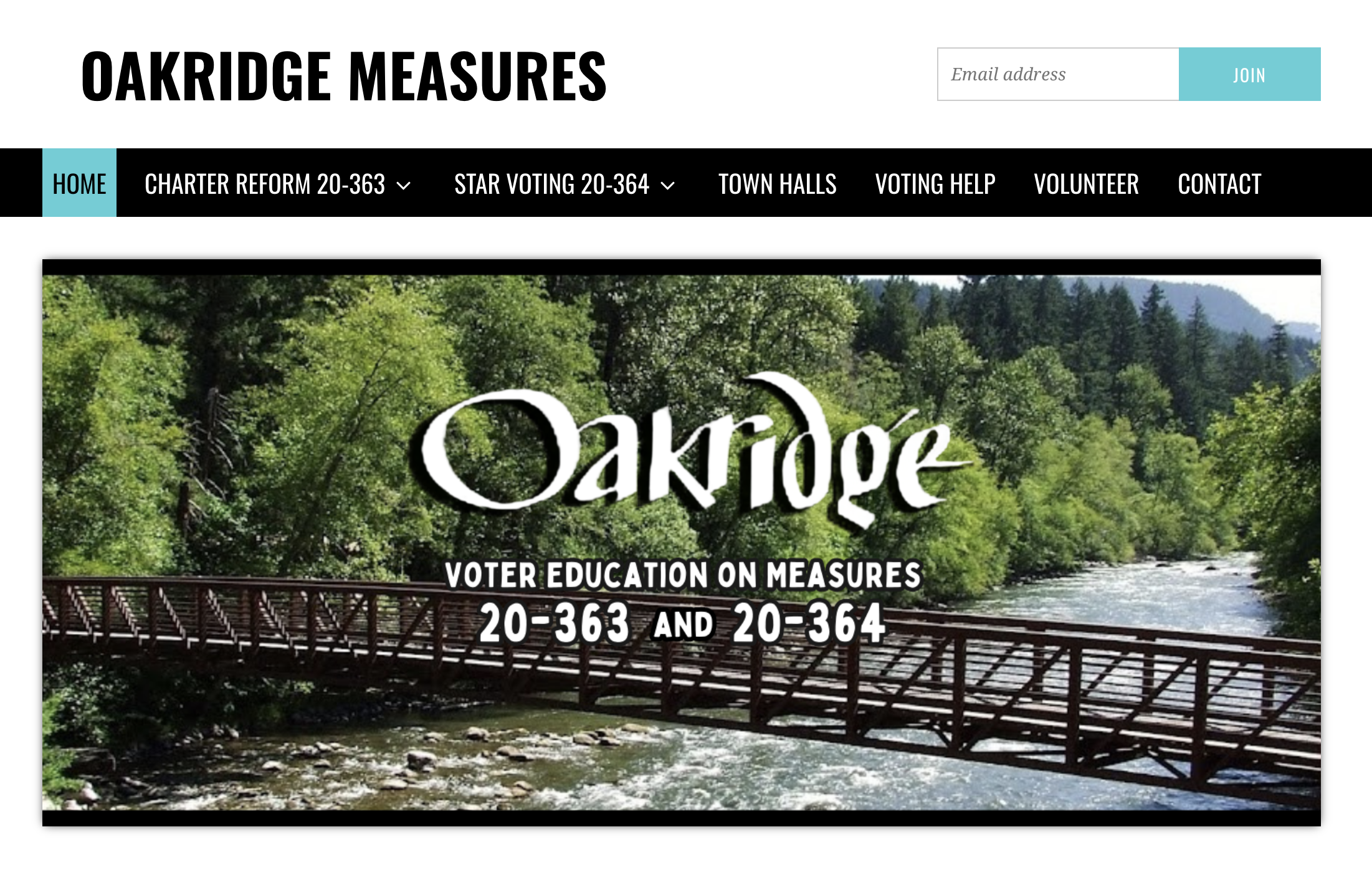
STAR Voting for Oakridge Pilot 2024Oakridge City Council and the Charter Reform Commission referred a ballot measure to the voters to adopt STAR Voting as a pilot project for mayor and city council elections. STAR Voting for Oakridge Measure 20-364 wouldn't cost anything for the city and voters would get to try STAR Voting for three election cycles before voting to adopt it permanently. Oakridge city elections are already nonpartisan and are conducted through a single election in November, This would not change. |
|
|
|
STAR Voting for Eugene 2020The STAR Voting for Eugene campaign turned in 10,406 signatures to qualify for the May 2020 ballot, but despite turning in well over the 8,091 signatures required, the 2019-1 petition was erroneously found to be short 111 signatures and was deemed "void." |

 |
|
STAR Voting for Oregon 2021
|
 |
|
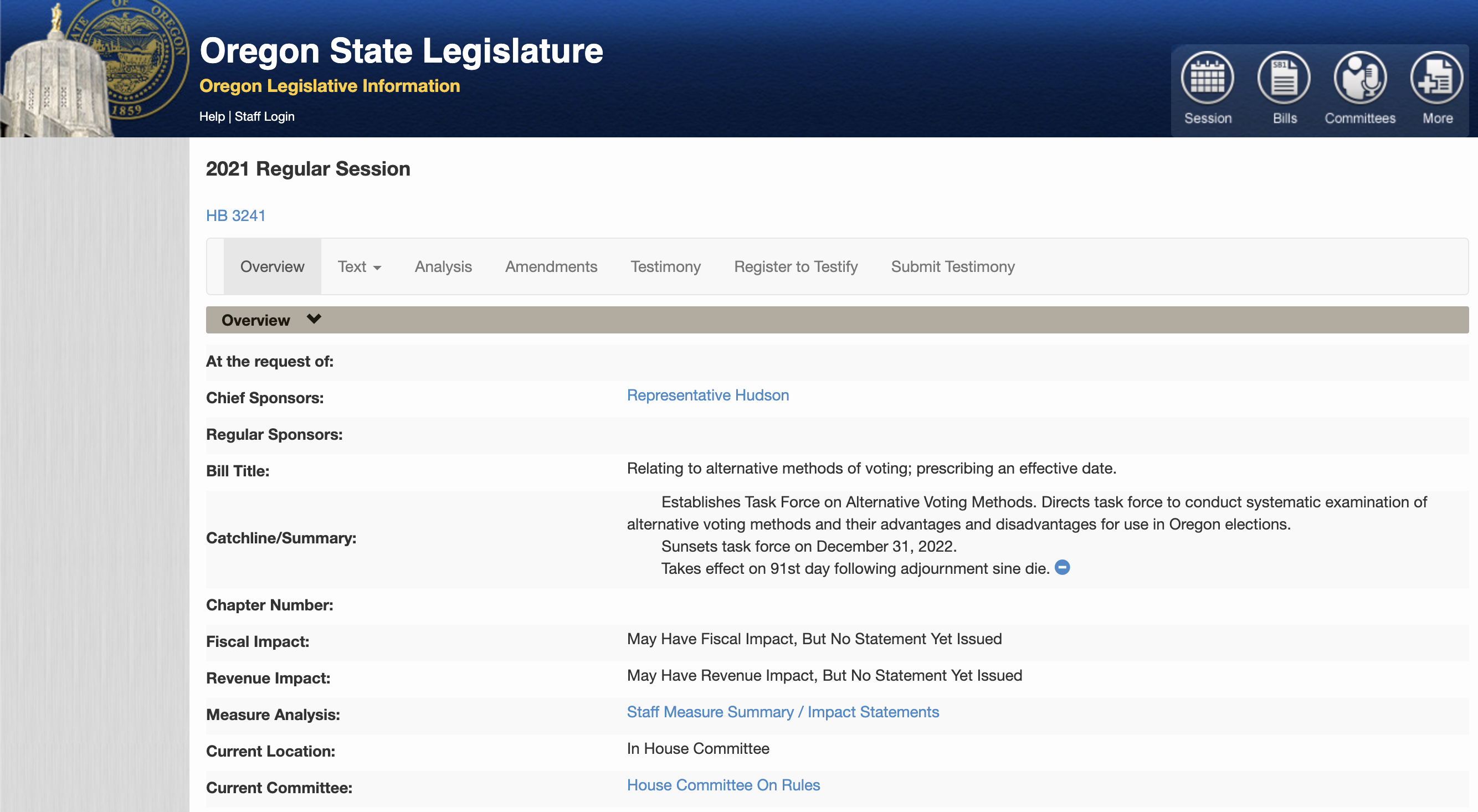
Convenes a Statewide Legislative Task Force On Voting MethodsOregon House Bill 3241 (2021):
|
 |
|
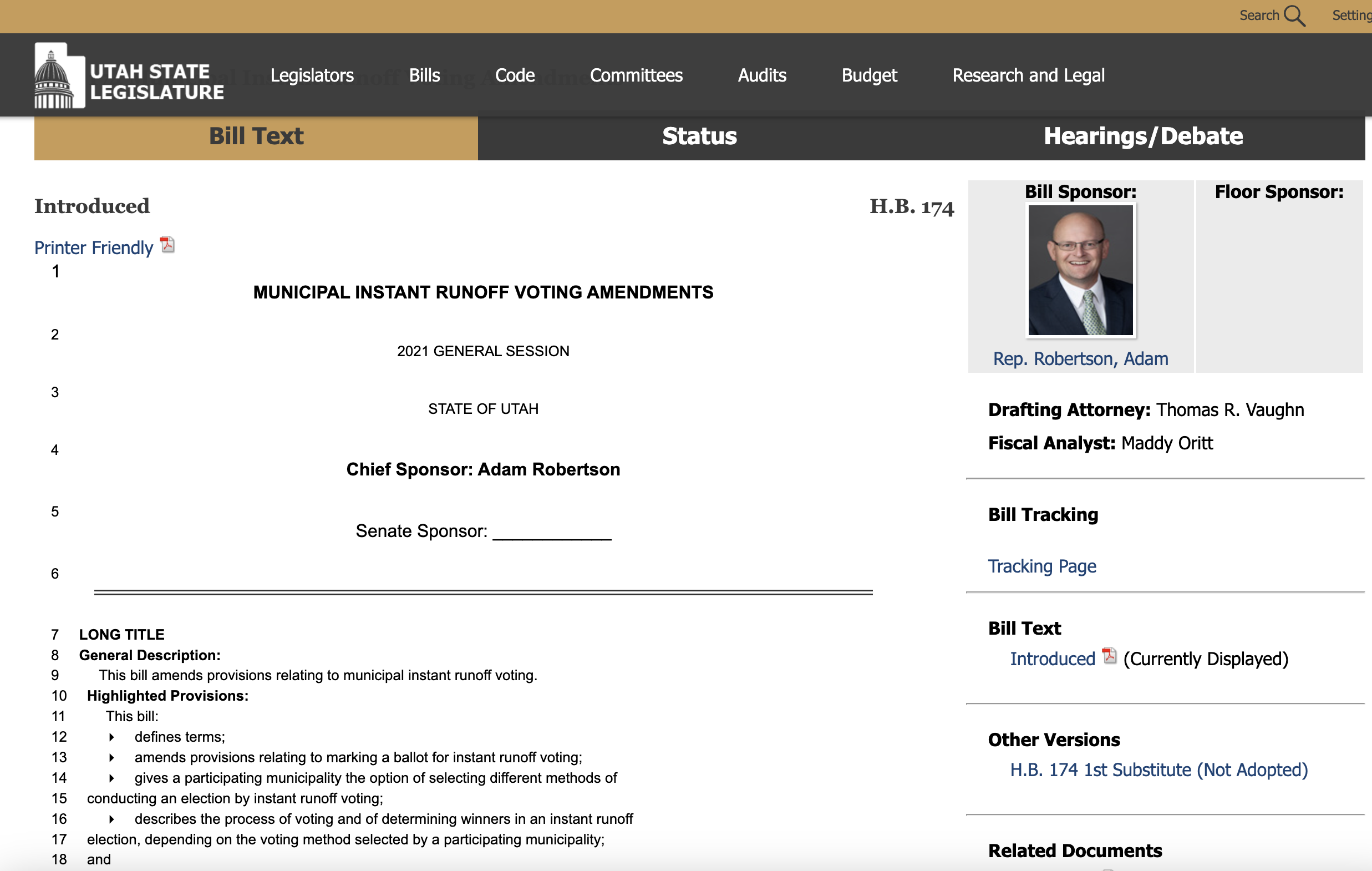
Amends Utah Voting Reform Pilot To Include STAR and Approval Voting
|
|
|
|
STAR Voting for Eugene 2020The STAR Voting for Eugene campaign turned in 10,406 signatures to qualify for the May 2020 ballot, but despite turning in well over the 8,091 signatures required, the 2019-1 petition was erroneously found to be short 111 signatures and was deemed "void." |
 |
|
STAR Voting for Eugene 2020 Lawsuit
1.) 23 valid Eugene voters who were rejected for "signature mismatch" promptly signed and submitted affidavits affirming that they had in fact signed the petition and verifying the authenticity of their signatures. Counting these would result in an additional 115 signatures being counted. 2.) 255 voters were rejected due to having been listed as "inactive voters" despite the fact that they actively signed the petition. Correcting this act of voter disenfranchisement would result in 1275 additional signatures being counted. 3.) An "error report" was submitted documenting 34 signatures which were rejected for "signature mismatch" but which we analyzed and believe should have been counted. Correcting these verification errors would result in an additional 170 signatures being counted.
|
Please contact [email protected] for information on earlier campaigns.
\
For information<iframe src="https://cdn.flipsnack.com/widget/v2/widget.html?hash=ciwza2apma" width="100%" height="480" seamless="seamless" scrolling="no" frameBorder="0" allowFullScreen></iframe>
Do you like this page?